← But Why: A Podcast for Curious Kids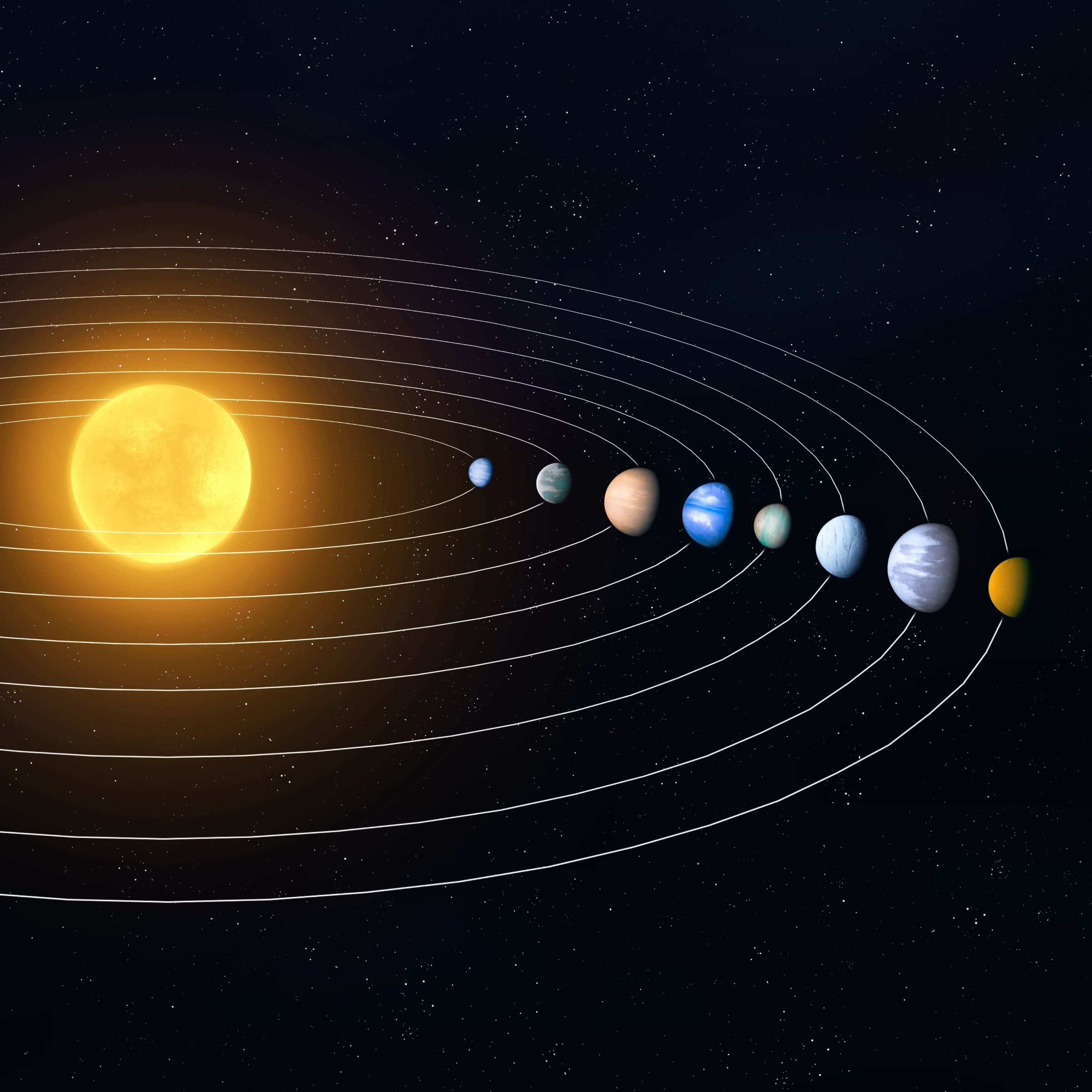
But Why: A Podcast for Curious Kids
Why does space have so many planets?
00:46:13
Join us on a tour of our solar system with John O’Meara, chief scientist at the W.M. Keck Observatory in Hawaii. We’ll answer all of your questions about planets! How were the planets in our solar s…
Loading summary
Transcript91 lines
- [00:03]
But Why Host
Looking for things to do this Summer. But why? Has a bucket list of things to do and explore. And we have a special but why Summer Adventure kit for new members of our fan club. Our adventure kit is full of fun stuff like a notebook and pencils. You can check it out@butkids.org donate your monthly gift to but Y helps keep the program available to all families right regardless of their ability to give. If you're able, please consider becoming a member today@butwhykids.org donate thanks.
- [00:57]
Narrator / Podcast Host
This is but why? A podcast for curious kids from Vermont Public. On this program, we take questions from curious kids just like you, and we find interesting people who can offer some answers. In this episode, we're going to look far, far beyond our field of vision and think about our solar system. There's so much out there to explore and learn more about, and scientists are still discovering new things all the time. So get ready for some virtual space exploration. While it might be more fun to actually be an astronaut who gets to explore space in person, this way we all get to participate. And actually we're going to go farther out in the universe than any humans have ever been. So strap in to orient ourselves. Our solar system is anchored by the Sun. The sun is the star at the center of our solar system. It's the gravitational force that pulls planets toward it. It the eight planets in our system orbit or travel around the sun. We're going to explore those eight planets today, and we have a special guide for our journey.
- [02:07]
John O'Meara
My name is John O', Meara, and I am the Chief Scientist at the W.M. keck Observatory on the island of Hawaii. I am part of the team that helps run one of the biggest telescopes on the planet. The mirror itself is about 10 meters across, so about, you know, almost 40ft across. And then the dome that it sits in, this giant structure that keeps it safe.
- [02:36]
Interviewer / Co-host
Can you see some of the planets through the telescope?
- [02:39]
John O'Meara
Oh, totally. We look at the planets in our solar system a lot because they're so close by, relatively speaking. I mean, they're very far in terms of how long it would take to fly there in an airplane if that worked. But because they're close by, we can watch them change over time. We like to look at Jupiter a lot. We like to look at Saturn a lot and Uranus and Neptune a lot. The planets, which are closer to the sun than us are hard for us to look at because the sun is so bright and because we don't want to damage the telescope so we don't look At Mercury and Venus very often. But most of the time, it's. It's the planets farther away and their moons. We really like to look at their moons.
- [03:23]
Interviewer / Co-host
I am glad that you can see the planets from the telescope, because we called you up to talk about planets today. Because kids have a ton of questions about planets. So we're gonna see how many we can get to. Because we have so many. I don't know if we can fit it all in. So we're gonna. Yeah, we're not gonna make you go rapid fire, John, but we're gonna make you work here. So the first question we have is from Chandler.
- [03:49]
Kids Asking Questions
How did the planets in our solar system get made? My name is Ray. I'm from Encinitas, California, and I'm 6 years old. How do planets form? Hi, my name is Maren. I'm nine years old. I'm from Westfield, Massachusetts. Where do planets come from?
- [04:15]
John O'Meara
Yeah, Chandler asks. And the other folks are asking a really, really fun, fantastic question. And part of the reason why it's fun and fantastic Is we kind of know the answer, but we don't completely know the answer. And part of the reason why we don't completely know the answer Is because this happened billions of years ago when the solar system formed. So the best model that we have, the best theory that we have, Is that the sun and the planets formed out of what we call a nebula. A nebula is just a term for a bunch of gas and stuff. And about 5 billion years ago, that nebula, for some reason, started to collapse. It was just kind of sitting there, and then parts of it started to collapse. And then gravity started to take over. And stuff got closer and closer and closer. And most of the stuff became the sun. About 99% of the stuff became the sun. But some of the other stuff formed a disk around the sun, Mostly of rock and ice and dust and gas. And that stuff started to form into the planets A few hundred million years after the sun started to form. And that disk of stuff, which had millions and millions and millions of chunks in it, Billions, tens of billions of chunks. Eventually, gravity started to pull those pieces together. Stuff started banging into each other. And over hundreds of millions of years, the planets in our solar system formed. But we didn't see this happen. We weren't there yet. But we've used big telescopes on the ground and in space to see this process happening in other solar systems as they're being born. And we can see this disk of stuff, and we can see it start to clump up. And so that Helps reinforce this idea. That's how our solar system formed. But it's still, you know, it's. It's still just, you know, something that we have to keep testing. We have to keep looking. We have to pick up as much material as we can throughout the solar system, Whether or not it's a rock on Mars or it's a chunk of a comet or an asteroid. We need to go out there, look at that material, and see if it matches this idea for how the solar system formed.
- [06:32]
Kids Asking Questions
Hi, my name is Gabby. I'm six years old. I live in Colorado. And my question is, why are some planets made of gas and some planets are not?
- [06:48]
John O'Meara
If you look at the planets in the solar system, the ones that are closer to the sun are mostly made of rocks. So Mercury is made of rocks. Venus we can't see the surface of from here because it has really, really thick clouds. But most of it is rocks. Most of the Earth is rocks. Mars is mostly rocky. But then when you go farther out in the solar system, like Gabby says, there's these giant balls of gas, like Jupiter, the biggest planet in the solar system. Saturn, Uranus, Neptune. These are giant things of gas. Why is that so different? And it has to do with how close the things were to the sun when they formed. When you're really close to the sun, relatively speaking, it's hotter. The sun is brighter when you're closer to it. And that energy doesn't let gas start to form into ice and ice to start capturing more gas. It only lets the rocks stick around. And so in the early parts of the solar system, that energy from the sun only let rocky things start to form close by. But when they were far enough away that they could. That ice could form, ice did form. And ice is really, really good at grabbing other stuff, grabbing other ice or other gas. And so, kind of like when you build a snowman, you start to push the snow, and it starts to glom onto it and get bigger and bigger and bigger. That snowball method is how the big gas giants formed out in the solar system, and they just captured all that gas. Now, the other part of the question was why? Why does it even happen at all? And the answer there is gravity. The same thing that if you, you know, if you jump off of a step onto the ground, you know, gravity is pulling you down towards the center of the Earth because the Earth has a lot of mass, and because you have mass. And whenever two things have mass, they get attracted to each other by gravity. And so when stuff started to form, There was more and more and more mass and the gravity nearby, it got stronger and stronger. And all of that stuff held together to keep the planets held together. And it's the same is true for the Sun. The sun isn't rocky at all. It's mostly gas and very, very hot gas, depending on where you are in the Sun. But gravity is what's holding it together.
- [09:12]
Narrator / Podcast Host
So the planets and the sun are being held together by gravity, but they are also moving in space. Planets orbit or travel around sun in a kind of oval or elliptical pattern. Some orbits are almost circular, but most are kind of stretched out ovals. The size of the orbit depends on the distance from the planet to the Sun. But why? And how do they do that?
- [09:37]
Kids Asking Questions
This is Penny from Chappaqua, New York. My question is, how do planets float in space? Hello, my name is Malcolm. I. I live in Seattle, Washington. My age is seven. My question is, how do the planets stay in place? My name is Ruby and I'm 4 years old and I live in Seattle, Washington. And my question is, how do the planets get out of the spot? Hello, my name is Oliver, I'm seven years old, and I am from Wellington, New Zealand. And my question is, why do planets spin? My name is Larry and I am five years old. I'm from Los Angeles, California. Why do the planets rotate?
- [10:36]
John O'Meara
It goes back to that model of how we think the solar system formed. So when the stuff started to collapse, it also started to rotate. It started to spin around a little bit. And when we look at the disks of those early solar systems going around stars, we see that they're moving around kind of like a record on a record player. When you start spinning around, the universe likes to keep you spinning around. So all you have to do is start that rotation. And people know this, like when they go out ice skating and they put their arms out really wide. And if you start to spin, you will keep spinning because you don't have a lot of friction slowing you down. On the ice. In space, there's none of that friction at all. So you keep spinning around and around. But one neat thing happens. If you pull your arms in, you start to spin faster. And that has to do with something called momentum. And rotational momentum, it's the energy that's locked up in movement. We have movement in straight lines, which is regular momentum. And rotational momentum is when you're spinning around. If you pull your arms in, you spin faster. Here's a neat thing. The planets closer to the sun orbit around the sun faster than the planets farther away. From the Sun. So the Earth takes about a year to go around the Sun. But the planets outside, farther outside in the solar system, Take tens up to hundreds of years to go around the Sun.
- [12:09]
Narrator / Podcast Host
I thought maybe they were just taking longer to go around the sun because they're so much farther away, but they're actually orbiting slower. So they have a longer path to travel to get around the sun, but they're doing it at a slower pace, too. It's like the planets close to the sun are sprinting, and the ones farther out are just taking a nice leisurely stroll.
- [12:30]
Kids Asking Questions
Hi, my name is Oliver. I'm almost 5, and I live in space St. Louis. And why does space have so many planets? I'm Jeremiah, I'm six years old. I'm from Alexandria, Virginia. And my question is, why does space have so many planets?
- [12:57]
John O'Meara
That's a great question. And if I can, I'll answer in two different parts. Because there's a neat thing that we're starting to learn about in astronomy right now, about planets around other stars. But let me start with the solar system. When the solar system started off, There were many, many, many more planets Than there are today. And that's because the stuff started falling in together and glomming together like snowballs forming a giant snowman. And some of them smacked into each other and got kicked out of the solar system entirely. But over hundreds of millions of years, these things formed into much, much bigger things, which we now call planets. One piece of the solar system that still kind of looks like that early part of the solar system Is called the asteroid belt. It's a place between Mars and Jupiter. If you're going away from the sun, Jupiter's farther away than Mars. In between there, there's all these asteroids, millions of them, Giant chunks of rock. And those are leftover material from the formation of the solar system. They didn't quite have form into a planet, and they didn't quite get kicked out. And in a very, very long time from now, they'll slowly start getting thrown out of the solar system or bounce into each other or bounce into Jupiter or bounce into Mars, bounce into other things. Most of them will get thrown out. But that process, over billions of years, Took us from hundreds of millions of objects into the solar system Into a few dozen that are now planets or dwarf planets. The other fun thing is that now that we've looked in detail at other stars, we think that almost every star in the universe has at least one planet, and that most stars in the universe have more than one planet. And that's probably a different discussion for a different time. But it's really neat to know that our solar system isn't alone in terms of having planets.
- [14:57]
Interviewer / Co-host
So we don't even know how many planets there are. If we're thinking outside our solar system, we don't know.
- [15:04]
John O'Meara
That's one of the things we like to do a lot with the telescope here in Hawaii is to look for planets around other stars and find more of them and more of them and more of them.
- [15:13]
Interviewer / Co-host
Do you have a guess?
- [15:15]
John O'Meara
I have a rough guess. And the rough guess is that if I use a trick and say every star has at least one planet, and if I think I know how many stars there are in our galaxy, which is about 200 billion stars. But notice I said about we don't really know. We can't count them one by one. We use, we use little tricks in math to do that. But that means there are at least 200 billion planets in the Milky Way. And we think in the universe that we can see, we can see at least a few hundred billion galaxies. So now you need to get out your calculator or a piece of paper and start writing a lot of zeros. Because if every galaxy has a couple hundred billion stars and all of those stars have at least one planet, then we're talking about 200 billion times 200 billion times a lot. And so that's a lot, a lot of planets in the universe.
- [16:16]
Kids Asking Questions
My name is Isaac from Saskatchewan, Canada, and I'm 10 years old. How did humans figure out about planets?
- [16:23]
Interviewer / Co-host
How did humans even figure out about planets to begin with?
- [16:26]
John O'Meara
So planet is that the word planet in English is derived from the Greek language, from way back when. That is a word that means wanderer. And when we look up at the night sky, and humans have been really good at looking at the night sky since, since there have been humans, because it's always there, always there to see the stars and to look up and be really interested and excited about that. But when you look up at the stars and you look long enough, you'll see that most of them are stuck in the exact same spot they were the night before or the week before or the month before. But you will see some bright things move. They wander on the sky. And so we, we called those things planets and human beings. For, for, for most of history that, that, that that's been recorded could only see some of the planets in our solar system. Uranus and Neptune are so far away that we can't see them with our eyes and know that they are planets. Then in about the 1600s, in the early 1600s, we started to build telescopes. And when you build telescopes, you can look in more detail and you can see fainter things. And that's when we really started to study planets well, and understand that some of them were made of gas and some of them were made of rocks. Because at the same time as we were developing telescopes, we were developing new types of physics and chemistry and all the things that you need to tell the difference between a rock and a bunch of gas that's hundreds of thousands of millions of miles away, stuff that you can't reach out and touch yet. And then we started to build rockets, and we put robots on rockets and we landed them in places in the solar system and grabbed that stuff and tested those theories.
- [18:23]
Narrator / Podcast Host
All right, now that we have some understanding of our solar system and how it formed, we're going to go on that tour of all the planets. So get a drink of water, take a break, because there's going to be a lot to get through. When we come back, this is. But why? Today we're talking with astronomer John o', Meara, who helps run one of the biggest telescopes in the world at the Keck Observatory in Hawaii.
- [18:46]
Interviewer / Co-host
All right, John, let's talk about specific planets. And we're going to start with the planets closest to the sun and move outwards. So the planet closest to the sun, I know some of the kids who are listening are, like, shouting it out already, is Mercury.
- [19:01]
John O'Meara
Yeah.
- [19:02]
Interviewer / Co-host
We don't have any questions about Mercury. Why do you think that is? We have questions about every other planet. Why isn't anybody sending us questions about Mercury? Is it really not very cool?
- [19:11]
John O'Meara
Mercury's totally cool. I think part of the issue is we haven't sent many spacecraft to Mercury, so we don't have a lot of pictures of Mercury up close like we do for Venus or Mars or the other planets close to us or Jupiter or Saturn or Uranus or Neptune. And Mercury is really close to the sun, which means it's kind of a nasty place to visit. And it's also hard to see with your eyes. There's only special times of year that you can see Mercury at all because it's so close to the sun and the sun is really bright. So the sun has to set, and you have to have Mercury in special parts of its orbit to see it at all. So I think all those things put together kind of stack the odds against Mercury. But we have spacecraft that are there now looking, starting to orbit around Mercury, and Study it. And it's a really fascinating place, because how do you have a planet that close to the sun and still have it around and all that stuff? It's kind of neat.
- [20:13]
Interviewer / Co-host
All right, you sold me on Mercury. Maybe we'll get some Mercury questions and we'll have you back. Let's go. Next, travel outwards to Venus.
- [20:20]
Kids Asking Questions
Hi, my name is Rylo. I'm five years old. I live in Glendale. Why is Venus the hottest but it's not closest to the sun?
- [20:31]
Interviewer / Co-host
Why is Venus the hottest but not closest to the sun? Because you just said Mercury was closest to the Sun.
- [20:37]
John O'Meara
Yeah, Mercury is really close to the sun and it's not as hot. And part of the reason is that Mercury only has a very, very, very tiny atmosphere. Venus, on the other hand, has a very thick, heavy atmosphere. In fact, Venus is about the same size as the Earth, but it has an atmosphere which is 90 times as thick as our atmosphere. And what do I mean by thick? I mean there's.
- [21:06]
Interviewer / Co-host
And what do you mean by atmosphere?
- [21:08]
John O'Meara
Yeah, what do I mean by atmosphere? So you and I are sitting here breathing air, and the air is mostly made of nitrogen and a little bit of oxygen, some carbon dioxide. And that air is for a few hundred miles above the Earth, and it gets less and less atmosphere as you get farther and farther away from the surface. But that air has a quantity called pressure. And we know we have pressure because if you take your hand and you swipe it through the air, you can actually feel the wind against your hand. And that's because there's enough air there to feel that. That material. If you tried to do that on Venus, you would have to work a lot harder because the air is much more dense. It's almost like water. It's very, very, very dense. And most of the atmosphere on Venus is made out of carbon dioxide instead of nitrogen and oxygen. Carbon dioxide is really good at grabbing heat and keeping it there. A long time ago, it used to have. We. We thought. Think it used to have oceans on its surface or at least some water. And then something happened to evaporate that water away and to change the atmosphere. And it had lots of volcanoes, dumped a lot of carbon dioxide into the atmosphere, and then that trapped the heat. And this is. This ran away. This. This didn't circulate. This kept getting more and more and more and more. And we call that the runaway greenhouse effect. And that makes the surface of Venus hundreds of degrees. It is very, very hot. That pressure is very, very high. We've landed a couple of spacecraft On Venus. And those spacecraft only survived a very short time because it was so hot and so dense that they kind of crushed the spacecraft after a bit of time, even though we built them to, sir, to really handle that environment. So we don't completely understand why that started on Venus, but we understand the physics of atmospheres to understand, once it kicked off, why it stayed that way. And what's really interesting about Venus is that the surface is nasty. It rains acid on Venus. You don't want to be there, I promise. But high up enough, the atmosphere starts to get thin again. And there's parts up above the clouds in Venus which are about the same temperature as the Earth and, you know, kind of a nice place to be. And so we are building some spacecraft. NASA is working on two spacecraft that will be launched to Venus to study those clouds as well as the surface, which we've looked at before with radar and by landing some stuff on it.
- [24:08]
Interviewer / Co-host
John, you and I have talked in previous episodes about the Earth's moon and other things about Earth's atmosphere. And we've done a lot of episodes that kids can listen to about Earth's atmosphere and our moon. So we're not gonna focus a lot on Earth today. But I have one question from Eli that we wanna share with you that will help tie from Venus to Earth, which is the next one out, and then to Mars, which is the next planet out.
- [24:37]
Kids Asking Questions
My name is Eli. I'm seven years old. I live in Cleveland, Ohio. Why is Earth more like Mars than Venus, its sister planet?
- [24:50]
John O'Meara
So the three planets are very, very different from each other. You're absolutely right. And part of that difference is what we were talking about with Venus before that. It had this very big change in its atmosphere that made it really dense and really hot. On the other hand, we have Earth, which we know pretty well, and then we have Mars, which is very cold relative to Earth or certainly relative to Venus. And it doesn't have to do with their distance from the sun very much because they're all kind of close to the sun, roughly the. Roughly about the same. The difference is that Mars had a different kind of event a long time ago, about a billion years ago, in which it lost its atmosphere. It didn't start rapidly gaining thickness in its atmosphere like Venus did. Something happened to strip away a lot of Mars's atmosphere. And that really changed Mars relative to Earth and Venus. Mars used to have oceans on it. We believe this when you look at the surface features of Mars and we've dug into a little bit of the Surface of Mars with rovers and other things. We know that Mars probably had oceans on it and an atmosphere that kept those oceans from just boiling off and going off into space. But something took that atmosphere away. And this is why studying planets is so cool, is because we don't know yet why these things happened. But when you stripped away that atmosphere and the oceans evaporated off of Mars, Mars still has an atmosphere, but it's only about 1% as thick as the atmosphere on Earth.
- [26:38]
Narrator / Podcast Host
Ooh, hold up for a second. Let's squeeze in Jamison's question right here.
- [26:42]
Kids Asking Questions
I live in the United States of America. I am 10 years old, and my question is, why is, why is Mars so cold?
- [26:48]
John O'Meara
Because the atmosphere can't trap that heat in and keep things warm.
- [26:52]
Kids Asking Questions
Hi, my name is Helena. I'm six years old. I live in Newtown Square, Pennsylvania. And my question is, why is Mars red?
- [27:05]
John O'Meara
Mars has this kind of eerie reddish color. And the main reason why it has that color is because a lot of the surface on Mars has iron in it. In the sands, in the rocks, and all throughout the surface has iron in it. But you can say, well, wait, I have a cast iron pan at home. And it's black. Well, it's black unless you just leave it in water or leave it out in the air for a long time, and then it starts to rust. This is what happens when oxygen interacts with iron over a long time, is it turns into rust, iron oxide. And so the surface of Mars is that color in part because the iron started rusting in the atmosphere of Mars, leaving it that weird reddish color.
- [27:52]
Interviewer / Co-host
Okay, what about dust storms?
- [27:54]
Kids Asking Questions
My name is Levin, and I'm four years old, and I live in Boulder, Colorado. I want to know more about why I dust storms happen on Mars.
- [28:10]
John O'Meara
We get dust storms on Earth, like in this. In the Sahara and other deserts. We see this a lot where these big winds will kick up the sand into the air. And lots of Mars is covered in sand. And there are winds on Mars. Even though there's only about 1% the atmospheric pressure, there are still winds there. And sometimes the winds can get very, very powerful relative to just a normal day on Mars that kicks up the dust, and then these massive dust storms go through. And so when you look at the surface of Mars, you can see things which are basically sand dunes, and they were put there by these giant dust storms. Mars has seasons like Earth does. When the winds come and you can pick up the sand, you get these massive dust storms.
- [28:59]
Interviewer / Co-host
All right, so we're gonna jump back in Our futuristic spaceship now that can amazingly go to and from all the planets we're going from Mars. How far do we have to go go to get to the next planet, Jupiter?
- [29:10]
John O'Meara
Oh, we have to go pretty far. So let's use units that I like to describe the solar system because we live on Earth. We can say The Earth is one unit away from the Sun. Venus is about 0.7 units away from the sun, about a little bit more than half a unit. Mars is 1.5 units away from the sun. You have to go pretty far. Now, you have to go five units away from the sun to get to Jupiter. And that's the big one in the solar system. That's the biggest planet there is in the solar system. It has most of the material locked up in it relative to all the other planets, which is pretty amazing because we think, oh, Saturn's big. Yeah, Saturn's big. But Jupiter is big. And Jupiter is kind of was, was very much along with the sun, like a vacuum cleaner for the solar system. When there was all that material out in the disk, if that stuff didn't start to form into, into their own planets, Jupiter's gravity, because it's so big and so massive, helped pick up that stuff. And that stuff got incorporated into Jupiter. So it is a big, giant gas planet. It's made out of hydrogen and helium, and we think it has a rocky core inside of it, but it's huge. And its mass has really impacted the whole shape of the rest of the solar system. It and the sun are the two big bullies of the solar system, pushing stuff around.
- [30:41]
Kids Asking Questions
My name is Griffin. And why is the storm on Jupiter red?
- [30:46]
Interviewer / Co-host
And maybe you can help explain for kids who don't know about Jupiter's storms.
- [30:51]
John O'Meara
Jupiter is made out of a lot of gas, and Jupiter rotates pretty fast. So on Earth, we have these things called hurricanes or cyclones. And hurricanes have their shape, these spirally shapes that are spinning around because the Earth is spinning around. It's, it's, it's a thing called the Coriolis effect. Well, Jupiter is spinning around pretty fast, and it's a really, really big planet, so it can have hurricanes. On Earth, our hurricanes usually only last a few weeks, maybe a month from start to finish. The big red spot has been a hurricane in Jupiter's atmosphere that's been around for hundreds of years. What's really neat, though, is because we've now got telescopes that can look at Jupiter all the time and look at it and watch the spot. It's changing its shape. In fact, it's starting to get smaller. And so maybe in a couple hundred years, there won't be that big red spot. Part of the question was, why is it red? The reason why it's red has to do with just slight differences in the atoms that make up the atmosphere and slight differences in the temperature and the pressure of that, which can change the relative color of that gas. But for me, it's kind of fun to know that for hundreds of years we've been watching a hurricane on another
- [32:15]
Interviewer / Co-host
planet that is pretty cool.
- [32:17]
John O'Meara
And Jupiter has a couple of those. There's the big red spot, but there's a couple of smaller white spots and another smaller red spot. And then when you look at the poles of Jupiter, it's really weird because you start to see this shape around the poles that look really neat. Jupiter has all these storms in its atmosphere because it's so big and rotating so fast.
- [32:39]
Interviewer / Co-host
Well, is its size also relevant when we think about Jupiter's moons?
- [32:45]
Kids Asking Questions
Hi, my name is BRANDON, and I'm 10 years old. I'm from Sydney, Australia. Why does Earth only have one moon, but Jupiter has 95 moons?
- [32:57]
John O'Meara
This is a fantastic question, and I want to zoom out and think about the solar system again for a little bit. Mercury doesn't have any moons. Venus doesn't have any moons. The Earth has one moon. Mars has two very tiny moons, Phobos and Deimos, which are kind of like asteroids. Then you get to the big giant gas ones, and those planets have dozens of moons. We keep finding new moons around Jupiter and Saturn every time we look harder. Uranus and Neptune also have a lot of moons. So there's something different just in general about the solar system. And it has to go back. It goes back to how that stuff formed. The rocky planets. The rocks came together gravitationally. Snowball effect made this, this big. This big planet. For the big gas giants, on the other hand, they started to build up stuff and then started capturing things into orbits around them. And those things, most of them got flung off, but some of them survived. And the planets were so big that the stuff orbiting it with it got pretty big, big enough to make moons. So it's kind of like Jupiter and Saturn and Uranus and Neptune are like their own little solar systems. Because if you look at the types of moons closest to Jupiter or closest to Saturn, they look different than the moons farthest away from Jupiter and farthest away from Saturn. So they're all acting almost like little solar system systems. And that's a leftover feature of how the whole solar System formed. And again, we don't know exactly how this works, but the bigger the planet, the more stuff it's trying to pull in. And that's probably why Jupiter and Saturn have the most moons in the solar system.
- [34:57]
Interviewer / Co-host
All right, well, since we're already talking about Jupiter and Saturn, let's move from Jupiter to Saturn, the next one out. And a lot of kids and adults know one thing about Saturn.
- [35:09]
Kids Asking Questions
My name is Christopher, I'm six years old. I'm from Buckeye, Arizona. Why does Saturn have rings? My name is Aaron, I live in Boston, and I'm five years old. And my question is, why does Saturn have wings? My name is Amelia, I'm from Princeton, New Jersey. I'm 60 years old. And why does Saturn have a ring around it? Hi, my name is Livy and I'm nine years old. I live in parallel the United States of America. Why does Saturn have rings? Hi, my name is Arjun and I'm five years old and I live in Maryland. Why do some planets have rings?
- [36:03]
John O'Meara
It turns out that all of the gas giants in the solar system, Jupiter, Saturn, Uranus, and Neptune have rings. Saturn's rings are big and beautiful and easy to see. But Jupiter has rings. Uranus and Neptune, they have rings. And we think that the rings came about because in the formation of the solar system or in the formation of the planets, or at some point in those planets history, stuff smacked into each other and pulverized. It hit each other really hard. So two things like moons or giant chunks of ice bashed right into each other made a lot of debris. But that stuff was orbiting around the planet. And so that debris made a disk, which looks like a ring around the planet. So if you got up really close to Saturn, you know, its rings are made out of pretty small stuff. It's mostly rocks and ice, but it's small stuff. And that's because something pulverized. Saturn's rings very likely don't look the same as they did hundreds of millions of years ago. And they may eventually go away because this stuff will start to clump together again or fall into Saturn or get thrown out. So that's another neat thing about ringed planets is because they don't always look the same over time. Right? Jupiter has rings now. It may have had more impressive rings or maybe no rings at all early on. And it's fun to try to figure out what the history of those things might be. We don't watch over short times, like a month or a year or 10 years, the changes in those rings we have to use computers to simulate what those rings look like. It's kind of like we're playing Minecraft with the planets. And we put the rings there and we tell them, here's how we think gravity works and what moons are there. And then we let a pretend clock go really fast and let the thing go much, much faster than it does in normal time. And we can test models of how the rings formed, what might happen to them. The same thing as what we do with the solar system. So going back to the original question, the main reason why we have rings is because we believe that stuff collided with other stuff and just left a bunch of debris.
- [38:20]
Narrator / Podcast Host
Hmm.
- [38:21]
Interviewer / Co-host
All right, so we're going from Saturn. We're still traveling out away from the sun, and the next planet is Uranus.
- [38:30]
John O'Meara
Yes.
- [38:31]
Interviewer / Co-host
So we have a question for you.
- [38:32]
Kids Asking Questions
Okay.
- [38:33]
Interviewer / Co-host
We're not sure if this question is an honest question or said in jest.
- [38:39]
Kids Asking Questions
My name is Pla Yoon and the age is five, and I'm from New Mexico. And my question is, why is Uranus so gassy?
- [38:50]
Interviewer / Co-host
What do you think, John?
- [38:51]
John O'Meara
I will do the answer, assuming that this is a non ingest question.
- [38:58]
Interviewer / Co-host
And I think a lot of kids know what the joke is. But just to be clear, sometimes people call, when I was a kid, I think we always called this planet Uranus,
- [39:11]
Narrator / Podcast Host
which is another word for your butt.
- [39:13]
Interviewer / Co-host
So why is your butt so gassy?
- [39:15]
John O'Meara
Why is your butt so gassy, Uranus?
- [39:17]
Interviewer / Co-host
The planet is gassy.
- [39:18]
John O'Meara
It is. It's a giant ball of gas. I could make the jokes all day. And maybe that's a different. That's a. That's a different podcast. But Uranus is one of those planets that's really far away from the sun. And so it built itself up the same way that Jupiter and Saturn did with slightly different material because it was farther away from the sun. So if we used our units where the Earth is one unit away, Jupiter is five units away, Saturn is 10 units away, Uranus is 20 units away. So now we're starting to get really far away from the sun. And so it was slightly different gases that could form ices at colder temperatures, but it's still the same process that that ice is really good at capturing gas.
- [40:02]
Interviewer / Co-host
All right, thank you for that. Appreciate it.
- [40:05]
But Why Host
Sure.
- [40:05]
Interviewer / Co-host
So after Uranus, we keep going out how many units to get to Neptune?
- [40:11]
John O'Meara
Neptune is another doubling, if I remember correctly. So the planets keep doubling, they're farther away. I think it's about twice as far away as Uranus is.
- [40:21]
Interviewer / Co-host
What do we need to know about Neptune?
- [40:23]
John O'Meara
We need to know that Neptune is again, because it was so much farther away, we're now having other types of gases form ice. So out there, you can have a gas which is called methane on Earth. And methane on Earth is made by cow farts and other things in biology. But methane can also be made astronomically and geologically. Methane, when you get it really, really cold, conform into ice as well. And so that far away from the sun, it's not just water ice, it's mostly nitrogen. Ice, like nitrogen can make ice, methane can make ice. And those things are what might be the seed units that captured the gas to Neptune. What's fun about Neptune and Uranus is they also have these giant storms, kind of like the red spot on Jupiter. When we take very powerful telescopes, we can see these storms in the upper atmosphere of Uranus and Neptune. The other interesting thing about Neptune is that it is one of the most common sized planets around other stars. We have things that around a Neptune size. And so it's kind of interesting because it's an interesting representative of what other planets around other stars might in general look like if they were that distance from their star. But we're getting pretty cold out there. We've still got a lot of moons, we've got some rings. But the sun appears much, much fainter. If you were in orbit around Neptune and you looked at the sun, you wouldn't need to put on sunglasses or squint your eyes. It's now getting pretty faint. And so that gives you a sense of how cold it is out there.
- [42:17]
Interviewer / Co-host
So Willow has a question about Neptune that we may need to do some redirecting around.
- [42:23]
Kids Asking Questions
My name is Willow, I live in Boo, North Carolina, and I'm five and a half years old. Why is Neptune too small to be a planet?
- [42:39]
John O'Meara
So Neptune is a planet. It's too small to be a gas giant. It's kind of in this transition space, but it's definitely a planet. It's just the smallest of the gas giant planets in our outer solar system.
- [42:54]
Interviewer / Co-host
Well, I was wondering if Willow was actually thinking about another object that if we kept going past Neptune, we would get to that was a planet and is pretty small. And that's Pluto.
- [43:10]
Kids Asking Questions
I'm Hazel, I'm five years old, and I live in Burlington, Massachusetts. Why isn't Pluto a planet anymore? My name's Jasper and I'm from Lanzhou, China, and I'm 11 years old. My question is, why isn't Pluto a planet?
- [43:32]
John O'Meara
The only reason that I think is a good reason to say Pluto isn't a planet anymore is because we have to come up with a definition that is consistent for what we say a planet is. And our definition for a planet has a lot to do with its size, but also to do with its environment. And Pluto doesn't quite match those conditions for any of the other planets in the solar system. Pluto is very small compared to any of the other planets. It has a moon, Charon, which is almost as big as it is. A while back, astronomers were struggling with the definition of a planet, because if they allowed Pluto to remain a planet, then all of these other things that we were starting to discover in the solar system, like Ceres or Maka Maca or, you know, there's. There are these things which we call dwarf planets, which are big relative to an asteroid, but small relative to other planets. Pluto was a lot more like those than a planet that we would traditionally call planets. So we changed the name. We said Pluto is no longer a planet, It's a dwarf planet. And we have hundreds of dwarf planets in the solar system.
- [44:46]
Narrator / Podcast Host
John mentioned Ceres and Makemake. But the other officially recognized dwarf planets other than Pluto are Haumea and Eris. So if there are five official ones, then why did John say there are hundreds in our solar system? Well, he and many other astronomers believe there could be hundreds or even thousands of dwarf planets yet to be discovered. Full planet or dwarf planet? John says the real question about Pluto is, is it awesome?
- [45:15]
John O'Meara
It's totally awesome and interesting. And we flew a spacecraft past it called the New Horizons spacecraft that saw things we just never seen before. We saw mountains of frozen nitrogen, right? A mountain range of frozen nitrogen on its surface. We saw this giant heart shaped thing of ice on its surface. And so is it a planet or not? I don't care. It's still awesome and it's worth studying.
- [45:43]
Narrator / Podcast Host
Alright, well, we're pretty far out in our solar system now and we've talked about all the planets and the dwarf planets. So I think we'd better end it here. But first, let's turn our imaginary super fast spaceship back toward Earth. As always, if you have a question about anything, have an adult record you asking it on a smartphone using an app like voice memos. Then have them email the file to questionsowhykids.org but why is produced by Sarah Bake, Melody Beaudet and me, Jane Lindholm at Vermont Public and distributed by prx. Our video producer is Joey Palumbo and our theme music is by Luke Reynolds. If you like our show, please have your adults help you give us a thumbs up or leave a comment on whatever podcast platform you like to use to listen to us. It helps other kids and families find us. Okay, time to disembark. We're back at Earth. Thank you for listening to our tour of the the Planets. We'll be back in two weeks with an all new episode. Until then, stay curious. But why? A podcast for curious kids is known for serious answers to silly questions sent in by kids just like you. But did you know that?
- [47:01]
Interviewer / Co-host
But why?
- [47:02]
Narrator / Podcast Host
Is now a book series. Our first book, our Llamas Ticklish, answers questions from real kids about farm animals. This colorfully illustrated book is perfect for kids ages 8 to 10. And our second book, Do Fish Breathe Underwater? Explores the underwater world of the ocean. Learn more@butwhykids.org Books
- [47:26]
Kids Asking Questions
from PRX.