← Called (with Fr. Mike Schmitz)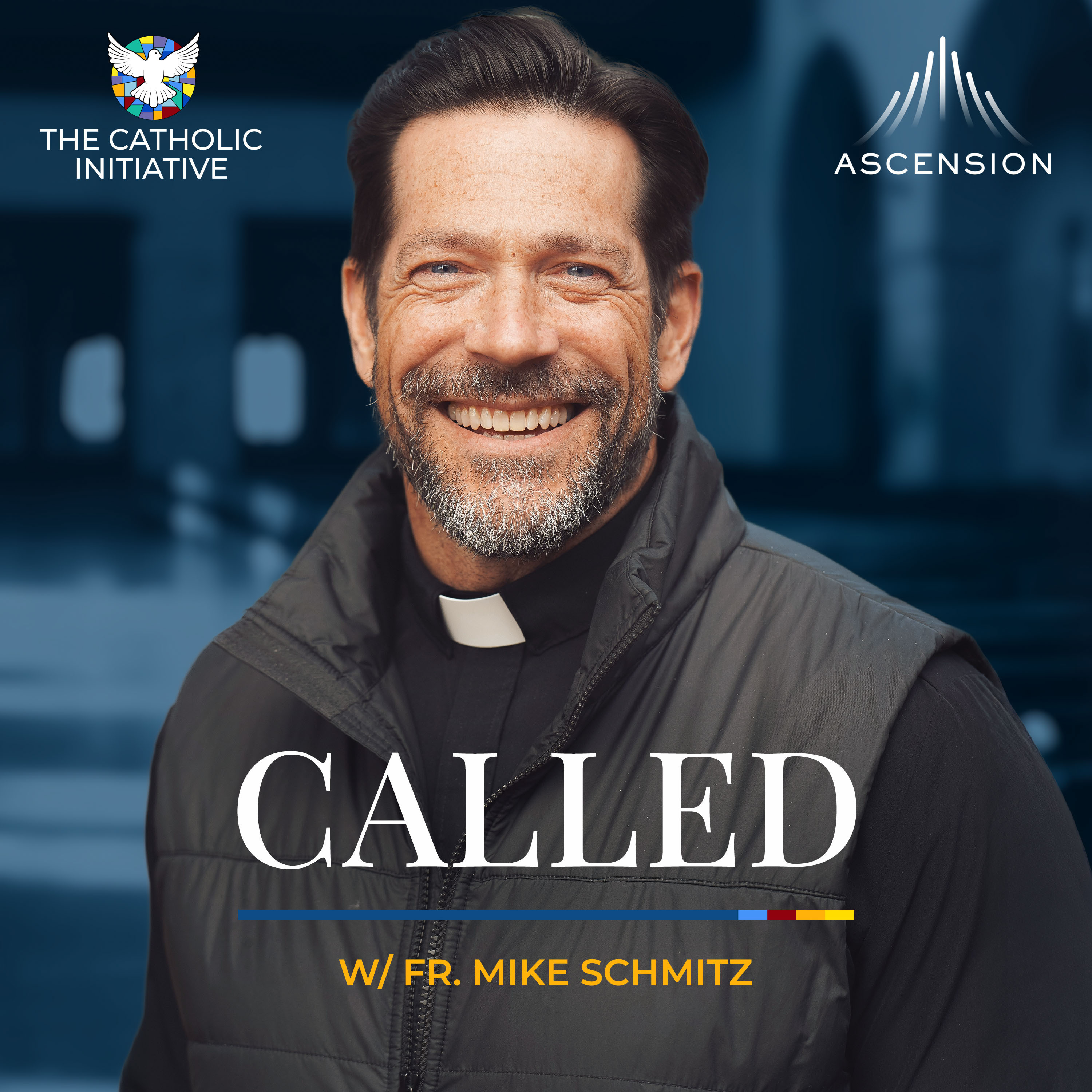
Called (with Fr. Mike Schmitz)
Called to Defend Religious Liberty (w/ Fr. Mike Schmitz and Mark Rienzi)
00:52:25
In this episode of Called, Father Mike Schmitz sits down with Mark Rienzi, the President and CEO of the Becket Fund for Religious Liberty. Mark has led an extraordinary, unbroken string of landmark victories at the US Supreme Court—defending everyone from the Little Sisters of the Poor and Hobby Lobby to everyday parents and ministries. But his journey didn't start with massive victories. It started with a 13-year string of losses. Join Father Mike and Mark as they dive deep into what it truly means to defend the fundamental freedom to live according to one’s faith, how to overcome the fear of being powerless in a contentious culture, and how ordinary people are called to stand up for the truth with courage, excellence, and hope. To receive updates on the podcast text CALLED to 33777. If you have a question or a story of someone living out their calling to serve others, email info@thecatholicinitiative.org.
Loading summary
Transcript63 lines
- [00:00]
Father Mike Schmit
Coming up in today's episode of Called,
- [00:03]
Mark Rienzi
it's easy to see that God can take what seem like the biggest losses and really turn them into the biggest wins in the long run. I represent the little sisters of the poor. It should be impossible to lose for them. You know, I told her about the loss, and I told her about the $75 million in fines that were going to come in three days. She said, well, really, Mark? How many sisters would they put in jail? And I'm like, mother, I get it. But it is my job to not let you ask that question.
- [00:31]
Father Mike Schmit
Hi, my name is Father Mike Schmit, and welcome to Called, a podcast from the Catholic Initiative and produced in partnership with Ascension. From the moment that I joined the Catholic Initiative board, I was inspired by the clarity of its mission. It's a mission rooted in the heart of the gospel, which is renewing the church by serving those most in need. By restoring parishes and schools, they're helping communities flourish and giving witness to a faith that is meant to be lived. This podcast exists to share stories of courage, of mercy, and of hope that call each one of us from belief into action. As Jesus teaches us In Matthew chapter 25, he says, Whatever you did for one of the least of these brothers and sisters of mine, you did for me. So every episode, we'll explore how ordinary people are answering that call in extraordinary ways, and then how you and I are called to do the same. In the Old Testament, in the book of the prophet Isaiah, it's chapter one, verse 17. The Lord speaks through Isaiah, and he calls us to learn, to do good, to seek justice, correct oppression, bring justice to the fatherless, and plead the widow's cause. So the question is, what does it mean to be called to defend the most fundamental of freedoms, the freedom to live according to one's faith? So today we are joined by Mark Rienzi. Mark is the president and CEO of the Becket Fund for Religious Liberty. It's the nation's premier law firm dedicated to protecting the free expression of all faiths. Mark is a graduate of Princeton University and Harvard Law School. He's also a professor of law at the Catholic University of America, where he co directs the center for Religious Liberty. Under Mark's leadership, Beckett has won an extraordinary unbroken string of landmark religious liberty cases at the US Supreme Court. From Hobby Lobby and Little Sisters of the Poor to Fulton v. Philadelphia and Mahmoud versus Taylor, Mark's work stands at the intersection of faith, law, and service, defending the rights of people of all faiths to live out their convictions. Without government interference. And so, Mark, it is an honor to have you on called.
- [02:28]
Mark Rienzi
It's an honor to be here, Father Mike.
- [02:30]
Father Mike Schmit
I guess the first question would be, take us to the beginning. What drew you to work with religious liberty law in the first place?
- [02:37]
Mark Rienzi
If I can start early. I was a very argumentative kid. When I was a kid in grammar school, the teachers would say to me, rienzi, you're gonna be a lawyer. It was never a compliment. It was always like, you are such a pain. You're gonna be a lawyer. And so I kind of had the impulse to argue, and the impulse to, you know, want to defend people was always just part of who I was and how I interacted. And then as I got older and I got to law school, is when I really found religious liberty law. And so then, kind of right after law school, as I was finishing up law school, is when I got into my very first religious liberty case. I should have been studying for the bar exam, Honestly. Instead of that, I was launching my first case for. I went to law school up in Boston, and I was fighting for Catholic women who wanted to offer help to people who were seeking abortions. And they weren't yelling at people. They weren't blocking people. They were just saying, hey, if you feel like you have no place else to go, I can help you. And Massachusetts wanted to make it illegal for those women to even have a consensual conversation with somebody on a public sidewalk. And I remember realizing that this bad trait, maybe the argumentative bad trait, that I felt like I had actually had some pretty good valuable uses and realizing that I could put it to use helping people in doing something really good. And that's a case that started out with a big fat loss the first time I went to court to argue it. And that was followed by 13 years of losing that case. But it eventually turned into a big win at the Supreme Court, where the Supreme Court agreed that Eleanor McCullen, one of the wonderful women I was representing, had the right to speak to those women. And if those women wanted her help, they had the right to get it.
- [04:29]
Father Mike Schmit
Wow. So it didn't start off with, like, here, this incredible victory, and then, like, that's what I'm gonna do for the rest of my life. It started with a loss. How did you deal with that? What was that process like for you?
- [04:43]
Mark Rienzi
Yeah, it's funny. Early in my career, every time I touched one of these cases, it was a terrible loss. It was tough, right? It's tough to feel like you're arguing about things that matter, and you're then not getting the results you want. And that's hard. That's part of the career. That's part of the job. And often, now that I look back at it, over 25 or 26 years of doing it, it's easy to see that God can take what seem like the biggest losses and really turn them into the biggest wins in the long run. But the day it happens to you, it feels like a kick in the stomach, and it feels like you're a failure about something that was important. So it takes time to learn to get through those and eventually see how God can turn them all to good.
- [05:28]
Father Mike Schmit
That's incredible. Especially even just thinking about how. Here's what I imagine. I know you went to Princeton and the Harvard Law School. And so, I mean, I've seen a couple episodes of Suits, and so I know that Harvard Law School is a pretty big deal. I imagine that if you're going to Princeton, you're doing well. You go to Harvard Law School, you're doing really well. But imagine that a lot of the people in there are on a track to like, no, we want to do corporate law. We want to make the big bucks. We want to get into kind of the biggest firms and not necessarily defend religious liberty. Was there a case or a situation or how did you. I mean, there was that first case you had, but was there a particular experience or a moment where you knew that this is what I'm supposed to do?
- [06:15]
Mark Rienzi
I spent a few years in one of those big, fancy law firms, and it was great training. It's where I learned how to be a really good lawyer, was being trained on those cases. But as I did it, it was always clear to me that I could do the paying work. And I was a pretty good lawyer at that. I don't think I was the best, but I was pretty good. But when I would do these cases, when I would represent people like Eleanor McCullen or pharmacists who were getting chased out of their profession because they wouldn't give an abortion drug or something like that, that. That was really what felt like. It lit me up inside, and what felt like, this is what God is really pulling me to do. The law firm wasn't really what God put me here to do. Right. I was litigating patent cases at a big law firm, which is great work, and we wouldn't have good drugs to treat people's illnesses if we didn't have big pharmaceutical companies that had patents. So I felt like I was doing Something productive in the world. But I didn't feel like God made me to fight about which company invented that chemical first. So eventually I realized this is not the path for me. And then I switched to teaching at Catholic University Law School and litigating these cases, which I eventually joined up with the Beckett Fund to really get to be with a whole team of wonderful people to litigate these cases.
- [07:31]
Father Mike Schmit
A lot of times when I'm talking to someone, it seems like that their path is kind of one of those situations where here this door opens up, and I took it like, wow, this is. It's born fruit. You know, another door opens up, and I kind of pursue that, like, maybe working at cua. Other people are like, I'm sitting back there and I have this place of discontent, and I'm just asking, God, God, where do you want me to go? Was either one of those for you where it was just kind of like, here's the doors kind of opening and like, wow, God's leading me to this. Or was there some discontent where you. We're trying to discern actively. God, I don't want to be here. I don't think you want me to be here. I want to be somewhere else.
- [08:05]
Mark Rienzi
Yeah. So a little of both is what I would say. I got to a point where I realized I was spending long chunks of time far away, fighting about patent law and just thinking. It just doesn't seem like this is really what God's calling me to do. And then there was a time to just sit down and think and pray and ask, okay, where are you leading me? I knew wherever I went, I was supposed to be finding a way to litigate these kinds of cases. I didn't know the Beckett Fund at the time, so I went to Catholic University to start off as a law professor who litigated some cases on the side. But then Seamus Hassan, the wonderful visionary person who founded the Beckett Fund. Seamus called me up, asked me to come out to lunch, and said, hey, I see that you know how to do these cases. We need people like you to join our team. Would you come? And it was originally supposed to be a halftime job, but the moment I set foot at the Beckett Fund, it was like, okay, I found the. This is it. This is the place I'm supposed to be. And this is the. I'll be perfectly happy if this is the last job I ever have.
- [09:14]
Father Mike Schmit
Wow, that's incredible. Was incorporating your faith into your work always a desire or even a motivator? Or was it one of situation where it's Just happy accident.
- [09:29]
Mark Rienzi
No, no. From the beginning, the reason I was attracted to these cases and to doing this kind of work was my Catholic faith, was feeling like God gave me the skills and the abilities he gave me. And there's plenty of abilities he didn't give me, but he gave me an ability to be good at some of this stuff. And always feeling like, this is what I'm supposed to do. This is what God wants me to do with it. And so for a while, I did it as kind of my thing on the side that I did while at a big law firm. But once I was able to kind of reorient the ship and make it the main thing that I focused on all the time, I've kind of never been happier professionally feeling like, okay, I've aligned my use of my time and my use of my skills with what I think God wants me to bring to the world.
- [10:17]
Father Mike Schmit
It seems like the crisis. I don't know if that's too strong of a word, but the reality that someone that we need in our country, which is incredible country, but in our country, we need people like you to be able to stand at that line and hold that line for people when it comes to. Of all walks of life or all faiths, to be able to hold that line when it comes to religious liberty. And so for you, it's not even like just a. A legal concept, but arises from that religious liberty, as the Church teaches. Religious liberty is essential to human dignity. Has that always been really clear for you? I mean, even going through Princeton and going through Harvard? Or was it something that grew?
- [11:01]
Mark Rienzi
Yeah, it's funny. It's something that was clear to me long before I read it as the Church's teaching. So I don't know how old I was when I eventually picked up Dignitatus Humanae from Vatican II and read the Church's teachings on religious liberty. But I think I had also come to kind of the same place before reading it as the Church's teaching. And just this idea that God made all of us free, God wants us to freely be able to seek him, and that the idea of the government being able to control your ability to do that is a very bad thing. And that if the government can take away your ability in your own mind and heart and soul to seek God, then you don't have much left. And that's really a line worth holding and a thing worth fighting for. And I'll say one thing that I've learned through my work at the Beckett Fund is that protects all sorts of things that are good and true and beautiful and wonderful in the world. Right. Allowing people to live out their faith really gives so much good to our world. And the real good in the world is not the lawyer or the lawyers doing legal stuff. It's the stuff we get to protect, and it's really an honor to get to protect that stuff.
- [12:15]
Father Mike Schmit
Have you any kind of examples of how you're protecting religious liberty? Has echoed out where you can say, okay, because we were able to fight for this and maintain it or establish it. Here's the ripple effect.
- [12:30]
Mark Rienzi
Yeah. I'll tell you my favorite one, which is pretty recent, which is a Catholic health practice in Denver, Colorado, called Bella Health and Wellness. They do all sorts of wonderful things, but one of the things that they do is if women have started to take the abortion pill and then change their minds and say, oh, wait, I actually don't want my baby to die. I want to save that baby. Bella Health helps those women by giving them some progesterone, natural hormone. Colorado tried to make it illegal for Bella to help these women who wanted to get some progesterone to save their babies. And the women who run Bella said, look, I feel obligated to God. If a woman comes in and says, I need your help, I'm not gonna say, no, I can't help you. I'm not gonna turn her away and send her home. I'm going to help her. And so Bella hired us to represent them, and we took on the case, and we sued Colorado saying, you have to let Bella, as a matter of their religious liberty, provide this kind of safe and effective help to women. And I'll tell you two things about that case. One, it resulted in things that, to me, feel like the hand of God steering things. Feel like kind of small miracles, at least. And two, it's had great results. So the small miracles, we took that case, and we needed to show the judge why this is urgent. And the afternoon that we're filing the case, somebody knocks on Bella's door and says, hey, I'm in exactly that situation, and I need your help. So that let us go to the judge and say, judge, this is urgent. We need help right now. We were sitting there worried, like, how are we going to convince the judge this needs to be done right now? And all of a sudden, God sends somebody in trouble to bell his door. That lets us tell the court, we need help right now. And then the second thing is that there are women who end up finding Bella because of all the hostile, negative attention from Colorado's government. In other words, Colorado tried to make it illegal to help these women, but when they do it, they make a big press splash, and there end up being women who didn't know anything about Bella, didn't know anything about the ways progesterone could help them, but they find out about it because of the press created by Colorado's attack. And so today, and this is just one of our cases, but Today, there are 22 little babies and toddlers hanging out in Colorado because Bella had the courage to have its case and because we were able to win their case. And like, those kids don't know who we are. Those kids probably don't know who Bella is yet. But religious liberty saved their lives. And it's really an honor to get to help Bella do those things. And really, every one of our cases is about kind of holding the door open and letting other people do great work to serve God.
- [15:13]
Father Mike Schmit
Well, that's incredible even to realize that that was even under attack or that was threatened by the state there to be able to say, we want to be able, like you said, in a safe and effective way to help these moms save their babies lives. And that I wouldn't have even known that that was a fight that needed to be had.
- [15:36]
Mark Rienzi
I didn't either until the phone rang. I didn't know anything about it till the phone rang. And it's one of the sad things. Cause no matter what anyone thinks about abortion, pro life or pro choice, most people would agree if the mom says, okay, but now I want to save my baby, most decent people will be like, okay, then let's help her. But it's, you know, sometimes these things get tied up in just culture war politics in ways that can be very, very devastating to real people. And so religious liberty can help fight back against that and protect those moms and help Bella and help those babies.
- [16:10]
Father Mike Schmit
Well, for you in that, do you ever find yourself battling against resentment or bitterness kind of when it comes to that we said, here's culture war stuff, that this is an unnecessary fight if we just let people do what's right? Or do you ever find yourself getting kind of internally angry? Or have you learned how to work past that?
- [16:30]
Mark Rienzi
You know what? The truth is, I'm a pretty happy, optimistic guy, and I've learned to work past it. This is kind of the nature of the world we live in, right? We live in a pretty contentious time. We live in a time where people, some people like to be in big fights all the time. And what I'm really grateful for is that God gave me a way to help out in that situation. And God gave me a tool that I can take sometimes silly or dumb, aggressive, culture war, things that are turning into attacks, and I can actually go to court and turn it into something good, which is precedents that help protect other people. And so it doesn't usually get me down. I wish it were otherwise. I'll be happy to retire someday and just make pizza or do some other career. But in the meantime, I feel pretty blessed that I get to have a role in trying to address those things.
- [17:20]
Father Mike Schmit
That's a key thing, too, right? You're not powerless. And you know that. Here's what I can do. I think that's internally dispositioned, an internal disposition of a lot of humans, where if I feel powerless, that's where I start getting bitter or I start getting resentful. But when you know, like, no, I'm not stuck, like, there is something I can do here that probably tends a little bit more towards that positivity, which is good.
- [17:44]
Mark Rienzi
It does, Father. And can I tell you, in some ways, the most important thing is not for the lawyers to know that, it's for the faithful to know that. Right. It's for the Catholic schools and the hospitals and all the religious people trying to raise their children the way they want to raise them, trying to have their different ministries the way they want. It's so important for those people to realize that they have rights and that the truth is, when you stand up on your religious liberty rights, there's a good chance you're gonna win. And a lot of times people let the pressure of government or the pressure of the moment stifle them or stop them from doing what they want, because they do feel powerless, as you said. And so getting people to understand that they've got real rights and that they've got the freedom to live out their life, too, and that there are ways to protect the things that matter to them. That's really important because lawyers can't do a thing without brave clients who say, you know what? I'm not going to yield on that. I can't yield on that. So let's go to court.
- [18:42]
Father Mike Schmit
I think it's really helpful for all of us to hear because probably most of us who are listening to this are not in that. In your area, in your arena. And it really can feel sometimes like when it comes to the culture war or political war or that sense of like, what can I do? And so it's so good for me at least to hear you say no, actually, what we need is we need faithful people who are willing to be essentially, maybe even this claim your religious liberty that is not only God given, but also enshrined into law. We have to claim that so we don't fall into that trap of being powerless. I appreciate that. There's a SO Catholic initiative, you know, who supports this podcast. They also support schools. There's a place called the Josephine Academy. It's called the J.O. it's in Chicago and it serves a number. It's an all girls Catholic school and it serves young women from under resourced backgrounds to be formed as leaders. You know, get them through high school and prepare them for the next step. So there's all these girls at the JO at Josephina. And if you could speak to one of those girls at the JO who has a spark of interest in the law, she sees maybe injustice in her community, injustice in the world, wants to do something about it, what would you tell her? Here's a good next step for a girl like her.
- [19:58]
Mark Rienzi
Yeah. The first next step I tell any young person is to go to YouTube and to look up Seamus Hassan's Ave Maria speech. He did the graduation speech at ave Maria in 2013, and the line he kept repeating was, ask God to let you help. He basically described his experience founding the Beckett Fund. And it's, it's a great speech. I watch it every year, but it's a great way to think about finding your vocation and figuring out, well, God, I'm here and my world is messy. What can I do? What do you want me to do? So watching that speech is great in terms of thinking, specifically when you're 15 or 16 years old, should I be a lawyer or not one you got several years before you really need to make a decision like that. I think it's important to think about your skills and what are the things you like to do. There are a lot of ways to fight for people's rights without going to law school. We have a lot of talented people at the Beckett Fund who are not lawyers, but who are part of fighting to protect people's rights. But if you're thinking about law school, the thing you need to think about is, do I like reading, do I like writing, Do I like making arguments? Am I comfortable standing up and taking the hard questions from a, from a hostile judge or a hostile reporter who doesn't agree? That's not everybody. But if it turns out you've got that set of skills. Look, I think for people who are made to be Lawyers, it's the happiest job and the happiest thing you could do to contribute to the world. And ultimately I would also say just look at your skills and look at the needs of the world and find ways to live a life and use those skills to serve others. Nothing will make you happier in your job when you go to work every day to earn a living, than if you're doing it in a way that helps other people, that you're not just doing it for you, you're doing it for other people. That's enormously fulfilling.
- [21:53]
Father Mike Schmit
That's such a good piece of counsel when it comes to, I mean, I think there's the kind of the counsel of follow your passion or follow your bliss, that kind of situation. But I really, really like that prayer. It's from Seamus. Is God, let me help?
- [22:07]
Mark Rienzi
Yeah, ask God to let you help. Ask God to let you help. He, you know, it's, Everybody should watch it. Seamus hassling Ave Maria 2013. It's a five minute speech, but it'll stick with you.
- [22:18]
Father Mike Schmit
That's, that's incredible. And so, so Seamus is the founder, right, of the Becket Fund. Yep. And so I get, I get emails from the Becket Fund for the last number of years of my life because I'm such a big, not just a fan in that sense of, you know, like, I admire her, but also I feel convicted that this is, this is a really, really important in our culture, in our country right now. Again, as I said, love our country. I think our country is great, but we do, it seems like we do need something like the Becket Fund, an organization dedicated to religious liberty. So if you were to talk to someone who doesn't know much about Becket, how would you explain why we need, in our great country, why we need an organization dedicated to religious liberty?
- [23:05]
Mark Rienzi
I'd probably start at the beginning. Maybe this is because I'm thinking about the 250th anniversary of the country coming up. But religious liberty and our First Amendment are kind of America's original inventions for how are we all going to live together despite the fact that we're free to have different beliefs about really important things? And sometimes people look back at the founding and say, well, they were all Christians, so they all basically agreed, no way. Right. Those same groups were killing each other in Europe when they came over here. These were not just mild disagreements among friends, these were things that people were killing each other over in Europe and in America through fits and starts and imperfectly all the way. But in America we basically had this idea that we're going to be able to live together in peace with a real live and let live attitude that I'm allowed to live out my beliefs and pursue God the way I best understand him. And within broad limits, my neighbor's gonna get to do that too. And I don't need to make it illegal for my neighbor to have that belief. I don't need my neighbor to get chased out of a job or have their life ruined cuz they've got different beliefs than mine. We could just peacefully coexist even though we're free to disagree about important things. And that was the idea at the founding with our early commitment to religious liberty. Again, very imperfectly executed. And I think that's something that America today really needs to discover and rediscover. Right? Like we like our freedoms, we like being free. Every one of us likes the freedom to have our own ideas about the world, and that's good. And free people given the chance to think for themselves are gonna come up with different answers to really important questions. And we're either gonna be at each other's throats and trying to kill each other all the time, or we're gonna be committed that we're the kind of society where we can live in peace, we can try to convince each other and change each other's minds and. But it's okay. It's in fact quintessentially American to look around your neighborhood and see there's a Jew over here, a Muslim over here, an atheist over there. They're free people and we can all find ways to work together. And I actually think that's kind of the magic of America. And I think rediscovering and recommitting to it would do us a lot of good.
- [25:14]
Father Mike Schmit
Well, I agree. The Becket Fund, one of the things that sets you apart is that you will defend people of all faiths and backgrounds. So I mean, whether, like you mentioned, whether someone's a Christian or Jewish or a Muslim or whatever, or atheist, Native American, someone who is, you know, animist or something like this. Why would you say that? The fact that Becket Fund is committed to doing that to represent people of all faiths, why is that so central to who you guys are?
- [25:46]
Mark Rienzi
I think it's. Well, I think it's important to do. And I'll tell you why I think it's central to who we are. It's important to do, at least for me, because if you honestly believe that every other human being is a beloved child of God, then I think you have to believe that God gave them freedom and that they are supposed to be able to live out their faith and live out their life. And that the idea of the government stamping that out is a bad thing. Right. We're made in the image of a loving God. That includes our freedom to think about these things. And the government shouldn't snuff it out. So I think it's the right thing to do. I also think our rights are just all interconnected. Ben Franklin said at the signing of the declaration, we must all hang together, or assuredly we will all hang separately. And I think the fight for religious liberty is very much like that. I think there's much more that religious people have in common than that divides them. And we're all seekers and attempters to find God's will and to do it. And I think the rights that get taken away from the Jew or the Muslim or the Native American or the Catholic are going to be taken away from the other groups five minutes later. And if you look at the law, a lot of the First Amendment rights that we all have in all sorts of areas were built by Jehovah's witnesses in the 30s and 40s and 50s. Right. Jehovah's Witnesses ran into lots of legal trouble. They were very stubborn about their views about what they ought to be allowed to do. And they built out First Amendment rights. And those are First Amendment rights that we all exercise all the time. All of our rights are interconnected. And so it would be a mistake or it would be only doing half the job to say, I only want to stand up for the religious liberty of the guy who shares my beliefs. That's good. That guy should have his religious liberty defended. But I think it's important to do more than that. And that's always what Beckett's been committed to. And I think the courts know that we're committed to that. Cuz they see us representing people of all different faiths and they get that we care about the principle. And I think that's important.
- [27:40]
Father Mike Schmit
Well, so here's this kind of a. I'm just curious, what would you say if someone were to say, ask about, okay, I get it. I get defending the rights of Jews, Christians, Muslims, the right of the atheist. Where does religious liberty run up against like say the right of like the Satanist or someone who is practicing witchcraft or things like that? Is it like, no, we include all of those things? Or is there a line that is easy to find? Or is it pretty difficult to find
- [28:09]
Mark Rienzi
There's a line that, for me, is pretty easy to define, which is, we wouldn't defend a Satanist. Most of the time when people are in the news saying they're Satanists, I don't think they're actually sincere believers in religion. I think they are mockers of religion. So, one, I don't think they're usually sincere. But two, if somebody is sincere but wants to do something evil, I wouldn't defend that either. Right. So Beckett doesn't. If somebody says, it's my religion to drive the wrong way on the highway tomorrow, my view would be, you should lose. And if you say it's my religion to sacrifice my children to Moloch, I would say you should lose. So we don't represent people like that. Again, I think most of the things in the news you see about the Satanists, I don't think are actually sincere religious believers. I think they are opponents of religion. And so it's pretty easy for people.
- [29:00]
Father Mike Schmit
I'm trying to use that as a tool.
- [29:02]
Mark Rienzi
Yeah, they're trying. After the Dobbs case, there were a lot of people saying, well, God tells me we need liberal abortion laws so that everybody can have all these abortions. And I don't rule out that it's theoretically possible, but I think in most of those cases, I don't think it's sincere. And I think even if it were sincere, the government's got a perfectly compelling interest to say, yeah, but we're not gonna let you kill your children.
- [29:27]
Father Mike Schmit
Yeah. Yeah. Which I think common sense just makes sense. But I thought, like, well, gosh, Mark, I've got you here. I should probably ask you, like, what someone.
- [29:38]
Mark Rienzi
It's a great question.
- [29:39]
Father Mike Schmit
Yeah, thanks.
- [29:40]
Mark Rienzi
Well.
- [29:41]
Father Mike Schmit
Cause you guys have had, like, a really incredible. You might have started off with that first case of the women who wanted to be able to have a conversation outside of an abortion clinic, as with some losses, but some victories. But you've had a pretty extraordinary run of Supreme Court victories. So, like, again, Hobby Lobby, Little Sisters of the Poor. Fulton Mahmoud. What ties all of those together?
- [30:05]
Mark Rienzi
Yeah. One, you're right. God has really blessed the work of the Becket Fund. It's been an incredible run. A few things tie them together. One is the intolerance of the other side. Like, all of these cases usually come from some. Somebody on the other side who is saying, you must do it exactly like I want, and if not, we're going to punish you. So the Little Sisters of the Poor are the best example of that. And this started a dozen years ago. And in some ways, pieces of it still continue, but where the government says, you can't run a nursing home and care for these elderly people unless you provide contraceptives to your employees. And no matter what anybody thinks about any religious beliefs, everybody should want the little sisters of the poor taking care of the elderly poor. So it's one of the few things 100% of people probably agree on. It's good for these wonderful sisters to be caring for the elderly poor. But again, tied up in a silly culture war fight, the government for a long time was insisting that they were gonna shut the sisters down and fine them $75 million if they would not yield on their Catholic beliefs and cover drugs that cause early abortions and things like that. And so in a lot of these cases, I think there's just kind of a thoughtless intolerance that is what creates the fight. But as you litigate the cases, it almost always becomes clear that there's plenty of room for live and let live. Let me give you one example. You mentioned the Fulton case, and Fulton's a great example of where religious liberty can kind of change the world. So for a long time, starting about 20ish years ago, when some governments were insisting that you can only do foster care if you place people, if you place children in either same sex households or unmarried opposite sex households. And of course, the Catholic Church has religious beliefs about these things. And so Catholic Church, when it's doing foster care, typically says, no, we're looking for a married mom and a dad. Right? Unmarried, opposite sex, they don't want to place children, and same thing for same sex couples. For a long time, a lot of dioceses just backed out and said, okay, if the rule is I have to place children in those other homes, I'm not gonna violate my religion. But I guess I'm not doing foster care anymore. And that happened in Boston, that happened in Washington and a few other places. The Fulton case arose because Archbishop Chaput in Philadelphia said, I'm not going down without a fight. If in the end I'm gonna end up with no foster care, I might as well go to court and have a fight about it too. And we went, and that's a case that we lost at the trial court and we lost at the court of appeals. But eventually we got a 9 nothing win at the Supreme Court saying, catholic Charities is allowed to be Catholic and it's okay if they have Catholic beliefs about where to place children. And by the way, there's 30 other agencies that can place children in other homes. And one of the things that case taught me is one, it's the importance of standing up. Right. Like, many people just receded from the fight and said, okay, I'll go do some other good work, but I won't do that work. And that's a shame. The Catholic Church has been caring for widows and orphans for 2,000 years. Right. It's bad for them to recede, but somebody had the courage to stand up, Archbishop Chaput. And when you did stand up, it actually became clear there's plenty of room for gays in Philadelphia and the Catholic Church to coexist. My favorite fact from the case is when we got into the case and at some point, somebody wanted to know, well, how often does it happen that a same sex couple comes to Catholic Charities and wants Catholic Charities to do the home inspection? We asked everybody, you know what the answer was? Yeah, it never happened. It actually never happened. Right. The gays in Philadelphia and the Catholic Church in Philadelphia understood that they had different beliefs about sex and marriage, and they were coexisting just fine. And it worked fine. And after we won the case, to their credit, the city of Philadelphia is back to fully working with Catholic Charities, and there are many other agencies that help many other people. But now Catholic Charities is helping those kids in need. So to me, all of these cases, they have the similar themes of some intolerance on the front end. Someone needs to have courage to stand up. And when you really push on the facts, you often learn that there's really no reason for the fight at all. You can have both. If you want to have broad access to contraception in America, you. You can have a lot of contraceptives. And you can also have Catholic nuns who are faithful to the teaching of the Catholic Church and care for the elderly poor. It's nonsense to pretend you can't have both. And a lot of these cases just come from people pretending otherwise.
- [34:47]
Father Mike Schmit
Well, I'm so grateful for Archbishop Chaput to be able to. Cause I'd heard the same thing. I heard that Catholic Charities, in many ways just like, well, you know, I guess we can't do this anymore, so we're just gonna stop it. I'm so grateful that he and you, we're able to stand up, particularly, I mean, just to be able to even hold the line and to discover and demonstrate that we actually can continue like you said 250 years ago, we can continue to coexist in our nation and flourish and thrive in so many ways.
- [35:20]
Mark Rienzi
And don't we have enough problems that we should Say we kind of want all the helpers who want to come in and help, want to let them help. Right? Like, we don't want to be having these strict rules to keep people away from helping. It's a bad idea. And to me, it's just an example of where those culture war fights, kind of grown up fights about culture wars. If you don't control them, they end up hurting the kids. Right? Like there were kids in Philadelphia who were not able to find foster homes even though they were loving parents working with Catholic Charities who were available. And that's terrible. And we need to find ways to break through those things so that they don't happen.
- [35:54]
Father Mike Schmit
That is important. And then one of the. Another case, Mahmoud vs. Taylor, that upheld the rights of parents to opt their children out of curriculum that conflicts with their beliefs. I think it had to do with certain books.
- [36:09]
Mark Rienzi
So this is one from Maryland and it's Mahmoud versus Taylor. And it was fights about what they called the pride curriculum, which was books for three and four year old kids in pre K that were introducing same sex relationships and other themes like that. And the parents just said, hey, if you're gonna do that, like I really, I wanna send my kid to the library that day or do something different because that doesn't fit with our religion. And interestingly, it was. Sometimes you might think, well, that's conservative Christians who are having that fight. It was Muslim and Ethiopian Orthodox immigrants in Maryland who were saying, hey, can you please let me opt my kid out? And the school district said no. Right? The school district said, sorry, your kid is mine and I'm going to mold your kid. And they would do things like tell the children when you were born, the doctor only guessed about whether you were a boy or a girl, so you should go off and think about which one you are. And the parents didn't want this. And we went to the Supreme Court again, another case we lost in the lower courts, all the way up. There's a theme here. But we lost in the lower courts. But we went to the Supreme Court. And the Supreme Court delivered a strong win for parental rights, for the rights of parents to parents to still use the public schools. I was educated in public schools for much of my childhood, and many people are. And one choice for parents is to say, well, I'm religious, I want to leave the public schools. And I get that. And that's understandable if people want to make that choice. But for many people that's not a choice. And so the Mahmoud case allows them to bring their religious Liberty rights into the schools. When you send your kid to the school, you don't give up all rights to control what they put in your child's head. The child is not a creature of the state. They still belong to the parents. And the court vindicated that right. And I'm happy to say in the years since then, in hundreds of cases now, parents in other places are relying on the Mahmoud decision. So it's a win for the people involved, but it's also a win for the system and for rights more broadly that other people can exercise.
- [38:10]
Father Mike Schmit
Yeah. Across the country that just, I mean, I imagine virtually every public school has been impacted by that case.
- [38:19]
Mark Rienzi
Yeah. And the Supreme Court just used it recently to say that schools can't have these secret transition policies where they change a kid's gender during the day, but then don't tell the parents. The Supreme Court said no, this applies to that too. And so for the millions of kids who are in public schools, the millions of families who rely on public schools to say, look, we're not gonna say that our public schools are places where religious people can't go. No one's taking the books out of the library. No one's insisting you can't teach it. They're just saying, hey, when it's my child, I'd like some say in it. And the court vindicated that right. And we're really grateful that they did.
- [38:54]
Father Mike Schmit
Wow, that's incredible. I also, in addition to all of this work that you're doing as a litigator, you work at cua, a Catholic University of America, and as a professor, a teacher. In fact, they let me know that you've been voted teacher of the year three times at Catholic University of America, which I imagine is just incredible. Honor as students are saying, no, this is the teacher that we have learned the most from, we've grown the most from. That must mean you must invest deeply in your students. What drives you to invest deeply in the next generation?
- [39:34]
Mark Rienzi
I love my students and I love Catholic University Law School. It's a wonderful place to get to go and it's invigorating and exciting to walk into a classroom full of bright 23 and 24 and 25 year old kids and teach them about the law and hopefully teach them to think about how to live out a vocation in the law. Many, many of the students who come to Catholic are searching for that. They're not just there to make money, they're really there to take the skills they have and figure out how to use them to build God's kingdom and make the world better. So it's a wonderful thing to get to be a part of. I've had the pleasure of teaching people when they were early in law school and then hiring them at Beckett later, which is fun for me, but it's a wonderful thing to be a part of. And I'm optimistic, and I've benefited from great role models, and I've benefited from great teachers, and it's a fun thing to get to do and to be a part of and then to watch their careers and see what they go do.
- [40:35]
Father Mike Schmit
Yeah. Well, it's incredible because you've been doing it. I imagine when students are starting out, like anything, there's a lot of energy, there's a lot of hope, there's a lot of optimism, there's a lot of drive. And you've been doing this for many, many years, as you've described in some of these really important cases, with some losses and mixed in with these victories. When things get for you, I mean, year after year, this grueling work and, you know, opposition, that is pretty intense. How does, Mark, how does your faith sustain you to be able to continue to say yes to the Lord in this particular call that you're saying yes to?
- [41:16]
Mark Rienzi
Yeah, and you're right in zeroing in on the times when you lose and the times when it goes badly, because that really is where it tests it. For me, it's always just thinking and knowing that God's got a plan and that I am. I am not the sole person responsible for anything down here. I am supposed to do my best and try my hardest to defend people, but that God ultimately is writing the story, and I'm just playing a part and I'm supposed to do my best. So I'm gonna work very hard at it. But ultimately, it's not really all on me. So I'll tell you, the moment that sticks with me the most about that is December of 2013, when I had lost something very big for the little sisters of the poor. And I. It was the worst day of my professional life, like, the worst day of my career. Feeling like I represent the little sisters of the poor. I mean, they're the little sisters of the poor. It should be impossible to lose for them. And here I am. I've got their case, and then you get the ruling and you lost. And it feels like a kick in the stomach. It feels like you're a failure. Right. God trusted you with this wonderfully important thing, and you failed. But feeling like, okay, I don't fully understand the plan here, and I'm not fully in charge of it, but I know what I think God wants me to do, which is get back to my computer and work on the next brief and see if you can find a way to push it forward and turn it around and cooperate with God's will. And so, to me, my faith just drives me to think. I feel pretty confident that I'm doing what God sent me here to do. I also feel confident I'm not supposed to be fully in control of it. And so when you hit the bumps to say, okay, it's not how I would have written it, but I don't have the pen. Just go back to doing the things you're supposed to do. And that gives me comfort as I work through these things.
- [43:10]
Father Mike Schmit
Wow. I really appreciate that I'm going to write it down. And for myself, that sense of, I'm confident that I'm doing what God's asking me to do. I'm also very confident that I'm not in control of it. And that is really. Thank you for saying that, because it's just really impactful in that sense of, like, I'm even just thinking of that day in 2013 where you said, okay, here's the ruling. Back to work. And that sense, I'll do what I know I can do.
- [43:40]
Mark Rienzi
Yeah. And I'll tell you two things that help with that. One is great clients, and one is great colleagues. So the sisters, when that happened, I'll never forget the mother provincial mother Lorraine, who's fantastic and by this point, a good friend. I told her about the loss, and I told her about the $75 million in fines that were going to come in three days. And she said, well, really, Mark? How many sisters would they put in jail? And I'm like, mother, I get it. But it is my job to not let you ask that question. And so, one, having wonderful, faithful clients helps in those situations, but two is having wonderful, faithful colleagues. The team at the Beckett Fund is really a bunch of people who have the same story I do. They've got the gifts and talents that God gave them, but they feel called to come together and do this. And this is people of all different faiths doing it together. But I get to work with fantastic colleagues, brilliant people, good people. Right. The finest people you could ever ask to work with. And so when things go badly, it's great to be on a team where everybody has that same attitude of like, wow, that hurts. Yeah, let's pick ourselves up and go. We're Supposed to do something next. You know, there's very little crying in your coffee around here. There's a lot of, let's just turn it for good and see where God's leading it. And being with a team of people who all feel that way from their various faith traditions helps you go forward and helps you do good things.
- [45:10]
Father Mike Schmit
That's so good. You're not on your own and you gotta keep moving. That's so good. When there are people, you know, we're coming to the end of this. I just imagine someone listening and they're like, yeah, that's it. This is my thing. I just. I love the fact that Becket Fund for Religious Liberty is doing this. I love that you, Mark, are doing this. If someone's listening and they feel stirred to defend the rights of others, but they don't know how to start, what would you say to them?
- [45:39]
Mark Rienzi
Again, I'd start with praying. And watching that video of Seamus is always a good place. Asking God how, right? Asking God how do you want me to help? Recognize that there are a lot of ways to help fight for people's rights. There are a lot of brilliant non lawyers walking around the Beckett Fund in this fight. There are a lot of people in all sorts of other very worthy causes and fights to go help people. Like, one good thing about living in a fallen world is if you look around and try, it ain't that hard to find people in places that need your help. Right? Like, you know, there's a lot of that out there. And so if you want to fight for things that you care about, there are a lot of ways if you want to do it as a lawyer, which is for some people, but not for everybody. To me, the best advice I give young law students about that is great. Go become an excellent lawyer first. Right? You could go right into the mission field or the mission fight right away. And for some people, that's the right path. But I find often the best path is, okay, you want to help people by being a lawyer, Go get some training and learn to be an excellent lawyer first. And then you can be an excellent lawyer for religious liberty or an excellent lawyer for saving the whales or pro life or whatever anybody wants to do. And I think that goes for a lot of different professions, right? Like, you can do a lot. If you hone your skills and become excellent at something, I bet there's a pretty good chance God can use you to do good. If you're open to it.
- [47:07]
Father Mike Schmit
Yeah. That's so good. I love the positive spin on we Live in a broken world. It's so broken that there's always somewhere you can find where God is calling you to be able to serve. But that sense of, like, really saying, okay, how do I become excellent in a thing? And then. And to put that at God's service, which I'm so grateful. I was talking to a man named Arthur Brooks relatively recently, and he had shared. We were just talking about just evangelization and sharing the gospel. And he said that. I've always said, I think the gospel in this day and age is gonna be shared more by family and friendship than anything else. And he said, I agree. But he said, by friendship and by excellence. And so not even just like, being able to put your gifts at the service of, like, a great mission like you guys have, but also just when you do excellent, your most best, your best work, when you do anything excellently, there's something attractive about that, too, that not only glorifies the Lord, but also, I think, gets people interested in what's the heart behind the excellence.
- [48:13]
Mark Rienzi
So, yeah, I certainly hope that's true of Becket's work. I'll say it's true. Within the Becket Fund, too. People come to Beckett from all different faiths. But I think it's kind of impossible to be around Becket and our clients and not grow deeper in your faith. Right. So the faith sustains the work, but in some ways the work sustains the faith. It's a nice cycle. But I do think when you do your best, when you try to be the best version of who God made you to be, I do think you're bringing glory to God. And I think you show people, hey, the religious people, they've got something good going on over there, and that's attractive. And I should want to be like that. We should want to have families like that. We should want to live lives like that. I think you're right. It's funny when you started saying that about your conversation with Arthur Brooks, I was sure you were going to say that the gospel would be spread by new technology and the Halo app and all those other things which are doing fantastic things to spread the gospel, but I also think you're right. It's friends and family and example and human interaction that really can light people on fire.
- [49:15]
Father Mike Schmit
This is so good. So speaking of coming to the end of our conversation, which I'm so grateful for, but when you look at the future, I know you don't have a crystal ball, but where do you think or where do you believe that God is Still calling you personally, Mark and Beckett. Into the future.
- [49:30]
Mark Rienzi
You know, it's hard for me to see too far into the future. I look at our world and I look at the field we work in, and I see rising antisemitism. I see challenges that come with that. I see a broken political world where people just seem to be at each other's throats and always looking to almost one up or be worse or be more aggressive than the other one. And I look at that world and say, wow, there's a whole lot we need to do to repair our society. And I continue to think that religion and religious liberty are just absolutely central to our country and to our future. And so to me, I think God's calling the Beckett Fund team, and me in particular, to do more, to reach out, to do more, to find more ways to help, because this is something we all need, and our country needs it now more than ever. And so just trying to be available, be able to do that service, and hopefully be able to lift people up by doing it.
- [50:30]
Father Mike Schmit
Thank you for that. There's a great need and you're responding to that call. And again, that's, in so many ways, that's exactly what this podcast is trying to highlight, which is people who are looking out in the world and seeing the great need and looking inside and saying, okay, God, I think you've made me or you put me in a position right here to respond to this need. And that's, I think, what is to be called. Mark, I am so grateful for this conversation. I thank you for your time. Thank you for. For your vocation in serving the church as a whole, but also the country as a whole, our culture. I'm just really, really grateful for you and for the Becket Fund.
- [51:09]
Mark Rienzi
Thanks, Father. All those same things right back to you. I appreciate all you're doing. You're building the church and building a better country and building a better world. And we appreciate it.
- [51:18]
Father Mike Schmit
I hope so. Praise God. And thanks to everyone who's listening to this. Thanks for listening to, called Today. This podcast, you might not know. It's made possible by the Catholic Initiative, which is inspiring bold faith in action by investing in vibrant but under resourced Catholic communities through the restoration of iconic parishes and schools and community institutions that just need. They're doing great work, but they just need help. If you want to learn more about their projects or discover how you can make a difference, you can visit thecatholicinitiatiative.org that's. That's thecatholicinitiative.org and remember, the Gospel is more than words. The Gospel is a way of life. As Jesus reminds us In Matthew chapter 25, when we serve the least of these, we serve him. So until next time, let's keep listening for God's call, and let's have the courage to answer it. God bless. Sam.