← Called (with Fr. Mike Schmitz)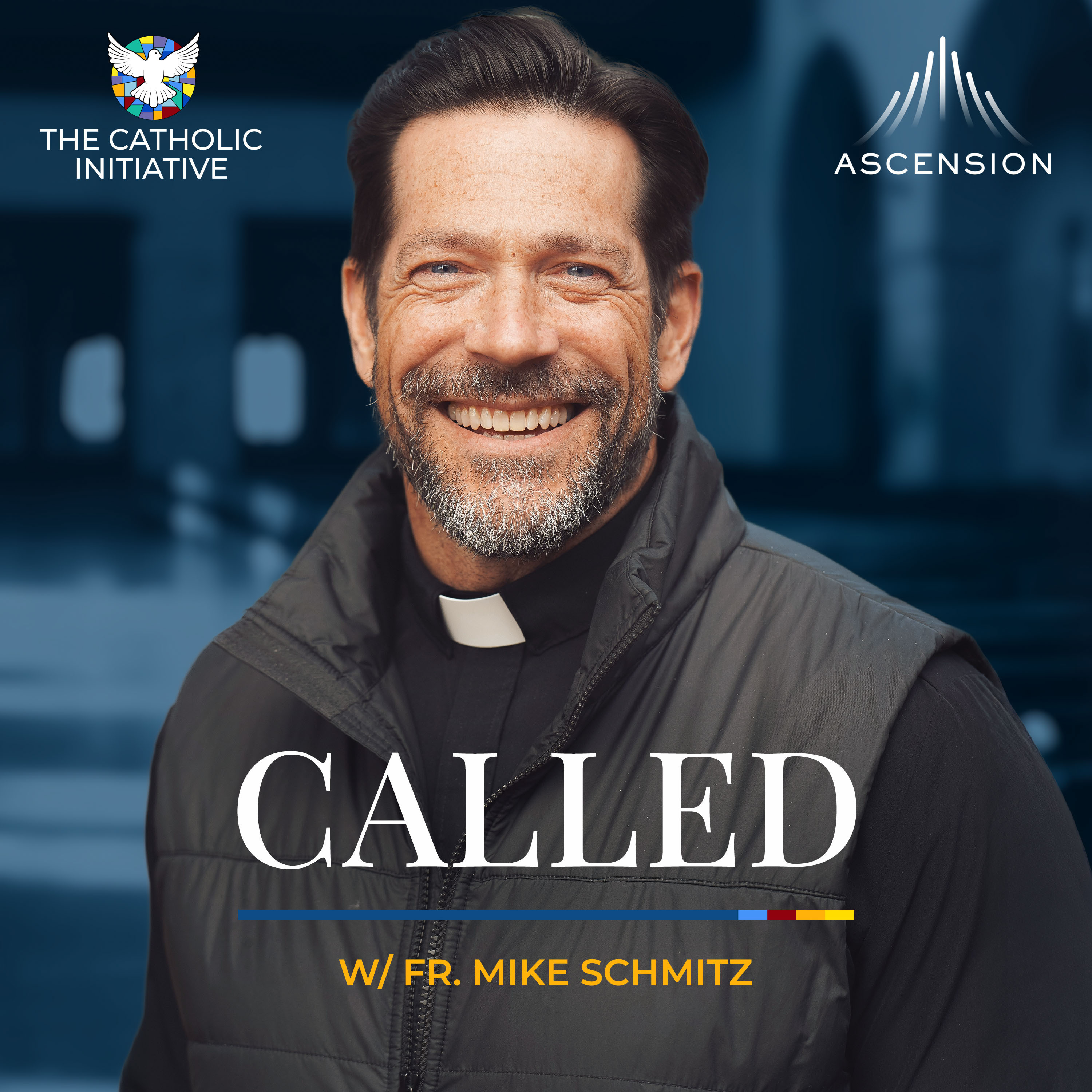
Called (with Fr. Mike Schmitz)
Called to Use God’s Gifts of Innovation Faithfully w/ John F. Crowley & Fr. Mike Schmitz
00:57:51
To receive updates on the podcast text CALLED to 33777. If you have a question or a story of someone living out their calling to serve others, email info@thecatholicinitiative.org.
Loading summary
Transcript112 lines
- [00:00]
A
Coming up in today's episode of cald,
- [00:03]
B
we knew by about a year of age that something physically wasn't right. Megan had this rare form of muscular dystrophy, a muscle disease. And I remember being with the neurologist that day, and his hand was kind of trembling, and I remember asking him, is it serious? And he said, yes, it's very serious. He said, she'll only live to be a couple of years old. There's nothing we could do. There's no research and go home. Enjoy the time you have. She wanted to fight, and so we would fight, too. So I quit my job and started working, starting a small little biotechnology company. Megan is now 29 years old. Patrick is 28.
- [00:45]
A
Hi, my name is Father Mike Schmitz, and welcome to Called, a podcast from the Catholic Initiative produced in partnership with Ascension. From the moment I joined the Catholic Initiative Board, I was inspired by the clarity of its mission. It's a mission rooted in the heart of the Gospel and renewing the church by serving those most in need, by restoring parishes and restoring schools, through helping communities flourish and give witness to a faith that's meant to be lived. This podcast exists to share stories of courage, mercy, and hope that call each of us from belief into action, as Christ teaches us In Matthew, chapter 25, whatever you did for one of the least of these brothers and sisters of mine, you did for me. So every episode, we'll explore how ordinary people are answering that call in extraordinary ways and how you and I can do the same. Today we're exploring what it means to be called, to use God's gift of innovation faithfully, to take the talents, the intellects, the creativity we've been given and place them in the service of others, especially in moments of great need. Scripture reminds us in Exodus 31:3 5, I have filled him with the spirit of God, with ability and intelligence, with knowledge and all craftsmanship to devise artistic designs. This passage reminds us that human ingenuity, our ability to build, to create and solve problems, is not separate from God, but it's a reflection of his spirit at work within us. Sometimes that calling emerges most clearly in moments of crisis, when love demands action and when faith compels us to step into the unknown. Today I'm joined by a man named John Crowley, who is a devout Catholic, a biotech leader, and so much more. John, welcome to Called Father.
- [02:33]
B
So good to be with you. Thank you.
- [02:35]
A
Thank you so much. So I had told someone before this, I said, yeah, I get to have a conversation with John Crowley and they said, wait, the John Crowley? I said, there are a lot of them out there.
- [02:45]
B
Father That's a lot. It's a very popular Irish name. So that's what it is.
- [02:49]
A
And I was like, yeah, yeah. But so the last person I talked to, he was 100%. He's like, wow. He actually said this, he said to me, he said, wait, you. I was like, yeah, right, yes, yes, me. I get to talk to him. So he knew who you are. John, at least you know some things about your life. John could you introduce yourself to some, some of the people who might have heard your name? Maybe they haven't, but they don't know you. Would you mind introducing yourself?
- [03:16]
B
Yeah, I'd be happy to. Father. So I'm John Crowley and I am a father, a husband, a grandfather. We have three children, John, Megan and Patrick. And we'll talk more about their journey in life. Father and we're blessed now with two little granddaughters, age 3. And Scarlet is just over a year. And I'll share a little bit more about how they came into our lives as well. And we live in New Hope, Pennsylvania, in Bucks County, Pennsylvania. We are about in my study here and we're about two miles from where George Washington cross the Delaware. And we're coming December on the 250th anniversary of that crossing. I grew up in North Jersey. My dad was a police officer, my mom was a secretary and a waitress. So very, you know, blue collar upbringing. And I know we'll talk father too about overcoming adversity and relation in life. And you know, you face it in many, we each face it in many times, in many ways in life. And for me, for my younger brother and I, we faced it very early and long time ago now, 1975, when I was seven years old and woke up one morning to learn that my father, New Jersey police officer, had died in a tragic accident on duty. And things that shape you in life and that was one very profound way and one very early way in life. Blessed to be surrounded by so much love and care and faithfulness to work our way through that adversity early in life that I think laid a foundation for other challenges that, that we would face. So that's where we are. We're blessed in, in so many different ways. And again, you had a chance earlier to meet on the zoom to meet my daughter Megan. We'll talk about Megan. And just a force of Nature now, at 29 years old, a young lady who wasn't supposed to live to be but a couple of years old. Wow.
- [05:12]
A
Well, thank you, John, for that. It was great to meet Megan, too, before we were able to start recording. But so if I could just go back, please, if you don't mind, to. When you're. You're seven and here you are, you have your mom and your dad, your brother. Here's this. To losing your father. How would you say that that was a time that really kind of shaped the trajectory of your life.
- [05:38]
B
It. It certainly was, Father. You know, you couldn't go back to that day and, you know, the, the knock on the door and, you know, you and I have. Have close ties to the military as well, and we've seen that from our great heroes and our gold star families in the military and so many in. In law enforcement and public service as well. So you, you go back in a very personal way, things you always remember. And, and yes, I remember that moment and the tragedy of, of that day, but you also remember the people coming together, whether it be at the funeral, thousands of police officers and other people together, friends, family, who surrounded us. But then there were the quiet moments, the gentle moments, too, where, as you know, a young child, you kind of struggle to reconcile this and putting life in perspective. I could remember being at my dad's wake, and it was very sad, of course. And I remember some young, young folks in the police department looking over at my dad's casket with the honor guard, and they were crying, too. I got that. But I'll never forget them. They said my dad was 35 when he died. Wow.
- [06:42]
A
So young.
- [06:43]
B
So young. And they said that. They said, oh, my God, John, John, poor John was so young. And I remember thinking I was seven years. I'm like, well, yeah, I'm really sad about my dad dying, too. But don't they know he was 35 years old. He wasn't young. And boy, that. I always remembered that. I remembered it the day I turned 35. And you think about how, you know, we just. My mom just passed earlier this year at 82.
- [07:08]
A
Sorry.
- [07:09]
B
So she, you know, survived 51 years after my dad. So how much more life. And so it's not just in the moment of death. It's in, yes, those days and weeks and months after, but it's throughout your life. And, and what do you remember? And, and what do you, you, Honor? When I. We talked about our service and some of the service that I had wearing the cloth of our nation, I remember rotating out of Afghanistan and looking at just a faded poster of U.S. troops. And this was in 2011. So 10 years after 9, 11. And it just said, live a life worthy of their sacrifice. That's what you always want to do, remember, love, pray, and kind of live. Live in that honor.
- [07:55]
A
Well, that, that, that. That's almost what. What I kind of got a sense of here is. I mean, I don't want to overstate it, but maybe it is the case that here is your dad, who, you know, he lived his life in service and he lived his life. My guess would be at least his. His. His work had meaning, Right? Had meaning. That sense of like, no, this is a. This is a worthwhile thing to serve and protect.
- [08:16]
B
Yeah.
- [08:17]
A
And did that, did that transfer to you?
- [08:19]
B
Do you do.
- [08:20]
A
Would you say that he and your mom, in that way, were able to hand on not just the faith to you, but also able to hand on this perspective of like, no life has meaning and meaning is found in service? Or am I just.
- [08:32]
B
No, you are absolutely right. In fact, I'm just looking at the camera shot here, and just the tight camera shot over my right shoulder is a picture of my dad in his police uniform taken just a couple of months before he died, right below the picture of Eileen and I meeting Pope Francis. And then I've got over here on my left, a crossed American flag and a Marine Corps flag. Now, while I was in the Navy, you know, it is. It is one Navy Marine Corps team, of course, but I remember growing up with my dad singing, you know, our lullaby song was the, The Marine Corps hymn. And so, yes, all of that in the notion of service and sacrifice. And it's, you know, it was never written down. It was just kind of imbued in sometimes very overt ways and sometimes very, very subtle ways as well, and all grounded in the notion of, you know, there's something bigger than you.
- [09:23]
A
Something bigger than you. Yeah, I. So could. Could you. Can you give us a little trajectory? Then you go through the rest of, you know, imagine elementary school, high school. How'd you get to where you are now? Or actually, well, we're going to get to where you are now. But then how'd you get. What were some of those next steps in your life that kind of brought you to a. I mean, the, The.
- [09:43]
B
The.
- [09:44]
A
This podcast, we get to talk about not only how putting your. Your skills, your talents, your abilities at the service of God, but also how sometimes that comes out of us in moments of crisis.
- [09:56]
B
It was so, you know, we. After my dad passed, we moved in with my grandparents. My grandfather had built his home. He literally, with his own hands, he Was a carpenter, built it with two of his cousins. Grandpa was from Italy, so that's the Italian side of the family. So I got the Irish and the Italian.
- [10:13]
A
The Irish and Italian, you got that mix.
- [10:15]
B
Very popular in New Jersey growing up. And it was a little 900 square foot house. Literally it was a two bedroom, one bath little house. But I thought it was the best thing because we had moved from an apartment and I had a yard and there was a playground across the street. And I went from there, went to a Catholic high school, Bergen Catholic High School in, in North Jersey and then on to. Spent time at the Naval Academy and then went on to get degrees. I went to some great. Was blessed to go to many, many great schools. I still think it's cleric by clerical error. I got. It must have been that other John Crowley who they rejected by mistake. But I got a degree from the School of Foreign Service at Georgetown and then went to law school at Notre Dame and from there I practiced some and went to business school, got an MBA degree. And that's kind of when life started to change for us.
- [11:10]
A
So you had pursued Naval Academy first and then did you serve in the Navy after the Naval Academy or did
- [11:17]
B
you years at the Naval Academy? My service actually came after 911 when I became a Navy Reserve intelligence officer and spent 12 years as a reserve intelligence officer. Again I got to work with some of the greatest warriors in the world on some very special teams and special projects. And again, just to put a small dental in the universe and to try to be a part of that fight.
- [11:40]
A
Was that the kind of thing that you saw? Here's, here's 2001, here's 911 and you're like, oh, I'm gonna enlist as a. Or is it. Or is this like you were already, you were in.
- [11:51]
B
I came back in after 911 like so many other people.
- [11:54]
A
Yeah. Like you saw a need inspired to
- [11:56]
B
do something right that you know, just here I am. Use me however we can. And so I ended up getting commissioned as an officer, intelligence officer and again working on some pretty, pretty special teams on, on some great projects.
- [12:11]
A
Yeah.
- [12:11]
B
And just you know, wanted to make, make a difference in, in that small way. It was I, you know, wearing the cloth of our nation. The uniform was the greatest honor of, of. Of my life. Wow.
- [12:23]
A
That's, it's, that's incredible. Again it just, I just want to highlight that only because it speaks to like, you know, the character of, of your character in that sense. That, that sense of okay, here's our country at A. At a critical moment, here's our country in crisis. What can I do? And then. And then doing something with this. And this is. Is this after you had already gone, gotten your NBA and your law degree?
- [12:47]
B
It was, yes.
- [12:48]
A
Okay, so you're already practicing.
- [12:50]
B
I was an old ensign father.
- [12:53]
A
Yeah.
- [12:54]
B
They eventually did promote me a couple of times, but yes.
- [12:58]
A
Wow. So. So this is like, this is one of those situations again, I wanted to dial back and say, what was it in you? I mean, how did you discern this sense of, like, okay, I've already got a master's in business. I've already got a law degree. I'm already working in the world, but my country needs me, and so I'm going to. And you were you. You're married at the time or married?
- [13:17]
B
Three kids. We, you know, we'll go through. When our kids were diagnosed with a rare disease. It was after that, I was an entrepreneur. And this is where, you know, you think about any certainly, you know, after 9, 11 and the global war on terrorism, how many people from every walk of life stepped up? And, you know, you saw that in really every crisis our country has had ultimately go back to World War II. Right. Didn't matter who went to an Ivy League school, who didn't, you know, didn't finish high school, who worked in a coal mine, who worked on Wall Street. It was everybody coming together for that greater purpose, that ultimate in sacrifice and service. And believe me, my service paled in comparison to so many others and certainly the sacrifice of so many, particularly those who made the ultimate sacrifice.
- [14:04]
A
Yeah. And as you mentioned, the sacrifice of people back here, Gold star families and
- [14:11]
B
those who have gold star families at the top. Absolutely. And our blue star families, everybody who had somebody who served. I, you know, when I was overseas or when I was on, I think in my 12 years, I spent about a thousand nights away from home wearing the uniform. And you think about that. I mean, I knew exactly what I had to do in the mission and the team we were with, whatever it may have been at the time, but it really was my wife Eileen, taking care of the kids back home. And you see that countless times in the service of our country. People always say thank you for your service in so many ways. They're thanking the entire family. We're serving Tyra. And you know this well through your brother's service.
- [14:57]
A
Yeah, absolutely. And so the kind of the recurring theme, it seems like, is in your life, there's a call and there's a response, there's a need, and there's what you are doing in response to the need? I think so. We have a motto here at the university with our Newman center, our students Catholic Student Center. And one of the mottos is see a need, fill a need. It's that sense of like, okay, because we have a little small house here, you know, and so. And the carpet gets dirty. Okay, see a need, fill a need. Someone is walks in and they don't. They don't know anybody. Okay, we'll see a need, fill a need. Someone's clearly in distress. Okay, we'll see a need, fill a need. And it seems like that's kind of a motto, not only when it came to, here's your early family, here's the country, but also you have kind of. You mentioned your kids. You kind of have a pretty incredible story that led you to the biotech field and rare disease advocacy. Can you tell us about that?
- [15:56]
B
Yeah. This goes back to 1998, Father. And this was when, just out of business school and we had two children. Eileen was pregnant with our third. And we found out right after she had our third Patrick, that our daughter Megan, who is 15 months old at the time, who you just met. And we knew by about a year of age that something physically wasn't right. She was cognitively just sharp as can be, but she wasn't taking those first steps, wasn't pulling up in the crib. And so we went from pediatrician to pediatrician to neurologist, from blood tests to scan to muscle biopsy. And they got the results and they delivered them to us. It was a Friday the 13th, a long time ago now, in 1998. And they told us that Megan had this rare form of muscular dystrophy, of muscle disease. It's called Pompe disease. There's no history in our family. Eileen and I are silent carriers. Like each of us are carriers for certain disorders, but not until typically you make a baby with somebody, and even then it's a 1 in 4 chance for many diseases that they'd inherit both bad copies of a gene. And so it kind of came out of the blue. You know, we had had very healthy families on both sides. And I remember being with the neurologist that day, and his hand was kind of trembling, reading, reading a book, medical textbook, because he had never diagnosed a child, very rare, about 1 in 20,000 births. And I remember asking him, is it serious? And he said, yes, it's very serious. And, you know, at that point, I think our greatest fear, Father, is that we'd be told that Megan would, would need a wheelchair, would never walk. And he said in this disease, Megan is missing an enzyme that for all of us living without the disease breaks down a stored form of sugar called glycogen in the muscles. And without this enzyme that Megan's body can't make her, all of her skeletal muscles are weak and will become weaker. Her swallowing muscles, her heart is a muscle. His suspicion was and was confirmed very quickly that it was profoundly enlarged and not functioning well. And he said she'll only live to be a couple of years old and there's nothing we could do. There's no research and go home, enjoy the time you have. And he looked down at, in the car carrier, at our then 7 day old son Patrick, and he said there's a 25% chance he has the disease. He should be tested too. But she was and he had the disease as well. So we go all of a sudden from a young couple and finishing school and lots of student loans, but finally we had a little house we had bought and the world was turned up. So our world was turned upside down very quickly.
- [18:47]
A
Wow, that's. I can imagine in one you saw it coming in that sense of being concerned about Megan. But just like you said, the fear was maybe she won't be able to walk.
- [18:58]
B
Yeah.
- [18:59]
A
And to hear these words that no, how did you and your wife, like what was that? What were those initial stages like of just kind of like here we are in this new, whole new world, whole new kind of life. What'd you do with that knowledge that you got that information you got that day?
- [19:19]
B
We went through a lot of emotions, Father, very quick, remember it was a cold rainy day, you know, and we were driving back, we didn't have Megan with us. Megan was with my mother in law at home that day. And we didn't say a word to each other on the car ride, just shock. And we walked in the door and I remember I couldn't even look at Megan. She was on the floor playing with toys. I just needed to process it. And so we did. And we very quickly, I think over the course of literally not even 24 hours went through the shock, the grief, the denial, the anger, the emotions. And then you gotta remember Eileen was just seven days past her third C section. So she's physically kind of shook up too. And you know. Yeah. You think you pray and kind of gets back to what do you pray for? Right. Yes, of course. Pray for a miracle. But then you also very, very in, I guess in parallel you pray just for Grace and strength to kind of figure out what to do, because I didn't know, what do we do?
- [20:22]
A
Yeah, what do we do?
- [20:23]
B
So I went online that night, and Google didn't. This is how long ago it was. Google didn't even exist. It's like Netscape Navigator. I got a little dot matrix printer, and I'm printing out these papers and. And I was terrible at science. I was just never. That's the reason I went to law school. I think I got a 19 on my chemistry final at the Naval Academy. All of a sudden, I'm reading all this complex high science, and I remember coming across a paper from a researcher at Duke University where they had taken an animal model of the disease, made an enzyme in a lab, and it was a bird model of all things, and the bird flew again. And in my basic understanding of science, I'm like, wow. And I remember waking Eileen up and I got all these papers, and she said, what are you. What are you talking about? Yeah. And I said. I just stopped, and I said, it just means that there's some hope. And so that next day, I went to the library and took out about 20 books on genetics and biochemistry and disease and started reading, and Monday morning, started making calls. And it led us into the whole world of science and medicine and advocacy in what I guess was a desperate search to find an answer, to find anybody who could give us any hope.
- [21:37]
A
Wow. So you were on a track with consulting with law, and then here you are. You didn't just stop at the library. You didn't just stop at Netscape. You actually stepped into the arena of biotech. And you mentioned being entrepreneur. Like, what. What was that? So again, here's what seems, like, driven by. Again, see a need, fill a need. Here's this deep, needy.
- [22:03]
B
And.
- [22:03]
A
And her name is Megan. Right. And right in front of you, and, like, what can we do that could possibly help our daughter? What. What did you end up doing in that?
- [22:16]
B
I. You know. So you go again, you're trying to learn. Yeah. Figure out who could give us some hope. You're trying to process this emotionally, process it through the lens of faith. And I think very, very quickly. Like that weekend, I just figured out that, look, nature is not cruel, just brutally random. And, you know, John 16 tells us that in this life, we will have tribulation. Okay, got it. This is the next tribulation, the really bad one. So if we believe that we need to be the arms and hands and eyes and mind of Christ on this earth, it was just, you know, God give me the strength to figure this out. So the emotion we settled on was determination. Wow. And just determined to do something. I just. We didn't want to look back, whatever, months or years later, and wished we had done something else, wished we had done something. We didn't want to have any regrets. And that's, I think, what propelled us, you know, and yes, love of our children and many of the other kids, kids with the disease that we came to know in those months afterwards. But it was, you know, I was working for a consulting firm. We were out on the West Coast. It was our only time ever living on the west coast for a year. And we decided I just couldn't work the consulting hours. You know, I needed that to pay down some student loans. But we had to focus on the kids, their health, and my nighttime and weekend mission of finding researchers, doctors. So we moved back to the East Coast. In New Jersey, I took a job with a pharmaceutical company, Bristol Myers Squibb, wonderful company. But I didn't do it to learn how to start and run a biotech company. I did it because it was a good job, paid pretty well, had great health insurance, and the hours were a lot better than consulting. And I remember interviewing there and on the wall, their mission statement, very simply, was to extend and enhance human life. That's part of the goal here. And with that for a couple of years. And that doctor, the neurologist was right. Father. Very, very quickly. Within about six months, Megan did get much weaker and got sicker. She had a cold that turned to a pneumonia. And I was with her that night at four in the morning in the hospital when she coded and just wheeling her into the icu. And that morning we thought we were going to lose her. And I called Eileen, who came in. We were taking turns alternating nights in the hospital with Megan. She was only in the hospital for five days. And I said, eileen, I think Megan's at the end. And so we were in the waiting room for a couple of hours. And then finally we're just expecting the doctor to say, I'm sorry she passed. And he came out. And never forget what he said. He said, you've got some fighter there. He said, she's hanging on, and we've got every tube in there, and we want you to come in and see her. It's going to be a little frightening for you. She's intubated with all these tubes at 21 months old. And I remember walking in that ICU, pediatric ICU room, and she was kind of paralyzed because Otherwise she would have ripped all the tubes out. As a little baby, just her eyes are darting around the icu and then they locked on Eileen's and locked on my eyes and you could see this little baby just start to cry. And we did too. But I think it was in that moment we realized that she wanted to fight and so we would fight too. And she was able to recover, had to stay on a ventilator, was in the hospital for six weeks, and we finally brought her home to our new house. And then six months later, we went through the same thing with our son Patrick. So within a year of the diagnosis, we had two little kids in wheelchairs on ventilators with family friends trying to get some nursing help to help us while I was doing my day job and nights and weekends trying to find researchers and treatments. And we did find a handful of people and some hope.
- [26:18]
A
Yeah, well, I just, I, one of the things I just want to, as I hear you even just share that, that, that pretty devastating but powerful moment is, is the, the worldview is a couple fold. One is, okay, it seemed like, again, I don't want to put this on you, but it seemed like you didn't waste a lot of time being angry with God. I'm not, I, I don't want to put that on you. Maybe you were, but it seemed like you were like, okay, I was praying and praying, God help us, God. But it seemed like there was an under, undergirding sense of trust in the Lord. Is that accurate or did you have to go wrestle with that?
- [26:54]
B
I never, ever blamed God. Yeah, I, you know, we're, we're big devotees of Padre Pio. And one of my favorite quotes of Padre Pio is, pray, hope and don't worry. Worry is useless. And so you can't worry about what's going to happen, what's not going to happen. And you know, why did God do this? You know, of course you, you know Father as well or better than anybody. You know, we all struggle with how can we have an all loving God and an all powerful God and bad things still happen. And I just decided very early on I have absolutely no idea.
- [27:28]
A
Right.
- [27:28]
B
And another, another one of my favorite quotes from Padre Pio is, my life is a mystery to me. So we just accepted that and then said, okay, we're, we're going to try to figure out some, some way to do this and to be that vehicle and again, to have no regret. So I just started going to science conferences and meeting doctors and researchers and learning and by that point the kids were getting sicker, their hearts kept enlarging and the function of the hearts was failing. Even though on wheelchairs, ventilators, they were still full of life. And our house was full of love and craziness. And we tried to make Halloween normal. You know, you take the kids out in the neighborhood trick or treating and they're in the little Radio Flyer wagon with a 50 pound ventilator behind one. And each of them, it was just. And we had a third one filled with candy and maybe beer in the neighborhood and just trying to be like a regular family. And we were. And you know, for that, you know, we just wanted to always enjoy the time we had, however short it may have been. Or we thought, and that was always in our minds, that maybe today is the last day or maybe next month is the last month, but you can't, you just can't focus on that, kind of live in the moment with purpose and joy and rely on faith. And you know, there are many times in my life I would go, you know, multiple times a week, every day, sometimes to mass. And that's the one thing that did start to fade was, you know, always, always on Sunday, but the weekly mass and, and I, you know, look, we're traveling to science conferences. The first company we started to build, we'll come to in a moment, was, was in Oklahoma City. So I had to commute to Oklahoma City from New Jersey every week. And I just, I frankly didn't have the time and. Yes, and rationalize that, that look, I'm on this mission, God's with me and needs me to succeed, us to succeed. So of course he's fine if I don't go to church every day or twice a week or, you know, maybe every now and again miss a Sunday because I'm in Europe traveling, whatever. But. But you realize that, that you missed that and it starts to take you a little bit away from your faith. You know, eventually, pretty quickly on realized that ultimately how important trust in God and faith was going to be on this mission.
- [29:50]
A
Well, yeah, and it seems like also another part of your worldview was the lens of life is worth fighting for that here are your kids and it's. Yep. And they're sick. And like you've mentioned, here's Halloween and they're not able to, what you said, kind of walk around like a normal family. But. No, but life is worth fighting for. And it seems like, you know, we live in such a culture right now that it's like, well, no quality of life is Worth fighting for, but not just the dignity of life. But it seems like you and your wife Eileen had just that sense of. No, our children, whatever they're facing, that life is worth fighting for.
- [30:31]
B
Absolutely, yes. And this became very real for us too. To realize life at every stage is so important for what we believe. Life from the moment of conception to its natural end is so important. We just want to make sure that natural end for our kids was as far down the road as it possibly. And so that launched us into the whole world of science and medicine and research and eventually, father. We. Time was growing short and I realized that, yes, this mistake of nature was what we were trying to fix, the problem we were trying to solve. But we also realized while that was a great challenge, maybe a greater challenge was time. There's a great irony, right? What we were fighting for was time. Time with our children, time with the people they love. And our challenge was time. How can we find doctors, researchers, some treatment cure. And that's what eventually led me to a brilliant researcher in Oklahoma City who had an idea, really early, early stage technology to make in a laboratory the enzyme that the kids were missing and to give it to them, as in every other week, lifelong replacement therapy. He had some very promising results, but boy, early, A handful of employees, tens of thousands of dollars of seed capital, which in biotech is next to nothing. And I had a good job with good health insurance and a level of stability for us. And I finally had to think about, do I want to join with him and build a business around this. We tried to hire him a CEO, but it was so early and so fledgling. We always kid around that the best he could do was then 31 year old me. And I struggled with it. I tend to be a little more analytical. And Eileen, we were having dinner one night, I'm just wrestling should I quit my job and how are we ever going to do this? Afford everything? And Eileen just said, just do it. Stop thinking about it. Just do it. I'll. You. You take care of that, I'll take care of the kids. And. And that's. That's what we did. So I quit my job and started working, starting a small little biotechnology company with that early seed capital, some angel investors, home equity loan, credit card, cash advances, any and anything I could find to kind of get it going.
- [33:01]
A
Wow. And then. And then what? What if you just kind of tell us what. What happened with that? What. How did that.
- [33:06]
B
We were. This was the film, you know, that you'd referenced, alluded to the extraordinary measures With Harrison Ford and Brendan Fraser. Kerry Russell. This is what the movie was about. Kind of a young, young family starting out, and in desperation, finding a doctor and partnering. And what we ended up doing was over 18 months, we built a company, built it up to about 120 people. We were creating a medicine. We were moving. I just. Heaven and earth, literally, I think, at times, to make that therapy. And we had some progress. We realized we needed the horsepower of a much larger biotechnology company. We needed expert doctors, we needed manufacturing facilities. I needed global clinical research sites, and I needed it fast. And so we agreed that that company would be acquired, which made it a business success in just 18 months, which is almost unheard of in biotech. I didn't appreciate that at the time, but I was able to pay off all my student loans, which was good blessing, and buy a nice house for the family. But we weren't done on the mission. And so I went to that company and eventually the medicine, we were able to deliver it to Megan and Patrick on January 9, 2003, on what would have been my dad's 63rd birthday, in a hospital. We were having trouble at the very end getting a hospital to accept my children for a clinical study. A large academic center had rejected them because they were the children of an executive developing the medicine. They thought there was a conflict, which. So be it. And it was a small Catholic hospital in New Jersey that had never done a clinical study, that got together their doctors and their review board, St. Peter's Hospital in New Brunswick, New Jersey, and the Physicians there, and they were the ones to admit our kids. And they started the first of those infusions every other week. We'd go back to the hospital all day for the infusion. They were the 27th and 28th children with Pompe disease to enter that clinical study. And I'd seen the results, the profound results in those young kids stopping, sometimes reversing the disease. And I remember I had just. Just left that job. And I said, you know what? We've done what we can do. God, this. This is in your hands now. And we went back to the sixth infusion, 12 weeks in. And at that point in the morning, they do the echocardiogram, looking at the kid's heart function. They did at the time, X rays to see just the size of the heart. And I remember the doctor in the middle of that, walking in with those X rays and a bit of a smile, almost a smirk on her face, and she put them up in the old light boxes that they had back in the day. And you could see you didn't need to be a cardiologist to see a profoundly. It just took up the whole chest cavity, the before and the after, what looked like in what was a normal sized heart. And then the doctor gave me the cardiac function reports that were all normal. Wow. So we, we all have, we all have tough days at the office.
- [36:22]
A
Yeah.
- [36:22]
B
And sometimes those rare moments when you have really good days in your job, that was a really good day. And I remember trying to tell this to then 6 year old Megan. She's doing a little coloring and she was in kindergarten at the time. And I'm trying to explain all of this and I finally just stopped because I could see in her eyes she didn't get what I was talking about. And I said, megan, it just means you're going to live to be an old lady. And she put her arm around me and just said, thank you. So that's a good day at the office. That's a good day at the office, Father.
- [36:53]
A
That's a good day at the office. That's incredible. Could you just. Where are they now, your kids?
- [36:59]
B
Yeah, so Megan and Patrick. Megan is now 29 years old, Patrick is 28. They got the medicine late in life. Again, they were already in wheelchairs on ventilators. It the first generation medicine we made fixed their hearts. I went on to start a second biotech company in 2005, Amicus Therapeutics that I ran for 17 years as CEO and another couple of years as chairman. And that company just, just now being acquired by a larger biotech. But we invented many several medicines for rare diseases, including a second generation for Pompe and their kids hearts that Megan and Patrick's hearts today are still 100% the way they should be. Perfect size function. Those medicines made the kids, particularly Megan, much stronger. You know, subtle things when you're in a wheelchair on a ventilator, being able to talk a little more clearly, holding your hand, writing, you know, personal hygiene and you know, in a very, you know, talk about the miracles and miracles of medicine. Young children who get this disease, almost all of them, if they start on this therapy early in life, they never see any of the symptoms of disease. Most of them can live normal, healthy lives. And that's just a blessing in so many ways. And so for our kids now at 29, 28 years old, Megan, they went through the public schools where we were living at the time in New Jersey and Princeton. Megan, incredibly bright. She ended up going on to Notre Dame, finished Notre Dame in Ryan hall, even with her disabilities, with a nurse by her side, with her classmates helping with wheelchair transfers, she lived all of her more than a thousand nights in Ryan. Hall graduated in 2019. Megan went on to get a master's in social work at University of North Carolina, Chapel Hill.
- [38:52]
A
Nice.
- [38:53]
B
She is a social worker at social worker at the Make a Wish Foundation. And she was a wish kid in 2001. Patrick, you know, all kids are different and they find meaning and purpose in different ways. Patrick didn't go to college, but Patrick works in a flower shop staffed by all people living with disabilities. Wow. And so that's, that's been a blessing. And then we have our older son, John, who doesn't get written about much, but John lives with high functioning autism.
- [39:21]
A
Okay. Yeah.
- [39:22]
B
And John, sometimes father, has been more work than Megan and Patrick put together. Megan, I remember John would be very busy with his ADHD and his autism, running around young, full of life and love. And Megan would be sitting there on the couch yelling at him. And remember once she yelled at him and said, john, I have no idea what's wrong with you. I know what my problem is. Dad has to make one enzyme and I'm going to be fine. I have no idea how many enzymes he needs to make for you. Which I told her at the time, she was like 5 years old. I said, meg, what's unbelievably mean?
- [39:55]
A
Please don't say it's really mean.
- [39:57]
B
But quietly I said, that's actually pretty funny.
- [39:59]
A
But also very intelligent, insightful.
- [40:02]
B
She is the most precocious, always has been tough. It served her well, Father. And well.
- [40:08]
A
Determination, right?
- [40:09]
B
That fighter. Oh, that fight. And look, that wasn't just that one time. Megan has been in the hospital many times. She had a very, very difficult scoliosis surgery in the summer of 2013. That was another six weeks in the ICU. Radical reconstructive surgery. Almost lost her in the second operation. And I tell you, her guardian angel father does not ever take a day off. That is very true. And John, with the beauty of this story coming together. You know, there's so many people in our life, Father, that we probably never would have met. Maybe most of the people in our lives today, whether they be nurses who help us care for the kids, still teachers, therapists, doctors, nurses, scientists, business people, entrepreneurs, just people we could name who we never would have met. But for being on this journey and for that, we're always grateful. But I know Megan and Patrick, Megan especially has written about this. For whatever reason, by a fault of nature, by the choice of God, whatever it may be, this is what she has. And she says in many ways, she wouldn't want her life to be different because she wouldn't know all these people that she knows and love so well. And that's a gift. And another great example was so I mentioned my granddaughters in the beginning, when we all sequestered during COVID at our home together. Megan was in grad school in North Carolina. She came back home with a young nurse we had hired when she was at Notre Dame. And the young lady, Amanda, said, well, I'll come and if you have a guest room. I said, we do. She said, I'll come and give a hand with the kids. And this Covid thing may last a few weeks. And, well, she moved in. And over the course of a year, she and my son John, and John went on to high school and college. He went to Holy Cross College in South Bend. And so he bleeds blue and gold, too, but he was just too shy, too awkward to have a girlfriend or many friends. And he and Amanda developed a love and a friendship and eventually got married. And that's what we now have. And we're blessed that they live right next door. We all live in our little neighborhood together. And that's how we have Scarlet a year old, and Stella four years old. And, yeah, it's been a gift, too.
- [42:26]
A
That's incredible. You know, I'm so great. Thank you for sharing some of that, especially just it's. And I don't just. I'm not just grateful for you sharing the story, although the story is just so powerful, but also that perspect and the perspective being, okay, we're not going to become resentful or bitter. We're not going to become angry, but we're going to do what we can. And I just, again, I think that there's something, again, go back to this place of, okay, meaning is found in service and in just placing your abilities at the service of others. So Scripture has, you know, in Exodus, when God wants the temple built, he fills people with ability and he fills people with intelligence and skills to create. And it seems like, I mean, even the way you described when you got the diagnosis, you went home and would Netscape, but also then going to the library and just like, okay, let's do something with this. And here, God has obviously blessed you with an intellect and with determination and with drive. Would you say that, you know, I see this as well. I'll say that. Ask the question, how do you see those component parts of Yourself that in your intellect and your leadership, your drive as fitting into God's plan.
- [43:46]
B
You know, I've often struggled with this, Father, thinking about people have said, oh, God chose you for a reason. And I said, someday, if I'm fortunate enough to get to heaven, I'm going to ask God very respectfully, why did you choose me? Right. Eileen and I kid around, what did we do in our last lives? But. But again, we just. Every day, you know, we've got. When you come into our house in the mud room, we've got this great big sign that just says, always grateful. And, and. And that's hard sometimes too, right? And.
- [44:16]
A
Yeah.
- [44:16]
B
You know, you're never angry. Oh, I got angry plenty. Remember, my mom was Sicilian. So I got angry at a. A lot of people and. But. But really tried to never, never direct that anger at God or things bigger than us, just accept where we are. And that was hard. It was really what.
- [44:35]
A
What sustained you during those times? Like, what sustained you spiritually during those. When it got really hard.
- [44:41]
B
I think, you know, part of that was the foundation. I. Talking to some of your producers, as before we began about him when Megan was in the room, just talking about, you know, Eileen and I taught Sunday school and CCD with Megan from first through eighth grade. We always kid around, you know, for first grade, it's. It's kind of, Jesus loves you now. Draw a rainbow and then you go up. I used to. Sometimes I wasn't well prepared for class and we played Catholicopoly, but there were hopefully some teachable moments that I could have imparted to those little kids, much like my teachers did to me, when I never understood why, whether it was in my Sunday school or my Catholic high school or at law school at Notre Dame, which is so grounded in. In faith and service. You know, when you're just trying to study and you're trying to pay the bills and try to figure out why this girl won't go out with you or whatever, you know, whatever the problem of the day is. Right.
- [45:33]
A
Yeah.
- [45:33]
B
And, you know, unfortunately, we tend to have to suffer our way to some measure of wisdom in life. I know the things I know today, when I was much younger, but that's not the way the world or God works. And so I think you go back to the basics, right, of love and family and humility. Everything that you know, everything that you. You read for a year to all so many of us in the Bible. Right. You know, there's some really good instruction there. Right.
- [46:02]
A
That. That sense of that Leaning into the. The fact that. No, it's all true.
- [46:06]
B
Exactly. Yeah, exactly.
- [46:08]
A
Right. I mean, this is literally the word of God. Yeah. If, like, you mentioned even teaching the kids in Bible, you know, Sunday school, Jesus loves you. Okay. We're actually going to live. Like, that's true. And it can be like, well, it's so simple. That's what you tell a child. But you only tell the child that because it's true. And the problem is so often we forget that. We forget it most. I mean, this is one of those lines that came up again and again in the Bible and era it comes up in life is this need to be reminded. Don't forget in the. Don't forget in the dark what you knew was true in the light.
- [46:42]
B
Yes.
- [46:43]
A
Right. That sense of, like, okay, if God is good, he is good when it rains, too. And that's so, so powerful.
- [46:50]
B
I mean, you know the 40 days of Lent that we've been listening to on the Hallow app? Right.
- [46:54]
A
Yeah.
- [46:55]
B
Empty me, fill me, use me. Yeah. Over and over again. And I, you know, being a Notre Dame family, you know, the congregation of Holy Crosses, you know, so many friends and so important to us, the. The fathers and brothers and. And as well, and. And sisters, too, at St. Mary's and elsewhere. So I, you know, I. I rely. You know, you try to think about in those moments, as sometimes quiet moments of, okay, what does scripture say? You know, if we use the saints as models for our lives, what. What. What would saints do? Who we're all sinners to? What would they do? And one of whom, a brother, a very humble brother from the congregation of Holy Cross, St. Andre Bessette. One of my favorite quotes is, he said, I'm just a simple brush for the last touches of the greatest painter. What a beautiful way to frame that. You know what? We play a very small. And a very small role filled with, if we do it right, with humility, for a much greater purpose in whatever it might be.
- [48:00]
A
That's so good. That's. I. I love. I love that I've seen Andre Bissette. I really appreciate him so much because. What a. Well, you can go on about him. I have two last questions for you, if that's okay.
- [48:12]
B
Yeah, yeah, yeah.
- [48:13]
A
One. One is, what. What now? Like, when. When it comes to your life, when it comes to. Again, putting those gifts and services at. What gifts, gifts and talents at the service of the world. Where are you at now?
- [48:27]
B
I. So I had stepped down and CEO of the company we founded, and that was acquired a short While after we kind of completed that journey and I kind of was at that inflection point and thought about what now? And I've been involved in biotechnology for a number of years and I saw some desperate days in the world of rare diseases. Tough times in the industry and it's a really tough industry. It's only a 50 year old industry father founded in America, uniquely American industry and you know, using advanced science to cure, you know, alleviate human suffering, cure disease, extend and enhance life, getting us to realize the full measure of the dignity of every human life. And so for me it became a bit of a calling. So how can I be a spokesperson? How can I be an evangelist for biotechnology that by its nature. Well, we have some very, very large biotech companies and biopharmaceutical companies. 70% of all medicines still originate in small startup biotech companies. Really?
- [49:33]
A
70%?
- [49:34]
B
70% usually. And that's usually a couple of entrepreneurs most often spun out of a university. And you know, you've got this wonderful network of universities and how important academic research is. So what can I do there? So I'm now the president and CEO of the Biotechnology Innovation Organization. We represent, based in Washington D.C. i'm down there most every week and we represent a thousand biotechnology companies in the United States and a number abroad as well. It's a global ecosystem and we focus on advancing policies, advocating for patients, for researchers, the biomedical research establishment, entrepreneurs, so that we can bring these miracles forward in so many ways. It used to be that I used to think, or used to sometimes advocate that we were on the cusp of this golden age of medicine. We are in the golden age of medicine. You take a disease father like cystic fibrosis. Most people never heard of Pompe disease. Many may have heard of cystic fibrosis. It's probably the most common human genetic disease. Affects about 1 in 3,000 kids. When I was growing up, the life expectancy was to about 12 or 14 years of age and terribly sick. Through some advancements, not treatments, cures that life expectancy, oftentimes involving lung transplants that extended to about 26. And about 12 years ago, a biotech company in Boston that had struggled for 25 years developed a medicine and now a series of medicines that have effectively cured cystic fibrosis for most children. People don't realize the life expectancy now of somebody living with cystic fibrosis is 70 years old. And in the next few years, as we begin treating kids, as soon as they're diagnosed, they'll have perfectly Healthy, normal lives and life expectancies. And so we just need to do that now, hundreds, thousands more times. So that's become the passion right now, is to be an evangelist for innovation, science, biomedical research, whether it be in cancer, Alzheimer's, kidney disease, the most prevalent disorders, down to the most rare. And with that, to also be an evangelist to make sure that we not only invent great medicines but, but that everybody has access, that nobody ever goes a day without their medicine. Not because of what color your skin is, what state or country you live in, how much money you have or don't have, that we have to have a system where everybody gets access to these medicines. So innovation and access, that's what I do right now.
- [52:15]
A
Well, that's incredible. Also. I just can't. I hope that everyone listening to this, they recognize. I think sometimes we think, oh gosh, here's the entrepreneur, here's the big company, here's biotech. And we just think, I don't know if people think this, but maybe heartless, soulless, kind of that sense of just like here's an industry out to make a buck. And yet to hear from you not only of your own story, but also you're working with people in all these companies who have a passion to alleviate human suffering and, and like you mentioned, make it accessible to as many people as possible. I think that that warms my heart, you know, and kind of gives me even at that, that hope as well of, yeah, no, it's possible to have industry, have growth, entrepreneurship, like to really have those. Like you mentioned, 70% of these innovations happening with startups. The people who are like, no, I'm going to, I'm going to put my stuff, my capital at risk, my life in some ways, you know, on hold to dive into and see what I can do to help people. That's really encouraging to hear.
- [53:20]
B
It's very mission oriented. And again, an industry that's only 50 years old. So we're trying to tie these themes in with the 250th anniversary of America. But it gets back to our mission, our purpose. And look, there have been bad actors over time, bad business practices. I think we're in a better place. It needs to get even better. And that's part of our mission too. And, but getting back to the basics, you know, the human heart, father constantly searches for meaning. I think in our work we can find great meaning, as you do, certainly in your vocation.
- [53:52]
A
Yeah, well, I'm glad you said that too because when it comes to what we're doing here, you built a company to serve and to endure. And you know, this podcast is we're trying to do the same thing at the Catholic Initiative, which is meant to ensure the sustainability of churches and decades to come. So the last kind of question we like to just ask people because here with called in the Catholic Initiative, which is that sense again, how do we use our gifts, whatever we've been given for the service of the Lord? I would ask you this question, John, for listeners who feel called to make a difference, but they feel unqualified or they feel unsure.
- [54:34]
B
Sure.
- [54:35]
A
Where to begin? What would you say to them?
- [54:39]
B
You know, I hope go back to the movie Extraordinary measures that they made up in their life. The movie ends with Megan and I driving away in a car about a couple of months after she received the medicine. When she was. It was recreated a true moment. I had this old convertible and Megan never got to go in it because she wasn't strong enough to sit up. And I sit her in the front seat and we're driving away. And in real life, Eileen, we've got pictures of it in this old car. And the producers and writers saw that and wanted to recreate it. So Brendan Fraser drives away with a young girl and they play the song, Eric Clapton's song, if I could change the world. And I think about what we did, what we're still trying to do and trying to enable others now to do. We didn't change the world, but we changed one small part of the world. That for us was the whole world. And so pick which part of the world you want to change. I see. I was honored a couple of years ago to get the commencement address at Notre Dame. And I said, look, I said, you're going to come out of here and you're going to want to change the world. That's great. You know how few people get to change the world? How few? Saint Pope John Paul II there are and Martin Luther King's. And folks, I said, so just pick some part of your world or start with one person, change one life and start there. And if that's all you ever do, you'll be blessed.
- [56:07]
A
That's incredible. Thank you so much. I love that, too, because it all starts wherever you're at. Right. It all just starts like here. Who are the people in front of me who need to be loved?
- [56:21]
B
Yes.
- [56:22]
A
Or what did they need? And just starting. Starting where you are. Pick your spot kind of thing.
- [56:27]
B
Amen.
- [56:28]
A
Wow, John, thank you. I know we maybe took a little more time than we. No, no, Father I am really grateful. Grateful for you, grateful for Megan, grateful for your whole family. I just truly and grateful for everyone who's listening to this. Thank you for listening to CALD this podcast. It's made possible by the Catholic Initiative. And what we're trying to do with the Catholic Initiative is inspiring bold faith in action. Right? So not just letting it be in our heads or our hearts, but faith in action by investing in vibrant but under resourced Catholic communities throughout the restoration through the restoration of Catholic parishes, schools and community institutions. So anyone listening, if you want to learn more about those projects or discover how you can make a difference, you can Visit the Catholic CatholicInitiative.org Again, that's the or the CatholicInitiative.org Remember, the gospel is more than words. It is a way of life. Jesus reminds us Matthew chapter 25 when we serve the least of these, we serve him. And so until next time, let's keep listening for God's call. Let's have the courage to answer it. God bless.
- [57:41]
B
Sa.