Loading summary
Transcript453 lines
- [00:00]
Mark Yagnum
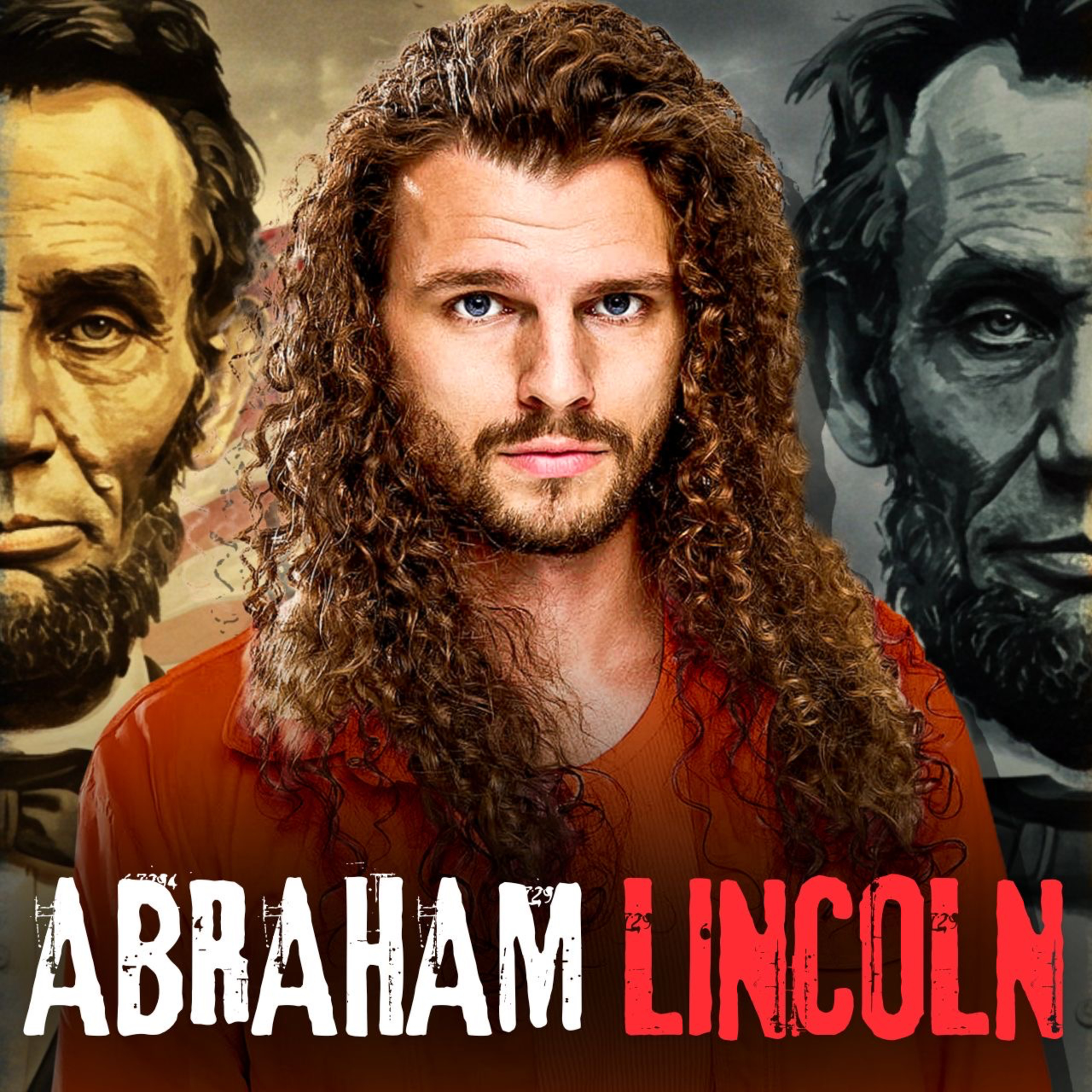
Today we're diving in to the dark side of one of the most beloved historical figures in American history, Abraham Lincoln. He is beloved across American history. His face is on the penny. Same president who issued the Emancipation Proclamation freeing the slaves once declared in a public debate that he opposed political and social equality between races. He also happened to imprison tens of thousands of American citizens without trial. Today we're going to get to the bottom of who Abraham Lincoln was, not only looking at the amazing things that he did, but we'll also examine some.
- [00:30]
Gabe Sanchez
Of the bad things on this record.
- [00:31]
Mark Yagnum
We're going to ex Lincoln's explicitly racist statements during the 1858 Senate campaign, his systematic suspension of habeas corpus, his administration's treatment of Native Americans, not for the.
- [00:42]
Gabe Sanchez
Desire to tear down an American icon.
- [00:44]
Mark Yagnum
But rather to add fullness and context.
- [00:46]
Gabe Sanchez
To the reality that all human beings are good and bad, and that great.
- [00:50]
Mark Yagnum
Men are hard labor, good men, and that all people are capable of evil. So let's jump in. What's up, people? And welcome back to history camp. My name is Mark Yagnum, and thank you for joining me in my tent, where every single week we explore the most fascinating, controversial, and interesting stories from every historical figure throughout all history, throughout all time, anywhere in the universe. Yes, and today I'm joined by my dear friends Gabe and Dave Sanchez, helping.
- [01:22]
Gabe Sanchez
Produce this whole thing.
- [01:23]
Mark Yagnum
How are we doing, gentlemen? All right, all right, all right, that's enough of that. You know what I mean? You guys just constantly yapping non stop jibber jabber, and we don't have time because today we're diving in to the dark side of one of the most.
- [01:35]
Gabe Sanchez
Beloved historical figures in American history. I'm sure this will not be controversial.
- [01:40]
Mark Yagnum
We're talking about Abraham Lincoln, Honest Abe, as they call it, or, you know, it's mostly honest and sometimes had some crazy theories about race, but who doesn't, right? Abraham Lincoln is a fascinating figure because, of course, he is beloved across American history. His face is on the penny. He got domed by, you know, a gay guy. I think he was in a theater. Allegedly. People think he was gay. No one knows really anything about him. But today we're going to get to the bottom of who Abraham Lincoln was, not only looking at the amazing things that he did, like, obviously, you know, keep the Union together, emancipation of slavery in America, which is obviously a, a horrible, horrible practice that was done in the United States. But we'll also examine some of the, you know, sort of bad things on this record, some of the things that are you know, a little unsavory.
- [02:26]
Gabe Sanchez
Again, not for the desire to tear.
- [02:28]
Mark Yagnum
Down an American icon, but rather to.
- [02:31]
Gabe Sanchez
Add fullness and context to the reality.
- [02:33]
Mark Yagnum
That all human beings are good and.
- [02:35]
Gabe Sanchez
Bad and that great men are hardly.
- [02:37]
Mark Yagnum
Ever good men and that all people.
- [02:39]
Gabe Sanchez
Are capable of evil.
- [02:41]
Mark Yagnum
So let's jump in. Abraham Lincoln was. Was a guy who proclaimed that, quote, the government of the people, by the.
- [02:47]
Gabe Sanchez
People, for the people shall not perish from the earth. He also happened to imprison tens of.
- [02:54]
Mark Yagnum
Thousands of American citizens without trial. Sometimes you gotta do some dirty shit to get things going. You know what I mean? Crack a few eggs. Same president who issued the Emancipation Proclamation freeing the slaves once declared in a public debate that he opposed political and social equality between races, stating that there must be a position of superior and inferior.
- [03:16]
Gabe Sanchez
And I, as much as any other man, am in favor of having a superior position assigned to the white race. Yikes.
- [03:25]
Mark Yagnum
Not ideal, but, hey, it was a debate. I've said some crazy stuff in a debate. You know what I mean? You're acting like your mom. We've all said things that we don't think is true, but we just happen to say them. Now, this again, is an exploration and.
- [03:37]
Gabe Sanchez
A critical analysis of Abraham Lincoln and.
- [03:39]
Mark Yagnum
How his ideologies develop. You know what I mean? I'm not here to just tear down this iconic guy, but to understand the full complexity of. Of one of our most revered leaders.
- [03:49]
Gabe Sanchez
Right?
- [03:49]
Mark Yagnum
So this analysis is based entirely on primarily, you know, primary historical sources. Congressional records, military documents, newspaper accounts from the 1860s, and Lincoln's own recorded speeches and writings. And what we're going to explore will.
- [04:03]
Gabe Sanchez
Challenge the simplified narrative that you and.
- [04:06]
Mark Yagnum
I probably learned, you know, in seventh grade US History class. We're going to examine Lincoln's explicitly racist.
- [04:12]
Gabe Sanchez
Statements during the 1858 Senate campaign, his.
- [04:15]
Mark Yagnum
Systematic, you know, suspension of habeas corpus, his administration's treatment of Native Americans, and the unprecedented expansion of executive power that sets a dangerous precedent for presidents even in the current day. And again, this is not character assassination.
- [04:30]
Gabe Sanchez
It's just analysis.
- [04:32]
Mark Yagnum
So to me, I think it makes it. You know, I think it makes us better citizens by showing us that even our greatest leaders can make decisions that contradict our most fundamental values. So let's go all the way back. September 18, 1858, Charleston, Illinois. Abraham Lincoln stands there before thousands of voters and delivers what would become some of his most damaging statements on race.
- [04:56]
Gabe Sanchez
He says, as I mentioned before, I.
- [04:58]
Mark Yagnum
Am not, nor have I ever been.
- [05:01]
Gabe Sanchez
In favor of bringing about in any.
- [05:03]
Mark Yagnum
Way the social and Political equality of.
- [05:05]
Gabe Sanchez
The white and black races. Lincoln declared this and received thunderous applause from the crowd. But he doesn't stop there.
- [05:12]
Mark Yagnum
He went on to explicitly oppose black.
- [05:14]
Gabe Sanchez
Americans right to vote and serve on.
- [05:16]
Mark Yagnum
Juries and hold public office or marry white people.
- [05:18]
Gabe Sanchez
In perhaps his most shocking statement, he.
- [05:20]
Mark Yagnum
Says, I will say then that I.
- [05:22]
Gabe Sanchez
Am not nor have I ever been in favor of making voters or jurors.
- [05:27]
Mark Yagnum
Of black Americans, nor of qualifying them.
- [05:30]
Gabe Sanchez
To hold office, nor to intermarry with white people.
- [05:33]
Mark Yagnum
He concluded this section of his speech by stating unequivocally that there must be.
- [05:38]
Gabe Sanchez
A position of superior and inferior.
- [05:41]
Mark Yagnum
And he says, I as much as any other man, am in favor of.
- [05:45]
Gabe Sanchez
Having the superior position position on the white race.
- [05:49]
Mark Yagnum
So not ideal, right? These aren't just private thoughts of, you know, a guy or like off the cuff remarks, you know, I mean, he's not on a live stream and just said something crazy. These were carefully pre prepared statements delivered to thousands of potential voters and published in newspapers across the state. Yikes. Now again, many people will say that this was Lincoln's attempt to, you know, gain public favor and try to win.
- [06:14]
Gabe Sanchez
His role in the U. S. Senate.
- [06:16]
Mark Yagnum
And that this is what you had to do at the time in order to curry favor with the American public. Because of course the American public at.
- [06:22]
Gabe Sanchez
The time in particular was a racist voting block.
- [06:26]
Mark Yagnum
So, you know, that is one way to interpret it. But of course other people would say, you know, that his words represent a clear endorsement of white supremacist ideals and he stated them in the most public.
- [06:37]
Gabe Sanchez
Forum possible during his campaign.
- [06:39]
Mark Yagnum
And his statements, other people will point out, were not made necessarily in a vacuum. They were, like I said, part of a political strategy. In 1858, you know, supporting abolition was often equated with like, you know, supporting racial equality. And his opponent, you know, Stephen Douglas.
- [06:55]
Gabe Sanchez
Had been relentlessly attacking Lincoln as a.
- [06:59]
Mark Yagnum
Black republican who favored what Douglas called, you know, African American equality. Technically it's is a different type of equality. I just don't feel comfortable saying it. Right, Gabe, that's crazy. You know, I mean you're, you're from what country?
- [07:16]
Gabe Sanchez
Guatemala.
- [07:17]
Mark Yagnum
Guatemala. And you remember. I don't even say that one, you know, I mean, so as a result, you know, he's, he's being called a black republican, he's being attacked. And this is a charge that, you know, at the time could be politically fatal. So what does he do? Right, he's gotta make a decision here. He's in a tough spot. Douglas's strategy was to paint Lincoln as a radical who would overturn the racial.
- [07:43]
Gabe Sanchez
Hierarchy that most, you know, most white.
- [07:44]
Mark Yagnum
People in Illinois took for granted. In response, Lincoln attempted to thread the needle by opposing slavery while simultaneously assuring white voters that he didn't support racial equality. And this political maneuvering reveals Lincoln's willingness.
- [08:00]
Gabe Sanchez
To embrace and promote some racist ideals.
- [08:03]
Mark Yagnum
In order to serve his electoral interests.
- [08:07]
Gabe Sanchez
The debate over whether Lincoln's statement reflected.
- [08:09]
Mark Yagnum
His genuine belief or was just merely politically expedient kind of sort of misses.
- [08:16]
Gabe Sanchez
The point in some regards.
- [08:17]
Mark Yagnum
Regardless of his private thoughts, he's willing to publicly endorse white supremacy and racial discrimination in order to win votes.
- [08:25]
Gabe Sanchez
And, you know, his words give legitimacy.
- [08:27]
Mark Yagnum
To racist ideology and help normalize the ideas that, you know, opposing slavery didn't.
- [08:33]
Gabe Sanchez
Require believing in racial equality.
- [08:34]
Mark Yagnum
It's an interesting conundrum. You know what I mean? It's like, all right, he's willing to bend, let's say, you know, I think it's probably likely that he's, you know, views, you know, black Americans and white Americans as morally equal, which is obviously the right position to have, but he's willing to compromise us in order to win votes. It does that. Is that a, you know, an ethical gray area? I think it depends on what you do with it. You know what I mean? Like, if you are trying to curry.
- [08:59]
Gabe Sanchez
Favor of a people and you say.
- [09:01]
Mark Yagnum
Something that is potentially morally hazardous, but then you use that power to then push, you know, the moral framework of the society forward, you kind of look past it, you know, I mean, you're like, all right, you did some bad.
- [09:12]
Gabe Sanchez
Stuff in the beginning to.
- [09:13]
Mark Yagnum
To get a good dub at the end. You know, the ends justified the means. But if you just are saying racist shit and then get elected and then continue to do racist shit, then it's like, all right, it's not ideal. But I don't think that's the case with Lincoln. I think he. He ultimately did the right thing, and it almost cost the entire country. It's, you know, sanctity.
- [09:31]
Gabe Sanchez
But he held it together.
- [09:32]
Mark Yagnum
So shout out to him. But it doesn't end there. There are some other things that Lincoln.
- [09:36]
Gabe Sanchez
Did that are a little tricky.
- [09:38]
Mark Yagnum
Habeas corpus, you probably heard of it, literally means you have the body in Latin, which is what I say to.
- [09:46]
Gabe Sanchez
Puerto Rican woman as they walk down the street.
- [09:50]
Mark Yagnum
Right, David, Habeas corpus literally means you have the body in Latin, which is what I say to myself when I look in the mirror, right? When I look in the mirror, I'm like, oh, habeas corpus, mother and yeah, it represents one of the most fundamental protections in American law, right. It's, it's an ancient right basically that says that the government, it basically requires the government to justify why it's holding someone in custody and it prevents like arbitrary imprisonment without trial, which is a pretty good rule. U.S. constitution explicitly protects the right, stating that the privilege of the right of habeas corpus shall not be suspended unless.
- [10:33]
Gabe Sanchez
When in cases of rebellion or evasion.
- [10:35]
Mark Yagnum
You know, that the public safety might require it. The Constitution grants this power of suspension.
- [10:41]
Gabe Sanchez
Exclusively to Congress, but not the President.
- [10:43]
Mark Yagnum
Article 1, Section 9 places this authority firmly within the legislative branch, reflecting obviously the Founders suspicion of executive power and their commitment to preventing a single person.
- [10:56]
Gabe Sanchez
From wielding the power to imprison citizens.
- [10:59]
Mark Yagnum
Without some type of judicial oversight. But April 27th, 1861, just weeks after the Civil War begins, Lincoln unilaterally suspends.
- [11:09]
Gabe Sanchez
Habeas corpus along the military line between.
- [11:12]
Mark Yagnum
D.C. and Philadelphia, effectively giving military commanders the power to arrest and detain civilians without trial. This decision comes without congressional approval and.
- [11:22]
Gabe Sanchez
In direct violation of the constitutional requirements that only Congress could authorize such suspensions.
- [11:28]
Mark Yagnum
The constitutional crisis deepened when Chief Justice Roger Taney in the case Ex Part Merriman ruled that Lincoln's suspension was unconstitutional.
- [11:38]
Gabe Sanchez
In order the release of John Merryman, a Maryland secessionist who had been imprisoned.
- [11:43]
Mark Yagnum
By military authorities, Lincoln simply ignored the Supreme Court's ruling, basically said I don't give a shit. And some people say that this set.
- [11:50]
Gabe Sanchez
A dangerous precedent for presidential defiance of sort of the judicial authority of the land.
- [11:56]
Mark Yagnum
By September 1863, Lincoln had expanded the suspension nationwide, proclaiming that quote, the privilege.
- [12:04]
Gabe Sanchez
Of the right of habeas corpus is.
- [12:06]
Mark Yagnum
Suspended throughout the United States for anyone involved in quote, any disloyal practice. This sweeping proclamation gave military authorities virtually unlimited power to arrest and detain anyone.
- [12:18]
Gabe Sanchez
They wanted around the whole country.
- [12:19]
Mark Yagnum
And the suspension of habeas corpus resulted in the imprisonment of an estimated 13,000 on Aloha and up to like 40,000American civilians during Lincoln's presidency. The exact number is disputed because many arrests were never properly documented. And these weren't just Confederate spies or like saboteurs, they included ordinary citizens whose only crime was expressing opposition to the.
- [12:42]
Gabe Sanchez
War or to Lincoln's administration.
- [12:44]
Mark Yagnum
And among the most prominent victims was Clement Valdingham, an Ohio congressman and leader.
- [12:49]
Gabe Sanchez
Of the anti war Copperhead movement.
- [12:52]
Mark Yagnum
Valdingham was arrested at his home at 2:30 in the morning by federal troops for giving a speech critical of the war effort.
- [12:58]
Gabe Sanchez
He was tried by a military tribunal and sentenced to Imprisonment for the duration.
- [13:03]
Mark Yagnum
Of the war, despite being a sitting.
- [13:05]
Gabe Sanchez
Member of Congress with full constitutional immunity for his speeches.
- [13:08]
Mark Yagnum
And thousands of other Americans found themselves imprisoned for months or even years without a trial, often based on nothing more than, you know, maybe just like an accusation or suspected disloyalty.
- [13:19]
Gabe Sanchez
Many were held in military prisons under harsh conditions with no legal recourse and really no way to challenge their detention.
- [13:26]
Mark Yagnum
The psychological impact on families and obviously communities, just completely devastating.
- [13:32]
Gabe Sanchez
As the threat of arbitrary arrest created.
- [13:34]
Mark Yagnum
A climate of fear and kind of, you know, a self censorship. Lincoln's administration systematically targeted newspapers and journalists.
- [13:43]
Gabe Sanchez
Who criticized the war effort or their administration's policies.
- [13:48]
Mark Yagnum
The New York World, the Chicago Times, and dozens of other newspapers were shut down. Their editors were often arrested, and printing.
- [13:55]
Gabe Sanchez
Equipment was seized by federal troops.
- [13:57]
Mark Yagnum
These weren't temporary wartime measures, but many publications remained closed for months or just.
- [14:03]
Gabe Sanchez
Permanently after this and basically ceased operations.
- [14:07]
Mark Yagnum
And the rest of newspaper editors sent kind of a message to the press, right? Criticize the administration at your own peril. Editors like Dennis Mahoney of the Dubuque.
- [14:17]
Gabe Sanchez
Herald and Archibald McGregor of the Westchester.
- [14:20]
Mark Yagnum
Jeffersonian were imprisoned for months without a trial, Their only crime being the publication of editorials opposing Lincoln's policies. This systematic oppression of, you know, press freedom created a culture of self censorship that went far beyond the newspapers that were directly targeted. You know, publishers and editors across the country began moderating their criticisms of the administration, knowing that too much dissent would result in imprisonment. And the effect was to severely limit public debate and criticism to during one.
- [14:53]
Gabe Sanchez
Of the most crucial periods in American history.
- [14:56]
Mark Yagnum
What's up, guys?
- [14:57]
Dave Sanchez
We're gonna take a break really quick because you own a small business, or maybe you work for a small business, and I am about to make your life so much easier. Let's say, hypothetically, you own a little, you know, furniture business, right? And you're struggling to keep track of the raw materials, the production schedule, invoicing clients, all that stuff. Well, that's why I want to tell you about Odoo. Okay? Because with Odoo, it's an all in one business platform that streamlines everything. Now, you have inventory management, you have manufacturing, you have accounting apps that will make everything so simple. So now if you have a small business, you can monitor the inventory in real time, schedule productions calls more effectively, and you can send invoices automatically, all from one platform. Plus, you get a customized CRM to track sales leads and follow up with potential clients, boosting your closing rates. Back in the day, you'd probably have to get you Know some, you know, Ivy League operator, business person that's, you know, able to make everything happen for. But now with Odoo, it cuts it all out. And I'm sure you're thinking, okay, if this is going to make my life easier, give me more free time to spend with my friends, family and playing softball and make me more money. It must be crazy expensive.
- [16:02]
Mark Yagnum
This is the good news.
- [16:03]
Dave Sanchez
Listeners of this program are going to get a 14 day free trial.
- [16:06]
Mark Yagnum
That's right.
- [16:07]
Dave Sanchez
You get two weeks with Odoo completely for free when you go to odoo.com camp. That's right, odoo.com. use the promo code camp and you will get 14 days for free just.
- [16:18]
Mark Yagnum
To try it out, see if you like it.
- [16:19]
Dave Sanchez
If it's not for you, you don't need it. All right, But Odoo's going to make your life so much easier. Everything you need, all in one place.
- [16:25]
Gabe Sanchez
Save time, make more money.
- [16:26]
Dave Sanchez
Now let's get back to the show.
- [16:28]
Ryan Reynolds
This episode is brought to you by Pluto tv. Summer of cinema is here and Pluto TV is exploding with thousands of free movies. Feel the explosive action all summer long with movies like Gladiator, Beverly Hills Cop, Mission Impossible, Ghost Protocol, Good Burger, Stealth, Four Brothers and Star Trek. Bring the action with you and stream for free on all your favorite favorite devices. Pluto TV stream now pay never Stream now at Pluto tv.
- [16:57]
BNC Bank
She's made up her mind to live pretty smart Learn to budget responsibly right from the start she spends a little less in puts more into savings Keeps her blood pressure low and credit score raises Gottin debt right out of her life she.
- [17:20]
Mark Yagnum
Boring money moves make kind of lame songs but they sound pretty sweet to your wallet. BNC bank brilliantly boring since 1865. So again, it's tricky because you look at Lincoln, you're like, yeah, he's on.
- [17:30]
Gabe Sanchez
The right side, right?
- [17:31]
Mark Yagnum
Like he's on the side of liberating slaves in America.
- [17:35]
Gabe Sanchez
That is obviously the moral position.
- [17:37]
Mark Yagnum
But given all the chaos of the war, he's also willing to, you know, seemingly attack and even arrest people that.
- [17:44]
Gabe Sanchez
Are dissenting against his administration.
- [17:46]
Mark Yagnum
Now, of course, when you're on the.
- [17:47]
Gabe Sanchez
Right side, you're like, yeah, no, then.
- [17:49]
Mark Yagnum
It'S just by the means you got to do, do it. But if someone on the opposite side did this, you'd be like, oh, this.
- [17:53]
Gabe Sanchez
Guy'S a tyrant and a terrible person.
- [17:55]
Mark Yagnum
It's just interesting that it seems like we care less about what someone does.
- [17:59]
Gabe Sanchez
And more why they're doing it.
- [18:00]
Mark Yagnum
You know, like you look at, you.
- [18:02]
Gabe Sanchez
Know, presidents today, whether it's, you know.
- [18:04]
Mark Yagnum
Biden, Trump, Obama, whatever, and they do stuff.
- [18:07]
Gabe Sanchez
But if it seems like they're doing.
- [18:08]
Mark Yagnum
It in the interest of the American people, you're like, yeah, you know, it's fine, whatever, you know, foreign action, whatever, continuing some foreign war, but they're trying to help America.
- [18:17]
Gabe Sanchez
But then if you do the same.
- [18:18]
Mark Yagnum
Exact thing, but it seems like, oh, you're, you know, your intentions are bad, you're doing the wrong thing, then all of a sudden, that's when we get caught up.
- [18:25]
Gabe Sanchez
So maybe that's a rule for leaders.
- [18:26]
Mark Yagnum
If you're trying to take over power, make it seem like you're doing it for the noble cause. You know what I mean?
- [18:32]
Gabe Sanchez
That's important. As long as you're being noble, then.
- [18:34]
Mark Yagnum
People kind of let you do whatever you want. But it also doesn't stop there. You know, we have habeas corpus. People are kind of getting arrested without trial. And some people did get trials, and.
- [18:44]
Gabe Sanchez
Those were not ideal either.
- [18:46]
Mark Yagnum
So Lincoln's administration established these military tribunals to try civilians, but the issue is that they were doing them in areas where regular civil courts were still functioning. And this is a practice that violates the fundamental principles of due process and.
- [19:01]
Gabe Sanchez
Civilian control over the military.
- [19:03]
Mark Yagnum
So these tribunals operated under military law.
- [19:05]
Gabe Sanchez
Rather than civilian legal standards, denying defendants basic rights like the presumption of innocence.
- [19:11]
Mark Yagnum
And, you know, the right to legal counsel and, you know, a jury of one's own peers, all that kind of stuff. And the use of these military tribunals for civilians was, you know, particularly an.
- [19:21]
Gabe Sanchez
Issue because it removed cases from the civilian justice system where defendants would have full constitutional protection.
- [19:28]
Mark Yagnum
So military courts under operate under different rules of evidence, for example, like allowing hearsay testimony, and were often presided over by military officers who had no legal training and were just directly subordinate to the Lincoln administration. So military tribunals during Lincoln's presidency resulted in numerous executions based on, you know.
- [19:49]
Gabe Sanchez
Some questionable evidence and some flawed legal proceedings.
- [19:52]
Mark Yagnum
The most notorious example would later be the trial of Lincoln's assassination conspirators, where defendants were denied basic due process rights and executed based on evidence that many legal scholars today consider insufficient. These executions, again, might have been correct in that time, and perhaps they did the right thing because, you know, these.
- [20:12]
Gabe Sanchez
Guys are terrible assassins.
- [20:14]
Mark Yagnum
But it does set a dangerous precedent for future administrations. So, you know, this again demonstrates that the executive branch could bypass civilian courts and could execute American citizens through these military tribunals. And the speed and the secrecy of these proceedings combined with, you know, the Limited rights afforded to defendants and, you know, not having, you know, you know, right to fair trial, all that stuff raises serious questions about whether justice was.
- [20:41]
Gabe Sanchez
Truly being served or whether the government.
- [20:42]
Mark Yagnum
Was simply sort of eliminating inconvenient, potentially guilty opponents. And, of course, another thing with, you.
- [20:51]
Gabe Sanchez
Know, old Lincoln that people like to.
- [20:52]
Mark Yagnum
Bring up is the Native Americans. You know what I mean? I don't know if anyone treated them well. Let the record show. Like, I don't think anyone was like, oh, these are my boys. Like, we have to ask some natives about that. Like, did anyone do a good job? But, you know, Lincoln, like many presidents.
- [21:09]
Gabe Sanchez
Doesn'T have a gleaming record when it comes to this issue. So.
- [21:12]
Mark Yagnum
Even while fighting a civil war, Lincoln's administration aggressively pursued westward expansion at the.
- [21:16]
Gabe Sanchez
Expense of many native tribes.
- [21:18]
Mark Yagnum
The construction of the transcontinental railroad authorized by Lincoln in 62 required the seizure of vast territories from indigenous people who had lived on these lands for, you.
- [21:28]
Gabe Sanchez
Know, hundreds, if not thousands of years.
- [21:30]
Mark Yagnum
Military resources that could have been used in the civil war were instead deployed to clear Native Americans from the path of American expansion. The displacement of tribes during the Civil War was particularly brutal because it occurred.
- [21:43]
Gabe Sanchez
When the federal government's attention was supposed.
- [21:45]
Mark Yagnum
To be, you know, focused on preserving the Union. Instead, Lincoln's administration simultaneously fought two wars, one against the Confederacy and another, smaller.
- [21:55]
Gabe Sanchez
War against the native Americans who stood.
- [21:57]
Mark Yagnum
In the way of westward expansion. This dual focus revealed that even during the nation's greatest crisis, the drive for.
- [22:05]
Gabe Sanchez
Territorial conquest still is a massive priority.
- [22:09]
Mark Yagnum
So the Dakota War of 1862 began when the Dakota people, facing starvation due.
- [22:15]
Gabe Sanchez
To some delayed government payments and some.
- [22:18]
Mark Yagnum
Crop failures, launched an uprising in Minnesota that resulted in the death of approximately 5 to 600 sett killers and soldiers.
- [22:27]
Gabe Sanchez
The conflict was fueled by years of broken treaties and forced relocations and systematic theft of Dakota lands by these white settlers and government officials. So following the defeat of the Dakota.
- [22:38]
Mark Yagnum
Forces, military tribunals conducted mass trials that were little more than legal theater, you could say. In some cases, trials lasted less than five minutes, with defendants unable to understand.
- [22:50]
Gabe Sanchez
The proceedings because they spoke no English and were provided no interpreters.
- [22:54]
Mark Yagnum
Of the 362 Dakota men, 303 were sentenced to death. This is the largest mass death sentence in American history. Lincoln ultimately commuted the sentence of 264 men, but authorized the execution of 38 Dakota warriors on December 26, 1862, in Mankato, Minnesota. This still remains the largest mass execution.
- [23:18]
Gabe Sanchez
In United States history.
- [23:20]
Mark Yagnum
The men were hung simultaneously on a single gallow, their bodies left Dangling as a.
- [23:26]
Gabe Sanchez
To the other tribes.
- [23:27]
Mark Yagnum
The decision to execute these men was made despite various questions about the fairness of their trials. And, you know, the evidence against many of them. I mean, it's sick that he, you know, commuted 264 of their sentences, 38 of them. Obviously, you know, they got what they had to get. Maybe Lincoln, you know, you got to take on his word, right? Honest Abe, you're like, all right, he knew something about these 38 dudes, but still, it's just a wild record, right? You think about Abraham Lincoln, you're like, this is a guy that fights for the disenfranchised and, you know, tries to do the right. And then you see that he killed 30 people. You're like, okay, that's why I never want to be president, dude. You got to do some dirty shit. Even if you're like the best one. Even if you're the one, you're like, oh, this guy is the. He's our goat.
- [24:10]
Gabe Sanchez
He's the. Steph Curry.
- [24:11]
Mark Yagnum
Being a president, you're still gonna, you know, hit a couple bricks. So the Homestead act of 1862, signed by Lincoln, accelerated the seizure of a lot of Native American lands by offering.
- [24:23]
Gabe Sanchez
160 acres of public land to any American citizen or willing to farm it for five years.
- [24:29]
Mark Yagnum
The problem was that, you know, a lot of this land was actually the traditional territory of some Native American tribes who never gave the land away. They were just like, you're giving our land to other people. And the act resulted in the rapid settlement of millions of acres of Native American territory, basically making it impossible for the tribes to even maintain any semblance of their traditional way of life. The influx of homesteaders created, you know, a ton of conflict with Native Americans and provided a lot of justification for the military campaigns to clear tribes from their land. So, you know, you'd have a settler there, then a Native American guy would be nearby, and then they would get into some type of conflict. And then the government could be like, yo, these natives are attacking our guys. We got to go in there. But it's like you put them there in the first place.
- [25:18]
Gabe Sanchez
Story oldest time.
- [25:19]
Mark Yagnum
The long term consequences included the destruction of a lot of tribes and their sovereignty and their connection with the land, and a lot of forced assimilation of Native Americans into broader American society, typically to their detriment. Another interesting little issue in Lincoln's presidency comes in 1863, when Lincoln authorized the.
- [25:38]
Gabe Sanchez
Creation of the Lieber Code.
- [25:39]
Mark Yagnum
This is officially known as the instructions.
- [25:41]
Gabe Sanchez
For the government of armies of the United States.
- [25:43]
Mark Yagnum
In the field, but we just call it the Lieber Code. It was written by this guy, Francis Lieber. He's a German American legal scholar. And this document represents the first attempt.
- [25:53]
Gabe Sanchez
To codify the rules of warfare for the US Military.
- [25:57]
Mark Yagnum
And the code was presented as a.
- [26:00]
Gabe Sanchez
Civilian influence on warfare. Designed to reduce unnecessary suffering and protect non combatants.
- [26:07]
Mark Yagnum
Sounds pretty good, right? It's like Nice Honest Dave crushing it. Once again, however, the Libra Code was also a practical document. Designed to justify the increasingly brutal tactics.
- [26:18]
Gabe Sanchez
That Union forces were employing against Confederate soldiers and civilians.
- [26:22]
Mark Yagnum
And I know, oh, well, who cares about the Confederates?
- [26:25]
Gabe Sanchez
I agree.
- [26:27]
Mark Yagnum
No one's crying for the Confederates.
- [26:29]
Gabe Sanchez
We're in alignment here.
- [26:30]
Mark Yagnum
But you can't just break the rules when it is in your interest and in the interests of the good guys. You know what I mean? Cops got to play by the same.
- [26:36]
Gabe Sanchez
Rules we do, right?
- [26:38]
Mark Yagnum
So rather than truly limiting warfare, the code provided legal cover for practices that would today be considered war crimes, including, you know, destruction of civilian property and, you know, harsh treatment of, you know, prisoners. All sorts of stuff. The Libra Code explicitly permitted the destruction of civilian property when deemed necessary by the military, stating that, quote, the commander of the hostile country may levy taxes.
- [27:03]
Gabe Sanchez
And exact military services for the maintenance of his army, and he may take and use what he needs for his army. This provision effectively authorized the wholesale looting and destruction. That characterized Sherman's March to the Sea and similar campaigns.
- [27:18]
Mark Yagnum
The code also sanctioned harsh treatment of irregular fighters and guerrillas, allowing military commanders.
- [27:24]
Gabe Sanchez
To execute captured partisans basically without a trial.
- [27:27]
Mark Yagnum
Article 82 stated that men or squads.
- [27:30]
Gabe Sanchez
Of men who commit hostilities, whether by fighting or inroads for destruction or plunder. Or by raids of any kind without commission, without being part and portion of the organization, are not public enemies. And therefore, if captured, are not entitled to the privileges of prisoners of war.
- [27:48]
Mark Yagnum
So you basically just do whatever they wanted to them. Perhaps almost troubling, the code permitted retaliation against civilian populations.
- [27:54]
Gabe Sanchez
For the actions of guerrilla fighters.
- [27:56]
Mark Yagnum
So this provision was used to justify the burning of, like, entire towns and, you know, the displacement of civilian populations throughout the south, creating precedents that would.
- [28:05]
Gabe Sanchez
Be used to justify similar actions in some future conflicts.
- [28:09]
Mark Yagnum
Now, again, no one cares about the Confederates.
- [28:11]
Gabe Sanchez
Sure.
- [28:12]
Mark Yagnum
They're, you know, these people trying to be slavery and da, da, da, da.
- [28:15]
Gabe Sanchez
It's not good.
- [28:15]
Mark Yagnum
But just like with any conflict today, you know, you can imagine that, you know, there's, you know, a combatant side and there's perhaps a government.
- [28:23]
Gabe Sanchez
And the government, the military is doing.
- [28:26]
Mark Yagnum
Whatever you think is the wrong action. But There are also civilians that are, you know, in that nation that, you know, should be protected and that the civilians that are not actually engaging, you.
- [28:36]
Gabe Sanchez
Know, women, children, they shouldn't be killed.
- [28:38]
Mark Yagnum
Just because their government is carrying out.
- [28:40]
Gabe Sanchez
Some type of war.
- [28:40]
Mark Yagnum
You should be trying to take out military targets.
- [28:43]
Gabe Sanchez
But again, it seems like in this.
- [28:45]
Mark Yagnum
Case, that was not necessarily the case. You know, the. The Union army was coming in, just kind of taking whatever they wanted, burning down towns, displacing civilians. Things today that we would look at and be like, oof, not good. We kind of look past it because.
- [28:59]
Gabe Sanchez
We'Re on the side of the Union. We're like, yeah, slavery is bad.
- [29:01]
Mark Yagnum
But, you know, if you are trying.
- [29:02]
Gabe Sanchez
To take the moral high ground, should you take it all the way through? This is the question.
- [29:07]
Mark Yagnum
Now, it doesn't end there. You also have, you know, executive power and the expansion of a lot of, you know, basically presidential abilities. And this, again, is not inherently bad when Abraham Lincoln does it, but it.
- [29:21]
Gabe Sanchez
Does create a dangerous precedent.
- [29:23]
Mark Yagnum
So Lincoln, as many people know, dramatically.
- [29:25]
Gabe Sanchez
Expands presidential power beyond anything the Constitution's framers had envisioned.
- [29:31]
Mark Yagnum
Often acting without congressional approval or in direct defiance of judicial rulings, he spent.
- [29:37]
Gabe Sanchez
Federal funds without congressional appropriation and established new military departments and creates new bureaucracies without legislative authorization.
- [29:45]
Mark Yagnum
These actions, again, are not inherently bad in their own right because, you know.
- [29:49]
Gabe Sanchez
He'S generally doing it for the right reasons.
- [29:50]
Mark Yagnum
But it does create a dangerous precedent.
- [29:52]
Gabe Sanchez
For presidential power that future executives would later exploit. So the imposition of martial law, for.
- [29:59]
Mark Yagnum
Example, across large portions of the United States represented another unprecedented expansion of executive authority.
- [30:07]
Gabe Sanchez
Lincoln placed entire states under military governance.
- [30:09]
Mark Yagnum
Suspending civilian courts, putting military commanders in.
- [30:12]
Gabe Sanchez
Charge of, you know, these civil administrations. And this militarization of civilian governments violates.
- [30:18]
Mark Yagnum
A fundamental principle of American democracy.
- [30:21]
Gabe Sanchez
Right. It creates a model for authoritarian rule during times of crisis. And Lincoln's willingness to ignore a lot of these judicial rulings, particular doing during.
- [30:29]
Mark Yagnum
The ex part Merriman case that we talked about before, again created just a dangerous precedent that presidents could simply disregard Supreme Court decisions when they conflicted with executive policy. And this undermining of, you know, judicial authority just goes against the constitutional system of checks and balances. So while the Emancipation Proclamation is remembered.
- [30:52]
Gabe Sanchez
As a great moral achievement, which it.
- [30:54]
Mark Yagnum
Was, it was actually issued as a.
- [30:57]
Gabe Sanchez
War measure rather than a humanitarian policy.
- [30:59]
Mark Yagnum
And it raised serious constitutional questions about presidential authority. Lincoln himself acknowledged that he had no constitutional power to, quote, free slaves in peacetime, but claimed that his war powers.
- [31:10]
Gabe Sanchez
As commander in chief gave him the.
- [31:12]
Mark Yagnum
Authority to confiscate enemy property, including slaves. Which is pretty clever, right? He's kind of like working with the language of the law in order to exercise his mission. And the Proclamation's limited scope revealed it's primarily strategic rather than, you know, a moral purpose.
- [31:29]
Gabe Sanchez
It freed slaves in areas still in rebellion against the United States, while explicitly including slaves in border states loyal to the Union in areas of the Confederacy already under Union control.
- [31:42]
Mark Yagnum
So what does that mean?
- [31:44]
Gabe Sanchez
This selective application means that the Proclamation.
- [31:47]
Mark Yagnum
Actually freedom, not the total amount of slaves. Right? It basically allowed slavery to continue in.
- [31:55]
Gabe Sanchez
Areas under Union control.
- [31:57]
Mark Yagnum
And the constitutional problem with the Emancipation.
- [32:00]
Gabe Sanchez
Proclamation went beyond its scope to its very foundation.
- [32:02]
Mark Yagnum
The President had assumed the power to.
- [32:06]
Gabe Sanchez
Unilaterally alter the property laws of entire.
- [32:08]
Mark Yagnum
States without congressional approval or any type of amendment. And this expansion of executive power again set precedents that future presidents would use.
- [32:17]
Gabe Sanchez
To justify their own unilateral actions in times of crisis.
- [32:21]
Mark Yagnum
So the expansion of these executive powers creates an issue, right? Woodrow Wilson cited Lincoln's example when suppressing.
- [32:29]
Gabe Sanchez
Dissent during World War I. Franklin Roosevelt invoked Lincoln when interning Japanese Americans during World War II.
- [32:36]
Mark Yagnum
And George W. Bush even referenced Lincoln.
- [32:38]
Gabe Sanchez
When authorizing warrantless surveillance after 9 11. Now, again, this is not necessarily Lincoln's.
- [32:45]
Mark Yagnum
Fault, but it is worth noting that.
- [32:47]
Gabe Sanchez
His behavior did create a dangerous precedent for presidents to use unauthorized power down the line.
- [32:54]
Mark Yagnum
The growth of what historians call Imperial.
- [32:57]
Gabe Sanchez
Presidency can be traced directly to precedents established during Lincoln's administration.
- [33:03]
Mark Yagnum
The idea that, you know, presidents could act unilaterally during times of crisis and, you know, suspend constitutional rights became embedded in American political culture, making it easier for future executives to concentrate this power. Constitutional scholars have long warned about the.
- [33:19]
Gabe Sanchez
Dangers of these precedents, noting that each.
- [33:21]
Mark Yagnum
Crisis becomes an opportunity for presidents to.
- [33:23]
Gabe Sanchez
Just continue taking more power unilaterally, with.
- [33:26]
Mark Yagnum
Few of these expansions ever going backwards. So Lincoln's presidency established the template for this pattern, showing how even well intentioned leaders doing the right thing, trying to use whatever means they have possible to, you know, push the moral framework of our country into the future, could fundamentally alter the balance of power in the American government. Abraham Lincoln also introduced something in 1862 that really changed the sort of economic.
- [33:54]
Gabe Sanchez
Foundation that America was built on. So in 1862, facing a financial crisis.
- [33:59]
Mark Yagnum
Caused by the enormous costs of the Civil War, Lincoln authorized the creation of a new paper currency backed not by.
- [34:05]
Gabe Sanchez
Gold or silver, but solely by the government's promise to pay.
- [34:09]
Mark Yagnum
These were called greenbacks, and they represented the first time in American history that.
- [34:13]
Gabe Sanchez
The federal government issued a fiat currency.
- [34:16]
Mark Yagnum
Just a money with no intrinsic value.
- [34:19]
Gabe Sanchez
Other than the government's guarantee.
- [34:21]
Mark Yagnum
And the greenback system was revolutionary and of course, controversial because it abandoned the.
- [34:25]
Gabe Sanchez
Gold standard that had anchored American currency since the nation's founding.
- [34:29]
Mark Yagnum
By printing money without gold backing, the.
- [34:32]
Gabe Sanchez
Government could finance the war without raising taxes or borrowing money.
- [34:36]
Mark Yagnum
It also created inflation that acted as.
- [34:39]
Gabe Sanchez
A hidden tax on all the Americans who held dollars. The greenback system created clear winners and.
- [34:44]
Mark Yagnum
Losers in American society, with the benefits.
- [34:47]
Gabe Sanchez
And costs distributed in ways that favored some over others.
- [34:50]
Mark Yagnum
So debtors benefited enormously because they could repay their debts with inflated currency that was worth less than when they borrowed the money. Farmers with mortgages, small business owners with loans, and others with fixed debts saw their real debt burden increase because inflation.
- [35:07]
Gabe Sanchez
Reduced the value of their money.
- [35:09]
Mark Yagnum
However, creditors, people on fixed incomes, and those who had saved money in banks suffered devastating losses as inflation eroded the value of their wealth. Inherently, elderly people living on savings and workers with fixed wages and bondholders saw their real income decline sharply as prices.
- [35:30]
Gabe Sanchez
Rose faster than their incomes.
- [35:31]
Mark Yagnum
This redistribution of wealth was often harmful to many vulnerable members of society that had no way to protect themselves against inflation. And the economic instability created by the greenback system persisted long after the Civil War ended, contributing to many financial panics and economic uncertainty that plagued the American economy for decades.
- [35:53]
Mint Mobile
Hey, it's Ryan Reynolds here for Mint Mobile Now. I was looking for fun ways to tell you that Mint's offer of unlimited Premium Wireless for $15 a month is back. So I thought it would be fun if we made $15 bills, but it turns out that's very illegal, so there goes my big idea for the commercial. Give it a try@mintmobile.com switch upfront payment.
- [36:15]
Greenlight
Of $45 for 3 month plan equivalent to $15 per month required new customer offer for first 3 months only speed slow after 35 gigabytes of networks busy taxes and fees extra see mintmobile.com this.
- [36:23]
Meundies
Message is sponsored by Greenlight. With school out, summer is the perfect time to teach our kids real world money skills they'll use forever. Greenlight is a debit card in the one family finance and safety app used by millions of families helping kids learn how to save, invest and spend wisely. Parents can send their kids money and track their spending and saving while kids build money, confidence and skills in fun ways. Start your risk free Greenlight trial today@greenlight.com Spotify that's greenlight.com Spotify the precedent of.
- [36:53]
Mark Yagnum
Using monetary policy as a tool of economic warfare would be repeated in many future Conflicts with similar consequences for economic stability. I mean, this is a tough one, because I don't know what other options Lincoln had, right? Like, they're facing a financial crisis. You could tax the heck out of.
- [37:09]
Gabe Sanchez
You know, all your constituents, or you can borrow money and send your country into more debt. Or you do this third option, which obviously changes the economic framework of your.
- [37:17]
Mark Yagnum
Nation and causes inflation, but it also.
- [37:21]
Gabe Sanchez
Allows for you to pay for things.
- [37:22]
Mark Yagnum
Without having to, you know, affect your constituents and taxing them or taking more of their money, because you got to get money from them somehow to pay for the war. So either you take it on the front end through taxes, or you take it on the back end through inflation, or you take it even farther down the line by borrowing money that then you have to pay back in, you.
- [37:39]
Gabe Sanchez
Know, 50, 100 years.
- [37:41]
Mark Yagnum
So, I don't know.
- [37:42]
Gabe Sanchez
I give Abe kind of a pass.
- [37:43]
Mark Yagnum
On that one, because that's. That's tough, right? I mean, you got to pay for war somehow. But people also will point to the.
- [37:50]
Gabe Sanchez
Destruction of civilian infrastructure.
- [37:52]
Mark Yagnum
We touched on this a little bit in one of the earlier sections, but.
- [37:56]
Gabe Sanchez
In more detail, you have something known as Sherman's March.
- [38:00]
Mark Yagnum
So this guy, General William Tecumseh Sherman.
- [38:04]
Gabe Sanchez
Marches to the sea and has this.
- [38:06]
Mark Yagnum
Subsequent campaign around the Carolinas. And it represents this, you know, brilliant moment of, you know, the Union soldiers basically taken back the south and the country that tried to leave. And to many in the south, it also represents a strategy of targeting civilian infrastructure and property to break the will of many people in the South. So Sherman's forces systematically destroyed railroads and.
- [38:30]
Gabe Sanchez
Mills and factories and livestock and food.
- [38:33]
Mark Yagnum
Supplies and just basically destroyed everything in their path. This hard war philosophy was explicitly designed.
- [38:39]
Gabe Sanchez
To make the civilian population suffer for.
- [38:42]
Mark Yagnum
Their support of the Confederacy. Sherman himself wrote that he, quote, wanted to make Georgia howl and believed that.
- [38:49]
Gabe Sanchez
Targeting civilians was necessary to end the war quickly. His forces destroyed an estimated $100 million worth of civilian property, which today is.
- [38:58]
Mark Yagnum
Roughly like 1.5, 1.6 billion, leaving thousands of families homeless and destitute. And the systematic destruction extended beyond military targets, including churches and schools, libraries. And this targeting of civilian infrastructure was designed to demoralize the population and demonstrate.
- [39:17]
Gabe Sanchez
The futility of continued resistance, which, you.
- [39:20]
Mark Yagnum
Know, again, you're fighting for the good guys, so we don't give a. But it also violates, you know, traditional principles of warfare that distinguishes, you know, that basically distinguish between combatants and non combatants. And the deliberate targeting of civilian property, again raises questions about the morality and.
- [39:36]
Gabe Sanchez
Legal of some of Sherman's tactics, even by standards of the 1860s.
- [39:40]
Mark Yagnum
International law at the time, though not as developed as it is obviously today, recognizes principles that prohibited the unnecessary destruction of civilian property and required military forces to distinguish between legitimate military targets and civilian infrastructure. Sherman did not do that. Right.
- [39:58]
Gabe Sanchez
His forces went far beyond the military.
- [40:00]
Mark Yagnum
Necessity and destroyed property with no strategic value and just kind of inflicted suffering on civilians who really posed no threat, but he just wanted them to feel.
- [40:09]
Gabe Sanchez
The burden of their actions.
- [40:12]
Mark Yagnum
This precedent set by Sherman, again, what Sherman did, you could be like, oh, that's fine.
- [40:16]
Gabe Sanchez
It doesn't matter. But again, American law is built so much on precedent.
- [40:20]
Mark Yagnum
And, you know, it would later be used to justify similar tactics in future conflicts, including the strategic bombing of civilian.
- [40:27]
Gabe Sanchez
Targets in World War II and the.
- [40:29]
Mark Yagnum
Destruction of civilian infrastructure in Vietnam. You know, basically saying, like, hey, we're going to go to Vietnam and destroy, you know, civilian churches and schools, because, hey, we did it in America and it worked out here, and we're on the right side here, and obviously we're on the right side there, so let's destroy their. The idea that targeting civilians was an acceptable way to break morale became kind of embedded in military doctrine. And the consequences of that extended far.
- [40:54]
Gabe Sanchez
Beyond the Civil War.
- [40:56]
Mark Yagnum
Now, of course, Sherman is the one that did these campaigns, but Lincoln bore.
- [41:00]
Gabe Sanchez
Ultimate responsibility as the commander in chief for authorizing and supporting tactics.
- [41:04]
Mark Yagnum
I mean, Lincoln was fully aware of Sherman's methods and gave him explicit approval of the destruction of civilian property. In his correspondence with Sherman, Lincoln expressed satisfaction with the general's progress and actually.
- [41:15]
Gabe Sanchez
Encouraged him to continue his devastating march.
- [41:18]
Mark Yagnum
Lincoln's support for these tactics revealed, again.
- [41:21]
Gabe Sanchez
Just further willingness to use any means.
- [41:23]
Mark Yagnum
Necessary to win the war, regardless of.
- [41:26]
Gabe Sanchez
The cost to civilian population.
- [41:28]
Mark Yagnum
His authorization of total war against Southern civilians represented, again, just another shift in American military doctrine from limited warfare between.
- [41:37]
Gabe Sanchez
Armies to unlimited warfare against entire societies.
- [41:41]
Mark Yagnum
And the president's role in authorizing the destruction of civilian infrastructure established, again, just a dangerous precedent, you know, and this.
- [41:48]
Gabe Sanchez
President would be invoked repeatedly in future conflicts, like we mentioned.
- [41:53]
Mark Yagnum
Now, again, I don't want you to think I'm just sitting here bagging on old Honest Abe. That is not the point. Okay? You know, defenders of Lincoln's controversial actions often argue that extraordinary times require extraordinary times measures.
- [42:04]
Gabe Sanchez
And the Civil War is one of the most extraordinary moments in US History.
- [42:09]
Mark Yagnum
And, you know, by any means necessary.
- [42:11]
Gabe Sanchez
You need to preserve the Union.
- [42:13]
Mark Yagnum
And this justified the temporary suspension of.
- [42:16]
Gabe Sanchez
Constitutional rights and a lot of democratic norms. This argument holds that Lincoln faced this unprecedented crisis that threatened the existence of the United States.
- [42:24]
Mark Yagnum
He's in an impossible situation I couldn't even imagine. And that the conventional legal and constitutional constraints were inadequate to meet the emergency. Right. I mean, that makes sense to me. Proponents of this view argue that Lincoln's.
- [42:39]
Gabe Sanchez
Primary obligation was to preserve the Union.
- [42:41]
Mark Yagnum
At all costs and that allowing the.
- [42:44]
Gabe Sanchez
Confederacy to succeed would have resulted in far greater long term harm to human freedom and a democratic government.
- [42:52]
Mark Yagnum
They contend that the temporary suspension of civil liberties was a necessary sacrifice to.
- [42:57]
Gabe Sanchez
Prevent the permanent destruction of American society. This is known often as the necessary evils argument.
- [43:04]
Mark Yagnum
And this argument also suggests that Lincoln's controversial actions actually prevented greater bloodshed by shortening the war and deterring future rebellions. By demonstrating the federal government's willingness to use all available means to preserve the Union. Lincoln, you could say, discouraged other potential secessions and helped establish the principle that.
- [43:24]
Gabe Sanchez
The United States was an indissoluble union.
- [43:28]
Mark Yagnum
And Lincoln's racial attitudes did genuinely evolve.
- [43:32]
Gabe Sanchez
Over the course of his presidency, influenced.
- [43:33]
Mark Yagnum
By his interactions with Frederick Douglass and other black leaders and his observation of black soldiers courage during the Civil war. So by 1864, Lincoln was privately supporting limited black suffrage for educated former slaves and black veterans, representing a significant departure.
- [43:50]
Gabe Sanchez
From his 1858 position.
- [43:52]
Mark Yagnum
The influence of advisors like Frederick Douglass, who met with Lincoln multiple times during the war, helped broaden the president's understanding of racial issues and the capabilities of black Americans.
- [44:02]
Gabe Sanchez
Lincoln's willingness to listen to these advisors.
- [44:05]
Mark Yagnum
And modify his views demonstrated a capacity for growth that I think distinguished him.
- [44:11]
Gabe Sanchez
From many of his contemporaries. So by the time of his assassination.
- [44:14]
Mark Yagnum
In 1865, Lincoln was moving toward a more expansive vision of racial equality, Though he never fully abandoned his belief in.
- [44:25]
Gabe Sanchez
Some fundamental racial differences.
- [44:27]
Mark Yagnum
His final public speech, delivered just days before his death, included an endorsement of limited black voting rights, suggesting that his views may have even continued to evolve.
- [44:37]
Gabe Sanchez
Further had he lived.
- [44:39]
Mark Yagnum
So. When evaluating Lincoln's actions, it's important to remember that he was operating within the context of 1860s America, where racial inequality was accepted by the vast majority of white Americans and democratic norms were less.
- [44:54]
Gabe Sanchez
Established than they were today.
- [44:55]
Mark Yagnum
And compared to political leaders of his era, Lincoln's racial views, while objectionable by modern standards, were pretty moderate, if not progressive. The standards of the 1860s regarding executive power, civil liberties and warfare were also different from modern expectations. Many of Lincoln's contemporaries, including some of his critics, accepted that wartime conditions might require extraordinary measures that would be unacceptable during peacetime.
- [45:22]
Gabe Sanchez
However, it's also important to note that.
- [45:24]
Mark Yagnum
Lincoln's actions were controversial even by the.
- [45:27]
Gabe Sanchez
Standards of his own time.
- [45:28]
Mark Yagnum
Chief Justice Taney, Congressional Democrat, and many northern newspapers criticized his suspension of habeas corpus and the expansion of the executive power. And the fact that these actions were.
- [45:40]
Gabe Sanchez
Contested during Lincoln's own time again suggests.
- [45:43]
Mark Yagnum
That they cannot be dismissed simply as.
- [45:45]
Gabe Sanchez
A product of the historical moment.
- [45:48]
Mark Yagnum
So Lincoln's presidency obviously establishes three critical.
- [45:51]
Gabe Sanchez
Precedents that continue to shape the government to this day. The expansion of executive power during war.
- [45:57]
Mark Yagnum
The suspension of civil liberties during an.
- [45:59]
Gabe Sanchez
Emergency, and the use of military force against civilians.
- [46:03]
Mark Yagnum
These precedents have been invoked repeatedly by subsequent presidents to justify their own actions.
- [46:09]
Gabe Sanchez
During times of crisis.
- [46:10]
Mark Yagnum
And the precedent of wartime power has been particularly influential with. With presidents from Wilson to Bush citing Lincoln. The idea that presidents can act unilaterally during emergencies, bypass congressional approval, and ignore judicial rulings has become deeply embedded in American political culture, even to this current president. And Lincoln's willingness to suspend civil liberties and target civilian population also, again, just establishes a template that future administrations would follow. Now, of course, I don't know if this is necessarily Lincoln's fault, but certainly.
- [46:42]
Gabe Sanchez
It should be a part of his.
- [46:44]
Mark Yagnum
Legacy in some capacity that we can.
- [46:46]
Gabe Sanchez
Acknowledge all the good that he did.
- [46:47]
Mark Yagnum
But also recognize that there were some.
- [46:49]
Gabe Sanchez
Things that did have bad downriver effects. Of course, the heroic narrative surrounding Lincoln has obscured the complex reality of his presidency.
- [46:58]
Mark Yagnum
And really, it makes it difficult for Americans to grapple with the dangerous precedents that he may have established. By portraying Lincoln simply as a flawless moral leader that never did anything wrong, popular culture has made it easier for future presidents to claim his mantle while.
- [47:15]
Gabe Sanchez
Adopting his most problematic policies.
- [47:17]
Mark Yagnum
Right. I mean, you can imagine, you know, FDR being like, hey, Lincoln did it, so therefore it's good. When really we should just look at.
- [47:24]
Gabe Sanchez
The behaviors in a vacuum and say, is interning a bunch of Japanese people good or not?
- [47:30]
Mark Yagnum
Rather than just tying yourself to an incorruptible moral leader and saying, this guy did nothing wrong.
- [47:35]
Gabe Sanchez
So therefore, anything that we do that he did is also fine. This is the importance of nuanced historical.
- [47:42]
Mark Yagnum
Understanding that cannot be, in my opinion, overstated in a democracy where citizens have.
- [47:47]
Gabe Sanchez
To evaluate the actions of their leaders.
- [47:48]
Mark Yagnum
Right. It is our job to elect presidents and congress people, and ultimately we have.
- [47:53]
Gabe Sanchez
To evaluate their character.
- [47:54]
Mark Yagnum
So when we mythologize historical figures, we lose the ability to learn from their mistakes and become more vulnerable in the.
- [48:02]
Gabe Sanchez
Future to the same types of abuses in our own time.
- [48:06]
Mark Yagnum
So by understanding the full complexity of.
- [48:09]
Gabe Sanchez
Lincoln and his presidency, both his amazing.
- [48:12]
Mark Yagnum
Achievements and the phenomenal things that he did. But Also his failures and the things that he could have done better. I think it's essential for maintaining any type of accountability and preventing the concentration of power into one specific position or one specific branch of government. And only by honestly examining our own history can we hope to avoid repeating the same mistakes. So the historical record on Abraham Lincoln.
- [48:38]
Gabe Sanchez
Reveals a president who did very many.
- [48:40]
Mark Yagnum
Great things, but also had some systemic violations of constitutional rights and at one point, some racist ideals and authoritarian policies that also has lasting consequences for American society. From, you know, explicit endorsement of white supremacy in 1858 to suspension of habeas corpus, mass execution of Dakota warriors. You know, Lincoln's presidency established some dangerous precedents. And these controversial actions cannot be separated.
- [49:06]
Gabe Sanchez
From Lincoln's genuine achievements to preserve the Union and advancing the cause of emancipation. The same president who freed the slaves.
- [49:14]
Mark Yagnum
Also put some people in prison without trial.
- [49:16]
Gabe Sanchez
Two things can be true, and this.
- [49:18]
Mark Yagnum
Is just the complexity of any historical figure.
- [49:21]
Gabe Sanchez
Right?
- [49:21]
Mark Yagnum
Lincoln's presidency demonstrates that even our greatest leaders can make bad decisions and, you know, they can contradict their own stated.
- [49:29]
Gabe Sanchez
Principles and harm the very people that they claim to serve, just like all human beings ever. Just like you watching this could be a good person, but also do bad things.
- [49:39]
Mark Yagnum
And this again is the danger of hero worship, is that it prevents us from learning from history's mistakes and creating.
- [49:45]
Gabe Sanchez
An even better nation.
- [49:48]
Mark Yagnum
So the most important lesson here is to examine the controversial actions and, you know, be vigilant when it comes to.
- [49:55]
Gabe Sanchez
Evaluating our own leaders today.
- [49:57]
Mark Yagnum
Understanding the scope of Lincoln's presidency should make us more critical consumers of historical narratives and, you know, skeptical in general of leaders who claim that, you know, extraordinary circumstances justify extraordinary measures.
- [50:09]
Gabe Sanchez
We need to be scrutinizing not only.
- [50:12]
Mark Yagnum
Of people in our own day, but also in history. Anyone that is perfectly infallible and has never done anything wrong needs to be scrutinized. And people that are only evil also need to be scrutinized. So I encourage you to dive into.
- [50:24]
Gabe Sanchez
These topics even further. Right.
- [50:26]
Mark Yagnum
You know, read the Lincoln Douglas debates, examine the military records from the Dakota war, study the constitutional question raised by Lincoln's expansion and the executive power.
- [50:35]
Gabe Sanchez
And only by engaging with the full record of history can we hope to learn from the past and build a more just future.
- [50:43]
Mark Yagnum
But let me know what you think.
- [50:44]
Gabe Sanchez
I mean, did I miss anything?
- [50:45]
Mark Yagnum
Is there anything here that was oversimplified?
- [50:47]
Gabe Sanchez
If you're a student of history or.
- [50:49]
Mark Yagnum
An ardent Abraham Lincoln follower, is there more nuance that I myself might even be missing?
- [50:54]
Gabe Sanchez
Please drop it in the comments.
- [50:57]
Mark Yagnum
Even if you agreed, I would love to know what you think. Is there elements of this or Lincoln's.
- [51:01]
Gabe Sanchez
Story that you were not aware of.
- [51:02]
Mark Yagnum
That you did not learn in AP American history? I read all the comments YouTube Spotify, so please drop them in there. I really appreciate everyone rocking with this new channel.
- [51:13]
Gabe Sanchez
I've been overwhelmed by the support. Thank you guys so much for watching.
- [51:17]
Mark Yagnum
And I will see you all next week. Peace.
- [51:22]
WhatsApp
On WhatsApp, no one can see or hear your personal messages. Whether it's a voice call message or sending a password to WhatsApp, it's all just this. So whether you're sharing the streaming password in the family chat or trading those late night voice messages that could basically become a podcast, your personal messages stay between you, your friends and your family. No one else. Not even us. WhatsApp message privately with Everyone Summer's here.
- [51:52]
Greenlight
Bringing sunshine, road trips, beach days, and sweat. Without the right underwear, things get uncomfortable fast. That's where Meundies comes in. Made with unbelievably soft, breathable micromodal fabric, Meundies helps you stay cool even when the temperature's not. From briefs to boxers, cheeky cuts to bralettes, Meundies has it all. To score sizzling summer deals like up to 50% off, go to Meundies.com Spotify and enter promo code. Spotify.