Loading summary
Transcript147 lines
- [00:00]
Mark Gagnon
From drug busts in the Deep south to infiltrating biker gangs while still wearing the same bloody clothes from the night before.
- [00:07]
Charlie Spillers
Those same bloody clothes that she wore.
- [00:11]
Mark Gagnon
Charlie Spillers has lived through it all. Hands in the air, guns drawn, partners shot, wires nearly found.
- [00:17]
Charlie Spillers
Hands up. Police. Hands up. Hands up. You're under arrest.
- [00:20]
Mark Gagnon
From a mafia style hitman to kill the husband of a woman having an affair to leaving a restaurant because his detective partner was denied service because of her race to straight up drinking cough syrup up with a drug kingpin to prove that he wasn't an undercover. Charlie Spiller's life is absolutely fascinating, truly. His life is taken out of a movie like it could be a season of true Detective.
- [00:43]
Charlie Spillers
I can feel that I. You can hear it in my voice. And they know I feel because I live it.
- [00:48]
Mark Gagnon
And today, he's going to give us a raw, unfiltered look into the world of a man who walked the very fine line between the law and the lawless. So without further ado, enjoy my conversation with Charlie Spillers. Sit back, relax, and welcome to Canada. Charlie. Welcome back.
- [01:09]
Charlie Spillers
Thank you. Good to be here, Mark. Thanks for having me back.
- [01:12]
Mark Gagnon
Of course, of course. Just to kind of pick up where we left off, what was the moment in your undercover career that you were the closest to losing your cover? Or maybe a moment where you did lose your coverage?
- [01:26]
Charlie Spillers
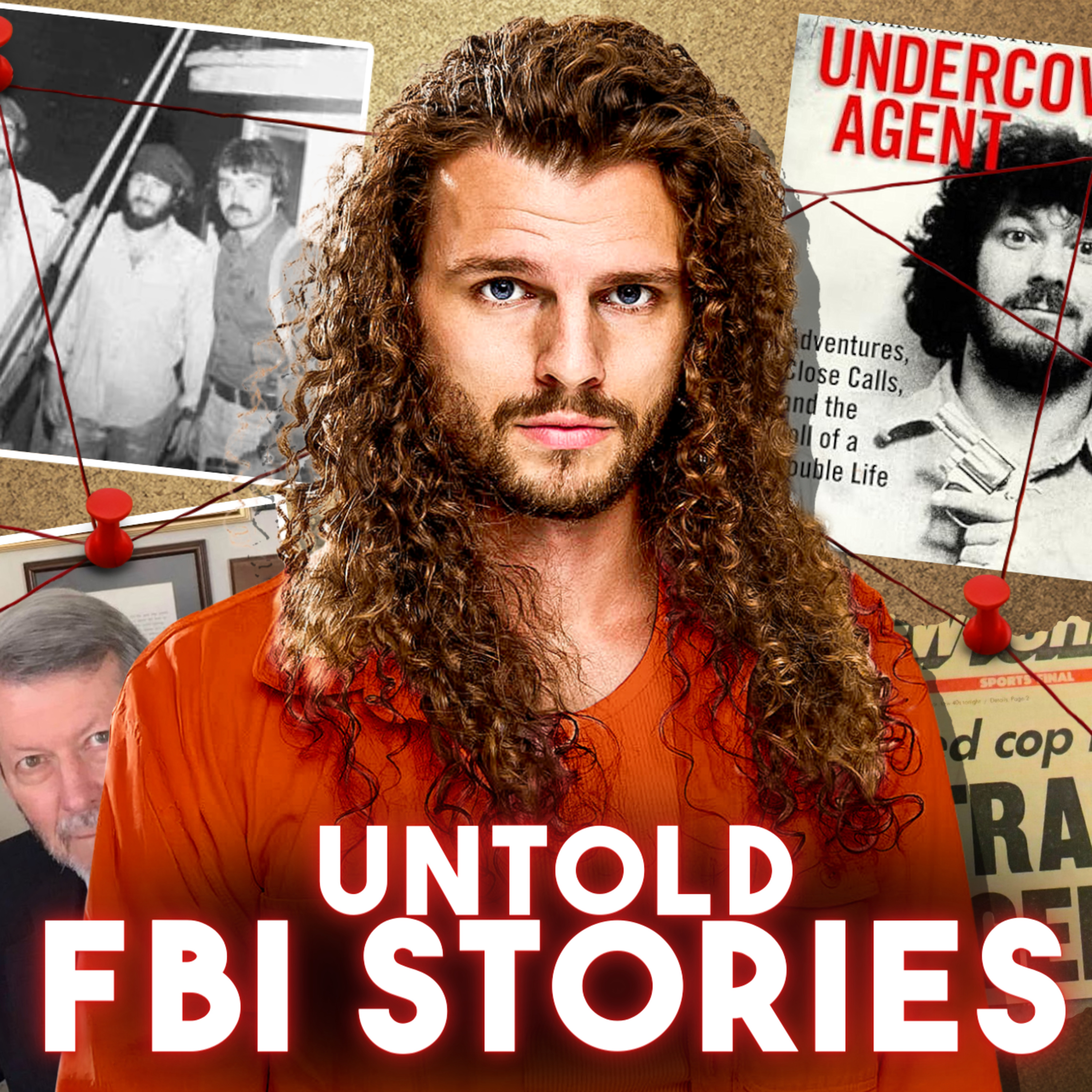
Well, let me. If you read my book, you'll find the title is Confessions of an Undercover Agent Adventures, Close Calls and the Toll of a Double Life. I went back through the book and I typed up a list of the close calls. And until I wrote the book, I never had any idea of how many close calls I had until I started remembering and writing about them. And when I made that list, it was a. And it was things like I walked into the room to do a drug deal, and the supplier turned around from the window where he was looking out. And as he turned around, I recognized him. I'd arrested him a year before. And then the next one is, I'm in an all night grill with an informant. We're waiting for a guy and his supplier to show up and meet us. And the informant says, you know, there they are coming in at the door. And I look around and say, man, he knows me. I busted this guy before. You know, they got two guys coming in, and we're in a booth, and as they're there and they're almost there and they're suddenly standing beside the booth. I'm saying, we got to get out of here. I'm doing. Oh, man. And the guy I busted before slides in next to me and I'm like this. Oh, man, I got a headache. Oh, man, I need to get out of this light. I got a headache. And the whole time I'm doing this thing like this. So we edge out of the booth and we go to the parking lot. And I make sure as we're going out, I'm the last one, you know, and hoping that the guy doesn' and turn around. We get out and we get in the parking lot. And I'm still, you know, still lit parking lot, but there's some dim areas. And we get to the car to do the deal. And we would get in the car, I go in the back seat and make sure I sit directly behind him. And I'm still rubbing my head. Oh, man. So, you know, that's just a couple of those. I've had maybe about a dozen of those. Or walk in a place in this apartment full of people, and I go to the back to do a deal, and this woman up front recognizes me. I don't realize it, but she came and called one of the guy, hey, can I see you about an album or something? And more bells are going off, something's wrong. And then I'm worried, you know, something's happened. And then next thing I know, I'm talking with the guy about drugs and this and that. He's a pharmacist with large quantities of drugs he's putting on the streets. And we're talking, and next thing I know, all of a sudden, behind me, I'm using the name. I forget what name I was using. Maybe Glenn, John, whatever. And the guy behind me, guy comes up behind me and says, charlie, you know my real name. And I don't blink an eye. I just keep talking and talking. Yeah, man, you said you had such and such. And then the guy comes around, says, hey, man, is your name Charlie? Your name Charlie? I said, no, man, what are you asking that, man? You know, anyway, you know, you can imagine how I was feeling them right then these two guys, suspicious, a lot of people between me and the door to get out of there. And I don't have a gun on me, I don't have surveillance, nothing like that. So anyway, I calmed down. The super. No, man, never heard of that. Blah, blah, blah. What about, you know. And they calmed down. Then a little bit later, you know, I make it a point to stay there for a while, to kind of keep things calm after the deal. A little bit later, the guy says, hey, man, you remember when I asked you if your name was Charlie? And I said, yeah. He said, well, this woman, one of the girls up front, told me that you were Charlie Spillers, you were a narcotics agent. I said, what? He said, yeah, yeah. He said, that was my test. And I said, man, you are so smart. Now, when I left that place, just like when I left other close calls, when I left that place, I went and got my car. I took a deep breath and I cranked up the car. And as I drove away, I said what I usually say after close calls. Damn. Damn, damn, damn. I mean, oh, man, just damn. So you go home and you get home, unless you're deep undercover and you have an undercover place, you go home and it's two or three o' clock in the morning, you go inside, you start writing, handwriting some reports while it's still fresh in your mind. And then you try to watch a little TV with it turned down while your wife and child are sleeping. And you're trying to decompress. You're not watching tv, you're trying to just decompress and then finally go to sleep. And then after a little bit of sleep, something to eat, the next morning, some coffee, you're back out again doing the same thing again. So, yeah, if you read my book, gosh, there must have been maybe a dozen close calls like that. The problem was when I was in Baton Rouge, I was undercover in the same city for six years. And so I started running more and more into people who knew me. And I mean, really, really close calls like that.
- [06:27]
Mark Gagnon
Now, you had mentioned before that you have to be creative to operate within the bounds of the law.
- [06:32]
Charlie Spillers
Yeah.
- [06:33]
Mark Gagnon
So were there any specific instances where someone, you know, had cocaine, they had marijuana, they were like, oh, yeah, try some.
- [06:39]
Charlie Spillers
Yeah.
- [06:40]
Mark Gagnon
Or someone gave you a gun and said, hey, go handle this.
- [06:42]
Charlie Spillers
Yeah, well, yeah, you always have to be prepared for that, and you always have to have an excuse for that.
- [06:47]
Mark Gagnon
And so how did you deal with it?
- [06:48]
Charlie Spillers
Yeah, and I would deal with, like, at first it was difficult because at first, people that were involved in dealing drugs were all. A lot of them were drug users. Some of them were heavy drug users. Later on, though, more people were treating it as a business. So later on, it was much easier. In fact, on the high level, if I'm dealing with somebody and we're dealing with 40, 50, 60, $80,000 worth of drugs is easy, man. I don't do that shit. Are you crazy?
- [07:15]
Mark Gagnon
I just sell it.
- [07:16]
Charlie Spillers
Yeah, anybody does that. I mean, you can't do this as a hobby and make money. And if you do that, you're going to get busted. In fact, I don't even like dealing with people who use drugs, man. You know, that sort of thing. So, yeah, and then other times you have things like, oh, no, man, I can't do it right now. Because, you know, if you're on a lower level, man, my po, My probation officer, he caught me hot one time. He said if I test hot again, he's going to revoke me and send me back. So, you know, I'm trying to stay away from it right now because I don't want to get sent back. And I don't know when he's going to test me or. Man, I'm applying for a job. They're going to do a drug test. I can't do that. Or, man, I can't. I've been drinking a lot of whiskey tonight, and I don't want to miss. Mix it with, you know, heroin or whatever, you know, that sort of thing. So you got to. You got to have some excuses. But if. But if shove comes to shove, and the only way to save your life would be to actually take some drugs in front of someone. I guess you would save your life, but I never was, thankfully, in that situation. Never was. Or. Or you just break your cover and arrest them, you know, bust them right there.
- [08:22]
Mark Gagnon
Have you ever had to do that, Break your cover immediately and actually just arrest someone?
- [08:26]
Charlie Spillers
No. No, I haven't. But I'm smiling because I'm thinking of one time when I arrested Papa Ku. Papa Ku had this juke joint down in Mississippi. I forget what his place was called. It might have been called Papa Coos. And anyway, I was dealing with Papa Cool, and I was going to buy, like, 50 pounds of marijuana from him, something like that. So I'm dealing with him for several days, trying to work up the deal. I'm trying to look like I'm legit. And he's, you know, I've got to come up with. I forget how many. How much money. Maybe 40,000, $30,000. But I'm making it look legit. And I'm saying, hey, man, yeah, look, I'm working on my money. I got 28,600 now, and I'm pulling in some drug debts. You know, people. I've run into drugs, too. So I'm collecting some drug debts, and I'd call him back next day, Yeah, I got 33,000 now. You know, I'm working it up, and I'm, you know, making it seem Believable. So we get ready as we get close to the drug deal. I go by his place one night, and boy, the parking lot, gravel parking lot gets full clapboard juke joint out and the middle of nowhere, and it's really going, and jiving. Papa Coup comes out and gets in the car with me. And I said, man, let me show you something. I just collected this, you know, from some of the people owe me money. And I show him about 15,000 in cash. It's a flash roll. And I show him the money. I say, see, I just got this, you know, I'm adding this to what I already have, and I'm going up to get some more. I should have your money in the next day or two. He said, man, I got some money for you. What name was I using? Maybe Mike. He said, look, I got something for you, Mike. I said, what? He said, cough syrup. I said, what? He said, cough syrup. He said, man, we're getting out of Baton Rouge. He said, man, this stuff is dynamite. You take this. He said, it's like electricity shoot down to your balls, man. I said, man, I don't want to. Cough syrup. He said, no, no, try it. And he takes some out. It's still, you know, got the sealed label on it. And he opens it up, and it's not prescription. It's just regular, some kind of regular cough syrup. You said, come on, try it. I said, no, man, I don't want any cough syrup. Oh, cry. No, you got to try it, man. It's good. You're going to like it. Come on. Yeah, your electricity shooting down your balls. So I finally take it, and I go to, you know, act like I'm swallowing some. Instead, I'm putting my tongue in the, you know, to stop it. I'm acting like I'm taking something. No, man, take it. Take it. And he's right in my face. Take it. Take it. So I go ahead and I take several big swallows, you know. I'm thinking, okay, just regular cough syrup, okay? So I take the swallows and give it back. So I say, okay, man, we'll do well. Set to do the deal tomorrow. I'll have the money by then. He says, yeah. So I go to a motel about hour and a half, two hours away, and I get a room, and I call the agents and say, okay, deals on for tomorrow. I'll need agents for surveillance by bus. When he delivers the £50, y' all rush in, bust him. I'll wear a wire. Well, so we're going to rush over the Next day, meet with him, and then do the deal. So that night, it must have been about 2 in the morning or so or 3. All of a sudden I woke up and my face is flushed. Oh, gosh. In my skin. Oh, man. I mean, something's happened. Something's happened. I'm flushed all over. My heart's beating real fast. And all of a sudden I feel lightning shooting down to my balls. Oh, no. Oh, no. When I go, I'm throwing water on my face. Oh, no. Oh, no. And I'm thinking, gosh, I need to go to hospital. Maybe they spiked it, you know, with acid or pcp may spiked it with something. Man, I need to go to the emergency room. And then I thought. And then I called another agent, and I said, hey, who lived outside town, man? Can you come get me? Drive me to the hospital. I didn't want to drive myself because I thought, well, if this was something that was spiked, I might be dangerous to myself or other people if I was out driving a car. So I didn't want to drive myself. And she said, yeah, I'll be right there. So while I'm waiting for him, I look at my gun, and it's that.38. Let me see if I got it. Yeah. See the COVID of my book? That.38 caliber? It's my.38 that I usually carry. And I look at it, and it's laying down on the nightstand, and I'm thinking, oh, I might be dangerous to myself with a loaded gun. So I go and get the.38, open it up, take the.5 shells out. I walk to the door, open the door, and I throw the shells out into the grass so that my gun's empty and I don't have extra ammo. I always thought undercover, if I did take a gun in, I'm not going to have time to reload. It's going to all be over in the first couple shots one way or another. So I throw the bullets away. So my gun's empty. Well, I go to the emergency room, and they wind up giving me a shot. And it was just too much ephedrine or something like that. Ephedrine in the stimulant that's in the cough syrup. And by taking big gulps of it, I took too much of the cough syrup. So I'm having. You know, it's like having too much coffee just about, except for the lightning and shooting through your balls. Say, man, what kind of caffeine is that? And so the next morning. The next morning, I'm running behind on Rushing over to meet Papa Coo to do the deal. The agents from different parts of the state are heading over that way. And I'm getting in the car, I'm heading over that way, and as I'm heading over that way, I'm heading over that way with an empty gun. And I don't have extra ammo. I didn't carry extra ammo even in the trunk or anywhere. So one thing, it's undercover car. And I didn't want anybody, if they ever searched it, to find anything, make them suspicious. So I have that empty gun, I rush over there. And as I'm rushing over, Papa Cool had said, look, I'm going to be on the side of such and such highway park, and you just come and meet me right there. And I rush over and I'm running late. I don't have time to meet other agents to try to get ammo. And I rush and I park behind him, and he gets out and he says, hey, man, follow me. So he takes off and I go following him. I don't know where he's going. Agents who had gone to the area, they're trying to follow us. Papa Cool turns off, this is over around Vicksburg, below Vicksburg, Mississippi. And he's going around these hills on the little bitty country road, almost like a single lane. And it's twisting, going around hills. And when he pops over one hill, all of a sudden, he turns and he goes into this track, into the woods. I turn right behind him. Of course, the agents don't see me. I mean, they have no idea. So Papa Ku winds through this track and branches are brushing against the car. And then he gets to this circle, clear area in the woods, dense woods. He stops. He's got his girlfriend in the car with him, him and her. He stops. I pull up behind him. Of course, the agents have no idea where I am. There's no surveillance, and I've got my empty gun. So Papa Ku gets out of his car and I said, hey, man, you got it? And he said, yes, in the trunk. He opens up the trunk, there's this big cardboard box that's got 50 pounds of weed in it. I said, well, here, I've got the money. And I went to my car and I came back and I had this manila envelope with cut up newspaper in it for the money. And I handed it to him and I say, well, here's the, you know, whatever, thousand. So Papa Ku took that. And as he took it, he started opening it. And I thought, I've Got to do this now. So I reached back and I pulled out my gun, said, nbn, hands up. Police. Hands up. Hands up. You're under arrest. Papa Coop drops it. Hands up. And so I'm there pointing the gun at him. And as I'm pointing the gun at him, I'm thinking, you know, the empty cylinders, if he looks, he can see the cylinders are empty. And so to keep him from being able to see that clearly, I point the gun toward his feet. And when I point the gun toward his feet, he hopped up like I was going to shoot him, shoot his feet. I said, no, man, get down, get down on your stomach. So I got him down on his stomach and I yelled to his girlfriend, get out of the car, come on back here. She hesitated. Finally she came on back. I got her down, I went back to my car and I pulled out her two way radio and I started calling and calling and calling. Finally after about 10 minutes I reached somebody and about 20 minutes later they finally found me and came in. And I thought, I'm glad everything they made it. When I went to Papa Ku's car though, I looked and on the floorboard of the passenger seat where the girlfriend was, was this big huge revolver that was loaded. And I thought, oh man, I thought, mother, man. A little bit later, the agents who had followed me had also followed Papa Ku just before that and they saw where he got his drugs. They went and raided that place, got about another £200, got a bunch of guns and some other guys and got in this wild chase and shootout with some, some guys. A few hours after that, I'm over at the sheriff's office and I'm booking Papa Cool and I'm fingerprinting him. And guys are coming by and they're saying things to me like good jobs and man, you didn't even have a loaded gun. You know, things like that, agents. And Papa Ku's sitting there and he looks up at me and he says, man, said your gun wasn't loaded? I said, no, huh? Why wasn't your gun loaded? I said, well, Papakua, I like you and I don't want to take a chance on hurting you. Mother. You know what he was thinking? You know what? You know what he was saying? Gosh, he could have blown me away. So anyway, I got off, I got off on a tangent.
- [18:38]
Mark Gagnon
Emergency broadcast, guys. We have a brand new channel dropping it is Mark Agnon comedy and we're going to be putting all my stand up right there as well as a new show we call you Ask for this. We pass out no cards to the audience and they submit the suggestions that then get put into a bucket. And then me and a friend, we will draw them out and riff on them. Whether it's a current event or maybe a personal story that happened to someone in the audience. Whatever it is, we get to the bottom of it. So if you're interested in checking out the channel, you can click the link in the description. Please subscribe. It really, really helps everything work, especially after the show comes out. Checking out the episodes and supporting is massive. We really appreciate it. You can check it out. There it is you asked for. This is the name of the segment and the channel is Mark Yagam Comedy. We'll see you guys at the new spot. Thank you so much for always supporting.
- [19:20]
Charlie Spillers
We'll see you next time. Mark killed. It definitely delivered 100%.
- [19:32]
Mark Gagnon
I thought it was great.
- [19:33]
Charlie Spillers
I think he's so funny. Everyone got their own leg in her Shaboo.
- [19:37]
Mark Gagnon
It was bomb. I mean, that show was absolutely killer. Amazing. You're not going to be let down a great time.
- [19:43]
Charlie Spillers
If you're on the fence, jump off. Look, by the way, last night I had a text and it was from nbn, Mississippi Bureau of Narcotics. It was their training agent. They're having a basic agent school they're conducting right now, new agents. And they asked me to come down next week and talk to the agents like normally. They had me come and talk for about an hour about the legacy and the ethics and the ethos of the bureau. And in thinking about that, when I saw his text last night, I thought, well, you know, that's some of the things I'd be talking about with you and your audience. So it might be things that I think may be informative and interesting for your audience and things that. That I'm passionate about. That really goes to my heart, especially about what I call the profession, the law enforcement profession. And one of these is about my partner, Sarah Neal. When I was MBN agent and Sarah and I were in Jackson, Mississippi, working undercover, infiltrating heroin rings. And we were pretending we were a romantic couple and that we lived together. And we did that for about four months. And after the heroin dealers were busted out, we went separate ways. I went to the Gulf coast and started driving a taxicab as a cover to eventually infiltrate heroin rings along the coast. And she went to Brookhaven, Mississippi in south Mississippi, got an apartment, started working that area. While she was there, an agent asked Sarah to go up to Columbus, Mississippi and meet with him. That's about a four hour drive back, then meet with him and go with him on a heroin by bus. He was going to buy so many ounces of heroin for $10,000. And when the deal went down, they were going to bust the violator. But he needed Sarah to go along to make him look cool. So Sarah agreed or didn't. I mean, it wasn't a matter of agreeing. You know, anytime somebody call, you're always ready to help out. So Sarah got up early in the morning, drove, that was four hours to Columbus, met the agent, met the surveillance agents at a motel, and they were supposed to do the deal like, you know, early afternoon. So Sarah and Jimmy and her partner Jerry, they get in an undercover car. And the dealer, his name is, I think it was the Ray brothers. I forget if it was Johnny Ray or Jimmy, but it was Ray brothers. And he had told Jerry, he said, look, drive outside town on this country road and you'll see me parked, drive out about 10 or 12 miles, you'll see me parked on the side of the road. When you do, stop there. We'll do the deal in the middle of the road and don't worry about it. No one will see us. People seldom use that road. And you can see about a mile in both directions, just flat road. So if anybody's coming, you know, we can avoid them before they get to us. And it's like being on the moon. Don't worry about it. So Jerry and Sarah drive to go find a guy. And they've got surveillance, you know, behind them. And the surveillance is kind of staying out of sight. They're trying to listen to him on a wire and stay a little ways out, completely out of sight. Jerry and Sarah get there, they park, they see the Valerie's car. They park on the other side of the little road. Jerry gets out of his car, he meets the bad guy in the center of the road. Jerry shows him the 10,000. The guy pulls out the heroin. And when he does that, Jerry pulls out his gun and says, nbn, you're under arrest. Sarah Neal at that time, she's in the passenger seat of the undercover car on the side of the road at the time that Jerry says, NBN, you're under arrest. In a tree line about 60 yards away is the violator's brother. He's got a 30, 30 rifle. He's got his sights on Jerry. He's got his finger on the trigger. And when Jerry said, you're under arrest, he pulled the trigger. Bam. And then kept shooting. Bam, bam. And Jerry Got hit, staggered in the road, and the guy kept shooting. Sarah Neal is in the undercover car on the other side of the road. She's in the passenger seat. She could have gotten out on the floorboard, gotten down out of danger, or she could have gotten out and squatted down behind a motor housing of the car and would have been safe. But instead, Sarah Neal saw that her fellow NBN agent was wounded, staggered in the road. And about that time, he got hit a second time, staggering in the road. And Sarah Neal jumped out of the car, ran around the front of the car holding a Model 60, just like I'm holding in that book, holding her gun. She saw the violator with Jerry going for his gun, and she snapped off a shot, pow. And got the guy in the hand. And Sarah's under fire from the rifle, shooter. Then he's shooting at Sarah and Jerry. And as she gets to Jerry, Jerry gets hit a third time. He's down, and he staggers back up. She grabs Jerry under fire. She tugs him to her side of the road, and there's an embankment there. And they tumble down the embankment, rolling over, rolling over. When they get down to the bottom, Jerry lays back and blood all over him. Sir Gets up, gets in a squat, gets her pistol, and she watches the skyline where the road is for the violators coming at. Just guard them, coming after them. And she's watching, and she looks at Jerry. He's got so much blood on him. She's thinking, I've got to get him to hospital. I've got to get him to a hospital. If I don't get him to hospital, he'll die. He'll die. So she tugs him up holding her gun. She tugs him up, he gets up, and then she starts tugging him up the embankment. And they're going up the embankment, and she's tugging him up that way. Later on, she told me, she said, charlie, there's no way I would have ever had the strength to get him up that hill on my own. It was like I had supernatural strength. And you've heard of people in crisis. A car falls on somebody, and somebody picks up the car. She says, that must have happened. I was pulling him up there. She gets to the top, she doesn't see the bad guys anywhere around. She gets him over to the undercover car, and she starts getting him in the back seat to lay down the back seat. And he's getting blood all over her. And she's dirty. They're both dirty. And about that time, the surveillance agents roll up and the Surveillance agents start fanning out, trying to find the bad guys. Sarah gets on the radio and she rushes back. Races back to Columbus to find the hospital. And she wasn't familiar with it. She got on her portable radio, and he's moaning in the backseat, and she's rushing. She gets directions to the hospital. She rushes up to the hospital room. She gets him out, gets him inside. Well, back then, hospital emergency rooms, especially in rural areas, weren't equipped like they are now. So she gets him into the emergency room, and all she sees around, I believe, was a nurse or a nurse's aide. And they said, look, we'll put him in this room right here on this gurney. So Sarah, they get him on. On the gurney, and he's bleeding. And the nurse says, let me. Let me go check the hospital and see if our doctor's in the hospital. So the nurse leaves. So Sarah's in there with Jerry, and she's holding his hand. He's bleeding and moaning. And a couple minutes pass, then another minute or two passes. And suddenly Sarah hears this yelling and screaming, you know, in the emergency room. Sarah steps out of the room, and she looks. And coming into the emergency room is a guy coming in, holding his hand. Help me. Help me. Somebody help me. Help me. Yeah, it was the guy she had shot in the hand. Somebody help me. So Sarah stepped back into the room, got her gun out of her purse, and she stepped out and she arrested the guy right in the middle of the emergency room. Had him get down on his. On his belly, and then she got down behind him to start handcuffing him. And he was yelling, don't put them on too tight. It hurts too much. Don't put them on too tight. Of course, if I was her, I'd clamped him on. And while this is going on, Sarah's kneeling over the guy to put the handcuffs, and he's yelling. There's one person in the emergency room, somebody waiting. It's an elderly gentleman. And he's sitting there watching this with big eyes like he's watching a movie. And Sarah puts the cuffs on the guy. He looks at the old man and says, mister, would you watch him? And if he moves, would you yell out and let me know? I've got to get back to my partner. Yes, ma'. Am. Yes, ma'. Am. She gets back to Jerry. Well, that happened early afternoon. Of course, agents from all over the state rushed to Columbus. They're trying to find the bad guys. Of course, Jerry's been wounded seriously. So they all rush into the hospital so Sarah's there at the hospital all day and she's answering questions, she's giving them information, she's looking after Jerry. I mean, the whole day, the rest of the day like that. Finally, about midnight, around midnight, you know, she's about to just fall out from exhaustion. And about midnight, they convince her. Well, look, go get a motel room, get a night's sleep. See, when Sarah originally went up there, she was going to make a round trip in that same day. So she didn't have a motel room or anything or didn't take anything with her. So Sarah leaves, goes out to her car. It's got ice all over the windshield because they'd been sleeting that day. It's close to Thanksgiving. So she goes to the trunk and she gets out. We used to carry extra undercover tags so we could switch as needed. She gets out one of the undercover tags and she scrapes off the windshield, gets in the car, it's freezing. And she drives into downtown Columbus, Mississippi. It's the weekend before Thanksgiving and it's like 12:1 in the morning. Stores are closed, no cars on the street. I mean, the city is just. It's just almost like it's abandoned. She drives, she gets to the Holiday Inn, checks in, very few cars there at all. And they put her in a room in a back block. And when she gets to the room, she makes sure to double lock the doors and check the outside because the shooter, the rifleman, is still loose. She doesn't know where he is. And apparently he must have dropped off the guy she shot in the hand. To the hospital. She goes and takes a shower. And when she takes the shower, she takes her gun with her, puts on the top of the toilet while she takes the shower. And imagine how that might feel if you've been through that in a day. That shower just not only cleaning, but being refreshing, just kind of giving you your spirit back a little bit. Goes and sits on the bed and she's on the phone for a while. You know, she has to let them know where, which hotel she's in. She's on the phone, answering a few more questions. She finally gets in bed, turns off the lamp. It's probably about 2 o' clock or so like that. Well, if that had happened to you, Mark, if that had happened to you, if that hadn't happened to any of you, would you just fall off into a nice contented sleep after that? Well, no, no, and she didn't either. She tossed and turned and you know how you can close your eyes and it's almost like you're fully awake. Well, that's the way she was. And at daylight, the phone rang and she picked up the phone and it was an agent at the hospital. He said, sarah, I've been up all night with Jerry. Can you come relieve me? So Sarah Neal got up out of bed with hardly any sleep, and she got dressed and went to the hospital. When she got dressed, she had to put on the same clothes she had worn the day before because she had not taken any clothes with it. So she put on jeans that had sponges of blood on it, she put on a blouse with blood on it, and she put on a jacket with blood on it. And she went back to the hospital. She stayed all day at the hospital, all day and again, sometimes busy with calls and reports and, you know, this is a crisis type deal. Finally, at about 8 o' clock that night, Sarah left and drove back to Brookhaven, Mississippi, to where her apartment is. And again, like I say back then, on those back roads, it's about a four hour trip. And that whole way she fought to stay awake those four hours wearing those same bloody clothes, same bloody clothes that she had worn. I mean, isn't that something? Isn't that, I mean, to me, I love that story. Jerry and Sarah, I love both of them. They're just. Sarah unfortunately passed away about two years ago from, you know, just illness. Jerry doing well down in Jackson. But I love that story because it shows courage, sacrifice, compassion, and I think it really drives home what people in law enforcement go through at times. I mean, what a beautiful and horrible story all at the same time.
- [33:48]
Mark Gagnon
I mean, she's a warrior.
- [33:50]
Charlie Spillers
Oh, she is. She is a warrior. So.
- [33:52]
Mark Gagnon
And what happened with Jerry after that?
- [33:54]
Charlie Spillers
He went, underwent, I think four operations and eventually went back to work, you know, as an agent. However, for a year, he couldn't carry a gun because you can't carry a gun if you can't qualify on the range. And one of the shots, he was right handed. One of the rounds had torn away the muscle in his forearm and his right arm. And because of that, his arm was too weak to him to be able to, you know, qualify. But he kept trying and trying and trying, and finally after about a year, he was able to qualify. Wow. And later on, he retired from the Bureau, from NBN at a high rank. I forget what it was, but just a remarkable guy and a warrior himself. When he got shot, when he got shot, he fired toward the tree line. He emptied his gun, he got hit again. He reached and Got his backup gun and he was firing that. I mean, he was a real warrior.
- [34:56]
Mark Gagnon
And what happened with the bad guys?
- [34:58]
Charlie Spillers
They got caught.
- [34:59]
Mark Gagnon
So obviously, the one got caught in the hospital.
- [35:01]
Charlie Spillers
Yeah. The other got caught, too. They went to trial, they were convicted. They were sent to the state pen at Parchman, Mississippi. And about a year later, they escaped. And it was a crisis again for NBN because they had both sworn they were going to get out, kill Jerry and Sarah. And so we put extra security and restrictions on Jerry and Sarah, you know, during that time. Well, one of them was recaptured soon after. The other was recaptured about a month later in. I forget it might have been the state of Washington or Oregon and brought back. They were. They were just killers. Bad guys. Bad guys.
- [35:45]
Mark Gagnon
He got captured in Washington.
- [35:47]
Charlie Spillers
Yeah. Yeah.
- [35:48]
Mark Gagnon
By a local PD over there.
- [35:51]
Charlie Spillers
I don't know the details.
- [35:52]
Mark Gagnon
He was doing something. Something stupid and criminal and got jammed.
- [35:56]
Charlie Spillers
I have no idea. Wow. I have no idea. But anyway, isn't that a remarkable story, by the way? I was telling this story, and I tell it often because you can see why I tell it, because isn't this remarkable? I mean, isn't it true?
- [36:10]
Mark Gagnon
Sacrifice.
- [36:10]
Charlie Spillers
Yeah. I tell it when I have the opportunity. I tell it often because it says so much. One time I was talking with the. I think it's called St. James Church in Jackson. Episcopal Church, I believe it is. And There were about 150 people there. And I was telling them certain undercover stories, including this. And when I got to that part, I told people that. Sarah told me after that that I don't know how I got Jerry up that embankment. You know, I didn't have the normal strength. I don't know how I got him up. A lady at one of the tables said, I know, I know. I said, yeah, I think you're right. I think you're right. I think oftentimes we had guardian angels looking after all of us at various times, whether we knew it or not. And as I tell people, I probably wore out several shifts of. When I. When I was doing that work, they.
- [37:16]
Mark Gagnon
Had to call up their backup, say, hey, can you relieve me? I gotta. I gotta watch Charlie over here.
- [37:20]
Charlie Spillers
Yeah, well, when. When I talk with the NBN agents next week, I'll be telling them about that. And most of the agents won't be familiar with that story. Tell them about what it means to be an agent. What it means to be in law enforcement, to me is not just about the Bureau, but to me, this exemplifies law enforcement. The dedication, the sacrifice, the courage. The things that you're called upon to do and their loyalty to support each other. Another thing I'll be telling agents about is an agent named Charlie Lindsay who went to make an arrest outside Jackson. And when they got to the apartment, they opened the apartment door, and the violator inside started shooting at them with a rifle from inside, through the doorway.
- [38:06]
Mark Gagnon
Was this a drug.
- [38:07]
Charlie Spillers
A drug dealer. He was shooting at him with a rifle. They jumped back on the outside of the door of the apartment with their guns. He was shooting through it. And the agent, Charlie Lindsay, suddenly saw some motion right below him, right in the middle of the doorstep, Movement. And he looked down. It was a small child. And the child had come out of that apartment, standing in the doorway, looking up at Lindsay. And the little child said, mister, are you going to shoot me? And Lindsay, Shots coming through the door. Lindsay, without hesitation, reached over, exposing himself. His upper body, no body armor, which wouldn't have helped anyway. Exposing himself to gunfire, picked up that child, pulled the child back out of danger, and he said, no, baby, nobody's going to hurt you. Nobody's going to hurt you. The violator and his girlfriend jumped out of a back window, and they were captured soon after that. No one got hurt. I wrote about that. Now, of course, I wrote about Sarah, too, in the book Confessions of an Undercover Agent. And I tell Charlie, I tell people when I mention him, that although I wrote about that, I regret that I didn't point out how courageous that was. You know, just point out how courageous and compassionate it was to be ready to sacrifice his life like that, without hesitation. I think, you know, that that says something about the profession.
- [39:41]
Mark Gagnon
Absolutely. To risk your own life to. To sacrifice for. For a child, someone that needed help, but someone you don't know, someone you never met.
- [39:49]
Charlie Spillers
Right? Exactly.
- [39:50]
Mark Gagnon
What's up, guys? We're going to take a break really quick because I got to tell you a story. Imagine you're sitting in your house. It's cold outside. It's. It's a little snowy. And you're like, man, I just want a panini. So you go and you order it, you know, from Doordash or something like that. And it never gets to you. You're looking at the app, you're like, dude, it's been four hours. Where's my panini? You're calling? No one answers. Well, this is a true story that happened. There was a woman, a client, that was working as a doordash driver, and she slipped and fell on an icy walkway outside of a Panera Bread in Fort Wayne, Indiana. She breaks her elbow, which leads to surgery and hardware having to get inserted into her arm. She can't work. And originally, you know, she sues Panera. And Panera's like, okay, we'll give you like 125,000. But then the good people over at Morgan and Morgan fought for her and got her the million dollar verdict that she deserved. Yes. If you never heard of them, Morgan and Morgan is America's largest injury law firm. Yes. And they're that way for a reason. They've been fighting for the people for over 35 years. Now. I'll be honest. If I ordered, you know, a panini and the woman gets paid a million bucks because she slipped, I mean, it's a tragic thing to happen, of course, but I deserve a little bit of that. I, I should get a cut at least, right? I'm the one to order the panini. If I never ordered that panini, she never would have slipped, never got a million bucks, which obviously she deserves. You know what I mean? But maybe next time she gets a million and million point one, I can get a cool 100,000 out of that. Regardless. All I'm saying is if you're ever injured and you are looking to get the money that you deserved, the compensation that is entitled to you from your injuries, Morgan of Morgan could be the way to go. Hiring the wrong law firm can be disastrous. I mean, you can be locked up and litigate, it's a nightmare. But hiring the right law firm could substantially increase your settlement. And with Morgan and Morgan, it's easy to get started. Their fee is $0 unless they win. That's right. Their fee is free. Unless they win your case, you don't pay a zero, you pay zero cents. Unless they win your case. You can Visit for the People.com Gagnon G A G N O N that is F O R the People.com Gagnon or dial pound law. That's pound five from your cell phone. That's for the People.com GagnON or click the link in the description below. And thank you so much to the good folks over at Morgan and Morgan for sponsoring this program and making this show possible with this paid advertisement. Let's get back to the show.
- [42:13]
Charlie Spillers
This message is sponsored by Greenlight. With school out, summer is the perfect.
- [42:16]
Mark Gagnon
Time to teach our kids real world.
- [42:18]
Charlie Spillers
Money skills they'll use forever. Greenlight is a debit card in the number one family finance and safety app used by millions of families, helping kids learn how to save, invest and spend wisely. Parents can send their kids money and.
- [42:29]
Mark Gagnon
Track their spending and saving while kids build money, confidence and skills in fun ways. Start your risk free Greenlight trial today@greenlight.com.
- [42:38]
Charlie Spillers
Spotify that's greenlight.com Spotify UnitedHealthcare nurse Crystal checked in on a patient.
- [42:45]
Mark Gagnon
We do a routine call after surgery and I could tell in her voice that she was struggling.
- [42:49]
Charlie Spillers
Crystal knew she needed help.
- [42:51]
Mark Gagnon
I knew that this is very serious.
- [42:52]
Charlie Spillers
This is like septic, this is life threatening. And she knew just what to do. And I called the hospital and said she's coming in, here are her labs and got her the help she needed. I see my role at UnitedHealthcare as a life saving role. Hear more stories like CrystalShc.com benefits, features and or devices vary by plan, area limitation and exclusions apply. Chuck Smith was an agent in North Mississippi. And he was one of my agents when I was the regional commander for North Mississippi. And later on he became a supervisor himself. After I left the bureau and while I was a federal prosecutor, Chuck went to help the deputy U.S. marshals arrest a man on child pornography charges. It was out in rural county and they go out to the county and they asked Chuck to station himself in his vehicle on the side of this county road just in case the defendant tried to escape. Tried to escape, you know, by that route. So Chuck is sitting in his car and he's got his NBN ray jacket, the badge on it, on, sitting there waiting. And all of a sudden while he's sitting there, this pickup truck is driving toward him at a high rate of speed and it looks like it's going to ram him. And as the truck is almost to him, Chuck leans over into the seat and braces himself for the impact. Instead, the truck stops right beside him. A man jumps out with a 357, points it at Chuck's head and said, get out, get out, you emf. Get out. Get out of the car. Chuck gets out, it's clear, you know, he's an agent, he's got the ray jacket on and all that. And the man says, I'm going to kill you, mf. I'm going to kill you. Pointing the gun right at Chuck's chest. There was a sound in the distance and the man turned his head briefly just to look. And when he did, Chuck pulled out his gun, pow, shot him. The guy goes down. Another man had been with him and Chuck cautioned that man to get back, get back. Then Chuck, Chuck called on the radio, you know, for assistant. And then Chuck knelt down and Chuck had Been a certified EMT before joining nbn. And he got down, the guy was still alive. And Chuck began saving his life and kept the man alive. Helicopter lifting him to, to the Med center in Memphis. And he survived. Wow. Now think about that. Here is a. Obviously a criminal who is about to shoot a law enforcement officer, and the officer is able to shoot him. And then 20, 30 seconds after the guy was going to kill the officer, the officer saving the guy's life. Saving the guy's life. Now, to me, to me, that says a lot about law enforcement. To me, that's an example of law enforcement. When I served in Iraq as the justice attache and before that when I served as the DOJ attorney advisor to the Iraqi High Tribunal, you know, they tried Saddam and others. One day, an official with the Iraqi High Tribunal said to me in wonder, he said, you know, you Americans believe every person's life is important. And reason they were saying that is we always insisted that they treat their prisoners humanely. You know, they have food, you know, even though it was. It was people like Kim Kamali, Terry Gaze and others who were mass murderers awaiting trial while they're incarcerated, we, you know, we insisted that they give them food, access to attorneys, they follow the rules of their criminal procedure and they, you know, get access to attorneys. And they wanted to just kill and torture them. And so this official said, you know, you Americans, you believe every person's life is important. About one month after that, another Iraqi official said almost exactly the same thing. To me, you Americans believe every person's life is important. And to me, the fact that both of them said it and it was over a period of time meant they had talked among themselves about this. And if nothing else, maybe things that we tried to do in Iraq never worked out. But if nothing else, I think it established that principle that Americans do care about every person's life. Every person's life is important, even the worst person's life is important and should be treated humanely, that sort of thing. So that was Chuck Smith a few years ago, might have been 2018, I was the keynote speaker for the Louisiana Narcotics Officers Association Annual Conference. And on the third night, they have an awards banquet. And I was the keynote speaker for that. And after the talk, one of the people who came up to me was the president of the Tennessee Narcotics Officers association, who had been there as one of the guests. And he said, hey, by the way, while we talked, he said, have you seen that video that came out, dash camera video of, you know, police car? I forget if this Nashville or Nashville or Knoxville police car that showed a man being stopped on a traffic violation. It shows him walking back to the officer's car. Then you hear five shots and officer screaming. Then the man gets in the car and drives off. And I just had. I happened to have seen that. I don't look for things like that, but happened to have seen that. It was just chilling. And I said, yeah, I saw that. He said, well, that was my partner. I said, what? He said, yeah. He said, when I was in uniform, he and I were partners. And of course, you know, I was in narcotics, but that was my partner. And when that happened, I heard it on the radio and I rushed to the scene. And when he got to the scene, the ambulance was there. They were getting ready to load his partner up in the ambulance. And the partner had been shot five times. They didn't expect him to live. And they loaded him up in the ambulance. And as they were loading him up in the ambulance, the Tennessee president started to climb into ambulance. They said, no, you can't do that. Other people can't go in the ambulance with us. And he said, well, I'm going. He climbed in the ambulance. He said, the reason I did was because I didn't want him to die alone. Is that powerful or what? Well, there's a good ending to the story. The man survived, of course. I don't think he was ever, ever able to return to duty, but he survived. But everyone thought he was going to die. He just didn't want him to die alone in front of strangers. Wow. Is that powerful or what?
- [50:14]
Mark Gagnon
I mean, that's remarkable.
- [50:15]
Charlie Spillers
Yeah. So you see why there are some of these stories, experiences that I think are important and important for people to know. One, they're informative. Two, they should be interesting, and three, they should be giving people insights that maybe they didn't have before. One other thing, when I was the regional commander, I would talk with my lieutenants. I had four lieutenants in the districts. They each had like eight or nine counties and agents. And I talked to my lieutenants every day in person or by phone. And I was talking with Dennis McInally. He was the lieutenant in charge of the agents in the Greenwood office, Greenwood, Mississippi. And as we were about to hang up, he said, yeah, we're going to go over and go get something to eat now. We're going to such and such place. And. And, you know, I was having an office meeting, so we're all going over and eat now. And Charlene's here, and she told us what she wants. So we're going to bring back one for her. Well, the reason Charlene wasn't going was because that restaurant, that was the most popular restaurant in town, where the workmen, the judges, the lawyers, law enforcement, everybody went, had a sign that said members only. And if you walked in the door and you were white, you're automatically a member. Charlene Anderson was black, a black female, and she couldn't go because of that. But she liked the food from there. So they were going to bring her back, you know, her order. And Mac told me that said, yeah, we're going to bring Charlene back. She gave, tell us what she wants. I said, Mac, do you realize what you just told me? He said, what you just told me you and your agents are going to a place that a fellow agent can't go to. There was silence. Holy cow, Charlie. I never even thought of it that way. Holy cow. They never went back. They never went back because Charlene couldn't go. Now, later on, I recommended Shirley when there was an opening, and she became the head of that office. And she dealt with a lot of sheriffs, and some of these you might call redneck sheriffs. And they were good people, but they weren't used to working with females because back then there were very few females in law enforcement, and they certainly weren't used to working with black females. But when I talk with the sheriffs, they would uniformly praise Charlene. She was smart, she was tough, and she was just good. They would pray. I mean, they became her fans. I mean, that was some story. Later on, Charlene, I think maybe that year, the next year, she might have been agent of the year. She had saved another agent, Albert Craig, when Albert was doing a deal in one of the small towns there in the Delta, and he got burnt. And while he was burnt, he was doing a deal in this community. It was just him and an informant. And Shirlene and another agent were on surveillance. And Elbert was wearing a wire and he was going to do a deal, but then they burned him. And I forget exactly how that came about, but I think they went and looked in his car and they found his badge or something. Anyway, they pulled the informant had left, and they pulled a gun on Craig. They took him to the bathroom and they put him on his hands and knees and they had the gun in his head. And the two people were discussing whether they were going to kill him right there or take him out to the woods, back behind him, the house, and kill him in the woods. There's no doubt they were going to do it. The only question was right there or in the woods. The wire. They had taken the. They had found the wire on Craig and they had thrown it to the side. And Charlene was only picking up a little bit about what was going on. So she didn't know what was happening, but she figured out that something's wrong. Something's wrong. And she told the other agent, we're going in. And they went busting in. The bad guys ran out the back. They saved Elbert. The bad guys got caught. But that was Charlene. I mean, had she not her instinct, had she not listened to her instinct, and had she not had the courage to do what she did, Albert Craig would have been murdered. That's some story, isn't? Wow. He later, after retiring from nbn, became a pastor. Shirlene retired, I think, as a colonel or lieutenant colonel from nbn, and later became the first black female police chief of Jackson, Mississippi.
- [55:13]
Mark Gagnon
Wow.
- [55:14]
Charlie Spillers
Isn't that some story?
- [55:15]
Mark Gagnon
I mean, that must be difficult for her specifically in that time.
- [55:20]
Charlie Spillers
Oh, yeah, right.
- [55:21]
Mark Gagnon
Like as a black woman trying to climb the ranks within.
- [55:24]
Charlie Spillers
You can imagine. You can imagine. But here's the thing about NBN back then, you're talking about the 70s and the 80s. Well, later on, too, there were a lot of agencies, law enforcement agencies, under court orders. And they were under court orders because of discrimination in hiring and in promotion. And those court orders oftentimes required. I know when my son joined NBN back in the 90s, they were using the state, the state written test. And the test scores were different for minorities, the lower qualifying for minorities than they were for non minorities. And for promotion and hiring. That's the way things wind up. Working with a lot of agencies because of court orders. Nbn, though, was never under that kind of court order, and it was never under that kind of court order because the director who formed nbn, Kennel Fairley, was a true visionary. And he tried to form it along the lines of FBI, although not to investigate things like FBI, but with the same type of policies, principles, ethics and protocols. And it was colorblind and hiring and promotion. So, you know, back when I was an Indian commander, I would go to black colleges and actively try to recruit agents just as part of the recruitment process. Shirlene. But that didn't make it easy for Charlene. She was a female when in the south there were few females in law enforcement. She was a black female when there were very few black females in law enforcement. And she was a black female supervisor and then a Manager when there were very, very few, and then, as I say, became the first black female police chief of Jackson, Mississippi. Isn't that. That's some story, right?
- [57:29]
Mark Gagnon
I mean, it seems like undercover work and deep undercover work is one of those industries where you actually need diversity.
- [57:36]
Charlie Spillers
Oh, you do.
- [57:36]
Mark Gagnon
You need many different types of people.
- [57:38]
Charlie Spillers
You do. You do.
- [57:39]
Mark Gagnon
Like I can imagine in your work, you know, like, depending on. On. On what the case is, you show up as some white guy, and they're.
- [57:46]
Charlie Spillers
Going to say, look, I've had that numerous times. I was dealing with Shorty Smooth one time in West Point, Mississippi, and we're in a car, and we're in. Shorty Smooth is in. I think I was using name Glenn. Glenn said, you know, yeah, you look. You said, you want a kilos? Look, the people I'm dealing with, you know, over in Atlanta, they got kilos. I said, good, hook me up with them. I buy from, you know, I buy from Glenn. They ain't going to deal with you. I said, what? They ain't going to deal with you, Glenn. I said, why not? Yeah. I mean, you trust me. We were short. We're okay. Smooth. He said, man, I just tell you, they ain't going to deal with you because you white. I said, what? He said, yeah, you white. I said, no, Shorty, I'm black. He said, what? I said, I'm black. He said, what? I said, I got black in me. And so he said, what? And he does this. We're in the car, he does this. Oh, yeah. And we say. I mean, he's looking at my face and finally sees in my face. Oh, yeah. We shake hands. But. But apparently I wasn't black enough for the dealers in Atlanta because I never did get hooked up with them. But, yeah, Shorty. Later on, Shorty disappeared. I remember he disappeared. He was kind of not tourists from West Point. Somebody said he was out in California, and when he showed back up, the chief. He and I worked together. Bill Ladd worked together. He said, yeah, he showed back up. And he showed back up in a stolen car. And I said, well, how'd you know it was stolen? He said, shorty Smooth show back up in a purple Lincoln. And he said, that was back when the Lincolns were about 30ft long. And here's little Shorty Smooth driving a Lincoln with California tags. That ain't right.
- [59:31]
Mark Gagnon
Are there. Is there one more story that you tell the new agents and people that you're speaking to at these events? I want to ask you about Iraq and your time there with the as the justice status J.
- [59:41]
Charlie Spillers
Right.
- [59:41]
Mark Gagnon
But I'm curious if there's one more that you think.
- [59:43]
Charlie Spillers
Yeah, well, yeah, I'll be telling agents too about the director, Ken Fairley with nbn. He's legendary as the first director. Just a legend. He's passed away, but we would still refer to him as Mr. Fairley. Smugglers brought in a shrimp boat with 20,000 pounds of marijuana on it into a little inlet on the Gulf Coast. They brought it like about 2 in the morning or something and we had some advanced knowledge about it. And we were working with DEA, with DEA, try to intercept the load. Me and Fred McDonald, another Indian agent, and Ken Smith, a Jefferson Parish narcotics officer, were in a empty warehouse near a canal in the inlet. And we were trying to be on the lookout for a darkened boat. You know, all this place was vacant and isolated, darkened boat going. And at some point, some point we heard a boat rumbling. And what had happened? The boat had slipped in up the inlet. It had beached at a little sandy beach and had ramps coming off. And a tractor trailer truck had wound down a sandy track through the woods down to where that inlet was. And they had offloaded £20,000 into the tractor trailer truck. And then the tractor trailer truck left. And while all that was going on, me and Ken and Fred thought, gosh, we can't see anything, don't know what's going on. Let's make our way to where we're hearing the noise. So Ken and I start working our way on foot through the swamp and Fred goes and gets another agent. They get in a car and they wind up going down that sandy track with their lights off while we're working our way through the swamps. And Ken and the other agent got there just before we did. The tractor trailer truck was already gone, but the shrimp boat was still there rumbling. And Fred got out and attacked the shrimp boat and captured it single handedly. He was firing his.45 poor Magnum and bam. And the captain and his crew hands were jumping over the back and they were swimming across alligators to get to the other side of the place and escape. And meanwhile other agents stationed a couple miles away had started following the tractor trailer truck and they followed it deep into another county, way into the woods. And in the woods there was a warehouse they'd built. In the woods was a holding place for tons of marijuana. And that's where they took it to. And the agents rushed in and raided that place. And the people who had jumped off the shrimp boat were later rested on the interstate While they were trying to hitchhike and get away later that afternoon, I was at where that warehouse was, and they had already taken all the marijuana away. They had. There's a little guard. There was a little hut there that was used apparently by the people who looked after the dope. I think it had a dirt floor, maybe a cot or two, may not have even had electricity. And all the evidence had been taken away. All the agents were leaving, and the head of DEA from New Orleans was there. Director Fairley was there. Sheriff's office, dozens of federal, state and local agents. You know, everybody, a lot of people, everybody was walking toward their cars to leave and, you know, head back. Fairly was walking back toward his car, and next to him was an agent looking through a magazine, old torn magazine. And Fairly said, what you got there? He said, oh, Ms. Fairley, it's a Look. Guns and Ammo Magazine. Where'd you get that? Oh, it was on the floor back there, you know, in the place. And Fairly said, you like your job? You like your job? Oh, oh, he goes back and he leaves the old torn magazine. It was an old torn Guns and Ammo magazine. No one lived in that hut. That magazine didn't have any value to anyone. But the key thing about it was one, it wasn't contraband. You know, you can seize contraband sawed off shotgun drugs, things like that, pornography, you can seize that. You can seize evidence. Things that are evidence, maybe telephone records that somebody had that, that's going to be evidence toward the conspiracy. But old Guns and Ammo magazine, that's not evidence. That's not lawfully seizable. It's not worth 10 cents. But Fairleigh was basically telling the agent, you take something like that, you're going to lose your job. Wow, you can imagine how that went around the Bureau.
- [65:03]
Mark Gagnon
Principled.
- [65:04]
Charlie Spillers
Yeah, that's the way the Bureau was. That's the way the Bureau was. And we. I mean, give you another example. When I was on the Gulf Coast, I was working, you know, that taxi cab, drove the taxi cab, and I started making a few drug deals. And I started laying down the story that, hey, I'm going to come into a lot of money because I was in an accident. My lawyer tells me, I'm going to get all this money, boy. And I'd start cussing the lawyer for his take. And then finally I tell everybody, oh, man, I'm getting the payoff from the settlement. And then I start driving this big and Lincoln, you know, I've got all kind of money and I'm making, you know, making all these deals. And I think I was undercover for about maybe nine months doing that. At the end of that, we had arrest warrants for about 180 people from New Orleans to Mobile and all along the Gulf Coast. Nearly every single one were on heroin deal. Heroin dealers. When they got arrested. When they got arrested, there were several of the heroin dealers that told the same story. They said. And they. There was an informant who had introduced me. And they said, look, that informant gave me the drugs. I sold that agent. The informant said that he owed the agent money, which we didn't know was an agent, and that if they sold it, you know, they could keep part of it. And the informant had supposedly done that on about four or five people. And the four or five people were heroin dealers, but that's obviously not permitted and illegal. So because we were suspicious that, wait, there's enough that might have happened, I took the informant up to Jackson and he was polygraphed. He was polygraphed about that. On the polygraph, he admitted he had done that. We, of course, had those cases dismissed. He admitted that he had done that. And he said. Later, he said to me, and they confirmed this, he said to me, he said, you know what that man asked me, you know, doing the polygraph? I said, know what he asked me? He said, was Agent Spillers involved? Did Agent Spillers know about that? Was he involved? And the informer said, what? Said, that's the most honest man I ever met in my life. Now, I like that, because maybe I wasn't the most honest man he ever met in his life, but he thought that. He thought that. As I tell agents, as I tell agents in law enforcement, I also have done training in academies. I tell agents and officers, that's what you want people to say about you. You want them to say, that's the most honest man I've ever met. That's what you want them in. Always conduct yourself that way, even when you don't think anybody's ever looking, because, you know, you out working undercover and you're working with an informant making cases, you can always give a wink or a nod. Yeah, let's do this or do that. But instead, you always insist that there's only one way to do it. The right way. And if we can't do it that way, we don't do it. And as I tell officers and agents, I say, look, as bad as you want to put a criminal in jail, out here, somebody you know is a criminal. Is there any criminal out here worth your Badge worth your badge? Any criminal out here worth your career? Is there any criminal out here worth going to prison for? There's not. There's not. So anyway, that's the kinds of things I tell people in academies and in the basic agent school.
- [68:46]
Mark Gagnon
What's up, guys? We're going to take a break really quick because you need better sleep. I mean, if you're like me, you'll probably wake up feeling exhausted, you miss your workout, you're drinking too much coffee, you feel wired the whole day because you're just shocking your nervous system. And the problem is that sometimes you don't sleep great. And the sleep supplements that you do take are probably packed with melatonin, oftentimes 10 times the melatonin that your body actually produces. So as a result, you end up feeling more groggy and worse than you did before because this melatonin is knocking you out and you're not able to wake up easily. It's a big problem. And that's why Sleep Dust came to the market, because they saw this issue. And instead of knocking you out with massive doses of melatonin, it works with your body using five clinically backed all natural ingredients. That includes magnesium glycinate, which is amazing for sleep. I take it every single night, L theanine, glycine and a micro dose of melatonin that actually matches what your body makes. So as a result, you fall asleep faster, you sleep deeper and you wake up refreshed and ready to crush your day. Sleep Dust is third party tested, contains no sugar, artificial ingredients and it's made right here in the US of A. They are so confident that it will work for you and it'll help you sleep that they offer free shipping and they back with a 60 day money back guarantee. Now I love this because all these things are amazing. I'm already taking magnesium glycinate, I'm already taking L theanine and I mean sure, you could buy all of these supplements independently or you could save money and time just by getting Sleep Dust. So if you are curious, you can go to www.sleep-dust.com that is S L-E-E-P-U-S-T.com and you can use the code sleep for 20% off. That is sleep-dust.com use the code sleep for 20% OFF. And look, if you don't like it, you got a 60 day money back guarantee. That is how confident they are. So go check them out. And thank you so much for supporting the show. We got the link in the description. Now let's get back to it.
- [70:43]
Charlie Spillers
It mint is still $15 a month for premium wireless. And if you haven't made the switch yet, here are 15 reasons why you should. One, it's $15 a month. Two, seriously, it's $15 a month. Three, no big contracts. Four, I use it. Five, my mom used to say, are you, are you playing me off? That's what's happening, right? Okay, give it a try. @mintmobile.com Switch upfront payment of $45 for three month plan. $15 per month. Equipment equivalent required.
- [71:09]
Mark Gagnon
New customer offer first three months only.
- [71:11]
Charlie Spillers
Then full price plan options available.
- [71:12]
Mark Gagnon
Taxes and fees extra.
- [71:13]
Charlie Spillers
See Mint mobile.com streaming now on PCAR.
- [71:16]
Mark Gagnon
We sell toilet tissue and local newspapers that is in order of quality.
- [71:22]
Charlie Spillers
From the crew that brought you the.
- [71:23]
Mark Gagnon
Office, my name is Ned Sampson.
- [71:25]
Charlie Spillers
I am your new editor in chief. Comes a new comedy series.
- [71:28]
Mark Gagnon
Have you read this paper? Uh huh. It sucks.
- [71:30]
Charlie Spillers
But we are going to make it better. Meet the underdog journalists.
- [71:33]
Mark Gagnon
I hope it's not too distant disruptive to have me shake everything up.
- [71:36]
Charlie Spillers
Don't be so self defecating with major issues, Oscar. Oh God, not again. The paper only on Peacock Streaming now. You know, to me, to me there are, there are, there are two kinds of law enforcement there. The type of law enforcement that we want there to be and the kind of law enforcement below that that a lot of people think really exist. It's not that way and it's not as good. And unfortunately there are bad people in law enforcement as there are in every profession. But they're the minorities. And when I prosecuted, as a prosecutor, I prosecuted law enforcement officers who were corrupt, who were taking kickbacks from drug dealers and thankfully there weren't very many of those. But when we find out about them, they become a high priority case. Yeah, there's no blue silence. If somebody's a bad cop, he's not a cop, he's a criminal pretending to be a cop. That makes sense.
- [72:36]
Mark Gagnon
Absolutely.
- [72:37]
Charlie Spillers
Yeah.
- [72:37]
Mark Gagnon
You sound like a great trainer for these guys. Well, I imagine they have a lot of respect.
- [72:41]
Charlie Spillers
Yeah, I don't know about that. And what I find too is I think sometimes in the academies people are just looking for a role model. If you're talking to him, if I'm talking to them, and if I become a role model, then that helps them. When I was training in one of the academies where they have people from all the departments come for 12 weeks of training, there was a guy that was in a class, most of the class Is kind of sitting back and kind of just like he wasn't paying much attention and folding his arms. And I asked the instructors in the academy, the people running the academy, I said, what's the story on him? You know, in the two days I was there, they said, well, he comes from this small department. They told me where it was. They only have a few officers, and we've heard a lot of story, bad stories about that department, and we're worried about him whenever he gets out of the academy, goes back, because that's what he's going back to. So at the end of the second day of training, we were finished up, and I was finished up. And I said, okay, any last questions? And during the training, I would sometimes tell them undercover stories because that keeps them interested when I'm teaching search and seizure law and all that. So this one guy, that guy I'm talking about, raised his hand and he says, were you ever tempted? I said, tempted? What do you mean, tempted? He said, well, you remember you. You told us sometimes you were handling $20,000, $120,000, $500,000, $80,000. And at the same time you were saying how when you were in law enforcement, it was hard to make it from payday to payday. And one time when you were in Baton Rouge, you even went and hocked a.22 caliber rifle that your father in law had given you all so you'd have enough money for, you know, feeding the baby till payday. He said, were you ever tempted to take money? And several others sat up and said, yeah, were you ever tempted? I said, and I was stunned. I'd never had that question. And I said, well, wait a minute, let me think about this. Was I ever tempted? Let me think. Give me a moment. Let me think. So they all sat up listening, waiting, and I didn't know the answer. I paced back and forth between them, thinking about it. Was I ever attempted? Finally, after about a long minute or short two minutes, I said, okay, I've got the answer. Was I ever tempted? Even when times were bad, I said, this is the answer. No, never. Not one time, not one time was I tempted. Because I was a cop. I was a cop. Why would a cop ever be tempted? I mean, it's kind of like if you're a cop, you can't be a human being like other people. You have to follow certain principles. So I was a cop. So that's the answer. After. After that, they all started cleaning up. They were cleaning up the classroom. Then we're going to assemble Outside, you know, and then do their runs and, you know, the stuff they do. And more PT after that. But while they were cleaning up the classroom, different ones would come up. Thank you. I appreciate the instruction, all this. Thank you, thank you, thank you. He came up to me and said, can I. Can I talk to you? I said, yeah. So I stepped to the side. He said, you know what you said about not being tempted? So, yeah, that was important. I mean, when you have an impact, I mean, to me that means something. I can feel that. You can hear it in my voice. I feel that kind of thing. And they know I feel it because I live it.
- [76:39]
Mark Gagnon
What happened to him? Do you know?
- [76:40]
Charlie Spillers
I don't know. I have no idea. No idea.
- [76:44]
Mark Gagnon
Do you still feel that compulsion today, even though you're retired and once you were out of law enforcement, do you still feel that higher duty?
- [76:54]
Charlie Spillers
Oh, well, even more so. Even more so because of the fact that, you know, I then eventually became a federal Prosecutor, an Assistant U.S. attorney, part of the Department of Justice. And the values in the Department of Justice were the same. You know, I mean, if you're in a trial or you're in arguments, you're making arguments to a judge and the defense attorney's making arguments and you know, of a case that that helps him that the court should know about, then you have a duty and you tell the court, well, your honor, you tell them about something that helps the opponent. I mean, it's your duty to make sure people get a fair trial. And you have a. You have a great responsibility about that. And I've been fortunate because in my career, I've been part of several organizations that were all extraordinary, and they were all extraordinary when I was in them because of the people and the principles in each organization. One was in the Marines. In the Marines. The other was Baton Rouge PD Narcotics. When I was in Baton Rouge PD Narcotics, that was really a great unit. And we tried to follow the same procedures. You know, when I started, it was on the job in Intelligence, then evolved into Narcotics. Well, we had DEA come up. It was BNDD at the time. Come up, and I'd take them around to make bias with me, and then they'd write it up as their case, you know, with us doing it together. And we would use their reporting procedures and their techniques. So I learned that way. And when I was in Baton Rouge, Baton Rouge sent me to the DEA school for 10 weeks in D.C. the 10 week DEA school for state and local agents that they would do about four times a year for people from all over the U.S. and later on, of course, I was in the NBN Academy. But Department of Justice is a great organization, just a tremendous organization. Without getting into politics, I just have to say, I just hate to see it being destroyed now. And the rule of law being destroyed is just. It's like seeing your best friend having a terminal illness. It just really hurts to see that because of what DOJ stood for. And I remember I prosecuted a. A well known black attorney in the Delta who was laundering money for a drug organization. And we made the case on him. And after we made the case on him. But before his trial, there were several protests over in the Delta and some that went on television in different towns where they were protesting that, you know, that I was trying to prosecute him because he was a black community leader, that sort of thing. And then some organizations wrote letters to Janet Reno protesting it. And Janet Reno at the time was the attorney general, I believe that was under Clinton. And of course she was considered a very liberal attorney general. Very liberal attorney general. So they sent the letters and I heard from Janet Reno and she sent me a handwritten note saying, you're doing a good job. Keep it up. The Department of Justice is a principal organization. The integrity and the rule of law are paramount. Paramount or at least they were. I just hopefully somehow DOJ will survive. Somehow.
- [80:55]
Mark Gagnon
Yeah. I'm curious, what are some of the cases that stick out to you as the most memorable that you had to prosecute?
- [81:02]
Charlie Spillers
Lord, I don't know. I'd have to. Of course, one that sticks out is not one of those big cases that took a long time and that took a lot of thinking and, you know, technique and whatever. What one of the stands out was Hitman. Well, I think I might have mentioned to you there's a grandfather, a woman and a grandfather that wanted to hire a hitman to kill the woman's husband. And the grandfather and the woman had secretly taken out life insurance policies on the husband without him knowing it. And the woman had had two children by the grandfather. They had that romantic relationship. And when the woman married her current, her present husband, they'd only been married a year or two. He knew about the romantic relationship, but he went ahead and married her anyway. And he was a pretty passive type of guy.
- [81:57]
Mark Gagnon
So the girl had a relationship.
- [81:59]
Charlie Spillers
Yeah, she had had two children by her grandfather with her grandfather, by her grandfather. Yeah. And her husband knew about the relationship, but the woman swore, no, that's over. I don't have sex with my grandfather anymore. Well, the three of them though, and the kids all lived together, and the woman and the grandfather plotted to kill him and took out the life insurance policies. And one time, one time they convinced him that the electricity, it might have been in a trailer house, trailer needed to be fixed. So he goes under, and the, you know, switches are off, and he goes under to try to work on electricity, and they throw it on inside. And he starts yelling, turn it off. Turn it off. Turn it off. So it didn't kill him, but it burned his hands bad. And they had to take him to the nearest hospital, about 30 minutes away and be treated. And later they complained to the informant, an informant who pretended that he would do the hit. Later, they told the informant, said, damn. Yeah, we just burned his hands. We had to take him to hospital and then had a bill over there. I mean, they were fussing about that. Well, they kept trying to find a hitman. And so they approached this guy about it. He told someone. So we got in touch, and he began cooperating with the FBI. FBI wired him. And the woman and the grandfather met with the hitman, and they laid the plan. And here's the plan. They said, all right, tomorrow, hunting season opens. And she said, I will take him to a certain area of the woods, and we'll go in there, and then I'll leave him around a certain tree. Then I'll go over ways and you be there waiting. And then when you see him, you shoot him with your rifle, and we'll make it look like a hunting accident. And while they were talking with the informant, and this all was on, recorded on tape while they were talking with the informant, one of them said, be sure to hit him in the head or the heart. And the other said, yeah, we don't want no cripple on our hands. So, yeah, I remember that case. In fact, I think after we convicted those people, they plead guilty. I think before they went off with their sentences, one. I think the woman might have gone on the Sally Jassy Raphael show and talked about all this. I remember my secretary telling me she watched the show. I never did, you know, I didn't keep up with things like that. But anyway, in the judge. The judge wound up in Newsweek magazine, because back then in Newsweek, at the first few pages, they would have maybe three or four quotes that seemed newsworthy during the week. And the quote was by the judge, Neil Biggers, who had sentenced them, said, this is absolutely the worst case I've ever had my life. And then, you know, the Newsweek went on to explain what the case was About. But I remember that just because it was so bizarre. Yeah, bizarre. Yeah.
- [85:11]
Mark Gagnon
Wow, that is strange.
- [85:13]
Charlie Spillers
At the same time, you have to pity those kids. Like.
- [85:17]
Mark Gagnon
Yeah, I mean. Yeah, what an awful situation.
- [85:19]
Charlie Spillers
Yeah, we have to pity those kids. So. Yeah, I remember that now. I remember some other bigger cases that. But we may not have time to talk about any of this. But what time is it getting to be. Oh, okay. We have time to talk about one.
- [85:37]
Mark Gagnon
Okay.
- [85:37]
Charlie Spillers
All right. This was a drug organization in San Antonio, Texas. They sent kilos of crack cocaine to Florida, North Carolina, I'm trying to remember different states. And we by chance, by chance, local department happened to have busted four of the people from Florida who were being supplied by the San Antonio organization. They busted them in Mississippi. They caught them with like a kilo of cocaine and a bunch of guns. So we were making a federal case on them and they agreed to cooperate, but they're in custody and they can't help. But they agreed to tell what they know, or at least one or two of them did. So they tell us about a guy they call rg, Reginald Green. He's in San Antonio. He owns two liquor stores and he has a business. He has a music promotion company. And he's like about 50 years old. He's a businessman. Well, he's the cocaine supplier, the one sending the coke all over the RG's brother who's involved too. These guys in custody, they can make calls if we want them to record a calls, but RG won't talk to them. He's too suspicious. You know, they've been busted. RG's brother will talk to him a little bit. In one call, RG's brother says. They say, hey, man, what's happening? RG's brother said been trouble on the road. Trouble on the road? Oh, yeah. RG had to look into himself. Trouble on the road. That's all they said, trouble on the road. We figured what that meant was that a load in a car. He'd normally send 5 to 10 kilos a time by vehicle. That a load got taken off somewhere between San Antonio and Florida, maybe. So we checked. I checked with Texas, dps, Louisiana State Police, Alabama Bureau of Investigation, the Highway Patrol, Florida, Florida, fdle, to see if anybody had taken off a load of cocaine on the interstate in the last. During the last week or so. And we found out that in Covington, Louisiana, at the interstate, the sheriff's office had interdicted. I forget it was kilo, or maybe it was one kilo of cocaine that was hidden in the housing of a Toward where the motor was. And so we figured, well, that came from RG Probably. Well, who did you arrest with it? Oh, it was a guy from Jacksonville, Florida. Well, that Jacksonville was the group we knew. Guy. Well, okay, well, what's his name? Such and such. Still in custody. Yeah. So me and a DEA agent rushed down there and we interviewed the guy in jail. He doesn't ask for an attorney or anything. We interview him, say, well, look, man, what about this cocaine? Where did that come from? Oh, I went to Baton Rouge, and I followed a guy named Bill around. And when Bill hid his drugs, I dug them up. And this is that kilo I dug up. And of course, we figured that's B.S. b.S. You know, he's covering for going to RG and you ask him questions. It's, you know, it's a silly story, but he wouldn't say anything else. So we left there, and when we left, I told the agent, I said, look, before we leave, make copies of everything that was in this guy's wallet. Make copies of everything that was in his pockets, front and back, everything that was in the car. So we get back to Oxford, and when I'm looking through the copies, I see a hamburger receipt. And the hamburger receipt is about this big. And it was from, I think, Whataburger, something like that. And it was the date and time was, like, about 12 hours before the guy in Covenant got busted. About 12 hours before. It's like, store number 854, date and time. So I get in touch with Whataburger headquarters, and I find out store number 854 is in guess where. San Antonio, Texas.
- [89:58]
Mark Gagnon
Oh, where RG is?
- [89:59]
Charlie Spillers
Yeah, where RG is. And not only that, it's in the same part of the city where RG and his businesses are located, where his home and businesses are located. So to me, that's good conspiracy evidence. One, he's given a false statement. Two, there's evidence linking him 12 hours before the org, maybe along with other testimony that helps. There was one other thing on this case. When we were debriefing the people who had been dealing with him, I usually asked people a lot of details. And one of them is, well, how did they package the drugs? What were they contained in? And in this case, you know, it's not only the Ziploc bags, but people said RG Would always put that in a brown paper bag. And he rolled the top of the brown paper bag and he stapled it. I guess he did that because, see, he was doing Most of the dealing out of one of his liquor main liquor stores. But he'd stapled the top of the bag. So when I got up with sheriff's office in Covenant, they said they had sent that cocaine to the Louisiana State Police lab. I contacted them. What's it packaged in? Ziploc bag. And it had been contained in a brown paper bag. How was the bag closed? It had two staples in it. Okay, so you see how that's matching on the testimony? Then I called the FBI lab, and I said, hey, I want to talk with somebody about staples and staplers. They said, hold on. So switch me to somebody. And I told him, switch me. And I told them to switch me. Probably about the fifth guy, he said, yeah, what do you want to know about staples and staplers? I explained. I said, look, we got this case. Guy always put staples in bags. We've got a bag that's at the crime lab. It's got two staples in it. And here's what I'm wondering. If maybe in a few months from now, we run a search warrant at his liquor stores, in his house, and we seize his staplers, and then send the staplers to you and send that bag that contained a kilo of crack, you know, it still has staples to you. Is there any way of matching up the staples to a stapler to eventually be able to say that these two staples came from this stapler?
- [92:30]
Mark Gagnon
Kind of like a gun?
- [92:31]
Charlie Spillers
That's what I asked him. Yeah, kind of like a fingerprint. And he said, how'd you hear about this? I said, hear about what? He said, that we can do this. And I said, well, I didn't know. I'm just trying to find out if you can. He said, well, I've never done this in a criminal case. He said, normally. He said, we can do it normally. We do it in cases where there's threats against the president and other high officials and in espionage cases. But I've never done it in criminal case.
- [93:04]
Mark Gagnon
Wow.
- [93:04]
Charlie Spillers
And he said, yeah, if you run the search warrant, yeah, send me the staplers and send me that bag with the staples in it that contained the crack. And he said, yeah, I'll do a comparison for you. I'll check those. So later on, we ran search warrants, documents, search warrants on his house in different places, and we sent those off. Meanwhile, when we ran a search warrant, we arrested, I think, four people, including RG and his brother. The guy in Louisiana. Seemed like there was one other. And while we're waiting for trial, you know, I'd sent all that off, and I'm waiting for it to come back. And then the. The lab tech gets up with me from FBI lab and he says, there's no match on the staples. And meanwhile, I'd found out that the DEA agents who had executed the search warrant at the liquor store, the main liquor store that we thought he was using, they had neglected to seize the staplers there. And which, of course, I was irate about that. But we were in a position where we couldn't go back with a search warrant. We probably could have worked up a search warrant and gone back, but, you know, who knows if the staplers would have been there? You know, it had been months. And so. But the lab guy said, wait a minute. When you seized documents at his house and his stores, did you seize any documents that were stapled together? I said, yeah. He said, send those to me. Don't take the staples out. Send those staple documents to me. So we sent those. And about a week before trial, he said, check your facts machine. He sent a report. He had matched up the staples in that package to some documents that were stapled. And I think they came out of the store. So it's like having his thumbprint on that crack cocaine. I mean, isn't that good?
- [95:06]
Mark Gagnon
That is remarkable.
- [95:07]
Charlie Spillers
So two key pieces of evidence in that conspiracy case was a small hamburger receipt and two staples. And of course, we had about a four hour hearing in court with defense attorneys trying to keep out that hamburger receipt, you know, trying to suppress that, saying, no, they can't use that as evidence. Anyway, so we went to trial and he was convicted and went off to prison. RG and the rest. Wow.
- [95:36]
Mark Gagnon
I mean, building these cases is so interesting. It's really solving a puzzle.
- [95:39]
Charlie Spillers
It really is. And you have to be innovative, you have to be resourceful, you have to hopefully be ingenious about some things. And sometimes you still run up into a brick wall. But as I tell people, you know, you have to just keep turning over stuff. I tell them, beat the bushes, you beat the bushes until finally you might find something, but you'll never find it. It's like. Like trying to hit a ball you're never going to hit if you don't even try, you know? Right. Well, look, I bored your audience enough.
- [96:13]
Mark Gagnon
No, not at all. Not at all.
- [96:15]
Charlie Spillers
Well, and this is a lot to absorb. I just appreciate, Mark, I appreciate you taking the time and getting into this, and I appreciate you taking the time to allow me to get into this and your staff and doing such an excellent job. Hopefully for your audience, hopefully some of this has been interesting, informative, and perhaps help them get some insights.
- [96:40]
Mark Gagnon
Absolutely. Well, Charlie, I truly am so grateful for your time and your expertise and your wisdom. I mean, this is why I do the show. So meet people like you that I respect and that have served our country and served their community and helped me be a better person. So I really appreciate it.
- [96:57]
Charlie Spillers
Thank you.
- [96:58]
Mark Gagnon
There's one last thing I wanted to ask, and I imagine the answer is no, but maybe. Have you seen the show True Detective?
- [97:04]
Charlie Spillers
Yes.
- [97:05]
Mark Gagnon
Season one.
- [97:07]
Charlie Spillers
Yes.
- [97:08]
Mark Gagnon
Takes place in Louisiana.
- [97:10]
Charlie Spillers
Yeah. The one with Matthew McConaughey. Oh, yeah, yeah, I've seen that. Yeah.
- [97:14]
Mark Gagnon
You have?
- [97:14]
Charlie Spillers
Yeah.
- [97:15]
Mark Gagnon
Now, that show obviously circles around very fantastical ideas, specifically like voodoo and santeria, which I know is perhaps more common in Louisiana than it is in New York City.
- [97:28]
Charlie Spillers
Right.
- [97:29]
Mark Gagnon
Did you ever see anything like that?
- [97:31]
Charlie Spillers
In one of my drug cases. It was a drug conspiracy case. It was Stanley Knox, who lived in Ripley County. He had a house out in the county, and he sold cocaine. And he had a group of guys who did the sales for him, and they would do the sales at his house. And sometimes the traffic to his house would be so busy that one of his people would walk down the driveway and up to the highway and direct cars into the driveway, and people would come out and serve the cars. And so had that case we were working on, and we found out this was the way they had operated. And at one point, I asked National Guard Special Forces, who were sometimes assisting us with surveillance, you know, at rare times to go and do a surveillance one night, own that house, see what they. They could see. So they get dropped off, like, a couple miles away, make their way through the woods. Then they wear ghillie suits, and they get in bushes, you know, not to shoot or do anything, but just to observe. And they get in bushes across the road, and they're watching the house and they're seeing all this activity going on. Later, I had them testify at trial, which. Which is rare. And the reason was because at some time during the night, the drug dealers became suspicious. And they walked across the street in the dark, a couple of them, and using what we think was a.30,39 millimeter or.45, they fired into the bushes close to where the National Guard Special two guys were. You know, that's pretty hairy night, as you can imagine. So you see why I have him testify later on when we bust them out and we had the trial, One of our witnesses was scared to testify because he was afraid they were going to Put a curse on him through voodoo. And part of the evidence that we had at trial, the defense tried to keep this out as impermissible evidence of religion, which is impermissible at trial. Voodoo. But we put it in as evidence of his way of controlling the people who work for him, that what he would do is the people would get on stand, testify that he'd go sprinkle this white powder around the house, and he told the people who worked for him it was a voodoo powder from this voodoo woman near clarksdale, mississippi. And he'd go every now and then, get it, and it would keep the police away and protect them. And so our argument was it wasn't evidence of religion. It was evidence of his way of controlling organization and assuring them that they wouldn't be caught. We had a big hearing over that, and the judge let it in as evidence of his method of control of his drug organization. So, yeah, that was voodoo. But even when we had the trial, one of the witnesses in the witness room, I had to go in and kind of calm him down. He. They said he'd gotten scared because he was worried about voodoo getting a hex on him.
- [100:55]
Mark Gagnon
Wow.
- [100:56]
Charlie Spillers
Yeah. In fact, with stanley Knox, I looked up voodoo, and I was wondering, I wonder if there's some kind of counter voodoo I can use when I'm in the courtroom, and maybe it's a break. And. And while Stanley's sitting there with his attorneys, I can go and make the voodoo high sign to him or something. Of course, there wasn't anything like that later on. I think it might have been the same judge who tried that case later on. That's right. He got that judge wasn't connected with Stanley. That judge wound up getting some kind of white powder along with some hair. There was something to do with voodoo where somebody was trying to put a curse on the judge using voodoo. So that's the only voodoo I've come around. Wow.
- [101:42]
Mark Gagnon
So, I mean, did it. Did it work to the judge, get cursed?
- [101:45]
Charlie Spillers
I don't remember what. I hope. No, he survived. He survived.
- [101:49]
Mark Gagnon
Well, thank goodness. And it seems like Stanley Knox's. His white powder didn't work, right?
- [101:56]
Charlie Spillers
Yeah. In fact, when I had the witness on our stand, I say, what did Stanley say that it would do to keep the police away? I sometimes make a quip with. It didn't work, did it? No, it sure did.
- [102:09]
Mark Gagnon
Well, Charlie, thank you so much for this. This has been truly wonderful, and I look forward to talking to you again.
- [102:14]
Charlie Spillers
Thank you, Mark. Thank you, brother.
- [102:16]
Mark Gagnon
What's up, people? Quick announcement. If you are a fan of Camp Gagnon or religion Camp, I have great news because we are dropping History Camp. That's right. This is the channel. We're going to be exploring the most interesting, fascinating, controversial topics from all time throughout all history. Right? You probably know about Benjamin Franklin, I don't know, Thomas Jefferson, Nikola Tesla, interesting figures from history, and you probably learned about them school, and they were pretty boring, but not here. Now, as you know, I was raised by a conspiracy theorist, so I'm going to be diving deep into all of the interesting, strange, occult and secret societal relationships that all of these famous, influential men from our shared past have. So if you're interested, please go ahead and subscribe to the YouTube channel. It will be pinned in the description as well as the comments. And if you're on Spotify, this doesn't really apply to you, but these episodes will be dropping as well. Just go ahead and give us a high rating because it really helps the show.