Loading summary
Transcript4 lines
- [00:00]
A
We're going through the avatars of Vishnu, why they matter and what they mean to the people of the Hindu faith and philosophy. Background Vishnu, known as the preserver, dreaming the universe into being. When chaos threatens it, Vishnu doesn't just fix it from afar. He steps down into the world. He takes form and he walks among the human people. Vishnu can show up in countless ways, but there are 10 main ones. So today we're going to go through these 10 phases of transformation and we're going to meet a fish that saves all knowledge from drowning, a tortoise that holds up a mountain, a half man, half lion that tears apart a tyrant. All sorts of stuff that we will get into. We will sit beneath the body tree with the Buddha and glimpse the rider on a white horse who will one day reset the world. All that and more. So buckle up. Support for this podcast and the following message comes from America's Navy. The Navy offers new graduates, hands on training and experience in careers like computer science, aviation and medicine. Plus education and sign on bonuses. Parents help your grads start their career.
- [01:12]
B
Today@navy.com you say you'll never join the Navy, that you never track storms brewing in the Atlantic and skydiving could never be part of your commute. You'd never climb Mount Fuji on a port visit or fly so fast you break the sound barrier. Joining the Navy sounds crazy. Saying never actually is. Start your journey@navy.com America's Navy forged by the sea.
- [01:44]
A
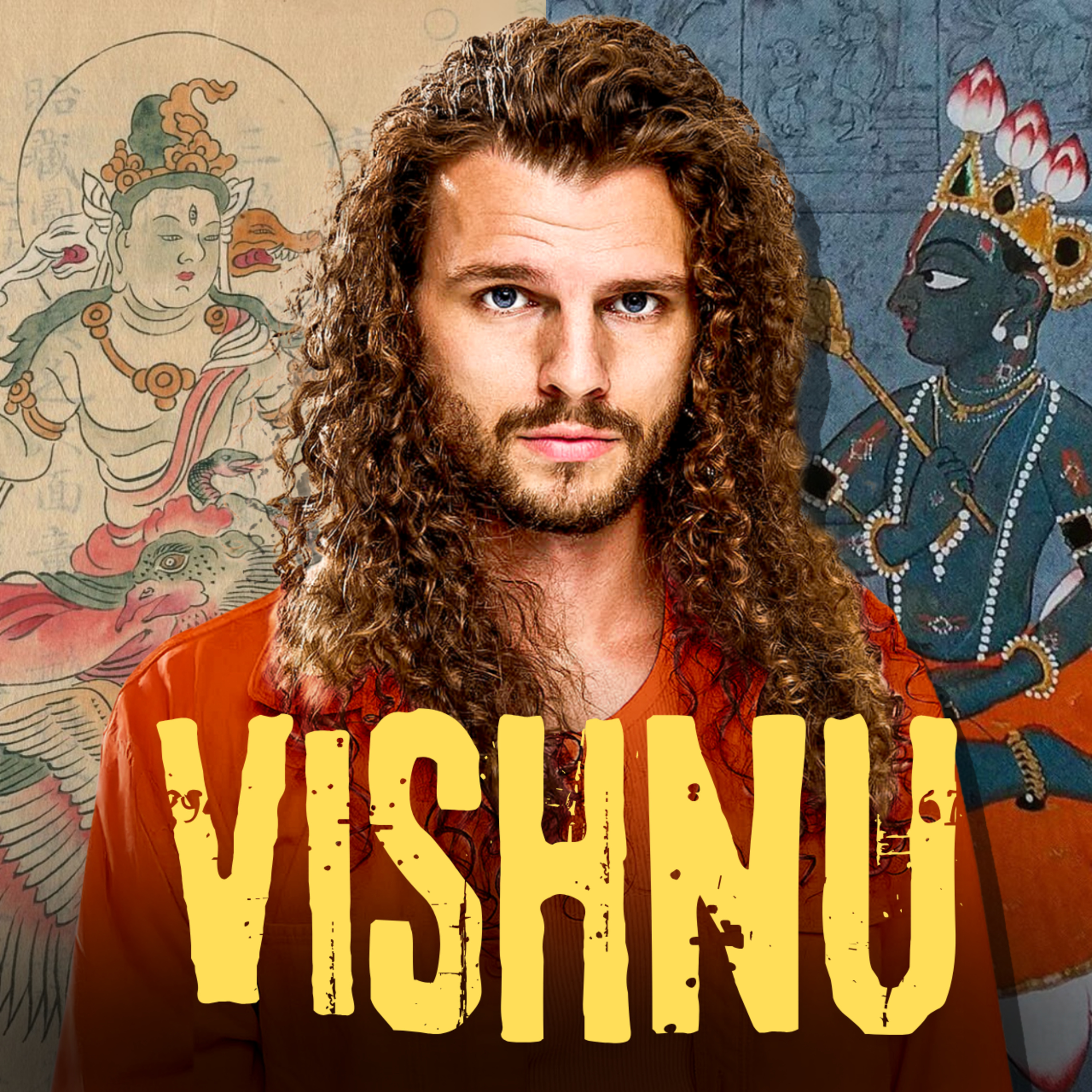
What's up, people? And welcome back to religion Camp. My name is Mark Agnon and thank you for once again joining me on this beautiful Sunday in my tent, where every single week we explore the most interesting, fascinating, controversial stories from every religion from around the world, from all the secret teachings of all ages. As always, I'm joined by a dear friend. Who do we have today? Oh, Christos. How are you? What's up? All right, all right, all right. Come on, dude. We don't have time to be just listening to you go on and on about your trip to Greece. Okay? Some of us were here working non stop, killing ourselves, going off, all right? And fortunately for you people at home, we've put together a fascinating topic on the divine, specifically in the tradition of Hinduism. And we're going through the avatars of Vishnu, why they matter and what they mean to the people of the Hindu faith and philosophy background. Now, as I always preface these episodes, I am not Hindu. I was not raised Hindu. So everything that I have learned, I've learned through sources, not through lived experience. So if there's anything that I missed, please feel free to drop a comment and tell me, hey, you actually missed this thing. If I get something wrong, drop it in there. I'm here to learn how to as well as you people are. So today is going to be a pretty deep, cosmic deep dive, as you can imagine. All right, Hinduism, I think, almost more than any philosophy, which I refrain from almost calling it a religion because I know many Hindus don't see Hinduism as a religion in the dogmatic sense, but it's more a life philosophy. And of them, it is one of the more cosmic esoteric, which I find fascinating. And we're going to be diving through to look at these stories that have been shaping spiritual thought throughout, you know, the Hindu background, as well as, you know, just the continent of India for a millennia. Basically, it is a foundational narrative that we're going to be exploring today from Hinduism. And this is, you know, kicking off this incredible image of Vishnu known as the preserver, the just serene deity. And there is sort of this endless ocean stretching beyond what is even conceivable of this great blue God resting in the coiled m. Many headed serpent, Ananta. Yes, this is again, this is. We're going to get out there. If you're not raised Hindu, this is going to be a lot of new information. So buckle up. All right. As you can see from this image, this is Vishnu the preserver, dreaming the universe into being. And it's quite the picture. And here's where things get really profound for, you know, when that dream starts to wobble, when chaos threatens it, Vishnu doesn't just fix it from afar, he steps down into the world. He takes form and he walks among the, the human people. You can think of, you know, God becoming Christ and actually descending into Earth. Hindus have a similar idea known as avatars. All right, that is what they call these divine interventions. This term avatar quite literally means descent. And Vishnu can show up in countless ways, but there are 10 main ones. And these are what Hindus call deshavatara. And they pop up at these critical moments in cosmic time. Each one has a fascinating story and they have captivated people for ages. So today we're going to go through these 10 faces of transformation and we're going to meet a fish that saves all knowledge from drowning, a tortoise that holds up a mountain, a boar that rescues earth, and I mean, a half man, half lion that tears apart a tyrant. All sorts of stuff that we will get into. We will sit beneath the Bodhi tree with the Buddha and glimpse the rider on a white horse who will one day reset the world. All that and more. So, for millions of people around the world, these stories are living reminders that when darkness falls, the light will find a way. And we're going to see how these ancient tales still speak to many Hindus around the world to this day. So let's go back to the beginning. And when I say the beginning, I mean the literal beginning, the beginning of everything, of time itself. The first Avatar, the Matsya, known as the fish. As the cosmic flood waters are rising, you know, about to destroy the universe, a man named Manu finds a tiny fish in his hands that speaks to him and begs him not to throw him back into the river. Moved by this compassion, Manu takes it home and puts it in a pot. But something extraordinary happens. The fish starts to grow rapidly from pot to pond, to lake, to ocean. And then the fish reveals its true nature. It is Matsya, Vishnu's first avatar. And it warns Manu of the coming flood and gives him specific instructions. He says, build a boat, gather seeds, animals, and most importantly, the Vedas, according to some traditions, which has sacred knowledge containing creation's blueprints. Now, again, these flood stories exist through all traditions, and this is the Hindu one. When the flood engulfs everything, Matsya appears as an enormous golden fish with a horn. Manu ties his boat to this horn and Matsya tows them through the cosmic waters. But there is a deeper mission that is unfolding. The demon Hayagriva has stolen the Vedas. And Matsya plunges into the depth, battles the demons and recovers the sacred texts. So as the waters go down, Manu repopulates the world with the saved life forms. But the real treasure isn't the animals or the seeds. It is the wisdom, the truth itself, that is imbued into the Vedas. And Matsya ensures that knowledge survives every ending to guide each new beginning. And that takes us to the second Avatar, the Kurma, also known as the tortoise. Now, you might think that gods and demons would be eternal enemies, but here is where the story in Hinduism takes an interesting turn. Despite this cosmic rivalry between good and evil, these forces decide to cooperate in an unprecedented project, churning the cosmic ocean to to extract Amrita. And this is the nectar of immortality. They use Mount Mandara as a churning stick and Vasuki, the serpent king, as a rope. Gods take one end, demons take the other, and they begin spinning the mountain. But here's the problem. The massive peak starts sinking into the ocean floor, and the entire thing is about to explode. You could think like nuclear fallout from these gods and demons working together. So what does Vishnu do? He steps in. He transforms into Korma, the tortoise, so vast that Mount Mandara becomes merely a weight on a shell. His stable back provides the foundation, this sort of solid bedrock for the churning to continue. And it is quite the churning. The ocean yields these fantastic crazy treasures. I mean, deadly poison, the Goddess Lakshmi, a wish granting tree, and finally this nectar of immortality. But when this nectar appears, the demons grab it and they flee. They steal it away, leading to this cosmic chase until Vishnu tricks them and ensures the gods receive their share. Karma teaches us something profound about cooperation and stability. And basically that in any great endeavor, there must be something solid to stand on. The tortoise provides this foundation without seeking glory, simply holding steady while others do the dramatic work above. When I hear the story, I think of, I mean, so many of the ancient traditions that picture like Earth being on the back of a tortoise, something stable, being able to cut through the water. I mean, there's very many, like folk traditions. I think Hawaiian tradition has versions of this. And I wonder if it is inspired by this very story. But this cosmic drama is not over. And that brings us to the third avatar. This is called Varaha, also known as the boar. The demon Haronyksha commits what might be called the ultimate crime. So he drags the earth itself into the primordial waters at the bottom of this cosmic ocean. The earth goddess Budevi cries out as she's pulled into this crushing darkness. While all life as we know it is facing extinction. What does Vishnu do? Responds both practically and perfectly. He becomes Varaha, this colossal boar with tusks that can rip through the cosmic reality as we know it. And the form makes complete sense. I mean, boars root through the mud and they're not afraid to get dirty. And they're able to dig and they can fight in messy environments. And Varaha does exactly that. Vishnu, as Varaha, dives into the cosmic ocean's depths, where he finds this demon standing over the earth like a conqueror. And the two engage in this massive epic battle. Some say it rages for thousands of years. And the demon's weapons are clashing against the boar's might and they are shaking the entire cosmos. And this isn't just physical combat. It is a battle of philosophies. Haran Yaksha. The demon represents this nihilistic destruction, trying to destroy things for chaos sake, dragging everything into the mud. And Varaha represents divine will to dive into the chaos, not to join it, but to uplift what is precious and valuable human life and everything that we know. Finally, Varaha drives his tusk through the demon's heart and gently lifts the earth on his tus, carrying her up through the waters to safety. And the message of this story is very clear that sometimes salvation requires getting dirty and battling and standing up for what is right, diving into the mess and doing whatever it takes to lift up what is beautiful and and worth saving. Now that brings us to the fourth avatar. This is the man lion known as Narasimha. The story continues with Haran Yakshipu. And this is the brother of the demon that was slain by the boar avatar. And this demon is seeking revenge against its brother's death by trying to become invincible through, you know, terrible austerities, he earns a seemingly perfect boon from Brahma. He cannot be killed by man or beast during day or night, inside out, heaven, earth, any weapon. Effectively, this demon has become completely invincible. And this protection makes him a tyrant. He conquers heaven, he drives gods into hiding. He declares himself this supreme deity. But here is the twist. His own son, Prahlada remains devoted to Vishnu despite the threats and the torture. Enraged by this defiance, this demon, Hiranyakshapu strikes a pillar demanding, where is your Vishnu? Is he in this pillar? And the pillar splits open and outbursts something never before seen. The Narasimha, neither fully man or fully beast. This terrifying and awe inspiring chimera, this human torso and a lion head. The eyes burning like the sun, mane flowing like fire. So Narasimha, this man lion hybrid, drags the demon to the palace threshold, neither inside or outside, at twilight, neither day or night, and places him across his lap, not in the earth or the sky, and tears him apart with claws, not a weapon or a tool. So effectively, this half man, half beast is able to kill this demon without violating any of the conditions of immortality given by the Brahma. And as a result, this tyrant dies. It's ruthless, but genius and perfectly precise. And it's about cosmic law and it's about finding the way through the rules. And the story doesn't just end there. So Narasimha, this half lion, half human, still rages with this divine fury. And no one comes close except for little Prahlada, the son of this demon, who walks up and gently touches the lion's mane. And in this innocent gesture, Narasimha's rage melts away. And this fierce protector becomes gentle again. And the lesson here is quite profound, that no tyranny is permanent. And no matter how cleverly protected it might be by God himself or by the laws of man, justice will find a way. And it might be delayed, but it'll never be denied. And then that brings us to the fifth Avatar, Vamana, known as the Dwarf. And this Avatar appears during a time when the challenge isn't a typical evil demon, but his very perfection has upset this cosmic balance. The demons have become so powerful that they've driven the gods from heaven once again. Now, King Bali isn't evil. He's just successful and conquers. Through his legendary generosity rather than cruelty. And one of Bali's greatest sacrifices, a curious figure appears. Vamana. And this is a young Brahman dwarf, humbled in appearance, approaching the most powerful ruler in the entire universe. And basically, Bali looks and says, what do you want? And Bali is kind and offers gold and jewels and land. And Vimana's request is so modest, it's almost insulting. Vamana says, just three paces of land measured by my own feet. And despite his advisor's embarrassment at such a small request, Bali agrees. And the moment he does, something miraculous happens. Vamana begins growing into a cosmic giant whose head touches the clouds. And with his first step, he covers the entire Earth. With his second, he strides across the heavens, reclaiming them for the gods. Where shall I place my third step, this giant ass? And Bali, understanding that he's been outmaneuvered by his own generosity, he was taken advantage of, not realizing how large this dwarf could have grown to feel, feels almost admiration rather than rage. And he says, place it on my head. As he bows low. Vamana's third step pushes Bali to the netherworld, not as a punishment, but a repositioning. He'll rule there and return to Earth annually during the Onam festival, when Kerala celebrates their most beloved king. And the wisdom here is fascinating, that true power doesn't always announce itself with fanfare. Sometimes it comes quietly or humbly, asking for almost nothing. And in that very humility lies a certain strength that this little dwarf could come by and use his generosity to then take the world and that Vishnu himself as this preserver and this person that brings balance, is able to take the form of the humble dwarf to effectively restore humanity. And that takes us to the sixth Avatar, the Parashurama, the warrior sage. So from this sort of subtle wisdom of Vimana, we go to a much harsher avatar. So the sage Jamadagni lives peacefully with his wife Renuka and his son Rama, until the king comes and visits, using his divine cow, Kama. Denhu Jamadagni feeds the king's entire army. But the greedy king demands that the cow get sacrificed. And when refused, he steals it by force and kills Jamadagni in cold blood. When Rama returns to see his father dead, a cosmic rage consumes him. And taking up his axe, a weapon granted from Shiva himself, he becomes Parashurama, the one with the axe. And he makes this terrifying vow to eradicate the entire warrior ruling class because they have become so corrupt and so greedy and so arrogant. And what follows, according to Hindu tradition, is basically generations of unstoppable force. So Parashurama becomes this force, wiping out this entire warrior class not just once, but as tradition says, 21 times, eliminating rulers and their descendants. And he doesn't just kill them once, but wipes out all their sons and grandsons and great, great grandsons and destroys their entire family line. Now, this seems to contradict everything that we know about Vishnu's merciful, preserving nature. How can this avatar that is, you know, at one moment humble, become such an agent of destruction? But Parashurama represents an uncomfortable truth that when corruption becomes systemic and greed is all encompassing, when this power is irredeemably toxic, the only solution is to cut it off completely. And here's what makes Parashurama's story remarkable. After this, he doesn't claim kingship for himself or, you know, avenge his father's death as the king. Instead, he gives away all the conquered lands to the scholars and retreats to the mountains to meditate. Justice, according to this tradition, isn't always gentle. And this avatar teaches us that sometimes it requires harsh medicine and difficult choices that seem cruel, but ultimately will serve the greater good. And the true test isn't whether you can pick up an axe of justice. It's whether you can put it down when the cutting is finished. And according to Hindu scriptures and tradition, Parshuram is still believed to be alive today and on earth. And then that takes us to the seventh avatar, Rama, the perfect prince, probably one of the most famous and beloved avatars that exist. As the story goes, in the prosperous kingdom of Ayodhya, Prince Rama is everything that a ruler should be. He's brave, skilled, an ideal son, devoted to duty, deeply in love with his wife, Sita. But on the eve of his coronation, his stepmother makes a devastating demand, calling in two boons promised by the king Dasaratha made her years ago. And what does she ask? Make her son Baharat heir and send Rama into 14 years of exile. I mean, the day before his coronation, his stepmother comes in and takes away his right to the throne. And though devastated, Rama chooses Dharma over personal gain. Rama insists on upholding Dharma and and honors his father's promise. Sita and Lakshmana, his brother, refuse to be left behind. So the three set out for the forest, leaving behind the comforts of royalty for a life of simple virtue. And this peaceful exile might have continued. But the forest draws them into unwanted conflict. Demons attack local sages, and Rama's sense of duty compels him to protect them. The conflict escalates until Ravana, the ten headed demon king of Lanka, decides he wants Sita for himself. Using cunning deception, a golden deer to lure Rama away, fate cries for help to draw off Lakshmana. Ravana abducts Sita, his very wife, when she steps outside a protective circle to help what appears to be a disguised holy man. What follows is an epic war. Rama, aided by an army of monkeys led by the devoted Hanuman, wages battle against Ravana's forces. And after defeating the demon king, he's reunited with his wife, Sita. With Ravana's defeat, order is restored and the balance between good and evil is once again reaffirmed. Rama's journey shows us that Dharma isn't a destination, is a choice that we make every single day, especially when the path is at its hardest. His avatar reminds us that true strength lies not in just power, but in restraint, honor, and an unshakable commitment to what is right. I mean, the story of Rama honestly reminds me of like, a lot of Bollywood. Like so many Bollywood films kind of sort of have this idea of like, honor and nobility and evil trying to take it away, and the good guy taking the righteous path to sort of, you know, create justice once again. I mean, I can't help but think that a lot of Bollywood tradition and the stories that we see come out of like, you know, Indian media probably are inspired by a lot of these texts of these avatars. What's up, guys? We're going to take a break really quick because you own a small business, or maybe you work for a small business. And I am about to make your life so much easier. Let's say, hypothetically, you own a little, you know, furniture business, right? And you're struggling to keep track of the raw materials, the production schedule, invoicing clients, all that stuff. Well, that's why I want to tell you about Odoo, okay? Because with Odoo, it's an all in one business platform that streamlines everything. Now you have inventory management, you have manufacturing, you have accounting Apps that will make everything so simple. So now if you have a small business, you can monitor the inventory in real time, schedule productions calls more effectively and you can send invoices automatically, all from one platform. Plus you get a customized CRM to track sales leads and follow up with potential clients, boosting your closing rates. Back in the day, you'd probably have to get, you know, some, you know, Ivy League operator, business person that's, you know, able to make everything happen for you. But now with Odoo, it cuts it all out and I'm sure you're thinking, okay, if this is going to make my life easier, give me more free time to spend with my friends, family and playing softball and make me more money. It must be crazy expensive. This is the good news. Listeners of this program are going to get a 14 day free trial. That's right, you get two weeks with Odoo completely for free when you go to odoo.com camp. That's right, odoo.com use the promo code camp and you will get 14 days for free just to try it out, see if you like it. If it's not for you, you don't need it. All right, But Odoo is going to make your life so much easier. Everything you need, all in one place. Save time, make more money. Let's get back to the show. So from the tragic nobility of Rama, we move to perhaps the most beloved avatar of all, Krishna. And perhaps the most complex and multifaceted but also the most widely worshipped avatar. And it is this divine cow herder and charioteer and this philosopher king. And there is so much that is associated with Krishna that might be its own episode. Krishna's story begins with a familiar pattern. A prophecy that foretells that King Kamsa, that his sister's eighth child will kill him. Pretty specific prophecy. So he imprisons Devaki and Vasudeva, murdering each child at birth. The eighth child is Krishna. Miraculously, right after his birth, the prison doors completely open and the guards fall asleep. And Vasudeva carries the baby Krishna across a raging river to a nearby village, swapping him with a baby girl born to the cowherd chief Nanda and his w Yashoda in a secret swap that basically saves his life. And so he is raised as a cowherder from childhood. Krishna is extraordinary yet, you know, just utterly playful. And he possesses impossible strength. I mean he's lifting massive stones like they're toys. But he's also using it mischievously. I mean he's like stealing Butter. And according to some of the stories, you know, while the girls are, you know, showering or bathing, he's stealing their clothes and hiding them, you know, causing this kind of chaos that would make adult sort of simultaneously exasperated, but also it's like, sort of endearing because he's just using his powers for mischief. And the pranks aren't random, though. They have this divine purpose and they, you know, the teaching that material possessions matter less than joy and that divine delights ultimately in laughter and sort of in just being playful. And so as protector, Krishna performs miracles that seem almost casual, he dances on the poisonous serpent's Kalia's head while it flees the river. And when jealous Idra sends storms to punish the village, Krishna lift Mount Govardhana on his finger like an umbrella, sheltering everyone for seven days. I mean, it almost reminds me of, like, Hercules, like, if you're familiar with the story of Hercules, like, young Hercules is extremely strong and powerful, but is sort of mischievous and doesn't even know his own strength. But it's spiritual teaching of Krishna that ultimately transforms everything. His midnight flute calls the Gopis to dance in the moonlight forest. And this is an event that is described not just as like a romantic sort of moment, but as a metaphor. The soul's longing for this divine connection and Krishna's love for Radha becomes the very symbol of devotion. In later tradition, during the Rasa dance, Krishna multiplies himself, so each gopi feels his complete presence, showing that divine love responds fully to every soul that is seeking divine connection. Coming of age, Krishna fulfills his destiny by killing this tyrant Kamsa. But his greatest moment actually comes later, during the epic Mahabharata war, where his friend Arjuna refuses to fight relatives on the battlefield, Krishna delivers The Bhagavad Gita 700 verses, exploring existence's deepest questions, delivered right before the massive war. Do your duty without attachment to result. Krishna teaches act because action is right, not for victory or defeat. This is karma yoga, full of engagement with the world while simultaneously detached from it. So Krishna's avatar teaches us that the divine isn't separate from ordinary life, but actually embedded in ordinary life. The divine exists in play and in friendship and in love, and in the courage to do what is right, even when it's not convenient. You know, it's this idea of ultimately doing your duty, not for the outcome, but because it is the right thing to do. And that brings us to the ninth avatar, the Buddha, also known as the Enlightened One. So from Krishna's joyful engagement with the world we go to the Buddha. The Buddha is perhaps the most well known avatar of Vishnu. Siddhartha Gautama. Buddha is the avatar of Vishnu. Now, Buddhism is often thought of as a separate path, and it is historically and theologically. But within some later Hindu traditions, particularly vaiavism, Buddha came to be seen as the ninth avatar. So now again, so many Buddhists will, you know, argue that Buddha is its own sort of path. But for Hindus, Buddha exists as this ninth avatar of Krishna. And it's a point of complex discussion and there's varying views of this even within Hinduism. And perhaps that could have its own episode. But in short, here's what we need to know. We can see how this story fits into the greater avatar pattern. So Prince Siddhartha Gautama was born in the 5th century BCE and was raised in luxury by his father, King Sudhodanna, who desperately wanted to prevent a prophecy that his son would become a spiritual teacher rather than a king. But destiny, as always, has its own plans. So Prince Siddhartha realizes his privilege can't shield him from some of the fundamental truths of life. So when Siddhartha finally left the palace, he encountered four sites that changed everything. He sees an old man, a sick man, a corpse, and a peaceful monk. And these encounters revealed that suffering is universal and that wealth and no matter how rich you are, how powerful you are, you can't prevent aging or sickness or death. And this realization led him to abandon his royal life completely. He no longer wanted to be king and he wanted to seek this spiritual truth. And after six years of extreme practice that nearly killed him, he chose what he called the Middle Way and sat in meditation under this Bodhi tree. And there in that stillness, he discovered the Four Noble Truths and became the Buddha, also known as the Awakened One. And later Hindu texts made Buddha the ninth avatar of Vishnu, sometimes claiming his mission was to reform misunderstood rituals, especially like animal sacrifice, and to guide spiritual practice towards this principle of non violence and inner transformation. And Buddha's core message is ultimately revolutionary. I mean, even to today, Enlightenment is available to everyone, regardless of their caste or what position in society they're born into. And requires only mindfulness and compassion and wisdom to understand reality's true nature. In a world that is obsessed with ritual and hierarchy and who you know, he offered a path that anyone could walk. He also illustrates that in many ways it's more difficult for the wealthy and the nobles to actually descend to find this middle way. And that is on all of us, regardless of, you know, where you're born or to whom you are born to, to try to seek this ultimate truth. And that ultimately takes us to the tenth Avatar, known as Kalki. And this is known as the future rider. So we have this gentle wisdom of the Buddha. We leap forward to the edge of time itself, to an avatar who actually has not yet appeared, but whose promise keeps hope alive in, you know, our darkest hours on earth. And that is Kalki, the 10th and the final avatar. And it represents the ultimate divine intervention, the one that will reset the cosmic cycle and rebirth a new world. So to understand Kalki, we need to grasp the Hindu concept of time. History isn't a straight line from past to future, but a vast wheel that turns through four different ages, each lasting hundreds of thousands of years. And we're currently living in the Kali Yug. This is the age of darkness. This is, you could say, the winter of cosmic time in some way. And the Kaliug is not a great time. This is when everything goes wrong and truth becomes rare and justice is weak and the people lose their connection with the divine and leaders are corrupt and there's false wisdom and misinformation and violence is, you know, masquerading as strength. And the very fabric of Dharma, the moral order that holds everything together, starts to really fall apart. And the ancient texts describe Kali Yug as an age when people will be short lived and greedy and lacking in virtue, where social and moral norms are dissolving and ultimately selfishness is the thing that drives most people. But here is the crucial point. The darkness isn't permanent. And at the very end of the Kali Yug, when things seem completely hopeless, when all chaos has descended and there is no more light, when the last sparks of goodness are completely gone, Kalki will appear. And this is what it'll look like. Picture this, a figure on a white horse riding out of the cosmic storm with a sword that's blazing like lightning. And this isn't like the gentle, you know, cow herder of Krishna or this patient sort of middleweight teacher of Buddha. This is Vishnu in his aspect as cosmic destroyer and the renewer, or the one that brings the new age. And he has come to cut away everything that has been corrupted and diseased. And Kalki's arrival will shake the earth and shatter all corruption. He's prophesied to lead the final battle against the forces of chaos and darkness and restore the cosmic order. But this isn't just destruction for its own sake. Kalki represents the forest fire that basically, you know, burns through the dead wood of a forest so that new growth can actually begin. And his sword cuts through the accumulated karma of the age and basically wipes the slate clean so that creation can start fresh. And when the battle is over, when the last of the corrupt rulers have fallen and the demons have been driven back into their holes, Kalki will usher in the Satya Yug. And this is the age of truth. This is a rebirth, the spring of cosmic time, a new golden age. And Dharma will once again be strong. The leaders will be wise and just, and the people will live in harmony with each other and with nature. And the promise of Kalki serves a crucial function psychologically. It tells us that no matter how bad things are, no matter how hopeless the situation is, the story is never over. The wheel of time will keep turning, and ultimately, dawn always follows the darkest hour. But Kalki isn't a passive promise. It's a call to action. This is the avatar of the future, and it asks us a question. What are you going to do to keep the light alive? Are you one of the righteous souls who's going to fight alongside Kalki when he comes to destroy corruption? Or will you be a part of the corruption that Kalki will ultimately defeat? In our current age of many different crises, whether it's the climate or corruption in politics or society, societal breakdown, this image of Kalki is extremely resonant with renewed power, specifically to Hindus. And they see this as a moment of justice. And he represents the hope that when human systems completely fail, when we've made such a mess of things that, you know, there's no way out through, you know, normal solutions, the universe will ultimately intervene to make things right. Now, in, you know, Hindu eschatology, some interpret Kalki, literally a divine being who will physically appear on this white horse. And others see him metaphorically. This is, you know, a metaphor maybe to describe the awaking of consciousness that will transform, you know, human civilizations. And still others believe that he represents the cumulative effect of all the good that people in the world will finally, you know, achieve. And they'll reach this tipping point where light overcomes the darkness. And whatever your interpretation is, Kalki's message is pretty clear. Effectively, this too shall pass the Kali Yug. This time of chaos will go away, and a golden age will arrive, and that the corruption and the violence and the despair, it is not permanent. And that the wheel will continue to turn. And as a fire, you know, burns through the brush, new growth will emerge. And that concludes the 10 avatars. Of Vishnu and basically comes full circle from the fish who, you know, saves wisdom from the flood at the very beginning to the rider who will save the world from itself in the end. Through 10 Avatars, we've witnessed Vishnu take on every different form to preserve the precious and protect the vulnerable and rescue what is lost. And these aren't just tales of gods and demons. They are, in some ways, for non hindus, maybe, just wisdom that we can take from stories that have been passed down from generations and to hindus themselves. They are mirrors that reflect our own struggles and our own capacity for courage. And each avatar embodies a response to a crisis, like a strategy or a plan for how we can deal with things in our everyday lives. And when we feel submerged by turmoil, we can recall Matsya carrying the wisdom through the flood. And when other people need our strength, we can become kurma, steady and supportive. And when the world is falling into darkness, we can dive in like Varaha and try to lift it up from the depths and to face tyrants or authoritarians. We can summon the ferocity of Narasimha or, you know, to overcome the cleverness, we can follow Vamana's humble boldness. And in any situation that you find yourself, there is a different avatar of Vishnu that you can call on to try to replicate that sage wisdom. Ultimately, Vishnu's avatars teach us that rescue comes in many different forms. And sometimes it is fierce, and sometimes it is humble and quiet, and sometimes it is tender and thoughtful and meditative. But ultimately it always comes. And that is the heartbeat of deshavatara, the divine assurance that the universe does not abandon those who are struggling. It doesn't leave the poor behind and that those who are in need will eventually get the justice that they deserve. And when chaos surges and when evil overreaches, hope is still there. And maybe that's the truth that we can all take. You know, even if you're not Hindu, that, you know, you can pull out that message of hope and that rescue is always on the way, whatever your faith tradition. Right? I mean, we are ultimately a part of the story. We are here to be avatars in our own way, to protect the needy and to preserve what is good and to rescue those that need help and to rise up against tyrants and evildoers. And every avatar of Vishnu deals with that. And in the end, the avatars aren't just, you know, divine saviors. They are the sparks of potential that we can channel that we could potentially be. And they don't live in temples or, you Know, it's not just, you know, people in scripture that these avatars live in action, and anyone who stands up when it matters most is ultimately doing the will of Vishnu. And sometimes rescue comes as a God, and sometimes it comes as us. I mean, in the end, for me, as someone that's not Hindu and, you know, doesn't really know a ton about the Hindu tradition, I think it's just a little helpful reminder that, you know, this too shall pass, that, you know, chaos and darkness might descend, but all things are able to be endured. And ultimately, rescue will come for all of us if you can just last long enough. And whether it's, you know, the cosmic ocean that is rising again or, you know, a tyrant that has come to destroy the earth or, you know, chaos in society that ultimately gets reset, or Vishnu maybe is a lesson that the avatars are a promise that love will defeat hate and that light will outshine darkness and hope will always return. And regardless of what you believe or what your background is, I think that's a helpful thing to remember, and that is the ten avatars of Vishnu. Now, again, not growing up Hindu myself, this is all really brand new to me. When I was going through the research, and I find it really interesting. I mean, there's so many little stories that I think tie into other things that I've seen in pop culture, whether it's, you know, like Greek history or Greek mythology or like Roman mythology or even in some ways, like, Catholic mythology. Right? Like, the idea of, like, God descending, you know, to Earth. And you got to wonder, you know, is there a connection between these things? I don't know, but I do find it interesting. And as someone that appreciates, you know, all the face of the world and what they can offer, I look at these stories and I say, like, oh, yeah, these are nice. You know, to me, they're just stories. But obviously, to millions of Hindus, this is, you know, the reality of their philosophy and their faith background. So I think there's some things to be gleaned, you know, that, you know, we are all called in some capacity to, you know, stand up against, you know, evil and to protect those that need to be protected. And these are the things that I like to highlight and why I like doing this show, because you get to see that at the core of almost every faith tradition that exists, the tenants are good. Like, I think most people would read these stories of Vishnu and the avatars that Vishnu sort of becomes and be like, oh, yeah, these are good stories. You know, these are. These are good Values that are, you know, helpful to be passed down, and which is why I think they have been passed down and why the cultures that embrace them have flourished for, you know, millennia. So I'm curious, what do you guys think? If you grew up Hindu, is there anything that I missed? Please drop a comment. If you did not grow up Hindu or you don't know much about the Hindu faith, what did you think? I'm curious if you found connections to your own faith background or maybe to pop culture things, broadly speaking, that you didn't expect. As always, I read all the comments, so just be nice. All right, this is Religion Camp. You can be civil. All right? Leave all crazy stuff for History Camp and, you know, the main Camp channel. But I don't know, Christos, what'd you think? Did you learn anything? Was there any. Any deductions or things that sparked interest in your mind? No, just a lot of crossover from one of our main camp episodes with the end time prophecies with Joey Avery. That is right. Me and my buddy Joey Avery, we did do an episode on basically the eschatology, basically the philosophy of the end times of every major religion. So not only do we talk about Kalki and the Kali Yugoslavia, but we also talk about Islam and, you know, the end times of, of, you know, Islam with the Dajjal, the Antichrist. That basically comes back in Yejuj and Majuj and all the, you know, the, the, the lore in, you know, the Quran about what that looks like, but as well as Christianity, you know, like the book of Revelation, all that stuff. So if you're interested, you can check that out. Maybe we put that in the description below so people can check it out. But anyway, thank you all so much. I really appreciate you guys tuning in for another episode of Religion Camp. As always, at, you know, this beautiful tent, we believe that life is better with belief. And yeah, we can see if we can learn something from all the faiths of the world. Anyway, thank you all so much and peace be with you. What's up, people? Quick announcement. If you are a fan of Camp Gagnon or Religion Camp, I have great news because we are dropping History Camp. That's right. This is the channel. We're going to be exploring the most interesting, fascinating, controversial topics from all time throughout all history. Right. You probably know about Benjamin Franklin, I don't know, Thomas Jefferson, Nikola Tesla, interesting figures from history, and you probably learned about them at school and they were pretty boring. But not here. No. As you know, I was raised by a conspiracy theorist, so I'M going to be diving deep into all of the interesting, strange, occult and secretive societal relationships that all of these famous, influential men from our shared past have. So if you're interested, please go ahead and subscribe to the YouTube channel. It will be pinned in the description as well as the comments. And if you're on Spotify, this doesn't really apply to you, but these episodes will be dropping as well. Just go ahead and give us a high rating because it really helps the show.
- [42:48]
B
You say you'll never join the Navy, never climb Mount Fuji on a port visit, or break the sound barrier. Joining the Navy sounds crazy. Saying never actually is. Learn why@navy.com America's Navy forged by the sea.