Loading summary
Transcript8 lines
- [00:00]
Mark Gagnon
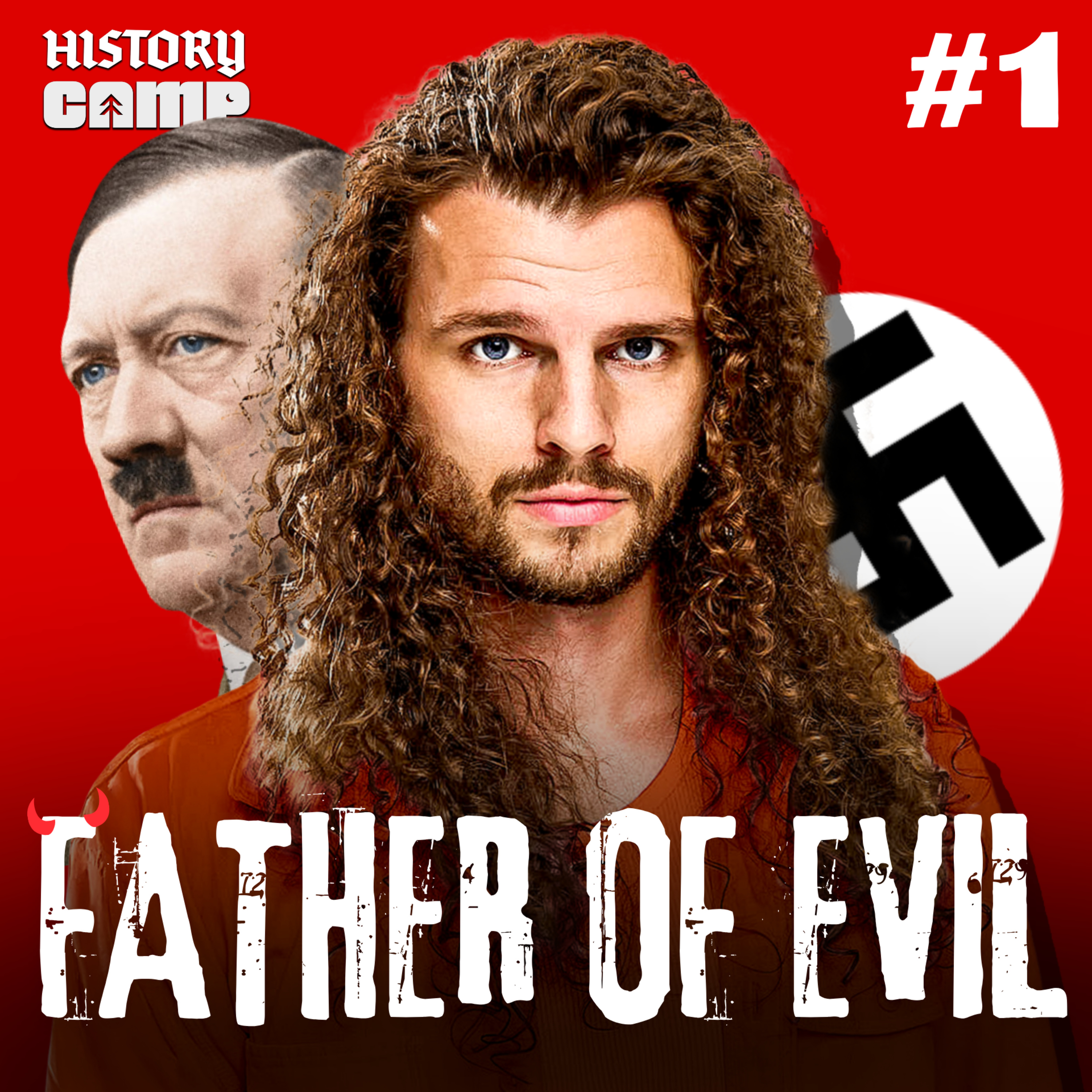
Adolf Hitler. We all know the evil man. World War II, the Holocaust, the bunker, the mustache. But dig a little deeper, and things get strange. Very strange. Some say he didn't die in that bunker, that he escaped through secret tunnels, vanished into Argentina, and lived out his final days in the shadows. There are allegedly FBI files, witness reports, and even photos. Others point to the occult, Nazi death cults, ancient relics, black magic. Hitler wasn't just a dictator. He was obsessed with destiny symbols and rewriting, writing history through blood and power. And to some, even UFOs. Some claim that Nazis were working on flying saucers in the Arctic. And the deeper you go into Hitler's story, the more it starts to blur the line between fact and strange fiction. But this isn't just a history lesson. This is a rabbit hole. So get ready, because today we're diving into the dark, controversial and conspiratorial world of Adolf Hitler. Let's dive in.
- [01:06]
Gabriel Reyes
At New Balance. We believe if you run, you're a.
- [01:09]
Mark Gagnon
Runner.
- [01:13]
Gabriel Reyes
However you choose to do it. Because when you're not worried about doing things the right way, you're free to discover your way. And that's what running is all about. Run your way@newbalance.com.
- [01:34]
Pluto TV Ad
This episode is brought to you by Pluto TV. Summer of cinema is here, and Pluto TV is exploding with thousands of free movies. Feel the explosive action all summer long with movies like Gladiator, Beverly Hills Cop, Impossible, Ghost Protocol, Good Burger, Stealth, Four Brothers, and Star Trek. Bring the action with you and stream for free on all your favorite devices. Pluto tv. Stream now. Pay never. Stream now at Pluto tv.
- [02:04]
Mark Gagnon
What's up, people? And welcome to History Camp. Thank you for joining me in my tent. This is the place where every single week, we'll be exploring the most interesting, fascinating, controversial stories from all the most interesting figures and events throughout all history. Throughout all time, forever. My name is Mark Gagnon, and I am joined by my dear friend, Gabriel Reyes. Gabe, how are you? All right, all right, all right. Enough of all that, guys. We're going to be dropping these episodes every single week. And today, we're going to be diving in to one of the most controversial and contested figures in all history. We're going to be going through his entire life, his upbringing, what made him the monster that he is. And we'll even be diving into the strange and occult fascinations of the Third Reich and Hitler himself. But let's start at the very beginning, because believe it or not, Hitler didn't just pop out, you know, with a tiny mustache and a plan for World Domination and genocide. I'll be honest, the starting of this guy's life is kind of boring. April 20, 1889. In a small town right on the border between Austria and Germany, this guy, Adolf Hitler, was born. His dad, Eloise, worked as a customs official. And by all accounts, he was a bit of a grumpy guy. Typical, you know, German, Viennese father, very strict. His mother, Clara, was the opposite. She was soft spoken, fixated on little Adolf, and was honestly the only person he seemed to truly love as in his entire life and growing up. Hitler wasn't some kind of genius or future supervillain. And I think oftentimes we like to look at these, you know, terrible monsters throughout history and create these monster stories. And I think sometimes by looking at these people as, you know, pure evil, we neglect what makes people this way. And sometimes we let history repeat itself. So I think by having a full view on all these terrible dictators, we can have a more robust idea of what makes them and how to stop it. So growing up, he was just kind of a regular kid. His biggest dream as a child, he wanted to be an artist. Yes. Adolf Hitler thought he was going to be a painter for a living. And here's the interesting thing. He wasn't a terrible artist. He could draw, you know, buildings really well. His architectural sketches were actually pretty solid. But people, faces, emotions, not great. Yeah, he couldn't capture that pretty much at all. And that becomes a bit of a theme in his life. He's good at structure, understanding, you know, the sort of broad outlines of, of things, but very bad at people and mitigating emotions. So let's Fast forward to 1907. He's 18, he's living in Vienna and full of confidence. He applies to the Vienna Academy of Fine Arts, which is essentially like, like the Harvard of art schools at the time. But he gets rejected not once, but twice. First in 1907, then again in 1908. Both times they told him flat out, you suck. That same year, his mother dies of breast cancer, which he takes incredibly hard. Remember, that was one of the few people he ever truly loved in his life. And he just kind of gives up. No school, no job, no plan. And he eventually ended up living in men's hostels and, you know, kind of, you know, almost halfway houses around Vienna. Basically homeless and survived by selling, like, these little watercolor postcards, like, on the street. But during this time, something else started to grow. A lot of resentment and a lot of blame. And instead of looking inward, you know, like, maybe I Should take more art classes or focus on something that I can truly do really well and, you know, help the world. He started blaming others for his failures, specifically those of the Jewish faith. He believed that they controlled the art world and the press and the banks. You name it. It was ultimately not his fault, but it was the. The fault of a small minority of people. They own it in his mind. So he started reading anti Semitic newspapers and, you know, hung around nationalist groups and started swallowing this toxic racist ideology like it was a saving grace for him. And that's also where his obsession with German nationalism comes in, which is a little weird because, remember, he's Austrian, but in his mind, Austria is just a mess. He believed the German people were stronger, they were smarter, they were pure, whatever that means. He saw a united German empire as something powerful and, like, almost sacred in a way, causing his identity to be less an Austrian citizen and more this wannabe German hero. And we see this all the time throughout history, right? These, you know, military leaders that are born in one place but eventually usurp the governments of other places, right? I mean, Napoleon and, you know, very many, you know, adventurers and things like that from the past that would be born in a different place and then sail and do conquest another nation. So let's talk about the Austrian military, shall we? At 24, Hitler was eligible to be drafted. But here's kind of a twist. He didn't want to serve, right? Like, at the time, warfare was. Was treacherous, and he wasn't trying to die in a trench. So he just kind of dipped straight up, just like, left Austria and crossed into Germany illegally. The first illegal migrant. Am I right? Gabrielle Reyes. All right, all right, all right. And this wasn't some brave, like, soldier move. He was just trying to avoid military service altogether. But a few years later, some things changed. 1914 rolls around, and if you know anything about European history, Archduke Franz Ferdinand is assassinated. Boom. World War I is in full effect. Suddenly, all of Europe is lighting up in, like this, you know, Rube Goldberg machine of chain events that then causes all. All of Europe to be at each other's necks. And even though Hitler had dodged the draft back home, he now volunteers to fight for the Germans. Think about that. He wouldn't fight for his own country. But the second Germany was in trouble, he's like, sign me up. Why? Many people have speculated it's kind of assumed that the war gave him a purpose, and there was a few other jobs at the time. So for the first time in his life, he felt like he Belonged to something. He wasn't failing anymore. He was wearing a uniform, carried a rifle, and fighting for the nation that he idolized. And this wasn't about glory. This was about having sort of a structure. But we're getting a little ahead of ourselves here. Let's zoom back for a second. All right, we got a guy who was obsessed with becoming an artist. He failed emotionally, crushed by rejection and lost, loses his mother, blames the Jews and all the elites of the world for all of his problems instead of doing anything to fix them, lived on the edge of poverty, started inhaling these sort of dangerous racial ideas and these nationalistic fantasies, and then ditches his country to live a different one that he believed was superior. So at this point, if you stop the timeline right there, you've just got a bitter, angry dude with some strong opinions and no real direction. But you also have the building blocks of something dangerous, right? Like disappointment, resentment, and this craving for control all building up. And what makes it wild is how close this version of Hitler was to disappearing into history altogether and just, you know, becoming another struggling artist. No one would have remembered his name. He'd be one of those sad, almost who never made it. But instead, the world went to war. And that war gave Hitler exactly what he wanted. Purpose, power, and the perfect scapegoat to blame everyone else. And this is where the story really, you know, changes. Because after this, he's not painting, he's not homeless, and he starts to really make his push to take over the world. Now, remember, this guy dodged the draft back in Austria, but the second Germany declares war, he's all the way it. And Germany says, sure, we need everyone we can. So boom. Hitler joins the Bavarian army as a private. Not a leader, not a high ranking officer. He's basically like a foot soldier. And his job, he's just a runner. He's like a courier. Which is kind of sketchy as it sounds, right? Basically, he has to carry messages back and forth between trenches and command posts while bombs and bullets are, you know, flying past him. Remember, at this point, trench warfare was the name of the game. And there was very few ways to actually transmit messages back and forth from the front lines all the way back to the command center. You just need people to run the information up and back. And it was no joke. I mean, trench warfare is brutal. I mean, muddy and bloody and people getting stabbed. It's just miserable. And Hitler, apparently, he enjoyed the order, like the rules, the brotherhood. It was structure and it was something that he could do and he could Be like a part of a system. But don't get it twisted. He wasn't some fearless war hero. He wasn't kicking down doors. He wasn't even on the front lines most of the time. As a runner, he was in danger, sure, but he wasn't, like, leading charges or, like, killing people. He just avoided real frontline combat. Even other soldiers thought he was, like, kind of strange. Some accounts had him as kind of a quiet, awkward, keeping to himself. He doesn't drink, didn't really talk to women. Kind of an incel in a lot of ways, to be honest. He just kind of, like, hovered around. And another interesting tidbit. According to a story told years later, there was a British soldier named Henry Tandy, and he had Hitler in his sights during a World War I skirmish, and he didn't pull the trigger. The story goes that Hitler, wounded and unarmed, stumbled into view, and Tandy let him live. Years later, when showed a photo of Hitler, Tande allegedly said, yeah, that's the man I didn't shoot. Now, if I was Tande, I wouldn't have said that. I probably would have kept my mouth shut, right? I would have been like, hey, never seen that guy ever in my life. Oh, the guy that's destroying the entire world and causing a genocide on the Jewish people? Nah. Yeah, terrible guy. Never seen him. I wouldn't be like, oh, yeah, I had a chance to end it all right there and didn't do it. Now, of course, historians debate whether this is even true, but Hitler himself reportedly mentioned an incident just like this, and it makes you wonder how close the world came to avoiding everything that follows. Still, despite mostly avoiding the front lines, Hitler was wounded twice in World War I. The first time was in October 1916 during the battle of the Somme. He was hit in the left thigh by a piece of British shrapnel and spent several months recovering in a hospital in Germany before returning to his unit. Then, October 1918, just weeks before the war ends, a mustard gas attack hit his regiment in Belgium, and Hitler was temporarily blinded and suffered severe eye irritation. Oh, poor Hitler. Right. Eye irritation. It's not even that bad. He was then sent to a military hospital. And it was during these hospital stays, while lying in a bed with bandages over his eyes, that everything changes. This is when he hears the news. Germany had surrendered. The war was over, they lost, and Hitler, once again, he's devastated, crushed. He didn't see it as, like, a military loss. He saw it as, like this cosmic betrayal. In his mind, Germany still had fight left, but Politicians, especially the ones back home, had, quote, stabbed the army in the back. That's what he called it, the stab in the back myth. It's not true, by the way. Germany lost fair and square. They had no chance of winning the war. But Hitler couldn't handle the reality. So he leaned into this fantasy, causing what would become one of the biggest lies he'd ever tell. And millions of people would eventually believe it. Now, post war Germany is a complete mess. I mean, the country's economy is in shambles. There's austerity measures, inflation's out of control, people are starving, soldiers are coming home to nothing. And the Treaty of Versailles, the peace deal that ends the war, basically just crushes Germany with every punishment you can think of. Debt, territory, loss, blame, humiliation. And for a guy like Hitler, already pissed off and radicalized, this is the moment that he. This is his rocket fuel. So what does he do? He stays in the army for a bit, but not as a soldier. The military used him almost as like a spy, like an intelligence collector, sending him to sit in on political meetings to report what different groups were saying. And that's how Hitler stumbles into a tiny meeting of the German Workers Party. And this is in September of 1919. It wasn't some grand political summit. Just like a handful of frustrated men in beer halls venting about Germany's downfall and the communists and blaming Jews and the Treaty of Versailles. And the vibes were just this powder keg of anti elitism and anti Semitism. And remember, Hitler was there on like an assignment sent by the army to observe and report on different radical groups. So he's supposed to be keeping himself, but instead of just kind of sitting back, he couldn't help himself. When one member suggests that Bavaria should break away from Germany, Hitler goes crazy. He launches into this fiery speech defending German unity. And this shocked the group and the party's founder, this guy Anton Drexler. And they hear him out. And just like that, Hitler gets invited to join the party. Now, most people would have just bounced, right? It was like a nothing club. No influence, no money, just a bunch of frustrated dudes. But Hitler saw an opportunity and started showing up regularly. He's giving speeches, writing pamphlets, and bringing this fire and brimstone vibe to every meeting. And slowly he starts to take over the party. He even rebrands the group. He gives it what he thinks is a better name, the National Socialist German Workers Party, AKA the National Socialist Party that then would become the Nazi Party. He repurposes the swastika, which is an ancient Hindu symbol for peace, turning it into this bold new logo for the movement. And then came the propaganda posters, slogans, these big rallies with roaring crowds. Hitler understood something most politicians didn't at the time, that facts don't really matter. Emotions is what connects. Fear spreads faster than reason. And the symbols, they just stick in your mind. And when he spoke to people, you know, they didn't just hear him. They felt every word that he says. And this is the weird part, he still was kind of a nobody. I mean, he wore, like, cheap suits. He had this sort of goofy mustache that was even, you know, partially dated for the time. But on stage, it was different. I mean, he's loud, he's furious, he's dramatic. He practices his speeches like their performances, using hand gestures and these long pauses and eye contact. He was kind of awkward in real life, but when he was in front of a crowd, he was a different person. And within a couple years, Hitler was no longer a guy who joined the party. He was the entire party. So he goes from the soldier that doesn't really do much to a wounded, bitter guy blaming politicians and Jews to this now loudmouth speaker stealing the spotlight. And he wasn't rich, he wasn't powerful. But he had found something he never had before. An audience, A core group of people that can mobilize the ideas. And that audience starts growing quickly because the more Germany struggled, the more people looked for answers. They looked for a reason. And Hitler, with his speeches and his anger and the lies, he made himself the answer. What's up, guys? We're going to take a break really quick because you own a small business, or maybe you work for a small business, and I am about to make your life so much easier. Let's say, hypothetically, you own a little, you know, furniture business, right? And you're struggling to keep track of the raw materials, the production schedule, invoicing clients, all that stuff. Well, that's why I want to tell you about Odoo. Okay? Because with Odoo, it's an all in one business platform that streamlines everything. Now, you have inventory management, you have manufacturing, you have accounting apps that will make everything so simple. So now if you have a small business, you can monitor the inventory in real time, schedule productions, calls more effectively, and you can send invoices automatically, all from one platform. Plus, you get a customized CRM to track sales leads and follow up with potential clients, boosting your closing rates. Back in the day, you'd probably have to get, you know, some, you know, Ivy League operator Business person that's, you know, able to make everything happen for you. But now with Odoo, it cuts it all out. And I'm sure you're thinking, okay, if this is going to make my life easier, give me more free time to spend with my friends, family and playing softball and make me more money. It must be crazy expensive. This is the good news. Listeners of this program are going to get a 14 day free trial. That's right, you get two weeks with Odoo completely for free. When you go to odoo. That's right, odoo.com, use the promo code camp and you will get 14 days for free just to try it out, see if you like it. If it's not for you, you don't need it. All right? But Odoo is going to make your life so much easier. Everything you need, all in one place. Save time, make more money. Now let's get back to the show.
- [18:11]
Gabriel Reyes
On WhatsApp, no one can see or hear your personal messages. Whether it's a voice call message or sending a password to WhatsApp, it's all just this. So whether you're sharing the streaming password in the family chat or trading those late night voice messages, that could basically become a podcast, your personal messages stay between you, your friends and your family. No one else, not even us. WhatsApp message privately with everyone. This episode is brought to you by Greenlight. Get this. Adults with financial literacy skills have 82% more wealth than those who don't. From swimming lessons to piano classes, us parents invest in so many things to enrich our kids lives. But are we investing in their future financial success? With Greenlight, you can teach your kids financial literacy skills like earning, saving and investing. And this investment costs less than that. After school treat, start prioritizing their financial education and future Today with a risk free trial at greenlight.com Spotify greenlight.com Spotify.
- [19:10]
Mark Gagnon
So by the 1920s, Hitler's not just some angry guy, you know, ranting in these beer holes. He's starting to draw these massive crowds. And people are showing up, they're listening, they're donating. And the Nazi party is still small, but it's growing. And Hitler's ego, I mean, it's growing even faster. Then in 1923, he gets bold. Like way too bold. Hyperinflation is so bad that people were literally using stacks of money as firewood. And Hitler thought, all right, this has gone too far. This is the moment. So he goes for it straight up, tries to overthrow the Government. This is what's known as the Beer Hall Putsch. And no, it's not a joke. It happened inside an actual beer hall in Munich on November 8, 1923. Hitler and a bunch of Nazis stormed into a political meeting, waving guns and shouting that a revolution had basically begun. They even kidnapped local officials, trying to force them to join the coup. And the next morning, they marched through the city with 2,000 supporters, hoping to rally the army and the public. And it absolutely works. Psych. Not even close. I mean, it was an absolute failure. The police met them in the street, leading to a shootout. Four police officers, 16 Nazis were killed. It's said that Hitler fell to the ground, dislocated his shoulder, he fled the scene. He was later found wrapped in a blanket and shaken, hiding in the home of a supporter of the Nazi movement, and was just a total failure. But what's interesting is that this failure makes him more famous. Instead of being executed for treason, which absolutely could have happened in Germany at the time, he's put on trial. And the trial gives him something he didn't expect, this national spotlight. The newspapers covered every word that he said. And Hitler, he kind of treated it like a press tour. He gave these long speeches again, blaming the Treaty of Versailles, the elites, the Jews, the government, everything but himself. And somehow the court gives him a pretty light sentence. Five years in prison. And here's the kicker. He only serves nine months. And in that time while he's in prison, he writes a book, a manifesto perhaps. And you probably heard the name Mein Kampf. It translates to my struggle. And it's kind of a mess. I mean, it's part autobiography, part political manifesto, part this like unhinged rant. He lays out all the twisted stuff that he believes. The racial superiority, anti Semitism, the need for Germany to conquer more land, specifically in the East. And it's not just a peek into his brain. It's like a full on blueprint of what he believes and what he's planning to do. Most people don't take it super seriously at the time, and that will prove to be a big mistake. He wrote it with the help of his cellmate and a friend of his in the party, this guy Rudolf Hess, dictating his thoughts while pacing around. And the book doesn't really sell well at first, but later, when he rose to power, it basically becomes required reading within Nazi Germany. It was given to newlyweds as a part of state wedding gift packages to students graduating from school or joining the Hitler Youth. And of course, it was, you know in every library, and people were practically forced to own it. So when Hitler walks out of prison in late 1924, he had a new strategy. He realized that revolutions don't work, not when the system is too strong. So he flips the script. If you can't take power by force, take it legally. So he rebuilds the Nazi Party, but this time it was cleaner, more organized. He ditched the wild chaos and started focusing on the image. Propaganda became a science. Posters, speeches are all carefully controlled. He creates youth groups and women's organizations, these military style rallies, basically trying to make everything feel like a movement. He's playing the long game. And by the late 1920s, the Nazi party's growing, but it still isn't huge. And then comes the Great Depression in 1929. And obviously we know about the Great Depression in the United States, but some people don't realize that Germany also feels the effects of this massive economic downturn. And it changes everything. Germany gets crushed, unemployment skyrockets, and the public is angry and desperate. But this time, Hitler is ready and his message is simple. I'll fix it. I'll make Germany strong. And we can blame the communists and blame the traitors and blame the politicians and blame the Jews. And he didn't need to be right. He just needed to be heard and needed to be felt. And by 1932, the Nazi Party explodes in popularity, becomes the largest party in the German parliament, known as the Reichstag. The same year, Hitler ran for president against Paul von Hindenburg. And he lost. But it didn't matter, because the Nazi Party still had this major political clout. And in a move that feels absolutely insane in hindsight, the conservatives in power thought that they could control Hitler by making him a part of the system. They figured, hey, we'll give him like a little power, he'll calm down and we'll kind of stay in charge. We can use him. So in January 1933, Hindenburg appointed Hitler as Chancellor of Germany, the second most powerful position in the country. And this was a huge mistake because Hitler didn't want to be second, and he wasn't going to wait long. Just A month later, February 1933, the Reichstag Building burned down. And Hitler immediately blames the Communists. He said that the communists effectively created this fire and humiliated Germany. And he then used the chaos and the fear to convince President Hindenburg to sign the Reichstag fire decree, which handed Hitler sweeping emergency powers. Some people have theorized that the Reichstag fire was actually a false flag, that this was done by the Nazis in order to create a false, chaotic emergency that Hitler could then use to then usurp power from Hindenburg. And that's basically what happened. Overnight. Civil rights are slashed. Freedom of speech, the press, assembly, they're all gone. The government could arrest anyone without a trial, censor anything, and silence the opposition. Germany had become a police state. And the terrifying part, it was all done legally. Then a few weeks later, Hitler pushed through the Enabling act, which gave him the power to make laws without parliamentary approval. And in short, he now had control. I mean, there's no more democracy, right? If you have no freedom of speech or right to assembly and one person can pass laws unilaterally, you have a dictatorship. And just like that, in the span of two months, Adolf Hitler went from chancellor to absolute ruler. No coup, no forced army takeover, just a combination of fear and manipulation and timing. So he goes from prison to basically controlling the entire government, all under 10 years. It's one of the most wild political comebacks in history and easily the most dangerous. I mean, now the Nazi machine is running at full speed, and Hitler is about to take Germany and the rest of the world down a dark road. So by 1939, Hitler wasn't just talking about making Germany great, he was actively rebuilding it into a war machine. Despite the Treaty of Versailles limiting Germany from having too much military power, Hitler had been secretly and then openly rearming for years. I mean, tanks, planes, submarines, you name it, he'd already gotten away with some serious bold moves. In 38, he annexed Austria in what was called the Anschluss. And oddly enough, most Austrians, they kind of welcomed it, which is kind of wild to think about now. Then he took chunks of Czechoslovakia with the Munich Agreement, where Britain and France basically said, all right, you can have it, but just don't start a war. You have to understand Neville Chamberlain, the Prime Minister of England at the time, he was reluctant to create another conflict, another world war that he saw happen in 1914. But on September 1, 1939, he does exactly that. German forces stormed into Poland using a style of warfare known as blitzkrieg, which was essentially just fast war aimed at overwhelming the enemy. And it wasn't just about power. It was speed and coordination. And they had tanks punching through defenses and planes providing air support and infantry following to secure the territory. And basically, the Polish army didn't really stand a chance. They were hoping on the French and the British to defend them. And after this, Britain and France finally grew a spine and declared war on Germany and World War II. Had officially begun. But Hitler was just getting started. In the spring of 1940, he also launched what the Germans call the Fallgelb. This is also known as case yellow. German forces steamrolled through Denmark and Norway, then turned west and invaded Belgium, the Netherlands and Luxembourg to bypass France's heavily defended line. The French, who were supposed to have one of the strongest armies in Europe, completely collapsed and Paris fell in just six weeks in a very bold move that I actually spoke with Professor Benjamin Hett on a different episode that you can check out. It was a fascinating military move done through Belgium that basically overwhelmed the French forces. And to get really petty, Hitler made the French sign their surrender in the exact same railway car where Germany had surrendered in World War I. Just to give you an idea of the grudge that this guy was holding. So by summer 1940, Hitler controlled most of continental Europe. The only major power still standing against him was Britain, led by Winston Churchill, who was basically the anti Hitler in some ways. He was stubborn, defiant, unwilling to quit. And Hitler eventually launched the Luftwaffe, the German air force against the British cities in what became known as, as the Battle of Britain. But the Royal Air Force managed to fight them off and gave Hitler his first major setback. But instead of focusing on finishing Britain, Hitler made what many historians consider his biggest mistake. He turns west and invaded the Soviet Union. Never fight a land war with the Soviets. How many times do we have to tell you guys this? I mean, there's a few reasons you should never do this. First, the reason why Hitler wanted to invade is he always wanted the, the Labenstrom. This is known as the living space for the German people in the east. They were afraid of encroachment from a large government and military on the east of them because they're surrounded by, you know, potentially very many hostile militaries. And secondly, he genuinely believed that the Soviet Union would collapse. He just thought, hey, we can roll in and they don't have the forces and they will just, you know, they will, they will be crushed. And his generals told him it would take about 10 weeks to destroy the Red Army. Spoiler, it doesn't. And the third reason that Hitler was so obsessed with destroying the, you know, the Soviets was what he called Jewish Bolshevism. This is a twisted theory that communism was some type of grand Jewish conspiracy and the Soviets were the home of this sort of communist ideal. So June 22, 1941, Operation Barbarossa launched with over 3 million German soldiers pouring across the border in the largest invasion force in history. Initially, the Soviets were caught completely off guard. I mean, Stalin had ignored multiple warnings about the invasion. And Soviet forces suffered catastrophic defeats as the Germans pushed hundreds of miles into Soviet territory, capturing millions of prisoners and destroying entire Soviet armies. But then two things happened. First, Russian resilience. I mean, these Russians are badass, to be honest with you. I mean, they held the line. And then winter. Just like Napoleon had learned over a century before, Russia's winter is no joke. I mean, German soldiers who'd been told they'd be home by Christmas were stuck in minus 40 degree weather. And they don't have the modern technology we have now to stay warm in these frigid temperatures. Even for the time. They didn't have the proper gear. Tanks wouldn't start, weapons froze, the soldiers get frostbite, everything. It was just kind of going to shit. Meanwhile, as the Germans pushed deeper into Soviet territory, they thought they were closing in on a quick victory. But the Soviets weren't retreating. They were strategically falling back. And as they did, they implemented the brutal scorched earth, blowing up railways, burning crops, destroying factories. Anything that could be potentially useful to the Germans, they were destroying. Entire towns were emptied and torched. It wasn't just tactical, it was personal. If the Nazis wanted the land, they'd get frozen and they would starve. Just as things were starting to fall apart on the Eastern Front, another bombshell, literally. December 7, 1941, Japan bombs Pearl harbor, flying planes kamikaze directly into a military base, dragging the United States into the war. Now, you'd think Hitler would have taken this as a chance to kind of pause and reassess, but nope. In one of the dumbest strategic decisions of the war, he voluntarily declared war on the United States a few days later. Why? Because he assumed Japan would return the favor by declaring war on the Soviet Union, which they didn't. Instead, Hitler just handed the Allies a superpower with the world's largest industrial capacity, oceans of resources and manufacturing, and above all, freedom. So by the end of 1941, Hitler wasn't just bogged down by the Russian winter. He's now fighting a true world war against the three most powerful Allied nations, the Britain, the Soviets, and the United States. And fortunately, as we know, it doesn't end well. But While World War II is raging across Europe, something darker is unfolding behind the front lines. Something that many people around the world weren't fully aware of. Something Hitler had hinted at for years, but the world had failed to fully grasp. Genocide. His anti Semitic rhetoric had moved beyond propaganda. And now there was a Blueprint for this mass murder. At first, Jews were singled out with laws and social isolation. The Nuremberg Laws stripped German Jews of their citizenship and forbade them from marrying non Jews. Across occupied territories, Jews were basically forced to wear these yellow stars of David so that they could be easily identified. Their jobs, homes, their rights are fundamentally taken away. And many were forced into ghettos. This is literally just a place where they kind of put them in like this open air prison, sealed, overcrowded urban zones. The Warsaw Ghetto is a very famous one. And in these ghettos, starvation, disease and despair were rampant. But as the war progressed, Nazi policy escalated in kind. By 1941, mobile killing squads known as the Einsatzgruppen followed the German army into Eastern Europe. They rounded up Jews and communists and the Roma people and others that they deemed as undesirable and marched them into forests or fields and just executed them at mass. I mean often forcing them to dig their own graves. At Babi Yar, a ravine near Kyiv, over 33,000 Jews were murdered in just two days. But even this, for the sadistic Hitler, was considered too slow. So in January 1942, top Nazi officials convened at a villa outside of Berlin for what would be known as the 1C Conference, where they formalized the final solution to the Jewish question. A plan to effectively exterminate all Jews in Europe. This led to a construction of death camps. Not labor camps, not prisons, but facilities built specifically to kill people efficiently and in mass numbers. I mean Auschwitz, Treblinka, Kalmino, Majdanek, these were the epicenters of genocide. And here's how it often would go down. The Jews and other undesirables were loaded into cattle cars with no food, water and transported by train. In these camps, on arrival, Nazi doctors and guards would immediately separate people into two lines. Those that were fit to work, usually young men, and another for women, children, elderly and the sick. Most in the second line, often 80% or more, were sent directly to gas chambers disguised as showers, so that many people had no idea they were going to die. Inside the chambers. Zyklon B, a cyanide based pesticide, was released, causing victims to suffocate. And then the bodies were dragged out and their golden teeth were removed. Personal belongings sorted like industrial scrap and the bodies were then burned and crematoria, or in these mass graves. The people who were spared were used as forced labor under brutal and often deadly conditions. While many died from starvation or beatings or exhaustion. Medical experiments were also conducted on prisoners, especially twins and children, by so called doctors Like Josef Mengele, who honestly is so evil and vile he might need his own analysis. When the camps were liberated, around 6 million Jews had been murdered. Two thirds of the Jewish population of Europe. But they weren't the only ones. Nazis also targeted the Roma or the Gypsies, people with disabilities, gay people, Jehovah's Witnesses, Soviet prisoners of war, and millions of Poles and Slavs as a part of their broader campaign of Aryanized racial cleansing. This wasn't random. It was just, you know, it wasn't just a part of war. It was a calculated system of extermination, planned, approved and carried out by a modern state. The Holocaust wasn't just one of history's greatest crimes. It was a warning of how dangerous ideology can become combined with power and indifference. And by 1942 and 43, the momentum of World War II had shifted and not in Hitler's favor. What was once a blitzkrieg driven conquest had become this slow grinding collapse on every front. The turning point came in the Battle of Stalingrad, where the German 6th army was surrounded, cut off and ultimately destroyed, losing nearly 2 million soldiers in the battle. After their defeat at Stalingrad, the Germans launched Operation Citadel, a massive attack aimed at sort of pinching off these Soviet held front line areas around Kursk. But the Soviets knew that it was coming and they built these deep defensive lines. They laid over 500,000 mines and prepared layer after layer of trenches and bunkers and anti tank traps. And by July 1943, history witnessed the largest tank battle ever fought. The battle of Kursk. But the Germans failed to break through. And the Soviet victory marked an irreversible setback of Nazi power in the east. Meanwhile, the Allies were taking the war to Germany from the sky. A strategic bombing campaign flattened entire cities, destroyed factories and people's homes in the Atlantic. German U boats were being hunted down and sunk in massive numbers. Then June 6, 1944 came D Day. Over 150,000 Allied troops stormed the beaches of Normandy, opening a massive western front. The Nazis were now being attacked from both sides. But instead of facing reality, Hitler dug deeper into denial. He fired seasoned generals who gave him honest and pragmatic assessments, replaced them with obedient yes men who would just give him false hope. He issued strict no retreat orders, forced entire divisions to hold their ground even when it meant being surrounded and crushed. And to get even wilder, Hitler became even more detached, staring at military maps and issuing orders to divisions that had already been wiped out. He was literally commanding phantom armies, pretending that they still existed, while the real German military collapsed around him, and then even his own inner circle started to turn on him. By July 20, 1944, Colonel Claus von Stauffenberg and a group of officers attempted to assassinate Hitler by placing a bomb under a conference table at the Wolf's Lair. The plot nearly succeeded, but a wooden table leg shielded Hitler from the blast, and he survived, just barely. And his retaliation was savage. Roughly 5,000 people were arrested, put on trial, and executed in the aftermath, it said. Some were even hung with piano wire, and their deaths were filmed for Hitler's personal viewing. But these tapes have never been recovered, so no one is exactly sure. By early 1945, it was clear that the war was lost. Soviet troops were advancing from the east, capturing Budapest, Vienna, and closing in on Berlin. Western Allies had crossed the Rhine, pushing deeper into Germany. And Hitler's promised wonder weapons, like the V2 rocket and jet fighters came far too late and in too few numbers to change the course of the war. So by now, Hitler's not just in control of Germany, he is Germany. I mean, his face is everywhere. His voice is on every radio. People are literally raising their kids to worship the Fuhrer, and it's all falling apart. And behind all the speeches and the salutes, let's talk about what was actually going on with this guy behind the scenes. Because Hitler is weird. I mean, very weird. I mean, let's just start with his health, right? On the outside, he presented himself as clean. This, you know, clean living, Aryan, disciplined leader. He didn't drink, didn't smoke, he was vegetarian. But his body is falling apart. By all accounts, Hitler had chronic digestive issues, from cramping to this violent gas and flatulence. His personal physician, Dr. Theodore Morell, literally documented that Hitler suffered from severe intestinal pressure. So the guy trying to conquer Europe was doing so while doubled over with stomach pain. And it doesn't stop there. I mean, footage from the final years of the war shows Hitler visibly trembling with stiff posture and shaky hands that he often kept behind his back. Some historians think that it could have even been Parkinson's disease, but others suggested it could have been an advanced syphilis that was untreated for years since, you know, many of the symptoms are the same. No official autopsy was ever done, so we'll never know for sure. But even his inner circle knew that something was very wrong. Oh, and if you watched our episode on the most evil dictators that I did with my friends Derek and Hassan, you may remember the idea that Hitler only had one testicle. This was a theory that was floated out and it might actually be true. Although there's no official autopsy provided by Germany, Soviet autopsy reports claim that this was the case. And even some World War I soldiers said he was wounded in the groin during battle. Is verified no. Could it be Cold War propaganda to make him look, you know, sort of emasculated and pathetic? Possibly. But there's enough behind the rumor that made it last for decades. And then there's the medicine or whatever we want to call whatever his personal doctor was doing. The doctor, Theodore Morell was less of a doctor, more of kind of just like a drug dealer in a lab coat sort of. I mean, Hitler was getting daily injections. I'm not talking about like IVs or like B12. I'm talking methamphetamine, opiates, cocain, eye drops, testosterone, and potentially even animal hormone extracts, including bull testicle serum. And his doctor had over 80 different medications on file for Hitler. So when Hitler had a sore throat, his doctor prescribed strychnine. Literally, it's just rat poison. And Hitler took it. And that's how much Hitler trusted this guy. Historians also say that Hitler was high most of the day. The manic energy to speeches, it wasn't just passion. I mean, sure, he was an impassioned speaker, but it also might have just been meth. His mood swings, the paranoid rants, the refusal to accept bad nudes. Some people suggest that it was the pharmaceutical cocktail that he was taking. People were, you know, literally thinking that his energy was magnetic, but really he was just, I mean, dude was tweaking out. And if all of this isn't strange enough, Hitler had a soft spot for film, specifically Disney film. No joke. He reportedly considered Snow White and the Seven Dwarves one of the greatest animated films ever released in 1937, it was the first full length animated feature. And Hitler was apparently so impressed by the artistic quality that it, you know, he owned original stills, like the actual animated cells that create the film. And he, you know, these like hand painted pieces were highly collectible even back then, and he wanted them. And it doesn't stop at Snow White. I mean, in his private theater. He also apparently had Mickey Mouse cartoons and he would screen them. And while Nazi propaganda officially branded Mickey as a symbol of degenerate American culture behind closed doors, Hitler was laughing along and just watching and consuming this western media. There's no footage of him watching these cartoons, of course, but reports from his inner circle suggested that he was genuinely amused. Joseph Goebbels, a follower of the Nazi party and one of the lead propagandists even wrote in his journal mentioning how he gave Mickey Mouse films to Hitler, saying, I gave the Leader 12 Mouse films for Christmas. He was very excited and quite happy about his treasures. Another strange thing about Hitler, this, you know, tormented, evil demagogue, is that he actually had a strange relationship with animals. He had this connection with dogs. I mean, Hitler was obsessed with his German shepherd, Blondie. She was always by his side. He fed her from the table, he took her everywhere and even trained her personally. He even signed laws protecting animal welfare long before other countries were doing it. I mean, just to show the level of his sadistic tendencies is that while he's exterminating people, he's signing laws to give animals actual rights. I mean, it's bizarre and makes absolutely no sense, but just goes to show, the effects of his twisted propaganda and the compassion didn't ever really extend to people. He showed no mercy to his enemies or his critics or even his own inner circle. He had people executed just on suspicion alone, causing some of his closest allies to eventually fall out of favor, leading them to either be sidelined or killed. But Blondie, this dog, I mean, treated like royalty. Now, back to the bigger picture. As the war drags on, Hitler grows increasingly isolated, paranoid, unhinged. He spends most of his time hidden away in underground around bunkers, rarely showing his face to the public. Military briefings turn into these rants often detached from reality. Even as defeat becomes inevitable for the Third Reich, he clings to this fantasy that Germany could still win. Generals dismissed, and his judgment clouded by methamphetamines and whatever other drugs he was taking, completely won the day. Meanwhile, the Nazi leadership around Hitler started to feel less like a political regime and more like this strange cult. I mean, the higher up you went, the weirder it gets. And no one embodies this more than Heinrich Himmler, the head of the ss. And this guy was deeply into the occult. We're talking about astrology and rune magic, paganism, German mythology, the whole esoteric vibe. He believed that the SS wasn't just a military, but also kind of like this spiritual brotherhood destined to revive the lost greatness of the Aryan past. He believed that the German people were descendants of this lost superior race. And he was hell bent on twisting history to prove it. One of his projects was turning Wewelsburg Castle into this, like, Nazi Camelot. He had this castle remodeled to reflect almost the style of King Arthur. And he filled it with this bizarre ritualistic space, like the black sun chamber where SS officers were Allegedly inducted in strange candlelit ceremonies meant to bind them to the cause through this mystic symbolism. I mean, all sorts of crazy stuff. But the crown jewel of his madness was known as the Holy Lance, or the Spear of Destiny. And the legend says that this is the spear that pierced Jesus side during crucifixion. And that whoever holds it, according to the myth, cannot be defeated in battle. You lose it, you lose everything. I mean, famously, Charlemagne, the leader of the Holy Roman Empire, only faced defeat once he lost the Holy Lance. The actual relic, or what many believe is the real artifact, whether magical or not, was kept in Hofburg palace in Vienna, a house of treasures in Vienna. And after Hitler annexed Austria in 1938, allegedly he had it moved to Germany. Some say he truly believed that it granted divine power. Other believe that he just liked the symbolism. Either way, it was another element of the Nazi strange, strange Nazi spiritual mythology. But this wasn't the only relic that they were after. The Nazis also sent expeditions across Europe, Asia, Tibet, to Himalayas in search of the Holy Grail. Yes, this is an actual ancient myth that goes back all the way to the time of Christ. This is known as the cup that Christ drank from at the Last Supper. And Himmler believed that if they found it, it would prove their sacred mission and grant them eternal power from the gods or knowledge or Aryan validation or something. It kind of depends on which version of the myth you go with. And if that doesn't sound insane enough, they were also after Thor's hammer. No joke. This. There's actual discussion that Himmler believed that Thor's hammer was an actual hammer that contained this unknown power. He believed Norse mythology wasn't a myth and that the Norse was the lost Aryan civilization. In his mind, Thor was this great ancient Aryan warrior and that his hammer was a real weapon. They even tried to reconstruct ancient Germanic weapons and uniforms and traditions based off of these myths. So, yeah, while the Allies were preparing for D Day and Stalin's tanks were moving in fast, Himmler had a bunch of guys larping in hoodies and lighting torches to have these weird ceremonies. And it's easy to laugh at now, but they were dead serious for Hitler and his top brass. And there's some reports to suggest that Hitler himself was kind of over it. He didn't really seem to be all into the occult stuff by the end of his life, but Himmler and some of the people around him were very much consulting with their astrologers and looking for this cosmic mystical power. Now, before we dive into Hitler's death. There's one more conspiracy that we'd be remiss to not mention. You know, given that this is, you know, Camp Gagnon, given that this is a history camp, right, we gotta, we gotta dive in. Because if Hitler's real life wasn't bizarre enough, conspiracy culture takes it even further. Some say again, this is a fringe conspiracy. I don't believe this, but this is out there. Some say that Hitler had ties and interest to the extraterrestrials. According to these theories, the Nazis were trying to like, reverse engineer UFO technology supposedly retrieved from ancient civilizations. This is where we meet the Hanbu and Vril craft. This is massive disc shaped flying machines powered by Vril energy. If you're more interested in Vril and the Vril Society, I can explain a little bit. But I've done a few episodes on this one with Dr. Eric Kurlander down at Stetson University, who has extensive research on all of the esoteric ideals held by the Nazis at this time. But in brief, Vril was believed to be a limitless cosmic force like the spiritual electricity. You can almost think of it as chi in, you know, eastern cultures. And it was first mentioned in the 1800s in science fiction novels, but later taken seriously by cult obsessed Nazis and, you know, many other elites at the time. And the Vril Society, an alleged secret order tied to mediums and esoteric knowledge, supposedly believed that they could channel this energy from beings in the Aldebaran star system. Yes, I know this sounds crazy, but we're talking telepathic communication with like space Aryans. I mean, blueprints and artistic renderings of these crafts still float around. They look like your stereotypical ufo, except, you know, stamped with swastikas and meant to function as both aircraft, but also like cosmic time machines. And some believe that these were tested in secret locations like around Wewelsberg Castle or deep in the mountains near the Czech border. Others say that they were just mocked up and left on the drawing board. A pure myth fueled by desperation and drugs. But there is the constant lingering idea of what if? And that brings us to the bell, also known as Die Glocke and according to post war accounts, mostly from Polish journalist named Igor Witkowski and later expanded by others. This was a top secret Nazi program that housed something called the Giant, the Dear Ries, a massive underground complex in Poland. And the device itself was basically this. A large metallic bell covered in strange symbols and allegedly powered by a substance known as 0525, this radioactive fluid. Now again, this is a far out in conspiracy land. But still the idea and the rumors persist. Witnesses claimed that it glowed and pulsed and had this ability to create anti gravity. Some say that it caused time to slow down. And others claims that, you know, they tested it on humans and animals and they suffered horrific side effects. I mean, you know, spontaneous disintegration and memory loss and loss of time, and the whole thing just feels like, you know, like a Nazi X Files. But when the war ends, this apparent secret bunker just vanishes. Some believe that, you know, the technology was smuggled into South America. Others say that it ended up in the hands of the United States under Operation Paperclip. Is there any proof? No, just rumors, redacted files, and some guys online with some grainy PDFs. But all the drugs, the cult vibes, the Disney movies, and the conspiracies couldn't hide what was really happening. The Nazi war machine was failing. The Allies were pushing in from the west, the Soviets were closing in from the east, and the air raids were relentless. So as Soviet troops surrounded Berlin, Hitler was hunkered down in the Fuhrer bunker beneath the Reich chancellery. And on April 29, while hiding, he married Eva Braun, his longtime mistress, in a small civil ceremony inside the bunker. Then, the very next day, on April 30, Hitler and Eva went to his private study inside the Fuhrer bunker and said around 3.30pm, when she closed the door behind them, Adolf Hitler shot himself in the right temple with a Walther PPK pistol while biting down on a cyanide capsule. While Eva Braun swallowed cyanide, no gunshot wound was reported on her body and no one witnessed the deaths directly. But Heinz Linge, Hitler's valet, and Otto Gunch, his personal adjutant, were the first to enter the room minutes later and found Hitler slumped on the sofa, a bullet wound in his right temple with blood dripping and Eva Braun next to him, appearing untouched except for bluish lips, consistent with cyanide poisoning. Hitler had given orders before his death on what to do with his body if he's found dead. So following Hitler's strict orders, the bodies were immediately carried out to the garden behind the Reich Chancellery. And a small group was involved in the disposal, including Otto Gunch, Heinz Linge, Martin Borman, Joseph Goebbels, and SS officers like Peter Hulgel and Erich Kemka. They placed the bodies in a shallow bomb crater, doused them with gasoline and set them on fire. According to Gunch and Linge, multiple burns were attempted as initial attempts failed due to the lack of fuel. And the weather conditions. And the group stood at a distance, saluted and retreated into the bunker as the shelling continued. And by May 2, 1945, Soviet troops captured the bunker and found charred remains in the Chancellery garden and began a covert investigation. The smersh, the Soviet counterintelligence agency, recovered fragments believed to be Hitler and Eva's remains. Hitler's dental remains, his jawbone, his dental bridge crowns, were positively identified by his dental staff, including dental assistant Kath Heiserman and technician Fritz Ekman. A skull was also found amongst the charred remains and is currently held in Russia. But DNA analysis on it has found that allegedly it is the skull of a woman, not a man, leading some to believe that perhaps it was the skull of Eva Braun. But of course, this has sparked many conspiracy theories about the true death of Hitler and if perhaps he did escape to South America. Now for a crazy fact about Joseph Goebbels. We already see that he's in the bunker with Hitler. But what a lot of people don't know is that Goebbels also committed suicide and killed his family inside the bunker just one day later. Joseph was staying in the bunker with his wife Magda and their six children. And following Hitler's death, Goebbels refused to flee. And on May 1, 1945, Magda killed all six of her children using cyanide. And soon after, she also took cyanide, as Joseph either shot himself or also took cyanide with them. Some of the accounts on this do vary. Their bodies were also found near the entrance of the bunker and partially burned on May 2, the same day that Hitler and Eva were found. Now, of course, for the big question that I mentioned earlier, even though there is, you know, solid evidence, like eyewitnesses, friends reports that Hitler did die in his bunker on that day. People have pushed all kinds of theories about escape for decades. The most famous is that Hitler got out of Germany and fled to Argentina. The story goes that Hitler was smuggled out, potentially by a submarine and hid out in Patagonia under a fake name. Supporters of this theory often bring up how two German U boats, U530 and U930, showed up in Argentina months after the war ended, which sounds suspicious if you're looking for a clue. Plus, we know for a fact that high ranking Nazis like Adolf Eichmann and Josef Mengele did escape to Argentina. So it makes the whole idea feel somewhat possible. Even the FBI looked into some tips in the late 40s and 50s claiming that people had spotted Hitler in South America, but nothing ever came from. No photos, no body, no real proof. The whole thing got a boost from a book called Gray Wolf, which claimed Hitler fled Argentina until the 60s. But historians have basically torn that book apart for not really having any sources. Another theory is that Hitler didn't go to South America, but went to Antarctica. Yes, really, this is an actual theory. This one's based on the real 1938-39 Nazi expedition to a part of Antarctica that they called Neuschwabenland. They flew planes over it and dropped markers with swastikas and acted like they were, you know, making a claim on the place. Many theories proposed that it was for whaling and trying to get additional fuel to keep the war going and, you know, to get additional resources. But after the war, rumors popped up that they had built a hidden base there, base 211, complete with underground bunkers and advanced technology. Some versions of the theory suggests that maybe this is where the technology, the Die Glock that was in Poland, had actually gone to. People also love to bring up Operation High Jump. This was a huge U.S. navy expedition to Antarctica in 4647, and they say it was actually a secret mission to either kill Hitler or destroy the base. But again, there's no evidence or structures or blueprints or any proof that they had actually built anything there. And then there's, of course, the idea that Hitler used the same railway networks that helped other Nazis flee Europe. These rat lines are very real, and it's how Eichmann and Mengele managed to escape. They were basically hidden routes throughout Italy and Spain that helped Nazis sneak out of Europe with fake papers, often helped by sympathetic, you know, people or shady organizations or the mob. Some people think Hitler used a body double in the bunker while he slipped away using one of these escape paths. Others go even further to claim that Allied Intelligence or even the Vatican potentially helped him. But there is no credible record of Hitler being used on any of those ratline routes. And none of the other Nazis who escaped ever mentioned him. Which is kind of weird, right, if they were actually with him. The people who ran the bunker and survived all tell the same story, that Hitler was there, was falling apart, and had no intention of being captured alive. These escape theories won't ever die because, you know, they're juicy and interesting and mysterious. And let's be real, the Soviets were not exactly forthcoming with all of their information after the war. But when you stack up the facts and the eyewitness accounts and forensic evidence and intelligence, it all points to One thing that likely, Hitler did kill himself on April 30th. But who knows? Maybe the skull that was analyzed that the Soviets had, maybe it was Eva Braun. Maybe Hitler did slip away. I don't know. I'm a little skeptical, to be honest. So, hey, maybe I'm completely wrong. Maybe he's still out there somewhere. Maybe he's kicking back in Argentina with, you know, a bunch of Nazi aliens. Who is really to say, I would love to know what you guys think. Drop a comment. Did he truly die or is he somewhere deep in Patagonia? And, folks, that is the morbid, twisted story of the life of Adolf Hitler. And we covered everything. We went from where he was born, how he got his twisted ideology, and how many people in his camp got obsessed with the occult, the genocide, the war efforts, the mistakes, and ultimately what led to the victory of the Allies. And I've always heard it said that the war was won from American manufacturing, British intelligence, and Russian blood. And I think that's still the case. I think that's actually a pretty, pretty simple way to think about the war effort. Now, of course, there's many, many things about the life of Adolf Hitler that were failed to be mentioned in, you know, this short time that we spent together. But here at History Camp, we'll be covering many other pieces of World War I and 2 and every other event in history ever. And so I'm sure this will not be the last time that we analyze the consequential days of Germany during the Third Reich. Thank you guys so much for joining me. Please drop a comment. I would love to know what other leaders, dictators, demagogues, or even noblemen in history would you love to analyze? Who has an interesting past that deserves to be looked at again and who has maybe strange elements in their history that never really got uncovered? Please drop a comment. Please subscribe. And once again, thank you so much for joining us at History Camp. See you next time.