Loading summary
Transcript1 lines
- [00:01]
A
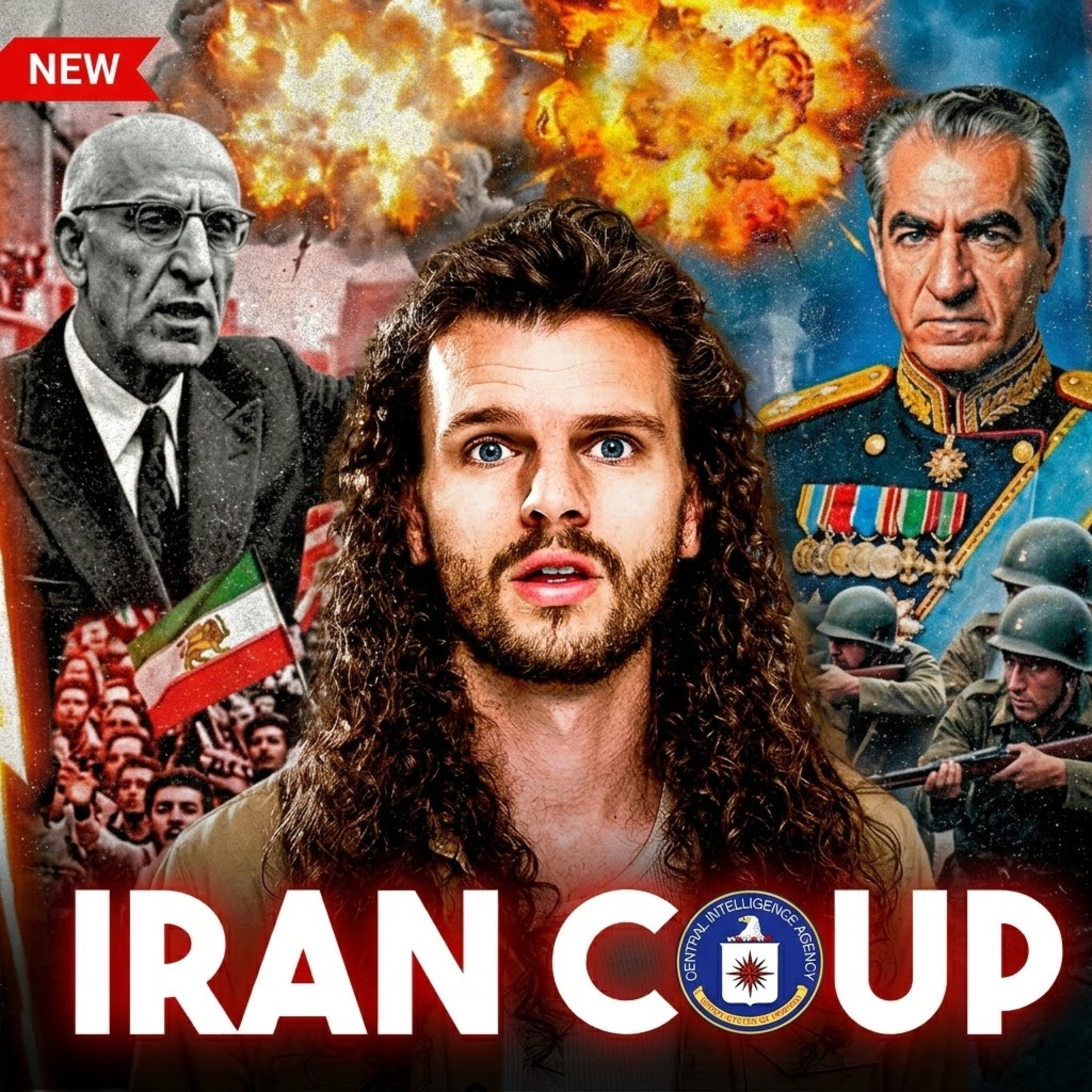
Close your eyes. Exhale. Feel your body relax. And let go of whatever you're carrying today. Well, I'm letting go of the worry that I wouldn't get my new contacts in time for this class. I got them delivered free from 1-800-contacts. Oh, my gosh. They're so fast. And breathe. Oh, sorry. I almost couldn't breathe when I saw the discount they gave me on my first order. Oh, sorry. Namaste. Visit 1-800-contact contacts.com today to save on your first order. 1-800-contact contacts lifelock. How can I help? The IRS said I filed my return, but I haven't. One in four taxpaying Americans has paid the price of identity fraud. What do I do? My refund, though. I'm freaking out. Don't worry. I can fix this. LifeLock fixes identity theft, guaranteed, and gets your money back with up to $3 million in coverage. I'm so relieved. No problem. I'll be with you every step of the way. One in four was a fraud. Paying American. Not anymore. Save up to 40% your first year. Visit lifelock.com podcast terms apply. The man who was democratically elected by his own people became the same man who was overthrown by the CIA and British intelligence. A leader who tried to give his country control of its own oil and its own destiny, instead spent the rest of his life under house arrest. The prime minister who wanted Iran to be free from foreign control is the same prime minister whose removal led directly 26 years later to the Islamic revolution in. And in a way, led to the strikes that we saw this weekend in Iran. His name is Mohammad Mossadegh, and in 1953, the United States and Great Britain secretly overthrew his government in one of the most consequential covert operations in American history. And this is a story of how it happened, why it happened, and why it still matters to this very day. So sit back, relax, and welcome to History Camp. What's up, people? And welcome back to History Camp. My name is Mark Gagnon, and thank you for joining me in my tent, where every single week, we explore the most interesting, fascinating, and controversial stories from around the world. From all history, forever. Yes, that is what we do. Here I am, sitting in this tent every single week, trying to explore and understand everything that's ever happened. And there's a lot of stuff, I'll be honest. Things. Things are just. Things happen, and then they keep on happening. So the second I'm, like, getting caught up, all of a sudden, they just drop, like, 10 more books of history. That you got to catch up on. It's just nonstop. All right? But it's still worth trying. I'm Sisyphus, okay? And I'm pushing my rock. And I'm glad that you guys are joining me. Thank you so much for clicking on this video every time you engage with the content click. Every time you join me in the tent, you help keep the lights on, and you keep the fire burning. Now, this episode's not possible without my good pal Christos Pachadopoulos. Christos is the Greek freak. He's the man behind the ones and twos, and he makes the shin tiny buttons go. Wow. It makes me look presentable. How are you, pal? What's up? All right. Says we don't have time because we are under the gun. Okay. I mean, not literally, probably an insensitive phrase to use, given the current conflict, but if you guys have TV or a phone or have talked to anyone, you've probably seen the military operation that was conducted in Iran just this past weekend. Basically, the United States and Israel conducted a. A combined military operation where they took out Ayatollah Khamenei and his top commanders in a. An extremely fast military operation. And effectively, they're looking to overthrow the Islamic regime in Iran. Now, before we get into the history here, I think the reason I wanted to make this episode is that, to me, what's going on right now starts really a long time ago. Like post World War II, potentially even World War I. But for the sake of this video, I specifically want to look at what happened in 1953, because that single moment, what happened in 1953 directly leads to what is going on this very day. Now, before we get into the history of Muhammad Mosaddegh and Iran and all that stuff, let's go back to what a coup is. Okay? A coup d', etat, or called just a coup, is the sudden, illegal seizure of a government. All right? It's when a group of people, often the military or foreign power, forcibly removes a country's leaders and installs new ones. It's not an election. It's not like a revolution from the people, from the ground up. It's just a takeover. And it's usually pretty quick and usually pretty violent and typically done in secret until it's already over. And the United States has been involved in plenty of coups from Guatemala to Honduras to Panama. I mean, all through the Middle East. I mean, Libya, the list goes on. Okay? But the coup in 1953 is a particularly consequential one. Okay? And it was orchestrated by two countries, the United States and the United Kingdom. And the Americans called it Operation Ajax and the British called it Operation Boot. And it succeeded in removing Iran's democratically elected Prime Minister and replacing him with a government that would do ultimately what the good people in Washington and in London wanted. And to understand why this happened, we need to go back even further to understand how Iran's government actually worked and what made Mohammad Mosaddegh such a threat. So in 1906, Iran experienced its own constitutional revolution. The people rose up against the monarchy and forced the King, called the Shah, to accept a constitution that limited his powers, basically putting a check on the absolute authority. And this new system created a parliament called the Majlis. And this was basically a group of people elected by the citizens that would help kind of govern with the King. And here's how it worked. The Parliament would vote for a Prime Minister and then the Shah would then confirm that choice. And the Prime Minister ran the government day to day while the Shah served as the head of state. Now, in theory, this made Iran a constitutional monarchy, similar to how the United Kingdom kind of is today. But in practice, the balance of power shifted between the Shah and the Parliament and shifted basically back and forth depending on who was stronger at any given moment. And in 1941, the British forced the old Shah, the Reza Shah, to step down because he was too friendly with Nazi Germany during World War II. They replaced him with his young 22 year old son, Mohammad Reza Pahlavi. The new Shah was initially a bit inexperienced. And for most of the 1940s, the parliament and Prime Ministers held real power and Iran functioned more or less like a democracy. And that's the Iran that Mohammad Mosaddegh rose to lead. Mohammad Mosaddegh was born in 1882 to an aristocratic family with connections to the old Qajar dynasty. This is basically the royal family that ruled Iran before the Pahlavi's. He was very educated, earning a doctorate in law while he was in Switzerland, and the first Iranian to ever receive a PhD in Law from a European university. He entered politics during the constitutional revolution and spent his career fighting for one consistent principle, that Iran should control its own destiny. He opposed foreign interference, whether from Britain or Russia or anyone. And he believed deeply in constitutional government. The idea that the Shah should reign but not rule, and that the elected leaders should be the ones actually making decisions. So by the late 1940s, Mossadegh had become the leader of the National Front. This is a coalition of political parties United by one goal. And this is basically to nationalize Iran's oil industry. And that brings us to the heart of the story. In 1901, a British company had secured a 60 year concession to extract and sell Iranian oil. That company eventually became the Anglo Iranian Oil Company, which we now know today as British Petroleum or BP. Now here's the deal that Iran got. 16% of the company's net profits would go to the country. That's it. Meanwhile, Britain is making a literal fortune. The Anglo Iranian Oil Company is one of the most valuable companies in the world. Its refinery at Abadan was the largest on earth. And the British government owned a controlling stake in the company, meaning that the Iranian oil was essentially funding the British treasury. And when Iranians found out about this, they were pissed. They saw their most valuable natural resource being extracted by foreigners who paid them just a small pittance while getting insanely rich. And by the late 1940s, oil nationalization had become the most popular political issue in the entire country. And in 1950, an American oil company called Aramco made a deal with Saudi Arabia. A 50, 50 split of profits. And this set a new standard. And as a result, Iranians demanded the same, if not better. Now, the Anglo Iranian Oil company refused. In April 1951, the Iranian parliament voted overwhelmingly to nationalize the oil industry. And this basically means that every drop of oil in Iran would now belong to the Iranian people. The parliament then elected Mohammad Mossadegh as Prime minister by a vote of 79 to 12. The Shah, still, you know, relatively weak at this point, confirmed the appointment. Mosaddegh immediately set about implementing nationalization. And the British were pissed. They had never imagined that a Middle Eastern country would simply just take back what was basically a British cash cow and, you know, bigger than that. They effectively voided this 60 year concession to access all of the oil. Now Britain's response was swift and devastating. A worldwide boycott of Iranian oil. British warships appeared off the Iranian coast. The British government froze Iranian assets and pressured other countries to not buy Iranian oil. And the goal is very simple, to strangle Iran's economy until eventually they just gave up. But Mohammad Mosaddegh refused to back down. Now, at first, the United States wasn't interested in overthrowing Mosaddegh. President Harry Truman actually kind of sympathized with Iran's position. His administration considered the British to be a little too colonial in their thinking and worried that pushing too hard would just drive Iran towards the Soviet Union, who right now we're basically at the Beginning of the Cold War with. But in January 1953, a new president took office, and that is Dwight D. Eisenhower. Now, the Eisenhower administration saw the world through this Cold War lens. They were terrified of USSR and communism, and they were easily convinced by the British that Mossadegh was a dangerous leftist who might just hand Iran over to the Soviets. Now, this probably wasn't true. Mossadegh was at most a nationalist. I mean, he wasn't really a communist at all. He had a complicated relationship with Iran's Communist Party, the Tudeh, and he had at times opposed them. But the British knew that by reframing the conflict as stopping Communism was going to be way more appealing than like, hey, help us protect our oil profits. And it actually worked. In early 1953, the CIA and MI6 began planning operation Ajax. Now, the operation was led by a man named Kermit Roosevelt, Jr. And if that name sounds familiar, this is literally the grandson of President Teddy Roosevelt. He was a CIA officer who snuck into Iran under a false identity to effectively coordinate a coup from the ground. And the plan had several components. First, if you're going to do a coup, you got to use bribery. So the CIA and MI6 paid Iranian politicians and military officers and journalists and religious clerics to turn against Mosaddegh. According to declassified documents, the agency spent millions of dollars to basically just pay people off. And then the second tool, if you're going to do a coup, you need good propaganda. The CIA planted fake stories basically in Iranian newspapers accusing Mosaddegh of being a communist or an atheist or, I mean, just an enemy of Islam in general. And they spread rumors and disinformation to undermine public confidence in the government. And third, they manufactured unrest. The CIA hired mobs to stage fake protests. Some pretended to be Mosaddegh supporters and committed acts of violence to make him look bad. Others pretended to be his opponents. The goal was to basically create chaos and make it seem like the country was falling apart from the inside. And then fourth, the military. The conspirators recruited General Fazlolla Zahedi to lead a new government once Mosaddegh was removed. Now, the first attempt at the coup on August 15, 1953, actually failed. Mosaddegh's forces arrested the officers who tried to deliver a royal decree dismissing him. And the Shah was terrified and actually fled the country to go to Rome. But CIA didn't give up. That's not gonna stop him. And on August 19, 1953, the second attempt succeeded. What's up, guys, we're gonna take a break really quick because I just got a cheat code that I wanna tell you guys, all right? I am at an age in my life where unfortunately, a normal night out has consequences. Not even crazy drinking. Just a couple of drinks, and the next day I'm wrecked. Like, my sleep score is bad. My head feels bad on my whoop. It tells me, like, hey, you slept like crap. And that's why I use Cheers Restore. All right? This is basically a dual action after alcohol aid that supports both my brain and my liver. And it's created after research on a compound called dhm, designed for how alcohol actually affects your body. Before, I would just, like, drink a bunch of water and hope, but now Cheers Restore actually gives you the actual chemicals to make you feel better. It's been on Shark Tank, it's sold over 30, 000 stores, and it's backed by doctors and clinicians. And the promise is pretty simple. You're going to feel 50 better the or your money back. All you need to do is take three capsules after your last drink or before bed. And this isn't for going crazy, all right? But if you're just like a normal adult having a few drinks, it really helps. So the viewers of this channel, great news for you. You're going to get 20% off when you use the code camp. That's C A m p. @cheershealth.com Go to cheershealth.com, use the code camp, get 20% off. You're going to go out, have just as much fun, and feel way better the next morning to get after it and tell them the good folks over at Camp Gagnon sent you. What's up, guys? We're going to take a break really quick because you know what time it is. It's time to level up. And Bluechew just dropped something wild. Okay? Bluechew has been rocking with us from the beginning, so of course, we have to rock, pun intended with them. All right? And what they've just done is changing the game. All right? This is next level gold, metal energy. This Bluechew gold, if you never heard of it. This is the newest innovation from the number one chewable Ed brand. All right? This isn't the little blue pill that your grandpa used. This is the four in one beast that is set in the gold standard for performance. We're talking two ingredients to keep the good times rolling, okay? Mixed with apomorphine and oxytocin that are going to turn up the arousal and the Connections in your brain as well as the ingredients to keep the blood flow, to keep everything pumping. Okay? Blue Chew Gold dissolves into your tongue and works in as little as 15 minutes. And that means you're going to be rocking quicker and staying in the game longer. Let me just say. That's how we put this tent up every single episode. We give Christos a bluechew. And you know what? We have this 10 rocking all year round. Okay? That's what it takes. Now, I recommend this in a, you know, a married, Christian relationship, but you know what? You guys can do whatever you want. Bluechew is the ultimate service to get you these chewables to your door in a discreet way to keep the bedroom on fire. We have a special deal for the listeners of this program. You're going to get 10 off your first month of Blue Chew Gold if you use the code Gagnon G A G N O N. That's promo code GAG GAGNON G A G N O N. You can visit BlueChew.com for more details and important safety information. And thank you so much to Bluechew for keeping the lights on and making this show possible. Now let's get back to it. The CIA basically paid mobs to flood the streets of Tehran. And some of them were just, you know, hired thugs. The agency's own documents describe paying some of the most feared gangsters in the city to participate. Others were soldiers or police who had been paid off. And some of them were actual protesters that saw this movement and just joined in. And the crowds just attacked government buildings. They stormed Mosaddegh's house and tanks rolled through the streets. And by the end of the day, Mosaddegh was under arrest. General Zahedi declared himself prime minister, and the Shah flew back from Rome to Tehran to claim his throne. Between 200 and 300 people died in this fighting. Mosaddegh was put on trial for treason. He delivered a defiant defense. And arguing that he was the legitimate leader and that the Shah had violated the Constitution, he was sentenced to three years in prison, followed by house arrest for the rest of his life. He died in 1967, still confined to his home. The Shah sent a personal thank you message to Kermit Roosevelt. Now, with Mossadegh gone, the Shah became the absolute ruler. He signed a new oil agreement with Western companies, including American ones, who now got a share of Iranian oil. For the first time, Iran got better terms than before. But the principle of nationalization was gone. Foreign companies were back in control. Now the Shah used his new power to crush all the opposition. He created savak, a secret police force trained by the CIA and Mossad, which became notorious for basically disappearing any dissidents. And political parties were banned. The press was largely censored, and Iran more or less became an authoritarian state propped up by American money and weapons. And for 26 years, the Shah ruled Iran. And he modernized the country in many ways and built universities and gave women more rights and industrialized the economy. But he also accumulated enormous personal wealth while many standard, you know, Iranians remained poor. And he never tolerated any challenge to his authority. And as a result, resentment built up. I mean, I don't have any personal relationship because I'm not Persian or Iranian. But talking to my Iranian friends, their experience with the Shah will be mixed. And they'll say that under the Shah, life was pretty good. And as long as you didn't challenge him or step out of line, things were all right, you know, like, there was no big issue. But everyone loved Mosaddegh. He was going to change the Iranian national national identity. He was going to make them rich. He was going to nationalize their oil and make the entire country so proud. And then the Shah came in and was worse, but not terrible. But he did create the conditions that ultimately led to revolution. On January 16, 1979, the Shah fled Iran for the final time. Massive protests now had just taken over the country. The military, which had always been the pillar of support for the Shah, declared neutrality. And two weeks later, Ayatollah Ruhollah Khomeini, a religious leader who had been exiled for opposing the Shah, returned. Monster Energy. Everybody knows White Monster, Zero Ultra. That's the OG it kicked off this whole zero sugar energy drink thing, But Ultra is a whole lineup now. You've got Strawberry Dreams, Blue Hawaiian Sunrise, and Vice Guava. And they all bring the Monster Energy punch. So if you've been living in the white can branch out. Ultra's got a flavor for every vibe. And every single1.is zero sugar tap the banner to learn more this episode is brought to you by White Claw Surge. Nice choice hitting up this podcast. No surprises. You're all about diving into tastes everyone in the room can enjoy. Just like White Claw Surge. It's for celebrating those moments when connections have been made and the night's just begun. With bold flavors and 8% alcohol by volume. Unleash the night. Unleash White Claw Surge. Please drink responsibly. Hard seltzer with flavors, 8% alcohol by volume. White Claw Seltzer works. Chicago Illinois to Tehran, and millions of people greeted him. By February 11, 1979, the monarchy was finished. Iran became an Islamic republic, led by Khomeini and the clerics who basically shared in his vision. The revolution was driven by a ton of factors, but one of them, one the Iranians never forgot, was 1953. The memory of Mohammad Bossadegh, the memory of the coup, the memory of America and Britain basically overthrowing their democracy, the will of the people, and their attempt at creating this generational wealth, opportunity and installing basically a much more friendly American style leader. Khomeini called the United States the Great Satan. And when his followers stormed the American Embassy in Tehran in November 1979 and held 52American hostages for 444 days, they knew exactly why they were doing it. They remembered this moment in 1953. Now, I'm not saying what they did was right or justified, but when looking at the historical record, you can understand why it happened. In 2000, the Secretary of State, Madeleine Albright, publicly acknowledged the American role in the coup. She called it a setback for democratic government in Iran. Yeah, no shit. In 2013, the CIA officially declassified documents confirming that the agency had planned and executed the coup as an act of US Foreign policy conceived and approved at the highest levels of the government. For Americans, 1953 is just a footnote in history, if remembered at all. This moment is pretty irrelevant, and most Americans don't even know that it happened. But for Iranians and Persians around the world, it is foundational. It explains why the Islamic Republic exists. It explains why Iran hates the United States. I mean, that amongst other reasons. It explains decades of hostility and hostages and sanctions and conflicts. And when American officials wonder why Iran won't just accept Western terms on a nuclear deal or, you know, play ball with us on, you know, some type of, you know, economic situation, or why the Iranian government seems so paranoid about foreign interference. The answer can go back to 1953, at least. The United States overthrew Iran's democracy once, and Iranians have never forgotten it. And they have structured their entire government around making sure that it won't happen again. So to me, that is one of the biggest lessons in all of this, Right? Actions have consequences that outlast the people who actually, you know, make them. The CIA officers who ran Operation Ajax are gone, and so is, you know, the Shah, and so is Mosaddegh, and so is Khomeini. But the world they created is still with us. And so every time there's a crisis in Iran or A regime change or negotiations break down. The answer traces back to a few days In August of 1953, when two Western powers decided that Iranian democracy was less important than Iranian oil. Now, Mohammad Mosaddegh believed that his country had the right to control its own resources. And for that belief, he lost everything. And Iran and America are still living with the consequences. And that is just a brief history of the 1953 coup against Mossadegh and how it created the ripple effect that led to the revolution in 79, and ultimately why there is military action happening in Iran this week. I mean, it's a sad history, truly. Like, this is why the idea of, like, regime change is. It's just a tough thing to control. You know, like, America has this idea like, oh, we can go through. We can do this regime change. We can overthrow the leader. Da, da, da. We have to do this because we have to square up this thing. Da, da, da. But there are externalities and things that can happen as a side effect that you can't really plan for. Like, these things can go sideways, and it goes very bad. And in the history of American coups, most of them have gone pretty bad. I mean, some of them have worked out for America, but most of them work out pretty bad for the people there. I mean, almost undoubtedly that's kind of an understatement. I mean, like, Noriega in Panama, that's maybe one that, like, worked out pretty well. Like, all right, we got him out. We're able to, like, take back some control over the canal. I mean, like, he's no longer a threat. He was working with all the cartels down there, but we neutralized it. Like, that one kind of worked. But again, when you take out something, what does that power vacuum leave behind? I always think about this when it comes to cartels in Mexico, that you have multiple cartels that control different regions. And when you take out a cartel, ultimately the cartel doesn't just go away, but in that power vacuum, the other cartels will now fight for that territory. And when they fight for that territory, they actually get more resources. And when they get more resources, they get more money. When they get more money, they become more powerful. And so as you take out more and more cartels, you end up growing these oligopolies or these monopolies of cartels that are actually more powerful than the government themselves. So this is my concern in this situation where, you know, we go to Iran, we overthrow the leader, and what happens to that power vacuum? Hopefully, you create a democratic state that liberates the people of Iran, that the women, and primarily the women. But you know, the women, the men, the children that are in this regime that don't want to be, that they get more autonomy and freedom, that the sanctions are lifted, that we're able to trade freely with the people of Iran and the Persian sort of exiles that live in America and the diaspora around the world are able to go back home and visit their own people. That would be the hope. But it's just, you can't always control all the externalities. Does the power vacuum just create something worse? Is there a worse dictator that wants revenge, that takes over? Do they become more oppressive to their own people to make sure there's no revolution? Does Russia and China just become closer in their cooperation against the United States and Russia? China and Iran basically create this unholy alliance against our meddling in the Middle East. That's the concern. And it seems like at least the pattern has been that way. Again, I'm not a geopolitical expert. I don't know. This is just my opinion or something, but I just don't. I don't know. It just. If you're asking me like, hey, should we be meddling? I'm like, I don't. Again, I don't think the Iranian regime is great. I don't think the ayatollah was the right move. He was obviously oppressing his people. It's wrong. But this, I just don't know if this is the way. I don't know if this is the way to do it. And this 1953 coup, I think, is a great example. All right. Like, all right, this guy was going to nationalize the oil. He was going to mess up American and British interests, and he got overthrown. And then you have the Shah. That works out pretty well for us for a long time. And then you have something worse that eventually takes its place. What would the world look like if Mosaddegh stayed in power? Probably a little bit different. The Middle east might be a little more democratic. Maybe they would have given all the oil over the Soviets. I mean, that's what's happening now by putting all the sanctions on them. I don't know. Again, I'm not a geopolitical expert. I'm just a comedian trying to figure it all out. But I'm curious. What do you guys think? Please drop a comment. If you guys are a, you know, if you guys are a Persian yourself, if you're Iranians, if you are geopolitical experts, if you read a Lot of books. If you have opinions on the stuff, please comment. I would love to know what you think. Again, this is a form of open discourse. I don't claim to have the answers. I don't have the truth. I'm not your guru. I'm not going to solve the answers of the world for you, all right? I'm just a guy trying to figure it out in good faith. So please drop a comment. I'd love to know, even if you know nothing about this, what did you learn? Is there anything that opened your eyes? Is there anything you have questions about? I'm sure someone in the comments can help you answer it. We got some good people over here at the campsite that are trying to figure it all out with me. So I'm sure there's someone that can answer. Please keep the comments civil. I read all of them. YouTube, Spotify, I like to go through and see what you guys are talking about. So please drop a comment. I'd love to know if you like religious deep dives. Great news. We have a entire channel where we go through that. Like, I'm sure you're thinking, like, oh, why is Iran Shia? What does that mean? What does Sunni mean? Well, there's a whole channel called Religion Camp where I deep dive on every religious topic in the world. And you can check that out as well. Basically, Religion Camp is what happens in the future. What do people think about the great Beyond History? Camp is where I try to figure out everything that's already happened. And then Camp Gagnon, that's the place where I deep dive on all the most interesting stuff going on right now. And you can find some random videos on conspiracy stuff, some occult stuff, all the most interesting things in the world. We did a bunch of stuff on the Epstein files. Please check that out and you can see me on the road. Mark Agnon Live. I'm gonna be dropping some new dates later this month, and I'd love to see you guys at the shows. Thank you all so much for being a part of the campsite. Truly, I appreciate every single one of you. God bless you all. Please stay safe, peace and love for all of humanity. And I'll see you in the future to talk about the past. God bless.