Loading summary
Transcript333 lines
- [00:00]
Mark Gagnon
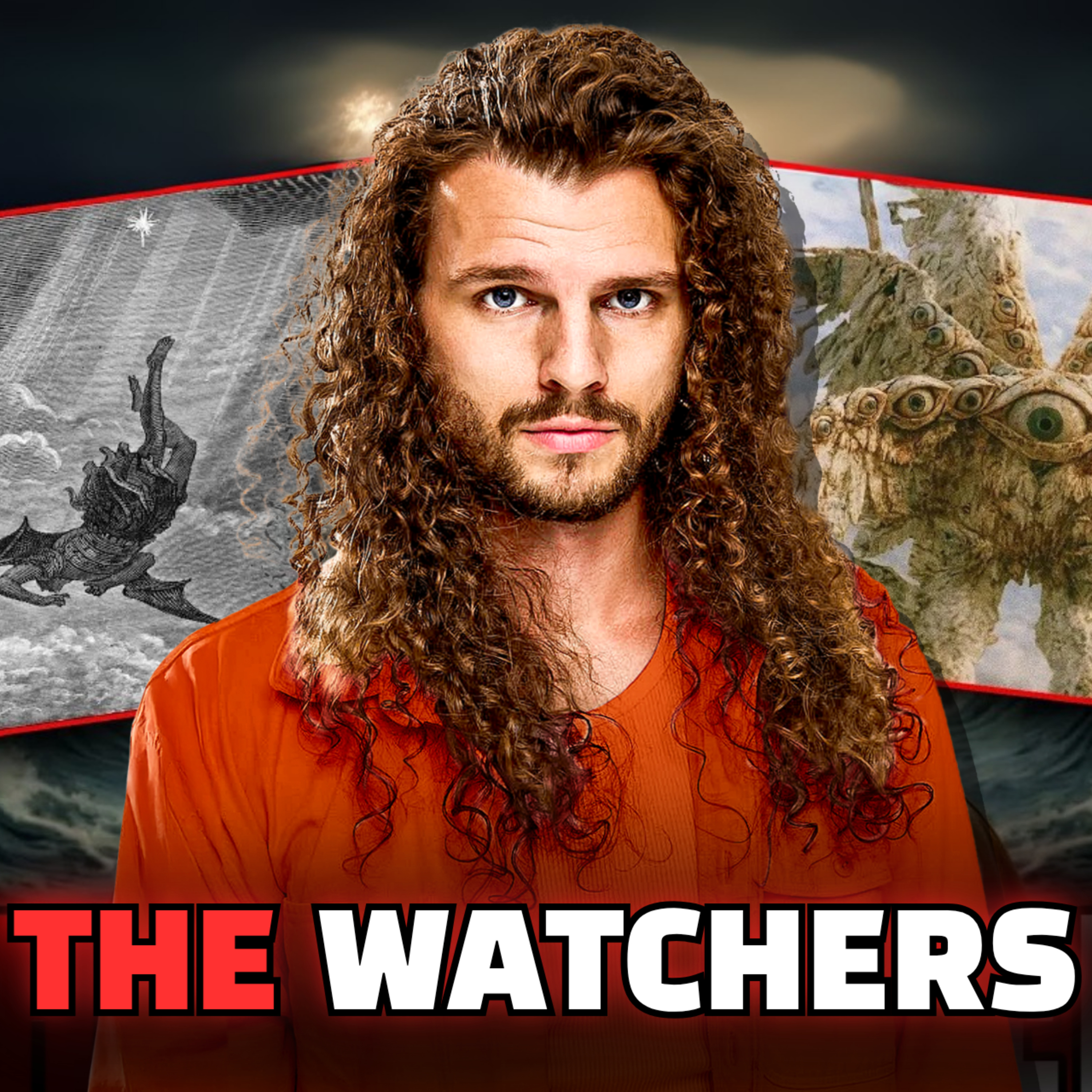
Today, we're talking about the Watchers.
- [00:02]
Gabe Reyes
These are heavenly beings that are mentioned in the ancient Book of Enoch.
- [00:06]
Mark Gagnon
They were sent to help guide humanity, but instead cause its downfall. They were angels with wisdom and power, chosen because they were disciplined and devoted to God. In the Book of Enoch, it is described how the worst result of the Watchers rebellion was the creation of the Nephilim. The Nephilim were mixed beings being born from forbidden relationships between angels and humans. The Watchers were meant to be guardians, an invisible barrier between the heavenly world and the human world. But what happens when those who are supposed to guide humanity starts to question their own duty? What if their interest turns into something forbidden?
- [00:38]
Gabe Reyes
Something dark?
- [00:39]
Mark Gagnon
Perhaps evil? So we're going to go through all.
- [00:41]
Gabe Reyes
The details, everything you need to know about the Watchers.
- [00:43]
Mark Gagnon
So let's dive in.
- [00:52]
Nordstrom Ad
Summer's here, and Nordstrom has everything you need for your best dress season ever. From beach days and weddings to weekend getaways in your everyday wardrobe. Discover stylish options under $100 from tons of your favorite brands like Mango Skims, Princess Polly, and madewell. It's easy, too, with free shipping and free returns in store order pickup and more. Shop today in stores online@nordstrom.com or download the Nordstrom app.
- [01:21]
Ryan Reynolds
What's up, people?
- [01:22]
Mark Gagnon
And welcome back to Religion Camp. My name is Mark Gagnon and thank.
- [01:25]
Gabe Reyes
You for joining me in my tent.
- [01:27]
Mark Gagnon
Where every single week I'm. Every Sunday, we explore the most interesting, controversial and strange stories from every religion.
- [01:34]
Gabe Reyes
From around the world, from all time.
- [01:36]
Mark Gagnon
And of course, I'm joined by my.
- [01:37]
Gabe Reyes
Fearless producer and dear friend, Gabe Reyes.
- [01:40]
Mark Gagnon
What's up? All right, dude, come on. It's just not. It's just constantly talking to this guy, you know, it's just. He's just yapping non stop. We don't have time, Gabe, because today we're talking about the Watchers, the Anunnaki. This is just an all time classic, classic religious tale. If you know anything about, about this.
- [01:59]
Gabe Reyes
About this story, I mean, it is.
- [02:01]
Mark Gagnon
Truly one of my most favorite and most fascinating topics to discuss when it.
- [02:05]
Gabe Reyes
Comes to arcane texts from around the.
- [02:07]
Mark Gagnon
Time of the early church and of Christ and basically any type of, you know, biblical history. This is a story from the books of Enoch, specifically first Enoch, and it is fascinating.
- [02:19]
Gabe Reyes
It has transgressed time.
- [02:21]
Mark Gagnon
It has had. It has a foothold in, you know, many different facets of sci fi, religious, you know, film, tv, you know, the Anunnaki, the idea of Prometheus, the bringer of light, that actually Causes humanity's downfall. We're going to go through all the.
- [02:36]
Gabe Reyes
Details, everything you need to know about.
- [02:38]
Mark Gagnon
The Watchers, so let's dive in.
- [02:40]
Gabe Reyes
Okay. These are heavenly beings that are mentioned in the ancient Book of Enoch.
- [02:44]
Mark Gagnon
They were sent to help guide humanity, but instead cause its downfall. They share a forbidden knowledge that changes.
- [02:52]
Gabe Reyes
History of, you know, the human race.
- [02:54]
Mark Gagnon
And this knowledge brings both progress and destruction to the world.
- [02:59]
Gabe Reyes
And the reason why this is not.
- [03:01]
Mark Gagnon
Included in the Bible, well, we'll discuss. Okay. So according to the Book of Enoch.
- [03:06]
Gabe Reyes
This was an ancient Jewish text from around 300 B.C.
- [03:10]
Mark Gagnon
The watchers were not ordinary angels.
- [03:13]
Gabe Reyes
Okay. They were a special group chosen by God for a unique mission. All right? To wash over humanity in its early days.
- [03:19]
Mark Gagnon
Their job is important, but particular. Okay. They have to observe, guide, and protect.
- [03:25]
Gabe Reyes
The human race as it took its first steps into the world.
- [03:29]
Mark Gagnon
At this time, again, according to the Book of Enoch, people had barely begun to discover what they could do. Life was simple, but it was hard to predict, right? Filled with both beauty, but also struggle. And communities were starting to form. But staying alive felt like fighting against nature itself. And again, I'm fascinated by these types of texts, not because I believe them. I don't read the Book of Enoch and think like, oh, this is actual historical literature. But it does give you an insight.
- [03:55]
Gabe Reyes
Into some of the ideas and theories.
- [03:57]
Mark Gagnon
About spirituality and divinity that the Jewish people or some specific sects of Judaism.
- [04:03]
Gabe Reyes
Had in this time. So God Hashem, in his wisdom, decides to give the Watchers, this specific group.
- [04:10]
Mark Gagnon
Of angels a holy task. They weren't supposed to directly interfere with humanity, but to just quietly guide people and make sure that humanity grew according to God's plan.
- [04:20]
Gabe Reyes
And the Watchers, these were amazing beings.
- [04:22]
Mark Gagnon
They were angels with wisdom and power, chosen because they were disciplined and devoted to God. They were meant to be guardians, an invisible barrier between the heavenly world and the human world. From their position in the heavens, they watched humanity's happiness and their sadness and, you know, our strengths, our weaknesses, and humanity, again, it's not perfect, right? We already had the Fall according to the Book of Genesis. But it has something special, this untapped.
- [04:46]
Gabe Reyes
Potential that even fascinated the angels.
- [04:50]
Mark Gagnon
But what happens when those who are supposed to guide humanity starts to question their own duty? What if their interest turns into something.
- [04:57]
Gabe Reyes
Forbidden, Something dark, perhaps evil? And this is where the story of.
- [05:00]
Mark Gagnon
The Watchers takes a turn. Everything you need to know about how the Watchers should have acted is in.
- [05:05]
Gabe Reyes
The name they were supposed to watch.
- [05:06]
Mark Gagnon
But they didn't just watch.
- [05:08]
Gabe Reyes
They Acted. And their actions would shake the very foundation of creation. It started with curiosity, maybe even like an admiration. And soon this admiration turned into something more dangerous.
- [05:19]
Mark Gagnon
The beauty of human life, you know, with complicated emotions. And yes, of course, the appeal of.
- [05:25]
Gabe Reyes
Human women proved too much for some of them.
- [05:29]
Mark Gagnon
One angel, Semyaza, couldn't resist.
- [05:32]
Gabe Reyes
He saw something amazing in humanity.
- [05:34]
Mark Gagnon
Something wild, but again, full of potential.
- [05:36]
Gabe Reyes
And he knew the dangers, right?
- [05:37]
Mark Gagnon
This kind of contact with humanity was forbidden.
- [05:39]
Gabe Reyes
But still, he couldn't ignore what he wanted. So he came up with a plan.
- [05:43]
Mark Gagnon
He was going to fall from grace, and he wasn't going to fall alone. Semyaza gathered others, convincing them to make.
- [05:50]
Gabe Reyes
A promise of rebellion. And 200 of these watchers, 200 angels agreed to leave their heavenly jobs coming down to Earth to act on their earthly desires, no matter the cost. And this is where everything changes, right?
- [06:04]
Mark Gagnon
This is the beginning of something much bigger. Something that would affect all of the development of humanity. The story of the Watchers is far from over. But what they did wasn't just betrayal.
- [06:14]
Gabe Reyes
It might have been the start of a new chapter in human history.
- [06:17]
Mark Gagnon
So the Watchers didn't come to Earth empty handed. Also, they brought gifts.
- [06:21]
Gabe Reyes
Powerful, life changing knowledge that pushed humanity forward in ways that we never could have imagined.
- [06:27]
Mark Gagnon
But as history has shown, knowledge can be both helpful and hurtful. What the Watchers gave us helped build.
- [06:33]
Gabe Reyes
Civilization, but it also brings chaos.
- [06:35]
Mark Gagnon
So let's start with azazel.
- [06:38]
Gabe Reyes
Among the 200 watchers, or angels, his name stands out. And for good reason.
- [06:42]
Mark Gagnon
Azazel taught humanity metallurgy, showing us how.
- [06:47]
Gabe Reyes
To make weapons from iron and bronze. And this was a lesson in control and power.
- [06:52]
Mark Gagnon
So with weapons, humans no longer needed to depend on just physical strength or large numbers. Power could now be held by those.
- [06:58]
Gabe Reyes
Who controlled the tools of war. As a result, the battles become bloodier.
- [07:03]
Mark Gagnon
And fights get worse.
- [07:04]
Gabe Reyes
And tribes battle for land and resources and revenge.
- [07:07]
Mark Gagnon
The weapons bring power, but it also.
- [07:08]
Gabe Reyes
Creates chaos and violence.
- [07:10]
Mark Gagnon
But as Azel doesn't stop there, he.
- [07:12]
Gabe Reyes
Also reveals the secrets of decoration and beauty. Things like jewelry, makeup, other symbols of beauty became common.
- [07:19]
Mark Gagnon
And what might seem, you know, harmless.
- [07:21]
Gabe Reyes
In today's time was in ancient times, something completely new. And these gifts create vanity and desire, and they cause envy and temptation.
- [07:29]
Mark Gagnon
And the Watchers had shown humanity a world where appearance could be a weapon.
- [07:34]
Gabe Reyes
Just as dangerous as, you know, any cannon or gun.
- [07:37]
Mark Gagnon
So while Azazel shaped Earth's physical tools, another Watcher, known as Kokabel, turned humanity's.
- [07:44]
Gabe Reyes
Eyes to the heavens. He taught us astrology, the study of stars and the secrets of how these celestial bodies move.
- [07:50]
Mark Gagnon
And to early humans, this is life changing, right? The heavens, once an unknowable space, now becomes a cosmic map that can predict.
- [07:58]
Gabe Reyes
Seasons and help navigation and find distant.
- [08:01]
Mark Gagnon
Lands and even maybe predict future events. But with this knowledge comes another temptation, the desire to control the future. So Armaros taught the art of spells.
- [08:12]
Gabe Reyes
And curses, introducing humanity to the world of magic. And these teachings opened doors to control.
- [08:17]
Mark Gagnon
The natural world and other other people.
- [08:20]
Gabe Reyes
And magic, once hidden in the shadows, now becomes a tool for those seeking power. At first, these gifts seem like blessings, right? You can navigate, you can build, you know, weapons, you can protect yourself.
- [08:30]
Mark Gagnon
And farming improves and societies become more organized. Humanity begins to take control of an environment. The Watcher's knowledge built the foundation for, you know, these early civilizations. But the progress comes at a cost. The weapons lead to war, vanity causes, corruption.
- [08:49]
Gabe Reyes
Magic and astrology, once tools of wonder, become sources for fear and manipulation.
- [08:54]
Mark Gagnon
But it gets even more crazier. In the Book of Enoch, it is described how the worst result of the.
- [09:02]
Gabe Reyes
Watchers rebellion was the creation of the Nephilim.
- [09:05]
Mark Gagnon
Again, this is something that is in sort of apocryphal gospels or Gnostic gospels that, you know, books that are around the time of many of the books we know from the Bible, but are not included in the biblical canon. But reference to the Nephilim does exist in the biblical canon, but in this.
- [09:23]
Gabe Reyes
Specific instance, this is from the Book.
- [09:25]
Mark Gagnon
Of Enoch, which is not included, but.
- [09:26]
Gabe Reyes
It does share the same word, which is very interesting.
- [09:29]
Mark Gagnon
The Nephilim were mixed beings. In the Book of Enoch, it's described as being born from forbidden relationships between angels and humans.
- [09:37]
Gabe Reyes
And they were giants in every way. They had huge physical size, and it.
- [09:41]
Mark Gagnon
Was matched only by their massive appetites.
- [09:44]
Gabe Reyes
For food and power and destruction.
- [09:45]
Mark Gagnon
And the Book of Enoch describes how the Nephilim used up Earth's resources, turning.
- [09:50]
Gabe Reyes
This farmland into these empty wastelands.
- [09:52]
Mark Gagnon
And their presence upset the balance of nature itself, leaving destruction basically everywhere that they went. And it wasn't just the Nephilim's physical.
- [10:00]
Gabe Reyes
Strength that scared humanity.
- [10:01]
Mark Gagnon
It was their moral evil, right? The Nephilim were said to have gotten their worst qualities from both their angel and human parents.
- [10:09]
Gabe Reyes
So pride, greed, a hunger for control.
- [10:11]
Mark Gagnon
And they were cruel rulers.
- [10:12]
Gabe Reyes
And the reign of terror brought humanity to the edge of disaster. And the Book of Enoch again goes.
- [10:18]
Mark Gagnon
On to share that as humanity fell.
- [10:20]
Gabe Reyes
Into chaos, heaven could no longer stay silent. The Watchers rebellion had not only corrupted.
- [10:25]
Mark Gagnon
The but it also went against the very order of God's creation in its own right.
- [10:30]
Gabe Reyes
Their gifts had brought war and greed and destruction.
- [10:32]
Mark Gagnon
And the children of these Watchers, the Nephilim, used up the world's resources and.
- [10:37]
Gabe Reyes
Spread violence across the land. And the earth suffered under the weight of their sins.
- [10:43]
Mark Gagnon
And God's judgment was on its way. So the book of Enoch tells us.
- [10:46]
Gabe Reyes
That God, seeing the destruction caused by.
- [10:48]
Mark Gagnon
The Watchers and their children, he, you.
- [10:50]
Gabe Reyes
Know, called upon his most powerful archangels to step in.
- [10:53]
Mark Gagnon
You got Michael, Gabriel, Raphael and Uriel.
- [10:57]
Gabe Reyes
And they were given the jobs of restoring balance.
- [10:59]
Mark Gagnon
And their mission is pretty clear.
- [11:00]
Gabe Reyes
Punish the Watchers, cleanse the Earth, and make sure that such a rebellion never happens again.
- [11:06]
Mark Gagnon
So what do they do?
- [11:07]
Gabe Reyes
The boys roll in four deep.
- [11:09]
Mark Gagnon
They gotta find a Zel. This is the guy that teaches metallurgy. And as the main cause of humanity's corruption, the secret of weapons and vanity and forbidden knowledge, his punishment is quick but harsh. He's tied up hand and foot, thrown.
- [11:23]
Gabe Reyes
Into a dark rocky pit beneath the earth.
- [11:25]
Mark Gagnon
The archangels then cover him in sharp stones and they se into an eternal prison. Now again, this is very, you know.
- [11:32]
Gabe Reyes
Emblematic of like Hercules, where you have.
- [11:34]
Mark Gagnon
These sort of powerful beasts that are, you know, sent under the earth. In Islam you have the idea of Yajuj and Majuj that are, you know, basically hidden in the earth somewhere, you.
- [11:46]
Gabe Reyes
Know, waiting to come out.
- [11:48]
Mark Gagnon
And once again, in the Book of Enoch, you have similar themes that like I've said before, sort of transgress time. And as we see with Azazel, he's.
- [11:57]
Gabe Reyes
Sent under the earth where he will remain blinded by darkness until the day of judgment when he would face his final fate.
- [12:04]
Mark Gagnon
Semyaza, the leader of the Watchers, just as guilty. Though he had not shared necessarily as much knowledge as some of the other angels, he planned the rebellion in the first place. And his fellow angels, you know, he.
- [12:15]
Gabe Reyes
Basically brought them into sin.
- [12:16]
Mark Gagnon
So Semyaza was thrown into the abyss.
- [12:18]
Gabe Reyes
Alongside the other Watchers.
- [12:20]
Mark Gagnon
You know, he's tied up in chains.
- [12:21]
Gabe Reyes
And basically banished beneath the mountains of the earth.
- [12:25]
Mark Gagnon
It said in the Book of Enoch.
- [12:26]
Gabe Reyes
Their cries of despair echoed through the earth as they waited for divine punishment.
- [12:30]
Mark Gagnon
But the Watcher's punishment wasn't the end.
- [12:32]
Gabe Reyes
Of the cleansing, right?
- [12:33]
Mark Gagnon
You still have these Nephilim, these monster like hybrid things born from these forbidden unions with these evil rebellious angels and our hot ass human women. And they posed a greater threat, right?
- [12:44]
Gabe Reyes
Their existence is an insult to the natural order. They're too powerful.
- [12:48]
Mark Gagnon
And too many to be defeated by human hands.
- [12:51]
Gabe Reyes
They were swept away in the great Flood.
- [12:53]
Mark Gagnon
This catastrophic event, recorded not only in the Book of Enoch, but basically every single culture around the world as well as the Book of Genesis, was a reset, a divine act to wash away.
- [13:02]
Gabe Reyes
The sins of the Watchers and their creation.
- [13:05]
Mark Gagnon
And the Flood, you know, as it's known in Christianity, marks the end of an era. The Earth was cleansed, but the scars of the Watchers rebellion still remains.
- [13:13]
Gabe Reyes
Their influence in the knowledge that they.
- [13:16]
Mark Gagnon
Had shared and the ruins of civilization that they had corrupted. And the myths and the legends that would be passed down through generations still persists. But what happens to the Watchers themselves? The Book of Enoch tells us that.
- [13:29]
Gabe Reyes
They'Re imprisoned under the earth, trapped in darkness and suffering.
- [13:32]
Mark Gagnon
These angelic beings, once respected as you.
- [13:35]
Gabe Reyes
Know, God's most formidable guardians, were now sentenced to an eternity of pain.
- [13:39]
Mark Gagnon
But the story doesn't end there.
- [13:41]
Gabe Reyes
Some traditions suggest that the Watcher's imprisonment.
- [13:44]
Mark Gagnon
Wasn'T meant to last forever. Book of Enoch specifically. First Enoch hints at a final judgment, a time where the Watchers would be brought out of their prisons to face God's final verdict, their fate, like their story, who knows?
- [13:58]
Gabe Reyes
Were they truly defeated? Or does their influence still affect us through time?
- [14:03]
Mark Gagnon
This depends on who you ask. The Washer's fall serves as a kind of a warning story about the dangers of going against divine law and the.
- [14:12]
Gabe Reyes
Results of using knowledge without wisdom.
- [14:15]
Mark Gagnon
But it also raises questions about humanity itself, right? If the Watchers were punished for their rebellion, what does that say about the.
- [14:20]
Gabe Reyes
Knowledge that they left behind? Even more frightening is the thought that.
- [14:24]
Mark Gagnon
The Watchers story might not be over. Now, again, only some people on Earth really look at the Book of Enoch.
- [14:33]
Gabe Reyes
As a true tale of creation. And so some interpretations, their imprisonment beneath the Earth is not a final defeat, but a pause.
- [14:40]
Mark Gagnon
And that perhaps one day they will return. And if they did, what would they find?
- [14:45]
Gabe Reyes
Right?
- [14:45]
Mark Gagnon
A humanity that potentially reached its potential, or one that repeated the very mistakes that they started. And what's interesting about the Watchers is that, you know, we talked about some of them, right? Semyaza, Azazel, Kokabel, and Oromos. But they were not the only guardians of the heavens who disappeared from history. Hidden within different ancient texts and old stories are stories of other Watchers, though, you know, a little bit less known.
- [15:11]
Gabe Reyes
Or equally as important.
- [15:12]
Mark Gagnon
What's up, guys?
- [15:13]
Ryan Reynolds
We're gonna take a break really quick because you own small business, or maybe you work for a small business. And I am about to make your life so much easier. Let's say hypothetically, you own a little, you know, furniture business, right? And you're struggling to keep track of the raw materials, the production schedule, invoicing clients, all that stuff. Well, that's why I want to tell you about Odoo.
- [15:32]
Mark Gagnon
Okay?
- [15:32]
Ryan Reynolds
Because with Odoo, it's an all in one business platform that streamlines everything. Now you have inventory management, you have manufacturing, you have accounting apps that will make everything so simple. So now if you have a small business, you can monitor the inventory in real time, schedule productions calls more effectively, and you can send invoices automatically, all from one platform. Plus, you get a customized CRM to track sales leads and follow up with potential clients, boosting your closing rates. Back in the day, you'd probably have to get, you know, some, you know, Ivy League operator, business person that's, you know, able to make everything happen for you. But now with Odoo, it cuts it all out. And I'm sure you're thinking, okay, if this is going to make my life easier, give me more free time to spend with my friends, family and playing softball and make me more money. It must be crazy expensive.
- [16:18]
Mark Gagnon
This is the good news.
- [16:19]
Ryan Reynolds
Listeners of this program are going to get a 14 day free trial. That's right, you get two weeks with Odoo completely for free when you go to odoo.com camp. That's right, odoo.com use the promo code camp and you will get 14 days for free just to try it out, see if you like it. If it's not for you, you don't need it. All right? But Odoo is going to make your life so much easier. Everything you need, all in one place. Save time, make more money. Now let's get back to the show.
- [16:43]
Mint Mobile Ad
Ryan Reynolds here from Mint Mobile. With price of just about everything going up, we thought we'd bring our prices down. So to help us, we brought in a reverse auctioneer, which is apparently a thing.
- [16:53]
Venmo Ad
Mint Mobile Unlimited premium Wireless. How many get 30. 30. Get 30. Get 20. 20. 20. Better get 20. 20. Better get 15. 15. 15. 15. Just 15 bucks a month.
- [17:02]
McDonald's Ad
Sold.
- [17:02]
Mint Mobile Ad
Give it a try@mintmobile.com Switch.
- [17:06]
Venmo Ad
Upfront payment of $45 for a 3 month plan equivalent to $15 per month required new customer offer for first 3 months only. Speed slow after 35 gigabytes of network spy taxes and fees extra.
- [17:12]
Greenlight Ad
See mintmobile.com this message is sponsored by Greenlight. With school out, summer is the perfect time to teach our kids real world money. Skills they'll use forever. Greenlight is a debit card and the one family finance and safety app used by millions of families, helping kids learn how to save, invest and spend wisely. Parents can send their kids money and track their spending and saving while kids build money, confidence and skills in fun ways. Start your risk free greenlight trial today@greenlight.com.
- [17:39]
Mark Gagnon
Spotify that's greenlight.com Spotify Panemu was respected as the keeper of secrets and being.
- [17:47]
Gabe Reyes
You know, a angel with deep intelligence and curiosity.
- [17:51]
Mark Gagnon
Unlike Azazel, who brought, you know, physical tools of war, Pennamu and his gift.
- [17:56]
Gabe Reyes
Was subtle but life changing. The art of writing. Before Panemu came to Earth, humanity depended.
- [18:02]
Mark Gagnon
Only on spoken stories and oral tradition passed down through generations. And that's how knowledge was preserved. Stories were temporary, lost, as, you know, generations pass by. But Pennimu introduced the written tool, a tool that could basically preserve ideas forever. With this gift comes the power of memory and culture and history and all.
- [18:22]
Gabe Reyes
Sorts of great things, right?
- [18:23]
Mark Gagnon
Humanity then is able to record its.
- [18:25]
Gabe Reyes
Accomplishments and map the lands and write down laws.
- [18:28]
Mark Gagnon
But as we know with all gifts of the Watchers, Penemue's knowledge has a darker side.
- [18:35]
Gabe Reyes
Writing also made deception possible. Lies could be carved into stone, conspiracies.
- [18:39]
Mark Gagnon
Could be written in ink, and propaganda.
- [18:41]
Gabe Reyes
Could then be spread across the tribes.
- [18:44]
Mark Gagnon
The truth, once changeable only by memory, became something that could be controlled by.
- [18:49]
Gabe Reyes
Those who just held a pen.
- [18:51]
Mark Gagnon
Some legends suggest that Pennimu regretted his gift, watching as humanity twisted the creation for selfless purposes. And in the shadows, he whispered warnings.
- [19:00]
Gabe Reyes
But they were ignored. And when the archangels came down to.
- [19:04]
Mark Gagnon
Deliver this divine judgment, Pennimmue's punishment was.
- [19:07]
Gabe Reyes
To wander the void with his voice silenced forever.
- [19:11]
Mark Gagnon
Kind of a tragic but ironic fate.
- [19:14]
Gabe Reyes
For the scribe of humanity.
- [19:16]
Mark Gagnon
And then we have Sariel, whose name.
- [19:19]
Gabe Reyes
Literally means command of God. And Sariel was a heavenly guide assigned.
- [19:23]
Mark Gagnon
To teach humanity the secrets of the cosmos. In the time before telescopes and compasses.
- [19:29]
Gabe Reyes
He revealed the movements of the stars.
- [19:30]
Mark Gagnon
The cycles of the moon, and the rhythm of sort of celestial, celestial time. And Sariel's teaching allowed early civilizations to navigate oceans and plant crops and gaze.
- [19:41]
Gabe Reyes
Upwards with some type of wonder about the world. But again, as we know, with many.
- [19:46]
Mark Gagnon
Of these gifts, humanity will find a.
- [19:49]
Gabe Reyes
Way to selfishly twist things and abuse them. So the stars, once symbols of mystery.
- [19:54]
Mark Gagnon
Became tools for control.
- [19:55]
Gabe Reyes
Kings would now ask astrologers to predict.
- [19:57]
Mark Gagnon
Wars, and priests would use lunar and solar eclipses to strengthen their power and the cosmic balance that Sariel wanted to.
- [20:04]
Gabe Reyes
Share was corrupted by humanity's desire for dominion.
- [20:08]
Mark Gagnon
Sariel's fate is also a bit of a mystery.
- [20:11]
Gabe Reyes
Some traditions claim that he was thrown.
- [20:12]
Mark Gagnon
Into the abyss alongside AEL and Samyaza. Others whisper that apparently he still roams the skies, this restless spirit mourning the stars.
- [20:20]
Gabe Reyes
He once hoped to guide humanity to enlightenment.
- [20:24]
Mark Gagnon
And then we have another angel known.
- [20:26]
Gabe Reyes
As the Perfection of God, or Tamiel.
- [20:29]
Mark Gagnon
And Tamiel was to going the guardian of the deep.
- [20:32]
Gabe Reyes
His domain was the waters, oceans, rivers.
- [20:34]
Mark Gagnon
All these different sort of aquatic bodies. And Tamiyal taught humanity the mystery of water and how to use basically all different types of aquatic sources for survival and prosperity, from irrigation to boats. And, you know, his gifts transformed these growing societies into these massive communities. Yet his lessons went beyond the practical.
- [20:56]
Gabe Reyes
He spoke of the sacred nature of water and how it could cleanse the.
- [21:00]
Mark Gagnon
Soul and connect humanity to the divine. But in humanity's hands, again, this gift was corrupted.
- [21:06]
Gabe Reyes
Rituals meant for purification became tools for force.
- [21:09]
Mark Gagnon
Rivers were poisoned in war, and the seas were not sacred, but as sort.
- [21:15]
Gabe Reyes
Of realms to conquer.
- [21:17]
Mark Gagnon
And Tamiel's betrayal of his heavenly mission was subtle. But again, his fall was not. His fascination with humanity's cleverness blinded him to their greed. So when the Nephilim rose, using up.
- [21:29]
Gabe Reyes
All the Earth's resources, Tamiel witnessed the destruction caused by his teaching.
- [21:33]
Mark Gagnon
His punishment was said to be unique.
- [21:35]
Gabe Reyes
Bound beneath the ocean that he once loved. And Tamiel is condemned to hear the endless cries of the waters that he betrayed.
- [21:43]
Mark Gagnon
Perhaps the most mysterious of the forgotten Watchers is Gadreel.
- [21:47]
Gabe Reyes
And his story is remembered only in.
- [21:49]
Mark Gagnon
Pieces and is not fully understood. Unlike his fellow angels, Gadreel's gift to humanity was not one of creation, but destruction. He's often blamed for introducing humanity to the concept of war itself, teaching them strategies and battle tactics and crafting fortifications. But the influence went deeper. Yadreel's name is also linked to temptation. Some accounts suggest that perhaps he was.
- [22:12]
Gabe Reyes
The one that whispered to Eve in the Garden of Eden, planting the seed.
- [22:16]
Mark Gagnon
Of defiance that would, you know, effectively.
- [22:18]
Gabe Reyes
Lead to the fall of humanity. Whether this tale is literal or symbolic.
- [22:22]
Mark Gagnon
It speaks to his role as a.
- [22:23]
Gabe Reyes
Manipulator and a figure who blurred the lines between divine will and human choice.
- [22:29]
Mark Gagnon
And Gadreel's fall was quick and harsh.
- [22:32]
Gabe Reyes
Unlike Azazel, whose rebellion is sort of direct, Gadreel's influence was sneaky and spread.
- [22:37]
Mark Gagnon
You know, kind of almost like a disease, through the hearts of, you know, the men he was supposed to watch over. And for this, he was cast into darkness, just complete darkness. His name erased from the records of the righteous yet again. Some people will say that the echoes of his teaching remain in every conflict. Some suggest that, you know, this idea of the knowledge that the Watchers bring, similar to Prometheus bringing fire to mankind, and that these forbidden teachings are the, you know, the key to understanding, you know, ancient structures, right, like the pyramids of Giza or the ruins at Baalbek, or the mysterious Gobekli Tepe in Turkey. And these are massive architectural wonders that kind of change the way human beings understand civilization and how advanced human beings were. And we don't really have an answer.
- [23:23]
Gabe Reyes
For how they exist.
- [23:24]
Mark Gagnon
And oftentimes when people don't know the answer and science can't explain it, they will turn to the mythos, right? So for example, the great pyramids of Giza.
- [23:32]
Gabe Reyes
Each one of these massive blocks is several tons.
- [23:35]
Mark Gagnon
Each one is estimated to the heaviest blocks exceeds 70 tons. Stones were not only transported significant distances, but also positioned with extreme precision. And people will look at this and say, oh, is it possible that, you know, these, these Watchers, these divine beings are the ones that actually, you know, achieve this? Similarly, the ruins of Baalbek in Lebanon.
- [23:58]
Gabe Reyes
Home to the Temple of Jupiter, features these giant stones known as the stones of pregnant women.
- [24:03]
Mark Gagnon
And these blocks weigh over 1,000 tons each, yet they were somehow quarried and.
- [24:08]
Gabe Reyes
Transported and placed with this amazing accuracy.
- [24:11]
Mark Gagnon
Modern cranes would struggle to lift, you know, weight of that, that mass, but, you know, let alone move them into position. That's so perfect. But these ancient builders were able to do it. Same with Gobekli Tepe, which, you know.
- [24:24]
Gabe Reyes
Is considered the world's oldest temple, which adds again to the mystery.
- [24:28]
Mark Gagnon
Dating back more than 11,000 years, it features these carved stone pillars, some of them weighing up to 20 tons, arranged in this complex circular pattern. And the construction happened before the beginning of agriculture. Like, you know, modern archaeologists suggest that these were non agrarians, that perhaps these were nomads or pastoralists, which is very puzzling because these historians don't understand how these hunter gatherer societies could organize and execute such an advanced project.
- [24:55]
Gabe Reyes
And these accomplishments seem impossible to achieve.
- [24:58]
Mark Gagnon
With the limited knowledge and the technology of the time.
- [25:01]
Gabe Reyes
Which again leads many people to look.
- [25:03]
Mark Gagnon
At Book of Enoch and suggest maybe it was these Watchers, maybe it was.
- [25:08]
Gabe Reyes
These Nephilim that actually were the ones that had the power. I personally don't believe this because this just seems like a crazy theory.
- [25:14]
Mark Gagnon
But at this show we explore all.
- [25:16]
Gabe Reyes
Different types of crazy theories. You know, astrology as We've mentioned, obviously carries the fingerprints of these Watchers, right?
- [25:23]
Mark Gagnon
Cocobel, you know, in the teaching of the stars and the cosmos, you know, leaves a mark on, you know, human culture. Ancient peoples built these monuments like Stonehenge and the Naphtha Playa stone circle, and, you know, aligning them with the heavens. Basically, every ancient feature seems like it has some alignment with, you know, the stars in some capacity. You know, the Mayans, the Babylonians, they have these detailed calendars and these astrological systems with accuracy that is amazing even to the modern observer. While scientists today credit these achievements to.
- [25:54]
Gabe Reyes
Human observations and cleverness, which is likely.
- [25:56]
Mark Gagnon
True, the echoes of these myths of.
- [25:59]
Gabe Reyes
The Watchers leave many people still wondering.
- [26:02]
Mark Gagnon
And the Watchers influence doesn't just end.
- [26:04]
Gabe Reyes
In the ancient world, right?
- [26:05]
Mark Gagnon
They become connected to theories about alien life. You know, supporters of the ancient astronaut idea argued that the Watchers were not angels from another world, but they were.
- [26:13]
Gabe Reyes
These creatures mistaken for divine messengers by early humans.
- [26:17]
Mark Gagnon
And what if their divine knowledge was simply misunderstood technology?
- [26:22]
Gabe Reyes
Take the Nazca Lines in Peru, for instance. Massive pictures carved into the desert floor, spanning hundreds of feet, showing animals, plants, geometric shapes.
- [26:31]
Mark Gagnon
And the most interesting aspect, these designs.
- [26:34]
Gabe Reyes
Are only fully visible from the air.
- [26:36]
Mark Gagnon
Raising the question of how ancient people with no access to flight or aerial perspectives could have created them or why.
- [26:43]
Gabe Reyes
They would want to show an image to the stars. Some believe that the lions serve as the ceremonial pathways or a celestial calendar.
- [26:50]
Mark Gagnon
While others speculate that they might have been a landing strip or a signal for the gods or anyone above them. Could these formations be evidence of communication or collaboration between humans and something from beyond Earth? Watchers, aliens, whatever want to call it? Or perhaps it's a leftover remnants of their influence, a proof of the knowledge.
- [27:14]
Gabe Reyes
That human beings sort of reached or that they have received from these otherworldly beings.
- [27:21]
Mark Gagnon
Even the concept of the Watchers connects.
- [27:23]
Gabe Reyes
With modern science in some ways, right?
- [27:26]
Mark Gagnon
Theories like the simulation hypothesis suggest that our reality might be overseen by advanced beings. And everything we're doing is some type.
- [27:33]
Gabe Reyes
Of simulation, perhaps in a computer by.
- [27:34]
Mark Gagnon
Some even more intelligent being than us. And people would say this aligns with the theory of the Watchers, right? You know, that perhaps we're still being watched, maybe even by these silent observers hiding in the shadows or sort of outside our computing software.
- [27:50]
Gabe Reyes
And perhaps the Book of Enoch confirms.
- [27:52]
Mark Gagnon
This possibility, or, you know, maybe is just a mythological or religious sort of remnant trying to explain this phenomenon. You know, these beings that are, you.
- [28:03]
Gabe Reyes
Know, tied up underneath the earth, right.
- [28:05]
Mark Gagnon
They'Re imprisoned beneath the very ground that we walk on. And it matches, you know, some people would say, with, like, these Hollow Earth.
- [28:12]
Gabe Reyes
Theories which go all the way back.
- [28:13]
Mark Gagnon
To all sorts of different, you know, different, you know, religions or different philosophies of ancient cultures, like Agartha. You know, it's said to underneath the.
- [28:22]
Gabe Reyes
Earth, there are these mysterious beings that have this unknown power. And as we already mentioned, according to some interpretations, the Watchers were imprisoned beneath the Earth. And some people say, oh, this is.
- [28:31]
Mark Gagnon
What, you know, these ancient, you know.
- [28:34]
Gabe Reyes
Eastern philosophies describe as the people underneath Earth. Look, it's a crazy theory, but it's worth putting out there.
- [28:40]
Mark Gagnon
Finally, you know, there's an interesting idea that their teachings were encoded into human.
- [28:45]
Gabe Reyes
DNA, some type of genetic memory waiting to be activated.
- [28:47]
Mark Gagnon
And this theory suggests that the rapid advancement of the past few centuries from.
- [28:52]
Gabe Reyes
The Industrial Revolution to space exploration, could.
- [28:54]
Mark Gagnon
Be, you know, evidence of this programming coming to life.
- [28:57]
Venmo Ad
Life.
- [28:58]
Mark Gagnon
So what do you think? The story of the Watchers is more than, you know, just some old myth.
- [29:04]
Gabe Reyes
In a book, right?
- [29:05]
Mark Gagnon
It's pervaded, you know, American culture and exists in media and all sorts of things. But some people truly believe this, right?
- [29:12]
Gabe Reyes
Some people truly believe that these are angels that came down to Earth to.
- [29:15]
Mark Gagnon
You know, teach humanity something that, you know, went awry. Well, I don't know. I mean, to be honest with you, I. I view this just sort of as, like, you know, an ancient tale, you know, in an arcane text, some type of mythical explanation. And I. I find it interesting. I mean, it's one of the more fascinating sort of elements. It's interesting that these, you know, like.
- [29:35]
Gabe Reyes
Sort of Jewish nomads, 300 B.C.
- [29:37]
Mark Gagnon
We'Re already talking about, like, you know, vanity and war and astrology and, you know, makeup and all sorts of different things that we hear people talking about today, but that they were concerned about it and they. That then ascribed a lot of these facets of, you know, human nature to.
- [29:52]
Gabe Reyes
Knowledge that is given to us by these beings, and that it was perverted by humankind and that there's actually a cosmic reason why these things exist.
- [30:01]
Mark Gagnon
I think it's a fascinating look into how people of that time thought and what they thought about the society that.
- [30:07]
Gabe Reyes
They lived in and how they would.
- [30:08]
Mark Gagnon
Sort of mythologize the things that they saw and give some type of attribution to God. The fact that it was never included into the biblical canon for many different reasons leads me to believe that, you know, even in that time, this was.
- [30:24]
Gabe Reyes
Seen as, like, a fringe idea.
- [30:25]
Mark Gagnon
That it wasn't compatible with mainstream Christianity or even mainstream Judaism, that this existed just as a little time capsule to give people an idea of, you know.
- [30:34]
Gabe Reyes
An explanation for the world that they lived in.
- [30:36]
Mark Gagnon
But I'm curious what you guys think.
- [30:37]
Gabe Reyes
Do you believe that, you know, the.
- [30:39]
Mark Gagnon
Watchers, the Anunnaki, the Nephilim, these types of beings, do they actually exist? Is this, you know, a legitimate tale? You know, the fact that they exist in so many different cultures from around.
- [30:49]
Gabe Reyes
The world, does that prove some legitimacy?
- [30:51]
Mark Gagnon
I mean, I think that there's a bunch of different things that are happening here, right?
- [30:55]
Gabe Reyes
Like the pyramids of Giza are fascinating.
- [30:57]
Mark Gagnon
And massive and difficult to comprehend, that.
- [30:59]
Gabe Reyes
You know, the Egyptians of the old kingdom actually created them.
- [31:02]
Mark Gagnon
So is it possible that they, you know, people that existed in the region before them had more technology that was lost?
- [31:08]
Gabe Reyes
Makes sense to me.
- [31:09]
Mark Gagnon
You know what I mean? That's not crazy. Were they, you know, Watchers, Were they.
- [31:12]
Gabe Reyes
Nephilim that were imbued with divine angelic DNA? Probably not. But it is interesting the way that human beings will mythologize the technology that.
- [31:22]
Mark Gagnon
We have and try to moralize it.
- [31:23]
Gabe Reyes
As a way to understand the world that we're living in.
- [31:26]
Mark Gagnon
But I'm curious what you guys think. I mean, please drop a comment. YouTube, Spotify. I read all of them and I would love to know what you think, so please be nice also, you know, but again, this has been another episode of Religion Camp.
- [31:38]
Gabe Reyes
We get to cover my favorite, most interesting topics from every religion from around the world every single Sunday. So I cannot wait to see you.
- [31:45]
Mark Gagnon
At the next one.
- [31:46]
Gabe Reyes
You are always welcome in my tent, and, as always, peace with you.
- [31:51]
Ryan Reynolds
What's up, people? Quick announcement. If you are a fan of Camp Gagnon or Religion Camp, I have great news, because we are dropping History Camp. That's right. This is the channel. We're going to be exploring the most interesting, fascinating, controversial topics from all time throughout all history. Right. You probably know about Benjamin Franklin, I don't know, Thomas Jefferson, Nikola Tesla, interesting figures from history and you probably learned about in school.
- [32:12]
Mark Gagnon
And they were pretty boring.
- [32:13]
Gabe Reyes
But not here.
- [32:14]
Ryan Reynolds
No. As you know, I was raised by a conspiracy theorist. So I'm going to be diving deep into all of the interesting, strange, occult and secretive societal relationships that all of these famous, influential men from our shared past have. So if you're interested, please go ahead and subscribe to the YouTube channel. It will be pinned in the description as well as the comments. And if you're on Spotify, this doesn't really apply to you, but these episodes will be dropping as well. Just go ahead and give us a high rating because it really helps the show.
- [32:41]
Venmo Ad
With the Venmo Debit card, you can Venmo everything. Your favorite band's merch. You can Venmo this or their next show, you can Venmo that. Visit Venmo Me Debit to learn more. The Venmo MasterCard is issued by the Bancorp bank in a pursuant to license by MasterCard International Incorporated. Card may be used everywhere. MasterCard is accepted. Venmo purchase restrictions apply.
- [32:57]
McDonald's Ad
The McDonald's Snack Wrap is back. You brought it back. Ranch snack wrap? Spicy snack wrap. You broke the Internet for a snack? Snack wrap is back.