Loading summary
Transcript1 lines
- [00:02]
A
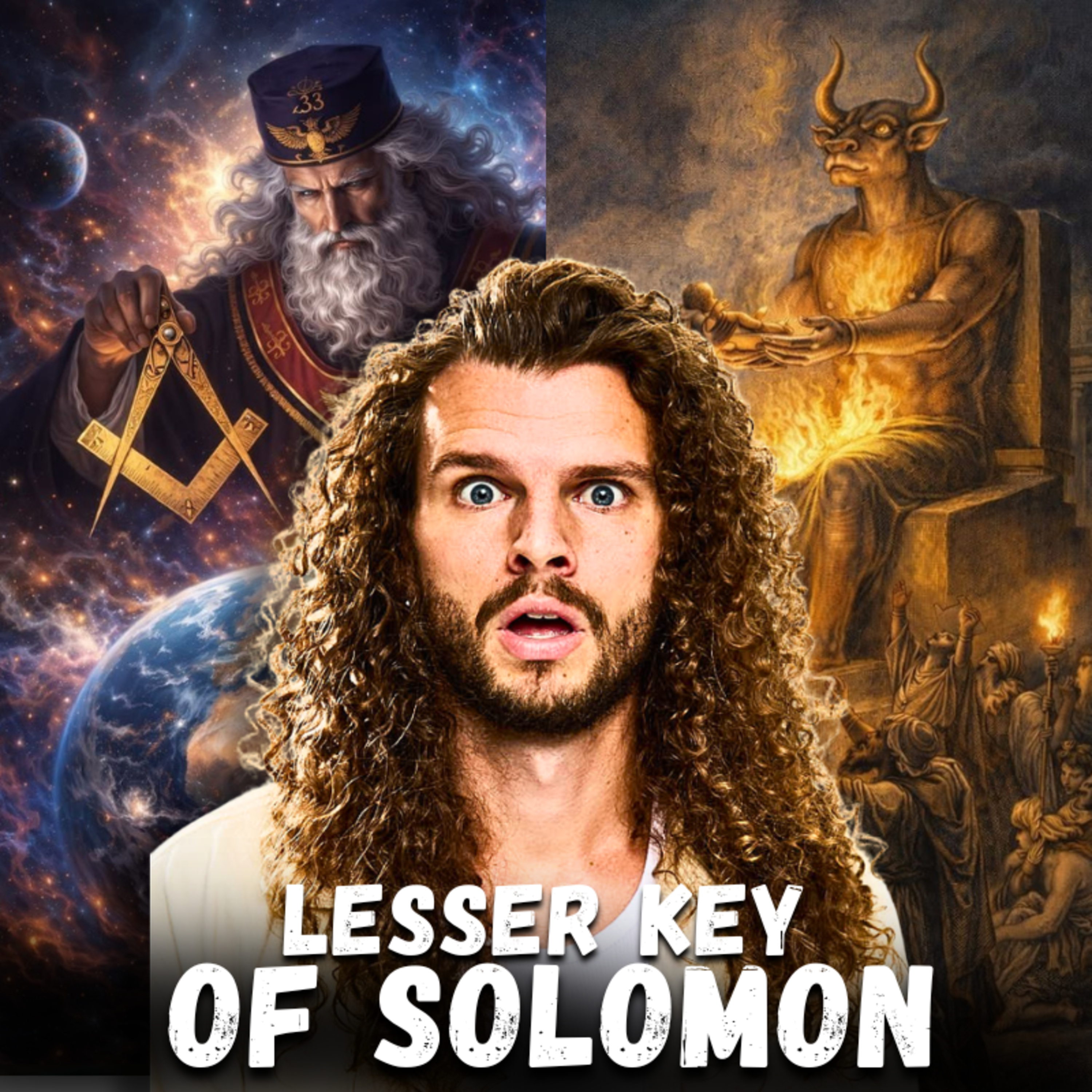
Ready to soundtrack your summer with Red Bull Summer All Day Play. You choose a playlist that fits your summer vibe the best. Are you a festival fanatic, a deep end dj, a road dog, or a trail mixer? Just add a song to your chosen playlist and put your summer on track. Red Bull Summer All Day Play. Red Bull gives you wings. Visit red bull.com brightsummerahead to learn more. See you this summer. You can't reason with the sun. Trust us, we've tried. This summer, it's time to put that angry ball of fire on mute. Columbia's Omnishade technology is engineered to protect you from the sun's harsh rays that can burn and damage your skin. The sun is relentless, but so is our gear. Level up your summer@columbia.com to spend more time outside and less time slathering on aloe lotion. You're welcome Columbia Engineered for Whatever the holiest temple in the Bible might have been built by demons One of the most famous kings in scripture, known for his wisdom, his wealth, and his 1,000 wives, might have been history's greatest demon summoner. His name was Solomon. In the Bible, he's the king who asks God for wisdom instead of riches, who settles a custody battle by threatening to cut a baby in half, who oversees the building of the first temple. But there are other stories, Jewish, Christian and Islamic stories, that tell of the same king wearing a ring that lets him command an army army of 72 spirits, seal them into a brass vessel and then use them to build the temple of God itself. These stories were written in one of the most infamous and forbidden magic manuals ever printed. It's known as the Lesser Key of Solomon and it comes from a Renaissance era occult philosophy. And today we're going to trace how a biblical king became the godfather of Western occultism and why his name is tied to Freemasons and demons and the building of the third temple. And how that obsession has carried over into our hunger for knowledge and power over the unseen. So sit back, relax, and welcome to Religion Camp. What's up people? And welcome back to Religion Camp. My name is Mark Gagnon and thank you for joining me in my tent where every single Sunday we explore the most interesting, fascinating and controversial stories from every religion from around the world. From all time forever. And yes, today we have a fantastic episode. I'm so glad you guys have joined us and truly I want to say thank you so much to you for clicking on this video. Every time you support a video, every time you comment or like or subscribe you help the channel grow, you keep the lights on in the tent, and of course, you keep the fire burning here at the campsite. As a side note, most of the people that watch this channel are not subscribed, which is sometimes a good thing. You know, we got 50,000 subscribers. It's pretty good. But then we'll get a hundred thousand views, and I'm like, where are all these people coming from? So if you're one of those people, go ahead and subscribe. It really helps us grow the show, and it helps, you know, pay for maybe the most expensive producer in the entire world. I mean, this guy Christos over here, I mean, he is. He's living a life of luxury while I'm over here just, you know, slaving away, right? I need some demons where I can have them produce the pod, but instead I have this demon right in front of me. CROs, how are you doing? Great, Mark, how are you doing? I'm not going to cut you off today because I saw a comment that said, how dare you be so rude to one of your co workers. I'm never listening to this episode ever again. And that person unsubscribed, and they said, you're being too mean to Christos. In their defense, they were right. They were completely right. Right? Oh, my goodness. I tried being nice to you for a whole five minutes and it pissed me off. Anyway, guys, we have a fantastic episode. I'm so excited for you guys to dive into this with me. This is a. I mean, this is kind of a behemoth, I should say, because Solomon is, of course, a very important figure in the Old Testament, in the Tanakht, in Jewish literature and Jewish religion, as well as in Islam, Suleiman, and as well as Christian philosophy. I mean, you know, I met a couple Sauls in my day that were some Protestant Christians. They're good guys. A lot of Solomons. And today we're going to be discussing specifically the Renaissance era idea of Solomon being the master of demons and how this has parlayed into Freemasonry and the thirst for power and even current geopolitical battles of trying to rebuild the Third Temple in Israel. There's all sorts of stuff in here. And up top, I just want to say a few things. One, I grew up Christian. I grew up Catholic. So that's kind of my worldview and my. My perspective on the world. And if there's anything in here that I miss about, you know, Islamic belief or Jewish belief, just know that's not my intention. And I Apologize up top if I miss anything or skip over anything, drop a comment. I'm only interested in the truth, so let me know and I would gladly correct the record. Furthermore, I also want to acknowledge that this is not something that's widely held in Jewish philosophy. Most of your Jewish friends, a guy that owns a deli down the street, he might have never even heard of this. But this is something that's found in later texts, namely the Talmud and a lot of Jew folklore that talks about this lesser key, this ring that Solomon possessed. But before we get into any of that stuff, who is this guy? Well, you probably know he's one of the most famous biblical kings. He's literally the son of David, like the David, you know, David and Goliath, the sculpture Michelangelo, you know what I'm talking about. And when David dies in the 10th century BC, Solomon takes the throne and he rules Israel. And this is what's referred to as the golden age in, you know, ancient Israeli history. The Bible portrays Solomon as exceptionally wise. He's known as the wise king. Actually, in First Kings, chapter three in the Bible, the Lord appears to Solomon in a dream, and he offers him anything he wants. I mean, it's pretty like on some genie vibes, he's like, what? What is. What is it you want? It's yours. And he literally just sits there and he thinks about it. And, you know, most people would have asked for wealth. You know, that's kind of obvious. Or power, or maybe a long life. Solomon asked for wisdom, very shrewd, in order to govern his people justly. And God is so impressed by this, that this humility in this request that God grants Solomon not just wisdom, but also wealth and the honor that he didn't even ask for. Solomon becomes the complete package. The wisest and the richest king of his era. At least this is how the biblical writers will remember him. Then you get to the story that made his reputation. Two young women come before Solomon. Both are claiming to be the mother of the same baby. And, you know, all the people in that time were ethnically pretty similar. So that was out. It would have been really easy if there was just like a black woman or a white woman. And they've been like, well, we can take a guess. But everyone over there was a, you know, probably, you know, Middle Eastern looking. So he was like, all right, how are we going to settle this? So he proposes cutting the child in half and giving each woman a share of the baby. Now, one woman agrees to this horrific solution, is like, yeah, of course. No problem. The other begs Solomon to spare the child and just give it to the other woman. She says, look, I love this child so much, just give it to her. I'd rather he lives than to be cut in half. And Solomon identifies that woman as the true mother. Now, it's kind of a crazy story in the modern day, but it captures what the Bible wants you to see. That wisdom is the ability to see through appearances and to have clever solutions for some of the most difficult problems that are ever brought before the king. Then we have Solomon's biggest project. This is the one that ultimately defines his legacy and really cements him in Jewish and Christian literature, is that he constructs the first temple in Jerusalem. This was meant to be a permanent dwelling place for God and ultimately God's presence on earth. And it is the holiest site in Judaism. It is designed to house the Ark of the Covenant itself. So biblical writers are now describing a project on like an unimaginable scale. Tens of thousands of workers just coming in and out of these quarries and these building sites. And whole forests of cedar are cut down in Lebanon and they're floated down on rafts and there's gold being hammered into these thin layers to be put on doors and furnishings. On every surface. It's all glowing. It's the most beautiful thing you can imagine. The interior is carved with cherubim, palm trees and flowers. A man made like Garden of Eden on this hilltop. It's like it must have been a sight is what the least you could say, right? Later, Jewish and Christian imagination sometimes describes the temple stones as so perfectly cut and fitted that they seemed superhuman in their craftsmanship. But in the biblical account itself, this is a massive yet entirely human undertaking. It's absolutely remarkable and miraculous maybe. Now, according to the Bible, the text credits Solomon's organization and resources and political reach. And no supernatural assistance so far. So where's this whole demon thing come from? Well, the unofficial version starts at a very strange place. It's a text called the Testament of Solomon. And it's not a part of the biblical canon. It's what scholars call pseudepigraphal, meaning it borrows Solomon's name, but was written many centuries later, probably by a Greek speaking Jewish or Christian world steeped in this magical, mystical tradition. And in this specific testament, the temple gets built with a cast of demons. Now, the story begins with a demon named Ornaeus tormenting one of Solomon's favorite workers, this young boy helping with temple construction. And every day the demon would come at dusk when the day's wages were paid out and would take half the boy's money, and then he would take half the boy's food, and then through his thumb, he would drain something that the text itself calls the boy's life essence, and it leaves him weaker and thinner each night. Now, in the text, which, again, is not biblical, it's not seen as a metaphor, that's how the text describes it, the demon is literally feeding off of the child's pay and the food to sustain him and his nourishment and ultimately his life force. Now, Solomon notices that his most favorite worker is wasting away and demands to know what's wrong with him. So then, when the boy finally tells him about these visits from this demon, Solomon is devastated and angry, and he goes into the temple and he prays intensely to God for help. And the archangel Michael appears with a gift. And this is a ring engraved with a special seal. And later traditions would call this the seal of Solomon. And using this ring, Solomon has the boy throw it at Ornaeus, this demon, stamping the demon with the seal and forcing him into submission. But Solomon doesn't just banish the creature, he's very clever. Again, he is the wisest king. He interrogates Ornaeus, demanding the names and the weaknesses of all the other spirits. And one by one, he uses this information and his divinely given ring to bind more demons and basically to put a seal on them, to stamp them, and he puts them to work. So instead of relying on human labor alone, Solomon is portrayed as commanding this invisible workforce of spirits, basically to cut stones and haul materials and to construct God's house. And the theological irony here is pretty funny, right? You have these unclean spirits, these entities opposed to God, that are forced to build the holiest place on earth for God to dwell. And the text seems to, like, enjoy the contradiction, almost leans into it. Now, what's interesting is that each demon in the text has this specific function, this appearance, a characteristic way of attacking humans, and a specific angel or divine name that can defeat it. Now, Ornaeus, for example, is said to be thwarted when Solomon invokes an archangel, sometimes called Oriel or Uriel. In different traditions, another demon might be bound by calling on a different angel or reciting a different prayer or formula. And the message here is that this is a catalog almost. Again, this would be known as kind of like a grimoire, which we'll talk about in a second. It's a supernatural chess game. Every dark power has a corresponding holy power. And by the end of the Testament, Solomon isn't just a wise king. He's the guy that is the king and the wisest dude and the richest with a ring and a directory of demons and a spirit crew doing the actual hard labor to build the house of God. Now, you can chalk this up to late weird folklore, which is completely reasonable. You know, there's a lot of different grimoires or, you know, non canonical texts, both in Jewish, you know, mysticism or Jewish folklore and Christian and Islamic. But another major religion also remembers Solomon as a man who commanded what humans cannot see. What's up, guys? We're going to take a break real quick because I got to tell you something kind of embarrassing. All right? I've been working out pretty consistently for a while. I love working out. I think it's super important part of my daily routine. And I don't really eat garbage, and I'm doing all the stuff you're supposed to do, and I got in pretty good shape. But at some point, I noticed the results kind of just stopped, like, matching my effort, kind of around the time that I had a kid. You know, I'd put in like, the same amount of work, but, like, I wasn't getting the same results at the gym. I would get, like a little bit more belly fat. My energy was kind of inconsistent. Recovery was taking a little bit longer. And I assumed, like, I was just getting older, which makes sense, right? You know, guys, when they hit their 30s, testosterone, not like, naturally goes down. And you know, when that happens, your body literally starts storing more fat and you start losing muscle faster. But here's the thing that messed me up. The more body fat you carry, the more your body actually converts testosterone into estrogen, which makes it even easier to gain this fat. And it's a cycle that keeps on going around. And so I started taking Mars men. And honestly, I've been on it for a while, and I've actually noticed a difference. This is going to sound crazy. This is real. 20, 24. I did blood work. My testosterone was like, fine. It was like on the lower side of normal. And I did blood work recently, completely unrelated to this. And I've been taking Mars men for, I don't know, maybe like four or five months. My testosterone went up. Now, I don't know if it's from Mars. I'm not going to say it's only them. You know, maybe I've been eating a little cleaner, I've been sleeping better, who knows? But my testosterone actually got an increase. I mean, I couldn't believe it, my energy feels steadier throughout the day, my workouts have been better. And going into summer I'm actually like leaning out in a way that I feel better about now. Mars Men is a natural supplement. I don't even have it in the studio because it's at my house. There's no synthetic hormones, no sketchy stimulants, just actual ingredients like Tonga Ali shilajit, zinc boron, and they're designed to actually support healthy testosterone levels. Now look, you can just go buy all of these supplements yourself. You can go buy Tonga Dali shilajit, but you gotta make sure they're from the right place. You gotta make sure they're the right quality. And it can get expensive to actually like parse it all together. But with Mars Men, it's just all of it in one already done for you. It's made in the USA, it's third party tested in every batch, and over 91% of users actually report higher energy. Now here's the crazy thing with Mars men. There's a 90 day money back guarantee. 90 days, three months of trying it out. And if it's not for you, you get your money back. Zero risk. And for a limited time, the people are listening to this program, you're going to get 50% off for life. I don't know how often this offer comes around. I don't know why they're doing this. 50% off for life, free shipping and three free gifts@ Mengotomars.com that's men. Go to Mars.com for 50% off and three free gifts when you check out. It's also available on Amazon. It really worked for me. I like it. I still take it cuz, you know, I like natural supplements and it makes me feel good. Now when they ask where you heard about it, tell them the good people at Camp Gagnon sent you. It really helps the show more than you know. Now let's get back to it. Now across the desert, centuries later, another tradition would add another layer to this. So in the Quran, in Islamic tradition, Solomon, also known as Suleiman in Arabic, is granted extraordinary gifts from Allah. He understands the speech of birds. He can order the wind to basically move like a vehicle. And he's given authority over jinn. Now if you don't know what jinn are, we actually doing a whole episode talking about jinn. But it's a class of unseen beings that are made of this smokeless fire. And some of these jinn are pious, they actually serve a lot. Some are rebellious and they have Families and societies, and they even operate with free will. They're not inherently fallen angels or evil. They're almost like a parallel species that kind of lives besides human beings. Now, again, this is in mainstream Islamic literature. Now, under Suleiman, certain jinn are put to work. They dive into the sea for treasure, they forge metal and they create these monumental structures. Now, from the human side, all you see is a king on a throne and these impossible building projects being finished ahead of schedule. Now, the Quran's most haunting scene comes at the end of Suleiman's life. One day, he's standing, leaning on his staff, overseeing the jinn as they work. At least that's what they think. In reality, he dies on his feet and his body just stays there, motionless, still propped up by the staff. And the jinn keep on building, terrified of his authority and the command that Suleiman has over them. And they're convinced that he's continuing to watch. Only when a tiny creature usually described as like a termite, quietly eats through the wood does the staff eventually snap. Ultimately, the corpse collapses and the truth is then revealed to the jinn that they had been obeying a dead man. Now, the Quranic moral here is very clear. Even Jin, with all of their powers and hidden knowledge, don't actually know everything about the world or about the unseen. Even they can be fooled by appearances, just like humans can. And yet, in both the Quran as well as the Testament, specifically this non canonical text, you end up with the same basic picture that Solomon, as a man in the middle, is basically giving orders to beings that most people only hear about in stories. So now these stories exist in, you know, some non canonical text and some later kind of writings about Solomon as well as Islamic literature. And it only becomes a matter of time before people start to ask if Solomon could do this. Can anyone else learn how to do this? Now you fast forward more than a thousand years from the Testament of Solomon, and we arrive at a text that tries to answer this question. This is known as the Lesser Key of Solomon, or also known as the Lemajaton. Now, this is a grimoire. This is a textbook of ritual magic that's compiled in the mid 17th century. Though it leans heavily on much older medieval and renaissance sources. Nobody knows who actually assembled this. Like most grimoires, it claims ancient authority while clearly being kind of a amalgamation of earlier magical texts, kind of put together by anonymous editors. Oftentimes, editors of these books would be persecuted by whatever divine authority they were around, typically the church. So they would typically Write it without a name. Now, the Lama Jatin, or the Lesser Key of Solomon, is usually divided into five parts, each dealing with a different slice of spiritual magic. First is the Ars Goetia. This is the most famous section by far, and it contains detailed descriptions of these 72 spirits that Solomon allegedly bound. And this is what most people mean when they talk about the Lesser Key of Solomon. But there's still four more sections. Secondly, you have the Ars Thirgia Goetia. Now, this deals with spirits of the cardinal directions and of the air, entities often treated as more impending, ambivalent, or kind of morally neutral rather than being explicitly evil. And then you have third, the Ars Paulina. And this is focused on angels associated with the hours of the day and the signs of the zodiac. And then you have fourth, this is the Ars Almadel. This is instructions for constructing a wax tablet or an almadel, which is basically to contact beneficial angels. And then fifth, you have the R's Notoria. This is a collection of prayers and invocations for gaining knowledge and memory. Now, different manuscripts in printed editions don't always handle these five parts in exactly the same way. Some versions emphasize one section more than the other ones, or they insert some additional materials or footnotes, which is a good reminder that the Lesser Key of Solomon isn't just a single fixed book. Right? It's as much as a family of related grimoires that later got grouped together under Solomon's name. But let's zero in specifically on this first one, Ars Goetia, because this is where we find these famous 72 spirits and understand their character. And here's the crucial thing for the people copying and using the material, this isn't mythology in the way that we talk about mythology. Now, these are step by step directions for summoning something that they believe was real and dangerous and capable of doing things in our actual reality. Now, the Goetia reads like a demonic encyclopedia with an operation manual. And basically, each of the 72 spirits gets an entry describing their rank. They can either be duke or king or prince, or an earl or a president, all the way down. And it has their appearances and their abilities and the seal or the sigil used to summon them. And you get very vivid portraits of the whole roster of demons, some of which are like paymon. This is a great king appearing as a man on a camel, or a dromedary announced by trumpets and symbols, said to teach all arts and sciences and reveal hidden things and actually bend people's will. And then you have Buer a President, basically, who manifests as a strange wheel or star of animal limbs, associated with philosophy and logic and medicine and healing of the mind. And then you have Dantalian. This is a duke with many faces. It's male and female, and holds a book who can basically read and influence thoughts and stir up, you know, love and other emotions. And the demons are organized into a hierarchy that mirrors medieval European ideas of nobility and office. You have kings up here and then knights at the bottom, and then you have dukes and earls and presidents all in between. But the really strange part of this entire section of the text is the procedural detail. The Goetia reads like a recipe. Like, it's not, like, vague and like, oh, if you know the wind blows, maybe you'll know. It's like, no, draw this, say this, and then wait for this. For the record, I haven't tried it. I'm freaked. I'm not touching a grimoire. I mean, are you going to do a demonic invocation to do something? If I get paid enough to do it. Okay. It's always about money with you, Christos. It's just. It's like. It's crazy. But some people do it, I guess. Like, it's written for someone who actually wants to try it out. So the question is, why does this recipe book lock onto the number 72? Like, why not like five demons or a thousand? Like, why that number? Well, the number 72 isn't random. Oftentimes in Jewish mysticism, it's associated with a set of hidden names of God. And this is very important. Later occultists look at that number and they essentially build a shadow version of it. Where some traditions imagine 72 names of God. Later, Grimoires talk about 72 demons. Again, it is this kind of dark inversion. Instead of a full map of holy forces, you get a full roster of hostile evil ones. So when the Ars Goetia lays out exactly 72 spirits under Solomon's command, it's not just saying, like, here are some demons. Check it out. It's suggesting that Solomon sits at the center of chronic migraine is 15 or more headache days a month, each lasting four hours or more. Botox. Onobotulinum toxin A prevents headaches in adults with chronic migraine before they start. It's not for those with 14 or fewer headache days a month. It prevents, on average, eight to nine headache days a month, versus six to seven for placebo. Prescription Botox is injected by your doctor. Effects of Botox may spread hours to weeks after injection, causing serious symptoms. Alert your doctor right away as difficulty swallowing, speaking, breathing, eye problems or muscle weakness can be signs of a life threatening condition. Patients with these conditions before injection are at highest risk. Side effects may include allergic reactions, neck and injection site pain, fatigue and headaches. Allergic reactions can include rash, welts, asthma symptoms and dizziness. Don't receive Botox if there's a skin infection. Tell your doctor your medical history, muscle or nerve conditions including als, Lou Gehrig's disease, Myasthenia gravis or Lambert Eaton syndrome and medications including botulinum toxins as these may increase the risk of serious side effects. Why wait? Ask your doctor, visit botoxchronicmigraine.com or call 1-844botox to learn more. This massive supernatural tapestry, like a, like a filing system, a way to see the names and com, like potentially command every different type of spirit that there is. And in that framing, it's not just information, it is a blueprint for control. Which is why in a lot of modern, you know, religious and even like fringe kind of occult conversations, the real question is, you know, it's not like, oh, did Solomon exist? It's like, who has these secrets now? And this is what real occultists and, you know, people in the modern day are really talking about now. The modern imagination. Solomon's name shows up not just in grimoires and you know, in, you know, the Quran and the Bible. It comes up in arguments about Freemasonry and demonic control and even plans to rebuild the third temple in Jerusalem today. Historically modern Freemasonry is, you know, debated really when it starts, but typically it's attributed to like the 17th, 18th century as a, you know, they would describe it like a moral philosophy and you know, a place for men to gather and fraternize. And it uses the building of Solomon's temple as a central allegory. Masonic rituals tracing all the way back to medieval stonemason guilds symbolically placing members at the construction site of the first temple. And they stand alongside Solomon and King Hiram of Tyre and the legendary master builder known as Hiram Abiff. And the temple becomes a metaphor for building this inner temple of virtue in the soul. Not a literal blueprint for physical building projects. At least that's how they would describe it. And oftentimes when people think like, oh, masons, like Freemasons, like what these, oftentimes people understand this to meaning they're talking about masons that actually built the temple. Right? Like once you hear, you're like, oh, that actually makes some sense. If you visit Grand Masonic Headquarters like the Masonic Temple in Philly or other historic lodges, you'll find rooms designed to mimic or evoke King Solomon's Temple, with pillars labeled Yakin and Boaz, checkerboard floors and starry ceilings meant to represent the heavens. Masonic writers repeatedly stress that these are symbolic. They say it's a part of the drama about moral growth and craftsmanship and all that stuff. Not instructions for rebuilding a temple or controlling demons or any of that stuff. At least that's what they say. Now, outside the lodge, especially in some Christian circles and Islamic circles and a lot of conspiratorial circles, the story often looks very differently. Critics sometimes argue that because Freemasonry uses Solomon's Temple as a model and because it speaks about the Great Architect of the Universe, it must be a part of a hidden project to resurrect Solomon's Temple physically, a third Temple as a part of this apocalyptic end times plan. Now, again, this is not my philosophy. This is what people have discussed specifically in these kinds of circles. And in this telling Masonic reverence for the Temple and the use of sort of Solomon symbols, they get interpreted as evidence that Freemasons are working behind the scenes to, you know, control politics and finance and global religion, all under this Solomon inspired blueprint. And then you add the grimoires to the mix. I mean, the picture gets crazier in conspiracy literature. You know, like the Lesser Key of Solomon deals with summoning and commanding demons. And some writers just kind of push the two streams together and they claim that Freemasons are using Solomonic magic and their Great Architect is actually demonic power. Now, specifically, we talked about those pillars that are found in basically every Masonic lodge ever. They have these two pillars, Yachin and Boaz, and they literally come straight from the Bible or the Tanakh, specifically from First Kings chapter 7, where it says that there are two giant bronze pillars at the entrance of the temple. And Yachin means he will establish, Boaz means in him is strength. And they're not structural supports. They're just meant to symbolize the threshold of the sacred space. And Freemasons really jumped onto it. It says here that Freemasons basically use this symbolic system of craft like stonemasonry and moral lessons and this mythic idea of Solomon's Temple that when you walk in, you're entering wisdom and there's a duality where you have strength versus stability, action versus restraint, and that you don't become better by picking a side. You have to use both. And you have to, you know, understand the balance of the universe. And another important element here is the moral architecture. Masons think that, you know, life is like building a building or building a structure. You have Boaz, that is the power to act, and then you have Yachin, the ability to create something that lasts. And ideally, you need to use both. Now, if you go to ex Masonic forums or anti Freemasonry blogs, you're going to find accusations that the Lodge is actually a cover for Solomonic enlightenment and that its symbols hide packs with fallen angels, or that its rituals echo the demon binding of the Goetia. Freemasons and scholars, for their part, push back and they point out that the craft's rituals are just, you know, biblical, moral and symbolic, and that the grimoires, like the Lesser Key, come from separate occult traditions. And it has nothing to do with Freemasonry. But then there's still the concept of the Third Temple. Now, in some apocalyptic Christian and Jewish circles, rebuilding a Third Temple in Jerusalem is framed as a prophetic countdown clock. This is a trigger for the end times, the return of the Messiah or the rise of the Antichrist. And because that temple is imagined as a restoration of Solomon's original building, the actual place to house the presence of God, obviously Solomonic imagery gets pulled directly into these debates. So from a journalistic perspective, it's important to say two things on this section. Yes, Solomon and his temple play a huge part in Freemason symbolism and in some apocalyptic religious movements. And yes, some critics really do connect that to end time plots and demonic control, but those things are very big and cinematic and oftentimes are attributed to conspiracy, and they're largely theories. No one really knows. This is not necessarily my personal belief. This is just something that I think is interesting when looking at this entire topic. What's up, guys? We're gonna take a break because I want to talk to you about something that happens in your late 20s, early 30s, that no one tells you that basically your ability to handle a night out drinking with the boys completely changes, bro. When I was 22, I could go out on, like, a Thursday, sleep three hours, wake up, go to work, then go to the gym, feel completely normal, and then do it again the same day. Like, I felt invincible. And now I have, like, two glasses of wine, and the next morning I wake up and I'm like, what did I do? And the craziest part is I can actually, like, see it now. Like, I literally will wear, like, a whoop. And I can see my sleep score that night and be like, oh, I had two beers so now I'm have like a 5% recovery. My body's trying to recover from alcohol in a bunch of different ways. Not just dehydration. I mean, it affects, you know, brain chemistry and your liver has to process everything you drink. And that is why I started using Cheers Restore. Now, Cheers Restore is unbelievable. I'm not even the biggest drinker, and this absolutely has saved me on multiple occasions. All right, this is an after alcohol aid that's designed specifically to support your liver and your brain after drinking. So the key ingredient is something called dhm, which researchers started studying for how it interacts with alcohol in the body. Cheers was actually invented by a student at Princeton, and now it's everywhere. I mean, it's been on Shark Tank, 50 million doses, 30, 000 stores. It also has thousands of five star reviews on Amazon and has been backed by doctors and PhDs and clinicians and all this stuff. And the idea is very simple. You're a normal adult, you're having a couple drinks, all right? Cheers help support your body so that you feel way better the next morning. And all you do is you take three capsules after your last drink or before bed. And obviously, this isn't for, like the insane, you know, college nights. All right, if you have like 12 tequila shots, I don't know what to tell you. But if you're a responsible adult, having a couple drinks at a wedding, it's going to make a huge difference. And honestly, for me, the biggest thing is that, you know, I just wake up feeling like a functional person that's still able to get stuff done. I'm able to recover better, and I'm still able to have fun with the boys at night. So same night out, but a way better morning. And that is with Cheers. So for a limited time, our listeners are getting 20% off their entire order when they go to cheershealth.com and they use the code camp. So you just go to Cheers Health, use the code camp, and you're going to get 20% off. And after your purchase, they're going to ask where you heard about Cheers. Please tell them it was from the good people over at camp. Gagged on it really helps us. It keeps the fire burning. It keeps the lights on. Thank you guys so much. Cheers has been amazing. I can't handle the uneasiness of the next day. And Cheers makes it all possible. Now let's get back to the show. Now, if you want something that's actually documented, not just alleged, you have to look at who was actually copying These Solomonic texts, line by line in the centuries before, you know, forums or Reddit ever existed. Who are these people? Well, here's the part that people don't expect that for a long stretch of history, it wasn't like, witches or, like, weird outcasts that are, like, going through these, you know, demon cookbooks. It was priests or nobles or scholars. So throughout medieval and Renaissance periods, manuscripts like the Key of Solomon and the related texts circled in Latin amongst the educated class, copies showed up with careful, you know, notes in the margin and ownership marks from clerics and corrections that only trained readers would ever bother making. These are people that understood biblical literature that were, you know, making their own little annotations. And for the people using them, they weren't like horror props or like, weird things to freak out guests. They were, in their opinion, real experimental tools for gaining knowledge and protection and healing or just getting an edge in this world. And the logic is pretty clear. If Solomon, a king clearly favored by God, could command spirits without losing his status as God's wisest king, then perhaps others could also follow this blueprint, right? It makes sense. I mean, if you wrapped, you know, your rituals in, you know, like, psalms and invoked like, the Trinity and called on angels to control the demons, maybe you could be like, oh, this is just like advanced piety, and this isn't like black magic or anything like that. But the line between miracle and magic gets blurry in this type of practice. So officially, the Catholic Church condemns these rituals. Councils and bishops would issue bands and they would destroy these books. And, you know, even Protestant preachers would call these, like, superstitious tools. And some grimoires were even just destroyed altogether. But on the ground, the demand never really went away. It just kind of got hidden. Confession manuals from the period include questions about summoning spirits because confessors knew people were doing it. The same institution that produced saintly miracle stories also had members quietly trying these demonic experiments, like, in their free time. So by the 19th century, when occult revival movements like the Hermetic Order of the golden dawn were rediscovered and reworked this Solomonic kind of demon material, they were building on a very long history of practice. For them, the Lesser Key of Solomon wasn't just a curiosity. It once again was a lab manual for the soul and for bending reality, one that plenty of people took very seriously and were willing to test it on themselves. And once you realize how many different groups have actually tried to use this, you know, you have monks to magicians to, like, modern conspiracy people, you kind of have to ask, like, what's going on with Solomon in this book? Like, why? Like, why are people still so fascinated by this? Now, Solomon wasn't chosen by accident, right? He's the perfect candidate for this type of mythology. First, he's got legendary wisdom. The Bible presents him as truly, like, the wisest king. So if he's using it, then perhaps he knows something that we don't know. And in that light, mastering spirits becomes more of an extension of God's insight into how the world works. And then, of course, you have the temple. You know, the first temple in Jerusalem that was so magnificent by every account, from the Bible to the Torah. And then you have people struggling to imagine that ordinary labor could build something so enormous, so perfect. And the decorations and the gold, I mean, it's. It was difficult, I guess, for readers to look back and think, like, could humans really do this? And the ring really pulls it all together, right? This magical lesser key, the. The seal, the signet, that basically is a concrete device that explains how a human king could command demons or jinn to kind of build this massive construction. It's depicted as a hexagram or a pentagram. And it becomes one of the most recognizable emblems of. In all of magical tradition, Stamped into talismans and diagrams and eventually onto the visual language of Western esotericism as a whole. And underneath all of this is Solomon's personal complexity. You know, the Bible doesn't paint Solomon as spotless. It shows him as drifting into idolatry, compromising, and finally falling under judgment from God. A flawless saint commanding demons would feel a little strange. But a brilliant yet compromised king, touched by both wisdom but also temptation, feels more believable. I guess. From there, everything else, the grimoires, the Masonic symbolism, the conspiracies, it grows out of this single powerful idea that Solomon was the person who stood right on the line between heaven and earth, between our tangible reality that we're interacting with all day and the spiritual reality, the unseen, that many people believe is right there, right next to us. And he ultimately tried to rule them both. So for thousands of years, people have only told one of these two stories about Solomon, right? Either he was the wisest king who ever lived, the man who asked for understanding instead of riches. He built the temple so radiant, and it became the center of the world's, like, holiest stories ever. And that's the version that I was told. Or you have the other side, and this is the side that goes around in occult circles, that this was a king who learned how to Command what should have never been commanded. The man with a ring on his finger, a list of spirits in his hands, and this invisible force that could build the most majestic buildings that the ancient world had ever seen. Those two versions don't really sit comfortably together because if the second story is true, then many people have pointed out, you know, you have demons or jinn building this house of God. It feels like those two things are in contradiction perhaps. And if that's the case, then the line between divine wisdom and forbidden knowledge might be thinner than people really feel comfortable with. And going back to Solomon, in scripture and magic manuals and freemasonic rituals and conspiracy videos, the stories and the myths around him force us to kind of try to balance them out. If Solomon is the wisest king in the Bible, blessed by God, if he was able to be tempted and fall into the temptation that ultimately got him judgment from God, where exactly is the line he's the wisest king of all, but yet falls into temptation. He's chosen by God, but also according to these much later writings and these grimoires and these non canonical texts is commanding demons. What does that really make us feel about one of the fathers and the oldest people in all of the Abrahamic religions? And that, ladies and gentlemen, is a brief occult deep dive onto King Solomon, specifically the idea that he was a, a wise king that was able to control the power of demons. Now a couple things with this. First of all, I don't want to make, I said this before, I don't want to make it seem like this is a mainstream philosophy. This typically comes from like occulting remoir circles where people are trying to understand how these, this majestic building was built and was it done with humans. And it kind of squares a lot of things together. And for the most part mainstream Christianity and you know, mainstream Judaism as far as I'm concerned, doesn't necessarily accept this as, you know, broadly speaking, like canon. It's not necessarily seen as like fundamental dogma. Now of course in Islamic literature in, in the Quran, there is an understanding that there is jinn that are being used. But again, the jinn don't have the same connotation, they don't have the same evil force. They're just spirits. So I think sometimes people try to do a few things. They try to conflate a bunch of stuff like oh, the temple is evil. I don't think that's what we're talking about here. I think, I mean my biggest takeaway in this is that it's fascinating that people are so obsessed. Maybe it's not fascinating, it's maybe predictable, but it is evident that people are obsessed with trying to tap in with unknown knowledge, wisdom that is secret. You know, so much of Western esotericism coming from, you know, theosophy is this idea of, like, these secret teachers that exist in the world that can share information that only they have. And it's ancient information that's passed down from God to these chosen few. And if you're lucky enough to learn from a great master, then maybe you can possess the power yourself. It's something that I think we see in the modern day kind of in a different way. Oftentimes we lean on gurus, whether it's a business guru you follow on Instagram or, you know, like a. A spiritual master that's like a monk or like a spiritual kind of guy, or even using, like, ayahuasca or other types of hallucinogenic drugs to try to uncover a deeper understanding of the universe. I think in many ways, these grimoires are attempting to do that. Now, certainly people have invoked these spirits since and probably into the modern day. I'm sure people are doing it somewhere in the world as we're doing this episode. It's no doubt to me that if you're telling people, hey, there's an ancient occult magic, a wisdom, a way that you can achieve power and have these spirits under your control, that people would try to do it. I mean, Aleister Crowley infamously was trying to invoke spirits. I mean, you have so many different spiritual, you know, occult masters, you could say, that were obsessed with these types of grimoires. And the fact that people actually put these ideas into books that then other people can test, and the fact that these tests are still ongoing, to me, it just makes me wonder, like, is there something to it? Are these people, like, seeing results? I mean, obviously there's many conspiracies where people suggest that musicians or athletes or world leaders are using this type of this occult wisdom or this occult knowledge and going through these grimoires and these invocation rituals to try to gain power through demonic forces. Maybe I haven't seen it, but it is interesting that there's such a historical precedent going all the way back to, literally, King Solomon. But I don't know. I mean, Chris, is there anything you took away from this? I just think the link between religious figures and then some kind of offshoot with the magic stuff, it's kind of interesting. Yeah, I mean, it's fascinating. Specifically with the Freemason connect, like the fact that the Freemasons, like, really modeled so much of their philosophy off of Solomon's temple, like, it just shows, again, like, these people were like, very like, adept at understanding, like, ancient literature, specifically, like biblical theological texts. And there's no doubt, obviously, that many of the framers and the founding fathers of America were steeped in Freemasonry. Now, were they performing these rituals? Were they trying to tap in with this demonic occult knowledge? Maybe, maybe it was just a good old boys hangout in a frat where guys got together and shared ideas and got rich together and that's all it was. I don't know. I'm not a Mason. I'm Catholic. I'm not allowed to be. The Catholic Church is a strict rule, no masonry allowed. So unfortunately I'm. I'm excluded. But maybe there's some Masons that are watching this right now. Tell me, what do you think? Do you feel like it's all symbolic and it just represents, you know, a good moral standing and trying to understand the true reality of God and being a better person and building your life like a temple? Or do you feel like perhaps there's some type of other, darker, more occult force at play and that perhaps there's actually rituals to possess an untold power? I don't know. What do you guys think? I would love to know your comments. If you've experienced this, if you've ever read these grimoires, if you are versed in this specific text, the Testament of Solomon or the Lesser Key of Solomon, I would love to know your thoughts. If you grew up in a Muslim tradition, specifically, how is this taught to you when you're going to, you know, school to study the Quran or you have an imam that's telling you about these stories? How do you understand Solomon or Suleiman's use of gin? And if you're Christian or Jewish, is this something that you didn't really know about? I would love to know if this is something that's discussed in your circles. For me, growing up Catholic, like, wasn't really brought up directly. I only knew about this stuff growing up because my mom would tell me about Freemasonry. But that's about the extent of it. So I'd love to know what you guys think. I'm always open to further discourse and if I got anything wrong, please don't hesitate to correct me in the comments. I read all of them. YouTube, Spotify, wherever you're listening to this. And I also just want to say thank you again for supporting the show. If you really like the history stuff, we dove into some interesting historical realm here. Check out History Camp. That's where I deep dive on everything that's ever happened. And then, of course, we have Camp Gagnon. That's the main channel, where I deep dive on things that are happening right now. Going through crazy conspiracy stuff, talking to interesting people that know way more than I know, that are actual experts in their field. And if you just like to rock with, you know, the divine, the cosmic, the mystical, well, you're always welcome here at Religion Camp, we do these episodes every Sunday. Make sure you subscribe. And as well, we have the Patreon. That is the campfire. That's the inner sanctum. That is the place where we gather to share ideas, discuss. We do zooms every single month. We drop extra episodes every single month. And you get ad free episodes, merch discounts, all that good stuff when you go to patreon.com campgagnon and you also, you know, make it possible to make this show even better. God bless you all. Thank you so much. And I will see you next Sunday. Peace be with you.