Loading summary
Transcript1 lines
- [00:00]
A
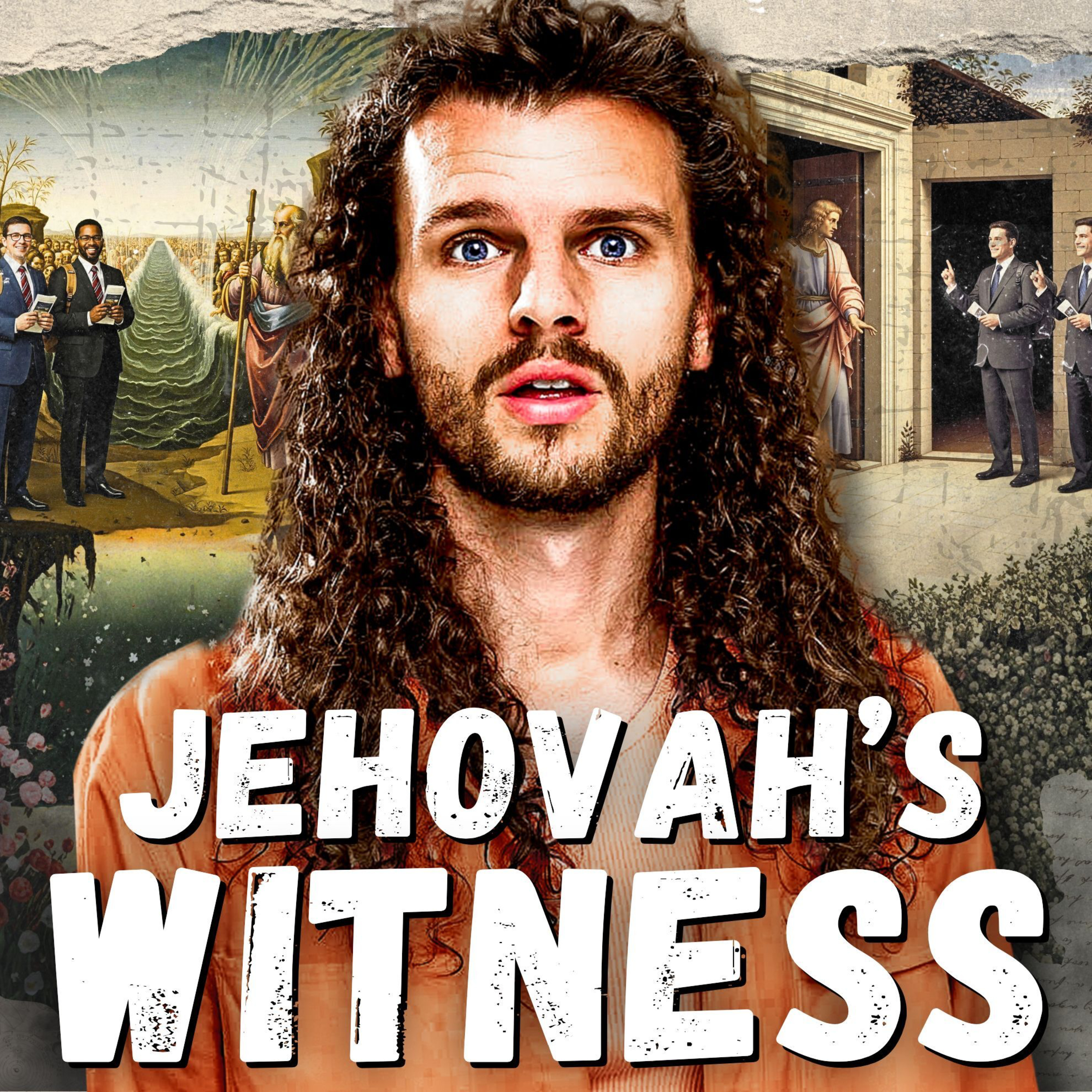
You get a knock at the door. You open it and see two people dressed incredibly well, two by two, knocking on a Saturday morning. They are Jehovah's Witnesses. And you might think they're just like a weird super religious group. You might think they're Mormons or something. You might even think that they are a cult. But here's the thing. Their world is way more complex than most people realize. They have their own Bible translation, their own end times and Armageddon predictions, and some practices that have legit pitted families against each other and their sanctuaries, and even in courts of law. And today, we're going all the way in. We are diving deep into how the Jehovah's Witnesses started, what they actually believe, and how they are different from Mormons or Christians, and what it's really like living within the Jehovah's Witness community. So if you are interested in learning more about this religious subset, this is the episode for you. So sit back, relax, and welcome to Religion Camp. This holiday. Discover meaningful gifts for everyone on your list at K. Not sure where to start. Our jewelry experts are here to help you find or create the perfect gift in store or online. Book your appointment today and unwrap love this season only at Kay. What's up, people? And welcome back to Religion Camp. My name is Mark Gagnon, and thank you for joining me in my tent, where every single week, we explore the most interesting, fascinating, controversial stories from every religion from around the world, from all time. Yeah, that's right. This is my attempt to understand what's really going on with all the religions of the world. As I always say, you can't understand a people or a culture without understanding the God that they worship. And yes, this is my attempt to get to the bottom of the big T. Not testosterone, but truth. I'm trying to figure out who's got it right, who's got it wrong, and how are they all kind of connected at the end of the day? Now, I'm not doing this alone. I'm obviously doing it with you, the viewer, the thousands of people at home that tune into this program every single week, who I'm extremely grateful for. Thank you. I'm also joined by my friend Christos. How are you, buddy? Doing well, Mark, thank you. Disgusting. All right, guys, today we're talking about the Jehovah's Witnesses. Also, if you think my response to Christos was rude, it's an inside joke, okay? The people that know, they know anyway. Jehovah's Witnesses. All right? You probably heard the term Jehovah's Witnesses, but that didn't actually come till way later in 1931. Our story doesn't start there. We go all the way back to the 1850s. A guy named Charles T. Russell, and this is in Pittsburgh. Now, if you're listening to this, you probably heard of the Jehovah's Witnesses. You probably had them knock on your door. You probably seen them on the sidewalk handing out flyers. I mean, Cristo. You probably ran into a couple of Jehovah's Witnesses. You used to be one. You used to be Jehovah's Witness. I'm joking. Oh, my God, you almost blew my mind. See, this is why Christos. I need the comments to be flaming this guy non stop for getting me so excited, dude. Oh, I mean, people have probably met him. Like, you see them around, and I would meet them and I'd be like, what do you guys believe? I remember thinking that they were Mormon. That was one of my things. I was like, these Mormons are dressed a little different, but they're not. It's an entirely different thing. Started by this guy, Charles Russell. Now, Russell was raised Presbyterian, which is, you know, just a Protestant Christian denomination. But as a teenager, he had this moment where he looked around at his faith and at everything that he was raised to believe. And he thought to himself, none of this adds up. I don't believe this. Many of you, I'm sure, if you were raised religious in some capacity, have probably experienced this similar kind of moment as a teenager or a young adult. Even if you're still practicing, you probably had a moment. You're like, I just, I have doubts. And Russell wasn't angry at his family or at his church, though. And you know, to be honest, he wasn't even wanting to leave the church. He was just genuinely confused. He was taught that hell is a real thing, that Jesus is God, that Christmas and Easter were sacred holidays. But when Russell was reading the Bible, he didn't see any of that represented in Scripture. Instead of just switching to a different church or changing religions altogether, he decided to dig into the Bible and study it himself. And he was trying to learn what the truth actually was. By the time he was in his 20s, Russell had developed his own interpretation of Scripture. In many ways, his conclusions stayed really consistent with the traditional sort of Presbyterian Protestant theology that he was raised with. But it was in many other ways, some very critical ways, his interpretation strayed quite a bit from what Christians would call orthodoxy, meaning that some of the things that Russell changed in his interpretation of Scripture would actually declassify him from even being considered Christian at all. He developed a different theology of Jesus, the Holy Spirit and the Trinity in general. The crucifixion, the afterlife, end times, holidays, worship, beliefs about the soul, all the things that are pretty essential to Christianity. Russell considered his interpretations to be more accurate representations of Scripture and to be closer to what the original church would have believed or practiced. But we'll get more into the specific differences later. Let me also just reference. I didn't grow up Jehovah's Witness. I did not grow up with this sort of worldview. I didn't really know any Jehovah's Witness growing up. Like, you meet them when they come to your house, but you don't actually. I'm not actually friends with them. So if there's anything in this that I get incorrect, that I miss, that I mispronounce even, please don't hesitate to correct me in the comments. Again, this is my good faith attempt to try to understand a specific religious subset. And I mean, no malevolence anyway. Russell didn't intend to keep this truth to himself, right? He's going through the Bible, he's like, dude, I'm figuring all this stuff out. People need to know this. So he started talking to other people who were having some similar doubts. They'd meet together, talk about what they found in the Bible. And despite what the organized churches were telling them, they continued to question this crew, then grew larger and larger, and then finally adopted the group's original name, the Bible students. And for those who just tuned in to our Joseph Smith episode, remember, just for context, the Church of Jesus Christ of Latter Day Saints was the official organized title in the 1830s and rose to the popularity that we kind of know now by, like the 1840s. So historically speaking, Russell's deconstruction of his traditional church doctrine seems to kind of be maybe in like, the, the, you know, coattail of the Mormonism movement, which, if you remember, also sought to return to what they believed was the true church, true Christianity. So in some ways it's, you know, it. One follows to reason that Russell may have been inspired by this. So, you know, know, he is seeing the efforts that, you know, Smith and his, you know, acolytes are doing. And in that regard, they, you know, they have some similarities, but, you know, their origin stories and a lot of the theology are very different. So in 1876, Russell wrote a book called Three Worlds, which laid out a lot of this new theology, including his iconic views on the Second Coming of christ. Then in 1879, Russell started to publish his scriptural interpretations in a magazine that he created called the Zion's Watchtower and Herald of Christ's Presence. It was basically trying to warn people that they were in the end times, that they were in the last of days and that a new age of Jesus's reign was coming. Soon the magazine caught on, people started to subscribe, more people joined the group and from then on Watchtower supporters started to meet up and studying the Bible together. Led of course by Russell himself. These groups would eventually come to be their first church congregations. By 1879 and 1880 they there were 30 of them. In 1884 Russell had published a six book series titled Studies in the Scripture. And by 1900 he was appointing foreign missionaries and establishing local branch offices. By 1910s roughly there were approximately a hundred full time traveling preachers. And by 1912 he was the most distributed Christian adjacent author in the United States. And the man did not slow down. When Russell passed away in 1916, you might think that the whole thing would just fall apart, right? You have this charismatic, very intelligent teacher, the spiritual guide. Once he's gone, the movement is done. But it didn't. A guy named Joseph Rutherford took over and actually grew the movement even bigger. Rutherford was aggressive with the missionary strategy and really focused on getting the word out. And he was also prioritizing, you know, the organization of the church and the hierarchy of the church and the offices and sort of the admin stuff in, you know, sort of this new structure that was growing extremely rapidly. So under his leadership in 1931, Rutherford made a major move. He rebranded the whole group and gave them a new name that we know today, Jehovah's Witnesses. Out with the Bible students. You know, it wasn't catchy enough in with the Witnesses. And that change in name kind of gives the vibe of like, hey, we're not little kids anymore. We're not doing a studious Bible workshop. We are here and we're going to stand and bear witness to what we believe is the true church. And like I mentioned earlier, the reason Jehovah's Witnesses became their own thing and not just another Christian denomination was because Russell and his followers genuinely believed everyone else had gotten Christianity completely wrong for centuries. These weren't just minor disagreements on a few verses here and there. These were core fundamental differences that changed the baseline of how they interacted and interfaced with God and the Bible. But again, more on that later. These different conclusions turned into convictions. And these convictions are what united the Bible students and ultimately carried them into the development of a more official and organized community. By the mid-1900s, they weren't a small little group anymore. They had their own specially designed community buildings called Kingdom Halls. They had published operations printing their own literature and their own writings, including the magazine that Russell had started back in 1879. They had something that was definitely growing. And today there are about 8 to 9 million Jehovah's Witnesses worldwide. And some estimates aim even higher. I mean, they're committed, intentional, and they don't seem to be going anywhere. And they still believe and practice the majority of what Russell originally taught. So what do they actually believe? All right, fellas, sorry to interrupt this wonderful program, but it is that time of the year. The air is cooler, days are a little shorter, the leaves are falling. And maybe you're feeling a little reflective, maybe thinking about life. So let's reflect on something. How's. How's the old P word treating you? You know, you know what I'm talking about. Talking about the porn word. You've heard me talk about it. Porn messes with your brain, your relationships, maybe even your soul, if you believe in all that. And with no nut. November finally here. There's no better time to just hit pause and see what life would be like without just, you know, gooning all the time. But here's the thing. Quitting anything is pretty difficult. You know, it's quitting something hard. This hard. As hard as this is extremely hard. It is very difficult. And that's where the November project comes in. It's a 30 day global movement to stay porn free for the month of November. 30 days, that's. That's nothing. You got that right. The goal, basically, 1 million people taking it, you know, together to just retain just their precious life fluid all. All up in their body. So once you sign up, you'll get daily texts or emails with quick reflections, some tools, and maybe challenges to even help you with through the month. You'll basically be a part of a movement, something bigger than yourself, right? Thousands of people all working towards the same goal. Focused, you know, focused on freedom, focused on controlling your life. And I'll be honest, me and all the people here in this wonderful studio have already, you know, signed our pledge. Chris says you're off, right? That's right. Starting early, I can tell. I mean, you're glowing. You're just. You have a. You have a vitality to you I've never seen before. So come on through. Not literally, but more don't come. You get what I'm saying? So let's see what we're capable of when we put the phone down and we show up for ourselves and just tap in with the boys. Let's take control just for November. How hard could it be? Let's get back to the show. So let's take a look at some of the core issues that they have with mainstream Christianity and really understand, you know, the beliefs that really define them and what makes them unique from other Christians. Let's start with the name Jehovah's Witnesses. What is Jehovah? You might have heard that word before. It's what the Israelites in the Old Testament called God. They didn't really just call him by the name God, like a lot of Catholics or Protestants do today. God is a very general term, especially during biblical times, when your neighbor might have had a different God than you. When they say God, they could be referring to any old God, you know, the capital G. God of the Israelites had many names, El Roi, El Shaddai, but specifically Jehovah. And that's what the Witnesses went with. It might sound like a small thing to outsiders, but for them, it's really sacred. It's not just worshiping some generic higher power. They were worshiping this God specifically called Jehovah. Like, you think the difference of, like, you know, Zeus versus God, it's like God is sort of this nebulous thing you can't really put your finger on. But Zeus is like, oh, I know who Zeus is. I know who worships Zeus. I know what Zeus stands for. And for them, Jehovah kind of embodied that similar thing. Then they derived this particular conviction from a passage in Isaiah. It says, you are my witnesses, declares Jehovah. Yes, my servant, whom I have chosen so that you may know and believe in me and understand that I am the same one. Before me, no God was formed, and after me, there continued to be none. Before we dive into some specific differences, it's important to understand one huge difference about Jehovah's Witnesses that's honestly really foundational that informs the rest of their differences with mainstream Christianity, and that is their literal approach to interpreting Scripture. So, like, if the Bible says something, it means that. That exact thing, it's. It's not using metaphor. There's no like. Well, that was written at a different time. So we interpret it within that context. None of that. If the Bible says it, it means it literally. And that is that most Christian churches don't approach Scripture in that exact way. Sure, there are definitely communities of Christians who feel like the majority of the Bible should be taken literally, like, you know, six day creationists, for example, who read the book of Genesis and say like, yes, God did this in six 24 hour intervals, that is what happened. Whereas others read the same thing and say, yeah, okay, this is more metaphorical God, you know, created the world in six days, but it's more like six time periods and it may be an allegory for evolution. And, and you know, this might just be a cultural expression for the Israelites of the time. Either way, not many Christian denominations, if any, hold the same commitment to sort of scriptural absolutism and literalism that the Jehovah's Witnesses do. And it's kind of this very standard that single handedly explains a ton of the different interpretations of Scripture and is the basis for the chasm between them and a lot of more traditional Christian teachings. And while there are quite a few, I'll just name like the top five important areas that they differ. The first difference between Witnesses and Standard Christians isn't just their reading or interpretation of the Bible. It's that they actually developed a different version of the Bible and it's called the New World Translation. And it was made by Witnesses for Witnesses. Most people don't really realize this, but when you pick up the King James Bible or the New International Version, those are different translations by scholars trying to be neutral. They're just trying to interpret the most accurate meaning in today's words of principles or ideas that were being written about. When Witnesses read the New World Translation, they're reading a version that was specifically created to reinforce their beliefs as they were determined by Russell. So it emphasizes certain things that align with Witness theology. They actually aren't emphasized in the original biblical manuscripts. Other translations of the Bible might just word some things a little differently according to like, you know, more Greek or Hebrew translations, whereas the New World Translation kind of reinterprets entire ideas. And Russell himself did not create the New World Translation. It didn't come out until 1950. Obviously. I'm not sure how he would feel about it. I don't know if anyone really can be sure, given how committed he was to literally interpreting Scripture and that the Bible that he used was not the Bible that many Jehovah's Witnesses use today. But Jehovah's Witnesses today would claim that their Bible translation is just everything that Russell believed and taught in just more distinct phrasing. Second, and this is maybe the biggest theological difference between Witnesses and mainstream Christians is what they believe about the Trinity, this is another word you've probably heard before. And while it's really kind of complicated doctrine within Christian theology, it's essentially how Christians see and understand and interact with God. And without getting too into it, let's touch on the basics so we can at least appreciate how Jehovah's Witnesses differ from the main Christian church. Trinitarian theology teaches that while there is only one God, there are three persons that make up the Triune Godhead or the Trinity. God the Father, God the Son, God the Holy Spirit. And they aren't three different gods. It is one God. It is monotheistic. Three persons that interact together, and each of them has a sort of different function. We should do really a whole episode on the Trinity at some point because that is fascinating. There's hundreds of years of study that have gone into this particularly confusing doctrine. But anyway, that is known as the Triune God as having three persons, one substance. And it is central to the Catholic and the Protestant belief. But it was rejected by Russell. While mainstream churches teach that Jesus is God, Russell's Bible reading said that Jesus was a indeed God's Son, but not God himself. Lots of other religions actually have similar interpretations of Jesus, calling him just a holy teacher or a prophet, like in Islam. And Jehovah's Witnesses actually also call Jesus the highest archangel. So not God, which is basically like the lowest bar to clear in order to be classified as a Christian. Thirdly, beside the Trinity issue, churches also have these big holidays that they celebrate around their doctrines. Probably Christmas, Easter, stuff like that. Well, Russell found no biblical basis for celebrating either of them and declared that they had pagan roots, therefore should not be recognized. In addition to not celebrating holidays with pagan roots, he believes that there's no biblical basis for celebrating anything apart from Jehovah himself. So no birthdays, no other holidays, no Thanksgiving, Halloween, Fourth of July, nothing that the Bible doesn't explicitly say to celebrate, and nothing that makes an idol or gives glory to anything except Jehovah. So basically, if Jehovah doesn't say, celebrate this thing in this way at this time, they don't do it. Now, you might start to see here, you know, this is creating some friction between Jehovah's Witnesses and, you know, potentially the governments that they live under. So bookmark that, we will circle back into the politics a little bit later. But that brings us to our fourth difference, and this is actually really fascinating. Russell rejected the traditional concept of hell. He claimed that it was just completely unbiblical. There's no basis for it. Jehovah's Witnesses believe that death is just a form of non existence where the individual perceives no consciousness. Maybe you could compare it to where you were before you were born, right? Like, what is that place? Perhaps that is what hell is, right? There's no lake of fire, there's no torment, there's no flames. There is heaven, however, in Jehovah's Witnesses, and that is the place where Jehovah resides. But only a select few, 144,000 people will be able to actually enter into heaven with Jehovah. But ultimately death means someone will just cease to exist. And if you're not among those who basically, after Armageddon, get to go be with Jehovah in the new heaven and in the new earth, you will just die with Satan and his demons. Witnesses are really big on eschatology, the study of the end times. Like they have a whole thing. It's like a whole. It's all. There's a lot. And we'll look at that more a little bit later. But our fifth and final point is kind of touchy. Okay? It's the thing that forced Jehovah's Witnesses more into the political spotlight, as we briefly mentioned earlier. And it is their belief around blood, that consuming blood, like in meat, like if you're having like a steak or like even if you're just getting like a blood transfusion because like, you know, you bled out and they need to put more blood in you, that they see these things as antithetical to the what the Bible discusses. So Witnesses believe the Bible forbids consumption of blood, and there are a few verses that mention it. And Witnesses take them extremely seriously. But they've also taken a step further into believing they also can't receive these blood transfusions even if they are dying. Like if your kid is in the hospital and a blood transfusion could save their life, you as a parent cannot accept it. And for most people this sounds crazy, but for Witnesses it's not a choice. It's a matter of obedience to God and respecting that which he has basically deemed sacred. So since the mid 20th century, when blood transfusions started to become more common, there have actually been lawsuits around this very issue where the government got involved because Jehovah's Witnesses parents would refuse blood transfusion for their children. And the government has felt compelled to step in on the behalf basically of the rights of these kids. But the Jehovah's Witness community really celebrates the children that made the personal decision themselves to oppose society, oppose the Government and embrace Jehovah's law to not accept blood. All of this, the New World Bible translation, the name Jehovah, the Trinity, the no holidays thing, the no blood thing, it all connects back to Russell's original assertion that he had to get back to the OG Church and find the truth that Christians had been getting wrong for centuries. Everything Witnesses believe today traces back to that conviction. They're not trying to be contrarian or give like a hot take on Christianity from their perspective. They are the ones that are doing like real Christianity, like the Christianity that Christ and the disciples actually did. Like, that is what they are getting back to. And ultimately just being obedient to what they genuinely believe Jehovah is asking of them. And that matters, right, because it explains why they are willing to do the things they're willing to do. Because at the end of the day, beliefs are important, right? We all believe something, but they're nothing without the actions to actually carry them out. And as the Bible says, faith without works is dead. So similarly, beliefs without actions are just sort of empty. So how does this society with these rules and these churches, like, how do they actually work? Right, so let's just look at how Jehovah's Witnesses and their churches and their structure actually function. Witnesses aren't exactly known for just sitting at home pondering theology by themselves. Quite the opposite. They get out there and they live it to a very full and vibrant degree amongst a committed community of other believers. And the way that community is structured is actually pretty brilliant from an organizational standpoint, but it also is sort of problematic. I'll explain. Let's start with where they gather. Instead of a traditional church building, they have meeting places called Kingdom Halls. And they go a lot. I mean, we're talking multiple times a week. Sunday morning, Sunday night, midweek meetings, additional meetings, sometimes. For a lot of Witnesses, the Kingdom hall is basically a part of their routine. Like, you go to work, you go to school, you go to the gym, you go to the Kingdom Hall. And when you walk into the Kingdom hall, the vibe is immediately different from other churches. There's no music, no decorations, no candles, no stained glass. Nothing flashy. It is functional and serious. Everyone is dressed formally. Suits, ties, modest dresses. The whole thing communicates the idea that we are here to do business. We're getting to the bottom of what this book is all about. No distractions. Everything else is stripped away to emphasize this main point. Now here's where a lot of people encounter Witnesses. The door to door thing, the knock on your door, hide you have a minute that's called their ministry. Witnesses are trained to do this. They are paired up. They go out, they knock on doors or go to the streets and try to basically start conversions and, you know, just generally just conversations about the Bible. Everyone is expected to participate in this form of ministry if they're a member, and they have to submit a monthly field service report to remain an active member in the community. If you go for 6 months without submitting a report, you are classified as inactive. But before 2023, every single person had to participate in this preaching ministry activity. But after 2023, they changed it to apply only to certain members who agreed to a certain amount of hours. And by knocking on people's doors, Witnesses genuinely aren't trying to be invasive or annoying. Like, from their perspective, they're trying to engage with people about real, meaningful spiritual issues. And at the end of the day, they're trying to save people. They want people to enter into heaven with Jehovah. It is like a moral duty. They believe that they are literally offering you the path to holiness, to this eternal life. Within the Kingdom hall, though, their meetings are very structured. Like, there's no improv. There's no, like, off the book, like, spirit led, like, lord, just be here. Like, everything follows a script. Someone gives a prepared talk on a specific topic. There's a reading from their publication. People sit down and listen. Now, participation is encouraged. You're supposed to raise your hand and, you know, ask questions, answer questions. But here's the thing. Those questions are prepared for you. And since you were a child, you've memorized the correct answers. You're not just randomly sharing what you think or what this means to me. You're answering questions that were specifically designed to get you to think the correct way about the material. And this is where, you know, there's, like, a control thing that people talk about. This is where, you know, people start talking about this visible control that the organization decides what gets discussed, how it gets discussed, and what the approved answers are. But the real enforcement tool is something called disfellowshipping. If you break any of these rules, and there are many rules, like many religions, you can get disfellowshipped, and that essentially means getting excommunicated. You're kicked out, but it's not like you get kicked out and people just move on. Disfellowshipping involves mandatory shunning, basically meaning that everyone who's still in the organization has to cut you off. Your family members who are Witnesses can't talk to you. Your friends can't see you. People you've known your entire life literally have to cross the street to avoid you. They won't eat with you, sit with you, acknowledge you, because if they do that, then they might get disfellowshipped themselves. Now, Jehovah's Witnesses do have a whole system within their community of addressing wrongdoings before they disfellowship someone. Like, they have, like, a judicial committee that reviews the case. And there's a process of reproof meant to cleanse your heart, offer an opportunity for repentance before they, you know, basically drop the final blow and you get, you know, knocked out of the community. And remember, everything the Jehovah's Witnesses do is derived from their reading of the Bible. So this whole practice, according to them, is designed by God, given to the, you know, the early writers and. And basically to the people that wrote the Bible. And the organization teaches that shunning someone is actually the loving thing to do because then they will come back if they're isolated enough. So think about that. If you grew up Jehovah's Witness, your entire world is basically just like other Witnesses. Your family, friends, social life, your basketball team. It's all built around this organization. So if you leave or if you break a rule and you decide that you're not going to repent in the proper way, you don't just lose, like, the religion. You lose every. Like, the whole community is. It's not. It's not a small thing. This is your entire support system overnight gone. And as a quick aside, it's important to mention that Jehovah's Witnesses are definitely not the only religious community who practices shunning in some way or something similar. Right. So I'm not, like, saying, oh, this is terrible. They do this. I know they're not the only ones that do it, but they are the ones that we are discussing in this video. I just wanted to mention that. So nobody thinks that I'm just hating, all right? But regardless, what makes shunning work as a control mechanism is that people know that this could happen to them, and maybe they've seen it happen to other people. And so as a result, they follow the rules and they don't really question it and they don't really push back because the alternative is just, like, complete isolation. So even if you don't do something so bad as to be shunned, you could do something bad enough that would cause you to be marked. And this form of discipline is actually pulled from the Bible from 2 Thessalonians, chapter 3, verses 14 and 15. But if anyone is not obedient to our words through this letter, keep this one marked and stop associating with him so that he may become ashamed and yet do not consider him an enemy, but continue admonishing him as a brother. So I mean, they got a good point, right? We see it here yet again, another instance of how deeply Jehovah's Witnesses take their commitment to deriving everything from the scripture. I mean that is pretty obvious. If someone, I mean, how does, how does it start again? Let me look. But if anyone is not obedient to our Word through this letter, keep this one marked and stop associating with them. Like, it sounds harsh, but it's also like, dude, it's in the Bible. So this kind of discipline only appears in this one verse in the entire Bible. But yet they were attuned to it and they pulled it and they used it for the structure of their community. And due to the nature of their community being so close knit and so strict, Jehovah's Witnesses have a pretty distinct and recognizable culture. Everyone dresses really similarly, they talk similarly, they read mostly the same materials, they kind of believe the same things. There's a real like in group out, group us versus them mentality where the outside world is basically seen as dangerous and corrupt, thus creating the necessity for them to rely more closely on each other. Now this creates like a real solidarity, right? If you're in, you're in. People genuinely care about each other within these groups. They will help each other. There's like a ton of strong community support. But just as we've seen kind of with the shunning example, if you're out, bye bye. So on one hand the solidarity is like a real source of comfort within the community. But on the other hand, you know, there's a price, right? You're not really encouraged to think independently. You're not supposed to, you know, challenge the status quo. You just are supposed to follow what the organization teaches. And if you start asking too many questions, you might get noticed, you might get marked, and then you might get disfellowshipped. Now this brings us to the elders. The elders are basically community leaders. These are the guys who enforce the rules and handle the internal problems. If you're dating someone, they care about that. If you're listening to certain music, they care. If you're friends with someone who left the organization, they care. And they'll probably tell you to cut that person off. Basically any of your actions or choices that might affect the community is the elder's business. It's not like you're going to like a regular evangelical church where you show up on Sunday, you do your thing, nobody necessarily knows or cares what you're doing, like, unless you're directly tied to the pastor or something. But in a kingdom hall, you are part of this system where accountability is built. So all of this, the meetings, ministry, disfellowship, elders, unity, control, it creates something. And this something is a community that ultimately works, functions, and moves together on both a local level, but also a global level, but also a community where stepping out of line has genuine consequences. And that's kind of the trade off that Witnesses make. Right belonging and meaning and structure, sort of at the cost of independence and freedom in some ways. Now there's probably people thinking like, okay, this is a cult. And I get it. I do. Like, I'm, I, I'm, you know, hesitant to put the C word on people. I mean, I think you can make the argument that like, most religions, you know, function with, like, culty sort of, you know, attributes. To me, the biggest differentiator with a cult is like, can you just like, come and go freely? Like, are you able to leave freely and, you know, like, control all that other stuff? So I get it. People are like, oh, the shunning, the control, isolation from the outside world, offshoot from major religion. Like, yeah, on the surface there are maybe cult vibes, but the cult gets thrown around so much that it's kind of lost its meaning. So by definition, a cult is a relatively small group of people having beliefs or practices specifically or especially relating to religion that are regarded by others as strange or sinister, as, or as imposing excessive control over their members. That's a pretty vague definition. And you can make the case that a lot of religions fond of this and, you know, sociologists agreed in the 1970s and 80s that, you know, calling Jehovah's Witnesses a cult is largely reductive and also cited that new members seem to make a coherent choice to join the group rather than something that was coerced or groomed or bullied. Also, Jehovah's Witnesses have grown into a global, recognized movement that really encourages ministry efforts and are open about their literature and their beliefs, and they welcome converts of all kinds. Cults, on the other hand, are much more secretive. They, you know, they're more contained. The literature and what they actually do is very, like, shrouded in mystery. And it generally result, like, revolves around one leader that's deified Russell, in this case, the guy that actually started this whole movement was no such figure in the Jehovah's Witness development. And they've never really had, like, a psycho leader like that. So when you consider the spectrum of, like, high control groups, Witnesses are on the stricter end of religion, sure. But it's not on this extreme end that you could say, like, oh, this is obviously like an evil culture. Also, in the Jehovah's Witness community, you can leave. The doors aren't locked. No one's forcing you to stay at gunpoint, right? You can walk away, move to another town, get a new job. But. And this is a big but, here's what actually traps people, right? It is the family thing. If you leave, you know, your parents might never talk to you again. You know, like, if you're married, like, your wife might just be like, hey, I'm not leaving. So, like, were done. Like, there's so much that is rooted into this community, and that's kind of a different force than the physical restraint, but it's not nothing. You know, it's a choice technically, but it's a really difficult choice for a lot of people, you know, especially kids who grew up in it. And they don't, you know, know any other world. And that's why the label gets complicated, right? The social and emotional consequences of leaving are really severe, so that it kind of functions as, like, this emotional prison for many people. Now, here's another thing that people get wrong. They think Witnesses are some type of, like, weird fringe group doing bizarre stuff behind closed doors. But I don't really think that's true. Witnesses live in the real world. They have jobs, they go to work, they pay taxes, drive cars. Like, they're living normal lives on the outside, right? They're not, like, Amish or something. They go to school careers. They're not, like, hiding on a compound with, like, a stockpiled armory of weapons. But here's the thing that trips a lot of people up. Witnesses aren't doing anything really that alien. They just came to a different conclusion about what the Bible means. So, like, from a theological standpoint, they're not making their stuff up from nothing. They're working with the same source material as mainstream Christianity. So if someone's like, are Jehovah Witnesses a cult? I'd be like, it's complicated. They have elements that seem cult like from the outside. They have this deeply rooted community and control mechanisms that can be genuinely harmful. But they're also not, like, the most extreme group out there. And they do function and assimilate into normal, you know, modern society. So George Chrisides, this is a British researcher on new religious movements and cults, has classified Jehovah's Witnesses not as a cult, a sect, or even a new religious group. Rather, he refers to them as an old, new religion, a term of its very own, like a unique kind of new thing. Now, here's the thing that people who leave talk about a lot, this control over how you think. The organization tells you what you can read. There's approved entertainment. They tell you what you can watch on tv, what music you can listen to, what books you should read. They encourage you not to read things critical of the organization. They tell you how to think about current events, about other religions. When you grow up in it, you don't realize that it's limiting. You think it's, oh, this is protecting me and this is good for my emotional, spiritual development. It just sort of is normal. But then when you leave, you actually start to read and think for yourself and you realize how much of your thinking was shaped for you kind of on your behalf. And people describe it like waking up. There's interesting, some Reddits, like ex Jehovah's Witness, where people talk about their time in it and what it was like leaving. And suddenly you have this ability to form your own opinions. And it's like a really strange emotional experience, like as an adult to do that. And there's a form of control that's not violent or aggressive, but, you know, it can take years to undo. Now, again, I want to be fair here because I don't think it's appropriate just only highlight the potential negative things about a small fringe sort of religious subset. Right? And it's not all dark. The truth is just more complicated than that. Right. For millions of Witnesses, this organization provides something really valuable. Community and structure and meaning and purpose. I mean, there's built in friends and a clear moral framework and a sense of belonging in a world that can feel chaotic and really lonely. I think that matters a lot. And for some people, that's exactly what they need. They are genuinely good people in the organizations that are doing genuinely good things. People helping each other, supporting families in crisis, being generous. It's not all manipulation and control, but the problems are also real. And the shunning is real. The blood transfusion deaths are real. The abuse coverups are real. The control is generally real. And you can hold both things to be true at once. Right. I think every person that exists or maybe grew up within a religious framework exists on this paradigm a little bit, right? Like, oh, don't watch that movie because it's inappropriate sexually. Right? Or, like, there's themes in this movie or in this book that I don't want you to read, and you're like, oh, yeah, this is good for me. But then you get older and you're like, oh, that was, you know, that was just weird that this was a specific thing. And I don't think that's unique to just Jehovah's Witnesses. I think a lot of people with religious upbringing can probably relate to that. And in fact, like, we kind of have to be able to hold these two things to be true at once because that's just how most things in life are, right? There's, you know, beautiful and good things about America and there's some bad things, and, you know, your parents are probably amazing, and then they also do some bad stuff. It's like, I think we need to kind of recognize that two things can happen at once. Now, one of the other things that's really interesting about Jehovah's Witnesses that in more recent years has kind of undermined some of their credibility is a lot of the eschatology and, like, end time predictions that they have made. So the end times is a pretty big thing that's talked about in Christianity, right? There's a ton of different predictions within, you know, the different religious sects about when it'll happen and, you know, the rapture, all that stuff. But Jehovah's Witnesses have their own real interpretation of how it's seen. Back in the 1870s, Russell, who basically founded Jehovah's Witness, predicted that Jesus would return and the world would basically end in 1914, which is very specific. And, you know, as we can see, the world didn't end. Jesus didn't return. So what did they do? They had just adjusted the interpretation. They said, okay, actually, different things happened in 1914 and that the real times would be coming later in 1925. Once again, the world didn't end. Then they projected another one for the 1930s. And then they just kind of stopped being so specific about the days that they just said it would happen soon in this generation. And this pattern of sort of like making a prediction, the prediction not coming true, adjusting the interpretation, and then moving on. It's called basically moving the goalposts. And it happens a lot with different fringe groups. Basically, you make a claim it doesn't happen, reframe it so that you're still right, but then you just push it down Later. And what's interesting, I've actually talked to a buddy of mine, my buddy Jennings Brown, that does a lot of investigation on specific groups and cults and things like that. He says doomsday cults, when they get predictions wrong, the members that stick around tend to actually be more passionate and they're more religious, more radical about their faith. And that you have 10 people, you make a prediction for the end times, two of them leave after it doesn't come true. The eight that stay are actually more devout. It's just an interesting thing that happens that the more wrong predictions you do, you actually create a more distilled version of your organization before and that the leaders can oftentimes move these things or change how it's interpreted. Like, oh, we weren't ready, God was testing us and you guys passed the test. So now we'll be ready when it actually happens. And it just creates like a more ardent base. So for Witnesses, this is kind of a sore spot. People who've left often bring this up as evidence that the organization wasn't actually, you know, receiving divine guidance. Like they were raised to believe. If Jehovah was really directing them, they wouldn't just keep on getting the timeline wrong, but from inside the organization, the response is usually that they just misunderstood what Jehovah was trying to teach them. It's a way of explaining failure that doesn't actually require admitting failure. Now here's something that actually shaped Witnesses identity in a significant way and that's persecution in various countries at different times within the last hundred years, Witnesses have been banned, restricted, or like even heavily persecuted in different countries that they're in. Again, I think as Americans we often see Jehovah's Witnesses and we're like, oh, that's an American phenomena. But there are Witnesses all over the world. So in Nazi Germany, for example, Jehovah's Witnesses were imprisoned and killed because they refused to swear allegiance to the state. Right. They said that their allegiance is only to Jehovah. And so they were banned in some former Soviet countries and are still largely restricted in certain Middle Eastern countries. And in a few places they're not allowed to practice freely at all. All of the things that help form the identity of a Jehovah's Witness, from the custom Bible, the ministry system, media ecosystem, the pattern of failed predictions, persecution, they all add up to something. This religious community, an identity that is incredibly organized, incredibly self contained and really good at sticking to their convictions for better or for worse. So there you have it. Jehovah's Witnesses are not the same as Mormons. That's good. That's an important thing that we figured out. Christos Witnesses are really fascinating in a lot of ways. Like, how does an organization maintain control over millions of people without force? Right? Like, that's important. How do they adapt when their predictions fail? Like, how they balance being in the world but not of the world. How do people who leave actually rebuild their entire lives? Even after a deep dive, I feel like I still have a lot to learn about Jehovah's Witnesses and their lifestyle and theology. And who knows? I'll probably have the chance to ask more questions when one of them knocks on my door on the Saturday. So thank you guys so much for tuning in on another episode of Religion Camp. Jehovah's Witnesses, man. I'll be honest, I. I don't know him too well. Like, I don't know any of them. Growing up, I knew Mormons. Growing up, I knew Jews. Growing up, I knew Muslims. A little later when I was, like, in high school, I did not know any Jehovah's Witnesses, even, like, Seventh Day Adventists. I knew a lot of them. But yeah, dude, I didn't. It's like, hard for me to really, really get a. Get a grasp on it. I would love to, like, ask them more specifically, like, what they think about the, you know, the contradictions or, like. Yeah, I'm like, I'm so curious. Like, with so many, like, end time prophecies, like, even in the Bible it says, like, you know, no man knows when the Messiah will return, not even Christ himself. And it's like, oh. So, like, that seems like a pretty. I mean, I'm pretty sure it's like almost a direct translation. So you would think, like, why would they even make attempts like that if the Bible has such specific rules on not really trying to figure it out? I don't know. I would love to ask some of these questions. And I'm actually excited. The next time I get to talk to Jehovah's Witnesses, I'll be like, hey, I was just reading about y'. All. I would love to know what's going on because I imagine they're probably fine people, right? They're probably sweet, sweet folks. You don't hear about a ton of Jehovah's Witness radicals out there doing all sorts of terrible stuff. I'm sure within any community, you know, bad things happen. But I don't know. I'm open. I would like to chat with some of them. I think that'd be a Be a nice thing to do. What about you, Chris? Has you ever met a Jehovah's Witness? I haven't seen any, but I'm sold. Sign me up. You're in? Yep. Well, look at that. I already got one. Maybe I'm Jehovah's Witness. How quickly I converted your ass. I'll come back in a month and explain it all to you. Oh, hell yeah, dude. Thanks so much. I mean, can I even say hell yeah, if you don't even believe hell exists? I'm not in yet. Oh, now it's okay. You're working on it. Don't do it again. I feel like you're just doing it for the perks. You're just trying to take down a Jehovah's baddie, dude. I'm not against it, dude. Jehovah's Witness. Imagine how pure about to witness this. All right, that's. That's. That's gross. That's. We can't be doing that in Religion Camp. Come on, now. I don't know. What do you guys think? If there's Jehovah's Witness that are watching this, I would love to know what your feedback is. What did I get right? What did I get wrong? Please drop a comment. I read every single comment. Specifically Jehovah's Witness. Like, if you are that or if you grew up that, let me know. Like, is it good? Is it bad? What's the vibes on the inside? Let me know. If you're not Jehovah's Witness. Did you learn anything? Does this relate to your own religious kind of upbringing? Your own religious experience? What are the similarities? I would love to know what y' all think. Anyway, you can check out History Camp. We do all sorts of history content. You can check out Camp Gagnon. I do a bunch of cool interviews, and as always, you can subscribe here at Religion Camp, where I, you know, deep dive on a bunch of different religions. And not just Christianity, but all of them. Yes. Every single one. Anyway, thank you guys so much for tuning into another episode of Religion Camp. I appreciate you all dearly, and I will see you in the future, because the best way to understand people is to understand the God they worship. I'll see you then. Peace be with you.