Loading summary
Transcript1 lines
- [00:00]
A
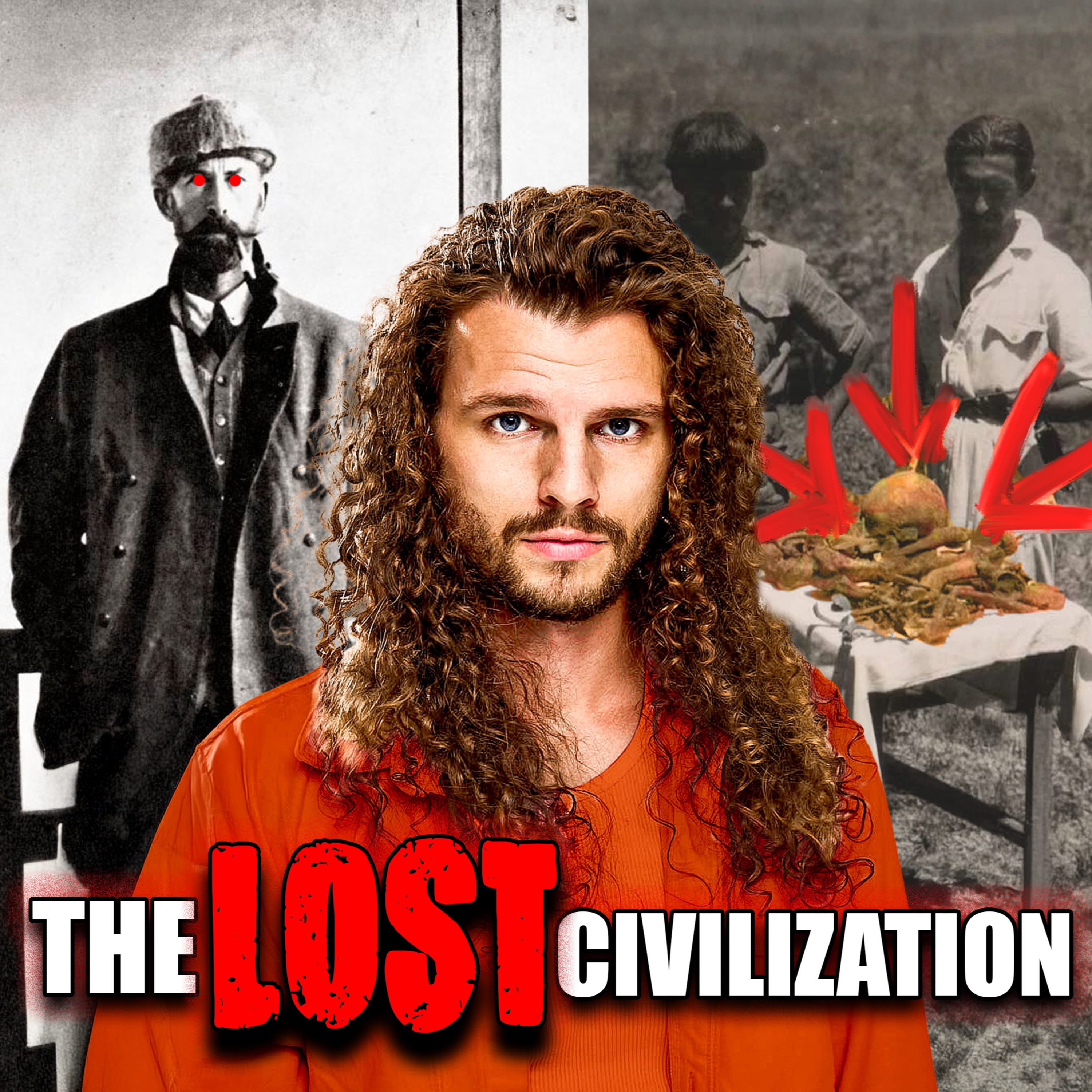
In the early 20th century, the Amazon was still a blank spot on the map. A place explorers called green Hell. And yet, Percy Fawcett believed it held a secret that could rewrite history. He wasn't chasing gold or fortune. He was chasing a city. Not a myth, not a legend, but the ruins of an ancient advanced civilization hidden beneath the jungle. Most people laughed at the idea, but Fawcett was certain. So certain that in 1925, he marched into the rainforest with his son, a small team, and vanished completely. For decades, people have risked their lives retracing his steps. And some vanished just like him. But here's the thing. Recent discoveries suggest that Fawcett might not have been chasing a fantasy after all. This isn't just the story of a man who disappeared. It's the story of the legacy that was born from his absence. So sit back, relax, and welcome to camp. Hey, guys, it's Christian McCaffrey, pro running back. I'm partnering with Abercrombie this season to tell you about their viral denim. All you need to know is denim should fit like this. Abercrombie's athletic fit is a game changer. They're designed for guys with an athlete's build like mine. Just enough room and the perfect stretch. When a jean fits that well, I'm wearing it on repeat. Shop Abercrombie denim in the app, online and in store. This episode is brought to you by State Farm. Checking off the boxes on your to do list is a great feeling. And when it comes to checking off coverage, a State Farm agent can help you choose an option that's right for you. Whether you prefer talking in person on the phone or using the award winning app, it's nice knowing you have help finding coverage that best fits your needs. Like a good neighbor, State Farm is there. What's up, people? And welcome back to camp. My name is Mark Yagnon and thank you for joining me in my tent where every single week we explore the most interesting and fascinating stories from around the world. From all time, from all ages, forever and always in the past and the future. That's right. I'm on a journey to try to understand everything that's ever been taught ever in the world. As always, I'm joined by some dear friends producers. My friend David is helping me out as well as Christos Papadapados. Christos. What's up? What's up? All right, all right. Look, we have too much to go through, okay? Because we are talking about the great Percy Fawcett. This is a fascinating guy, British explorer who in 1925, walked into the Amazon rainforest and vanished. His life has inspired, you know, many, many stories, many films. But today we're going through the actual story of who this guy was. I mean, he spent years mapping uncharted regions of South America. And what he found in changed everything that he thought he knew about this dense jungle. I mean, roads, temples, advanced agricultural systems, ancient stories of cities buried underneath the jungle, built by ancestors who disappeared centuries ago. But Fossa became convinced that these weren't just stories. He actually believed the locals when they told him that no, there are actual ruins, actual temples, cities of gold. And he believed that somewhere in the vast expanse of the Amazon lay these ancient ruins of these advanced societies. A lost city specifically that he called Z. And Fawcett himself staked everything on one final expedition to find this very city. But in the end, he never returned. And for nearly a century, search parties, scientists, adventurers have all gone out to try to solve this mystery. I mean, what happened to this guy? But an even bigger question remains unanswered. Was he right? Like, were the stories of these locals and all of his research actually true? Is there really a lost city of Z? So let's go back to the beginning. May 29, 1925. Three people stand on the edge of the known world, about to walk into the Amazon jungle and never be seen again. The leader is this guy we've been talking about, a British colonel who spent two decades chasing what everyone else calls a fantasy, this magnificent lost city in the jungle. And with him are his 22 year old son and his son's best friend. They send one last letter home and then vanish completely. No bodies, no explanation, nothing. So here's the thing that makes the story wild. Everyone thought that Fawcett was chasing like a fantasy. But modern technology has proven that maybe he was right all along and sadly never lived to see it. Or maybe he did. So let's go to the very beginning of Percy's life, right August 18, 1867, in Torquay, Devon. He's, you know, basically born to this aristocratic but financially troubled family. His father, Edward Fawcett, had blown through not one, but two family fortunes and, you know, gambling and drinking. He also died of alcoholism at age 44. That is true. He was a. He was a gambling man and a drinker and had a good freaking time. But succumbed to the disease of alcoholism in his 40s. So this left a young Percy and his four siblings in kind of a tough spot. They had social connections, you know, education of the upper class, but none of the money, which I mean at that point, like, you know, what's even all for? As you can imagine, this is a pretty typical British upbringing at the end of the 19th century, right. If you're getting raised by the British in 1880, I can't imagine that's going to be extremely affectionate. But here's the thing, that this harsh upbringing actually made him tough and self reliant. So he attends the Newton Abbott Proprietary College in the 1880s and he studied alongside Bertram Fletcher Ro, who would later help Arthur Conan Doyle create Sherlock Holmes. So this is like a pretty well to do academy. He was around the right people and at just 17, he entered into the Royal Military Academy. And he called this place, you know, what everyone called it, the Shop. This is where the British trained its most elite artillery and engineering officers. And it was here that he learned one of the most famous quotes that, you know, changed his life. Regard the risk of death as the most piquant sauce of life. Basically it's saying that, you know, you should see death as something that makes life actually more interesting, almost like memento mori, like, hey, you're gonna die, so you might as well make the most of it while you're here. And Percy absolutely did. Two years later, when he was just 19, he was commissioned as a lieutenant in the Royal Artillery and served in various, you know, colonial postings including Hong Kong, Malta. And his military background gave him crucial skills that would come in very handy, as you can imagine, while he's traversing the Amazon with his boy. He had training in surveying, map making. You know, he had great leadership and command experience and also like the physical conditioning that was necessary to, you know, go through these extreme expeditions and basically just living off the land and surviving with what's around you. So in 1901, he then joins the Royal Geographical Society, who's known as the rgs, which is basically like a top institution for British explorers. And by the early 1900s, the British were exploring with you know, the specific aim of, you know, bettering his skills in map making and surveying. He really had a passion for being out in the wilderness. His first field assignment came in 1902 when he was sent to Morocco officially as a cartographer, but then actually as a spy for the British Secret Service. And he was there kind of gathering military intelligence on the Sultan. This mission's success demonstrated his capabilities not only to survive in hostile terrain around, you know, a foreign people, but as well as a surveyor and a geographer. Now, Fawcett wasn't just your average explorer. He Was tall and, you know, muscular, steely blue eyes, just lats. Just insane. Just so this guy was a piece, all right? And, you know, he had manicured beard, he had a sick hat. He was just known for just being, like, kind of a stud. I mean, colleagues would describe his extraordinary physical stamina, you know, not only. Not only in the bedroom, but in the wilderness as well. And that helped him outperform, like, basically all the guys that he was around. Is that crazy? I mean, he was known for his stamina, but he was able to outperform even dudes like half his age. And he also was, like, very sharp, you know, mentally. He just would never make errors in his calculations. He had a gift for languages and would actually learn different languages or different pieces of languages to actually deal with indigenous peoples of any place that he went. Now, here's where his life takes a dramatic turn. 1906, the RGS got this commission to sort out a border dispute in Brazil, Peru, and Bolivia. Basically, nobody knew where one country ended and another one began in the jungle. So what do you. You need the British to go in there and figure it out? Right? Like, that was. I'm sure that's exactly how it went. They were like, hey, how do we figure this out? We've been doing this for 2000 years. If only the British could come by and help us. So that's what they did. And the RGS president comes to Fawcett and tells him what's basically like a suicide mission. He tells him, like, look, this terrain is impassable. It'll take you two years if you're lucky. And going fast. There's no guarantee you're going to survive. There's rampant disease everywhere, and the local indigenous people, who have been, you know, terrorized for many years, will probably kill outsiders on site. And Percy Fawcett, at 39 years old, was stoked. I mean, that just puts you in the mindset of who this guy was, right? He's like, yeah, let's run it up. So he sends out the whole fleet, and this is what he's been waiting for his entire life. So he heads out in June of 1906 to map this disputed jungle territory between Bolivia and Brazil. And he does brilliant surveying work. I mean, he resolves this international dispute, and something fundamental in this moment actually shifts inside of him. The RGS thought that this job would take two years minimum, but Fawcett knocks it out just a couple months. And that's when everyone realizes they're dealing with, like. Like a star. When it comes to like, the exploration community. Like, this guy is so passionate about what he's doing. So this one, he gets back home and begins sharing what he found and what he had seen there, and things get a little weird. He claims to have shot a 62 foot anaconda in 1907. No, not that type of anaconda. You guys, you guys are children. You know that. An actual, an actual snake in 1907, which at that time, like, no one had ever seen, like, an actual anaconda that big. And he's like, no, dude, for real, 62ft. He even talks about these mysterious, like, animals that no one's ever heard of. A small, like, cat, like, dog thing and this giant spider called the apazaka. And that local swear can actually poison you just by, like, being near it. And the scientific community is like, I did. Really? You went over there and you saw all these crazy animals. That sounds wild. You probably do an ayahuasca. But here's the thing. The actual mapping work is flawless. Surveying techniques are advanced. He's like, developing new techniques for actually surveying, creating maps. His record keeping is meticulous, like, every single detail that he's doing, journaling, everything. And it's like there's basically two faucets that they don't understand. There's the surveyor who's brilliant and actually able to handle these disputes. But then there's also the same guy that's like, no, dude, there's monsters in the jungle. And this distinction of being accurate in detail, but also outlandish with the stories caused people to not really know what he's talking about. Like, they're confused. They're like, on one hand he's accurate, the other hand he's being crazy. So some people said, maybe there are monsters. And other people said, all right, he's probably just telling lies. So he goes on a second expedition of the Rio Verde, and this journey is almost ended before it even begins. His plan was to navigate the river by canoe and then map out the source of the Rio Verde. But the extreme rapids made this passage basically impossible. So they're forced to actually abandon the river route. And his team had no choice but to continue on foot through this dense jungle. It was a small crew for such a big mission. Basically you had a waiter, a silversmith, a baker, and then two indigenous guides. I'll be honest, I don't think you need most of them. Like, call me cynical, I don't know if you need a waiter, right? Like, you just need like a guy with like, shitty tattoos being like, yeah. So what else, what else you need? Silversmith. You probably use a baker. I think you're good. I don't know how many muffins you need in the Amazon. And then the indigenous guides take them. But after losing most of their food, now they just have a dumbass waiter that's just walking around with them. They live for weeks on basically palms. They actually eat like palm hearts and like nuts that they find in the forest. And then they're getting attacked by insects every single day. And they're like getting like these inch long black ants, like these massive Amazonian ants. And then when they finally make it back to civilization, all five men who joined Percy ended up dying shortly after. Most likely from the stress and like the pain from the actual journey, potentially disease as well. But against all odds, Fawcett actually achieved what he had set out to do. He successfully located and mapped the source of the Rio Verde. And he, you know, takes his set of geographical coordinates and maps it so precise that they would be used by explorers for years to come. On the one hand, the cost for this type of operation was, you know, massive. But the mission cemented his reputation as a man who could endure, even thrive in the world's most unforgiving landscapes. I mean, it's truly fascinating that this guy in England at this time was actually doing these types of like. It's almost hard for me to put myself in the mindset of someone that's going to the Amazon in the, you know, late 1800s, early 1900s and seeing what he actually saw. Like proper indigenous tribes, never spoken to or touched by, you know, Europe or you know, colonial settlers in America and trying to actually deal with them and then traversing some of the most harsh jungle in the entire world. It's like kind of fascinating that he was able to do this. Now his next expedition in 1910 really shows what kind of person he was. He gets sent to survey the Peru Bolivia border at the Heath River. A job that at the time was again another death sentence. But again, that's exactly what Percy wanted. The crazier and more dangerous it was, he wanted that one. The German explorer Edward heller had lost 20 canoes and 40 men to the hostile tribes that lived there. And again, these aren't just like 40 random dudes. These are 40 men that are trained in some capacity to handle these types of expeditions. And Edward Heller lost 40 of them. And then in 1893, General Jose Manuel Pando barely made it out alive after a barrage of arrows forced him to flee the jungle. So Fawcett hears all this and he assembles a crew. And when they arrive, they're almost immediately under attack. I mean, the tribes are shooting these six foot long arrows from somewhere deep in the trees. They don't even know where they're coming from. They're just getting these barrages of giant arrows hitting them. In that situation would have tried to fight back or just get out, but what does Fawcett do? He doesn't panic. Instead, one of his soldiers pulls out an accordion. Yeah, like a literal accordion. And starts playing music in the middle of the ambush. And Fawcett, as if this is like a completely normal thing to do, starts speaking to the warriors in their own indigenous language. And the craziest part, they all got murdered. No, the craziest part is that it works. Like, the mood shifts and the warriors go from, like, trying to kill them to, like, listening to them and vibing to the accordion a little bit and then actually helping them set up camp. Camp. Welcome to camp, dude. That's crazy. Literally, him and the boys just pull out an accordion and then the locals are just like, ah, these guys are chill as hell. They have no polka. So news about Percy and his team's arrival eventually travels upriver to the other tribes. And they're basically saying, like, look, these outsiders are different than the other ones, okay? I promise the German guy, fuck him forever, all right? But this guy is not like that. And they're not here to harm us, so let them pass through. And the idea of calmness and human connection was exactly what set Fawcett apart from all these other explorers in his era. He wasn't trying to, like, take their land or, like, change the customs. He was genuinely interested in them as people and preserving them exactly how they were. I mean, you can imagine, like, you know, from basically the end of the 1400s, every colonial power that went there was trying to rob these people, trying to convert them to a, you know, different religion. It doesn't matter which one it is. And, you know, we're basically trying to, like, just take their culture and their women. And all of a sudden this guy comes along with a good faith interest in trying to actually learn about them as human beings. And so he follows the Heath river from the outflow deep into the actual headwaters and carefully charts everything. And he didn't quite reach the true source, though later he explained to the RGS quote, I never actually visited the source of the heath, but only traced the river to the junction of two streams near the source. The actual point being indicated on my map of 1910. So even his own reports, he was precise about what he did and didn't do, which is again, unique for a lot of explorers at the time. I mean, most of these explorers are like borderline delusional and very arrogant. So even if they don't do something, they'll just kind of say like, yeah, yeah, it's over here, and just hope no one ever checks their work because you got to go play an accordion for a killing tribe just to do it. So he actually was honest and to his credit, people actually respected it. So this fourth expedition that he goes on in 1911 was a massive turning point in how he thought about these ancient civilizations. This is where his perspective on this continent actually changed. This time he wasn't just running through the jungle for like the sake of mapping rivers. He wanted to actually piece together, like the broader picture. And so alongside him was his right hand man, a man known as Henry Costin, and the Scottish biologist James Murray. And together they pushed through hundreds of miles of uncharted rainforest. I mean, places that no outsider had ever set foot in. And James Murray wasn't just any scientist. He was a member of one of my favorite expeditions ever. Ernest Shackleton's Antarctic expedition. If you don't know about Ernest Shackleton, actually Christos and mark that because we need to do an episode on Ernest Shackleton that is long overdue. I mean, truly, like the best. You already did. I mean, I did an episode kind of about him with an explorer that actually went and redid the entire journey, which you guys should check out that episode. But going through his expedition was fascinating. And this guy, James Murray was actually a part of that team. This is a guy that went down to the South Pole, got their entire ship destroyed, and then survived long enough to actually make it back home. I mean, fascinating. So this is a squad that Percy Fawcett puts together that is very competent. But unfortunately, the Amazon is an unforgiving beast. I mean, the heat was crushing. The air is so humid, it's filling your lungs with every breath. You can barely breathe. There's swarms of insects that are relentless. And Murray's health began to unravel. I mean, he's getting fevers and he's, you know, potentially having his wounds turn septic and couldn't keep up with the pace. And suddenly the mission to, you know, go through this land turns into a basically like a time race to save this guy, not have him die in the middle of the Amazon. So Fawcett diverts the entire expedition just to Save Murray. So by the time they reached La Paz in 1912, rumors swirled that Murray had actually died on the way. But he hadn't. But when he recovered, he shocked people by publicly accusing Fawcett of. Of mistreatment. And this is a claim that would hang in the air and kind of affect his legacy for years to come. Still, this wasn't just an expedition defined by hardship. It planted the seeds for Fawcett in a very major way that actually became his most famous obsession. So along the way, he would have conversations with these indigenous communities deep in the forest, and he began to hear stories that they would talk about, consistent stories of these ancient ruins, of these massive megalithic stones hidden under the canopy of the jungle, and of carved monuments abandoned long before Europeans had ever arrived. I mean, we're talking about civilizations that had their peak. I mean, maybe, you know, in the BC era or, you know, even before 1400s, when the Europeans had actually gotten there. So to Fawcett, he starts to hear these myths, and then he hears more of them and then even more, and they're all kind of consistent. They're all pointing to the same thing. And then he starts to think, I don't think these are myths. I think these might actually be clues. This might be a map. And they're out there somewhere, swallowed by the rainforest, like, laying just forgotten on the floor of the jungle, remnants of these massive advanced civilizations. And this idea would lodge itself in his mind and eventually drive him towards his most legendary and final journey. So by 1912, something had taken hold of his mind, right? He's starting to piece together the stories that he'd been hearing. He's going back through his journals and reading everything that he had learned from talking to these indigenous people. And eventually he gave this city a name, the Lost City of Z. Now, if you don't know, this is happening right after Hiram Bingham finds machu Picchu in 1911. So suddenly, everyone is realizing that there are massive ancient civilizations just sitting there. I mean, Machu Picchu is massive. It's huge, and it's extremely advanced. And no one from the outside had ever really seen it. So now Fawcett is fired up. But for Fawcett, you know, this lost city of Z isn't just riding the wave of this, you know, archaeological fever that is, you know, sweeping all of Europe. And he is convinced it exists because of something more tangible. In 1914, he finds this document in Brazil's national library that just blows his mind. And it's called Manuscript 512, and it's written by Portuguese explorers in 1753. These guys claim that they found ruins of an ancient city with, quote, monumental buildings, roads, and a plaza, in each corner of which is a spire in the style of the Romans. The way Percy described Z after reading this was also unnerving in how specific it was. In a letter to his son Brian, he told of a city in a valley just basically surrounded by mountains, only accessible by a single stone paved road. He claimed the houses had no windows and at the center of the city was a pyramid like temple. And the inhabitants, he believed, tended domestic animals and mined a lot of the surrounding hills. And this wasn't the language of a guy that was just guessing. This was a guy that was talking as if he had seen it or, you know, had heard specific details about what the city was. And then there's the strangest details of all Fawcett mentions in this letter. Rumors of a strange source of light is in the buildings. This is something that terrified, you know, the local indigenous people that have claimed to have witnessed it. And no one knows exactly what he means. Is it like bioluminescent, like insects? Is it like fireflies? Is it a way that they're using crystals to, like, chann the light from the sun into the rooms? Maybe it is like an ancient technology that's lost, or maybe it's just another jungle myth, you know, that made its way into his imagination. Who knows? Regardless, it only deepened his conviction and his desire to find it. So this now isn't a vague treasure hunt. In Fawcett's mind, Z is 100% real, and Hugh knew exactly what it looked like. And the only question left was, you know, how far is he willing to go to figure it out? So in 1914, just as his obsession is sharpening into like a mission, like a life purpose, World War I breaks out and the Amazon has to wait. Despite being almost 50 years old at this point, he volunteers for active duty and actually commands an artillery brigade in Flanders. And then in 1916, the Royal Geographical Society awarded Fawcett the prestigious gold medal recognizing his exceptional surveying and mapping achievements. His work had provided accurate geographical data used for, you know, international boundary agreements and opens new regions for explorations. I mean, for most people, this is like their crowning achievement of their career, right? He is a decorated war veteran. He, you know, has gotten these awards from, you know, the RGs like, he did it. He was also mentioned in dispatches three times by Field Marshal Sir Douglas Haig and received the Distinguished Service order award in 1917. And then was promoted to lieutenant colonel in 1918. I mean, his career is like phenomenal. But it's not enough. What's up, guys? We're gonna take a break really quick. Cause I gotta tell you a story. Imagine you're sitting in your house. It's cold outside, it's a little snowy. And you're like, man, I just want a panini. So you go and you order it, you know, from a. From doordash or something like that. And it never gets to you. You're looking at the app, you're like, dude, it's been four hours. Where's my panini? You're calling, no one answers. Well, this is a true story that happened. There was a woman, a client that was working as a doordash driver, and she slipped and fell on an icy walkway outside of a Panera Bread in Fort Wayne, Indiana. She breaks her elbow, which leads to surgery and hardware having to get inserted into her arm. She can't work. And originally, you know, she sues Panera. And Panera's like, okay, we'll give you like 125,000. But then the good people over at Morgan and Morgan fought for her and got her the million dollar verdict that she deserved. Yes. If you never heard of them, Morgan and Morgan is America's largest injury law firm. Yes. And they're that way for a reason. They've been fighting for the people for over 35 years. Now, I'll be honest. If I ordered, you know, a panini and the woman gets paid a million bucks because she slipped, I mean, it's a tragic thing to happen, of course, but I deserve a little bit of that. I. I should get a cut at least, right? As I'm the one that ordered the panini. If I never ordered that panini, she never would have slipped, never got a million bucks, which obviously she deserved. You know what I mean? But maybe next time she gets a million and million point one, I can get a cool a hundred thousand out of that. Regardless. All I'm saying is if you're ever injured and you are looking to get the money that you deserved, the compensation that is entitled to from your injuries, Morgan and Morgan could be the way to go. Hiring the wrong law firm can be disastrous. I mean, you can be locked up and litigate. It's a nightmare. But hiring the right law firm could substantially increase your settlement. And with Morgan and Morgan, it's easy to get started. Their fee is $0. Unless they win. That's right. Their fee is free. Unless they win your case, you don't pay a zero, you pay zero cents. Unless they win your case, you can visit forthepeople.com gagnon g a g n o n that is f o r the people.com gagnon or dial pound law. That's £529 from your cell phone. That's for the people.com gagnon or click the link in the description below. And thank you so much to the good folks over at Morgan and Morgan for sponsoring this program and making this show. Thank you for possible with this paid advertisement. Let's get back to the show. This message is sponsored by Greenlight. With school out, summer is the perfect time to teach our kids real world money skills they'll use forever. Greenlight is a debit card and the number one family finance and safety app used by millions of families, helping kids learn how to save, invest and spend wisely. Parents can send their kids money and track their spending and saving while kids build money, confidence and skills in fun ways. Start your risk free Greenlight trial today@greenlight.com Spotify that's greenlight.com Spotify hey, it's Ryan Reynolds here for Mint Mobile. Now I was looking for fun ways to tell you that Mint's offer of unlimited Premium Wireless for $15 a month is back. So I thought it would be fun if we made $15 bills but it turns out that's very illegal. So there goes my big idea of for the commercial, give it a try@mintmobile.com Switch upfront payment of $45 for 3 month plan equivalent to 15 per month required new customer offer for first 3 months only. Speed slow after 35 gigabytes of networks busy taxes and fees extra. See mintmobile.com what's up guys? We're going to take a break really quick because you need to rebrand your crotch. That's right, you need a full rebrand on your dong. And you're going to do it with Bluechew. Because Bluechew, their tablets aren't just for better sex. No, they are like if Tony Robbins give a mot speech rates your rates your wiener, you know, I mean, you're going to feel amazing. Look, I just took one of Bluechew's tablets today and suddenly, I mean look at me, I'm glowing this table absolutely getting crushed underneath it. Right? My penis is giving a press conference. Okay, feeling great. Never been better. So whether you're trying to make, you know, a memorable moment with your, your sweet love or you're just trying to give, you know, a friend of yours or A girl, you know, like a, you know, know some crazy group chat fodder, something for the girls to gossip about. Bluechew is absolutely the chewable tablet delivery service that you need to bring the thunder. And the best part is that we got a special deal for the listeners of this lovely program. Get your first month for free@bluechew.com. just use the promo code Gagnon at checkout. All you gotta do is pay five bucks for shipping. That's like a cup of coffee. All right, five bucks for shipping. You're gonna get free bluechew straight to your door. So upgrade your legacy. Let your name ring out for eons, and let's get back to the show. After the war, Fawcet immediately returns to Brazil. And his obsession with this city of Z was stronger than ever. So in 1921, he sets out on his first expedition to find this lost city. Not long after departing, he and his team become demoralized by the hardships of the jungle. I mean, once again, the dangerous animals, the insects, the disease. And this causes the expedition to fail and the team returns home. But that same year, Fawcett set out on a search again, this time from Bahia, Brazil, on a solo journey. Journey. And he traveled this way for three months before returning again in failure. And despite these failures, his theories had evolved from, you know, this like, scientific sort of speculation that's somewhat skeptical but still measured to ultimately like a religious conviction. He even became so secretive that he wrote encrypted letters to his wife Nina, who would use a cipher code to actually decode them to prevent rival explorers from discovering the city before. In one letter, he wrote, there are three kinds of Indians. The first are docile and miserable people, easily tamed. The second, dangerous, repulsive cannibals very rarely seen. And the third, a robust and fair people who must have a civilized origin. Now, this idea of a civilized origin, I mean, it sounds, you know, a little racial and sort of classist, of course, for, you know, this British guy to be like, yeah, you know, it's not civilized. But again, this is just his way of describing a people that had a tax technology that he couldn't fathom existed on this continent. And it fascinated him. And he began to imagine the city's inhabitants as maybe descendants of this long forgotten culture, far advanced from what he was seeing on the continent in that time. It also shapes his tactics, right? Like, if he's going to reach them, he couldn't arrive like this conquering force with, you know, a dozen men and animals and all this Stuff he had to be nimble and above all non threatening and peaceful. So by 1925, Fawcett is 57 years old. I mean, think about that. He's 50, like this, like people aged bad back in the day, specifically, you know, the Brits. And this guy's 57 and he's like, you know what, I don't need to retire, I don't need to do. I don't want to just chill in the countryside. He's planning the most dangerous expedition possibly of all time and certainly of his life. So he's failed to find Z twice already in, you know, the early 1920s. But he's not given up. And this time he makes a decision that seems crazy, but actually makes some sense if you think about it. So get this, instead of taking this huge expedition with a bunch of men, he's going to go small and just three people total. His theory is that if they can move fast and they can live off the land easier and they won't look like an invading army, the tribes will be much more agreeable to letting them in. So he chooses his eldest son, Jack, who's 22 and he had dreams of actually being an actor before his dad convinced him to join in this quest. And then there's Jack's best friend from childhood, this guy named Raleigh ramel, who's only 23. And these guys aren't hardened explorers, right? They're just young dudes who have been kind of raised in this tradition of, you know, Percy Fawcett's obsession. And they've kind of been swept up as well. So the funding comes from a group in London called the Glove. Now this is a wealthy investment group who are basically gambling on Fawcett finding something spectacular. And he also sells the story rights to North American newspapers, which means 40 million people are going to be following on this expedition. So a lot of pressure. But here's the detail that haunts this entire story. Fawcett specifically tells everyone, if we don't come back, don't send anyone to look for us. He doesn't want more people trying to die in order to save them. And he knows that this entire journey is very dangerous. And it's almost like he knew something might go wrong. So in January 1925, the trio sailed from New Jersey to South America with Fawcett's promising reports. He says, we shall return and we shall bring back what we seek. So they arrive in Rio de Janeiro in April and they travel inland to Cuyaba. This is like a remote Amazonian outpost. And the capital of Mato Grosso, the state there in Brazil where they purchase pack animals and then hire two Brazilian guides. Now, in April, in 1925, this final expedition departs this city. The party consists of Percy, Jack, and Raleigh, and then two Brazilian guides, two horses, eight mules, and then two dogs. The expedition was just like the rest. They, you know, faced these immediate challenges, like the insects and the disease and the animals. But then Ramel's foot becomes severely swollen from a tick bite, causing him to not be able to keep up with the rest of the team. But despite this, Fossett maintained a demanding pace of 10-15 mph through, I mean, increasingly hostile terrain. Each step you go is even more dense than the one before it. During one stretch, he got so far ahead of the rest of the crew that he was forced to camp alone and wait for them to catch up. I mean, this isn't like a leisurely hike where, you know, the guy is, you know, 20, 30ft in front of you. He's miles ahead of them and actually has to wait for them to get back to him. And then on May 29, 1925, we get the last known location of the three men. They reached a place Fawcett calls Dead Horse Camp. And he calls it this because this is actually where his horse died on the previous expedition in 1920. Remember, this isn't some guy just running through the woods. He knows exactly where he's at. He's mapped the jungle numerous times. He's returning to previous sites to expand on them, and then he's laying out the geography of the Amazon. He's not lost well yet. He carefully records the exact coordinates of their location. In a letter to his wife. He says, here we are at Dead horse Camp, latitude 11 degrees 43 south and longitude 54 degrees, 35 degrees west. And the spot where my horse died in 1920. He knows the exact specific coordinates. Fawcett's final letter to his wife is weirdly optimistic, I guess you could say. I mean, he says, jack is well and fit and getting stronger every day. You need to have no fear of any failure. But he also mentions their guides are getting more and more nervous as they're continuing to push deeper into the jungle, farther indigenous tribal country. And the guides are starting to get nervous and they want to turn back, and they're actually going to go home because they believe it's far too dangerous. But here's something strange. Fawcett gives different coordinates to different people. So the newspaper gets coordinates that are actually 200 miles off from where he actually is. So get this. He sends his wife the coordinates very specifically, and then he sends a newspaper coordinates 200 miles away from where he sent his wife. So which is the truth. Experts think that he was deliberately trying to throw people off his trail. He didn't want rival seeing this in the newspaper and then following his path to the lost city of Z. And he didn't want anyone attempting the dangerous rescue if things actually go wrong. And after May 29, 1925, there's nothing. Percy Fawcett, Jack Fossett, and Raleigh Ramel walk into the jungle and simply cease to exist. As far as the outside world is concerned, no bodies are ever found, no definitive trace of what happened. I mean, just evaporate into the jungle itself. I think about that for a moment. In an age before gps, no satellite phones, before, like an emergency beacon, three men walk into quite literally one of the most hostile environments on earth and are never seen again. So in 1927, the Royal Geographical Society declares them officially lost, nearly two years after their last communication. And by then, the outside world was captivated by the mystery of what had happened to these guys. I mean, the first major British expedition came in 1928, led by British American explorer Commander George Miller. Diet and his expedition, dubbed the Suicide Club, found a brass nameplate from Fawcett's equipment with the Nahaqua tribe. Diet claimed that this was evidence that, you know, this tribe and the chief of this actual group had killed Fawcett. But his evidence was largely based off of some unreliable testimony, and he wasn't actually that convinced. Then in 1931, the Penn Museum's Matto Grosso expedition, led by Vincenzo Petrulo, encountered the Fawcett mystery by complete accident. The purpose of the expedition was to make a scientific record of, you know, the human, animal and plant life in this Matto Grosso region. Instead, the leader of the expedition ended up meeting Aloke, who's the chief of the tribe that I mentioned before, and other natives who had last seen Fawcett photographed the exact spot where Fawcett had crossed the Kiloweni river and concluded that Fawcett had died of thirst or hunger or disease east of the river. Over the years, various artifacts supposedly belonging to Fawcett were found, like a compass in 1933. And oddly, his gold signet ring was discovered in a Cuyaba pawn shop in 1979, inscribed with the Fawcett family motto, hardship hold no fear. I mean, kind of bars and sort of poetic. But how did it actually end up in this pawn shop, no one really knows. Now, obviously, multiple theories have come about, you know, as far as what actually happened to Fawcett in this expedition. Some people think that they may have been robbed, considering that the ring was found in a pawn shop. But the most commonly accepted theory is that they were killed by the indigenous peoples there, particularly the Havante. And these were a tribal group that were known to basically kill anyone that they could catch in their territory. According to reports from explorers, the Calapalo tribe, who was the last to actually see Faucet Jack and Raleigh alive, have actually preserved some oral accounts from their time, warning Fawcett against going eastward into the territory of what they called the fierce Indians. And then in 2005, author David Grant interviewed the Calipalo leaders who had remembered these three men and their visit. They recalled warning Faucet against this planned route. I mean, you know, they said it was just too dangerous. Not necessarily from the jungle, but from the people there. But they went anyway. Then they noticed campfire smoke for five days before it just completely disappeared, believing that these fierce natives had killed them. Other theories include that they died from natural causes, potentially disease, starvation or even animal predation. Fawcett's longtime friend Harry Costin believes that he died of exhaustion rather than violence, noting that Fawcett typically had excellent relations with the indigenous people and would likely be able to, you know, barter some type of deal between them. And then there are some more wild theories that have, you know, emerged over the decades as well. Some believe that Fawcett had basically gone native and was living as, you know, a part of a tribe or potentially even as a chief, or that maybe he had been captured and been held prisoner. There's a Swiss trapper named Stephen Radden who claimed in 1932 to have actually seen Fawcett wearing animal skins and held captive by a native tribe. But experts, experts basically dismissed this as completely ridiculous. Then in 1951, Brazilian explorer Orlando Villas Boas claimed to have found Faucet's skeletal remains in Calapalo territory. However, after analysis was done, it was concluded that the bones were not faucets at all because the jawbone didn't match his spare denture that was left in England. And the shin bone also suggested, you know, someone that was much shorter than Fossett himself. And then in 1998, BBC investigator Benedict Allen interviewed Calipalo elder named Vahuva, who denied his tribe's involvement and confirmed that the bones found in the Vs. Boas belonged to a tribal ancestor, not Fawcett at all. There's also claims that over a hundred people died while searching for the body of Fawcett over the years. But expert John Hemming confirmed that only one person had actually died searching for him. A lone explorer who went out all by himself. However, numerous expeditions faced significant dangers, including the 1996 incident where. Where businessman James lynch and his 16 year old son were captured by Calipalo Indians and held captive until they surrendered their $30,000 worth of equipment. I mean, that is wild. In 1996. Isn't that crazy? I mean, these guys. A businessman goes down there, which is kind of ironic. Like, obviously I don't think this business guy is just like Percy Fawcett, but is weirdly reminiscent of kind of the same thing, right? This guy goes down there with his young son trying to explore this vast terrain and then gets captured and held hostage for money. I mean, it's interesting. In 1986 that happened. That's crazy. Now what's interesting about this part of the story is kind of where things, you know, kind of change. So for decades after Fossa disappeared, he was basically seen as like this delusional guy who got this crazy idea that he heard from locals and believed in a myth so strongly that he was willing to go out and kill his son and his friend while chasing this fantasy. And the scientific establishment basically treated this like, kind of like a bad story. And the moral was ultimately like, hey, don't let your obsession override, like science and your good senses. But then technology caught up and in a lot of ways vindicated Percy Fawcett. So in the 2010s and the 2020s, scientists started using something called lidar. And this is basically where they shoot lasers from planes that can see through the jungle canopy. You can almost imagine it like, like a massive X ray on a giant piece of land. And what they found changed everything that archaeologists, adventurers and historians thought they knew about the Amazon. In the exact spot where Fawcett said that Z would be, they found a massive complex belonging to the Kihu Kugu people. And this isn't some small settlement. We're talking about streets, bridges, giant public square. And this place was active from about 1500 to about, about 400 years ago. I mean, like, he nailed it, like exactly what he had described. Like paved streets with stone, a massive plaza, potentially a pyramid. I mean, Fawcett was right. And there really was this lost city exactly where he said that it was. The only thing that Fawcett actually got wrong is that there's not one lost City of Z. There's potentially hundreds. I mean, scientists now estimate that 8 to 10 million people lived in the Amazon prior to the European arrival. And I mean, that's not like villages. These is. This is massive civilizations. I mean, giant cities, metropolises holding hundreds of thousands of people. I mean, a civilization on scale of the ancient Egyptians or the Mesopotamians or in some ways even the Europeans. I mean, they had agriculture and urban planning. They had monumental architecture and art. Everything that Fawcett believed was actually there was actually there. His adventures directly inspired Arthur Conan Doyle to write the lost worlds in 1912, and he served as one of the primary inspirations for Indiana and his entire character. His story has been the subject of numerous books and films and documentaries, and recently the movie the Lost City of Z, obviously named after his fascination. And Fawcett wrote in one of his journals, quote, deep down inside of me is a tiny voice that is calling. At first scarcely audible, but it persisted until I could no longer ignore it. It was the voice of wild places. And I knew that it was now part of me forever. He continued, but it should be remembered that the difficulties are great and that the tale of disasters, a long one for the few remaining unknown corners of the world, exact a price for their secrets. I mean, bars Percy. So what exactly happened to Percy Fawcett, Jack Fawcett, and Raleigh Rommel in the Brazilian jungle in 1925, remains unknown. Again, the most likely scenario, based on what seems like the available evidence, is that that the three men, already ill and exhausted, died from natural causes or an indigenous attack, or maybe a combination of both. And their bodies were likely consumed by the jungle, you know, back into the earth, into this land that Percy was fascinated by. His journey is as much about the pull of curiosity as it's about, you know, the cost of chasing a vision. I mean, you know, he had this shift from like, this disciplined British officer to an explorer that was chasing a dream that really reflects both the promise, but also the hardship of following your passion and exploration. And then recent research has revealed an Amazon far more populated and sophisticated than Fawcett could have ever imagined. Right? I mean, he may have not found his lost City of Z, but he helped point the way towards this deeper truth that the Amazon itself is not just, you know, a jungle, you know, filled with animals and insects, but also once a sprawling, complex system of civilizations still hidden beneath the forest canopy today. And that, ladies and gentlemen, is the life and adventures of Percy Fawcett. I mean, what a fascinating guy. Like, I couldn't even imagine going to like, like, like traveling to like London, you know, from New York in like the 1920s is like, dude, I'm in a different world, I'm in London, Everyone sounds different, they're wearing different stuff, they're like talking like it would be fascinating to do that. I couldn't even imagine going to the Amazon. Like you go to the Amazon today. I don't know, I've never been, but I imagine it's like, okay, you go to this place, you see this site, you stay at this hotel. Like it's all very much like, if you want it to be, you know, a very like organized experience, but like to do it in this time. I mean there's nothing like you go out there and you're truly just amongst the indigenous people and the wild animals. And sure, there's versions of that you could do today, but I just feel like, like, you know, there's just so much more that's known about it. But even to this day, in an episode I did with Luke Caverns, he talks about just how many of these places there are. I mean I mentioned to him, I was like, dude, do you think there's like a, like an El Dorado, like the movie? And he's like, no, there are multiple El Dorados. He's fully convinced that there are cities of gold. And whether they were just painted like a golden color or actually possess like gold plated temples, like fully with gold. I mean this whole region is rich with gold throughout. So it's possible that there's not only one, but potentially dozens, if not hundreds of these actual massive cities that are completely untouched still underneath the jungle today, waiting to be discovered. I mean, for me, I'm like stoked on this. Like I get excited about like Egypt and I'm like, I don't know how much more of Egypt there is to be known. There are dozens of Egypts all throughout South America in the Amazon. I mean it's like crazy, but if I had to put money on it, I'd probably say that Percy died from, from disease. I don't know. I would be surprised if indigenous just came out and murked him. You know what I mean? He knew how to deal with these people. You'd be surprised about that. If he got killed by the indigenous. I'm like, he knows how to navigate, he knows how to talk to him. And he generally knew which way he was going. But he was going into territories that he hadn't gone to prior, correct? Yes. After the dead horse camp. Yeah. I'm assuming best guess Is that he came across natives that were more hostile than the ones he encountered. But it is possible that he was friendly with tribes. So maybe that word spread amongst people like, hey, this white boy's kind of chill. That's what I'm saying. So. But again, the tribe that he last saw him was like, yo, we don't know those boys over there. And they get wild. Yeah. And they buck off. I mean, Croesus. What do you think happened? I think he personally just went, became his own person and lived on his own for the rest of eternity. Just homesteaded. Dude. Yeah, we gotta talk, we gotta learn about his wife because maybe she sucks. Sucked. Also, we kind of glossed over the fact that he volunteered for the war at age 50. Yeah, that is kind of crazy. That is a great point. He did volunteer for the war as a 50 year old. Was behind the scenes work, you know. Yeah. Pushing paperwork. Yeah, exactly. But also like war back in the day, like World War I was brutal, don't get me wrong. But they didn't know how bad it was going to be. So I bet you he was like, yeah, I'll pick up like a little war gig, you know, I mean, like, I think they saw it like PA work. They'd be like, yeah, I'll just like pop in, you know, hold a couple rifles, bayonet some and then get out. That's what I'm assuming. But then he gets out and he's like, yo, that sucked. That's how, you know, how bad war is that? Like he served in the war and was like, I need to go to the Amazon immediately. I need to get the hell out of here. You know, it be the sickest ever. If they went to that lost city like the one that he charted that like they used lidar to discover the plaza. And if they went there and they found his remains, how fire would that be? Statue in his honor. Oh, imagine that'd be so sick. Percy Fawcett. So handsome, so jacked. Diesel, did they find that city? Could you look that up really quick? Percy Fawcett's lost city of Z has never been found in the exact way he described it. But archaeology in the Amazon has uncovered evidence suggesting he may have been partly right. But do they go to that spot? That's what I want to know. Don't they have drones to like scan beneath the canopy to see structures of buildings and roads and stuff? Well, that's the lidar stuff. But again, it's one crazy expensive to do lidar work and that's such a Massive piece of land. I think Luke was saying that by. In his theory that by the end of this century, all of the Amazon is mapped. But even the way he described it, he was like, yeah, it's going to take 50, 60 years to actually map it effectively. So I was like, damn, that's a long time. Time. Who's the guy that. It's also crazy? Paul. Rosalie. Yeah, Paul's the man. He's. You got to get him on here. Oh, it be a dream. I'd love Paul. I'm like, ask him right now in the camera. Paul Puddy, please. Next time you're in New York, come. Come through. Say what's up? He's from Jersey. He's a Jersey baby. Hey. He's a Jersey Guinea. Hey, we're going down. We're trying to find these tribes. You know, that's not how he sounds. He's very sophisticated and smart and empathetic. But it is way funnier to think that Tony Soprano sits down there being like, hey, yo. All that to say, I don't know. It's just a fascinating thing that this guy went down there. I'd be so curious to know how many of these cities are there. And the other thing that Luke was telling me that's fascinating is like, conquistadors went down there looking for gold. They were trying to find these cities of gold. Like many of them after Pizarro, they were like, we're going to figure it out. And they went down. And in his theory, he's like, they probably were at the cities, but the jungle growth is so rapid and so violent that it just covered them completely and that they were probably walking directly on top of the gold ruins they were trying to find. Yeah. The only way you'll find these cities is deforestation. That's the one that we don't want right now. Yeah, it's not ideal, but if you can do very. If you're gonna do it, select deforestation in just a little plaza to discover, you know, the remains of, like, some sick, ancient civilization. Yeah, right. I'm like, that's. That's worth it. You get some rubber. Yeah, right. It works out for everybody. 1. But I'm. I don't know. I think my favorite theory about Percy Foss is the one that I thought of that. I think he just, like, met a baddie, and I think he just dipped. Imagine he meets Chell from Roel Dorado. Oh, God. I mean, like, dude, out of here. You see, you meet Shell, and you're just like, dude, like, he was. He lived in England his whole life. Let's see what she looks like again. He was. He was talking, he was dealing with British women and then all of a sudden sees Chell and he's like, oh, don't mind if I do. Road to El Dorado cast. All right, well, David enjoys that. I'm gonna let you guys get back to your wonderful day. Thank you all so much for tuning in to another episode of Camp. David likes it when I really emphasize the but this has been. Yeah, another episode of Camp. Just a place for. Oh. All right, guys, this tail's about to fly out of this tent. Thank you guys so much for tuning in. I appreciate it. If there's anything I missed about Percy Fawcett. If you guys are versed topic, please drop a comment. I would love to know. And if you didn't know anything about Pers Faucet, drop a comment. What did you think? I read all of them. Spotify, YouTube, every which place. So just be nice about it. All right? Give the episode a thumbs up, subscribe, it helps the channel and I will see you guys next week. Thank you all so much. Peace, love and blessings to all and to all a good night. What's up, people? Quick announcement. If you are a fan of Camp Gagnon or Religion Camp, I have great news because we are dropping History Camp. That's right. This is the channel. We're going to be exploring the most interesting, fascinating, controversial topics from all time throughout all history. Right. You probably know about Benjamin Franklin. I don't know, Thomas Jefferson, Nikola Tesla. Interesting figures from history and you probably learned about in school and they were pretty boring. But not here. No. As you know, I was raised by a conspiracy theorist. So I'm going to be diving deep into all of the interesting, strange, occult and secretive societal relationships that all of these famous, influential men from our shared past have. So if you're interested, please go ahead and subscribe to the YouTube channel. It will be pinned in the description as well as the comments. And if you're on Spotify, this doesn't really apply to you, but these episodes will be dropping as well. Just go ahead and give us a high rating because it really helps the show. You say you'll never join the Navy, that living on a submarine would be too hard. You'd never power a whole ship with nuclear energy, never bring a patient back to life or play the national anthem for a sold out crowd. Joining the Navy sounds crazy. Saying never actually is. Start your journey@navy.com America's Navy forged by the sea. Martha listens to her favorite band all the time. In the car, gym, even sleep. So when they finally went on tour, Martha bundled her flight and hotel on Expedia to see them live. She saved so much, she got a seat close enough to actually see and hear them. Sort of. You were made to scream from the front row. We were made to quietly save you more Expedia made to travel Savings vary and subject to availability. Flight inclusive packages are atoll protected.