
Podcast
Cary Harrison Files
Hosted by CARY HARRISON · EN
Award-winning raconteur Cary Harrison cut through the noise – revealing the murky agendas behind today's headlines through uncompromising journalism, unapologetic advocacy, independent voices and a global audience with live listener call-ins shaping the conversation.
caryharrison.substack.com
caryharrison.substack.com
42episodes
Episodes
Newest firstAll episodes

Reality Is Still Out There. It's Just Under New Management.
May 1500:42:36Tap to summarizeLet’s start with the good news. Reality still exists. Somewhere. Probably. It’s hiding under a pile of sponsored content and a terms-of-service agreement you clicked “agree” on in 2019 without reading — which means you technically signed over your soul, your browsing history, and your cat’s emotional support status to a Delaware LLC that doesn’t exist anymore.The deed to reality changed hands six months ago in a server farm outside Reno. No witnesses. No press coverage. The notary was AI-generated. His digital signature looked like a reindeer-Chihuahua hybrid sat on a keyboard, sneezed, had a full grand mal seizure, rolled off the desk, and then got up and asked for a treat. The notary’s name was Chad. Of course it was Chad. Chad doesn’t exist. Chad is a prompt written by a twenty-three-year-old in Scottsdale who manages four Instagram accounts for a protein powder brand. Chad is what happens when ambition and emptiness have a baby and the baby gets venture capital funding.Welcome to the information age — where every fact comes with a disclaimer, every image comes with a question mark, and every video comes with a “this may have been altered” warning that everyone ignores the way you ignore “objects in mirror are closer than they appear” until the thing is already inside your car.The Cary Harrison Files airs on KPFK 90.7 FM Los Angeles and the Pacifica Radio Network. Subscribe here on Substack for the full transcript, extended commentary, and the occasional history lesson that will ruin your day in the most productive way possible.Find us at caryharrison.com — and for the love of the Founders, tell a friend.Membership here sustains public radioYou wanted the marketplace of ideas. Congratulations. It got acquired by private equity. The ideas are fine. The marketplace got dismembered like a piñata at a hedge fund retreat — everything spilled out, the children dove for it, shrieking, elbowing each other in the throat, and a man in a fleece vest — always a fleece vest, that’s the uniform of consequence-free capitalism, the fleece vest is what you wear when you want to look approachable while committing crimes against the social contract — scooped up ninety percent of the candy before anyone else’s knees hit the ground. He rebranded it The Narrative Suite™ — Powered by Palantir. The candy is now a subscription service. The piñata is a podcast. The children are content.Here’s what happened, and I’m going to tell it to you straight. We had, once upon a time — and I’m being generous, romantic even, like a completely hammered uncle at a wedding whose glass eye has moved out of center orbit and it’s now staring up to the the left. Remember the shared reality? Messy, imperfect, full of Walter Cronkite’s authoritative brow and ink-stained reporters who smelled like cigarettes, existential despair, and a low-grade conflict of interest they at least had the good taste to be slightly embarrassed about. But shared. You and your neighbor and the guy at the diner — you all agreed, more or less, on the basic facts of existence. The sky was blue. Nixon was a crook. The Pentagon lied about Vietnam. And we didn’t need a chatbot to explain what a tariff does to the price of a washing machine.That’s gone now. Not eroded. Not “in decline,” which is how NPR would say it in a seventeen-part series with a theremin score. Gone. Atomized. Vaporized. Scooped into a content blender the size of Delaware — which, as states go, is already basically a server farm with a flag — spun at ten thousand RPMs by a guy who went to Stanford, peaked emotionally at age twenty-six, and has the emotional range of a parking meter on a Sunday in a closed municipal lot.Here’s the operating manual. It fits on a cocktail napkin, which is where most crimes against democracy are first sketched out.A billionaire buys a media platform. He doesn’t issue memos that say “stop writing things that make my portfolio uncomfortable.” He just has to own it — because ownership is the thermostat that controls the temperature of the entire building, and every reporter and editor in that building knows, on a marrow-deep cellular level, exactly which way the wind has turned. Slowly, invisibly, like a gas leak that makes everyone politely stupider, the editorial choices shift. The investigations get “deprioritized” — which is corporate-speak for taken behind the barn and made to squeal like a pig — and the chilling effect does the whole filthy job without mussing its hair. It’s the laziest form of censorship in the history of power, and it works like a charm, and the charm smells like wet money and a very expensive fear of accountability.The Cary Harrison Files is a reader-supported publication. To receive new posts and support my work, consider becoming a free or paid subscriber.Copyright Audiences United, LLC – all rights reserved. This is a public episode. If you'd like to discuss this with other subscribers or get access to bonus episodes, visit caryharrison.substack.com/subscribe
Transcribe →
Our Confidence that the Rapture Was Right Around the Corner Arose When God’s Own Party (GOP) Dominated the Last Elections.
May 1400:11:07Tap to summarizeriends, this is a sad time for True Christians everywhere. Just when we were convinced the End Times are finally upon us, God in His infinite wisdom and wrath has once again signaled that we will have to wait even longer for the day when we can join Him and His Son in Heaven’s crystal palace. This is truly a sad time, indeed. The Deep State is clearly a tool of the devil. And Satan has won, yet again.Our confidence that the Rapture was right around the corner arose when God’s Own Party (GOP) dominated the last elections. Despite the fact that heathen Kamala Harris won nearly as many votes nationwide as our golden-haired prophet, God made sure Trump was elected. He started by ensuring the colored folks and boat people in the swing states — who care only about pronouns and free insulin — were sufficiently confused by the ballot process. When that wasn’t enough, He intervened further and had the Electoral College do exactly what the Founders intended: deliver us from competence.The Cary Harrison Files airs on KPFK 90.7 FM Los Angeles and the Pacifica Radio Network. Subscribe here on Substack for the full transcript, extended commentary, and the occasional history lesson that will ruin your day in the most productive way possible.Find us at caryharrison.com — and for the love of the Founders, tell a friend.Membership here sustains public radioAnd even though God had a momentary lapse and let the Senate threaten us with women in pantsuits, He ensured that any resistance would crumble by giving us, as Vice President, JD Vance — a man whose ideological journey from Yale-educated critic to golden retriever is more miraculous than the loaves and the fishes.We understandably believed God put our Republicans in command because He wanted the End Times to begin. And our Godly Republicans increased our confidence by immediately setting about to make the Book of Revelation come true — mostly through press conferences.From the apostle John, we know the End Times will occur when the Earth is plagued with fires, earthquakes, plagues, the destruction of plant, animal, and human life, and the dominance of creatures like locusts and other destructive bugs. Those do-gooder Democrats want to take our money and tax our corporations so they can make the environment fit for future generations — when True Christians know there aren’t going to be many future generations to come. Why waste money on a pipe dream of a clean world when the Rapture’s on the calendar?Godly Republicans sought to let us enjoy every second of what little time we have left: slashing taxes for those with enough money to notice it, slapping tariffs on everything including the air we breathe, running the deficit up to numbers so large they’ve transcended mathematics and entered theology.The Cary Harrison Files is a reader-supported publication. To receive new posts and support my work, consider becoming a free or paid subscriber.Copyright Audiences United, LLC – all rights reserved. This is a public episode. If you'd like to discuss this with other subscribers or get access to bonus episodes, visit caryharrison.substack.com/subscribe
Transcribe →
King George III — pink, porphyria-riddled, purple-peeing ham who lost America — vs the bronzer-drenched, tie-elongated, six-times-bankrupt Cheeto who tried to steal it back. [(ES) Subtítulos]
May 200:59:32Tap to summarizeAlex Karp wants your children to go to war. He is very passionate about this. He has published a whole book about it — The Technological Republic — which is the kind of title that tells you immediately this guy has never had to parallel park, do his own laundry, or explain to a draft board why his knees don’t work.He and his co-author slapped together a 22-point manifesto, dropped it on X on a Sunday like a flaming bag of dog poop on the nation’s doorstep, and among those 22 radiant points of visionary insight was a crystal-clear call: universal national service. A draft. The whole deal. Everyone goes. Everyone shares the risk.Everyone, that is, except Palantir Technologies, which paid:Exactly zero dollars — none, zip, goose egg, the big donut, not a thin dime — in federal income taxes in 2025, despite reporting a cool $1.5 billion in U.S. income.They used a provision in something actually, genuinely, sincerely called the “One Big Beautiful Bill Act” — which sounds like the title of a Schoolhouse Rock episode written by a defense contractor — to deduct their research expenses down to approximately nothing. So your kids can share in the risk and the cost, and Palantir will share in the profits.That’s the deal. That’s the manifesto. Does this seem fair to you? Because Alex Karp has a ponytail and a philosophy degree and he thinks it’s extremely fair.The Cary Harrison Files is a reader-supported publication. To receive new posts and support my work, consider becoming a free or paid subscriber.Copyright Audiences United, LLC – all rights reserved. This is a public episode. If you'd like to discuss this with other subscribers or get access to bonus episodes, visit caryharrison.substack.com/subscribe
Transcribe →
A $350 billion defense company that pays zero in federal taxes just published a manifesto calling for a permanent US military draft. . [(ES) Subtítulos]
Apr 3000:35:29Tap to summarizeAlex Karp wants your children to go to war. He is very passionate about this. He has published a whole book about it — The Technological Republic — which is the kind of title that tells you immediately this guy has never had to parallel park, do his own laundry, or explain to a draft board why his knees don’t work.He and his co-author slapped together a 22-point manifesto, dropped it on X on a Sunday like a flaming bag of dog poop on the nation’s doorstep, and among those 22 radiant points of visionary insight was a crystal-clear call: universal national service. A draft. The whole deal. Everyone goes. Everyone shares the risk.Everyone, that is, except Palantir Technologies, which paid:Exactly zero dollars — none, zip, goose egg, the big donut, not a thin dime — in federal income taxes in 2025, despite reporting a cool $1.5 billion in U.S. income.They used a provision in something actually, genuinely, sincerely called the “One Big Beautiful Bill Act” — which sounds like the title of a Schoolhouse Rock episode written by a defense contractor — to deduct their research expenses down to approximately nothing. So your kids can share in the risk and the cost, and Palantir will share in the profits.That’s the deal. That’s the manifesto. Does this seem fair to you? Because Alex Karp has a ponytail and a philosophy degree and he thinks it’s extremely fair.The Cary Harrison Files is a reader-supported publication. To receive new posts and support my work, consider becoming a free or paid subscriber.Copyright Audiences United, LLC – all rights reserved. This is a public episode. If you'd like to discuss this with other subscribers or get access to bonus episodes, visit caryharrison.substack.com/subscribe
Transcribe →
Study: GenZ has access to more sex than any generation in human history. And they've opted-out. [(ES) Subtítulos]
Apr 2000:39:44Tap to summarizeTen thousand years of agriculture, architecture, philosophy, genocide, and the occasional Renaissance—and what does the crown jewel of our species produce?A generation that’d rather reorganize its Spotify playlists than touch another human being.This is biology itself—a four-billion-year-old system that survived extinction events, continental drift, and the invention of Crocs—shrugging and going: “We’ll sit this round out.”The Buffet Nobody OrderedYou were promised decadence. A Roman orgy with better lighting and a soundtrack. Humanity spent ten millennia building toward this exact shimmering intersection of access, privacy, and anonymity—and what did you do with that divine inheritance?You declined. Not with a bang. With the serene, lavender-scented detachment of someone turning down a second helping of something they never really wanted.“Maybe later.”Caesar crossed the Rubicon. Lewis and Clark crossed a continent full of things actively trying to kill them. And you—with your unlimited data plan and a phone that’s basically a neurological vending machine—have crossed nothing. Because crossing things requires putting down the phone.When Desire Got AuditedSomewhere between Woodstock and the Wellness Industrial Complex, the whole enterprise got reviewed. What was once the most gloriously chaotic thing two mammals could get up to on a Tuesday has been retrofitted into a compliance seminar with optional breakout groups on attachment theory.And then there’s the thing nobody says out loud.A bad date can now be published. Permanently.Membership here sustains public radioOne regrettable evening, one misread signal, one moment neither party handled with grace—and it’s screenshotted, tagged, and indexed by Google within 48 hours. The social contract used to include a statute of limitations on embarrassment. The internet dissolved that clause without mentioning it in the terms of service.The upside risk is a decent Tuesday night. The downside risk is your professional reputation and a Reddit thread that surfaces every time someone Googles your name.So naturally, you did the only thing a sensible organism with executive function and a data plan could do. You opted out.The Cary Harrison Files is a reader-supported publication. To receive new posts and support my work, consider becoming a free or paid subscriber.Copyright Audiences United, LLC – all rights reserved. This is a public episode. If you'd like to discuss this with other subscribers or get access to bonus episodes, visit caryharrison.substack.com/subscribe
Transcribe →
How a Pudgy Hungarian Autocrat Wrote the GOP Instruction Manual [(ES) Subtítles]
Apr 1900:24:02Tap to summarizeDisclaimer: Side effects may include laughter and/or anger. Read or watch at your own risk.There’s a rule — simple on paper, slippery in practice. Homeland Security is looking to make this the law soon.Some cities — New York City, Los Angeles, Chicago — call themselves sanctuary cities. Which means they are sanctuaries for people in a free country called America. And Washington looks at that and says: Fine. Then your cities no longer exist whenever a passport is needed.So here’s how it’ll work, according to the new DHS: International travelers can still land in those cities — but they won’t be processed there. No customs. No official entry. No clean handshake with the country you just flew into. Instead, the biggest gateways in the country become layover lounges with better branding.You don’t enter where you land. You enter where you’re allowed to be processed.It’s neat. It’s quiet. It doesn’t argue. It just moves the finish line. And if you’re the one traveling? You don’t debate it. You just follow it.Let’s play this out, you traveler, you.Your itineraryHour 0 — ParisNot just a place — this is the last moment you exist as a person with intent. You have a destination: Los Angeles. A clean line across a map. A simple idea.Hours 0–10 — The FlightThe plane hums like a lullaby engineered by accountants. You drift. You believe. Ten hours. That’s what you bought. That’s what they told you.Hours 10–13 — New York CityYou land. And the illusion peels back — slow, wet, unpleasant. You stand in line with the others. The hopeful. The deodorized. The still-human. A voice — calm, disembodied, maybe not even attached to a face — explains: This city is a sanctuary city. It does not align. Therefore… you do not arrive.Not denied. That would imply judgment. You are something worse. You are redirected. And here’s where it gets good — where the system leans in close, breath warm, and says: “We’re not stopping you. We’re improving you.”Hours 13–20 — OrlandoTime loosens. The clocks look decorative now. You sit beneath fluorescent lights that flicker like they’re trying to remember your name. You miss your connection, but it doesn’t feel like a mistake. It feels… scheduled. You start to suspect the itinerary isn’t a plan. It’s a ritual.Hours 20–26 — HoustonYou land in compliance. The air tastes like paperwork. There are others here. So many others. All rerouted. All softened. The line doesn’t move — it breathes. You wait long enough to forget why you were in a hurry. Then you’re told, gently: Not here either. Try Dallas.Hours 26–32 — DallasYou don’t question it. You board like it’s your idea. Somewhere between takeoff and landing, you realize your spine has accepted the shape of the seat permanently. You’re becoming… portable. Time is no longer a measurement. It’s a seasoning.Hours 32–40 — DenverSnow falls like static on a broken channel. You sleep in fragments — ten minutes here, twenty there — like the system is rationing your consciousness. A man next to you whispers that he’s been here two days. You know you are just like him.Hours 40–48 — PhoenixHeat. Dry, biblical heat. Your lips crack. Your thoughts slow. Your reflection in the airport bathroom looks like someone who owes money to reality.And then it hits you: you are orbiting your destination. Like a satellite that’s been denied clearance to land. Because the cities built to receive you refused to kneel. And the system — oh, the new system — doesn’t kneel. It reroutes.Then the punchline evolves into something almost erotic in its cruelty. You miss your connection. Of course you do. So they send you to Mexico City.Hours 48–58 — Mexico CityYou leave the United States. Without ever entering it. You crossed an ocean to be told to go somewhere else — and now you’re doing it internationally. You are no longer a traveler. You are a demonstration. For the public to observe. For the news channels to cover and justify for their masters. Then you fly back in.Hours 58–65 — San AntonioAnd finally — they process you. No ceremony. No warmth. Just a stamp. A quiet, almost intimate acknowledgment: You found a place that agrees.Hours 65–72 — Los AngelesYou land. Not triumphant. Not relieved. Just… completed. Like a transaction that took longer than expected but eventually cleared.And now — now — you’re supposed to be grateful. Grateful for the tour. Grateful for the expansion. Grateful that what was once a straight line has become a sacred geometry of inconvenience stretching across continents and egos.Because this isn’t inefficiency. This is philosophy so devoted to its own logic that it will bend space, time, and your spinal alignment before it bends itself.And if you can’t appreciate that — if you look at 3 days of rerouting, reprocessing, re-everything, and still call it absurd — then maybe the problem isn’t the journey.The Cary Harrison Files is a reader-supported publication. To receive new posts and support my work, consider becoming a free or paid subscriber.Copyright Audiences United, LLC – all rights reserved. This is a public episode. If you'd like to discuss this with other subscribers or get access to bonus episodes, visit caryharrison.substack.com/subscribe
Transcribe →
God, Grant Me a Working Framework for the End of the World [(ES) Subtítles]
Apr 1800:47:55Tap to summarizeDisclaimer: Side effects may include laughter and/or anger. Read or watch at your own risk.There’s a rule — simple on paper, slippery in practice. Homeland Security is looking to make this the law soon.Some cities — New York City, Los Angeles, Chicago — call themselves sanctuary cities. Which means they are sanctuaries for people in a free country called America. And Washington looks at that and says: Fine. Then your cities no longer exist whenever a passport is needed.So here’s how it’ll work, according to the new DHS: International travelers can still land in those cities — but they won’t be processed there. No customs. No official entry. No clean handshake with the country you just flew into. Instead, the biggest gateways in the country become layover lounges with better branding.You don’t enter where you land. You enter where you’re allowed to be processed.It’s neat. It’s quiet. It doesn’t argue. It just moves the finish line. And if you’re the one traveling? You don’t debate it. You just follow it.Let’s play this out, you traveler, you.Your itineraryHour 0 — ParisNot just a place — this is the last moment you exist as a person with intent. You have a destination: Los Angeles. A clean line across a map. A simple idea.Hours 0–10 — The FlightThe plane hums like a lullaby engineered by accountants. You drift. You believe. Ten hours. That’s what you bought. That’s what they told you.Hours 10–13 — New York CityYou land. And the illusion peels back — slow, wet, unpleasant. You stand in line with the others. The hopeful. The deodorized. The still-human. A voice — calm, disembodied, maybe not even attached to a face — explains: This city is a sanctuary city. It does not align. Therefore… you do not arrive.Not denied. That would imply judgment. You are something worse. You are redirected. And here’s where it gets good — where the system leans in close, breath warm, and says: “We’re not stopping you. We’re improving you.”Hours 13–20 — OrlandoTime loosens. The clocks look decorative now. You sit beneath fluorescent lights that flicker like they’re trying to remember your name. You miss your connection, but it doesn’t feel like a mistake. It feels… scheduled. You start to suspect the itinerary isn’t a plan. It’s a ritual.Hours 20–26 — HoustonYou land in compliance. The air tastes like paperwork. There are others here. So many others. All rerouted. All softened. The line doesn’t move — it breathes. You wait long enough to forget why you were in a hurry. Then you’re told, gently: Not here either. Try Dallas.Hours 26–32 — DallasYou don’t question it. You board like it’s your idea. Somewhere between takeoff and landing, you realize your spine has accepted the shape of the seat permanently. You’re becoming… portable. Time is no longer a measurement. It’s a seasoning.Hours 32–40 — DenverSnow falls like static on a broken channel. You sleep in fragments — ten minutes here, twenty there — like the system is rationing your consciousness. A man next to you whispers that he’s been here two days. You know you are just like him.Hours 40–48 — PhoenixHeat. Dry, biblical heat. Your lips crack. Your thoughts slow. Your reflection in the airport bathroom looks like someone who owes money to reality.And then it hits you: you are orbiting your destination. Like a satellite that’s been denied clearance to land. Because the cities built to receive you refused to kneel. And the system — oh, the new system — doesn’t kneel. It reroutes.Then the punchline evolves into something almost erotic in its cruelty. You miss your connection. Of course you do. So they send you to Mexico City.Hours 48–58 — Mexico CityYou leave the United States. Without ever entering it. You crossed an ocean to be told to go somewhere else — and now you’re doing it internationally. You are no longer a traveler. You are a demonstration. For the public to observe. For the news channels to cover and justify for their masters. Then you fly back in.Hours 58–65 — San AntonioAnd finally — they process you. No ceremony. No warmth. Just a stamp. A quiet, almost intimate acknowledgment: You found a place that agrees.Hours 65–72 — Los AngelesYou land. Not triumphant. Not relieved. Just… completed. Like a transaction that took longer than expected but eventually cleared.And now — now — you’re supposed to be grateful. Grateful for the tour. Grateful for the expansion. Grateful that what was once a straight line has become a sacred geometry of inconvenience stretching across continents and egos.Because this isn’t inefficiency. This is philosophy so devoted to its own logic that it will bend space, time, and your spinal alignment before it bends itself.And if you can’t appreciate that — if you look at 3 days of rerouting, reprocessing, re-everything, and still call it absurd — then maybe the problem isn’t the journey.The Cary Harrison Files is a reader-supported publication. To receive new posts and support my work, consider becoming a free or paid subscriber.Copyright Audiences United, LLC – all rights reserved. This is a public episode. If you'd like to discuss this with other subscribers or get access to bonus episodes, visit caryharrison.substack.com/subscribe
Transcribe →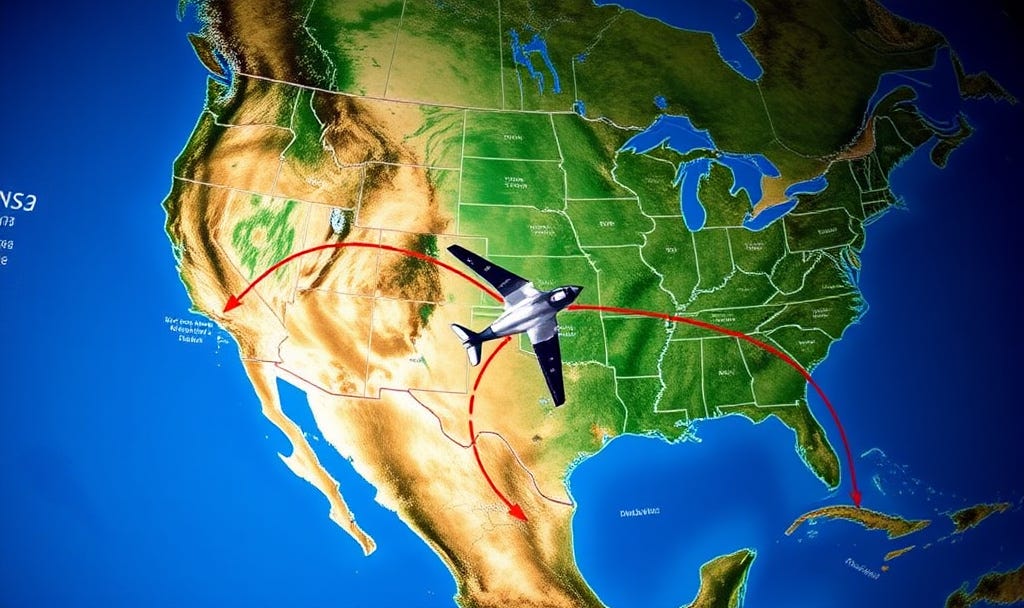
What happens when travel rules quietly change—and the destination is no longer where you land? (Spanish Substitles)
Apr 1700:17:32Tap to summarizeDisclaimer: Side effects may include laughter and/or anger. Read or watch at your own risk.There’s a rule — simple on paper, slippery in practice. Homeland Security is looking to make this the law soon.Some cities — New York City, Los Angeles, Chicago — call themselves sanctuary cities. Which means they are sanctuaries for people in a free country called America. And Washington looks at that and says: Fine. Then your cities no longer exist whenever a passport is needed.So here’s how it’ll work, according to the new DHS: International travelers can still land in those cities — but they won’t be processed there. No customs. No official entry. No clean handshake with the country you just flew into. Instead, the biggest gateways in the country become layover lounges with better branding.You don’t enter where you land. You enter where you’re allowed to be processed.It’s neat. It’s quiet. It doesn’t argue. It just moves the finish line. And if you’re the one traveling? You don’t debate it. You just follow it.Let’s play this out, you traveler, you.Your itineraryHour 0 — ParisNot just a place — this is the last moment you exist as a person with intent. You have a destination: Los Angeles. A clean line across a map. A simple idea.Hours 0–10 — The FlightThe plane hums like a lullaby engineered by accountants. You drift. You believe. Ten hours. That’s what you bought. That’s what they told you.Hours 10–13 — New York CityYou land. And the illusion peels back — slow, wet, unpleasant. You stand in line with the others. The hopeful. The deodorized. The still-human. A voice — calm, disembodied, maybe not even attached to a face — explains: This city is a sanctuary city. It does not align. Therefore… you do not arrive.Not denied. That would imply judgment. You are something worse. You are redirected. And here’s where it gets good — where the system leans in close, breath warm, and says: “We’re not stopping you. We’re improving you.”Hours 13–20 — OrlandoTime loosens. The clocks look decorative now. You sit beneath fluorescent lights that flicker like they’re trying to remember your name. You miss your connection, but it doesn’t feel like a mistake. It feels… scheduled. You start to suspect the itinerary isn’t a plan. It’s a ritual.Hours 20–26 — HoustonYou land in compliance. The air tastes like paperwork. There are others here. So many others. All rerouted. All softened. The line doesn’t move — it breathes. You wait long enough to forget why you were in a hurry. Then you’re told, gently: Not here either. Try Dallas.Hours 26–32 — DallasYou don’t question it. You board like it’s your idea. Somewhere between takeoff and landing, you realize your spine has accepted the shape of the seat permanently. You’re becoming… portable. Time is no longer a measurement. It’s a seasoning.Hours 32–40 — DenverSnow falls like static on a broken channel. You sleep in fragments — ten minutes here, twenty there — like the system is rationing your consciousness. A man next to you whispers that he’s been here two days. You know you are just like him.Hours 40–48 — PhoenixHeat. Dry, biblical heat. Your lips crack. Your thoughts slow. Your reflection in the airport bathroom looks like someone who owes money to reality.And then it hits you: you are orbiting your destination. Like a satellite that’s been denied clearance to land. Because the cities built to receive you refused to kneel. And the system — oh, the new system — doesn’t kneel. It reroutes.Then the punchline evolves into something almost erotic in its cruelty. You miss your connection. Of course you do. So they send you to Mexico City.Hours 48–58 — Mexico CityYou leave the United States. Without ever entering it. You crossed an ocean to be told to go somewhere else — and now you’re doing it internationally. You are no longer a traveler. You are a demonstration. For the public to observe. For the news channels to cover and justify for their masters. Then you fly back in.Hours 58–65 — San AntonioAnd finally — they process you. No ceremony. No warmth. Just a stamp. A quiet, almost intimate acknowledgment: You found a place that agrees.Hours 65–72 — Los AngelesYou land. Not triumphant. Not relieved. Just… completed. Like a transaction that took longer than expected but eventually cleared.And now — now — you’re supposed to be grateful. Grateful for the tour. Grateful for the expansion. Grateful that what was once a straight line has become a sacred geometry of inconvenience stretching across continents and egos.Because this isn’t inefficiency. This is philosophy so devoted to its own logic that it will bend space, time, and your spinal alignment before it bends itself.And if you can’t appreciate that — if you look at 3 days of rerouting, reprocessing, re-everything, and still call it absurd — then maybe the problem isn’t the journey.The Cary Harrison Files is a reader-supported publication. To receive new posts and support my work, consider becoming a free or paid subscriber.Copyright Audiences United, LLC – all rights reserved. This is a public episode. If you'd like to discuss this with other subscribers or get access to bonus episodes, visit caryharrison.substack.com/subscribe
Transcribe →
[Espańol] El Neuro-Rapto que Se Avecina Y el miembro del gabinete en el pasillo de al lado que quiere erradicar a la raza maestra
Apr 1200:31:54Tap to summarizeDisclaimer: Side effects may include laughter and/or anger. Read or watch at your own risk.El Profeta de la Era AlgorítmicaEse profeta tiene nombre, y es Alex Karp—el oráculo cinético de Palantir Technologies.Palantir no solo recuerda dónde has estado. Redacta una teoría operativa de hacia dónde vas. Cruza referencias de tus llamadas a las 2 a.m. Mira de reojo esa descarga cuestionable de 2019. Y luego, con una compostura impecable, envía una factura al Pentágono como si estuviera cobrando por tintorería.Sabe.Predice.Cobra.Karp, por su parte, no se sienta. Oscila. Hay grabaciones—ampliamente difundidas—de él siendo físicamente incapaz de permanecer sentado durante una entrevista. No es nerviosismo. No es carisma. Es algo más cercano a un hombre conectado directamente a la red.No ocupa el espacio. Lo agita.Y desde esta cumbre vibrante del capital de vigilancia, Karp entrega el mensaje: la inteligencia artificial viene por el mercado laboral con la sutileza de una demolición controlada.No estás siendo “disrumpido”. Estás siendo despejado.La mayoría de la gente, sugiere, se dirige hacia la obsolescencia económica. Eres un Blockbuster en la era de Netflix. Un agente de viajes en un mundo que se reserva solo. Un artesano viendo llegar la línea de ensamblaje con una sonrisa y un cronómetro.El Bote Salvavidas (Cupos Limitados)Pero—si resulta que eres neurodivergente, felicidades. De repente eres esencial.Se nos dice que el futuro pertenece a quienes están cableados de forma distinta.¿Todos los demás? Aprendan a mantenerse a flote.Una Interrupción NecesariaLa neurodivergencia no es una oportunidad de marca.Es una condición vivida—plural, desordenada, distribuida de forma desigual y profundamente humana. Un término paraguas que abarca el autismo, el TDAH, la dislexia, la dispraxia, el síndrome de Tourette y más. Aproximadamente una de cada cinco personas cae en algún punto bajo ese paraguas.No es raro.No es exótico.Es una quinta parte del sistema operativo.¿Y históricamente? Esa quinta parte no ha sido celebrada. Ha sido filtrada.Sistemas educativos diseñados para la conformidad. Lugares de trabajo optimizados para el contacto visual y la charla trivial. Procesos de contratación que confunden diferencia con deficiencia.El problema no es la capacidad. Es la arquitectura.Los adultos autistas, por ejemplo, enfrentan tasas de desempleo abrumadoras—no porque no puedan hacer el trabajo, sino porque el trabajo se niega a reconocer cómo lo hacen.La misma economía que ahora los llama “el futuro” pasó décadas cerrándoles la puerta.El Evangelio Según la ExcepciónKarp no está solo.Está Elon Musk, quien ha vinculado públicamente su neurodivergencia con su éxito.Está Peter Thiel, quien ha presentado rasgos similares como ventajas competitivas.Una dificultad se convierte en leyenda.Un rasgo se convierte en trofeo.No es defensa. Es una reescritura conveniente.La historia ya no es:“Esto hizo mi vida más difícil.”Ahora es:“Esto es la razón por la que gané.”Mientras Tanto, en el Mismo Gobierno…Entra Robert F. Kennedy Jr.En esta versión, la neurodivergencia no es variación. Es catástrofe.Algo que debe ser rastreado. Explicado. Potencialmente eliminado.Así que ahora tenemos un sistema que dice:* La neurodivergencia es la clave para sobrevivir a la economía de la IA.* La neurodivergencia es una crisis de salud pública.El mismo rasgo. Dos veredictos.Depende de si produce miles de millones—o requiere adaptación.Arriba, es un superpoder.Abajo, es un problema.La Verdadera Línea ConductoraEsto no trata sobre neurología.Trata sobre utilidad.Si una diferencia puede monetizarse, se celebra.Si requiere apoyo, se examina.El mismo cerebro puede ser llamado visionario o defectuoso según el balance financiero.No estamos clasificando a las personas por cómo piensan.Las estamos clasificando por cuán rentable resulta ese pensamiento.Lo Que Realmente Importa (La Parte Poco Sexy)Quita la profecía, las conferencias, los mitos de origen de los multimillonarios, y lo que queda es aburrido—y esencial:* Sistemas que acomoden distintos tipos de mente* Prácticas de contratación que midan capacidad, no conformidad* Escuelas que reconozcan más de una forma de aprender* Una suposición básica de que la variación humana no es un defectoSin coronas.Sin registros.Sin mitologías.Solo infraestructura que no excluya silenciosamente a una quinta parte de la población.La Imagen FinalKarp sigue caminando.Musk sigue publicando.Thiel sigue teorizando.Kennedy sigue clasificando.¿Y el resto del mundo?Sigue siendo medido. Clasificado. Predicho.Alimentado a sistemas que entienden todo sobre el comportamiento—y casi nada sobre la dignidad.La Única Pregunta que Importa¿Este futuro hará espacio para distintos tipos de mente—o simplemente encontrará formas más eficientes de utilizarlas?The Cary Harrison Files is a reader-supported publication. To receive new posts and support my work, consider becoming a free or paid subscriber. Copyright Audiences United, LLC – all rights reserved. This is a public episode. If you'd like to discuss this with other subscribers or get access to bonus episodes, visit caryharrison.substack.com/subscribe
Transcribe →
The Day Democracy Flatlined… and Somebody Actually Brought the Paddles
Apr 1100:30:07Tap to summarizeDisclaimer: Side effects may include laughter and/or anger. Read or watch at your own risk.“Democracy still has a pulse. It’s faint… it smells a little… it may have recently soiled itself—but it’s alive.”Let’s not romanticize this.Nobody’s standing on a marble balcony with a torch. Nobody’s composing symphonies about civic virtue. The patient is wheezing, the gown is open in the back, and half the room is arguing about whether the machine is even plugged in.And yet—against all expectations, against the consultants, against the spreadsheets, against the professional pessimists who make a living embalming possibility—someone reached for the defibrillator.And it worked.Lower Your Expectations (No, Lower Than That)“Lower your expectations… crawl space… the drain beneath the crawl space… only from that posture… can you appreciate what’s about to be described.”Because what happened next will sound absurd if you’re still standing upright.A deep red district—one of those political no-go zones where hope goes to die and consultants go to invoice—flipped.Not with a miracle.Not with a billionaire.Not with a viral meme or a last-minute scandal.With something far more scandalous:“We’re going to get out and actually talk to people.”Yes. That.The thing campaigns claim to do while spending six figures on mailers that land directly in recycling bins.The Blueprint Nobody WantedHere’s the part that should make every professional strategist slightly nauseous:There was a blueprint.It just wasn’t expensive enough to be taken seriously.“It wasn’t going to be flashy commercials… it was going to be hard work.”Hard work. Door knocking. Conversations. Listening.You know—the activities that don’t scale nicely into PowerPoint decks.Instead of treating voters like demographic abstractions or algorithmic prey, they did something borderline revolutionary:“We’re down on the ground level talking to people face to face… see what their problems actually are.”And here’s where it gets dangerous.Because once you actually listen to people, you discover something inconvenient:They’re not as predictable as the map says they are.The Map Is Not the TerritoryThe district looked unwinnable.On paper.In reality?“Roughly a third, a third, and a third… Democrats, Republicans, and independents.”Translation: not a monolith—just a crowd no one bothered to talk to.And when someone finally did?“There was about five to eight percent of Republican voters that went… and a huge portion of independents.”Which is the polite, data-driven way of saying:The “impossible” was mostly a failure of imagination.The Heresy: Talk to the Other SideBrace yourself.This next idea has been known to cause hives in polite political circles.“Don’t be afraid of stepping out into an uncomfortable space… we may not agree, but I’m still going to fight for you.”There it is.Not ideological purity. Not rhetorical warfare. Not performative outrage.Just… honesty.And that honesty—delivered face-to-face, without the theatrical fog—did something remarkable:It built trust.Not the kind you measure in polling memos.The kind you measure when someone who wasn’t supposed to vote for you… does.What Actually WonLet’s ruin the mythology properly.It wasn’t messaging magic.It wasn’t consultant brilliance.It wasn’t party infrastructure descending from the heavens.It was this:“We had to scratch and claw for every single vote.”And this:“You go up and say—what’s going on in your life and how can we fix it?”And this:“People are tired of the chaos… they want real solutions.”No poetry. No illusions. No grand theory.Just relentless proximity to reality.The Quiet IndictmentIf this feels like a revelation, it’s only because the bar has been buried somewhere beneath the floorboards.Because none of this should be surprising.And yet, it is.Which raises an uncomfortable question:If this is all it takes… why isn’t everyone doing it?The Dangerous Conclusion“Democracy… slightly disheveled… still alive.”Alive—but not because the system worked.Alive because a handful of people refused to believe the system was the limit.They ignored the map.They ignored the gatekeepers.They ignored the polite advice to lose gracefully.And instead, they knocked.And knocked.And knocked.Until reality answered.So here’s the uncomfortable takeaway:The “impossible” isn’t some mystical barrier.It’s often just the point where most people stop trying.And the moment someone doesn’t?Things flip.The Cary Harrison Files is a reader-supported publication. To receive new posts and support my work, consider becoming a free or paid subscriber. Copyright Audiences United, LLC – all rights reserved. This is a public episode. If you'd like to discuss this with other subscribers or get access to bonus episodes, visit caryharrison.substack.com/subscribe
Transcribe →