← Catholic Answers Live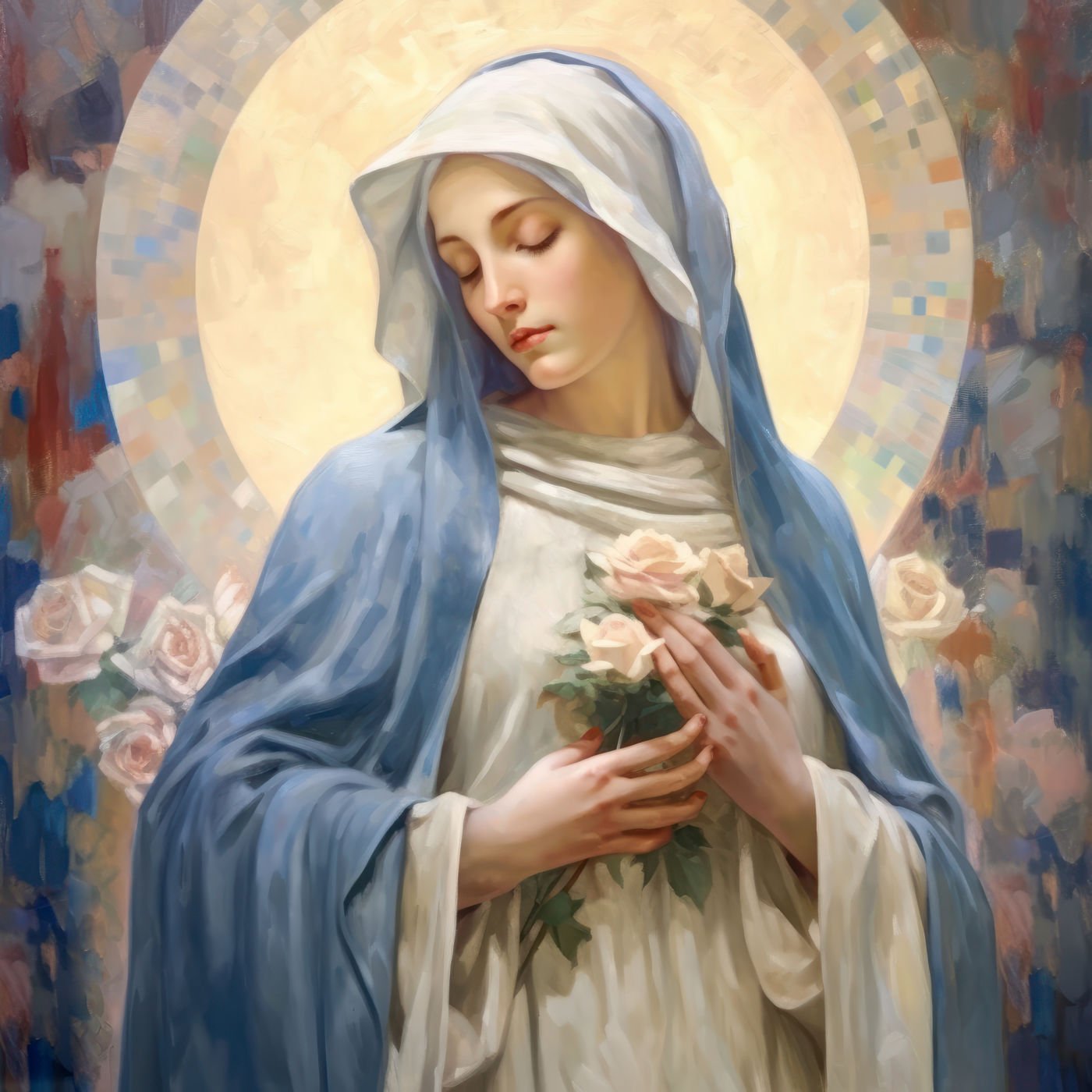
Catholic Answers Live
#12137 How Can I Explain the Perpetual Virginity of Mary to Someone in OCIA? - Trent Horn
A common misconception is that Mary’s perpetual virginity is optional to believe. We clarify Church teaching and how to explain it respectfully, along with insights on binding and loosing, the birth control pill, and how to talk about pornography and marriage. Join The CA Live Club Newsletter: Click Here Questions Covered: 06:30 – Does binding and loosing represent the Sensus Fidelium? 13:35 – Why is the pill considered abortifacient? 19:22 – Does God operate based on condition? I can’t wrap my head around the principle of double effect. 30:46 – How do I explain to my daughter in law who’s going to OCIA the perpetual virginity? She learned in class that the Church has never clarified and that her perpetual virginity is optional to believe? 42:54 – We tend to hear in TOB circles that men who are addicted to pornography should be avoided when considering marriage? Would you say the same start can be used for women? 51:27 – How do you avoid making c...
Loading summary
Transcript173 lines
- [00:00]
A
Buying or selling your home. Real Estate for Life can connect you with a pro life real estate agent. When Real Estate for Life receives a referral fee, they donate 65% to Catholic Answers. Learn more at realestateforlife.org hello, and welcome to Catholic. I am Cy Keller, your host. Got a great show for you. Second hour. Tim Staples will be here. First hour, Trent Horn. Go ahead and try to beat it. Try to beat that for two hours. Trent. If you want tips for defending the faith, that's what we'll do this hour. And Trent has been defending the Catholic faith for a long time. He's also been defending the pro life position for a long time. So if you'd like help in those areas, defending what the church says, what Jesus says, defending the reality of God, defending morality, defending life, you're welcome to call and ask for your help from Trent, who's pretty darn good at it. 888-318-7884 is the number. 883-18-7884. The Council of Trent is Trent's podcast. Just hundreds of thousands of people, millions of people have accessed that podcast, and it grows in popularity every year. It just gets bigger and bigger, and with good reason. Trent deals with things with a great deal of clarity, but also a great deal of equanimity. And he's an erenic. I'm gonna use my big words for Trent. He's an erenic presence in many cases on the Internet. And even when he has confrontations, those confrontations are done in a way that is reasonable and charitable. Trent Horne, welcome.
- [01:55]
B
Thank you, Cy, for your magnanimous comments towards me.
- [02:00]
A
I hope they weren't superfluous, but let's just do a big word hour.
- [02:05]
B
No, they were merely evidence of your verbosity. And so that is.
- [02:11]
A
Well, you win. I can't think of any more, but we'll just use regular words today. You're welcome to call and ask your question of Trent. There's six lines, and two of them are full right now. So four lines open. Eight, eight, eight. Tips for defending the faith this hour with Trent Horn. 888-31-87884. I don't know. Are you feeling okay? I noticed that the stock market had a bumpy day today. Trent, I don't know if you're like, if all of your millions are in the stock market, I don't know where your millions are. You probably don't even know where your millions are.
- [02:47]
B
Do you know what's great? There was a really smart guy who Once said for investment, you should store them up in a place where they don't rot and thieves cannot access them. So I always put them in the Cayman Islands. So I am.
- [03:03]
A
That's not what he meant. That's not what he meant at all.
- [03:06]
B
Do that place, Lake Paradise. You ever been there? It's great weather year round.
- [03:09]
A
It's probably as close as you can get to heaven. Yes, on earth.
- [03:13]
B
But yeah. So store up your treasures in heaven where they cannot be affected by any recessions or downward turns in the market.
- [03:22]
A
Again. 888-318-7884. The number. What's going on over there? The Trent Horne podcast, Council of Trent.
- [03:31]
B
Well, we have a lot of great episodes that have recently come out and more to come. So this week I covered anti Christian comedians, although my commenters said I should have been more specific. Alleged comedians. Alleged comedians. So people like Sarah Silverman, George Carlin, Ricky Gervais taking potshots at the faith. I mean, it's low fruit, but it's entertaining from comedians. So you need to have a quick response to that. I never really understood why a lot of people found George Carlin to be funny. I think a lot of times there's a fine line between being a comedian and just being a secular preacher.
- [04:08]
A
Yeah, that's what he was, a secular preacher like his when he did his own 10 Commandments. They were just silly. It wasn't even funny. It was dull. But I know a lot of people just think George Carlin is. I don't know, what's the word people use today? I'm trying to use up to date words. He's the bee's knees. He's the cat's meow. But I don't find him.
- [04:26]
B
I think they would like to think that he's based, I guess, but the problem is if he was still around. I mean, there's other comedians recently who were not afraid to push boundaries. But I think that they've capitulated more to woke ideology in recent years with the exceptions of. I think Bill Burr has certainly done that. I think maybe some exceptions might be someone like Shane Gillis.
- [04:53]
A
But yeah, Ricky Gervais at least has the advantage of being uproariously funny. He's a freakishly funny person. Just speaking. He's funny, but very nasty.
- [05:07]
B
Yeah, it's nice when somebody doesn't have. You don't want that nastiness. Very nasty. Very nasty.
- [05:11]
A
Very nasty. Not a big fan. Darren reminds me that we do have to have a fondness in our hearts for George Carlin for his work as Thomas the Tank Engine.
- [05:24]
B
Darren says, I think he was also Sarge in Cars. I think.
- [05:29]
A
Oh, I've never seen Cars.
- [05:30]
B
I think that was one of his last roles.
- [05:32]
A
I think the best Thomas the Tank Engine was Ringo Starr. I'm sorry, I have to disagree with you there. I also think Ringo Starr is funnier than George Carlin, especially when he sings. 888-318-7884 is the number. Now I'm nasty. Now I'm being nasty. 888-318-7884. I'm glad you did that, Trent, because sometimes I like on Netflix. If you try to catch a comedian on Netflix, there's just this kind of dumb, like you say the name of Jesus or you say Christian and it gets a laugh. But it seems more like fan service than actual comedy to me.
- [06:17]
B
Right? Yeah, it's more just like trying to amp up the people on your side. It's like a rally almost, rather than trying to do actually thoughtful comedy.
- [06:26]
A
All right, you want to go to the phones? We'll take some calls.
- [06:29]
B
Sure, yeah.
- [06:30]
A
All right, let's start with Eduardo in Florida. Lucky. Eduardo, go ahead with your question for Trent.
- [06:39]
C
Hey, how are you?
- [06:40]
D
Hi, how are you?
- [06:41]
A
Good, thank you.
- [06:42]
C
So I talked to a friend yesterday and I proposed to him. Kind of a two step argument. And I wanted to see what you think about it. Basically I cited to him second Timothy 1, verse 12, that speaks about God preserving the deposit of faith kind of as a promise that the. The faith will always remain right despite the pressure of heresy. And I joined together with the binding and losing and.
- [07:16]
B
Sorry, did you say 112 or 2 12? I apologize. You. 2nd Timothy 112 or 2 12?
- [07:22]
C
2Nd Timothy, chapter one, verse 12.
- [07:26]
B
Okay, okay. Yes, go ahead, Eduardo.
- [07:29]
C
So, and then I joined into binding and losing all the verses on binding and losing with the idea that binding and losing is to be passed down and inherited indefinitely. As you see in the Fathers, the fathers of the church understood that the successors of the apostles did receive that.
- [07:50]
D
Right.
- [07:51]
C
Just like in Matthew 23, verse 1, the scribes also received that from Moses.
- [07:57]
D
Right.
- [07:59]
C
But then my friends say that according to him, Lutherans have also succession, maybe Anglicans or something like that. So I wanted to ask you if there is something in the Bible that will lend credence to the idea that not everybody that has apostolic succession will be entitled to that. And that's basically the question that not.
- [08:25]
B
Everyone who has apostolic succession would be entitled to. What? You mean the binding and loosing that's promised?
- [08:31]
C
Yes, yes.
- [08:34]
B
Okay. Yeah, I would say I don't know if I could agree with the argument where it's going. I think it's always we have to be careful, especially when we combine verses written in different contexts, like the pastoral letter Paul wrote to Timothy versus what Jesus said when he gave special authority to Peter in Matthew 16. So I think we gotta be careful about combining the context there. Traditionally, the understanding of the phrase to bind and to loosen is the ability to declare doctrine, is the ability to have dogmatic and juridical authority over believers. And this is something that even Protestant scholars have recognized when binding and loosing is conjoined with the phrase the keys of the kingdom. RT France is a Protestant scholar and he puts it this way. He says the terms binding and loosing refer to a teaching function, and more specifically one of making halakhic pronouncements like this in Judaism relative to laws not written down in the Jewish Scriptures based on an oral interpretation. So it's related to halakhic pronouncements, this idea of, you know, making these proclamations with authority that aren't necessarily found, you know, straight from Scripture, which are binding on the people of God. So this ability to bind the people of God, it's not something that can be shared equally amongst all the people of God. God. So there is something called the census fidelium, where the Holy Spirit will protect the faithful as a whole from falling away from the true faith or from inheriting error. You know, that has to be qualified. There could be large numbers of the faithful that fall into error, but not all of the faithful. But it doesn't follow from that that the faithful have the same magisterial authority that the genuine successors of the apostles have, which are the bishops. So I think those that would claim apostolic succession, the burden is on them to show that they have maintained this, that they have maintained this historically. But the problem is, especially if you're looking at Protestant denominations, they have radically contradicted the apostolic witness that was held before them. In some cases, they have fully repudiated the Catholic Church that they came from the ministers who might have ordained them. And so because of that, the Church teaches that non Catholic, non orthodox Christians, so what we typically call Protestants, we would refer not even with the term church, properly speaking, because a church is part of apostolic succession. We refer them to ecclesial communities that came out of the Reformation. Now, we don't deny what's holy and true in those communities. And we recognize that they're Christians. They, they're separated brethren, and they have some communion with the church of Christ. We just want them to have full communion with the church of Christ. But in doing that and creating that separation, they do not maintain apostolic succession, and the vast majority of them deny that doctrine for that very reason. So I think the argument's interesting, but I would be hesitant about what verses it's conjoined to. But if you want more on apostolic succession, I cover that a little bit in my book Case for Catholicism. And we have resources@catholic.com if you're interested as well.
- [11:52]
A
Eduardo, thank you very much for getting us started this hour. That brings us to the first break. We'll be right back with more tips for defending the faith with Trent Horn on CATHOLIC ANSWERS live. We're here for you.
- [12:03]
B
Call now.
- [12:04]
A
Catholic Answers Live.
- [12:07]
E
Underwriting for Catholic Answers Live is provided by Real Estate for Life. Real Estate for Life connects home buyers and sellers to real estate agents while supporting pro life organizations. On the web@realestateforlife.org Underwriting for Catholic Answers Live is provided by Magnificat. Published monthly, Magnificat features texts of daily Mass, prayers, articles, meditations, art commentaries and more. In step with the liturgical rhythm of the church. On the web@Magnificat.com he is honored as.
- [12:37]
A
The newest doctor of the Church with the title Doctor of Unity. Matthew Bunsen and the Doctors of the Church. A second century bishop, theologian and martyr, St. Irenaeus of Lyon was a fierce defender of the faith against the heresy of Gnosticism. He reminded Catholics of every century that heresy cloaks itself in appealing guise, but the antidote is a sound teaching handed down by the apostles. For more about the Doctors of the church, visit doctorsofthechurch.com welcome back to Catholic Answers Live. It's always fun when Trent Horn is here. It's tips for defending the faith this hour. And you're welcome to call and ask Trent. Your question, 888-318-7884. Old friend Emma in Hayden, Idaho, is online, too. We're awful glad you're here, Emma. Thanks for the call.
- [13:34]
E
Thank you.
- [13:35]
F
I was telling Sky a couple months ago, Trent, that I used to yell at you when you were on the radio and I was still a prostitute.
- [13:44]
A
Oh, we yell at Trent. We just yell at Trent face.
- [13:47]
B
You would do you would you would fit in with the people at Kavikanser so well. My goodness, it'd be like you worked there forever.
- [13:57]
D
Yeah.
- [13:57]
A
You've got one of the main job qualifications actually yelling at Trent. That's one of the main qualifications of work here.
- [14:03]
F
Yeah because what I told you you both would. Everybody yells at Trent.
- [14:08]
B
Well, that's what I'm here for. Well, anyway.
- [14:11]
A
But you don't yell at him anymore, Emma, because he got you. Huh? He convinced you? No. I know.
- [14:15]
F
One of my heroes now you are.
- [14:17]
A
Yeah, me too.
- [14:18]
B
Kind of you.
- [14:21]
A
Well, thanks for calling, Emma. It was nice talking with you.
- [14:23]
B
Oh, wait.
- [14:24]
A
Do you have a question?
- [14:25]
B
No. We'll have some fun here. What's. Yeah, what. What do you have?
- [14:28]
F
I never thought that the pill was an abortive fascia. I don't think it is every time, but can you explain that to me?
- [14:36]
B
Yeah. So there is conflicting research about this and it's something I might do a deep dive in soon. This is something that has been claimed by pro life advocates for a while. It depends how you define the term abortion and pregnancy. So the devil's always in the definitions, right? So if you define pregnancy as the time period when an embryo implants in the womb. Because abortion is usually defined as they'll say terminating a pregnancy. And pregnancy is usually measured from when the baby implants in the womb. Of course, the baby is a baby from the moment he or she is conceived. So to put this all. I want to make sure I get all the terms properly here. Over the counter. Hormonal contraceptives do not seem to be capable of causing an implanted human being to detach from a mother's uterus. So they would not cause an abortion in that sense. How the term abortion is defined in a lot of medical literature. But if you define abortion as an act that directly kills, you know, a pre born human child, then it is possible that the. That hormonal contraceptives do this, or intrauterine devices do this by thinning the lining of the uterus to prevent the child from implanting in the first place. Now there are some so called emergency contraceptives, I think, like Ella, for example, that may. Some of those may be abortifacient and may cause the embryo to detach or are more powerfully designed to prevent implantation. The problem with a lot of over the counter birth control is a lot of the manufacturers, they don't know exactly how it works. They say, well, there's these three possible mechanisms how it could work. It could prevent the egg from being released, it could prevent sperm from reaching the egg, and it may prevent the egg from implanting in the womb. But we don't really know how often birth control works by each of those mechanisms. So I would say that there is certainly cause for concern that Hormonal birth control pills, when taken, one of the ways they function may be by preventing a human embryo from implanting, which would lead to the child's demise. So they may do that, but it's hard to know how often they function in that way. But even if they did not, even if they said, hey, we have a birth control pill, that it only prevents the egg from being released, and that's it, the Catholic Church would say, well, no, that's still wrong, because that's the sin of contraception. So if you'd like more on that, there's a lot that's been done on that at the National Catholic Bioethics Center. NCBCenter.org might be a good place you could go and look. William May is a Catholic bio Theologian. Sorry, Catholic theologian and bioethicist. He has a book called the Catholic Bioethics and the Gift of Life. Also something I would recommend, but that would be a start. Is that is at least somewhat helpful for you, Emma?
- [17:42]
F
This again. So I can get all the references, but that helps out a lot.
- [17:46]
E
Thank you.
- [17:46]
B
Yeah, yeah, replay it. Go check them out. I think you'll get a lot from me. From them. All right.
- [17:51]
A
You know what's funny, Emma? It's funny to think that somebody else is yelling at Trent right now and maybe they'll come. You know.
- [17:59]
F
They'Re my people.
- [18:00]
A
Somebody who's not quite where you are.
- [18:03]
B
Yeah.
- [18:03]
F
Just be patient with them. Just be patient.
- [18:06]
A
It's fun to think of people in their car yelling at the radio while Trent talks. Emma. Thanks.
- [18:12]
B
That's so fun. There might be a whole group of people. They could have their own little club meeting. But what makes you sad is, like, there's no club like that for you. Sigh. I know there's. There is nobody. There is nobody out there yelling at the radio to psychell it. I'd like.
- [18:25]
A
No.
- [18:26]
B
Even in the world of 7 billion people, I could probably bet money on it.
- [18:29]
A
Yeah. I don't think there's anyone even taking a mild interest.
- [18:34]
B
The only time maybe they would yell at you is if we broadcast the shows in, like, another language in another market, and they just pick a really horrible guy to dub over you.
- [18:43]
A
Oh, yeah.
- [18:43]
B
It doesn't sound like you at all.
- [18:45]
A
Oh, okay. Yeah. You know, I have people like that too. I understand what Emma's saying. There's people who, in my journey, you know, the life is the ongoing conversion where for years I thought, this person is horrible. This is what they're saying. And then later came to the realization, oh, well, yeah, in addition to whatever else, I thought, they're also right about whatever they've been saying. So I think it's healthy that Emma did that. Let's go to Vincent in Tampa, Florida, watching on YouTube. Vincent, thank you for waiting. Go ahead with your question for Trent.
- [19:22]
D
Hey, I'm a Catholic, and I want to ask a question relating to the topic of the principle of double effect and how God allows certain physical evils. And this might be a bit lengthy, but I want to use an analogy to better understand how. How all this works.
- [19:38]
A
All right, well, we have a few minutes. Just try not to make it too lengthy, Vincent. But yeah.
- [19:44]
D
All right, so my question is first, does God operate by the condition and the principle of double effect, that a bad effect cannot cause a good effect. So, like, how God can that. How even though God can allow suffering, it can't be the suffering that causes goods like compassion or perseverance. And I asked this because I'm having a bit of trouble wrapping my head around how all this works. So by analogy, why do we allow things like self flagellation, where it seems like the physical evil, pain is the act that is causing the spiritual growth? So please clear up some of my misunderstandings and thank you.
- [20:29]
B
Yeah, well, what I would say is first, God is not subject to moral laws in the same way that you and I are. So God gives moral law that we are bound to follow because he just is supreme goodness itself. That doesn't mean that God is amoral, for example. It just means that God. God is good because he's perfect goodness itself. And nothing he does will ever contradict his rational nature. He has an eternal plan for the universe. That's the eternal law. The natural law is our rational participation in that law. It's us understanding, oh, the universe supposed to be a certain way. This is how God has ordered it. And we should be in accord with God's plan for it for the universe, our bodies, our interactions with other persons. But God is not subject to that law in the same way that we are. So, for example, we are not allowed to end in it to directly kill an innocent human being, but God is able to directly kill an innocent human being because God is the author of life. He gave us life, and he's under no obligation to extend our life to a particular point. So I would be careful about saying, well, God has to operate under double effect too. Like, well, no, he doesn't. God just doesn't do anything that's intrinsically evil. And so when it comes to pain, for example, pain is a physical evil, but it is not intrinsically evil. Now you cannot as a human being. Well, I would say that even God, it's intrinsically evil to cause pain for pain's sake or to cause pain because you delight or enjoy that someone is suffering pain. Okay, that would just be sadism, named after the Marquis de Sade. That would be sadistic. But pain is not intrinsically evil.
- [22:09]
E
Pain.
- [22:09]
B
There's a lot of things that can justify pain. Greater goods can justify the existence of pain. So for example, when I work out, when other people work out, if you work out really hard, it hurts, you feel pain. But that pain is justified by the gains your body receives from that exercise. Now, there's some cases, though, where pain is a warning alarm that tells us, hey, this is bad. This is something you shouldn't do. So there could be cases like even, let's say when you fast, when you fast on Good Friday or Ash Wednesday, it hurts, you feel hungry. Hunger is a pain, but that's a good thing. But there's a threshold you can cross where the pain and injury is so severe and there's no good that justifies it. So there could be severe cases of self flagellation or penance that cause much more harm than can be justified. So that comes on a bit of a scale. So I would say that when it comes to that, God is able to create a world. God is able to inflict pain as long as he has a justification. He brings greater good from the evils he either tolerates or that he even inflicts upon people. And because God is all powerful and all knowing, there is nothing to prevent him from bringing about greater goods from any evils that he tolerates or even evils that he. That he inflicts that are. That are not intrinsically evil. So I'll stop right there. Would you like any clarification on that or anything? Like, follow up?
- [23:41]
D
Yeah, for things like fasting and like, doing penance, things like if we're, like you said on Good Friday or something. So wouldn't it be the, like the pain of not having food that's causing the spiritual growth though? Or would you say it's like the penance itself and this is like some sort of like, byproducts?
- [24:08]
B
Well, yeah, I would say the, the spiritual growth is a natural consequence of being detached from material desires. So it is an intended. So in the act of fasting, the object is the deliberate choice to not eat food. And there are things you intend, and so there's an intention behind that. Why do you do that? So every moral act has an object and intention and a circumstance. If any one of those three things are evil, the act itself becomes evil. So deliberately not eating food, that's not intrinsically evil. We do that all the time. I'm not eating food right now. So the object is not sinful. Fasting, though, could become sinful. If what's the intention? Why am I deliberately not eating food? Oh, it's to show other people how holy I am and to be praised in their eyes. Well, Jesus specifically says not to do that. You don't have a reward with your heavenly father. So there the intention would make the act evil. But there could be circumstances where, let's say, for example, I am a surgeon, I'm an emergency room surgeon and I know I might be called in on Friday to do an operation. Like, I know I'm on call and I have to do that. If I choose to fast in a way that prevents me from carrying out the work to save someone's life where I need to be able to focus, for example, then the object and intention might be good. I want to honor God. But in doing this act, you know, there's a circumstance that has made it evil. I've put other people in danger, for example, or let's say I have a condition where if I fast too much, I'll cause permanent damage to my body. You have like type 1 diabetes, for example. And so you know, the circumstance would make what would normally be a good act evil. So you have to look at all of that. Yeah. If you would like more on morality of these issues, I would definitely Recommend Our website, catholic.com Vincent thank you very.
- [25:56]
A
Much for the question. Trent Horn is our guest. Tips for defending the faith this hour. Well, all the lines are full at the moment, but keep trying. 888-318-7884. Each Catholic is obliged to spread and defend the faith by word and deed. Well, we're here to help. Join special guests Chris Stefanik, Dr. David Anders, father Jeff Kirby, and all your favorite Catholic ANSWERS apologists this September 25th through 28th in beautiful San Diego for the Catholic Answers Conference. Our theme, go make disciples. Enjoy four days of faith fun and fellowship. Use promo code early to save $50 when you register today at CatholicAnswersConference.com.
- [26:45]
E
Lots of people have big questions about Catholicism. It needs a big book of answers. And now it's got one. The Big Book of Catholic Answers is filled with helpful replies to more than 250 questions about the faith, questions about God, salvation, history, the Creed, the Bible. The list goes on and on. Order your copy of the Big Book of Catholic answers today@shop.catholic.com or ask for it at a good Catholic bookstore near you.
- [27:15]
A
Why do Catholics pray to dead people, bow to statues, venerate relics? And where do we find any of this stuff in the Bible? In the delightful book the Saints pray for your, Dr. Carla Broussard convincingly defends the ancient Christian belief rooted in Scripture, that the saints care for us, that they're our allies. Order your copy of the Saints Pray for your today@shop.catholic.com or ask for it at a good Catholic bookstore near you.
- [27:46]
E
Our Lord needs articulate defenders of the truth to spread the joy of the Catholic faith. Catholic Answers monthly giving club society 3:15 helps you fulfill the call in first Peter 3:15 to always be prepared to make a defense for the hope that is in you. For as little as $10 a month, you'll help Catholics grow in faith, bring lapsed Catholics home and lead non Catholics to the Truth. Go to Casociety315.com and join today.
- [28:16]
A
On.
- [28:17]
B
Friday's Take Two with Jerry and Debbie. Our topic is the real presence of.
- [28:20]
A
Christ in the Eucharist.
- [28:22]
B
Now back to to Catholic Answers Live.
- [28:41]
A
Welcome back to CATHOLIC Answers Live. I don't think Kerry's feeling well this week. The ad says this promote our new books. That's the ad. So I will now promote our. That's what it says. Look, I'm gonna promote our new books. Oh, this is a great one. Steve Weidenkopf is just fantastic. Everything he does is fantastic. But this is a great idea for a book. Everyone who looks at it goes, what a great idea for a book. 12 Catholic Heroes that history turned into villains. One of them on the COVID Marie Antoinette. She's not the villain. You've been told many others covered in there. That book is called Canceled by Steve Weidenkoff.
- [29:15]
B
Yeah, she never even. She never even said let them eat cake. She didn't say that. I believe that is a. I didn't.
- [29:22]
A
Read that chapter yet.
- [29:25]
B
Gotta get to it. But I am fairly certain I remember that. That's actually apocryphal story. So many of them throughout history.
- [29:32]
A
Yeah. And Steve Weidenkopf's got the good. So if you just want a fun book, it's called Canceled. Learn your Catholic history the fun way. Also, we've talked about Andrew Petter Pin's book the Faith Unboxed. It's about just ways in which we as believers and others put the church into boxes and let's get the church. It reminds me a bit of Trent's book, Counterfeit Christ's. But he's doing what Trent did for Christ with the church saying, yeah, this is a fake way to think about the church. Get the church out of that box. And then the new book from John Clark called God's the Remarkable Truth of those who Bore the Signs of Christ's Passion. All right, about the stigmata, use the promo code big3. You get 25% off when you buy any of these books or all of these books over@shop.catholic.com I hope I did what Carrie wanted. If I did, maybe he'll just start giving me one sentence ads promote our new books. The number here is 888-318-7884. Mary's in Atlanta, Georgia, listening on the Ave Maria radio app. You can also listen on the Quest there in Atlanta, that big beautiful radio station they have down there, to coin a phrase. Mary, however you listen, we're happy you're here. Go ahead with your question.
- [30:45]
F
Yes, thank you so much for taking my call. My daughter in law is going through RCIA.
- [30:51]
A
Yay.
- [30:52]
F
And there was a topic.
- [30:53]
B
Yay.
- [30:55]
F
After, oh, 18 years of marriage or 17 years of marriage, she's coming into the church. So I'm so thrilled. But there was a topic that they were discussing discussing the perpetual virginity of Our Lady. And the deacon said that scripture does not specifically say that Mary never had sexual relations, nor does the church specifically say that Mary never had sexual relations and that virginity could mean virtuous.
- [31:33]
A
And in the end, even I know that last one's not true. I've looked both of those words up and those do not mean the same thing. So what?
- [31:41]
F
And I was dumbfounded. I was dumbfounded and I couldn't. Anyway, we went in circles and he stuck to his guns and I said, I believe she was a perpetual virgin. And he said, I do too. But it depends on what your definition of virgin it means.
- [31:58]
A
Yeah. So he's trying not to. He doesn't think that the church has that teaching, so. Because he thinks that even though he believes it, he's not laying that on other people to believe it.
- [32:08]
F
But, and, and I brought up the dogma of the, The Council of Constantinople.
- [32:14]
B
Right.
- [32:14]
F
And.
- [32:15]
B
Right.
- [32:16]
A
Well, Istanbul.
- [32:17]
F
Say Istanbul. There you go. Whichever one. Whichever. Whichever one that was. I'm sorry, I'm nervous.
- [32:25]
A
No, I'm just teasing you. I'm sorry. So what would you like, Trent? Do you want Trent to just clarify this?
- [32:31]
F
Yes. So that I can go back to him and say, this is specifically what the church teaches, and this is a dogma, and we have to believe this.
- [32:40]
A
Trent.
- [32:41]
B
What? Oh, my goodness. Yeah, there I'm. I. The thing that makes me most mad because I went through RCIA back when it was RCIA, you know, 24 years ago. And I do think that one of the devil's preferred hangout spots in the church is ocia. Not saying that it's wrong. I mean, there's people who run very good adult initiation programs, but if you think about it, the devil would prefer people not become Catholic, so why wouldn't he target the places where people are being received into the church and they receive instruction. And OCIA is also a place to discern if you want to enter the Catholic Church. So it is. I also just want to. I feel like I want to summon, like, my inner Donald Trump right now. It's like there's some terrible people running these things, and we need to shut the whole thing down. We need to shut the whole thing down so we can figure out what's going on with ocia. You know, that's just really, like, how I feel like, I'm like, we got to, like. I really wish, at least in the USCCB there was, like, a nationwide certificate. Well, you think if someone was a deacon, they would have. They would have gotten that? You know, I guess, like, that's what makes it worse in this case. Usually it's like a layperson, ideally. Sorry, I have to rant for a minute, and then I'll address your issue. But maybe it just needs a rant. I like, it really makes me mad in parishes when the priest is. Basically, his job is to be the CEO of the parish. Like, the pre. What's the priest's job? His job is to manage, make sure that enough income comes in and the programs are running properly and the payroll is handled and HR is fine. And he's got to be like the CEO overseeing, essentially, a small company, you know, and there's some parishes that are large, that have dozens and dozens of staff members. You know, it's. It's daunting on priests. And I think a lot of my. I know priests who've told me. I remember one of my friends, he had an MBA background, and he said, I'm so grateful I was in the business world before I became a priest, because it is very, very, very hard to manage something this large. So what's hard. What I mean by that, though, is that a priest so busy at that, it's like, why aren't priests the ones who run rcia? This is so important. These are the people who have come to seek baptism in the church, but they usually can't because they don't have time. They got a million other things they got to manage. It's like, no, this is the most important thing because then you get people who are miscateged. No, the church does not mean the word. The word, it has nothing to do with virtue. The Greek word that is used here that has been used throughout all of church history is I partenos. Partenos meaning virgin, one who has not had intercourse. A partenos, one who is without intercourse or ever virgin. That is just not what it means. That's not how it's used in the context in the catechism or at the Lateran Council, I think under Pope Martin or at Second Constantinople. And to sell him, you know, that, oh, well, it just means virtuous. Okay, so wait, why they're saying that Mary issue is virtuous before, you know, during and after the birth of Christ? Why do you. If she's just virtuous? We already have a term for that. We call her all holy Panagia. Okay? Panagia is the ancient church father's term for saying that Mary is all holy. And that is where the doctrine of Mary's sinlessness and Mary's immaculate conception come from. So it's like this is a distinct doctrine. It's not talking about her being given God's grace to be protected from sin, from her conception throughout the rest of her rest of her earthly life, or, sorry, her whole life. I would say, obviously, rather what we are saying is that God chose to use Mary and for the Creator to be born through a creature and to be born of a virgin to be a sign that the one who was born of this creature has God as his father. Like Protestants all agree in the. They agree in part of the dogma of the. Of the virginity of Mary. So they believe that Mary did not have sexual relations even when she was espoused to Joseph and was married to him. And, you know, and could have. Because they have to. They have to believe that otherwise if she had had relations with Joseph during the pregnancy, which many married couples do, then Jesus would just be conceived of a virgin, not born of a virgin. So why is it important then? So it's not just some people say, well, it's to show, you know, that Jesus, the virgin birth was the only way for God to become man. That's not true. Jesus could have had older brothers, he could have had older brothers. Okay. It's perfectly possible for God to do that. But Protestants believe Jesus did not have older brothers because that is a wonderful sign that Jesus only has. Sorry, he has a heavenly father. Joseph is his guardian, so to speak, foster father, if you will. But his father is God the Father. So as Catholics, we just take that to its fullest extent, understanding scripture and tradition, that just as Jesus did not have older brothers to be a sign that he has a heavenly father, that he is not born of an earthly father, he didn't have younger brothers for the same reason that Mary's perpetual virginity is a wonderful sign of that. And I would say that there's plenty of scriptural references to that. That Mary's. What Mary says to the angel in Luke, chapter one, saying, I know not man, not I have no husband. As it's often erroneously translated, Mary choosing to give. Sorry. Jesus entrusting Mary to John rather than to one of his older siblings. Sorry. Rather than to one of his siblings that would have been. Would have been around that were eventually going to become believers later anyways. So I would recommend that if you would like Mary, we'd be happy to send you two copies of Behold your mother, one for yourself and one for your daughter in law. And let's throw in a why we're Catholic there because who knows what else needs to be fixed. What this deacon is doing. So you get a whole box set, two copies. Behold your mother and why we're Catholic. I'll stop there. We got maybe like two minutes before we might go to a break. Would you like any clarification on any of that?
- [39:01]
F
No, but you don't. You can send me the While we're Catholic, but I just bought 30 copies of Behold your mother to give out to the RCIA class. So it will be clarified.
- [39:12]
B
Wow. Wow. So. Oh, so you. You bought behold. You bought 30 behold your mothers.
- [39:18]
F
Yeah, because I wanted to make sure that this was. That the RCIA class got a good book.
- [39:26]
A
Wow, Mary, that is so cool. You are very cool.
- [39:31]
B
They're gonna. I'm gonna do it. I don't care if. If accounting goes after me after this one. I trust you could get this to OCI because Behold your mother is a great book, but it is a bit of a brick of a book. I love that Tim, you know, he covers every objection out there. I would like to send you a box of why we're Catholic. And for anyone else listening, you can go to shop.catholic.com and you can get a box of them for $60, $3 a book. They're perfect for Ocia. Yeah, so there. But I would like to. I would like to send you a box of why We're Catholic for your oci that.
- [40:03]
A
Send her a box of Teacher of Strange Things too. Trent, you should do that. The author of that book would appreciate you sending out 20 free books.
- [40:12]
B
Cy is gonna put every book we have in a truck and he is going to try coming to Georgia. Mary, get ready through the night. We are gonna put Cy on the midnight train to Georgia with 18 boxes.
- [40:24]
A
Yeah, I'd rather live in your world than live in mine. Anyways, Mary, what a great call. Thank you very much.
- [40:31]
B
Yeah, Sam, the line will send this to you.
- [40:35]
A
Very, very nice. I like Mary. I like her very much. All right, we better take a quick break. We'll be right back. More tips for defending the faith with Trent Horn on Catholic Answers Live.
- [40:47]
G
Hello, this is Archbishop Salvatore Cordiglione of San Francisco.
- [40:50]
B
Keep your dial tuned to Catholic Answers live.
- [40:55]
H
In Morse code. The sequence SOS is a distress call. It's been said that it stands for Save our Souls. Well, right now our world is in big trouble and we're putting out an SOS call for help. Will you answer that call? St. Paul Street Evangelization, a Catholic nonprofit, has hundreds of teams who share the good news with souls who don't know Jesus. Catholic Answers is supported in part by St. Paul Street Evangelization. Visit streetevangelization.com to get involved.
- [41:28]
A
Hi, this is Fr.
- [41:29]
B
Mike Schmitz.
- [41:30]
A
Please join me for Ascension's Bible in a Year and Catechism in a Year here on EWTN Radio. We're going through the entire Bible and the Catechism in 365 days. If you've ever wanted to understand what it means to be Catholic and allow those truths to shape your life, this is for you.
- [41:46]
E
Bible in a Year and Catechism in a Year with Father Mike schmitz tonight at 10 m. P. Pm Eastern, 7pm Pacific on EWTN radio.
- [42:06]
A
Welcome back to CATHOLIC Answers Live. Our guest is Oprah Horn and. Oh, it's Trent Horn, but he's giving away the store here. Tips for defending.
- [42:16]
B
Everybody gets a book.
- [42:18]
A
Everyone gets a box of books from you. That was impressive, though, that she gave away. We got to tell Tim when he gets in here, one of you guys. Remind me if I forget to tell Tim that he that that Mary gave 30 copies of his book to the OCIA there in Atlanta.
- [42:31]
B
If she's willing to invest that Much in the work of Catholic answers. I think she can have. She can have a box of why we're Catholic.
- [42:37]
A
I think you are correct about that. All right, I'm going to get you to do some more work, though. Back to the phones we go. Johnny's in Rhode island watching on Twitch to do more.
- [42:45]
B
Yes, Mr. Psy, I'm.
- [42:46]
A
Get back to work.
- [42:48]
B
Horn. All right, no more chitchat. Horn.
- [42:50]
A
Go ahead, Johnny, you got a question.
- [42:54]
D
Hey, can you hear me?
- [42:56]
A
Yes, we can.
- [42:58]
D
Okay, so this is actually kind of question is kind of response to like what you did, your episode you did on Simping and also a kind of joint response to your debate with Pearl Davis.
- [43:11]
B
Sure.
- [43:13]
D
In the kind of debate you did, you kind of mentioned briefly how the fact fact that if you're saying, well, if women who perform warmed up, can I say the word. Do you want me to use euphemism?
- [43:25]
B
So you mean adult entertainment industry.
- [43:28]
D
Okay, yes, okay, I'll use that for adult entertainment. And if that makes them unmarriageable, then fine. We should just say that all men who've watched blank or unmarriageable. Now, the question is that a lot of people in the Theology of the body crowd teach that if you're a guy and you struggle with the adult film film and they say, well, you're actually. That you're unmarriageable. But I think it's just a double standard because when it comes to women, they don't hold that standard. And it seems like they have one standard for men who struggle with adult content and one standard for women. Oh, I just think it's kind of sexist in a word.
- [44:11]
B
Yeah. I. I don't.
- [44:12]
D
What's your.
- [44:13]
B
Well, I don't know. You'd have. You, you. I mean, you'd have to talk with them. I strive very hard just to be equally consistent in my views that of men and women, that men and women have equal based, equal dignity, equal basic rights. Just treat men like people, treat women like people. It's men and women. There's nothing. Men aren't morally inferior to women and women aren't morally inferior to men. We're both made in the image likeness of God. So that's why I was pointing out that if you're going to say someone is that they are incapable of marriage because they have committed a particular sin in the past, that's not what the church teaches. That's not God's plan for people. There could be some people who are so traumatized from a previous sinful behavior that they have a psychological defect that prevents them from consenting to the vows of marriage. That could happen to someone. But someone could have psychological trauma from all sorts of things that would prevent them from consenting to marriage. And my point in the debate with Pearl was that you have to look at it at a case by case basis. If you just say, oh, doing a certain thing means you could never be married, well, no, that's not fair to. To anyone. Whether it's men who have been involved in the adult. Whether it's men or women involved in the adult industry, men or women who have consumed that product. You have to look at a case by case basis. Has this person repented of sin? They're not enslaved to it anymore. They're still a functioning, whole, healthy, virtuous person now. So what you're saying, though, is, well, people always saying, you know, hey, you shouldn't marry a guy if he's addicted to looking at adult literature. You know, adult entertainment literature, industry literature. And are they being inconsistent with. They don't say that about women. I don't know if they're. Once again, I don't know what all these people say or do, but I think in a lot of cases it's not that they're inconsistent. I think that just many of them think that. Can we say pornography? That's the other thing you can do. You have to say unalive and you have to say. You can't say the P word. But I could say cornography or corn or whatever. They think that that's exclusively a men's problem. And I think a lot of times, Johnny, it's more out of ignorance. They think like, oh, they didn't say that about women because they just think women don't struggle with that. And they just think, oh, well, it's just not a struggle for women. So I don't have to mention it, which is not true. But when it comes to adult explicit content, I would just say men and women struggle with it in different ways. Men tend to be more visually oriented. Women tend to be more imaginatively oriented. So, for example, adult explicit novels, where the explicit material is in a written form almost always that is catered to. Women think about 50 shades of gray, for example, and I would call that explicit material on par with watching explicit material. Whereas men just tend to not seek that out in a literary form. But women tend to. But some, you know, some men do. And there are some women who seek out, who do watch explicit videos and things like that. So I would say that I think A lot of cases, they just. They may not know that, but I think if you told them about it, they would say, well, yeah, anybody who has a compulsion to this illicit material is going to have a very difficult time consenting to the vows of exclusivity and monogamy in marriage and to treat and value their spouse. So anyone who struggles with this, you would want to make, especially in the dating process, if they are struggling with this, I would say it's a gigantic red flag. I'm not going to say 100% of the time this person is unmarriable, but it is a very, very big flag to be concerned about. Very big one. So what do you think of that, Johnny? Would you like any clarification on that?
- [47:56]
D
Yeah, no, that pretty much covered it. I'm just saying that if you're going to. Consistently, if they're saying it's a red flag for men and you're saying, I'm just asking for consistency like that, that. That sword cuts both way ways, right? That woman who struck. So that's all it is. Thank you very much.
- [48:15]
B
Yeah, no, that is absolutely a fair point, Johnny. And I think that there have been many cases in the church and then this is a problem we really do deal with where it's like the church has a message for. In this sense, culture has a message for men that's different from women. And men feel out of place in culture in the church. Like, we tell men to man up, we tell men not to practice toxic masculinity, but we tell women, you go, girl, you can do everything. You can do anything. No, you can't. You can't do that. Nobody can. We're not willing to tell women, hey, you need to stop being crazy. You need to stop your toxic femininity already. Like, you're just not allowed to say that stuff. So I think you're right that there is an inconsistency there where in the past women may have been inordinately blamed for vices. You know, the idea that in affairs it's the woman who entices and she's the only one to blame. You know, like David and Bathsheba. Bathsheba was the enticer, when actually there, it's more like David used his. If Harvey Weinstein exploits people through his power and authority and women, how much more? The King of Israel, no woman's gonna say no to him. So in the past, women were disproportionately blamed for vices. But I think the pendulum has swung the other way today. Where men get disproportionately blamed for vice, and that's not fair. We should instead recognize that we are all sinners. We are all redeemed by the blood of Jesus Christ, and we can all find salvation in Christ, regardless of our sex, race, ethnicity, what have you. That's what's great about the Catholic Church. It is a universal church, calling all believers beyond, you know, to the love of Christ.
- [49:56]
A
Would it be fair to say, Trent, I'll run this by you. You can tell me if I'm right about this, because one of the things I would like to say to Joni is you don't have to listen to other people. You don't have to listen to somebody because they set themselves up as an expert on the theology of the body. Just because you have a PhD or whatever, or a Master's, that doesn't mean that you give good advice. You have to listen to the church. You have to listen to what the church teaches. You don't have to listen to an exorcist. You don't have to listen to a youth preacher. You can choose to say, well, you.
- [50:24]
B
Do not have to listen to your favorite Catholic apologist.
- [50:27]
A
No, that's right. You don't have to listen to us. But you have an obligation to know what the church teaches. But I sometimes see these people very upset about their favorite podcaster. You're not under any moral obligation to do what a podcaster tells you to do or to think what a podcaster tells you to think. You have an obligation to listen to the church.
- [50:49]
B
Yeah, that's absolutely true. You're not obligated to go to trendhorn podcast.com to support all the good stuff we're doing. You are not obligated.
- [50:55]
A
Well, I feel like you have kind of a moral obligation to go to the Patreon page and support it, but you have to listen to it. All right, let's go.
- [51:02]
B
Yeah.
- [51:03]
A
Oh, there's just so many people out there on the Internet willing to sell everybody.
- [51:08]
B
That would be the gym model. Sigh. If I got a bunch of people to pay for the podcast but never listen to it, I basically run it. Like a Gym podcast is always 90 empty. I like to see that.
- [51:19]
A
All right, Dan. Thank. Thank you. Thank you very much, Johnny Daniel in Dallas, Texas, watching on YouTube. You're up next. Go ahead with your question.
- [51:27]
G
Hi, Trent. I'm going to try to make my question quick because then we're limited on time. Essentially, I'm trying to avoid making circular arguments about the Magisterium when talking To Protestants, the argument I make is that I cannot rely on my perfect personal exegesis of Bible passages to come to objective doctrines because one man's context is not another man's. But I see that from my perspective, we have the same problem when interpreting the magisterium canon or papal documents. And that's why we end up with set of the contests and orthodox people. So my question is, doesn't everyone still have to rely on their personal reading of text, whether it's biblical or a normative authority, and we can't really come to any objective certainty on what they mean? How do we avoid the problem of interpretation and being circular?
- [52:19]
B
You can't avoid it in the sense of ultimately you have to make the ultimate decision about what beliefs you consider warranted and what you will believe to be true. So ultimately, I mean, the Holy Spirit is also going to prompt you in those areas, but you have to make those judgments. So I'm not a fan of arguments that say, well, I'm not Protestant because, you know, I could get the Bible wrong, so I can't trust that I found the right doctrine that way. Well, I mean, you could get the Church Fathers wrong, you could get magisterial texts wrong, historical Church documents wrong. Anybody could get something wrong. So my preferred argument is not that Protestantism is impossible and only Orthodoxy is impossible and only Catholicism is possible to know truth. I don't like impossible possible as paradigm comparisons. I like better versus worse or more plausible versus least plausible. My argument would be a more modest one saying I have better tools to arrive at God's revelation through the Catholic paradigm of Scripture, tradition and the living magisterium. So, for example, I'm less likely to misinterpret the magisterium because the Magisterium is a living office that can clarify teachings over time. It is not a static text like Scripture, subject to interpretation. And I think this is very true because I think that you can say, yeah, we have better certainty about arriving at truth through this method. Because if you compare methods, if you just compare sola scriptura versus apostolic authority, which would include beyond Catholicism. So let's say that would include the Eastern and the Oriental Orthodox as well, that they believe in apostolic succession, that kind of stuff. Apostolic authority in an infallible authority through tradition of the magisterium. Catholics, Eastern Orthodox and Oriental Orthodox are way more in common about what we believe than everybody who's practicing Sola Scriptura. When you look at sola Scriptura devotees, you get everything from soup to nuts, as my grandfather would have probably would have said that. No, through the Magisterium, that we have the best, the most plausible way to arrive at, to arrive at the truth.
- [54:32]
A
Daniel, I say thank you to you. Hey, if you're here on the line, you can stay in the line. We've got Tim coming up and we'll do Ask Me Anything with Tim Staples. So all the questions that you had for Trent this hour, you're welcome to stay there and ask them of Tim when he gets in here in a few minutes. If you haven't called yet, there's two lines open. 888-318-7884 is the number 888-318-7884. Do check out Trent Horn's podcast, the Council of Trent. Check out his YouTube page. A lot of fantastic stuff there. Trent, thank you. Always love it when you're on.
- [55:05]
B
Thank you for having me.
- [55:06]
A
And I do listen to you. I listen to what you say because you're trustful.
- [55:09]
B
I appreciate, I appreciate that side.
- [55:12]
A
All right. Right back with more Catholic Answers live.