Podcast
Catholic Saints & Feasts
Hosted by Fr. Michael Black · EN
"Catholic Saints & Feasts" offers a dramatic reflection on each saint and feast day of the General Calendar of the Catholic Church. The reflections are taken from the four volume book series: "Saints & Feasts of the Catholic Calendar," written by Fr. Michael Black.
These reflections profile the theological bone breakers, the verbal flame throwers, the ocean crossers, the heart-melters, and the sweet-chanting virgin-martyrs who populate the liturgical calendar of the Catholic Church.
These reflections profile the theological bone breakers, the verbal flame throwers, the ocean crossers, the heart-melters, and the sweet-chanting virgin-martyrs who populate the liturgical calendar of the Catholic Church.
117episodes
Episodes
Newest firstAll episodes
August 16: Saint Stephen of Hungary
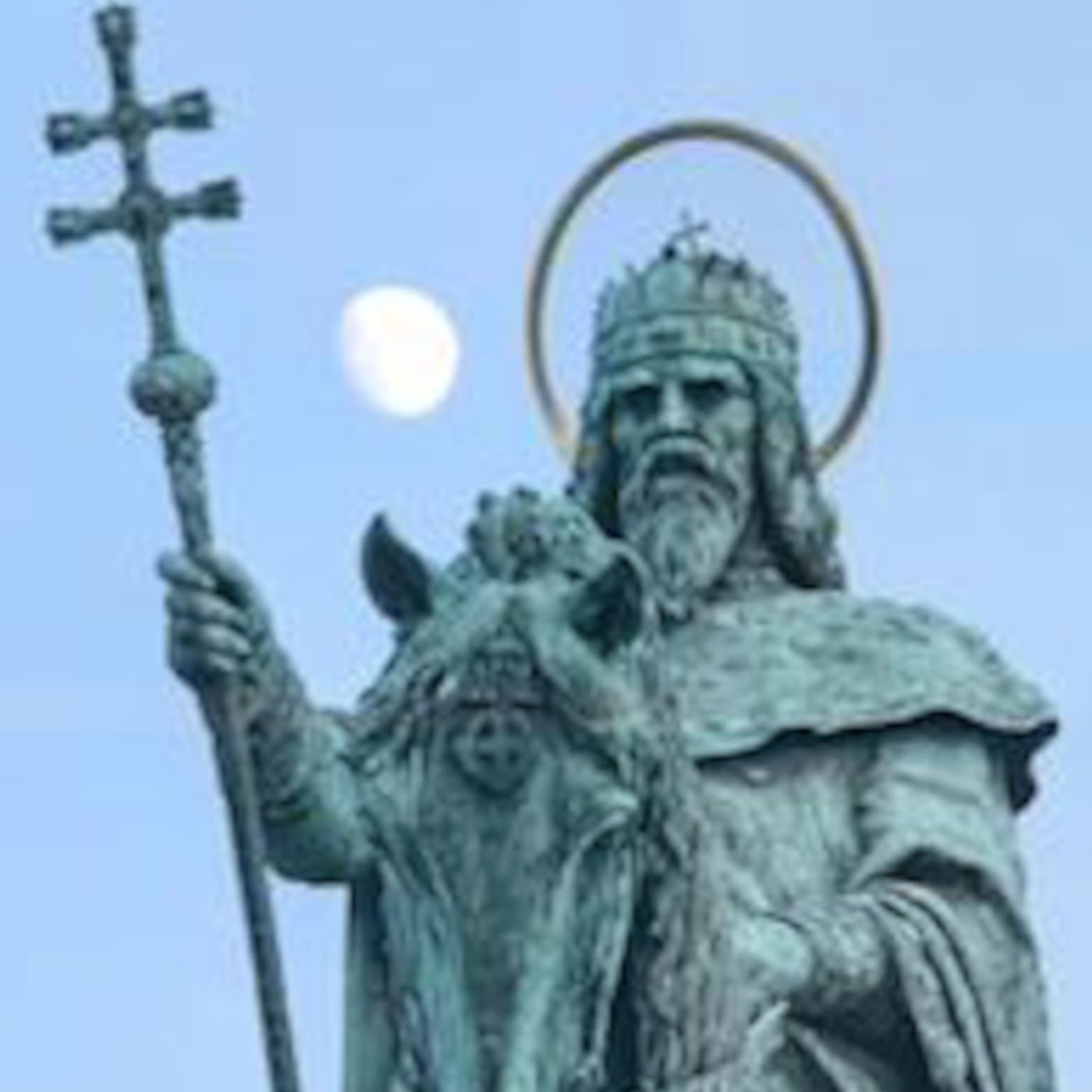
2d ago00:05:44Tap to summarizeAugust 16: Saint Stephen of Hungaryc. 975–1038Optional Memorial; Liturgical Color: WhitePatron Saint of Hungary and of kingsBaptized by his pagan father, made King by the Pope, his heirs demolished his legacySaint Stephen of Hungary was a warrior king whose silhouette stands proud on a far distant horizon as the sun rises behind him at the dawn of the medieval age. His year of birth can only be guessed, as ancient chronicles give conflicting dates. His father was of that generation of rough pagans who had to confront the new, vibrant force of Catholicism which challenged the old ways of paganism and its local gods who satisfied local needs. The Mediterranean Basin had long been Christian by the tenth century. But daring missionaries had only recently penetrated deep into the wide plains of the Magyars, the Bulgars, and that vast land of the Rus that lay beyond. That Christian dawn in Eastern Europe is when our saint first comes on the scene.He was born Vaik and baptized Stephen when his father, a duke, converted to Christianity. When he was about twenty-two, he succeeded his father as a Magyar leader and warlord. After consolidating his territory and power through various wars, he sent an emissary to the Pope in Rome to petition for the founding of Church structures in his land. Pope Sylvester II concurred with Stephen’s plans and took him one step further. Tradition holds that the Pope had a crown fashioned for Stephen and sent it to Hungary, where the papal ambassador crowned Stephen king in 1001.King Stephen took his duties as a Catholic king with utmost seriousness. He founded an enormous Benedictine monastery, numerous dioceses, and mandated one tax-supported parish with a priest for every ten towns. He built a shrine to the Virgin Mary, which became the sacred forum for the coronations, and burials, of the kings of Hungary. He aggressively punished those who practiced the outlawed pagan customs of yesteryear and prohibited marriages between pagans and Christians. Interestingly, he required that all his subjects be married, except for priests and religious.After sadly familiar intrigues over succession, money, and power, Stephen died on August 15, 1038. Most of his children had died as infants, and his one adult son, his presumptive heir, died in a hunting accident in 1031. Thus Stephen’s efforts to establish a Christian state were placed in jeopardy. Just as Stephen had feared, once the mighty king died, all of his accomplishments were neglected. Chaos and civil war raged for decades after his burial. The two ostensibly pagan kings who succeeded him were apathetic, or even antagonistic, toward Christianity. The fruits of Stephen’s Christian efforts rotted on the tree, and his immediate legacy dissipated.Eventually, order was restored to Hungary, and Stephen’s greatness was recognized. He was canonized in 1083. He is now a revered saint-founder of the Hungarian nation. The Huns, the Goths, and the Vandals don’t have a nation today. Over time, these pagan tribes were absorbed into the stable cultures they invaded. They melted into the many nations and identities of modern Europe. The Magyars, however, did not disappear, merge with other peoples, or melt away. They have their own nation, language, culture, art, and history. They are the people of Hungary, and they owe their enduring identity to Saint Stephen. He imposed the stability of a first-class religion on a horse-riding clan and so transformed that roaming tribe into a stable nation. Stephen gave his people God. And to God and His Church they were faithful. Hungary matured over the centuries like wine, until it was a refined Christian nation, a defender of Christ and the Church. Neighboring tribes resisted the gospel and dissipated into thin air with the passing of time. Saint Stephen was a model King because he knew that to found a country you have to found a Church along with it.Saint Stephen, you bear the name of the first martyr of the Church and showed similar courage in battling the enemies of God. May your brave and visionary leadership embolden all civil and church leaders to lay the foundations for a success which flourishes long after they have died.
Transcribe →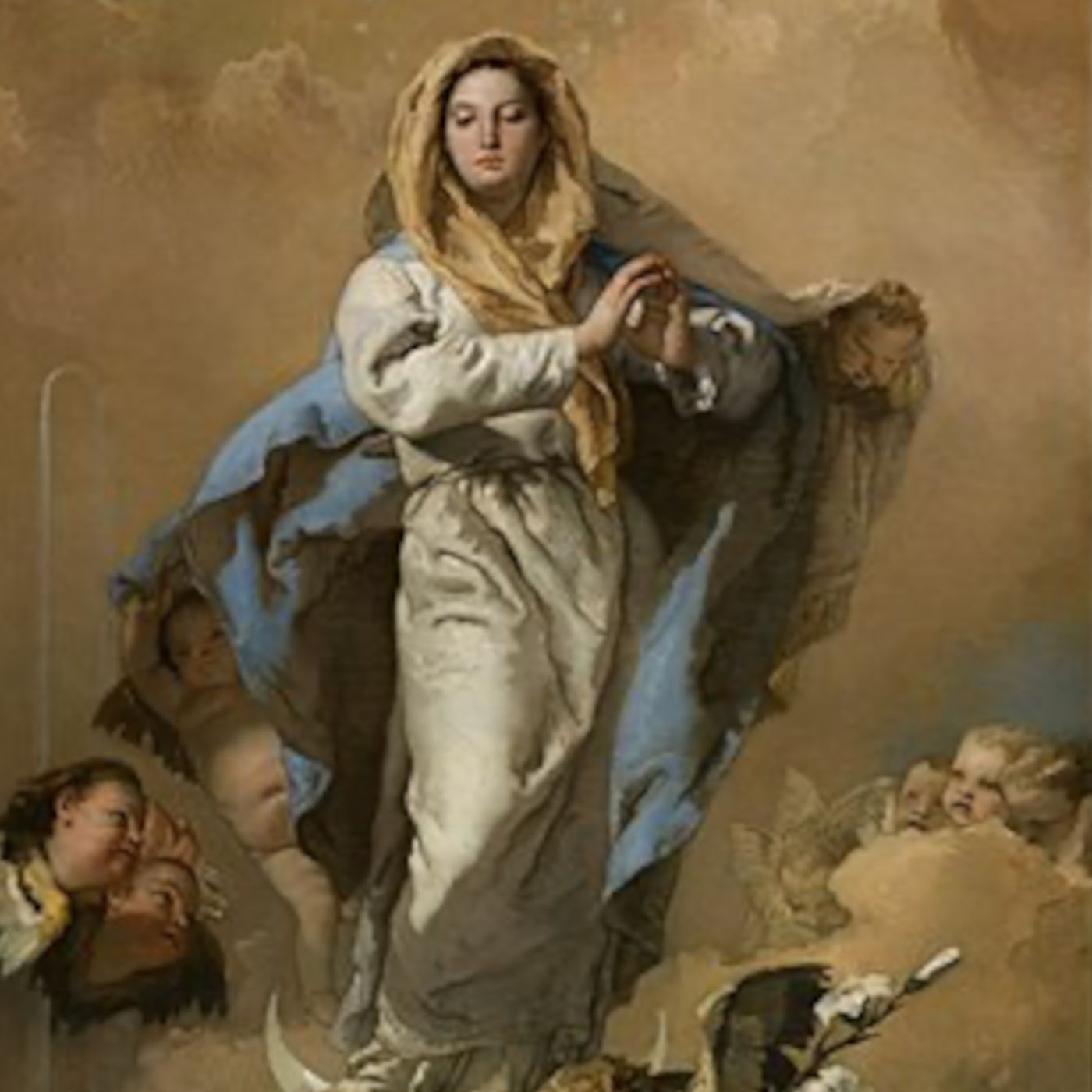
August 15: The Assumption of the Blessed Virgin Mary
3d ago00:05:50Tap to summarizeAugust 15: The Assumption of the Blessed Virgin MaryFirst CenturySolemnity; Liturgical Color: WhitePatron Saint of France and LebanonGod wants Mary for HimselfToday’s Solemnity of the Assumption of Mary body and soul into heaven commemorates, liturgically, a dogma. Catholicism celebrates her dogmas like a country celebrates its independence day or its military victories. The Church processes up and down city streets for the Body and Blood of Christ; she builds crèches and composes Christmas carols for the dogma of the Incarnation at Christmas; she names cities, such as Asunción, the capital of Paraguay, after dogmas such as today’s Feast. We strew flowers, sing songs, walk on pilgrimage, construct shrines, and kneel in prayer for our dearest truths. Tradition in the Church is not a locked chest. It is a vital force, like a rushing wind, that purifies and is purified, that is ever ancient and ever young, and that informs all that the Church teaches and does. The sacramental family of the Church celebrates her most deeply held, specifically defined beliefs, or dogmas, in beautiful ways.The Assumption of Mary into heaven is a logical consequence of the dogma of the Immaculate Conception. Because Mary was born without original sin, she did not suffer its consequences, among which is death. Because she was a kind of Ark of the New Covenant, carrying the Church in the person of Christ, God preserved her from sin and wanted her in His presence when her time on earth ceased. No saint has ever enjoyed such a privilege, because no saint ever had the relationship with Christ that Mary enjoyed. A pious tradition says that the choirs of angels in heaven whispered in awe to each other as Mary was assumed into God’s presence, “Who is this woman treated with such unique respect and honor?”Sometimes it’s hard to appreciate the beauty and majesty of a massive landscape without a person to give it scale. How high is that waterfall? How tall that mountain peak? How far that shore? Place a person in the field of vision and suddenly the image makes more sense. God fills every scene with his majesty. He is almost too much to take in. But Mary gives God scale and perspective. She humanizes the view. Mary is always there in the foreground, showing the faithful how to approach God and render Him due honor.Devotion to the Virgin Mary is not just a more intense version of devotion to a saint. It is so much more than that. True devotion to Mary is on a higher plane of spirituality, something “cradle Catholics” know instinctively, even if they cannot explain it. With Mary as our mother, the Church and her doctrines are vivified. They seem to matter more. The Church is closer to us and we to her because of Mary. Marian spirituality is more than religious wisdom in the Eastern tradition. It is more than acknowledging that Jesus Christ came from a particular woman and a particular town. To be “Marian” is to know why God would want her assumed into heaven, body intact. To be “Marian” is to understand that no one asks about a baby without asking about its mother in the very same breath. Mary was not just the first Christian. She was, for years, the only Christian. She was, for years, the entire Church.The dogma of the Assumption, like all dogmas, is liberating. Borders make one go deeper, just like irrigation channels guide the water where it’s needed so that a harvest will come. “No” can lead to new discoveries as much as “Yes.” Good theology sometimes says “No” to bad theology. This usually leads to a deeper spirituality. We need sound mysteries of faith to contemplate, to consider, and to commemorate. Without them, we would be focused either on falsehoods or on ourselves, and we might then become the mystery of faith rather than the truth or God. Profound dogmas of faith such as the Assumption of Mary walk hand in hand with a vibrant spiritually. Mary’s Assumption into heaven opens new horizons to the mind and imagination in prayer and a holy desire to discover more in the life to come.Saint Mary, assumed into heaven, may your life with God, body and soul, be our goal. May we see your quiet devotion to God and the Church as an example to be followed, a target to be aimed at, and a destiny that awaits the serious Christian who emulates your subtle virtues.
Transcribe →
August 14: Saint Maximilian Mary Kolbe, Priest and Martyr
4d ago00:07:41Tap to summarizeAugust 14: Saint Maximilian Mary Kolbe, Priest and Martyr1894–1941Memorial; Liturgical Color: RedPatron Saint of prisoners, drug addicts, journalists, and the pro-life movementPrisoner 16670 was tough, immersed in God, and ready when the moment cameSaints are made, not born. Even more so martyrs. Maximilian Kolbe was so impressive a man that he may have been canonized even if that oh-so-brief, oh-so-intense, my-life-for-his exchange in the grim prison yard of Auschwitz had not led to his martyrdom. Baptized as Raimund, from a young age Kolbe felt the call to self-sacrificing holiness. When he was a boy of twelve, the Virgin Mary came to him in a vision and held out two crowns for him to choose from: one white for a life of purity, and one red for martyrdom. The pre-teen Maximilian responded to his Lady: “I choose both.”Maximilian, along with his older brother, entered a local Franciscan seminary as a teen. When he was just eighteen, his superiors sent him to study in Rome, where he earned doctorates in philosophy and theology summa cum laude. He was ordained a priest in 1918 and the next year returned to the new, post-World War I country of Poland. For the next twenty plus years, Father Maximilian powered his way through life. He taught in a Franciscan seminary. He started an immense publishing house which printed devotional materials promoting the Army of the Immaculate. He founded a new Franciscan monastery, which rapidly grew into one of the largest in Poland. And in 1930 he became a missionary to the Far East. He went to China, had little success, and so went on to Japan, where he founded a monastery near Nagasaki. He also started a publishing house in India. In 1936 he returned to Poland due to ill health. But he didn’t stop. He continued to manage various Marian publications, which were widely circulated, and even procured a radio license and began broadcasting from his own monastery radio station. As he immersed himself in the thousands of details of these varied apostolates, Father Kolbe maintained a disciplined life of prayer, mortification, and daily Mass.After the Germans invaded Poland in September 1939, Kolbe’s apostolates were curtailed. He organized a hospital at the monastery and, along with the reduced community of brothers, gave shelter to refugees, including about 2,000 Jews. He was arrested by the Germans in 1939 and held for almost three months. He was pressured, but refused, to sign a document recognizing his German ancestry (Kolbe’s father was an ethnic German) in exchange for more food rations and better treatment. In February 1941, German SS men came and shuttered his monastery. Kolbe and four other friars were arrested, though twenty other brothers offered themselves in their stead. In May 1941, Kolbe was transferred to the heavy labor division of Auschwitz for the last act of his life.He carried out his priestly ministry as best he could in the hell of Auschwitz and endured severe beatings for it. In July, just two months after he arrived, a prisoner escaped from the camp. As both deterrent and reprisal, the head of the camp ordered ten men to be starved to death in the escapee’s place. The victims were chosen at random from a prisoner roll call. One of the unfortunate chosen, a married man named Francis, begged for mercy: "My wife! My children!" What followed this desperate pleading was profound, left an indelible impression on all who witnessed it, and is packed with an almost liturgical character.Perhaps remembering his childhood vision of the Virgin, and perhaps inspired that the chosen man shared the name Francis with the founder of his religious order, Kolbe removes his cap and slowly emerges from the bedraggled group of prisoners. A filthy, striped rag of a uniform is draped over his skeletal frame. He is barefoot. But he has dignity. There are no frivolous men in Auschwitz. He speaks directly to the commanding officer in German: “I want to take his place.” Kolbe’s bearing must command respect, because, according to an eye-witness, the officer responds to him using the formal “You.” “Warum wollen Sie für ihn sterben?”—“Why do you Sir want to die for him?” “Because he has a wife and children.” “What is your profession?” “I am a Catholic priest.” A few moments of silence and then “Gut.” “Good” or “Right.”After two weeks of no food or water in a bunker, a guard injected carbolic acid into the arm of the indestructible Kolbe on August 14. His body was cremated the next day. His ashes floated from the smokestack over the gray wasteland of Auschwitz on August 15, the Feast of the Assumption. He, a priest, became what he offered. Like Saint Polycarp of old, burned like bread at the stake, Kolbe’s life ended in a liturgical doxology where his own body became the bread of sacrifice.First-class relics of Saint Maximilian exist only because his Franciscan barbers thought he was a saint. They saved hairs from his head and beard without his knowledge. The man whose life he saved, Francis Gajowniczek, lived for another fifty-three years, to the age of 93, dying in 1995. He was present in Rome when Pope Saint John Paul II, who lived just an hour from Auschwitz in 1941, canonized his fellow Pole Saint Maximilian Kolbe in 1982.Saint Maximilian Kolbe, you were prepared to be generous in your last moments by a long life of sacrifice, humility, and devotion. May we so prepare ourselves day in and day out, so that when a moment of heroic generosity presents itself, we will respond like you.
Transcribe →
August 13: Saints Pontian, Pope; & Hippolytus, Priest: Martyrs
5d ago00:06:46Tap to summarizeAugust 13: Saints Pontian, Pope; & Hippolytus, Priest: MartyrsLate Second Century–c. 235Optional Memorial; Liturgical Color: RedPatron Saint of Montaldo Scarampi, Italy (Pontian) and prison guards (Hippolytus)An exiled Pope dies along with a learned priestToday’s martyrs died on the island of Sardinia, perhaps from overwork in the mines or perhaps from starvation or neglect rather than execution. In a pacific interlude following the persecution which was their doom, a later pope, Fabian, returned their bodies to Rome for dignified burial. Pontian was interred in the papal crypt in the Catacombs of Callixtus near so many of his fellow popes of the 200s. In 1909 the original marble epitaph on Pontian’s tomb was found among the shards littering the floor of the catacombs. It reads ΠONTIANOC ƐΠIC MPT (Pontian, Bishop, Martyr), although the abbreviation for “martyr” was engraved by a different hand. Tombstones are very economical. Hippolytus was buried in a Roman catacomb, subsequently named in his honor, which became a pilgrimage site. The links among today’s martyrs are their common date of burial, August 13, and their place of death. Hippolytus is by far the more significant figure.Pope Saint Pontian was consecrated Bishop of Rome in 230. He is chiefly known for convening a Roman Synod which confirmed a prior condemnation of the Egyptian theologian Origen. Like so many other bishops of his era, Pontian also dealt with divergent positions over how the Church should re-integrate Christians who had abjured their faith during a persecution. Should they be re-baptized, do public penance, or be welcomed back privately? Tensions over this issue perdured for many decades and deeply wounded Church unity. During a persecution, Pontian was exiled, but first graciously resigned in 235 so that a successor pope could be elected. For this magnanimous act, he was remembered as “distinguished” in contemporary documents.Saint Hippolytus is an elusive figure. He was most likely from Rome. Some traditions, however, state he was from Lyon and was a disciple of Saint Irenaeus. Incredibly for a saint, Hippolytus is also traditionally labeled an anti-pope for resisting Pope Callixtus’ lenient attitude in reintegrating into Church life the lapsi who had rendered homage to false gods. Hippolytus was later reconciled to the Church which he loved enough to disrupt. Besides being a controversialist, Hippolytus was the most impactful theologian in Rome before the legalization of Christianity. When the great theologian Origen came to Rome from Caesarea, he heard Hippolytus preach. Most of Hippolytus’ works have been lost, but enough translated fragments of his original Greek writings survive to capture his importance. He wrote on Scripture, dogma, law, apologetics, Christ, and also authored a comprehensive polemical work entitled A Refutation of All Heresies.Hippolytus is most famous as the author of the Apostolic Tradition, which preserves some of the most ancient liturgical texts of the primitive church. The original of the Apostolic Tradition does not exist, and later translated fragments are of dubious provenance, making the work a fluid, composite text of different eras. Nevertheless, the core document is a one-of-a-kind artifact, allowing a modern Christian to peek through the keyhole into the liturgy of the early, praying Church. Hippolytus doesn’t just describe the words and actions of the liturgy, as the earlier Didache and Saint Justin Martyr did. Instead, he writes down the actual prayers. The Apostolic Tradition contains the earliest known rite of ordination. The ordination rite of a bishop used today by the Catholic Church still largely adopts this ancient text. Hippolytus provides the first example of the Virgin Mary being invoked in liturgical prayer. And Hippolytus’ prayers for the Eucharistic banquet include the third-century words of consecration! This text is the source for a significant portion of today’s Eucharistic Prayer II, perhaps the most commonly used Eucharistic prayer at Mass. When the faithful throughout the world hear the familiar cadence of Eucharistic Prayer II each Sunday, they are hearing a distant echo—it’s the sound of priestly voices from the third century.As he did on so many significant Roman tombs, Pope Damasus (366–384) wrote an inscription on the tomb of Hippolytus more than a century after the saint died. Part of it reads: “Wherever he was able to go, he had spoken of the Catholic faith so that all might follow it. Thus our martyr deserves to be acknowledged.” Indeed. And at the entrance of the forever-closed catacombs of Saint Hippolytus, a personalized graffiti from an ancient pilgrim is carved into the wall, a tender petition invoking today’s saint: “Hippolytus, keep Peter the sinner in mind.” Saint Hippolytus, keep all of us in mind.Saints Hippolytus and Pontian, you lived at a difficult time and gave such public witness that you were exiled when many others were not. Your headship of the Church led to your demise. You were isolated, suffered want, and died as a result. May we count our own hardships little in light of yours.
Transcribe →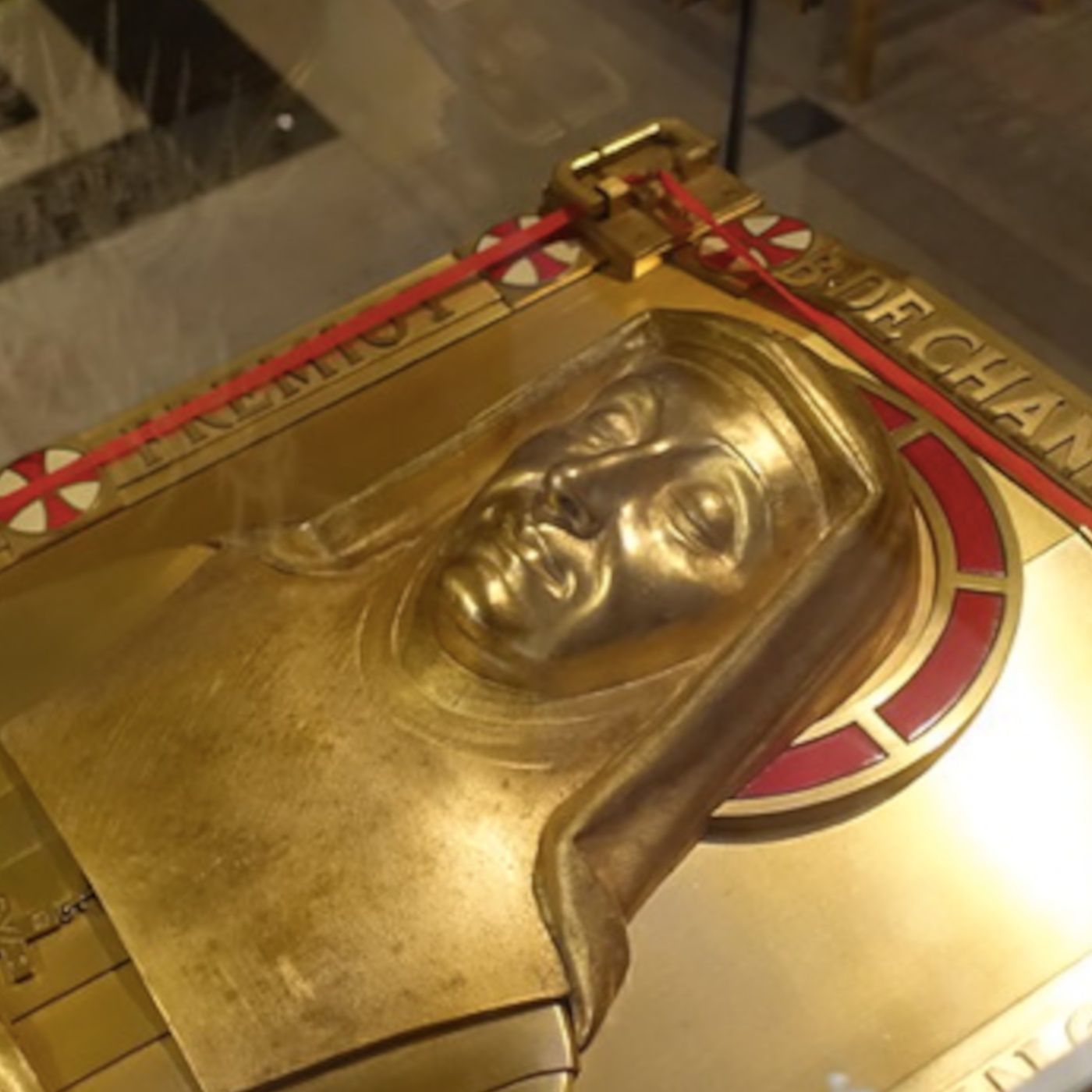
August 12: Saint Jane Frances de Chantal, Religious
6d ago00:05:30Tap to summarizeAugust 12: Saint Jane Frances de Chantal, Religious1572–1641Optional Memorial; Liturgical Color: WhitePatron Saint of widows and parents separated from their childrenAn aristocratic widow’s grief is transformed into love of GodToday’s saint was well born and acted like it. She was educated, refined, beautiful, witty, and wealthy. She married a baron, lived in his castle, and together they raised four children. But then tragedy struck like lightning. Her husband was killed in a hunting accident. Jane was a widow at just twenty-eight. She found it nearly impossible to forgive the man who had caused her husband’s death. Grief and anger consumed her. But in 1604 she heard a homily that she needed to hear, from a wise, holy bishop who spoke with great erudition, passion, and eloquence. It was the great Saint Francis de Sales on one of his endless tours across Southern France. He was in Dijon, Jane’s homeland, and she saw in him the embodiment of the spiritual guide whom God had promised her in a mysterious vision. The two bonded in a holy friendship not unknown among the saints and remained close until de Sales’ death.Jane de Chantal wanted to become a nun, but Francis dissuaded her…for the time being. Once she had provided for her children and taken care of various practical matters, she was finally ready to uproot herself and move to Annecy, near Geneva, Switzerland, to start a Congregation of religious sisters. Her fourteen-year-old son was rightly perplexed at his mother’s decision to leave him for God, even though Jane had arranged for the boy to be cared for by Jane’s brother, a bishop. In one of history’s most poignant, yet humorous, illustrations of Christ’s commandment to leave father and mother and wife and children for Him, the boy dramatically blocked his mother’s departure for the convent by lying on the floor across the threshold of the door. A priest in the room asked Jane if her son’s tears would change her mind. “No,” Jane replied, “but still, I am a mother.” She cried, and then stepped over her son’s supine body, and left. Moved? Yes, definitely. Deterred? No. Not in the least.Jane Frances de Chantal founded the Congregation of the Visitation in 1610. Its sisters were often women who had been unwelcome in other religious congregations due to illness, age, or the inability to live the strict life of penance and fasting required in most convents. The Visitation nuns’ initial active apostolates were eventually curtailed in favor of a cloistered existence based on the traditional rule of Saint Augustine. Saints Francis and Jane prized two virtues in their nuns above all others: humility and gentleness. The Annecy Visitation Convent grew into a magnet for Catholic aristocrats, princes, and princesses attracted to Jane’s practical savoir-faire, charm, gentility, and holiness.After the death of Saint Francis de Sales in 1622, Jane destroyed all of the correspondence they had exchanged over the years. They were truly co-founders of the Visitation order and spiritual twins. Incredibly, another spiritual giant, Saint Vincent de Paul, replaced Francis de Sales as Jane’s spiritual director. Jane grew in holiness behind the walls of her cloister and developed a reputation as a saint, one which she rejected. After many physical and interior sufferings, she died a holy death, was beatified in 1751, and canonized in 1767. She was indeed rewarded by Christ a hundredfold for having cut ties with her family. There were eighty-six Visitation convents established by the time of Jane’s death, and the Order continued to expand after she died. Visitation convents are still present in many countries throughout the world. Saint Jane Frances de Chantal is buried in a sumptuous golden tomb in the Visitandine church in Annecy, just a few feet from the tomb of her holy mentor, Saint Francis de Sales.Saint Jane Frances de Chantal, your commitment to God grew out of grief over your husband’s untimely death. May we convert every sadness, loss, and trial in our lives toward the good, redirecting our hurts into an ever more intense love of God.
Transcribe →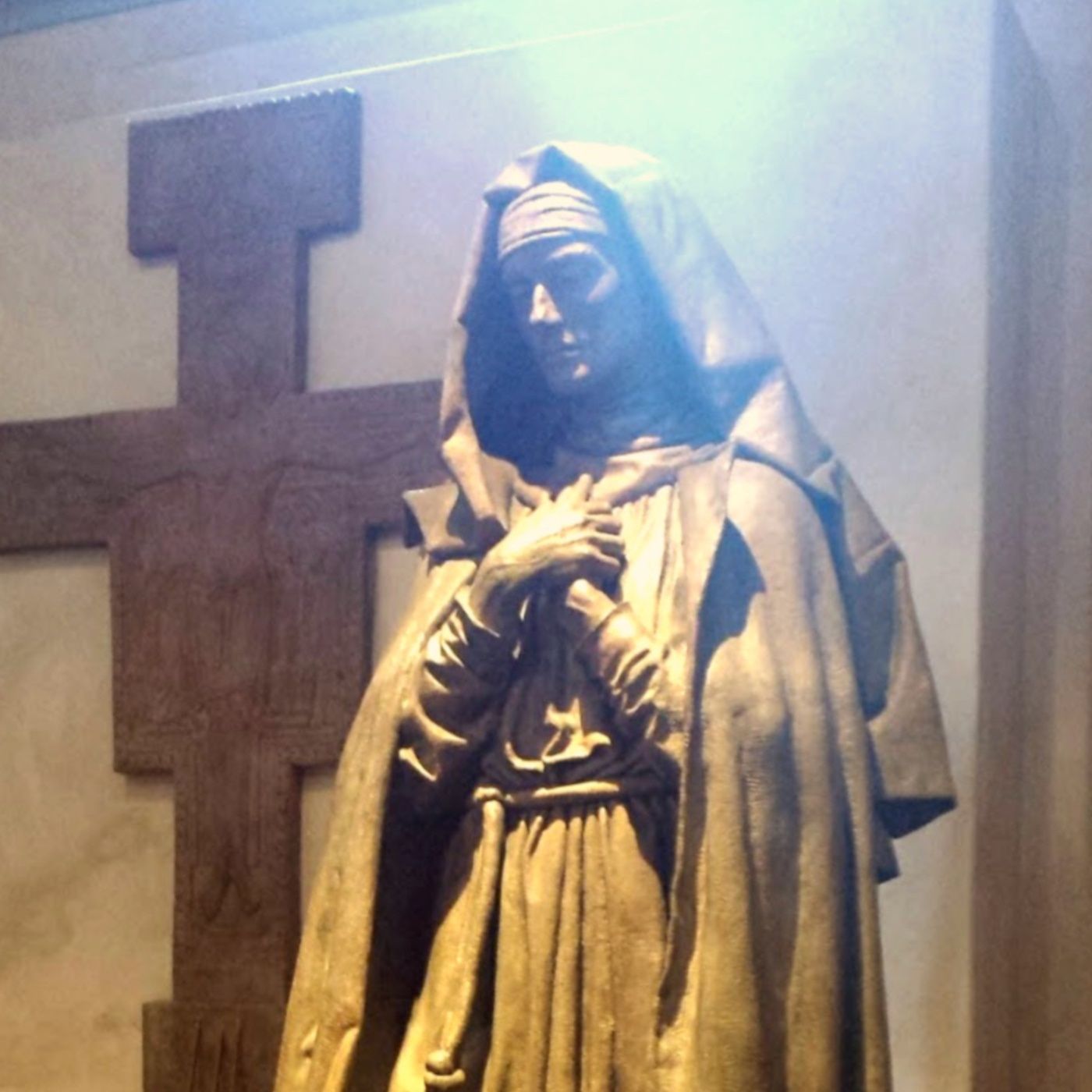
August 11: Saint Clare, Virgin
1w ago00:07:01Tap to summarizeAugust 11: Saint Clare, Virginc. 1193–1253Memorial; Liturgical Color: WhitePatron Saint of embroiderers, goldsmiths, and laundry workersShe heard Francis, left comfort, and slept on the floor for forty-one yearsSilicon Valley is not, topographically, a valley. The name is a contrivance dating from the 1970s and 80s. The actual valley is named after today’s saint. Santa Clara Valley, running southeast from the southern shores of San Francisco Bay, was named after its beating heart, Mission Santa Clara de Asís—a church, school, and farm—founded by Franciscan Friars in 1777. The current mission church, a beautiful twentieth-century idealization of mission architecture, sits on the site of the original Mission structure and is the iconic campus centerpiece of Santa Clara University, California’s oldest. It’s likely that Saint Clare never left her convent in Assisi, Italy, for the last forty years of her life. Yet a valley, city, and university in far away California are named in her honor. That a medieval, cloistered, Catholic nun is still so present to a hyper-modern portion of the world is a testament to the global reach and cultural impact of Catholicism and the Franciscan order.Clare of Assisi was born about a decade after and in the same small town as Saint Francis. Many of Clare’s earliest friends became nuns in her community, survived her, and gave testimony in her canonization process, reporting interesting details about her early life. Clare was from an economically comfortable family in the upper part of Assisi, in the neighborhood of the nobility. She had two younger sisters. Her mother was pious and had gone on long pilgrimages to holy shrines. Her household included knights and soldiers. From an early age she was interested in religious life and gave religious instruction to the many servants and others in her vast household. Clare was a prize to her father, as eligible daughters were like pawns whose marriages could seal alliances with other noble families. An Assisi marriage broker testified, after Clare’s death, that he had approached Clare various times with offers of marriage from interested suitors. She turned him down each time and instead challenged the broker about the quality of his own Christian commitment. If Clare had never met Saint Francis, she may well have become a Benedictine nun in a convent for noble women, putting her education to good use in the copying of sacred manuscripts.But she did meet Saint Francis, so her natural religiosity turned more radical. At the age of eighteen, Clare heard Francis preach in a local church and was deeply moved, as so many were, by his presence as much as his words. She began to meet with him privately to talk about the things of God and a new plan for her life. On Palm Sunday in Assisi, there was a tradition that eligible young ladies would process down the aisle of the Cathedral to receive a blessed palm branch from the Bishop’s own hands. Interested local bachelors showed up to watch this kind of sacred debutante parade. Clare was in the Cathedral on Palm Sunday 1212, but she did not process with all the others. Instead, the Bishop, known to history as Guido, descended the sanctuary steps and extended a palm to her as she remained in her pew. Christ would be her spouse. Her plan was about to unfold.That very night, Palm Sunday 1212, Clare secretly fled her family home and, with Francis’ help, entered behind the barred doors of a local convent. She donned a rough habit, and her hair was shorn. The men in her family were alarmed and rushed to bring her home and to her senses. Clare would not budge. As they tried to drag her out of the chapel, she grabbed the altar as an anchor and tore its linens to the floor. The men finally recognized the law of sanctuary and retreated. Clare never deviated from the path she chose that Palm Sunday night. Her close, holy relationship with Francis would endure until his death. He was the leader, the giver, the essential figure. She provided support and allegiance.Clare would go on to become the first woman to write a rule for other women. She became the foundress of all female Franciscan religious, who number in the tens of thousands today. She had an iron will, a great capacity for physical suffering, and lived a cloistered life of intense and continual prayer. For Clare and her spiritual progeny, the Poor Clares, religion was not primarily an internal disposition. Religion cannot be reduced to mere feelings, pious thoughts, or holy words. It is not a truly great and religious thing to separate the paper from the plastic in the recycle bin. It is a truly great and religious thing to go barefoot, to fast, to abstain from meat, to remain chaste, to wear a coarse habit against the skin, to pray long hours on your knees, to sleep on the floor, and to spend the night shivering in the cold. Such a life is for the few. But there are such few in the world, even today. Of their lives, nothing is counterfeit. Of Saint Clare’s life, nothing was counterfeit either.Saint Clare of Assisi, you chose a radical form of love of God as a cloistered nun. May your example and your prayers inspire all Catholics, especially female religious, to organize their entire lives around God, His Son, and His Church.
Transcribe →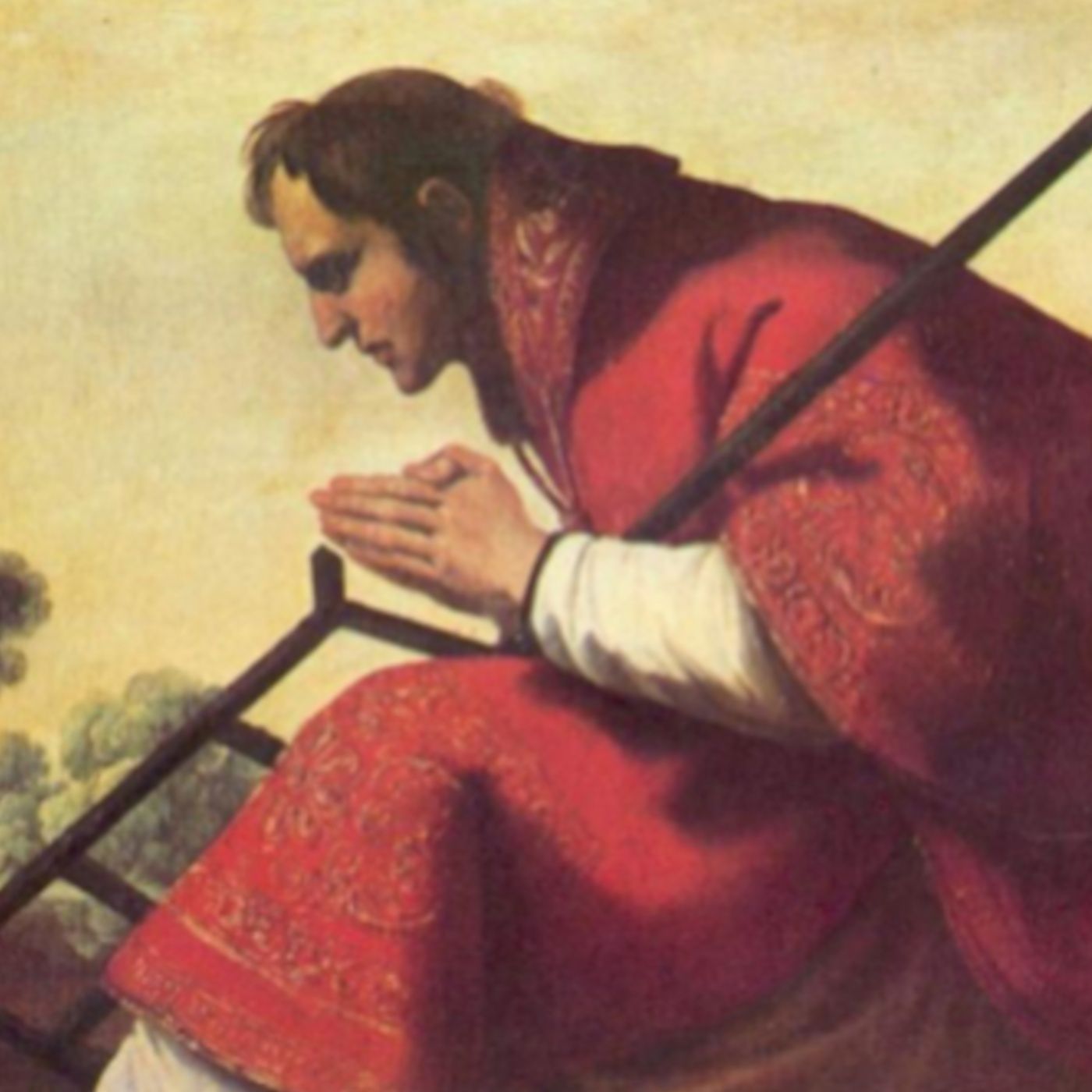
August 10: Saint Lawrence, Deacon and Martyr
1w ago00:05:47Tap to summarizeAugust 10: Saint Lawrence, Deacon and Martyrc. Early Third Century–258Feast; Liturgical Color: RedPatron Saint of deacons, comics, and cooksA Deacon heads the Church for four days, then perishes like his fellow deaconsThe Church’s liturgy, like all public rituals whether sacred or secular, is inherently conservative. Its form is not easily altered. Its content shapes, more than is shaped by, the Church and the wider culture. The liturgy moves through time like a great river moves through the land. It plows its own path, carving the terrain, gradually and incontrovertibly forming a new landscape. One generation is too few to notice, but a few generations pass and, suddenly, a river separates two families, a valley turns into a lake, a dam submerges a city, water destroys what once had been, and the world is different. Feast days and solemnities, most notably Christmas and Easter, shape entire cultures too: their calendars, music, food, festivals, dress, dance, language, art, architecture, and on and on. There is almost nothing that the liturgy and its calendar do not touch. Liturgy creates worlds.Besides being culture creators, liturgical Feast Days also preserve the past for the present and the future. A Feast Day freezes time and preserves the memory of the world’s oldest mind—that of the Catholic Church. The Church does not suffer from Alzheimer’s disease. She is rejuvenated with every baptism and so is perpetually young, impervious to the dementia typical of great age. Today’s saint, the Deacon Lawrence, is celebrated with a Feast on the Church’s calendar, not just a memorial or an optional memorial. This liturgical fact is revelatory and beautiful. He was martyred so long, long ago. He is not Christ, Mary, or a pope. Yet he has a Feast Day! What is the past telling us by this? What is the Church’s calendar communicating to the faithful by this interesting fact?This Feast opens the curtains on the events of August 258 as if they were as fresh as buns right out of the oven. Look and see the cast of characters. Emperor Valerian is to the side, sitting on his marble throne. An official reads the Emperor’s decree aloud: “All bishops, priests, and deacons are to be summarily executed.” Pope Sixtus II is roughly taken away by Valerian’s soldiers during Mass in the candlelight of a catacomb on August 6. Six of Rome’s seven deacons are killed with Sixtus. In accord with the Church’s theology, they were closer to their bishop than to any priest, so they die with him. The Church has been almost decapitated. There is only one deacon left. The hunt is on for Lawrence, the ranking head of the Church. He is found. He is martyred. It is August 10. The curtain closes.In a tradition already ancient by the third century, Rome had seven deacons to minister to the material needs of the impoverished, widows, and orphans of Rome. Lawrence excelled at this task, which he operated out of a house-church in Central Rome. When the popular and well-loved Lawrence died, he was venerated with a fervor unlike almost any other early martyr. His cult spread like the fire that tradition says roasted him alive. Devotion to him spread as far north as Scandinavia, England, and Germany. Traditions large and small abounded.The details of his martyrdom are incomplete. But holy legends have supplied what documents could not, and none of them are illogical, mythic, or banal. They might contain the essential facts—he was burned alive on a gridiron. Lawrence was buried just outside the walls of ancient Rome, where a minor basilica, also the burial site of Pope Pius IX, still stands. Numerous other churches in Rome are dedicated to his memory, including the house-church where he ministered. The current church on the site is, to this day, still enclosed inside of a larger building just as the house-church was. The deacon-martyr Lawrence gave a witness so powerful to Rome that his death may have been the no-going-back-moment which proved that Christianity was here to stay, forever, in the capital of the world.Saint Lawrence, may your example inspire all clergy, and especially deacons, to remain close to both their bishops and their people, providing faithful witness to the truths of our faith, which are worth living and dying for.
Transcribe →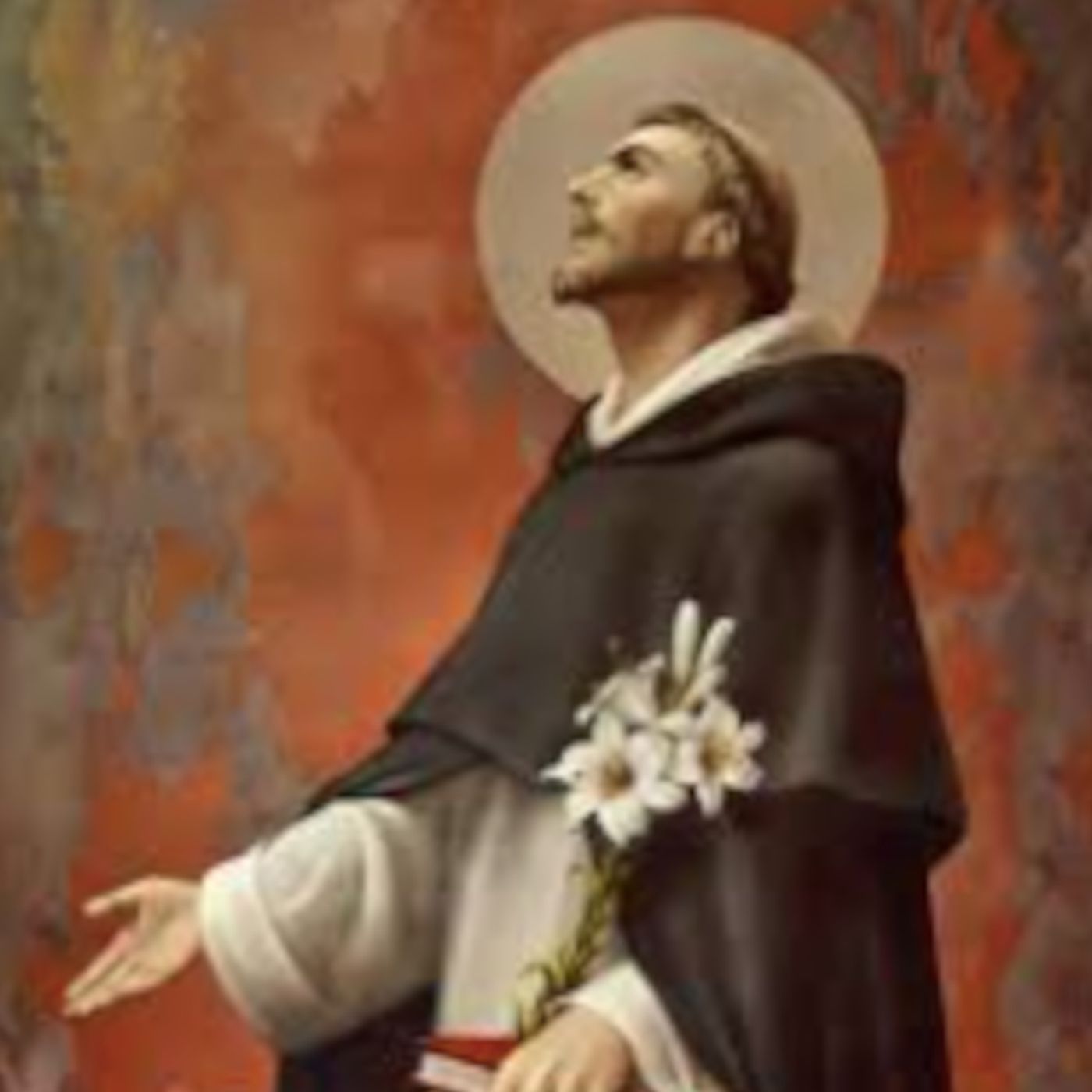
August 8: Saint Dominic, Priest
1w ago00:06:22Tap to summarizeAugust 8: Saint Dominic, Priestc. 1170–1221Memorial; Liturgical Color: WhitePatron Saint of the Dominican Republic, astronomers, and the falsely accusedA one-man army for God; long practice taught him how to preach the TruthToday’s saint and Saint Francis of Assisi were close contemporaries. They both founded influential religious orders, collaborated with the same popes and cardinals, and were canonized soon after their deaths. Francis remains a rich, technicolor, three-dimensional figure even many centuries after his death. Dominic, on the contrary, is a shadow. Francis jumps off the page. Dominic is found between the lines. No cult of personality developed around Dominic as it did around Francis. Yet whereas Francis was unsuited to leadership and perplexed by organizational necessities, Dominic quietly excelled in every area. Because of Dominic’s skills, his well-structured order had none of the grave problems that almost doomed Franciscanism. Dominic’s personality retreats behind the hum and whistle of the order that embodied his vision.Dominic, born in Spain, spent many years dedicated to his university studies before accompanying a local bishop on a royal errand that took them across Europe, including through Southern France. In the city of Toulouse, France, Dominic had his first encounter with the Cathars, a heretical sect of rigorist purists on the margins of Christianity. Dominic would spend the better part of ten years of his short life strategically contemplating and implementing a pastoral plan to bring the Cathars back into the arms of Mother Church.Dominic concluded very early on in this missionary endeavor that the witness of priests had to be more authentic for them to be effective among the Cathars. No more traveling by horse. No more nice meals. No more inns. No more beds. No more shoes. The priests who went to the Cathars must beg like the Cathar holy men. They must walk, not ride, like the Cathar holy men. They must go barefoot, fast, pray, be humble, wear simple clothes, and live strict chastity and celibacy like the Cathar holy men. Then, and only then, would the Cathars listen to the priests. The Cathars listened to Dominic. He had been practicing these many disciplines rigorously and joyfully for many years. He was the very icon of a holy, authentic priest. Dominic, in short, had credibility, and his learning was self-evident in his preaching. Nonetheless, Dominic’s pastoral efforts, in the end, had to cede to the religious violence so common to the time. Church and state authorities ran out of patience, and the Cathars were ruthlessly crushed in their vice.His many years of heading a band of educated preachers amidst a difficult pastoral situation equipped Dominic for leadership and gave him a strong sense of how sound theology impacted pastoral practice. Loving God was not like going on a blind date. The Church provided the faithful with the tools to know God, not just know about Him. The Church gave the faithful concrete means to love God, not just to talk vaguely about loving Him. Dominic knew the truth and how to present it, by word and example, effectively. By 1215 he had received papal permission to lead his own group of preachers. That same year, he attended the Fourth Lateran Council in Rome to solidify his canonical position.From 1215 until his death, Dominic traveled, organized, recruited, and planned. He was driving the foundations of his order deep into theological and canonical bedrock. Amidst this tornado of activity, he lived perfect poverty, chastity, obedience, humility, and charity. He was known to often say “Whoever governs the passions is master of the world. We must either rule them, or be ruled by them. It is better to be the hammer than the anvil.” He shared the fruits of his contemplation in every conversation and encouraged his brothers to do the same. His poverty was such that when he died in Bologna, in his early fifties, he lay in someone else’s bed, because he didn’t have one of his own, and was wearing another man’s habit, because his own had crumbled to pieces. The Dominican Order exploded with growth during Dominic’s lifetime. It is still today one of the Church’s preeminent, and truly global, Orders dedicated to scholarship, preaching, education, publishing, and evangelization. If causes are known by their effects, Saint Dominic was a relentless one-man army for God.Saint Dominic, your dedication to the truths of the Catholic faith gives beautiful witness to the faithful. Help us to emulate your poverty, charity, and chastity in our daily lives and to strive to obtain your erudition and verve in evangelizing others in our words and deeds.
Transcribe →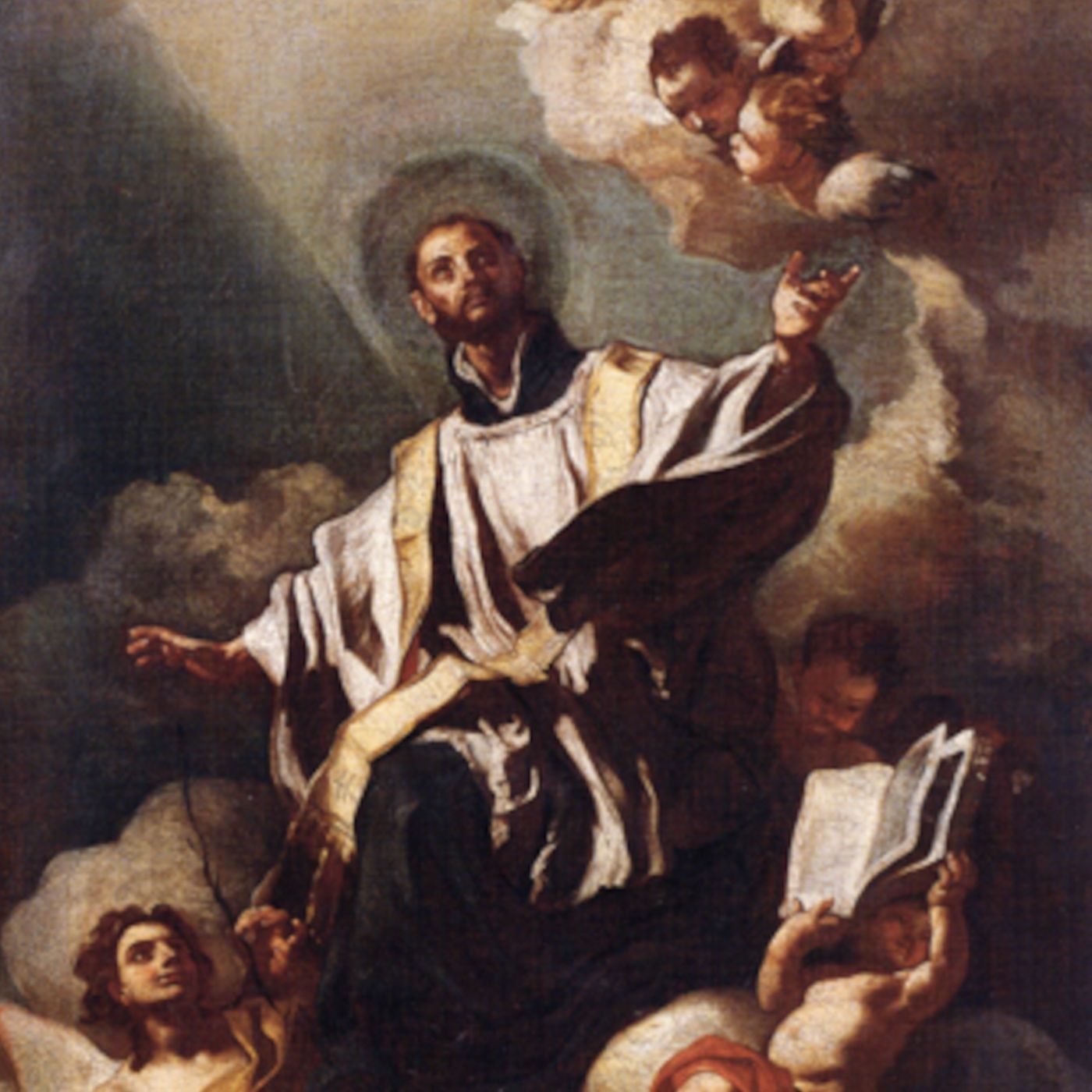
August 7: Saint Cajetan, Priest
2w ago00:05:49Tap to summarizeAugust 7: Saint Cajetan, Priest1480–1547Optional Memorial; Liturgical Color: WhitePatron Saint of Argentina, the unemployed, and gamblersA reformer before his timeGaetano di Conte di Thiene, today’s saint, was born with a silver spoon in his mouth, but he spit it out. His father was a count, his family noblemen, and his status and wealth secure. Gaetano studied theology and law and became a senator of his city-state. When he went to Rome, he rose straight to the top and became a functionary in the curia of Pope Julius II. But he secretly desired more—meaning that he desired less. It was not his calling to use his education, position, and family contacts to rise ever higher in the church and society. He wanted a more intense encounter with God, so when Pope Julius died in 1513, Gaetano resigned his papally appointed office and studied for the priesthood. He was ordained in 1516, in his mid-thirties, a late vocation by the standards of his own time or even today.After ordination, Father Cajetan returned to Northern Italy, his native land, and joined a confraternity of devout men. The men of the confraternity were from the lower rungs of society, signaling Cajetan’s break with his own family’s privileged background. He then began a life-time of service to the sick and poor in various hospitals and distinguished himself by caring for the most hopelessly ill patients. Father Cajetan’s negative personal experiences of the Church of his era, and of priests specifically, were, unfortunately, common. He was scandalized by the tepid spirituality and lax morals of some clerics and saw the need for an ecclesial cleansing. Father Cajetan saw exactly, or even more of, what Father Martin Luther saw in the same span of years and in the same exact city—Rome—but Cajetan had a far different reaction than Luther. There was no reason to sever a limb from the body of Mother Church. Cajetan sought to transform, not to rupture. He desired purification, not reformation. A different Cajetan from Italy, an erudite Cardinal but not a saint, would debate Luther in Augsburg at a pivotal point in the early Reformation. Our saint didn’t debate the finer points of philosophy and theology like Cardinal Cajetan, although that was certainly needed. Saint Cajetan’s response to the need for purification in the Church was to purify himself and to invite other priests to join him.In 1523 Father Cajetan went to Rome to dedicate himself to the renewal of the clergy along with some like-minded friends. They founded a small Congregation named after Theate, the city where one of the co-founders was a bishop. The four founding members of the Theatines were all well-educated noblemen, including one who would later become Pope Paul IV. In 1524 they exchanged their robes of honor for humble habits and professed vows in St. Peter’s Basilica. Their charism was to preach correct doctrine, to care for the sick, to encourage frequent reception of the Sacraments, and to restore love of poverty, knowledge of Scripture, and dignified liturgical practice among priests. The Theatines spread throughout Italy doing pastoral work and serving heroically among the sick. Cajetan also engaged in some creative pastoral ministry late in his life by establishing Christian pawnshops which granted loans to the poor, saving the vulnerable from rapacious money lenders.Saint Cajetan and the Theatines were eventually eclipsed, however, by the more dynamic Saint Ignatius of Loyola and his powerhouse Order, the Jesuits. Saint Cajetan died disappointed at the lumbering pace of the on-again, off-again Council of Trent. He is among that second tier of lesser known saints of the early sixteenth century who spurred the Church to change by their ardor for God and their lives of high virtue. The Council of Trent would not have gathered except for Cajetan and numerous others like him. Great reformers are really purifiers, and they come before, not after, Councils. Our saint was canonized in 1671, and his Theatine Order continues, although only in pockets.Saint Cajetan, you gave a powerful witness of moral rectitude and of creative apostolic effort. Inspire all priests to live their sacred callings to the full, to purify themselves before they purify others, and to be absolutely dedicated to the truths of the faith.
Transcribe →
August 7: Saint Sixtus II, Pope; and Companions, Martyrs
2w ago00:06:52Tap to summarizeAugust 7: Saint Sixtus II, Pope; and Companions, MartyrsEarly Third Century–258Optional Memorial; Liturgical Color: RedPatron Saint of Bellegra, ItalyThe Pope is murdered in cold bloodThe sixth pope was named the “Sixth” or, in Latin, “Sixtus.” He reigned from 115–125 A.D. The next Sixtus was today’s martyr, who reigned from one August to the next in 257–258. Sixtus II (or Sixth, the Second) is listed in the Roman Canon’s select roll call of sainted popes: “Linus, Cletus, Clement, Sixtus, Cornelius, Cyprian…” The preservation of his name in the liturgy is compelling proof of the lasting impact of his bloody witness. After the legalization of Christianity in 313, perhaps two popes were martyred, although various others died unnatural deaths. But throughout the 200s, solid historical evidence proves that more than a dozen popes were assassinated by Roman authorities just for being Christian leaders. Many of their remains were interred in an ornate burial chamber in the catacombs of Saint Callixtus, which was excavated in the 1850s.Sixtus II succeeded to the Chair of Saint Peter at a difficult time. The on-again, off-again persecutions of the early Church were on-again in the 250s. The Roman Emperors Decius and Valerian sought the blood of Christians not only to try to decapitate the surging Church but also to confiscate the wealth and property of Christians. The tensions in Church-State relations were no less serious than internal Church tensions tearing at its unity. The persecution of Decius from 250–251 was wicked. Decius’ edict required everyone in the empire to sacrifice to a Roman god in the presence of a state official, with a signed libellus, or certificate, being issued afterward as proof that the sacrifice had been offered. Many Christians were weak and afraid and so sacrificed to gods they knew didn’t exist. Some Christians purchased a libellus, some fled to the safety of the countryside, and some refused to sacrifice and were cruelly martyred.Christians’ divergent responses to the persecution—some heroic, some weak, some uncertain—were traumatic for the Church. Many in the African and Asiatic Church said that those who sacrificed (the lapsi) must be re-baptized. Pope Stephen I, Sixtus II’s predecessor, said that the lapsi must only repent to be reconciled with the Church. The theological positions of the two camps were each sincere and hardened over time. There was no easy answer. After Pope Stephen died, it seems that Pope Sixtus II was more diplomatic in seeking reconciliation with the African and Asiatic churches over this controversy, although it would not be theologically resolved until Saint Augustine wrote one hundred and fifty years later.Sixtus II had to be consecrated as Pope in secret because of the times. In 257, the formerly peaceable Emperor Valerian issued an anti-Christian edict which forbade Christians from assembling in cemeteries. Sixtus avoided persecution for many months. But in early August 258, Valerian got serious. A new edict focused on essential targets. Bishops, priests, and deacons could be put to death without a trial. On August 6, 258, Pope Sixtus II was with his flock, seated and preaching the word of God, probably at Mass, in the catacombs. A small troop of soldiers was on the hunt. The Pope must die. With torches lighting the way, the soldiers scurried through the warren of dark and narrow passageways toward the underground chapel. Perhaps they heard some singing. They acquired their prize soon enough, and the deed was done.Saint Cyprian, Bishop of Carthage, North Africa, received the news shortly afterward and, before being martyred himself, wrote a letter to his flock: “Valerian has issued an edict to the Senate to the effect that bishops, presbyters, and deacons shall suffer the death penalty without delay…I must also inform you that Sixtus was put to death in a catacomb on the sixth of August, and four deacons with him...Let all our people fix their minds not on death but rather on immortality...knowing that in this contest the soldiers of God and Christ are not slain but rather win their crowns.” An inscription placed on Sixtus II’s tomb over a hundred years after his death by Pope Saint Damasus, rediscovered in the 1800s, verifies the drama of Sixtus II’s last moments. It notes that the shepherd gave his life for his flock. The faithful with Sixtus that fateful day walked up the steps of the catacomb into the daylight totally unharmed, while their pastor lay dead. The companions martyred with Sixtus were the deacons Januarius, Vincentius, Magnus, and Stephanus. The deacons Felicissimus and Agapitus were martyred on the same day, but not with Pope Sixtus.Pope Saint Sixtus II, you were a servant and a leader; a confident shepherd to a frightened flock; a central actor, not a bystander; a witness to truth, not an outside observer; a light generating others’ shadows. You are known because you were courageous. Make us faithful like you.
Transcribe →