← Catholic Saints & Feasts of the Liturgical Year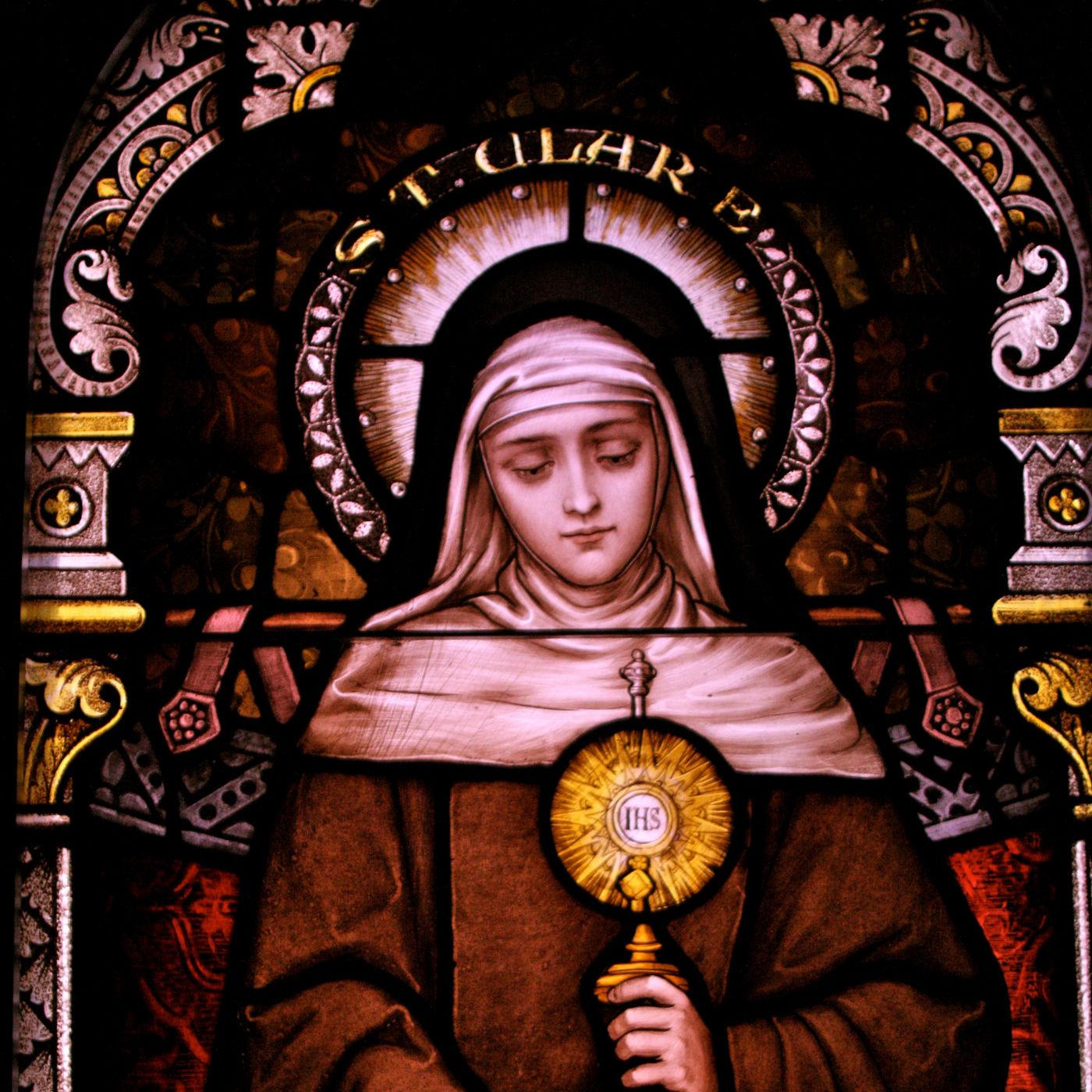
Catholic Saints & Feasts of the Liturgical Year
August 11 - Saint Clare, Virgin—Memorial
00:10:11
https://mycatholic.life/saints/saints-of-the-liturgical-year/august-11---saint-clare-virgin/ August 11: Saint Clare, Virgin—Memorial c. 1193–1253 Patron Saint of the Poor Clares, embroiderers, goldworkers, laundry workers, needleworkers, telephones,...
Loading summary
Transcript1 lines
- [00:04]
A
Welcome to saints and feasts of the liturgical year from my Catholic life. Aug. 11St. Clare Virgin Memorial, circa 1193-1253 patron saint of the poor, clayers, embroiderers, gold workers, laundry workers, needle workers, telephones and television. Invoked against eye diseases and for good weather. Canonized by Pope Alexander IV in 1255. QUOTE as you contemplate further his ineffable delights, eternal riches and honors, and sigh for them in the great desire and love of your heart, may you cry out, draw me after you. We will run in the fragrance of your perfumes. O heavenly spouse. I will run and not tire until you bring me into the wine cellar, until your left hand is under my head and your right hand will embrace me happily and you will kiss me with the happiest kiss of your mouth. From a letter written by St. Clair Today's Reflection Claire Afraiduccio, born to a high ranking noble family in the quaint Italian town of Assisi, was the eldest of three daughters. Raised in a grand palace in Assisi and a castle on a nearby slope of Mount Subacio, the girls were nurtured in their faith by their devout Catholic parents, especially their mother. From an early age they led a life of prayer. When Claire was 12, her parents, adhering to the customs of the time, intended to arrange a marriage for her with a wealthy nobleman. However, Claire expressed her desire to wait until she turned 18, to which her parents agreed. As a teenager, Claire grew to admire a 24 year old man named Francis, who had recently undergone an intense conversion. In his youth, Francis had been the life of the party in Assisi, aspiring to become a great knight, a dream he chased twice. His life took a turn when he was captured in war and subsequently imprisoned for a year. Upon being ransomed by his father, Francis returned to Assisi as a changed man. His ordeal ignited a spiritual transformation that would eventually influence not only his life, but also that of Clare, the town of Assisi and the entire church for centuries to come. After renouncing his family inheritance and receiving papal approval, Francis and a small group of followers adopted a radical lifestyle marked by poverty, prayer, penance and itinerant preaching. Around 12:11 or 12:12, when Claire was nearing her 18th birthday, she attended a Lenten mission at the Church of San Giorgio in Assisi. Preached by Brother Francis, the mission resonated deeply with Clare and she felt God calling her to join Francis and his brothers by forming a women's branch of their new order. Aware that her family would not approve of her decision, Claire spoke to Brother Francis in secret, with the local bishop's approval, Francis agreed to welcome her on Palm Sunday evening at the small chapel of Portsiuncula, where his order was staying. That night, Claire arrived at the chapel dressed as a bride, ready to wed her spouse. She was accompanied by her aunt and a friend. Claire surrendered her noble attire for a coarse habit, allowed Brother Francis to cut her long hair and cover her head with a veil. Francis then arranged for her to stay at a nearby Benedictine convent. Upon discovering Claire's decision, her family tried to convince her to return home, making promises of wealth and all the privileges of nobility. Claire refused. When they attempted to force her to return, she resisted, clung to the altar and showed them her cut hair, a symbol of her dedication to God. Realizing they no longer held authority over her, her family reluctantly backed down. This marked not only a pivotal moment in Clare's life, but also the birth of the religious order of the Poor Clares. For her safety and peace of mind, Claire was moved to another monastery a few days later, and then, to another, to her surprise, her sister Caterina joined her. A few weeks later, their family attempted to intervene again, trying to force Katarina to leave. But Claire's prayers triumphed. As one story goes, due to Claire's prayers, Katharina's body became so heavy that the men could not lift her. Eventually, her family gave up. Katerina was accepted into the newly formed order and was given the religious name Agnes. In time, even their other sister and mother joined Claire and Agnes at the small house that Brother Francis had built for them next to the Church of San Damignano. Under the rule for their new life given by Brother Francis, they became known as the Poor Ladies of San Damiano. Only after Clare's death did they become known as the Poor Clares. The Poor Ladies of San Damiano led a life of extreme poverty, manual labor, and almost complete silence under the rule of Brother Francis, which they strictly followed for the first few years. Unlike the friars, the poor Ladies remained cloistered instead of traveling and preaching. At that time, their severe austerity was new to religious women, as most convents were wealthy and owned large amounts of land. Tended by others for their needs, this newly formed order, like the Franciscan friars, was groundbreaking in its vocation, particularly its strict rule of poverty. Despite her reluctance to assume any form of authority or title, Claire was made the abbess of the community in the following years. She was humble and shy and found giving orders challenging. She often took up the most menial and unwanted chores. God's protection shielded this new order. When Muslim invaders surrounded the convent, preparing to attack Assisi. Claire, upon hearing of their presence, went to the chapel and took the monstrance with the Blessed Sacrament to confront them. Overwhelmed, the invaders retreated and never returned. Mother Clare spent most of her life battling bishops, cardinals, and even popes who wished her order to align more with the mainstream Benedictine nuns. Unyielding, she chose to depend on divine providence, trusting completely in her divine spouse. These struggles intensified after the death of her spiritual father and brother, St. Francis, in 1226. After many years of battling, Mother Clare wrote a rule for her sisters and received approval of that rule from Pope Innocent IV mere days before her death in 1256 at the age of 59. This marked the first time in history that a woman wrote a rule for religious life that was formally approved. Despite her hidden life, St. Clare's holiness was widely known. So much so that the pope came to Assisi to celebrate her funeral. She was canonized just two years later. As we honor St. Clair and her sisters, we are especially invited to ponder their complete trust in God. It took great faith to abandon her noble life, to embrace radical poverty. But she did so remaining faithful to her calling. Through her God has brought forth an abundance of good fruit that will only be fully understood in heaven. Ponder Claire's poverty, her hidden life of silence and continuous prayer, and her fidelity to God's call. As you do, let her radicalness inspire you to step out of your own comfort zone and embrace a more trusting life of selfless service to God's will. Today's prayer St. Clair, though you came from a wealthy and noble family, God called you into poverty where your true nobility was found. You heard a call to live radically, for God responded and never turned back. Please pray for me that I will also respond to God's calling in my life with radical fidelity. May nothing stand in the way of my willing adherence to the will of God. St. Clair of Assisi, Pray for me, Jesus. I trust in you.