← Catholic Saints & Feasts of the Liturgical Year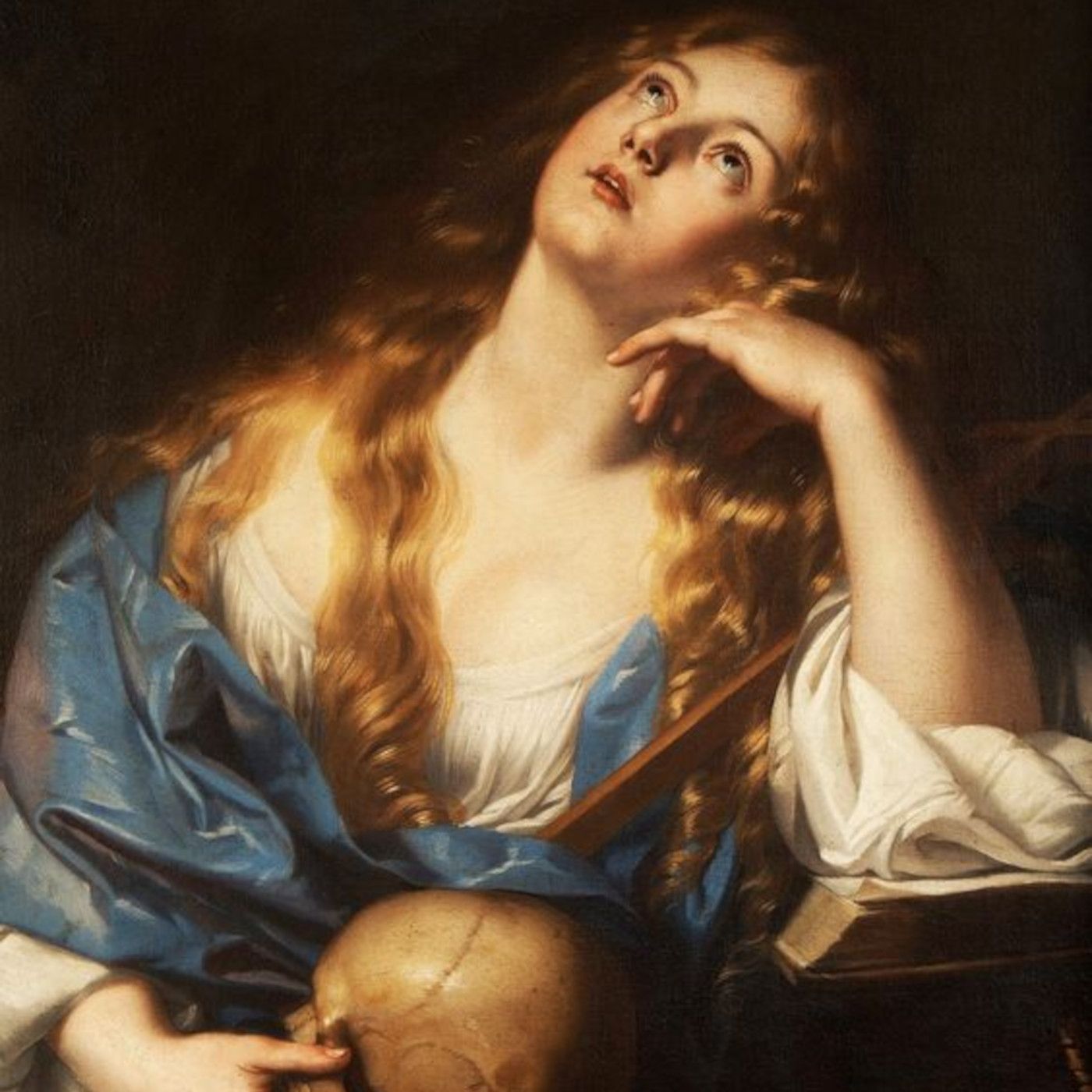
Catholic Saints & Feasts of the Liturgical Year
July 22- Saint Mary Magdalene—Feast
00:10:26
https://mycatholic.life/saints/saints-of-the-liturgical-year/july-22---saint-mary-magdalene/ July 22: Saint Mary Magdalene—Feast First Century Patron Saint of pharmacists, contemplatives, converts, glovemakers, hairdressers, penitent sinners, people...
Loading summary
Transcript1 lines
- [00:04]
A
Welcome to saints and feasts of the liturgical year from my Catholic life. July 22St. Mary Magdalene feast 1st century patron saint of pharmacists, contemplatives, converts, glove makers, hairdressers, penitent sinners, people ridiculed for their piety, perfumers, reformed prostitutes, tanners, and women invoked against sexual temptation. Pre congregation canonization. Jesus said to her, woman, why are you weeping? Whom are you looking for? She thought it was the gardener and said to him, sir, if you carried him away, tell me where you laid him and I will take him. Jesus said to her, Mary. She turned and said to him in Hebrew, rabboni, which means teacher. Jesus said to her, stop holding onto me, for I have not yet ascended to the Father, but go to my brothers and tell them, I am going to my Father and your Father, to my God and your God. Mary of Magdala went and announced to the disciples, I have seen the Lord and what he had told her. John 20, verses 11 to 28 Today's reflection St. Mary Magdalene, also known as Magdalene or Mary of Magdala, is most likely named after the bustling fishing village of Magdala on the western edge of the Sea of Galilee. All information about Mary comes from the Gospels. Luke 8, verses 1 through 3 introduces her as one of the many women who accompanied Jesus and the twelve, providing for them out of their own resources. These women are said to have been cured of evil spirits and infirmities, and Mary is specifically noted to have been delivered from seven demons. Being delivered from seven demons carries significant implications. It could mean that Mary was genuinely possessed, obsessed, or oppressed by seven distinct demons. The number seven also symbolizes perfection, implying she may have been completely possessed, or that her deliverance from these demons and from a life of sin and evil was a perfect deliverance. In other words, she never returned to the sins from which Jesus delivered her. Some suggest that the seven demons represent the seven capital sins, implying that Mary had committed grave violations of all seven capital sins and was delivered from each of these sinful habits. In the previous chapters of Luke's Gospel, Luke 7, verses 35 to 50, we are given the story of an anonymous sinful woman who interrupts a dinner that Jesus was attending at the house of Simon the Pharisee. This woman's sin is not named, but her repentance is clear. She brings with her an alabaster flask of ointment and stands behind him at his feet, weeping, washing Jesus feet with her tears, wiping them with her hair, and anointing them with the ointment After a discourse with the Pharisee who was judging her and Jesus in his heart, Jesus tells Simon her many sins have been forgiven, hence she has shown great love. He then turns to her, forgives her and sends her forth in peace. Throughout the centuries, many have presumed that this sinful woman was Mary Magdalene. Though this is possible and some say probable, there is no definitive way to know. This sinful woman might have been Mary of Bethany, the sister of Lazarus and Martha. It could have been a different woman not mentioned elsewhere in the Bible, or one of the other women who accompanied Jesus and provided for him and the 12. The second time that Mary Magdalene is explicitly mentioned in the Bible is at Jesus crucifixion. Matthew, Mark and Luke state that she and other women were present and were looking on from a distance. John's Gospel, however, states she was standing close to the cross next to Jesus mother and aunt. Standing by the cross of Jesus were his mother and his mother's sister Mary, the wife of Clopas and Mary of Magdala. The third time Mary Magdalene is mentioned is after the resurrection. Matthew, Mark and Luke state that Mary Magdalene went to the tomb early on Sunday morning to anoint Jesus body and that she was accompanied by one or more other women. However, John's Gospel states that she went alone, found the stone rolled away and Jesus body missing. She then ran to tell Peter and John who went to investigate and found the tomb empty just as she had said. Peter and John left, but Mary sat by the tomb crying. Two angels appeared in the tomb and conversed with her. She then turned around and saw someone whom she mistook for the gardener and asked if he had taken Jesus body away, but it was Jesus himself. When Jesus said her name, Mary, she recognized him. Jesus told her, stop holding on to me, for I have not yet ascended to the Father, but go to my brothers and tell them I am going to my Father and your Father, to my God and your God. John 20:17 Mary quickly went and informed the disciples that she had seen the Lord. Because it was Mary who was first sent to announce the resurrection of Christ to the other disciples. St. Thomas Aquinas referred to her as the Apostle to the apostles. Though it could be inferred from the Bible that Mary Magdalene was the first to see the risen Lord. Others hold that Jesus appeared first to his own mother, the blessed Virgin Mary. Even though this is not explicitly stated in the Gospels. Pope St. John Paul II addressed this saying. Indeed, it is legitimate to think that the mother was probably the first person to whom the risen Christ appeared. Could not Mary's absence from the group of women who went to the tomb at dawn indicate that she had already met Jesus? From the General Audience, 3 April 1996. Nothing else is known about Mary Magdalene after this biblical account of Jesus resurrection. One ancient tradition holds that she accompanied John and the Blessed Mother to Ephesus, where she spent the remainder of her days. As we honor St. Mary Magdalene, we especially celebrate God's unlimited mercy. The encounter with Jesus changed Mary's life forever. Jesus did not hesitate to associate himself with this woman who was delivered from seven demons. Similarly, Jesus never hesitates to unite himself with anyone who sincerely repents of their sins, regardless of their past actions. Mary's life also tells us that there is hope for everyone. Before her transformation, many who knew her might have easily dismissed her as hopeless. Jesus didn't do that with her, and he doesn't do so with anyone. In 2016, Pope Francis elevated the memorial of St. Mary Magdalene to the status of a feast on the liturgical calendar. He did so during the extraordinary jubilee of Mercy as a way of highlighting the important role that St. Mary Magdalene played in the Gospels, the depth of her love for Christ, and to highlight the divine mercy of God. Reflect upon your own sins and the manifest sinfulness of others for yourself. If you struggle with some habitual sin, know that freedom is possible for others. If you have written anyone off, try to regain hope. Pray for that person and know that with Christ Jesus all things are possible. Your prayers for and witness to those who are sinful can open the doors of Jesus mercy for them, giving them the chance they need to repent and to be bathed in the mercy of God. Today's Prayer St. Mary Magdalene, you lived a sinful life, but when you encountered Jesus, you repented and followed him. You were faithful to him throughout his ministry and were a witness to his death. Resurrection Please pray for me that I may always have the courage to repent of my sins and stand with you at the foot of the cross so that I may also be a witness to the transforming effects of the resurrection. St. Mary Magdalene, pray for me, Jesus, I trust in you, Ra.