← Catholic Saints & Feasts of the Liturgical Year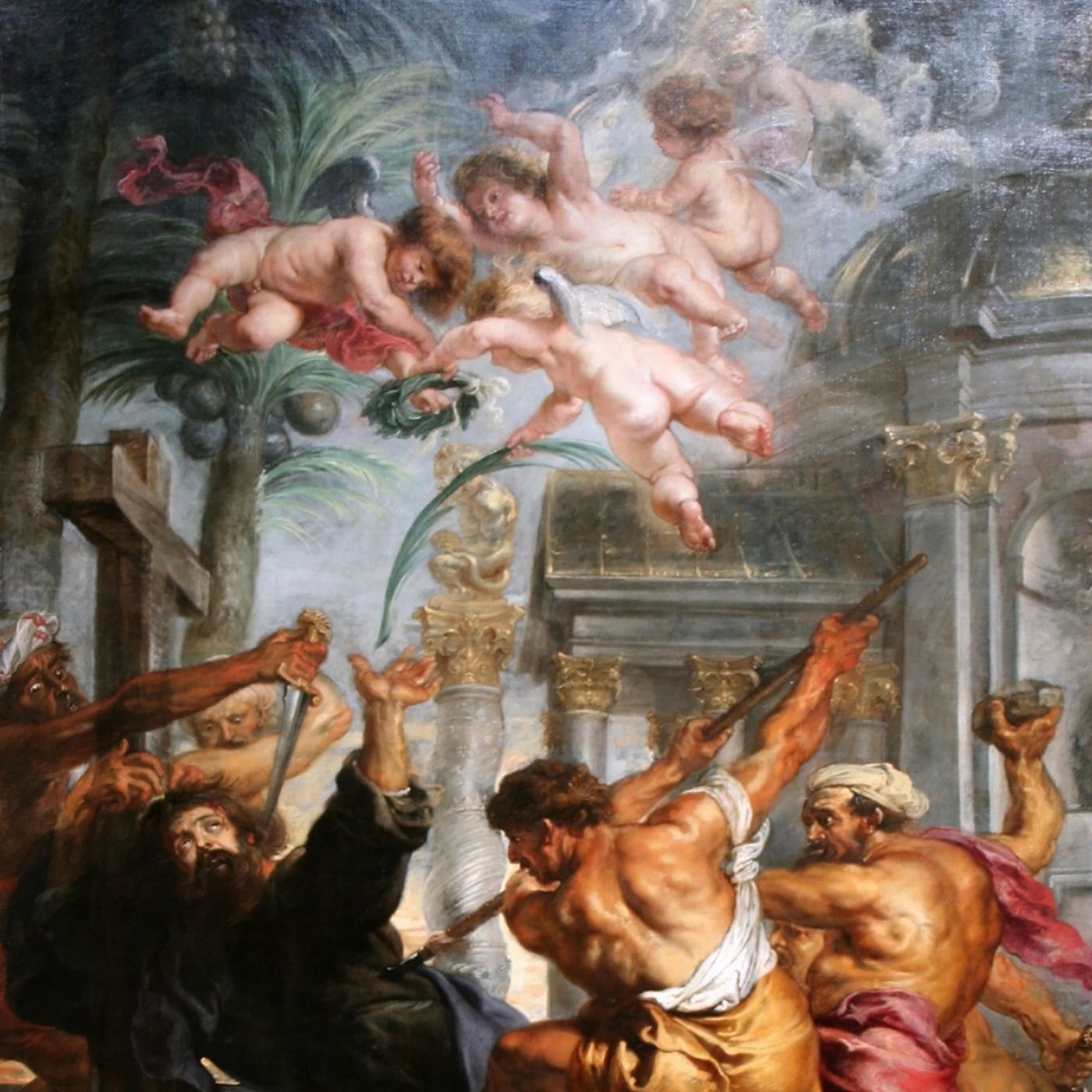
Catholic Saints & Feasts of the Liturgical Year
July 3- Saint Thomas the Apostle—Feast
00:10:35
https://mycatholic.life/saints/saints-of-the-liturgical-year/july-3---saint-thomas-the-apostle/ July 3: Saint Thomas the Apostle—Feast Died c. 72 Patron Saint of doubters, architects, blind people, builders, geometricians, masons, surveyors, and...
Loading summary
Transcript1 lines
- [00:05]
A
Welcome to saints and feasts of the liturgical year from my Catholic life. July 3St. Thomas the Apostle feast died circa 72. Patron saint of doubters, architects, blind people, builders, geometricians, masons, surveyors and theologians. Pre congregation canonization Thomas, called Didymus, one of the 12, was not with them when Jesus came. So the other disciples said to him, we have seen the Lord. But he said to them, unless I see the mark of the nails in his hands and put my finger into the nail marks and put my hand into his side, I will not believe. Now a week later, his disciples were again inside and Thomas was with them. Jesus came, although the doors were locked, and stood in their midst and said, peace be with you. Then he said to Thomas, put your finger here and see my hands, and bring your hand and put it into my side, and do not be unbelieving, but believe. Thomas answered and said to him, my Lord and my God. Jesus said to him, have you come to believe because you have seen me? Blessed are those who have not seen and have believed. John 20:24 29 Today's reflection St. Thomas the Apostle is is best known for doubting the resurrection of Jesus. When he said, unless I see the mark of the nails in his hands and put my finger into the nail marks and put my hand into his side, I will not believe. Prior to this, the Gospels refer to Thomas several times. The Gospels of Matthew, Mark and Luke list him among the apostles, but do not provide details about his call. One of the few personal details given about Thomas is found in John's Gospel, which refers to him as Didymus, meaning twin. It is reasonable then to presume that he had a twin. The first detailed mention of St. Thomas comes just prior to the seventh and final sign performed by Jesus. In John's Gospel. Jesus signs were his miracles performed so that the people may come to believe that Jesus is the Messiah, the Son of God, and that through this belief you may have life in his name. The seventh sign was the raising of Lazarus from the dead. Prior to this miracle, the Sanhedrin was growing increasingly agitated and hostile toward Jesus. The disciples knew this, understanding that if Jesus performed more miracles, the Sanhedrin would react. When Jesus learned that his friend Lazarus had died, he told his disciples that he was going to raise Lazarus back to life. The disciples challenged Jesus out of fear of persecution, saying, rabbi, the Jews were just trying to stone you and you want to go back there. John 11:8. Thomas then courageously said to the other disciples, let us go to die with him. The second time St. Thomas appears in John's Gospel is at the beginning of Jesus Last Supper discourse. Jesus informed the apostles that he would return to the Father and prepare a place for them, after which he would return to take them with him. Thomas objects, saying, master, we do not know where you are going. How can we know the way? Jesus responds to this often quoted statement, I am the way and the truth and the life. No one comes to the Father except through me. John 14:5 6 the final and most well known time Thomas is included in John's Gospel is when he is absent from the other apostles after Jesus resurrection and Jesus appears to the 10. When Thomas hears about this later, he strongly voices his doubts. However, a week later, Thomas Doubt is transformed into belief when he cries out my Lord and my God. Traditionally, the faithful repeat Thomas statement during Mass after the words of consecration as a way of expressing faith in Jesus true presence. It was Thomas who provided us with these words of faith. The Acts of the Apostles mentions Thomas in the list of apostles who gathered in the upper room after Jesus ascension into heaven. Otherwise, Thomas is not mentioned again by name, but is referred to generally with the other apostles, such as at Pentecost. However, various ancient traditions widely believe that Thomas took Jesus final words seriously when Jesus said to the disciples, you will be my witnesses in Jerusalem, throughout Judea and Samaria and to the ends of the earth. Regarding Thomas journey to the ends of the earth, pope Benedict XVI stated in a general audience. Lastly, let us remember that an ancient tradition claims that Thomas first evangelized Syria and Persia, then went to western India, from where he also finally reached southern India from September 27, 2006. The certainty of this cannot be definitively confirmed, but there is substantial evidence to support it. In addition to Origen in Eusebius, other early church fathers spoke of his missions to India. In the 4th century, Saint Ephrem the Syrian composed a hymn in which he spoke of Thomas ministering in India, and St. Gregory of Naziensis mentioned the same. Later. In the 4th century, St. Ambrose of Milan spoke of Thomas missionary work in India, and In the late 6th century, Gregory, the Bishop of Tours, records that the apostle was martyred in Italy and his remains were brought back to Edessa, Syria, modern day Turkey, a place that tradition says Thomas visited and preached in on his way to India. According to the most reliable traditions, Thomas arrived in India around the year 52. He preached along the Malabar coast of southwestern India and as well as farther north in the Deccan Plateau. One ancient text called the Acts of Thomas, speaks of many conversions and miracles that Thomas performed around the year 68. It is believed that Thomas and his companions traveled to Eastern India in modern day Chennai, where he preached the Gospel, cared for the poor and sick and erected churches. Tradition further states that Thomas worked to convert kings and their families as a way of gaining their support to convert people. In Shanai, there is a hill called St. Thomas Hill, believed to be the location of his martyrdom around the year 72. Legend has it that while praying on that hill, Thomas was pierced in the back with a spear by order of the King for converting his wife and other family members to Christianity. As we honor this great Apostle of the Lord, ponder the zeal he must have had to leave his home, family and community and travel to the far regions of India, where he spent the rest of his life sharing the Gospel, baptizing and establishing the Church. He died a martyr, which is fitting for such a courageous man. Though he struggled with doubts at first, his doubts were transformed by Christ. Filled with the Holy Spirit at Pentecost, Thomas never looked back. As you ponder his life, reflect on any ways you can learn from him and imitate him. If you struggle with doubts, know that the Holy Spirit can transform those doubts and fill you with the same depth of zeal and commitment as St. Thomas. Let us pray. St. Thomas the Apostle. You became a faithful follower of Jesus. Though you struggled with an occasion of doubt, that struggle transformed you into a new man. Please pray for me that every struggle and weakness I have will be eliminated and transformed so that God can use me to fulfill his holy and perfect will. St. Thomas the Apostle. Pray for Jesus. I trust in you, Sa.