← Catholic Saints & Feasts of the Liturgical Year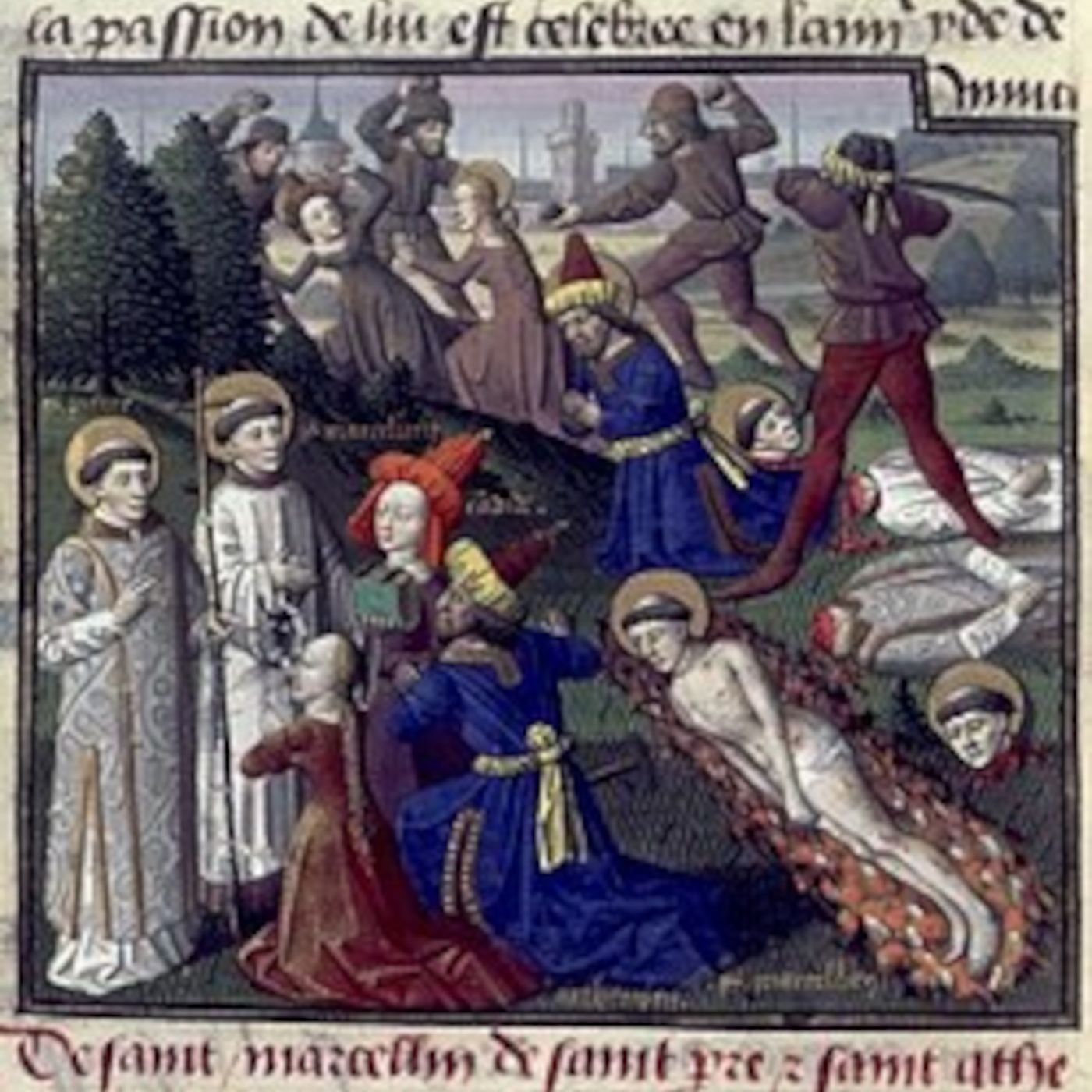
Catholic Saints & Feasts of the Liturgical Year
June 2- Saints Marcellinus and Peter, Martyrs—Optional Memorial
00:08:22
https://mycatholic.life/saints/saints-of-the-liturgical-year/june-3---saints-marcellinus-and-peter-martyrs/ June 2: Saints Marcellinus and Peter, Martyrs—Optional Memorial Mid-Third Century–c. 304 Invoked by those enduring hardships in life...
Loading summary
Transcript1 lines
- [00:05]
A
Welcome to saints and feasts of the liturgical year from my Catholic life. June 2 Saints Marcellinus and Peter Martyrs optional memorial mid third century to circa 304 invoked by those enduring hardships in life. Pre congregation canonizations Here lie the bodies of Saints Marcellinus the priest and Peter the Exorcist, who by a marvelous inspiration, with the help of the Lord, have brought many unbelievers to the knowledge of the true faith and have taught them the commandments of the law, and at last, by the command of the impious tyrant, have deserved to be crowned with the palm of martyrdom. From the epitaph written by Pope Saint Damasus I. Today's reflection on February 23, 303, Roman Emperor Diocletian issued an edict that initiated a fierce persecution of Christians. The edict mandated the destruction of Christian churches and scriptures, revoked all legal rights of Christians, and called for the confiscation of their property. In 304 Diocletian ordered the arrest of clergy, forcing them to offer sacrifices to the Roman gods or face imprisonment, torture and death. These abuses continued under Diocletian and his co emperors until 311, when Galerius issued an edict of toleration toward Christians. The exact number of Christians who suffered martyrdom during this period is unknown, but it might have been in the thousands. Today's saints were among the first Christians to receive the crown of martyrdom during that period. There is very little information available about Marcellinus and Peter. It is believed that both were Roman clergy, with Marcellinus being a priest and Peter an exorcist. Both are included in the Roman Canon of the Mass alongside other early martyrs and saints. The little we know about these martyrs comes to us from Saint Damasus I, who served as Pope from 366 to 384. As a child, Damasus heard the story of the martyrdom of Saints Marcellinus and Peter from the mouth of one of the executioners who later became a Christian. After their arrest, Marcellinus and Peter were likely given a sham trial, found guilty, and then offered the chance to gain their freedom by burning incense to the Roman gods. They refused. While in prison, the two men preached the gospel to other prisoners and jailers to put an end to their evangelization. Orders were given to take them to a secret location in a nearby forest where they were ordered to dig their graves. They did so joyfully and were then beheaded and buried in that secret location to prevent other Christians from venerating their tombs. After Marcellinus and Peter's deaths, their stories became well known. Sometime later, through divine providence, two holy women named Lucia and Fermina were directed to the burial site. They took the saints bodies and buried them in what is today called the Catacombs of Marcellinus and Peter. These catacombs hold thousands of graves, primarily of Christians, and once also served as a secret place of Christian worship. In 313, Emperor Constantine the Great issued the Edict of Milan, legalizing Christianity and calling for the benevolent treatment of Christians. As part of his efforts to help Christianity grow, Constantine sent his mother, St. Helena on a journey to the Holy Land to bring back relics of Christ's Passion. Constantine also built many churches in various holy places. One of those churches is the Basilica of Saints Marcellinus and Peter, built over their catacombs. When St. Helena died, Constantine built a mausoleum for her next to the basilica, which became her resting place for centuries. As a result, devotion to Saints Marcelino St. Peter became widespread. At the start of the 9th century, a German monk named Eginhard, who had previously been a secretary to Emperor Charlemagne, requested relics of martyrs from Pope Gregory iv. In response, Pope Gregory sent the relics of Saints Marcellinus and Peter, and a monastery was constructed in their honor in Zeelingunstraat. After they were buried there, many miracles were said to have taken place. Although we know little about the details of their lives, the veneration of these early saints has been widespread and their names continue to be invoked today every time the Roman canon is used in the Mass. What is certain is that the courage of these saints in the face of death has inspired countless Christians for many centuries. As Jesus said, no one has greater love than this to lay down one's life for one's friends. In many ways, everyone who has been inspired by the martyrdom of Saints Marcellinus and Peter can be considered their friends. Though they died long ago, the friendship of their witness endures as we honor these martyrs. Ponder your own call to lay down your life selflessly for others. Dying to yourself, living sacrificially and selflessly is no easy task. But when the grace of God is alive in your life, you will discover that you are given the courage you need to be a witness to Christ. Pray for the same courage that Marcellinus and Peter had, so that your sacrificial love will make you friends to others who need your witness. Let us pray. Saints Marcellinus and Peter, you bravely laid down your lives for the sake of the Gospel, and in doing so, spiritually befriended all those who would be inspired by your witness. Please pray for me that I too may have the courage to bear witness to Christ by living selflessly and sacrificially for others, so that God's grace and mercy may be poured out on them through my Witness. Saints Marcelino, St. Peter, pray for me. Jesus, I trust in you.