← Catholic Saints & Feasts of the Liturgical Year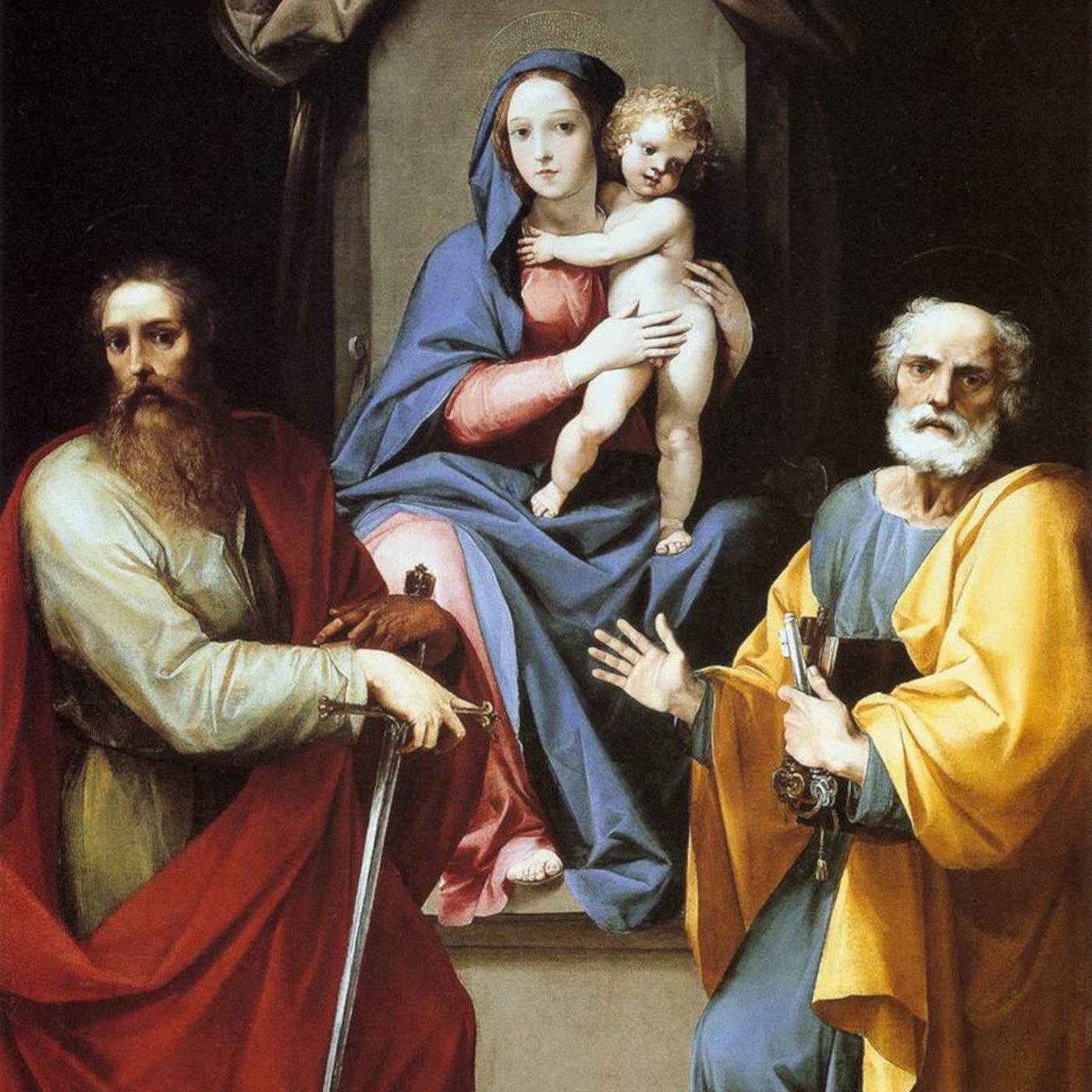
Catholic Saints & Feasts of the Liturgical Year
June 29- Saints Peter and Paul, Apostles—Solemnity
00:10:44
https://mycatholic.life/saints/saints-of-the-liturgical-year/june-29---saints-peter-and-paul-apostles--solemnity/ June 29: Saints Peter and Paul, Apostles—Solemnity Saint Peter: c. 1–c. 64 Patron Saint of Rome, bakers, brickmakers, masons,...
Loading summary
Transcript1 lines
- [00:05]
A
Welcome to saints and feasts of the liturgical year from my Catholic life. June 29 Saints Peter and Paul Apostles Solemnity St. Peter circa 1 A.D. to 64 A.D. patron saint of Rome Bakers, brickmakers, masons, bridge builders, butchers, clerk, clockmakers, cobblers, fishermen, harvesters, watchmakers, locksmiths, net makers the Papacy and the universal Church invoked against feet problems, fevers and frenzy. St. Paul circa 3 AD to circa 64 AD patron saint of Rome Evangelists, theologians, musicians, public relation personnel, writers, publishers and reporters Rope, saddle and tent makers Gentiles, Cursillo movement and Catholic action invoked against snakes and hailstorms Pre Congregation canonizations Both apostles share the same feast day, for these two were one and even though they suffered on different days, they were as one. Peter went first and Paul followed. And so we celebrate this day made holy for us by the Apostles blood. Let us embrace what they believed their life, their labors, their sufferings, their preachings and their confession of faith. From St. Augustine of Hippo Today's Reflection According to ancient Roman mythology, in the seventh century B.C. king Numitor was forcefully removed from his throne by his brother Amulius. Amulius then forced Numitor's daughter Rhea Silvia to become a vestal virgin so that she would not have children who could later attempt to reclaim the throne. However, one myth relates that Mars, the God of war, impregnated Rhea Silvia and she bore twin sons, Romulus and Remus. Amulius threw them into the river, but they were rescued by a she wolf. When they grew up, they killed Amulius and restored their grandfather to his throne. They then decided to found a city, but disagreed on its location. So Romulus killed Remus and founded a city, calling it Rome after his own name. After his death or ascension, he was said to have been deified as the God of Quirinus. To this day, one of the seven hills in Rome is named after him, the Quirinal Hill. This ancient myth helped make up the religious beliefs of the people of Rome at the time when today's saints, saints Peter and Paul, entered Rome and preached the Gospel, laying down their lives as martyrs. Myths that explained a city's founding were important. These myths were often central aspects to the culture and historical festivities. In ancient times, this was especially true in Rome. Therefore, as the early Church began to take root in Rome. Rather than dismissing this cultural practice, the early Church Christianized the story of Romulus and Remus by introducing a new festival for the new founders of Rome, Peter and Paul. On June 29, Simon was born in Bethsaida, near the Sea of Galilee. He was a fisherman by trade along with his brother Andrew. Matthew's Gospel records that Simon and Andrew were the first whom Jesus invited to follow him. After Jesus was baptized by John the Baptist and completed his 40 days of prayer and fasting in the desert, he went to the Sea of Galilee, saw Simon and Andrew fishing and called to them, saying, come after me and I will make you fishers of men. At that, these two brothers dropped everything and became Jesus first disciples. John's gospel relates a slightly different timeline, stating that Andrew first followed Jesus and brought Simon to Jesus. The next day when Jesus met Simon, he said, you are Simon, the son of John. You will be called Cephas, which is translated Peter. Matthew's gospel relates that Jesus changed Simon's name to Peter when he said to him, I say to you, you are Peter, and upon this rock I will build my church and the gates of the nether world shall not prevail against it. I will give you the keys to the kingdom of heaven. Whatever you bind on earth shall be bound in heaven, and whatever you loose on earth shall be loosed in heaven. With his new name and unique spiritual authority in which he held the keys to the kingdom of heaven, Peter emerged as the central leader of the church. After Pentecost, he spent about a decade in Jerusalem, preaching powerfully, performing miracles and converting many. He eventually traveled to Rome where he established the church there, becoming its first bishop around the year 64. He was martyred during the persecution of Emperor Nero. Tradition states that Peter requested to be crucified upside down because he he did not consider himself to be worthy of dying the same way Jesus did. His tomb is located under the main altar of St. Peter's Basilica. Saul was born as a Roman citizen in Tarsus, modern day Turkey. As a young man he went to Jerusalem to study at the renowned school of the Rabbi Gamaliel. After Jesus ascension into heaven, Saul became one of the fiercest persecutors of the early church, being partly responsible for the death of the Proter Martyr St Stephen. However, within a few years as Saul was traveling to Damascus to persecute other Christians, he was knocked to the ground and struck blind. He heard Jesus say to him, saul, Saul, why are you persecuting me? Jesus then directed him to a disciple of the Lord in Damascus named Ananias, who baptized Saul. Saul spent about three years in Arabia, where he went through an intense time of prayer and study, eventually returning to Damascus and then to Jerusalem, where Barnabas introduced him to the other disciples. Testifying to the veracity of his conversion in Jerusalem, Saul began to use his Roman name, Paul, and then spent Approximately the next 10 years as a missionary throughout the Mediterranean. Back in Jerusalem, he was imprisoned for a couple of years and then was sent to Rome for trial. Since he was a Roman citizen, in Rome, he met up with St. Peter. According to tradition, Paul was beheaded just outside the city of Rome. When his head fell to the ground, it bounced three times, each time giving rise to a spring of water. The place is marked today by the Abbey of the Three Fountains. Saints Peter and Paul are considered the foundational pillars of the Church. Peter represents the stability of the Church and the office of the Vicar of Christ. Paul represents the mission of evangelization that was entrusted to the Church by Jesus himself. He was also the Church's first theologian, which is seen in his numerous letters that expound on the gospels. Though unlikely, one tradition states that they were both martyred on June 29th in Rome, making them twin martyrs. Their twin martyrdom reminds us that the Church must be both stable and mission oriented. It must remain grounded in the ancient truth, yet grow and flower with an ongoing understanding of the mysteries of faith. As we honor these two pillars of the Church, recall the fact that though they are great saints, they were also ordinary men. Called to extraordinary vocations. They responded and God used them in ways they could have never imagined. Ponder your own calling in light of theirs and resolve to lay your life down for the Church, joining yourself to these two men so that God can continue their holy mission through you. Let us pray. Saints Peter and Paul, once Christ called you, you responded with total abandonment to his holy will. Through you, the Church was founded and began to grow. Please pray for me that I will fully devote myself to the ongoing mission of the Church so that God can use me according to his holy will. Saints Peter and Paul, pray for me. Jesus, I trust in you.