← Catholic Saints & Feasts of the Liturgical Year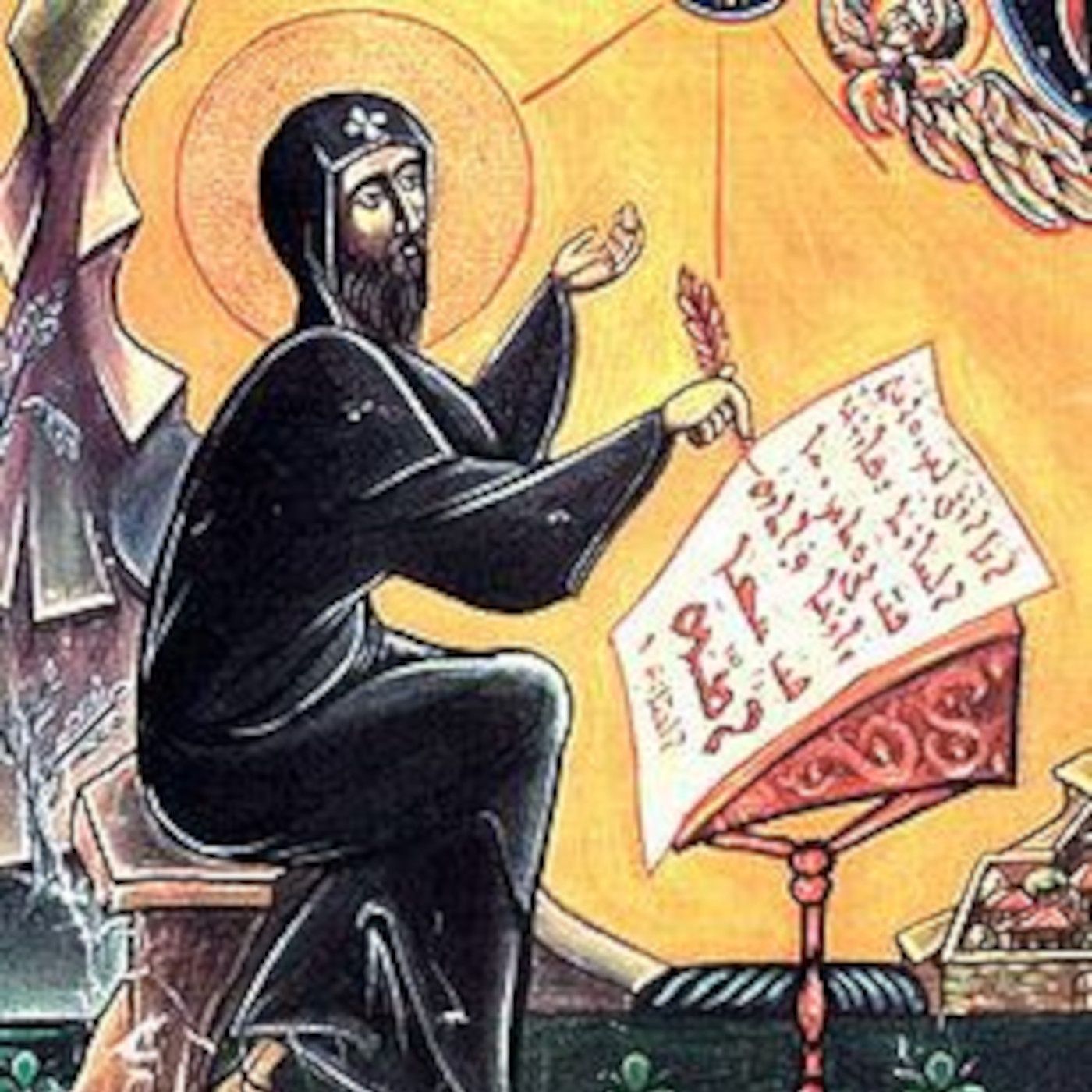
Catholic Saints & Feasts of the Liturgical Year
June 9- Saint Ephrem, Deacon and Doctor—Optional Memorial
00:10:54
https://mycatholic.life/saints/saints-of-the-liturgical-year/june-9---saint-ephrem-deacon-and-doctor/ June 9: Saint Ephrem, Deacon and Doctor—Optional Memorial c. 306–373 Patron Saint of spiritual directors and spiritual leaders Pre-Congregation...
Loading summary
Transcript1 lines
- [00:05]
A
Welcome to saints and feasts of the liturgical year from My Catholic Life, June 9St. Ephrem, Deacon and Doctor of the Church Optional Memorial circa 306, 373 patron saint of spiritual directors and spiritual leaders pre Congregation canonization Declared a Doctor of the Church by Pope Benedict XV in 1920 I, Ephraim, am dying with fear, but also with reverence. I entreat you citizens of Edessa, not to bury me under the altar or elsewhere in the house of God. It is not fitting that a worm teeming with corruption be buried in the temple and sanctuary of God, but lay me out in the tunic and mantle which I used and wore daily. Accompany me with psalms and prayers. I had neither pouch nor staff, neither wallet nor silver and gold, nor did I ever acquire or possess anything else earthly. Work diligently at my precepts and doctrines as my disciples do not fall away from the Catholic faith. With regard to the faith, be especially constant guard against adversaries. I mean evildoers, boasters, and tempters to sin and may your city be blessed, for Edessa is the city and Mother of the Wise. From the Testament of St. Ephrem Today's Reflection Ephraim was born in the town of Nisibes, near Syria's border with present day Turkey. At the time of Ephraim's birth, Nisibes was part of the Roman Empire. Nisibes was a diverse city of Syrians, Arameans, Arabs, Greeks, Jews, Parthians, Romans, and Iranians. Among the religious beliefs were Judaism, Christianity, and polytheism. Aramaic was commonly spoken and to a lesser extent, Greek and Latin. When Ephrem was just a boy emperor Constantine the Great issued the Edict of Milan, legalizing Christianity throughout the empire. Ephrem likely learned the faith from his mother at an early age. Stories from his youth, however, suggest that even though he was raised in the Christian faith, he failed to practice it. One story relates that one day when Ephraim was walking through a field and saw a cow, he decided to have fun by throwing rocks at it, forcing the beast to run. Ephraim pursued the cow, pelting it all the more until the poor animal died. When Ephraim later encountered the cow's owner, he denied ever seeing the animal. He would come to regret his double sin. Some months later, Ephraim was spending time with a friend who was a shepherd. After the shepherd had too much to drink, he lost the sheep to thieves or wolves. As a result, they, the shepherd and Ephraim were arrested and imprisoned on the charge that they stole the sheep. Within that prison, something life changing took place. An angel was sent to chastise Ephraim, explaining that even though he was innocent of the crime against the sheep, he was not innocent of other crimes, such as the death of the cow. The angel's holy rebukes did wonders in Ephraim's soul, and he was filled with remorse and repentance as he came face to face with divine justice by God's grace. When the sorrowful Ephraim was released from prison after two months, he vowed to turn his life around. Sometime after his release, Ephraim consulted with the local bishop, Monk St. James of Nisibis, seeking spiritual direction. Bishop James took Ephraim under his wing and began to teach him in his school, mentoring him in the ways of monastic life. At that time, Syrian monasticism was different from the monastic life that was developing in Egypt. In Egypt, monks would escape into the wilderness, seeking silence and solitude from the Roman Empire and society so that they could focus exclusively on God. St. Anthony of the Desert is among the most renowned of the desert fathers. In northern Syria, where Ephraim lived, those who sought out the monastic life did so within the community of believers. They lived as ascetics, doing penance and praying devoutly, but they also remained servants of the local church, serving the community and addressing their needs. This is the life that Ephraim undertook. After vowing to live in poverty and celibacy as a hermit, he spent time in the solitude of caves in the wilderness. Within the community, he performed good works. Over the next 40 to 50 years, Ephraim studied under Bishop James and lived an ascetic life of prayer, penance and service. He used his many gifts for the glory of God. Ephraim's enduring legacy is his writings. He was a prolific writer of hymns, poems, biblical commentaries and homilies. It is believed that during his lifetime he composed as many as 400 hymns and 3000 poems that were 20 tools for catechetics and worship. They were rich in imagery, theologically precise, insightful, melodic, and covered important topics such as the Incarnation, the Blessed Virgin Mary, the sacraments, and the purpose of the Christian life. His hymns and poems were also apologetical, meaning a defense of the faith. At that time, numerous heresies abounded and some heretics sought to push their beliefs on others by composing hymns. Since a hymn was easily remembered, Ephrem took the same approach, only with orthodox poems and hymns that sought to dispel the heresy's errors. Ephrem's gifts of artistically presenting the deep Truths of the faith led many over the centuries to refer to him as the harp of the Holy Spirit. Around the year 350, Ephraim's mentor, Bishop James, formally opened the school in Nisibis, which became an important center for education within the Syriac Church. Ephraim assisted the bishop, becoming a respected and influential teacher. In 363, Roman Emperor Jovian lost a battle to the Persians and had to surrender the Roman town of Nisibis. All Christians were expelled from Nisibis. Ephrem settled in the town of Edessa, about 125 miles to the west. A flourishing Christian city. In Edessa, Ephraim continued to teach, ran write, and serve the community in any way he could. He found a school there which became another important Christian center for learning. In Edessa, Ephraim became known as the saint of daily living because he often came out of his solitude to teach people how to live the faith in a practical way. At some point he was ordained a deacon, and as a deacon, he became a true servant of others. When famine hit Edessa, he helped distribute food to the poor. When a plague struck, he cared for the sick. During a plague in 373, Ephraim contracted the disease and became a martyr of charity. Though St. Ephrem died in the 4th century, he was declared a Doctor of the Church in 1920 by Pope Benedict XVI. Saint Ephrem is the only Syrian doctor of the Church and is not only highly revered in the Eastern Catholic Church, but in the Orthodox Church as well. It might be that the 1920 declaration was done in part as a way of further bridging the gap between the Catholic Church and the Orthodox Church. As we honor this great saint, ponder especially the powerful effect that music has upon the human person. What types of songs do you listen to? Consider following the example of Saint Ephrem by filling your mind with hymns that give praise and glory to God and do so in a clear and theologically rich way. Such a habit will certainly help you grow in holiness. Let us pray. Saint Ephrem, you offered yourself to the service of God, and God used you as an instrument to lead many to glorify Him. Please pray for me that I may also become an instrument of the Holy Spirit, placing all my gifts at the service of God for his greater honor and glory. Saint Ephrem, pray for me, Jesus. I trust in you.