← Catholic Saints & Feasts of the Liturgical Year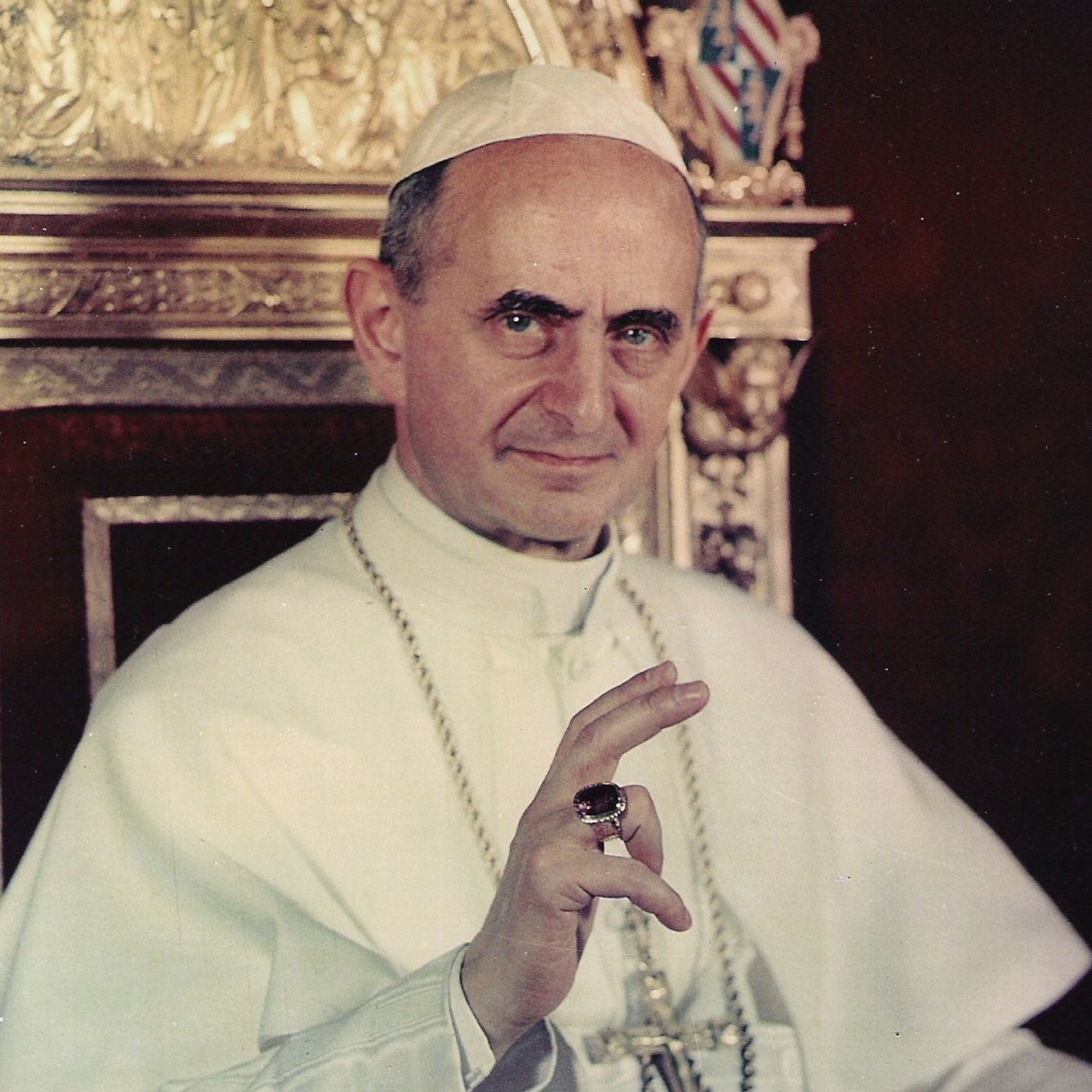
Catholic Saints & Feasts of the Liturgical Year
May 29- Saint Paul VI, Pope—Optional Memorial
00:12:33
https://mycatholic.life/saints/saints-of-the-liturgical-year/saint-paul-vi/ May 29: Saint Paul VI, Pope—Optional Memorial 1897–1978 Patron Saint of Vatican Council II Canonized by Pope Francis on October 14, 2018 Liturgical Color: White Quote: And...
Loading summary
Transcript1 lines
- [00:05]
A
Welcome to saints and feasts of the liturgical year from My Catholic Life, May 29St. Paul VI Pope Optional Memorial 1897-1978 Patron Saint of Vatican Council 2, canonized by Pope Francis on October 14, 2018. And most important of all, on taking my leave of this earthly scene and going to face the judgment and mercy of God, there are so many things I should say, indeed so many, on the state of the Church, let her give ear to some words of ours which we uttered on her behalf, seriously and lovingly on the Council. Let it be brought to a good conclusion and let its prescriptions be put into effect. As regards ecumenism, the approach to the separated brethren must go on with great understanding and patience, with great love, but without deflecting from the true Catholic doctrine. As regards the world, one must not think to help it by following its ways of thought, its habits and tastes, but by studying it, loving it and serving it. I close my eyes on this sorrowful, dramatic and magnificent world, invoking once again on her behalf the divine goodness. Again I bless everyone, especially Rome, Milan and Brescia, for the Holy Land, the land of Jesus, where I went as a pilgrim of faith and peace. A special greeting and blessing from the last testament of Pope Paul vi. Today's Reflection Giovanni Battista Montini was born in northern Italy, about 50 miles east of Milan. He was the second of three boys. His father was an attorney who ran a Catholic newspaper in the province of Brescia and a member of the Italian Catholic Action, a lay organization that advocated for a greater influence of the Catholic faith within society. His mother was from a wealthy noble family, but her parents death when she was young resulted in her spending much of her teenage years in a boarding school in Milan run by French nuns. As a child, Giovanni was called Battista by his family. He was educated by Jesuits and enjoyed sports and playing cards. When he was 12, Batista was diagnosed with a chronic heart flutter and suffered from intestinal difficulties. He often missed long periods of school, spending time at the family villa and receiving private tutoring, though he had long thought of becoming a journalist like his father, Battista entered the seminary at the age of 18 and was ordained a priest four years later. Shortly after his priestly ordination, Father Mantini was sent to Rome to study canon law, though ill health continued to plague him. He obtained his doctorate in canon law, studied for the Vatican diplomatic corps, briefly served at the Apostolic Nunciature in Warsaw, Poland, and then returned to Rome. In Rome he began his service as a diplomat in the papal household under Pope Pius xi and assisted at the Supreme Tribunal of the Apostolic Signatura, the Holy Office and the Secretariat of State. When Pope Pius XII was elected in 1939, Monsignor Montini worked with him daily, eventually acting as the Pope's de facto personal secretary. In 1939, World War II broke out and Monsignor Mantini assisted the Pope as he navigated through the chaos. As thousands of refugees fled to Rome, Monsignor Mantini organized the Vatican's effort to care for them, giving them shelter and food, keeping them hidden and supporting their mental and spiritual needs. In 1952, Monsignor Mantini was appointed pro Secretary of State for General affairs and in 1954 was ordained the Archbishop of Milan and the Secretary of the Italians Bishops Conference in Milan. Archbishop Montini's organizational skills flourished. He built many new churches, organized diocesan wide catechesis, and sought new and innovative ways to share the word of God. In an attempt to confront the rise of Marxist ideology. He showed great interest in upholding the dignity of the worker with his support of unions and immigrants. His ministry went beyond Catholics, seeking ways to reach out to other Christians, Jews, Muslims and those without any faith. When Pope Pius XII died in 1958, many people thought that Archbishop Montini would be a good successor. However, he was not a cardinal. It came to light after that Pope Pius XII had offered to make him a cardinal on at least two occasions, but Monsignor Montini had turned the office down. Therefore, when the College of Cardinals entered the conclave to vote, they chose Cardinal Roncalli, the Patriarch of Venice, who took the name Pope John xxiii. Pope John was no stranger to Archbishop Montini and had a great fondness for him. Within a year of his papal election, the Pope raised Archbishop Montini to the cardinalate and appointed him to various Vatican posts in addition to being Archbishop of Milan. With those responsibilities, Cardinal Montini frequented the Vatican, continuing his service as a trusted Papal Advisor. From 1958 to 1960, Cardinal Mantini took a special interest in the universal Church, making visits to several African countries, South America, the United States and all parts of Europe. In 1961, Pope John XXIII appointed Cardinal Montini to a special commission meant to prepare for Vatican ii. The Pope had announced his intention to hold an ecumenical council just two years prior, much to the surprise of Cardinal Montini. Though uncertain of the wisdom of such a move, the cardinal was a loyal churchman and assisted in every way he could. On October 11, 1962, Pope John XXIII formally opened the Second Vatican Council in less than A year, however, the Pope would die of stomach cancer. The Pope's vision for the Council was to bring the ancient faith of the Church into closer connection to the modern world. He foresaw a new Pentecost or a new springtime for the Church. The Holy Father also wanted to reach beyond the Catholic Church to seek greater union with people of all faiths and those with no faith at all. Though the central mission of the Church was to preach the saving message of Jesus Christ, he also saw the Church as a necessary institution sent by God to assist all peoples with the emerging issues of the day, such as modernization, communism, economic growth, war and poverty. The Church needed to be an active force within every human and societal structure. After the death of John XXIII, Cardinal Montini was elected Pope on June 21, 1963. His lifelong service to the Church prepared him well for the task. As Pope, he reopened and presided over the remaining sessions of the Second Vatican Council and oversaw the implementation of its schema. He also implemented new liturgical rites for the sacraments and a new liturgical calendar. Pope Paul VI was the first traveling Pope, making apostolic journeys to 17 different countries. In the Holy Land, he met with the Greek Orthodox Patriarch Athenagora of Constantinople. The two mutually lifted the excommunications imposed upon the leaders of each church since the year 1054. During the rest of his journeys, he exhorted churches and nations to address world peace, social justice, poverty, illiteracy, ecumenism, and world unity. Perhaps the most difficult decision Pope Paul VI made was the promulgation of the encyclical Humanae Vitae, in which he reiterated the long standing Church teaching on contraception. Though many bishops and theologians recommended the moral acceptance of contraception, the Pope prayerfully followed his conscience, which resulted in outrage among some, especially in the Western world. He stood firm and suffered quietly through it all. His encyclical included various prophecies about what would result from the liberal use of contraception, infidelity, moral decline, diminished respect for women, governmental abuse of power, and an erroneous belief that humans have an unlimited dominion over their own bodies. Those prophecies have all come true. Pope St. Paul VI was one of the first popes to face the many challenges and blessings that have come from modernization. He sought to keep the ancient faith of the Church ever ancient, while also making it ever new and relevant to a world in need. He sought unity among Christians, peace among nations, and respect for the dignity of all. As we honor this recent saint, ponder the effects that he has directly had upon your life, his prayerful decisions, especially regarding the way we celebrate the liturgy, have led many to engage the sacraments in a more active way, participating more fully in the sacred offering of the most Holy Body and Blood of Christ to the Father in Heaven. Nothing in life is more important than that. Let us pray. Pope Saint Paul vi, you were a faithful servant of Christ and His Church. You prayerfully sought to share the ancient and glorious faith of the Church with the whole world in any way you could. Please pray for me that I will also be a faithful servant of Christ's Church, doing all I can to further its mission of bringing the grace and mercy of God to all. Pope Saint Paul VI Pray for me, Jesus. I trust in you.