Loading summary
Transcript130 lines
- [00:00]
A
I'm Serena Williams and I'm healthier on row. I've lost 34 pounds in a year with GLP1's diet and exercise on row. You can access GLP1 options including the first FDA approved GLP1 pill for weight loss. Go to Rourney to see if you qualify. 14 to 20% average weight loss in one year in non diabetics with obesity or overweight with a weight related medical condition versus 2.2% to 3.1% in placebo arm RX only. To stay informed about serious side effects,
- [00:29]
B
go to Ro Co Safety Ready to experience something new? Alltrails helps you find your next hike. Whether you're looking for something nearby or planning a trip, read reviews from real people like you to choose your trail and know what to expect. You can also download the map in case service gets spotty. Plan and experience your next hike with Alltrails, the app for exploring the outdoors. Download it today and find your Outside
- [01:02]
A
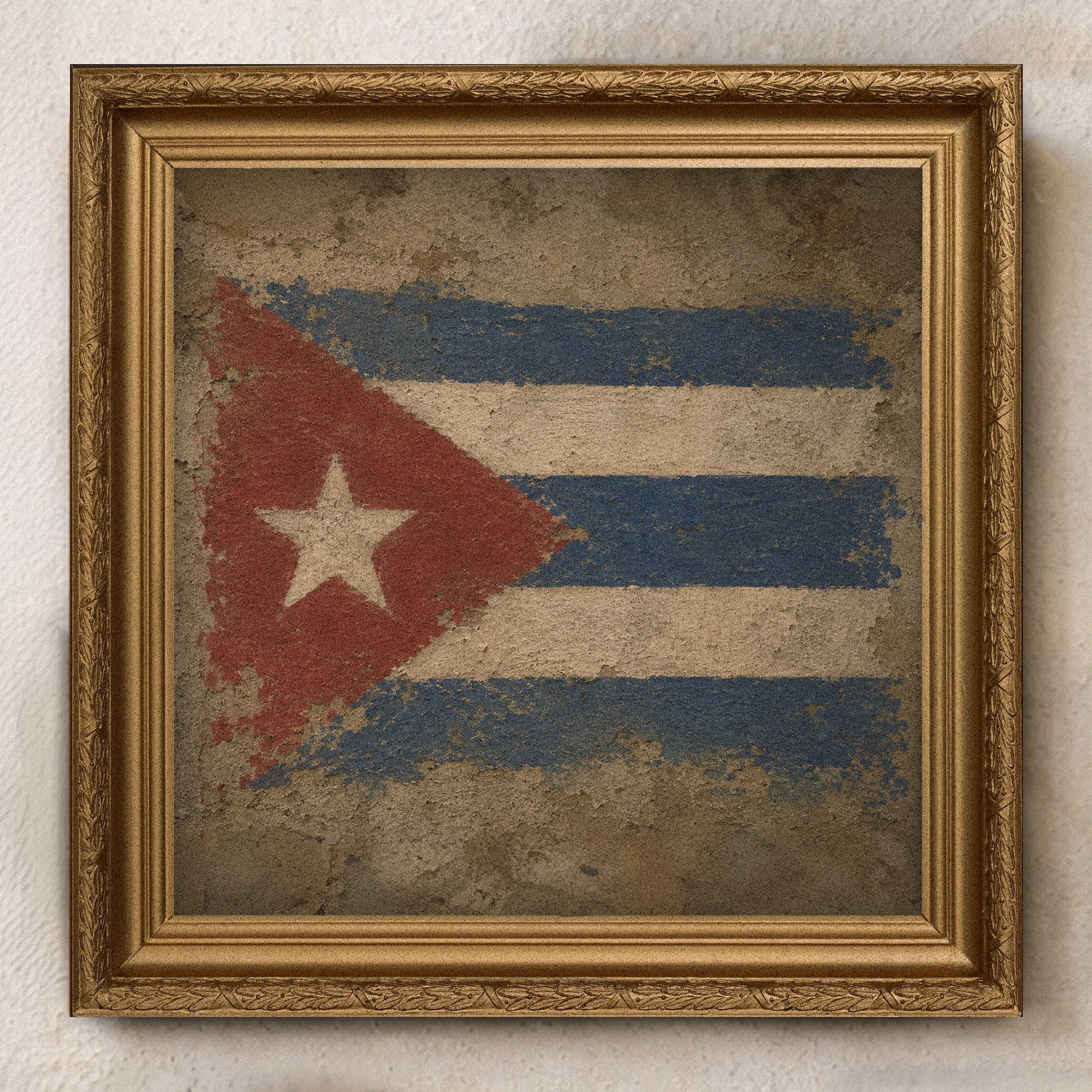
if you follow the news even from a healthy distance, you're probably aware of a recent crisis in Cuba. It's a long story, at least 67 years long in fact. But to put it simply, there's a general sense that Cuba's economic and political system is at a breaking point. In recent months, the United States has blocked the country's key oil suppliers, namely Venezuela and Mexico, which has turned a long standing energy problem into a full blown crisis. There are continuous nationwide blackouts. Hospitals have postponed all but the most urgent procedures. Food, which has always been in short supply, is disappearing. The water is contaminated. Mosquito borne diseases like chikungunya and dengue are surging. There's not enough fuel for the garbage trucks, so trash is piling up on the streets. Residents in bouts of anger and desperation have started lighting the trash on fire. Cuba is closer to the edge than it's been in decades, and everybody who cares about Cuba is watching with bated breath. Our guest on today's episode is one of those people. She has strong feelings about Cuba and she's speaking from experience, close personal experience. She's not an academic, a politician, or the leader of an activist organization, but she has opposed Fidel Castro for virtually her entire life, and her opposition has been building and brewing since she was a child, when Fidel Castro would appear in her living room. I'm Lloyd Lockridge and this is family lore.
- [02:39]
B
Your name is pronounced Joy or Lloyd?
- [02:43]
A
Lloyd.
- [02:43]
B
I'm sorry.
- [02:44]
A
That's okay. Spanish speakers always call me Lloyd. I like it.
- [02:48]
B
Okay. Yeah.
- [02:50]
A
So to begin, could you tell me your name, please, and where you're from?
- [02:53]
B
My name is Alina Fernandez and I was born in Cuba.
- [02:57]
A
And could you tell me your mother's name?
- [02:59]
B
My mother's name is Natalia Revuelta and she passed already.
- [03:05]
A
And tell me a little bit more about your mother. What was her station in life when you were born?
- [03:11]
B
Okay. My mother was born, I would say, in the middle class. She. She had good studies. She was an only child. And, you know, the purpose of all grandmothers was to do any sacrifice to get their children in a better place in society and in life. So she went to the best schools. She spoke perfectly English and French, besides Spanish, she never stopped working. She married a cardiologist and had a daughter, which is my half sister, seven years older than me, and that was it.
- [03:54]
A
Like many people in 1950s Cuba, Alina's mother was very politically engaged. And in the early 50s, she supported an emergent leader named Eduardo Chibas, who formed something called the Orthodox Party. Chibas was a strident anti corruption candidate. He opposed American interference in Cuban political and economic matters, and his integrity was acknowledged even by his enemies. To communicate his agenda and beliefs to the Cuban people, Chivas had mastered the art of the radio broadcast. He dominated the airwaves and was considered a frontrunner in the race to become Cuba's next democratically elected president. But in 1951, one year prior to the presidential election, Chibas publicly accused Cuba's Education Minister of embezzlement. When asked to provide proof of this allegation, he said he'd reveal the proof on his next radio broadcast. On the broadcast, it became clear that Chibas did not have the proof. Instead, he warned the Cuban people that a Cuban ex president named Fulgencio Batista was going to disrupt the elections by launching a coup d'. Etat. Then, moments after the broadcast ended, Chivas fired three bullets into his stomach and groin. He died days later. Chivas was right. Batista, who was running in a distant third in the elections, seized power from the outgoing president through a military coup, and he canceled the 1952 elections. The United States did not help orchestrate the coup. But less than three weeks after Batista seized power through military force, the US Government recognized him as the legitimate leader of Cuba. When Alina was born in 1956, Cuba was controlled by the dictatorship of Fulgencio Batista. For people like Natalia Revuelta, Alina's mother, the Batista coup was an outrage. It had abruptly killed the momentum of Cuba's fledgling democracy.
- [05:50]
B
Then she got involved in the social unrest about Batista taking power again through a military strike, you know, through a coup d' etat and all the civil war. Civilian society in Cuba was against that because we were, believe it or not, becoming a very steady republic, and we were already taking care of it. And this coup d' etat was a setback that people took seriously.
- [06:19]
A
And now many of the people who once supported Chivas were looking for a new leader.
- [06:25]
B
So let's say that people that were supporting Chivas had to turn to someone else in those early 50s. And there was a lawyer student at the University of Havana that was emerging as a young leader at the university, and that person was Fidel Castro, Alina's mother.
- [06:47]
A
Natalia and Fidel Castro were exactly the same age. Natalia, who was a burgeoning activist, was looking for alternatives to Chivas, and she took an interest in the young lawyer.
- [06:57]
B
And as Fidel Castro started to emerge as the leader of the orthodox party, she kind of got close to him. And the story says that she sent a letter to him offering the space for his meetings and preparation of their political campaign. That's the way they met.
- [07:19]
A
Natalia did everything she could to aid Fidel Castro during his rise as a political leader and during the actual revolution itself, when Fidel and his guerrilla combatants descended from the mountains of the Sierra Maestra to overthrow Batista and seize control of the Cuban government in Havana. Alena was a small child when Fidel Castro took power. The sounds, sights, and smells of the Cuban revolution are the ingredients of her earliest memories.
- [07:44]
B
And I remember. I remember it well because everything changed so abruptly that it stayed. It stayed with me. You know, we had cartoons and a regular life, until one day the TV screen filled up with those hairy people hanging from frightening vehicles that they called tanks, war tanks. And those people were on TV for a few days. That's the memory I have. And it was a succession of events that happened just on the screen. Like, people on the street were looking happy, celebrating those hairy people.
- [08:26]
A
But it wouldn't take long for Alina to see where that celebration was ultimately leading.
- [08:31]
B
And days later, I saw a man standing against a wall, and he had, like, black stains and fell down. So it was an execution. So everything happened very fast, very fast. And in fact, the first months of the Geofos revolution were hectic.
- [08:52]
A
And then the man responsible for and presiding over this disturbing mixture of camaraderie and carnage appeared on television.
- [08:59]
B
The first speech Fidel Castro gave on TV lasted for seven hours. It took for him seven hours to explain what he was going to do with the army, that he was going to respect the professional army, but he was going to create another second army with the men that had fought with him in the mountains. So that was the program that he proposed on the first day. But nevertheless, people applaud him and hail him. And the charisma taking the promises, charisma taking over. The reality started that day, the day he gave his first speech. And even when he was not giving a plan for the country, people were hailing him and celebrating him.
- [09:44]
A
But Alina had little reason to celebrate. For her, the revolution was certainly bringing about change, just not the change she wanted.
- [09:52]
B
For me, everything changed. We moved from our house. I soon lost my father, or the person I considered to be my father, because he left the country with my sister. So from me went to. From day to night.
- [10:10]
A
So your father left the country with your sister. Why did you and your mother stay?
- [10:15]
B
Because my mother was one of the persons that made the revolution possible. She had conspired in the 26th of July Movement. But the preparation, the uniforms, the training, the money that you need for such an operation, my mother helped collected it. She was really, really involved with this process of making the revolution possible.
- [10:41]
A
And as Alina's family was pulled apart, Alina watched in disbelief as her fellow Cubans performed the daily obligations of the revolution.
- [10:48]
B
You don't imagine what was going on around. It was crazy, you know, people were working voluntary hours to build a revolution. My mother also disappeared, even on the weekends, because she was building the revolution through voluntary work. And then she started having meetings with the Communist Party. And everything was hectic. It became like an outhouse. I don't know the best way to describe what Cuba was after the triumph of the revolution. They had so many bizarre ideas. Like, for example, to demonstrate your allegiance to the revolution, they invented the march that was. I don't remember how many miles, like 50 miles. And you had to march in uniform just to show that you were supporting the revolution. Ideas that even for a child that is eight, nine years old, look crazy and don't make your life better, for sure. And everything started to lag, like you couldn't get. Goods started to disappear. I'm not only speaking about food, I'm speaking about shoes. So if you grow up with the same shoes for three years, you know, it's like. I don't know how to describe. It was misery from the beginning.
- [12:04]
A
And eventually Alina herself had to participate in the revolution. At 10 or 11 years old, Alina and her contemporaries were put in buses and sent to work in the Fields. At first she was asked to work 45 days a year, and then it went up to three months, three months of, quote, unquote, voluntary work.
- [12:23]
B
And let me tell you, it was, I mean, for a 10, 11 year old girl that is being raised at home. And we were all like that at that time. We were the first guinea pigs for all these processes. It was hard because the living conditions were terrible, terrible in those camps. You know, I won't even describe it, just imagine. And I didn't want to go. I remember. I remember it was called voluntary work. And I remember having a discussion with my mother. I don't want to go. And she said, no, but you have to. Why? It's called voluntary. So we had a semantic discussion in that case, and she says, no, no, no, but you have to go. So I pretty soon discovered that voluntary meant mandatory, for example. And it was very uncomfortable. It was, I don't know, it was terrible. It was a terrible experience for all my generation. I'm not speaking for myself. I mean, all my friends in the neighborhood and in my classroom were shock too. But our parents were already afraid to stand for themselves. So we were all sent. I don't know how he managed to manipulate an entire population. And I think that, you know, fear was established from the time those executions took place. At the very beginning of the revolution, hundreds of people executed. So I seen that people were already afraid and nobody stood for nothing.
- [13:59]
A
Fidel sort of said, you know, before we get started, I'm going to show you the price of betraying the revolution. And he did these executions. Now you've seen what happens if you oppose the revolution. Now let's get started. Who wants to do voluntary work?
- [14:13]
B
Oh, yeah. Yes, more or less.
- [14:17]
A
Alina says Fidel Castro invaded every phase of daily life, including what used to be leisure time. As Alina and her generation of children sat down to watch their one hour of kids programming on television, there he was.
- [14:30]
B
We had two TV channels in Cuba. There was an hour of entertainment for children, right? Like half an hour cartoons and half an hour adventures homemade by Cuban actors and stuff. And every day, he was almost every day on TV giving a speech. And every day we used to sit there praying almost to the TV set for him to stop speaking before 7 o'. Clock. So he was kind of a tormentor, you see.
- [15:02]
A
But for virtually all Cuban children, Fidel Castro disappeared when you turned the TV off. That was not always the case for
- [15:09]
B
Alina and that person who was also hailed and applauded, suddenly step out from the TV Set and landed in the living room.
- [15:19]
A
Okay, so what do you mean by that?
- [15:21]
B
He came to visit the house pretty often when I was a child. And you know, I mean, you can notice love. My mother was in love with him. There's no doubt about it. My mother was one of the most beautiful and attractive women I've ever met. You know, a mix of crio Cuban with English ascend. And she was absolutely gorgeous. She was like a fairy. And I could see love in her eyes, of course. And he showed a certain tenderness towards me.
- [15:57]
A
And When Alina was 10 years old, her mother finally told her what she already suspected, that Fidel Castro was her biological father.
- [16:06]
B
It didn't surprise me. Actually, it didn't surprise me.
- [16:10]
A
Why not?
- [16:11]
B
I don't know. I'm just describing the feeling.
- [16:15]
A
And was it very matter of fact or was it a long conversation?
- [16:18]
B
I don't remember if it was a long conversation or not. My mother wasn't the kind of person
- [16:24]
A
that would go to long preambles, unlike her boyfriend.
- [16:30]
B
Yes,
- [16:32]
A
but even after learning this information about her own identity, Alina's perspective on the revolution didn't change much. Because while I'm sure Alina and her mother Natalia had many similarities, they had one massive difference. Natalia was entranced by the vision and charisma of Fidel Castro. Her daughter Alina was not. One of the things I like about summer is how everything kind of slows down and becomes more relaxed and easy. And it's nice to have clothes that are comfortable and breathable and wearable things that you can throw on every day and go pretty much anywhere. And that's why I keep coming back to quints. They focus on well made essentials that naturally become those everyday staples you actually live in all season long. Lately I've been putting a lot of miles on this short sleeve button down linen shirt and also these linen shorts. I got another cotton button down short sleeve. I live in the south where it's hot and these shirts are perfect for the summer. It's as cool as I can possibly get while still looking presentable. And best of all, everything at Quint's is priced 50% to 80% less than similar luxury brands because they work directly with ethical factories cutting out the middlemen. So the only thing you're paying for is quality. Plus, it's not just clothing. Quince is a trusted favorite for home and travel essentials too. Make your summer wardrobe easier. Go to quince.com familylore for free shipping on your order and 365 day returns. Now available in Canada too. That's Q U I n c e.com familylore for free shipping and 365 day returns. Quints.com familylore hey there, it's Jill Schlesinger.
- [18:15]
B
I'm launching a new show. It's called Money Moves and your money is going to move. We're going to help you make better financial decisions. We're going to call out the B.S. you're finding all over social media. We're going to give you actionable guidance to make your financial life clearer, less stressful. We're going to answer your financial questions and take the mystery out of your financial life. Follow and listen to Money Moves with Jill Schlesinger wherever you get your podcasts.
- [18:45]
A
Evening. Buyer's Remorse.
- [18:47]
B
Buy a new car.
- [18:49]
A
I'll be moving in. Let's get started.
- [18:52]
B
Sorry, I think there's been a mistake. I bought it from Carvana.
- [18:55]
A
You what?
- [18:55]
B
Yeah, great price. I even have seven days to love it or return it. So there's no, no, no Buyer's Remorse. More like buyers rejoice.
- [19:04]
A
I guess I'll let myself out. Congratulations. I mean it. Buyers rejoice. Buy your car today on Carvana. Limitations and exclusions may apply. See our seven day return policy at Carvana.com When Alina was 10 years old, Fidel Castro had been in power for seven years. The Cuban Missile crisis had passed. Castro had survived multiple assassination attempts by the CIA and he had repelled the botched Bay of Pigs invasion. Castro promoted himself as a symbol of resistance against a predatory imperialist power. To the north. He was David and the United States was Goliath. Alena was not convinced and she struggled to hide it. Was there ever a moment in your life where you felt enthusiastic about the revolution or was it sort of resistance from the beginning?
- [19:51]
B
I did my best to try to adapt. I did my best. And I think that, you know, I'm a grandma now, but I think that I had periods of little adaptation. But my mother wasn't happy with me, so I was driven to a psychiatrist or something. And that person said very soon that I was. How can I say this in English? Socially unadapted. Is that a term, a medical term?
- [20:20]
A
Socially maladjusted or unadapted?
- [20:23]
B
Yeah, unadapted.
- [20:24]
A
Unadapted. Socially unadapted. I'm not a psychiatrist, but I haven't heard that one.
- [20:29]
B
Well, I don't know. She's inadaptada social.
- [20:34]
A
And at what age was this?
- [20:36]
B
I think I was 10, 11 years old already.
- [20:40]
A
That's still very young.
- [20:41]
B
Well, who the hell would like to live through what we had to leave. You know, you certainly don't even have bread for your breakfast. You don't have butter anymore. I'm telling you.
- [20:54]
A
Do you think part of that was, to use a metaphor, you had sort of peeked behind the curtain and seen the real wizard of Oz. You know, you had seen this Fidel Castro. You had seen him in person in your living room. He's not this mythical figure that's only on the television.
- [21:08]
B
Do you think that that, I mean, for example, also. I think that's another factor. My grandma and my nanny hate him. They couldn't stand the guy, so they thought he was an evil force somehow. Like, they didn't like him at all, at all. They didn't shut up about it.
- [21:28]
A
But none of this disapproval about Fidel was getting through to your mother.
- [21:31]
B
Oh, no, no, no, no, no, no, no. I'm telling you, I was driven to the psychiatrist because I. It was a little bit contestatory with certain things that, you know, what does a normal child want for instances? I mean, marching in uniform, singing anthems about the revolution? No, a normal child wants to go to the movies and wants to have something beautiful to wear or nice and wants to have an ice cream once in a while, everything disappear. At the beginning of the revolution, everything changed. And then it kept changing and changing and changing for the worse. It never went back to normalcy. No family life, no breakfast in family, no Sunday going to the beach with my mother, father and sister. All of that was a race.
- [22:25]
A
One of the hardest changes for Alina following the revolution was losing her friends.
- [22:30]
B
So suddenly and soon, my best friends from childhood started to leave the country with their families. Because, of course, at some point, that same middle class realized that they made a big, huge mistake.
- [22:43]
A
Alina knew her friends would not be coming back. That was the choice one had to make in the early days of the Cuban revolution. You could leave, but if you left, you were gone for good. After leaving, your house and belongings would be repossessed, and you would be considered by Fidel Castro and his regime as a gusano, a worm and a traitor. And for Alina, whose mother was still devoted to the revolution and to Fidel Castro himself, the choice was clear.
- [23:10]
B
You know, you start losing your friends when you're 10 years old. Your best friend is gone, and you're left behind. That's sad. That's your encounter with sadness. And that happened all along my life, like my friends were leaving. And you stay, like laying flat There looking at the birds migrating and there is nothing you can do, nothing.
- [23:34]
A
This is how Alina grew up in Cuba, the defiant daughter of Fidel Castro, a headstrong young woman who never shied away from giving her honest appraisal of the new Cuba and who refused to believe the perpetually postponed promises of the revolution. To her it was objectively and demonstrably true that the nation had changed for the worse. And there was no amount of rhetoric that could obfuscate that. As Castro's daughter, Alina didn't go looking for special favors. When she was asked if Fidel Castro was her father, she'd say no. She used the last name Fernandez, the surname of her mother's husband, the man who she thought was her father, until she was about 10 years old. But despite this, Fidel would occasionally appear in her life and try to exercise his paternal power. When Alina decided to get married at the age of 16, Fidel intervened.
- [24:23]
B
I had a boyfriend and we were going to marry and he was very upset then from the distance you can understand, because I was 16 years old. But at that time it was normal, nothing too bizarre in Cuba to marry when you are 16, in the 60s, 70s, now it looks like a monstrosity, right?
- [24:46]
A
And he found out about it. I guess your mother told him or somebody told him and he stepped in. And how did that go exactly?
- [24:53]
B
Well, it didn't go too well and I don't know, I thought that, I mean, why not? We negotiate? And I proposed to postpone it and he agreed. I postponed it a few months because I knew that he, how can I say this, he was not going to employ himself in a fight. I just have to gain some time. I mean, I saw him doing that same thing so many times. You know, you buy time and that's what I did. And I ended up marrying my boyfriend a few months later.
- [25:38]
A
For me, I don't know, you know, this is our first time speaking and it's to me remarkable to hear stories about a 16 year old Alina sort of standing up to Fidel Castro and saying, I'm sorry you disagree, but I'm doing this anyway. I'll wait a few months if it makes you feel better.
- [25:53]
B
He just said to me, don't call me when you get divorced. And I said, well, I never call you anyway, so don't worry about it.
- [26:03]
A
When does the idea of leaving pop into your head for the first time?
- [26:09]
B
I always wanted to leave, always. And I was told when I was very young that it would become a political problem. So I wasn't allowed to leave.
- [26:20]
A
And who was forbidding you from leaving?
- [26:22]
B
Well, the system.
- [26:25]
A
Right, But I guess who personally was discouraging you from leaving?
- [26:29]
B
Everyone. Him, my mother, everyone.
- [26:32]
A
So you would speak openly about leaving to him?
- [26:35]
B
Oh, yeah. I was maybe 11, 12 years old, and I was told, no, it can be a political problem. I always had the feeling that I was in an old house. Nobody's reactions were normal. I mean, nothing was normal in that country. Everything was a struggle. So you wake up in Cuba and you say, what the hell are we going to have today for breakfast? You know? And then it becomes a hurdle. And it's the same for everything. Like, all the soap is finished. How are we going to get a new piece of soap? Living like that is terrible. It distracts you from whatever you need to do.
- [27:21]
A
Yeah. Constantly scrambling for basic resources.
- [27:24]
B
Constantly, Constantly. I remember I got pregnant, and the day I was giving birth, my first thought was, how are you giving birth to a child in this place? And my purpose from that day was to take her out somehow.
- [27:43]
A
And in 1993, at 37 years old, Alina plotted her escape. With the help of numerous friends and contacts in the Cuban exile community, she coordinated with three Spaniards who traveled to Cuba posing as tourists. One of them arrived with a Spanish passport. And Alina replaced the passport photo with a photo of herself. And then she disguised herself with heavy makeup and a wig and went to the airport to board a flight to Spain.
- [28:09]
B
My thinking was, don't try to be unseen. Just make people pay attention to you. That is unexpected. I didn't want to get into the airport like a little mouse, scared mouse. I just went there. I think I had half a bottle of perfume on. I had a lot of makeup that I usually don't, never wore in Cuba. And that's the way I left. I managed to get high heels. And my tactic was don't try to be unseen, but to the contrary, well, there and attract some attention if you can.
- [28:53]
A
That's smart.
- [28:54]
B
Yeah, I used to be smart years ago.
- [28:59]
A
I imagine you were nervous. How nervous were you? Or did you feel, like, resigned to.
- [29:04]
B
It was a strange feeling. It was like when you go to, I don't know, poker table and play everything you have in there, and there is only two results you can expect and that's it. I had a certain tranquility.
- [29:24]
A
You'd been in Cuba your entire life and now you made it onto this plane. The plane taxis on the Runway and takes off and you feel the gravity pulling against you as you're Taking off into the sky. Do you remember how that felt?
- [29:41]
B
Yeah. Yes, I do. It was mixed with ignorance. I remember I went to the bathroom and I saw blue water and I said, oh, my goodness, I'm sick. You need to realize that Cuba was so isolated at that time. Internet didn't exist. We didn't receive any news from the outside. We didn't produce any news for the outside. So it's kind of. You're like a child. You're landing from the moon. You don't even have the knowledge about money. You don't know what money is. You don't know the value of money. You don't know a bank account. You don't know what a credit card is. You're totally like landing like a child, a newborn.
- [30:29]
A
For the first time in Alina's life, she was outside Fidel Castro's reach. She landed in Spain and her daughter joined her three days later. Not long after, she was granted asylum in Miami, where she's lived ever since. In Miami, Alina settled into her new life. She could now put food on the table, shoes on her child's feet. For the second time in her life, everything changed. But one thing remained constant, and that was her desire to see her father's regime come to an end. And today, for the first time in almost 70 years, Alina thinks that time has come. @vistaprint, we know you've got that idea for your business, like the one that nails the trade show, levels up your brand or makes your team say, we're really doing this. But an idea is just an idea until it's printed on signage, giveaways, custom apparel. Once it's in my hands, on my team, out in the world, then it's happening.
- [31:31]
B
It's so happening.
- [31:33]
A
Vistaprint has thousands of products, easy design tools and real support to turn that
- [31:37]
B
idea into something possible.
- [31:39]
A
Print your possible with code NEW20 for 20% off your first order@vistaprint.com yo, it's
- [31:45]
B
Jey Uso from WWE and I'm Jimmy Uso. Chumba Casino and WWE are hyped for the biggest event of the summer.
- [31:53]
A
SummerSlam.
- [31:53]
B
I know I can't wait. There's nothing better to do while we're waiting. Playing Chumba Casino Casino Sign up today and you could win a VIP experience with Chumba Casino and WWE for SummerSlam.
- [32:05]
A
So what are you waiting for?
- [32:06]
B
Play Chumba Casino and enter for your chance to win. Let's chumble.
- [32:10]
A
New purchase necessary PGW Group void Weber inhibited by law CTS and C21 plus sponsored by Chumba Casino. So after you go to Spain, you make your way to United States and land in Miami. Did you find it hard to adjust to life?
- [32:31]
B
Oh, I'm still adjusting. I'm still adjusting. I'm not used to having rights. I still sometimes behave like a little bitten animal. That's the way I was raised. Everything was forbidden, everything was illegal. So sometimes I'm still very poor. But that's why, you know, all the Cubans act a little bit weird. And it's because of the way we've been raised and the way we grew up in there and the experiences we had.
- [33:06]
A
Right? I mean, you say beaten animal, but it really is similar to the consequences of abuse, of course.
- [33:13]
B
I mean, this is a small example. In 1991, after the fall of the Soviet Union, or 93, I think, it took to allow people to have dollars. But before that, for example, if you had in your pocket $0.99, that was called $10CIA, they invent bizarre words, meaning that you have dollars and you have dollars on you, that was penalized. But if you have $99, that was traffic, dollar traffic. And that was years of jail. So the extremes to what? Everything was forbidden in Cuba or illegal. You cannot imagine that. Imagine that you can go to jail because you have 99 cents in your pocket of a forbidden money, the money from the enemy that at the same time was the only money that bought you goods. So it's so complicated to explain, you know, the. What they did, what they invented, because we'd be forbidden, everything. I mean, in Cuba, you could not be self employed. For example, if you try to be an electrician as a self employee and get money from attending to private houses, you were also thrown in jail. That changed maybe 10 years ago, but it's been like that for ages, and we are already five generations involved in this madness.
- [34:42]
A
As Alina acclimated to life in Miami, she became a public critic of her father, something she'd been trying to do for a very long time. As you might expect, her attempts to criticize Castro publicly in Cuba were stifled. There was and is no free press. Alina says she once worked with a couple of ghost riders who came to Cuba to help her write a book. A week later, they were arrested and sent back to their home country. In Miami, she regularly criticized the Castro regime on an AM radio station. She has given numerous lectures about her experience in Cuba. Recently, she participated in a documentary by acclaimed filmmaker Thaddeus Mutula called the Revolution's Daughter, which is set to be released later this Year. While living in Miami for over 20 years, Alina has seen little opportunity for real change in Cuba. She's realistic about the situation. She does not underestimate the stranglehold that the Cuban government has on the nation. But that changed in January of this year. Your whole life, I'm sure you've seen many ups and downs when it comes to challenging the Castro regime or what's sort of the vestiges of the Castro regime now. What is it about this current situation with Cuba, between the United States and Cuba, that seems different to you?
- [35:54]
B
If anything, they are really applying pressure, and they had reactions. They were able to get reactions from the Cuban government. So I think it's an important time for me. It's very simple, and I know people differ from this concept, but I think that a dictatorship to get firmly established needs a little help from the outside. And likewise, when it has to fall apart, it needs a little push from. From the outside, not an intervention. Sometimes, yes, but it's not necessary like that. A little push is enough.
- [36:35]
A
The idea of a little push from the outside is, of course, controversial, both in terms of its legitimacy and its effectiveness. I asked Alina what she thought it would take for there to be change in Cuba, if perhaps the Cuban people were ready for another revolution. I'm wondering if in this moment you think that there is an opening or if there's a possibility for yet another Cuban revolution, or if this is something that would have to take a different shape. Will change come internally or does it have to come from the outside?
- [37:05]
B
I think that the term revolution makes everyone sick, really. We just want a normal life like everyone else. That's it. You want a regular life in which your needs are being covered and you can raise your children in a safe environment with enough to eat and some security, and that's what everybody wants. Why is it possible for Cubans who is responsible for this situation right now?
- [37:35]
A
Yeah, and that's my second question is as exciting as this moment is to see real pressure applied on the Cuban government. The obvious pitfall to this approach is that in the meantime, Cuban people are worse off than they were before the oil was cut off from Venezuela. Yes, there were blackouts, yes, there were shortages, yes, there were rations, yes, life in Cuba before this current situation was not a pretty picture, but it's getting worse, and that's part of the strategy. The collateral damage of the strategy is the suffering of the Cuban people. Until there's some sort of solution, I want to know how you feel about that sacrifice, about that cost I think
- [38:19]
B
that we couldn't lose the point. Who is responsible for this actual situation? Who is it? From one side, you have, I don't know, half of the population living here in the United States begging for help, and some people that don't have voice in there that are also begging for help. Nobody in his right mind can think that the Cuban people wants this regime to perpetuate themselves for another 60 years. That's not reasonable to think.
- [38:50]
A
What a defender of the regime might say here is that Cuba would be more prosperous if it weren't for decades of US Sanctions. Cuba's own government has made that case directly to the un. But what the regime's defenders don't account for is where the country's own money goes. Recent reporting by the Miami Herald, the BBC, and many other news outlets that, based on leaked internal financial documents, has shown that Cuba does have money. Billions of dollars sitting outside the reach of sanctions, controlled by a quasi governmental agency called gaisa. This money is not used to build roads or schools or help improve the lives of ordinary Cubans. It's controlled by a small circle of elites and has been ever since Raul Castro, Fidel's little brother, founded the organization in the 1990s. Gaissa isn't a mere slice of Cuba's economy, it's close to half of it. The revenue of GAISA is triple Cuba's state budget. They finally singled out gaissa, created by your uncle and overseen by your uncle's grandson. And we now see that there's billions of dollars of revenue in this organization that has not been shared with the Cuban people.
- [39:57]
B
Then you have your answer, right? You have your answer. Is a country run by a military corporation. Simple. But of course, the same thing is going to happen again. You are going to make the American guilty of what's going on in the island. There is no clarity in people's mind to accept that this comes from their government in Cuba, because they are really, really well established as a legend of the little David that is fighting the giant evil Goliath, which is the United States.
- [40:33]
A
And another critique regarding recent US Foreign policy with Cuba comes in the form of skepticism. Some are worried that following these initial steps to cripple the Cuban government, there isn't really a plan. Alina seems to be betting, or at least hoping that there are more phases to the pressure campaign against the Cuban government, that there is some kind of plan.
- [40:52]
B
I hope they have a clear strategy and some tactics to deal with, because the worst thing that can happen is to underestimate their capacity of reaction. And it's obvious that they, on the Cuban side don't want to negotiate at all. They are trying to gain time because they know American politics very well and they know that there are midterms coming. So, you know, it's a game. It's a game like everyone else. I'm sleepless. I don't know. I mean, bizarre things are happening, you know, But I hope they haven't get to their end. I hope they have more things in mind regarding Cuba, because it's the only chance we've ever had in 67 years for a change.
- [41:43]
A
In May of This year, the US government indicted Raul Castro for conspiring to kill US nationals. These charges stem from a 1996 incident in which Raul Castro allegedly issued an order to shoot down two civilian aircrafts. Later in May, the United States imposed new sanctions on Cuba, specifically targeting the military corporation Gaissa. In a written statement on June 30, Cuba's foreign minister said the blockade and the policy of aggression and hostility of the United States government against Cuba are a threat to the existence and well being of the Cuban people into the exercise of their human rights. It is unlikely that the foreign minister's advocacy for human rights was seen by many Cubans as the Cuban government blocks its citizens from accessing news websites. As of July 8, the date this podcast originally aired, diplomatic talks between the United States and Cuba were at a standstill. If the change happens, do you want to go back to Cuba?
- [42:39]
B
Yes. All the grandpas and grandmas here are eager to go back.
- [42:45]
A
What's the first thing you would want to do once you got back to Cuba?
- [42:49]
B
Let me see. Wow. I don't know. That's a good question. Feel the air. It's a different energy. It's something special, at least for me.
- [43:04]
A
Thank you for listening to Family Lore. If you have stories you'd like to share about your family, please email me@familylorepodmail.com that's familylorepodmail.com family lore is an Odyssey original podcast. It is written and narrated by me, Lloyd Lockridge. Our executive producers are Leah Reese, Dennis and I. Our lead producer and sound editor is Zach Clark. Additional sound editing, mixing and mastering by Chris Basel and production support by Sean Cherry. Special thanks to Maura Curran, Josephina Francis, Kurt Courtney, Hilary Schuff, and Laura Berman. Thanks again for listening to Family Lore. And if you have time, we'd love for you to rate and review the show.
- [44:09]
B
This is the sound of captivity. This is the sound of rescue. And this is the sound of freedom. Give Armenia's captive bears a second chance by supporting International Animal Rescue. Call 508-826-1083 or search the Great Bear Rescue to learn more.