Loading summary
Transcript103 lines
- [00:01]
Lemonade Pet Insurance Advertiser
If you're the proud parent of a puppy or kitten, you know you can't pet proof your entire life. There simply isn't a sock drawer high enough or a couch cover thick enough. But you can pet proof your wallet with Lemonade Pet Insurance. Whether it's an unexpected accident or a routine checkup, Lemonade can cover up to 90% of the bill. Plus they can handle claims in as little as two seconds. So before you turn into a complete helicopter pet parent, get a'@lemonade.com pet we all belong outside. We are drawn to nature. It calls to us. Whether it's the recorded sounds of the ocean we doze off to or the succulents that adorn our homes, Nature makes all of our lives richer, calmer, and frankly, better. Despite all this, we often go about our busy lives removed from it, but the outdoors is closer than we realize. With Alltrails, you can discover trails nearby or trails worth traveling to and explore confidently with offline maps and on trail navigation. Whether you're looking for a laid back walk with family or something more adventurous to get your heart pumping, Alltrails gives you the tools you need to get out there and find your outside. Download the free app today and and make the most of your summer with all trails.
- [01:30]
Lloyd Lockridge
The people walking by looked pretty confused. It was still well before Halloween, and yet standing outside the Joy Theater on Canal street were dozens of revelers dressed in some kind of satanic worship attire. It takes a lot to surprise the people of New Orleans, but in their defense, this scene was kind of hard to make sense of. It wasn't a Mardi Gras party or a debutante ball or a Post Jazz Fest concert. It was something entirely different and in many ways better. It was Bab. We want to welcome back to the stage the Hell Choir.
- [02:06]
Katherine 'Khaki' Dietz Conkey
Make some noise for the Hell Choir.
- [02:11]
Lloyd Lockridge
Bab spelled B A A B is very simple. It's a satanic ABBA cover band. Yes, ABBA, as in the Swedish pop group from the late 70s early 80s. Bab dresses in satanic attire and their fans follow suit. They have dancers on stage who do some kind of themed performance that's interwoven with the show, and they play ABBA songs. So after the show, I was chatting with my friend Helen and I brought up the topic of this podcast, perhaps prompted by the theme of the evening. Helen mentioned that she was related to one of the Salem witches. She was a direct descendant, in fact, and the accused witch's name was Ann Pewdeater. For more information, Helen said, I Should speak to her mother. I'd met her mom before and always remembered this very cool and distinctive streak of white hair that shoots down one side of her part. It's a physical trait that makes you feel like she might have special powers. What I didn't realize at the time is that Helen's mom would not be the first in her family to be accused of having such powers. I'm Lloyd Lockridge, and this is family lore. Could you tell me your name and where you're from?
- [03:32]
Katherine 'Khaki' Dietz Conkey
Katherine Dietz Conkey, and I am from New Orleans originally. Grew up in Fairhope, Alabama, and moved to New Orleans, raised a family, and just moved back to Fairhope.
- [03:44]
Lloyd Lockridge
So this is Katherine Conkey. She goes by Kaki. Kaki's mother was one of five girls, and as a result, Kaki grew up amongst a huge extended family in New Orleans. And tell me about your family growing up. You've mentioned that you've got sort of a big family. What were they like? Is it loud? Reserved?
- [04:01]
Katherine 'Khaki' Dietz Conkey
No, not reserved at all. Loud. Demonstrative, kind of argumentative, but very loving. Big boozers. My mother had four sisters. My poor grandfather only wanted a boy, but he kept having babies, and they were all girls.
- [04:15]
Lloyd Lockridge
So the rate of female babies in Kaki's family is actually some kind of scientific anomaly. One time, one of her sisters was seeing a doctor about an illness, and the doctor wanted to know her family history. So as the doctor looked into it, he said he noticed something very unusual. They thought, oh, no, we are genetically predisposed to some rare, terrible illness. But that's not what he was noticing.
- [04:36]
Katherine 'Khaki' Dietz Conkey
He was talking about how many females there were from just generations. It's women, Women, women, women, women, women.
- [04:45]
Lloyd Lockridge
And so KKI grew up surrounded by women relatives who, along with their families, would gather together for holidays at her grandfather's farm in Folsom, a small town about an hour north of New Orleans. Can you just tell me your grandfather's name and where he was from?
- [04:59]
Katherine 'Khaki' Dietz Conkey
His name was Henry Vance Greenslet. He was from Surprise, Nebraska.
- [05:04]
Lloyd Lockridge
And what was he like as a person? How well did you know? First of all, how well did you know your grandfather?
- [05:07]
Katherine 'Khaki' Dietz Conkey
Very well. He had a beautiful voice, very outgoing, loved to sing, was a really fun grandfather, but could be formidable. I mean, he accomplished a lot in his life, and it wasn't always just from being sweet. He was tough on his five daughters. They were very competitive. He was close to them. But we loved Granddaddy.
- [05:28]
Lloyd Lockridge
Well, when you say he's tough on his five daughters, what do you in what way?
- [05:31]
Katherine 'Khaki' Dietz Conkey
He was just. He didn't put up with much crap. And he also would. Would almost. He was very competitive and he kind of would instill that in those girls. They would fight like cats and dogs. Those five girls, they loved each other, they'd make up. But there was a real competitive kind of. For instance, he would come out, they had a tennis court out there and the girls were all great tennis players. And he would come out with a top hat, his bathing suit with roosters on it. He'd sit on the sidelines in this deep baritone voice, say a double fault. When it wasn't so they. The girls would start fighting.
- [06:12]
Lloyd Lockridge
And Henry Vance Greenslet, who went by Vance, was a lawyer and he was president of the Tesh Greyhound Lines, which operated greyhound in the New Orleans region. And he was very involved with his five girls. He was on the board of their school, the McGee Girls School in New Orleans Garden District. And when his own girls grew up and had kids of their own, he was very involved with them too. So I feel like I've got a good picture of how he was with his daughters. How was he with his grandchildren?
- [06:37]
Katherine 'Khaki' Dietz Conkey
He loved us. I mean, he really did. He was very demonstrative with his grandchildren. I mean, he'd play with us. We could go into his office and I remember his office, it had all these trophies and it smelled like pipe. It was this beautiful wood paneled. And, you know, he'd spin us around in his chair and he'd tell us all the racehorses, which horse did what. And it was a. You know, he talked a lot about Ann growing up the witch.
- [07:05]
Lloyd Lockridge
So the full name of Anne the Witch was Anne Pewdeater. Prior to becoming Pewdietor, her name was Ann Greenslade, which was later changed to Green Slit. And the Greenslit family has done their genealogical research, the product of which is an inspiration to anyone interested in family history. It's a bound book about 3 inches thick, full of family trees, many biographies, and a good sized chapter on this one particular ancestor, Anne Putiator. Anne is Khaki's 11th great grandmother. She was a resident of Salem, Massachusetts in the late 1600s, and in 1692, she was one of the unfortunate Salem villagers who was accused of being a witch. And the lore around this ancestor was particularly exciting for Khaki because of her birthday.
- [07:50]
Katherine 'Khaki' Dietz Conkey
My birthday was Halloween, so when I was born on Halloween, he would always tell me stuff like, you know, you. You're kind of the reincarnated. I mean, he was teasing. And I remember him saying, well, you know, Ann is responsible for witches on broomstick because the neighbor girl said they saw her flying on a broomstick. So that was just. We loved all that. And maybe that's why I loved my birthday so much and that witches and ghosts. As a little kid, I was just fascinated with all that stuff. Still am.
- [08:21]
Lloyd Lockridge
When Kaki says she's still fascinated with all that stuff, it's not a completely abstract fascination. She's actually had some life experiences that have stoked her interest in the paranormal.
- [08:31]
Katherine 'Khaki' Dietz Conkey
I have a psychic connection to certain family members. And I mean, it's really kind of horrible at times because I sometimes have these. I mean, I've had some overwhelming, you know, feelings that something bad was going to happen. And it did the next day, kind of. But it was always greenslet related. For instance, Richard, when my oldest was a little kid, was almost hit by a car. I mean, it was a horrible thing that we saw happen. It was a young guy was coming around a circle in front of our house and nearly missing him. And, you know, someone knocked him into the bushes and he was all skinned up and it was. It was so traumatic and. But he was like 5 years old. And I picked him up and we brought him in and went to bed that night. And my phone rang. It's five in the morning. And it was my brother. And he goes, khaki, do not let Richard go to school today. Just keep him in bed. I had the most horrible experience last night. It wasn't even a dream. He got hit by a car. And I was like, you're too late, first of all. But he said, to this day, he remembers it so visibly because he said, it wasn't a dream. I saw the whole thing happen.
- [09:40]
Lloyd Lockridge
And these abilities, for lack of a better term, were passed on to the next generation. After Khaki had her second child, she thought she was done having kids. But almost immediately she became pregnant with her third. So at some point before she was showing, she decided to let her 6 year old know that he should be expecting another sibling.
- [09:59]
Katherine 'Khaki' Dietz Conkey
So, I mean, I was in such a state of shock, I wasn't prepared. And I go up to tell my 6 year old and he goes, I know. He goes, I know what you're gonna tell me, mommy, you're having a baby. And guess what? It's gonna be a little boy. I was like, what?
- [10:12]
Lloyd Lockridge
And he was right. Khaki's third child, once again breaking from Green Slit tradition, was a boy. But premonitions aside, there was a more tangible side to this story. And ultimately a deeper meaning for her family regarding the life and persecution of their ancestor and putiator. And the version of this story that Kaki absorbed as a child goes a little something like this.
- [10:35]
Katherine 'Khaki' Dietz Conkey
The story is that our great great grandmother, many times removed, was this lovely lady who did nothing but help other people. She was a nurse and there were a group of mean girls who were jealous of her and that they said she was a witch. This is the child's version, and that she was told they would not execute her if she'd admit it, but because she was so honorable and honest that she stood on the gallows and said, I am not a witch. I will not say that I'm a witch. You know, I will go to my grave saying the truth and that she was hanged anyway. But she was basically a martyr in our family history.
- [11:24]
Lloyd Lockridge
And this was not a story that had been passed down through the generations since the Salem Witch Trials. In fact, it's a story that did not end with the Salem Witch Trials. There was another chapter in which Khaki's grandfather himself was the main character.
- [11:47]
Lemonade Pet Insurance Advertiser
If you're an experienced pet owner, you already know that having a pet is 25% belly rubs, 25% yelling drop it. And 50% groaning at the bill from every pet visit. Which is why Lemonade Pet Insurance is tailor made for your pet and can save you up to 90% on vet bills. It can help cover checkups, emergencies, diagnostics, basically all the stuff that makes your bank account get nervous. Claims are filed super easily through the Lemonade app and half get settled instantly. Get a'@lemonade.com pet and they'll help cover the vet bill for whatever your pet swallowed after you yelled drop it.
- [12:20]
Lloyd Lockridge
The Second World War was the largest event in human history. A 20 part series with Tom Hanks. No part of the globe was untouched, no life unchanged. Experience the ultimate account of World War II. Every single person had a story. These are the stories that make us who we are. Listen to World War II with Tom Hanks on Apple, Spotify or wherever you get your podcasts.
- [12:52]
Katherine 'Khaki' Dietz Conkey
At dsw we ask the important questions
- [12:55]
Katherine Howe
like what shoes are you going to wear?
- [12:57]
Lemonade Pet Insurance Advertiser
Whether you're prepping for wedding season, festival
- [13:00]
Katherine 'Khaki' Dietz Conkey
season, or just planning the ultimate vacay,
- [13:03]
Lemonade Pet Insurance Advertiser
the right shoes can make or break an rsvp.
- [13:06]
Katherine 'Khaki' Dietz Conkey
So own the moment. You've got big plans and we've got
- [13:09]
Lemonade Pet Insurance Advertiser
just the shoes at the perfect price of course.
- [13:12]
Katherine 'Khaki' Dietz Conkey
Get ready to get ready with Designer Shoe Warehouse. Head to your DSW store or dsw.com today and let us Surprise you.
- [13:23]
Lloyd Lockridge
So before we hear more about khaki and her grandfather's familial connection to Anne Puteater, I think it'd be worth revisiting the historical moment of the Salem witch trials. It occurred to me as I was hearing the story that I don't really know what happened there. I think we all know the gist. It was Salem, Massachusetts, Puritans everywhere. A group of women were accused of witchcraft. I think most people would concede these were false charges and they were executed. But who were they? Why were they accused? Why were they executed? Why is it so famous? I couldn't really tell you. So I found somebody who could. Katherine Howe, thank you so much for coming on Family Lore.
- [14:00]
Katherine Howe
Thank you so much for having me. I'm delighted to be here.
- [14:02]
Lloyd Lockridge
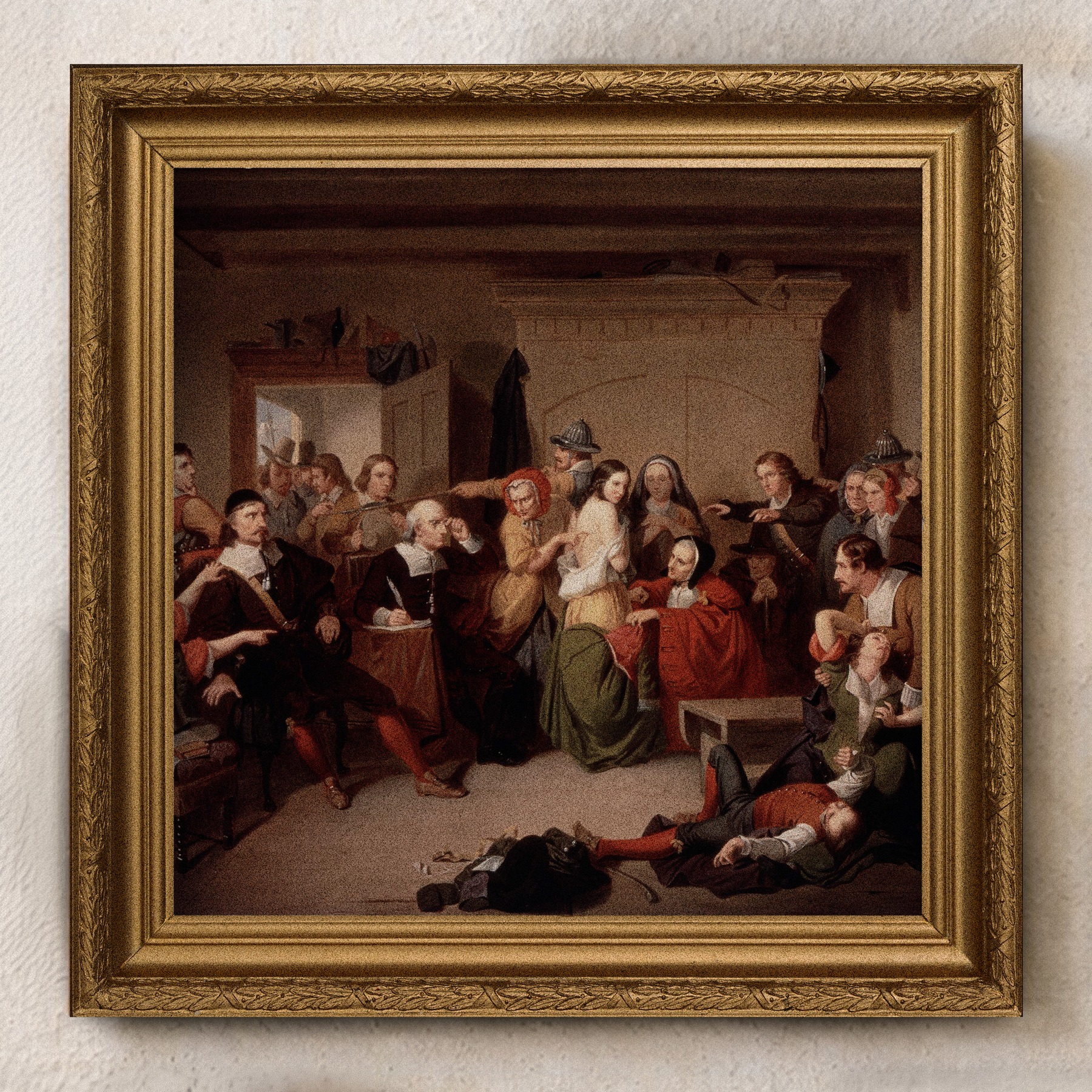
Lloyd so if you're not familiar with Katherine Howe, she is a New York Times best selling author who has written six novels and three nonfiction books. Her two most recent works, which cover the rise and fall of the Vanderbilts and the Astors respectively, were co written with Anderson Cooper. But the book that put Catherine on the map was her 2009 best selling novel, the Physic Book of Deliverance Dane, which partially takes place during the Salem witch trials. She was also the editor of the Penguin Book of Witches, which covers the documented history of witchcraft accusations in England and colonial America. But before we get started with Catherine, let's start with some basics. The Salem witch trials took place in Salem, Massachusetts, a coastal town about 20 miles north of downtown Boston. The year was 1692. Salem was about 70 years old and had a population of about 2,000 people. And this was well before the American Revolution. So Massachusetts was under British colonial rule. The residents of Salem were Puritans. In fact, they were extremely puritanical Puritans. They were more rigid, more authoritarian and more orthodox than those who settled at Plymouth Rock. And this aspect of their identity, their religious fundamentalism, is one of the reasons why the Salem witch trials happened. But it's not the only reason. There are a few others which we'll run through now. First of all, along with Salem's strict religious structure, there was a very strict social structure.
- [15:28]
Katherine Howe
The Puritans who settled in that region, they followed a very rigid kind of Calvinist Protestant theology. So we have a very rigid class structure in place. So like when you would go to church on Sunday, first of all, church referred to the body of worshipers, not the building. The building was called the meeting house. Everyone would go every Sunday. And where you sat in the meeting house was Based on your rank, your social rank. It was so visually delineated who mattered and who didn't in this society.
- [16:00]
Lloyd Lockridge
Another factor that helped bring about the witch trials was a general sense of paranoia.
- [16:05]
Katherine Howe
There's a historian named Mary Beth Norton who has argued very persuasively that if you look at the language that the European colonists used to describe the devil, it's the same language that they used to describe the indigenous people who were living next to them.
- [16:20]
Lloyd Lockridge
And on top of being scared of their recently displaced neighbors, there was another, more objectively difficult challenge in their daily lives. Salem was going through what scientists call a miniature ice age. And the winter of 1692 in particular was beyond frigid. And in the midst of this horribly bitter New England winter, Salem village had just recruited a new pastor. As you might imagine, the pastor played an important role. And ideally, he'd be the guy who might lift everyone's spirits in times of hardship. The new preacher's name was Samuel Parris.
- [16:52]
Katherine Howe
And so he's in his miniature ice age, and he is feeling like the church, he's not getting paid enough. He wants to be given the title to the parsonage where he's living. That's his house. They don't want to give him the title to it. He wants to be given more firewood, and they don't want to give him more firewood.
- [17:10]
Lloyd Lockridge
And then there's one last thing to keep in mind leading up to the Salem witch trials, and that is how children were thought of in this time and place.
- [17:18]
Katherine Howe
This is before we have a concept of childhood the way that we have it today. Like today, we have an idea of children as people who, you know, are learning and who need some freedom and get their wiggles out and who get to have like a little leeway because they're kids and they have to learn how to act like normal human beings. Whereas in the 1690s, there was a sense of children needing to be more rigorously governed. You know, there wasn't leeway.
- [17:49]
Lloyd Lockridge
So that's the setup. Salem is filled with rigid, paranoid puritans. They're freezing cold. They don't like their new pastor, and they don't really like children. But how does all of this amount to witches? Well, ground zero of the Salem witch trials is actually the home of its new pastor, Samuel Parris. In Samuel Parris home, there is his wife, his daughter Betty, an enslaved worker named Tituba, and an 11 year old servant named Abigail Williams.
- [18:16]
Katherine Howe
He refers to her as his niece, but they don't use that word in the 1690s, to be as specific as we use it today. That doesn't necessarily mean child of my sibling, but Abigail Williams was a worker in the Paris house and she was 11 years old, which is pretty pitiless when you think about it, to be an 11 year old away from whatever your birth family situation is. And her job was to obey everyone all the time.
- [18:44]
Lloyd Lockridge
So here's how the crisis begins. Betty Paris, who is Samuel Paris daughter, gets sick. And according to her family and the community, she's not getting any better.
- [18:53]
Katherine Howe
And because they're not crazy, they don't immediately jump to conclusions. Like they call a doctor first and the doctor can't find anything physically the matter with Betty. And then they do what puritans do, which is they have days of fasting and prayer. Everyone prays for Betty's recovery, they fast, they sort of self castigate a bit, and Betty still doesn't get better. Then they start to worry that there might be a supernatural cause.
- [19:21]
Lloyd Lockridge
And when the supernatural cause theory arises, a woman in Salem village named Mary Sibley springs into action.
- [19:29]
Katherine Howe
So Mary Sibley suggests that they bake a witch cake and a witch cake. You make a witch cake by taking rye meal, mixing it with urine from the afflicted kid, baking it into a biscuit, and then feeding it to a dog. There are two ways that they thought that this might work. One was it maybe would cause the bewitchment to pass out of the child's body and into the dog.
- [19:52]
Lloyd Lockridge
And in addition to that, they thought that when the dog ate the cake, he was also somehow devouring the witch.
- [19:58]
Katherine Howe
So the thought was the dog munching up the urine would cause the witch to feel like her body was being munched up and then she would free Betty. Obviously this didn't work either.
- [20:08]
Lloyd Lockridge
The urine cake not only failed to cure Betty, it failed to prevent the illness from spreading. Now Abigail, the 11 year old servant, was also sick. And at this point it's probably worth looking at what their symptoms actually were.
- [20:22]
Katherine Howe
So the word that is used in the primary sources is fits. They fell into their fits. Abigail was in fits at this point as well. Now when I say fits to you, you probably picture something really somatic. You probably picture somebody having like an epileptic seizure, something like that. But they used fits to describe any behavior that would seem just like inexplicable. So one of my favorite descriptions of Abigail in her fits. Now remember Abigail, an 11 year old bound out to service is she runs around the kitchen in the parsonage flapping her arms, saying wish, wish, wish, and saying she's going to fly up the chimney. Now when I hear that description, I hear an 11 year old playing.
- [21:05]
Lloyd Lockridge
But that's probably not what alarmed Samuel Paris and the other townspeople most. It was something that happened at church when a guest preacher named Deodat Lawson was invited to give a sermon.
- [21:16]
Katherine Howe
And so church at this time period lasts all day. Like it's eight hours. You're sitting in pews, it's cold, it's uncomfortable, it's boring. So Deodat Lawson is going to give the sermon and Abigail Williams. Now remember, in the church, everyone is seated according to rank. There's a very rigid hierarchy here. Abigail stands up and says, name your text. By which she means, which passage of the Bible is he going to be speaking on? So here's an 11 year old kid, a servant, standing up and challenging this like high ranking, important guy in front of everybody. She says, name your text. And he says, whatever Bible passage he's going to be speaking on. And she goes, it's a long text. I kind of love her. Her audacity is, is inexplicable by anything other than devilish influence.
- [22:10]
Lloyd Lockridge
At this point, Samuel Parris and the other townspeople are demanding that Betty and Abigail reveal who bewitched them. They don't ask, have you been bewitched? They ask, who bewitched you.
- [22:21]
Katherine Howe
The first person who is accused, you will not be surprised to learn, is an enslaved worker in Samuel Paris's house. Her name is Tituba, or sometimes it's spelled Titube. She was brought by Samuel Perez from Barbados, so she is Barbadian.
- [22:37]
Lloyd Lockridge
And do we know how Tituba responds to the accusation? Yeah.
- [22:41]
Katherine Howe
She says no. She says, no, I would never do that. I love the children, I would never hurt the children. Why would I do that? I would never do that. I have nothing to do with witches. Of course she says no.
- [22:49]
Lloyd Lockridge
But they don't take no for an answer. And after Tituba's first interrogation, there is evidence she was beaten. Then she was interrogated a second time.
- [22:59]
Katherine Howe
Tell us who seduced you into being a witch. Tell us who it was. Tell us who you saw. And so with Tituba's confession, she confesses the second time that she's examined. With Tituba's confession, she says that there were witches, but she doesn't know how many they are and she doesn't know who. But Tituba, inadvertently or not, introduces the idea of there being a conspiracy of witches.
- [23:27]
Lloyd Lockridge
And now that there was A conspiracy of witches. Samuel Paris and the people of Salem would need to figure out who they were. And to do this, there would need to be a witch hunt. And the first few women who are accused are kind of on the margins of Salem society. They're vulnerable, easy targets. The case of Sarah Good provides an example for how these accusations generally took shape.
- [23:50]
Katherine Howe
Sarah Good was a beggar. She had not been seen at church for a long time for want of clothes. She's not clothed enough to be seen in church. And she has a four year old daughter named Dorothy, and she has a baby. And Sarah Goode is living off of the largesse of her community. But her community doesn't have a lot of largesse to spare. Sarah Goode would come and knock on the door and she would ask for something to eat and imagine that it's me. You know, late 40s, like, busy stuff's going on, it's not convenient. It's the dead of winter, it's freezing cold. And like, maybe Sarah Good just came a couple days ago. So she's knocking on the door and I'm like, no, Sarah, I don't have anything for you. I'm sorry, like, not today. I can't deal with it. And maybe Sarah Good says something along the lines of, you're going to regret it if you don't give me something now. Maybe what she means is that I will regret it because I will realize that I have failed her as a Christian, I failed her as a neighbor. Maybe she means it as a threat. Either way, she goes away muttering. And imagine that later that same day or the next day, something goes awry in my household, in my mind, Sarah Goode going away muttering and saying I would regret it would absolutely be connected to whatever misfortune befell me the next day.
- [25:15]
Lloyd Lockridge
And so this is what people in Salem start doing. They start remembering slights from years ago and offering them as evidence of witchcraft and the sort of powder keg conditions of Salem that Katherine outlined earlier made. The accusations spread like wildfire. And it wasn't just the accusations that were spreading, but the afflictions as well. More and more people in Salem were waking up bewitched.
- [25:37]
Katherine Howe
It's an open question whether or not this is something that they are consciously faking or whether it is an actual sort of psychological condition that they have. There's a psychological event called conversion disorder, which is when you are under so much stress that your body converts it into physical symptoms. And if that happens in a community, it's called mass psychogenic illness.
- [26:01]
Lloyd Lockridge
And as this contagion moved through the community, it was not just women who were accused. A man named John Proctor came under suspicion. Another man named Giles Corey was also accused. Corey was ultimately pressed to death, which means he was sandwiched between two boards while people placed rocks on the top board, weighing it down on Corey's body, slowly crushing him. But men were usually accused because of their association with a woman who was already accused. John Proctor and Giles Corey became targets only after their wives did.
- [26:33]
Katherine Howe
Women were typically accused because, for whatever reason, they did not align with the social expectations of their day. Although one of the things that makes Salem unusual is that otherwise respectable people also get accused.
- [26:50]
Lloyd Lockridge
And one of those respectable people was Ann putiator. By the mid-1670s, Anne Greenslit was a widow with five children. She was then hired by a man named Jacob Puteater to take care of his wife, who suffered from alcoholism. Jacob's wife then died in 1675, and then he married Anne. Six years later, Jacob died, leaving a fairly large estate to his second wife, Anne Puteater. Some theorize that Anne's trajectory from widow to caretaker to wife to wealthy widow was perceived by townspeople as evidence of witchcraft. At the trials, a 16 year old girl named Ann Putnam testified that she'd seen Ann Peudiator fly through the air into her house. She also said Anne was, quote, the cause of John Turner falling off the cherry tree and almost killed him. And piling on to this list of bizarre and baseless accusations, Putnam said Ann also killed her second husband, Jacob Putiator, as well as the wife of a guy named John Best. Another witness, a man named Sam Pickworth, also testified to seeing Ann fly through the air, quote, as swift as a bird. To support the claim that Ann Putiator was a flying serial killer, there was no burden of proof. The townspeople believed they were under attack by the devil and they were desperate to identify his agents. In the end, 30 people were convicted of witchcraft. Nineteen were sentenced to death by hanging in what became known as Gallows Hill.
- [28:17]
Katherine Howe
And perhaps the most chilling part of the spectacle is that after an accused was condemned to death, the execution was also public. So it was, you know, kind of a. I don't know if I would call it exactly a festival atmosphere, but if you were in a community that thought that seeing your neighbor put to death was going to bring peace back to your community, it would be kind of a cause for excitement and celebration.
- [28:46]
Lloyd Lockridge
Prior to their execution, some women confessed to the false allegations, but a few women refused to confess. One of them was Sarah Good she
- [28:55]
Katherine Howe
has the best by far kiss off line from the gallows. She says, I am no more a witch than you or a wizard. And if you take away my life, God will give you blood to drink.
- [29:05]
Vance Greenslet
Wow.
- [29:05]
Katherine Howe
Which is amazing. I wish I were that brave.
- [29:09]
Lloyd Lockridge
And another person who refused to confess was Anne Pewdiator. Though it might have saved her life, Anne refused to confess to something she did not do. She gave a statement pleading her innocence, denouncing those who falsely testified against her, calling one of them a liar, which at the time was a mortal sin. But Anne was prepared to confront her own mortality. She was confident that when it was all said and done, both history and heaven would absolve her. Near the end of her speech, she said, I am altogether ignorant of and know nothing else concerning ye crime of witchcraft for which I am condemned to die, as will be known to men and angels at the great day of judgment. Anne's plea fell on deaf ears, and her refusal to submit elicited insults from the townspeople. They called her bitch, witch, and hag from hell. And on September 22, 1692, Ann Putiator was hanged at Gallows Hill.
- [30:08]
Katherine Howe
After the trials are over, and they only come to a close when the governor's wife is accused, like the accusations go too high up the social ladder, and then finally the kibosh is put on it. But one thing that I think is important to note is there were a couple of apologies that were issued after the crisis passed.
- [30:29]
Lloyd Lockridge
One apology came from Ann Putnam, who was one of the primary witnesses in Annpudiator's trial. She was devastated by what she'd done, saying that she'd, quote, brought upon myself and this land, the guilt of innocent blood.
- [30:41]
Katherine Howe
And she said that she wanted to lie in the dust for what she had done.
- [30:45]
Lloyd Lockridge
Ann Putnam's apology came 14 years after the Salem witch trials. Other apologies were issued much faster. Samuel Paris, the town's new preacher, who also served as a judge at the trials, waited only two years before apologizing.
- [30:59]
Katherine Howe
He says that he and the other members of the court, the other magistrates, were deluded by Satan. So it's not that the witches were influenced by Satan. It's that the Satan somehow clouded their judgment.
- [31:14]
Lloyd Lockridge
And in 1710, less than 20 years after the trial, petitioners approached the Massachusetts government demanding that the convictions be made null and void. And they also asked for financial restitution. The legislative body agreed, with a caveat. They would not provide relief for all of the people convicted and executed in Salem. Only the petitioners and Annpudiator's family had moved out of Salem. They were not aware of or party to any petition. Well, at least not yet.
- [31:52]
Lemonade Pet Insurance Advertiser
If you're an experienced pet owner, you already know that having a pet is 25% belly rubs, 25% yelling drop it. And 50% groaning at the bill from every pet visit. Which is why Lemonade Pet Insurance is tailor made for your pet in case can save you up to 90% on vet bills. It can help cover checkups, emergencies, diagnostics, basically all the stuff that makes your bank account get nervous. Claims are filed super easily through the Lemonade app and half get settled instantly. Get a'@lemonade.com pet and they'll help cover the vet bill for whatever your pet swallowed after you yelled drop it. Real Skin Results Start with one daily
- [32:27]
Lloyd Lockridge
ritual Meet Daily Microfoliant from Dermalogica.
- [32:30]
Lemonade Pet Insurance Advertiser
This iconic exfoliating powder activates with water
- [32:33]
Lloyd Lockridge
to gently polish away dullness and uneven texture.
- [32:36]
Lemonade Pet Insurance Advertiser
It leaves skin instantly smoother and more luminous while supporting your skin barrier. Formulated with professional expertise to deliver visible results daily, even on sensitive skin. Discover your healthiest skin today.
- [32:48]
Lloyd Lockridge
Visit dermalogica.com and use code Smooth at
- [32:51]
Lemonade Pet Insurance Advertiser
checkout for an exclusive gift with your $65 purchase.
- [32:57]
Lloyd Lockridge
So when Catherine Conkey, who goes by Khaki, was a young girl, she was told by her grandfather that her great grandmother, many times over, was convicted at the Salem witch trials, and in the face of death, she never confessed. It was a fascinating little piece of family lore, and there was a strong moral to the story. It was a story about unwavering courage. It was about sticking to your principles and telling the truth, no matter the consequences. But there was more to this story, which Khaki's grandfather, Vance Greenslit, tended to downplay.
- [33:28]
Katherine 'Khaki' Dietz Conkey
He didn't shy away from praise. He was very I mean, in a way, I would almost call him flamboyant. But he did a lot of good behind the scenes. None of us knew he started, you know, and really was involved in the goodwill industries. He didn't talk about all the good stuff he did.
- [33:48]
Lloyd Lockridge
But when Kaki was a little girl, the family dug up a copy of a CBS special called Satan and Salem. One night, she and her siblings and cousins sat down to watch it, unsure what to expect. Immediately, they heard a familiar name.
- [34:02]
Vance Greenslet
Her name was Anne Peudiator. She committed a crime so great that her neighbors believed she should hang for him. It was not murder. It was not theft. The specter of the witch hung over Salem, and when the devil appeared in Massachusetts, the good citizens sought out those they believed to be his co workers in evil.
- [34:23]
Lloyd Lockridge
And as the special progressed, the children learned more about their ancestor and Putiator. They also learned about a peculiar episode in the late 1940s and 50s when their eccentric, fun loving grandfather took on some serious business. It started when their grandfather received a letter from an uncle back in Nebraska. The uncle had reached out to share a genealogical finding. Not only were they direct descendants of Ann Peudiator, but the conviction of Ann Putiator was never vacated. Over 250 years after the injustice was committed to it was still on the books. It was 1942 when Vance Greenslet became aware of the situation. He was a middle aged man who for all his life had no clue he was related to a victim of the Salem witch trials. And now he was committed to clearing her name. But while he was a lawyer, he didn't have a license to practice law in Massachusetts. And even if he did, it's not like he had a ton of experience expunging the crimes of falsely accused 17th century witches. So where to begin? That must have been the question he was asking himself. In the fall of 1942. He was sitting in his office a few days before Thanksgiving when a package arrived in the mail. It was the annually issued directory for members of his old fraternity, Alpha Tau Omega, or ato. On a whim, he scanned the directory to see if he had any fraternal contacts in the Salem area. Sure enough, there was a sitting judge in Essex County, a man named Robert W. Hill, who was an ATO at Tufts in the early 1900s. Without hesitation, Vance Greenslet wrote a letter to judge Hill asking if he had any advice on how to, quote, purge the good name of what must have been quite a lady. With the help of Judge Hill, multiple bills to clear Ann's name were introduced in the Massachusetts state legislature, but none of them passed as Vance Greenslet's grandchildren sat down to watch the CBS special. They knew nothing about any of this. But here was their grandfather in a grainy old news program describing what he'd been up to.
- [36:24]
Vance Greenslet
Anne Puniator is my many times great grandmother. I've never been interested in genealogy. I haven't had time to be. But I became interested in Anne, as we have come to call her. And I have found that she was a woman of real stature. Anne, cute at her, was a woman of character. I am proud to claim her as my ancestor. I have a daughter and a granddaughter named Anne, and I have sometimes wondered how they would feel, how any of us would feel for that matter, if A member of our family were cried out as a witch.
- [37:05]
Lloyd Lockridge
Vance Greenslit went on to explain the crux of the problem, that in 1711, the Massachusetts legislature passed a measure that only cleared the victims whose families petitioned the government. Six of the cases hadn't been reversed, Vance explained, because the families had not been present to request such a reversal. But 246 years later, this was no longer the case.
- [37:24]
Vance Greenslet
This is 1957. I am present, and I have been asked by the other descendants of Ann Peutier to request this rehearsal in their behalf.
- [37:36]
Lloyd Lockridge
There with Vance Greenslet was Judge Robert Hill, the Massachusetts judge who Vance found in the directory of ATO fraternity brothers. Judge Hill explained that he had asked a state representative from Salem to introduce a bill that would not only clear annpudiator's name, but all of the victims whose convictions remained valid. But the bill died in the house because lawmakers feared that Vance, like the original petitioners from the 1700s, would want financial restitution. Judge Hill refuted this claim.
- [38:03]
Vance Greenslet
It was rejected by certain senators who feared Mr. Greenslit would request restitution. This is not true, as his only aim has been to clear Anne Pute at it. We have just now submitted a new bill, and we hope that this year a long deferred act of simple justice may be done. We, the descendants of annpudiator, are not looking for damages or land, simply justice. We would like to see Ann have this injustice righted. For justice, like Ann, is part of the American tradition.
- [38:44]
Lloyd Lockridge
Vance Greenslet's efforts to exonerate his ninth great grandmother began in 1942. By the time the CBS special was aired in 1957, he had still not achieved his goal. But later in 1957, when the legislature met to discuss Vance Greenslet's bill, the senators were required to watch the CBS special prior to voting. And in that legislative session, the bill to clear the long maligned name of Ann Peudiator finally passed.
- [39:12]
Katherine 'Khaki' Dietz Conkey
You know, after watching the movie, I was like, well, you know, granddaddy, I did not know that you played as big a part in that. And he said, I have five girls who I love more than anything. I cannot stand the fact that this woman was treated this way. So maligned. He said, you know, he felt like if I do anything in this world, and, boy, you didn't get in his way. When he wanted to do something, I was going to clear her name officially. So we were very proud. I was very proud of him for that. I just didn't know that as a little kid. We just thought it was the family witch. You know, he really felt like he had righted a wrong and this was family that he was proud of. He felt more, I think, connected to that one act than really anything else he'd ever done.
- [40:01]
Lloyd Lockridge
It's a stunning feat, what Vance Greenslit did, not only to correct the record 260 years after the fact, but to stick with it for 15 years of his own life. To lobby a legislature in a state where he never even lived, to care so deeply about a family member who died 211 years before he was born. While researching the story, I often found myself visualizing Anne standing in a drafty 17th century courtroom, praying and begging her neighbors to believe her. Nobody would. It must have been a feeling of abject isolation. It must have been bewildering to be accused of working with the devil when your one and only ally was God. And if Ann were alive today, she'd probably have a hard time making sense of Bab, the satanic ABBA cover band where my friend Helen told me this story. But if Ann were listening closely to the lyrics when Bab played Gimme Gimme Gimme, I think she might be able to relate Autumn winds blowing outside the window As I look around the room and it makes me so depressed to see the gloom there's not a soul out there no one to hear my prayer finally, someone heard Ann Peutiator's prayer. It was her ninth great grandson, H. Vance Greenslit. Thank you for listening to Family Lore. If you have stories you'd like to share about your family, please email me@familylorepodmail.com that's familylorepodmail.com family lore is an Odyssey Original podcast. It is written and narrated by me, Lloyd Lockridge. Our Executive producers are Leah Reese, Dennis and I. Our lead producer and Sound Editor is Zach Clark. Our Story editor is Katie Mingle. Additional sound, editing, mixing and mastering by Chris Basil and production support by Sean Cherry. Special thanks to Maura Curran, Josephina Francis, Kurt Courtney, Hilary Schuff and Laura Berman. Thanks again for listening to Family Lore and if you have time, we'd love for you to rate and review the show. Nerds Today's episode is sponsored by NerdWallet's Smart Money podcast. Personal finance can feel like a pop quiz you didn't study for this podcast is your study guide. On NerdWallet's Smart Money podcast, you'll hear from trusted journalists who explain the why behind major financial decisions. You'll get research backed insights and clear pros and cons. Whether you're planning a big purchase or just want to grow your wealth, make your next financial move with confidence. Follow NerdWallet's Smart Money podcast on your favorite podcast. Apparently.