Podcast
Change Starts Here
Hosted by Franklin Covey Education · EN
Change Starts Here, presented by FranklinCovey Education, is the podcast for K–12 school and district leaders who are shaping—or ready to lead—meaningful change in their schools and communities. Through interviews with innovative educators and research-backed insights, each episode explores how to build leadership at all levels, foster high-trust school cultures, and achieve breakthrough results around what matters most. This podcast offers practical ideas and bold thinking to help you create lasting impact in your school community. Explore the episodes and dive into real stories, proven strategies, and the leadership mindset that transforms schools. This is your space for inspiration, clarity, and action. Real change starts here.
31episodes
Episodes
Newest firstAll episodes
Reimagining Family Involvement: From Barriers to Bridges
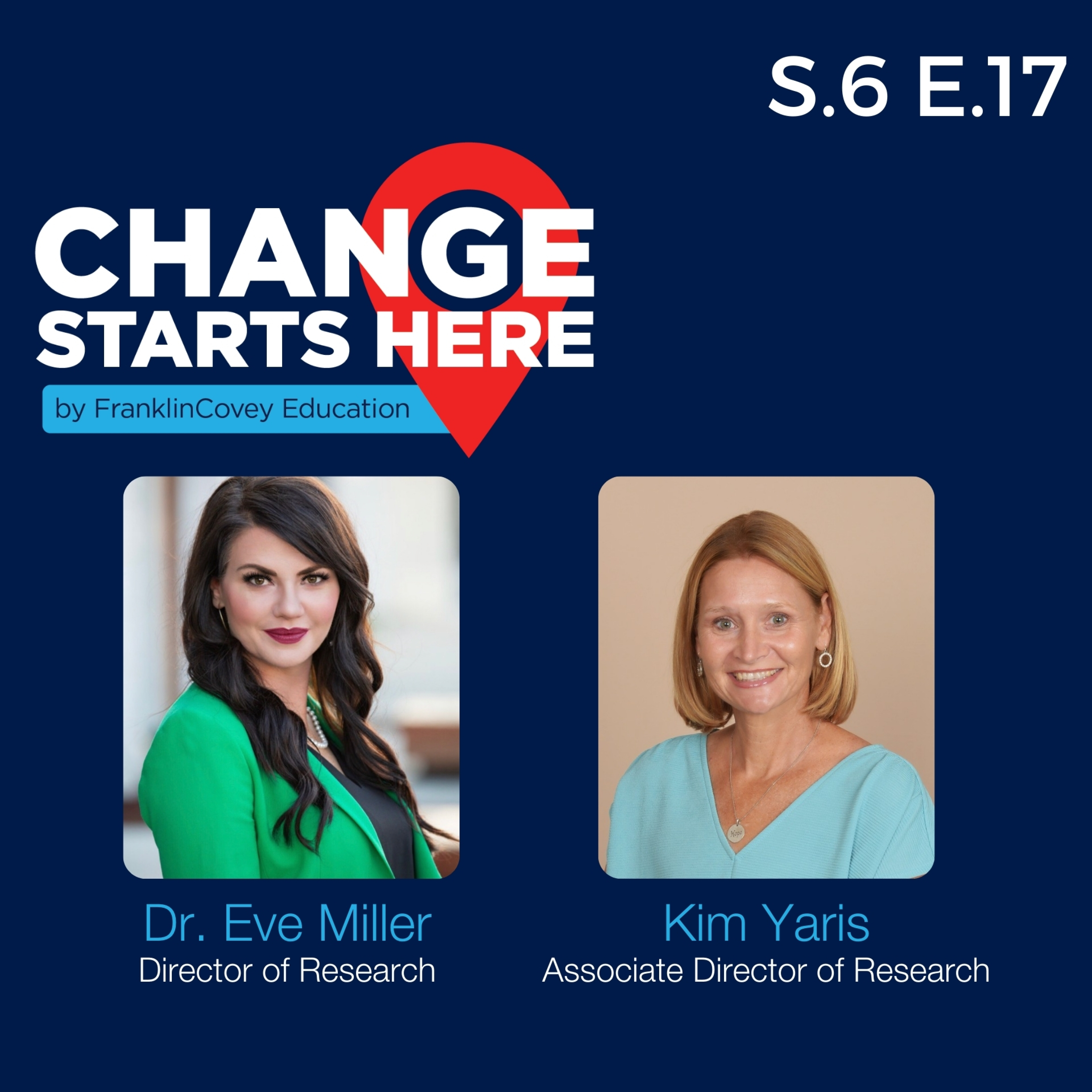
Jan 1300:22:19Tap to summarizeIn this episode of Change Starts Here, Kim Yaris and Dr. Eve Miller explore the common "disconnect" between traditional school efforts and what actually drives student achievement. Dr. Miller shares insights from a deep dive into family engagement research, revealing that many widely accepted practices are more about compliance than connection. By shifting the focus from school-based events to "academic socialization," educators can unlock more powerful outcomes for their students. Listeners will learn how to identify and remove subtle barriers, such as scheduling conflicts and language gaps—that prevent families from engaging. The conversation highlights the transformative power of two-way communication and proactive, positive reach-outs. By moving away from visible but less effective gestures and toward building trust, educators can foster a partnership with families that significantly accelerates learning.Download the Handout, What Strengthens Family Engagement?:https://resources.franklincovey.com/c/fy26_csh_rc-handout_?x=hPII-q Hosts:Kim Yaris, M.Ed. (Associate Director of Research with FranklinCovey Education) Dr. Eve Miller (Director of Research with FranklinCovey Education)Timestamps: (00:00 - 00:42) Podcast intro (00:42 - 01:57) Research disconnects (01:57 - 04:28) Perceptions of engagement (04:28 - 06:27) Identifying engagement barriers (06:27 - 08:17) Changing educator paradigms (08:17 - 10:38) Redefining family involvement (10:38 - 12:21) Three engagement categories (12:21 - 14:07) Academic socialization impact (14:07 - 15:58) Building parent capacity (15:58 - 17:44) Power of two-way communication (17:44 - 21:36) Efficiency and effort tradeoffs (21:36 - 22:17) Closing thoughts
Transcribe →Future-Focused Lesson Planning
Feb 11, 202500:20:38Tap to summarizeWhen you listen to a podcast or read an article, you take in the information and process it—but when something in that content connects to you personally, it sticks. You digest it more deeply and remember it with greater clarity. The same holds true in education: students retain information better when it feels relevant and engaging, and when they feel actively involved in their learning. Now imagine embedding that learning with future-readiness skills.In this episode of Change Starts Here: Research Conversations, Dr. Jennifer Chevalier, Director of Funding at FranklinCovey Education, and Kim Yaris, M.Ed., Associate Director of Research, discuss how educators can use existing academic standards to design future-focused lesson plans. By creating lessons that build meaningful connections and encourage students to personalize their learning, educators can boost knowledge retention and engagement. With small, intentional adjustments, these lesson plans can also foster critical skills like cooperation, problem-solving, and adaptability—equipping students to step into the world prepared for anything.Don’t forget to like and subscribe, and turn on those bell notifications so you don’t miss our next episode!Click here to check out 3 Future-Focused Lesson Plans: NEED URLStarring: Kim Yaris, M.Ed, Associate Director of Research at FranklinCovey Education Dr. Jennifer Chevalier, Director of Funding at FranklinCovey EducationTime stamps: (00:00 - 00:51) Introduction(00:52 - 04:06) The End in Mind(04:07 - 06:48) Melding Competencies(06:49 - 08:35) Example in Literature(08:36 - 12:44) Cross Content Examples(12:45 - 15:51) The Heart of It All(15:52 - 20:07) Shifting Standards for Students(20:08 - 20:38) Closing
Transcribe →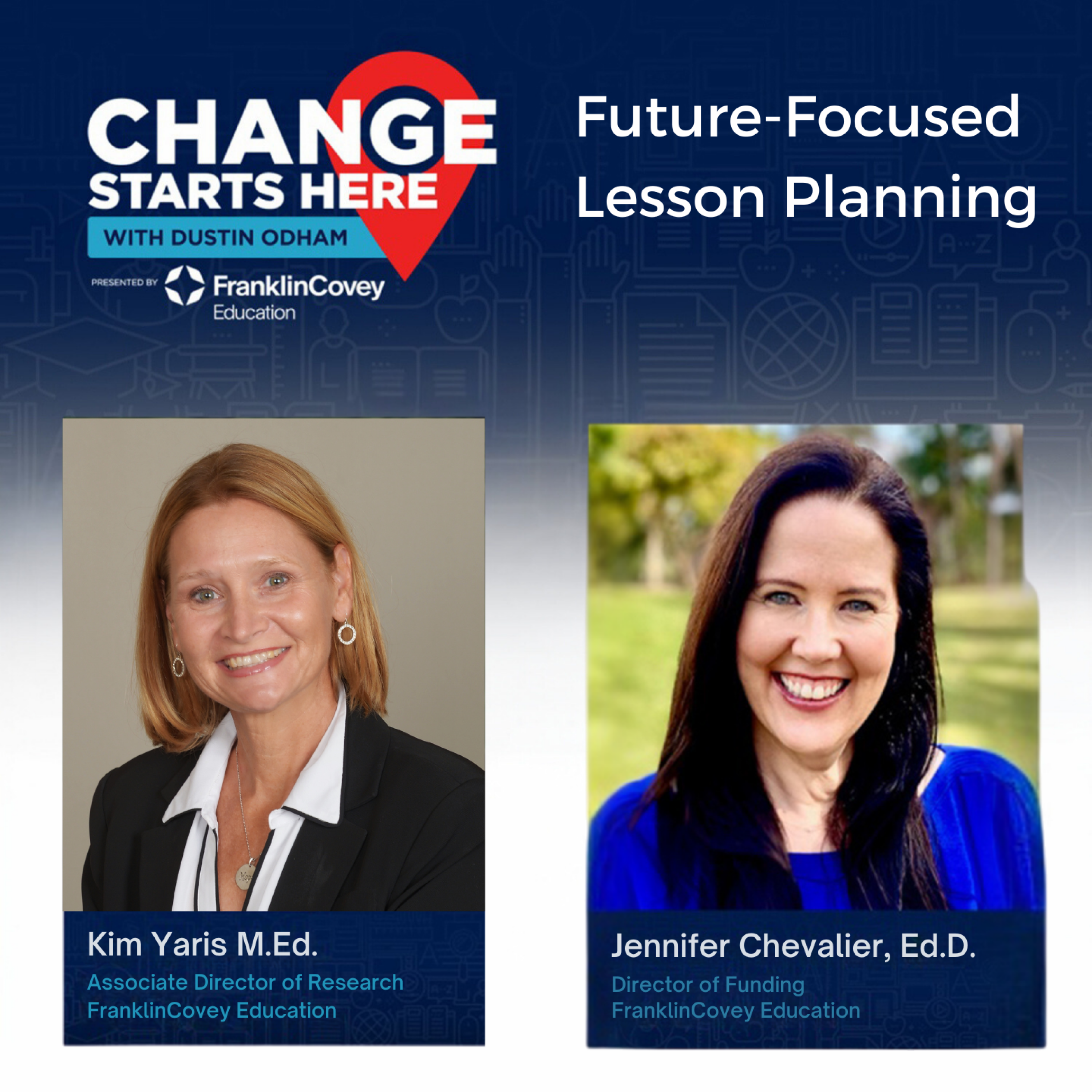
Future-Focused Lesson Planning
Feb 11, 202500:20:38Tap to summarizeWhen you listen to a podcast or read an article, you take in the information and process it—but when something in that content connects to you personally, it sticks. You digest it more deeply and remember it with greater clarity. The same holds true in education: students retain information better when it feels relevant and engaging, and when they feel actively involved in their learning. Now imagine embedding that learning with future-readiness skills.In this episode of Change Starts Here: Research Conversations, Dr. Jennifer Chevalier, Director of Funding at FranklinCovey Education, and Kim Yaris, M.Ed., Associate Director of Research, discuss how educators can use existing academic standards to design future-focused lesson plans. By creating lessons that build meaningful connections and encourage students to personalize their learning, educators can boost knowledge retention and engagement. With small, intentional adjustments, these lesson plans can also foster critical skills like cooperation, problem-solving, and adaptability—equipping students to step into the world prepared for anything.Don’t forget to like and subscribe, and turn on those bell notifications so you don’t miss our next episode!Click here to check out 3 Future-Focused Lesson Plans: NEED URLStarring: Kim Yaris, M.Ed, Associate Director of Research at FranklinCovey Education Dr. Jennifer Chevalier, Director of Funding at FranklinCovey EducationTime stamps: (00:00 - 00:51) Introduction(00:52 - 04:06) The End in Mind(04:07 - 06:48) Melding Competencies(06:49 - 08:35) Example in Literature(08:36 - 12:44) Cross Content Examples(12:45 - 15:51) The Heart of It All(15:52 - 20:07) Shifting Standards for Students(20:08 - 20:38) Closing
Transcribe →Overcoming the Limits: How Educators Can Lead with an Abundance Mindset
Feb 4, 202500:11:39Tap to summarizeImagine a glass of milk—half full or half empty? The way we perceive what’s in front of us shapes our ability to grow, innovate, and lead. An abundance mindset allows us to maximize what we have, find creative solutions, and unlock potential—even in the face of obstacles. In today’s education landscape, this perspective is more essential than ever.Join us on Change Starts Here as host Dustin Odham continues his series on paradigm shifts, focusing on the transition from a scarcity mindset to an abundance mindset. Dustin explores what it means to embrace abundance, shares real-world examples of its impact in school districts, and provides actionable strategies—like practicing gratitude and fostering collaboration—to help your team thrive. Learn how to shift your perspective, see the possibilities, and make the most of every drop.Be sure to like, subscribe, and turn on bell notifications to ensure you don’t miss our next episode. If you want to learn more about FranklinCovey, visit us at https://www.franklincovey.com/solutions/education/Host: Dustin Odham, Managing Director at FranklinCovey EducationTimestamps:(00:00 - 01:13) Introduction(01:14 - 02:20) Relationship Leadership(02:21 - 03:34) Comparing Mindsets(03:35 - 06:57) Representing an Abundance Mindset(06:58 - 08:15) Practice Gratitude(08:16 - 09:18) Foster Collaboration(09:19 - 10:38) Call to Reflection(10:39 - 11:40) Closing
Transcribe →
Overcoming the Limits: How Educators Can Lead with an Abundance Mindset
Feb 4, 202500:11:40Tap to summarizeImagine a glass of milk—half full or half empty? The way we perceive what’s in front of us shapes our ability to grow, innovate, and lead. An abundance mindset allows us to maximize what we have, find creative solutions, and unlock potential—even in the face of obstacles. In today’s education landscape, this perspective is more essential than ever.Join us on Change Starts Here as host Dustin Odham continues his series on paradigm shifts, focusing on the transition from a scarcity mindset to an abundance mindset. Dustin explores what it means to embrace abundance, shares real-world examples of its impact in school districts, and provides actionable strategies—like practicing gratitude and fostering collaboration—to help your team thrive. Learn how to shift your perspective, see the possibilities, and make the most of every drop.Be sure to like, subscribe, and turn on bell notifications to ensure you don’t miss our next episode. If you want to learn more about FranklinCovey, visit us at https://www.franklincovey.com/solutions/education/Host: Dustin Odham, Managing Director at FranklinCovey EducationTimestamps:(00:00 - 01:13) Introduction(01:14 - 02:20) Relationship Leadership(02:21 - 03:34) Comparing Mindsets(03:35 - 06:57) Representing an Abundance Mindset(06:58 - 08:15) Practice Gratitude(08:16 - 09:18) Foster Collaboration(09:19 - 10:38) Call to Reflection(10:39 - 11:40) Closing
Transcribe →Authentic Educator Collaboration
Jan 28, 202500:23:08Tap to summarizeImagine trying to push a boulder up a hill by yourself—it keeps rolling back down before you reach the top. Even with a team, if everyone pushes at different times, you’ll struggle to make progress. But when a team communicates effectively, trusts one another, and moves as one, that boulder doesn’t stand a chance. In education, the same is true: with a strong, collaborative team, no hill is too steep to climb.This concept comes to life in this episode of Change Starts Here: Research Conversations. Dr. Jennifer Chevalier, Director of Funding at FranklinCovey Education, and Kim Yaris, M.Ed., Associate Director of Research at FranklinCovey Education, explore how authentic educator collaboration leads to meaningful, lasting change in schools. They discuss how building trust within teams and reducing teacher isolation creates a unified effort toward the shared goal of improving student outcomes. Don’t miss this inspiring conversation about the power of working together to achieve extraordinary results!Don’t forget to like and subscribe, and turn on those bell notifications so you don’t miss our next episode!Click here to check out the Staff Booster resource: https://resources.franklincovey.com/c/sb_fcaec?x=kG9QcM Starring: Kim Yaris, M.Ed, Associate Director of Research at FranklinCovey Education Dr. Jennifer Chevalier, Director of Funding at FranklinCovey EducationTime stamps: (00:00 - 01:00) Introduction(01:01 - 05:09) Affecting Outcomes(05:10 - 10:05) Everyone Contributes(10:06 - 15:08) High Trust Environments(15:09 - 16:55) Benefits of Collaboration(16:56 - 19:17) Barriers to Consider(19:18 - 22:35) Mindset is Everything(22:36 - 23:07) Closing
Transcribe →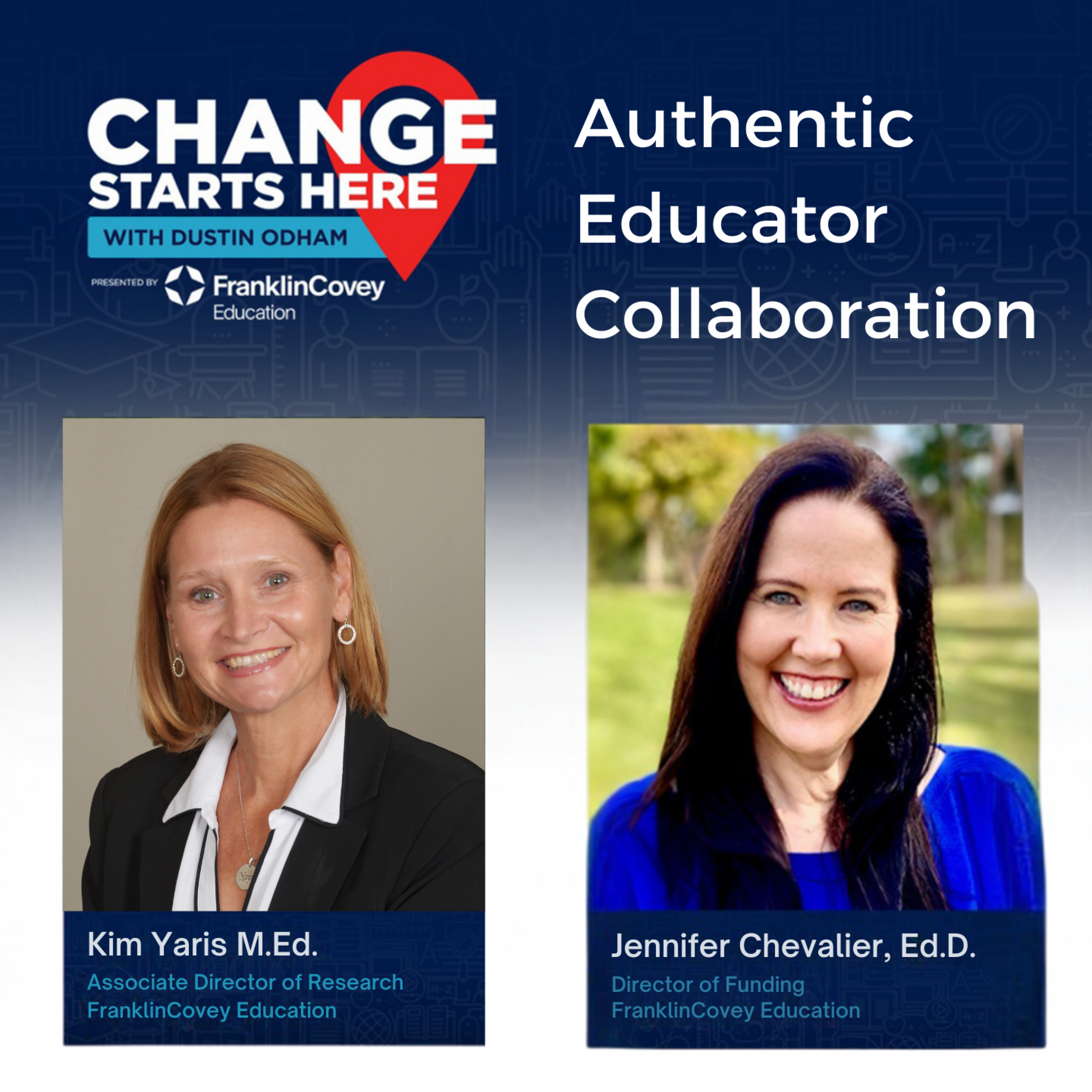
Authentic Educator Collaboration
Jan 28, 202500:23:08Tap to summarizeImagine trying to push a boulder up a hill by yourself—it keeps rolling back down before you reach the top. Even with a team, if everyone pushes at different times, you’ll struggle to make progress. But when a team communicates effectively, trusts one another, and moves as one, that boulder doesn’t stand a chance. In education, the same is true: with a strong, collaborative team, no hill is too steep to climb.This concept comes to life in this episode of Change Starts Here: Research Conversations. Dr. Jennifer Chevalier, Director of Funding at FranklinCovey Education, and Kim Yaris, M.Ed., Associate Director of Research at FranklinCovey Education, explore how authentic educator collaboration leads to meaningful, lasting change in schools. They discuss how building trust within teams and reducing teacher isolation creates a unified effort toward the shared goal of improving student outcomes. Don’t miss this inspiring conversation about the power of working together to achieve extraordinary results!Don’t forget to like and subscribe, and turn on those bell notifications so you don’t miss our next episode!Click here to check out the Staff Booster resource: https://resources.franklincovey.com/c/sb_fcaec?x=kG9QcM Starring: Kim Yaris, M.Ed, Associate Director of Research at FranklinCovey Education Dr. Jennifer Chevalier, Director of Funding at FranklinCovey EducationTime stamps: (00:00 - 01:00) Introduction(01:01 - 05:09) Affecting Outcomes(05:10 - 10:05) Everyone Contributes(10:06 - 15:08) High Trust Environments(15:09 - 16:55) Benefits of Collaboration(16:56 - 19:17) Barriers to Consider(19:18 - 22:35) Mindset is Everything(22:36 - 23:07) Closing
Transcribe →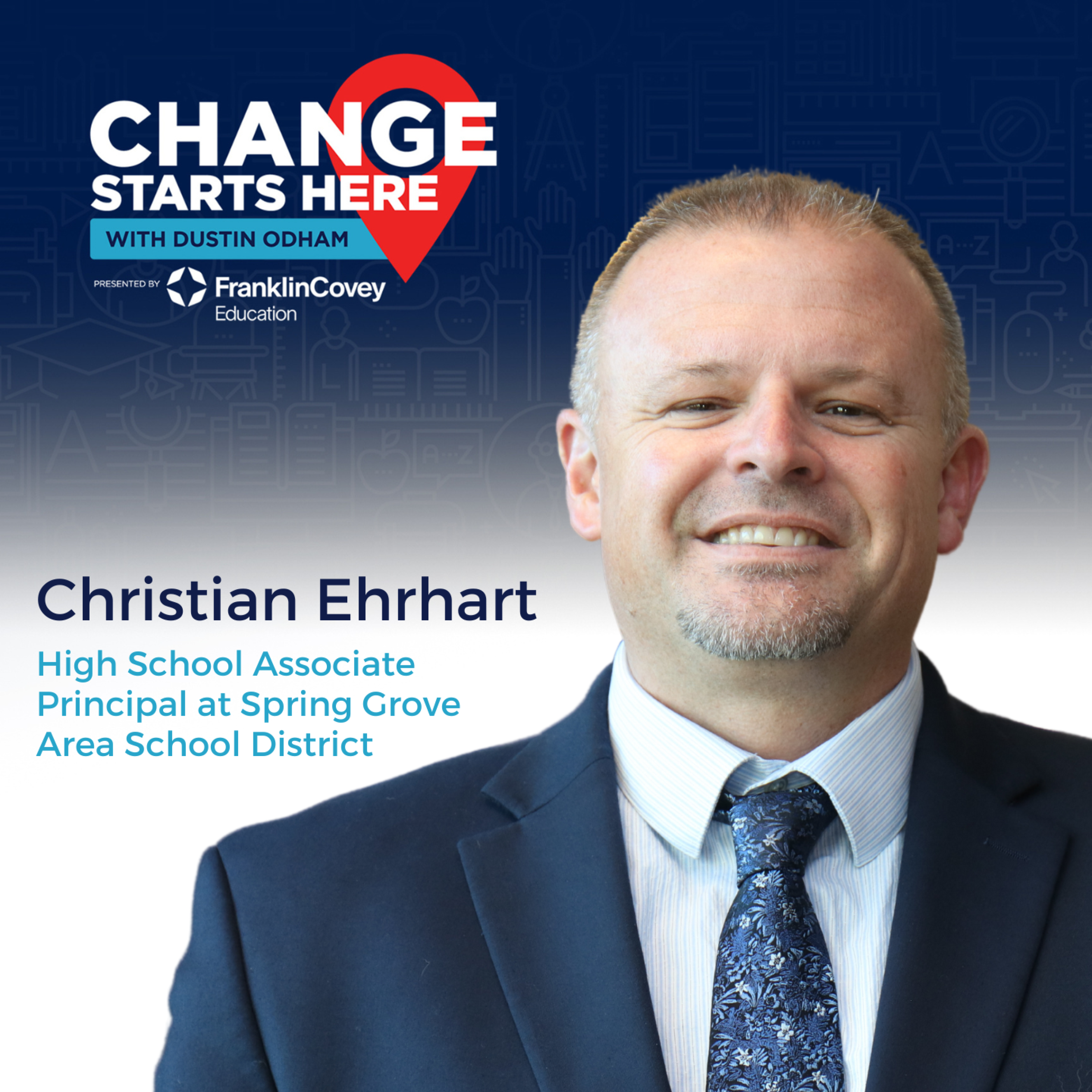
It Starts with the Plants: How School Change Takes Root
Jan 21, 202500:46:24Tap to summarizeChanging the culture of an organization and creating the desired impact takes hard work, but it’s often difficult to identify where these improvements are truly taking place. Yearly reviews and test scores provide valuable insights into progress, yet they reveal little about the culture within our districts. But what if the changes we seek could begin with something as simple—and symbolic—as the plants around us?Welcome to Change Starts Here, join our host, Dustin Odham, as he sits down with Christian Ehrhart, High School Associate Principal at Spring Grove Area School District. Christian shares his journey at Spring Grove, reflecting on how his windy path has deepened his understanding of self-leadership and the power of reflection. Through initiatives like their innovative Launch Program and Lighthouse Teams, Christian is empowering both students and teachers to become leaders within their school community. Don’t miss Christian’s thoughtful and grounded insights on leadership and growth. Watch now to discover how he’s making a meaningful impact!Don’t forget to like, and turn on those bell notifications to ensure you don’t miss our next episode.If you want to learn more about FranklinCovey, visit us at https://www.franklincovey.com/solutions/education/Host: Dustin Odham, Managing Director at FranklinCovey EducationGuest: Christian Ehrhart, High School Associate Principal at Spring Grove Area School DistrictTime stamps: (00:00 - 02:54) Introduction(02:55 - 04:09) A Windy Path(04:10 - 06:02) Reflective Practitioner(06:03 - 08:49) A Need for Change(08:50 - 10:24) Identifying Leaders(10:25 - 11:59) How Did You Fail Today?(12:00 - 14:39) Plants Show Up(14:40 - 17:56) Inside Out Change(17:57 - 21:52) Looking at Lighthouse(21:53 - 24:08) People Before Everything(24:09 - 26:49) The Launch Program(26:50 - 30:54) Changing Trajectories (30:55 - 36:38) Patience to Follow(36:39 - 45:10) Rapid Fire Questions!(45:11 - 45:50) Closing
Transcribe →It Starts with the Plants: How School Change Takes Root
Jan 21, 202500:46:24Tap to summarizeChanging the culture of an organization and creating the desired impact takes hard work, but it’s often difficult to identify where these improvements are truly taking place. Yearly reviews and test scores provide valuable insights into progress, yet they reveal little about the culture within our districts. But what if the changes we seek could begin with something as simple—and symbolic—as the plants around us?Welcome to Change Starts Here, join our host, Dustin Odham, as he sits down with Christian Ehrhart, High School Associate Principal at Spring Grove Area School District. Christian shares his journey at Spring Grove, reflecting on how his windy path has deepened his understanding of self-leadership and the power of reflection. Through initiatives like their innovative Launch Program and Lighthouse Teams, Christian is empowering both students and teachers to become leaders within their school community. Don’t miss Christian’s thoughtful and grounded insights on leadership and growth. Watch now to discover how he’s making a meaningful impact!Don’t forget to like, and turn on those bell notifications to ensure you don’t miss our next episode.If you want to learn more about FranklinCovey, visit us at https://www.franklincovey.com/solutions/education/Host: Dustin Odham, Managing Director at FranklinCovey EducationGuest: Christian Ehrhart, High School Associate Principal at Spring Grove Area School DistrictTime stamps: (00:00 - 02:54) Introduction(02:55 - 04:09) A Windy Path(04:10 - 06:02) Reflective Practitioner(06:03 - 08:49) A Need for Change(08:50 - 10:24) Identifying Leaders(10:25 - 11:59) How Did You Fail Today?(12:00 - 14:39) Plants Show Up(14:40 - 17:56) Inside Out Change(17:57 - 21:52) Looking at Lighthouse(21:53 - 24:08) People Before Everything(24:09 - 26:49) The Launch Program(26:50 - 30:54) Changing Trajectories (30:55 - 36:38) Patience to Follow(36:39 - 45:10) Rapid Fire Questions!(45:11 - 45:50) Closing
Transcribe →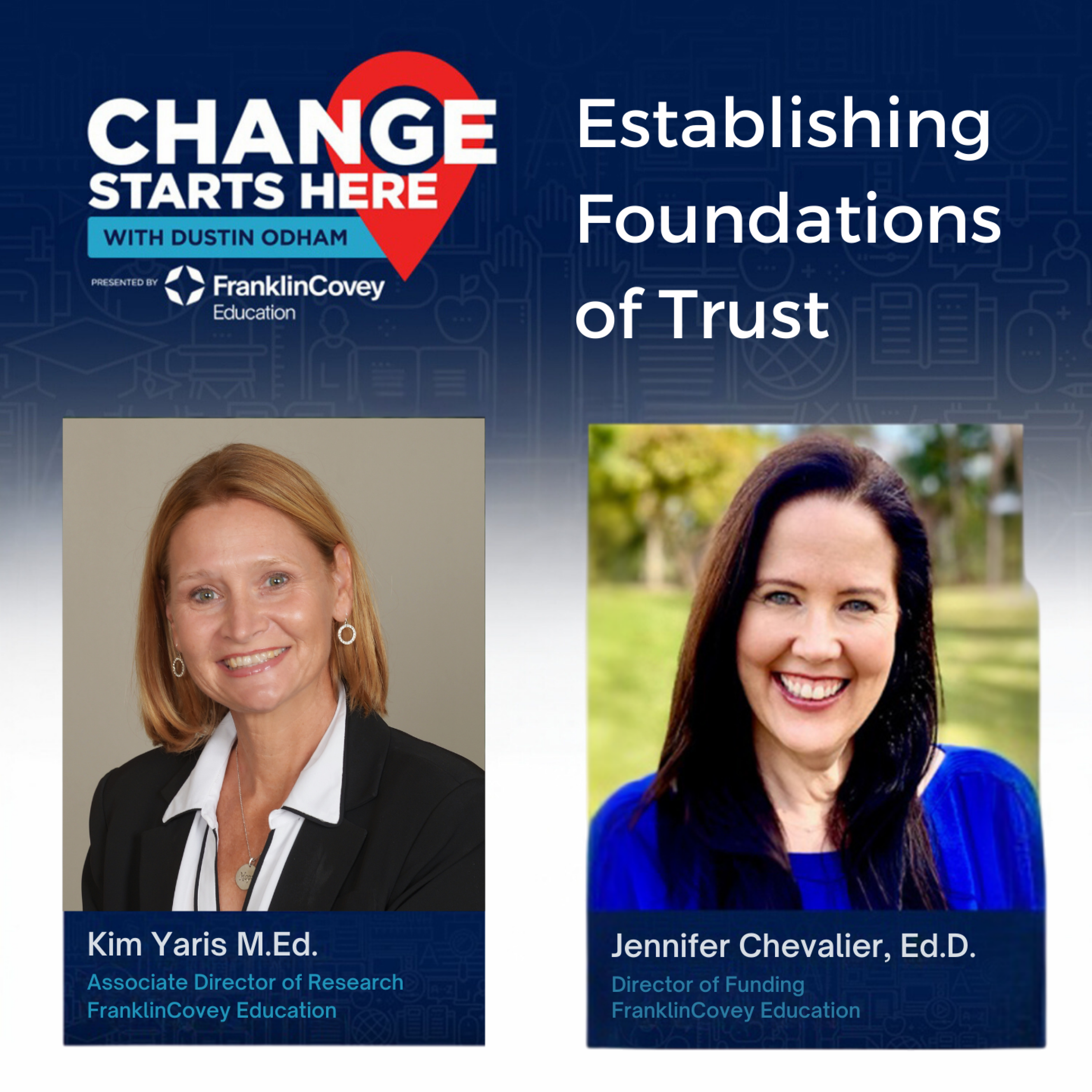
Establishing Foundations of Trust
Jan 14, 202500:21:34Tap to summarizeHave you ever had a friend who instinctively knows what you're thinking, aligning perfectly with your decisions and comments? That kind of relationship, built on high trust, allows for quick, efficient collaboration while fostering a more engaging and enjoyable connection. When applied to the workplace, such relationships can boost productivity and create systemic synergy across districts and schools.In this episode of Change Starts Here: Research Conversations, Dr. Jennifer Chevalier, Director of Funding at FranklinCovey Education, and Kim Yaris, M.Ed., Associate Director of Research at FranklinCovey Education, discuss the importance of establishing foundations of trust in your district. They delve into the characteristics of high and low-trust cultures, offering actionable strategies to build trust within teams and foster efficiency. With insights from Stephen M.R. Covey’s The Speed of Trust and personal stories, this episode is packed with valuable takeaways you won’t want to miss!Don’t forget to like and subscribe, and turn on those bell notifications so you don’t miss our next episode!Click here to check out the Staff Booster resource: https://resources.franklincovey.com/c/rc-sb-bct?x=NrLj-vStarring: Kim Yaris, M.Ed, Associate Director of Research at FranklinCovey Education Dr. Jennifer Chevalier, Director of Funding at FranklinCovey EducationTime stamps: (00:00 - 01:05) Introduction(01:06 - 05:19) Polar Opposite Stories(05:20 - 08:10) Low Trust Environments(08:11 - 09:45) Trust Taxes, Trust Dividends(09:46 - 12:05) High Trust and High Synergy(12:06 - 13:46) The Ego Barrier(13:47 - 18:11) Build a Culture of Trust(18:12 - 21:11) It Starts with Leaders(21:12 - 21:33) Closing
Transcribe →