
Podcast
Changing Conversations
Hosted by Implement Consulting Group · EN
Change happens and manifests in Conversations, both for us as humans and for organisations. As leaders and employees we are never not in conversation. Conversations are elemental in making things happen, but it is still a blind spot with a huge potential for many of us. Conversations might be the smallest biggest thing in making organisations fit for humans and fit for the future. In this explorative podcast series, hosts Katrina Marshall Dyrting and Stig Albertsen will discuss Changing Conversations together with a range of conversation evangelists. The guests will include business leaders, as well as management thinkers and thought leaders from academia and beyond.
13episodes
Episodes
Newest firstAll episodes
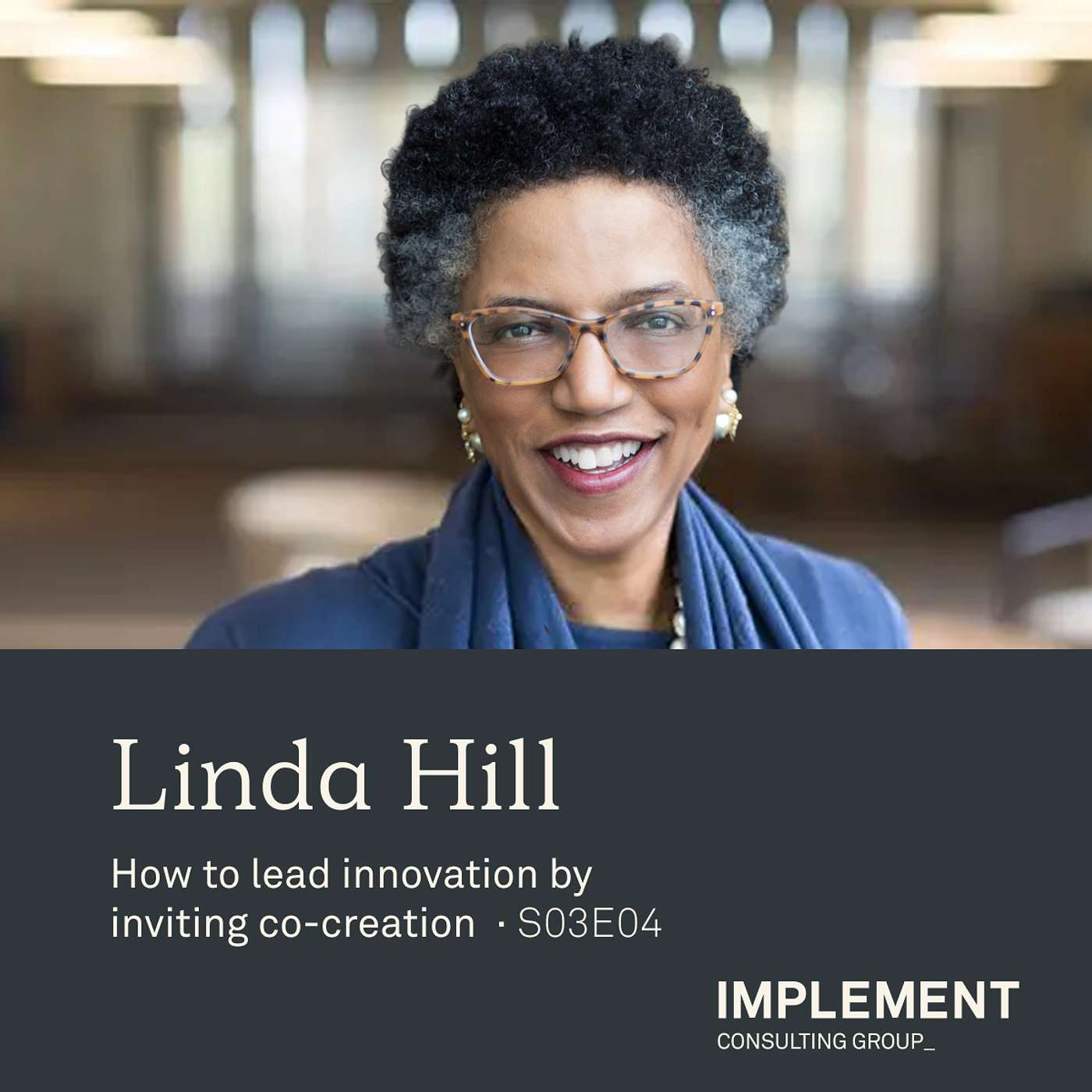
Linda Hill – How to lead innovation by inviting co-creation
Jul 700:52:05Tap to summarizeWhat if leading innovation isn't about pushing your vision onto others, but inviting them to co-create the future with you? And how do leaders create the conditions where individual slices of genius become collective genius?These are the key questions we discuss in this episode of Changing Conversations with Linda Hill.Linda is a leading expert on leadership, collaboration, and innovation. She teaches these topics at Harvard Business School, where she is an award-winning Professor and Faculty Chair of the Leadership Initiative. She is also the Co-Founder of Paradox Strategies and InnovationForce and a best-selling author of multiple books, including Collective Genius and, most recently, Genius at Scale.In this conversation, we explore:How innovation comes from collaboration and co-creation, not flashes of insight from lone visionaries.The ABC of leading innovation: being an Architect who builds culture and capabilities, a Bridger who works across organisational boundaries, and a Catalyst who sparks ecosystem movements.Why leaders must learn to amplify differences and manage conflict constructively rather than minimising it prematurely.Why the biggest barrier to innovation isn't lack of ideas but career risk – when failure is career-ending, leaders don’t want to take the chance.How microactions matter for innovation: using invitational language, making space for a variety of voices in the conversation, engaging sparring partners to challenge assumptions, and killing ‘zombie projects’ that drain resources.We'd love to keep this conversation going. To continue the conversation with us, send your reflections and questions to us at katc@implement.se.You’re also welcome to use this episode as a conversation starter by sharing it with your colleagues and friends.
Transcribe →
Julian Birkinshaw – How established companies thrive in an age of digital transformation
Jun 800:46:02Tap to summarizeAre large, established organisations really doomed dinosaurs in the face of digital transformation? Or can they become ‘dancing elephants’ that adapt and thrive?These are the key questions we discuss in this episode of Changing Conversations with Julian Birkinshaw.Julian is a leading expert on strategic agility, innovation, and digital transformation. He taught these topics as a professor at London Business School and now serves as Dean at Ivey Business School. Julian is also a trusted advisor to senior leaders and a best-selling author of multiple books, including his most recent book, Resurgent.In this conversation, we share:That 473 of the Fortune 500 companies have survived the entire internet revolution – established organisations aren't inherently doomed.Why management model innovation matters as much as technological innovation.How to be both paranoid and pragmatic about disruption like AI – taking threats seriously while recognising that fast followers can beat first movers.The importance of connecting processes to value drivers and ensuring everyone understands how their work links to what matters.Why leaders must invite real conversations with unfiltered feedback rather than polished presentations where everything appears ‘green.’We'd love to keep this conversation going. Send your reflections and questions to us at katc@implement.seYou’re also welcome to use this episode as a conversation starter by sharing it with your colleagues and friends.
Transcribe →
Deborah Rowland - Making friends with disturbance to lead change
May 500:37:12Tap to summarizeWhy is disturbance necessary for real change to happen? And how do leaders learn to welcome it rather than avoid it – both within themselves and in their organisations?These are the key questions we discuss with Deborah Rowland in this episode of Changing Conversations.Deborah is a pioneering expert on organisational change and change leadership. She is the best-selling author of numerous books, including Still Moving, and her latest book, From Ought to Is, which is piping hot off the press.In this conversation, we share:That leading change starts with looking inward first – noticing your own patterns and reactivity.How to use emotions not only as personal, but also as systemic data to gain insights into the group and organisation.The difference between action – the unconscious repetition of past routines – and the movement that happens when patterns are disturbed.Why “edge and tension” is among the most important outer skills leaders can use to create movement, even though it is often avoided or poorly handled.How practices like check-ins, changing physical space, and asking “What’s the conversation we’re not having?” can change conversations and organisations.We’d love to keep this conversation going. To continue the conversation with us, send your reflections and questions to katc@implement.se.You’re also welcome to use this episode as a conversation starter by sharing it with your colleagues and friends.
Transcribe →
Jeremy Utley - How to work with AI as a teammate, not a tool
Mar 2400:44:36Tap to summarizeWhy does working with AI as a teammate unlock exponentially better results than treating it as a search engine? And how do you actually build that collaborative relationship? These are the key questions we discuss in this episode of Changing Conversations with Jeremy Utley. Jeremy is a leading thinker and speaker within innovation, creativity, and collaboration with AI. He teaches these topics as an Adjunct Professor at Stanford and advises CEOs and leadership teams. Jeremy also shares his expertise more broadly through his writing and podcasting. He is the best-selling author of IdeaFlow and host of the wildly popular podcast "Beyond the Prompt: How to use AI in your company." In this conversation, we share: That most people treat AI like a search engine when they should be having real conversations. How giving AI permission to ask you questions can significantly improve the quality of the output, enhancing (rather than replacing) your human intelligence. Why leaders need firsthand experience experimenting with AI to imagine the future of their organizations. The power of starting with personal, emotionally meaningful questions rather than work tasks to overcome fear and build fluency with AI. How simple questions like "Have you tried AI?" can shift organizational cultures to support the spread of AI collaboration. We'd love to keep this conversation going. To continue the conversation with us, send your reflections and questions to us at katc@implement.se. You’re also welcome to use this episode as a conversation starter by sharing it with your colleagues and friends.
Transcribe →
Megan Reitz - Why you need to be more spacious as a leader
Dec 2300:43:46Tap to summarizeWhy spaciousness matters for leading in speed—and how to create itThese are the key questions we discuss in this episode of Changing Conversations with Megan Reitz.Megan Reitz is Associate Professor at Saïd Business School, Oxford, and Professor of Leadership and Dialogue at Hult-Ashridge Executive Education. A leading voice on leadership, speaking up and organisational dialogue, her latest research explores spaciousness: a quality of attention that reveals relationships, interdependencies and possibilities hidden in constant doing mode.In this conversation, we share:That leaders operate in two modes of attention: doing (instrumental, narrow) and spacious (open, curious, unhurried)—and why “spaciously doing” integrates bothHow your presence shapes others’ voice and performance—and practical micro-pauses to shift how you show upWhy we often avoid space (fear, success = activity) and the myth that spaciousness means doing nothingHow to design for creativity and safety in fast-paced systems (rituals, metrics, environments)A practical framework: SPACE—Safety, People, Attention (speed bumps), Conflict (dissonance), EnvironmentWe’d love to keep the conversation alive. Reach out to Katrina and Stig to challenge us, ask a question, recommend a future guest and give us feedback.
Transcribe →
Lisa Doig - How to expand your consciousness
Jul 24, 202500:49:10Tap to summarizeWhy is consciousness important for leading in complexity? And how do you grow your consciousness?These are the key questions that we discuss in this episode of Changing Conversations with Lisa Doig.Lisa Doig is a pioneer in the field of values and consciousness, designing, facilitating and training practitioners in profoundly transformational leadership development programs that are accessible to business leaders. Lisa founded Corporate Evolution in 2002 and her background includes 20 years in the oil and gas industry, and 15 years working as an external facilitator for McKinsey & Company. In this vulnerable conversation, we share:That consciousness is expanding your view and your ability to navigate uncertainty and complexityHow expanding consciousness is related to the fears that limit your ability to seeA values-based approach to personal developmentHow consciousness links to organisational developmentWe’d love to keep the conversation alive. Reach out to Katrina and Stig to challenge us, ask a question, recommend a future guest and give us feedback.
Transcribe →
Amy Gallo - How healthy conflict can bring you better business results
Jun 18, 202500:42:33Tap to summarizeTo what degree do you lean into conflict at work?If you’re like most of us, it’s not always the most natural tendency – but there are business results to be gained for getting the balance right.In this episode we are joined by Amy Gallo. Amy is a workplace expert who writes and speaks about effective communication, interpersonal dynamics, gender, difficult conversations, and feedback. She is the best-selling author of Getting Along: How to Work with Anyone (Even Difficult People) and the HBR Guide to Dealing with Conflict, as well as hundreds of articles for Harvard Business Review. In this conversation we discuss:Why both getting along and healthy conflict are important in driving transformationWhat level of conflict to strive for in high performing teamsHow to surface tensions when you are working together with othersWe’d love to keep the conversation alive. Reach out to Katrina and Stig to challenge us, ask a question, recommend a future guest and give us feedback.
Transcribe →
Susan David - Why you should embrace emotions at work
Feb 6, 202500:38:26Tap to summarizeHow do you find comfort in the discomfort of uncertainty?In this episode we are joined by Susan David, PHD, and will bring her research and perspective to life on this topic. Susan David (link: https://www.susandavid.com/) is a renowned psychologist and the author of the best-selling book "Emotional Agility". (link: https://www.susandavid.com/book/) Susan is a co-founder of the Institute of Coaching at McLean Hospital, a Harvard Medical School affiliate, and a frequent contributor to publications like the Harvard Business Review. Her groundbreaking work focuses on the role of emotions in psychological resilience, leadership, and personal growth.As business leaders, most of us operate and lead in complex and uncertain environments – and emotional agility has an important role to play in how to find comfort in the discomfort of uncertainty. In this conversation, we discuss:· What it means to be emotionally agile· How emotions are data points in leading transformation · How you can authentically be in your emotions without oversharingWe’d love to keep the conversation alive.Reach out to Katrina and Stig to challenge us, ask a question, recommend a future guest and give us feedback.
Transcribe →
Charles Duhigg - How to build stronger connections
Dec 30, 202400:35:25Tap to summarizeHow can you build a stronger connection with others during conversation?In this episode, we are joined by guest Charles Duhigg to explore this question and share several practical examples of things you can do to build a deeper connection with the people around you.Charles Duhigg is a Pulitzer Prize-winning reporter and best-selling author of the books The Power of Habit, Smarter Faster Better, and, most recently, Supercommunicators: How to Unlock the Secret Language of Connection.In this episode, we discuss:Three categories of conversation: Practical (What’s this really about?), Emotional (How do we feel?), and Social (Who are we?)The importance of matching categories to build stronger connectionsThe types of questions that can deepen our conversations and relationships with othersWe would love to keep the conversation going, so feel free to reach out to Katrina and Stig to challenge us, ask a question, recommend a future guest, or provide feedback.
Transcribe →
Adam Hede – Shaping a more courageous AI conversation
Dec 23, 202400:35:59Tap to summarizeAdam Hede is an AI specialist at Implement Consulting Group. He helps organisations leverage artificial intelligence to improve operations and solve business problems. With expertise in machine learning and data analytics, Adam delivers practical AI solutions tailored to client needs. His mission is to encourage business leaders to dare to push the boundaries of the conversations we have about AI.This conversation covers: How to shape a bigger conversation – one that highlights the greatest potential AI can bring us What it takes for us to engage in a more courageous conversationA reflection on the words "artificial intelligence" and how they might affect our trust in the technologyWe would love to keep the conversation going, so feel free to reach out to Katrina and Stig to challenge us, ask a question, recommend a future guest, and give us feedback.
Transcribe →