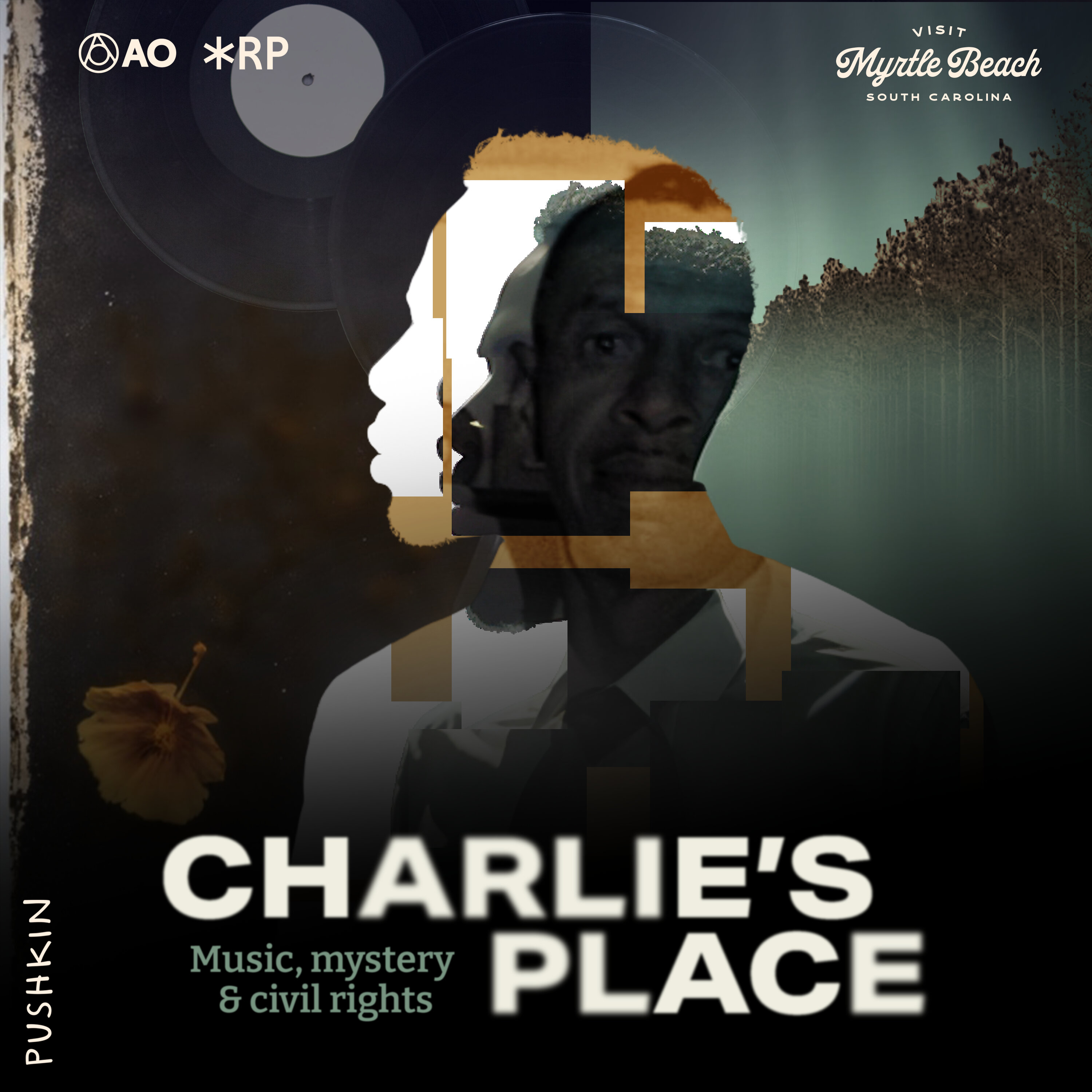
Summary of "Introducing Charlie’s Place" – Episode 1 of Charlie’s Place Podcast Series
Introduction
In the premiere episode of Charlie’s Place, hosted by Pushkin Industries, listeners are introduced to the captivating story of Charlie Fitzgerald—a mysterious Black entrepreneur whose nightclub defied the stringent segregation laws of the 1940s Jim Crow South. This episode sets the stage for a five-part series that delves into how Fitzgerald's establishment became a groundbreaking venue for racial integration through the universal languages of music and dance.
The Birth of Charlie’s Place
The narrative begins by painting a vivid picture of the segregated South during the 1930s to 1950s. Segregation was not just social but codified by law, making any attempt to bridge racial divides both revolutionary and perilous.
“In the 1930s, 40s and 50s, segregation was the law. But one mysterious black club owner, Charlie Fitzgerald, had his own rules.” (00:06)
Charlie's Place emerged as a beacon of hope and unity, operating under a unique principle: segregation by day and integration by night. This duality allowed African Americans and white patrons to coexist harmoniously in the realm of music and dance when the sun set.
A Hub for Music and Unity
Charlie's Place was strategically positioned on the "chitlin' circuit," a network of venues that provided Black artists with platforms to perform in the South. The club quickly garnered a reputation not just locally but statewide, attracting diverse crowds eager to experience its inclusive atmosphere.
“Inside Charlie's Place, black and white people could listen to music and dance together.” (00:20)
The venue hosted legendary musicians such as Little Richard, Count Basie, Ray Charles, Duke Ellington, and many more, making it a cultural melting pot where the power of music transcended racial barriers.
Challenges and Opposition
However, Charlie’s groundbreaking approach was not without its dangers. The episode recounts instances of violent opposition from segregationists who viewed the club's integrated environment as a threat to the established social order.
“Not everyone was happy about it. There was a lot of shooting, people running.” (00:35)
The Ku Klux Klan, identifiable by their uniforms, actively sought to dismantle Charlie’s Place, culminating in raids and attempts to intimidate both Charlie and his patrons.
“The KKK set out to raid Charlie, take him away from here. He wanted people to unite and some just did not want that.” (00:45)
These confrontations underscore the immense risks Charlie took to foster unity and challenge systemic racism.
The Enigma of Charlie Fitzgerald
One of the most intriguing aspects presented in the episode is the elusive identity of Charlie Fitzgerald. Despite his significant impact, little was known about his origins or true intentions.
“But did anyone know who Charlie really was? I think he came from Jamaica or someplace. Some said he was from Georgia.” (00:55)
Speculation about his background ranged from tales of northern roots to rumors of criminal ties, adding an air of mystery to his persona. This ambiguity contributed to both his allure and the challenges he faced.
Legacy and Impact
The episode concludes by highlighting the enduring legacy of Charlie’s Place. Beyond being a nightclub, it was a monumental step towards racial integration, leveraging the unifying force of music and dance to bring together a divided community.
“Charlie was an example of power. They had to crush him.” (00:50)
Charlie's fearless pursuit of equality through entertainment left an indelible mark on Myrtle Beach and the broader civil rights movement, transforming the social landscape and inspiring future generations to continue the fight for unity and justice.
Conclusion
"Introducing Charlie’s Place" effectively sets up the compelling narrative of Charlie Fitzgerald and his nightclub's pivotal role in challenging segregation. Through engaging storytelling and poignant quotes, the episode invites listeners to explore a lesser-known yet significant chapter in America's journey towards racial equality.
For those intrigued by this remarkable story, the subsequent episodes promise to delve deeper into Charlie's strategies, the club's daily operations, the personal lives of its patrons, and the ultimate price Charlie paid for his groundbreaking efforts.
Notable Quotes
-
“In the 1930s, 40s and 50s, segregation was the law. But one mysterious black club owner, Charlie Fitzgerald, had his own rules.” — Speaker A (00:06)
-
“Inside Charlie's Place, black and white people could listen to music and dance together.” — Speaker A (00:20)
-
“Not everyone was happy about it. There was a lot of shooting, people running.” — Speaker A (00:35)
-
“The KKK set out to raid Charlie, take him away from here. He wanted people to unite and some just did not want that.” — Speaker A (00:45)
-
“But did anyone know who Charlie really was? I think he came from Jamaica or someplace. Some said he was from Georgia.” — Speaker B (00:55)
-
“Charlie was an example of power. They had to crush him.” — Speaker B (00:50)
Note: Timestamps correspond to positions within the provided transcript.
Recommendation
Charlie’s Place offers a profound exploration of race, music, and resistance in a tumultuous period of American history. Listeners interested in civil rights, history, and the transformative power of culture will find this series both enlightening and inspiring.
To immerse yourself in the full narrative, subscribe to Pushkin+ for early and ad-free access by visiting Pushkin.fm/plus or find the podcast on Apple Podcasts.