← Cheeky Pint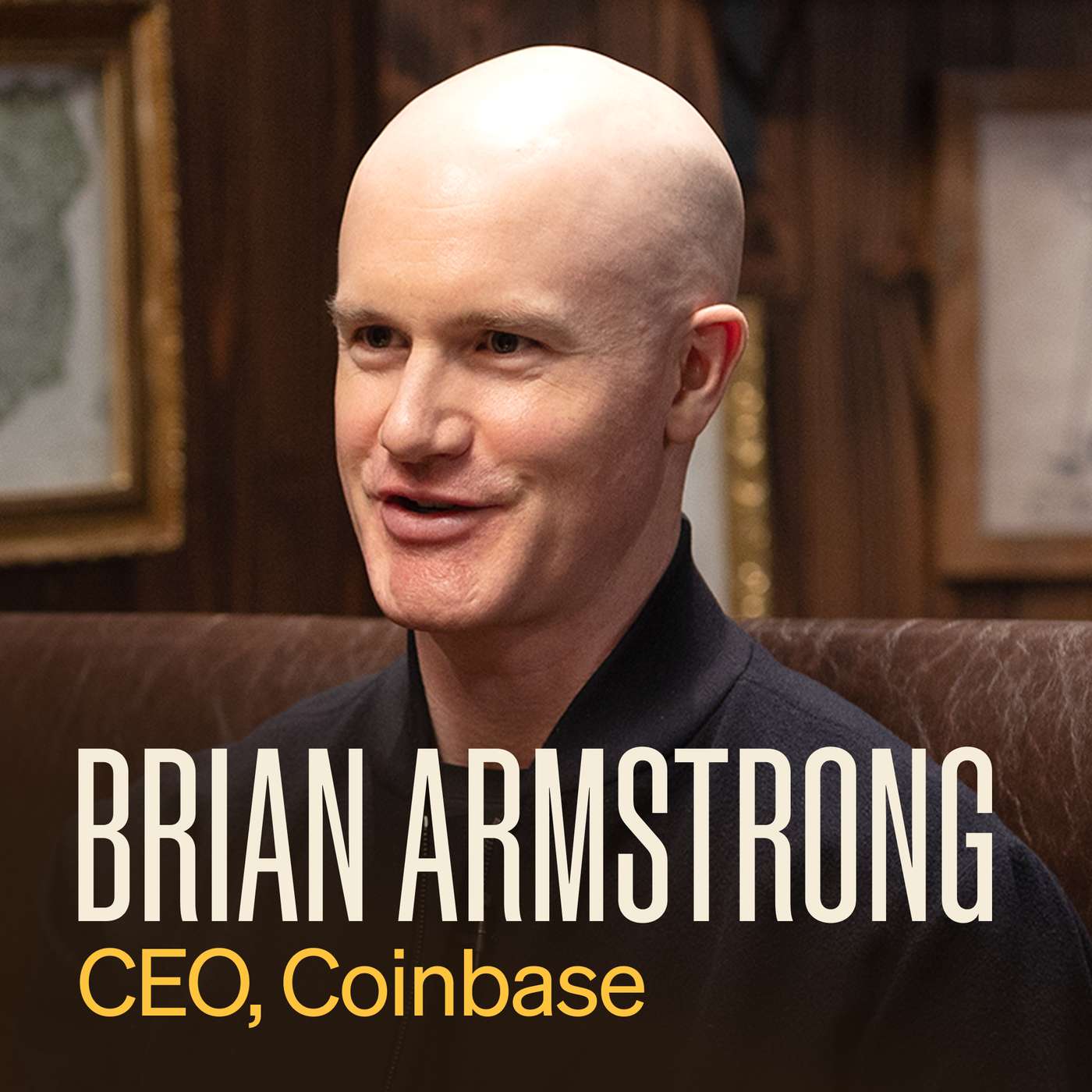
Cheeky Pint
Coinbase CEO Brian Armstrong on bitcoin going to $1 million, electing a pro-crypto Congress, and Jamie Dimon
01:16:31
Loading summary
Transcript284 lines
- [00:00]
Brian Armstrong
Companies are a reflection of their founders in many ways. Probably you don't even realize they are.
- [00:05]
John Collison
In a pub after all.
- [00:06]
Brian Armstrong
Within the first few weeks of us working together, he came back to me at one point. He was like, I'm pretty sure we're losing money every time someone buys Bitcoin. And he walked me through on the whiteboard and he was right. There's the top five or ten fiat currencies, but the long tail, the other 150 or so government currencies, I think they probably should get replaced if the US is going to lose the reserve currency status. I'd rather people went to Bitcoin than to the Chinese yuan.
- [00:28]
John Collison
I don't think we can serve these sad pints.
- [00:30]
Brian Armstrong
I'm sorry, it's not meeting the Stripe Quality Bar. Isn't there some ethos at Stripe about the details really, really, really matter?
- [00:36]
John Collison
They do. But you deserve a delicious creamy pint, not this monstrosity.
- [00:41]
Brian Armstrong
I actually was a bartender in grad school. I should know how to do this.
- [00:45]
John Collison
Brian Armstrong is the co founder and CEO of Coinbase, one of the world's largest crypto Exchanges, founded in 2012. Just earlier this year, they became the first crypto company to be added to the S and P 500. Here he is.
- [00:55]
Brian Armstrong
John, good to see you.
- [00:56]
John Collison
You too. It feels like a good time to do this and take stock. Where Stripe, we launched in 2011, Coinbase was founded in 2012, kind of grew up. At the same time, Coinbase just added the S&P 500. Genius act just passed. So it's a good moment to step back and take stock. Yeah. As you look back on it, when I think about crypto in say the 2014, 2015 era, it was such a red ocean. There were so many different competitors and you guys beat so many people to get here. Like, as you look back on it, how did Coinbase win?
- [01:34]
Brian Armstrong
Well, yeah, it has been a long journey and I remember actually seeing you guys go through YC and everything was very inspiring for me. It was like, okay, maybe a fintech company could be built in this area. So I had a lot of aspiration to go through yc, in part by seeing what Stripe did. And you're right. In those early days, it was the Wild West. I mean, I'd go to the early bitcoin meetups and there was like brilliant cryptography PhDs and also just anarchists and like, it was, it was really. I mean, one of the first meetups I went to in San Francisco for bitcoin. A guy there told Me, he was starting his own religion, you know, I thought was a little off topic, but somehow it all worked together in his mind. So we've come together from these kind of early days, you know, which remind me of the Chaos Computer Club kind of equivalent. And I think Coinbase made a couple of decisions there that helped us ride through. One was that we decided to follow a regulated approach which meant working with the United States government and going to get money transmitter licenses, which I remember the anarchist crowd at that time.
- [02:30]
John Collison
Did you consider kind of selling out?
- [02:31]
Brian Armstrong
It was a little bit. I mean, one guy, I remember I had just gone to like meet with some banks or something like that. So I was wearing like a suit and I came to the bitcoin meetup and the guy was like littered the suit. Yeah, he was like, you look like a banker. And I was like, no, no, I'm like a software guy, trust me. I think the other thing that we did was we tried to stack up as many credibility indicators as we could. So one of them was like getting accepted to Y Combinator. That led to us getting a bank relationship in the US at the time when that was very difficult to do with Silicon Valley bank of all places, getting the money transmitter licenses. So there was a period there in the US where we were kind of, I think the only US company that had a bank partnership. So it was easy to connect your bank account to buy bitcoin. And that really allowed us to get started in a way that nobody else could catch up.
- [03:15]
John Collison
So you were more credentialed versus and who were the competitors at the time? Like, was it Mount Gox? Was it? Who were you competing against for consumers?
- [03:21]
Brian Armstrong
Yeah, I mean, it's been so long. So Mount Gox was in Japan, which of course blew up. There was a company called Tradehill in San Francisco, which probably could have been a big exchange, but it didn't hit some of those milestones. I mean, there's so many of them along the way, I couldn't even probably name all of them. And there was actually a bitcoin conference in San Jose, California in 2020 12, I believe that was kind of iconic in hindsight. Like the Winklevoss brother showed up and I met Vitalik Buterin there for the first time. He had not invented Ethereum yet. And I remember people looking around the room and they're like, this is. It felt so small time. Like some of the talks only had like five people show up to it. And we had like this little booth.
- [03:58]
John Collison
With T shirts, Paul Vitalik working on Before Ethereum.
- [04:01]
Brian Armstrong
Oh, he was a writer at Bitcoin magazine. He was actually a very good writer.
- [04:04]
John Collison
I mean, you see it in his, like how he means the Ethereum movement. Yeah, exactly. From the philosopher king.
- [04:09]
Brian Armstrong
Yeah. So anyway, I don't know if there's like a lesson to draw from this, but when you. I think being early on some of these tech trends, you don't want to jump in and be like the 42nd AI company or something. You want to jump into something when you think it's cool, nobody else thinks it's cool. And it's. I guess Paul Graham has that thing right. You'd rather have like 1,000 people who really love your product than like much people don't care. So that's where we were. Nobody took seriously what we were doing, us, Coinbase or the entire industry at that time.
- [04:37]
John Collison
And when you describe being the more buttoned up player, having the money transmitter license, having bank partnerships, did that help you win because you were able to build products that other people weren't able to follow you with, or did it help you win because for consumers it gave you a brand and a trust that led them to choose you?
- [04:59]
Brian Armstrong
I think it was both. I mean, yeah, it allowed us to launch products that others couldn't. It allowed us to not get shut down.
- [05:05]
John Collison
Did other people get shut down?
- [05:06]
Brian Armstrong
Yeah, they either just, they got cease and desist letters, they couldn't afford the legal bills. They got shut down by getting hacked, basically. We had a couple close calls in the early days where we were not the mature company we are today, and we had people trying to break into our systems. I can tell you about some of those close calls if you want, but we were able to get just enough good talent in the door due to the credibility indicators. And, and I think we, by the way, some of the other companies at that time were totally anonymous. These people were telling me, well, I'm going to. I don't want to put my name on this website because it's against the ethos of crypto. And in my view, I was like, if we're going to raise money, be regulated, I was like, how are you going to be anonymous forever? If this gets big enough, someone's going to come knocking on your door. And so I wasn't afraid to put my name on it and say, like, you know, I'm a US Citizen, I live in the United States, I'm doing this for the right reason, I'm here for the long term. And companies are a reflection of their founders.
- [05:54]
Interviewer/Moderator
Right.
- [05:55]
Brian Armstrong
Stripe's Very much a reflection of you and Patrick in bits and pieces of you, in many ways. Probably you don't even realize you are.
- [06:01]
John Collison
In a pub after all.
- [06:02]
Brian Armstrong
Yeah, Irish pub. This is one small example. Yeah. But the same thing, I think, was true of Coinbase with Fred Ursam and I. It was really a derivation of our DNA, which was many things, but one of them was we were actually kind of legitimate and we were trustworthy and we were doing it for the right reasons for the long term, and that counted for a lot of.
- [06:23]
John Collison
Fred had worked in the financial world before. Had you? No. You were at Airbnb before. Had you worked in finance at all before?
- [06:30]
Brian Armstrong
No. I had studied computer science and economics. I'd worked pretty much as a software engineer. I tried doing another startup that was more of a base hit. Not really. Didn't work. Fred got a computer science degree in economics too, at Duke, but he went into FX trading at Goldman. So when I first met him, I was kind of like, okay, the guy knows how to write code. He has a CS degree, but he knows something about finance. And of course, within the first few weeks of us trying working together, he came back to me at one point. He was like, I'm pretty sure we're losing money every time someone buys Bitcoin. I was like, how could that possibly be? And he walked me through on the whiteboard and he was right. So it was like, okay, complementary skill set B.
- [07:04]
John Collison
One of the business model is not going to work. Need some optimizations.
- [07:06]
Brian Armstrong
Yeah, yeah, yeah.
- [07:07]
John Collison
That's wild. You're saying some of the close calls. I think one thing people don't realize is they think when a startup isn't working that it's bad and stressful because no one's buying your product. And that is true. But. But when a startup really is working, it is also bad and stressful in a way, because you're being pulled along by forces and it's not obvious that you can keep up. And so, yeah. What were some of the close calls?
- [07:31]
Brian Armstrong
Yeah, I mean. So I'll give you a couple examples. On the first version of the app, I had created this simple hot wallet that was live on the servers, right? And I remember telling people this app is an alpha, like, don't store any money here. You're not allowed to. You're not willing to lose. And the company had raised about 150k or so at that point from Y Combinator. And so as early users came on the site, they kept depositing more money, even though, despite these warnings all over the app and it was getting closer and closer to being like $150k. And I felt like if we lost all the money, I would want to be able to pay it back or else we'd be insolvent.
- [08:02]
John Collison
You were tracking Corp cash versus how much money the company had versus user deposits. And you didn't want user deposits to outstrip how much money Coinbase had exactly.
- [08:13]
Brian Armstrong
And I calculated at one point the growth of the deposits and how much money we had. And I was like, hey, we have about eight weeks to put this onto some new system. I had the vague sense like, we need to move the money off the Internet, like the cold storage. And so I didn't know how to architect one. I mean, I'd studied computer science, I took a security class, I had basic understandings of cryptography, but I never built like a really key storage solution or anything like that. So I called up like two friends of mine, I was like, I need a crash course how to do this. How would you architect it? I remember asking one of them, like, how long you think it'll take to build this? And he said a team of like 10 people would take probably a couple years to really validate it and everything. I was like, we have like eight weeks. And he was like, oh, well, you're in trouble. And so anyway, I tagged one of the other engineers on our team and we basically just got to work coding up this, the next gen, the first generation of the cold storage architecture. And we were sleep deprived and we made some trade offs that we thought were reasonable to get it there in time, but it worked. And it was like one of the most kind of do or die moments where if we had waited longer and the company had gotten hacked, we wouldn't exist here today.
- [09:13]
Interviewer/Moderator
Right?
- [09:14]
Brian Armstrong
There was another example like that where, yeah, we were sitting there at lunch one day in San Francisco and someone on their computer noticed there's a lot of refunds going out. And we quickly realized someone had hacked into one of our customer support accounts and was just issuing themselves refunds as fast as they could. And I remember we shut down the whole website and we kind of figured out how they accessed that account, managed to block it, came back online maybe 12 or 24 hours later, and we patched it, we went back to work, and I realized if we had been asleep when that hacker started doing it, we would have been insolvent by morning. We only lost like 50k or something in that incident. But it was pure luck that we were in specific times. San Francisco, they started doing it in a place where we noticed it. So there was moments like that in hindsight, very scary. They were coin flip and there was three or four coin flips like that maybe that not all of them were cyber related. Yeah, but yeah, you're right. Once it started to really work, I think there were other challenges about keeping up. I mean, one was just the level of customer support tickets coming in. And we didn't have a customer support team. So nights and weekends we would 9pm to midnight, we'd answer all the support tickets after doing the other work. Yeah, I mean, at some point there was like 10,000, 20,000, 30,000 unread support tickets. And people were starting to get really angry and frustrated with us. And so we realized, okay, we have to hyperscale here. How do we build a customer support team in the next seven days or something?
- [10:33]
Interviewer/Moderator
Right.
- [10:34]
Brian Armstrong
And somebody on our team made this actually a 10 question quiz because we couldn't interview all these people that fast. And we had these people apply online, take this quiz. It was a really hard quiz about knowledge of crypto and all these things. We hired, did like five minute interviews with a bunch of them and hired them in and we started to get up to speed. So there was a lot of problems like that that we were just figuring out along the way by the seat of our pants.
- [10:55]
John Collison
What does the general tech public not appreciate about the cybercrime landscape?
- [11:00]
Brian Armstrong
Hmm. One is that there's a lot of North Korean agents trying to work at.
- [11:06]
John Collison
These companies in the US or remotely.
- [11:08]
Brian Armstrong
From North Korea, for the most part. Remotely, as far as we can tell.
- [11:11]
John Collison
The remote work revolution.
- [11:12]
Brian Armstrong
Yeah, I mean, it does bring another vector, but yeah, DPRK is very interested in stealing crypto. You'd think that, well, we can collaborate with law enforcement and we get these dossiers of like, okay, this is a known actor. We share sometimes with other companies, but it feels like there's 500 new people graduating every quarter from some kind of school. They have that just their whole job. And many of these cases, it's not the individual person's fault. Their families will be coerced or detained if they don't cooperate. And so it's actually they're like they're the victim as well in many cases. But yeah, they're interviewing for these roles. I mean, we've had to do a number of things along the way. Right. Well, first, some of these people are being coached offline as they're on the camera. And so we forced them to turn on the camera and prove they're not AI but we also started requiring everybody to come to the US for orientation and just really to access any kind of sensitive system, like fingerprinting them, making sure really anybody with sensitive access, we make sure has U.S. citizenship and Family in country because you don't want someone to feel like they can flee and then have no fear of extradition or these kind of things. So, yeah, we've had to kind of adapt all of this on the DPRK side. The other thing that was surprising to me is the willingness of these threat actors to try to bribe our customer support agents. And our customer support agents work in these facilities that are pretty locked down and they have a Chromebook that is pretty locked down. But in some cases, you know, they've been offered hundreds of thousands of dollars to take, like smuggle in a personal phone and take photos of a screen, which you'd think, wow, okay. And so we've really had to lock down the kind of access that these agents have. We've started to move more of it to the US And Europe. Like, we just opened a new customer support support facility in Charlotte, North Carolina, and really started to make a deterrent in the sense of when we catch people doing this and we red team it consistently, we don't walk them out the door. We, we. They go to jail.
- [13:13]
John Collison
Yeah.
- [13:13]
Brian Armstrong
You know, and we try to make it very clear that this is like you're destroying the rest of your life by taking this. Even if you think, whatever, it's some life changing amount of money, it's not worth going to jail. So these are the kind of things we've had to deal with now. And I'm sure the stakes will just keep getting higher.
- [13:27]
Interviewer/Moderator
Yeah.
- [13:27]
John Collison
So more proof of physical presence, more compartmentalization and more deterrent effect through aggressive prosecution.
- [13:33]
Brian Armstrong
Good summary. Yeah.
- [13:34]
John Collison
It feels like the proof of physical presence is going to become a bigger deal in a world of AI deep fakes. Just higher stakes for all this kind of cybercrime and stuff, where in a weird way. Yeah, maybe you see certain areas where remote work goes backwards. People are saying, oh no, we want to do our customer service in the United States or other examples like that. But yeah, it feels like the physical presence is becoming more relevant and not less.
- [14:00]
Brian Armstrong
Yeah. The other thing we're doing, by the way, people may have seen this too, but we turn the tables and we're actually going after threat actors too. Like, we put out a $20 million bounty for information leading to the arrest or conviction of these folks who recently convicted an attack on our customers who we made whole, by the way. But yeah, we've gotten a lot of inbound tips from that and we're having a fun time working with law enforcement on tracking folks down. So I think that's the ultimate deterrent is not just not going after insiders or something, but after the threat actors themselves. And we need to be a hard target.
- [14:32]
John Collison
Who, after the dprk, are the biggest troublemakers?
- [14:37]
Brian Armstrong
There's actually some groups that are in the US and they're, they're usually like younger people in their twenties that are caught up in these hacker groups. Some of them are more mobile, they're in Eastern Europe. So sometimes it's about getting them into a US extradition country, or sometimes they're already here.
- [14:55]
John Collison
I'll take a bit of an inventory of everything that's happening in crypto and that'll probably be helpful for the discussion. And so as I look at what's working, store value is for sure working in a big way. 24,7 trading of assets, including, you know, include meme coins. There is some success in payments so far, but I think both our companies are seeing that really ramp up. Like, I think we're very optimistic on the just payments volumes in crypto, especially stablecoins over the next five years. Global access to the dollar is a big thing. What else would you include in that list?
- [15:28]
Brian Armstrong
Yeah, I think you hit the big ones, you know, prediction markets did, I'd say, enter mainstream consciousness during the last election for sure.
- [15:34]
John Collison
That's a good one.
- [15:35]
Brian Armstrong
And the volumes have continued and there's some more things on the horizon we could talk about. But I think you nailed the big ones.
- [15:41]
John Collison
Crypto is, I guess, load bearing for prediction markets. Like we just didn't have them pre crypto.
- [15:46]
Brian Armstrong
Yes and no, actually. I mean, there were prediction markets, I think, before crypto. And there's an open question kind of currently, legally in the US about if you build them entirely on chain with self custodial wallets, are they not financial services? In which case they're much more permissionless about how they can be created, which is true in self custodial wallets and other areas. So anyway, that's another great one. The cool thing about the trading use case too, by the way, of course, is that every asset class is now coming on chain, right? So it's not people just trading crypto, they're also, they're gonna be trading stocks soon. And private companies are doing capital formation and commodities and FX markets, debt instruments, treasuries. So I think every asset class is coming on chain. And we're really trying to lean into that as well with what we. We kind of coined this term the everything exchange. So we're trying to literally be a liquid market that's global for every asset class. And I think that'll be exciting in a variety of ways. Like both more international reach. Like there's a lot of people in these countries who can't. They have high demand for U.S. assets, like they want to invest in Nvidia and these things. But unless you're a wealthy person, usually in some of these markets you can't get like a U.S. brokerage account opened and then the 24 7.
- [16:51]
John Collison
Yes.
- [16:51]
Brian Armstrong
The fractional shares and you can start to do things like with perpetual futures and other interesting things.
- [16:56]
John Collison
So you think for say stocks, you know, there's these adrs, American depository receipts where if you want to, if you're an American person and you want to buy a German stock or a Canadian stock, it's actually kind of weirdly tricky to do so. So you end up buying a derivative. And you think Unchain is just a better derivative of that.
- [17:14]
Brian Armstrong
Yeah, I think a lot of those will get tokenized. They are already in some ways. And then private company capital formation or even people doing anything like they want to raise money for a real estate development or to make a film. I think people will eventually be able to do more. Some novel things around governance too where let's say you really want to only have long term holders of your stock be voters. You can put that in the SMART contract and say you had to have held this for at least a year to be able to vote.
- [17:38]
Interviewer/Moderator
Right.
- [17:39]
Brian Armstrong
There's interesting things you could do around.
- [17:40]
John Collison
That as well is tokenization of assets. I was going to ask you what the next big use case that starts working is. Would that be your vote or are there other next big use cases that.
- [17:51]
Brian Armstrong
You would point to tokenization? Yeah, I mean I think the big ones right now are. Yeah, trading and payments. I think bitcoin as a store of value that's inflation resistant is not to be underestimated. That's also like a $20 trillion opportunity with gold. You know, gold is a comparable but better than gold.
- [18:08]
John Collison
I think gold is a $20 trillion market cap.
- [18:10]
Brian Armstrong
Yeah.
- [18:10]
John Collison
And bitcoin is one and a half.
- [18:12]
Brian Armstrong
Two or three or something.
- [18:13]
John Collison
Yeah, yeah.
- [18:15]
Brian Armstrong
And I think it'll eventually be bigger than gold. Yes. If that's all crypto ever was, that's already enormous. But I think, yeah, we're starting to see borrowing and lending capital formation and then People doing like decentralized social media too is pretty interesting. We just launched a prototype of this or a beta of.
- [18:33]
John Collison
I watched the base event.
- [18:34]
Brian Armstrong
I saw it. Yeah, yeah, yeah. So that was cool. Now people are essentially posting content and people can. Every post on social is its own coin and you, the creator, have your own coin, which value flows up if people can buy it, if they like the post, they can reshare it and earn a share of the economics. They can remix it. So you see sometimes on the Internet people have a meme template and there's a thousand and all the value can actually flow back to the content creators. So that's an interesting primordial soup where some cool ideas are happening. I don't know exactly how it'll play out, but the base app's been fun. There's a bunch of people on the wait list.
- [19:08]
John Collison
Those are some good new use cases. And yeah, I think both of us would say payments actually qualifies for a major new use case because it's like over the last 10 years it's been pretty much just kind of the crypto enthusiast use case, whereas now at least we are seeing a bunch of mainstream use.
- [19:23]
Brian Armstrong
Yeah, no, I was excited to see you guys come into the space because it was super legitimizing, frankly. And I think the tech was slowly getting there. And there was a scalability issue, there was a usability issue with are you sending some random string of characters or is it a human readable name? The wallets need to get better. Like crypto should be the easiest way to pay. What's kind of your current thinking on like what's the next blocker to stablecoin adoption?
- [19:52]
John Collison
I think training consumer familiarity is going to be the big one. And right now one of the places where stablecoin usage is most interesting is in cross border money movement where it solves a real world problem. Like if you want to send $2 from the US to Turkey, that's actually not even really a thing you can do. There is no product that historically fills that space and crypto makes us easy. And so in a lot of creator economy use cases or things like that, we're seeing a lot of pull. I think what's interesting is you get this cycle of the apps getting better and consumer behavior coming along with it. And so an example of that might be if you look at QR codes, QR code as a technology has existed for decades. It's a super old technology, but it required two things. It required Apple to natively include QR code, scanning in the camera app on the iPhone. So if you just like point the camera app on the iPhone towards a QR code, it kind of did the right thing. That happened in the late 2010s and then with COVID there was lots more focus on touchless experiences and things like that. And so I feel like in the US people really got familiar with QR codes during COVID So again, that technology existed for a long time, but it required the consumer apps to get good in the form of the iPhone supporting it, and consumers to be kind of wired to expect it and use it. And I feel like we actually still don't have both of those. For the stablecoin use case because we wanted to encourage stablecoin adoption, we have our coffee station downstairs on the first floor. You can pay with crypto. It's a super junky experience, you know, Cause you always run into a bug or something like that and that will get good. And so as consumers get familiar and as all the kind of app experiences get really smooth, then that feels to us like it's going to drive a sharp rise in usage. Is that scan?
- [21:49]
Brian Armstrong
Totally.
- [21:49]
John Collison
Yeah.
- [21:50]
Brian Armstrong
Yeah, I think you're right. It'll be interesting to see if QR is what is needed here or if it's like a tap to pay NFC thing.
- [21:55]
John Collison
And I'll use QR just a metaphor for like this wave of buzz. Yeah, I agree. Tap to pay NFC feels like be a very plausible ingredient, you know, some better OS support. I guess now with the new iOS rules around NFC, you maybe can use the NFC APIs in the Coinbase app. Question mark.
- [22:12]
Brian Armstrong
Well, we've seen some good demos of tap to pay, I think. I think that part is opening up the secure enclave on the device is another extraordinary. Yeah, we'll keep working on that one. But yeah, I think you're right. We debated mailing these stickers to just flood the zone of like a city to test it out, you know, seeing which merchants want to accept it. And a lot of the use case it is happening cross borders, happening in more Internet native applications where crypto is the only way to pay because it's a global group of people coming together into some community. It'd be a little weird to use like one country's currency. Yes, but brick and mortar will probably be like a later adopter is my guess. But still, like they don't want to pay 2 to 3% on the fees. They can save money, so. And give some of it back to the customer too.
- [22:55]
John Collison
Yeah, I agree. It feels like the digital Use case is where it'll roll out first. And, you know, we're starting to roll out in more and more of the stripe checkout experiences. Pay with crypto as an option. You know, there's a lot of brick and mortar retailers that accept Alipay or accept, you know, jcb. And obviously that's a pretty small, you know, that's a niche use case accepting jcb, you know, the Japanese card brand in the United States. But it's like a large enough constituency to be worth it. And it feels like analogous here. Once you get it above some minimum penetration, yeah, everyone's paying with us, but it's just not worth not accepting it. What do you make of all the banks starting to embrace crypto? So Jamie Dimon said previously, bitcoin is a fraud. It's worse than tulip bulbs. If I was the government, I'd close it down now. And now, of course, they're launching jpmd, their tokenized dollar. And so it's just been an interesting reversal. I'm curious what you make of all that across banks generally.
- [23:46]
Brian Armstrong
Yeah, well, I think ultimately they're responding to customer demand. So if their clients want it, you know, they're going to support it. And I feel like the banks have had this like back and forth with crypto where they'll say, you know, we're not so sure about bitcoin, but we like blockchain technology. Maybe we could make a closed network for interbank settlement. Or maybe they don't like paying swift fees. So they are excited about it in the abstract and they've run a lot of pilots, but I haven't seen them like full on embrace it.
- [24:17]
Interviewer/Moderator
Right.
- [24:17]
Brian Armstrong
And it's a little bit of that innovator's dilemma type thing, Clay Christensen, where just culturally it's so hard to get an organization where they're making tons of money off the traditional system. Anything they do in crypto would just be this fraction of a share. But it comes with all this risk and complexity. So they don't get a lot of people who come in with that mindset. They don't have a lot of DNA inside the company that wants to build crypto now, I think just like the New York Times when the Internet came out or something like some of these local newspapers are not going to adapt to the new system and they're going to fade away. But a lot of the best ones will adapt to it.
- [24:49]
Interviewer/Moderator
Right?
- [24:49]
Brian Armstrong
In the same way that there's websites now for these media companies, the banks are going to embrace crypto. The payment companies, Visa, MasterCard are running good pilots on stablecoins. Obviously, I think Stripes jumped in with both feet, which is really, really smart. And you've caused a lot of other people to wake up and do the same thing. So I think the smartest ones will adapt. I think that's good. I think from a Coinbase point of view, we increasingly want to be people's primary financial account.
- [25:15]
Interviewer/Moderator
Right.
- [25:15]
Brian Armstrong
As crypto kind of eats financial services, I think for some of our customers we can be a bank replacement, right? And they can manage their trading, their payments, their direct deposit. Like they have a credit card, they have a loan. And a lot of them actually, by the way, they won't even really care that it's crypto. They just want the best financial services. So if it's the cheapest way to send money to their family overseas or they can get the best rewards on this card or whatever it is, that's what we ultimately want to provide to them. And I think the banks will have to compete in that new environment. Are they going to be an infrastructure layer powering some of these new fintech apps that the next generation of kids thinks of as their primary financial account? Or are they going to adapt to the new world and build their own apps or embrace crypto? Like I said, the smartest banks will do it and many will get left behind. And that's good. That's free market competition.
- [26:01]
John Collison
Totally. Companies don't disrupt. Consumers cause disruption by voting with their, you know, their feet to use something else. Has anyone impressed you on the banking side of things, just in terms of being forward thinking?
- [26:14]
Brian Armstrong
Hmm. Well, yeah, a number of them. I mean, I actually think Jamie Dimon is a great leader, very smart. Even his comments on Bitcoin I don't really agree with, but he's a great guy and we work with them a lot. You know, I think Santander has been, has been really great. There's some banks that have really embraced crypto like Citizens bank and there's Cross river and you know, Silicon Valley bank had a love hate relationship. They had their own risks to manage. Yeah, there's a bunch.
- [26:44]
John Collison
What does Coinbase becoming people's primary financial account look like?
- [26:47]
Brian Armstrong
I mean, it means that we just have a bigger responsibility and share of people's financial lives. So it's not just going to be coming in to trade crypto. It's like, okay, maybe I started with that, but I have a lot of crypto here. Okay, I can get the best rate on a loan, to do a mortgage or whatever because I have a lot of assets here as collateral. Or it could mean that I can use a Bitcoin credit card and get 4% back in Bitcoin as rewards when I spend.
- [27:12]
Interviewer/Moderator
Right.
- [27:13]
Brian Armstrong
Or it could mean that it's very easy to send money overseas instantly for less than a cent. So we need to do a good job of leveraging the benefits of crypto to update the financial system and not make it just crypto for crypto's sake. Because the early users of Coinbase were just crypto die hards. And that's great. We've gotten to maybe 6 or 7% of the world has used crypto now, kind of like the early 2000s for the Internet. And we now need to get to about a billion or half the world eventually using it to really increase economic freedom globally. So it's got to be about something more than the technology. It's got to be about just. It's faster, it's cheaper, it's better, it helps me get done what I want to get done.
- [27:53]
John Collison
The reason I ask is because I observe the growth of neobanks outside the US nubank has obviously taken over in Brazil, Revolut is the fastest growing bank in Europe. And in the United States, the largest consumer banks are basically the same. A very similar recognizable set of characters from the 1970s. And maybe that'll still be true in 10 years time or again, maybe things will really have shaken up. And so I'm very curious what the neobank revolution in the United States looks like.
- [28:24]
Brian Armstrong
Well, I think that's a great way to phrase. I probably should have phrased it that way, actually, when I was describing it. But yeah, I think some people are calling them like stablecoin, Neobanks or super apps.
- [28:35]
Interviewer/Moderator
Right.
- [28:35]
Brian Armstrong
There's a lot of terms you could come up for this, but yeah, I think that's our opportunity. By the way, as a technicality, I don't think we're actually going to go get a banking license because I don't know how deep people want to go on the details here. But the core thing a banking license allows you to do is not have all the money there. It's called fractional reserves.
- [28:55]
Interviewer/Moderator
Right.
- [28:56]
Brian Armstrong
Which is an interesting business model, but it also comes with such heavyweight regulation that it makes it much harder to really innovate on products and ship quickly. And so we actually don't really want to be a bank.
- [29:08]
John Collison
You want to be fully backed as opposed to be doing fractional reserve.
- [29:11]
Brian Armstrong
I want to be 100% reserve, not fractional reserve, which is actually safer for the customer because you can't have a bank run. You can even store the assets like, like the stablecoins, especially backed in US Treasuries, things that are bankruptcy, remote, et cetera. So there's really strong protections you can put in there. And then I think that that'll allow us to continue to innovate and provide the best customer experience. So yeah, ultimately I think it could be a bank replacement for many people. Let's call it a. I like your term. The US needs a neobank since the rest of the world seemed to keep having them.
- [29:40]
John Collison
Yeah. What is your prediction for the 10 year rate of growth? Like average annual growth in the bitcoin price?
- [29:54]
Brian Armstrong
You know the rough idea I have in my head is like we'll see a million dollar bitcoin by 2030. And there's high error bars around these things. But you know, just to give you a couple of data points, right. It's like we're starting to see regulatory clarity emerge in the United States, which I think is a bellwether for the rest of the G20. You have the Genius act passed now for stablecoins, but this market structure bill is being debated in the Senate. Fingers crossed. Something could happen by the end of this year that would be a huge milestone. The United States government now has a strategic bitcoin reserve. So that is, if you'd asked me five years ago, that would have been kind of like vision board. Someone would have said you're crazy. Like the United States government's not going to officially hold bitcoin. But if they do that, which there's now an executive order to do, I think a bunch of other countries are going to do that. We've seen a lot of interest from sovereigns.
- [30:39]
Interviewer/Moderator
Right.
- [30:40]
Brian Armstrong
Coinbase actually provides crypto services to about 140 government entities, believe it or not, like at both federal, state, local and internationally. So governments are now getting more and more engaged in this and you can imagine the big pools of capital around the world and there's a lot of. So I don't see the regulatory thing going away. That was one of the big risks is like, is the government going to shut this down? I think that risk has been severely diminished. And then is there going to be some flaw found in the bitcoin protocol? I think that's been severely combed over at this point. We need to make sure we upgrade it to a post quantum cryptography.
- [31:13]
John Collison
But are elliptic curves already post quantum or no?
- [31:17]
Brian Armstrong
They are theoretically, I believe.
- [31:20]
John Collison
Good to nail that down.
- [31:21]
Brian Armstrong
Untested, but yeah. I believe there is a path where the Bitcoin core team and Ethereum and Solana everyone, they're looking at proposals now to upgrade to even.
- [31:30]
John Collison
Definitely postcons.
- [31:31]
Brian Armstrong
Yes. So I think the list of kind of risks is getting diminished and at the same time the amount of demand, like the amount of institutional money just sitting on the sidelines waiting for this next bill to land. These are the big institutions I talk to. They're holding 1% of the portfolio in Bitcoin and I'm like what would it be to 5 to 10? And they say regulatory clarity, that's it. So I think we'll continue to see huge inflows of capital. The ETFs have been huge.
- [31:57]
John Collison
When people talk about the institutions on the sidelines, I think the gold comparison is a very apt one in that it's non productive store of wealth, which I mean that is a compliment, not an insult. But depending on what you mean by institutions, I don't think like the major sovereign wealth funds or mutual funds or whatever hold a lot of gold today I guess, I don't know. And so doesn't it seem like you're substituting the gold buying but it would be kind of unusual for those large institutions to buy a non cash flowing asset.
- [32:33]
Brian Armstrong
Well, it depends on their strategy. But there is a theory that in a diversified portfolio you should have some percentage of it, 5 or 10 in commodities or specie or whatever. I think there's a good bet to be. BlackRock has actually published some reports and research on this about how they believe crypto should be a part of every healthy diversified portfolio at this point because it has interesting inversely correlated aspects with other assets. And it's changing over time by the way, as it evolves. But I think that it will be sitting here in five or 10 years and most wealth managers or maybe sovereigns who hold a traditional diversified portfolio will include 1 to 10% crypto.
- [33:16]
John Collison
If you didn't want to put a fraction of your portfolio into crypto, should you dollar cost average into Bitcoin and maybe the other major coins but not the meme coins in a market cap weighted way or I don't know what's the right investment strategy if you want to put some money into crypto?
- [33:33]
Brian Armstrong
Yeah, well with the caveat that I'm not giving investment advice and all that, but yeah, I mean I think it's reasonable for people if they're just learning about any new thing, whether it's crypto, if you like it, put 1% of your net worth in something you're willing to lose and learn about it.
- [33:46]
Interviewer/Moderator
Right.
- [33:47]
John Collison
Within crypto, what should they put it into?
- [33:49]
Brian Armstrong
Oh, well, look, I think bitcoin is a great place to start. We actually have something called the coin 50 index, which is the top 50 coins by market cap.
- [33:57]
John Collison
Market cap weighted, I presume.
- [33:58]
Brian Armstrong
Yeah, market cap weighted. I think that, you know, I'm not going to go down and like list specific coins, but I think what you should do is you should hold Bitcoin. You can hold the index if you want, as sort of a. And then what you should do is go try and use crypto, spend it at a stripe merchant, you know, use your Coinbase credit card and post some content onto the base app and start to earn money in crypto, start to shop at, you know, a store that accepts it, whatever. So I think that these are. People should go use crypto. There's a part of it that's an investment. And eventually, by the way, as these stocks get tokenized and people want to get a loan, they're going to be using crypto without even really knowing it. Underneath, it's like they may not know how electricity works, but they can turn on a light switch.
- [34:42]
John Collison
So that makes sense. So we have the genius act now.
- [34:45]
Brian Armstrong
Yeah.
- [34:47]
John Collison
What does it mean in particular? Because like stablecoins were legal before, they're more enshrined now. But just what can we do now that we have the genius act that we couldn't before?
- [34:56]
Brian Armstrong
Well, okay, I'll start with stablecoins and then what are the genius. So stablecoins basically fast, cheap global payments. Right. We can now do it under 1/2 $0.01 anywhere in the world that's unique. I mean there's no other payment rail that gets all three of those fast, cheap.
- [35:08]
John Collison
There's not a gene stack thing. You're just saying this is a thing you can now do with stablecoins.
- [35:11]
Brian Armstrong
Yes, which I'm getting to your question too. But yeah. So there's no other payment real that gets all three of those boxes checked. There's some that are fast and cheap and not global, et cetera. So that's a huge deal. Now what the genius act did was it said if you want to call yourself a stablecoin and operate in the United States, there are certain requirements you have to meet that make it more safe and trusted.
- [35:29]
Interviewer/Moderator
Right.
- [35:29]
Brian Armstrong
One of them is 100% of the reserves have to be back in US dollars or short term US treasuries. So you can't hold it in other risky things. And you have to pass an Audit once in a while and prove you're doing it. So it's kind of like basic hygiene. So these are like the tactical things. But the bigger picture thing that it did was it put a federal law on the books and a stamp of approval and it said this is going to be trusted and legal and allowed and built in the United States. And that created a huge demand from every company that deals with payments, which is 100% of them. And it said we need to have a stablecoin strategy. We need to figure out what we're going to do here because it's now going to be a thing. The US government blessed it and that.
- [36:10]
John Collison
Can'T be so much more interest in the past two or three months. It's incredible. You've probably heard of something similar.
- [36:14]
Brian Armstrong
Yeah, it's a gold rush. Like everyone's kind of coming in trying to figure out what is going on with this and how it can save their company money. There's lots of companies, they try to pay out developers in these markets all over the world.
- [36:25]
Interviewer/Moderator
Right.
- [36:26]
Brian Armstrong
And kind of like the US and Europe and a few other countries, it works pretty well. And then there's a whole long tail countries where people just don't have access to good financial services. And it's like kind of a black box how much money shows up on the other side of this payment rail with huge fees taken out. And so if you have a global payment rail that's fast and cheap, it just, it democratizes access to financial services where anybody with a smartphone is on a more level playing field, their wealth can't be taken away from them, eroded away via inflation. It's an incredible tool for progress and just property rights and sound money, economic freedom basically. So yeah, that's what that opened up with stablecoins. Now we need to get the market structure build done, which is all the non stablecoin crypto assets.
- [37:06]
John Collison
Got it. And so this is what's security, what's not, all that kind of stuff.
- [37:09]
Brian Armstrong
Yeah. Yep, yep, yep.
- [37:10]
John Collison
And you must have some funny stories from the passage of the, you know, genius act because it was such a winding roller coaster ride.
- [37:19]
Brian Armstrong
Yeah. So one thing I realized was like for a long time we were trying to make progress in D.C. and try to advocate for legislation and nothing was ever happening. You know, and I realized that people educated me about this a little bit and it's like it's actually kind of rare for Congress to act. In fact, somebody told me Congress is really good at doing two things, nothing and overreacting. You know, in Some crisis moment. And so we realized at a certain point we had to generate a political will to do this. And we had, like, 50 million people in the US who had used crypto. And we said, let's try to get them organized. And so we funded this 501c4, I believe, called standwithcrypto.org, and we got 2 million of these folks in the US to raise their hand and say they wanted to elect pro crypto candidates. I remember I was talking to our policy team, and I was like, well, let's put a scorecard, like A to F of every politician in this upcoming election in last November. And, you know, our policy team is their whole job is to build relationships with politicians. So they're like, why don't we put a list of our crypto champions? And I was like, no, I want to put a list of the crypto enemies too, with like an F. Who has an F. I could see them, like, get nervously perspiring, you know, And I was like, no, let's put the scorecards. Like, someone needs to win an election. Someone needs to lose an election because of the crypto vote.
- [38:32]
John Collison
Crypto, famously, in terms of how it shows up in D.C. is much more pugnacious than, say, tech was historically, where there's, you know, we have our friends and we have our enemies and things like that. So did that and, you know, the standard with crypto and fair shake, I guess Fairshake was a more relevant one in some of the recent battles. Did that come from you essentially, that we're not going to be pussyfooting around here. We're just gonna make clear how we feel.
- [38:59]
Brian Armstrong
Well, there were a lot of people involved, so I can't claim full credit. But what I saw, a shift in the crypto industry was a lot of the traditional policy advice that we got from people who worked in tech. And they all said, you need to go in there and build relationships, so be the good cop. And then what you should do is form a trade organization who can be bad cop, and they can go fight the battles and write the nasty op EDS and try to whatever. For whatever reason, the people we kept getting into these trade groups wanted to also be good cop. I kept thinking, you know, okay, when.
- [39:32]
John Collison
Does the bad cop arrive?
- [39:33]
Brian Armstrong
Yeah, who's gonna get into the political bloodsport on X and, like, be tearing down these people, you know, that are doing bad things, and they just wanted to have polite meetings behind closed doors. And so I realized at a certain point, as the election was coming up, I Was like, if they don't do it, maybe no one's gonna do it, so maybe we should do it.
- [39:52]
Interviewer/Moderator
Right.
- [39:52]
Brian Armstrong
And so I don't think we did anything, like, too crazy. But what we did do is we, for D.C. standards, this was crazy.
- [39:58]
Interviewer/Moderator
Right.
- [39:59]
Brian Armstrong
We came out and we said, we're unequivocally pro crypto. We don't care if you're on the left or the right. We want to elect pro crypto candidates. And by the way, we want to get anti crypto candidates out of office. And this really blew people's minds in D.C. because everything there is kind of partisan.
- [40:18]
Interviewer/Moderator
Right.
- [40:18]
Brian Armstrong
And so there was a feeding frenzy kind of coming up to the election where I was getting angry phone calls from both sides, like, how could you have given money to this person? And we're like, well, they're pro crypto. And then I get a call from the other side, like, how could you give them to that person? I'm like, well, they're pro crypto.
- [40:32]
John Collison
You're really a single issue voter.
- [40:34]
Brian Armstrong
Yeah, yeah. So on the one hand, I was like, maybe we're just pissing off both sides and we'll have no friends after the election. But on the other hand, if you're taking flack, you're over the target. I don't. We're explicitly an apolitical company.
- [40:48]
Interviewer/Moderator
Right.
- [40:48]
Brian Armstrong
But we are unapologetically pro crypto. So to me, it was very consistent. And by the way, I had to remind many of them, apolitical does not mean 50 50. It means we will elect a pro crypto candidate regardless of what party they help donate to them or whatever. You know, regardless of which party they're in. It's not necessarily going to be 50, 50. It might be 60, 41 way and 60, 40 the other way the next election or whatever. So that was a big mental shift and it was kind of a contrarian thing and it helped elect the most pro crypto Congress. So the work that we did, along with a bunch of other people, it's not, I don't want to take credit for it. You know, a bunch of other companies worked on this that set up the most pro crypto Congress, which is now, I think, getting this legislation passed. We made it clear to people in D.C. that if you're anti crypto, there's no constituency for that. The American people want crypto.
- [41:36]
Interviewer/Moderator
Yeah.
- [41:37]
Brian Armstrong
And if you are pro crypto, it can help you get elected. And so it's just good politics. That was a novel idea.
- [41:44]
John Collison
Do you have issues now? Once you get through the market structure. Bill, genius act has happened. Do you have issues left? Like, what do you. Are you done going to dc?
- [41:53]
Brian Armstrong
Yeah. I mean, the upside to all this, there was a lot of downside. I mean, literally, in the last.
- [41:59]
John Collison
You stick your neck out.
- [41:59]
Brian Armstrong
Yeah, yeah. In the last administration, they were trying to kill the whole industry.
- [42:04]
John Collison
Right.
- [42:04]
Brian Armstrong
But now that we've gotten to build a little bit of knowledge around policy, which can be dangerous to think, you know too much. Right. These things can go either way, and hopefully we'll get market structure done. It does kind of start to make me wonder what else can we do to update. Help update the financial system. And our mission is around increasing economic freedom. So, you know, an example would be, I think the accredited investor laws are kind of unfair.
- [42:24]
Interviewer/Moderator
Right.
- [42:26]
Brian Armstrong
Only rich people can invest money to get richer. That seems regressive.
- [42:29]
Interviewer/Moderator
Right.
- [42:30]
Brian Armstrong
There could be a financial literacy test, for instance, instead of having a certain net worth or income to become an accredited investor or. I like this idea. I'm very excited about this idea of special economic zones, and they've worked very well in China with Shenzhen and in the UAE and these places, and we have so much regulation, why not have a sandbox for one area to test out new ideas where you could have one around crypto or biotech or drones or supersonic aircraft. So I think it'd be great to see if we could get, I don't know, 10 pieces of federal land in the United States set up as different special economic zones. And there's a company called Prospero, which we actually invested in, which has a prototype set up in South America. But they're trying to do this now in the United States. Yeah, I mean, there's a lot of different areas. Do you have any favorite pet policy issues that you would kind of push for in D.C. probably something with aviation.
- [43:20]
John Collison
Yeah. I'm just gonna say. Well, this one happened, actually. I'm super excited about these new Mosaic rules that happened. And what is that? Okay, so in general, there's been a lot of discussion around the kind of deregulatory agenda of the current admin. And you're like, okay. I mean, getting rid of outdated regulation seems great, but you need to actually, like, go do it and, you know, pass the, you know, the new rules. And they just did that in the aviation sector, where you can't just, like, build a plane and sell it to the general public. You have to go through a whole bunch of FAA approvals that were both a very cumbersome process, took multiple years, and also a very prescriptive process where it's like you can only have these kinds of engines or something like that. And so famously electric aircraft couldn't be certified because they said, you know, an aircraft engine is like, you know, burns gasoline and does this and that the other. And they just came along with the. Shawn Duffy announced last month this new regime for certifying aircraft that is radically simpler, I think will allow for much more kind of bottoms up innovation in that sector. And so that would have been on my list, but it happened. And so I think we'll see much more innovation in the light aviation sector, which obviously the US used to be a leader in and stagnated over the past decades.
- [44:31]
Brian Armstrong
Yeah, I think you might have seen, by the way, there was an exec order instructing the FAA to allow supersonic aircraft that over land in the US that did not create an audible boom by some decibel. That was really exciting. I mean, I'd love to fly places much faster. And you know, another one I think would be great is like it takes 10 years and $2 billion apparently to get a drug to market through the FDA. I mean, they have these three phases of trials around safety and efficacy. I mean, I think it'd be amazing if you pass one phase, one for safety. Why not let a doctor prescribe it, especially to somebody who is at end of life patient who has no other options, like, you know, it's safe, you just don't know if it's effective. Let a doctor make that call. I mean, this would give you data much sooner on getting these drugs to market where there's people every year that goes by, there's people dying. I mean, there's so many things like that that I think could be improved by making sensible deregulatory movements.
- [45:25]
John Collison
I think everyone agrees that the accredited investor rules are a bit silly where they are both exclusionary if you don't meet the kind of minimum net worth test. And as we have seen, wealthy people are not that necessarily savvy when it comes to making investors. The list of Theranos investors was a who'? Of various wealthy and accredited people. At the same time, when it's just a free for all, you get a bunch of scams and frauds. And the US has some of the best capital markets in the world. And as I look at what's happened in the crypto world where various pockets are more liberal, I think the kind of whole phenomena of rugging and people looking to essentially engaging kind of zero sum behaviors are some of the worst things that we should not allow to perpetuate. And so I'm curious, as you think about replacing the accredited investor rules, how would your framework be for liberalizing investment and yet keeping the best things we have today, which is I think really high standards of propriety and really strict rules for honesty and fair dealing.
- [46:37]
Brian Armstrong
It's a great question.
- [46:38]
John Collison
Yeah.
- [46:39]
Brian Armstrong
So I think fraud, you'd want to prosecute to the full extent of the law. And one thing you could do is have requirements and they're about disclosures.
- [46:46]
Interviewer/Moderator
Right.
- [46:46]
Brian Armstrong
And say if you want to raise money for this thing, you do have to provide the following information. And if you materially misstate something, especially intentionally, you know, and you defraud investors, you should go to jail for that right now. It doesn't mean only wealthy people should be allowed to do it.
- [47:03]
Interviewer/Moderator
Right.
- [47:03]
Brian Armstrong
So I think those. That's a nice way to divide up those issues. Yeah. I think that there's also. We don't want to create this false idea that the government stamp of approval means it's a good investment.
- [47:16]
Interviewer/Moderator
Right.
- [47:16]
Brian Armstrong
Because there's many stocks that have been publicly traded companies in theory blessed by the SEC or whatever, that went down 85, 90% in the last few years. Some of the biotechs or I won't name companies, but a lot of them, you can lose your shirt in the public markets with these officially. So we need to kind of teach a sense of personal responsibility in this too, which is there is no return without some amount of risk. And you know, the government is not here to tell you what is a good investment or not. You still have to make that judgment yourself. But there should be. They can help by saying the information this person's giving you is true. And if they're lying to you, there are, there's tort law for that where they can go, you can go have damages. I probably lean a little more free market on this than most people. But yeah, I think, yeah, the best consumer protection sometimes is competition.
- [48:08]
Interviewer/Moderator
Right.
- [48:09]
Brian Armstrong
If you have a car company and it's a bad car and it keeps breaking down and it's expensive, and in some ways the best solution is to have another company come in and try to compete with them and provide a better alternative. And a lot of people are actually very street smart, even if they're not like financially literate, but they know what a scam is and they know their three friends told them that that thing is not good.
- [48:34]
John Collison
Do you guys try to do anything on the Coinbase product side of things with kind of some of the coin hype scams that happen. Or do you say people are grownups and they should evaluate their own investments?
- [48:44]
Brian Armstrong
Yeah, we've had a lot of debate about this because it's a little bit like the app stores or maybe even Amazon where let's say someone's trying to sell a fraudulent product on Amazon, they probably want to get rid of that.
- [48:54]
Interviewer/Moderator
Right.
- [48:55]
Brian Armstrong
But let's say that it's like a two or a three star product and some people, they like it and a lot of people don't. Yeah, but it's not a fraud like you actually, you know, you want to allow people to make their own choices and see if you got two stars. But you can buy this if you want.
- [49:08]
Interviewer/Moderator
Right.
- [49:08]
Brian Armstrong
And maybe the provider of it can clean it up too and you tell them so. We've tried to take a similar philosophy where we want to list everything that is legal and you know, frauds are not, would be illegal and provide information to the customer to help them make better decisions. We've tried variations of this. We haven't quite nailed it yet. I think about like an on chain review system or reputation score. We actually released like an API that allows anybody to look up a crypto address which could be for an asset or a person and have like kind of an on chain reputation score. So it's kind of an early prototype of this. But I think eventually you'll get kind of like a FICO score equivalent, you'll get an Amazon or Yelp rating equivalent. And you want to make sure. If I'm trying to send a few USD coin to John Collison for the pint, I need to make sure it's the real John Collison, not an imposter squatting on your name or something like that. So those are some of the tools I think we can in the private market build that would help this. Let the government go after the fraudsters.
- [50:11]
John Collison
Makes sense. You mentioned crypto's product market fit in emerging markets. And there is a very strong product market fit there. That's actually not new. People in markets where there's historically been a very high rate of inflation have traditionally sought to get money out of that currency. People talk about buying hard assets as one approach, trying to get money in dollars. It's already a behavior to try and get money out of that currency and into something that they think will hold its value better. This was not invented by crypto. This existed for many decades. Maybe countries where there is a black market exchange rate that's like a good, you know, indicator for there will be this demand There, the governments of many of these countries will not always approve of this where they would prefer that all money is kept in the country's currencies. And there's kind of a gap between what the government wants and what the people want. Where does this go? Who wins?
- [51:04]
Brian Armstrong
Well, you're right. We are often walking this balance when we go into a new country where we really want to work within the existing system. And we often will go get a license, set up a local entity for our regulated financial service products. And I'll come back to our self custodial wallet in a moment. There are usually portions of the government which are hesitant around crypto. Sometimes it's the central bank.
- [51:25]
Interviewer/Moderator
Right.
- [51:26]
Brian Armstrong
But there's other parts of the government that are actually very pro it. They want to digitize the country and create economic opportunity. So we're sort of talking, you know, you talk to different hands of the government, you'll hear different things. But the people, the people unequivocally want it. So in many parts of the world, we're able to work within that system and offer what people want. Other parts of the world, it actually would be difficult to impossible for us to go in and create a regulated financial service business because that country doesn't have a clear regulatory framework. They only give out bank licenses to their cousins and friends who bribe them, you know, which would be illegal for a US company to do. And you just can't do business very well effectively in many of these places. So we also have a self custodial wallet that is not regulated as a financial service business because we never take possession of customer funds. It's regulated more like a software product, like a messaging app. You can just launch it as if.
- [52:14]
John Collison
You kept your keys in one password. Like ultimately the software product.
- [52:17]
Brian Armstrong
Yeah, yeah. So that's allowing us to go into some of these other markets. And I mean, you asked where this will go in some of these markets. I say like there's the top five or ten fiat currencies, government currencies, the majors, those will probably stay around. I don't think they're going anywhere.
- [52:35]
John Collison
US dollars, Swiss franc, everything like that.
- [52:37]
Brian Armstrong
But the long tail, the other 150 or so government currencies, I think they probably should get replaced. I mean they're not really, they're not doing a good job. They're often abused. They're eroding the rights of the people. And I think that there is a good case to be made that those should get replaced by Bitcoin and USDC et cetera it was Ecuador or something like that that actually they pegged their currency, the dollar too. So it's a way of doing that in all these countries almost as an act of civil disobedience, frankly. Like in some of these places like Venezuela, you may be technically breaking the law or something by introducing a self custodial wallet that brings dollars to the people. I think I'd be okay with that. That's an act of civil because people are really in terrible conditions there due to the government stealing their wealth via inflation. So I think that is a good thing. And then I'd say even, and obviously digital dollar is very unequivocally good for the United States and keeping the reserve currency status and demand for Treasuries. It's also a good thing for Bitcoin to be used in the United States because the democracies around the world are having a problem right now with deficit spending. And it's this kind of issue that to get elected you can promise more free stuff and that drives up the cost. How are we going to have the discipline to balance budgets? And I think Bitcoin is part of the answer to that. It's a check and balance on deficit spending where if it gets too out of control, people will flee to Bitcoin. In times of uncertainty, if deficit spending is kept under control, people will continue to use that fiat currency. And so I actually think, I don't want to be hyperbolic about this, but I actually think Bitcoin is in some ways extending Western civilization and the American experiment. Because if the US is going to lose the reserve currency status, which I hope it doesn't because I'm an American, I believe in America is a good thing for the world. But if we lose all discipline and we're going to lose the reserve currency status, I'd rather people went to Bitcoin than to the Chinese yuan. And so thank goodness we have Bitcoin as a check and balance in this new economy.
- [54:27]
John Collison
The deficit warriors look at the deficit maths and say, you know, interest payments are now greater than defense spending. How does the US avoid losing reserve currency status?
- [54:39]
Brian Armstrong
Well, yeah, one of it is don't inflate away the dollar. The debt to GDP ratios, right. Are the thing to watch usually.
- [54:45]
John Collison
Right.
- [54:45]
Brian Armstrong
I think I forget where we're at now, 150 or 170 or something. But I think if you look at historically, maybe when the British lost it or the Dutch, but they were in the 200, 250 range. So we're within sight of A pretty dangerous threshold historically. It's hard to see where the political will is going to come from to do that. And I hope that Bitcoin can be a part of that solution. We'll see.
- [55:08]
John Collison
Why haven't non dollar stablecoins worked? The share of global stablecoins that is US dollars is 95% plus. I mean it's much higher than, than the US dollar's share of currency. Why is that and will it persist?
- [55:22]
Brian Armstrong
Well, I think that if you're going to have permissionless access to anything, you're going to use the most trusted one, the reserve currency. Right. So that could be why, you know, Europe, actually to their credit they did. I mean, sometimes Europe's the leader on regulation, which is not necessarily what you want to lead on, but they did get out a regulatory framework before the US to their credit. So there is a Euro coin. You're right.
- [55:42]
John Collison
It's very small.
- [55:43]
Brian Armstrong
It's very small. It doesn't have a lot of traction. I don't know. I think the dollar is solving the need that people have. There's actually one other thing that's even smaller, which I think has interesting potential, is called a flatcoin. I don't know if you've seen these, but they instead of tracking like a one to one backed by a dollar, which of course has some level of inflation between whatever 2 to 5% a year, a flatcoin tries to track CPI, which is the consumer pricing index, to maintain its purchasing power. So if like a Big Mac costs like tips. Yeah. Inflation protected securities.
- [56:13]
John Collison
Yeah, yeah.
- [56:14]
Brian Armstrong
So I think like if you could buy a Big Mac for a dollar or whatever today, a stablecoin, ideally 10 years from now, you'd also be able to buy it for a dollar. So there's one that's built by this company called Amplefor, it's called Spot. And it's been tracking a $2019 since 2019 and it's now worth about $1.26. It went through crazy ups and downs. It's actually been pretty flat. And so economists will often debate like, do you want to have 200% inflation a year to incentivize people to spend their money? But it's kind of nice to have one that also maintains its purchasing power for putting contracts together and pricing things that you want to be the same price in the future? Yes. Yes.
- [56:51]
John Collison
What have you learned from Balaji?
- [56:55]
Brian Armstrong
I was about to say for anyone who doesn't know Balaji is, you can.
- [56:57]
John Collison
Probably look at, you probably know who Balaji is.
- [56:59]
Brian Armstrong
Balaji he is. One word like Madonna.
- [57:01]
John Collison
Exactly.
- [57:02]
Brian Armstrong
Yeah. One name. Balaji is a brilliant guy. I mean, he's probably, I don't know, top couple of the smartest people I've ever met in my life. He's very out there. He's truly an original thinker. He was briefly the chief technology officer of Coinbase. He came in through an acquisition, did some amazing work, and he taught me how to manage a totally different type of person. I would say biology. He is kind of unmanageable. He's what some people might call a free radical within an organization where he really bounces around and he's just kind of absorbing vast amounts of information, even things that aren't his responsibility. Maybe even he's not even supposed to be doing.
- [57:42]
John Collison
Explicitly told not to do them.
- [57:43]
Brian Armstrong
Yeah, was explicitly told not to do them. Does it anyway. And occasionally he would come back to me with these just incredible insights. And I'll give you kind of one funny biology story, but at one point he came back to me and he said, like, these are all the salespeople that are making more revenue than their salary, and these are all people that are not. And the first thought I had was, you're not supposed to have access to anybody's salary. How did you get that? He's like, don't worry about it. I found it in some database somewhere I wasn't supposed to have access to. The other thing I asked him was like, well, how did you connect all that up? Because last week I was asking the data team, well, can you connect up Salesforce to all of our salary data and let's start to run some reports and have some more accountability? And he was like, oh, well, I couldn't sleep this weekend, and I just knew something felt off, and so I had to, like, code it up and put it all together. And I was like, okay, give me a little bit of time to go verify this. Because he came in on Monday, he looked like he hadn't slept the whole weekend. So he's kind of this mad genius, by the way. I went and ran it down with the actual data team, and it took them three weeks to replicate what he had done over the weekend. But it came back, and he's 100% right. So he continually was doing things like that. And he's incredibly, like, high disagreeableness, which I learned from him as well, where he would go into a team and say, why is this not functioning well? And, you know, he would suffer no fools, right? And he would not be afraid to go in there and Turn half the people on a team, whether he had the permission to fire them or not. Sometimes he would just torture them to greatness or whatever. He is a very contrarian figure. I'd say about once a week someone would come into my office as CEO and say, I can't work with Balaji. And you know, and he's causing so much collateral damage. And I'd say, yeah, but he's also generating an enormous amount of value and I need you to learn how to work with him. And I realize it's difficult, but it's creating a very positive outcome across all these areas. Now, I kind of knew that it wasn't going to last forever because it was incredibly disruptive. But I learned from him how to come and be like a turnaround CEO when needed, if I can call it that. Where I think in the past I was opting a little more toward trying to be liked instead of to be clear about what we're doing and where we're going and what the bar is. And so he helped me be a better CEO and have a little more disagreeableness.
- [60:04]
John Collison
He encouraged you to let Brian be Brian. Listen to yourself more. I liked the tweet a while back of what was it? The three scariest words in the English language or. Balaji was right. I think it was about some Covid prediction or something like that.
- [60:16]
Brian Armstrong
Well, he was frequently very early on his predictions and I think that.
- [60:22]
John Collison
Are there predictions he had that you thought were crazy at the time that now you have or worldviews he had that yeah. You thought were crazy initially and now you've come around?
- [60:29]
Brian Armstrong
Yeah, I mean, you know, I think like he was actually early kind of warning me about the activist contingent within the company and I was like, this is not a big deal.
- [60:38]
John Collison
Like, you know, people, there's the apolitical.
- [60:40]
Brian Armstrong
Companies which led to the mission first post and he was telling me about that years before and I sort of. This can't be a big deal.
- [60:48]
John Collison
Okay, Swanthas, in 2020 you released this blog post saying that Coinbase is a mission oriented company and take all your other issues you might have and don't come to them with us and work somewhere else if you don't like it. And you had a buyout offer if people didn't want to work at such a company and a few percent of the company took the buyout and this was like a big deal at the time and everyone was talking about it. I think part of what's interesting is how much the industry has moved where Coinbase Was, I don't want to say a pariah, but definitely notable at the time for being so stringent on this point. And recently, literally, Google was putting out a blog post saying, leave your politics at home. We're just focused on organizing the world's information, and we don't want to hear from you about all your other stuff. And so it feels like Silicon Valley has really shifted on this. But one question I had is you talk about being an apolitical company. I feel like apolitical is a convenient way to frame it, but it's maybe more something like there's actually a very narrow set of views that you have to agree with to work at Coinbase. You have to believe in financial freedom or, you know, you have to believe that crypto is a good thing for the world. And then everything else we're just not going to engage with and we'd rather you don't bring up. And maybe that's a technicality. Maybe that's.
- [62:03]
Brian Armstrong
Actually. As I was writing that blog post originally, I was thinking of calling it an apolitical company, but I changed it to be mission first because you're absolutely right. We are unapologetically pro crypto. We're about economic freedom. And you could argue, okay, that does have a policy angle to it.
- [62:19]
Interviewer/Moderator
Right.
- [62:19]
Brian Armstrong
In fact, we are trying to get massive change happening in D.C. with legislation passed. And so we are very unapologetic about engaging in politics on our mission. But everything outside of that, which, you know, sometimes there's edge cases you have to go figure out, but everything outside of that, we try not to bring it to work. And so it's a mission first policy, as opposed to being explicitly apolitical across everything. But, yeah, that was an evolution. And, you know, we did take a lot of arrows for doing that, But I think it was a good move.
- [62:45]
John Collison
I presume you think it was. Now, looking back on us, you're very glad that you did it.
- [62:49]
Brian Armstrong
Very glad. Yeah. I mean, I was failing as a leader before that because I was not creating clarity in the organization we were having. Some people thought our mission included social justice activism on police brutality. Some people thought, you know, and I clarified it and I said, we're all going this way, and I'm sorry I failed to create clarity beforehand. But if you don't want to work here at that company more, now that I'm making it clear, you know, here's the exit package. And we had all these debates internally. People were terrified that I was about to do this. You know, had some people try to convince me not to do it. And Some people said 50% of the company will quit and all this. And it turned out to be 5%. And so it was. Sometimes your fear gives you bad advice and you have to. I got more confidence to do it by basically going and talking to some of our employee groups, hearing from them directly, and also watching some videos of people like Lee Kuan Yew and Ronald Reagan. Similar situations where like leadership sort of inspiration moments. But yeah, I'm curious, where does Stripe land on this topic, if you could talk about it?
- [63:52]
John Collison
Like I said, I think the norms have, or the expectations have very much shifted in a productive way. I think where people get that companies have a thing they're trying to do in the world and it's hard enough to do that thing. It's hard enough to get the genius act passed, it's hard enough to make some impact in the world. And thus, you know, the US is a pretty big place and there's a broad variety of views on a whole bunch of social views. And so the classic, you know, if you're going to a dinner party in the 1950s, you know, the advice would have been that you leave politics and religion, you know, aside as good, you know, work, dinner party conversation topics and this rediscovering of old wisdom. I think that it's hard enough to do one thing. And it's not that these aren't very worthwhile endeavors, like both of us have kind of pursuits that we're doing outside of work in various regards, but just it's really hard to get an entire company aligned around some cause. And so you want to spend that capital very carefully. And I think yours came at an interesting moment in time where there was a lot of expectations of companies to be kind of broadly getting involved in a whole bunch of issues. And it was so notable, again, because that was such a popular idea at the time, but I think it's become almost received wisdom at this point. And yeah, I think we never went super far into the broad set of issues, but I think I kind of broadly agree with you on companies mostly sticking to the knitting. Yeah, it strikes me that Coinbase, from a product point of view, when you're in the early days of an industry, you kind of have to do everything. You know, Microsoft in the 90s, they were doing operating systems and they were doing applications and I mean, they made some hardware. Remember, like the Microsoft natural keyboards and flight simulators. Exactly. Encarta everything. And if you look at OpenAI and AI, they're doing consumer, they're doing B2B, they're doing Sora, the video model there again, because AI is so fast changing and rapidly emerging. And similarly in crypto you guys have the institutional product, you have the stablecoin with USDC, you have the brokerage, you have your L2 with base and you're playing everywhere. And again that feels correct to me in a very fast moving space. It also seems like it would challenge focus where everything is a good idea because it could work in this fast moving industry. And so how do you focus? How do you resource things? How do you decide what to cost? Again it's easy with stripe because we're just trying to stick to the knitting. We're trying to make the payments infrastructure good. But your world is a more open ended map.
- [66:31]
Brian Armstrong
Yeah, well it all depends how you count. You guys have a lot of products in the payment space.
- [66:36]
John Collison
I was simplifying this. The purpose of the question.
- [66:40]
Brian Armstrong
So a lot of this comes down to the founders, right? So in my case, sometimes I can't help myself. I have so many ideas and in fact the company usually is pushing back a little bit more. We need more focus. And I'm like, okay, you're right, we should focus because there is virtue in focus. There's also virtue in having multiple revenue streams because when one thing's up, another thing's down.
- [67:00]
Interviewer/Moderator
Right.
- [67:01]
Brian Armstrong
There's virtue in having some small teams working on a variety of things because USDC and Base started off as like three to five person teams and USDC will probably add 800 million of revenue to our bottom line. And I would have never have guessed that in the past year.
- [67:19]
John Collison
Would you actually not have guessed that? Was it not obvious?
- [67:21]
Brian Armstrong
It was not, no. I mean actually. So we have this system internally where twice a year employees can come pitch what like venture bets that they want to do internally. And we've tried to construct it to be. You don't need a unanimous yes like in most companies you need your boss, your boss's boss, your budget, all the way up to the CEO to say yes to greenlight something, which means you get one. No, you're out. Yeah, we try to create it a little bit more like internal venture capital. So you can go to any of the product group leads and there's a handful of like smart handpicked engineers and then like myself and a few other people. And if you get any one of us to say yes out of their budget to fund it, you're greenlit. So it's like pitching a bunch of internal venture Capitalists. So what that means is we get more of this risk taking culture. We try a lot of ideas and some of them don't work and we have to shut them down. That's actually hard. How do you have the guts to cut? Because in a startup you'd run out of money and you can't raise the next round. So we have to have sort of mimic these rounds of investment, but once in a while they completely defy odds. And I'll tell you a secret, which is I actually voted no on the USDC project because I read it and I said, ah, it's just not really decentralized as much as I would want. You know, I had some reason in my head and thank goodness somebody else on the team voted yes to fund it out of their budget and I was totally wrong. So I use that as an example a lot where it's like the best ideas don't have to come from me, they have to come from everybody in the company and we have to try more ambitious ideas.
- [68:41]
John Collison
How about base?
- [68:43]
Brian Armstrong
Base is another example. That was a venture bet. It started as a small thing where Jesse came to me and said he wanted to spin up a layer two. And I, I didn't have any specific idea about how to do it or anything. The only thing that we did was we funded it and we shielded it because new ideas are fragile sometimes within big companies. And I think one time you told me a great phrase, you don't want to give it the big company bear hug of death. And so the only thing I did to my credit was I may have protected it, but I didn't have any idea really what Jesse was working on for most of that. And he iterated through three or four ideas and base was like the fourth thing that he came up with. And it finally started to work and became the number one layer two solution on Ethereum. And now it's the base app that just came out. So I think as CEO, it's not so much my job to come up with the next great idea, it's to create the right environment where good ideas can happen and be nurtured and the bad ideas eventually do get shut down. We have some discipline around that. And the hardest time to work on new venture bets is when the core is under threat or it's a downturn and the core is always under threat.
- [69:43]
Interviewer/Moderator
Right.
- [69:43]
Brian Armstrong
And so this is where.
- [69:45]
John Collison
That's why it's the core. It's like a successful business that other people want.
- [69:48]
Brian Armstrong
Right, right. And so we have this great. This makes Our decision making, I think very, it's very healthy decision making but it's a healthy tension in the org where usually it's like people are saying the core is underfunded, it's under threat. How can we allocate more? I want to take resources from that thing that's not generating revenue yet and not always, but sometimes I'm on the other side saying I want to fund the core. We also should have some percent, 10% of our resources going to these venture bets because five, 10 years from now we need to have the next chapter on coming out.
- [70:18]
Interviewer/Moderator
Right.
- [70:19]
Brian Armstrong
And you see sometimes there's founders versus operators and I think if you have too much founder energy, they sometimes blow the place up. And if you have too much operator energy, they're just boring and they never do anything innovative ever again. But they're very efficiently run or you know, and so I think it's like.
- [70:35]
John Collison
A series of layered S curves. Yeah.
- [70:36]
Brian Armstrong
Yeah. I'm in a lucky spot at Coinbase with Emily Choi as the president and she and I make a great team where I think we can both do it either way. But the natural, it's like a natural happy place. Yeah. I try to be a little more founder, like provide the risk tolerance. The venture bets, she really makes it a well run company. Pushes back when she's like, you know, Brian, if we just focused on the core in Europe, it might generate another billion of revenue. Right. So it's a great, it's a great combo.
- [71:02]
John Collison
Do you use prediction markets anywhere internally and how you run the business?
- [71:05]
Brian Armstrong
Not yet.
- [71:07]
John Collison
Shouldn't you if you're crypto pilled?
- [71:09]
Brian Armstrong
Yeah, we are integrating, working on prediction markets. There's still. We haven't gotten full clarity. This new CFTC chair hasn't been confirmed yet. The U.S. ones, U.S. citizens are not allowed to use it yet. The on chain ones, the ones that are approved to work in the us you have to get them. I believe each market has to be approved by the cftc.
- [71:28]
John Collison
Oh wow.
- [71:29]
Brian Armstrong
So if you had some fun internal pet project, we just hadn't. We don't have the resources to go get everything.
- [71:33]
John Collison
Yeah, yeah.
- [71:34]
Brian Armstrong
But hopefully it becomes lower friction at some point.
- [71:35]
John Collison
But then once they are approved. Yeah. Will I see a prediction market on projects or something like that and you can use them.
- [71:41]
Brian Armstrong
That's a great idea.
- [71:42]
John Collison
What are other ways in which Coinbase is crypto pilled? AI pilled works differently from a company founded 10 or 20 years prior?
- [71:52]
Brian Armstrong
Yeah, well, like a lot of companies, I mean we're leaning as hard as we can into AI. I don't know how much.
- [71:58]
John Collison
What does that mean concretely?
- [72:00]
Brian Armstrong
So we're doing a lot of the best practices. Right. We made a big push to get every engineer on cursor and copilot. And then another question was, well, are they actually going to use it? Because a lot of them onboarded when.
- [72:10]
John Collison
I was it you who man? Was it you or Toby who mandated it?
- [72:13]
Brian Armstrong
I mandated it. Yeah.
- [72:14]
John Collison
You required people to have a call with you.
- [72:16]
Brian Armstrong
Yeah, that's true, I did do that.
- [72:18]
John Collison
You require people to justify to you the CEO if they weren't using AI code systems.
- [72:22]
Brian Armstrong
That's true, that's true.
- [72:24]
John Collison
Sorry, maybe I'm not meant to tell the story.
- [72:25]
Brian Armstrong
No, no, I don't mind. It's actually a good story. I mean originally they were coming back and saying, all right, over the next quarter or can't remember if it was two quarters, they're like, we're going to get to 50% adoption. I was like, you're telling me why can't every engineer just onboard by the end of the week? And so I kind of went, I went rogue and I posted in the.
- [72:42]
John Collison
All in Slack channel it's the light dusting of Thunderbird.
- [72:44]
Brian Armstrong
Yeah, I was like, AI is important. We need you to all learn it at least onboard you don't have to use it every day yet until we do some training, but at least onboard by the end of the week. And if not, I'm hosting a meeting on Saturday with everybody who hasn't done it and I'd like to meet with you to understand why. Now a few people were on vacation. There was a list of. Anyway, I jumped on this call on Saturday and there was a couple people that had not done it and some of them had a good reason because they were just getting back from some trip or something and some of them didn't and they got fired. At least some people really didn't like it by the way, that heavy handed of approach. But I think it did set some clarity at least that we need to lean into this and learn about it.
- [73:23]
John Collison
What's your experience of AI coding been so far? It's clear that it is very helpful to have AI helping you write code. It's not clear how you run an AI coded code base and what the best way to do it is.
- [73:38]
Brian Armstrong
I agree. I think we're still figuring that out too. I mean one thing we started doing is every month we host, we call it an AI speed run where someone, one of the engineers, volunteers that month to run a training for how they're using it. And we try to cherry pick the people, the teams that are doing it the best. And we're doing about, I think it's about 33% of code written by AI now. We have a goal to get to 50% by the end of the quarter. We'll see if we get there. You probably can go too far with it. You don't want people vibe coding these systems moving money. And so we've really encouraged people to really, you have to code review it and have the appropriate checks in place on that. With humans in the loop, but some of the front end pieces, et cetera, you can iterate faster. We want to make sure it's used not just in the engineering teams.
- [74:18]
Interviewer/Moderator
Right.
- [74:19]
Brian Armstrong
It really should be. Any team like design is using it heavily. Product managers, I think FP and A could even be using this as like generate, ingest all the data and tell me what you forecast the revenue to be.
- [74:29]
Interviewer/Moderator
Right.
- [74:30]
Brian Armstrong
So we're getting to a world where even as CEO, by the way, I use it a lot. You know, we use like a decision making process called rapids and everyone writes their input. We have a row now for AI that writes its input in as one of the people that help make decisions. And so we're kind of testing the limits of it of like, you know, when can it actually start to be the decision maker on some things and do better than humans.
- [74:52]
John Collison
Yeah. Last question. What advice do you have for us as we start to navigate the crypto world more and as crypto becomes so much more relevant for payments?
- [75:01]
Brian Armstrong
Well, I feel like I should be asking you the same question. You know, we're starting to figure payments.
- [75:06]
John Collison
Yeah. We're entering payments.
- [75:07]
Brian Armstrong
You guys are entering crypto. Hopefully we get to work more together. Crypto, it's never as good as it seems. Never as bad as it seems. Got to be in it for the long haul through ups and downs.
- [75:17]
John Collison
It's very cyclical.
- [75:18]
Brian Armstrong
Yeah. And I would say that crypto is about decentralized protocols fundamentally. So I think those are the ones that have done the best.
- [75:26]
Interviewer/Moderator
Right.
- [75:27]
Brian Armstrong
And there are temptations at times. I will name some of the prior projects, but they've come together with small, like consortiums of companies. I think we really want to make more open standards and that's there's a trade off because if you truly have a decentralized protocol, it's slower.
- [75:44]
Interviewer/Moderator
Right.
- [75:44]
Brian Armstrong
And like base, for instance, we started it, but it's going through progressive decentralization. And we went from stage one to stage zero to stage one decentralization. We're getting stage two soon. And so everybody should really, on that network be able to exist on a level playing field with Coinbase. That's where we're getting to. And so I think in that ethos, everybody, it's a permissionless system everybody can build on. That's what's going to actually disrupt traditional finance. It's not going to be another proprietary system. And that's, there's a spectrum between those two things. It's not like a binary. I don't know, I guess that's how to get really red pilled.
- [76:19]
John Collison
Embrace what makes crypto actually work. Yeah. All right, well, with that, thank you, thank you.