← Cheeky Pint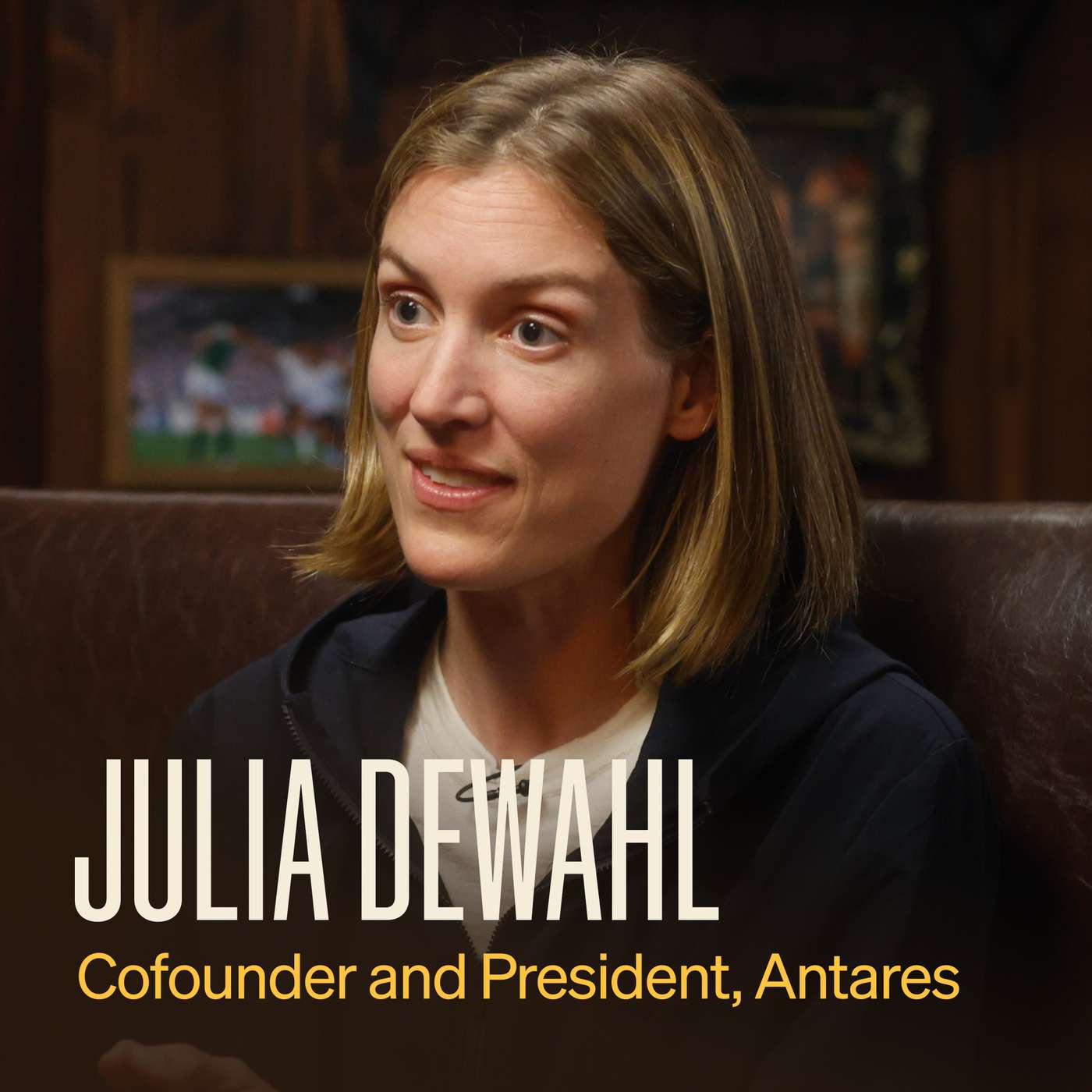
Loading summary
Transcript180 lines
- [00:01]
Host
Julia De Waal is the co founder of Antares, which is designing nuclear microreactors for the military and other off grid use cases.
- [00:08]
Interviewer
Cheers.
- [00:09]
Julia De Waal
Cheers.
- [00:09]
Interviewer
Thanks for coming by.
- [00:10]
Julia De Waal
It's great to be here.
- [00:13]
Interviewer
So you started out at first opendoor and then SpaceX. What did you learn at each one of those that you took to Antares?
- [00:21]
Julia De Waal
Yeah, sure. I think one of the big things is always about customers, right? I mean at the end of the day, this is why you build a business at Opendoor. A lot of us were pretty young starting the business. I was one of the early employees there and none of us had ever bought, let alone sold a house. So a lot of it was like learning what that was all about. And I remember in the early days we just were working on writing the copy for the website and we're like.
- [00:43]
Interviewer
You have no idea what a homeowner is doing.
- [00:44]
Julia De Waal
We didn't really know much about this whole thing, so what can we do about that? We just went and sat outside a bagel shop for Saturday and a Sunday morning and just bought people bagels and just asked them about their processes, buying and selling a home and learned a ton and just really thought about what language they were using, what were the pain points. And that was really important to just like really get to know what we were trying to deliver on as a business. And then fast forward to joining SpaceX. After Opendoor. I joined as Starlink was coming out of R and D and into go to market. That's why I was joining, to lead that team and the business operations there. And we launch and we get our first customers. And so I invited our first customers to come join us via Zoom for an all hands. And it was honestly the first time that many of the engineers had actually heard from the words of a customer themselves about the experience. And of course everyone loved the Internet, right? The fast Internet was amazing. Rural Idaho, right? This is like a dream. But when we got to talking about the setup process, everyone kind of was like, oh, that sounds rough. They're talking about multiple Home Depot trips. They didn't know if they had to cut down trees on their property, like they couldn't get a pole long enough. And so, you know, so a lot.
- [01:52]
Interviewer
Of it was simplifying people's understanding of what would mean.
- [01:54]
Julia De Waal
People kind of didn't realize how much the setup was so painful. And it led to basically this cross functional SWAT team that was dedicated to mounting options to be sold alongside the dish. And like if you had first party or third party, we did it ourselves actually we said it's important that we have a good experience for that. Cause actually it is a big part of the experience. And so spun up a whole team. Like a lot of attention was given to mounting, which is like whoever would have thought. And I think, you know, customers, again, they're just like, they are the reason you start a business and going, you know, just bringing this back to Antares. I mean, the reason we started was to say like, the government, particularly the military, needs more energy resilience, especially for critical infrastructure. We just do so much more now in the cloud with satellites. Our missile defense sites are sitting there being powered by diesel generators still. Like, shouldn't we upgrade that?
- [02:47]
Interviewer
Okay, so albeit, what is Antares?
- [02:49]
Julia De Waal
Sure, sure. We're building microreactors, so small nuclear reactors. And we are building in particular for critical infrastructure, largely for the military. Although we do think that as costs come down, there will be an interesting commercial market too. But basically anywhere where you're off grid for sure, or you just want resilience behind the grid as it exists today, you know, cyber attacks or whatever, the grid goes down, you want backup power. It's a really great option.
- [03:15]
Interviewer
Okay. And if one megawatt is a small neighborhood, if one gigawatt is like a big nuclear power plant, like in the Simpsons, you know, what are your SMRs?
- [03:26]
Julia De Waal
Yeah, there's basically three classes size wise. The really small ones are the micro reactors. And we're actually one of the smallest of those. So we're even sub 1 megawatt. We're kind of in the hundreds of kilowatt scale. You could think of that as like hundreds of houses worth of electricity. Then you have the SMRs, which is kind of this middle ground bucket, which is an interesting kind of neither here nor there, but potentially interesting. I'm sure we'll get into kind of in the hundreds of megawatts or even 50 megawatts. And then you have the gigawatts gas and 1,000 megawatts. And that's what the current power plants are today.
- [03:55]
Interviewer
Okay, so you're a sub megawatts.
- [03:56]
Julia De Waal
So we're super small.
- [03:57]
Interviewer
I see. Okay, so you're kind of similar nuclear reactor size to be on a submarine or something like that.
- [04:02]
Julia De Waal
Smaller than that even those are like megawatt scale. So we're like, think of, think about like we're the size of a car reactor.
- [04:07]
Interviewer
Yep.
- [04:07]
Julia De Waal
Think about replacing a diesel generator that's used to, to power again, something that would be on the order of 200 to 300 homes of electricity. So it's Quite small.
- [04:14]
Interviewer
Yes. And so a big part of your focus is providing power in places where you really need that reliability. Like you're talking about replacing diesel generators. Is that kind of the design center for you?
- [04:26]
Julia De Waal
Yeah. And anywhere where you're going to enable a capability, a mission capability that wouldn't really be possible otherwise. So there's actually some really interesting space applications, potentially underwater applications, as you move to move away from like few, what they call exquisite systems to attritable systems. This is where a really small reactor can come in very handy for. You know, the submarines are obviously, you know, multi megawatt powered systems, but these could be kilowatts powered. Smaller systems underwater, but yes, anywhere where you're off grid, where today you're relying on what they call like the fuel supply chain of like bringing in fuel via helicopter or barge repeatedly. And that being a vulnerability like this is a great option.
- [05:09]
Interviewer
So you're the starlink of electricity to.
- [05:11]
Julia De Waal
Bring it to places perfectly paired. And I wish we could offer a consumer product that's not on our roadmap right now, but maybe one day like, you know, backpack size nuclear reactor.
- [05:22]
Interviewer
Why like I presume it kind of can't be on your roadmap, but why not? Is that selling to the government is much easier than selling to something that.
- [05:28]
Julia De Waal
There's so many reasons, I think that you always want to try to get your beachhead where it's like the easiest to achieve. Right. And so we believe, I believe that you know, premium power is where you need to go with nuclear. And there's sort of like there's two places for that. One is what we're doing with Antares, which is go to the military, help them with mission critical need where they're not cost sensitive, where they already pay more for power.
- [05:51]
Interviewer
Yes.
- [05:51]
Julia De Waal
And go there and support them with this like next gen better version of resilient power. Or you go and you sell. What we're seeing now, I think, which is really interesting with the hyperscalers is they have carbon commitments, they want clean, firm, they want 24,7 power. They're actually willing to pay above market rates for that and they will pay above market rates. So this premium power thing is a really interesting dynamic like where nuclear is kind of well positioned.
- [06:15]
Interviewer
What are the underwater applications?
- [06:17]
Julia De Waal
Well, it's really just think mini submarines.
- [06:19]
Interviewer
Oh, okay.
- [06:20]
Julia De Waal
Just really small systems like you know what drones are to maybe like larger missiles. That's kind of the equivalent. It's not super far along just yet.
- [06:29]
Interviewer
Got it. Okay. What does the path look like between now and producing power for the military, I guess, first in a pilot environment and then kind of at scale outside of a pilot environment.
- [06:43]
Julia De Waal
Yeah, well, you know, it's always what are the next milestones that you can do to prove your technical ability and again raise more capital to keep going with your company? I think the biggest risk often into hardware companies is you don't get far enough along technically to merit additional investment. So we're thinking a lot about our milestones for reactor development. And so next year, our criticality test is kind of the first milestone. By end of 2027, we want to have our first demonstration unit demonstrated. And what's really exciting is there's just so much good policy happening right now from the DOE and elsewhere that is supporting reactor tests and pilot programs. And so there's just like so much happening where they're opening up federal land, they're removing, starting to remove some of those like NEPA type regulations that really just hold everything up. So there is a clearer path now than there really ever has been for reactor builds.
- [07:40]
Interviewer
Oh, we'll get to the regulatory side. I have a lot of questions, but what is your criticality test in 2026? What does that mean?
- [07:46]
Julia De Waal
Yeah, it means that you're testing that you can actually start your reaction. So like you've figured out the right amount of kind of like moderator to fuel and you going critical, you don't have it continue on for a while. You don't typically have a power convergence system that's actually taking the raw energy and turning it into electricity. So it's just one of those initial tests. Can you start to put all your.
- [08:10]
Interviewer
Pieces together and when do you. The fusion guys are all focused on this producing more power than you put in. I know that's different, that's a fusion thing, but. Yeah. When do you actually produce power in that?
- [08:25]
Julia De Waal
Yeah, producing power will be like your first reactor test. It's like, can you do the whole shebang? Like you can get this thing up and running, it's producing power. And that's what we're aiming to do by the end of 2027.
- [08:35]
Interviewer
Oh, wow. That's like pretty soon.
- [08:37]
Julia De Waal
Yeah.
- [08:37]
Interviewer
What does the market look like for these small reactors? Who are you going to compete with?
- [08:43]
Julia De Waal
Well, the, the market for micro reactors is one of these ones where it's like, well, there are no microactors today on the market to just like buy and use.
- [08:49]
Interviewer
Yes.
- [08:50]
Julia De Waal
So what do you think they're going to be? Right. And so I think the first and foremost it's going to be the most critical assets where you just like cannot have them. Which is why defense is the perfect first market for it. And so it's going to be all of your critical infrastructure on every single base that there is. Obviously you'll start with the most critical of critical missile defense sites and off grid locations, things like that. And that's kind of defense. Then as you think about commercial basically you have to see where the cost curves gets you to like how cheap can it get? This is just like space, right. It's like those first expensive launches into space like that better have been a really important thing you're putting up there. Right. But now that launch cost has come down, you can start to be like oh what else could we do that can do some more stuff that's like maybe not so. So mission critical. I think we'll see the same thing in the commercial industries. Oil and gas has a lot of areas where they again use diesel generators to do things like compress natural gas along their pipelines. And they actually have carbon commitments which are really interesting that they're like sort of thinking about ironically. Right. Can they move towards some more renewable or nuclear type resources. So I think there's going to be some commercial applications there to mining for example too. Like anything that's so it's like off grid hard to power today. Really hard to get fuel into it's perfect market.
- [10:06]
Interviewer
Yes. You're probably following in the US military. There's all these controversies right now with people talking about fuel quality and fuel contamination issues in Asia. I think it is. But yeah, presumably places where you are worried about fuel availability at all times and ensuring that you constantly have access to fuel, that is the place where there will be the most pull for these solutions. That's where generators work worst versus and.
- [10:29]
Julia De Waal
You know there's a famous defense quote. I think it's unleash us from the tether fuel. Which means just like gosh, the logistics supply chain has been such just a challenge. I mean it was 50% of the. I think the Afghanistan casualties were from just logistics. And so you know having situations where you can kind of reduce that risk.
- [10:49]
Interviewer
Yes.
- [10:50]
Julia De Waal
Helps and it's a great kind of market fit.
- [10:53]
Interviewer
Yes. What you were seeing this new market for these small reactors today. Why not like why?
- [10:59]
Julia De Waal
Because why haven't had nuclear efficient technology.
- [11:01]
Interviewer
For a long time.
- [11:02]
Julia De Waal
Yeah. Why hasn't it been done? Gosh, there's so many reasons. I think we ended up. I think there was just a macro really negative climate around nuclear in general. So it impacted anything small as well, coming out of the 70s. And so you had macro forces related to just like inflation, kind of just cost of capital. People stopped building, which coincided with the environmental movement, which is extremely anti nuclear. They actually sort of conflated nuclear weapons testing with it was just like, no nukes with energy. It's like, oh, that's actually pretty different. So a lot of things converged in the 70s and then by the 80s we stopped building a nuclear.
- [11:39]
Interviewer
Okay. So you just view it as a part of the general anti nuclear swing and thus also led to, you know, the cessation of construction of new nuclear plants in the US and everything like this. Just your corner of the market also got caught up in that, and that's why we haven't ended up with them. Were there ever products available at this size range?
- [11:59]
Julia De Waal
There were, but they were pretty few and far between. Mostly test reactors, small things built. We actually put one reactor into space in the 1960s to test that out. Did it work? Yeah, for a bit. I mean, a few months. It was like, let's try to do some systems in space with power. It's important to have power in space. And I think that's a whole nother frontier.
- [12:20]
Interviewer
Obviously the US did have this long running anti nuclear bent where I grew up in Ireland, similarly, there was the exact same thing. And Ireland was very paranoid about a particular British nuclear power plant, Sellafield, that was just across the channel from our crosshairs. Yeah. Does Ireland have.
- [12:38]
Julia De Waal
I don't actually know. Does Ireland have nuclear.
- [12:39]
Interviewer
Ireland has no nuclear power.
- [12:40]
Julia De Waal
No.
- [12:41]
Interviewer
The UK does. France does. Ireland does not. And I believe it's banned and so it can't per the current rules.
- [12:48]
Julia De Waal
There's actually many states in the US that have bans as well, but they've just been falling left and right. It's so cool to see.
- [12:53]
Interviewer
Well, I was gonna ask this. The vibe has really shifted over the past 10 to 15 years.
- [12:59]
Julia De Waal
Yep.
- [13:00]
Interviewer
Why?
- [13:01]
Julia De Waal
Honestly, it reminds me of gay marriage. I mean, and if you look at the polling, the youth.
- [13:06]
Interviewer
Right.
- [13:07]
Julia De Waal
It definitely comes from youth for sure, but it's like it just kind of, you know, enough things add up and it just swings and no one ever looks back type of thing. That's how it feels. The like percentage point change we've seen in the last five to 10 years is almost 20 points. I mean, it's like 17 points or something.
- [13:21]
Interviewer
Yes.
- [13:21]
Julia De Waal
So it's 60 plus percent of people support nuclear. It's actually almost surprising it's that low in some ways. But yeah, I mean, it's Just huge public sentiment shift. And I think the kind of the old hippie nuclear testing, nuclear weapons testing folks are kind of dying out. What is wild though is I did a little activism related to Diablo Canyon power plant here in California, which was slated to be shut down this year.
- [13:46]
Interviewer
Sure.
- [13:46]
Host
Yeah.
- [13:46]
Julia De Waal
And just a few years ago, Newsom had to kind of begrudgingly say, like, oh, you know what, we probably should keep this thing on. We can't afford to have the power going out. But I listened and on some hearings and actually gave some testimony there. And it was so funny to me that the biggest organization that showed up against Diablo Canyon was called Mothers for Peace. And it's like, do you understand the irony of your name? This organization was that old, that it was related to like the nuclear cold war. Right, Totally. And it's like, gosh, we've moved on. We were joking. Because I sort of am part of this Mothers for Nuclear organization that's like, just like tongue in cheek.
- [14:20]
Interviewer
Our mothers against their mothers.
- [14:21]
Julia De Waal
Yeah, our mothers against their mothers. And it's just funny how old school a lot of that opposition is.
- [14:27]
Interviewer
Yeah. So I guess as a science advances one death at a time dynamic going on here, whereas the memory of the 1960s and you know, peak nuclear confrontation and you know, Three Mile island, all these things as all that fades, maybe it creates an environment where people can be more supportive of nature.
- [14:47]
Julia De Waal
Yeah, absolutely.
- [14:48]
Interviewer
Yeah. What was your activism around Diablo Canyon?
- [14:50]
Julia De Waal
Oh, it was just exactly that. It was like, let's make sure that this actually passes and we don't shut it down.
- [14:55]
Interviewer
But it seems there was a lot.
- [14:56]
Julia De Waal
Of people just calling and saying, hey, listen, nuclear is super safe, it's carbon free, like sensibly in California we care about these things. Like, let's support this. Let's overturn whatever legislation was done 10 years ago that said we should shut this thing down. And it did pass. So now we do still have it open.
- [15:11]
Interviewer
Everyone on progress Twitter likes to complain about the nrc. And but for the nrc, we would be living in that Jetsons vision of the future and everyone would have their nuclear powered car that they used to drive to their nuclear powered office. Is that true? How good or bad is the current regulatory environment? How much is that changing?
- [15:33]
Julia De Waal
Yeah, yeah. I think it's an overestimated headwind, certainly today. I think if you go back five years ago, 10 years ago, for sure. I mean, they hadn't licensed anything in decades. There had been nothing new. But I can't even tell you how much has changed in the last few years. It's kind of remarkable. And it's been across both the Biden and the Trump administration, which is amazing to see. I mean, the legislation around nuclear pass is like, you know, 95 to 5 type of thing. Right. It's like really, really strong, bipartisan. What was interesting to see is it started with Biden, a bunch of legislation related to modernizing and reforming the nrc. The biggest thing they did was they changed the mandate of the NRC and they said you are no longer focused just on safety because what's the safest number of nuclear reactors to license? Zero. So they expanded that. You know, you must consider the full environment, the full like civilization that's. And then just changed things around like the advanced reactor pathway, removing some of the barriers. And then it's continued on with Trump. And in fact he's sort of added even some more teeth and specificity. So right now they've changed it to you have 18 months to get your answer from the NRC license or no license. Like do you pass or not? And so like there's.
- [16:47]
Interviewer
And what happens if they exceed the 18 month window?
- [16:51]
Julia De Waal
Probably it's in the details somewhere. But the point is that like a, that these have been like declared that like timeliness is important. There's also been some leadership change which is just more reform oriented, which is great. And there's just a huge microscope on it. Right. Like everyone's watching. Like everyone knows who's now, who's submitting their paperwork and what's going to come out the other side. Another thing that happened with some of these Trump executive orders is the DOE pathways, Department of Energy pathways have been also opened and unblocked for test reactors. And so actually Antares is part of this new test reactor program which allows the DOE, alongside usually like Idaho National Lab, to be sort of your regulator as you're testing your first reactor so that you don't have to spend all this time up front with the NRC for something that you're just still innovating on. Right. And iterating on. And so that's a really nice, I think, like first step before you go through the nrc.
- [17:43]
Interviewer
Wait, so let me make sure I'm giving this right. There is now a Trump era change where we essentially for the first time ever have a second nuclear regulator where you can go the NRC path, but also there's a regulatory sandbox where you can start by working with the. And get up and running there.
- [18:00]
Julia De Waal
Yeah.
- [18:01]
Interviewer
How big is the sandbox?
- [18:02]
Julia De Waal
I mean, you know, the DOE has Always been a path. There actually technically has always been a path within the military because they license their own reactors with submarines. It's always kind of been there, but, you know, hard to navigate, not well staffed, not well known about. And now it's kind of like everyone's watching. Let's go, doe. Let's go, you know, inl Idaho National Lab, and let's make these things happen. So there's just been a lot of like, stated like, you must enable this thing. And now here's some. It's actually a $0 program, but it gives you unlimited access to staff and all these other things. And the point is everyone's watching to see how fast you can get one of these reactors through safely.
- [18:40]
Interviewer
So are you guys going the DOE route first?
- [18:42]
Julia De Waal
Yep, we are. And the DOD route, I mean to say, like, you know, the army is now also able to license its own reactors alongside the Navy, which already does. So that will absolutely be our first stop. The NRC really only license, sorry, regulates civilian electricity, so civilian power. So we actually don't need to even go there yet.
- [19:03]
Interviewer
I see, so you could be selling a lot of reactors and never go through the nrc.
- [19:06]
Julia De Waal
Well, we'll basically do our test reactors with the DOE alongside the dod, who has the jurisdiction to regulate, which is great.
- [19:16]
Interviewer
I didn't know that. So this is the rare bipartisan issue.
- [19:20]
Julia De Waal
It's a true kind of a gem.
- [19:22]
Interviewer
I can paint three clean energy futures. One is the solar and kind of regular renewables view. Casey Hanmer was just on this podcast. Solar will get very cheap. Batteries will get cheap enough such that you can go all in on solar and batteries. Maybe some other renewables in the mix, but there you go, that's it. Nothing will be able to cost compete with that. That's one vision. Another is that we will rediscover nuclear fission and we'll figure out the spent fuel and everything like that, and we'll just do what we used to do, which is build nuclear power plants at larger scale and that delivers us enough clean energy. A third view is that fusion will work and we'll actually have nuclear fusion at useful, meaningful scale of the grid. Between those scenarios, how would you handicap them?
- [20:14]
Julia De Waal
I think it's, you know, I'm going to leave fusion out because I'm not enough of an expert to know when and how that will happen. I would love for that to happen. How exciting. Right? Okay. Between the first two, you know, we do a lot of market manipulation of our energy markets and there's a little bit of like flavor of the administration. That does happen especially between renewables and oil and gas. Right. Nuclear has been a little bit actually, you know, immune to that. But so there hasn't really been almost a true market for this stuff like, like the renewable has been heavily subsidized for a while and nuclear has not been. That did change in 2022 with the IRA. There's now production tax credits for nuclear, which has a lot of ripple effects. But I think we're going to see a lot more progress with solar and batteries in particular. There is a reason, however, that the hyperscalers who are committed to their climate targets are not just going for solar farms, right? Like why are they even thinking about nuclear if solar so cheap? And it's because actually to get true 100%, 24. 7 coverage, the battery or the exc build out is massive. It is really expensive. It's on, it's like basically on par with nuclear costs. So we're not there yet. That's one thing to say. The other is that the cost of solar at the panel level is dirt cheap, right. And installing it dirt cheap. But to actually integrate it, build the transmission and then the added grid complexity where you need now these peak or gas plants to run when the, you know, the clouds come and that kind of thing like that actually has a ton of costs and it's sort of hidden cost. I think it's underappreciated certainly by like the solar maxis out there. It's real, you know, and so I think we're always gonna wanna have multiple sources of energy, right? It's like diversity is good. It's like if one thing, if natural gas prices are through the roof, like, hey, we have these other things, we have this baseload nuclear which has been just like so stable for us and I think we're gonna wanna have everything. I actually don't think there's gonna be a world that's gonna be like 100% nuclear.
- [22:12]
Interviewer
But sir, is it diversity of energy sources valuable? Because you know, the solar maximalist would say no, it's fine, solar will just take everything. And wouldn't the nuclear maximalists say just we can have a lot of, you know, we figure out how to at scale produce nuclear power plants and why do you need that gas?
- [22:30]
Julia De Waal
It's a good push if you are able to own through and through your whole supply chain. You make the panels, you mine and process the minerals, which we have like zero interest in doing as Americans. Like all that dirty work is done in China and elsewhere. If you really did all that yourself, then I could say, okay, okay, you own it, you can do it. Right now, at least you have, hey, if your natural gas pipelines get shut down, actually it's not a problem for us. Right. We're like not even an importer anymore. We're actually, we're good. This is actually the reason that. Do you know what percentage of France's electricity is from nuclear?
- [23:03]
Interviewer
It's declining. Right. But historically it's been around 70%.
- [23:07]
Julia De Waal
Yeah.
- [23:08]
Interviewer
Do you know the U.S. u.S. For nuclear? Oh, it's small, it's 5, 10%.
- [23:14]
Julia De Waal
It's actually more really 18. And everyone thinks it's below 5, 10%. It's like, when I got into this, I thought it was like 2%.
- [23:20]
Interviewer
Yeah, yeah.
- [23:21]
Julia De Waal
But anyway, my point is that France made a very, very deliberate decision to actually go to 70%, if not more at the time in the 70s, because I had no carbon resources. Right. So they didn't have the ability to say, oh, we'll just dig in our backyard and we'll be fine. And actually, uranium, while it does require digging out of the ground or whatever, is so much easier to store. It's a million times as dense as coal. Right. So it's a lot easier work with. And you know, the reason people get uptight about oil and gas supply is that it's like not easy to store. And if it's not easy for you to come by, like, you better well have like good geopolitical relationships.
- [23:55]
Interviewer
Yes, yes.
- [23:55]
Julia De Waal
So anyway, this, this world and where it's headed, I think it's, it's still going to involve multiple sources.
- [24:03]
Host
Julia's work involves managing a lot of risk. Unsolved physics, complex engineering, and a lot of regulatory scrutiny. Managing risk for an Internet retailer shouldn't be that complex, but sometimes it can feel like it. Internet fraud stewards now operate on industrial scales. They attack strategically when you're sleeping and they use AI to sharpen their attacks. Now, Stripe's defence against fraud comes from its scale. When a payment happens on your site, there's a 92% chance we've seen that exact card before. So it's easier for us to spot misuse. And we've recently expanded radar to block other kinds of fraud, like free trial, abuse, promotion, abuse and refund abuse. Stripe now processes trillions of dollars of payments each year. And every transaction on the Stripe network makes the next one safer for everyone. So you can focus on your product and not on developing a world class counter fraud division to let Radar handle the fraud. So you can get back to building your product. Go to stripe.com Radar.
- [24:56]
Interviewer
Tell me about the supply chain for nuclear fuels.
- [24:58]
Julia De Waal
Yeah, I mean you dig uranium out of the ground and then you need to convert it to a gaseous state so that you can enrich it and have the, you kind of put it in a centrifuge. It goes like, the heavier isotopes go out and the lighter ones stay in and you can pick those out and make those into your fuel. The mining part has been something that we've hardly kept alive. I mean, there was at one point like a couple of mining operations going in the US where the last 10 years or so it's been like 1% of nuclear fuel used in the US was actually domestically mined.
- [25:28]
Interviewer
And now where are the last uranium.
- [25:30]
Julia De Waal
Mines in the US they're like places like where you would think Texas, Wyoming, those sorts of places in the western states. Yeah, but we now again, like everything else have said, okay, wake up, let's actually reshore some of this stuff. So we're starting to see more uranium mining. Conversion and enrichment is still largely done overseas. And yeah, we're still buying like almost 50% of our uranium from Russia and kind of ex Soviet states. So I think it is important that we're thinking about like how do we have far more of a domestic supply chain. We have the ability to do it, we have the uranium and actually there's a little bit of Silicon Valley DNA entering the space with General Matter, which is Scott Nolan's company out of founders funds. So he's getting into the enrichment space.
- [26:13]
Interviewer
And they're a uranium enrichment company.
- [26:15]
Julia De Waal
They are an uranium enrichment company which is like real picks and shovels for a real hard Adams business to do that. But I think it's really meaningful work. I think it's really important.
- [26:27]
Interviewer
Do you care more about the mining, the enrichment happening in the US or just there has to be, you know, an independent supply chain for the whole thing.
- [26:34]
Julia De Waal
I think you just want diversity, you know, you don't want everything from one place. And I think we do want to have capability. So I think all of it should be at least partially done here and with our allies.
- [26:44]
Interviewer
How do you end up starting, Antares?
- [26:45]
Julia De Waal
Gosh.
- [26:45]
Interviewer
I mean like most people do not happen.
- [26:47]
Julia De Waal
No, no, you don't. You don't really happen upon it. I was working at SpaceX at the time when I first started reading about nuclear and it was when I was actually working on getting Starlinks into Ukraine. So after the Russia invaded Ukraine and I just started like reading more about the conflict there. Probably more than I normally would have because I was actually speaking with Ukrainians and like thinking about what was going on there. And I was a history major, so I think there was just a little bit of like, oh, geopolitics resources are important. Russia has a lot of resources. You know, randomly. My cousin is the CEO of a glass factory making like literally glasses like this. And he's like, we're going bankrupt because of energy prices. And you're like, golly, what is going on? And then I read about Germany and the nuclear power plants they were shutting off to turn on coal in a place that is like green party crazy, right? So I was like, what could be so compelling that someone would do something, you know, so counter to their own good, right? As a country, as a nation? And I had the time again, I knew nothing about nuclear. I didn't know the difference between fission and fusion. Honestly at the time. I certainly didn't know that it was a pretty big part of our grid and other things, but it just was one of those like completely under celebrated, under championed by anyone. The climate tech, climate people really weren't into it either. And so it just kind of got me curious about it and then just started reading more. Wrote a piece that I posted on Twitter. It's actually how I met Jordan, who's my co founder and he's the one who actually had the vision for microreactors for the military. And I just said, what a great beachhead. Like again, premium power, great thesis to go to market with. I just really got into the topic.
- [28:25]
Interviewer
How do you arrive at that as a beach?
- [28:27]
Julia De Waal
I think you just say, where can you go that you don't have to compete on that LCOE level against the cheap solar panels. Where do you go where there's a real need and mission assurance for something critical to the military? They will pay for that. This is also an area where they were obviously behind the Manhattan Project. They are here to help develop new technologies. And so what a great partner to have when trying to do something like that.
- [28:54]
Interviewer
Has DARPA played with this stuff at all or has it come from? It sounds like you're working with the main branches of the military.
- [29:00]
Julia De Waal
You know, we are not working with darpa mostly because it's actually not as technically risky as you might even think.
- [29:06]
Interviewer
Like they prefer things further out the risk.
- [29:09]
Julia De Waal
Exactly. Like we actually, in a funny way, like it's not even really a tech problem, you know, I mean it's hard, it's hard to build these things, but.
- [29:17]
Interviewer
Someone just Needs to know how to.
- [29:18]
Julia De Waal
Yeah, it's not novel in that way.
- [29:20]
Interviewer
That's interesting.
- [29:20]
Julia De Waal
Yeah.
- [29:21]
Interviewer
What lessons have you brought from your prior experience at SpaceX at Opendoor to building on Towers?
- [29:27]
Julia De Waal
You know, one of the things I really took away from SpaceX was just like really getting into it. It's a very confrontational culture and it's not afraid to say, like, screw your next meeting, we need to keep talking about this. And I love that I want to bring that energy everywhere I go. It's like if you are unsure about something, if you're questioning something, you should probably stop and dig into it. We had this thing called the five whys. I don't know if you ever can use that in general. It's like one of these Silicon Valley little quips, but it's like that on steroids. And I think the pausing to probe super deeply, question things, really hash things out was a big takeaway. I learned like, wow, it's really effective at getting to the right answer, at making a decision, at changing course when you need to. And so I've tried to bring some of that to Antares.
- [30:25]
Interviewer
Investors are hot and cold on hard tech, depending on when you're raising money and everything like this. Presumably there's a J curve in investing in Antares where there's definitely some R and D before you eventually start paying it back with revenues. Just how is the experience of raising money for this?
- [30:44]
Julia De Waal
It's going to get harder. I think it hasn't been hard to date only because there is interest and excitement around nuclear. There's, you know, it's also just fewer dollars in the beginning. You're kind of like honeymoon phase of all of that. I think it will get harder. I think we now the time times are ticking like it's like, okay, let's see your next technical milestones. This criticality test, obviously the full reactor end of 2027. I think it will be challenging and there are several reactor companies out there, so it's a bit of a race. I think it's gonna be fun. I mean, I wonder what polymarket would have to say.
- [31:20]
Interviewer
Several reactor companies out there, even at the end of the market that you guys are going after.
- [31:24]
Julia De Waal
Yeah, everyone has their different niche, right. I think our niche is again the smallest, the most DOD oriented. There's a lot of micro reactor companies or smr. And I'm doing this because it's like, are they smr, micro reactors anyway that are going after data centers and the data center build out, which is an amazing market. I mean Amazing. I think people will pay a lot more again, going back to the premium PowerPoint. They will pay more for power for this. Not exactly our target market.
- [31:51]
Interviewer
Right. So your niche in the market. It seems like you guys have selected a part of the market where maybe there's less competition.
- [32:00]
Julia De Waal
There are still some people going after the military applications. There always are. I mean, if you have a good idea, there's going to be a few people working on it.
- [32:06]
Interviewer
How capital intensive is it going to be to get your product to market.
- [32:10]
Julia De Waal
In the hundreds of millions? Yep. I think what we, you know, and it depends on what you mean by to market. Right. So I think our big milestones, like can you build a reactor? Prove it, turn it on, it's producing power. Then I think you can think about interesting layers of capital in terms of pre orders for your reactor.
- [32:28]
Interviewer
This is going to be my next question. When does the money arrive?
- [32:30]
Julia De Waal
Yeah, exactly. Bigger government grants. So we're kind of still in the like hundreds of thousands of single digit millions of dollars of grants that we are getting right now. But you're moving into the tens of millions of dollars R and D grants and then you want to eventually move into that kind of like program of record real dollars. There's a really interesting program right now that the army has put out called the Janus program. Are you familiar with the COTS program that SpaceX used to bring to kind of develop their first reactor?
- [32:59]
Interviewer
Not by name, but I'm familiar with.
- [33:00]
Julia De Waal
That for orbital transport system.
- [33:01]
Interviewer
Yeah, yeah, yeah.
- [33:03]
Julia De Waal
It was like the innovation basically to say like let's try something that's not COTS cost plus and let's actually do something that's milestone based and basically we'll cut you if you don't hit the milestone and it's fixed contract, we're not going to do pay you for whatever. So anyway, the army has taken that model a bit and I think used that as inspiration for this Janus program where they're saying we're going to fund up to kind of three to five companies to build their first prototype alongside us kind of at a base and then we will kind of choose a winner and we want, we want to build 5 to 10 reactors, if not more on bases. And so they're like the demand signal now is hot. And so this is going to be, this is great for our future fundraising for the industry in general. It's like very, very good demand.
- [33:45]
Interviewer
A lot of ink get spilled on military, US defence contracting. What is your experience as someone who's attempting to sell it to the military beam.
- [33:56]
Julia De Waal
I mean people are actually kind of well aware that this cost plus model is not great. The question is like, well what are the alternatives? Who's gonna go do it? Anduril has been an amazing example of that. So I think a lot of us in hard tech really look to them as, you know, what we try to emulate. Every branch of the military has these innovative arms that tell you like, hey, we want to hear about your ideas and they do actually, you can go talk to them. They're giving out grants for things. I do think everyone wants the innovation they are. And in this day and age of information everywhere, you can learn a lot quickly. They do want to work with startups so I think we'll only see more of. But you know, you have things like the government shutdown and like the pace of government is slow. So you know, you gotta just kind of, you know, be able to keep pushing those timelines again while not running out of money to be able to sort of make it through that valley of death.
- [34:48]
Interviewer
What's been hard? Harder than you expected? Building tyres? Because presumably you expected it broadly to be hard. You expected there to be a lot of technical risk, capital, intensity.
- [34:56]
Julia De Waal
Yeah, harder than expected. There's a couple things. I mean, I think, gosh, recruiting is always hard. You're up against the spacexes of the world that have just a lot more credibility. Right. When you're the no name person at the very beginning, it can be hard.
- [35:15]
Interviewer
Yes.
- [35:16]
Julia De Waal
I think there's a lot of complexity and even though I said, you know, we're making so much progress in regulation, there's still red tape everywhere. Things cost more than they probably should. You know, we spend a lot of money paying the national labs to do things like clear out a pit so that we can test our reactor and it's like we're paying for that and they're like, you know, here's hundreds of thousand dollars, here's the bill. So there's stuff that you're like, gosh, there's really a lot of expense everywhere and it just slows things down. And so I guess we were somewhat ready for that. But some of this stuff just seems silly and when you're building in software you just, you know, you don't have to worry about it. You just sit there, code and do your thing and go to go right to market. When you have to work with the real world, you have to, you know, you have to kind of play their games a little bit and you have to follow the process in some Ways. And there's not always a way kind of around it. Sometimes it's just through.
- [36:09]
Interviewer
You said there's still a lot of red tape, despite the fact that there's been the first Biden era and then Trump era improvements. If you were in charge, I don't know, energy czar, or we'll give you a role with enough powers across all these departments, what would you change? What do you think the specific improvements we could make are?
- [36:28]
Julia De Waal
If I were fully in charge of energy, I would love to see the US Government be a buyer. I think that is just like actually NASA was a buyer for SpaceX's eventual launch product. I think having the US government be a customer for nuclear would be great. And so we have this a little bit with the DoD, who is a very interesting announcement that just came out a week or two ago that doesn't have a ton of detail, but it's starting in this direction. I think it's very positive. I'm a small government person. I don't say this lightly, but I do think there are certain things, when it's national security related and things like energy resilience, there should be public private partnership. But anyway, the announcement is that the US government now wants to spend $80 billion on nuclear development alongside Westinghouse. So they've basically chosen the technology. And. And I think that's actually a good thing because you don't want to. You want to be able to build one thing and then repeatedly build it so that you're not reinventing the wheel every time. You actually have kind of economies of scale, like the learning curve that you go down from doing that. So I'm excited about that news. I think that's the type of policy I'd want to see more of. And we'll see how it goes. I mean, this is the first. This is like the biggest ever commercial nuclear public private partnership we've seen.
- [37:47]
Interviewer
And, sorry, specifically, they're buying from Westinghouse just a large amount of nuclear power.
- [37:51]
Julia De Waal
Well, it's a combination. So this is what I mean. Like, the details are a little fuzzy, but they've announced 80 billion. They've announced Westinghouse as the partner of choice. Not all those dollars are going right to Westinghouse. And that's a company that makes just the reactor itself. So there's money that you would spend on a plant or licensing fees or whatever else that surrounds that. But I think it's really positive. I think what it does is it's a catalyst for the whole industry. Right, like supply chain Workforce like people are now paying attention, like, oh, there's real dollars to be made here. There's a huge trillion dollar asset under management company called Brookfield Asset Management. And they've actually just gotten in the game as well in the last couple weeks. I'm sure there was like talk, right, to take the VC summer plant that never got completed in South Carolina and actually finish it. And so again, they now have some nice tailwinds with those new production subsidies. They are partnering with the local utility to. And again, a local utility doesn't have the risk appetite to do this themselves. Right. Or the balance sheet to do this themselves. And so there's some really nice, I think, market signal you get when the government's saying we're going to spend a billion, $80 billion on this. But I think it gets the rest of the industry moving.
- [39:07]
Interviewer
As you guys were exploring and developing the early stages of your business plan, did you consider for a product that is as tightly regulated as this, did you consider doing any jurisdiction shopping where you develop a product that you sell in Singapore or the UAE or Prospera or you know, some more favorable jurisdiction?
- [39:29]
Julia De Waal
You know, we really didn't. It felt like there was enough signal that we would be able to, you know, get through regulatory. Right. And see some positive change. There was enough basically demand signal within the US and, and it's, I don't know, we take pride in also building for our country. Right. And it feels good to be developing something for our military and our allies. So yeah, we didn't really shop it around too much.
- [39:53]
Interviewer
Yeah, yeah. And I guess the US military is a large buyer in this case.
- [39:56]
Julia De Waal
Very large buyer. The largest buyer of non commodity energy, if not all energy.
- [40:00]
Interviewer
How soon afterwards will you go to like I presume you want to do civilian premium power use cases? Like you're saying an oil rig seems like the obvious one. Ironically, it would be hard to get gas, but it would be hard to get refined diesel or gasoline to an oil rig. Does that come right afterwards or is that such a different bottle wax from a regulatory point of view that maybe it's like 10 years later?
- [40:28]
Julia De Waal
I think it's you're developing concurrently. We're talking with oil and gas already, just understanding them. Right. What do you need? What do you think you'd pay, you know, that sort of thing. So I would say it fast follows, right. A few years later. I think it's going to be such a nice proving ground if we can make it through and test on a military base, for example, and get a first reactor live and get some revenue from that. Then I think it's like open the aperture pretty broadly for what else is out there.
- [40:55]
Interviewer
There's this movement towards reinsuring manufacturing in the US and and various blockers people talk about to that between supply chain is difficult and you've talked about in the fuel context, but also supply chain for manufacturing talent and the roles that people go into in finding talent in specific areas. I'm just curious, what has your experience been of building a hard tech company in the us?
- [41:22]
Julia De Waal
Supply chain is. Yeah, the bottlenecks. Supply chain is challenging. When you need to work with nuclear grade material and no nuclear plants have really been built. It makes for a very limited number of suppliers which means costs are higher, options are just fewer. So if they're not responding to your email, well, what are you going to do? There's only one other option and I don't know, they're busy or whatever. So those dynamics are really challenging. The graphite that I brought here is actually from a Japanese company. No one's even processing that stuff in the U.S. and so you're literally going all over the world for these supplies. So that's challenging. You know, talent is challenging in the sense that there are so many options for hard tech in the LA region. Right. So you need to have a compelling mission but nuclear is compelling. So it's been challenging but not in some ways like if you want to work at SpaceX and you love space stuff and you want to be at that name brand place, we've lost you. But if you're interested in nuclear and being able to build from the very beginning, like that's a compelling piece.
- [42:25]
Interviewer
Yes, it's the Shackleton pitch of high risk of failure and that's the pitch that you're making. I like that. What trends in nuclear should we be excited about right now?
- [42:37]
Julia De Waal
So the trend I'm excited about is bringing back online these recently shuttered plants because they don't take too much money to bring back online. And we've seen a couple big power purchase agreements where you have Google partnered with I think Nextera or the Iowa based utility to bring on Dwayne Arnold which was shut down about five years ago. And then you have actually Three Mile island, the site of the infamous accident.
- [43:03]
Interviewer
Almost. Accident.
- [43:04]
Julia De Waal
Well it was an accident but it was not really a big deal. Like this much radiation came out. It was like this amount of a chest X ray. Yes. Completely overblown accident that's being brought up back online. Partnership between Microsoft and Constellation I believe. So that's kind of fun. I mean, you're seeing like, let's go take these assets that are just sitting there that shouldn't have been turned down, turned off, like, bring them back online, bring them back to life. Tons of power coming out of them and we need it yesterday, right?
- [43:32]
Interviewer
Yeah. I mean, it's so striking. The big trend in the US right now being that grid demand was flat for the longest time. Like we were completely not adding power generation, nor adding power transmission. And now because of data centers, essentially, we have this enormous boom that is just leading to things that maybe previously would have been competitive. People can't get enough of anything. Right. People can't get enough of nuclear, they can't get enough of solar, they can't get enough natural gas. And just everything is backlogged. It's really interesting.
- [44:05]
Julia De Waal
Even the natural gas turbines are backlogged.
- [44:07]
Interviewer
Totally. I mean, multiple years across all the manufacturers.
- [44:11]
Julia De Waal
It is hard when something like this goes into one of these inflection points. And to your point, like it was less than 1% year over year growth for 20 plus years and now it's like people are like estimating 5% annual growth next year.
- [44:23]
Interviewer
Totally.
- [44:23]
Julia De Waal
Oh my gosh.
- [44:24]
Host
Last question.
- [44:24]
Interviewer
What kind of culture do you want to build at Antares?
- [44:29]
Julia De Waal
Well, I think it's certainly one of excellence and I think that means, you know, delivering quality product, how you get there. I mean, there's a lot of ways to get there. You can have the combative SpaceX culture, you can have a less combative, maybe more, I don't know, writing culture. They don't write that much stuff down to SpaceX. To me, that matters less. Although I tend to be one for a working environment that is energized, positive, preferably. But I think ultimately I would be proud to be delivering on an excellent product that can be delivered to market soon. Right. And we can all go use.
- [45:06]
Interviewer
But. Okay, so you want the results oriented.
- [45:09]
Julia De Waal
Culture, that results speak for themselves in a lot of ways. Yeah.
- [45:13]
Interviewer
Well, Julia, thank you.
- [45:14]
Julia De Waal
Thanks for having me.