← Cheeky Pint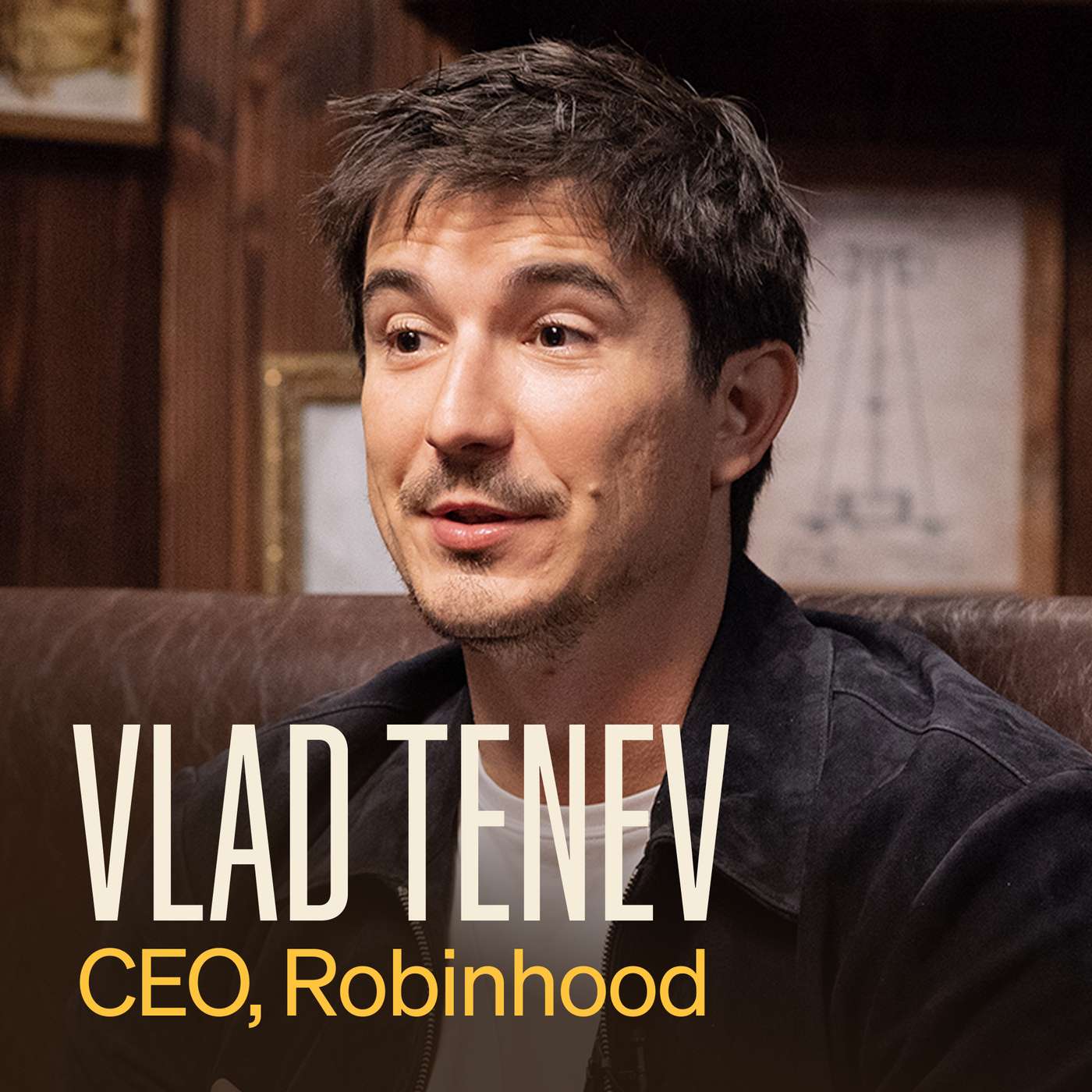
Cheeky Pint
Robinhood CEO Vlad Tenev on tokenizing private companies, changing the SEC, and Frank Slootman
01:05:50
Loading summary
Transcript224 lines
- [00:00]
Vlad Tenev
No calorie?
- [00:01]
Patrick Collison
No, I wouldn't say no calorie. It's Guinness. It's a meal in and of itself.
- [00:04]
Vlad Tenev
Nobody gives a shit about. On chain issuance. They just want a button to deliver money so that they can raise for their venture as easy as possible.
- [00:13]
Patrick Collison
Were there any moments during that saga where you're like, I can't believe I'm having this call right now?
- [00:17]
Vlad Tenev
Elon was like, you're being an asshole to the people. What you've got to do is full transparency, 100%. You know that I'd love to tokenize or otherwise make your stock available to retail.
- [00:29]
Patrick Collison
And you know that I'm skeptical. I want to see this handstand of them.
- [00:33]
Vlad Tenev
Yeah, it's fine.
- [00:35]
Patrick Collison
60 calories. So pretty light. Will we get Vlad? Mike? Vlad Tenev is the co founder and CEO of Robinhood, the company that turns zero commission trading into an industry wide phenom. He went From a math PhD to running one of the fastest growing consumer finance apps to date.
- [00:51]
Vlad Tenev
Cheers. Cheers.
- [00:55]
Patrick Collison
Thanks for coming. Good to see you.
- [00:56]
Vlad Tenev
Thanks for having me, John.
- [00:58]
Patrick Collison
Okay, so you grew up in Bulgaria, moved to the U.S. you're a math nerd, you studied math undergrad, you dropped out of a PhD.
- [01:05]
Vlad Tenev
I dropped out, yeah.
- [01:06]
Patrick Collison
Yeah. And then you started an HFT firm that kind of became ish Robinhood over time.
- [01:11]
Vlad Tenev
Yeah, sort of. I mean, that's putting was a relatively fast failure, the HFT firm. But we learned a lot, but the experience was useful.
- [01:20]
Patrick Collison
Yeah, we'll get to Robinhood, but first I want to know. Tell me about the hoarding of copper pots in Bulgaria in the 90s.
- [01:26]
Vlad Tenev
Oh, yeah. So when I was a child, Bulgaria had the unfortunate distinction of having the highest inflation rate in the world. I think in 1997 we went through hyperinflation.
- [01:41]
Patrick Collison
What was the inflation rate?
- [01:42]
Vlad Tenev
I think it was something like 2000% if I remember correctly, and maybe even higher than that. But there were a few echoes of high inflation before kind of the big moment. Ultimately, Bulgaria ended up having a lot of debts in foreign denominated currency, which creates a problem right then. If your currency devalues even a little bit, it creates this death spiral. But the Berlin Wall fell. Communism kind of collapsed in Eastern Europe. And in 1991, when I was still living there, I was four years old, the inflation rate was like 150%. So then my grandfather was actually like, this country's not going in a good place. He told my parents, you should try to figure out how to get out of here. And the good Thing was, you know, after the Iron Curtain was lifted, my dad had an opportunity to go to the University of Delaware for a master's. We were able to eventually all move over there. It was first my dad, then my mom, and then I lived with my grandparents back in Bulgaria for a bit. But then they had enough resources to send for me. And about five years in, we had this hyperinflation bout. So my grandparents, pensions, they had recently retired, went to essentially zero. I had a savings account in Bulgaria that they had opened for me. It was funny. I was in Washington a couple weeks ago for the Invest America Child Investment Accounts Initiative, and I opened up an old briefcase that my dad had, and it had the slip for my savings account, which basically showed, okay, when I was born, they put, you know, $2,000 equivalent in there, and then they added money over time. And then 1997, it was down to, like, $10. And then they just stopped adding money.
- [03:33]
Patrick Collison
Yeah, yeah.
- [03:34]
Vlad Tenev
So, yeah, pensions went to zero. My grandfather at the time, he was a doctor for the Bulgarian Maritime forces, kind of like the Navy. So he knew some people on port that had copper cookware. So he figured out he didn't have anything like Robin Hood. He didn't have any way to invest in stocks. So we had this closet in his apartment in Varna, Bulgaria, where you just open the door and copper cookware would fall out.
- [04:05]
Patrick Collison
So that was the store of wealth.
- [04:06]
Vlad Tenev
That was the store of value. Yep.
- [04:08]
Patrick Collison
This presumably must inform your views of crypto, where there's a general trend in a bunch of emerging markets with currencies that have historically seen hyperinflation, where people want to keep their money not in the currency. Because of just the experience you had with the savings account, it feels like that is a big part of the early product market fit around the world.
- [04:28]
Vlad Tenev
The surprising thing about what you said to me is that Bitcoin was originally thought of as the store of value and this way to escape local hyperinflation. But people don't seem to be using it for that or quite as much. And if you look at stablecoins, stablecoins have gotten a lot of traction overseas because you have this sort of, like, need to have US Dollars. Everyone just wants US Dollars. Yes, it has a very strong brand as a safe, stable currency. Part of that might be an education thing, but it's hard to.
- [05:06]
Patrick Collison
Yes.
- [05:06]
Vlad Tenev
To counteract.
- [05:07]
Patrick Collison
People in these countries are used to have some familiarity with US Dollars already, so you have less of a unit of account confusion and things like that.
- [05:15]
Vlad Tenev
Yeah, I think that's Right. Yeah. I think crypto has become a really good mechanism to store your wealth. But it's not necessarily the only one. I mean, I think US Stocks and a diversified portfolio of companies could also achieve the same goal. I think the problem is it's kind of lagged because the infrastructure has been so bad that it's actually quite difficult for you to get access to US Stocks if you live outside the US.
- [05:42]
Patrick Collison
I was going to ask about that. There's a strong home country bias in investing. Where Peter Levels was here and he talked about his parents buying Royal Dutch Shell stock in the Netherlands. My parents would have owned Irish bank stocks in Ireland. And so traditionally that's what people do. A lot of markets have underperformed the US and maybe there's more desire for people to own either the S&P 500 or the MSCI Global Index. And so is part of Robinhood's strategy letting people escape the home country bias.
- [06:14]
Vlad Tenev
In investing, the plan is to give you access to every asset. So eventually, over time, we're going to integrate with the London Stock Exchange, Hong Kong, all the major markets.
- [06:24]
Patrick Collison
But doesn't that mean you are escaping the home country bias? Because again, like, I would posit that people invest too much in their home country today.
- [06:31]
Vlad Tenev
Yeah, I think that, you know, there's, there's conflicting interests here to some degree. Because if you talk to the governments, they always want to encourage investment in the home country.
- [06:40]
Patrick Collison
Yes.
- [06:40]
Vlad Tenev
And I think that's reasonable because at the end of the day, the, the citizens should benefit from that is the idea. But from the customer standpoint, the best customer experience is just to get the, the best stuff. And if you talk to someone in Europe, they also would like to invest in Tesla, Nvidia. Totally.
- [07:00]
Patrick Collison
So as I think about how Robinhood broke out and became really popular, clearly a mobile first experience is a big part of us. Like again, Stripe was not the first payments company. Robinhood was not the first online brokerage, even discount brokerage guys like E Trade and stuff like that. And so when you come into a market where you're not the first.
- [07:25]
Vlad Tenev
You.
- [07:25]
Patrick Collison
Need kind of a significantly better value proposition. Having a really good mobile experience was a big part of that. What else allowed you to take so much market share versus, again, E Trade and all those other guys?
- [07:36]
Vlad Tenev
Well, I think the zero commissions was a big thing. I think that we did two things that were difficult and differentiated simultaneously. One was lowering the commissions to zero. When we started, it cost 7.95 to 9.95 to place a single trade Which I think was a problem for two types of customers. One is someone getting started with 100 bucks. I mean, if 9.95 is your commission, once you get in and out of trade, that's 20% drag on your portfolio. So that's a problem basically made it so that you couldn't get started with under $2,000. And by the way, most of them had account minimums of $2,000 anyway. So we got rid of that when we eliminated the commissions. And then the second group of people that it's a problem for is the active trader. If you're trading somewhat actively, you could be paying tens of thousands of dollars or more a month in commission fees. So when we launched, those types of customers who are really poorly served by the existing offerings just kind of flocked to it. So that was one thing, innovating on the pricing and the structure, which led to a bunch of other downstream things. So from the very beginning, we were like, in order to make this work, we have to make our costs as low as possible, which means we have to automate everything and we have to streamline all processes from onboarding customers to customer service elements, to processing payments, linking bank accounts. I mean, it was actually quite innovative for many years to do automated account approvals in brokerage. We would interview people from other brokers. When we launched, they all kind of wanted to come join us. And they were like, how do you do it? We've been trying to do this for decades.
- [09:30]
Patrick Collison
Okay. So the tech and computerization revolution had not fully hit brokerages where they hadn't the level of automation and technology, which would allow for a lower cost structure and more scale that they should have had if they were taking this transformation.
- [09:45]
Vlad Tenev
Not at all. These were all mainframe. I think a lot of them are still running on mainframe. Yeah. So there are like three technology revolutions behind. And actually that was our observation from the first business, the high frequency trading firm that ultimately wasn't successful. But our observation was, well, you've got our software and then a team of three engineers that can manage a book that's trading, you know, billions of dollars a day. So why do these brokerages have these gigantic operations departments? And why are they charging customers 995? And part of it is certainly the technology just wasn't there. So it cost them much more to process each trade. Part of it is also that there wasn't any new entrant in the space that was actually providing pricing pressure. So I think we were able to do that.
- [10:41]
Patrick Collison
I mean, it's so Obvious when you say it in hindsight, you created a sophisticated tech platform that allowed for lower marginal cost and passed that on to the consumer in the form of lower fees. And then you had a good mobile app and yeah, that's, you know, probably 80% of it.
- [10:58]
Vlad Tenev
Yeah. And, you know, mobile I thought was a big too. I think each of these things could have probably led to a good, decent sized business if we just had the best mobile app and we charged, you know, 495A trade or if we just had zero commissions. But it worked really well and the mobile app maybe was shit. I think, I think that probably also would have worked. But two of them together I think led to a outlier level of success.
- [11:25]
Patrick Collison
So the thing that allows you, or at least allowed you in the beginning to do the zero commission trades is the payment for order flow. And I find the whole narrative around payment for order flow crazy, where you'll have politicians out there on the pulpit railing against this front running that's happening and how this is kind of unfair to consumers. Whereas actually, Matt Levine has written extensively about it. It seems pretty clear that the reason that PIM forwarder flow exists is the adverse selection problem, where when you are trading, you care about who your counterparty is. And if your counterparty is King Griffin, you're like, huh, what does he know that I don't? Whereas for the kind of consumer retail order flow you have, people are very happy to trade with those parties. And so as a result, you can just get, well, you're required to get the best price, but you can get a better price by selling the order flow. Because there isn't that adverse selection problem versus what is out there on the market where you don't know. Is it someone who's like super sophisticated who knows something you don't?
- [12:32]
Vlad Tenev
Well, I would say one thing, I think the narrative got a little bit away from us. The truth is, at the beginning we didn't care about payment for order flow and we actually did not think that it was going to be a big source of revenue because it was so small. And actually for the first several years we weren't self clearing and we were relying on a third party to even route our orders. So we cleared through Apex. Apex had a vendor relationship with Instanet, which routed our orders. So if you look at the early pitch decks for Robinhood, we thought we would make money from API access and a premium subscription offering that was yet to be undefined, and margin lending. And then, you know, we saw that we had all these active Traders and then payment for order flow become became a larger and larger revenue stream. But that was really just because we got so, so much bigger, so much faster on the trading side that even this, like, tiny revenue stream became quite meaningful over time. All of the competitors offered it or took advantage of payment for order flow. If you look at TD Ameritrade, before they moved to zero commissions, their average revenue per trade was something like $12. You know, it was like, or maybe $11. $10 a bit was commission. $1 was payment for order flow. And of course we deleted the $10 bid. And when they had to match our pricing, their Stock went down 35% on a day, which was crazy. They couldn't survive as an independent company. They had to be merged into Schwab E. Trade got gobbled up by Morgan Stanley. And then the narrative somehow became, oh, they're making even more money from this other payment for order flow thing than they would have made if they were charging commissions.
- [14:26]
Patrick Collison
But that's my question on payment for order flow. How did the debate get so wacky and so disconnected from how the markets actually work?
- [14:32]
Vlad Tenev
I think the way it happened, and this was a little bit of unfortunate timing on our part. When we announced Robin Hood, our initial wait list in 2013, there was this book that came out, Flash Boys. And it was basically like, coincident with the announcement of Robin Hood, the Michael Lewis book, which it was interesting because as a high frequency trader, a former person in the space, I read that book and I was like, man, this is a sensationalized account. But basically, if you think about, he was setting this up as like a good versus evil battle. But the good people in this story were the big banks who were unable to keep up with this technology that were getting picked off by the MIT kids with all the new software, those evil MIT kids. And I was like, man, this is a amazing piece of jujitsu. How you can make like the big legacy banks that are making tens of billions of dollars of revenue feel like the victim here.
- [15:32]
Patrick Collison
Yes, yes.
- [15:33]
Vlad Tenev
But yeah, he threw this payment for order flow thing in there that I think somehow like, made you think that the victim was a retail consumer because you have to tie it in to make the story work.
- [15:44]
Patrick Collison
That kind of started the meme. Okay, that's interesting.
- [15:46]
Vlad Tenev
I think that poisoned the well a little bit around this whole thing. And it made it something that we had to contend with even from the time we launched. From the time we launched. You look at Reddit threads or hacker news threads and it's like, oh, but there's payment for order flow. I just read Flash Boys by Michael Lewis. You got to get this book if you really want to know what's going on.
- [16:13]
Patrick Collison
So now the equities part of the business and payment forward flow is one of the smaller business lines where options is bigger, interest income is bigger, maybe crypto is bigger, I don't know. And so you've created many other successful revenue lines. Interest income is a significant part of the revenue stream. Doesn't that make the business very interest rate sensitive? I mean, maybe that's just like. Yes, we're like a bank in that way and that's just a fact of life for the business. But how do you think about the fact that you have kind of now more volatility in the business? I mean, I guess you had volatility.
- [16:43]
Vlad Tenev
Previously with trading volumes, but it's more volatility before. If you sort of like zoom out in financial services, there's not so many ways that you can make money. You can make money on the transaction, you can make money on interest on the assets, whether it's cash and you're earning a small spread on that, or securities lending for securities that we hold and then for the industry that's pretty much been in and all these things that we've discussed kind of fall into one of those two buckets. We also have subscription through Robinhood Gold, which is not common in the brokerage industry. I think since we've kind of rolled that out, people have tried to replicate aspects of it. But in the beginning when we started with subscription, everyone's like, no, in the brokerage industry it doesn't work, nobody does it. And I said, well, let's just see, let's see if it works.
- [17:40]
Patrick Collison
It's interesting to me how it feels like many of the new financial services are moving towards subscription models as a way to segment the high quality customers. Essentially like Revolut has a bunch of different subscription products. You guys do. And it seems like maybe a good idea because previously banks would not do that. And as a result, I think they didn't have a way of actually segmenting the product offerings in this good way.
- [18:07]
Vlad Tenev
I don't know if it's segmentation. I mean, we have one subscription tier I know a lot of people have.
- [18:14]
Patrick Collison
Not segmentation.
- [18:15]
Vlad Tenev
I think that subscription is more of a. There's a loyalty element to it which is a little bit more psychological.
- [18:24]
Patrick Collison
People feel like they've invested in this product and they want to use it.
- [18:27]
Vlad Tenev
Exactly. So our general flow is someone comes to Robinhood and usually they come because they want to buy stock or they want to buy some crypto. There might be some other reasons, but those are like the simple dominant ones. Then we tell them about the Robinhood Gold subscription and we make it clear that that's basically a no brainer. You get like eight things and they might not be interested in each of those eight things, but then they become a Robinhood Gold member. And then I think the natural tendency is, I'm already a Robinhood Gold member. As long as I'm peripherally aware that Robinhood offers a product in the category that I need. I'm going to check that first because I feel like I'm already investing.
- [19:11]
Patrick Collison
You still want to get use from the bundle that they have purchased?
- [19:13]
Vlad Tenev
Yeah, I want to get use from the bundle. I want to get a good deal. And if we can communicate that if you're a Robinhood Gold member, you don't really have to think about anything. You should just assume that you're getting the best deal in the market. Then I think you get Amazon Prime Costco effect, where that just becomes your go to place for financial services.
- [19:36]
Patrick Collison
You have investing. You have now the card with Robinhood gold and the 3% cashback.
- [19:41]
Vlad Tenev
Yes.
- [19:42]
Patrick Collison
Do you at some point essentially become people's primary bank account or primary financial account, however you want to call it, where they get their paycheck deposited there and then they have a card that they can spend that money on or they can go invest it. But it seems like you have a lot of the ingredients already to become people's consumers. Primary financial, which again, I would characterize as the place that they're getting their paycheck deposited.
- [20:05]
Vlad Tenev
Yeah. We've been thinking about this for a while and we're launching Robinhood Banking actually in the coming months.
- [20:12]
Patrick Collison
Oh, that's cool.
- [20:13]
Vlad Tenev
Yeah, we announced that at our Gold event a couple of months ago with a few innovative features, including cash delivery, which I'm very excited about.
- [20:21]
Patrick Collison
The armored truck rolls up to your house.
- [20:23]
Vlad Tenev
Yeah. Or the small Tesla model.
- [20:26]
Patrick Collison
I want an armored truck that's a better aesthetics.
- [20:29]
Vlad Tenev
Armored truck. We would have to do the armored truck if you want a delivery of like $250,000. Yeah, it's very expensive. For the $100 to $200 average ticket charge for ATM transaction.
- [20:40]
Patrick Collison
Yeah. Yes. Okay. So you are doing consumer banking and the features that you think are important for that are. Cash delivery is one. What else?
- [20:48]
Vlad Tenev
I think having a good high apy. I think also there's an opportunity to make it really easy to switch from one bank to the other. I think part of the reason it's hard to make it as a bank that doesn't cater to the low end is you have to move all of your stuff from your existing bank to the new one. And you've got a lot of bills, you have direct deposit from your paycheck. So if we can make that process frictionless, if you can just push a button and we take care of everything, that's cool. I think that would be really powerful.
- [21:24]
Patrick Collison
And sorry, how do you press that button and take care of everything? Like have you built migration software from other banks or what does the button do?
- [21:32]
Vlad Tenev
Yeah, so it's not out yet, but what it will do initially is it's kind of like a lot of custom migration software that links into your payroll providers and things like that. But over time, as these AI models get better and better, you should think of it as like your family office cfo. Right. And you don't have to do all of the migrations for you. You just call this person and then they kind of like deal with it. I think there's no reason we can't deliver that experience within the next one to two years.
- [22:05]
Patrick Collison
Yes, yes. Oh, do you have any funny stories from the Gamestop saga? You must have had some just surreal moments in there that make for a good memory.
- [22:14]
Vlad Tenev
Now type 2 fun, I guess to come up with something maybe a little bit more interesting that hasn't been reported on too widely before. I think everyone, most people that I guess follow know about the capital requirements and the regulatory stuff. But I think one of the interesting things was back in 2020 when Covid started and there was a huge influx of retail investing. I think one of the things that differentiated Robinhood was, was that we were giving free stocks to people and we still do this. But it was a great way to get started. You get your free stock, if you refer someone, it was kind of bi directional and you get one share. Now, one of the stocks that was actually very popular at that time was GameStop. So if you joined in 2020, there was a good chance that GameStop was the stock that welcomed you to Robinhood. And we had millions of customers joining in 2020. And so in hindsight, this whole movement and a lot of people are still angry at me. As I could tell, every time I talk to another journalist or anchor from a channel that I haven't been on a bunch of times, the first reaction I have is, whoa, you've got a lot of fans that are all about GameStop. Maybe I should spend more time with you. To some extent, that whole thing wouldn't have happened without us. Like, we made possible this whole thing. So I feel like there's a lot.
- [23:47]
Patrick Collison
Of long pressure on the GameStop stuff.
- [23:50]
Vlad Tenev
I wouldn't even put it on the technical market aspect, but I kind of feel like these people's father, in a sense. Right. You know, I just. Psychologically, I feel like they grew up with a lot of people.
- [24:02]
Patrick Collison
Their first GameStop share.
- [24:03]
Vlad Tenev
I think it's time for. Some of them are angry. They've left home, they've gone out in the real world. We've grown, too. So I think it's kind of time for them to just come home. I think it's enough rebelling.
- [24:14]
Patrick Collison
Yes, yes. But were there any moments during that saga where you're like, I can't believe I'm having this call right now. I can't believe I'm in this.
- [24:22]
Vlad Tenev
Oh, yeah, yeah. The whole thing was also very weird. Cause it was all remote. And at that time, it was sort of like one year into Covid, and I, at least was itching for some real human contact. I think it was maybe two days after the GameStop, the trading restrictions. It was like Saturday or Sunday. And one of the really cool things was my investors, my friends, they were calling me, they were offering help. A bunch of people that probably wouldn't have given me the time of day were offering to get on calls and help me navigate this whole situation. Marc Benioff was very nice. Mark Zuckerberg. I never talked to Mark Zuckerberg, but he's like, hey, maybe I can help you with this thing. I've had my share of PR issues. We workshop some stuff.
- [25:13]
Patrick Collison
So these were people reaching out to be supportive.
- [25:15]
Vlad Tenev
Yeah, Elon Musk connected with me, too.
- [25:18]
Patrick Collison
That's pretty nice.
- [25:19]
Vlad Tenev
And I was always a big Elon Musk fan, early Tesla adopter. So I think I got connected to Antonio Gracias through one of my investors. And he was like, well, I can help you with this. You know, you're probably going to get asked to testify before Congress. You should try to see if you can get out of that. Ultimately, I didn't end up getting out of it. So that was a great conversation. He was very helpful. And then he called me back 10 minutes later, and he's like, I've got Elon here. He wants to talk to you. And Elon was like, very intense. He's like, you know, you're being an asshole to the people. What you've got to do is full transparency, 100%. Put it all out there, play by play, full transparency. And so then he was doing this clubhouse. I don't know if you remember it. It was his.
- [26:10]
Patrick Collison
Yeah. The Vlad the Impaler clubhouse.
- [26:12]
Vlad Tenev
Yes. So that was like a scheduled thing with Sriram and Aarthi on that Good Times show. They were like blowing up at the.
- [26:21]
Patrick Collison
Time, back when we had scheduled clubhouses back in that period of the pandemic.
- [26:24]
Vlad Tenev
Yeah. So everyone was very, very excited about this. And so I text them after my calls like, I've got this crazy idea. How about I just go on the clubhouse and we lay it all on the line. That was a spur of the moment decision to hop on that 1am clubhouse, but I think it ended up being quite good.
- [26:41]
Patrick Collison
Yeah, yeah. So as we talk about this kind of Gamestop saga, professional investors say this. The rise of retail and their increased relevance has really changed the investing business. What's your view on that or do you have any kind of perspective from your seat? It's just interesting to me, as you hear people who run hedge funds or people who are professional investors, that it's just. It's different versus five or ten years ago.
- [27:06]
Vlad Tenev
Yeah. One of the values that we had on the Robinhood website from the very beginning was the importance of individual direct participation in the markets. We kind of had this feeling that everything was getting a little bit abstracted. Right. It's like you're not investing in a company, you're investing in some retirement fund or pension fund and then that's being handled by an asset manager and maybe they're putting it into an etf. So you're probably four steps removed from actually investing in the real company. And I thought that was kind of a degenerate case when you think about it, because, you know, you have all sorts of weird things happening. Like something happens with tariffs, and now suddenly, you know, a stock like Palantir or something that's completely unrelated to tariff action is taking a huge hit. And you can kind of understand it when you go through this indirect thing. Someone's making a macro decision, they're rebalancing their portfolio. And these individual companies that maybe have nothing to do with it or just kind of a collateral damage. So I think as we were going to this more abstracted world, the signal of, like, I'm buying this stock because I believe in this company and I think their future prospects are very good, was getting more and more diluted. And I think retail provides a counterbalance to that. I think that's why recently with the whole tariff saga, retail ended up doing quite well because. And I think sometimes this is criticism, sometimes it's kind of praise. But retail's known as dip buyers, right. Because they're like, oh, well, this stock is at a discount. I believe in it, I'm going to buy it. But I think they end up looking quite smart. Right. Because they take advantage of this macro headwind that ends up disproportionately impacting stocks that really don't get harmed from it. And then I think when that stuff washes out, they've ended up benefiting disproportionately.
- [29:06]
Patrick Collison
Yes, yes.
- [29:07]
Vlad Tenev
So, yeah, I'm a fan of it. I think more direct ownership is generally healthier and less kind of like stacks and stacks of misdirection.
- [29:15]
Patrick Collison
Do Robinhood users vote their stock ownership, like in the proxies?
- [29:21]
Vlad Tenev
They do. I mean, they have the ability to.
- [29:24]
Patrick Collison
Because, I mean, that seems like a good trend where it's been much decried, the fact that everything's in index right now. And then you have ISS and the shareholder services companies where you vote, a very small number of random firms making recommendations on how mutual fund managers should vote versus people directly making the voting thing.
- [29:45]
Vlad Tenev
I think there's a lot of people, including us, that are keen to figure out how to make that a bigger thing.
- [29:50]
Patrick Collison
Yes.
- [29:51]
Vlad Tenev
I think there's two problems with it. One is that most proxy votes are just not super interesting. Like, if you look at it, it's sort of like incomprehensible things that don't really get retail very excited. I mean, if there's some kind of like proxy war and voting, the CEO.
- [30:11]
Patrick Collison
But it's usually not that. It's usually something, it's usually not that. Ye.
- [30:14]
Vlad Tenev
Maybe you'll get like one per year or one every two years. The other thing is the sort of like decision to vote on something versus just selling the stock. So as retail, you have the option where you can just sell the stock and in some ways that can be an easier outlet for the feeling that you're not happy with the company.
- [30:34]
Patrick Collison
Yes.
- [30:34]
Vlad Tenev
Whereas if you're a fund manager, you're in that stock because you don't have a choice. You're subject to some algorithm that says you have to buy it and then you end up accumulating so many of the shares. But you can't just sell easily. So that's why those guys are particularly motivated to vote, because that's actually their only outlet to expressing a point of view about the company. So I think in order for voting to become bigger, we have to solve both of those problems. It might be possible if you make it more delightful and if you incentivize it to solve the first one. But I think you're competing with users being able to sell the stock, which is a. A powerful alternative.
- [31:15]
Patrick Collison
Yes, yes. Should I go first?
- [31:20]
Vlad Tenev
So 1527, 1227.
- [31:22]
Patrick Collison
Okay. If we think about who owns companies in America, there's insider ownership, there's ETFs, there's direct retail holdings, there's mutual funds and hedge funds. Maybe you merge those, you know, lump those last two together. But those are kind of the way in which stocks are held. Where is Robinhood taking share from? Like, are people taking dollars that they would have invested in a mutual fund and investing it instead directly in companies? Is it new dollars coming into the stock market? I'm just curious how I should think about that mix.
- [31:52]
Vlad Tenev
Yeah, and it's been a while since we've done this analysis. I think the last time we did it, we found that it was mostly new dollars coming in. Like that money that customers are investing would have very likely been spent or consumed in some way. And then, you know, maybe at some point someone's investing it, but. But not that retail investor. Which is why the whole gamification narrative kind of rubbed me the wrong way from. From the beginning, because it's like, oh, are you making it too easy? Because for a while I was like, that money would have just been spent. Yeah, like, that would have been spent on entertainment. It would have just been. People were buying trinkets on Amazon. This is like we're taking money from the spending bucket and moving it into investing. Now, of course, over time, as we do more and more, we're helping you with your spending, we're helping you with your retirement. So it's becoming, like you said, more comprehensive financial services company. But yeah, at least at the beginning that was always like my irk with the gamification thing.
- [32:55]
Patrick Collison
Yeah, yeah. But presumably part of what triggers those narratives is it feels like every few years there's like a Robinhood headline around zero day options or super bowl contracts or whatever, or the stuff that's on kind of the more speculative end of the investment market. And that's what ends up causing these narratives, right?
- [33:13]
Vlad Tenev
I think that's true. Although. Well, you're probably right. Although I think the narrative originated well before we had any of these things. I think it actually originated right when our zero commission model became universal. So it was end of 2019, everyone dropped commissions to zero. And then I think before then, the answer for why Robinhood was successful was pretty simple. It's like, oh, they're not charging commissions. Everyone else is. But then the industry matched us, and in 2020, we grew our market share at an accelerated pace, and the business itself grew 3 to 5x. And then the story for why Robinhood is successful became a little bit more complicated. It's no longer the commissions. Maybe it's a better product. But saying it's a better product is not as salacious as saying, oh, this gamification, they gamify and it makes it much more nefarious. So I think the media kind of ran with that narrative because it was more effective.
- [34:18]
Patrick Collison
Yeah. Okay. So you want to tokenize private companies. I have a lot of questions.
- [34:23]
Vlad Tenev
Oh, yeah, yeah, let's talk about that.
- [34:27]
Patrick Collison
So, first off, how do you actually do it? Because aren't you kind of nakedly short the position where you owe the customer the appreciation of the underlying company, but you can't guarantee that you're going to be able to get your hands on the stock because it's a private company? And so how do you actually mechanically manage that?
- [34:47]
Vlad Tenev
Yeah. So first, before we tokenize it, we have to make sure we have the underlying stock or exposure if there is no stock, whatever the equivalent is that we're giving the customer. So in all cases thus far, which is the tokenized public stock, where it's easy, and also the SpaceX and OpenAI giveaway that's backed by holdings that Robinhood has on the balance sheet, doesn't that.
- [35:16]
Patrick Collison
Mean that you're then limited in the rate in which people can come into these positions? Because if you get a billion dollars of interest flooding in for OpenAI, you have to go acquire a billion dollars of OpenAI stock, which you might not be able to do at the drop of a hat.
- [35:30]
Vlad Tenev
Yeah. So there's a similar product that we have called IPO Access. And the way IPO Access works is kind of a similar situation. Retail expresses interest, we collect it. Typically, it's like massively oversubscribed. And then the company hands us out. Most of the time, they don't give us very much. Other times, if they like us, if they like the idea of retail, they give us a little bit more. We've had some IPOs that customers have wanted over the years, so I think it's a good offering for us. But generally speaking, we don't fill the retail demand. It's massively oversized.
- [36:13]
Patrick Collison
I see. So there are cutbacks. And so you have the concept of there's only so much allocation that we can grant here.
- [36:18]
Vlad Tenev
But we are thinking about this and there's a way to. It's kind of a chicken and an egg problem. It's like, do we collect the retail demand first? Do we get the supply?
- [36:28]
Patrick Collison
Yes, yes.
- [36:29]
Vlad Tenev
And I think the one of our strengths is we have a large balance sheet. So we have some flexibility here.
- [36:35]
Patrick Collison
Yes. You can act as an underwriter or.
- [36:37]
Vlad Tenev
A venture fund, you know, in the private sense. So we're thinking a lot about how to do this, you know, that I'd love to tokenize or otherwise make your stock available to retail.
- [36:48]
Patrick Collison
And you know that I'm skeptical and I guess a number of skepticisms, but one of them is we have decided at a policy level as society. Thus there's a certain set of disclosures and regulations that companies selling stock to the public should be subject to. And so, you know, they need to release their quarterly financials in this way and they need to make these attestations. They need to run in a certain way and all these things. And so don't you end up just end running around that and having regulatory arbitrage where private companies get to act as public company or get to sell stock to the public, which is not something that we want to have happen.
- [37:30]
Vlad Tenev
Yeah, I disagree across a few axes. I think these rules, these public company disclosure rules which were created, everyone agrees.
- [37:40]
Patrick Collison
That we should improve the public company rules.
- [37:43]
Vlad Tenev
Yeah. But I think that's very, very hard. I think once a process gets to a certain level of sophistication, you basically have to like, it's very, very hard to just sort of rip it up and make it efficient again. And I think there's two things working against companies going public more. Right. One of them is the process and the cost of going public have started to outweigh the benefits in a lot of cases. I'm sure you guys probably experienced that directly. And I'm one of the cases where I think the benefits outweigh the costs actually, because my entire business.
- [38:20]
Patrick Collison
Exactly. You are a public stock trading company.
- [38:23]
Vlad Tenev
But for you guys, for many companies it's probably a little bit more of a nuisance, at least now. The other thing is it's just easier to raise private capital. You can get infinite private capital. And the only thing that would maybe compel you to go public is restrictions on number of shareholders, things like option grants, kind of these minor technical things. And you look at retail. So you gave like a retail protection argument. Right. Which is that you don't want retail investors getting into Things where they don't have like the full disclosures and information. What I tell you is that retail investors are have the unrestricted ability to yolo into meme coins. And it's kind of a silly juxtaposition to say any meme coin is okay, open season, there's hundreds of thousands of them. Put however much you want into this. But SpaceX and OpenAI and Stripe are too risky. I think there are problems with disclosure and I think the origin of these accredited investor rules, the thinking behind it is okay, if you have a million dollars, you can hire someone, you can hire a trained professional to think about this for you, which confers an element of protection. But now you have AI, you have all these tools that give intelligence and data basically for free to you. So I think they do need a rethink and I think we should figure out how to safely give retail investors access to these names, which are some of the most innovative companies. And I think we can handle the disclosure elements fairly neatly actually.
- [40:08]
Patrick Collison
How far do you want to go with this? Should Chick Fil a be tokenized? Should a family farm in California be tokenized? What is this universe of companies that should be tokenized?
- [40:19]
Vlad Tenev
I think there's two things that that are interesting. One is late stage privates and I think the customer base is a little bit different because late stage privates is more like employees that are looking for secondary. So you as the founder are probably not the person that's championing for that unless you really like retail access. And some people believe in that very, very strongly and they're excited by it. But I think that's kind of the late stage private opportunity. And then there's early stage, which is almost like capital as a service. And I think there's some talk about on chain issuance and oh, this will never work without on chain issuance. I think that's all bullshit. Nobody gives a shit about on chain issuance. They just want a button to deliver money so that they can raise for their venture as easy as possible. And you know, if blockchain technology is the easiest and most direct way to do that, then it'll win. But yeah, nobody's like buying on chain issuance at the earlier stages. They're just worried about growing their business.
- [41:27]
Patrick Collison
So you would like to see this as a tool for capital formation where startups are able to raise money in this way.
- [41:35]
Vlad Tenev
I think that's the answer.
- [41:35]
Patrick Collison
We have seen countries play with frameworks for this, like equity crowdfunding in the uk, some frameworks around that. And so that there are.
- [41:43]
Vlad Tenev
It's been very effective in some cases. I mean, it's still a little clunky and, you know, it's limited to that market. But Revolut, for example, did, I think, multiple equity crowdfunding rounds in the earliest stages, which ended up working quite well for those.
- [41:59]
Patrick Collison
Yes, yes.
- [42:00]
Vlad Tenev
What about. Let's talk about Stripe. Have you thought about whether there would be some mechanism where we could either tokenize your stocks or make it available to retail? I can present a couple of options to you. A menu of options. I have a menu of options. One is obviously we can tokenize it directly. The other is you can put it in a diversified fund a little bit.
- [42:28]
Patrick Collison
Less expensive, less price action, essentially.
- [42:31]
Vlad Tenev
Yeah, but price action would be sort of like obscured because there would be five companies, let's say.
- [42:40]
Patrick Collison
I think.
- [42:43]
Vlad Tenev
You seem excited.
- [42:44]
Patrick Collison
Exactly. You can tell I'm incredibly excited. There's multiple things. One, again, we do not sell equity to the general public today. And I think our view, just as a practical legal matter, is that the SEC takes a dim view of that. And so that's one set of obstacles. But then the deeper one is just that Stripe's not a capital consumptive business. We're not out there raising many billions of dollars to build out, presumably more data centers.
- [43:26]
Vlad Tenev
Million GPU data center.
- [43:29]
Patrick Collison
Exactly. And so there are these highly capital intensive endeavors that as a result, it probably does make sense to go out and raise from kind of the deepest pools of capital. Stripe is not that it is a pretty capital light business. And so the current set of owners, if you leave aside kind of early investors, are employees. And we kind of like that model. We like the idea that it's owned by the set of people who are building us and creating the value. And then we've solved the employee liquidity question through tenders. And so I think it would be a solution looking for a problem, kind of.
- [44:04]
Vlad Tenev
But what the problem is normal people can't get access to it. Right. So what if the tenders, instead of being purchased by institutional venture capitalists, could be a little bit more democratized?
- [44:17]
Patrick Collison
I'm never that sympathetic to that argument. The main reason is just if you look at the underlying ownership, it's normal people through a different lens. And so who are the LPs in a company like Stripe? It's generally collagen diamonds, it's Calpers. It's pretty broad ownership underneath. And so it's not. When you're saying being owned in a diversified vehicle, that's essentially what Stripe is today. Where the underlying owners that are not people who kind of work at the company or have worked at the company, it's generally funds and those funds are generally people's money managed in some way. I mean, we also have a few kind of mutual fund owners or something like that. And so it actually strikes me as a pretty sensible ownership structure. The other thing that we're kind of getting into in these discussions and kind of when you announced the OpenAI tokenization, it kind of struck me as a prediction market on the future of a specific company. And I'm curious, you're getting now more into prediction markets. I'm curious what the world looks like where prediction markets become much more relevant, because that's one of the biggest changes of the last five years.
- [45:27]
Vlad Tenev
Yeah, I think prediction markets are awesome. It is fundamentally a little bit different than this. I mean, we'll get into the prediction markets thing, but yeah, one of the criticisms that maybe the tokenized stocks or the stock tokens offering has had is while these are just counterparty swaps with, with Robinhood, but it's not exactly that because they are backed by the underlying asset. So in a sense, if you think about stablecoin, it's the, it's the same mechanism. I mean, there's, there's different paperwork around which we can, we can debate.
- [46:04]
Patrick Collison
You have, oh, no underlying pot of.
- [46:06]
Vlad Tenev
Assets, but yeah, you've got like a bucket that you put some stuff in and then you put tokens against that. Yeah. And that becomes a tradable instrument on blockchains. So I actually don't think there's any criticism that you can apply to stock tokens that doesn't apply to stablecoins. Like, stablecoins have sort of like crossed the Overton window where nobody's really talking about these things, but I think effectively from, from a practical process standpoint, they're identical. Prediction markets, to your point, are like derivatives in the ultimate sense. And I think what's exciting about prediction markets is not just the fact that customers can trade them, although that is great for us and it's been a growing business, but also that there's a use case that's mass market outside of trading. You can just look at it and it becomes like an alternate source of news. That's why I resonate with this idea that prediction markets are truth machines.
- [47:09]
Patrick Collison
Yes. Where do you use prediction markets outside of elections to get news?
- [47:13]
Vlad Tenev
I mean, I was at Wimbledon a couple weeks ago and we had a great Wimbledon prediction market. And there's a Bulgarian tennis player who I happen to know a little bit Grigor Dimitrov, I don't know if you saw this match. He was playing Jannik Sinner who ended up winning. Now, Grigor Dimitrov was up two sets to zero, right? And he was actually winning the third set. So he was gonna, you know, he was gonna clean the match up. And then you look at the prediction markets, I think the time it was like 55, 45. So it was very, very close, right? Anyone who was like a casual observer just watching the score would be like, it's gotta be 95.5. Like this is just. Nobody ever comes back from this. But it was like pretty much even. And I think that's interesting. I think that the score itself doesn't tell you the full information. There's all sorts of information like injury history, prior experience that if you sort of like tie it into one number, becomes a useful prediction. I remember watching the Jake Paul, Mike Tyson fight as well. And if you're watching the fight, I was watching it on Netflix at the time. It was like the third round and they were like, oh, Mike Tyson kid win this with one punch. It's very, very close. They were trying to keep you entertained. So you keep watching it. You look at the prediction market. I think I was looking at Poly Market at the time it was like 92% Jake Paul. So I think it's broadly applicable. I think you can also look at it for these one time events. The Pope one was very popular. There's a lot of AI prediction markets, which I'm personally very keen on. When is AI going to achieve different milestones? So sometimes, at least for me, I just want to know what the answer is, what the most likely answer to a very specific question. And you just can't get that from the news because the news has become a little bit corrupted. Because the model is to keep you engaged and entertained, which is contrary to giving you the immediate answer to the question that you're looking for.
- [49:30]
Patrick Collison
What would you change if you were running the sec?
- [49:32]
Vlad Tenev
I think Paul Atkins is great. I have a lot of confidence that he's going to do all the things that I think are important. In general, I've been pretty impressed by the efforts coming out of the administration. I know that it's difficult to say something like that, but when you compare that to the previous administration, I think they're focused on the right things.
- [49:57]
Patrick Collison
Are you thinking about the Invest America initiative?
- [50:00]
Vlad Tenev
I think the Invest America initiative that originated in private sector with Brad Gerstner. The administration kind of took that on. And I'm hugely bullish, but I don't think it's just that. I think the AI plan that came out today was, was very good. I know you and I are in the, in the, in the same chat groups that discuss that, but like to think that the US is like pushing open source.
- [50:25]
Patrick Collison
Yes, yes.
- [50:27]
Vlad Tenev
Yeah. I mean, it's just a very, very good thing. On, on the SEC side, I think private markets and tokenization are the biggest things that I care about and I think they're keen. I mean, the past couple of weeks there's been a lot of talk. The SEC is sort of like very receptive to trying to make that work. And so I'm feeling good about it. But if we end the year, or even if it happens next year with comprehensive crypto asset security tokenization framework and some solution that's workable better than what we have today about private company access, I think a full redo of accreditation, frankly, is what's needed.
- [51:13]
Patrick Collison
Again, it seems like everyone agrees that the current accredited investor regime is not that sensible. How does Robinhood ship so fast?
- [51:21]
Vlad Tenev
I think that it's just a matter of where we're focused. Let me think what the useful thing to say is without spilling all of my secrets to my competitors.
- [51:34]
Patrick Collison
No, no, please spill the secrets.
- [51:36]
Vlad Tenev
If you let me tokenize your shares, I will. I think you have to want to ship fast. I mean, a lot of people say that they want things, but then when they actually break it down into what that entails, they're unwilling to do those things. And I think you have to be confronted with the harsh reality that sometimes the things that are needed to ship fast are, are not comfortable things. Right. You have to make sure.
- [52:05]
Patrick Collison
So what are the uncomfortable things people are unwilling to do?
- [52:07]
Vlad Tenev
I mean, I think that you have to create culture with the right talent. You have to hold yourself to a really high performance bar. You have to have the right environment for people, which I think in our case is sort of like, we emphasize the in person experience. We found that that makes a big difference and I think we've made mistakes across all of these vectors that we've then had to revert, which is, I think the benefit of doing this for a while. You get to kind of try a bunch of things and quickly change. I mean, we announced we were a remote first company in 2022, and then I regretted that pretty much immediately. I was like, oh gosh, that was the wrong decision. Everyone said it was a one way door, but it turns out it's a two Way door, you can reverse pretty much anything.
- [52:56]
Patrick Collison
So are you guys fully in office now?
- [52:58]
Vlad Tenev
I think we emphasize in office. I mean it's obviously not 100%.
- [53:02]
Patrick Collison
Yeah, yeah. But it's the main way that you work.
- [53:05]
Vlad Tenev
Yeah, we do this thing where if you're a senior leader or an executive, you're five days. If you're a manager, four days. If you're an ic, three days. And I think it's good because if you're an individual contributor and you're doing work, it's very nice to know that your manager is going through more pain than you.
- [53:23]
Patrick Collison
Yes, yes.
- [53:24]
Vlad Tenev
And I think that's also a general principle for shipping fast or for motivating. I think it has to start at the top and you have to be willing to do yourself to an even higher degree what you ask of everyone else. What we do is we very much concentrate rewards with our top performers. So if you're one of the best people in the company, you get rewarded very, very well. Promotions are zeroed in on those people. I have a founders community too, which isn't just the people that report to me. I think that's the sort of degenerate case where you end up creating a group of the most important people of the company and it ends up being the people at the top of the org chart. The org chart. So we have to have systems that fight against that.
- [54:15]
Patrick Collison
So how does this founders community work?
- [54:17]
Vlad Tenev
Yeah, basically if you're in the top 150 people in the company by impact across all levels, it's a real community. So it started out as compensation.
- [54:26]
Patrick Collison
It modeled into the Apple top 100. You know, they do this event that's the top 100 people do some off site, I think once a year and again by impact and across all levels. And I think it gets a lot of noses out of joint.
- [54:38]
Vlad Tenev
I have heard about that. But I think the idea is basically that it started out as being compensation centered. So it was like, okay, if you're the best people, we have discretionary budget that we allocate towards that. But yeah, over time it's grown into an actual community where if I go through the updated strategy or vision, we get those folks together, we get their feedback, we try to incorporate. We do events, we have events in each city and we get them together for dinners. So we try to make it.
- [55:11]
Patrick Collison
Is it a way to make Robinhood as a larger company still feel like a smaller company?
- [55:16]
Vlad Tenev
When I induct people into this, into this community, I usually give a spiel which is basically like if there was a disaster, some kind of apocalyptic scenario, and we had to rebuild Robin Hood with, you know, 150 people, you would be in that group. So that's how I think about it. I think that, you know, you always have to be aware of who your best people are.
- [55:43]
Patrick Collison
Yes. You described in 2021 growing too fast and then doing the visualization exercise of what would Frank Sloopman do if he took over my company? What did you do keeping Frank Sloopman in mind?
- [55:56]
Vlad Tenev
Yeah. That was a funny exercise we had just had. It was either a bad earnings or a bad board meeting. One of the ones where you just feel, like, gut punched from all directions. So I sat with my team and I was like, well, if they brought in. It was kind of a morbid question, but if they brought in a CEO who really cleaned this place up, what would they do? And there were a few observations. I think the first thing that came to mind is Frank Slootman would be like, what is this remote work nonsense? Let's get people in the office and working. And I think it was a good exercise to figure out. I think if you made a decision, it's hard to reverse that decision. I think there's a natural sort of reluctance to not feel like a flip flopper. Right.
- [56:41]
Patrick Collison
No, totally. It's. You don't need to feel a prisoner to your previous decisions.
- [56:45]
Vlad Tenev
Yeah. And I think that's one of the things that's actually a benefit to swapping people.
- [56:50]
Patrick Collison
Yes.
- [56:50]
Vlad Tenev
Right. And, you know, if I. If I take myself out of it and I'm like, all right, I'm an independent board of directors here, making a decision about the company. One of the benefits of swapping someone out is they can just reverse all of. All of this guy's bad decisions, which they don't want to redo. But if. If you're willing to do that yourself, I think that could be.
- [57:09]
Patrick Collison
Patrick. My version of this joke was when private equity takes over a company and they're like, wow, look at what these previous idiot managers did. And there's no reason we can't say that. It's like, get a load on what these previous management did.
- [57:19]
Vlad Tenev
Exactly.
- [57:20]
Patrick Collison
Wasn't that us? Shh, shh, shh. Yeah.
- [57:23]
Vlad Tenev
People are unwilling to do that.
- [57:24]
Patrick Collison
Yeah. You can just decide to be inconsistent.
- [57:26]
Vlad Tenev
Good. Oh, good, I've got a shot. Okay.
- [57:32]
Patrick Collison
Oh, 26.
- [57:33]
Vlad Tenev
What did I get?
- [57:34]
Patrick Collison
27.
- [57:36]
Vlad Tenev
I think the other thing which was also true is, okay, there are some obvious things that we knew were the case that we were just kind of ignoring. I think the Big one for us is the active trader market. I think we noticed fairly early on, maybe as early as 2019 that we have a big active trader business and sort of a disproportionate amount of revenue was generated by relatively small group of customers and we had kind of attracted them incidentally. So we built a product targeting first time investors. We wanted to make it as easy as possible to get started with $100. But incidentally that value prop also appealed to someone who was paying the $10,000 a month in commissions and was trading quite actively. And so we attracted all these people. But then of course the market moved. Everyone matched our commission offering and we had these competitors that were building great tailored active trader experiences.
- [58:33]
Patrick Collison
So your pro offering wasn't good enough essentially.
- [58:35]
Vlad Tenev
It wasn't good enough and at first we didn't have a pro offering, it was just pro customers in our regular offering.
- [58:42]
Patrick Collison
So your pro offering is non existent?
- [58:43]
Vlad Tenev
Yeah, we didn't have a pro offering and actually there were all sorts of scenarios where if you got too active on our platform and hence generated a lot of revenue for us, we would like force you to churn.
- [58:56]
Patrick Collison
That seems bad. You're rejecting your best customers.
- [58:58]
Vlad Tenev
Yeah, we didn't have good handling and you know, our entire business was geared towards the first time investor.
- [59:04]
Patrick Collison
Yes.
- [59:05]
Vlad Tenev
And so like these customers didn't even really show up in the data. Every time we do our standard surveying process we'd be like, oh, a very small percentage of our customers cares about this issue.
- [59:14]
Patrick Collison
Yes, yes.
- [59:15]
Vlad Tenev
But so we did some very simple things first. We were like, we care about active traders. This is what's supporting the entire business. We have to make sure they're happy. It was the reverse. The more active you were, the less happy you were with the platform. When we kind of groked that it was a nightmare scenario. So I think that's another Frank Slootman thing. He'd be like, where are you making your money? It's obvious. Where are you making your money? How much are we investing? Why are we investing so much in this thing that doesn't make any money and very little in the actual core of the business.
- [59:50]
Patrick Collison
What were the non core things you caught at that time?
- [59:52]
Vlad Tenev
I think we were working on a lot of things that I think were good, reasonably well motivated, but it just wasn't the right time. For our cash card offering, probably the best example. So we had a debit card tied with money transmitter account. Yeah. Sort of similar in nature to like a cash app chime. It was a product for the paycheck to paycheck customer. Right. It didn't work very well. I mean, it worked a little bit. But like the Robinhood customer is not a paycheck to paycheck customer. Generally you have to have a little bit more than that in order to become interested in investing. Our best customers weren't benefiting from the offering. They tended to be credit primary. And once you go to credit primary, it's very difficult. You're basically not going back to moving your spend onto a debit card, generally speaking. So I think that didn't work. There were also a bunch of little things. I mean, we were peanut buttered and spread across all these initiatives. We were generally inefficient. We were functionally organized. So at that time I moved us to a GM structure and my feeling there was, I was feeling a lot of stress because everything kind of rolled up into me. All these other businesses and I had to decide which one was more important. And you know, the product people cared about the product being good. The finance folks, they care about costs for the particular product area. The engineers just cared about it getting built. And I wanted more people to feel, to get the sleepless nights of having the product not working. I think with the GMs, we got that. When we moved to GM structure and we gave full accountability to the business lines and the revenue to the GMs, it immediately improved. Because I could look around, I could see Johan or crypto gm, he's sweating. If crypto's not going.
- [61:47]
Patrick Collison
It's a individual accountability.
- [61:48]
Vlad Tenev
Yeah. And I think that's worked very well for us as well. I think the events have worked well. That's more of a recent thing.
- [61:55]
Patrick Collison
The marketing events.
- [61:56]
Vlad Tenev
Yeah. And the product launch events. You ask what's worked well to get shipping cadence. I think it's always good to have a. On top of all the other things that you need to do to make it possible. It's always good to have an event staking the ground. Staking the ground. You're either going to make it for this event or you're not. And I think that can be pretty motivating to people because everyone wants to present well. They don't want to be the folks letting down the other people in the event.
- [62:27]
Patrick Collison
We find that with Sessions, our headline customer event as well, it's very clarifying for getting products out the door.
- [62:33]
Vlad Tenev
Yeah, sure. And we started with one. I mean we started with one last year and now we're doing, you know, four plus a year.
- [62:40]
Patrick Collison
That's cool. Maybe. Last question. How's it going with Harmonic? You started a mathematical superintelligence lab.
- [62:46]
Vlad Tenev
Yeah, yeah, it's going very well, actually. Those guys have been cracking super intelligence. Not yet. Not yet. We're getting there though. I think our intelligence, we've cracked my intelligence at solving, at solving math problem problems. And, you know, I was a math PhD student, so I went to UCLA to do a pure maths PhD to study with Terry Tao. But when I was in high school, I got to like Amy level, if you're familiar with that. It's like two rungs below the International Math Olympiad.
- [63:17]
Patrick Collison
Yes.
- [63:18]
Vlad Tenev
So in the past year, we've exceeded my intelligence by a considerable margin. So I think we're on the way. Probably another 10x and we'll be at something that you can consider super intelligence.
- [63:29]
Patrick Collison
Is it a for profit endeavor? Is it a nonprofit? And like, what's the revenue model? Like, what's.
- [63:34]
Vlad Tenev
It's a for profit endeavor. We want to get really, really good at solving math problems. And the unique spin on it is that we're using formal mathematics. So we use a language called Lean. We translate natural language math into lean. And what that gives you is verification. And I think verification has been a big problem outside of the AI space. Obviously, if you're relying on AI for something mission critical, verification is important. But even in math, I mean, some of these proofs can be hundreds of pages and mathematicians have to debate in like a colloquium for years, like Fermat's Last theorem, probably good example. It took two years for that proof to be certified. So I think the verification problem is a real problem, and it's only going to get worse as the output of artificial intelligence systems becomes more and more voluminous.
- [64:28]
Patrick Collison
Why is the proof of Fermat's Last Theorem so long when the theorem itself is so short? Like, doesn't that suggest to us that it's not the final proof, that just a shorter one should be possible?
- [64:39]
Vlad Tenev
Not necessarily. I mean, if you think about what's widely considered the deepest theorem in mathematics, the Riemann Hypothesis. I mean, you can write the Riemann Hypothesis, it's like one sentence on a chalkboard. But you ask any mathematician and they're like, we're not even close. We don't even have a strategy. New math has to be invented to solve this thing. So that's sort of the Holy Grail. And that's actually what motivated Tutor and I to start Harmonic. The vision would be the Riemann Hypothesis. Yeah, yeah. To have a smartphone app with our AI model to take a picture of a statement of the Riemann Hypothesis on a chalkboard and then it just cranks it out and gives you a formally verified proof.
- [65:27]
Patrick Collison
That'd be pretty handy app.
- [65:28]
Vlad Tenev
It would be cool. Yeah. That would be a nice viral moment when all these conjectures end up going on social media. Exactly.
- [65:35]
Patrick Collison
If we were 27. Product launch event, we're launching the Riemann Hypothesis and now the Riemann proof.
- [65:41]
Vlad Tenev
Hopefully it gets some. Some retweets, you know?
- [65:43]
Patrick Collison
Yeah, yeah. Alrighty. Vlad, thank you.
- [65:45]
Vlad Tenev
Yeah, thank you so much.
- [65:46]
Patrick Collison
Good stuff.