Loading summary
Transcript300 lines
- [00:02]
Justin
Gone in 60 seconds. The case of the missing Maduro. Welcome to Second Breakfast. We're talking Venezuela.
- [00:09]
Jordan
Our first ever emergency Second Breakfast podcast coming to you the evening of January 5th. No, we did not get together this past weekend, the day after New Year's to do it. But I hope this is okay for you guys.
- [00:26]
Eric
Um, slow form Emergency.
- [00:29]
Jordan
Yeah. Roll out emergency.
- [00:31]
Tony
Yeah. So, so why the move? Why now? What's the law? I, I, I recognize it's almost quaint. It feels like referring back to ancient times or the Victorian era when you're speaking of issues of international law or chivalry or what gentlemen are supposed to do in the pursuit of statecraft. But how do you, how do you get here when you are the head of Special Operations Command, you've got a subordinate task force and you are instructed to conduct this operation under what law? If you saw the immediate reaction from some self proclaimed constitutional scholars, they proclaimed that the President has inherent authority to make or break war. And that is popular and it's novel. It is a new component of American far right jurisprudence in that the President has been declared a king. And there are increasing moves to, to validate that that the President has in the inherent commander in chief power enshrined in the Constitution. The ability to determine enemies and make moves against it. While popular, I cannot emphasize enough that that is new. That is not the way the country was founded. Decisions over moving into armed conflict were supposed to be divided by and between the Congress and the Executive. Congress determines whether or not the war exists. And then Congress executes or correction, the President executes that role of commander in chief once war is declared. But we are now well past that. And we are in maybe a third founding of the American Republic where the rule set upon which we used to rely and that we all grew up with is no longer in effect. And the operation into Venezuela and forthcoming operations against Greenland are kind of a reflection of this new order.
- [02:33]
Jordan
Oh boy.
- [02:35]
Tony
Yeah, let's just admit it up front. Like we have serious people talking about breaking NATO with military force from the United States against NATO ally. Like this isn't science fiction. This is something they're bragging about. We owe it to ourselves or to our audience to speak through it capably but beyond the future operations. And we'll get to that later. And we'll also speak about the actual tactics that went into the mission itself. There is precedent to this adventure in Venezuela. The United States has done operations like this before. Using military force to go after fugitives from justice is, is not new. The Perpetrators of the Benghazi attacks were picked up in Libya and returned to the United States to face trial in Article 3 courts. Cash Patel sort of made his reputation as a Department of justice liaison to the Trans Special Operations Command. As part of that, Maduro was brought back to the United States pursuant to a grand jury indictment that was sworn out of the Southern District of New York. There's a legal chain of culpability. It's similar to what happened to manuel Noriega in 1989. But saying that there's. President saying that it's been done before should feel like it's not substantial. And while I wind this down, is not a constitutional principle that if a court swears out or if a grand jury swears out an indictment, that the armed forces of the United States are obligated to go pursue this person, that is. That is not the law. The President is authorized to use means to defend the United States. It's absolutely true. And it's designed for forces like at Pearl harbor to shoot back, absent a declaration of war or in the Cold War, to respond to sudden and alarming provocations from the Soviet Union. There's reason for it. But coiling American military power over time, setting conditions for operations and taking a deliberate strike against a de facto head of state, is kind of a capital W act of war. And our Congress wasn't really even told about it. So that colors everything we're talking about because we are in a new era of American jurisprudence and adaptation of international law.
- [05:04]
Justin
So doesn't this make the old debate about AUMFs and the war Powers act feel quaint in terms of what we used to argue about, what most people who work in the policy world grew up on, which was, are those adequate means by which the President can be authorized to use force against a hostile enemy versus yeah, no, now they can just do it. Because Article two it is. That's where we are different. Yeah, yeah.
- [05:32]
Tony
It's a huge.
- [05:33]
Eric
I mean, it is, but there's. There's a. There's a lot of mental gymnastics that have been going on. I was talking to someone that is a seniorish officer in the, in the Pentagon and they were saying that, no, no, this is clearly. This was under the War Powers Act. And I was like, isn't that a reporting requirement? Not just something you can go. It's not a blanket authorization. Yeah, yeah. And I think that that was one of the differences, I guess. Eric, what is the cause? Obviously, the pictures of Manuel Noriega being indicted and being taken into custody in Miami Dade federal or Miami Dade court or prison system circulated all over the social media spheres. What is the alternative difference?
- [06:15]
Tony
You talk about Noriega, Maduro being picked, Maduro being picked up and brought to New York and then Noriego being brought back. There's a couple of layers. Back in 1989 when the Panama operation was launched, the then Attorney General Bill Barr, who is most most famous for helping question investigation into Russian intelligence operations against the United States in 2016, authored a memo that effectively said the United States abrogated its obligations under the UN Charter, that what the United States was able to do was to effectively ignore its treaty obligations and conduct unilateral operations in pursuit of its own domestic law. And that's sort of been a orientation of right wing politics for now. We're looking at it 35, 40 years. And this isn't purely American tension that there has been a struggle of legitimacy from the UN since Yalta. Effectively how are you going to constrain the designs of the Kremlin using this multilateral system? So acts like the Panama invasion are part of a longer sequence of steady erosion of kind of a universalist ideal that emerged in the Second World War. But going back down to the narrow components, in 1989 the Panamanian government had obligations pursuant to the Canal Treaty. The United States had a robust military presence in Panama principally to secure that canal. And quasi governmental paramilitaries had been conducting acts of deliberately targeted violence against Americans. And that is interwoven with the grand jury indictment of then Manuel Noriega. So there were a variety of different injects that went into this. And if you look at post war reflections from Bush 41 administration officials, there's also a lot of hey, people are thinking that Bush Senior is a squish. We got to do something about it. So there's a bit of inertia that led the United States to launch that invasion, which was a fairly sophisticated operation that presaged the the 91 war in the Middle East.
- [08:48]
Jordan
I like that. I like that HW being a squish thing because we have New York Times reporting. You know, let me just read the quote because this is truly one for the history books. Mr. Maduro in late December rejected an ultimatum from the President Trump to leave office and go into a gilded exile in Turkey. Eric Adams, Come on you. This is a good place. You could.
- [09:16]
Tony
Morgan Freeman flies Turkish Airlines.
- [09:18]
Jordan
You could pick way worse countries than Turkey to set Tony's Sid comment Russians. Anyway, sorry, Northern Cyprus here.
- [09:31]
Eric
The beaches are delightful throughout the mines Just ambikonos.
- [09:35]
Justin
It's actually occupied north Syria. That's the part of Turkey.
- [09:41]
Tony
Is Eric Adams there right now, soaking up the beach?
- [09:44]
Jordan
I would hope so. What else has he got to do?
- [09:47]
Tony
Roasting a leprechaun?
- [09:49]
Jordan
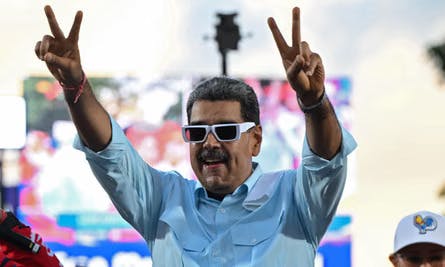
Okay, Maduro was this week back on stage, brushing off the latest US Escalation by bouncing to an electronic beat on state television while his recorded voice repeated in English, no crazy war. Mr. Maduro's regular public dancing and other displays of nonchalance in weekly recent weeks helped persuade some on the Trump team that the Venezuelan president was mocking them and trying to call what he believed to be a bluff, according to two of the people who spoke on condition of anonymity because they were not authorized to talk about confidential discussions. So the White House decided to follow through on its military threats. Now, there's a lot going on in that paragraph, and, like, who knows how real this actually was? But, like, and on the one hand, I wouldn't put this past them to just troll the New York Times, but, like, maybe, right? I don't know. No one wants to look like a Trump.
- [10:46]
Eric
It's not demonstrably indifferent from the way that Saddam Hussein acted. Like, right? As in the lead up to the Iraq invasion, Saddam Hussein's coming out and firing rifles off and wearing his little bowler cap and, you know, has his bow tie on and is putting up a big front. And it's like, hey, none of those are the things that you should be doing right now, right? Like, used to be very, very different.
- [11:10]
Tony
Especially if they're in deep conversation about, like, an authentic move to exile like that. That is serious. And if Maduro is conducting those negotiations and if he's got his Cubanos surrounding him who may not be on board with him moving into exile, he had to have some sort of read that his position was rather fraught. He had also entered into a life of crime that probably gives him other forms of exposure. So going and doing a TikTok reel of his favorite dance steps was probably not the best disposition leading to the events of the past weekend, especially after the United States had broadly telegraphed that it was moving assets into the Caribbean. Like, this was not a surprise move in the strategic sense.
- [12:00]
Justin
Like.
- [12:00]
Tony
Like, there are infographics in the Financial Times about all the aircraft that were in Agaria in Puerto Rico. Like Dan Kane hanging out in Puerto Rico, he's not there for the beaches. He is organizing activities that are going south. And if Maduro and his immediate advisors miss that, it's a colossal miscalculation. And maybe the New York Times does have a good read on it.
- [12:24]
Jordan
So that is defense. I mean, it's. People don't have a lot of reps in negotiating their, like, step down from dictator to style. Like, I don't know who your agent is for that sort of thing. Who's like, oh, yeah, I've done these sorts of deals dozens of times. Like, yeah, they're serious. We'll totally.
- [12:40]
Tony
Wouldn't it be Bob Barnett died a few months ago?
- [12:44]
Justin
Ari Emanuel, actually, probably.
- [12:49]
Eric
Probably.
- [12:50]
Justin
That's.
- [12:53]
Eric
But even profile, as we're sitting here talking about this, though, like, just to go back to Jordan, like, initially I had the same read. Like, they have to be fucking with people, obviously. But like, apparently President Trump was hinting to oil executives in the weeks prior to this, get ready, wink, wink, we're going south. It's like that just came out in the Wall Street Journal, like two minutes ago.
- [13:21]
Jordan
Like, so speaking of the hint, hint, get ready. Is now the time to talk betting markets?
- [13:27]
Justin
Yeah.
- [13:28]
Jordan
Because.
- [13:29]
Eric
Oh, God. Yeah. So apparently $400,000 somebody made.
- [13:34]
Tony
We've got a few different incidents of leaks that I think the most interesting one is certainly poly market. But we are also waiting too, I think the New York Times, Washington Post having the operation on the record and holding it. So we know that operational security was not perfect. But if you're, if you've got 150 aircraft in the sky and it's not over like eastern Syria, that's sort of hard to mask.
- [13:58]
Eric
Yeah. Even without their transponders on. Because apparently there was a, there was a comment that a JetBlue or some, I can't remember, Spirit or some airline that doesn't have a real name. Yeah, they all. Yeah. As the, as the passengers were pedaling on the wings, they. They almost hit a US Jet that was flying without its transponder rod. Sorry, I can't fly any of those type of aircraft. I have to have an assigned seat. It doesn't have to be a good one. I just have to know where I'm sitting. I get anxiety trying to get on a plane with no assigned seating. Anyway, all of that aside. Yeah. So they apparently almost ran into it. But yeah, you've got that one. You've got all the buildup. You got the New York Times sitting on the story, which also goes to. Has the Pentagon press pool thing really worked? Like, is the Hegseth Press the real takeaway here?
- [14:48]
Justin
Yeah. Oh, my God. The defense journalists had to go back and actually do their jobs.
- [14:53]
Tony
Yeah. Did anybody check the pizza meter to determine if there was pizza.
- [14:58]
Justin
No, here's the thing about that. I am now seeing like, like I don't follow a lot of like influencers on social media, but like you, you scroll through reels. Well, half of them, half of them were your clients, Eric.
- [15:12]
Jordan
So.
- [15:17]
Justin
But like I, I see people who are usually like balanced or like don't normally talk about the news but we'll talk about security or whatever going like the pizza meter is real. And it's like, no it's not.
- [15:28]
Eric
It's not.
- [15:29]
Justin
I'm going to have a stroke. Like, no it is not. I hate to tell you this, but on a Friday night people are ordering pizza in Washington D.C. and you know what they have inside the Pentagon? Like 30 restaurants, none of which are attached to a pizza meter. If there was a Starbucks meter maybe, but definitely not a pizza.
- [15:49]
Eric
Yeah, yeah, it's ridiculous. Like you go into the commissary slash lobby slash whatever you want to call the food court area, the commissary and you look around and you look around in the Pentagon and you're like, holy shit, there's like a lot of food choices here.
- [16:02]
Justin
There's a whole song about it called there's a McDonald's in the Pentagon.
- [16:06]
Eric
Yes. No wonder everybody's failing.
- [16:10]
Jordan
This is a big Cold war story, right? Because like in the center gazebo thing there was like a sandwich shop and the Soviets would freak out as they were like flying over and seeing people walk in and out because they thought like, oh, the center, that has to be like where they keep the nukes or something.
- [16:28]
Tony
It's a traditional story for cross queuing intelligence that Jordan elevated. I think it's probably an old wives tale, but it's too good to discard. But the, the idea is that Soviet satellite based intelligence was able to get photography the Pentagon and saw that at certain times of day people were congregating in and out of the center courtyard and they assessed that it was something vital. But what they didn't cross cue their imagery with was human intelligence that would say, hey, they're selling a hot dog for a buck fifty.
- [16:57]
Eric
So you have also unlike all the Soviet facilities by the 70s, you weren't allowed to smoke inside the Pentagon. So that's where everybody had to go to smoke.
- [17:08]
Tony
Yeah.
- [17:09]
Jordan
All right, back on topic.
- [17:10]
Justin
This is.
- [17:11]
Jordan
We got to actually cover it. Okay, so onto the operation itself, I think someone made a point that like Trump's been doing all this stuff and no Americans have died yet.
- [17:25]
Justin
And.
- [17:25]
Jordan
But this one was like a little more. Or is that where we should start. Maybe that's not where we should start.
- [17:33]
Eric
I think we can start with that. But I think that that's actually a very. That's an interesting point. So no Americans have died. And one of the reasons is because we have done an exquisite job and at risk mitigation. That is where the interesting part to me exists, is because this is a backwater country that, at least in the reading. And again, this is not. I'm no longer in the government. I have no fucking idea. But at least when I read what was said and I read about, like, the words and the units that they were referring to, it heavily indicates capabilities that may or may not exist within the United States government to do things like, as the president, I think said, turn off the power or, you know, black out the skies and stuff. And that's. That's very high level capabilities to put in when you're also layering on top of this. They knew we were coming. They were ready for us. It was basically him. Him getting handed off. And it's like, man, we're using a lot of really exquisite assets to protect troops. And if we're also saying that this was a walk in the park. Yeah. Maybe there's two things divorced from each other.
- [18:49]
Justin
No, you, you. You brought an F1 car to a street drag race and said, I'm the fastest man alive. That, that, that is exactly what is happening. And you can only do that so many times.
- [19:02]
Eric
Yeah. Because like, no matter what, in the end of the day, the Chinese, the Russians, I mean, others will be able to disentangle what happened and how we were able to do the exquisite things we were able to do. You only have so many shots in those revolvers before you're out of them.
- [19:21]
Justin
No, I would say also.
- [19:22]
Tony
Yeah.
- [19:24]
Justin
Of uncontested buildup. And you had basic. What was clearly a National Command Authority directive, so you had that level of assets dedicated to planning, to battlefield preparation, to execution, to Mildeck. I mean, that is, you know, that is something that is normally reserved for, say, you know, the 1991 invasion of Kuwait, not, you know, a singular special operations raid. And, you know, Justin, if you want to go into a little bit more of what that typically looks like.
- [19:51]
Eric
But yeah, I mean, like, these are very high level. The biggest thing is, and McRaven actually talks about it a lot, and I think a really good example from McRaven and probably a lesson learned, and I bet you that every special operations unit does it now is that the number one thing is rehearsals. So they're Going to, they're going to, they're going to fly the path, they're going to attack the house. They're going to have as close to the exact layout of where they think the target is going to be and they're going to run through it to the point where they could basically do it blindfolded. Like, you know, the backups are going to know it. The pilots are going to have exactly where their primary and alternate are. The most important thing in all of that, that mission command is the sequencing. When do things happen? And that is also one of the things that you start giving away in TTPS when you do things like this is how do we sequence these type of attacks? What is the thing that gets triggered first? What is the thing that happens next? Like those are things that are very hard to change out because they have to happen in certain sequences to actually have the force protection additives to the force protection that the soldiers are actually looking for or to give the element a surprise or something that the President said a couple of times, he said, oh, they were violent. They were so violent. And I think what he was referring to is probably what the special operators were referring to as they acted with violence of action, which means that they were moving very rapidly once they had their temporary overwhelming force, once they were able to secure their foothold, they moved very quickly because speed becomes part of the security at that point. The faster you're in and out, the less time everybody has to figure out what the hell is going on. When you've clicked off the lights and turned off all the phones and nobody can talk on the radio. Now you have bought a buffer space where Private Joe Snuffy, who's garden two streets over, doesn't even know what to do except for look around and maybe shoot up a couple of pop shots at a helicopter as it's flying over.
- [21:53]
Justin
Well, to that note, I think they did. I think the reporting was confirmed that one, I'm going to assume it was a Chinook. But like one bird took a hit right, like that. In roughly, I think it was like half a dozen operators presumably were. Were injured either from the bird jolting or from actual fire. It's unclear to that.
- [22:12]
Eric
Yeah, yeah, yeah. But the point is we'll never actually know that story.
- [22:18]
Justin
Exactly. Because the SEALs didn't conduct the raid.
- [22:22]
Jordan
Can we talk about that for a second? Why, why does Delta Force get the, get the call here? More Spanish speakers probably.
- [22:29]
Eric
No, no, I don't think that's the case.
- [22:31]
Jordan
That was a joke one.
- [22:33]
Eric
It's A hostage rescue situation and not a kill rescue situation. And they are the preeminent at that. But I do also think that like we are in A, let's see, 2011 was when bin Laden was killed and it's now 2026. So we're in a 15 year argument over who the fuck shot or, sorry, pardon my French, I have a bad day over who shot Bin Laden. That is still going on in social media and in media between these seals. So it's just like really enough to some degree. It's just like, guys.
- [23:02]
Justin
Although they were on standby, it seems Jack Murphy did report that they, they had one one debris.
- [23:07]
Eric
Oh yeah, I'm sure, I'm sure that.
- [23:10]
Tony
Yeah, there's also, there's an additional layer. There's reporting that they had a very adept human source, a spy and an agent that was able to provide real time tipping and queuing to the personal security detachment that was responsible for Madero. And they, they also recognized the layout of his residence at the time where he was hit and that there was a panic room installed and that they were moving very quickly in order to prevent him from getting in that. But they are also prepared to conduct a deliberate hard target breach if necessary to extract him from that. And there are army units that have a little bit more of a refined approach to effectively cutting into a safe very rapidly. So that may have gone into the selection process.
- [23:59]
Eric
Yeah, yeah. The heavy breachers that, that work for some of those units are masters at getting into hardened portals very rapidly, very difficult.
- [24:13]
Tony
Yeah, yeah. They're metallurgists and trail experts and explosives experts.
- [24:17]
Eric
Yeah, I think they said it did, they, they did it in an incredibly fast amount of time. Like had him out of that safe after it was locked. Like it, it closed down and they had him out of it pretty rapidly.
- [24:31]
Tony
But we're also going back to, you know, a broader concept that Latin America from a pure military standpoint is kind of an international backwater, that there are not robust integrated air defense systems, there are not combat air patrols. It is a violent place, but not like interstate warfare right now. I've been on the government for quite some time and even in my most recent stay, I didn't have any insight into this, but I imagine conducting deliberate operations, like to go after the Islamic State's Minister of oil or border minister in 2015 or the attempted rescue for Caleb Mueller probably had more sensitivity around to air defense than what, what transpired over the weekend. That doesn't mean it's not difficult. It just means it's it's distinct. But there was still an extraordinarily robust air package over Caracas. Like the. The Venezuelan government has been buying hardware principally for the Russians for. For decades, mostly bluster. They didn't train on it, they didn't maintain it. But this is one of those circumstances that's difficult in special operations or in very sensitive moments. These teams aspire to be perfect every time, but the opposition really only has to be lucky once or twice. And a couple of man portables, surface to air missiles or a anti aircraft artillery piece that had been named properly could have fundamentally reoriented the nature of this operation where those Chinooks goes down with 26 operators on it. And it is an entirely different circumstance. And you can be exquisite, you can be trained, you can conduct all the rehearsals that Justin described, but you can't suppress friction forever. And one, I think thematic point that we have to think about, I think the administration has been willing to be much more violent than some of the absurd claims of their ISO inflationalism.
- [26:47]
Jordan
Would.
- [26:47]
Tony
Have forecasted if they had been accurate. But if we recall back in early 2017, there was a special operations mission into Yemen to recover some communication technology for Al Qaeda in the graveyard peninsula. And a Navy SEAL died during that operation. And it sort of. That and Mike Flynn's reflexive incompetence sort of put a pause on that level of military confidence for a while. Within the administration we don't have the same feature now that I think they're seeing that they are conducting operations like in Iran or with Maduro and they're recognizing that international blowback is zero, domestic blowback doesn't matter. They've. They are writing the history and they are setting conditions for the future. So when I open the show talking about Greenland being under threat, I want to fall back on that because they think that they've got an easy button that gets them to paint the map red, white and blue in a new and interesting way. And the fact that they would end NATO by doing it is just a bonus.
- [27:56]
Eric
Yeah, I think, I think that's an interesting point. I think the thing that is different this time is during 18 after 2017 into 2018, when we tried to withdraw from Syria and Secretary Mattis basically resigned in protest to, to prevent the withdrawal from Syria. What we had is we had on the left, we had kind of a coalesce of like, hey, we have to do the right thing. Like we have to, we have to do this. We kind of help break it. We need to step by the curds. And there, there became this, we need to become involved in. In or we need to stay involved where we're involved. And you had the, the right that kind of became more entrenched in the America first side of things. What you're seeing this time is like the America first wing. I think that I saw the numbers the other day. It's like 650 strikes we've conducted since the start of the President Trump's administration.
- [28:53]
Tony
Yeah. If you count Somalia. Yeah. It's a heavy density.
- [28:58]
Eric
So 650 strikes that we've conducted in new places that we hadn't been conducting strikes during the Biden administration. We've seen an expansion in some variable ways. And then what is the pushback? The pushback has been, well, it can't come from the left in the form of, oh, we can't be doing all this. So really they're hanging on these legality arguments that aren't really getting after. Obviously they're not moving the needle in the administration. So then, like, what should the response be? To not be talking out of both sides of their neck.
- [29:32]
Justin
Yeah. So this is, I've been thinking about this a lot from a messaging perspective. Good thing. If I was working in politics right now and I suppose I never really left. The thing is, is that it's very clear that I don't think the American people don't care about the legality of it. I think because of the way the power structure is organized where you have the President's party owns both houses of Congress. Right. The American people have pretty much given up on, or at least the middle tier has given up on the idea of right now legality does not matter because there's no right. It's the same reason why you see leftist protesters only protest Democrats because they know they have leverage. There's no sense of leverage from the American people except at the ballot box to change these things. And so we have almost an entire year now until elections to go through this. I think the messaging has to be. Trump ran on this anti war message of despite what he says, the President ran on anti war. All of these strikes are conducted. And the only reason that hasn't fallen through, although if you see online commentary, some of that is even starting to fall through from the right of, hey, didn't you say we weren't going to do this is because no one has died. No one has died in these very high profile missions. Yes, we did lose, I think two or three folks in Syria from a.
- [31:01]
Eric
Well, yeah.
- [31:02]
Tony
I mean, no Americans have died there's been scores of people from Colombia and Ecuador, Venezuela.
- [31:12]
Eric
Let's push against that for a second.
- [31:13]
Tony
Just so.
- [31:13]
Eric
Because we did have Americans die in Syria. And, and when John Farmer and Stacy Kenton were killed In Syria in 2008, 18, 20, 18, like, there were calls this would not have happened if we had followed through with President Trump's withdrawal. Ex. You know, that's. That was what was said. Shannon Kent. I'm sorry, not Stacy Kenton. Stacey Kenton was my EOD tech in Syria from a prior trip who was blown up in Raqqa. But why didn't we see that call for getting troops out of Syria when that happened this time?
- [31:57]
Jordan
I think it's a visual. I think if there was a video of a Chinook getting blown up over Caracas, that would be the thing. But, you know, someone getting shot and it's not viral on Twitter. It's like, you know, a 500 word Reuters article with, with two. Two paragraph obituaries. Each is not like something that is resonant in media environment.
- [32:25]
Eric
Man, that's really dark. That, like, because it wasn't on TikTok or YouTube. It isn't.
- [32:31]
Jordan
I mean.
- [32:32]
Eric
Yeah, but it's true, right?
- [32:33]
Justin
It's that nobody. The Vietnam War had the effect because Walter Cronkite put it on tv, which was the medium by which most Americans consumed it. Right. The radio did not have that impact. CNN had that impact in 91, albeit in the positive way. Right. For Schwarzkopf and company. And now, yeah, if you start seeing these things, I think the whole AI fake videos is gonna make it a little bit harder.
- [32:59]
Jordan
I don't think so. I mean, it's like if there's a plane that blows up and it's real and there are 20Americans that die doing some random thing that no one asks for that neither party is particularly enthused about. If your name isn't Marco Rubio, then like, yeah, you know, that's, it's not going to resonate well. But let's, let's, let's maybe start looking forward a bit. You know, we have Trump talking about how on the one hand he's going to run Venezuela, but then I was kind of thinking like, remember when at the beginning of the administration he said he ran New York, but like, mom Donnie won and now he's buds with mom Dani. I mean, we've got like Maduro's number two in charge currently. Like, the guy does have a sense for like, when to cut losses. The idea that there will be like, more like. I think this is like the point of like most caring about this and now he's like had his viral thing and is much more likely to move on than like have some sustained engagement in the future governance of Venezuela. But I'm curious, kind of like, you know, ways in which like, different paths forward for like America's involvement here and how that could potentially change the dynamics.
- [34:18]
Justin
So I'll say there's probably three from the Venezuela side of things. There's basically three possible routes here, one of which is that power consolidates quickly. And I'll say quickly is a relative term, but I'll say quickly in the sense of like, there are not major reprisals, there's not a drawn out unknown. Right. There's not a beauty pageant which kind of going up in the polls of what I think is going to happen here, you're going to have two or three people that are going to compete for the President's or for the Venezuelan people's attention here and it's going to go ugly. You know, the democratic elected government that's basically been quasi in exile, but not really, just not in power, you know.
- [34:56]
Jordan
They obviously Trump's leverage right now to pick the next person, I mean, is he really going to go in again and grab the next leader he doesn't like?
- [35:07]
Justin
I think there are some people unfamiliar with military operations who think that is exactly what they can do. I think the DoD, I think Dan Cain is, is smart enough to not push for that. I think his actual leverage is that he just drops bombs or he, he chokes the country with a blockade. Right. Or gets bored. You know, and I think that was Maduro's original bet, was that he would get bored. Right.
- [35:32]
Jordan
Shouldn't have danced. He should have just shut up. Yeah, that's how you get wild anyway.
- [35:38]
Justin
I mean, hey, you know who hasn't been bothered in a while? Panama. I wonder why that is. Like that.
- [35:43]
Eric
Yeah, I mean like again, you do the, you, I hate to say this, but you do the Putin thing where you, you go and you have earnest talks about peace all the while your military is doing whatever. But you're. Oh very, I'm very troubled by the, the outbreak of violence in the Ukraine and I really want Ukraine to succeed. You do that and then, oh, we.
- [36:06]
Jordan
Didn'T even get to this, the Russia false flag thing about Putin's palace and how Trump makes a whole like stink about how this is such a grave violation. And then a week later we're doing this to Venezuela.
- [36:25]
Tony
Yeah, yeah. And we, we can't discount AI videos Or disinformation that to your point, Jordan, you're not going to be able to fake a burning Chinook, but you can, you can get idiots to have an emotional reaction to just about anything.
- [36:44]
Eric
Yeah, yeah. I mean, to be fair too, like when it comes to the, you know, the whole thing with just the sidetrack for Russia and Ukraine for a second like you have again, the Dems not knowing what their message is going to be. Werner coming out again. He's the what, the assistant head or whatever, the number two.
- [37:07]
Justin
He is a well respected member of the.
- [37:09]
Jordan
Well, I'm not trying to talk guests, ladies and gentlemen. I only pick the best senators, we.
- [37:14]
Eric
Only take the best. And he comes out and says what kind of signal is this going to send to Vladimir Putin? He might try to decapitate the leadership of the Ukraine or. Sorry, Ukraine, my mistake. Yeah, yeah, he might actually try to do that. About that.
- [37:30]
Justin
Yeah. And for listeners who may not remember because the last year has felt like 10, you know, he did try to do that about 10 times. He lobs missiles at Kiev every night and very explicitly he tried a couple times with what were the Spetsnaz slash. PMC is trying to come in from the north side. There was the battle of Hostmel, however you pronounce it, Apologies in which the Ukrainians got advanced warning and dropped fires on the Russians and they ran with the tails between their legs. If Putin could do that, he would. In fact, that was his whole intention because he, like many strongmen, believed what his generals told him, that the military could do all these things and paid no attention to the corruption behind his back, which once again is what happened in Venezuela. It is very clear that for people who bought a lot of S3 hundreds and a lot of other missile and EW systems that it doesn't matter to Eric's point, if you don't maintain them, you know, if you don't train on them. And we're going to come. Not every country is like Venezuela in that case, you know, a lot more, especially after this might look a little bit more prepared like Ukraine than Russia. Well, let's.
- [38:44]
Jordan
I think maybe now's the time to talk about our lovely island nation. There is some wonderful satellite footage of a replica presidential office building somewhere in rural China where I'm sure lots of folks have lots of fun running around with laser guns trying to do the exact thing that we just saw. Caracas.
- [39:15]
Tony
Don't the North Koreans have a mock up of the. The Blue House?
- [39:19]
Eric
Yeah, they do.
- [39:21]
Tony
Yeah.
- [39:21]
Justin
The Chinese one is a lot More elaborate, I think they also have an Eiffel Tower. Some of it's for show.
- [39:27]
Jordan
No, no, but it's kind of like the whole neighborhood. It's not just the one building.
- [39:31]
Justin
Yeah, it is very much.
- [39:33]
Eric
It's in Inner Mongolia and it really.
- [39:35]
Justin
What's that?
- [39:35]
Eric
It really is all.
- [39:36]
Justin
What's that really sucky town in ntc, Rajesh. Right. Like it's, it's basically their, their, their rashish. But it's. For those who don't know, Rajesh is, is like I don't know how many hundreds of buildings at the National Training center were you trained doing urban warfare?
- [39:49]
Eric
Part of, part of Solder city.
- [39:51]
Justin
Yes, it is their, their version of it, but it's very clearly to, hey, we're going to storm the palace now. I guess this gets into the operational side for the Chinese of like this back in the day, really up until now, probably through the next couple years, like the whole plan was you land on the beaches and then you go and you eventually charge on the palace. Right. Per all the propaganda. Right. There is an increasing desire, it seems from as Justin's article pointed out, sourced by Bloomberg, of, you know, the, the Chinese desire to have an advanced air assault force that basically goes in, lands in Taipei, lands, whatever opening space you got, and basically assist in the decapitation of leadership either through sabotage of their inner Circle. Right. 20, 21, I think was when the last security guard got arrested for being a spy.
- [40:42]
Eric
So there is clearly just the last arrest.
- [40:45]
Justin
The last. Well, no, the last inner circle arrest. Actually. It's not even, it's not even the last arrest.
- [40:50]
Eric
No, it's not the last arrest. Yeah.
- [40:53]
Justin
Now the play has a while to go. I think most militarians would agree in terms of being able to do execute that part of the operation, but it does fall in line with the CCP's broader desire to do it as clean as possible, if possible.
- [41:09]
Jordan
Right.
- [41:09]
Justin
They will default to the invasion.
- [41:11]
Eric
Like a policing action.
- [41:12]
Justin
Yes, exactly.
- [41:15]
Jordan
Maybe you'll bring, maybe, maybe you'll throw a drug charge on him, you know, who knows?
- [41:19]
Eric
Yeah, corrupting the youth, something. But no, I mean, I think that that was one of the reasons why I kind of looked at it like it was. It's ridiculous to me. The, the Taiwanese response was a bit ridiculous.
- [41:34]
Justin
They just don't want the arms deal redacted. That's, that's all it is, you know.
- [41:38]
Eric
No, I get it.
- [41:39]
Jordan
I mean, you gotta, you gotta give some context. So they basically said, no, this actually makes us seem tougher, you know, this.
- [41:46]
Eric
Is gonna, this is gonna scare she. Yeah, because we're that much more committed to it. And then they follow that up with the whole like, well, it's not precedent that the PRC is lacking it's capability. And it's like, I hate to say it, one of the things that they're going to be able to do a lot easier than the Americans can do in a lot of countries because I don't know if anybody can see my olive skinned complexion, but when I was in Taiwan, people did not believe that I was Taiwanese. They just refused. Couldn't get them to believe it. Don't say, however.
- [42:20]
Tony
So operational preparation of the environment was a little difficult for you?
- [42:23]
Eric
Yes, slightly. Whereas for some reason people from China for the most part can get by and, and at least there's like the benefit of the doubt. And that becomes, again, it's just one of those hard things. There used to be a surveillance school that we would go to that was run by the SAS and we did it in England. And one of the reasons you did it in England is because if you take white guys in the United States and you try to teach them surveillance, they don't learn anything because they can just talk and they speak the language and they're white guys, so they can go anywhere. But if you take them and you put them in England and they're American, as soon as they open their mouth everybody goes, oh, fucking American. And it highlights them. So they have to learn how to interact without opening their mouth. Yeah, it's real hard to teach that. So you do it in another country. That's exactly like the Chinese do have a little bit of an advantage there in Taiwan because like, same language, they look similar, I don't think. I can't tell a Taiwanese citizen from a Chinese citizen apart. And maybe that's just me, I think.
- [43:27]
Jordan
I think two or three sentences would actually like, you, you need to like really train. But it's not impossible. Like people can't.
- [43:35]
Tony
No, I, I agree with the basic gambit, but like the Russian Alphas that went into Kiev in February 2022 had the same gamut. Like they were in the same kind of attire, they were ready to, they were appropriately dressed, they were able to keep a low profile, but they're also like, they were overwhelmed with a sense of doofus and they started getting into gunfights or National Guardsmen. Like they.
- [43:56]
Eric
That's true, yeah. I mean like no matter what, they're hard. And there's a reason that the units that do it in the United States really, really well are exquisite units and they, they have a lot of practice and they do it really well and they layer in, you know, the agency, the CIA was involved, and there's, there's tons of preparation that goes into this. Like, this is not something that I think is easy by any stretch of the imagination. However, saying that Taiwan, saying that it is strictly capability that the PRC lacks to be able to do a decapitation, well, man, that's a, that sounds like a really, really short Runway that you're betting on and not, not something like it would, it would be better if it was precedent.
- [44:35]
Justin
Yeah. The availability of fires alone to suppress any ADA network in, in Taiwan is, Is a lot different than what we even had against Venezuela. So I would.
- [44:45]
Jordan
The idea, you know, all this whole, like, hemispheric language of this is our backyard, like, we got control. I mean, the Don Row doctrine, right? Trump corollary, like that this is. We, you know, this stuff, it's going to come back. And by the way, like, China, I know we, I know we talked about, like, in the national security strategy, like, keep them in the island chain. Like, I can, like, well, however much you want to debate, like China's global ambitions or whatever, like seeing this language of kind of hemispheric framing and this is our backyard, like, I don't know, like, it may not literally be a abduction of a, of a Taiwanese politician, but the discussions that are being had now in corners of Beijing about what the. This could potentially open up, I think are really remarkable. And the fact that, like, you know, this was a quote from Rubio. We're not going to allow. This is the Western Hemisphere. We live here. We're not going to allow the Western Hemisphere to be a base of operations for adversaries, competitors and rivals of the United States. What we're not going to allow for is the oil industry in Venezuela to be controlled by adversaries. Why does China need their oil? Why does Russia need their oil? Why does Iran need their oil? They're not even in this continent.
- [46:23]
Justin
Like, I regret to inform you about Saudi Arabia.
- [46:28]
Jordan
What about the continents they are in, Marco? Like, how is that going to play?
- [46:33]
Eric
I.
- [46:35]
Justin
Well, you know, I have a couple of things here. One of which is, is this whole Western hemispheric focus is a quitter's attitude, right? This whole, like, oh, the world was mean to us. Oh, so we're just going to do our own backyard and we're not going to worry about all the other things in the world that have a dramatic impact on the prosperity and well being of the United States. Right. It is, quitters talk while trying to like puff out your chest and say that actually I'm strong, you know. Yeah. You know, that girl at the bar rejected me. I don't need women anyway. All right, like that's what this is. Okay.
- [47:12]
Eric
Are you Andrew Tate? Is that what just happened?
- [47:16]
Jordan
And we wonder why Tony doesn't have friends in Austin. Well, let's square the circle here, Justin, with the 600 strikes and this rhetoric.
- [47:29]
Eric
So that's the thing is like, it's hard to do it because in the one, on the one hand you have the American first thing. So the core of the American first argument that I was seeing that initially tried to, to come to the defense of the, the operation in Venezuela was that fentanyl was flowing from China to Venezuela, then getting loaded onto boats and then being sent somewhat north and somewhat west to then go to Mexico to then get loaded onto shit, onto boats or sorry, onto trucks that then drove across the southern border. It's very circuitous. So like, but that was one of the rationals was like, oh, you know, there's hundreds of thousands of Americans that are dying from fentanyl. So getting this guy out and he's pushing fentanyl into the United States and that's going to end it. Well then it comes out that like, as, like the DEA has continually said, like it's cocaine, like they're pushing cocaine. I'm not saying cocaine's good, I don't think it is. But it's not what's killing hundreds of thousands of people. It hasn't grown in orders of magnitude and it's, and it's not where the fentanyl is coming from. I don't know that you can square 650 strikes in all of these other places. Getting involved in Gaza, saying that you want to become more involved in Gaza then getting involved in Venezuela, then talking about Greenland, talking about Canada, and also refer to just a hemispheric approach. Unless what they are going to say is we want our hemisphere and we also want everything else. Because.
- [49:06]
Justin
I mean, you know who that sounds a lot like is the PRC is we want our backyard and we also want to have influence in global affairs. That is exactly we have. We said great power, competition and some people took all of the wrong notes about what that meant for us.
- [49:25]
Tony
And if you look at the national security strategy, if you look at the principal stakeholders inside of the administration, they see the principal threat to the United States or to like minded political movements in Europe as mass migration. They see the demographic shifts that the United States has witnessed in the past 40 years as an existential threat. So their operations in the Western hemisphere are caged accordingly. They see Venezuela as a net exporter not of lousy oil but of Venezuela. And that is something that with which they do not want to contend that there's a fundamental white nationalism that girds all of this. And I don't I would like to cohere the operations in Somalia or Nigeria into like a greater whole. And I think they're, there's a just kind of like a whiff of gunpowder or a whiff of grapeshot around them but they just sort of like it. They like hurting people and they like exercising that. But I think the designs in the Western Hemisphere are grounded in existential threat about shifting demographics and to the national security strategies credit it put those beliefs into spare text and they are conducting military operations in furtherance of it. That would be, that's why I think.
- [50:52]
Jordan
Betting market actually if the, like the net, the net population flow Venezuela 2026 versus 2025.
- [51:02]
Eric
I mean supposedly.
- [51:04]
Tony
TPS revoked. Yeah, yeah. Temporary protection status form anyway.
- [51:09]
Jordan
Oh yeah. Well yeah, that'll do it for you.
- [51:13]
Eric
Yeah. I mean it's good to go back now we've gotten rid of Maduro. The other thing does, at least according to the President.
- [51:20]
Jordan
Are they going to get to host a World cup game? Will we, will we set that up? Six months. I, I, Kansas City's greedy. They're not, they're not willing to share. Right.
- [51:29]
Eric
I don't think they're going to let it go. I, I, I do like the fact that we did this operation on the cheap in that the, the bounty was $50 million and we're not going to pay that. So we got that going for us.
- [51:45]
Justin
Really.
- [51:45]
Eric
It's a, it's a, it's a positive ev if you look at it from just that standpoint.
- [51:51]
Jordan
How much fuel do you think they spent?
- [51:54]
Eric
If I 150 planes I think is or. 120. 120 planes. A lot of them Jets. A lot.
- [52:00]
Justin
I tell you what, there's a CR that expires in about 25 days. So I think that's why they're going home.
- [52:10]
Eric
All right boys, we got to wrap this up by the end of January.
- [52:18]
Justin
You know.
- [52:21]
Tony
It is and it's all you got when NATO's about to get have its back broken. Like I think they are deadly serious about it.
- [52:29]
Justin
Yeah. I think some other people have said this. I think There are certain, and I'm not saying the stupidity can't overcome this, but there are certain strategic things about things we already have in Greenland, the early warning site of a tufic, et cetera, that really, like, you're going to see DOD kind of riot over it. And if we want to be really that dumb about it, you know, then, yeah, to Eric's point, like, okay, it's over then, you know, I, I, I don't feel anybody working in Brussels right now, I don't feel good for. Because they must be having an absolute nightmare of a time. But I think the thing is, if the press would stop asking the President about Greenland for sound bites, that would be. The press is very clearly knows that whatever gets thrown into this administration's mind in a news cycle is what happens. Stop asking him about it.
- [53:29]
Tony
Yeah. Hey, President Trump, are you the king of popcorn? Well, yes, of course I'm the king of popcorn. Like, don't ask about war against Denmark or invading Canada. Stop.
- [53:43]
Justin
To be fair, this is basically this, this validates my opinion of most journalists, which is they're the kid who asked about homework in class. Like, that is that, that is exactly what they are doing.
- [53:56]
Eric
But it's also one of those things where, like, though I forget if it was one of the, one of the, it wasn't a Denmark ruler. It was, it was somebody in Greenland came out and was like, come on, stop it. We need to be having a dialogue. Like, just please just stop talking about this whole, like, annexing us. Like, we're open to a dialogue. What does that mean, we're open to a dialogue? Is the dialogue that you're just going to become the 51st state? Because if that's the dialogue, if you're willing to have that conversation, I guess.
- [54:30]
Justin
But, like, it's going to be mineral rights. Like, it is going to be mineral rights because that is what they asked for in Venezuela. That is what he talks about in Ukraine. That is, you know, I mean, that's like, well, the Canada thing's like a whole different, let's not bring that one up. And I'm sure if, if there was a deposit of Unobtainium on Taiwan found tomorrow, we'd be having a wildly different conversation.
- [54:56]
Eric
I mean, really, if I was the president of Taiwan, I would just be mining the shit out of those, out of those mountains and just hoping we find something. Like, just give me something. You're like, give me something. I need something.
- [55:10]
Jordan
Going to like, sugar trade, like some coat, some beachfront property for like the rest of the.
- [55:16]
Justin
Yeah, the mob's going to get its. The mob's going to get its casinos back and, and we're going to have. Well, that's the thing though is that the US sugar industry wants the tariffs on or wants the embargo on Cuban sugar because it'll put them out of business. So if it doesn't happen. So I'm a bit curious if what that looks like.
- [55:37]
Jordan
But yeah, lobby is going to save us from.
- [55:40]
Justin
Hey man, there was a banana company that ran our forum.
- [55:42]
Eric
No, I don't know if you know this or not, but before we break.
- [55:46]
Tony
We should probably talk about like the other beyond Maduro in his personal capacity. The big L taker in all of this is the Cuban security state. That Cuba, for being demographically rather small and economically insignificant for 60 years, punched substantially above its weight in a variety of conflicts internationally. And their intelligence services penetrated like the American Defense Intelligence Agency and a variety of other international services. They were very, very dangerous and very well regarded. And however you want to assess Havana syndrome, that there are likely activities taking place around their re. Establishment of that diplomatic facility. But the Cuban services provided a shield of regime protection to Maduro and they are still there. They have not packed up and left. But the open question is did they, did they fail or were they just winning to an auto goal play and let it happen?
- [56:52]
Justin
I mean I, I think there's.
- [56:53]
Jordan
If I was them like and you. And you saw Maduro having conversations about exile and you saw all these boats in the Caribbean. I mean like what are you gonna do?
- [57:04]
Tony
Yeah, they're not stupid.
- [57:06]
Justin
Well, and that's the thing, right, is that yeah, it probably hurts there. I don't know who else they like contract with, but I'm sure there's, there's, there's probably some people, you know, who want some refunds, right?
- [57:16]
Jordan
It's not like Cuban doctor like exchange program for spies.
- [57:23]
Justin
No, I think that is what they do. They do sell their services cars.
- [57:28]
Tony
Yeah, there was discussions of whether or not they're in Ecuador, in Bolivia, like oh my God, when I say punch above their weight. Like there were a lot of ugly wars in the continent of Africa in the 70s and 80s that were advanced because when he captured and stuff Cuban vigilance.
- [57:45]
Eric
Yeah, but I mean like Operation to, to your point, Operation Blue Wren, right. Was, was DIA CIA infiltration at like one of the highest levels and it was done through an American who had an affinity for Cuban nationalism.
- [58:00]
Justin
And yeah, I saw, I saw that documentary called Clear and Present Danger.
- [58:07]
Tony
The Anna Montes story is don't hire grad students who are interested in Latin America. Start warbling.
- [58:14]
Justin
Yeah, it's, you know, kind of. Kind of. Yeah.
- [58:17]
Tony
That's basically the gambit. She was just, she got radicalized and decided that she wanted to advance.
- [58:23]
Eric
There was also that great, like, synergy between her and Ames where they like, overlapped. And Ames was supposed to be investigating her, but he was also on the take. So it's kind of like.
- [58:34]
Jordan
Like the.
- [58:35]
Tony
Two spider men pointing at one another.
- [58:37]
Eric
Exactly. You're working for the Russians because I'm working for the Cubans. We good?
- [58:44]
Jordan
So the fuel was only 5 to 7 million dollars for the day itself. But Claude tells me all in. We have 500 million to a billion dollars to make the whole.
- [58:57]
Eric
I don't know how much it costs to steam an aircraft carrier into a place. I imagine that is not a small sum.
- [59:05]
Jordan
Oh, I do. 10 to 15 million dollars.
- [59:08]
Justin
And that's the thing is they were, I thought, did they pull the Ford out of port or did they pull it off a deployment? Because if that was a double pump, that's, that's even more expensive.
- [59:17]
Eric
I thought the Ford had been on deployment and they pulled it back from the Gulf for some reason. That's what's.
- [59:22]
Justin
Oh, yeah, no, you're, you're right.
- [59:23]
Tony
It's.
- [59:24]
Justin
The ARG is down there too, now.
- [59:26]
Tony
That he's out of government. Don't worry. Eric Adams contributed his Turkish airline points to the endeavor offset some of the costs.
- [59:33]
Justin
Congratulations to the new interim head of the Venezuelan government, Eric Adams. He'd do it.
- [59:40]
Jordan
He totally do it.
- [59:47]
Tony
New York City.
- [59:50]
Justin
You know, I, I, this kind of does remind me though of like the, you know, the, the, the CPA for Iraq that was stood up and basically run by a couple old guys and interns for, you know, basically through the, through the surge. Like, if we have to do that, like, let's forget the troops on the ground thing because I really don't think that's happening. But like, if we say, like we want to have these resident advisors, we'll call them. I mean, what does that look like? Because I, I assume if these corporations are going to get involved, right, that they're going to want some sort of government skin in the game. And I don't just mean the subsidies. Like, I do assume that they're going to want some sort of government advisors that they can reach out to every day, probably working out of the embassy. So there probably has to be some sort of transition authority. And I am curious who gets the nod for that if it happens.
- [60:42]
Jordan
There is no way companies are going to start spending real money in Venezuela anytime soon. I mean their oil sucks to begin with. Oil is cheap now. I mean it's like such a fucking pipe dream.
- [60:58]
Justin
I don't know.
- [60:59]
Eric
Yeah. I mean like just re, re rebuilding and repurposing the American refineries to be able to take it. Like I think at best American refineries can take a mix heavy and light. So they would. At best you could do that.
- [61:12]
Justin
It's not good. Yeah. And that, that's the problem is the economy is slowing down. You know, it's there. What was the, the joke is right. If you ran in the chat, GPT give me a sentence that says stagflation without stagflation. It's basically what they said.
- [61:25]
Eric
Exactly what he said.
- [61:26]
Justin
And so like there's. I don't know what you're gonna do with all this oil. Like that's. It's like Scrooge McDuck except it's worth it.
- [61:36]
Eric
It's the underpants gnomes.
- [61:39]
Tony
Watch the Development Finance Corporation coming in with a form of loan guarantee or direct lending into the oil industry that is based off of long term offtake agreements and guaranteed maybe by third party participants. That is how it's going to look. It's not going to be a green zone in Caracas. I don't think that the political will exists for that.
- [62:03]
Eric
Do you think that Chevron has a huge leg up already because they're there and didn't leave or is this going to be open season for whoever gets in there?
- [62:12]
Justin
The thing about the oil market is already there.
- [62:16]
Jordan
Yeah.
- [62:17]
Justin
The infrastructure is going to be rough and yeah Eric, that's kind of what I meant. More about having government skin in the game of like you having some sort of go between that, that exists there and whatever corrupt official goes down there. Allegedly corrupt official goes down there and kind of coordinates things? Because I'm just not sure. I mean we saw this. Sanctions got pulled off. Right. People don't want to invest.
- [62:40]
Tony
Yeah. It's going to be an interesting country team and Caracas that is going to have an outsized level of influence down there. But this isn't like the collapse of the Iraqi Ba'ath Party in 2003 or the Syrian Ba'ath Party in 2024. This is much closer to like a king dying suddenly. Like the, the vestiges of state are still in place. So I don't mean to minimize the complexity of what the, the future is going to reflect. But I, and I also want to pause and say it's absurd to forecast the future with this team in power, because God knows what's going to distract them next. But. But I. I think it is going to be Venezuela before the Venezuelans, with, like a sort of Damocles hanging above them for some time.
- [63:33]
Justin
Yeah, I mean, that's the. That's if. And this is what I was trying to get at earlier of, like, that is if somebody consolidates power democratically or otherwise soon. Right. You know, if you look up, like, the. If it's the justice minister. Like, if you look him up, the man has overseen beatings on their, like, parliamentary floor. Like, he is, like, if that's the dude who ends up taking power or thinks it's his moment because there's a vacuum, you're going to see blood in the streets, probably. If, if it does come down to these two women, I think it's the vice president and the actual, actually democratically elected leader of Venezuela. You know, the sooner that gets sorted out, the better for, I think, everyone involved, both. Both for us and for Venezuelans.
- [64:18]
Eric
What happens if Iran starts shooting people they already have?
- [64:22]
Justin
It's what the 1957 AUMF is for, apparently.
- [64:26]
Tony
Yep, that's right.
- [64:28]
Eric
No, I mean, like, that's.
- [64:29]
Tony
We're still living in Ike's world. You've got. If you want to go to war, you got two options. The 2001 AUMF against vicious Islamists or the 1957 AUMF against greasers and car hoppers and commies in the Middle east or whatever was bothering Ike at the time.
- [64:48]
Justin
Those damn beatniks.
- [64:50]
Tony
Yeah. Women wearing pants. Other threats in the late 50s. Oh, God, yeah. I still can't believe that, like, the. Just the last NDAA cleaned up. Two other ones. The 2001 and the 2000. Or correction, the 91 and the 2002.
- [65:09]
Justin
The primary resistance, because I've personally experienced this in trying to get rid of AUMFs. The primary resistance, surprisingly, is not the House. Like, most of the House is pretty, like, good. It's the Senate. The Senate. The policy of the Senate, aside from the fact, is that, aside from their policy of just being concerned, is that they like to retain all options, which is why they don't want to rein in the power of the executive. And it's why they'll never. If, unless forced. They do not want to actually give up these authorities because there's always some senator in. In a back room because the NDA for the Senate is done in a back room and not in Front of a television like the House is. And so somebody just comes up and says, ah, no, we're not doing that. Take it out. And the Senate says, well, I don't want to be here all week. And we got to vote on it. So, okay, we'll take it out. I apologize for making everyone depressed. This episode.
- [66:09]
Tony
I thought I set the tone pretty clearly.
- [66:12]
Jordan
We're blaming Eric for that one.
- [66:16]
Eric
Eric came in, he was happy. He has some law facts. It's unprecedented. It's all in the way you say unprecedented, Eric. If you say, guys, this is unprecedented. Yeah, just got a spice.
- [66:30]
Tony
We are in a new era of constitutional jurisprudence. But the recent activity in Venezuela is part of a longer trend.
- [66:40]
Justin
What happens when you get convicted? Did.
- [66:45]
Eric
Not.
- [66:45]
Tony
Zero chance.
- [66:46]
Eric
That happens.
- [66:47]
Jordan
I am so sad that I had, like, six months ago. This is like, the worst thing that's ever happened. That would have been so fun to be. Well, I mean, I. I could. I guess I could have been on the Trump trial. Oh, my God. That was a thing that happened a year and a half ago.
- [67:03]
Justin
Sir, what's your media consumption like?
- [67:07]
Jordan
Just everything.
- [67:08]
Eric
All of it just gets.
- [67:12]
Jordan
I used to podcast about. Podcast about pets. Okay. This is dog talk.
- [67:16]
Tony
All right?
- [67:18]
Justin
There's no rule about politics. There's no rule. Streaming from the jury box.
- [67:24]
Tony
Yeah. I watch old episodes of the Office and retell the jokes. I have 19 million subscribers.
- [67:32]
Eric
That was one of the funniest things I saw. I forget where I saw that, but it was. Somebody said, look, Jim Halpert explains why we went into Venezuela. And apparently Jim Halpert had a show.
- [67:41]
Justin
Yeah, yeah, he was Jack Ryan.
- [67:43]
Tony
Jack Ryan.
- [67:44]
Eric
Spin off series. Harrison Ford. That's it.
- [67:48]
Tony
Yeah.
- [67:49]
Jordan
Did you know Venezuela Security?
- [67:50]
Justin
Yeah.
- [67:50]
Eric
Now, apparently, like, I watched that, and I was like, this is ridiculous. Ah, maybe not.
- [68:00]
Tony
Just.
- [68:00]
Jordan
Just you wait. When he's the 2028 Democratic.
- [68:06]
Justin
Guys, we need. We need a celebrity nominee with a national security background.
- [68:10]
Tony
Yep.
- [68:12]
Eric
Jim Harper. I got it.
- [68:14]
Tony
I mean, I vote. I vote for Creed. Creed. Angela, that'll be.
- [68:22]
Eric
That'll be the Labor Secretary. He does as much work as what I assume a Labor Secretary does. No one's ever explained to me why the. Why it's the treasury and the Fed that are responsible for employment, by the way, when the Labor Secretary exists as a human.
- [68:42]
Jordan
Late to the game.
- [68:44]
Tony
Yep. Commerce Secretary does business. And you know what the. The Interior Secretary. Nothing to do with decoration.
- [68:52]
Justin
But he did kill.
- [68:53]
Tony
You know, he was a Czechoslovakian.
- [68:56]
Eric
Yep.
- [68:58]
Jordan
Speaking of interior decoration, Maduro. Like, was he wearing the Nike tracksuit?
- [69:04]
Tony
Did they put.
- [69:04]
Jordan
Okay, that probably.
- [69:05]
Justin
It's either that or they made him get into it, but he did not.
- [69:08]
Eric
They had to have made him because there was the. There's the one where he's in, like, a blue jumper or something.
- [69:15]
Justin
Yeah.
- [69:16]
Eric
I don't know. They probably had him changed just in case he had some type of tag or some type of something hidden in his clothing. They definitely took him out of whatever he was in and put him in something else.
- [69:27]
Justin
Do you think Bin Laden wearing rebound.
- [69:29]
Jordan
Whose job was it to pick that outfit?
- [69:33]
Eric
Somebody who knew roughly what size he was.
- [69:36]
Justin
His wife. His wife.
- [69:38]
Tony
That's correct.
- [69:39]
Justin
Honey, I know you're stressed right now. Please make sure you're matching for the canvas.
- [69:44]
Tony
Now, to be perfectly honest, I probably had insight into recent, like, Amazon purchases. I mean, like, scope of size.
- [69:51]
Eric
Yeah, yeah. You don't want him to have a razor blade or a pill or a transponder. Pick the thing on him, so. Because the worst thing that could have happened is he died in custody.
- [70:04]
Tony
Yeah. Assault forces became very sensitive to attire because they used to clack themselves off and detonate. So it is a well tried procedure.
- [70:15]
Eric
Like, if you ever watch something that's set in the Middle east that has to do with hostage rescue and they say, put your hands together, that person doesn't know what they're talking about.
- [70:24]
Jordan
Whoever.
- [70:24]
Eric
Whoever was their set director, no idea what they're talking about.
- [70:27]
Tony
Yeah.
- [70:28]
Eric
Keep those hands together, because no soft operator would say, put your hands together if they have not already been searched, because that's how you get clocked off.
- [70:37]
Jordan
Watched Warfare today.
- [70:40]
Eric
Oh, yeah.
- [70:40]
Tony
What is everybody I can see and.
- [70:44]
Jordan
Watch it all right.
- [70:48]
Eric
No idea.
- [70:50]
Tony
Yeah, Sorry. I watched a couple episodes of Landman. Landman. That shows Dumb as hell.
- [70:56]
Justin
I love it. Yeah, that's what I assume that show is.
- [70:59]
Tony
Exactly. Yep.
- [71:02]
Eric
Somebody once explained it as a white guy walking around telling everybody else how up they are.
- [71:07]
Tony
That's exactly right. It's Matt Garber from Sicario. Just like, they just put him in scenarios, and he's like, hey, I'm gonna talk about breakfast. And then everybody is, like, paying attention.
- [71:17]
Justin
I. I did my holiday.
- [71:18]
Jordan
All right, I'm calling it.
- [71:20]
Eric
Yeah, we're done. We've done it. Bus. Sheep up.
- [71:43]
Jordan
She boss.
- [71:44]
Justin
She boss.
- [71:46]
Jordan
She bought. She boss, boss. She.