Loading summary
Transcript122 lines
- [00:01]
Jordan
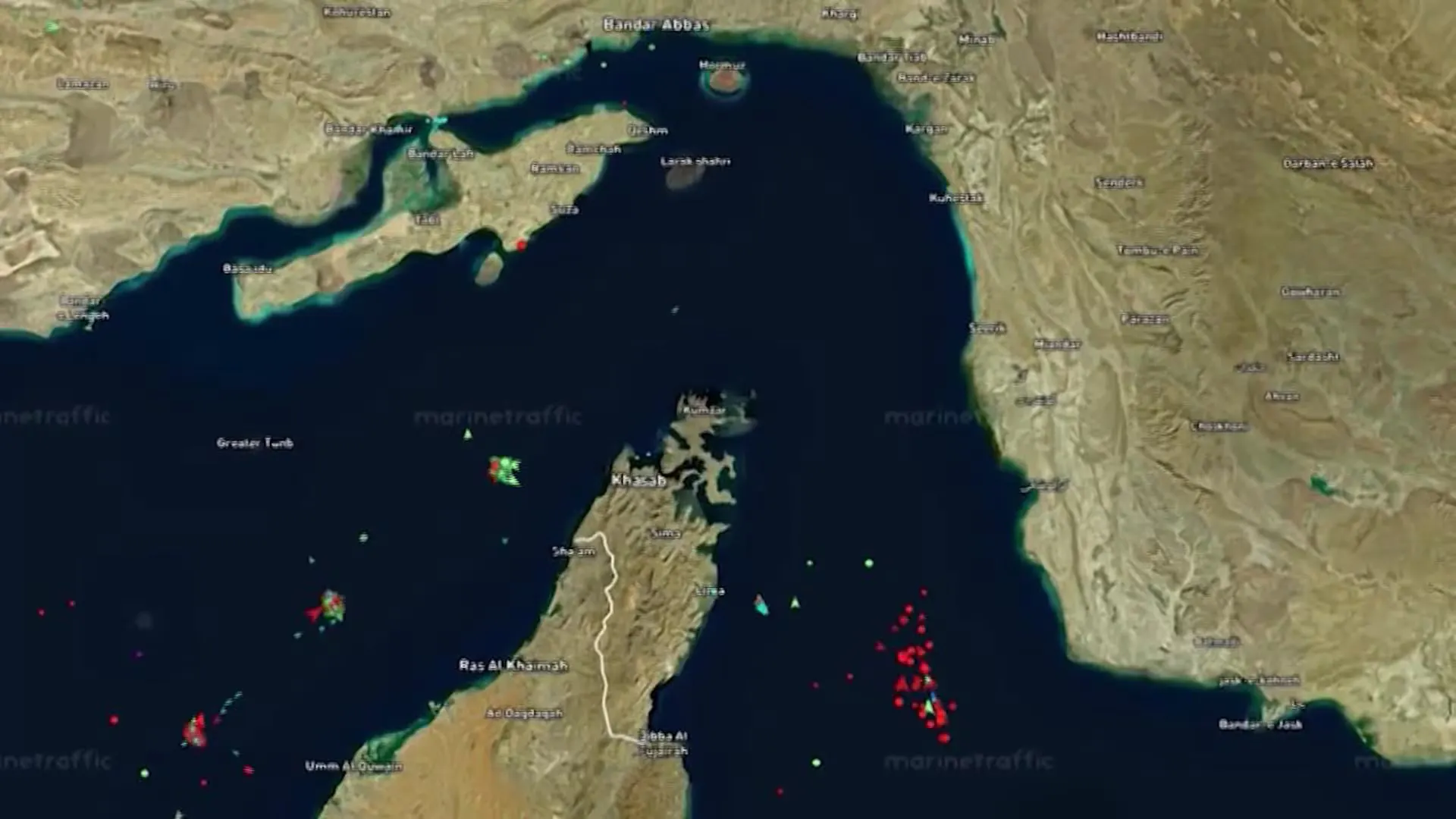
The only thing prohibiting transit in the straits right now is Iran shooting at shipping.
- [00:05]
Justin
It is open for transit should Iran not do that?
- [00:09]
Jordan
Okay, I'll put that at the front.
- [00:12]
Shashank
The beaches of Normandy are open for full transit. The only thing stopping them are if the Germans would just stop shooting it, shooting at us, the beaches would be fully open again. I had a. I had a vision of Churchill declaring the Dardanelles to be completely fine were it not for the Ottomans firing at it.
- [00:35]
Justin
That's pretty close to what Churchill actually said about the Dardanelles. If they would just push the ships through, we would be in Istanbul.
- [00:43]
Shashank
Just give it a go. What could go wrong?
- [00:44]
Tony
Yeah, well, welcome, everyone. Welcome everyone to Second Breakfast. We're covering week two of the Battlefield 3 campaign.
- [00:58]
Jordan
Can we restart the save, Tony?
- [01:01]
Tony
Is that, you know, to quote a famous rap duo, there's no save point. So, yeah. We've now learned that life is not a video game and that when you make an oopsie or several oopsies, you do not get to return to the prior mission and try again changing your loadout. You, you went into this mission with the loadout that you have, and there are no loot drops from which you can upgrade. Although I guess technically the Lucas is a loot drop. But we did not plan for the IRGC being able to operate like the irgc, which is in small groups and, you know, basically under mission command, which is the whole point of the irgc, right? You cut the head off the snake, and the snake's still there. And it seems like we just didn't either care or didn't plan for that.
- [01:57]
Justin
There's been 11 MQ9s shot down as of two days ago. So this, this is subject to change. There's also, you know, with the fuel, with the fueler that crashed yesterday. And I was seeing things where the administration was shocked. And yet we know the Houthis shot down over the course of a couple of years, like five MQ9s using Iranian surface to air missiles. Who do you think taught the Houthis to do that? Like the idea that this was just gonna be like, ah, we'll be fine. We got this. Maybe. Yeah, I don't know. The planning continues to blow my mind.
- [02:33]
Jordan
The idea that this administration, and really the first Trump administration as well, has rolled snake eyes every time they've used military power. So the Soleimani thing worked great. 12 day war, no real blowback. Venezuela, you know, a triple snake eyes, perhaps. And then when you kind of get on a roll, you keep doubling down and all of a sudden all of those kind of like downside scenarios which you were briefed on with the Soleimani strike, with the, with the 12 day war, with the Venezuela stuff, they just stop resonating. And now we're in this scenario where all of these second order are totally predictable and presumably were and were predicted for like decades. I mean, same thing with the, you know, critical minerals in China. But like, if you just think that everyone has it wrong and you have the touch of, you know, and you have the hot hand, then, like, why not? But here we are in this total fucking mess. I don't know.
- [03:42]
Shashank
Shashank? Yeah, Jordan, sorry, I've completely misunderstood. Have we begun? I thought we were beginning formally in a minute. Have we already started?
- [03:51]
Jordan
Oh, yeah, yeah, yeah, yeah. We're like, I'm so sorry.
- [03:55]
Shashank
I've been. I have been busy, you know, sorting my emails, doing various things. I had no idea we had formally kicked off. I'm incredibly sorry and embarrassed. But I'm now, I'm now, I'm now fully with you, in my opinion.
- [04:09]
Jordan
Okay, great, Shashank.
- [04:11]
Shashank
Let's SNL type open from you, Jordan. Sorry.
- [04:14]
Justin
That's amazing. All right, Shashank.
- [04:17]
Jordan
Well, let's start at the strategic level. How are we doing?
- [04:20]
Shashank
Okay, I think we're doing terribly. I think that this reminds me of. I think, you know, we've alluded to this, but the whole idea of entering a gigantic trade war with China and failing to anticipate the way the adversary gets a vote. They have leverage of their own, they have rare earth export controls, and then being quite humbled by that because of a failure to think in terms of real net assessment. We're seeing a repeat of that, right? We're seeing an assessment of a campaign that is. In which I see almost daily or kind of bi weekly updates from centcom, from Dan Kane, from Pete Hegseth, in which I'm told how many thousands of targets have been struck, Right? I think it was 6,000 as of Thursday, March 12, I was told. As if I'm supposed to infer something from that and assume that the jump from 3,000 to 6,000 is twice the winning. And I think it was James Acton of the Carnegie Endowment who says the this sounds very macv, this sounds very Vietnam body count, right? Which is that it's not about effects and what you're achieving in terms of free navigation or the steady erosion of the regime's grip on power, or its inability to conduct salvos in all of these areas. It's about the input, it's about the number of bombs you've dropped, the number of people you've killed, not about what you're achieving, even if you knew what that was. Now, on one specific count, I think we have to give clear credit, and that is suppression of missiles left of launch. Right on that, you have to give credit, which is that the Iranian launch cadence has dropped substantially. They clearly are having enormous trouble with putting launches out without being hit. This is not a repeat of 1991 scud hunting. This is much, much more successful. We can see the revolution in ISR and in precision strike and in responsiveness. It's there. Although we see two other things. First of all, it's. It is the Shaheeds that are causing a huge problem. And the suppression of those launches is much, much more difficult. We've seen them launch from Lebanon towards Cyprus, which is a niche UK angle on this. They hit the hangar in which I think you guys housed your U2s, if I'm not mistaken, although we're not very keen on talking about that here. And you're seeing a very, very high launch cadence for those. Although they're still dropping, they're still causing chaos and they've hit some things very precisely. But on ballistic missiles, they have subst. Substantially fallen. On everything else, this is a mess. I see little indication that the regime is in any way close to dissolving or falling in any way, that if the bombs were to fall silent in the next four or five days, that the Iranian people would have the wherewithal to go back onto the streets without being massacred. And finally, whilst production of missile capacity, I'm sure, has been degraded extremely badly, this is not just a military effect. The political incentives have changed. And if you are a wounded, aggrieved Iranian regime left in power at the end of this, which I think they will be, and you have a supreme leader whose family has been killed and who himself is thought to have been opposed to the fatwa imposed by his father, Ali Khamenei, you have a strong incentive to double down on your nuclear ambitions. And if that is the legacy of this conflict, all while oil heads to $150, crippling the economies of Asia and Europe, while America sits happily behind its wonderful, you know, a superiority in domestic reserves, that to me is just a complete catastrophe. And that's before we even get to any of the second order effects in America's position in the Pacific, in its broader military standing.
- [07:46]
Justin
I mean, one of the things that we're seeing already is like economic impacts in Asia are the, you know, potential drop to a four day work week in some of the countries and things like that. But even in the United States, you're seeing a fracturing of the belief in the military power because we've handed over an economic weapon to the Iranians. There was something that constrained them in the past from closing down the Strait of Hormuz, and that was largely the threat of military, of US Military power to reopen it and to force them to reopen it. We have two carrier strike groups in the Persian Gulf CENTCOM area right now, and we're not forcing open the Strait of Hormuz. What are we going to do when we don't have two carrier strike groups there and they decide they're aggrieved and they want to close the strait like so. I think without going to the nuclear side.
- [08:41]
Tony
I think this raises a bigger question of what has CENTCOM been doing for the last 40 years? The, the whole point of their existence, why they have two headquarters, is that it's to keep that straight open. Yes, they had their gwad adventures for 20 years and they were very upset when they ended. But from a strategic standpoint for the United States, the point of CENTCOM is to keep that open. And it just seems that either this was not the con op they wanted to do, which is entirely possible that they wanted to do a thunder run to Tehran, or that they just took a backseat and just said, nope, we're just going to, you know, we can do this with minimal forces. Which given that the last time we did a war with minimal forces, CENTCOM was also in charge. This seems to be the sense that just no one's been held accountable for planning in that region for 20 years.
- [09:39]
Shashank
Can I give you an example of that lack of preparation, which is around mining capabilities. Right. We just heard Pete Hegseth say today there's no clear intelligence Iranians have mined Hormuz. Although I think we saw John Healey, the British Secretary of State for Defense, suggest that it had been. Whether or not it hasn't, you know, it could well be soon. And let's look at the state of mine clearing capacities in the Persian Gulf right now. You have the Avenger class mine countermeasure ships, the mcms. They were removed from this region in January. That mission flowed to the lcs. And I'm sure a lot of people are fully aware of the complicated and tumultuous history of that ship, which was in theory supposed to be fitted with mine countermeasure modules. Uncrewed craft, et cetera, et cetera. Those assets have been exercised, but they've not been deployed in that context right now. And I had a message from someone who served in 5th Fleet and was experienced with this capability and said, if you had the strait saturated with mines right now, those assets wouldn't be enough to clear the straits. You'd need additional Sea Stallion helicopters. There are, I think, multiple squadrons of those. But they are reserve components. They would need to be mobilized. They have not been mobilized as far as I'm aware. I could be wrong. And they would take about a month to arrive in the theater is what he said. And the last major minesweeping operation was Vietnam in terms of a really substantial scale. Obviously there was stuff in the tanker war. And if you're planning an attack to topple the regime in Iran and kill its leader and change the regime, you would just think, maybe you would think a little bit about the prospect of having enough mine countermeasures in the region. So what is happening here?
- [11:22]
Justin
Well, in particular, because this is a regime who has mined the strait before, they have routinely launched and floated mines down the strait. When they get upset now, it hasn't been in large numbers. It hasn't been huge volumes, but they have done this in the past. Oman has suffered slightly from it. So the idea that they weren't going to mine it, I can't imagine that there is a war game scenario in centcom where they sit down to plan. What do we think Iran does on day two that it wasn't? Well, they're probably going to try to do something with the string suicide bodes mind something. Again, it seems factless is what it seems. It seems factless.
- [12:06]
Tony
I think this, this brings up a great point about the planning perspective here, which is that I have to assume that CENTCOM assumed they would get more time to build up. They'd get more forces to build up to do this. Right. And what I think that folks understand is that a lot of the after the Cold War ended, a lot of the. And we did all the US Forces kind of redesign between active Reserve and National Guard components. A lot of the strategic support elements that you would need for these sorts of fights were moved to the reserves, which means you needed more time to mobilize. Their readiness is much farther down and their equipment is old. Right. You know, in terms of like medical engineer support on the US army side. Right. I think it's like 2/3 of that exists in the reserves, at least for the engineers. Medical is somewhere high up there. Right, that's an example, you know, the Navy side of. Or another on the army side. Right. Is that they used to keep watercraft in reserve. Now they just got rid of that. So there's. There's no backup for the Navy. Yeah. These smaller forces that have not been used for decades and would only need to be brought out in a high end fight exist in the reserves. And it seems to be quite clear that we tried to fight a mobilized war with active duty only forces.
- [13:21]
Jordan
Shashank, can we do the tactical story a little bit? You tweeted out a question. Can Iran lay mines with enough precision to avoid these becoming hazard for ships that it wants to allow through? As well as just like how you do this, if you have American drones and planes kind of like flying over this small, you know, 30 square kilometers of land, I mean, it seems like you might be able to just like watch it at all times. Like, how do the mines actually get out there?
- [13:54]
Shashank
Yeah, I mean, I'm not a mining expert, Jordan, but my understanding is that obviously there are dedicated mine laying craft and that CENTCOM has dutifully destroyed all of those dedicated minelaying craft. I think it put the number out the other day. Was it 16, 17, something like that. But as we know, Iran has historically prepared to lay mines in that waterway through other means, including traditional fishing vessels, the dhows. Now, I imagine that, yes, this is a heavily surveilled patch of water and that it's not very easy to get any kind of ship out there, but nonetheless, we kind of, I think, have to keep in our head somehow that we're in an era in which you have a more transparent battlefield, in which surveillance is more pervasive and high fidelity, but it is not a literally completely transparent battlefield in which you have absolute coverage of everything at all times. And indeed, you're engaged in a campaign right now in which many of the surveillance assets that you might want to track, coastal launches and launch sites on the Iranian coastline, may be in demand in other parts of Iran for other equally demanding missions, such as identifying, identifying ballistic missile launchers that may be about to fire against Israel over that very long range, or assets that may be attempting to launch against the US carrier strike groups in the Gulf of Oman in that vicinity. And so you may not be focused laser like with all of your reapers and all of your real time space based ISR on the little bit of the Iranian fishing vessels that are zooming out into this very congested waterway in which a bunch of other stuff is happening with civilian ships. So in that sense, Iran, I think, could still get stuff out there. I don't know what the undersea situation is like I'd be interested in. I imagine fifth Fleet has that pretty sewn up, given that maybe, maybe that's wrong. But on the specific question, Jordan, about can it lay mines with enough precision, I think there's an interesting mix of opinions I heard from the experts I asked. Right. I had Caitlin Talmage suggest that, yes, it probably could. Others have said that one of the replies came from Abhijit Singh, who's a former Indian naval officer, quite an interesting guy, by the way. And he said, look, even modern naval minds can distinguish ship size or acoustic signature, but that doesn't mean they can tell the difference between an Iranian tanker and another tanker. And so Iran could well be jamming up the Straits if it decides to go down that route, even for its own exports. And what really struck me from the coverage today is reading the. I think it was a New York Times piece that quoted Lloyd's Intelligence saying, I think the Iranians have got 10 ships out through Hormuz. They're still getting their oil out and selling it. And I find that super interesting. They don't necessarily want to completely cut that route off for themselves yet.
- [16:36]
Justin
Yeah, I mean, like, I saw something, and I don't know how serious it is, but somebody was talking about taking Hog island, which is the small island that juts out very close to the, the, the actual Baba man. But the, the, the actual gate at the, the head of the straits. And even the idea of that, like, that, that obviously becomes like, okay, so now we're going to seize territory. But again, like, even. Does that, does that allow us to actually say the Strait is open? Because to your point, I mean, while the Iranians have had 10 tankers go through, that Thai tanker that tried to go through yesterday caught either a missile or a mine. It looks like it was above the water line, so it looks like it caught a missile. But, you know, the photos of it are. At least two lifeboats I saw were off, and obviously it was on fire. So, again, like, why would any other bonded international traveler try to force you the straight. Because if you're not flying an Iranian flag, apparently you're likely to take a missile in the side. So, yeah, I don't know. I mean, like, this is the, for the, for all the strategic blunders that we could talk about on this, this is the one that gets me the most. Because the maximum pressure campaign during Trump one was supposed to show that we had the ability to economically cripple Iran. By taking this action, we have shown Iran and the Iranian regime that they have the ability to impose incredibly harsh economic consequences on basically the rest of the world by choking off 20% of the daily oil supply and gas supply that leaves and goes to Europe and around the world. So.
- [18:15]
Tony
So at the end of the day,
- [18:16]
Jordan
would Trump rather have an Iran with a nuclear bomb or oil at 200?
- [18:23]
Tony
I think Besant announced today that they're going to temporarily lift sanctions on some Russian oil. It seems so. It's quite clear that he would prefer oil prices to go down. And I'm sure there are elements of the admin who are more than happy to lift sanctions on the Russians broadly. But I think that they. There was just no serious planning here. I think that's the actual answer.
- [18:50]
Shashank
Jordan. I mean also I kind of contest that, that binary because if the option truly was an Iran on the cusp of a nuclear weapon or a major war that causes an energy spike that rivals 1973 in its magnitude, I can understand the trade off. I can see that the sort of rationality of it. But first of all, I mean just let's be very clear, right? The Iranian nuclear program had not substantially advanced since the guns fell silent at the end of the 12 Day War. I'm not saying it was completely eliminated or obliterated to use the phrase that the President prefers. And we know there was residual capability, we know 400 kg of HEU was sat there under the rubble distributed between Isfahan and Fordeaux Natanz. But it was not any closer really to being weaponized. It was the missile program that I think we saw real progress on. And that's why I can understand why the Israelis saw a serious threat from that. The concern here is we may get oil at $200 a barrel and a nuclear Iran. You know, it's not like you solve the problem by getting oil to 200. I think that, you know, the likeliest outcome of all of this is the regime will be intact at the end of this. There will be some kind of deal and you will have the regime fundamentally in place and it will not be clear. It's not clear to me that his nuclear ambitions will be extinguished and dealt with when the guns sort of fall silent here at the end of all of this.
- [20:09]
Jordan
Yeah, and it was more a forward looking comment is like if, if a, you know, If Trump in 2029 we have, I don't know, 2029, like say three months. So they say the war ends in A week. And then three months from now, we get all this news that Iran is like a week away. They're like putting the warhead on top of the missile or whatever. And the Iranians say, look, if you do this again, you know, if you bomb us again, we're just going to shut down the strait. And like, three months is not enough time for the US to like, solve all the problems that it had in being, in not being able to, to keep the strait open. And then, and then, okay, we get, we get through November and it's like, all right, I guess they just have a nuke now and maybe we can try to blow it up on the ground or something. But still, it's just, it's just an enormous strategic mess.
- [21:04]
Tony
Justin, you and I have both done the train up for CWD extraction. It sucks. Like, this is not a light lift and there still seems to be no plan to recover it. So yeah, like, if so everyone is. This is not five dudes from JSOC with a black bag. Like, this is a like task force size event at minimum. And that's assuming everything goes right. And that's assuming you find everything and you hit all the sites at the same time, which seems awfully not likely. And statistics would say that something is to go bad. This is like, this is not a fun time. And I would also point out that most of the Iranian borders are not closed in the sense that like, there is still trade coming from other places that don't care about the sanctions. So it's not like we have Iran isolated and we can say, oh, nothing can get in, nothing can get out.
- [21:58]
Shashank
Yeah, I mean, I wrote a piece on this question of a raid to seize the heu and you can envisage a gigantic ground operation in Isfahan. Although to call it a special forces raid, I think is a little bit misleading when it would be, you know, the largest airborne raid in military history on its own. And yes, there will be special forces involved, but there would also be a battle group to a brigade sized force holding a perimeter at the same time around it as you parachute heavy machinery on pallets to get through the rubble. But what really makes me question it is the fact that this material is not at one place as far as we know. I've looked into this about half, you know, Grossi, Rafael Grossi of the IAEA says about half of it, most of it's at Isfahan, but there's still like a couple of hundred kilograms, I think mostly, you know, basically between Natanz and Fordeaux. To do one raid is kind of at, you feel, at the edge of realistic military capabilities. And maybe only the United States could pull off an operation of that magnitude. But to do it at three sites simultaneously in order to achieve surprise, it just feels preposterous. It feels preposterous to me right now.
- [23:10]
Justin
That's the problem, is they would have to make these. They couldn't do them simultaneously. They would have to do them in sequence. And as soon as you do one, you've just set a trap.
- [23:18]
Shashank
And, Justin, is that because of the availability of specialist resources or.
- [23:22]
Justin
I think so. I think when you think about. Exactly. I think when you think about the extraction teams, when you think about the breachers and the training that they're going to need, the type of equipment and just the ability to suppress enemy air defense and enemy air missiles, whatever, that would be targeted on that location during that time period. There's no way you could do Natanz and Esfahan at the same. And for those at the same time. I just don't think that there's not enough ass to do all three of those special missions at the same time. Unless you were going to try to invade the entire country. I mean, it would take. That's the size that you would be looking at.
- [24:02]
Shashank
Like, can I just reflect here on the subject of invading the country, on the subject of, you know, occupying the coastal areas to liberate Hormuz, I just find it. Can I just reflect on the incredible situation we're in of an administration that's come to power, of a group of people who spent their careers involved in Middle Eastern conflicts, who learned from that the lesson that these things were America's greatest folly for the last three decades, consuming national resources and sapping the country's economic prosperity and its will and its cohesion. And those same group of people have somehow launched this conflict in the Middle east that will have massive spillover effects for America's position in Asia and let alone Europe, if they cared about Europe, which they don't. And I just kind of would love to get Ulbricht Colby in a room, you know, with a beer, just face to face.
- [24:57]
Justin
And he would. He would take the beer. You'd have to whine or something. I'm sure he's not a. Yeah, a good.
- [25:02]
Shashank
A nice crisp, crisp Sonoma Chardonnay with. And ask him, you know, what is what? How did we get to this stage? It's intellectually, how does this happen? It's because with the Bush administration, there is kind of this coherent intellectual chain that takes you from the early 1990s and the unipolar moment and all of those things to 2001 and then 2003. There's a coherence, I think thread, even if you see it as kind of gargantuan folly with this, it's a completely different kind of blundering.
- [25:38]
Justin
Yeah, I mean like this is Andrew Bich's theory on steroids where it's just like the power of the American military just has the ability to corrupt and make people think that it can do anything to include become policy without some type of end golden strategy in mind. And that's again, as I think we've continued to allude to like the biggest problem with the use of military force right now is that no one can describe what the goal is. So was it regime change? Is it the nuclear weapons?
- [26:13]
Tony
So I think this is worth pivoting a little bit to then to what I've really become concerned about here between the anthropic debacle, you know, the Iran invasion and a few other things is that there's a backlash coming against all of the work that has been done in the last five years to build munitions stockpiles, to build autonomous systems, to get Congress on board with funding all of these things for a Taiwan fight. It is going to be incredibly politically difficult in 2026 when there's likely a split government after 2026, I should say, and particularly in 2028 if we make it that far in which like the majority of people are just going to be extremely skeptical of all of these things because now they've been used in ways that we didn't want to use them. It's going to be very hard for Democrats in particular to convince their base that what they need to do is continue to fund the defense industrial base at maximum levels. Right. And that is, you know, it feels very, you know, Imperial Russia prior to 1914 in terms of mismanagement.
- [27:21]
Justin
It's not even just going to be the Democrats. I mean, like you're already seeing the MAGA wing start to fracture over this and stuff. So you're going to lose, you know, far right support for investments in the military as well because continued investment of the military is leading to continued use of the military.
- [27:38]
Shashank
I thought it was quite interesting to see Joe Rogan, his comments on this. Although, you know, the polling suggests that the MAGA base is not revolting in a kind of broad sense yet that's not evident in the numbers but in prominent exponents, elements of that base you can See real discomfort. And that will be shaped by the outcome of this. Right. If there's an early deal and the administration is somehow able to snatch a diplomatic victory from this, in which it negotiates the withdrawal of Iranian HEU and limits on the nuclear program and says the missile threat has been neutralized and taken care of and we're going to build a great shiny new Trump Tower on Hog island, you can see something coherent coming out of this that will satisfy enough people. And by the way, I don't exclude, and we should not exclude that this was a weak regime going into this conflict. I don't believe there's been a substantial rally round the flag effect in Iran. I think this is still a weak regime and war does apply these immense pressures to these fragile states. They have had their repressive capacity weakened. The Israelis in particular have been striking besiege in IRGC forces all across the country, including provincial elements. And I think there is a prospect we should not exclude, of this regime falling apart. In that case, I still worry the main risk is disorder, civil unrest, civil war, armed rebellion, rather than a neat form of regime change. But regime change is still very much on the table, I think.
- [29:12]
Jordan
Shashank, can you talk a little bit about this Israeli campaign? I don't quite understand how blowing up their offices is going to substantially kind of degrade the, you know, power of this government to put down protests. I mean, presumably, like the guns are in people's houses. And I mean, I guess it's more like, okay, if you can't pay them or something to do it, then you, then you start to have problems with that repressive force. But, but just like getting the police precincts, like, I don't quite understand.
- [29:51]
Shashank
Yeah, I don't understand it fully myself. I will say your point about financing is really interesting because there was a missile strike on the SEPA bank in Tehran on Wednesday, and that's quite interesting. So you are seeing direct efforts to try to disrupt salary and payments to military personnel and security forces, which is presumably part of dislocating that force. Now, I think if you bomb like an administrative office, yes. It's not stopping people pulling a gun out of their closet and shooting protesters. I think, I imagine the logic is that you break the command and control of those security forces, you make it very difficult for the authorities to coordinate a response in the event of another mass revolt to say, mobilize this, this and this local force to go put down the protest. In the event that happens, you hope that the individuals tasked with doing the Repression will prefer to leave their uniforms on the side, go home and pretend that they were never in this repressive apparatus to begin with, in the same way we've seen In Afghanistan, in 21, in Syria, Syria, 18 months ago. Will that work? I'm very doubtful. I still think that we may see kind of a periphery effect in which outlying areas, in certain areas where the opposition is stronger may usurp state authority. But that, that doesn't mean it'll be a uniform effect which will suddenly have a ripple all the way into Tehran, causing the regime to fall. And I think you're beginning to see that from Israeli officials who really understand Iran quite well, many of their best experts, they know Iran. And if you look there was a very good piece, I think, by Emma. I'm going to look it up now. Emma Graham Harrison in the Guardian the other day, who spoken to quite a lot of Israeli officials and in the Israeli press, where you're seeing them acknowledge the regime is perhaps not crumbling at the pace we hoped. And you that also in Netanyahu's comments, just the last 24 hours, where he said, I think the phrase he used, which I thought was not in terribly good taste, by the way, was you can lead a horse to water, but you can't make it drink. Trying to, trying to get across that like, hey, look, I can do my best for you guys, but if you don't want to protest against the regime, I can't help you. And you can see, as we saw with Trump a week ago, a degree of, you know, look, we want the regime to fall, but it's not on us. It's got to be on you.
- [32:07]
Jordan
Well, the Netanyahu stuff is fascinating because you do see this analogy of the like, oh, is it the Gazans fault that they haven't toppled Hamas yet? Oh, I guess we're just going to have to keep mowing the lawn, not just with the nuclear scientists, but with the leaderships. And that kind of like, strategic outlook now being a thing you're putting not on Hamas, but on an entire country the size of Western Europe seems tricky. I want to come back to, like, the, the, the sort of ways this works out. Okay. Shashank kind of laid out one pathway of like, all right, we get the, we got the revolution. Are there ones that you guys see, given what we've seen over the past two weeks, where you have the regime in control, even if it's not the sun, say they get him. It's like the third or fourth guy, but things are okay we have Iran not with a nuclear weapon in three years and oil still, you know, so
- [33:11]
Tony
can I, can I add to that question? Because I again, I am not a CENTCOM Iran expert. So I'm curious though is that regardless of whether, you know, the Ayatollah or someone like him is in charge, there's still that Sunni Shia rivalry. There's still the general regional competition between, you know, the Saudis and the Iranians. Like there's no worlds in which like this is like trying to ask Russia to join NATO even if there's a less hostile regime. Right. Of like there's just a limit to how friendly they're going to become.
- [33:48]
Justin
Yeah, I think that's right. And honestly, like that's one of the things that makes the timing also interesting. You know, with hts or former hts now in charge of Syria, you have, you have really broken the Shia Crescent, which was the Iran Syria into Lebanon kind of corridor over the land, but was also a way that like they were able to combat geopolitically against Saudi Arabia because Saudi Arabia was somewhat hemmed in. You know, you Houthis to the south, then in the north you have like the Syrian and the Lebanese and the Iranians all able to kind of do things. The Persian Gulf is slightly contested and, and those powers kind of weighed against each other and somewhat restrained what each side could do or constrained what each side could do. You'd already really stripped a lot of those capabilities from the Iranians between the Hezbollah Israeli war that stemmed out of the Gaza conflict, the Israeli strikes or strikes beeper explosions on Hezbollah leadership and then just generally the targeting for the 12 day war with Iran on top of the loss of the regime at this point, I think the really hard thing for it to be a diplomatic settlement where everyone kind of wins is not only do you have to get the regime now to agree to give up the highly enriched uranium, because I think that has to be now on the table because that's been one of the stated reasons that we were going both from the Israeli side and from the United States side. But I think there has to be some form of dramatic opening up that's going to happen with Iran to the West. And I don't see that happening because I think if you don't get that, how do you claim victory or even that you're in a demonstrably better place than we were the day before we started this. Because again, the day before we started this, Iran was massive protest, just killed 30,000 of its own people and lost its two largest regional allies in combat over the last two years.
- [36:12]
Shashank
I think that's right. I would reflect on the way that the administration handled the war against the Houthis 18 months ago in which it conducted very heavy bombing, had some effect, but didn't really achieve its outcome of reopening the Red Sea and restoring complete freedom of navigation by force. So what did it do? It effectively said our work here is done and stepped back and declared victory. And so, you know, you can see a kind of a sort of totally self declared victory that bears no resemblance to the outcomes you describe but is nonetheless claimed as such.
- [36:52]
Justin
Yeah, I mean like that. I think that's the, I think that's the most likely.
- [36:56]
Shashank
The other interesting thing in all of this is where do the Gulf states go? Because you know, this has been a total, total shock to their psyche. Their vulnerability has been exposed. Their business confidence, you know, business confidence is shattered. They're furious at the US and Israel for pulling them into this situation, but also furious at Iran and very frightened of Iran for breaking previous taboos on the scope of its targeting, including particularly Oman, I would say is very, very feels deeply betrayed. And I can see a massive defense boom in the Gulf after this. I'll be super interested to see who they want to buy from. Right. Do they want to still put their eggs in the American basket or do they decide we're going to spend a lot of money in South Korea, in Europe with Rheinmetall with a bunch of different people to sort of diversify our spend and do they try and play nice with Iran to double down on the strategy they were taking in the last three years to say look, we don't like Iran it' threat. But we're not sure about the Americans post Abqaiq. So we're going to just find a modus vivendi with these guys. Now that's broken down. Do they double down on that or do they say we need protection, this is terrible. Or is it as I think in some ways we need to think more about is do we arm ourselves to the hilt and effectively think about kind of an armed neutrality model which is exceptionally difficult for countries of this size to really enact given their dependence on and the co location of things like 5th Fleet and Centcom.
- [38:20]
Justin
I mean you've got Ukrainian Brave 1 and the Ukrainian defense techs actively going out and seeking seed round and a round and stuff recently. I know where there's a lot of cash and people that are willing to venture back things as far as weapons, especially anti Shaheed weapons go. I wouldn't be surprised to see the Gulf states get more involved in investing in some of the Ukrainian defense tech, especially those companies that are looking for production capability and partners. But yeah, I think I agree with you. Like outside of high end weapons, like there's no reason that I would consider think that they're going to continue to buy lower end US defense tech versus diversifying in particular to like the Ukrainian and European market. Just given everything that we're seeing right now.
- [39:09]
Tony
The defense tech rise is no longer just in the US I know we talked about Europe a few weeks ago and I think this is going to be to spur the moment for the Middle East. My second question is what happens to the irgc? Right, because let's say you get a friendly regime. Well that's either going to cost the IRGC money or it's going to insult their beliefs, to put it mildly. So either do you de ba' athify the regime which good luck enforcing that. And if the IRGC does go into the wind, how does that help the regime or the region at all?
- [39:46]
Justin
I mean from the way that the Quds Force NARGC is largely run and if you look at like some of the background on some of the key ambassadors for Iran to like key countries, you'll notice that a lot of their ambassadors that are in like Lebanon were members of the Revolutionary Guard, that they were, they were IRGC members. They have front companies is the right word, but you can call it something more than that where they actually pull in revenues from construction deals and shipping contracts and things like that throughout the region and even overseas. Further than in the Gulf area, are
- [40:27]
Tony
we just looking at a KGB goes to the mob and the IRGC goes to its own version of the mob. And that's basically what we're looking at
- [40:34]
Jordan
post conflict or Japan, 1920s, 1930s, they just start killing the folks who are running the country who aren't aligned with them. I don't know, this is just could get real dark.
- [40:45]
Shashank
Sorry Shashank, I was just saying we don't. It's interesting. We haven't got many models, do we of these stable transitions. When you have these ossified, oligarchic, radical security, you know, Persian Soloviki type things which, which, which, which transition neatly. Right. You have the model that is you have Debarthi which is an almighty mess and results in leakage of advanced security force capabilities into kind of the non state sector and sows the seeds for souping up the rebellion that follows. You have the Russian model, the Soviet Russian model, which as you've just alluded to is it just turns into kind of a new nobility, as Andrei Soldatov puts it in his book. And then you've kind of got I guess the Egyptian model where the army just takes over the regime. And that's very straightforward. It's a praetorian system. There aren't all that many cases where you have a stable transition. These people go home, they're not persecuted, but they don't get rewarded. The economy is sort of fixed and demilitarized and de oligarched.
- [41:50]
Jordan
Maybe the closest analogy we have is Cairo. Right. And you got your revolution, everyone kicked the military out and then fast forward three, four years and they're back. So it's, it's not, this is, this is not an easy thing. And I think, and I think the sort of the, the I would imagine that the Egypt transition would had way less of a headwind than whatever this Iranian one is going to, is going to run into. Even if, even if the revolution ends
- [42:22]
Shashank
up material, I will just step back and say it is interesting that the administration considered seriously arming Iranian Kurds to apply pressure on the regime. And from the conversations I've had changed its mind. And you turned on that.
- [42:42]
Justin
I would imagine that that had something to do with the nuclear armed NATO ally just to the north. As much as anything are we Turkey's
- [42:53]
Jordan
not going to real Shashank. That wasn't just like, oh, we'll throw it out there, just like we're going to arm the Quebecois.
- [42:59]
Shashank
I think the line between throwing it out there and what you're considering is a little bit blurry in this administration. But you know, I certainly spoke to Israelis who were also kind of in those conversations.
- [43:12]
Justin
Yeah, I mean I just, I just can't believe that at this point after everything we've seen with every time the Kurds look like they're even in any way, shape or form forming a state, whether that be in northern Iraq, whether that be in northern Syria, whether that be now in Iran, that Turkey hasn't gone in and bombed them.
- [43:29]
Shashank
Yes.
- [43:29]
Justin
So like again like unless the idea is to try to drag Turkey into putting boots on the ground in northern Iran, it's to keep the Kurds from having a state.
- [43:41]
Shashank
It's 3D chess. The Turks are going to be the surrogate ground force who topples Iran.
- [43:45]
Tony
Exact.
- [43:47]
Jordan
They're going to take the nuclear material out as well.
- [43:50]
Shashank
There have been three ballistic missiles fired at a NATO ally in this conflict so far. I mean that's just nuts in itself, by the way.
- [43:57]
Justin
Yeah.
- [43:58]
Tony
And were they. Were they all aimed at Insulik, where we keep our.
- [44:02]
Shashank
No, I haven't seen what they're aimed at. I mean, that would be a logical conclusion. Although interesting. Aiming your missiles at a site that is, you know, by some accounts, thought to have been a storage base or is a storage base. So B61s. But I think they were taken out by SM3s.
- [44:18]
Justin
Yeah, yeah. I mean, they shot them at Jordan. Azraq in Jordan, Mafraq, the base there, which is the joint US Jordanian base. But, yeah, I mean, like, again, the whole region is getting things thrown at it.
- [44:33]
Jordan
You want to talk targeting for a little bit? Shashank had a wonderful article in the Economist, how America and Israel Built Vast Military Targeting Machines, which gives an overview of how you can, you know, say how you can do the Vietnam thing, but not with you. Not. Not just like flattening forests, but actually blow up, you know, thousands of things within two weeks that, for the most part, are not girls schools. You know, reflections on that, Shashank. And I think. I think broadly this question of to what extent is the future of this stuff like Waymo just being better than me at driving a car, or the kind of autonomy bias, like American military capability bias, where you trick yourself into these big strategic mistakes because you have this kind of incredibly futuristic, superhuman ability to understand what you might want to blow up.
- [45:43]
Shashank
So some of this story, Jordan, was about AI and trying to demystify the role of frontier models in this process. And I know you've talked about this on previous shows, but it was editors and others saying, we want to learn about what Claude is doing. And I wanted to kind of explain it's not actually doing all that much. You know, I think some of the public accounts that say Claude has been identifying targets, I think that's a little bit misleading from all of the conversations I've had with those involved in the AI enterprise, in the targeting enterprise. So a lot of this story was about trying to explain what the hell the Maven smart system is, which is what, even ontologically, is it? Right? Like the phrase I would use is it's a decision support system or a decision support tool. And inside that, it contains many things. It has a command and control element, but it has a target intelligence element, an intelligence fusion element. So many different things it's doing battle damage assessment component to that. And so part of it was saying, here is this machine that is now helping you humans soup up what you would have previously done in human staffs or with more kind of old obsolete computer aids to identify targets, to put them into banks, to work out. Look, what munition do you need for each of them? What are the schools nearby? How do you do all of this at scale? And to point out that there are bespoke AI models that are doing things like AI object recognition. I mean, there's a good new book out by Katrina Manson on Project Maven that I'm reading right now. And that's interesting. But the stuff that Claude is doing is primarily kind of synchronizing the other models. It's at a much higher level. It's overseeing some of this stuff. So part of the piece was about that, but part of the piece was about what happens when you can generate these vast target banks. And what I find really interesting about this is that we sometimes think about AI aided target generation as being about speed and overmatch, right? And about the classical form of maneuver warfare in which you impose what I guess in military jargon you would call cognitive paralysis. On the other side, you hit them so hard by striking so many things at once, and their decision making node, they can't react and, you know, they lose. You win, they lose. What's interesting is that in this conflict, although there is an element of speed, you know, you want to hit a launcher when it comes out of its firing position quickly. This is applying that same industrial scale machinery, not in aid of that rapid maneuver warfare, but almost in aid of something that is more attrition. Like to come back to our points about CENTCOM saying, now I've hit 6,000 targets, now I've hit 7,000. So you're applying a system that is built for cognitive paralysis and speed and shock, but you're applying it in a way where you're weak to there's no more shock. There is still awe, but there's not much shock in that sense. And you're just eking out more and more targets to keep striking. And this comes back to the Israeli aspect. And I wrote this piece with my colleague Anshul Pfeffer, who's based in Israel. And he told me he spoke to a lot of people and said, Basically in 2006, in Lebanon, the Israelis say, said, hey, we've run out of targets to strike. I think on day 30 something, they were like, we don't have any more targets to strike. And so the lesson they learned is you need a machine that can just produce more targets. But all of this doesn't really tell you whether your 6,000, 7,000, 8,000 targets have a causal mechanism to defeating the enemy. And so we have to be really clear what we're talking about here when we talk about targeting and how wonderful the Americans are and the Israelis are. And just be clear. This is kind of operational excellence, but it's not always married to something that defeats the enemy, which is what war is really about.
- [49:33]
Justin
I think that's absolutely correct. So like, one of the, one of the core differences is there's, there's targets, but targeting. The last bit of it, Jim, when you think about it like from a military definition, is like that it supports commander's objectives. Like you're doing this to support an objective, an end state. So it's not just about having more targets. It should be about having more targets that allow us to achieve the desired military effect. If that's seizing a hill or if that's taking a piece of terrain, or if that's denying the enemy some form of support or some form of munition, what are the commander's objectives? Are they just to hit more targets? Because that's what we've talked about. As you said in your piece, I think you came out and you're like, it was like four days into it or six days into it, and Hegseth comes out and is like, we've dropped twice as much as they dropped during Shock and awe in 2003. And it was like, yeah, but we took Baghdad by that point. So again, like, you can disagree with it, but the objective was very clear of what Shock and Awe was meant to do. What is the objective here? And if you don't tie that to targeting, you're not actually doing targeting. You are striking targets. That is 100% true. But if they're not on what they call in the military, they call it a hapiddle, which is a high priority target list. And that's different than a high value target list. So a high value target list is like, this cost a lot, or this is a leader, but a high priority or high payoff target list. That's if we take out this thing, if we deny this thing from the enemy, that's going to allow us to achieve this effect. That's the thing that the system can't do. The system can't look at that and say like, this is a target, this is a high payoff target. And you, if you only have one bullet, you should use it on this target, not this target. That's where commanders have to get involved. And again, what is the objective? Because that's what they have to use to assess and make that list out of.
- [51:29]
Tony
Yeah, I think you're completely right, Justin. And I think to go back to our video game analogy, there is no strategic process or progress bar that comes along with, I've hit 6,000 targets, I've got 4,000 to go, and then victory, Right? And so folks understand this like what the US Military talks about when it talks about autonomy and decision making is like dirty, dangerous and dull. Right? And really what Maven is doing, it's doing the dull work. It is doing the work that when you've processed 2,000 targets and you've got 2,000 more to go, you know, you're not just hand waving and throwing a dartboard at a target proverbially or. The example I like to use is during my first NTC rotation, my S2, the intelligence officer hadn't slept in a couple of days and he's falling asleep and hallucinating during the brief. And so it's like, you know, if you're a commander, that's not what you want. Is the guy saying, well, there's 40 tanks outside when there's not. Now the change, the trade off to that is that, yeah, there is. Some commanders in the future will lean on this stuff in ways when they're tired themselves. And so how you balance that. But for right now, it's really all those systems are doing and it doesn't actually, we're not closer to victory because a machine is deciding which launcher to hit versus a human. Right now
- [52:54]
Jordan
you can just see how you get briefed with some fancy things and all of these targets on a map and you're. And someone tells you with a lot of confidence, because it's true, that they can blow all of them up in a week. And then you go from that to being like. And you have this like, you know, skill shot lined up where 24 hours before someone tells you, we know all the leaders are going to be here, like at this time, at this moment. Like, we, you know, you got to act fast, otherwise we're gonna, we're gonna miss this. And you can just imagine them, as Shashank said, going against some of their better. Some of the people in the room going against their better instincts and just saying, oh, fuck it. Like, yeah, it'll probably work out. Like, this is. This is, this is easy. This is what they're trained for. Look at all these, look at all these, look at all these cool Palantir products.
- [53:48]
Tony
I'm just picturing the Halo multiplayer announcer yelling Killianaire after the israelis hit that 88 person beating
- [54:00]
Shashank
God.
- [54:01]
Tony
So dark.
- [54:02]
Shashank
I think there's an interesting think this sort of disjoint here between the logic of shock in awe, these big target banks, or war of attrition. It's all around strategic bombing. It's a strategic bombing campaign, whereas war, I mean, you don't get to just pick the kind of war you have. There may be a strategic bombing campaign, but you also have to anticipate things that may arise. To come back to our conversation about Hormuz, which is not a strategic bombing campaign. It's a campaign that is heavily reliant upon dynamic targeting, using new mobile targets in difficult, complex terrain, in heavily traffic shipping lanes that may not be targets you have surveilled carefully prior to the conflict. And if you have a military force that is incredibly good at strategic bombing, but is then struggling at the dynamic aspect afterwards, you know, there's a sort of failure of strategy as well.
- [55:04]
Justin
I mean, this is the natural outgrowth of the John Boyd, Curtis LeMay strategic bombing. We can do it all. That has continued to, you know, take hold of the at least part of the Air Force that, I mean, again, like it's been disproven so many times that we're back to kind of a Magnum era. I'm going to tell you where to drop the bomb, I'm going to tell you how many bombs to drop. And we're going to drop enough bombs on northern Vietnam that we're going to win the war. And we get to the point where we've dropped more in a month than we dropped in all of World War II. And it made no demonstrative difference in the outcome of that conflict. And you run the same risk here because you don't even have an actual, again, a clear objective. That's all I'm asking for. I'm asking for a clear objective because if you do that, then you can kind of derive some use of military force that makes sense. But if that clear directive, like every member of this administration who has spoken about the desired outcomes for this conflict has said something different, the same person has said different things in different press conferences.
- [56:08]
Tony
I think from a policy standpoint, where this comes from is the value of comms over policy execution. Right? You're getting highlight reels. And for the last 10 years, particularly in the last five Hill staff, executive staff have put a priority on messaging bills, messaging policy over actual execution. I was just at drinks two weeks ago with another staffer that was like, I so much prefer to do comms and messaging bills over actual policy work, which made me almost want to fall on my chair. But it's pretty common, particularly amongst the younger staffers who are now running the administration. And that is. That is this right? They see that. They see. To them, this is policy success. This is all they know. Right. I think it's something like 80% of bills on the Hill are messaging bills. Right. No one's done a study on that for executive policy decisions, but I'm sure we can say it's somewhere in that ballpark. And that's what this is. They have your highlight reels. You have your Call of Duty kill streaks. I saw one that involved bowling pins in an F18 strike.
- [57:21]
Jordan
Man.
- [57:23]
Tony
Yes, sorry. And I think that is just. To them, this is success.
- [57:32]
Justin
Yeah.
- [57:32]
Tony
Was that too depressing?
- [57:36]
Justin
It's definitely glib.
- [57:39]
Jordan
I mean, like, look, presidents want to say they did things right and they won. So defy. So having 10 different victory conditions, like, they'll probably achieve one or two of them. I mean, maybe what's most interesting is the decision to talk about regime change from the very beginning. Right? Like, at some point, they thought that this was either going to be made more likely because they started talking about it, or, like, was the only was. Was probable. And like was probable enough that by them talking about it, they would have, like, tipped over the edge. And you have the, you know, the uprising that HW got in 1990 or something, which maybe if, like, we were bombing them at the time, could have been more successful than it ended up being. But that seems to me to be the big kind of fork in the road of, like, declaring what victory.
- [58:40]
Shashank
Can I offer one more thought, which is that I was talking to somebody this week, and I don't share his theory, but I thought it was worth kind of putting on the table, which is to say that one lesson the Israelis have got since October 2023 is that they would have been overwhelmed had they had to fight their adversaries concurrently. Hamas, Hezbollah, Iran, all at the same time. And what they kind of did was deal with them sequentially. They deeply degraded Hamas. They then managed to stave off the war with Hezbollah until a later stage of the conflict, whereupon they inflicted a crushing defeat on Hezbollah. Crushing. Maybe the wrong word, but, you know, pretty heavy. And then they turned their attention to Iran, and. And each adversary kind of stayed out of each fight to a large degree. Not entirely, but to a large degree. The Houthis were kind of. Interestingly, the Houthis, of all people, were the ones in this, throughout the, you know, they're the ones who said, don't forget me, I'm going to take part in each of these campaigns. But there was a sequential logic to that in Israeli strategic thinking, and it was better for them than having to do it all at once. There is a logic. There's an argument that says you could say, in the Pentagon's view, if you are looking at a window of risk in the Pacific from 27 onwards, whatever you take your pick, plug your numbers in. You also have a concurrency problem problem. Europe, Persian Gulf, Pacific. And there is an interest in deeply reducing Iran's missile capabilities in particular, but its general military strength prior to any future conflict in the Pacific in the next five years. I'm very skeptical of this theory because, first of all, I think that this conflict has material effects on America's strength and readiness for a while, and because I feel it has revealed or accentuated Iranian capabilities that were perhaps unexpected and give leverage and deterrence to Iran and make things worse. But I thought, I challenged myself to at least try and understand how that framing could work.
- [60:49]
Justin
You see that thread of logic and you've seen that thrown out. So the two counters that I give to that is one, right now, everything that's occurred has benefited Russia, at a minimum, which is the largest military supporter of China. So if we were going to have a conflict potentially in the Pacific, it would equally be as important to have a weakened Russia during that same time period, which obviously they are weaker because of Ukraine, but this is making them materially stronger than they were prior to the start of this. So we're helping them, at least economically, because the price of the oil has gone up, all of those things. The other thing I would say is that the administration just announced a couple of days ago that they were going to delay the $11 billion arms package to Taiwan. And now supposedly that's because of the incoming Xi Trump summit. That may or may not happen, and they don't want to do anything that could disrupt that. But that also signals that, well, clearly that's not at the forefront of your mind, because if it was, then I don't know that that would be on the. While we're actively in this conflict that we think is going to help set things up, like, we would also want to be strengthening Taiwan at the same time so that they have the enhanced deterrence capability. Now, that's not saying that that's not going to happen, but the coherence of that thought, I think makes sense if you look at just this in isolation. But then when you take the one step back and I think. And you kind of look at the other geopolitical things, I think it kind of falls down because we're doing other things that go directly against. Against that particular strain of logic.
- [62:25]
Tony
Yeah, I think it was slightly more comfortable to make this case when it was the first days of the war and we thought it would be over in maybe 72 hours. And then you could say, ah, it's another Venezuela. We get a regime that's favorable to us. Because I've heard that from senior staffers as well. Like, hey, you know, at the end of the day, like, this is knocking down the dominoes, which is always a great analogy to hear in foreign policy, and it's just clearly not the case. And, yeah, this. This remains a net negative for us. And I'm. I can't imagine that Admiral Paro's blood pressure is any higher than it already is, but we can always try.
- [63:06]
Justin
Yeah, Yeah. I mean, yeah, he's a short, angry man, I'd imagine right now. Angrier than most.
- [63:16]
Tony
No, I was just going to say, like, are there any operational lessons that the Chinese are taking from this?
- [63:23]
Justin
Yeah, I mean, I think. I think there are. I think that their production capacity is such that what they. What I expect they're going to see, and Frank alluded to this last week, was that Patriots will start changing some of their ttps and how those missiles are employed. Thaad will start changing some of their ttps on how those missiles are employed to potentially go down to one shot instead of two shots per ping. I think if you start seeing changes like that, what you're going to end up seeing is, like, with the production capacity that the Chinese have, they will be able to quickly overwhelm defenses that would have been used to protect critical assets. Because those changes in ttps do actually lower shot probability. There's a reason it's two for one, and that's shock probability. Right. Because you're still targeting a dynamic. Targeting something that is dynamic, that's moving and that you have a propensity to miss on that first shot. And I think they're probably taken away that, like, hey, yeah, the Patriots are really, really good, and they can take down ballistic missiles, but their limitation is exactly what we thought it was. And it's that it's the number and the ability to produce them. And they've already hit at least the one in Jordan that Bafraq got struck by a Shaheed. Apparently, one of the Patriot batteries there that was providing air Defense and it looks like it was destroyed from the overhead imagery I saw.
- [64:41]
Tony
So.
- [64:42]
Justin
So again I have good counters.
- [64:45]
Shashank
Another thought on, on the utility of long range. You know we talked about Lucas earlier. You talked about Lucas earlier on of long range sort of air breathing cheap strike munitions. What we've noticed it seems is that the ones very little damage to Israel, you know these are not getting through to Israel and that it seems because they're being shot down on route through, through basically aircraft carrying either laser guided rocket pods or air to air systems. And that's not a difficult technical problem, it's just a kind of supply and cost problem. In the long run they are getting through on short ranges because there's much less warning time. There isn't the same strategic depth like you have. The Ukrainians are able to observe this stuff coming in over the Black Sea. Not easy because it's still flying low and slow. The Russians have passed on some tactical lessons to the Iranians at least according to the British who think this is why the Shaheeds will be able to make it across the Mediterranean to hit Cyprus. Flying very low, evading defenses and they have by all accounts we seem to have seen the strike on these radar, Thaad radar in Jordan, radar in Qatar, other sites in UAE communication nodes, quite precise strikes at those short ranges. Our ability to understand that is now diminishing because some satellite providers are restricting or delaying images. So we're not going to be able to see all of that to the same extent. Now the operational lesson I guess in the Asian context is these over a long range will struggle if you have enough air interdiction capacity, if you can get enough aircraft up that can monitor these things, take them down. Although I guess there are many different routes but over shorter ranges. These absolutely are posing a serious problem to air defenses and it isn't entirely clear to me whether on the timescale of a conflict you have enough low cost air defences to cope with that end of the spectrum.
- [66:31]
Tony
I do wonder if that means that for Guam a lot of the carrier based aircraft will be tied up trying to protect it from long range drones.
- [66:43]
Shashank
And you see that by the way right now which is that a lot of crude aircraft accrued air power from the US side and for the European side you could say by the way they're not, not participating in the offensive campaign is being sucked up in that defensive counter air campaign campaign against the Shaheeds. And so it absorbs and ties up a big chunk of your force in a very, very unhelpful way even if you have a low cost form of interception like laser guided rocket pods.
- [67:11]
Justin
Yeah. I do think that one thing that's come out that I thought was the UAE is doing this and I think that the US should reconsider some of its look at attack aviation helicopters is using the AH64 to target some of these Shaheeds. And the reason that that's an interesting development is helicopters can also fly low and slow. They have the right type of targeting capability between their guns and their rockets to be able to lock on for relatively cheaply. These Shaheeds and I think they're proving that they are a form of counter drone, that we weren't seeing the whole thing out of Russia was that the helicopter's dead, the drone's going to kill the helicopter. We're starting to see now that actually these mid range usage, they actually make pretty good counter UAS systems. When these Shaheds are flying over, they've been able to shoot them down. Not always, not every time. Obviously there's a limit in the UAE of how many they have. But that still is an interesting turn of events for the helicopter which a couple months ago everybody in the US was like helicopters are dead. Like we're not going to be using those anymore.
- [68:19]
Tony
Yeah. I suspect that in the same way the Marine Corps walked back eliminating its conventional artillery, the army is going to walk back eliminating a lot of its rotary air.
- [68:32]
Jordan
Always a pleasure. Thank you so much for joining Second Breakfast, the Real Sports center for War edition.
- [68:40]
Shashank
Thank you very much for having me, Jordan. My day, my debut and I'm very pleased.
- [68:45]
Justin
Is this your debut for this one?
- [68:47]
Shashank
Well, he was with Rob Lee last breakfast.
- [68:49]
Tony
Yeah.
- [68:49]
Jordan
Oh yeah, yeah, yeah. We're thinking battle brunch. I'm gonna keep war talk for like the shows, the interviews I do about war that aren't about China. But. So maybe we'll just keep Second Breakfast for a little while
- [69:04]
Justin
to realize the future America needs. We understand what's needed from us to
- [69:09]
Shashank
face each threat head on.
- [69:11]
Justin
We've earned our place in the fight
- [69:13]
Shashank
for our nation's future. We are Marines.
- [69:16]
Justin
We were made for this.
- [69:18]
Shashank
Lifelock. How can I help? The IRS said I filed my return, but I haven't. One in four tax paying Americans has paid the price of identity fraud. What do I do?
- [69:27]
Jordan
My refund though. I'm freaking out.
- [69:29]
Shashank
Don't worry, I can fix this. Lifelock fixes identity theft, guaranteed and gets your money back with up to $3 million in coverage. I'm so relieved. No problem.
- [69:37]
Tony
Problem.
- [69:37]
Shashank
I'll be with you every step of the way. One in four was a fraud. Paying American.
- [69:41]
Justin
Not anymore.
- [69:42]
Shashank
Save up to 40% your first year. Visit LifeLock. Com Podcast terms apply.