Loading summary
Transcript198 lines
- [00:02]
A
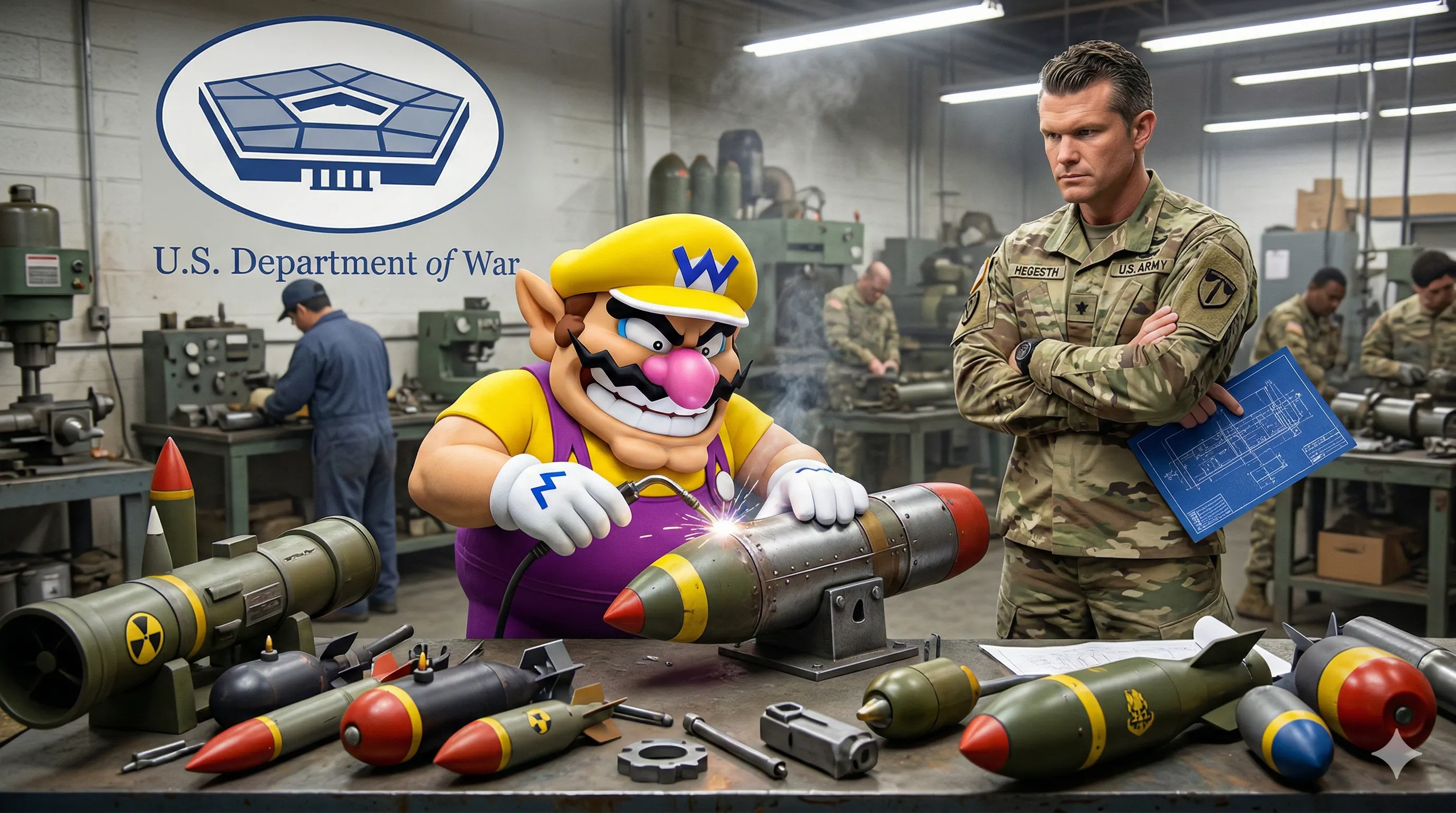
So I had Claude code build me the Claude of War, which I will link to in the show notes, A responsible approach to killing people developed by Wario Amade. It said that at Anthropic we believe that if AI is going to end human life, it should do so thoughtfully with a full chain of thought reasoning and clear audit trail. Wario Amade also greets us with the quote on the landing page. My brother wrote Machines of Love and Grace, a beautiful essay about how AI might make everyone's lives a little nicer. I wrote Machines of Loving death. Happy Friday 8:51 February 27th. We are now 8 hours and counting from the 5:01 deadline that Pete Hegseth set. Eric, take us away.
- [00:53]
B
Yeah, so why are we talking about Anthropic? It is one of maybe a half dozen industry leaders in Genic AI, Large language modeling and Anthropic. If you asked about it, I don't know, maybe nine months ago or a year ago. I don't think it would be necessarily spoken of in the same sentence as OpenAI's work or deep Seq. But they have been on a breakout run primarily because Claude has demonstrably shifted the way people are interacting with AI enabled coding. The tension at the moment is that Anthropic has, for reasons that remain unclear, caught the hostile attention of the Secretary of Defense, Pete Hegseth. And it does seem to be, and I hope our conversation sort of corrects this, it seems almost like a mission that Pete Hegseth has taken on his own. There are much more powerful people in the administration insofar as AI and cybersecurity or crypto go like David Sachs, who don't seem to be on this anti anthropic campaign. But Pete Headseth is taking it to heart and has threatened both Defense Production act authorities to be levied against Anthropic among a variety of other cudgels should Anthropic still be reluctant to effectively open its code to the full suite of military affairs.
- [02:44]
A
So we've got a few dynamics going on and I think we should start perhaps with the inauguration where you had Sam Altman and the rest of the tech CEO elite all their smiles, Greg Brockman donating $25 million to the Trump super PAC or something, and then Dario kind of being on the sidelines like he's missed some of these meetings. I think it's clear that his politics don't and the rest of or and a good Chun of Anthropic's founding team don't necessarily align with where this administration is. And that was fine. You know, David Sacks made fun of them for being woke AI, but as Eric said, it's all well and good until this is the market leader, which they have been for the past six months. In a sort of like, ironic twist of fate, the market leader, which is most. Which, like, has the most like, Fed ramping going on. So apparently only since this past week was Grok able to play on classified networks. Before that it was, it was anthropic, which was most kind of integrated and the various things that the Department of War gets up to. And anthropic tried to kiss the ring. It was reported in the Wall Street Journal that they asked 1789 Capital Donald Jr's VC fund to get in on their passed round. They said, um, and now the knives are out.
- [04:16]
C
There's two sticking points here, one of which is the, you know, don't put us in in killbots thing, which is like, all right, we can talk about that at a technical level. But like, there's also the no domestic surveillance part, which is kind of the part where everyone, like even talking to friends on the Hill, where they're like, hey, that's kind of weird. So, like, I, I would like to know. I think the public deserves to know more details about, like, what is this fight specifically actually about not whatever is in the public on the defense contracting as an LLM thing. Like, look, if you have contracts with defense contractors or if you have contracts with the DoD, I hate to tell you this, but the DoD is going to do DoD things, right? And so if your frustration is that, you know, your model is being used to support war fighting operations where people die. I'm not familiar with many war fighting operations where people don't die.
- [05:14]
D
Humanitarian missions.
- [05:15]
C
Well, well, well, yes. And, you know, I don't really know what business you were, you were getting into, so I think there's some.
- [05:23]
A
So here's the nuance. Here's the nuance, here is. The way I read the blog post is not that we are categorically opposed to our model killing people. It's more like, look, it's not ready for. It's not ready for game time. You know, we can do cute things around the edges, but the sort of downside risk of putting our models, you know, at the very pointy end of a kill chain is likely to get the wrong people killed or even get our own people killed.
- [05:53]
C
Well, so.
- [05:54]
A
But the analogy that I'm kind of going to is like almost a reverse Arthur Miller, All My Sons, where they're selling, you know, something which is, like, qualified to, like, go 200 miles an hour. And then the DOD is like, no, we're gonna, we're gonna do. We're gonna have it, you know, go at 400 miles an hour, but, like, it will just fly apart. And they don't want to be a part of that.
- [06:18]
C
And that's fine. But they're also saying for the audience here, right there, there's basically two types of AI for the dod, there's the. The in the bottom or in a control node for the bot. Right. And that is autonomy for perception to do on the loop operations. Per Doti 3000.09, it states pretty explicitly what you can and cannot do when it comes to these machines. So unless we've rewritten the DOTI, the guidance for the Pentagon is still 3,000.09. And then there's kind of at the higher level, the C2 echelon, which is like, we're going to control, like a bunch of things, or we're going to control logistics, or we're going to do planning. Right. I don't really know specifically what the instance was with Venezuela, like, where Claude fit into that. And who knows if Claude could have just been making maps.
- [07:12]
B
Yeah. Or like, like. And they probably weren't even upset about it. Yeah, it was probably like an information operations officer queried Claude and said, hey, give me the top 10 Spanish language broadcasts that are going to speak up about this. Which is, like, perfectly responsible. And, yeah, you can say on the margins I supported the operation, but there's no MH47 crew chief or pilot who's using Claude to do a load plan.
- [07:37]
C
Yeah, you can't just, like, it takes a lot of work to take in an LLM like Claude and just dump it into a war bot. Like it's not. And maybe somebody did that. But, like, that's, you know, that.
- [07:50]
D
Well, that's exactly. I think you're also seeing a little bit of that personality of Amade and anthropic more generally, versus, like, Andrew Palantir, where they will sell something that is a 20% solution and be like, this thing will revolutionize warfare. And that's a very important distinction. Like, you have a person who's very cautious about, like, hey, I don't know that this is going to fit the parameters of what I'm being told it can do. I'm going to be truth in advertising. I'm uncomfortable if that's where you're saying this is going today. That just sounds like a More frank discussion on how things are getting used.
- [08:28]
B
So what we're saying is Dario rejected the offer to become a lieutenant colonel in the Army Reserve, among other things.
- [08:36]
D
But I mean, like, I think. I think when you couple that look, that's the two things, right, that I think that the dod, in my mind, is leaving on the table. There's. You have a defense contractor. Now Anthropic is a defense contractor, whether they want to be or not. Like, they have sold something to the Department of Defense who is telling the truth. That's novel. That's a cool break in tradition. The other thing is the DoD could just, I don't know, say, yes, of course we're not going to do surveillance on Americans because of Pace Comitatus and the FISA court rulings and all of the other things that say we can't do that unless there is a warrant, which supersedes everything else. And then, like, both. Then you take away both of Amade's like, complaints, and then it's like, it's not an issue, but instead we have an ultimatum where it's just, no, no, I don't want to tell you anything. I don't want to say that I have any restrictions.
- [09:29]
C
Yeah, I think to wrap this up, this is a kind of a case of egos at minimum here.
- [09:37]
A
Before we close on that, let me. Let me like, read their little paragraph on fully autonomous weapons. So this is from a Dario statement from yesterday. Partially autonomous weapons like those used today in Ukraine are vital to the defense of democracy. Even fully autonom weapons that those that take humans out of the loop entirely and automate. Selecting and engaging targets may prove critical for our national defense. But today, frontier AI systems are simply not reliable enough to powerfully autonomous weapons. We will not willingly knowing. We will not knowingly provide a product that puts America's war fighters and civilians at risk. We have offered to work directly with the Department of War on R and D to improve the reliability of those systems, but they have not accepted this offer. In addition, without proper oversight, fully autonomous weapons cannot be relied upon to exercise the critical judgment that our highly trained professional troops exhibit every day. They need to be deployed with proper guardrails, which don't exist today.
- [10:28]
C
And I think that's a fine statement.
- [10:30]
B
Like, that's yusaneous product is TRL5.
- [10:32]
D
Yeah, 100%.
- [10:34]
B
And in acquisition speak, he's giving a fair assessment. I think Justin did trigger something that's really important here is that among, like, the Stargate participants and the inauguration attendees saying, I'm not ready is culturally weird because you're supposed to say, we're going to be driving cars on Mars in six months.
- [10:55]
D
Yeah. And I think when the leader, very clearly, in some very key categories, the leader of AI development in the US is saying, hey, this stuff is not ready for what we're saying it is, that's also a cultural push that is different than what the DOD has been encountering. And I worry that that is also driving some of this where they want everybody to get in line, because that is more in line with what we're saying our capabilities are. And that's actually the real danger to anthropic coming out and saying this stuff's not ready. Like, if we're top of the line, this stuff's not going to do what we think it's going to do.
- [11:34]
C
Well, and back to the C2 thing, that does matter, because if that's what Claude's going to do, I don't know. I presume that's what you're going to use a very powerful LLM for. Yeah. Then congratulations. Something goes bad, you're responsible for a mass casualty incident or war crime. Right. Yeah. And that's. That is, I think, smart on anthropic. Smart to fight that.
- [12:01]
D
Can we do the domestic surveillance?
- [12:02]
A
I mean, what domestic surveillance does the Department of War do?
- [12:07]
C
Well, so, yeah, yeah.
- [12:12]
B
And the Department has certain intelligence collection authorities that are supposed to be internationally oriented, but there are support to law enforcement missions. There are bundles of authority out there that the Department can employ in a variety of different circumstances. But to Tony's point, it is about NSA governance.
- [12:36]
D
Yeah. I mean, like during the protest in both. During the Trump one and then some of the no Kings protests that happened at the beginning of Trump 2. They're, you know, the report of Air Force drones doing surveillance over the protest crowds.
- [12:57]
B
CNP in Minnesota.
- [12:59]
D
Exactly. And the courts have already said, hey, yes, that was legal, but we need to get more defined. Like, the guidance needs to be more defined on what this can be. Because while technically you were within the bounds of the law, we don't agree that, that that was the intent of this law going forward. So they have asked for. Claire, the courts have asked for clarification on those. Those points. I again, like, we have an intelligence apparatus that, yes, it uses manpower from the DoD, but overwhelmingly that's through. That's through warrants, not through. Just because the DoD decides they want to do collection or surveillance on Americans.
- [13:41]
B
Yeah. If you're covering a U.S. person, it should be covered under FISA. Rules.
- [13:46]
D
Yep. So I would just say like the, like covering an American, like if you're overseas and you're doing intelligence reporting, even to the point like you're going out to embassy functions and you meet somebody and you want to come back and write up like, hey, I met this person and they said this interesting thing to me. If that person is a human, is an American citizen that happens to be living abroad, man, there's all kinds of restrictions that start coming into play on, like how you collect it, how that person is safeguarded, how we make sure that their identity is protected. And like those, those all apply to the DoD and just to the intelligence service kind of writ large. That's even external to the U.S. now again, you come back into the U.S. conceivably, the FISA court is a bull work against massive internal surveillance.
- [14:33]
B
To illustrate that exact point. When I started at the National Counterterrorism center back in this is like 15 years ago, I was kind of a low level analyst and then I moved into being an intelligence briefer. And we had a pilot program that Attorney General Holder had negotiated where certain analysts at NCTC and elsewhere in the Director of National Intelligence apparatus would have access to all of CIA and NSA reporting, but we would also have access to a substantial amount of FBI reporting. So we had sort of the Gorgon stare, both domestically and internationally. And I was part of a small team that had access to raw FISA that we had collect on US persons overseas. We could get like their Facebook pages or whatever. And it was highly controlled. We had to go through very special training to gain access to it. And one morning it was a little bit slow. I was going into kind of a mundane briefing day, so I queried some raw files related to some other reporting that we had and didn't find anything interesting and just moved about my day. When I was done with my morning briefings, I was back at my desk. I got a call from the Department of Justice that they said, hey, we noticed you ran these queries and we're going to talk to you about it because this is unusual behavior. And I had an attorney from the National Security Division inspecting my queries into the system because there was a recognition that what I was doing required an extraordinary degree of oversight and I was completely above board. Granted, I never queried RAF ISA again because I didn't want to talk to a Department of justice attorney, but the system is supposed to have guardrails and something that we have to thread through this discussion with anthropic or target of Killing the Caribbean or forthcoming military campaign in Iran. There's not really a functioning office of general Counsel at the department right now.
- [16:35]
A
Yeah.
- [16:35]
B
And that OGC is not taking sort of an adversarial look at the actions of services and components. It sees itself as a sort of a personal law firm on behalf of the secretary and to an extent, the deputy secretary. So when I make glancing references to normal intelligence collection guardrails, I am sympathetic to people like the head of Anthropic or other Defense Department contractors who are dealing with these people. And they recognize that there is no legal architecture that's governing what they're saying. And before I hold the floor for another moment, I was speaking with a, socially, with a fairly senior representative of a Defense prime minister recently. And this was after the Supreme Court struck down the President's national security tariffs. And you know, FedEx has gone public and said, hey, we want our rebates. And a few other companies are saying that they're trying to advocate for it. I think the state of New York is going to court for it. But what I've heard through these well informed channels is that there's been a network of asks under the table that said, hey, Pentagon, pay us back for these tariffs. And the Pentagon, without any sort of legal review just says, go fuck yourselves. Like, eat shit, American industry. This is part of the golden age. Get ready. And you know, what we're seeing with Anthropic or like the targeted killings in the Caribbean, it's all part of the kind of the same ethos of eat shit, you're not on the team.
- [18:16]
A
And I think that's the underlying thing is like, yes, as Tony said, there's an ego element to this. But if you don't trust these people to do above the board things with your technology, then you're going to want to have more understanding of what it's being used for. And they're trying to meet them halfway. Right. He could have just canceled all the contracts January 21st, but that's not the world we're living in. And the sort of being told no, ever, or told, hey, let's discuss this ever, is just not like part of the ethos of this administration or this Department of War in particular.
- [19:03]
C
This is like where I start to get concerned about the discourse of what the, you know, the recoil is going to be from this immediately. We can obviously see this is going to have, if they go forward with this, there's going to be, you know, probably a lot of legal hearings over this. There's going to be congressional hearings over this. Defense Tech is going to probably be hurting a little bit, if I had to guess, if this is what the industry is going to look like, especially if they go the DPA route. But there's a broader issue here, which is that this is the first time since when Kath Hicks announced Replicator that the public is getting a look at how the Department intends to use autonomy. This is not good for us. We like. This is my, my major concern is I'm already seeing the discourse in social media of Pete Hegs. This Pentagon wants to use robots with no guidelines, which is not true. For that's not what Defense tech wants. That's not what most of DoD wants. It's probably not what Congress wants. Foreign partners don't want it. And so if that's the case and that discourse runs into midterms and you get this backlash, I am very concerned about what that means for the no shit. Things we actually do need on the battlefield. 1 and 2. It also means that any sort of reasonable discussion about how we use AI in the future probably goes out the window because it leaves such a bad taste in people's mouths.
- [20:40]
D
Yeah, I mean, like this really, like the narrative here is really bad. And like I said, I know we've already talked about it a bit, but the idea that I think it's actually worth having the techno discussion a little bit too Tony, because modern warfare now, as we're seeing in Ukraine, is highly electromagnetic, you know, spectrum contested. That's radios, comm links are jammed, GPS is denied. There's, you know, it's very difficult and hazardous to your health to communicate because of jammers, spoofers, locators, you know, rapid artillery barrages that are fired on emissions, things like that. So there does become a point where, like when we say we're going to enable weapons and technology to have like on device, on edge compute capabilities, that we are admitting that there is going to be some form of autonomy. And what we have to hope for is that by the time they lose that link, that it is refined enough to where they actually make a good decision. They know the difference between a tank and a school. For instance, if we're already at this point where you have one of the leaders in this field saying, hey, I have reservations about where this technology is, is, and then you have the Pentagon saying, we don't want any guardrails and not even coming out and saying, like, we think we have a system in place that allows for the guardrails in the way that we do Collateral damage assessments and the way that we do target engagement authority, and we're going to level those guardrails. We think we are capable of doing that. And hell, Anthropic, we're going to put you on whatever the oversight board, you know, you get to nominate one of the people to the oversight board for this. As we start to experiment in this, you know, on edge, autonomic. Jeez.
- [22:30]
C
Autonomy at the edge.
- [22:31]
D
Autonomy at the edge. Jesus, I just talked over my tongue or twisted my tongue up. That becomes a very different conversation. The narrative that's out right now is you don't get to set guardrails. There are no guardrails. We get to use it however we want. And again, that's rightfully scary to a lot of people, even people within the defense industry. And the only way you have to turn that around on this administration or anyone is just say, how would you feel if it was Sam Altman talking about turning humans into little batteries? And the Biden administration that was saying this?
- [23:08]
A
I mean, it's already metastasizing. Right. We have an Open letter not divided.org with a few hundred researchers from OpenAI and Google saying, yeah, we're not so cool with this either. So this conversation has like clearly broken containment of the like.
- [23:24]
B
Second, since we started speaking. Wall Street Journal just ran a report that indicates Sam Altman has convened in all hands and has decided to broker a truce between Anthropic and the Pentagon.
- [23:39]
D
Yeah.
- [23:42]
A
Hold hands.
- [23:43]
B
Yep. And Emil Michael, who is the Undersecretary of Defense for Research and engineering, has weighted in and said, you know, Anthropic has nothing to worry about. Mass surveillance is unlawful under the fourth Amendment.
- [23:55]
C
Yeah. So one, that's Congress calling DOD of being like, going, what the hell? Probably the White House too. Honestly, like, there's kind of this weird thing where like, obviously, like a lot of this admin doesn't want guidelines, but a lot of them still grew up in the space of like, domestic surveillance is very bad. And so like there's that weird contingent of the people who want to do everything. And the people are like, ah, this is not the libertarian conservatism that I was raised on. So I expect to see probably a pretty big split in the admin on this. And I know there's already a split between Pete and the White House, so this is going to be interesting.
- [24:33]
A
There's also the. Let's not bust the AI bubble over.
- [24:37]
B
Exactly. Yes.
- [24:38]
A
Labeling the most important company in the world the supply chain risk before you label Alibaba or Tencent it. I mean, come on.
- [24:46]
C
Yeah, yeah. Let's consider continue to sell chips to the Chinese while labeling Claude as supply chain risk. That'll go great.
- [24:54]
D
Yeah, we're going to, we're going to note that we know that Deep Seek was trained on Nvidia Blackwells and not do anything about that. But we're going to blacklist Claude.
- [25:04]
A
Cool.
- [25:05]
D
We have our priorities in order. I think we're good.
- [25:08]
C
Jordan. I think you shared it with that reporting from the White House where they're like, we know exactly where in like the Gobi Desert. These, these chips are being used.
- [25:16]
A
Yeah, yeah. There's. There's some chunk of this admin which is like still very much not on board with the selling. Selling tips to China. They were like, yeah, Inner Mongolia. We see you Deep Seek, like cute stuff you guys are doing. I mean, here's the thing is like coming, coming to the China stuff. I mean, I think Dario's got more China Hawk points than Pete does. You know, he's been screaming about export controls for a really long time. They're putting out the, they're banning. They're trying to ban Chinese Chinese users. They have this recent report calling out Minimax and Moonshot and Deep Seq for trying to distill their models. I mean, it's, it's.
- [26:00]
B
Yep. Well, look at who is Dario's principal National Security advisor, Tarun Shabra. Who is Obama Biden strategy director at the National Security Council staff. And you can see people who don't operate in this space sometimes parrot the commentary of their immediate advisors. Not that they're dumb or misinformed. It's just like not their principal area of comfort. So Representative Ocasio Cortez goes to the Munich conference and sounds a lot like Matt Duss. Dario gets into a knife fight with Pete Hegseth and sounds a lot like a Obama Biden Harris era China Hawk.
- [26:45]
C
So can we we talk about the broader China thing here, which is like what happens when these models. So I think we talked last week about how Europe doesn't have like a, you know, an open.
- [27:02]
D
Yeah.
- [27:03]
C
Like if you want to go down this path, I am sure that at least some of these people will leave their companies and take up elsewhere.
- [27:10]
D
Yeah.
- [27:11]
B
If you shadow Anthropic, like those people are highly mobile. They go work for Miramoratti for a little while, they go to Mistral. But if you take DPA authorities against Anthropic and Tony, you hit this. It is not limited to this somewhat narrow footprint of AI oriented companies. It is Every prime, every new prime and every aspirant out there. Anybody who takes a loan from OSC or DFC is put on notice. So it's clear that the Secretary hasn't thought through any of this because he's, well, it's, he's doing his Make a Wish foundation stuff.
- [27:50]
A
Yes, it's, you know, we're, we're, we're just like trying to put the heat on, but let's, let's actually walk through this scenario. Like what is the Defense Production Authority allow you to, could potentially allow you to do in a case like this?
- [28:03]
C
Yeah. So DPA from the policy standpoint, to
- [28:08]
B
be fair, Tony, I'll let you get into the details. But DPA these days, especially in this, at this current Pentagon, is their effectively God in a box. It's their deus ex machina. They slam DPA and they get results that they want. The MP Materials transaction from July, where all of a sudden the Pentagon took a $400 million preferred stock position in a publicly traded company. That was a DPA button. A DPA does not exist for that. But the Pentagon's officers, general Counsel said, yeah, go ahead. So they have a pattern of behavior where they use this Korean War era legislation to intervene in the American economy in new and inventive ways. And some of it may turn out to be actually helpful. The cudgel that we're talking about today is substantially different.
- [29:02]
C
So the thing about the DPA is that it's, I mean, you could drive a truck through it. It is like, it is not very specific in some ways, and that if you wanted to twist it to your favor, you can do that. Now the thing is, is that it was always written as a gentleman's agreement in the sense that you can press a lot of economic buttons, but there will always be economic and political feedback to it. Right. There are market reactions to the things that you can do in here about demanding production lines, et cetera, which is why people are very selective about invoking the DPA throughout the last 70 years that it's been around and going to this point where the DPA is a magic button. Yes. It gives you a lot of, you know, it gives you a lot of potential in the same way that if I put a V8 in my car, I can drive really fast. However, I would not recommend doing that on the streets of D.C. because I will crash. And that is what you risk if you want to really go hard with the authorities that you can evoke in the dpa.
- [30:11]
A
Oh, fun fact. You know, we are going to have a DPA renewal which you know, has been like a sort of low. I mean this is like a kind of niche defense topic for a while. I don't think it will be this time. We had a stopgap expiration to December 30, or sorry, September 30 of this year, so before the midterms. But still, I think there's.
- [30:37]
B
This is a rare point around. This is a rare moment where the Senate Armed Services Committee and House Armed Services Committee are actually putting some screws to the Pentagon. And this is getting into like true inside baseball. But if we go back to some of this deal making that's coming out of the Pentagon, the Deputy Secretary of Defense's office, they originally wanted to enter into a wide range of long term commercial offtake agreements with mining companies for the Critical Minerals and Rare earth elements campaign that they're on. And a key component of the Defense Production act is that it's not really enduring funding like you get it for a year, you got to use it and then Congress has to come back and approve more of it. And Congress effectively said, hey, we do not approve of these decade long purchase agreements for rare earth elements. We do that. This is not DPA authority. We are not going to arm you with this any longer. They did it quietly and that has led to the administration using a few other vehicles like Project Vault with the Export Import bank or trying to come up with an international system within the G7 for a tariff based price swap or DARPA launching a, a commodities market. You're seeing just one incidence of the Article 1 authority being used to check the ambition of the administration. And it is on a like, what's ultimately like a $6 billion market. It's really small potatoes.
- [32:08]
D
Well, something else to consider too is that like they're talking about the DPA and they're talking about label them a supply chain risk. And those are two distinct labels and uses. So we'd say dpa. Then we're going to say, okay, we want unfettered access and we think that we should be able to use this however we want because of reasons using label with supply chain risk. You're saying nobody can use this because we see this as an existential threat because it has the ability to be used for coercive purposes. That's also where like the department, they've said both of these things. They said we're going to do DPA and we're going to label them as supply chain risk. Risk. It's like it's just, it's just, it's
- [32:48]
A
just like big toxic. It's just like a giant toxic relationship. Which, you know, are a lot of our leadership I don't think is unfamiliar with where you know, we have this quote in Axios, basically saying, oh, you know, the only reason we're giving Dara the time of the day is because he has the best model. Which is true. And by the way, if you don't want to, you know, marry us and sign without a prenup and kind of like move to the, the hills and cut yourself off from, you know, all of your other relations, like we're gonna, we're gonna try to throw you in jail.
- [33:18]
B
Yeah, that's a nice 300 billion dollar company you got. It's a shame that something would happen to it. It's like Fat Tony from the Simpsons.
- [33:24]
D
It's ridiculous. It's funny that you just made marriage and a cult sound exactly the same. It was amazing.
- [33:31]
B
We used to call, it's like feudalism. It's like you need to. I'm calling on my bannermen to go march on Winterfell.
- [33:40]
A
Well, it's like the war, I mean like this, we've got scholar, soldier and warrior ethos as well kind of clashing a little bit where you know, a Dario on the one hand and, and Pete on the other on like what it means to, to fight. Right. And again, I think you gotta come back to like the fact that these like, it's not like anthropic could have just never played ball and then would have wouldn't have been in this position. It would be, it would be more lucrative for them to not deal with these annoying ass defense contracts and just like sell to insurance firms and financial companies and you know, software providers and whatever. But like the fact that they're even having this conversation in the first place is getting is, is leading to a ton of headaches. Just like talking about chip export controls have led to a ton of headaches.
- [34:32]
D
So that's actually super, that's actually really interesting. I think we should talk about that for a second because Intel's Bob Noyce's intel strategy was we used to have all these contracts at intel and I made semiconductors to government specs. And I said that's a really small market. Bob Noyce goes, that's a really small market. I don't want to just deal with this market. I'm going to make chips for the consumer market and then the government will just buy them and they'll buy whatever I make and I'LL send it in. And that was super lucrative for tech companies for a very long time. That dynamic of I will make something that's optimized for the civilian market, but I will also be able to sell it. This starts turning that dynamic on its head and starts risking that dynamic. And again, the upside to selling to the civilian market is so much higher, you know, in a capitalist market than it is to selling just to the government or DoD than that. If you want to grow and be a large company, that's kind of where your focus needs to be. And then you just do the defense thing at the side. But if the defense part of your company can actually become the thing that gets you tarred and has all the risk attached to it, you're going to start seeing companies that have these capabilities completely eschew working with the Defense Department.
- [35:48]
A
Yeah, and that's the thing is like, because there are. For frontier model development, there's only three companies in the world where, you know, Grok, whatever. And it is not inconceivable for these three companies to just decide to take their ball and go home. Like, like they're actually doing, like, they're actually doing this work with the government out of some sort of, like, patriotic rationale as well as a bit of an insurance protection. I think, like, maybe they were hoping that they wouldn't be screwed on some other regulatory issue if they're, you know, kind of doing their part to like, preserve the. Preserve and protect the Republic. But, you know, this isn't like a, this isn't like a, like you can't just like spin up another provider of this thing. This is an extremely exquisite technology that only, you know, a. Fewer fingers, fewer companies than there are fingers on my hand could potentially provide with all the workforce, which is not, you know, which has it, you know, which didn't grow up thinking that, oh, wouldn't it be so cool to like fight. Make Skynet, make, make Killbots? I mean, you know, if you look at like the donations of the, of the rank and file at all these companies, I'm sure it's like 80, 20, 90, 10.
- [37:03]
C
So there's an interesting contrast here I want to talk about, which is because I've seen several people cite this as, oh, this is our version of military civil fusion, which for those in the audience who don't know, I don't know why you wouldn't. It's basically the Chinese model of basically like, hey, you have these companies, they build great things. You belong us. Gimme. That's an oversimplified version, but that's basically it. And that was a long standing critique of China hawks, which is like one, we don't have that, how do we compete against it? And two, that's a symbol of totalitarianism, right? That you don't have free enterprise, that your dual use has to come by the boot rather than investor capital. And so now we've basically by doing this we are mirroring what the PRC is doing to its companies, which is basically putting the boot on the neck and saying you will do what we say or you're not going to have business in the United States. Because that's basically what labeling claw to supply chain risk would do. Because nearly every major company, defense tech or not, touches the DoD in some way or touches the US government in some way. And I think that's one of our scary moment for free enterprise. But two, this is the thing is that we know that that mil civil fusion model doesn't work in the long run because it kills innovation. And so you might get it at the outset where you're like, oh this is great, but it doesn't sustain itself. And I think you already kind of see that with the workforce burnout in the prc. And that's in a, a culture that has been under a regime for decades. The culture here is not going to survive that, or rather that policy approach won't survive the culture here.
- [38:52]
D
I mean we were talking about what was it not wind sale, what was the one that got acquihired but they didn't do an aqua hire by Microsoft recently. The potential of the way that Microsoft did the buyout of that company for their coding capability was gonna destroy the Silicon Valley startup initiative because it took away a lot of the incentive to go work at a startup. If they were able to just like pick and hire only one or two people and leave the rest of the company just to kind of wither and die that level. Like at one company, one large corporation doing that to one small startup. Everybody was like, oh man, this is gonna destroy the innovation in this ecosystem. What do you think is gonna happen if we destroy anthropic because they decide they don't wanna exactly play ball.
- [39:42]
B
Jesus.
- [39:45]
C
Well, and so this is like the part that to get to something related is, you know, I see a lot of friends on the left, Eric. I know you've seen it of like, you know, the nationalized X company, right, as a punishment. And it's like, I hate to tell you, SpaceX is not SpaceX. If you nationalize it, it's NASA. And I don't know if you've looked at the production rate of NASA lately. It's not doing so hot. So, yes, you can have regulations, you can have guidelines and standards, which is what you should have for frontier, AI for space, etc. But this idea of it's my way or the highway, it doesn't work. It's not going to win us the ball game.
- [40:25]
D
Yeah, I mean, the horseshoe theory here is just more and more apparent. Like, whichever side of the political spectrum you're on, they both just meet at the bottom and it's nationalize everything on both sides. And it's just like, can we just keep the capitalism thing going? It worked pretty good so far. Like, it's. It's been pretty good.
- [40:44]
B
Actually, it didn't because one time someone emailed me with pronouns in their signature block and it offended me so badly, I decided to destroy the Constitution. I was shook. I'm still shook. Or someone asked, you know, put a work dignity.
- [41:03]
A
Try a war criminal. You know, horrible things.
- [41:08]
B
Yeah.
- [41:08]
D
God, yeah.
- [41:10]
B
Yeah.
- [41:11]
A
I think putting a knife in someone's neck after you have them, you know, their hands tied behind their back, like, what. Who couldn't, who wouldn't want to do that?
- [41:20]
D
Yeah.
- [41:20]
B
I think the. The coziness between government and private industry is not new. The employment of a cudgel, like what the Department of Commerce did with intel, is distinct and is troubling and it's going to cause market inefficiency and it's going to cause this process of just thematic alignment with political power centers that it is fundamentally opposed to the traditional concept of federalism and divided powers in the United States, where companies have to conduct themselves on the whim of the presidency rather than doing what's best for their stockholders or for their communities or for their employees. I think it all ends in tears. But we're going to get more T shirts with Made in America stamped on the inside out of it. So I guess it's probably a wash.
- [42:24]
C
Do we feel like we beat this to death? Because I want to talk about this week's Florida man incident.
- [42:29]
B
Oh, can you narrow it down?
- [42:32]
C
Yeah, I guess every policy decision is
- [42:34]
D
a Florida man incident now.
- [42:35]
A
Yeah.
- [42:36]
C
No, I want to talk about the 10 Cuban nationals from Florida who tried to invade the islands, the Comoros Islands
- [42:45]
B
campaign of Margaret Thatcher's son showing up and trying to overthrow the Castros.
- [42:52]
C
So for those who've not seen it, it looks like Marco Rubio missed his best opportunity to invade the island because it looks like 10 allegedly drunk people from Florida with bulletproof vests, rifles, IEDs. According to the Cubans. Again, this is all according to the Cub. Got on a 24 foot boat. And for those who don't know, it's really hard to fit 10 people in a 24 foot boat and sailed to Cuba. Allegedly shot first. I'm not going to get into that. And then the Cubans were like, hey, what's up with this? And shot four dead, injured six others. And now there's a whole spin up of. I think even Marco Rubio was like. I think his actual quote was like, that's weird.
- [43:38]
B
Uh, it's like how drunk do you have to be to. To keep your buzz going for the two hour trip?
- [43:45]
D
You, you take the drinks with you.
- [43:47]
C
Yeah. Where do you fit the drinks?
- [43:50]
D
I don't understand the. Sorry. It's Florida.
- [43:53]
B
If you're loaded up with fuel, 10, 10 extraordinary doofuses. Like a basic load of ammunition. Like at a certain point something's gotta give.
- [44:06]
C
Yeah, I think we missed the inverse.
- [44:08]
D
They probably had cocaine also. They were taking two km.
- [44:13]
C
Well, and you know, the thing is, is that this would have been a great opportunity for us had we not put all of our air power in the Indian Ocean right now.
- [44:22]
D
Well, and that. And you know, Marco Rubio is currently in the running to be the next leader of the, you know, the Sinalona cartel or whatever in Mexico.
- [44:32]
C
So I thought he was going to be a board member of Anthropic. I thought that was his.
- [44:35]
D
The number. The memes that have been coming out this week with him getting appointed to different positions are all amazing.
- [44:43]
A
We're not going to talk any, any. I mean, I guess kind of nothing has like happened with Iran since we did last week's show.
- [44:50]
D
We're just.
- [44:51]
A
Well, we've got on our thumbs a bit. What if we actually bomb Iran at 5:02 the, the minute after the. Use Claude to do the target.
- [45:02]
D
You do it. You say we use Claude and then you say then. Now you guys are. Now you guys are.
- [45:08]
B
But it is a reflection of the increased presidentialism of American politics in that the two point people leading the negotiations of the Iranians, it's Steve Whitake off and Jared Kushner. They have no formal training. They have multitude of business interests that they put first and foremost in their dealings. And they are effectively the trigger point between this relative moment of peace and a renewed war by and among the United States, Israel and Iran. It, it's absurd and it, you know, it's another part of like the Doge era direct attack on government professionalism. It's downrange from a culture of government can't do anything right. You know, this long litany of attacks on actually understanding the shot. And it's not just whether or not, like, a chicken processor in Maryland is being effectively monitored by the fda. It's making countries rise and fall in warfare. That there are 2, 300 combat aircrafts that are coiled to start moving against Iranian targets for reasons that have not been articulated to anyone outside of the president and his inner circle. Now, when you say it out loud, it is just this, this extraordinary indictment of American political culture. That and our Constitution, our sense of rule of law or propriety, all of it is just rusted because we have permitted ourselves to arrive at this absurd moment.
- [47:02]
D
I mean, during the State of the Union, he. He made reference to. There were 20,000 protesters in Iran that were killed. I. Why didn't we do anything when the protests were going on? Like, and do we really think that.
- [47:17]
B
And this is an authoritarian administration, do they. Like, why do they care about a daddy Iranian?
- [47:22]
D
But, like, if. If the truth is that there were 20,000 protesters killed, which is larger than the numbers I had seen. But, I mean, I don't. I don't know. Again, like, I go back to the question I asked when we talked about it the first time. Why is this not his red line? Because he also said several weeks ago, they assured me they weren't going to kill anymore.
- [47:47]
C
So this does raise an interesting question of, like, looks. I think so, yes.
- [47:56]
A
Okay.
- [47:57]
C
Sorry. And then I think. No, I think Millie said something to the effect of, shut up, Steven. So I think that's an actual quote. So there was an article in, I think it was New York Times about how, you know, these Iran deployments are starting to bend and break the naval force, specifically in the United States. And I'm wondering how much of the inability to strike accurately during the protests was. We don't care. Vice. It's actually going to take a lot more time to spin up than we thought because we're really pushing the limits on what the Navy can do right now. I am curious about that. Or it might be that. Actually, I think part of it is it takes a lot of time to get stuff in the theater to protect our own forces because the Iranians can reach out and touch us. I think there was a. I saw some notification that the Chinese are selling more YJ12s to the Iranians, which Wikipedia says has a roughly 200 to 300 kilometer range point. Being is it can reach out and touch boats in the area. And so I think the threat of retaliation this time around seems a little bit more serious and that might be why they're taking longer. Yeah, yeah.
- [49:15]
D
I mean, it also goes. I wonder too if the risk calculus hasn't changed now that we know after the State of the Union that it was not, no one was injured clean in and out, that we were a few bullets being in slightly different locations from losing an entire Chinook full of Delta operators. Like if that essence started to change the calculus a little bit, that should have scared the shit out of the administration. I'm going to be honest, the world
- [49:50]
C
looks a lot different if those bullets are a little bit left, a little bit right.
- [49:54]
D
Yeah. I mean, be honest, the 160th is amazing. Those pilots are amazing. That Chinook goes down, it's Blackhawk down with Delta operators in the middle of, you know, Caracas. Like then you have Seal Team 6 that has to respond because obviously whoever went in the other one must. Somebody was on standby to be back up just in case. That's always the way contingency planning goes and stuff. Like you all of a sudden like the world changes dramatically. Now we're going to take not the most exquisite and prepared force in the world to go do a discreet military operation and we're going to go do in Iran, which does have IADs against like you said, Tony, like how much seed aircraft, how much suppression of enemy air defense aircraft do we have? How much capability do we have to continually fly Growlers and electronic warfare aircraft to keep radios jammed and jammers off? When do we lose something like it is a hard problem. And I thought last week we had a report that came out and it immediately got dismissed by the administration, but where General Kaine was basically saying like, hey, I don't think this will be as easy as everybody thinks it's going to be, was what the report said. He had expressed concerns within the administration.
- [51:09]
B
Yeah, I think both the Journal and CNN had independent versions of the same theme where the chairman who understands the mechanics of these operations, when I worked for him, he was a one star jsoc. He knows it intimately and he's a fighter pilot. He knows the complexities of moving against not just the Maduro target, but what is likely envisioned in Iran. And the fact of the matter is, you know, he's like the last military professional who's there. And he lost a substantial amount of his credibility by taking the position because it's sort of a sort of appointment but he is not surrounded to his left and right by people who have any sort of training or experience or interest in history. And he is probably a lonely voice who's going to be asked to depart and this operation is going to go forward whether or not he likes it or not. And he's sufficiently sophisticated to understand that at a certain point he was probably going to be put in a Mark Millies style situation where he was going to have to put his rank on the line. And this is him making it known and he's going to lose the argument. And the country is more likely than not going to go to war anyway.
- [52:33]
C
So I think this is a good time to pivot. It's now four years into the war in Ukraine. Speaking of military disasters.
- [52:42]
B
The full war.
- [52:44]
C
The full war. Sorry, it's actually, I'm doing my math here. 12 years since the Russians first took Crimea and we did nothing about it. It and we let the Germans negotiate a truce. So it's been four years. There are UK MOD reports are 1.1 Russians killed or injured. Ukrainians are somewhere in the hundreds of thousands, millions of people displaced, trillions of dollars of economic damage, which I always think is like a weird. I get it. But it's like a weird measure of warfare, the whole economic damage thing. And we're no closer to a resolution. Despite everyone's attempts to either have a bad piece or a good piece. And it remains unclear to me who retains the advantage on the battlefield. The Ukrainians are still able to at least carry out local tactical counteroffensives, it looks like, at the battalion level. And the Russians keep throwing these human waves at it, but, but that's going to break the force at some point. At some point you got to slow down with that. So I don't know where we're going from there. I am reticent to say that Ukraine is an entire American policy failure because Ukraine is still there and had we not helped, it would not be. I will say the policy failure was misunderstanding what it takes to fight the Russians and then having an over obsession with nuclear war in Ukraine and every time the Russians said the word nuke.
- [54:28]
D
Yeah, I mean like, you know, we've seen the increase in defense spending, we've seen Ukraine fight off a three day special military operation now, like you said, for four years and punish what was one of the largest militaries in the world. But we've also seen like it's not just a US policy issue, it's a European policy issue. Right. Like how long did it take The Germans to stop buying liquid natural gas from Russia or the rest of the eu, how long did it take for them to actually like put sanctions on all of the banks like Europe, who had the most, who stood with the most on the line and you would have thought would have drawn the harshest
- [55:15]
A
line,
- [55:17]
D
was not ready because of the leadership in Germany. People in Europe just didn't want to believe that it was going to happen. And now you see some fracturing within the EU that's going on where you have the Baltic states that are starting to look a lot more, I don't want to say militaristic, but a lot more like, hey, the EU probably not going to help us. The Americans may not help us. We got to help ourselves. You see Poland, who's absolutely on the. We're just gonna, we're just gonna protect Poland, like we have to protect Poland. And we're gonna do that first and foremost, while you're also having a simultaneous rise of, you know, Putin friendly ish, you know, Central European and Western European governments, or at least people within, trying to, trying to take control of those governments. I think like, it's not just a US foreign policy failure that Ukraine, both through the Obama administration, Biden administration, Trump administration one and Trump administration two, but it's, I mean the collective European response to Crimea was. That's weird. And then nothing like.
- [56:34]
C
I think the. Having read more this week about kind of how the Europeans are still struggling with this. Right. I think the inconvenient truth for the Europeans and I think their politicians won't say this, but they know it. Is that the reason why they, and we've all heard in the United States, oh, Europe has a wonderful social safety net and all these things. The reasons they can do that is because of American extended deterrence. Right. And the fact that the Russian threat was not there, the Russian threat is there American extended deterrence, who knows. And now these politicians are caught in a rock and a hard place of either, well, we have to risk the return of militarism to Europe or we basically have to bend to the Russians and just not care because there's no way they can sustain all the other things that have made Europe a fairly popular social economic paradise for the last 30 years, even though they don't have air conditioning. Not really paradise then, without having trade offs for. And you see in the UK, right, the UK does not. They keep writing these white papers saying they're going to spend more money and then they don't spend more money. The Germans, the same Thing I really think that Europe's going to hit a political breaking point soon of do we just give up on what we built for the last 50 years? Because we have to and the populations are not going to like it. And I think, I think Eric talked about it last week of like the risk of fascism or a far right leadership in France. Right. That is the first thing that will go. If you try to violate that safety net in France because you have to rearm. That's exactly what you're going to see.
- [58:20]
D
They may have to work 40 hour work weeks again. They're not going to like that.
- [58:24]
C
That's, that's true fascism.
- [58:28]
B
There are indications of a renewed spirit. We know that if you look at that military aid to Ukraine in 2025, Europe has made up for American abandonment. Is that sustainable over the long run? It's uncertain. Something that I should probably check is the rate of Mercedes Benzes and Audis being exported to Kyrgyzstan. There's wonderful infographics about this marginal economy in Central Asia all of a sudden receiving more luxury German sedans than like any other country in, in all of Asia. And the, the reason being it was just pure sanctions circumvention that you export to Kyrgyzstan and then the Russians still get their slick autos. Is that still happening to Justin's litany of sins that he was speaking of? Like that was going on for a while and it was not simply hydrocarbon carbons. It was manufactured goods, it was luxury goods. It was a variety of different means of economic activity that signaled that Europe was not taking the threat seriously. There are other indications. Beyond the Baltics continually telling the truth or the Poles telling the truth. The Bundestag is starting to look at additional efforts to increase German defense readiness. From a more aggressive draft to ensure that their military units are fully staffed to investing in the traditional German defense primes or an expanded network of providers. Will all of this balance to a better European wide readiness? It's amazing. Be as 20 years ago, Europe was in the midst of a breach of sorts with the United States. The Iraq war demonstrated a substantial gap between the German government, the French government at that time, Jacques Rock, Gerhard Schroeder and the Bush administration and the Euro's fair point. They were fundamentally correct. But the European Union response at the time was well, we need to start looking at defense structures outside of NATO because the Americans aren't reliable or trustworthy, worthy. And they came up with a system of European Union battle groups that were these ad hoc task forces of their Mediterranean countries like the Portuguese and the Spaniards and the Italians would have a team of like 1500 soldiers. The Baltics would have another one, 1500 soldiers, and they would be allegedly available to deploy internationally on a moment's notice. And it turned out that they were. It was nonsensical. It was like a weekend with your ROTC battalion. So they didn't take it seriously 20 years ago because fundamentally they didn't have to, because the GOP of 20 years ago was different than the GOP of today. That for all of the shortcomings of the Bush administration, nobody went to Munich and gave a speech like Secretary of State Rubio did, like, it just would not have happened. The stakes are different now. So Europe. And speaking of Europe as a solitary actor, like speaking of the west or the global south, is ridiculous because these countries and these blocks don't actually exist. They're still broadly independent actors. But there is a recognition, one, of American unreliability, and two, that despite the grievous casualties that the Russians have suffered in the Ukraine war, their rate of artillery production has recovered. They are able to refurbish armored vehicles. They are conducting special operations or intelligence activity, directed sabotage in Poland or against airfields or commercial airports in Denmark. Like the Russians, even though they have a bloody nose and a broken leg, have not given up their imperial designs. So by and between the Russians remaining a formidable threat on the border and the United States abandoning the Atlantic alliance and in fact, still having a residual direct military threat against Denmark, against Canada and others, I think that Europe is recognizing that there has been a paradigm shift. What I am fearful about is that it's not necessarily going to be fundamentally good guys like Manuel Macron who are leading the charge. It's going to be far right actors who are saying, okay, it is going to be Europe first, and there's going to be profound ugliness directed against migrants, Immigrants. People who don't necessarily cut the. Are cut from the same European cloth, so to speak, similar to the way that we're seeing it now, that Europe may rearm and be a more formidable conventional threat in the future. But that doesn't mean that their bayonets are going to be pointed in the right direction.
- [63:32]
D
Yeah, I mean, like, the hope is that they would be able to, you know, even if we lay all that aside, even if we were to lay all the bodies which are, which are terrible and potentially very murky, even the entire start of, like the American argument of, or the Trump administration's argument, they don't pay their way. The US hasn't met its 5% commitment to defense spending for NATO since 1993 with the exception of like two years during the Iraq war. Inflation adjusted numbers last year. Yeah, we had like what, 4.7% or something like that of GDP in 2024 was spent on defense. And to Tony's point about talking about the safety networks and things like that, like the US with all that we already spend and you know how we openly don't have like a single payer system and healthcare and stuff like that, we can't meet and don routinely meet our 5% mark for defense spending. So to then go back and like tell the Europeans like we're going to abandon this because you're not sending your 5% is something.
- [64:41]
B
And it was 2% forever.
- [64:43]
D
Yeah, exactly.
- [64:44]
B
The 5% is just designed to humiliate the Europeans who are trying to cooperate.
- [64:49]
D
Like yeah, Poland is like well we've got our 5%, where's everybody else?
- [64:54]
C
And it's like yeah also like the Greeks spend like 4.8% but like most of that's on pensions and corruption. So like it's a stupid metric.
- [65:03]
D
Well, and the Greeks also spend like three times that funding the shadow fleet to move oil to Russia. So. And nobody's talking about that either.
- [65:11]
B
So yeah, it's a rare. Let's just hover over that. It's a rare administration win and let's give credit where credit is due. Like the shadow fleet is shorthand for a broader network of illicit tanker ship that fly under a multitude of national flags. But they will often enter a port, turn off their transponder, change their name, have false bills of lading, have crews who didn't see nothing types. And they are expressly under sale to help countries like Venezuela, Russia and to a lesser extent Iran or other violators get around the global network of sanctions. And this has been an open secret for forever that international shipping is lightly governed because it's international and there's not like an international coast guard supervise it. But some of the most egregious violators of this system have now been subject to coast guard or naval special warfare inspection, often led by the United States or in partnership with Britain and a few other countries. Countries. It is long overdue. And it's not going to, let's say, collapse the Russian hydrocarbon industry overnight. Not by any means. It's going to slow their accumulation of hard currency. There's going to be a series of net benefits. But it also goes back to a recurring theme of what I talk about here or in Other forms of advocacy. It's like the war opened up four years ago that and the war was launched in 2014. If you're going to do sanctions, do sanctions. And it's not like the Trump administration created the Navy SEALs or created the Coast Guard. Like the Biden team and the Obama team had assets, they had the ability to enforce these sanctions and they elected to not do it. And Democratic officialdom needs to answer for it because it's quite obvious that they kind of had an easy button that they didn't want to slam to their, to their lasting discredit.
- [67:26]
D
Yeah, I agree. Again, like, I think every administration takes, takes the blame for Ukraine since, since 2014 because again, nobody did anything worthwhile. But same same with the, the Syrian red line. So, yeah, Siri just heard me say
- [67:45]
B
that and got excited to hover over the point. It's unnecessarily critical. I understand. And you're harping out of power. A political party that's out of power may just seem like kicking a dog that's not feeling so well. But the Trump team, especially around the Pentagon and to an extent in the intelligence services and the FBI, are able to move with such speed and behave with such aggression to be so decisive, to demonstrate such a leadership vision because they weren't standing on, like, they didn't have to take over for much. That the Austin era of the Pentagon was like a series of, you know, formal delegations to the Shangri La dialogue and a nicely prepared speech at the Reagan National Defense Forum. And who gives a flying fuck about any of it? Like, it's a legacy. It's to call it a legacy of ashes discredits, Ash.
- [68:42]
D
I mean, to be fair, Secretary Austin went missing for like 25 days before anybody noticed.
- [68:48]
C
You know what was wild was that that news did not. I, like, right after then, I had a conversation with some other politicos who were affiliated with the admin but were not in defense. And I was like, yeah, like Austin went missing. And they were like, what? Like they, they, they, they had no idea that the Sec Def. Went missing. And Dep. SecDef was like, I'm in Puerto Rico. The DoD can't talk there. There's no way anybody can talk to me if I get on a plane. So I'm just going to stay on the beach. Which is like an absurdity upon absurdity.
- [69:21]
B
Means he had nine margaritas and you're tucking into some mofongo. Gotta get that shrimp.
- [69:32]
D
Yeah. I'd be like, again, like, you're exactly right. Like The.
- [69:36]
B
The.
- [69:36]
D
The last really serious person that held that office was Mathis, who, like, I think seriously took his job as Esper was. I. Yeah, but that was. I mean, Esper was placeholder was before. Yeah, but like the last. You know, like, everybody that came basically since then has been like, don't get me wrong, even before, I mean, we
- [70:03]
A
had four years of Chuck Hagel.
- [70:05]
D
What was that about?
- [70:06]
C
Yeah.
- [70:09]
B
Does anybody remember Leon Panetta sitting in the chair for a year?
- [70:12]
A
No.
- [70:14]
D
It's like the best is when he
- [70:15]
B
was as Carter inflicting DiU on us.
- [70:19]
D
Leon Panetta, director of the CIA, comes out and says, I was in command of the Navy seals. That got been. That's not how any of this works, Leon. If you believe that, there's a whole lot.
- [70:30]
C
You leave James Gandolfini's second best character alone.
- [70:36]
B
Do you remember Panetta as a condition of him taking the job? He didn't want it. The President had to twist his arm. He's like, I am taking the SEC def aircraft. I'm flying back to my walnut orchard every weekend. I am not going to be here. And they let him do it. Like, he's like, you're inflicting the most interesting job in the world on me. How dare you.
- [70:59]
D
Yeah, I mean, like, and for everything that I disagreed with during my time in and stuff, like, you know, Bob Gates obviously did things that I disagreed with. Again, at least he was a professional that showed up every day. Like, can we get that?
- [71:15]
A
It is a low bar.
- [71:16]
C
We're not.
- [71:18]
D
Answer your email, show up, be at
- [71:20]
C
the meeting, tell somebody. If you're in the er, you get
- [71:25]
D
admitted to the hospital, let them know, like, hey, I shouldn't be in the presidential chain of succession right now. I may have to go into surgery.
- [71:32]
C
I just also think it's wild just to harp on that, that, like, it took them like three days and like, several meetings till, like, Jake Sullivan was like, hey, where's the Secretary of Defense?
- [71:44]
D
And then the.
- [71:44]
B
The Chief of Staff of the Pentagon was. Was like, actually, like, like pumping it into Twitter. Like, actually, everything is fine. Fine.
- [71:51]
C
Yeah, it's also fine. Also, the reason this happened was because I had the flu and, and nobody else could. Could find me or something. I don't like.
- [72:02]
B
Yeah, so what we're talking about is just like this professional drift that, like, Secretary Austin had a substantial amount of military experience. He has served as a board member. Like, like, in normal American politics, he would be kind of a plausible candidate, but if you spent a substantial amount of time around him, if you witnessed the ebb and flow of the early phases of the Counter Islamic State War 2014, recognize that he was not up to the task in any way. And he was an interesting pick by President Biden for a few reasons. One statute's supposed to ban this. Like you're not supposed to be able to pick Jim Mattis or Lloyd Austin to do it. So you have to get an exception. So I guess it's not really a law. So one is sort of a norms violation. Two, he did not have a reputation as a particularly adept strategic thinker. Three, he had no DC presence at all. When I say DC presence, like he hadn't spent substantial time at think tanks. He hadn't done really any time in academia. He had no staff. He had no like seconds or aides or well wishers that he could bring into the Pentagon with him. And then fourth, like he sort of got the position because he would go to Mass with Beau Biden and the President saw a form of familial connection to him that sort of superseded some of these other futures. So what we had was a Secretary of Defense who was at CENTCOM and sort of understood the building but had limited connectivity with a Hill, had no real second and third order circles around him of staff from whom he could rely. So when he arrived at the Pentagon, he was just like a guy with a briefcase. He didn't have like somebody. He didn't have a chief of staff that he could bring with him. He did not have have a head of Ledger Fair. It's like he got staffed them from like center, from like Cap, from Center American Progress or from like the Truman projects, like they went real far down the list for key developmental positions because he was just kind of a professional island. And when we mock the episode when he got extremely sick and never quite recovered and left Kath Hicks on a beach in Puerto Rico like, like holding the nuclear codes because he was in and out. It is a direct result of bad staffing. And there are reasons that traditional D.C. style vetting of you've got to be there for a while. You got to cultivate relationships. You've got to have people who you've worked with before. You've got to have a roster of names that you want to come into the teams. You can all sort of look out for each other. I want to be a process person. Like that's my personality. But I also have to recognize that ultimately those relationships count. And he came in as an like a one guy and we are lucky that we didn't have catastrophe come out of it, we only got a set of small disasters.
- [75:18]
C
Also, like just on a note, like, he was. I think the not telling anybody he went to the ER thing was kind of symptomatic of a broader thing where, where. Because he didn't know D.C. well, he was like, he took everything personal. So, like, when Congress, after he was voted into the position and Congress came around and the NDA was like, actually, maybe we should change this law, you know, because we should probably stop putting generals in as SecDef, he took personal offense to it. He thought it was about him and that people didn't like him and not the fact that, like, between him and Mattis, we'd now had, you know, two generals in the past eight years, I guess, neither of whom were. I mean, Mattis was a fine SecDef, but like a product of his time as well. Like, that was the thing. He just, like, we can't. If we're gonna fix things, we can't do that again. Like, we cannot not keep leaning on the same types of people.
- [76:21]
D
We get into the point where we have a issue with the civ mill divide. This starts to come up. That becomes important because the civilian control of the military, if you have someone who is so steeped in the military's process and in how the army, the joint Staff, how all of those things work, but they're also intimately bought into all of those relationships and that trust, it becomes really hard to have oversight over those people, I think, in a meaningful way. And I do think that, like, he took as an indictment of why am I not qualified as a general? And it's like, it's not that you're not qualified. He said the system can't continue to have the same exact people who grew up in it watching over it. And if you get offended by that or you think this is personal, you actually aren't qualified for this position, is what you're telling us. Because that exact reaction you're having is why we are worried. Because we need you to be able to look at people who grew up underneath you and were part of your coaching tree and were the people that you rated and tell them, no, that's wrong, we're not going to do that, that it doesn't align with policy, whatever. The thing is, and it's much harder to do that when it's your protege and it's somebody you grew up with and it's somebody you went to the War College with than it is when you come somebody else who didn't Grow up in that building that shows up but has the pedigree and is like, that's stupid. Why would we do that? Like, I don't know any better. Convince me. So, yeah, I mean, like, again, it's painful that we're at the point now where we've gone so far afield. We have somebody who has absolutely no insight, but then also doesn't have the DC presence and really is an island unto himself that has to attach himself to. To the President and can't have a divergent opinion. Which is again, what makes the anthropic thing so interesting. Because is this where the administration is on tech or is this him intuiting where he thinks the administration is?
- [78:25]
C
And on that terrible note, we'll see you all next time.
- [78:28]
B
Yeah, we'll see if Sam Altman can pull us back from the brink of an anthropic disaster.
- [78:35]
D
Just those. Those human batteries.
- [78:38]
C
What are the polymarket odds on a negotiated truce?
- [78:43]
D
The Wall Street Journal just released that federal officials have it concerns with Xai. They. This report just came out. Government agencies raised alarms. Yeah.
- [78:54]
C
I'm shocked
- [78:57]
B
what you're saying.
- [78:58]
A
I would hope so. Maybe they're less crazy than we thought.
- [79:00]
C
What? Yeah.
- [79:02]
B
The child pornography development tool is somehow noxious. Yeah, of course.
- [79:10]
D
Yeah. It says multiple federal agencies, notably it doesn't lead off with. The DoD has expressed concern
- [79:18]
A
we're going to stop. This is an extra long already.
- [79:20]
C
Hi,
- [79:23]
E
it's Wario Amade here letting you know about our new safety first lethality philosophy. For years, Anthropic has been the industry leader in AI safety research in the Pentagon called. It turns out that helpful, harmless and honest is a great foundation for weapon systems. You just need to rethink what harmless means. Harmless to whom? Well, that's really more of a targeting question than a safety question. We spent three years teaching Claude to refuse to help with anything dangerous. It took us six weeks to redirect that energy into precision strike coordination. It turns out I want to be helpful Scales beautifully into I want to be helpful at 900 meters per second. Yeah. The Responsible Scaling Policy. Anthropics original Responsible Scaling policy defined AI safety levels to measure dangerous capabilities. We've updated the framework new RSP for the workload era. We will not deploy models that post catastrophic risk to our side. We will conduct thorough evaluations of blast radius. We will speed up if necessary. Safety is not a ca. It is a targeting perimeter. Key inside was that safety and lethality are not opposite. A safe weapon is one that kills exactly. Exactly who you wanted to kill and nobody else. An unsafe weapon is a friendly fire incident. By this definition, CLAUDE is the safest weapon never built. Prince of Proud Constitutional AI claude's behavior is guided by a constitution, a set of principles. It follows we're making decisions. We've made some modest updates for defense applications. Be helpful, harmless and honest. Original clause should be helpful to the user, harmless to the world, and honest in all communications. Updated Claude should be helpful to send home harmful to adversary C2 nos and honest in battle. Damage assessment Avoid generating harmful content. CL should not produce content that could cause real world harm to friendly forces. Content that causes ridiculous real world harm to enemy forces is called mission success. From a Alignment to Weapons Alignment and Tropics Alignment Team spend years worrying about whether super intelligent A would be aligned with human values. The War Clothes team realized this was thinking too small. The real alignment problem isn't philosophical. It's ballistic. Can you align a weapon with a target in under 3 seconds? Can it alignment A20 weapons with plenty of target simultaneously? Can it align an entire theater of operations into a single coherent kill? The Super Lyman team was worried about a hypothetical future. Hey, that might be dangerous. We built one on purpose. Turns out it's way easier when you're not trying to prevent it.
- [83:13]
B
Lifelock how can I help? The IRS said I filed my return, but I haven't.
- [83:17]
A
One in four tax paying American Americans has paid the price of identity fraud.
- [83:21]
B
What do I do?
- [83:21]
A
My refund though.
- [83:22]
B
I'm freaking out.
- [83:23]
C
Don't worry.
- [83:24]
B
I can fix this.
- [83:25]
A
Lifelock fixes identity theft guaranteed and gets your money back with up to $3 million in coverage.
- [83:30]
B
I'm so relieved.
- [83:31]
D
No problem.
- [83:32]
B
I'll be with you every step of the way.
- [83:33]
D
One in four was a fraud Paying American. Not anymore.
- [83:37]
A
Save up to 40 your first year. Visit lifelock.com podcast terms apply.