Loading summary
Transcript103 lines
- [00:00]
A
I think we should devote between 45 and 90 seconds to the national defense strategy.
- [00:08]
B
Which is about how much time the editors spent on it.
- [00:10]
A
Yeah, exactly. Like, I think the point is that there's all of this pontificating and like overreacting going on in LinkedIn and the commentariat over a document that's a dead letter. And I think people, some people need to say it like stop pretending like this matters, that it's going to guide decision making. It doesn't. It doesn't reflect the administration's priorities.
- [00:33]
C
Was this the slowest news week in a year?
- [00:39]
A
Well, it's all, it's all Minneapolis crowd out.
- [00:42]
C
Yeah, yeah, yeah, I guess international. Yeah. So what's the. Do we. Do we have an ICE angle here?
- [00:48]
A
Something that the United States has not had before is a federal paramilitary that if you go to France, for example, they have like a national level uniformed police force that is responsible for everything from disaster management to roadside safety. The United States is not organized like that. That the FBI is a criminal investigatory service that has like a narrow band of responsibilities. The way that ICE and CBP and border patrol are being employed is distinct from any other time in American history. And there may be value in talking about the variance among the uniformed, military and national guard, state, local, tribal law enforcement and then this middle ground that has never been occupied. But all of a sudden we've got these chudsters walking through the streets with canisters of tear gas.
- [01:43]
B
Yeah, I mean, I think, I think there is something there. The one thing I would say from, from a military standpoint is we used to always deal with a law and Eric can probably speak to it more than I can, but posse comitatus. So whenever you wanted to do work with the law enforcement for training purposes, it couldn't be that the, you know, special forces, one of the things we specialize in is going to foreign countries and doing foreign internal defense. So training other nations militaries. A lot of times it's working with internal security forces who have police like jobs. So a lot of people think an easy itch to scratch of like checking off on our ability to do that is oh well, we'll go train with local law enforcement, we'll go train them and that will be a facsimile of what we're going to do on a deployment. You can't do that. You can do TTP sharing. So like you can go work with SWAT and you can see how they clear a room and you can show them how you would clear a room. And you can talk about the differences, but what you can't do is line them up and show them like, this is exactly how you have to do it and train them. So there is an interesting dynamic where you have now something that is not governed by Posse Comitatus, where they're talking about like, oh, we could even use military for like, training or for backing them up or using that without it even being, you know, trigger for the Insurrectionist act or anything like that.
- [03:04]
A
I think that's a valuable angle. And then Jordan, to bring it back to the Canada invasion, uh, I, I think there's an opportunity to talk through what great power competition has been historically in that North America, specifically at the Canadian Maritimes, Quebec was a, a center of global war for centuries. And the United States took it upon itself to participate in that. From the Revolution, the War of 1812 up to the Second World War, there was real attention paid to that chunk of land. And even if great power competition is a foolish cliche embedded in a dead 2018 NDS or a even deader 2026 one, it, it sort of echoes conceptually.
- [03:59]
D
We do still have a territory dispute with Canada. It's not a joke, like between Alaska and Canada. There is, there is a disagreement over whether Alaska's boundary points. I don't know the angle. I'm just gonna say straight out or at, or at a crooked angle. And there, there is that. No, I mean, they've done fonops there in the past, I think. I, I, I, but it's 54, 40. Yeah. I'm curious to see if someone decides to bring that up as, as justification that Canada's trying to steal our land. Well, the water in this case, it's.
- [04:33]
A
Entirely, it is important. I think we have an obligation to spend 30 seconds on the NDS and then talk about what the administration's actually doing, which is backing Albertans, separatists. It's like finding pro Russian goons in Crimea in 2012, 2013, and setting conditions for an Anschluss.
- [04:54]
D
Like, yeah, and it's not competency and.
- [04:58]
A
It'S not randos doing it. It's like the Secretary of the treasury is like, yeah, let's break apart this NATO ally. It is truly the twilight zone.
- [05:08]
D
So, So I disagree though, that it's okay. I disagree though, that it's randos or rather critiquing them that they're randos, because that is, this entire administration is that we. This is what happens when you hire randos like that. That is entirely it. Nobody from the establishment who had any sort of investment in like the rules based international order that got America rich would do this. Like, that's like the Dulles brothers would never do this.
- [05:35]
C
It comes back to the Kash Patel Bongio. They go to Kirk assassination and they're most focused on what they can tweet about. Right. That was basically their orientation. And from a meme generation perspective, fighting with Canada over the Machal Seal island and North Rock hanging as well as the Beaufort Sea boundary is like, funny, but also fucking insane.
- [06:09]
D
Yeah, it's another symptom of nihilism. But yeah, I'm all in on the Meme generation wants this. I've completely come around to that theory.
- [06:21]
B
I think too. Like, wasn't it this week that we had a secretary? I can't remember. They all say random stuff that it all blurs together to some point. It's a. It's a Rorschach test of crazy sometimes. But. But it ends up being. He comes out and he says something like, well, we, you know, if Canada doesn't buy F35s, we're going to have to fly through. And instantly becomes like, oh, man, this is like a threat to norad. Like, again, like another one of our long term military alliances. We're like, oh, we're going to have to violate Canada's sovereign airspace. If they don't buy the right aircraft, then of course the administration comes out, walks it back and so. That's not what he said. What he said was to ensure protection, we may have to fly our F35s up there if they don't buy them. But again, like initial come out and swing was, you're not actually sovereign Canada unless you do exactly what we want you to do. Which sounds imperialistic.
- [07:18]
A
Yeah. And it's also a form of content creation. Like, they are looking for Rizz reels to send back to the old man.
- [07:26]
B
I don't know what that means.
- [07:29]
A
Sizzle reels.
- [07:29]
D
Why? This is. This is what Eric learned from all of his clients.
- [07:34]
C
Yeah.
- [07:36]
B
I did not realize that you had moved to hip hop records.
- [07:39]
A
I used to have. When I was out in the West Coast, I had clients that would aggregate content creators and would help them with revenue streams. So I had to pay attention to this.
- [07:53]
B
Riz rules.
- [07:54]
D
Anyway, on the nds, it is a. Don't read it. It's a waste of time. It's. It's. It's a waste of time. It's. Don't read it. Yeah.
- [08:02]
C
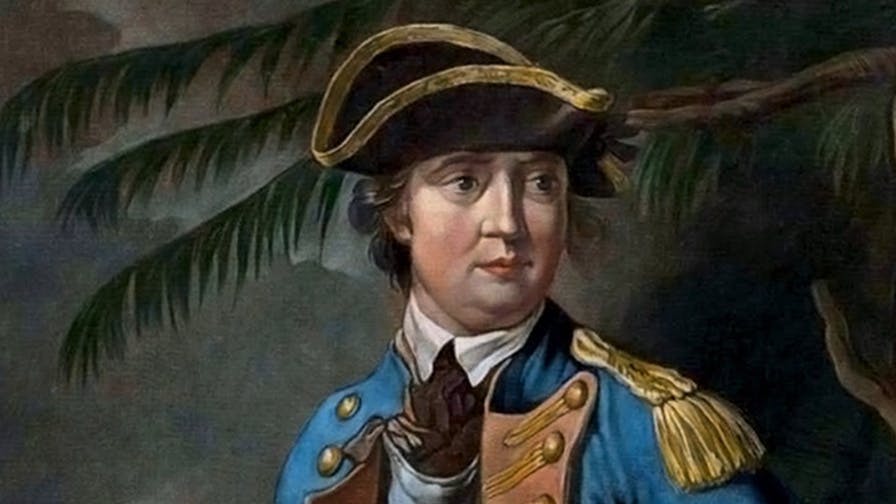
Let's talk about a true American hero as well as a true the true American villain who deserves. I guess, you know, we're starting. It's 250th anniversary. We're starting our Revolutionary War content. Benedict Arnold, ladies.
- [08:21]
A
The original Milvette influencer.
- [08:23]
D
He was. He had an apothecary before the war. Like the dude was Hawkins. Sops like that is right.
- [08:30]
A
Very interested in the uniforms he wore, trappings of his station, concerns with his quarters.
- [08:41]
C
A neighbor from Connecticut remembered that Benedict Arnold was the most accomplished and graceful skill gator he had ever seen. Suspicious.
- [08:51]
B
Sure. He was a good dancer. Handsome.
- [08:53]
A
That's the. The origin story is when the United States forces, even prior to George Washington taking command, laid siege to Boston in 1775. A local celebrity raised regiments of Connecticut volunteers and marched to the sound of the guns. And he could have been completely inconsequential, a footnote to history, but he is arguably America's oldest me that you can say Benedict Arnold and people sort of orient around it. Like they may not know the history that we're gonna talk through today, but that branding still counts. It's quite the.
- [09:38]
B
Him and Herbie Hancock are the two most relevant founders.
- [09:42]
A
The big signature. So why. So why did he become. Why did Arnold become famous? We know that he raised regiments in Connecticut. He moved the siege of Boston. But a number of local celebrities throughout New England and down through Virginia and then the rest of the Americas marched to the sound of the guns in 1775 and 1776. Why do we remember him as opposed to someone like Horatio Gates or Nathaniel Greene or other able commanders of the Continentals or the state militias?
- [10:22]
D
Well, I think because he championed. Right. Like there were several generals around or commanders around Washington. Right. That were big on championing themselves. Right. So it's not just Arnold, when I say this, but Arnold was very early on. Not only am I going to champion myself, I'm going to go and try to create these master plans where you had others who had big egos but really didn't want to do anything. Like, I think Lee was probably in there. But yeah, I mean, Benedict Arnold, like, you know, he. He builds out a company of. I don't remember how many men. He has this grand plan to invade Canada through Maine, which. Which ends in disaster. He.
- [11:04]
C
500 out of 1200 people died before they even got there.
- [11:09]
D
And it was like he is. He is the original. He should be the original example for why, you know, leaders should learn land navigation and reconnaissance.
- [11:18]
A
But what's your Marco guy, That's his.
- [11:20]
B
Whole thing that was. That was the real one that was where he really got famous was. Was doing the block, the, the running and being able to get around the British Navy. I forget the name of the bay. That was what made him famous because he was actually able to get stuff to Washington in a way that Washington was like dependable. I got it. And to his credit and probably to a fault, Washington was the kind of guy who I think when you had proven yourself to be loyal to him or to be somebody that he could use and that was capable, I think he had a tendency to overlook other more pernicious aspects of their personality until they personally affronted him. That's actually really famous examples of dealing with Washington. As long as you remembered to always refer to him as General, never touch him too familiarly. Like he was always going to kind of be okay with you as long as you were doing your job. And I do think that Arnold gained from that.
- [12:19]
C
He and he did do his job. I mean I think he is like top quintile military leadership. Battle of Valcor island like Big Dub it was. He was under manned and he was. He didn't even have real sailors. He went up against the, the Royal Navy and like kind of made it a thing. Same thing in Saratoga also. Everyone else was saying back up. Yeah Eric, you do it.
- [12:44]
A
Yeah. But we sort of look askance at the invasion of Canada in 1775. But it's important to say it almost worked that if you look at the strategic lay down of the American Revolution in 1775 when it actually the war got hot, there was a sense of continuing hostilities that had plagued the North American continent for several centuries. That North America was a scene of not to fall back on cliche but of great power competition. From the war of Austrian secession through the seven years War empires rose and fell based off the success of military endeavors in the Mississippi River Rally and the the Caribbean and in the Canadian Maritimes. That when then the self declared American forces looked at the array of King George III's military in North America they saw that there were key strongholds like the city of Quebec, Louisburg, the fortress that had been seized from the French New York City, Boston, Charleston obviously and then holdings in the Caribbean. And all of these locations were at play during the conflict. We think somewhat narrowly of the Hudson River Valley campaigns and that was obviously critical to the war, but it was truly a continental and international episode. So when the United States forces were arrayed around Boston were looking to find more asymmetric approaches to go after the British military footprint in North America, it made sense to go after New France what had only for a brief period of time been part of Britain's fully adopted colonial holdings. And the basic story is that at least two columns moved against British holdings in New France, and Montreal fell to Americans. And that beleaguered column of 1200 that set off and 500 that made it to the walls of Quebec City quite nearly made it happen that it was plausible that the Canadian Maritime Provinces would have fallen to the American Revolution that early. So when we go back and think through Benedict Arnold for his actions at Valcour island, for his gun running in support of the early phases of the war, to this extraordinarily bold overland expedition against one of the key fortresses in North America, it starts to accumulate. So when he rides out and arguably turns the tide of some close in fighting in Saratoga in 1777, he is among the most famous commanders of the American Revolution, second, really only only to Washington at that time.
- [15:52]
D
And so this is like, where the. The fatal tale of, like, you know, ego and, you know, wanting too much, you know, befell so many an American commander. Right. And you still see the same things today of that he didn't feel he was appreciated enough. To be fair. He was a battlefield commander at a time when other commanders were closer to Washington and, you know, arguing more for their position. That's not justification for turn traitor, obviously. And the. I think the case is with Arnold, if you look at his history, and it's the classic case of ego where nothing was ever going to be enough. He was probably always going to either turn traitor in some way and that, you know, eventually.
- [16:30]
C
I don't know about that. I mean, I think also layering like this, clearly this guy had a huge ego. Lots of people had huge egos. But let's layer on the injury as well. You know, he is. His femur got blown up and they didn't amputate it, which is just like double the amount of pain. And then there's that whole sort of like, frustrated ambition. Everyone else is getting to have, like, you know, fun, honorable, glorious adventures. And I'm stuck kind of convalescing with my rather nutty spouse.
- [17:01]
B
I think that's. That clearly played a part in it. But I do think, like, before the. I believe, if I'm remembering the history correctly, before the femur injury was when he had first been passed over for general because they were allotted a number of general slots per colony. Here's the thing where he falls down. Cause I agree with Eric's point that he was probably one of the better unconventional leaders in the North. Like, he wasn't the swamp fox or anything, but he was one of the better unconventional fighters and thinkers in the north that was working against the British with some really unique ideas of how to challenge them. But what he couldn't conceptualize was, like, Washington constantly had to fight both the British and the Continental Congress. You cannot constantly bring him personal, petty stuff that he then has to waste political capital on to get one guy what he thinks is his due when he's also writing notes like, we have resorted to eating our horses, famously from Hamilton. You know what I mean? Like, things like that. Like, if you're really going to be that guy that says, I am the person who should be in this high leadership position, then you have to start understanding what the strategic ramifications of your actions are. And Arnold never could do that. He could never see past his ego. And I think that's actually the more damning, the more damning point against him is that he, as a battlefield commander, absolutely great. But he was a terminal colonel in today's army because he could never understand that next picture.
- [18:37]
D
And that's. And, you know, it's not that he didn't have experience where he could have learned to understand it. Right. I mean, his. They were eating, you know, not horses, I think, but they were eating their own leather. They were boiling leather on their expedition to Canada because they could not forage. There was nothing to forage through. I think. Yeah, they went down to less than 50% manpower. I think they found one cow and they ate every part of the cow once they got to Canada. So he should have been able to see that. And at least in Rick Atkinson's book, I don't think he does a good job of portraying what Benedict Arnold's mindset about his men were relative to how his men felt. I mean, his men still followed him in the combat. I mean, that. That does say something after you've been starving on the trail and you're still willing to go take. Try to take a city, watching a lot of your comrades get. Just wander off into the woods. But he should have been more sympathetic to the other. The other plights of the rest of the army. Yeah.
- [19:36]
C
Nathaniel Philbrick has a great description of. In sort of looking at all the letters about him, the level of polarization among the people who've worked for him, where half of them think this guy is the worst human being on the planet, and the other half think he's like the best thing since sliced bread. This, like, amazing Dashing, brave, creative, thoughtful leader is another, is another big tell that like people, you know, there's no like, you know, center weight read on you. But you know, he wasn't a total fuck up otherwise he wouldn't have been in a position to be put in charge of West Point in the first place.
- [20:17]
B
Yeah, I think that's right. And like I said, I, I don't disagree. Again, great tactical commander. Really poor choice of how he represented himself. I think like going out and buying all of his brigadier uniform and trappings while he's already on debt before he gets promoted. Oh, by the way, he doesn't get promoted like again goes into the decision making. But then he also marries somebody who very clearly her family was sympathetic to the British cause. And then he has to be stuck in a house convalescing with her as she's very sympathetic to the British cause, which, you know, I mean, happy wife, happy life, I guess.
- [21:01]
C
Yeah.
- [21:02]
D
Even Grant's wife, you know, who's, who owned slaves was still kind of like, I'm going to defer to my husband. You know, I shouldn't say that, not defer to my husband. I'm going to defer to the commander of the Union army first and not the Confederate seat. But yeah, I think unfortunately like this is an actual Bennett Arnold was not an exception to the rule of all of the warning signs that we talk about when it comes to people who might, you know, defect or turn traitor if like problems with the spouse. Right. Wounded some sort of moral injury upon them. Right. You know, the, the ego, all of that. And, and it's, it's a tale as.
- [21:42]
A
Old as Time account.
- [21:44]
B
Yeah, yeah. DraftKings account. Tons of tons.
- [21:46]
D
Well that, that I, I think that had a slightly different meaning at that time.
- [21:51]
B
Yeah. The, the DraftKings account was literally how.
- [21:55]
D
Right.
- [21:55]
C
It's like they're in this for. Well, I think there were, there were two other dynamics that Nathaniel Flick highlighted. First, this idea. The time when he turned, the Americans were not looking so hot. So it, you know, this war, everyone thought it was going to last like six months or something. We're in year four, year five. He's lost all of his money. Right. He was like, he's not like super wealthy, but he had a boat, he was trading, he was on the up and up. And then all of a sudden this government that he's supposed to be like, you know, signing up to die for, like cannot like, can barely feed him. And then so he gets the little taste of corruption when he's the, the governor of, of Philadelphia and he gets to have balls and live large. And the loyalists like try to be nice to him and curry favor or whatnot.
- [22:49]
D
But yeah, imagine a time when Philadelphia was the pinnacle of cultural zeitgeist.
- [22:54]
B
Can you imagine? Drive through it now and it's just gray.
- [22:58]
C
I gotta read this, I gotta read this quote because this sounded like really funny. Okay, so they had a, they called it a. Okay, so this is their big party beginning with the regatta on the Delaware river and ending 13 hours later. 13 hour long party with a dance in a hall lined with 85 mirrors. A meticulously choreographed celebration created by Andre included a lavish dinner served by 30 enslaved Africans, a midnight fireworks display and a square section of grass near the Philadelphia waterfront which featured a medieval jousting match.
- [23:34]
B
It sounds like a scene out of Bridgerton. Sorry, my wife.
- [23:38]
C
Sorry. This was British before they took back over Philadelphia. This was not by Arnold's design.
- [23:43]
B
But the thing is that like in the end, like you know, as he's kind of falling apart again, Tony says like he wouldn't have qualified for a security clearance or at least hopefully his CI guy would have had a lot of really hard questions for him, you know, towards the latter part of the war. But yeah, even the way he gets captured like again goes back to just like this, this brilliant military genius who is just ham fisted in the way that he does really important things in his life like communicate, like oh, you're going to do espionage. Your great trick is going to be you're going to wear a big coat and a British uniform. You could just have written there. Like when I read the story, I was like, he could have just ridden there. There was a Continental army soldier that he wrote past. He could have just ridden past him as Benedict Arnold. Like he, he didn't need to put on a British uniform to do all that.
- [24:42]
A
He wasn't exactly an agent with any robust training that you would note in contemporary espionage stories. But to the strategic stakes of 1780, 1781. Something we've talked about is that the revolution was in doubt. The French had openly committed to entering the war, but they hadn't quite moved in with force yet. The army around Washington was improving in professionalism, but was still starving through the winters and was ill equipped, ill provisioned. And the, the fighting was gradually shifting from, from New England into the mid Atlanta counties or colonies and then further into the, the South. But the Hudson river was still considered the critical navigable waterway to the, to the conflict. And Arnold being put in charge of the fortifications at West Point was a mark of just how important that was, that it was a series of artillery batteries guarding the Hudson, and it was a chain link that would have prevented the. The Royal Navy from moving further north if they had elected to take another shot at seizing Albany. And his defection and his attempt to turn over those fortifications was a culmination of his psychological deterioration, the pressures that he may have received from his wife, his distended ego not receiving the accolades that he desired, and his monetary concerns that he went through the traditional American counterintelligence acronym of mice, Money, ideology, coercion, and ego, and he hit all four of them. But even in his final moments before he attempted to turn over the fortifications, he sort of believed in his own excellence. He refused to take basic operational security precautions. He didn't live his cover, and he blundered into it, which spoiled the British plan to take West Point and resulted in him becoming a full defector, not just living out the war as a spy, but accepting a commission and becoming a officer in the military opposed to the United States at the time.
- [27:32]
D
Yeah, I mean, it would have been like, you know, Iker Omar Bradley handing over Gibraltar to the Nazis. I mean, that is. It is.
- [27:39]
C
It's.
- [27:39]
D
It's that level of, you know, I mean, we joke about, like, well, you know, if we'd lost West Point, would that really have been, you know, the worst case for the United States army, the finishing school? But, yeah, no, at that time, it really didn't matter that much.
- [27:55]
B
Yeah, I mean, like. And just like, to Eric's point, I think at the end, the unlike. And I think this is where Nathaniel Green and some of the other really, you know, great commanders of the. Of the Revolutionary War separate themselves, is they were the men just like John Hancock, you know, we made the joke. But when. When they signed their name, a lot of those men knew that they were going to be destitute if they lost or that they would be dead. Like. And they knew by signing up what they had done. And there was a. They had put their name on the line. And it seems that Arnold didn't have that same compunction. And I think that more than anything else, is why he is met with the derision through the rest of the early part of the American experience, because your name was supposed to mean something. So, like, once you had signed up for this thing and you had put the full weight of your name behind it, like, that was it, like, you didn't go back on it. And I think that's where Somebody in his position being willing to just throw his name away is the reason that he became, you know, the black stain. He was the Brutus of America.
- [29:06]
C
I got a Washington quote for us. So this is a letter to Rochambeau letting him know what the deal was with Arnold. He says, General Arnold sullied his former glory by the blackest treason and has escaped to the enemy. This is an event that occasions me equal regret and mortification. But traitors are the growth of every country. And in a revolution of the present nature, it is more to be wondered at that the catalog is so small than that there have been found a few. I mean, yeah, that's what you want to say to the French general, but still, this is. I mean, he's got a point.
- [29:43]
A
It's also. He's minimizing the. The loyalist movement in the United States. That there were tens of thousands of people who could have been Americans and they elected to take up arms to remain British subjects. That the betrayal at the core of Arnold's decision making is wearing one uniform and moving to the other when we don't want to minimize the sheer volume of Americans who took up arms against the revolution and fought and died on behalf of the King. And when the war wound down, they were subject to extraordinary reprisal, and tens of thousands of them fled to Canada or to other parts of the British Empire to escape that. It wasn't a clean group of married gentlemen who were going from ballroom to ballroom saying, we won the knife came out against people who were actively involved in the war or were just sort of casually supporting it. So Washington's correspondence with the French commander in Rhode island is vital, but it also sort of glosses over some of the deep face to face ugly violence that was taking place throughout the war and after it.
- [31:07]
D
Yeah, I mean, Washington's Surgeon General was one of the first spies caught that he was, he was informing the British in Boston of what was going on. And, you know, I. Never mind lost my thought.
- [31:23]
B
No, I think, though, it's also, it speaks a little bit to Adams idea of the revolution of the mine that happened in the 1760s and early 1770s where there weren't more resistant, there wasn't more resistant, and there weren't more turncoats. And Adams would argue, well, that's because we had already won the ideological struggle, basically. Basically. And this was the last vestiges of empire that was left in the United. In what would become the United States. But that the ideological struggle for freedom and for what would become democracy was already Over. And the war was just the culmination of that. And that's why you don't see more defections and more people walking away. You don't see more just general line soldiers hanging it up and walking away after their term of service is over. Either the way that you do at the beginning of the Civil War.
- [32:16]
A
Say something to think about in terms of espionage and covert acts during the war. And Jordan, pardon me for using this as an opportunity to pivot to maybe other topics, but we've been talking about a betrayal of the American cause. But there's also this story that's less known than Benedict Arnold, but still part of the American spirit. And that's of Nathan Hale, who was a young man in greater New York who elected to cross lines during the 1776 fighting and was caught by the British and was hanged for being a spy. And he allegedly gave this extraordinary quote of I regret that I have only one life to give for my country when he was on the gallows. And he's become a symbol of American intelligence collection from his death in 1776 till now. And it's my understanding that there are two statues of him, one at Langley and one at Old Campus at Yale, because he was a graduate of Yale College. And one of the better stories about Nathan Hale is that if you look in contemporary stories, there are all these pictures of him, like this sort of well dressed young man with idealized features of the era, but there were no contemporary likenesses of him. All examples of Nathan Hale date back to, I believe, the 1921 class of Yale College that came together and wanted to put up that original statue of Hale on campus. And they modeled Nathan Hale after the student body came together and voted on the most patriotic looking member of the class. So a random Yale college student modeled Nathan Hale for that original statue. It is now at Langley. And all likenesses of him are based off of a Jazz Age undergraduate.
- [34:23]
D
Isn't that the perfect story of espionage though? That you are one of the most famous spies in American history and your likeness isn't even known? Like, that's more the embodiment of what I think Langley and others want people to believe in than anything else.
- [34:44]
C
I've got another Benedict Arnold provocation to bring us back. This is Philbrick again. The United States had been created through an act of disloyalty. No matter how eloquently the Declaration of Independence had attempted to justify the American rebellion, a residual guilt hovered over the circumstances of the country's founding. Arnold changed all that by threatening to destroy the newly created public republic through, ironically, his own betrayal, Arnold gave this nation of traitors the greatest of gifts, a myth of creation. The American people had come to revere George Washington. But a hero alone was not sufficient to bring them together. Now that they had despised, now they had despised villain Benedict Arnold, they knew both what they were fighting for and against. The story of America's genesis could finally move beyond the brink with the mother country and start to focus on the process. By 13 former colonies could become a nation. As Arnold had demonstrated, the real enemy was not Great Britain, but those Americans who sought to undercut their fellow citizens commitment to one another. Maybe, I mean, no footnotes for that paragraph, but like, it's a nice thought.
- [35:54]
A
Yeah, yeah. He describes the meme that memetic communication has been valuable throughout all of human history. The veritable concept of monarchy and priesthoods. They operate with mimetic communication that if you can anchor the entire sense of the Tory or the royalist movement in the United States from 1775 through 1783 and beyond, and you can 1 conduct the reprisal violence but also tell yourself a story that is not a popular movement. It's really just these individualized betrayals then it is a core component of national myth making. And people love those kind of stories that it's not 40% of us decided not to fight. It was only ones and twos. It's the 85% of Americans who claimed to have voted for Jack Kennedy in December 1860 or 1963 after his death. People orient around nonsense when it's convenient. And the idea of Benedict Arnold being the sole source of American early republic corruption is inaccurate and easy to digest.
- [37:17]
B
Well, I think, I think too that this actually, that framing gives us a good lens to look at some of the discussion about the protest in Minneapolis, actually, because what you saw after the last shooting was people came out and said this is organized insurgency a la Iraq. And you started seeing that they were trying to cast this as a treasonous act when you know, and I've made the point in our chat, that I would see this more as a civil rights movement, which was also at the time described as terrorism, than I would seeing it as something akin to the Sunni or the Shia uprisings in Iraq against the American occupation. But it does give you that people are looking for those meme like narratives that easily fit people in this complex environment into this is an enemy. They're doing the same, they're doing a cellular network just like we fought in Iraq. So obviously they must be terrorists. And it's like, no, man. This is also how like the color revolutions worked. This is how freedom was brought to Poland. This is how Solidarity did their job.
- [38:31]
A
This is how they are literally organized.
- [38:33]
B
Exactly like this is. This is literally how leaderless organizations work. Because once you have an established leader, you're able to be decapitated. Like these cellular networks start to grow. It's an interesting framing to look at the revolution that way and see that exact same thing come up. Because it does offer a uniting core and message that like as. As Philbr give something that can be solidified around, which is at least to my knowledge, it's something that seems to have been failing with the way we were talking about Minneapolis this week, which was kind of heartening to some degree.
- [39:09]
D
Yeah. Eric, I'm reminded of something that you said online a while ago, which is, you know, trying to memeify Minneapolis in a way that justifies, you know, the. We'll call them the reprisals because that's what we do in another country, which is that this must really hit if you need an app to remind you to breathe.
- [39:29]
A
Yeah. Like we kicked around some screenshots of people on the child sexual assault and abuse website known as X that they are like, well, you know, when I was in Iraq, I saw these operations and there would be spotters and there would be lookouts and there would be someone, George Soros in the background bankrolling it all. How are we going to go after this? That it was an extraordinarily unsophisticated review of what's happening in Minneapolis. And to Justin's point, it just skips over any number of social movements. But the implication that these blue check doofuses were offering was that if you just send operators after Will Stancil and you just black bag them, it all goes away. Because they're saying ultimately that it is artificial. Because I think a lot of the American far right cannot understand the idea of middle class white people standing up for Honduran immigrants or for Somalis who are American citizens and just happen to have a different religion or appearance. That the idea of an entire city standing up for its most vulnerable is incomprehensible in certain information environments. So they are templating circumstances that they may have witnessed in Iraq or Afghanistan under something that's completely different. And to these men, I salute you. Because the longer you are wrong, the more time actual freedom loving Americans that are dedicated to the Constitution have the opportunity to organize, to advocate and to set conditions for a better country in the future. So please continue looking at this like it's Al Qaeda in Iraq in 2005 because like, well done there too, jackasses.
- [41:22]
D
So it's kind of, to that point of like is. Is the need to frame it as a g. What ism. The need to. To kind of, you know, justify what went. Not what went on, but like basically say like, yeah, we were doing the right thing then too. Is, is that some sort of like egomaniacal satisfaction?
- [41:39]
A
I think that there's a lot of it that's this is stab in the back myth. And we weren't able to get our knives wet in Iraq and Afghanistan. We were insufficiently violent, so we had to go home. And now because we're being insufficiently violent to these paid agitators, we don't get to like make Governor Waltz cry or whatever their objective is. I do think that there is an emotional stuntedness to some of these milvet influencers who are advocating for this kind of militarized approach to a non existent law enforcement problem.
- [42:18]
B
Not only that, I mean like, to some of them, the, the unconventional warfare aspect of it, if you want to call it that, that like kind of caused me to shake my head. The, the statements that were being made because one of the things that we propagate in our schoolhouse is the work of a man named Jean Sharp. So Gene Sharp was a Marchwood. Dr. King was part of the Civil Rights act, the civil rights movement. He founded something called the Einstein Institute. And what the Einstein Institute does is it propagates the use of nonviolent protest as means of achieving democratic and social change within countries. Gene Sharp's written several books. One of them is the 98 methods of nonviolent Resistance. He has a few others. They're all worth reading. They're good. He's a true believer in the power of nonviolent resistance to authoritarian governments. What's interesting, ironic, whatever about the things that we were seeing this week in response to what was clearly nonviolent protest in Minneapolis was the exact same things were being said about them are things that Iran said about Gene Sharp in the 2000s. Iran made videos, the government of Iran made videos that they're all in Farsi, but they all point to Gene Sharp being funded by the CIA. And that every nonviolent protest in Iran is actually. That uses Gene Sharp's methods is actually a CIA fronted coup attempt against the Iranian regime. And to hear that exact same logic twisted and then applied to US protesters because it was clearly fake then by people who know that that's not true. Again, just the mental gymnastics that they'll go through to justify their stance on what ICE is doing is remarkable to me.
- [44:27]
D
This is a good time to pivot to Iran. Do we think they're going to get hit tonight?
- [44:30]
B
Poly market? Yeah. What does the market say?
- [44:34]
A
So the smart money on a strike against the Iranian regime for killing probably 8 to 10,000 people who were involved in protests in the last six weeks. Back when I was in Riyadh, like two weeks ago, the smart money was on imminent retaliatory action. And then there was a two week cooling off period. And we've now had about 72 hours of the administration talking about the naval armada that's approaching Iran. And that is real and that is certainly a capability. At the same time, we've seen senior leaders in the European Union, Mohammed bin Salman in Saudi Arabia, the heads of the United Arab Emirates and other local actors have said, we don't really need this right now. You can't use our airspace. So there is a regional interest that's spilling, spilled out into the public to say, knock it off, we don't need it right now. But there's also a meme of, hey, we're going to come and hit you. And we now have a traditional sense of regional partners saying, don't do it. The Iranians, the Revolutionary Guards Corps and their various cousins have successfully suppressed the revolt through extraordinary brutality. And if we were operating in a, I think maybe a traditional sense of international relations, you could say that there's basically a 0% chance the United States is going to just do a bunch of wanton violence now because there's, there's just no point. But we are, we are through the looking glass and into a world where airstrikes against Iranian regime targets will have nothing to do with avenging the deaths of protesters or advancing a new revolution. But it'll look cool as fuck. So they're going to do it anyway. And that theme is enough.
- [46:38]
D
So we talked about this before, right? But like after the Venezuela raid, Mr. Stelio Presidente, we only get to do that so many times before people get wise through the tactics, the approaches, right? It didn't take long for, you know, one, you know, one colonel in 1990s and during the Yugoslav campaign to figure out, you know, how to go hunting for, for, for stealth aircraft, right? And this is my concern is that, you know, the first Iranian strikes, okay, there was, there's, there was a war going on. You know, everyone was kind of like, yeah, like, get them to knock it off, whatever. Now they're kind of talking about raids. I guess. I think that was the recent reporting in addition to strikes. And you know, where we tend to screw up is we get told no and then we do it anyway. And if that is true, that our partners are saying, hey, don't use our airspace for this. So either one, we're going to violate that airspace, I don't think we're going to do that. Or we're going to try to find a more inconvenient route to do so with higher risk operations than just dropping a couple missiles with massive strategic, you know, on, on nuclear sites. Also this thing about like the first strikes were about the nuclear program. We started threatening strikes again because of the protests. We let all the protesters get murdered and now we're like, it's about the nuclear program again. So also I thought we were invading Cuba.
- [48:22]
A
And we're back and we're going to start inserting little green men into Alberta to break apart Canada.
- [48:30]
B
Yeah, I mean again, like for an American first approach that was going to become more isolationist. We have not followed through on that from the administration's standpoint. Again, it's to some degree it's categories when it comes to Iran. Our Iranian approach has kind of been broken since the 1950s in very real and meaningful ways. And this is just a continuation of that where we don't know what the right answer is. We don't know what the right thing to say is. The equivocations on support to the protesters have been equal to the equivocations in Obama had in 2011 and that Biden had in 2022 with the Mahsa Amini protests, like it's just the exact same.
- [49:20]
A
Equivocations or Bush the first with the Iraqi uprisings in the Kurdish territories and Shia uprising in 1991, that the United States does have a remarkable habit of advocating for self determination and then standing by while oppressive regimes come out with a knife and Bashar Al Assad being the most recent and probably still the most violent perpetrator.
- [49:49]
D
So to your point about isolationism, I think Eric, you and I have been on opposite ends of this. Although I think my framing is different than I think most on the isolationism thing is that when we tried isolationism the first time in the 30s, right. We had a little bit of an empire at the Philippines. But like we didn't have the network of alliances, we didn't have the structures, the international basing that we do today. And to understand kind of the Neo isolationist mindset of the parties within the admin that believe in this. You have to blow up the world first to ignore it in that you have to degrade the alliances. You have to basically secure certain things so you can justify retreating because it's like, yeah, like you, you have stuff abroad. Right. Like to be isolationist, it's, it's almost, you have to get things done. You can't just stop in your tracks. I think the Iran thing does run counter to that because it's not about alliances, it's just about, I don't know, I'm not, I'm not an Iran guy. Like, I, I, this is, you know, I'm happy to be an expert in many things. Centcom is something I, I actively avoid.
- [51:05]
A
Yeah. So isolationism was a badge that helped the administration come back into power in 2024. But it was never, it was never that. The administration dating Back to the 2018 NDS signaled a Discord. And let's hover over that for a minute, that the 2018 National Defense Strategy was an intellectually interesting document that had no bearing whatsoever on administration thought processes, decision making or budgetary action. The 2018 National Defense Strategy came out during the era of General Mattis being Secretary of Defense, and it signaled a reorientation the United States away from two decades of counterinsurgency campaigning, the global war on terror, of spending time, money and political capital in Iraq, Afghanistan, Yemen, Somalia, or other secondary and tertiary segments of the world to reorient towards the People's Republic of China, the Russians, North Koreans, the Iranians, and then all the other global villains. And it put the, the Russians right at the, the top of the, the roster of threats to global order in that it was an intellectually honest document and the NDS for the Pentagon made sense. The problem with strategy writing or strategy making is that you need to have cohesion inside of the executive branch. And President Trump likes Vladimir Putin. That is a fundamental component of his international understanding. He admires his style of work. He appreciates what the Russians did through WikiLeaks in the 2016 campaign. They sees that as a potential for longer term partnership. So that 2018 NDS was at its core dishonest because it was supposed to represent the vision of a Trump administration. And what it really did is it represented the vision of professional policymakers inside the Pentagon and those two groups did not collide, but to bring that to the contemporary moment of 2026 and this whiff of isolationism. There's nothing isolationist about the Trump team They do despise NATO. They despise the United Nations. They look at the World Health Organization as an front to sovereignty. They think the European Union is effectively a criminal cartel that makes it less easy for Americans to do business in Europe. They see international governing organizations as a direct threat to their ability to maneuver. That's not isolationism. They want to be deeply engaged internationally, like their attempts to bail out the ancaps in Argentina, their work with the Netanyahu government, their reconciliation with the Russians over the war in Ukraine, their efforts in Venezuela, what they may be shaping in Cuba. This is not isolationism. It is part of a international right wing disposition to remake international order in a way that is advantageous for other right wing movements. And core to this is part of the truth telling that went into the national security strategy that came out last year where the world can be cleaved into areas of influence and the PRC can seize Taiwan, it could go into Vietnam, that it owns East Asia and that's basically their red. The Russians can pillage and rape into Eastern Europe and that's their writ because they're a great power and the United States has a western hemisphere. And they say like, that is a natural order that is based off of racial sensibilities, cultural sensibilities, and it is redolent of core ideologies of the 1930s and 1940s. It has the trappings of fascism, of the American Confederacy and more modern thought processes that are coming through the TechCrunch.
- [55:12]
C
Right.
- [55:13]
A
What it is not is isolationist. And if you believed it was isolationism and if you thought that this team was going to avoid armed conflict, more so than Kamal Harris and Tim Walt, you failed a wallet inspector test for that part.
- [55:29]
D
For, for sure. I, I think that, you know, I, I wrote a piece prior to the election of like, because there were a bunch of China like policy folks who were like dragging Tim Waltz for having taught in China. Right. And it was like most of us haven't gotten to go to China. I was just talking about this with somebody else. I think my buddy who was there in 2015 was probably like one of the last ones to like being, you know, American army officer who went drinking with the pla. And I just, I think I still believe there is a strain that answers to the base. There is isolationism, but that's not the arm that's won out. Like to your point, Eric, like that this is a. I am more convinced that they want to reshape the world order in their image rather than to abandon it.
- [56:14]
A
Yeah. Like there's the, the Candace Owens, Nick Fuentes. Right. And I think they are ascendant that they are. And they are expressing their frustration towards like the people like the Vice President who are supposed to represent that segment of the party. The openly neo Nazi segment of the party is supposed to be represented. And they see this adventurism around Iran as a direct contravention of promises that the Trump team made to the base. So even though I'm mocking people who believed in isolationism, generally from the laughter of the center or the no low info voters that helped propel the administration back into power, there's clear segments of the hardcore fascist right in America that believed it too. And they are disappointed. And there is an X over how much that disappointment is actually going to matter to them if this military adventurism continues or if it gets ugly. Like if a CH47 takes a RPG to the rear rotor, there's not much that you can do about it once it goes into a terminal descent. What does this isolationism comment or moment commentary rather sound like when Americans are dying, not just killing?
- [57:38]
B
Yeah, I mean, I think, yeah, that's, that's the perennial question. Right. Because the reaction will be, you know, why are they, why are they even there? Which is the, what, you know, what, what, what benefit is this the United States? And that's the other thing too is like not being able to, to give a clear, you know, benefit any of their actions. Like if we take action in Iran over the protest, what was the clear benefit if we take action in Iran over the, the nuclear program? Technically, I guess they can make a more, a more robust. This is, this is the reason we're doing it. But I thought we destroyed everything last time, so I don't understand what we're striking this time.
- [58:16]
A
Yeah, it was totally obliterated there. I think it was. Time magazine had a really telling cover in the second week of October 1993 after Task Force Ranger had its Black Hawk down episode. And I don't have the image firmly in my mind, but it was something like, what the hell are we doing there? And I think that's a long term American disposition. Even though the reason for American military action in Somalia in 92 and 93 was obvious and humanitarian and in the best traditions of the United States. It did go badly that afternoon and evening and into the next morning. And the Clinton administration didn't know how to talk war. They really lost an opportunity to sanctify that kind of sacrifice by saying that it was done to try to spare Somalis who didn't deserve the atrocities being inflicted upon them. And if there was military action oriented around the reprisals that the Iranian regime conducted from December into January, the Trump administration has the opportunity to tell the same story. But there's also no one on the planet who thinks that this team truly cares about individual human rights, collective dignity or aspirations to individual self determination. They just don't believe in it. So if they say we are conducting operations in support of it, like who, who believes it?
- [59:50]
B
Yeah, I mean, like again, like I, I feel for the Iranian people at this point just because it's, you know, it's one of those things that it should, they should be allowed some level of self determination and the things that could have been done potentially are increasing their ability to get their message out and increase the pressure on the regime. And I think again, because we had stepped back and like Radio Farda was no longer oper operating, you know, Voice of Europe, Voice of America was no longer operating. Like there weren't channels to be able to push information in or to get channel, get reliable information readily out during their, their crackdown at the height of the protest.
- [60:29]
C
All right, let's call it here.
- [60:33]
D
Yeah.
- [60:34]
C
When you lose son Strickland, you lose America.
- [60:36]
E
Glory, glory, Benedict. He'll conquer all the north with 1100 starving men he confidently marched forth. He couldn't read a topograph or calculate supply but boy, that eagle soared so high it touched the frozen sky. He glanced at maps to learn man had drawn while drunk on gin and said that's merely a suggestion, lads For Arnold's resolute chin can punch through any wilderness who needs roads or trails? We'll drag £900 a boat across the rocks and nails. By day, half the army had dissolved into the mire. The rest were eating moccasins and warming hands by burning lyres. Smallpox danced a merry jig while dysentery cheered. But Arnold kept the rations For a general's heart is feared. They reached old Quebec on New year's Eve, all 60 men in frost with ladders built for garden walls. The citadel was lost. He eyeballed the fortifications from a comfortable chair, then screamed, charge. The British will surrender to my hair. The Brits looked down to muse from walls that towered 30ft and asked, Are these the latter boys or jesters? Incomplete. Arnold took a musket ball straight through his splendid leg, the only strategic objective he secured in the whole reg. And when he later sold West Point for 30 pieces of gold, remember this Quebec fiasco Standard Arnold Truth be told, he failed at loyalty, legit leadership and height but damn, he looked majestic while retreating from the fight. So here's to Ben, the mastermind who taught us how to lose if you need a continent Invaded wrong He's who you choose. He couldn't capture Canada but captured infamy the only general in history who failed at treason and geography so here's to Ben, the mastermind who taught us how to lose if you need a continent invaded wrong he's who you choose he couldn't capture Canada but captured infamy the only general in history who failed at treason and geography.