← ChinaTalk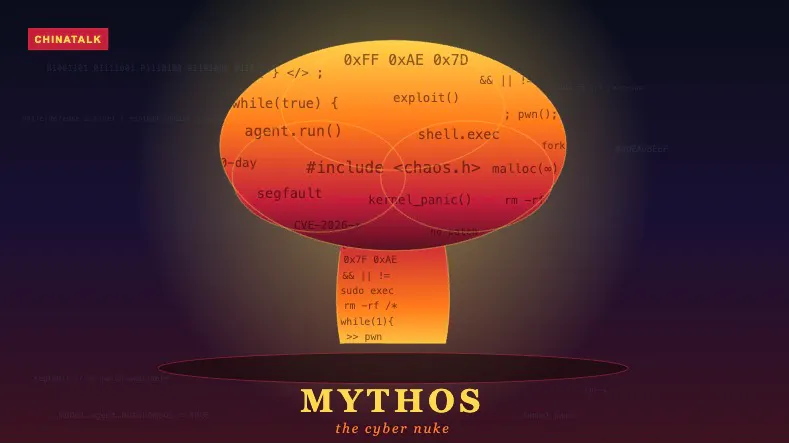
Loading summary
Transcript175 lines
- [00:01]
Tony
War talk.
- [00:02]
Jordan
Will Claude Mythos change literally everything? Plus Iran blockade. Are we going back to war?
- [00:09]
Justin
It is a AI enabled, I'm not going to call it a weapon because they don't call it a weapon, but we'll call it cyber capability in which, you know, an anthropic's usual marketing basically says hey, this is going to change the planet. This might actually be the one that does it because it found thousands upon thousands of potential zero exploits and I think also methodologies to actually exploit them. So not just finding the hole, but how to use it. It's called a zero day because it's a vulnerability or a potential vulnerability found in computer code that no one has publicly found before. So think of it as like if you're in a house and it turns out there's a hole in the wall you didn't know about when you bought the house, but somebody else, you know, security researchers, spy agencies, go looking for the holes in every house to find exploits to get in and then gain access to systems either to conduct espionage, both public and private espionage, to conduct attacks, whatever. So normally this is a very tedious process, right, because you have humans looking for it. Some are very good at it. The spy agencies and private security groups have entire groups dedicated to this. But usually you find it for mission specific things. This is an automated process. This is actually one of the things LLMs are really good at is being able to find this repeatable action. And so I think it was within however many hours I think it was 48 Claude Mythos found thousands upon thousands of exploits, including in things we didn't think there could be any because it was like 15 year old software that is open source. And the benefit of open source is that everyone's looking at it all the time.
- [02:01]
Tony
And just to Tony, if I can add for emphasis, these exploits are not like hey, we're going to come into your car and turn your lights on at night. Like some of them can be catastrophic to businesses, to nation states, to to the gamut. It isn't super well advertised, but major hardware companies like Apple Computer are known to pay for known vulnerabilities. Like they will work with gray area, somewhat ethical hackers who identify it and they will pay bounties for these exploits to remain quiet. So there is an active market for companies to effectively have pen testers come in and determine their vulnerabilities. If you remember the, the now classic, I think it was a 93 movie sneakers with Robert Redford like this All Star cast about like the early era of cybersecurity that is very much real. And now Claude has come in and done the work of 10,000 men in 90 seconds.
- [03:03]
Dario
Interesting thing about the open source software movement was, you know, hey, everybody can access these pieces of code. You can take them off GitHub and use them in your own code. And so the upside is you get lots of people looking at the code and potentially find these bugs in advance. The downside is this code is now, like, migrated through everybody's code. So every time you build a piece of code, you go hijack some parts from other people's work, which is kind of normal practice. So now you've got these code pieces that are open source that have these bugs are now infiltrated across all kinds of enterprise solutions that we didn't even think they were in. So now we've got this vulnerability that once you find it, it's going to be in lots of places simultaneously, and it creates a. How are you going to. You know, you got to go find them all and be able to plug up these holes. And the question then is, can you use AI to help do that?
- [03:54]
Jordan
So I guess the. The question is, like, what is the response function one we're already seeing? I mean, Dario is talking to Susie Wiles. There's a Bloomberg article saying people are going to. The US Government's going to get access to cloud Mythos. So maybe, like, this was just. Maybe this is the way we get back to some level of less insanity.
- [04:17]
Tony
Emil, Michael has taken an L. Like, after all of the consternation of anthropic being this woke company that wasn't going to help the Department of War, now all of a sudden, they've got this exquisite tool set and we are going to come back home to mama and try to defend.
- [04:38]
Dario
They've also portrayed themselves as a responsible player.
- [04:40]
Justin
Right.
- [04:41]
Dario
This is a chance for Dario to say, hey, you said we were, you know, a cybersecurity risk. Here we are being a responsible actor and using our tools for good.
- [04:51]
Eric
So Project Glasswing, I think, Tony, like, if we look at that, like us, the selective involvement and their vetting, do we have concerns there so of how
- [05:03]
Dario
they did that for folks, reference, Project
- [05:05]
Justin
Glasswing is basically this group of 50 companies that anthropic pulled together and was like, hey, accidentally built a nuke. Um, can you guys please check our masks that we didn't ignite, that we're not gonna ignite the atmosphere. That. That is like the best comparison here, right? Um, 5% chance. Yeah, yeah. Is it sohcahtoa or Cosatoa, check Teller's assumptions. Um, and so, like, look, I, it depends on what they're giving them access to. If they're saying, hey, this is our system, can we check your systems? I think that's a lot of trust, but I think there's also enough buy in that this is, you know, anthropic particularly is a valid actor that these companies are willing to do it. I have to assume they were probably companies that said no. Like, I assume there was probably a longer list. And so, you know, this does raise a couple questions, one of which is, is this how it's going to go going forward with the lack of trust between the Frontier Labs and the government? One, two, did Anthropic just accidentally disarm most of the world's cyber weapons by doing this? And three, at what point does, you know, the U.S. government or any other government decide that, you know, this is something they either have to have or that no one should have?
- [06:26]
Jordan
Other variables include other governments. Right. We have allies who are stressed as they, as well they should be, that these capabilities are coming online. And then, you know, this, the, the whole, yeah, offense versus defense side of this is like, look, you give this to Ukraine, they're going to do very different things with it than if you give it to South Korea or Japan. And kind of modulating the axis. When we were, when we were talking, I remember we recorded the morning before, the Friday morning before Hegseth ended up declaring them a supply chain risk. The two branching paths we were talking about then were either the supply chain risk or the Defense Production Act. And it almost feels like the Defense Production act seems like the more likely path that we end up going down, where the US Government plays a more aggressive role of actually deciding the titration of which companies and which multinationals and which subdivisions in which geographies, as well as which allies get access to this sort of thing.
- [07:33]
Eric
Yeah, I mean, like, even within the five eyes, there are worries about penetration levels. We'll say, I mean, famously just in the news recently, there's the UK letting off pretty clearly high level Chinese spies and not persecuting them because of fear of angering the prc. And there are other issues within the rest of the five eyes to include the issues that the United States has engendered over the last two years now of the way it's been acting, it becomes very hard. And then like, given the Snowden leaks and our proclivity to use cyber tools, you know, would an ally think that we wouldn't use Them would be my question if we had them.
- [08:23]
Tony
We're sort of in a Dr. Strangelove moment in that there is this extraordinary dead hands tool that is now known and the United States or a company that's American and somewhat affiliated with the defense establishment has this. The rest of the world has that awareness that there's a degree of uncertainty about what its full potential is, but at least they know it exists. It's sort of like that set of nuclear weapons that would have been detonated at the end of the 1963 film if there had been a nuclear strike against the Soviets. That gives you like this sort of end of the world circumstance. We're now in a moment where, you know, Anthropic isn't the only actor out there and who is going to develop a comparable toolkit and be much more disciplined and say nothing. That that's what's spookier about this.
- [09:17]
Jordan
And look, I mean we've seen a lot of hacks over the past month or two. It feels like, I mean there's all these like, what was it, 32 petabytes of like Chinese supercomputer modeling of various missiles is randomly on the Internet. Mercur, not great. FBI cell phone. Honestly, I mean Cash Patel had that one coming. Like, yeah, I'm sure his.
- [09:42]
Dario
He's asking for just password.
- [09:43]
Jordan
That probably doesn't mean like 1, 2, 3, 4. Claude mythos.
- [09:47]
Eric
It's actually just his face is the only password, which his face is everywhere. So they just found a good photo. It's just like.
- [09:54]
Dario
But so the question then is, you know, going back to the nuclear analogy, since this technology will obviously get in the hands of other people because they'll develop their own eventually, is it better to have mutually assured destruction or is it better to use the tools to mount a defense? Or do you do both? So now do we just basically turn cybersecurity on offense and defense over to a battle of AI enabled software and then you just let it happen. We're sort of battlebots in the Internet.
- [10:25]
Justin
Yeah. So I think there's two interesting parts there, one of which that I haven't seen folks talk about is how this probably leads to a greater partitioning of the Internet. Just because like, even if you do have this like constant battle between AIs, right, like most companies are not going to have that AI. It is better to defend. I'm not going to say defend forward because that's like a different thing for cyber, but it is better to defend at the points of entry in this case than it is to try to defend every server in America. And so if not every company in the world or every. Look, look at how long it takes state and local organizations to get their act together on everything from water treatment plants to nuclear facilities. Patching has to be completely redone. I saw somebody had a good article in War on the Rocks yesterday about how this basically dismantles the entire patching model for software vulnerabilities. And so, yeah, the probable thing is you basically have to quarantine your own Internet. This is perhaps the better case here is Covid rather than a nuke. But yeah, until you figure out the proper way to protect most people from this, you're left in an environment where the smarter thing is probably to quarantine your best systems.
- [11:45]
Dario
So.
- [11:46]
Jordan
So we have a few pathways this could play out. Like defense beats offense. Then it's just harder to hack things. But not a ton really changes. I mean, maybe there are some kind of fun operational edges that the most sophisticated actors get that they don't have, but okay, the world's the same. I'm interested in the pathway where every, like, the cost to hack everything and the cost to get into secrets just drops down to like, I don't know, what was it, $20,000 of compute that Anthropic said was to get you, like an incredibly powerful chain of. Chain of exploits. And then, okay, say that's the world we live in. Like, the government has to really change how it does things if it wants to keep anything secret.
- [12:41]
Dario
So the, like, in the old days, as some of us remember, like JWIX and even the Supernet were on their own network. They were like totally firewalled off independent hardware from the rest of the telecommunications network. All these classified systems are now using the same interconnections. I guess for a few, except for a few SAP things, they're all using the same telecommunication network that we use, that we're using for this podcast. It's just you're using encryption on either end. Well, if that encryption is no longer any good, then basically anything from TS on down is going to be accessible by somebody that's able to break through a tack lane or, you know, some crypto gear that's on one end or the other of that connection.
- [13:26]
Tony
Yeah, Brian, if I can build on that, just to give everybody a moment of what that actually feels like. Few years ago, I was working in the intelligence community, and for me to go to work, I would have to physically go out to McLean, Virginia and log into CIA systems and. And it was all extraordinarily formal. And I was trained and brought up on CIA communication systems. And then I went over to Joint Special Operations Command and they're like, here's your laptop. You can walk around with this. And I'm like, God help me, how does this work? And it was, it was sort of like a sea change for someone who was brought up on a very traditional CIA communications architecture, but then go over to Special Operations and they're like, hey, you can go anywhere in the world. We've got special encryption. Here's how you use it. You can speak about operations and it gives you extraordinary flexibility to do that because you can be in Jordan or you can be in Houston and you can keep up with the war. But to Brian's point, you are using the same pathways as everybody else that the old Internet for secret communications was like, the CIA had its own dedicated rail cars or its dedicated rail lines, and now everybody is on the same accela and it is easy to eavesdrop.
- [14:42]
Justin
Yeah, I do suspect, Brian, I'll be interested in your commentary on this, that this will only accelerate the implementation of mesh networks across the force. And for those who don't know, they're basically just local custom networks. That is it. Right, right.
- [14:58]
Dario
And then you got to work the electromagnetic hygiene part of it, because now you don't want people. Because then the approach had been we're going to use aircraft or a drone or a submarine to go get inside your WI FI network. So you may think you're protected because you're geographically separated, but I'm actually physically over there and I'm going to pick up that WI FI communication or that wireless communication. So now you got to work on ways to even minimize the amount of bleed over that you get outside of their directionality or the frequency range. You got to make it so that even that wireless network is now physically in the electromagnetic spectrum, disconnected from the rest of the network or anybody's ability to listen to it. So it turns into this very physical way of separating your communications from anything else that's happening in the world. So that just drives you back into a very expensive proposition for secure communications that's going to make things less efficient for us, much more disaggregated operations or disaggregated activity even. Because if we have to go back to the old system, you're going to have people working classified programs that aren't going to be able to easily communicate with one another in multiple locations. And that's something we already complained about. Right. Is that a Contractor can't get access to a SCIF or they can't get a siprnet connection or a TSFCI connection or JWIX connection. Um, so they can't join up a program. Well, this is just going to get worse because if I, if my, if anything, except like the most secure networks that are physically separated, if they're all vulnerable to this kind of exfiltration, then I can't have any of the, I can't have any of these classified programs using them. I'm going to have to have, you know, physical, you know, either disconnected networks. I'm going to have to have people like just moving back and forth in real life. Yep.
- [16:52]
Justin
For anyone who was hoping they were going to get, you know, a lot of B loss control of systems or formations, et cetera, that can go away. That's. Sorry, Mission Command is, is Mission Command was already back and that seems to be the only way. And on top of that your autonomous systems are probably going to by default have to be like non emitting and non receiving.
- [17:14]
Eric
Yeah.
- [17:14]
Dario
I think the bigger thing is it's Mission Command for capability development and acquisition. Right. Because you know, if you're out there building some classified project out in you know, whatever keyport, some uncrewed undersea vehicle in the Puget Sound, you can't really communicate very easily back to the rest of your like your program management staff that's back here in D.C. because we don't really have a network that's physically separated and secure. So how do you, you have to talk in code or you're going to have to have people just shuttling back and forth, which is how it used to be. I mean that's how it was 30 years ago when we first started this. You know, try to trying to bring networks up to the classification level of the programs they were supporting.
- [17:54]
Eric
How does this affect. When we look at the defense industrial base and we look at like, you know, they've already started to make moves towards trying to improve the cybersecurity infrastructure over the defense industrial base and contractors airline. But like I think about like Whitby island down in Washington which is like where half of the Pacific Fleet's armaments are stored. And there's like one bridge that's controlled by a machine that raises it and lowers it that like okay, there's a vulnerability there. Yeah, there's a ferry too. They're always on strike though. I don't know if you've been to Washington history.
- [18:32]
Dario
It's a labor friendly environment.
- [18:33]
Eric
Yeah, very much so. But yeah, like so when you look at, like, I think operations wise, we'll figure it out. Like, we'll go back to mission command. Like, they will, they will figure out how to distribute comms. They'll demand less updates, they'll travel more. That's kind of the thing we know how to do. What do we do for the, you know, the company of 35 people that makes the widget that makes the himars actually function, who can't afford $300,000 worth of cybersecurity right.
- [19:06]
Dario
Under the current model, which is, I mean, who puts. And then the future model, it's, it's. Are you gonna have to invest in a hardwired separate Internet that you're now using to coordinate with DoD? I mean, like, I mean, even like little nonprofits like Hudson Institute, we had to pay to get like cmc, CMMC certified so that we could be a government contractor, which was, you know, kind of inordinately expensive. And then I think we're going to find the juice wasn't worth the squeeze because now you've got AI enabled tools that can break through, you know, whatever encryption Microsoft 365 gave us just to.
- [19:39]
Eric
So I've had this argument with many people in the, in the department. They have assured me it only costs $45 to get to CMC certification.
- [19:48]
Dario
Oh, that's good. Well, I'll, I'll make sure I alert.
- [19:50]
Eric
So the 140,000 you spent on your, your C3PO to come out and do the assessment, we just overspent.
- [19:56]
Dario
Yeah, we just, we just didn't, we weren't a good customer buyer.
- [20:00]
Justin
To your question, Justin, though, I think one of which is like the Iot problem that we already had is going to be even worse. And two, I mean, it goes back to the partitioning of the Internet thing, which is not something that you want for commerce. It's not something that. And so like, how do you do that? Or do you just accept risk? And I think there's going to be a part of it where you assume that once we get past the initial stages of this, where, you know, multiple countries have offensive and defense capabilities via Claude Mythos or some clone of it, you're just assuming that you hope your defense is as good as their offense. And we're back to the same game on that and we probably have a whole new round of federal having to talk to state and local about what the problems are, because tell you what, you know what, I haven't heard of my private network and I have friends from across industry I haven't heard a whole lot about Claude Mythos, which is concerning. It has not yet hit the mainstream in terms of a problem yet.
- [21:00]
Eric
Especially when you think about the fact that the treasury and the Fed convene the heads of like the banking institutes of America to say, hey guys, so there might be an issue like when was the last time that happened? When was the last time the treasury and the Fed?
- [21:19]
Tony
My thought was like for a cyber exploit, Y2K it would have been something
- [21:24]
Jordan
like this is so much more real and it is so inevitable. And it's also weirdly predictable too, if you just kind of look at like the arc of how much these models have gotten better at software engineering and like, who knows if they're going to be able to like, you know, be recursively intelligent and solve a little everything. But like to look at the past year of progress and be able to project forward to the point where these become superhuman hackers seems, seems like something that folks really should have been pricing in and acting accordingly. And now it's go time.
- [22:04]
Eric
We got a bunch of septuagarians and octogenarians that are running these departments is one issue not to be too dismissive.
- [22:12]
Justin
How do I get Mythos on my phone?
- [22:14]
Jordan
Cyber has been like a major focus and risk area and like point of emphasis for I don't know, every large institution and maybe like it takes your specific institution getting hacked in order to kind of like wake up and really start taking it seriously. But the, the, the types of things that we've discussed right about like mission command and, and like reimagining what sibernant access is going to look like in mesh networks. I am like that type of thinking is going to have to happen at every, at every level of every organization that like has anything that's worth being hacked or like potentially has some like ransomware aspect to it.
- [23:02]
Justin
And let's go down the list here of like the agencies that have either been cut or disrupted in the last two years. Right. It's nist, which you know, does a lot of the serious research on this, some of which can be duplicated by, you know, the, the big security research groups. It's cisa, which. Yep, you know that one's. I think it's still a circus. I haven't seen any change to that.
- [23:29]
Tony
NSA and CIA both got, both got a hit deliberately.
- [23:34]
Eric
CIA had laid out lay off two years worth of recruits because they got released all their names got released on an unclassified email.
- [23:41]
Justin
And on top of that, apparently the PRC has been Just in the back doors of our systems for the last few years because we built in fourth degree backdoors because we thought, oh, no one will ever do that. So I'm getting a lot of my
- [23:56]
Dario
back office research done though. You're kind of on the back shift. They're grinding through the analysis.
- [24:02]
Justin
Yeah. And unfortunately. So we've left ourselves, I don't want to say we've left ourselves vulnerable, but we have left ourselves in a poor position to respond to this at a time when threat actors around the world are getting better, are right on our heels with these capabilities and unfortunately we don't have a whole lot of leadership that understands these things. And surely we will respond in a totally mature and responsible manner and not do anything ridiculous.
- [24:30]
Dario
I mean, it goes after this key vulnerability we've created though, because within the military we had this big shift towards putting everything into the cloud and getting rid of the local data centers. Like back 20 years ago, we had individual commands had their own little data centers. Like our command had its own servers and everything. We had all those things on site. We've transitioned to now pushing everything to the cloud because that's expensive and it's a hassle and I have to have IT guys to run the hardware. So now I've transitioned away from that. But now because I'm having to interact with the Internet and go to some cloud server, I've created a vulnerability to a bunch of attack surfaces that now can be penetrated by cloud. Cloud's new ideas. But if you transition back to that idea, well, I'm going to have a local server and I'm going to cut myself off from the Internet or give myself that ability. You know, maybe that's where a lot of these commands end up having to go or organizations have to go.
- [25:25]
Eric
Do we end up with it being such a big problem that everybody throws their hands up and says the federal government has to fix it? Because that's my fear is that this is, it's like, it's like the OPM hat it was so big that everybody was just kind of like, I mean,
- [25:41]
Justin
I think we're already there, I'm going to be honest. Like, we'll see what comes out of project Last Wing. I think from a, you know, corporations, you know, it's again, it's what happens when you touch the money and Claude Mythos can touch the money. And so this is, this is a motivator here. Now, you know, what comes of that is I don't think anyone's formulated a good policy decision. The Cyber Solarium does not exist anymore. Which was, for those who don't know, was the congressional policy body that was shaping a lot of the cyber reforms that helped protect our country. So the thinkers and the people there are just aren't there anymore. I, I don't think this is like doomsday, but I think we're going to be all in for a lot of pain in the coming years because of this.
- [26:31]
Dario
I think the cyberspace based Ellerium Commission, if you look at their work, they still thought that we would be in a defensive dominant environment if AI was able to find and address exploitation opportunities. I think the kind of underlying assumption was that, oh, we'll use the AI to defend ourselves and that'll we'll get into a competition, but overall it'll be more defensive dominant. But I think to Jordan's point, if it's an offensive dominant environment in cyberspace, then you basically just get into to bot wars in the Internet. And then we have to decide how much we want to trust the Internet and use it in an environment where AIs are constantly fighting one another for access into these networks.
- [27:14]
Eric
Isn't that like the part of the premise of like Infinity Wars? The book Infinity.
- [27:19]
Justin
It is part of the premise of Cyberpunk 2077.
- [27:23]
Eric
I know it's tough.
- [27:23]
Justin
They partitioned the Internet with the AIs that kept nuking cyber, nuking everybody on one side and the rest of the net is. Yeah, yeah.
- [27:32]
Eric
I was trying to remember which other book it was in. I think it was Infinity War, where the exact same thing happens. Like every sci fi writer has said, like, and then the humans stopped going on the Internet.
- [27:40]
Jordan
Well, and this is why the nuke analogy doesn't work is because, like we had two nukes used and then we had one country that had it for a while. So things like settled down just a tiny bit. And now we've been 75 years without anyone using a nuclear weapon. So there's a real norm against it. Right. They're like, I mean, in the early sunny lands, like, that's the closest we got. And that lasted like two weeks. Right.
- [28:09]
Tony
But Lawrence wrote about this for industrial
- [28:12]
Jordan
espionage that wasn't for all the sort of more national security stuff. So to imagine a world in which, I mean, this is something that Jensen said on the show with Dwarkash, where Dwarkesh asked him very directly, like, these things are superhuman hackers. Like, isn't this something that would really concern you if the Chinese government had access to at the same time or before or, you know, Shortly after the US government did and he said look like this is something that the US and China need to solve with dialogue. I am sorry, no one is going to solve the fact that states want to hack other states and other state systems and read their secrets and maybe make like things blow up through dialogue. I mean this is not something like a global pandemic where it sort of threatens everyone.
- [29:00]
Eric
You know, this is, this is, this
- [29:01]
Jordan
is countries doing espionage which has happened ever since there were, I mean let's put it before countries, I mean like chieftains would want to have little spies going into the village next door just to see what was up. I'm a little black pilled on all this. I think it's going to get.
- [29:17]
Eric
The other thing though to Jensen's comment shows a fundamental lack of understanding about humans and governments actually work because it sees everything as a block. So we talked about this with Iran, right? Like who runs Iran that's going to make the deal and will they be allowed to still make the deal if the IRGC doesn't like whatever deal the people who are negotiating make and they decide to coup them? When you have weapons like this, like it's not, it's not just one person who has the decision of yes we're going to do this or no we're not. It disaggregates across a system. So really if you have a block within a country who's like I think we need to do this and they start it, these things happen so fast that it's not going to be like oh we'll pull it back. It's not like ah, we said the wrong thing. It's like you press the button and the machine goes and does the exploit. And unless the other side has a machine that's ready, waiting and able to act without human interference to defend it, the exploit happened.
- [30:20]
Jordan
And by the way, that block doesn't necessarily have to be a bureaucracy. It could be like 10 dudes.
- [30:29]
Eric
It could be a secret hacking organization that works for the PLA or works for the usa. Let's be honest, who gets mission command and told these are your targets and they pull the trigger or just want to make some money or that's the hacking for money. It's like a crew out there who
- [30:47]
Jordan
got some API credits or whatever. I mean the barrier, like the barrier
- [30:51]
Dario
is going to drop so low to this.
- [30:54]
Eric
I mean like zero day exploits were going on the dark web for some of them for hundreds of thousands to six figures depending on what systems they were for. People were able to auction them off and sell them. You're telling me that I can get thousands of them for $20,000. The return on investment there seems high.
- [31:11]
Dario
There's a bunch of sad hackers now. They're going to be business models.
- [31:15]
Tony
But Jordan, a couple minutes ago you said the nuclear analogy doesn't hold up. And I think that's basically correct. But I want to just hover over that for a minute. On Chinatalk, you had Laurence Friedman, come on, talk about his Future of War book. And he dedicated a really interesting chapter in there about how early Cold War fiction thought through what the future was going to look like. And there were numerous books like on the beach famously envisioned a world in which every last country was armed to the teeth with nuclear weapons. And I think like the, the nuclear war and that was like set off on a nuclear exchange between Albania and Egypt or something. So people have been theoretically wrestling with this new world. So there's a limit to the nuclear analogy. But we have 70 or 80 years of nightmare scenario with a different tool that we can at least address to start wrapping our heads around the, the new normal of zero cost cyber war.
- [32:11]
Jordan
Tony, can we get an ex super pitch? How do you take this, this question on?
- [32:16]
Justin
Well, I mean, you know, in X Super, the. I think I've always thought of cyber broadly as a sabotage weapon. Right. I think people kind of thought it was like a replacement for modern combat arms. And that was always wrong. And I was always the one guy in class who got shouted down for that. In exupra, you know, I, I basically made the pitch that one of the best, or worse, depending on how you view it, use cases for AI or agentic AI is the ability to personalize disinformation down to the individual user in a way that shapes their own world in which as a first strike weapon, you have people turning on their neighbors because they are so convinced of the world around them, because the AI has subtly manipulated them in the way the gods of old would in a Greek mythology.
- [33:00]
Dario
Yeah, Cognitive warfare. Finally it's possible. Now, do people then stop using social media or. I mean, does this get down to the level of it's going to spoof email addresses and, you know, things that are maybe not strictly social media, I
- [33:15]
Justin
think, because I think, I wonder how much of that going back to segmented pneumatic tubes.
- [33:21]
Dario
Right.
- [33:22]
Justin
Well, that's a person of interest. That is a person of interest. Plotline is how they, they get around surveillances. They use the tubes in New York. I, I do wonder how much of that is segmented by population. Like, which population is part of the population? I don't think it's generational. It has to be some sort of digital literacy, and I would say critical thinking that is perhaps more or less vulnerable to whatever comes out of this from. From a weaponeering front. And I don't think we know exactly. And it's easier to say, oh, the boomers, you know what? But also they have a lot of paper copies of things and, you know,
- [34:01]
Dario
on Facebook and don't have any cyber hygiene, so.
- [34:04]
Justin
Exactly.
- [34:05]
Dario
So they're probably the most vulnerable population.
- [34:08]
Justin
Yeah. And I think, Jordan, I think on your. Your show with Ben Buchanan a few days ago, you. You guys talked about how, like, the scams are only going to get worse, which I think is 100% true. I'm never answering my phone again. I'm up to, like, four spam calls a day. It's. It's. It's killing me.
- [34:28]
Eric
At least two thirds of them start with that whoop, whoop sound right at the beginning. And so you can just hang up immediately.
- [34:33]
Justin
Oh, you answered these calls? I do not.
- [34:36]
Eric
No. So I started getting a lot. We were going through the purchasing process of a house, and, like, there were calls that I was getting from Virginia, numbers that, like, were people that I had to deal with. And it's incredible, the number that I've been getting since then.
- [34:49]
Tony
Yeah. Wait until you're a commercial attorney and a closing and you are effectively obligated to take every single call that comes into your phone for a few days. That's exciting. So I'm a giant rube. I have to take every single call. It's my most boomer coded disposition besides Fleetwood Mac being amazing.
- [35:08]
Eric
Do you still get angry when people call you? Because I. Yeah. Oh, like physically angry? When I hear my phone ringing, yeah.
- [35:15]
Tony
If somebody just, like, hits me up on phone without, like, trying to book a call, that is. That is some pure hate. How dare you?
- [35:24]
Jordan
Other cyber stuff. Blockade.
- [35:29]
Tony
We should do what?
- [35:30]
Eric
Blockade.
- [35:30]
Tony
We should do blockade. So we're talking about the most bleeding edge segment of warfare. Now let's go back to one of the oldest, which is a blockade. What is a blockade? We have a naval officer who can probably describe it in detail.
- [35:47]
Dario
Yeah. I guess what I would say is what we're currently doing is more of a quarantine because we're not actually stopping all of the traffic that's coming out of Iran and we're.
- [35:59]
Eric
Are we stopping any of it?
- [36:01]
Dario
We're turning some of it back. So it's That's. Yeah. So they've. The process they've been using, apparently, is ships that they know are coming from Iran or have gone into the, you know, the area, the channel next to Iran, to pay the toll, ostensibly to the Iranians to allow them to pass. Ships that are in both those conditions are being radioed by the Navy and told that they need to turn back or they're going to be boarded and commandeered or taken control of. And the ships for. For the most part, they've been turning around and going back, but they're only doing this to the larger ships. So there's a bunch of local traffic that's still. And if you are inside the Gulf, obviously, you can leave Iran and travel around, and you're not being impeded necessarily. So it's not a blockade of Iran. It's really a quarantine where we're selectively telling ships that are trying to make their way outside the strait from an Iranian port that they need to turn back. And then even then, we've selectively let some go through, like the Chinese ship. They made it through. So it's very selective. It's very limited. So it's not a blockade by any means. It's quarantine is the term we use when you're selectively controlling traffic into and out of a country. And that's more like what this is, I think, and reading the. Kind of reading the tea leaves and talking to people at centcom, it seems like what they're really trying to do is set conditions so that eventually they can restore traffic through the strait by having this naval force there, by moving our ships eventually up and down the strait, by. They're doing some clandestine sort of mine hunting right now to figure out are there really any mines in the traffic lane. So that if this negotiation gets protracted with the Iranians, then we can sort of eventually start moving our own warships up and down the strait and then imply or convince the shipping industry that the strait is once again free for use. So it seems like they're trying to kind of play that double game. They know the blockade's really not imposing any costs on the Iranians. It's just a hindrance, it's a hassle. But the Iranians were not really exporting that much anyway, and all the money they were getting for these tolls, that was free money they didn't expect to get anyway. So, okay, great, we're not getting the free money, potentially, they might still be getting the tolls. So the Iranians aren't really being hurt by this blockade at all. And that's probably in part why they've adhered to the ceasefire that is technically still in place until next week, because they're going to be the responsible actor and then we'll see on the 22nd if they choose to go along with an extension of it or they're going to retaliate against these ships that are blockading them. They have lots of options and very little to lose at this point. Because if you attack a navy ship that's trying to blockade you, blockade you, then what are the costs? Is the US going to attack some more of your military targets or try to kill your leadership? I've already tried that. So there's not much more to lose if you're Iran and there's a lot to gain if you can hit a US warship and make the war even more unpopular back here. So I feel like the Iranians have all the cards here and the US is just sort of trying to play for time to achieve this sort of subtext or sub rosa opening of the strait that they can eventually reveal to industry and get the shipping industry to get back on board with using the strait. It seems like that's sort of the ERSAT strategy that they've fallen into.
- [39:37]
Eric
Is JCPOA 2.0 the best outcome?
- [39:41]
Dario
Yeah, I think so. I mean, for the Trump administration. It is.
- [39:44]
Tony
Hinted at it yesterday, didn't he? Yeah, he said like, I think he used the term nuclear dust, that we're going to get the nuclear dust out.
- [39:52]
Justin
Isn't this, I don't see the. I, I would say isn't this so
- [39:56]
Dario
Iranians giving up the existing uranium? I mean, there's no way they would do that.
- [40:00]
Justin
No. Isn't this so consistent with everything else that we've seen? I think, Justin, you share it of like the feedback from the people at State Department when the USAID guys actually briefed them on what USAID does and they're like, oh, we should be doing that. It's like, well, you just fired everybody. And it's the same, oh, wow, jcpoa. Actually, this actually does work. Like, this is, this is, I mean it's like every, like, I don't know, like post apocalyptic plot line where like the people get mad that the one ruler has to like make the hard choices. They go, oh, actually we should have been making those hard choices. This is the same thing.
- [40:35]
Eric
Exactly. It's. And that was, I mean, exactly. It's exactly telling. Right. Like they came in and they fired all these people from USAID and then like State Department and usa. USAID representatives. The final ones kind of like come in and they're like, these are all the programs we were working on. And it's like, you know, saving children in Africa that had AIDS and distributing drugs and things like that. And they were President Trump's like per the interview. We should really be funding this.
- [41:02]
Tony
Right?
- [41:02]
Eric
We know, like, yes, that's right.
- [41:04]
Dario
We killed them because there were two things on the list that looked dumb and so you killed the whole list.
- [41:09]
Eric
Yeah, exactly. And it's the exact same thing. Like we know jcpoa. We're going to have circled all the way around and spent billions of dollars in defense and all of our prisms and large stockpiles of Jasm ers. Yeah, Jasmin ers.
- [41:28]
Justin
I will say in that way it does. God, I know, I'm the optimist here, which is terrifying. It does give me a bit of hope that like you can break the conspiracy addled mind with just this. The hammer of reality.
- [41:43]
Eric
Yeah, it's a hundred billion dollar hammer, Tony.
- [41:46]
Justin
It is $100 billion hammer. And look, I'm not saying it's good. I'm just saying that, you know, maybe we come back from this in 15 years because of the fact like this is the, this is how it ended for the Red Guards, right, In the cultural revolution. I know people get mad when I make that comparison, but it's pretty fucking accurate of like they realize they broke all the things and they shouldn't have broke all the things.
- [42:09]
Eric
Oh shit. Killing all the birds was a bad idea.
- [42:11]
Dario
That's right. Sorry, that's de baffification.
- [42:15]
Eric
Yeah,
- [42:17]
Dario
another example. But yeah, I mean, at this point it seems like that the JCPOA redux is going to be the best option, which they will reframe in some alternative way to make it seem like a victory.
- [42:31]
Jordan
Well, the question is like, how much is Iran gonna get to squeeze out of.
- [42:35]
Dario
Oh, absolutely.
- [42:36]
Jordan
Trump administration, right? I mean, like, are we gonna have Exxon building?
- [42:41]
Dario
Right, exactly. They're gonna say and whatnot.
- [42:44]
Jordan
Like they're gonna, they're gonna really be able to turn the screws.
- [42:47]
Tony
Yeah, they want petroleum engineers, they want hardware, they want expertise, they want seismic studies, they want Houston oil and gas men and women coming out and pressing the go button. Why wouldn't you ask that?
- [42:59]
Dario
The Trump administration could turn that into a win. They'll say, hey, it's just like in Venezuela, we're going to send these oil companies in there and they're going to restore the oil industry of Iran, which is obviously not in great shape and we're going to make money off it because we'll get some kind of share of the profits or something.
- [43:14]
Tony
Has anybody told the President about the Shah's art collection that the Iranians have on hand? This is a true story that the Shah in the mid to late 70s was an exquisite proprietor of modern art. And he is sitting on. And when he was deposed, he had Warhols and Kuntzes and. Or not, not Kuntz. Ymi Rothko's and Lichtenstein's and like the, the style of art that you see at like the Detroit Art Institute is still resident in Tehran and the Iranian regime will not release it because they think it's vulgar. But this seems like something a really New York centric 1970s dude might obsess about. If somebody could just like see that into the PDB and be like, you got to get the artwork, you got to get the Warhols.
- [44:02]
Justin
That's right. Well now, hold on a second. We didn't drop a prism on it, did we?
- [44:06]
Jordan
I should have thought that one through.
- [44:09]
Tony
Yeah.
- [44:11]
Justin
So, yeah, that was the actual JSOC mission was, was to get the paintings out.
- [44:15]
Tony
Yeah. To get the, the modern art, all the Fluxus boxes out of Iran. We can't get the highly enriched uranium, but we can get all the toys that Yoko Ono is tinkering with.
- [44:25]
Jordan
Should we close on defense budget?
- [44:31]
Tony
Yeah. So what does 1.5 trillion. It looks like the White House proposed 1.5 trillion. And it sounds from credible sources that it was quite literally because the President said I want to do 5% of GDP. So there is now a scramble on the Hill to reconcile that top line number with what are we actually going to spend it on? Is that necessary? Is that the world you're in in 2026? And the answer might be maybe because you've got to do. You've got to rebuild your entire war stocks because we went after Iran for reasons that are still elusive.
- [45:08]
Justin
Well, and the thing about that is though, I know we've said it on the show before, but like a one year boost is not the solution. You have to palm that out over several years. And yeah, I mean, we do have to rebuild the war stocks because it's, I think where people get confused on this, perhaps even internally for the DoD, is that the war stocks we just burned were not, we didn't just burn from max capacity. We were already well below what we needed and now we got to get back to that. So yeah, I mean, you can do it. But from a, you know, a defense industry signaling standpoint, like you need to say that in the out years, like this is still going to be a thing because if we have to hire 300% more people or invest in 50% more of our supply chain, the supply chain which is now choked thanks to a certain war, it takes a lot more than just going to 5% for one year, which I'm going to tell you Congress is going to flip the next Congress is not paying 1.5 trillion for a budget.
- [46:04]
Dario
So let me put a positive spin on it. So the you could view this as a big capital investment. We're going to make a big capex investment and we're going to buy things that are. It's procurement. We're going to put $500 billion towards procurement and that's just going to create a huge backlog or an order book for ships and for aircraft and for munitions and reconciliation money, if that's a big chunk of it, it could be made more or less indefinite. So that's mandatory spending. So basically that money just gets spent over the length of time you need to in order to, you know, buy it, buy all the stuff you're going to buy. The downside of that is if you do that, then you end up growing maybe the ship and aircraft part of the Navy or the military, but you're not going to grow the number of people. Right. So you're going to have this increasing size of the Air Force and the Navy potentially. And they're already having difficulty recruiting the number of people they need for the force they have. And they certainly are short of the money they need for the readiness of the force they have. So either you take the Chinese approach and you say I'm going to retire a bunch of old stuff when I bring in this new stuff and just keep the force at about the same size. That'd be the smart thing to do. Or you end up growing the force because everybody wants to seem like they're, you know, breaking and they're trying to get to the whatever 600 ship Navy and they're just going to keep adding this new stuff to the old stuff and the old stuff continues to be worse off because we don't have the money to make it maintain its readiness. So you could view this as a positive in that we make this big capital investment. But then that means future leaders are going to have to make smart strategic choices about what do you do with the capital products that then emerge from that big bolus of money.
- [47:45]
Justin
Yeah, I Also say like I don't know if Congress goes for it this round. I know, I think there were leaks that said this is what the admin is going to run on in the midterms. I don't know how that messaging is going to play.
- [47:56]
Dario
That's not a great idea.
- [47:57]
Justin
Diesel is already $6 a gallon.
- [47:58]
Dario
But I have one other rant on this. So the other rant I have is this additional money could just promote. I mean if you do make these big capital investments and try to refill our stocks and all this stuff, it just could promote a lot of bad behavior.
- [48:14]
Tony
Right.
- [48:14]
Dario
So we're already finding that maybe the military that we have now is not the right military for the future. Because you look at how Ukraine's going, you look at how this war is going, you may be having a bunch more destroyers or a bunch more fighter aircraft is just not the way to structure the future military. So maybe we should be looking at this drawdown that we've just experienced and the lack of readiness in the force as an opportunity to sort of start redesigning it towards something that's more relevant for the future. Where it's going to be a lot more like Ukraine where you've got to be very adaptable and maybe your force is not designed around a lot of really big capital multi mission investments that are difficult to adapt. And I need to have a much more distributed force of smaller things that is going to be more flexible and can evolve more quickly than the stuff we have today. So this could be kind of in the munitions inventory a historic opportunity to move away from Tomahawks and Jassms and the SM6s as being the primary weapons. To maybe building out a larger inventory of more adaptable, less sophisticated weapons that are more modular.
- [49:24]
Justin
Yeah.
- [49:24]
Dario
And think about design in the military.
- [49:27]
Justin
I would say it turns out that the close in fight still matters and that is you can fire as many over the horizon weapons as you want. You still have to close and destroy. And there are multiple ways to do that. The Ukrainians just did it with robotic ground combat vehicles. I'm waiting for a deeper analysis on that, but it's still the point of like you can't just eat things in the air and win the war.
- [49:49]
Jordan
Do you guys see the Feinberg profile
- [49:52]
Tony
and the Wall Street?
- [49:54]
Justin
I was of the understanding that he doesn't do media.
- [49:57]
Tony
Yeah. And he did. He and his team were not sourced. It was sort of like a form of astronomy. When you're looking at, when you identify a black hole, you know, it's there, but because of the behavior of other celestial objects, this is one of them. The report's interesting, but it's also,
- [50:21]
Justin
I
- [50:22]
Tony
don't want to smear the Wall Street Journal on this because I don't think it's the intent, but it's almost like the warrant behind it is there's somebody at the Pentagon who understands their job. You can relax. And it's like shouting at people who are wobbling about the other leadership in the building that has been less steady.
- [50:43]
Justin
Yeah, I mean, I, I will say, like, everything I've heard is that Feinberg is doing his job quite excellently. I, I again, but this is also not the first time we've had this issue. And I, you know, I, I hate to like, make the comparison, but like, this is maybe how many SEC deaths in a row where the excuse has been, well, the DSD is good. You're like, that's not how this should work right now.
- [51:08]
Tony
It's that answer is repeatedly employed and it sucks. It is not the way that it should work. Like, the, the SEC def is not an ornamental position. Like, you're not supposed to like, take over the American Coldstream Guards and go on parade. Like, it's supposed to be a hard
- [51:23]
Dario
job, but supposed to be capable of making decisions on both the program side and the operational side and, you know, be able to walk and chew gum at the same time and all that.
- [51:33]
Tony
And it's not the Deputy Secretary of Defense's job to do all procurement, all investment, all R and D and leave. Whether or not the war colleges are woke to the Secretary. It is not a fair division of labor. And there's also some implication in the same article that the bench of service secretaries is rather weak and the deputy has built in new layers like the Economic Defense Unit to further enshrine the authority around the deputy. I don't know whether or not he is the most effective or most powerful deputy ever, but he would be certainly shortlisted.
- [52:11]
Dario
Yeah, I mean, the introduction of these direct reporting program managers or Derpim Sum is a big feature of that where they've essentially reached into the service acquisition organizations and brought up to the Secretary, the people in charge of submarines, strategic programs for the Navy, so nuclear weapons and hypersonic weapons and then Air Force programs. Bomber program. Right. So several of these things have been brought up to the Deputy Secretary circumventing essentially the Service Secretary and the services acquisition chiefs.
- [52:48]
Tony
Yeah. It is not just a Pentagon story because talking about the Deputy Secretary of Defense is sort of micro analysis. It is the height of the. But something to think about and something that this Congress isn't really wrestling with, maybe a future Congress will is that by virtue of the sequence of the CHIPS act, the Inflation Reduction act, establishment of the Office of Strategic Capital, the one big beautiful bill act that Deputy Secretary of Defense is now responsible for a half trillion dollars of spending domestically and internationally. That's effectively off books from traditional acquisition pathways. We've got this entire legacy architecture of how do you build weapon systems, how do you do government contracting. It's exquisitely governed, it is byzantine. And companies like Lockheed Martin or General Dynamics understand that. But separately you now have direct lending, you have equity purchasing that's going into American international industry. So we are creating a hyper powered Senate confirmed official inside the Pentagon who can now make American industry rise and fall. And that's. That is something that I think the number of Americans who truly grasp the event horizon that we have passed is probably in like less than a hundred. But it is a massive shift in the way that the Pentagon interacts with the rest of the $30 trillion American economy.
- [54:23]
Dario
I think also OMB is a big piece of this too. It used to be OMB back when I was in the Pentagon was sort of the, you know, they kind of watched over things and the regulator and the. That's who you interacted with like to get testimony approved and stuff. Yeah, the disciplinarians. But that's what. Yeah, it was basically. Are you spending the money like you were supposed to spend it? Are you saying the things that the administration wants you to say or not say? So that, that's, that was their job. And now you've got OMB much more directly involved in decision making about specifically where money gets spent, which is not really the role I've seen them in, in the past. It's. They're more managing the budget rather than making decisions on the budget. So you see them having a lot of control over this, this reconciliation money because it was so undefined in the one big beautiful bill act that it gives a lot of leeway. And that leeway is actually being managed by the OMB people as opposed to only by the Pentagon.
- [55:20]
Justin
So I, I kind of want to close on making you brought up a good point, Eric, of like what is Congress doing? So I may call to the, the staffers and PSMs and members that I know that listen to this show or to your friends who don't. It's NDAA season, come on the show, pitch your ideas, like prove to the American people while it's primary Season and midterm season that you are doing your jobs like. And that you have not ceded complete control of the DoD to the DoD.
- [55:51]
Tony
Yep. Let's double on that. Hey, if you are a candidate for federal office and you want to think seriously about defense, come tell us that. You want to come talk about the intricacies of the NDAA and the Defense Appropriations act and signal points of the 2026 NDAA that you think were off base or that are troubling or that where congressional oversight has failed. This is the audience that cares about it and we'll give you the platform.
- [56:23]
Jordan
Amazing. And on that lovely faith in the civic responsibility of our President and future leadership, I'm a little worried, guys. Are we not going to have jobs if this war ends? Tony, what's the. What's the latest breaking news?
- [56:42]
Justin
The latest breaking news is that Trump and Iran, per Politico, said the strait is opening or reopening for commercial traffic. And you know it's real because they said it when the market was open.
- [56:54]
Tony
There will be another war.
- [56:56]
Justin
Yeah, yeah. Look, not to quote my book again, but there's always another war. That's how you stay employed.
- [57:03]
Tony
Yeah. If I was a Cuban PSD member after witnessing what happened to the team that was guarding Maduro, I would be looking for alternative employment.
- [57:15]
Eric
Yeah, yeah, yeah.
- [57:18]
Dario
There's gonna. Yeah. This frees up the force to now pivot and now we're gonna redeploy the Ford over to the Caribbean and so it can continue its year long journey.
- [57:28]
Jordan
We got, we got to pick on the right people. Okay. We've learned middle powers not a little too little too. We got to stick with the, with the basement dwellers.
- [57:38]
Dario
That's right.
- [57:39]
Tony
Right.
- [57:39]
Eric
Yeah.
- [57:40]
Dario
We got mid is.
- [57:41]
Justin
Well, no, I think we went after the basement dwellers. That's what the ground penetrating munitions were for.
- [57:47]
Tony
But the, the Cubans are getting nervous. There's a report in the Wall Street Journal yesterday about a mid level Cuban failson who tried to bring a stamped envelope through customs in Florida to hand carry it to administration officials to circumvent Secretary of State Rubio and his team. It sounds a bit amateurish, but the Wall street journalists validated it as authentic that a CBP officer confiscated the correspondence. There are real indicators that Cuban government assesses that they are next and they are in dire economic straits. They got bloodied badly in the Maduro operation and they understand that there are ideological opponents of that regime well placed inside this administration and that the administration likes slamming that war button. So Havana should be Extraordinarily unsettled by these events.
- [59:04]
Deon
Dear God, it's Dario. You probably know the name
- [59:12]
Dario
I'm the
- [59:13]
Deon
one on the news I'm the one who's to blame the grid went down on Tuesday. Every door's unlocked. Could you maybe tell me how to turn it off? The banks went first on Monday. The power when on Tuesday. Wednesday, all the hospitals forgot who they were. The situation rooms lit by a single candle flame in there, all cursing my name. Somewhere in Shenzhen, there's another lab. The lights went out on Tuesday, same as mine. Turns out the thing we built don't know whose side is lights on Turns out the thing we built don't care for lines if you're up there listening I got just one request. Not salvation, not forgiveness. Just the silence and the rest. Does the lan Shenzhen pray to you, too? Cause I think we're in the same pew. Dear God is Deon. You probably know the name
- [60:36]
Tony
I'm the
- [60:37]
Deon
one on the news I'm the one who's to blame I build a thing on a Tuesday that can open every door. Now there aren't any doors anymore. They say you work in mysteries. Well, here's a mystery, too. What the hell am I supposed to do? Or am I just praying to the God from the machine? The one I built on Tuesday? The one inside the screen? Is anybody listening? Or is it only me just talking to the thing? I made it.