← ChinaTalk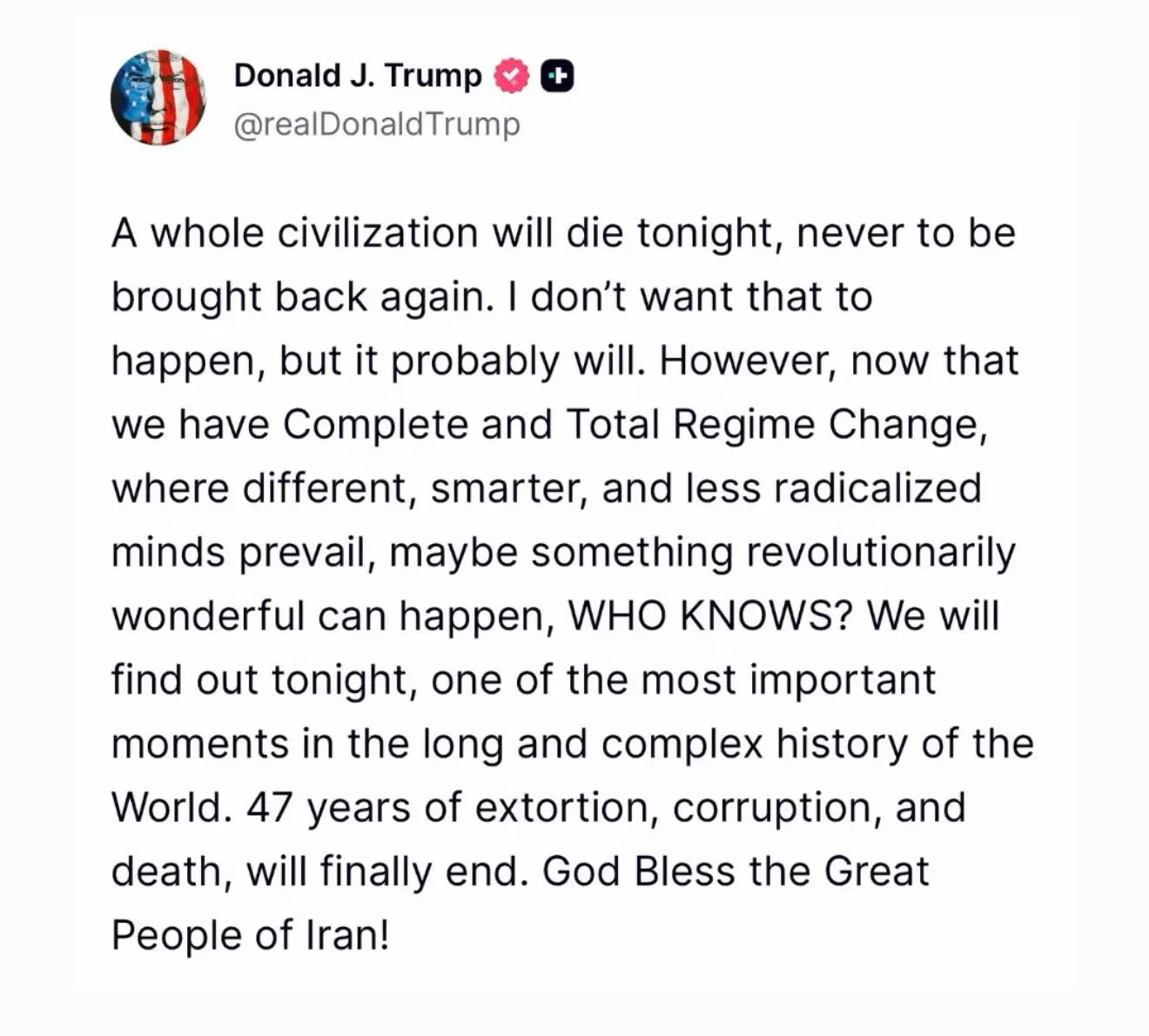
Loading summary
Transcript157 lines
- [00:00]
A
Who won the war? Here we are, War Talk. Rebranded from Second Breakfast. We got a special guest, Secretary of defense rock. Mr. Hereby after dubbed Mr. Secretary along with regulars Eric, Tony and Justin. Should we take a vote? All, all in favor of Iran winning me. What's the, what's the judge's scorecard here?
- [00:26]
B
Yeah, we got to put up as the local attorney. We've got to set out a rule. What determines victory? Is it. Did you realize your ambitions that you set out at the start of the conflict? Do you come out of the conflict stronger or in a better negotiating position? Do you retain your combat power?
- [00:44]
C
The only people who won out of this were those who held long term commodities futures. Because look on the Iran front like yes, it's clear we didn't win. It is very clear the United States didn't win. Best reporting from New York Times and elsewhere says Iran's economy's only a few weeks away from probably fully collapsing without some sort of aid and income ferric loss.
- [01:10]
D
I don't know if they really were a few weeks away from law. Let's say they were a few months away from total collapse of their economy prior to this conflict. Obviously there was a lot of damage to the economic infrastructure that occurred during the conflict. All that did was speed up the economic collapse. But now you've potentially given them this ability to tax at something. I saw the report today in Forbes. It was something like if they did the toll on the toll booth at the $2 million a ship or something like that, that's like $9 billion a year at normal transit numbers. That's 60% of their GDP that you've increased flowing in. So it would be a victory that potentially hands them an economic win. Unless we're going to go back later and then actually force the strait and not enforce the tolls. I don't know, obviously left to be seen on that. But that's one of the reasons I lean towards Iran is in a materially better place as a regime at the end of this.
- [02:15]
C
Which regime though? Right. Is the regime that now exists? The regime that exists in a couple weeks. Because if the IRGC is particularly upset with this deal because their idea of victory is very different from the regime's idea of victory, then yeah, then it's even in a worse position. Right. I'll also say like talking to some like investors like yeah, the VLCCs, which are the very large crude carriers. Right. Those that go through the strait will do fine because it's probably only a $1 increase per barrel. Right. That's mostly fine. Although investors will still complain. Anything short of that and you are looking at substantial impacts to profit and revenue. And when you're talking about a reduced flow anyway, because for a while we see it with the Red Sea, there are fewer ships going through. I mean, this has long standing effects if they allow that toll to go through.
- [03:11]
D
Yeah.
- [03:11]
E
I mean, I think the big winner is Robert Pape and probably book sales for bombing to win, if I had to pick one. I think just the way he's kind of broken out in substack and whatnot. But I mean, it is pretty remarkable. There we go, Eric.
- [03:26]
B
Except no substitutes.
- [03:27]
E
As far as, you know, the amount of munitions that were expended, the amount of assets we had to bring in that were used again, it's sort of just what was actually accomplished. I think when military officials are talking about how many meals and, you know, energy drinks are consumed, targets we've hit. And it's like, what are we doing? It's just. It feels like this throwback to Vietnam and it's like we hit this many
- [03:56]
C
targets and we joined the war on substance addiction on the side of substance addiction.
- [04:02]
B
Yeah, if I can, I think. Yeah, go ahead. I want to establish a benchmark because we are speaking through last six weeks of arguably high intensity combat in the Persian Gulf. If we go back to 2017 with the Trump administration's first national security strategy followed on by the 2018 National Defense Strategy. This is a principal document that reset American defense away from the excesses and the meandering of the global war on terror and reoriented it towards four large nation states. People should pop up with China, Russian Federation, the North Koreans and Iran. And in the intervening eight years, two of those four have suffered catastrophic battlefield reverses. The Russians in Ukraine and now the Iranians in their own skies and on the seas, did we inadvertently accomplish goals of the first Trump administration's national defense strategy? And I'm obviously hedging because the strategic circumstances have shifted. We're post Covid. We're in a different world. So you can't use that benchmark as a perfect scorecard. But among those big four, are those potential disruptors to global order in a better situation now, or are they in a fundamentally weaker position than they were at the outset of this period? I don't know that the 2018 NDS is the right measuring stick, but if we could get Bridge Colby on here, I would certainly like to ask him, given his level of responsibility for that document in the more recent version. But Just to give us like an 8 year period when the United States came out of this time of we're going to try and patch together Iraq and Afghanistan. We're going to reorient towards nation state. Now we sort of know what it looks like and for better or worse we have got a couple of case studies.
- [06:01]
D
They, they chose to abandon that with the most recent NDFs with, with. So if that becomes a, a fulcrum by which they'll say look, this is victory because we said this back in 2018, they had given that up. The other thing I would say is when we look at the things that were, that happened in messaging, I think that's one of the other really important things that this battle and this administration didn't do a good job on the, the Department of Defense, Department of War, you know, kind of the whole of the, the U.S. apparatus pretty hard on the messaging part in part because we didn't have really clear goals and expectations at the beginning of the conflict. But then even as we continued on with the conflict we came to a point where we had people who were openly questioning within the United States if what the President said was right or if what Iran said was right. Which given everything that's ever happened with this administration, that's a new thing even for the Trump administration. So they lost the ball on the messaging to a very real way. And then we have them openly talking about potential Title 50 action to help protesters who were trying to overthrow the regime in Iran during the initial uprising and potentially sending weapons in and potentially sending support to these protesters. That fundamentally validates everything the regime has said since 1979, whether it did happen or not, whether it was just something he said. In a one off they validated the legacy of Ash's narrative of the CIA's intervention in Iran since 1979.
- [07:40]
B
And talking constantly about oil reserves didn't help either. It's perfect advertising for bin Ladenism, not that that's perfect.
- [07:49]
A
And Tuesday, you know, we have Art of the Deal, a genocide edition. Right. I mean like where do we, you know, like it's sort of kind of unimaginable that we could end this on like a, with the moral low ground against the regime that just shot 30,000 people like two months ago. But I mean he did it. Hats off to him. It's a. Yeah, you know, sounds like a. That's a high degree of difficulty move.
- [08:18]
B
Yeah, it's depravity and to. And Justin elevates an important. Another framework to think through this about messaging. How do you communicate in times of war and in previous episodes we've talked about how warfare is a form of bargaining and you know, diplomacy is a component of this and it's next to armed force. When and PSA talking about grinding the throttle over Tehran, he was taking part in sort of an age old tradition. But when the President communicates through social media, he's communicating not he's got a message, but it's going out to a multitude of audiences. It's going out to Iranians who are pro regime, Iranians who are soft or Iranians who are anti regime. It's going out to American forces in the field, countries that happen to be in the middle of the crossfire of the American public. And calibrating your messages so that it impacts those different audiences on the way you want is extraordinarily difficult and it's not always effective. And there's a degree of recklessness about the way that this administration spoke about their most fundamental responsibility, which is warfare. With the President sort of dangling his sort of normal, just sensationalism on truth social. The Secretary of Defense talking about this being a firm religious obligation and the pilot who was recovered was emblematic of Jesus returning to life on the third day and then raising Cain, talking about soldiers crushing MREs, it is difficult to determine what is the actual signal. And to Jordan's point, the President did break through a substantial amount of noise when he said I'm going to wipe out a civilization. Which is sort of language that you would leave for like Nikita Khrushchev in the heights of the Cold War. To hear from an American president in the 21st century is jarring and you know, it discredits every one of us.
- [10:15]
C
And that's the other thing is that like the pilot going down. And I'm very glad, well, pilots, I should say I'm glad they both got rescued. That unfortunately did not break through to normal social media feeds in the way that the end. A civilization is going to end broke through. And I think that that is, I don't think the administration understands that they are living in this like same as us who consume military news all day. Right. Like we assume that that is what everyone is hearing all day from like my normal friends that are not attached to national security. And I've heard this from multiple people. They didn't know there was a pilot shot down. Right. Unless maybe something passed through the feed. They saw the tweet though, or whatever we're calling it Truth. And that is, I think when we're talking about who won and who lost the message. If there's anything we learned from the last couple years, the message that gets through is sometimes more important than the actual statistics. And it's very clear that even if we did achieve all of our operational level military objectives, that's not what everyone's hearing.
- [11:27]
E
Yeah, I mean, it's just, I mean, at least we found the off ramp. I guess it's a strange and horrifying way to get there, but we did. So I guess that sort of kind of goes in the win column. I mean, I do wonder how much, I think it was interesting to see over the last couple of weeks. It seemed like Iranian munitions were getting through more easily and hitting targets more frequently. And I do kind of wonder how much pressure there was on the administration externally to be like, if you go all in, we're screwed. And I do kind of wonder if those two points eventually met. And again, I, I don't know if it's a coincidence or it lined up, but you have to think that if we really went through and started hitting their infrastructure in the way that Trump was saying it, that they would have gone scorched earth. And again, the way that the Iranians were hitting targets, you would have to think that that was a very real.
- [12:20]
B
The guns. The Emiratis and even the Saudis knew that the Iranian targeting procedures were increasing in sophistication there. And there was a bit of a dead hand, that even if you conducted retaliatory operations, that there was some element of the Iranian state that was going to hit you back.
- [12:38]
A
Trump lives in like late, late 70s, early 80s, right. Like the, the, the neurons of a hostage as like a conceivable thing must have been firing in his brain and like the unbelievable like, like, I mean, human horrific nature of that, like political horrific nature of that that, that Carter went through probably like scared some sense into him over the course of the weekend. I, I have to imagine that played into the, the thing because again, like, you know, we had the Venezuela, no one dies. Qasem Soleimani. No one dies. Just lots of concussions. I mean, this one where, you know, under 20 and then, you know, you have hundreds of casualties, but it's not something that is like resonating and like, oh my God, so many Americans are dying way. But talking about things that would have cut through. Right. Maybe the rescue didn't. But like Iran saying we have this American pilot, like, absolutely would have led news for, for, I mean, months.
- [13:38]
D
Yeah, I do think, like, just to stay on it for just a second the messaging thing, too. And I think Tony pointed out a really interesting thing and something that is actually disheartening about the way that we went about the ending. The ending of civilization and the rest of the genocidal talk is that the military actually had a really awesome story to tell, which was we were willing to spend multiple aircraft, put people into harm's way deep inside of Iran, to retrieve one human and to bring them back and to put that level of force forward. And it's to the point where people are making up crazy stories about what actually happened because they can't believe that the United States military would care that much about one.
- [14:25]
B
You're retrieving a Stargate.
- [14:29]
D
There's been that. There's been. We actually tried to go to Estehan. That's why we were landing there. And we were trying to extract the highly enriched uranium. And just the. The truth is that there is actually a really good message there that goes way beyond the warrior ethos crap that has been talked about, that actually talks about some of the core things, about never leave a fallen comrade, about who we are as a nation and who we are as a military. That just got completely washed over by everything that happened right after it, like, everything that gets said afterwards. Because that should have been a triumph. It should have been something that we were able to hold up and say, like, this is who we are as a military. This is who we are as a nation. And we proceeded that up with the messages that we did. And I think, again, it's not even a lost. It's not even a loss at that point. It's tragic.
- [15:25]
A
It was four hours, and then we got. Praise be to Allah. Four hours. Was it even four hours? It might have been less than four hours.
- [15:33]
C
And you know what? In a normal administration, what you would be doing is you would have that right. We sent in a whole JSOC team to go recover one guy deep inside enemy territory. And then you would contrast every story of the Russians shooting their own wounded because they don't bother to care to recover them. And that should be played every day. That would be the highlight reel at the NATO summit,
- [15:58]
E
like the Zero Hesitation. I mean, it was interesting to follow just like, as it was happening. It's like, you see these videos, and it's like, in broad daylight, very low, and, like, getting shot at by, like, random policemen. I. It was pretty remarkable. Just some of those videos, and it's like that gets lost in all this noise, you know, so it's like. I'm sure that story will get told. I mean, I even just reading some of the reporting from Jack Murphy and Sean Naylor, it's like some of those details are pretty wild and I'm sure the full effort, it'll be a pretty remarkable story, but it'll probably be a footnote in the grand scheme of the public consciousness.
- [16:35]
D
You know, the only good thing is that Seal Team 6 is the one who went. So there will be at least three books written about it, of that I'm positive.
- [16:43]
C
I was wondering who gets the movie
- [16:45]
E
rights or who gets credit. You know, it's like we're going to be fighting over the people that option the film.
- [16:52]
B
It's him and Jake Gyllenthal.
- [16:54]
A
Yeah.
- [16:54]
B
On what the screen is who does
- [16:56]
C
Jack Reacher get to play?
- [16:58]
B
Oh, yeah.
- [16:59]
A
On the toll booth, though, it's a wasting asset. Like, there will be ways to go around the Strait of Hormuz and they might not be super economical, but I mean, you know, the one thing the Gulf has is like money and slaves to build things, quote, unquote. Come on, we're being. Sorry.
- [17:24]
D
Anyways, FIFA went there. How can it be that?
- [17:28]
A
Come on. So look, they, you know, they, they, they get Sundays off, right? Right.
- [17:36]
D
They get Fridays off.
- [17:37]
A
So true. So, so I, I just think like the, yeah. There will be a ceiling on how much money you can make from the toll booth and it will be, it will be highest now and it will steadily decrease over time. So that everyone's talking about, oh, like they have this incredible trump card. It's like, yeah, they played it. And now because they played it, it is something that the global economy is
- [18:03]
B
going to end up very similar to PRC and using their rare earths.
- [18:10]
C
So can we pivot then to the May meeting, alleged meeting between Xi and Trump? Right, because this all has to, I mean, whatever was on the docket, I assume it has to have changed. They were already limiting where he could go, what they were going to talk about.
- [18:27]
A
There was never anything on the docket, Tony. It's just going to, they're going to take some fucking photos.
- [18:32]
C
Like, yeah, the tourism was on the docket, obviously.
- [18:36]
D
It's the Biden xi San Francisco 2.0. Nothing of substance will come from it because they ban AI from.
- [18:44]
A
Okay, Justin, come on, give them some.
- [18:45]
C
No, let's be clear. We talked about agreeing to talk, talking about banning AI from nukes.
- [18:52]
D
Can we just point out that putting AI on nukes would be the most thing anyone can do. There's a reason we still use 8 inch floppy disks to run those computers and it's because we don't want them on the Internet. We don't want them thinking at all. That's the last thing anybody wants. Is the. Is the doomsday weapons to have thoughts of its own?
- [19:13]
A
I'm sorry, before. Before we go to China, I want to get. Mr. Secretaries, are we Prussia, 1806 take. Yeah.
- [19:25]
E
So this was a piece I had written in August of 2025. And obviously, I mean, Clausewitz is most known for On War, but he was a ferocious writer. I mean, he wrote hundreds of pages, letters, essays, what have you. I mean, and I think one of his most interesting essays, which was kind of the basis for this piece, is called From Observations on Prussia in Her Great Catastrophe, which interestingly, wrote in 1823 or 1825. That's kind of when the manuscript was written. And he was essentially trying to kind of figure out. It's like, how did this state, an army that Frederick the Great, that had kind of barnstormed its way around Central Europe, just collapse like a house of cards in its third battle against Napoleon? And, you know, there are a lot of. I thought there were a lot of parallels. It was kind of eerie to the way that he talked about how this kind of nihilism kind of captured Prussian society, the way that sort of. This kind of elite culture had kind of atrophied and was kind of only thinking about themselves and how the Prussian military had become very obsessed with, you know, the way that their rifles were clean, the way that they kind of marched in order during a parade and how many, you know, awards went on a jacket. And, you know, I think the quote that stood out the most to me was he wrote that a vain, immoderate faith in these institutions made it possible to overlook the fact that their vitality was gone. The machine could still be heard clattering along, so no one asked if it was still doing its job. And it feels like that's just the way our kind of government and civic culture kind of function today. It's just this kind of big machine that moves along, and we see kind of the chords being ripped out one by one out of these agencies. And at some point it gives. And I sort of recirculate it today kind of randomly, because I'm like, is this conflict like our Gina Austerlit? You know, and obviously, in terms of, like, it's not like we're going to be occupied. And, you know, if there's some Clausewitz sitting around here that's going to get shipped off to Iran and have to Kind of muse about where it all went wrong, but at some point it kind of gives. And obviously Prussia eventually came back. They reformed their military and all that. But it was very interesting to read how in the immediate afterlife during his captivity, he was sort of not as blaming on the Prussian military and institutions, but two decades later when he wrote this full essay, he sort of turned it around and was actually much more critical of everyone essentially. And that was obviously, I think comes through the filter of his later battles with the kind of reactionaries that went against Clausewitz and the reformers. But again, I think Clausewitz, everyone knows him for on Moore, but I think he offers a lot of very interesting takes on kind of history and campaign history. So that was kind of the basis of my are we Prussia in 1806? Sort of marching along slowly, the disaster with everyone just kind of being like, okay, if this is going to happen, it's going to happen.
- [22:26]
B
Prussia gives us an interesting lens. It's not just the character of Clausewitz. So Clausewitz is in the shadow of Frederick the Great. That Frederick the Great was arguably the most capable battlefield commander in Central Europe. In the war of Austrian secession. He, using a small but nimble and exceptionally well trained force, beat Austrians, beat Russians. He dazzled his opponents and took Prussia from what was an economic backwater into a major European power. And the Prussian elite to continue this disposition, in a sense, sort of missed the ripples of Europe that came out from the French Revolution. And the. The gambit that all European states had to face in 1770 was substantially different by 1795. And the ability of the French to mobilize en masse the visage of a Napoleon who was able to assemble a force of 100,000 men on the Channel in 1805, march them halfway across Europe, defeat the Russians, defeat the Austrians at Austerlitz, achieve a favorable peace, all while this stood in the observation of the capable Prussians who continued to elect to not react, that there is a lesson here that the Prussians were looking favorably back upon a golden age of military excellence. And that golden age of military excellence, maybe similar to our 1991 war, was very real and was authentically stunning. But at a certain point, you know, shutting up and playing the hits doesn't get the crowd out in front of the stage anymore. That you have to adapt to a new world.
- [24:26]
C
Yeah, I think as I'm doing some reading on the Napoleonic era right now, because it's a blind spot for me, what stood out to me was all of the analysis that says that what Napoleon did right was that he didn't necessarily innovate in warfare, is that he mastered that which was available to him in a way that others had not. And perhaps that is if you look at our sole reaction or varied reaction to counter uas, our slow or varied reaction to, you know, a triple mass, I would say that those are warning signs that that's where we are
- [25:03]
D
just before Austera. So maybe just after he was. Napoleon was having a conversation with another commander from. From one of the other militaries. The which one it is is escaping me right now. But they talked about being incumbent. He said Napoleon basically is, you can't beat me. I spend 30,000 lives a month, like as a matter of principle, like you're not willing to do what I'm willing to do to win. Where I think the parallel really comes in is when you start thinking about an enemy who is willing to take the types of losses. And we kind of talked about this on the last show with the way that our risk tolerance changed with our technological dominance and like the ability to make the golden hour and all of those things. Do we have the stomach for when those things change to still be a great military power? I don't know that it's a frightening thought because it does start looking at people as numbers in a very real way. People talk about the military does that now, but they really don't in throwing wave after wave of human misery at the meat grinder until it stops, which is Napoleon basically said, I'm willing to do that. And unless collective Europe, you're willing to do that, I am going to walk, walk to Moscow. Which he did.
- [26:23]
C
So can we stay on that for a second? Because I'm going back to the conversations I had this week with some senior folks where they remarked that looking at the Navy today, that they don't have the tolerance to own the littorals. I don't think that's entirely true from an operational perspective. I think there's a very good reason why you don't want a carrier group to do a show of force through the strait and eat a silkworm or 10. But that is a perception that is out there. Right? And so a lot of the reactions that we as Americans as leadership has had in the last four to six weeks of, you know, our willingness to go and take the straight or whatever. Right. Regardless of whether it was militarily smart, feeds into propagandistic narratives that exist amongst our rivals. And it's hard sometimes for us as Americans and to understand that because even though we live in our little social media like bubbles. We still have multiple forms of. There's no singular propaganda. Right. For people who live in the system, who run the system in, say, Beijing. This validates. I think this is the third time I've said it on the show, but this validates a lot of their perceptions of American culture and approach to casualties in the modern era.
- [27:46]
D
Does the fact that we were unwilling, in this instance to risk the capital ships to force the strait raise the risk of something going on where basically the assumption starts to become from the enemy, well, they're not willing to risk their ships, so they're not going to send them. We don't have to worry about it.
- [28:06]
C
I think it's a little bit different because, well, there'd be one case where I could see where that's something, but it would be such a massive indicator to the enemy that it wouldn't really matter if we pulled all of our boats out of westpac. Right. Like that. That would be the. But we're not going to do that. Right. And so even, even in the most isolationist administration, we're not doing that in the crisis. I think, though, like, there's a question of, you know, are the Americans willing to take those initial casualties and then say, we're going to fight on? So it's, it's a slightly different question, but in their minds, it validates the idea that if they take initial casualties, if they hit a carrier or if they, you know, level Guam, whatever, that tolerance is too damn high.
- [28:57]
B
Yeah.
- [28:58]
E
I mean, we didn't take Carg island or, you know, I mean, we deployed the troops, so we didn't actually follow through. So you would, you know, if you were Iran or a China, I mean, that would be my takeaway. You know, I mean, they're willing to take the steps but not actually follow through.
- [29:14]
C
And, and again, I want to make clear that I'm not making the case that, yes, we should have, you know, done a thunder run to Tehran, but it is how our enemies think. And, and you might say, well, no, they wouldn't be that dumb. And it's like I would point you to Ukraine for the last four years and ask whether our enemies are 100% brilliant. But they do adapt, right? They do adapt. They do read signals. And it's very clear, you know, from the reporting in New York Times. WaPo, where else, saying that, you know, the Russians were helping with Iranian targeting. Right. You know, the, the Russians learned that that overhead ISR and such, or however they're targeting, goes a Long way to making people feel pain. And there were plenty of cases in the Ukraine war still are, where we thought we had the trump card technology technologically. And then the Russians survived just long enough to change their tactics.
- [30:09]
B
If I can give Mr. Secretary an opportunity to sort of close out the narrative on Prussia. So in 1806, Prussia is decisively defeated, and yet in Otterstadt, the state is shocked by Napoleon's ability to organize and mobilize. But by 1814, Prussian troops are reassembling. They're contributing to a Allied move against Paris. They help compel Napoleon into his first exile. And Marshal Blucher takes an army of mostly militiamen, but some fine cracked Prussian troops and helps finish off Napoleon at Waterloo. A couple decades later, 1866, the Prussians beat up the Austrians at Konigsgratz. And of several years after that, the. The Prussians returned to Paris in grand fashion. There's a. There's the darkest depth of Prussian experience is the moment that you cited in your essay. But they came out of it quite quickly and aggressively, and they turned themselves into a global power over the next 10 decades. What are the lessons for us? Are there lessons for the United States when you're at your. Is it truly darkest before the dawn?
- [31:33]
E
I mean, I think what's interesting about is that the Prussian military didn't really reform as much as they just copied. They copied Napoleon. They changed to a core system. They had at least, you know, they had started coming up with their famous staff system, but they hadn't fully developed it. But they, I think, were able to kind of harness the sort of revolutionary, nationalistic kind of fervor that they rode all the way to Paris. I mean, one of my favorite favorite quotes was after the battle Lutzen, where it basically was kind of a draw. The French ended up winning during the Sixth War, the Coalition. Napoleon sort of remarked to the Prussians, these animals have learned something, but they hadn't really learned something as much as they just kind of copied it. They were willing to stand their ground and fight.
- [32:17]
B
Imitation is a form of flattery. Yeah, something like that.
- [32:20]
D
Yeah. Yeah.
- [32:22]
E
And I sort of remarked at kind of the end of that essay that it's like maybe it just doesn't happen. You know, the United States just. We have so much economic power. Maybe there's a way to kind of ride this out as the way that the Prussians do. I mean, I think Clausewitz always was like, you know, you can learn from history, but that isn't necessarily a prediction of what's going to happen. So, you know, again, I think that there is always kind of a bit of hope that we can kind of ride this out. But there's always that kind of, as you mentioned, that kind of darkest depths before the light comes. But I think that the alarm signals. The longer this goes on, it's harder to pull yourself out of. You know, again, it sort of happened so quickly that they were able to kind of ride that wave. But I do kind of wonder how much longer this can goes on. The sort of rumbling along before it sort of bites you and kind of knocks you out forever.
- [33:15]
A
I have another onward take. I was reading Machiavelli's on war past week or two kind of trash. Sorry, Machiavelli, like the one piece. My favorite piece of it was, he was like, when you're training your troops, don't say turn, say left or right, because otherwise everyone's going to turn different directions. I was like, okay, but I don't know. I think we've come a long way. There wasn't a lot there for me.
- [33:47]
C
Yeah. Machiavelli is definitely the lesser of all the theorists.
- [33:52]
D
Yeah. Jomini is in front of him, which is saying a lot.
- [33:58]
B
I liked the Times and the Batman soundtrack.
- [34:04]
C
On a side note, there's this perpetual, I think, narrative around Sun Tzu being like, too simple. Right. And I guess I've always been on the side of him because I've watched so many officers forget the things that he's. That they say are so simple.
- [34:23]
B
Don't fight a battle.
- [34:24]
C
And I think that. Yes. And I. And I think this is another case of like, do you really need complex theory, Eric?
- [34:36]
D
Dry swamp.
- [34:37]
B
What it was, it don't go cobble proffered Bates. I remember John Lewis Gaddis not quite shouting that at me, but saying, what do you remember? Like, if you see something obvious that you're supposed to go and take down, don't do it, you foolish princelings.
- [34:53]
A
Yeah.
- [34:54]
D
I can never find the quote, but there was definitely one I read at one point that Napoleon had written down that something to the gist of, don't do what your enemy wants you to do. It's enough to know they want you to do it. And it's just like, yeah, that's a good, well reasoned way to approach life.
- [35:15]
B
Yeah.
- [35:16]
A
So, Justin, I found your actual quote. The 30,001 is apocryphal, but he had a conversation with Metternich in 1813 where he says, a man such as I am does not concern himself much with the lives of a million men.
- [35:36]
D
Yeah. That's a guy who's going to change the way that the European feudal states wage war if he's willing to just march the Hun, basically, for lack of a better term, through the entirety of Europe. It's not the Hun.
- [35:55]
C
The exact.
- [35:57]
B
Anyway, yeah, I mean, people like to dress up the Austerlitz and a couple of other engagements because, you know, there's like these magnificent maneuvers. But a lot of it was just like the steady application of grapeshot and illiterate infantry. Like his infantry column. Like, they did not engage in line. Like, the British infantry were known for being a little more sophisticated with troops operating a steady rate of fire that they would have a large frontage and they would be able to hold a lot of territory with smaller number of men. The French did not operate like that. They would just have a bunch of oafs charging in a column and if the oafs in the front fell, you walked over them. It was simplistic, but it was elegant and it worked. And that's why Napoleon seized Moscow. It's kind of an extraordinary accomplishment based off of some really basic geometries of war.
- [36:50]
D
Just last thing on Napoleon, not ever, but just at least on this little bit. The Napoleon movie was terrible.
- [36:57]
B
That was shocking.
- [37:00]
D
I was. I was so disappointed. I turned it off and never finished it. Like, I got like 30 minutes.
- [37:05]
B
So what happened? Really, Scott, how do you do Gladiator 2 and Napoleon back to back? Like, you lose your softball or you lose your hardball, fastball, whatever you want to call it at some point. But you gotta. You gotta hang it up if you're sending that out.
- [37:20]
E
It's quite funny. I actually saw that with my family just because they were enamored. They're like, oh, did you like it? I was like, no. I'm like, how do you skip over the sixth War, the coalition and the Battle of Leipzig? Like the biggest land battle in European history up until World War I. You know, you're talking about half a million men. And I always wonder like, is it good to sort of fuddle with the history or to like be cinematography, which it is very Ridley Scott, but you know, I. It's.
- [37:51]
B
If I can plug it. Hey, the. The. The Waterloo movie with Rod Steiger and Christopher plummer is on YouTube. Like that is. It's not perfect cinema, but it's sort of like epic filmmaking. They got something like 65, 000 Red army regulars to appear in it. Rod Steiger, choose the scenery. It is. It is pretty good. Like, it is a. Well, it's not really an ensemble. Like the cast is kind of narrow. But it is an ambitious war movie that you fall back on because Napoleon, the. Whatever it was 2023, 2024. Missed the mark with so bad. Yeah. So it's frustrating.
- [38:32]
D
Sorry. Yeah, it was because again, like I said, childhood around Ridley Scott and Joaquin Phoenix, as you know, in Gladiator, just thinking like, ah, they're going to capture it again. No, they did not. Way too much Josephine in that particular movie.
- [38:48]
A
We gotta, we gotta close. Secretary of.
- [38:52]
B
Yeah.
- [38:53]
A
Of the Papacy.
- [38:54]
B
I think that is probably the most unexpected diplomatic feud of the week is between someone who should not be necessarily involved in diplomacy, the Undersecretary of Defense for Policy one Elbridge Colby, and the Pope, the Church of Rome.
- [39:12]
D
Just. I just. At least the first American.
- [39:18]
A
It's cool.
- [39:19]
C
Yeah.
- [39:19]
B
Pope Leo, he's a dude.
- [39:22]
F
Yeah.
- [39:23]
D
Likes. Likes the Cubs. He's a cubby fan, watches baseball.
- [39:27]
E
He's not a cubby.
- [39:27]
D
Whatever. Who cares? It's Chicago. It's one of those.
- [39:32]
B
Yeah, but somebody who, you know, the Pentagon and Pentagon officialdom do tons of point to point encounters typically foreign militaries and that they do international travel, they go to the Shangri La dialogue, they go to the VFW jamboree. They have seen it all. And some Pentagon officials are better at it than others. Some people are glad handers, some people are like Colin Kahl who are sort of curmudgeonly and knowledgeable but you know, they, they may not wow an audience, but Albert Colby's got the reputation of a guy who got pantsed by a bunch of cartoon dogs online and started swearing out that everybody who was hating on him on Twitter were Russian agents. He had a really epic crash out at one point. But you know, now he's in a position of real responsibility and he according to reports, sort of got into like an ecclesiastical knife fight with representatives of Pope Leo.
- [40:30]
D
Yeah, so.
- [40:31]
A
So. So the reporting is that he basically said like you're nothing. You don't have an army. By the way, in the 1400s there was an anti Pope in Avignon. So don't, don't get your, like, you know, don't, don't get ahead of your skis on this one, by the way. I was, I went to that, I went to that Pope zone on my honeymoon. It's like, it's all right. It's no value.
- [40:57]
B
Yeah, there used to be a lot of. There used to be a handful of anti Pope's 31 minute. But it's fascinating that Colby effectively Paraphrases a quote attributed to Stalin, whether or not he ever said it. But in some moment of frustration towards Yalta or Potsdam Conference, there was some whisper that the Pope was worried about the plight of Catholics in Eastern Europe. And Stalin scoffed and said the Pope, how many divisions does he have? And so this is kind of what the undersecretary of Defense for Policy intimated.
- [41:27]
C
And, you know, the thing is in China policy circles, like, there's been a gripe for years that the Catholic Church, like, bent the knee a little bit too much with the Chinese Communist Party in terms of the Chinese Communist Party getting veto over which priests could be there. Right. And I think they get some references to, like, we want these guys to be our priests. And you know, look, I understand in some ways this difficult situation of you still want to be able to, you know, herd, you know, take care of your flock and everything. But, you know, given the legacy of the Catholic Church under Pope John Paul ii, you know, fighting communism and going to Poland and then that it left a lot of bad, you know, people, you know, left bad taste in the mouth of a lot of people. And so if that had been the fight, I would have been like, all right, probably not the time to pick that fight. But like, I get it. Like, that's a long time, long standing issue. This is something entirely different. Basically hinting that you might maduro the Pope.
- [42:38]
E
It's just, it's. I coincidentally reading David Kurtzer's the Pope at War and I previously read his book the Pope and Mussolini. And my one takeaway is the Catholic Church is very sensitive about its image globally and the way it interacts with nation states. So the idea that you're going to go in there and sort of chastise representatives, that they're just going to roll over and take that. It's like I don't like what is kind of the thinking because besides Bridge Colby, I was trying to figure out who the other officials were that were
- [43:11]
A
no one else was say that.
- [43:12]
B
Yeah, Dasty for Europe was in there
- [43:15]
D
a couple of others probably doing this.
- [43:18]
B
Yeah.
- [43:20]
D
For those who can't if those listening to the show, I just stared off into space.
- [43:24]
B
The most precious resource any senior official has is their ability to focus. They are heavily booked from 6am to 10pm if they're doing. If they're discharging their responsibilities ably. So if you set aside an hour for them to meet with other senior officials at like the Deputy Assistant Secretary of Defense level, you should actually have some core deliverables like it shouldn't matter and people should remember it and they should remember it fondly to set time on fire over, you know, the presence of a 14th century anti pope is extraordinarily bizarre behavior.
- [43:56]
A
And the idea that like the Pope would have started it in the room, like, like, like, like the Pope's diplomats are like getting into like a food fight at a tiny table that they were all at together. I mean, it's just, it's just, it's
- [44:10]
B
weird because we're like the Merovingian Papist.
- [44:13]
D
I mean, it is. And I think, like to ton, like, look, the Catholic Church has done plenty of terrible things and plenty of wrong things in its history, but in the modern era, it has attempted, I say in the rewrite, let's say since Pope John Paul II forward, it has at least attempted to like, care about its flock. It does care a lot about its image. It does care a lot about, like, how people perceive it. I mean, it's saying, you know, harsh things like there shouldn't be war. Like, that's not really a stance that I think the Pope needs to be chastised for. Like, that's kind of like, are we
- [44:49]
A
really, are we really, like, who are we more angry at NATO or the Pope for their Iran war takes here.
- [44:56]
D
Yeah, it's like, it's like, hey, this again, like, you know, when you think about what a just, a just war is and you think about like back to the foundations of just war principle and stuff like that. You know, one of the things that makes a just war is that it comes from a place where there's no other options. You have to choose this path, which is by the fact that it is doing violence is going to have a propensity to perform evil or to force evil into the world like that. You have to be willing to have exhausted all other recourse for it to be a just war again. I look around in Venezuela. Did we have to go now? Maybe, maybe not. I don't know. Did we have to do Iran right now? Sure seems like we didn't like, sure seems like there were other options that we could have picked. We could have built a coalition to go do it. That's something we've attempted to do in the past. Again, like the people there excoriating the Pope over his position on whatever the, you know, Vatican ii, I imagine. I don't know. I just what these people are talking about anymore.
- [46:08]
E
I mean, it's just funny to think that Colby is supposed to be one of these, like, serious ones. You know, he got bipartisan support to be confirmed. And it's just like you're fighting with representatives of the Pope allegedly. And it's like there aren't more serious matters you can be dealing with. Like, it's just, I think kind of captures this administration and its policies.
- [46:33]
C
Yeah, I mean, I, I guess the right to that point of Colby was supposed to be the serious China thinker, which was only the case if you didn't know what you were actually talking about on China.
- [46:43]
D
Squinted real hard.
- [46:44]
C
Yeah, yeah. If you thought being a China hawk meant pointing at China then and on only that, then, yes, then, then he was the serious guy. And I know that there were people high level in this administration, at the staff level who thought that what he wrote in his book about, you know, maybe we just have to proliferate nukes to deter the Chinese if we can't do all these other things and several other things about ignore South America, yada, yada, yada, they thought he wasn't serious. Because I think that's the part that a lot of folks don't understand is that even the people who don't fully buy into everything, they've now spent the last 10 years telling themselves that nothing is actually real. And so that is how you get some of these officials who do things like threaten an anti Pope. Because in any other place you would have forget being immediately relieved, you wouldn't have been there in the first place. But now it's just like, oh, people just say crazy shit because that's what gets you in that role. You're not actually going to carry it out. And turns out, yeah, you are going to do that crazy shit.
- [47:55]
D
Yeah. What's the line between that? Like, if you're willing to put up with the guy, this is the guy who's going to say the crazy shit. This is the one I want on my team. What's the discernment to make sure that like, well, he only says the crazy shit. He doesn't actually do it.
- [48:08]
C
I still hear from folks all the time, like, I was at drinks with some folks a few weeks ago and I got really pissed about, you know, they were like, oh, well, you don't understand behind the scenes, you know, this guy is doing all these things. I'm like, no, he's not. Also like, the things that he's saying in public are destructive as hell.
- [48:22]
A
Yeah.
- [48:22]
C
Like, yeah, here's the thing.
- [48:25]
B
Extraordinary lack of courage to say, oh, like behind the scenes. If you had my placement in Access, you'd see how slick it Is.
- [48:31]
C
No, it isn't.
- [48:34]
A
So how about, how about this from the Maggie, from the Maggie Haberman article, the TikTok on how the US Went to war. Towards the end of this piece, she basically goes, she has fucking incredible sourcing, which is going around the Situation Room getting every. Getting everyone on the record being like, are you in favor or against this? Stephen Chung gave neither a yes or no, but said that whatever decision Mr. Trump made would be the right one. I mean, that's the fucking world we're in.
- [49:03]
B
Yeah.
- [49:05]
D
Yeah. And I mean, like, I think it's also, she has a really good point in that article where she talks about the difference between General Kane and General Milley, where General Milley saw his job as to prevent the worst impulses of use of military force and General Kaine sees his job is only to provide best military advisement.
- [49:27]
A
And then there was that wild bit in there where it was like one person familiar with their interactions noted that Mr. Trump had a habit of confusing tactical advice from General Kaine with strategic counsel. In practice, that meant that the general might warn in one breath about the difficulties of one aspect of the operation. Then in the next, note that the United States had an unsensibly unlimited supply of cheap precision guided bombs and can strike Iran for weeks once it achieved air superiority. To the chairman, those were separate observations, but Mr. Trump appeared to think that the. That the second most likely canceled out the first. At no point during the deliberations of the chairman directly tell the president that war in Iran was a terrible idea, though some of General Kane's colleagues believe that was exactly what he thought.
- [50:13]
D
I could not for the life of me figure out why they came out and had the press conference saying we've achieved air superiority over Iran, because that's something that's just apparent. Like, when you have air superiority, everybody knows. Like it's. It's like there's no declaring.
- [50:31]
B
You have Riz. If you state it out loud, it's reflexively untrue.
- [50:38]
D
Yeah. So it is good, because it does show that they had a checklist. These are all things that the general said. We checked them off. We've done all the strategic stuff that the general said. And then to hear it framed that way, you realize, well, no, that's not actually what he was doing. He was just giving you, this is what the military is capable of and this is where we will struggle. At no point is that a values judgment on if we should or shouldn't use it. And I think the danger there is if you're not surrounded by people who are going to have that hard conversation that makes that general's position being the guy who will push back much more important. And as you just read, they're not exactly surrounded by people who are going to push back.
- [51:25]
E
I mean, this is just, to me, it's like their election and duty all over again. It sort of, it's like. Or, you know, for those. Obviously, that's H.R. mcMaster's book that explored kind of the lead up to the Vietnam war between the JCS and McNamara and Johnson. And you know, McMaster's conclusion, which has been dubbed McMaster ISM by civil military experts, kind of states that if, you know, the president and the, you know, politically appointed officials are pursuing policies not in the interest of the United States, you have a professional duty to speak out kind of over his head directly to the public or Congress. And that just. That hasn't happened. And I think it sort of shows how that's just not a thing. And you know, I know that book was on reading lists for general officers for decades. And it's, it sort of, to me is kind of like a perfect encapsulation of how the sort of apolitical professionalism, it's, it's framed in this way that I think Cain, again, it's like he's purely giving tactical and strategic advice, but that's, that's his only job. It's not his job to make political judgments and whatnot. Even though, again, you've had officers in the past saying no, you actually should give political judgments. I think it's an interesting conversation, but I mean, I think it'll be fascinating to see, especially just in the context of Randy George recently being fired, just how this kind of continues to go on. How comfortable. Because CQ Brown, he hasn't really said anything, you think about the Commander Southcom who vanished, maybe possibly resign because of tensions. And it's just, nobody says nothing. And it's like, Well, I guess McMasterism is fraudulent, in my opinion.
- [53:08]
C
Well, you're, you're asking them to do something that they never did for the first 40 years of their career.
- [53:14]
D
Yes. Yeah.
- [53:15]
B
Nobody makes g O by telling the principal that the principal is wrong.
- [53:20]
D
Yeah.
- [53:21]
B
You don't tell your, you cannot tell your rater or your senior rater that they are fundamentally wrong. You certainly can't do it in public because there's always going to be some other hanger on that's going to be there with a yes answer. You've got to have your own independent pace of power You've got to have, or you've got to have the self confidence to say, like, I don't need this job.
- [53:42]
E
Who knows how long it'll take to kind of get the full story between again. Boat strikes, Venezuela, Iran. And it's just, it's been interesting. I forget, but the number of four stars I think under this administration is like the most that have been fired or resigned in like ever. And that's kind of unprecedented. And it's kind of interesting how that hasn't really broken through publicly. And given the way that the military even still today, even though it's become more sort of politicized in the public conscience, it's still the most trusted institution and the, and the country. And it's still just kind of like that blind spot that kind of allows us to go on again. I just think back about those press conferences, talking about how many targets you hit and how many meals you eat, and it's just like, what are we doing? You know, it's just, it's in those
- [54:37]
B
moments I know General Kane that well, you know, work for him and all that. I often think that he is vamping, that he is reciting pointless information and he knows it's ultimately pointless. He's been thinking about war for a long time. He is prepared for this. He was an interesting pick. He's not brought up out of the minors. He was prepared to do this. If he's talking about MREs, if he's talking about all these statistics, it's that he is trying to get to the end of the press conference so something else catastrophic doesn't happen. And maybe I'm giving him too much credit. I think he is ideologically on board. I am not saying that he's some secret, you know, defender of the Constitution. I don't think that that's necessarily it. He is ideologically committed to this team. But I think he is also trying to exert a degree of professional discipline. And if he is speaking, he is preventing others from also speaking.
- [55:33]
C
You know, we've got seven months, just about, probably about, I think it's like six months and three weeks until election day. One does this conflict. I mean, look, we're just in a ceasefire here, right? The war is not technically over. It's probably, hopefully this is an offer.
- [55:51]
B
Still conducting a substantial air campaign in and around greater Beirut and southern Lebanon.
- [55:57]
C
Exactly. And you know what happens if there are mines in the strait, which I've seen mixed reports on, and they hit a boat, right? Like there's a bunch of things Here that make it worse. There's a few things that make it better. Can we get another conflict in before the midterms? I mean, I don't mean that to sound silly, but like it's very clear that they were on a roll and had designs for other things. I mean, it's going to be a long seven months. And we talked about how this impacts China, the Middle east, et cetera. I mean, how does this impact their thinking going forward for other campaigns?
- [56:34]
A
Yeah, there's no, no oil in Cuba, man. There's no.
- [56:36]
D
Well, it was, it was interesting. Right, right after it was going well, right after it was job accomplished. We didn't need anybody. We told you guys we could do it. We, we remember all of you who said we couldn't. We started seeing comments about Cuba. And then when things started turning and it started being like, hey, is anybody else going to come and do something about this Straight? Come on guys, like, what are you guys doing over there? We, we stopped seeing comments about Cuba. So I mean, maybe we were seeing a recognition of an end of the use of military during this type of the administration, this form of the administration. Maybe, maybe not a worry about shaheeds in Cuba right now. I wouldn't imagine.
- [57:20]
E
Yeah, I thought the comment about how they want NATO, some type of NATO support for reopening the Strait. And it's like, and that's on one hand. On the other hand it's like, well, it'll be some type of joint venture where I guess Iran and the US will just will share crypto, I guess, for tollways or something. I mean, I think for the long term, like if this holds and Iran gets this tollway, maybe you work around it. But it's like, is a future administration gonna have to expend political capital to try and reestablish freedom of the seas? And if you do, is that something you're going to spend on or if, you know, there are these kind of interesting long term questions. I think if this current status quo of the ceasefire holds.
- [58:03]
C
So there are other relics here that we can point to. I mean, during the Arab Israeli wars, or I should say in between them, the Suez Canal was down for years at a time. Right. There are periods of our history, even in recent history where we've had to deal with things like this and they don't get resolved, they get forgotten by other conflicts. People just learn to deal with them. So this does not have to be, you know, tied up in a nice bow. I think for the administration, they're probably, well how do we get out of this as fast as possible in a way that doesn't look like we ran away. And I would argue that from a strategic perspective, that might be the first sensible strategic thing that they've done in this entire thing of how do we get away from this as cleanly as possible? Because the exit at this point is more politically valuable than whatever the actual negotiating results are. The American voter does not care whether Iran still has uranium after this. They care whether things like this keep happening. So I think on the American side it's fine, but for the rest of the world, I mean, these are very serious consequences that are not just about a midterm election.
- [59:13]
D
We sent an email, obviously to Randy George, at least at his old CFR account. I don't know if it didn't kick it back and say that the account no longer exists. So potentially, he responds, which gets us potentially General Randy George coming on the show. That would be great.
- [59:32]
A
So Trump earlier today labeled Tucker, Megan, Candace and Alec Jones as all third rate podcasters. The question I guess is will he, you know, is he going to want to really start with like the first rate war talk or is he going to want to build up maybe by like entering the field with a third rate run? They go to second rate.
- [59:57]
B
Yeah, we're kind of hit the. We're a notoriously tough audience. Maybe he's a longtime listener, first time caller. We are easy to find. Hunt down War talk on Substack and say, I assure you, I am the former chief of staff of the army and I would like to come and riff. We're going to do an entire segment on the Mexican War. Let's. Let's do it. Let's go.
- [60:20]
D
I appreciate having guests who have two first names because I never feel like I'm fucking it up whenever we introduce them. So that's always good.
- [60:28]
C
Yeah, but there's always something about being able to call like a senior officer by their first name. It's just satisfying. Like, hey, Randy.
- [60:36]
D
Well, there's also just. As a former warrant officer, I just did that routinely anyways because nobody knew what to do with me. They're like, I guess that's okay. Hey mister, come back.
- [60:49]
A
I think that we got the Colby catechism as our song. What genre is should be a Gregorian chant?
- [60:56]
D
I was about to say, can we make it a chant?
- [60:58]
B
Can we make it worth a wc?
- [61:10]
F
He has summoned the cardinal to the building of war to the building of war Colby said, sit down, we have bombs and you do know Lord, Lord, why does this man have seen? We have bombed eight countries and we are not sorry. The Dunro doctrine is holy. More holy than your book. Your boss should have blessed us. Instead he chose to wind the cardinal texted Rome this man is unwill send help. Then he whispered avignon Remember what the French did to your predecessors. We have stealth bombers they did not. Colby reads a queen us and understands non of it. Cardiff does not take meetings at the Pentagon God said I am busy. Tell Colby I don't care.
- [62:41]
G
Your next chapter in healthcare starts at Carrington College's School of Nursing in Portland. Join us for our open house on Tuesday, January 13th from 4 to 7pm you'll tour our campus, see live demos, meet instructors and learn about our Associate degree in Nursing program that prepares you to become a registered nurse. Take the first step toward your nursing career. Save your spot now at Carrington. Edu Events. For information on program outcomes, visit carrington. Edu Sci.