← Choiceology with Katy Milkman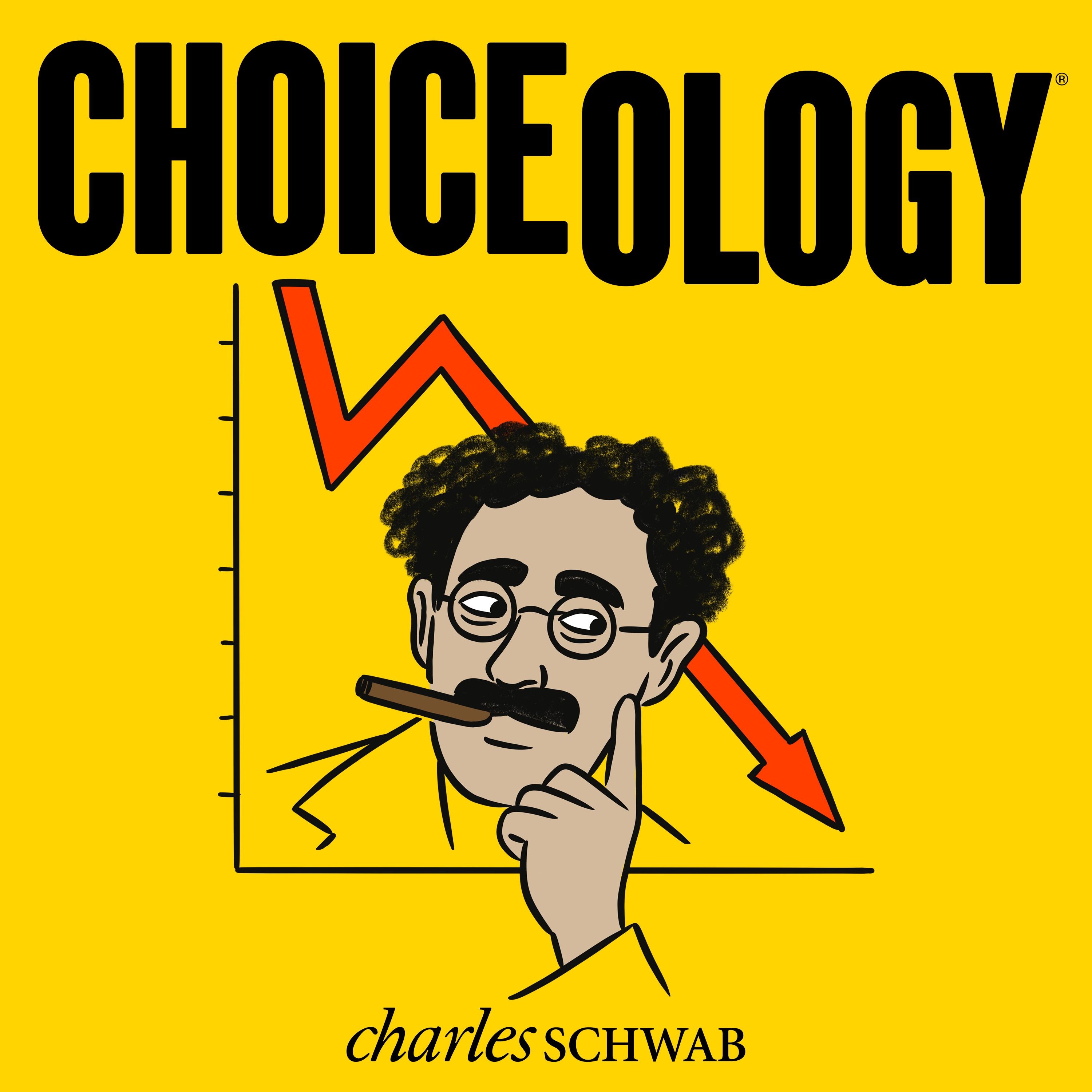
Choiceology with Katy Milkman
A Comedy of Economic Errors
00:31:20
From market booms to historic downturns, learn how major economic events impact us and influence how much risk we're comfortable taking.
Loading summary
Transcript52 lines
- [00:10]
A
Marla Jones Newman remembers the moment the world stopped feeling solid. It was August of 2005. She was in a car with her husband and infant daughter and just three days worth of clothes. They were fleeing New Orleans and heading for Alabama, away from Hurricane Katrina's projected path, Bermuda.
- [00:30]
B
But we are now hearing the storm has taken an unexpected turn toward the coast.
- [00:36]
A
But then Katrina changed course and Alabama was no longer safe. So they pushed on to Atlanta, where they watched images of their city turn from bad to worse. For months, home became a moving target for Marla and her family. They moved between Baton Rouge, New Orleans, and Mississippi. They helped relatives gut their homes, strip mold from walls, all while trying to maintain some kind of normal routine. But after hearing repeated warnings about air quality and mold dangers in their home city, Marla drew the line and made a vow that would change their lives. She told her husband, I'm done with water. I will not deal with water anymore. So when a job transfer came up for him, the family looked at their options. They considered Florida or Atlantic City, but decided they had too much coastline. Then came an opportunity in Littleton, Colorado. Marla didn't know much about the area except that it was landlocked, high and dry. And that was all she needed to know. Her family moved there straight away. Twenty years later, the events of the summer of 2005 still shape Marla's decision making. She's always ready for an emergency with drinking water stored and two generators ready to go, because she knows all too well how fast the world can go dark. In this episode of Choiceology, we're looking at how major events can. Can influence how much risk we're comfortable taking, especially when those experiences loom large in our memory long after the danger has passed. I'm Dr. Katie Milkman, and this is Choiceology, an original podcast from Charles Schwab. It's a show about the psychology and economics behind our decisions. We bring you true and surprising stories about high stakes choices. And then we examine how these stories connect to the latest research in behavioral science. We do it all to help you make better judgments and avoid costly mistakes.
- [03:09]
C
As I say, I was sitting in front of the cabin when I bagged six tigers. Oh, the biggest.
- [03:13]
A
Captain, did you catch six tigers?
- [03:16]
C
I begged them. I. I begged them to go away, but they hung around all afternoon. They were the most persistent tigers I've ever seen. One morning, I shot an elephant in my pajamas. How he got in my pajamas, I don't know.
- [03:28]
A
That voice, Fast Sly, belonged to Groucho Marx with his grease paint mustache. Arched eyebrows and a cigar clenched between his teeth. Groucho's irreverent style and iconic look defined an era of American comedy. In the early 20th century, Groucho and his brothers took over the stage. Before conquering the silver screen. The Marx Brothers turned the world into a punchline, and audiences ate it up. Their comedy was a chaotic escape for people living in a hard and hierarchical world. But behind the jokes were hints at reality offstage, like in this monologue by Groucho from the 1930 Marx Brothers film Animal Crackers.
- [04:12]
C
Footsteps creaking along the misty corridors of time. And in those corridors, I see figures. Strange figures, weird figures. Steel 186, Anaconda 74, American Can 138.
- [04:27]
A
The strange figures haunting those misty corridors weren't ghosts. They were ticker symbols. By 1930, the math of the Great Depression was spooking everyone, even a man as famously fearless as Groucho Marx. He wasn't born Groucho. He entered the world in 1890 as Julius Henry Marx, the son of New York City immigrants. The nickname Groucho was adopted along with nicknames for his brothers for their performances.
- [04:59]
D
He was part of the Marx Brothers act for 25 plus years, on stage and in film, sometimes television, but mostly known for their film work. Groucho, Harpo, Chico and Zeppo, Groucho being the ringleader.
- [05:13]
A
This is Frank.
- [05:15]
D
My name is Frank Ferrante and I've been playing the role of Groucho Marx since 1985.
- [05:22]
A
In Frank's over 40 years of playing the character Groucho in the stage production and evening with Groucho, he's learned a lot about the man and his family. For instance, that the Marx Brothers grew up in poverty and that their mother, Minnie, had a brother who performed on Broadway and in vaudeville, a genre of theater featuring variety and short acts that was popular in the early 1900s, Minnie
- [05:46]
D
Grouch's mother, figured, well, if my brother can do it, my sons can do it, and pushed them onto the stage. And that was their ticket out of poverty and the ghetto.
- [05:57]
A
So at the age of 14, Groucho had already left home to tour the grueling vaudeville circuit.
- [06:03]
D
He had to do what he had to do to help the family out. It must have been a fearful thing for a kid to leave home and just hit the road.
- [06:12]
A
Vaudeville was America's entertainment highway. Thousands of theaters scattered across the country. Life was a loop of midnight trains, relentless performance schedules and high financial risk.
- [06:24]
D
When you were on the road in vaudeville, you didn't know if you're going to get stiff. There were no unions, cramped quarters, you're sleeping on trains, the accommodations are awful. Outside of a boarding house, it might say actors and dogs not allowed. I mean, that's because actors have that reputation of, you know, fleeing and sneaking out the back door. Because it was a hard life. It's a freelancer's life.
- [06:50]
A
Years of grinding it out on the road finally paid off for Groucho and his brothers. By the 1920s, Groucho was no longer the poor kid from Manhattan. He was the king of New York, a Broadway star.
- [07:06]
D
Groucho Marx's and the march with his success of 1924 with a Broadway show called I'll say She Is was colossal. And it changed everything. They went from these high end knockabouts, vaudeville performers going from town to town to legitimate, what they would call legitimate talents. And of another level, it changed their lives in every way. Financially, socially, it was gigantic. And that propelled them. What came of that first success in 24 led to another Broadway success in 1925. And with the Coconuts and then Animal Crackers. I mean, it's remarkable in a short period, in four years, they had three Broadway smashes.
- [07:49]
A
Suddenly, Groucho, who had only gone to school until the sixth grade, was on top of the world. He was married, had two kids. The family lived in a beautiful home on Long Island. Groucho owned multiple luxury cars and he surrounded himself with great writers and big thinkers.
- [08:09]
D
Groucho gained confidence once he became a Broadway success. He was so insecure about his lack of education, he was legitimized. This was the big time. You're in a world where people are making money and everyone has the newest stock that's going to be the big winner. And he was in that circle and so he was amongst friends. And Arthur Marx's son talks about the fact that he would go to his brokerage house and he would sit there, they'd watch the ticker tape and Groucho would be there. And that was a way of life.
- [08:42]
A
This was the Roaring Twenties. People would gather at brokerage houses the way we gather today around TVs for big sporting events. They were watching the ticker tape live stock market data roll out fortunes in near real time. And Groucho was proudly right there with them. This was someone who once worried about getting stiffed in a small town theater. And now he was rich and legitimate, experiencing a level of security and comfort once no doubt unimaginable until Groucho got
- [09:15]
D
word of the crash from a friend who was Investing along with him, Max Gordon, who was a renowned Broadway producer and friend of Groucho's. And it was just one sentence. He called Groucho on the phone and said, marks, the jig is up. Click. And that was it. On October 29, Black Tuesday, the bottom dropped out.
- [09:41]
A
The Wall street crash of 1929 was a significant moment for many Americans. Groucho wasn't just dabbling, he was a true believer who went all in on the frenzied optimism of the 1920s. And like so many others, he was investing on margin, borrowing money to buy even more stock. It was a house of cards built on credit.
- [10:07]
D
He had everything in the market. All of his money was in the market. He lost all his money. He had to borrow against his home, against his insurances. He never slept well again after that.
- [10:22]
A
When the market collapsed, it wiped Groucho out. Everything he'd built from years of relentless, grinding performance was gone, replaced by the terrifying memory of the poverty he'd spent his life escaping.
- [10:37]
D
Groucho Marx changed immensely after the crash. It had a gigantic impact on him. He had enough insecurity being a freelancer and struggling his entire life. And then you hit it big in the, in the early twenties and now this. What can you believe in? What can you trust? What's real, what's not real?
- [10:56]
A
Even after losing the equivalent of $4.5 million today, Groucho joked about his misfortune on stage. It was business as usual. His punchlines were as sharp as ever and his swagger confident. But offstage, something fundamental had shifted. Groucho was starting from scratch with decent prospects ahead of him. Mind you, the brothers started working in Hollywood right after the crash. But his behavior around money and risk were never the same. He became hyper, aware of how easy it was to be on top one day and destitute the next.
- [11:34]
D
They were filming A Day at the Races and he would look at the extras around him and he'd see an actor that was very big star in silent movies. And now he's getting, getting paid pennies to be an extra and A Day at the Races. And it would horrify Groucho because he thought he's going to return to that. This was devastating and it never ended. His thriftiness, his care, his careful approach to it all. And from then on, those investments became very risk averse. Here's a quote, he would say, all in bonds, all in bonds. They have enough return if you have enough of them. That was his take on it. So it was always ultra safe and low return. From that point on with them, it left a real mark.
- [12:22]
A
The scars of 1929 never faded. For Groucho, that high flying confidence was gone, replaced by a deep, lasting distrust of the market. He stashed his wealth in bonds and cash, opting out of the post war boom and the historic bull market of the 50s and 60s. In the end, he traded the compounding power of stocks for the stagnant certainty of a bank balance. It was the price of a lesson learned too well, his children later told Frank. The impact showed up often in strained relationships and in every hyper cautious decision. Groucho even famously swapped his signature fedoras for a beret that he could fold into his pocket just to avoid paying a coat check fee. But while he was cautious and frugal, privately, his public face was always bold and brazen. In the late 1940s, he reinvented himself with the hit radio show you Bet yout Life, remaining the razor sharp wit the world adored. A man who was always on and determined to get the last laugh.
- [13:30]
D
He would quit, always maintained his distrust for the stock market. And in the 1950s, he visited the New York Stock Exchange. And he was given a tour of the New York Stock Exchange. And he stopped all activity. When he sang at the top of his voice and danced for 15 minutes and he yelled out to all the brokers there and all those who were trading, he goes, you wiped me out in 29, I intend to get my money's worth. That's so the story goes.
- [14:06]
A
Frank Ferrante is an actor and director. He continues to tour in An Evening With Groucho as well as a production featuring his own Cirque character. You can find a link to his website in the show notes and@schwab.com Choiceology. For Groucho Marx, the stock market crash of 1929 wasn't just a headline in the newspaper. It was deeply personal. It wiped out his savings, his sense of financial security. And that experience stayed with him even decades later, long after success returned. Groucho invested cautiously. And Groucho's reaction wasn't unusual. It was human. Because it turns out, the economic world you happen to live through doesn't just inform your opinions about money. It can reshape your instincts about risk in ways that can last a lifetime, long after the circumstances that caused them have changed. It's exactly this pattern that my next guest has spent years studying. Ulrike Momandier is the Cora Jane Flood professor of Finance at UC Berkeley's Haas School of Business.
- [15:29]
E
Hi, Ulrike. Thank you so much for joining me today.
- [15:31]
B
Thanks for having me. It's great to be here.
- [15:33]
A
Can we dive right in and start with what you found about how macroeconomic experiences, whether they're financial crisis or unemployment or inflation, how they shape our risk preferences and investment decisions?
- [15:45]
B
Yeah. So people talk about depression babies. These people who lived through the Great Depression, saw the stock market tumble, Wall street lose everything, were looking for safe jobs. Often I read about post office jobs, which don't sound so safe anymore today, but this notion that they were really shaped by that experience. And so that triggered our curiosity to ask a question. If in your lifetime you experience a really big crisis in the stock market, is it true that that makes you avoid the stock market like the plague? So we basically ask people, when were you born? Let's look back over your life so far. Did you live through any major crisis? So we can think about the Great Depression, but we can also think about the great financial crisis more recently and see whether that has predictive value for your willingness to invest in the stock market.
- [16:37]
E
Yeah, And I love that you got really rich data from these survey panels where you're looking at people over time. Could you talk a little bit about the specific sort of data analysis you did and what you found?
- [16:47]
B
We basically used this data set, one of the data sets coming out of Michigan, the Survey of Consumer Finances, which had actually some predecessor surveys. So you can kind of follow people all the way back pretty much to the beginning of the last century. So literally, if you start at their birth years, you get like 100 years of data. And what we do in this paper pretty much boils down to asking the question. If I'm trying to predict whether you are a stock market participant, let's just take that for now, whether you invest at least $1 in the stock markets. And I try to predict it with all the usual variables we've used in the past. How rich you are, your wealth, income, education, family status, whatnot. But then on top of it, I put in a variable which is your lifetime exposure to what happened in the stock market. Roughly speaking, the average of stock market returns in your life so far. Do I get predictive power? And it turns out I get huge predictive power. So you see just that the mere exposure to better stock market outcomes makes you about a third more likely to invest a dollar in the stock market. We have a similar result for the bond market. And also for that question in the beginning where you just ask people, how risk averse are you generally, you know, about 36% say I'm, I'm the highest risk aversion category. I don't like to take risk with my money. But that decreases also by about a third if you had a pretty good exposure to stock market risk outcomes. So that's kind of the key finding that's really interesting.
- [18:15]
E
I think many listeners might say, well, that sounds rational, like this sounds like a reasonable response. I look at the sum of my past experiences over my life and I make an assessment about whether or not investing is a good idea. And if it's been been a really bumpy road for the stock market, I assume like, no, this is not so. Could you describe the extent to which you perceive this to be a bias versus something that's just a rational response to the data I have in front of me?
- [18:42]
B
Yeah. So let me first push in the direction of this being a bias and then take a step back and put a big caveat. So it is a bias in the sense that when you make a decision about your financial investment, you should use all the data available to you on how good that investment opportunity is. So if the data on the past century or the past decade, whatever data is available to you is there, well use it, come to your conclusion, what seems to be the return generated with this asset and make your decision. What we observe instead is that if you are 20 year old, you put a lot of extra weight on the last 20 years, in particular the most recent ones. We can get into that. If you are 50 year old, you use data from the last 50 years. Now, of course, there's a separate question to have access to the data. But our point is, even if you have access to the data, and we've even shown that for experts, like financial experts, they have access to all available data, they just can't help themselves to have these memories of what they've personally lived through bubble up again and just getting this extra weight in what they do. So in that sense, it's a clear deviation from rational decision making. It would actually look exactly like rational decision making if we say, oh, for some reason they're prevented from looking at the other data. Yeah, with that data, their lifetime data, you know, they're doing pretty good updating. But there's more data available. Why are they not using it? Now, having said that, I want to also kind of take a step back and say, well, what is the alternative? Maybe it is not a bad idea to keep, first of all updating throughout your life. That's certainly a good idea and to learn lessons from what you experience in your life in some sense. I'm never going to declare it rational. But what is the alternative behavior? It might be a lot better than the alternative behavior of just putting weight on the last year or the last two years. So at least using your lifetime is, well, sometimes a lot closer to rational compared to what you might be doing otherwise. But it's this overweighting things just because they happen to me personally, which is really different from our rational models.
- [20:59]
E
You've mentioned that you also looked at inflationary experiences in a separate paper. We've mostly been talking about this macroeconomic experiences, sort of, how's the stock market doing during your lifetime? But when you look at inflationary experiences in a different paper, what do you find there in terms of how that
- [21:15]
A
changes people's decision making?
- [21:17]
B
Yeah, so we Germans are so obsessed with inflation and a lot of people connect that to Germany having had this scarring experience of the Weimar hyperinflation. So did that leave a long lasting scar in our nation that we realized, whoa, once inflation happens, you know, everything gets dissolved and economy stops functioning, et cetera. Anyhow, we haven't answered that question, but that's what got us going and asking the question. People's attitudes towards inflation might also be shaped by their personal lifetime experience with inflation. Can we see that in the data? Now we turned again to US Data. So the Michigan Survey of Consumers in this case, where basically since the 1950s, you have this question about one year inflation. So consumers are asked, do you think prices will increase, decrease or stay the same? And if you say increase, decrease, they say by how much? And so kind of did the same exercise, roughly speaking. And lo and behold, we found that your lifetime experience with inflation has a lot of predictive power in terms of how optimistic or pessimistic you are about future inflation rates. And that holds, by the way, whether you are the average consumer in the US which is what that first paper is about, or as we showed in a follow up paper, whether you are a high level central banker who sits on the Federal Open Market Committee, who's setting the rates for, for the US Even for them. If I can look at, okay, where were they born, how many years ago? What was their lifetime inflation experience? I get predictive power on their inflation expectations. So that was interesting to see. What was also interesting to see when we did that is that the data told us again that the weighting was very similar to the weighting we found in the stock market, meaning roughly linearly declining weights. If I go back from today to my birth year. So I put a lot of weight on what happened this year, the year after, and then it slowly declines. Even outcomes early in my life matter if they were high enough. And I love that because I mean this seems to suggest there's almost like there's a pattern, there's almost like a law. I mean, any kind of macro variables I experience lead to my expectation updating. So we saw it in the stock market, we saw it in inflation. I've looked at unemployment experiences and consumption behavior. I've looked at exposure to political outcomes. And this weighting pattern, this pretty simple waiting pattern of roughly learning declining seems to be what you can use to understand how people, how people update throughout their lives.
- [23:52]
E
Are there any other studies besides the ones we've talked about by you or by others that you think are particularly interesting that our listeners might be able to gain insights from about how they're likely to make decisions as a result of everything from their experience on the marriage market to their first job, or you know, the whether their first teacher
- [24:12]
A
was generous with them.
- [24:14]
B
These are three great ideas for future papers. I haven't seen exactly that, but a few things close to it on job and labor market. So one thing I've done myself is to look at unemployment experiences. And there you can go again to the macro variable as we've been discussing so far. How's the unemployment rate? Do I see people losing their job around me? How does that affect me? And then of course also to the individual, one idiosyncratic one, have I lost my job or my parents lost job? And what we see is that this has really leaves a trace in you, has long lasting effects and you becoming really nervous about that happening again. So as a result, people who have lived through that build up much more precautionary savings, actually build up wealth, you know, they're not spending it. Whether that's optimal is a different question. But you can't say. They'd say, you and I have a similar job now, maybe with similar earnings, employment prospects, employment security, etc. But then if you and I grew up, you and I grew up differently. So one of us was the silver spoon in the mouth and the other one in poverty or family which was struggling, it will continue to have us make different decisions about consumption versus savings going forward. Another area which I actually haven't worked in, but lots of people have picked up this idea of experience effect is what does it do to you if you live through a natural disaster. So whether it's flood, fires, people have shown a it affects insurance choice, not surprisingly, it affects also stated risk preferences. It is interesting how it also affects housing prices. So meaning sure this risk should affect housing price if there's a flood risk, if there's a fire, et cetera. But if we hold the year over year probability the same whether or not it happened in this year, let's say it's not autocorrelated should not lead to these big jumps. But it does because it puts it in people's minds and they can't shake it. I think there's more to be done because you know, while a lot of these experience we talk about are big T trauma, you know, like Weimar hyperinflation or Covid or great financial crisis, great inflation, there's also the small T trauma of like having experienced discrimination or food insecurity, employment insecurity that that can really leave traces and will have long lasting impacts. And so now I see some of the recent research trying to get at that. It's very hard, it's hard in neuropsychiatry to do that work because the small T trauma is harder to document and quantify. But I'm really encouraged by people starting to look at that as well.
- [26:44]
A
Do you have any advice for listeners who've lived through something like the high inflation of the 70s or the 2008, 2009 financial crisis? Anything to be on the lookout for or pay attention to?
- [26:54]
B
Start with some empathy towards you. Right. Like if we come to this with a behavioral angle of oh, there are mistakes you're making, you're not updating properly, we're very quick to beat ourselves up. I'm not doing the rational thing. And what I'm telling you is this is happening to everybody. This is happening to the experts. There's stuff happening to us when we're walking through life means that the remedies or the fixes, if you don't want that behavior, are a little bit different than just learning, checking off and assuming you could act differently.
- [27:23]
E
I so appreciate you taking the time to talk with me today, Ulrike, so thank you very, very much. I'm really grateful.
- [27:29]
B
Big thanks for having me. It's always so much fun to discuss with you. Thank you, Katie.
- [27:35]
A
Ulrike Malmendier is the Cora Jane Flood professor of Finance at UC Berkeley's Haas School of Business as well as a professor of Economics at UC Berkeley. You can find links to her research on how the economic shocks we experience shape our risk taking in the show notes and@schwab.com Choiceology. If you're interested in the macroeconomics of what's happening in the world Now. Check out Schwab's podcast on investing, hosted by Liz Ann Saunders and Colin Martin. You can find it@schwab.com oninvesting or just search your podcast app for On Investing. What I hope you'll remember from this episode is that the things you experience the crashes, the booms, the inflation, the natural disastersthey change your instincts in ways that can be hard to shake. Groucho Marx survived the Great Depression with his career intact, but his portfolio never recovered. Not because he lacked access to good investments, but because the crash of 1929 had permanently changed the way he saw risk. Ulrika's research gives that story a the Experience Effect, and it's closely related to another bias covered in the very first season of the Availability Heuristic, which leads us to overestimate the probability of events that are easier to call to mind, often due to vividness. Think of how many people are afraid of sharks when just 10 people die per year on average in shark attacks. But the luridness of a shark attack makes us overestimate its likelihood. If you've lived through a stock market crash or an inflationary period or a natural disaster, you have a vivid memory of that experience, which makes it a more real and present danger in your mind than the also relevant broader history you didn't personally encounter. Once you know that experience effects exist, you have an opportunity to begin asking yourself, am I making this decision based on the facts in front of me, or based on the experiences I've happened to encounter by chance? The chance of where I was born or when I was born, or of encountering something especially lucky or unlucky on my life path? Remind yourself that the world you happen to grow up in isn't the only world that exists, and try not to let Groucho's mistake become your own. You've been listening to Choiceology, an original podcast from Charles Schwab. If you've enjoyed the show, we'd be really grateful if you'd leave us a review on Apple Podcasts, a rating on Spotify or Feedback wherever you listen. You can also follow us for free in your favorite podcasting app. And if you want more of the kinds of insights we bring you on Choiceology about how to improve your decisions, you can order my book how to Change, or sign up for my monthly newsletter, Milkman Delivers on Substack. Next time I'll speak with Shlomo Benazi, professor Emeritus at the UCLA Anderson School of Management. We'll explore a downside of frequently checking your performance when the metrics you're watching are volatile. I'm Dr. Katie Milkman. Talk to you soon. For important disclosures, see the show notes or visit schwab.com choiceology.