← Choiceology with Katy Milkman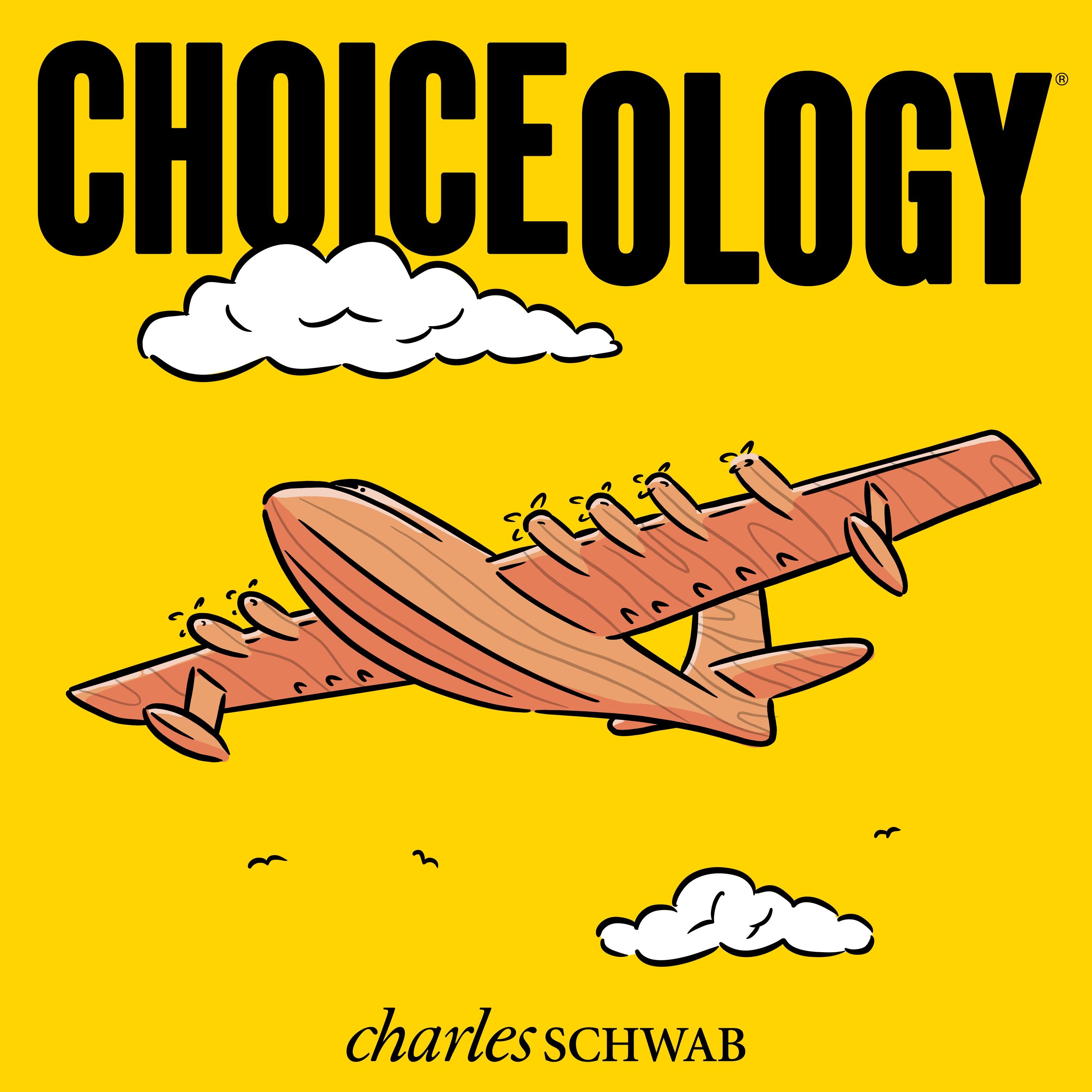
Choiceology with Katy Milkman
When Sunk Costs Take Flight
00:35:30
Katy Milkman explores why people tend to keep investing time, money, or effort into something even when future benefits no longer justify continuing.
Loading summary
Transcript76 lines
- [00:06]
Bill Kolb
When you walk in the front door, you don't even notice the Hercules because your brain would not make sense of it. It looks like a wall and it's painted like a battleship. And you look up because you're looking at planes hanging from the ceiling and. And you notice there's a wing up there, but it doesn't look like a wing. It's too big. Then you notice it's attached to that big gray behemoth in the middle of the room. And your brain starts to process and say, oh, that must be the spruce goose. The H4, the Hercules.
- [00:46]
Dr. Katie Milkman
This is Bill Kolb, a volunteer tour guide at Evergreen Aviation and space Museum in McMinnville, Oregon. He's taking us in and around one of the world's most ambitious and unusual looking aircrafts. A plane so large it warps your sense of scale and so expensive, it warped the judgment of the man who built it, Howard Hughes, the famous American aviator. In this episode of Choiceology, we explore a bias in judgment that arises because we so desperately want to recover what we've already spent, whether it's money, effort, or time. Even when that money, effort, or time is gone and irrecoverable, we'll explore how that desire can steer us in counterproductive directions. I'm Dr. Katie Milkman, and this is Choiceology, an original podcast from Charles Schwab. And it's a show about the psychology and economics behind our decisions. We bring you true and surprising stories about high stakes choices. And then we examine how these stories connect to the latest research in behavioral science. We do it all to help you make better judgments and avoid costly mistakes. In 1942, the Second World War was raging on and the Allies were struggling against the German submarines in the Battle of the Atlantic.
- [02:28]
Bill Kolb
There was a big chunk in the middle of the ocean where there's no air cover at all. The German submarines, they're called wolf packs, sank our ships with impunity.
- [02:40]
Dr. Katie Milkman
The Allies needed to deliver massive amounts of cargo without getting bombed, and they needed to do it quickly. Henry Kaiser, a famous American shipbuilder and steel magnate, had an idea.
- [02:53]
Bill Kolb
Henry Kaiser, he built primarily Liberty ships, and they were cargo ships, and he built them out of metal and they used to weld everything. He figured out how to rivet, and he was quite an innovator. And so he went to the government, said, hey, if we can't get through them, let's go over them. And so the Department of War thought, what if we could fly over the submarines?
- [03:20]
Dr. Katie Milkman
Kaiser started looking for an aviation partner Someone to complement his shipbuilding expertise so they could work together to build the world's largest seaplane.
- [03:30]
Bill Kolb
He pulled Howard Hughes in and the two of them teamed up and decided, we're going to build this enormous plane. Hughes was the most brilliant aeronautical engineer in the world and everybody recognized that. He knew more than anybody else on the planet and he had a great deal of experience building planes. For the 20 years prior.
- [04:00]
Dr. Katie Milkman
Howard Hughes was one of aviation's great visionaries. In 1938, he flew around the world in just under four days, shattering the previous record. He was also an industrial tycoon, one of the richest men in America, and a Hollywood producer who committed deeply to his projects. Hughes once risked his life for a stunt to save his film Hell's Angels. He was a man defined by a relentless all in obsession. And he was the partner Kaiser needed. Together they signed a contract with the American government for for $18 million to build aircraft prototypes in a tight 24 month window. To put that into perspective, $18 million in 1942 is equivalent to about $340 million today. From the very start, Kaiser and Hughes faced some major challenges.
- [04:54]
Bill Kolb
The government had some pretty difficult constraints. They couldn't build it out of metal. There was so much metal that was needed for tanks and jeeps and trucks and aircraft that they told him, you have to build it out of something else. And so he built it out of wood.
- [05:15]
Dr. Katie Milkman
Hence the name the Spruce Goose. That's how the press mocked the wooden aircraft. Even though Hughes used birchwood, not spruce. He hated the nickname. The papers were skeptical. A plane one sixth this size had never been built before, let alone out of wood. Kaiser and Hughes went out.
- [05:35]
Bill Kolb
They found every carpenter and cabinet maker and people who worked with wood and used them to build the plane because it in fact was a very large cabinet.
- [05:52]
Dr. Katie Milkman
Thousands of people began work on the wooden plane in the fall of 1942 at the Hughes Aircraft Company in Culver City, California. The sheer enormity of the aircraft meant they needed several facilities where parts were built separately. Hughes was very involved in the day to day operations.
- [06:10]
Bill Kolb
There are stories of Howard walking through the assembly floor yelling at people because he sees something 20ft up that doesn't look quite right. And it's that perfectionist part of him coming out.
- [06:24]
Dr. Katie Milkman
Hughes was an eccentric character, a larger than life Persona, famously captured in the 2004 movie the Aviator. He was a man of contradictions, known for his brilliant innovation and risk taking, but also for his personal frugality and obsessive perfectionism.
- [06:41]
Bill Kolb
He was very difficult to Work with. Everything had to be just right and he would micromanage people in the shop and in the drafting rooms, getting right down to what size screw was used somewhere. He was a man with a vision and no one could keep up with him and it frustrated him. But it was a two edged sword. He's brilliant, he's driven. He was passionate about meeting his goals. But he also had great difficulty dealing with people.
- [07:13]
Dr. Katie Milkman
As the project's 24 month deadline grew nearer and the plane still wasn't finished, the partnership between Hughes and Kaiser became, became strained. With just a few months left on the clock, Henry Kaiser had hit his breaking point.
- [07:28]
Bill Kolb
He just couldn't deal with Howard anymore.
- [07:33]
Dr. Katie Milkman
The project was also behind schedule and running out of money at the same time. The Allies were making major progress in the war and the need for the massive seaplane became less pressing.
- [07:44]
Bill Kolb
The fall of 44 we've already landed in Normandy and we were getting very close to the end of the war. And so the government starts thinking, well, we don't need this.
- [07:58]
Dr. Katie Milkman
Kaiser saw the writing on the wall. The military's need for their giant seaplane was dwindling. Government funding was looking tight. He and Hughes clashed. It made sense to cut his losses.
- [08:11]
Bill Kolb
So he left.
- [08:13]
Dr. Katie Milkman
But Hughes, he couldn't walk away.
- [08:16]
Bill Kolb
It was a good time to leave, but that is antithetical to his personality. He would have been remembered for the project that the plane never got off the ground, it cost too much, they didn't know what they were doing and they canceled it and he walked away. That is not a legacy that he wanted to have. And so while he had the perfect opportunity, there was no way he was going to take it.
- [08:42]
Dr. Katie Milkman
Hughes was deeply invested in the success of the H4 project. He'd spent years of effort designing and constructing the plane. He was reluctant to abandon the progress he'd made, even though he couldn't get that time and effort back. What he could have done instead was consider the best possible use of his time going forward. Ignoring all the investments, he could no longer recover from this project.
- [09:07]
Bill Kolb
What could he have been doing had he not been working on the H4? He was at the top of the heap before the war started. He was building airplanes that flew faster than anybody thought possible. And he was setting records over and over and over. So if he felt bad, it would have been his perceived failure. But more than that is what could he have done? What could he have invented had he not been working on this behemoth?
- [09:39]
Dr. Katie Milkman
Hughes kept working away on the plane. He even started funneling his personal fortune into the project to the tune of a cool $7 million.
- [09:48]
Bill Kolb
When we get to the end of 45, the war is absolutely over. Our fighters and bombers had decimated the German wolf packs. I think they Sank well over 90% of the submarines in the last few years of the war because we got son. And so that diminished the requirement for the plane. You get to the end of the war, and the plane, it's not done yet. And so Congress calls him, and they shook a bony finger at him and said, you need to stop. And they called him a terrible war profiteer. And they were going to investigate him and they're going to bring him up on charges, and they told him to stop.
- [10:35]
Dr. Katie Milkman
This was another opportunity for Hughes to move on. Congress was literally begging him, and the war was officially over. But Hughes had invested so much money, effort, and time in the plane, he said no.
- [10:48]
Bill Kolb
He wanted to finish it, and he put up his own money. The government shut off the money, and he said, no, I'm going to keep going.
- [10:58]
Dr. Katie Milkman
Then in the summer of 1947, the government made good on their promise. They called Hughes to testify before the Senate War Investigation committee in Washington, D.C. about his use of government funds to build the aircraft. The courtroom was packed with news reporters and fans of Hughes who hoped to catch a glimpse of the movie mogul. Senators fiercely stared across their bench at the famous aviator. The air was thick with tension.
- [11:32]
Bill Kolb
The press generally was not on his side. He goes before the Senate subcommittee and they want to string him up. Now, Mr. Hughes, I'm asking you what your answer was.
- [11:45]
Richard Thaler
And we're not going to have this bickering back and forth. You are before this committee and you're
- [11:50]
Bill Kolb
going to answer the. And he gives it back as good as he gets. And they told him to cease and desist, and he refused. He. He would not back down. And he just told them to their faces that famous line, I've put the sweat of my life into this thing. I have my reputation rolled up in it.
- [12:10]
Richard Thaler
And I have stated several times that
- [12:12]
Bill Kolb
if it's a failure, I'll probably leave this country and never come back. And I mean, it's.
- [12:17]
Dr. Katie Milkman
Hughes won the heart of the public with his impassioned defense of all the sweat and equity he'd put into the plane, which he argued justified his perseverance on the project. He returned to work on the H4 in Culver City with renewed energy and vigor.
- [12:33]
Bill Kolb
He went back and finished the plane.
- [12:38]
Dr. Katie Milkman
Finally, three months after the Senate hearing and about five years since the project started, the H4 was complete. Hughes set a date for a taxi trial on November 2, 1947. The taxi test, if it went well, would help stave off the critics who'd taunted Hughes for years. A lot was riding on this moment. It was a beautiful day in Long Beach Harbor, California, when Hughes unveiled the completed prototype.
- [13:14]
Bill Kolb
The weather was decent, a bit of a breeze under 10 miles an hour, and there are a great many spectators along the shore wanting to see this. And he called the press in and said, you want to see this? The first time ever. So there was a lot of press on the shore, press in boats, and there was press on board the plane. And he was asked many times, well, are you going to actually fly it? He said, oh, no, no, no, no. The government told me, this is just a taxi test and I am not allowed to take off. In the back of his mind, he had a different idea. So they taxi up and back for a while and they're going into the wind, and he adjusts the flaps a bit to get a little more lift and just a little bit of throttle. He gets it up. I think it was 135 miles an hour, and the darn thing lifts off. It flew just 70ft above the water for about a mile. The whole thing took about 26 seconds and then he put it down nice and smooth.
- [14:36]
Dr. Katie Milkman
To Hughes, those 26 seconds of successful flight were everything.
- [14:42]
Bill Kolb
It was very important to Howard. That was probably the hardest thing he had done, against the highest odds that he'd ever faced. It's hard to say the richest man in the world who is an underdog, but in this case, he was.
- [15:01]
Dr. Katie Milkman
While the seaplane did eventually achieve liftoff, it was too late. Several years too late. The military use case had become obsolete. Hugh's refusal to let the project go, in large part because of everything he'd invested and couldn't recover, had cost him sorely months, millions and his reputation. With accusations of war profiteering, the H4 never flew again. But still, Hughes remained committed to the plane until the end of his life. He spent a staggering $1 million a year to store the aircraft and maintain its flight worthy status, just in case he ever needed to fly it again. That day never came. After Hughes died in 1976 and some changes in ownership, the H4 finally found its permanent home at the Evergreen Space and aviation Museum in McMinnville, Oregon, where it has its own pavilion specially built to host the world's largest wooden plane, which flew just one time in 1947 for a total of 26 seconds. Bill Kolb is a docent at the Evergreen Aviation and space Museum in McMinnville, Oregon. You can find more details on the H4, plus links to the museum and its H4 tours in the show notes and at schwab.com choiceology the H4, or Spruce Goose, is a famous project from the history of American aviation. I visited the museum and can tell you the plane is quite the sight Howard Hughes had many opportunities to abandon his efforts when it made perfect sense to do so, when his partner quit, when the war ended, or when the government was begging him to stop. But Hughes had made massive irrecoverable investments of his time, effort and money. His reputation and identity became wrapped up in the project, too. He couldn't bear the thought of what he perceived as wasting everything he'd already poured into the project. The question of how we approach irrecoverable costs, costs that we can't get back after they're spent, is the topic that I dive into with my next guest. Richard Thaler is an economics Nobel Laureate and the Charles R. Walgreen Distinguished Service professor of Behavioral Science and Economics Emeritus at the University of Chicago's Booth School of Business. He's also the author of a new book called the Winner's Curse, which is a seminal work on behavioral economics. Richard recently updated and re released the book with Alex Emis, who he had on the show in June of 2024. Hi Richard, thank you so much for taking the time to be here today.
- [17:49]
Richard Thaler
Hi Katie, Always good to see you.
- [17:52]
Dr. Katie Milkman
I want to dig into a topic covered briefly in your fabulous new book with Alex Emis, and the topic I want to dig into is the Sunk Cost fallacy. Could you start by just defining the sunk cost fallacy?
- [18:05]
Richard Thaler
The idea is that if you've bought something, the money you paid for it is sunk. You can't get it back, and specifically you can't get it back by using it more. So classic example is you order some dessert at a pricey restaurant and you're already kind of full and the dessert is very rich, but you keep eating it because you paid a lot of money for it and like somehow eating it is going to help.
- [18:48]
Dr. Katie Milkman
Yeah, that's a great example. Like you would be happier if you didn't, but your mind convinces you that that money you spent requires the consumption of this dessert or else you've done something wrong. I was hoping you could describe a few examples and studies you've looked at to demonstrate this fallacy.
- [19:05]
Richard Thaler
True story. I was living in Rochester, New York at the Time, which is every year snowy, the way you've had snow in Philly this year. And I had a friend named Jeffrey, and we were given two tickets to a basketball game in Buffalo when Buffalo had an NBA team. And then there was a big blizzard. And we decided it would be foolhardy to drive to Buffalo in the blizzard. But Jeffrey said to me, okay, yeah, we shouldn't go, but if we had paid for those tickets, we would be going. I said, you know, you just said it would be crazy to drive in this weather. Yeah, but those tickets were expensive, and if we had paid for them, we'd have to go. So that's clearly the sunk cost fallacy. The amount of money you paid for the tickets, A rational economic decision would be, I should go if enjoying the game is greater than the cost of going, which includes driving during a blizzard, and that the amount of money we paid for the tickets is now irrelevant.
- [20:26]
Dr. Katie Milkman
How about wine? That's appreciated. Richard, I think you and Eldar Shafir surveyed some wine experts on a scenario involving wine appreciation.
- [20:34]
Richard Thaler
Of course, all of my insights start with thought experiments. And as you know from personal experience, I do enjoy a nice glass of wine. So we did a survey of the subscribers to a newsletter that Orly Ashenfelter, the famous economist, used to publish called Liquid Assets. It's clever, and it was about wine auction prices. That's what the newsletter was about. But he, as a favor to us, included a survey. And we said, suppose you bought a bottle of wine a long time ago for $100, and it's appreciated. It's now worth 300, and you go to drink a bottle, how much does it feel like you're spending? We gave them multiple choice, so one of the options was 300, meaning that's what you could get for selling your bottle. That's the correct answer if you're an economist. As you know, Another answer was 100 what I paid for it. Another was 0. It doesn't cost me anything. I bought it a long time ago. And my favorite answer was, I save $200 by drinking this bottle of wine, because I only paid 100 and it's now worth 300. So I'm up 200 if I drink that bottle. Lots of people actually picked that answer. In that case, the wine drinkers have their own kind of mental accounting, because it's not like they think that they have to drink that bottle because it was so expensive. They're thinking, huh, that wine doesn't cost me anything. It's more a failure to recognize opportunity costs than it is sunk costs.
- [22:41]
Dr. Katie Milkman
It's a similar psychology though, right. If you think about sort of how these two things tie together. Because if we should recognize that it costs us 300 to do something and we treat it like it's free, that's sort of the opposite of treating the ticket that you paid for differently than the ticket that was free. Right. Like either way, you're not assigning value properly to these assets and it's leading you to make peculiar choices.
- [23:15]
Richard Thaler
I think they're both examples of what I call mental accounting. And mental accounting is really the, the way you think about money in your head. And we often think about money in ways that is different than the way economists think we should.
- [23:34]
Dr. Katie Milkman
I'm curious, when you were working with Alex on an update of your classic book the Winner's Curse, what did you determine about how your original ideas and research on the sunk cost fallacy have held up?
- [23:49]
Richard Thaler
The most interesting thing that's happened in the field is we've gone from originally just thought experiments, then to lab experiments and field experiments, and now to field data. And so there are two nice studies that get into the book. One from Stefano and Ulrike. They have a paper with the wonderful title Paying not to go to the Gym. And we know from your study many people often around New Year's decide this year I'm going to get into shape. They join a gym, they sign up for a membership for a year and they pay a monthly dues. But going to the gym each time is free. And what this paper finds that people join with good intentions and then don't go very often. And in fact would be much better off financially paying each time. And the gym they studied, you could pay say $10 every time you go or some monthly fee. They would be better off paying as they go. But in this case, people like the sunk cost because if they've paid, they've, oh, you know, I'm paying all this money to go to the gym, so I better go.
- [25:25]
Dr. Katie Milkman
So unlike the dessert example, this gym study shows how a sunk cost can be leveraged to improve your health. I'm curious, Richard, why do you think that people show this fallacy?
- [25:35]
Richard Thaler
I think that there is a feeling that you don't like to waste. And a lot of the anomalies that we study in behavioral economics probably emerged from somewhat sensible behavior. You know, Amos Tversky had this great line that there probably were species that didn't suffer from loss aversion, but they're now extinct. And the idea is that if You're a subsistence. It's rational to not want to lose because you're going to die. And now in modern society, thankfully, very few of us, we're not going to die if we don't eat that dessert. Quite the opposite. So we still have these lingering tendencies that we shouldn't waste and we should be sensitive to losses. Going back to the book and this theme that a lot of the things we found were now in real markets. There's a paper by my co author, Alex Emis. He has a great paper studying traders and professional investors. And he got this data set of, I think about a decade of all the trades from a bunch of professional portfolio managers who have some skill, meaning their portfolios do better than the benchmark for whatever they're investing in. And he looked at, okay, obviously they have skill in what stocks they buy. Do they have any skill in when they decide to sell? And the answer was no. In fact, they have negative skill. Suppose I want to buy some stock, I might have to sell something. Let's say I tend to have about 100 stocks in my portfolio. I want to add one. All right. So I have to get rid of
- [27:49]
Dr. Katie Milkman
something to afford it. Right. I have to free up the cash.
- [27:52]
Richard Thaler
Yeah. So they said, look, let's say instead they picked a stock at random from their portfolio and sold that. How would that do? And it turns out that would be better.
- [28:08]
Dr. Katie Milkman
And is it because they're holding on to losers hoping they'll turn around?
- [28:12]
Richard Thaler
Yeah, it seems mostly that they are holding on too long, which is another phenomenon that has been documented, that we tend to hold on to losers too
- [28:26]
Dr. Katie Milkman
long because we're hoping it'll change. We don't want that.
- [28:29]
Richard Thaler
Right.
- [28:29]
Dr. Katie Milkman
That outcome. Yeah.
- [28:30]
Richard Thaler
And the mental accounting of that is if I have a stock that's gone down, I don't have to admit that I made a mistake until I sell it. Until I sell it. Right. So if I just keep it. Oh yeah, well, it's not a loser yet.
- [28:48]
Dr. Katie Milkman
I love that. What do you do differently in your life as a result of studying the sunk cost fallacy?
- [28:56]
Richard Thaler
Well, I think I am good at ignoring sunk costs. Certainly if, if I open up a bottle of wine that I think is past its prime, I'm willing to put it into the vinegar pot. Having a vinegar pot actually helps.
- [29:19]
Dr. Katie Milkman
How about for listeners for whom they haven't been training for 30 or 40 years on the sunk cost fallacy? What advice would you have for them to help make this insight concrete so they can live by it? How can they make better choices Understanding
- [29:34]
Richard Thaler
the Sunk Cost Fallacy let's introduce another bias. Status quo bias. So we tend to stick with what we have. When Netflix starts the next episode automatically, it makes us more likely to binge than if we actually had to go to all the effort of clicking something on the remote. Or should I say, wait, wait, a little bell goes off. No, no. This is a Sunk Cost Fallacy. And the right question is, would I
- [30:15]
Dr. Katie Milkman
eat this dessert if it had been free? Would I go to this basketball game if it had been free?
- [30:20]
Richard Thaler
Right? And if you ask yourself that, that will always get you the right answer.
- [30:29]
Dr. Katie Milkman
So basically you have to remind yourself all of your decisions should be forward looking as if there were no cost because the cost is irrecoverable.
- [30:38]
Richard Thaler
Right?
- [30:38]
Dr. Katie Milkman
I love that.
- [30:39]
Richard Thaler
And that can be true of many things in life.
- [30:44]
Dr. Katie Milkman
Absolutely. Richard, this has been so much fun. Thank you very much for taking the time to talk to me about the Sunk Cost Fallacy and the new edition of the Winner's Curse that covers this and many other fascinating and important topics.
- [30:58]
Richard Thaler
Thanks Katie. Always good to see you even on the screen.
- [31:06]
Dr. Katie Milkman
Richard Thaler is a Nobel Laureate, New York Times bestselling author, founding father of behavioral economics, and emeritus professor at the University of Chicago's Booth School of Business. He's also my friend and collaborator. His fantastic updated book, co authored with Alex Emis, is called the Winner's Behavioral Economic Anomalies Then and Now, and reading the original edition changed my life. It convinced me to pivot away from questions related to computer science and technology as a PhD student to become a behavioral scientist. If you're a longtime fan of the show, I suspect you'll love the book. You can find a link to it as well as to the papers Richard mentioned in our conversation, in the show notes and@schwab.com choiceology for more practical insights on how biases like the Sunk Cost Fallacy can affect your financial decisions, check out our sister podcast, Financial Decoder. You can find it@schwab.com financialdecoder or just search for financial decoder in your favorite podcasting app. The Sunk Cost Fallacy is one of the most consequential and costly behavioral biases we face. It pushes us to escalate commitment to a failing course of action, not because the future looks bright, but because we're desperate to justify past investments that can never be recovered. When I teach my Wharton MBA students about this bias, we talk about a classic study from the 1990s by Barry Sta and Ha Huang. They found that NBA coaches gave more playing time to their higher draft picks, even when those players performed no better than their teammates. An early draft pick is a sunk cost. It can't be recovered. But coaches double down on their most expensive choices, giving these players more court time than their performance alone would justify. But the sunk cost fallacy doesn't only afflict titans of industry like Howard Hughes and basketball coaches. Maybe you keep driving a clunker because you just paid for a major repair. Or maybe you finish a mediocre dessert when you're already full because it was expensive. Richard's advice is simple and powerful for avoiding this bias. Ask yourself, would I choose this if I hadn't already paid for it? If the answer is no, that's your cue. Walk away now. To be fair, sunk costs aren't always the enemy. Sometimes we can use them to our advantage. Prepaying for a gym membership or a class can helpfully motivate us to follow through. In these cases, we're strategically harnessing our aversion to perceived waste. But most of the time, the wisest move is to ignore what's behind you and focus only on what lies ahead. Good decisions are forward looking. The past is sunk. The only question that matters is what's the best choice now? You've been living listening to Choiceology, an original podcast from Charles Schwab. If you've enjoyed the show, we'd be really grateful if you'd leave us a review on Apple Podcasts, a rating on Spotify, or Feedback wherever you listen. You can also follow us for free in your favorite podcasting app. And if you want more of the kinds of insights we bring you on Choiceology about how to improve your decisions, you can order my book how to Change, or sign up for my monthly newsletter, Milkman delivers on Substack. Next time, I'll speak with Rick Larrick, the Hanes Corporation foundation professor of Management and Organizations at Duke University's Fuqua School of Business. We'll discuss a tendency to value rank above all else, even when more informative metrics exist. I'm Dr. Katie Milkman. Talk to you soon. For important disclosures, see the show notes or visit schwab.com choiceology.