← Christiane Amanpour Presents: The Ex Files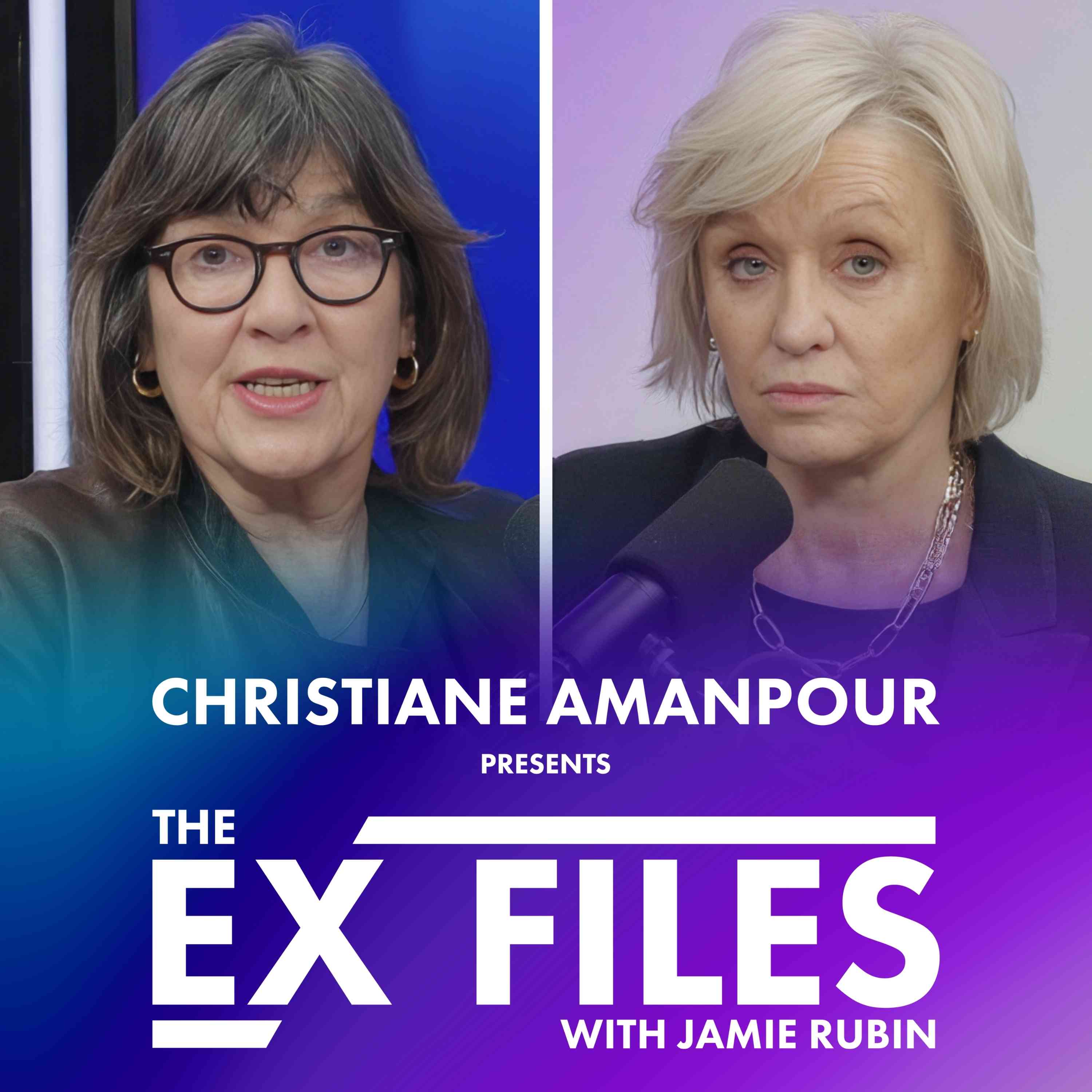
Christiane Amanpour Presents: The Ex Files
How Trump broke the first rule of war - with Tina Brown
00:41:14
Loading summary
Transcript80 lines
- [00:03]
A
This is a Global Player original podcast.
- [00:10]
B
You violated the first rule of war, which is know your enemy.
- [00:15]
A
Since Venezuela particularly, he really thinks the military has become his wonderful shiny toy.
- [00:21]
B
Anybody could have told him this theocratic ideological regime in Iran does not capitulate.
- [00:27]
A
He spent the last year and a half insulting the allies in NATO. I mean, a coalition of the willing, it's a coalition of the insulted, it's a coalition of the coerced.
- [00:36]
B
And he gives these micro interviews on a daily basis and they are very inconsistent.
- [00:42]
A
That's the lifespan of a story in the US and if they haven't moved on, he'll say, let's invade Greenland. The only story that keeps resurfacing is Epstein. This is the one story that Trump can't kill.
- [00:57]
B
Hello, everyone. The latest episode of the X Files is about to drop. With me, Christiane Amanpour. And today with a special guest, Tina Brown. She is an ex, the ex Vanity Fair and New Yorker editor and now the author of Fresh a fabulous Substack where she chronicles not just the Trump era, but everything happening around it. And it couldn't be more timely. And particularly we're going to talk about today not only Trump's war against Iran along with Israel, but a second front which is equally important, and that is against the press, particularly the US Press, trying to get his message out, which is getting more and more wobbly. So welcome, Tina Brown.
- [01:33]
A
It's so great to be here in person.
- [01:34]
B
In person, we've had an encounter that was incredibly well received, but you were there and I was here. So let's just quickly have a precis. It appears after now entering the third week of this, that both Trump and Netanyahu have potentially miscalculated, at least to this point. It was not an imminent threat. They decided to go in preemptively, preventatively, but there was imminent threat. I think they believed that the initial decapitation, so to speak, of Khamenei, the so called supreme leader, and his entire top cabinet, would cause the whole regime to wobble sooner rather than later. That hasn't happened. In fact, it's consolidating around a much harder line. They also apparently either knew or didn't know, and whatever they knew or didn't know, didn't make any plans for what Iran's pretty much only weapon of retaliation is, is the economy. And they can, as we've seen, target and threaten the Straits of Hormuz, where about a fifth 20% of the world's oil supply goes through. And now we're up the creek without a paddle. And Trump is calling on a coalition of something to come and help him reopen the straits. This sounds a little bit like you violated the first rule of war, which is know your enemy.
- [02:56]
A
Well, this is absolutely right. And what is so interesting is I just think that the Iranians understand Trump so much better than he understands them. They've been studying this guy. They know exactly what gets him going, what his pressure points are, what his pain points are. They know they don't have, you know, in the end, the military hardware to beat America. They just don't. But they have other things. They have the Straits of Hormuz. They can put that on as pressure. And they know that really what Trump cares about, obviously, are the stock price, oil prices. These are the things that he does make him crazy. And they are applying them very deftly, as it turns out. And you know, Trump, he has no one with him actually who does remotely understand the Iranian mindset. And when you think about sort of his war group, I mean, he's got Pete Hegseth, a Fox News host, you know, he's got the very excellent General Kane, who's, you know, a logistics man and a very good one too. But he's logistics, as he says, you know, don't ask me. I don't do policy. He doesn't, you know, he's got a guy who builds shopping malls in New Jersey, which is, you know, Steve Witkoff, you know, I mean, these, his son in law, Jared Kushner. Tell me, amongst that group, who really understands anything about the Iranian mindset? They don't.
- [04:10]
B
You know what, you put a very interesting finger on this issue because, you know, even if you didn't want to criticize those people, you just have to look at the end result. And so far it's 180 degrees different to what they expected. And you mentioned Steve Witkoff. I am still stuck in the shock of what he told Fox News a few days before the war began, which is President Trump is frustrated that the amount of military assets we've sent to the Gulf have not caused the Iranians to capitulate. He literally used those two words, frustrated about non capitulation. Anybody could have told him. Anybody. Just look back a few years, look back to the Iran Iraq war. This theocratic ideological regime in Iran does not capitulate. And they would rather go down fighting than capitulate. So there and then, as you're meant to be negotiating to avoid this war, they don't get it. And I was absolutely stunned also by what you're saying he doesn't have the right people around him because, as you know, they went in and eviscerated the State Department, the National Security Council, all these, the think tanks, all these intellectuals who may or may not know a little bit more about the Middle east for decades are gone.
- [05:28]
A
Absolutely. Well, he's obviously waged war on expertise itself. I mean, Trump is absolutely hostile to the concept of expertise. It's all, you know, he says, I'll feel it in my bones, he says, when the war is over. Well, I'm sorry, but feeling it in his bones isn't nearly enough to understand this complex, ancient, you know, layered, you know, regime. 47 years they've been there and it's a thick regime. I mean, he really kept talking about Venezuela. Well, excuse me, has anybody been to the library lately and seen a book which compares Venezuela and Iran? I mean, these two countries are nothing to do with each other. I mean, Venezuela was this, you know, had a kind of capo at the top, a gangster, you know, who, with his underbosses. And you take him out and, you
- [06:12]
B
know, and you leave the underbosses in
- [06:13]
A
and you leave the underbosses in. And Trump's walking around saying, where's my Delsey Rodriguez in Iran? Well, I'm sorry, you know, sir, you killed him for a start. But there isn't a Delsey Rodriguez. There is a layer of dispersed, deeply embedded, you know, linked. And I mean, it's a totally different. And he still, I don't think understands that. He thinks there is a person you can take out and all of this falls into place.
- [06:43]
B
And particularly Netanyahu, apparently the Israelis really convinced Trump that if you take out that top layer, the rest will follow clearly. And this, I have to say, again, shocks and stuns me because they have been trying to do this for 47 years. Right. Even Netanyahu said this is the culmination of a four decade dream. I have to reshape the Middle east and get rid of this malignant Iranian threatening regime. That's what he said. So you'd think that with all their intelligence and their tactical expertise in that regard. I mean, the fact that they knew when Khamenei was going to be meeting with all his people is pretty significant.
- [07:20]
A
That's the stuff that really fascinates me. I know, but it does mean that
- [07:24]
B
they know the character. Again, know your enemy well. I know your enemy well.
- [07:29]
A
I couldn't agree with you more. I mean, when people talk about, you know, the reasons that Trump win, I actually think it was simply, it wasn't a strategy, it was an opportunity. I think that the fact that Netanyahu tells Trump, you know, we're going in, we know all the leadership are there. Trump didn't want to miss that opportunity, in my view. He saw this opportunity of all of these, the top guys all assembled that morning, which was extraordinary. On that Saturday, we'll take the whole lot of them out. It was going to be another Maduro win for him.
- [08:00]
B
And just to put the opposition point of view, and perhaps the Israeli US Point of view, the opposition, which are basically rallying around the, the, the monarchy, the son of the late Shah Reza Pahlavi. I have talked to many of them, including him, and they have been hoping for defections from the irgc, the Islamic Revolutionary Guard Corps, who was set up, by the way, to defend the revolution. So that's a bit strange. But more and more importantly, they were looking for their dlc, Rodriguez. They, and they still are, they're looking for somebody who they can partner with so that Reza Pahlavi, when and if the time comes, can partner with somebody from the inside. And so right now we, the Israeli drone strikes and bombings on individual targets, on the, like, checkpoints and police and sort of organs of the repression of the regime is designed to again, pave the way for people to rise up and not be mowed down again. Again, again. I'm not sure whether this can work, but they, so far, there's no, there's
- [09:04]
A
no evidence really resent about this, is that, you know, when Trump kind of says, I've taken out the top leadership, it's your country now. Right? It's the arrogance and contempt almost of the realities of the situation. He's actually asking the Iranian people who just found themselves slaughtered in the streets in January, hideously, cruelly, they bravely rose up, they went out and they were mown down. They turned off the Internet, blocked out those images, so we never saw, and they went about slaughtering them. What are you asking them to do? Come out into the streets again with sticks and stones? I mean, they don't have guns against the argc. These, the guards, the IRGC guards patrolling the streets with their guns. Why on earth should they be risking their lives again if they don't think it's going to do anything? They don't. And so we are, we've put them in the situation where we've sort of trapped them with this sort of malignant second level who are going to be no different. I mean, they're going to be Khomeini Striped 2, but in military uniforms.
- [10:03]
B
Of course, people were cheering at the very beginning, but now that it's not, you know, not happening, the toppling of the regime and now that they are being increasingly targeted and in the closer and closer blast zone of the attacks on the capital, I mean, it's 10 million people, you know, it's very scary for many people who I'm talking to. Let's talk a little bit about the language first. I've been shocked as an Iranian, as just an ordinary Iranian, about the US Administration wanting to win hearts and minds and yet not distinguishing between the regime and the general population. Trump saying they're the most evil people. They cut babies in half, they cut women in half. Hegseth calling them barbaric savages. Way to win hearts and minds, mate.
- [10:48]
A
The whole sort of marketing, if you like, of the war from, you know, the Pentagon and the White House has been a sort of Grand Theft Auto, you know, video game bang, bang hit thing where they're putting out these videos which are appealing essentially to the MAGA base as sort of the incel, you know, macho concept of war being a series of great explosions and people are dead and we won. And it's absolutely naive and simplistic and ridiculous. And at the same time, as you say, lumping the Iranian people sort of in with their regime when, I mean, these are the brave martyrs, frankly, who were willing to die for freedom in January. Trump tells them, don't worry, help is at hand. Well, it wasn't, of course. And, you know, now all of these weeks have gone by and they're trapped in their homes and they don't know what's going on either, because, of course, their communications have all been cut off. So, I mean, the whole language that's coming off the Pentagon, particularly from Pete Hegseth, is really, in my view, obscene. And it's getting people very offended. This whole raining death down from the sky, this sort of apocalyptic, you know, Marvel comic language. It is utterly inappropriate. And I think the military also find it very distasteful.
- [12:01]
B
Well, you know, that talking about raining death and fury, the Israelis hit a fuel depot in Tehran, which, which the Americans may or may not have approved, whatever. Anyway, it did literally rain toxic fuel on them. When it rained, it all came down on people. There have been all sorts of reports of, you know, health and terror at this, you know, the water supply in a whole region where water is very, very scarce is being affected. Some people tell me they don't have clean water and this and that. So this is, this is really, you know, I've seen this before. I've seen how these campaigns designed to get rid of regimes end up really hurting the people. And I'm just going bring up Iraq because I want people to understand that the Iraq war, which was also based on a, you know, which was based on a false claim of WMD by Saddam Hussein, by George W. Bush, Tony Blair, etc, among all the other things it ended up doing, like crashing the infrastructure, birthing ISIS and Al Qaeda in Mesopotamia empowered Iran. It empowered Iran. Why? Because they got rid of the Sunnis and the majority Shiites took over and they were pro Iranian and they still are. So this is what America did there about Pete Hegseth. I am very, very, very concerned because everybody's doing propaganda, even the Iranians. If you look at Iranian state tv, if you look at Israel, if you look at everywhere, there's a lot of propaganda, a lot of AI, a lot of, you know, we're winning, we're winning by all sides. Hegseth, though, is taking aim at the US press corps from the podium actually the other day said that CNN and everybody else is trying to make Trump look bad by its reporting, just reporting the facts and said the sooner Larry Ellison takes over CNN the better. This is chilling.
- [13:50]
A
You explain why I was utterly shocked by that. Utterly shocked by that. Because essentially he was saying how eager he is for tech billionaire, you know, Larry Ellison's son, David Ellison, who is, you know, now in the process of buying CNN as part of the deal with Warner. He's excited about it because it means that we will then have a biased towards them press. Thanks for giving us such a heads up. We knew that that was coming, but it was always being disputed by the Ellison takeover. No, no, no, we're going to leave, you know, we're going to have a free, unbiased press. Well, they're not clearly because or certainly that's not what they've told the administration. And I thought it was absolutely shocking. But of course it's absolutely natural in the authoritarian playbook that when things start to go wrong, you blame the press. Correct?
- [14:38]
B
Yeah.
- [14:38]
A
And I thought it was obscene the way he went off to CNN's Caitlin Collins when she asked about the deaths of the servicemen and he said, you're asking this to make us look bad. What is he talking about? The fact is, is that if the American people are not allowed to know some of the details and the wherewithal of people who've been slaughtered, you know, who are Americans and to ask that Question, you know, how dare he tell her that she's doing it to qu. Make us look bad? He said, like a few drones might get through and bad things happen. Well, I mean, again, it was a disgrace. His answer, but I mean, this is where we are now. We are in a place where, you know, to tell the truth means that you're targeted. And I think that's a very, very scary development. It had been happening gradually and at an accelerated pace. And the failure of this war, I think, will make Trump go absolutely on the attack with the press because then he has to change the reality field. I mean, this is always what he's done is that he creates a sort of distortion field which people buy into. People have been able to do that. He's been successful with that because everyone has their own media feed, everyone has their own silo that they're watching. And essentially you have your own bespoke bs, right? I mean, anything you say to somebody is, well, that's wrong. They say, oh, that's not right. I saw it on my newsfeed. It's harder to do that when people are dying. It's harder to do that when the Straits of Hormuz are blocked and people are not, you know, and the price of petrol has gone soaring up. It's harder to do that, you know, when supplies are not getting through. So he's got a problem now, which is that all the lies that he tells and puts out on his own kind of media based channels are going to be much harder to kind of get to get people to believe into when the reality is actually, you know, in their price of groceries.
- [16:29]
B
Can I ask you. Cause I'm gonna get back to that in just a second because he's now calling on NATO and on a sort of an alliance, including Asian allies and all the rest of it to come and help, including China. I mean, he's a trade war with China, but he wants China to come and help him. And we'll talk about that in a second. But I wanna ask you this. What do you think talking about massaging and trying to control the message? I am sure all these reporters are thrilled that they can pick up the phone to Trump or he calls them or whatever it is, and apparently his, you know, chief of staffs and everybod watching his phone light up with calls that are coming in now from all the press, who apparently has his personal phone number and he gives these micro interviews on a daily, maybe bi, daily basis, which appear clearly designed to shape the message, but is also moving markets it's doing this, it's doing that, and they are very inconsistent. But he is trying to use the press in these micro interviews, like five minutes here, nine minutes there. And people like Margaret Sullivan and others who are, you know, press watchdogs and ombudsmans, they're very concerned about this. Almost like the press is feeling flattered that the President would call him or that they would take his call.
- [17:39]
A
He would take his call. I mean, well, this is the thing about press. In the same way that Iran understands Trump better than he understands them, Trump understands the media much better than the media understands Trump. And he always has, he absolutely has built his entire presidency on understanding the attention span of the American and the media. So whenever Trump is making an announcement about something that he knows has absolutely no basis in truth, he goes, we'll have resolved that in two or three weeks. What is two or three weeks? Why is it always two or three weeks? That's the lifespan of a story in the U.S. he knows that after two
- [18:14]
B
or three weeks, is it even that long?
- [18:16]
A
If it's that long, it's a marathon. He knows they'll have moved on. And if they haven't moved on, he'll say, let's invade Greenland. I mean, the point is he understands how to move the topic, which is
- [18:28]
B
a very bad indictment on all of us. I'm sorry. It's our responsibility to be able to keep our eye on the ball.
- [18:34]
A
Well, it is. I mean, we know it, we know we should be keeping the eye on the ball. But how do you fight the algorithmic power and the tension span of the U.S. i mean, this is the great problem of our times. I think it's the biggest problem of our times because trying to keep the attention. No one talks about Gaza anymore. Gone. You just simply move the topic. No one talks about. We have no idea really what's going on inside Venezuela at this point. Or in Beirut or in Beirut. I mean, we just move on. And I mean, as for Afghanistan, I mean, you know, the debacle in Afghanistan, nobody gives a damn what happened there. So he knows that. He knows about the meretricious nature, unfortunately, of our media culture and of our, of our nationality, essentially.
- [19:16]
B
We're gonna move on and come back to some of these points you just raised in the second segment, particularly the issue of war crimes and also just about Afghanistan. I think people really need to stop and rem that even though President Biden exited in the most shambolic and shameful way, it was set up by the so called negotiations of President Trump, in which he essentially handed Afghanistan back to the Taliban, didn't even have the government at the negotiations, only the Taliban. And that has turned out to be a catastrophe for the people of Afghanistan. And with Trump cutting so much USAID and humanitarian programs, you got the Taliban still there and the people on the verge of starvation. I mean, honestly, it's terrible. But this was Trump's idea of negotiating.
- [20:02]
A
I mean, I think it will be exactly the same way. At a certain point, he's just going to have to say, because he's not going to win against this entrenched regime. In my view, he. He can't, not in any country.
- [20:13]
B
He might, but it might to. To regime collapse, which could be much, much more dangerous for the whole region and for the Iranian people, by the way.
- [20:21]
A
Yes, but the regime could collapse, collapse over a period of a year or two. You know, I don't see Trump staying in there to watch that. I think that he'll be out and he'll declare a victory and everything will go up in flames.
- [20:31]
B
Okay, we're just going to take a break, and with Tina, we'll come back and we'll talk about potential war crimes, the apocalyptic nature of all of this, and Trump now calling on NATO and a coalition of the willing to open the Straits of Hormuz by force. When we come back, There's so much to talk about. But one of the things that was pointed out to me by the Saudi former ambassador to the US Ambassador, the UK Former head of their intelligence, Prince Turki Al Faisal, last week, or even in the early week, he told me, this has an apocalyptic feeling on all sides, on the Israeli side, on the Iranian side, and on the American side, he called them Christian Zionists. And in the briefing this past week, Hegseth ended one of his briefings by reading Psalm 144. It doesn't matter what psalm it is, but he did a Bible reading. This one is particular, and it's completely unprecedented. This kind of stuff.
- [21:34]
A
It is absolutely outrageous. You know, it is so inappropriate. Not only that, the thing that really stuck in my mind was when he said, we don't care about these stupid rules of engagement. I mean, what is he talking about? This is about protecting troops on the ground rules of engagement. It is such a dangerous thing to say. And when Trump is now calling on the help from allies in NATO, he spent the last year and a half insulting the allies in NATO. I mean, a coalition of the willing, it's a coalition of the insulted, it's a coalition of the coerced. And actually, I think that Keir Starmer was right to hesitate. I mean, it wasn't exactly a love actually moment, but it was sort of a love actually moment, which is the best we're gonna get, probably from Keir Starmer. But you. So ultimately, I think he was right to show he does have considerations of his own national interest. And rather than simply having been kicked around by Trump in such a kind of, you know, unseemly way, really, and had to kind of eat it, he actually can show that, you know, he has some pondering to do before this guy boots him into another commitment that he doesn't want to do. And when Trump says, we don't need your warships now, well, guess what? He's asking for them.
- [22:42]
B
Yeah. And you know what? NATO itself is a defensive alliance. NATO countries are not involved in this war. They didn't call the war. It's an American Israeli war. China's not involved in it. He's called on China, South Korea, Japan, you know, all these countries that he wants to come and help, India, they're not involved in this. And none of them have given him positive answers yet. They've all said, we gotta think about it. And all of them have said, we can only do this combined with de escalation and a negotiation to end this war. We cannot do it in the middle of a major war. And we, we, as so far, they've said we won't do it. But I'm really interested. I want to pick this up in what you rightly, you know, sort of underline, which is the rules of engagement. There are Geneva Conventions. Everybody, including the United States, is bound by those, as you say, partly because it's moral. Even in war, there are rules. I've covered many wars. There are rules, but especially for your own people's security, because otherwise you will get targeted. As we know, Pete Hegseth, in the past, before he was Secretary of defense, or war, as he styles himself, when he was a Fox News host, was successfully able to lobby President Trump 1.0 to pardon two U.S. service members who had been tried, convicted, and sentenced for war crimes committed in Iraq and Afghanistan. They were pardoned by President Trump under the urging and the lobbying of Pete Hegson. Now, he has said something. He said, we will show no quarter to enemies. Now, that is a phrase which is very tough talking, but it means we won't help them, and we might even just do other stuff. And it is a definition, according to the experts, of a violation of international law. And if you Give no quarter. It's not just a throwaway phrase. It's actually written down and it could lead to you being accused of war crimes.
- [24:41]
A
You know, these statements that Hegseth is now, you know, firing out are going to age very badly. I actually think that ultimately Pete Hegseth will wind up gone. It'll be like Rumsfeld after Iraq. He has been beating his chest, this, you know, macho pipsqueak, you know, with the brill cream hair and the puffed up chest and the whole thing. It is going to wear very, very badly as this thing gets worse and worse. And in the end, of course, Trump will round upon him.
- [25:11]
B
He's been saying, I'm so proud of you, Pete. Up until now, every time he catches his eye in the front row, I think there are potentially, you know, not splits, but I don't even know how to describe it. But I'm sure the US Military and people like General Dan Kaine did warn President Trump about certain things like the Straits of Hormuz, like lashing out at the Gulf State allies and all the rest of it. And I think there may, as long, insofar as we read, be splits emerging between the United States and Israel because Israel wants, the maximalist, wants to topple this regime. And Trump pretty much has been dragged into it thinking there was a quick solution to all of this. And Rubio said it at the beginning, you know, this whole business. It was my feeling, according to Trump, that Iran would attack us, but that was based on him saying that Israel was going to go in and maybe Iran would have attacked the US So that's what made him.
- [26:05]
A
The trouble is that, you know, Trump is sort of now drunk.
- [26:07]
B
Not the U.S. u.S. Interests in the, in the area.
- [26:09]
A
Trump is now sort of drunk on this kind of kinetic action. I mean, he actually. Negotiations always bore him. They go on. He doesn't, he doesn't understand the points. So he doesn't want, doesn't, you know, he doesn't want to bother with these negotiations essentially, since Venezuela particularly. He really thinks that the answer is to go smash bank, get in, you know, send the military. The military has become his wonderful shiny toy that he's in charge. And it's so much sexier than draggy conversations in which he doesn't understand how to kind of resolve. So of course it's led him into this disastrous mistake because there was just no way that after the sort of success, if you like, of the Ten Day War in June when they smashed, you know, the nuclear facilities in Iran, he said had taken them out, but clearly did obliterated. Obliterated, which obviously was a complete overstatement. They did not do. Otherwise we wouldn't be back there right now. I don't know.
- [27:01]
B
I think they probably did. And I think this may. I think they did obliterate. They did the only thing. And I think this is based on wanting to do more. That's what I think. But I. I also know, and everybody knows, because it's written and the Iranians have said it, the international IAEA has said it. There is something like 400 kilos of highly enriched uranium in gas form that is somewhere. The Iranians have hidden it, they think under major tunnels in the Isfahan area. But it is incredibly difficult to. To get out. The Iranians could remove it, but there's satellite imagery. They've been watched. Right. So they would be taken out if they tried to. And that is dangerous because if they wanted to go for a bomb that would be worth about. If you enrich it a bit more, about 10 bombs. So that is very, very dangerous. Now they're talking about maybe success would be if we send in a commando force or whatever to take it out, which is hugely difficult and dangerous.
- [27:58]
A
That brought me out almost in a sweat to think about that they were sending Marines in there.
- [28:02]
B
And not only that, just that, but it could also. I mean, one canister being damaged. Can you imagine the radioactivity?
- [28:10]
A
No. I mean, it's. Actually, I don't think it can be achieved in any way. I think. I mean, how do they get it done without those careful removals of those canisters being bombed? How do they remove it without them breaking and causing a huge nuclear catastrophe? I don't see that there is any way they can do that. I do see the only way that Trump gets out of this is by sort of declaring some kind of a victory, allowing the regime to continue in some, you know, truncated form and getting those straits of Hormuz open and then say, next stop, Cuba. I mean, I think again, he will then say next, which is what he always does and which works. Unfortunately, as we were saying, that the lack of attention span is his friend, and that is why he's doing these little sort of micro interviews with everybody. He's so bright about that. I mean, one thing he got to admit, he's brilliant on it. He's figured out this is not working for me. I'm going to take these calls, I give them a sound bite, they use
- [29:04]
B
it because we shouldn't be falling into it. But I'm sorry. We just should not be falling into that trial or at least we should be exposing it for what it is and doing it.
- [29:13]
A
We're not. I know the news cycle's too fast. It gets access.
- [29:16]
B
It's not just that it's access. It's not even the news cycle. I think people like being called by the President of the United States or calling, having him on speed dial. But anyway, just as a war correspondent myself who's been in a few of these, one of the, again, big lessons about Iraq was because I was there when it morphed afterwards. First of all, the 16 successful military campaign. I remember successful three week military campaign. Saddam did fall, but then you had Cheney and Rumsfeld taking their eye off the ball. You know, there was a plan for rebuilding which the State Department had. The Pentagon tore it up. Then they went into full debarthification having told the Iraqi military, lay down your arms, you will work with us in the future. No, they fired them all and they
- [29:59]
A
installed their, quote, Delsey Rodriguez in Maliki, remember him?
- [30:01]
B
Yeah.
- [30:02]
A
And Maliki turned out to, to be almost as bad as Saddam in the sense that he simply was the Shia version. And he, and he tortured people and he imprisoned people and he gave all the jobs to the Shias, which of course led to, you know, the uprising.
- [30:15]
B
And then, and then when we reported the insurgency and the, and the, the major insurgency that became like a North Vietnam thing with the IEDs and all the rest of it, we were told they don't exist. You're just trying to make us look bad by the Pentagon and by the White House at that time. They don't exist. You're just making it up. You know, stuff happens.
- [30:34]
A
One thing that I sometimes ponder, you know, sort of as an expatriate British is like, why are the Americans so effing bad at this? I'm sorry, but we've had catastrophe after another. The idea that we are in this place now with Iran having gone through Iraq to me, blows my mind. I mean, they keep saying we're not gonna do another Iraq. But they are, they are for the same reason, especially if they start putting
- [30:57]
B
down troops that will be, you know, they say, oh, and we're not doing another Iraq because we're not doing nation building. That by the way, begs a whole nother issue. And I'll tell you, another blowback. Basically the international community has come to the conclusion that up until now, Iran was not actually doing going after the bomb. It had all the wherewithal and all the rest of it, but I'm. If it stands, why would it not go off to the bomb? So that's another unintended consequence. You know, North Korea after negotiations with Donald Trump, which again, I covered in 2019. Trump didn't follow through, according to the South Korean foreign minister, she told me after his love fest with Kim Jong Un didn't follow through. And guess what? North Korea is now in possession of rudimentary nuclear bombs and therefore North Korea will not be attacked. It sits right on the border of a major ally, South Korea. This is the short attention span, no follow through, lack of expertise, which worries me a lot.
- [31:59]
A
Right. I mean, if ever there was a moment when the Iranians would look at each other and say, we need a
- [32:02]
B
bomb, dude, that's right. They wouldn't be in this position.
- [32:05]
A
If they survive, they only have to survive. I mean, the thing is about it is America has to win, but they only have to survive. And, you know, and surviving just means that they can continue their coercive control of their own people. And even if they cannot project power sort of beyond Iran with their proxy war wars, they can still hang on. And it can be.
- [32:25]
B
I mean, they can or they can't. I'm still not going to say, because they may get toppled. The people may rise up. I think we have to keep that.
- [32:33]
A
Well, I hope so, I hope so, I hope so. If they can in such a way as they're not just slaughtered in the streets again because we've demanded way too much sacrifice from them, I think it could crumble. I, I do. But I suspect it could be longer than we want to pay attention to.
- [32:45]
B
Is the issue talking about attention spans? And I'm not making light of this because it is a number another heinous but different kind of crime, the crime against women which Jeffrey Epstein and his group have perpetrated this weekend. And I've got it here just on the inside of the ft. Every other newspaper had this paper, this picture splashed all over the place. On the front, it's Epstein along with the former Prince Andrew and Peter Mandelson. What is. You covered that a lot.
- [33:15]
A
What's so funny is all our talk about the, the attention span. The only story that keeps resurfacing is Epstein. This is the one story that Trump can't kill. And I think it actually speaks to the fury that is bubbling, bubbling, bubbling about the arrogance of the elite, which is leading us into all of the problems that we're talking about. And the Epstein files just confirm it all. I mean, everything that you read in the Epstein files confirms this kind of underground railroad of high echelon privilege and self affirming, if you like. What is fascinating to me actually about the recent Mandelson tranche that got dumped is it reveals that sort of Epstein played almost a kind of butler like role to these people. I mean on the one hand he's supposed to be Mr. Mega Deal, Mr. Mega Business. On the other hand he's giving Mandelson, you know, getting him prescriptions of Xanax and making his Botox appointments. He's like a butler, this guy.
- [34:11]
B
He's like this evil butler, a criminal butler.
- [34:14]
A
He's a criminal butler to the elite and he sort of sucks up them in with his endless availability to anything that they want. It's a fascinating technique which is to be like, I mean I can't imagine somebody like a Jamie diamond who runs, you know, JP Morgan helping somebody get their Xanax prescriptions. I mean it's, it's, it's a kind of demeaning aspect. But I think he, his hold over people was, it was like you can be as transgressive or as intimate as you like around me because I am, I am your sort of your father confessor. I am your, you know, your, your, your, your, your procurer. I am your assuager of every one of your sort of luxury longings. And, and it was a, it's a very interesting technique that you see at work in these files and the complicity
- [35:04]
B
with so many people and just kept silent.
- [35:07]
A
I mean, you know the, the banker, her, Kathy Rumler, who was now just until recently at Goldman Sachs. I mean she's at Latham Watkins which is a hugely important law firm. She was President Obama's personal, I mean she was a lawyer in the White House. I mean so she was hard for her judgment, right? Obama loved her. She goes to work at Latham and Watkins, she becomes a friend of Epstein and the files are just full of her notes saying things like I wish I had a pair of Loboutin shoes. Epstein writes back, we can, we can rectify that. A, I mean, I mean like buy your own, Seriously, buy your own shoes.
- [35:42]
B
On that note, Tina Brown, we are going to take another break and come back with our recommendations. A quick third segment next. Tina, we're back. Just before we get to our recommendations. You have your annual summit coming up in May 6th and going to be there for you called Truth Tellers. Quickly tell us what it is. For those who don't know it, Truth Tellers.
- [36:10]
A
I started in to honor My great late husband, Sir Harold Evans, who was the fantastic, celebrated editor of the Sunday Times. And it actually sort of valorizes great investigative journalists, serious journalism, all the journalism that we wish we had and is being constantly sort of undermined. And it's an incredible show. And what is so interesting is that so many of the journalists we have to feature now are actually exiled journalists. I mean, last year we had exiled Venezuelans, we've had exiled Russians, we've had exile. The only way they can do their reporting is in exile. So I thought to have as my recommendation this week a wonderful book by a friend, actually, Eche Tamulkaran. I think you've had her on the show. She is an exile, of course, from Erdogan's Turkey, where she was sort of hounded because of her fantastically brave coverage of his authoritarian regime. Nation of Strangers, it's called. And she writes a. About what it is like, in fact, to have to live in exile as she now does in Berlin. And you know, when we, when we read, you know, so and so they got out of Afghanistan and they now live in exile, you think, phew, well, that's good they got out. What it actually talks about is what it's like to live in exile. I mean, you leave behind, it's not just your family and your personal things, but also your professional status. I mean, she was an incredibly well regarded, sort of, you know, Christian Amanpour like figure in Turkey with her.
- [37:26]
B
And I'm also an exile. Yeah.
- [37:27]
A
And you were an example. And she's having to now sort of pull it together with bits in America, speaking engagements and this and, and going to think tanks and worrying about her visas. And it's a very sort of intimate portrait where she writes letters to other exiles and she talks about how we're not just exiled now from countries, but from our spiritual selves. You know, we are ex. The planet is. Is dying. We're exiled from our planet. We're exiled from our kind of humanity with the coming of A.I. you know, we're exiled from our beliefs, our politics, because nothing is as we recognize. I found it a very moving book and actually a very. It's a short, passionate read and it's a wonderful book.
- [38:06]
B
And I loved about it also the fact that she's. None of us are strangers. We're all part of a global community, you know, and we're all exiles. Exactly. And it's, it's really interesting in this anti immigrant and anti migrant culture that we all inhabit, she's talking about the positive nature of so many migrants and exiles, as well as the pain. My recommendation is for people to go and look up the obituary for one John F. Burns, fantastic foreign correspondent for the New York Times, who I first met in Sarajevo during the Bosnia war. And he was just superb. And along with a small group of journalists, put that war on the front page of the New York Times. We did it at cnn, the BBC did it, you know, Liberation, Le Monde and all the rest of it, and kept that story alive even when people wanted to turn the dial and wanted to, you know, turn the page and not listen. But not only that, this obituary shows you what a life he led, you know, what a great, committed foreign correspondent or just plain journalist can achieve by storytelling, fearless storytelling all over the world. So it's really good.
- [39:19]
A
Wonderful, man. I saw it and I was crushed when I saw him go on. But I certainly remembered all of the. Those, all of those pieces and all of those broadcasts and how he owned that war.
- [39:27]
B
He really did. He did. And I would like to say that I did an interview with him a few years ago. I've posted it online so that and the New York Times and other obits on John F. Burns would be a well worth your time taking a look. Tina, thank you so much.
- [39:42]
A
And read Fresh Hell, folks, because I can commentate on all this every week.
- [39:45]
B
There you go. Fresh Hell. The substack is really amazing and, and getting, you know, really a massive head of steam. So it's really there. And your writing is phenomenal. Everybody's comments on the choice of your words. You're very erudite and it's great. Don't forget that we will have our Q and A and I'll be with Jamie for the Q and A later this week and that you can always catch the X Files with me and with Jamie on our YouTube channel where you can watch it bonus and the main episodes. So. So thank you so much indeed. And we'll be back next Tuesday as well. Thanks a lot. Thank you, Tina.
- [40:20]
A
Thank you.
- [40:25]
B
This has been a global player original production.