← Church History Matters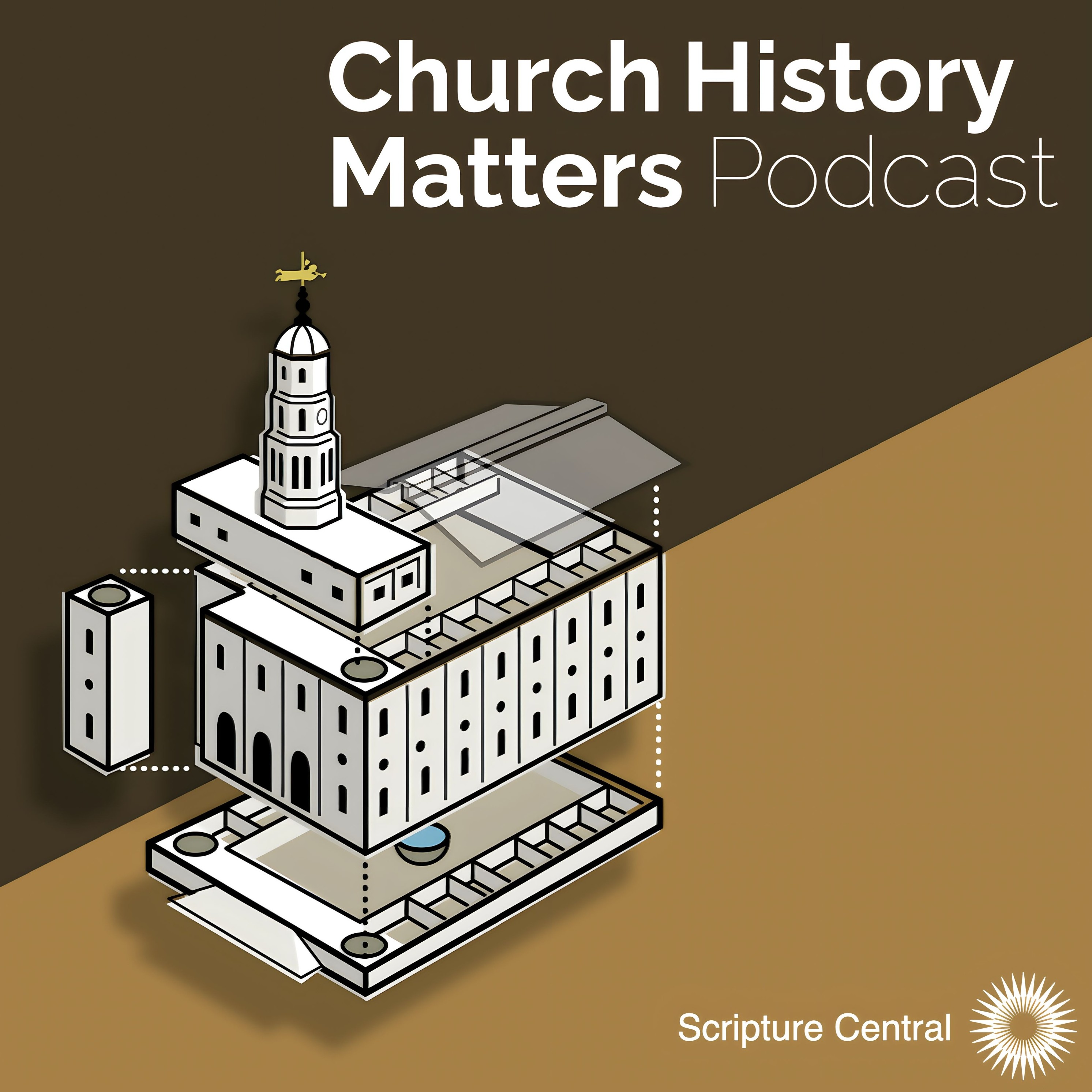
Church History Matters
159 - Spiritual Manifestations & The Kirtland Temple with Karl Anderson - E40C September 29-October 5
01:04:49
Loading summary
Transcript74 lines
- [00:00]
Carl Ricks Anderson
President Nelson said every prophet from Adam on had not only seen but had written and knew about the events in our dispensation. Without question, those prophecies then came to fruition. President Benson was assigned to come. I sent him material on the scourge that the Lord placed on Kirtland. President Benson asked if it would be all right with me if he lifted the scourge that day. Well, that doesn't just happen, right?
- [00:38]
Scott
Hello, Casey.
- [00:39]
Casey
Hello, Scott.
- [00:41]
Scott
We are back with another Voices of the Restoration special episode here, and this.
- [00:46]
Casey
One focuses on the dedication of the Kirtland temple. The spiritual manifestations in the Kirtland Temple, I think is what it's titled. And so we've got a great guest today.
- [00:55]
Scott
We have with us one of the best people on Earth. Casey, I don't think I'm exaggerating when I say one of the best people on earth to talk to us about Kirtland.
- [01:07]
Carl Ricks Anderson
Can I leave and find out who you're talking about?
- [01:14]
Scott
We have the one and only Carl Ricks Anderson. Welcome to the show, Carl.
- [01:19]
Carl Ricks Anderson
Thank you. Good to be here.
- [01:20]
Casey
Good to have you with us. We've got your bio here. One of the things that it mentions is that you were known as Mr. Kirtland, and we were going over that with you, and you actually paused and said, you know, President Hinckley is the one that started calling me Mr. Kurland. I don't know if a lot of us have nicknames given by the president of the church, which kind of shows your role here and your prominence.
- [01:41]
Carl Ricks Anderson
That was one of the better nicknames. But we were. I was in his office with President Benson and President Monson, and he introduced it that way to them and said, we got to recognize it. So it stuck.
- [02:00]
Scott
That is not a bad way to be known. My goodness. So we have on our show today the Mr. Kirtland, and we're. We're so excited to have you and to talk all about the. The spiritual outpourings in Kirtland framed in what is often referred to as the Kirtland Endowment. And we'll. We'll get deeper into all that. But first, Casey, do you want to give us a bio on Brother Anderson?
- [02:22]
Casey
Yes, let me do your bio, and then we'll be off to the races. So Carl Ricks Anderson is affectionately known as Mr. Kirtland throughout the church because of his love, research and writings on Kirtland, Ohio, area of church history. And although he grew up in Utah, he has lived near Kirtland, Ohio. Lived there for 57 years, but is Currently back in Utah to be with his family, He's a popular author and entertaining speaker. Carl has worked with historians and prophets, written books, two of which include Joseph Smith's Kirtland and the Savior in Kirtland. Carl also helped acquire Kirtland properties and has done a lot to put Kirtland on the church history map. Carl also received a bachelor's and an MBA degree from the University of Utah and had a career in the corporate world for over 20 years. He then taught and supervised seminaries and institutes for the church in Northern Ohio. Carl has instructed thousands of visitors and dignitaries on site about Kirtland and thousands have expressed their appreciation for his knowledge, enthusiasm and infectious laugh. His church callings include service as a stake president, a regional representative, area family history advisor and patriarch. And in all Carl has done, he has been blessed by the support of his sweet wife, Joyce. They are the parents of seven children and over 70 grandchildren. We were talking about the numbers before here and we think it's 36 grandchildren and 37 great grandchildren, which is quite a tribe.
- [03:50]
Carl Ricks Anderson
I better be more accurate. I'm sure that's very accurate. And they're all accounted for. I don't want to be in that kind of trouble.
- [03:58]
Casey
No grandchildren or great grandchildren should feel neglected if the numbers are off. That's just a lot to account for. I can barely keep track of four children, so you're doing a mighty work there.
- [04:08]
Scott
Well, thank you, Carl. So can we just start with, with your work in Kirtland? Could you just tell us a little bit about what you've been doing the last few decades to help bring attention to Kirtland, to the importance of the history that happened there and the miracles that happened there. Tell us a little about your backstory and why Kirtland.
- [04:26]
Carl Ricks Anderson
After I graduated from college, I was hired by a large multi division company. They put me in three places in the first year to train me in their management style. And one was near Nauvoo, the other near Kirtland and the third near Palmyra. It didn't take us long to figure out the Lord's hand was in where we went. Our permanent assignment was near Kirtland, within 20 miles of Kirtland. And essentially I was called to be a stake president and had a very strong impression, in fact, more than just an impression, that the work that had to be done there was missionary work and having we had seven over 6 million or over 5 million people within 75 mile radius of Kirtland and none of them knew about the restoration of the Gospel there. They knew the temple was there, but it was just an architectural building that they went to study architecture. What I found out is that we had to educate and raise the profile of the church to the people in Ohio, but then also to our leaders in our church, because generally what they knew about Kirtland was the Kirtland Temple, but not the fact that Kirtland was our longest spot in history before Salt Lake and all of the things that happened there. We had quarterly conferences. Now, that's going to age me more than the camera. But we had a general authority every three months, and every one of them went to Kirtland. And I prepared material that I could put in their hands on the importance. And it was a. At one time, I think all of the seven presidents and the 70 and the 12 had been in Kirtland with me for various conferences, et cetera. I shouldn't say everyone, but I can't think of one who wasn't just surprised and really taken by all of the things that happened in Kirtland that were not necessarily just temple related. And so my business career took me there and I moved to Kirtland three times. The Lord put me there, I moved away. He put me there, I moved away. I told Joyce that even Jonah learned after that period and we better make sure if we moved again that the Lord was behind it. So my position in business allowed me to be involved in Kirtland and educate and teach and. And I taught seminary and institute also at the same time. So that's kind of the backstory. And we didn't feel we should move until it was obvious.
- [08:26]
Scott
Wow. And you. I remember reading in your book the Savior in Kirtland. Was it Elder Neal A. Maxwell who said, carl, you got to write about this stuff. You got to let the saints know what happened here.
- [08:39]
Carl Ricks Anderson
Yeah. He brought his family on a bus and we went to the sites, and over dinner in the evening, he made this statement. There's a motherlode of Christology in Kirtland that the church doesn't know about. And he said, I want you to write a book. No, he didn't say, I want you. He said, you are too write a book.
- [09:07]
Casey
He commanded you.
- [09:08]
Carl Ricks Anderson
Yeah. Important distinction. He said, I want you to mine it. I want you to let it percolate. Don't be in a hurry. And he said, we just need to have that. And then he called me when he got back to Salt Lake and said, that was an idle conversation. You are to write it. And so after 17 years, Joyce pushed me out of bed one morning and said, if you don't finish it, you're going to meet him before you want to. So it was a mandate.
- [09:47]
Scott
Wow. So a motherlode of Christology in Kirtland that the church doesn't know about. So write this book, and it is a tremendous book. We recommend it to all of our listeners. It's called the Savior in the Kirtland, and it is remarkable. So maybe we'll talk a little bit about some of that today, but we certainly won't cover all there is to cover.
- [10:09]
Casey
I think we'll probably sprinkle your backstory in a little bit about how you help the Kirtland historic sites come into the family of historic sites as they came. But let's focus specifically on the Kirtland Temple, because that's kind of what this Voices of the Restoration is intended to talk about, is those spiritual manifestations. So, Carl, let's start by talking about the building itself. What was unique about the construction of the Kirtland Temple and what set it apart from previous church projects?
- [10:36]
Carl Ricks Anderson
I think to really understand that question, we have to put it in perspective of the different dispensations of the Gospel. From the beginning, Joseph Smith made the statement that prophets, priests and kings had seen our day and looked forward with joyful anticipation to the events that were going to happen in our dispensation. One of those events, well, we know from Old Testament on, key dates were chosen by the Lord and the preparation was made, for example, the house of Israel leaving Egypt at the time when they painted the Lamb's blood on their doors and Christ's birth and his resurrection. And without question, the Kirtland temple was foreseen. President Nelson said every prophet from Adam on had not only seen but had written and knew about the events in our dispensation and the key event in our dispensation, not to minimize the importance of any other events, but the key event was April 3rd of 1836 when Moses, Elias, and Elijah came with Christ. And so that had been anticipated. And one of the things, for example, Neal A. Maxwell stated that the Bethlehem star was put in orbit eons before the birth of Christ occurred. And so we know that they had to anticipate the Lord dead. And with the Kirtland Temple, we're back to your question about what's unique about the Kirtland Temple is that it was designed by the Lord or under the Lord's direction. Because when Joseph was told to build a temple, his first question had to be, what's a Temple, what should it look like? And so the Lord said, okay, hang on to your. Buckle your seat belts. And then he caused the model of the Kirtland Temple to come before him. And Frederick G. Williams, it was the first Presidency who saw that. Frederick G. Williams said they saw it to the minutest detail and it turned they could look inside even where the benches were. There was a worker wanted to move a bench and Joseph Smith said, no you can't, because that's the way we saw it in the vision. So the thing that's unique is that it was designed probably from the beginning and the Lord knew what it was even to look like. And so it was designed before they even started. That's the most unique thing.
- [14:08]
Casey
And I guess that makes it unique in the sense that when a temple's built today, we do believe there was inspiration involved in the planning and design. But this one, Frederick G. Williams is saying things like they literally saw the temple in vision. And then I think the way he describes it is that it came and flew over their heads and then came down and they saw the interior of the temple as well. Which again is kind of extraordinary and unprecedented. We probably wouldn't say that about the modern temples built in the church though we do believe inspiration's involved. But this one was kind of down to small details. They were told what to do.
- [14:43]
Carl Ricks Anderson
Well, like Solomon's Temple, the same thing happened. It was shown where to put it, everything, the similarity between constructing Solomon's Temple, it was the same thing for the Kirtland Temple. Elder Holland made the statement that that date was our latter day equivalent of the Mount of Transfiguration. And on the church website they posted the Mount of Transfiguration was one of the few key dates in the entire Bible. Well, here we are in our dispensation, one of the key dates. So we've got the equivalency of other dispensations.
- [15:32]
Scott
And the temple played a really important role in this broader project, or what do we call this promised blessing that the Lord had given the saints in New York way back in 1831. He told them in section 38, verse 32, he said, if you will go to the Ohio, I will give you my law there and I will endow you with power from on high. Casey and I, in our last episode we talked about how from January to April of 1836, this is the window when the Lord indeed endowed the saints with power from on high. But it's not like the endowment that we think of today in the Nauvoo Temple and forward. This was something else. And so maybe we can just get your thoughts and insights on the Kirtland endowment. Like what was the endowment of power? And can you give us some examples of its fulfillment during that January to April time period?
- [16:26]
Carl Ricks Anderson
Sure. In that command to go to the Ohio, the Lord specified three reasons, and two of them were temple related. The endowment with power consisted of ordinances through which power came. In section 84, the Lord stated that through the ordinances of the Melchizedek priesthood, understood the power of God is manifest. And so when we carefully look at what happened in the Kirtland temple, it consisted of four ordinances that would be roughly familiar or equivalent to what we might put our initiatory ordinances today. Brigham Young said it wasn't all of that that came in Nauvoo. It was only the initial or introductory or initiatory. So ordinances were involved. And the Lord called that the endowment. If we go through journals, we've got journal after journal after journal. I received my endowment in the temple. I received. Received it by watchings and anointings. They go on. And journals go on and on. So people of that day did understand that it consisted of ordinances. One of the verses of the Spirit of God written by Eliza R. Snow referred to that. And we don't. Those verses have been taken out, I think, because of their sacred nature. But that verse went, will wash and be washed, and with oil be anointed withal, not omitting the washing of feet, for he who receiveth his penny appointed must surely be clean at the harvest of wheat. And so the ordinances, and they called him their endowment. And then the certain purpose where they were to go on missions after they got their endowment. And that was a pattern that also followed.
- [18:50]
Scott
I think it's interesting that you just pointed out that the power flowed from the ordinances or after the ordinances. Like the Lord did not say, if you go to Ohio, I'll give you an endowment of ordinances. What he said is, I will give you an endowment of power. And it seems like the Kirtland ordinances, if I'm hearing you right, can be thought of as like a. The vehicles of sanctification to prepare the saints to receive the power, or something like that. This is formulating in my mind as you're speaking, but do you want to say anything more about that idea that the ordinances were kind of the conduit, but then the power was what exactly? Like how did the saints receive power? Or what did they experience that Looking back, they would say that was an endowment of power.
- [19:33]
Carl Ricks Anderson
Indeed, I think a couple of things. Since their ordinances, there was an inherent covenant involved. It was a promise of protection. When they went out on their missions and they knew that it came from God. They knew that in the Old Testament and in New, you've got power that came to the people. That's why they took the tabernacle with them to carry it. There was an inherent power, but there were two things. One, they had to prepare, and then they had to receive it. And in the first revelation given in Courland, or the second one, the Lord said that they were to sanctify their lives. And before they could receive the endowment. So early in 1831, it wasn't just the Lord handing this out. The Lord had them purifying their lives. At the end of 1835, Joseph Smith was trying to prepare the 12 for the endowment. And it didn't go so well with some of them. They were struggling. And Joseph, one of the things he said is, if you even look for iniquity in another, you will not receive the endowment. So it wasn't just a formal giving of this as a gift. It was something they had to prepare their lives for. And in preparing their lives, they became closer to God. And President Nelson, for example, in our conference last year, when he announced the Kirtland Temple, he said, if we look at the dedicatory prayer of the temple, there are privileges that the Lord gave. So those privileges. For example, one of the promises in the dedicatory prayer was that angels would take charge over them. And so there were promises. But again, it was dependent on those who received that endowment to be worthy of that.
- [22:05]
Scott
From January to April, there are dozens of accounts of people who talked about the outpouring of spiritual experiences, people speaking in tongues, people seeing visions, some people even seeing the Savior during that time. Is it safe to say that that is part of the fulfillment of the power that God was promising them?
- [22:25]
Carl Ricks Anderson
I think it evidenced the power. It evidenced the source of the power they needed. Their faith straightened, possibly, and we don't know the full answer. But when you see God the Father and when you see angels and when you see the Savior and you see them on their throne, you know that this is their work. And I think part of it was a reward for where they had come from. But I think another part was an evidence of the source of the restoration, the source of the power of the source of the work. And Joseph, for example, didn't record everything he saw in visions. Sometimes all we know is he saw a vision. But we do know that from other journal accounts, people talk about what Joseph was told in that vision. If we look at miracles and manifestations, we had four occasions, a Father and Son, the sun appeared. So that period ran from January 21st it began. And we had seven visions of the Savior in the Kirtland temple, starting with January 21st, we had four of those, included the Father. And there were visions of them in foreign countries, for example. One of the visions is that Joseph saw the 12 in a foreign land with their clothes tattered and torn, and they were discouraged. They were looking down, and the Savior stood above them in the air, and he wept. One of the interpretations of that is that perhaps if they'd have just looked up, they would have said, seen him, and so, and received power. And that power, again, part of it was dependent on them and Joseph. We have an account that Joseph always wept when he told or listened to that story. It was a tutoring for them going out. If you go out and you're in that shape, that means you're not looking up. So instructive of what they needed to do when they went on their missions.
- [25:06]
Casey
That vision that you were talking about, we should note to our listeners, is the extended version of what becomes section 137 of the doctrine and Covenants. The part that was put in the Doctrine and Covenants kind of ends with the Lord saying that all those who hadn't received the Gospel will be granted an opportunity to hear it. But there's a whole extension where Joseph sees the twelve, sees the Savior watching over them, even talks about seeing Brigham Young in a distant land preaching to them, Native Americans, which is pretty uncanny because that literally does happen when Brigham Young moves the church west.
- [25:37]
Carl Ricks Anderson
And then when you go into section 137, Joseph instructed the 12 and other leaders, if you see a vision, keep it to yourself. So there was kind of an effort to let that be instructive to those that were receiving it. And so a lot of this, we have far more spiritual manifestations and visions than we would have had had Joseph not given that instruction. But what we have is massive, and no honest seeker looking at those can refuse the testimonies of those receiving them.
- [26:27]
Casey
So seven appearances of the Savior during this Pentecostal season from January to March. Obviously, the apex of the experience is what you already noted. April 3, 1836. That's section 110 of the Doctrine and Covenants. That's the day of the Savior, Moses, Elias, and Elijah appears. How would you put that event, the April 3rd visions into the context of an endowment of power given in Kirtland.
- [26:54]
Carl Ricks Anderson
The background is that that was prophesied from the beginning. And so we have, for example, in Malachi, we have the Savior saying to Malachi that he would suddenly come to his temple. And Malachi said, thus saith the Lord. So it wasn't Malachi saying he's going to come. He said, thus saith the Lord. So the Lord promised he would come to his temple. Then next in Malachi, we have the next promise. As far as temple is, Elijah is going to come and turn the hearts of the fathers of the children. So this became the whole focus of the. Not whole, but one of the main focuses of the Jewish world is that they were looking for Elijah to come. One of their beloved hymns that they sang called on Elijah, may he soon come to us with the Messiah. And. And so part of their tradition is that at some point, Malachi, the Savior's going to come with Elijah and come to the temple. Now the Saints get to New York. They received the command to go to the Ohio. And at the same time they got that command to go to the Ohio. The Savior said, I am Jesus Christ, the Son of God, and I will suddenly come to my temple. So here's the Savior remembering the promise and saying, you're going to go to Ohio and I'm going to there fulfill that promise that I'll suddenly come. And then when he comes, he obviously introduces the others. And so this is a date that had been looked forward to from the beginning, had been seen by prophets. President Nelson said every prophet beginning with Adam, joyful anticipation, they were looking forward to that. And now they come and fulfill, fulfill that. And according to President Nelson, that now becomes the work of this dispensation to preach, to gather Israel from both sides of the veil, have them sealed. And in a way, this was a pinnacle in our dispensation because everything in New York prepared for April 3rd before they could come. We had to have the church formed, we had to have the priesthoods restored, we had to have the Book of Mormon, we had to have the church organized in Kirtland with all of its officers. And all of that was in preparation for this event. So everything before was building up to it. Everything after was implementing those keys. And we go open a foreign nation, missionaries go in, we build a temple and everything. The basic part of our church is implementing what came on April 3rd. It wasn't just and interesting happening. President Nelson said it was essential.
- [30:53]
Scott
We got to make April 3, a holiday in our church. Are there any strings you can pull, Carl, to make that happen? Or, like, how are we going to make this happen?
- [31:04]
Casey
I mean, Easter? So we kind of do make a big deal. We typically hold a general conference around that time. It's just. You're saying April 3rd itself needs be to. To be singled out.
- [31:16]
Carl Ricks Anderson
One of our big problems, President Benson, when he came on a trip to Kirtland, the Kirtland mayor wanted him to make a park down in where our visitor center is and put benches so people could meditate. And he said, will you ask President Benson? I said, yes. And President Benson said, you go tell him. In this church, we don't meditate, we work. So I think if he was doing it, he'd say, we don't want a holiday. We have to go implement it. Go to work.
- [31:54]
Scott
April 3rd. Make that a temple day where you go and do ordinances.
- [31:58]
Casey
I'm picturing it in my mind now. It's a holiday where everybody goes to the temple and does work. So that April 3, 1836, wasn't all in. We actually put into practice the principles found there.
- [32:10]
Carl Ricks Anderson
Well, that's a great idea, Casey. With your contacts, I think you can make that happen.
- [32:17]
Casey
I'll start pulling some strings, but I'm warning you, my contacts don't go as high as yours do.
- [32:23]
Scott
So the pinnacle. I like how you said that, Casey. The pinnacle of the Kirtland endowment. We can call that the 3rd of April, 1836. Now, we know that that was a glorious season, and we know that shortly after that season comes a very dark season called the Kirtland apostasy. And we're gonna start talking about that next week. We know that short time, relatively short time after the glorious things that happened in the Kirtland temple, Joseph and many of the Saints are gonna leave Kirtland. They're gonna go to Missouri, and then they're gonna go to Nauvoo, and then they're gonna go west. And over time, we actually lose ownership of the Kirtland Temple. Could you maybe tell us a little bit about how that happened? How did it come to be owned by the RLDS Church, later named the Community of Christ?
- [33:07]
Carl Ricks Anderson
I think it all began with the practice of putting ownership of church properties in Joseph's name. And so it wasn't a clear cut thing that we had title to it. And so after the Saints left, there wasn't a lot of interest in going back and crossing the T's and dotting the I's. And in 1860. The local sheriff in Lake county confiscated the temple because the church had debts and Joseph Smith had debts. And so his thinking was, we'll confiscate it. We'll sell it, will pay off what debts can be paid off. And so he did that. And then we had the purchaser for the Kirtland Temple, bought it and sold it to Reorganized Church of Jesus Christ, now Community of Christ. And we're grateful to him because he put a new roof on the temple, and we wouldn't have the temple except. So it wasn't all bad. But then Kirtland City, when you got into the 1870s, Kirtland City wanted to purchase the temple for a city hall. And so Reorganized Church said, great, you know, let's do it. At any rate, they couldn't clear the title because Reorganized Church didn't have the title either. And so the mechanism that was used to clear the title was for Joseph Smith's son was to sue the Reorganized Church for the title. And the result of that, and we were not included in the title. There was a letter went to Salt Lake, but didn't get delivered properly. But the judge decided the title rested with Joseph Smith III and that he inherited it. And then Joseph Smith III sold it to the Reorganized Church. But at that point, the city of Kirtland lost interest.
- [35:42]
Scott
And Joseph Smith III just happened to be the president of the Reorganized Church of Jesus Christ as well.
- [35:47]
Carl Ricks Anderson
Yeah. A small detail.
- [35:49]
Scott
Yeah.
- [35:50]
Carl Ricks Anderson
I mean, we could go into a long answer, but that's a short summary.
- [35:54]
Casey
That does kind of set the scene. I think you mentioned to us you lived in Kirtland for 57 years. When you got there, Community of Christ owned the temple. And my understanding is that what is now historic Kirtland, which has all these wonderful sites you can visit, wasn't well developed. Like, I remember visiting Kirland with you a few years ago, and you mentioned that the Whitney store, which is where the school the prophets met and where the Word of Wisdom was given, was actually a bar. The place where the Word of Wisdom was given was an establishment for serving alcohol during the time. Can you tell us a little bit about some of the miracles you saw during those decades you were in Kirtland? That led us to what we have today, which kind of culminated in the return of the Kirtland Temple to the Church of Jesus Christ of Latter Day Saints?
- [36:44]
Carl Ricks Anderson
Yes. Well, being called a stake President, in 1974, I started to petition the brethren to restore the sites in Kirtland. And so we owe nothing in Kirtland. When we moved there, which was not 1967, and we'd go out there and it was a furniture repair store, the Whiting store. At that point, it had passed from the bar. And the first thing we had to do was acquire property. And so working with church headquarters in Salt Lake and specifically President Benson, and the first miracle, probably the I saw back there was President Benson coming back. We bought land for a stake center. President Benson was assigned to come because the church said that this was our first land in Kirtland in our generations, and they wanted official representation. He was president of the Corps of. He called, gave me his plans, travel plans, asked me to send material regarding what he might say in a meeting after he broke ground. And I sent him material on the scourge that the Lord placed on Kirtland. And he said, you will never possess your lands in of front peace, but your children will after many years shall pass away. President Benson read those two, and he asked if it would be all right with me. And I had the mission president stake president in the car if it'd be all right if he lifted the scourge that day. Well, I don't know, but we all sinned. We didn't know if it had ever been lifted, but it would be the greatest moment if we could see it. And he said, if I'm so inspired, I'll lift it. And he stood at the pulpit after he broke ground and said, thus the scourge that was placed upon the people in that prophecy is being lifted today. And now we can look forward to great progress in this part of the Lord's vineyard. So that's the first miracle. It was taken away by priesthood authority. Then we started to acquire land which was important. And in Palmyra, you go downtown Palmyra, they had four churches on every corner. You go to Kirtland, and we had three bars on every corner. We saw the church buy all three of them. However, you don't just call the president sure to say, we want to buy a bar. President Benson made it clear he wanted to know President Kimball visited and. And we had 20,000 people come out to a program that we put on. And it was on what makes Mormons run. And so President Kimball said, I want you to tell me, Ann, about any property that comes up. And so we went through a 20 year cycle of properties. And do we buy them? Do we? Not until President Hinckley in 2003 dedicated it. But every property came with a miracle in one. It was made very clear to me one morning I needed to call A real estate broker who'd bought our state center property and find out the status of where the Johnson Inn sits down in as part of our complex. And it turned out that day, if he hadn't gone in to inquire, he was signing a seven year lease to the bar owner. Well, that doesn't just happen. Right. And the other properties, we had one major piece of property that we couldn't make any headway with the owner and he owned several pieces. One day a missionary couple shows up being assigned for two years. And this woman was a real estate agent in California and her husband ran the back office office so he could research deeds and go through everything. She could literally sell ice cubes to Alaskans. Right. She said, you need that property, I'll have it. Within a year, I'll have it. And she did. She knew how to work him. And just miracle after miracle, without question, those prophecies then came to fruition. But another thing, we saw the adversary go to earth.
- [42:24]
Casey
Yeah, there was some opposition. Right. In fact, I remember the first stake center that was built there fell to an arsonist. Tell us a little bit about that story. What happened there?
- [42:33]
Carl Ricks Anderson
President Benson had dedicated that stake center, if I Remember right, in 1983, it was a beautiful building. And one Saturday night there was a dance and an arsonist who specialized in burning church buildings decided he'd come to Kirtland. And he waited in one of the classrooms until a dance was over and the building locked. Then he went, propped up the door, brought cans of gasoline, spread them down the halls of the church, set it on fire. It burned to the ground except for the stake president's office and the steeple in front. I remember President Benson called me the morning after, just in shock. How could it happen? Why? Well, it embedded us into Kirtland community in a way we couldn't have done any other way. The Lord allowed it to happen. And people wrapped their arms around us. We had a construction trailer to rebuild. They drop off $5 or $10 and we became part of the community. Before, who were these people from Utah? Because we hadn't remained there and our image was we left there and now when we paid that price, they knew we were self insured. They eventually got Amy Torch to Jewish synagogue five days later before they got Angel.
- [44:17]
Casey
But that was kind of a turning point when the community went from being antagonistic to being sympathetic. Like the fire had positive outcomes, I guess.
- [44:26]
Carl Ricks Anderson
Absolutely. The county newspaper 20 years later ran a story about the scourge the Lord put on Lake county and How President Benson had lifted it. And they interviewed a bunch of us. We were just shaking in our boots what that story might be. And they interviewed the mayor. And here's another miracle. The mayor said, I absolutely believe in a scourge. I absolutely believe it was lifted in 1979. That year, I was elected mayor.
- [45:06]
Casey
That's a politician there, knowing his crowd. The story I wanted to ask about was moving the road in Kirtland and Steve Young's involvement, like the quarterback for the 49ers. Tell us about that.
- [45:18]
Carl Ricks Anderson
When we were presenting our plans to the first president on what we felt needed to be done in Kirtland, the response that we got back was we had to close the major intersection where the Whitney store stood. We had 23,000 cars a day go through that intersection. And so we had to move roads, we had to move other things. And the city of Kirtland was uncertain about whether that should be done. They were an older community. I approached the mayor on behalf of the first presidency and told him we needed to change the roads. And he said, I don't think we can do it. The majority of the council, there were seven. We need four votes. He said, I could get two or three. I'm in favor, but we'd have to get the others. And he said, if I were you, I'd go to the man upstairs and just tell him to change the opinion of the council. And I said, well, you know, we haven't been too successful in a few places doing that. Well, he said, that's the only way I can see it happening. And so we didn't do anything initially. And then the mayor called me in 93, and he said, have you seen the latest Sports Illustrated? He had me go by it, and there was an article in it on the young and Restless. And it was about Steve Young wanting to take Joe Montana's spot as quarterback. And they had a picture of Steve and Joe Montana, and Steve was wearing a T shirt. We had given him one of the things we sponsored on it. It had the Kirtland Temple, and it said City of Faith and Beauty. And he said a school kid brought this to his teacher in high school who's on the city council. And we want to get the original photo of Steve Young wearing that T shirt. Well, we not only paid for it, we framed it, hung it in the lobby. And Steve Young came out to play a few football game against Cleveland. And there were 17 miracles that we at one point had listed down. Beaver had been to a practice. He sat at the corner of his room where he threw all these T shirts. He had over 100 T shirts. He pulled one out, put it on, not realizing it was his T shirt. That was Kirtland, Ohio. Well, they finished practice and he pulls off his pads and there's a photographer from Sports Illustrated. Steve said he never turns and looks at them. They ignore him. But for some reason, he turned in the right position where they got the T shirt. And then we had the school kid happy, happened to see this after all of this. Steve now comes, agrees to sign a T shirt, and we have the full city council at his hotel downtown in a Marriott. And Steve signed everything in sight. A kid had white socks. He had him, and he signed his photograph. And they just fell in love with him. The next night, it was a Monday night game. Cleveland had never played San Francisco. They're in different leagues. It was a Monday night, which was very unusual. I mean, all the things connected. One person said he wasn't married. That was a mirror. He said if he were married, she'd have thrown the T shirt away along with all the other stuff. So that's the city council being there, meeting him. I went into a meeting of the council after that. They all stood up. I looked around to see who was behind me, but they said to us, we told them what we wanted to do, and they voted 7 to nothing to let us change the road and start that process of studies and everything else. And they approved it. And at the end of it, we lost one vote. When the final vote came, they were rather vocal. I met with the mayor, and the mayor told me, don't worry about that. He said, when I die, I'm going to be judged. And I want. I haven't got a lot going for me, but I want to at least say, lord, at least I built your old in Kirtland for you.
- [50:53]
Scott
So that's fantastic. Now, Carl, Last year, on March 5, 2024, the Church of Jesus Christ of Latter Day Saints purchased the Kirtland Temple from the Community of Christ, along with a couple other historical properties and artifacts and documents. But I want to capture the moment when you found out about that. Like, what were your feelings when you found out that the ownership of the Kirtland Temple was coming back to the Church of Jesus Christ of Latter Day Saints?
- [51:21]
Carl Ricks Anderson
Well, first of all, I had to sit down. And then as I realized that we finally had it, I decided two things I can do. One, I can kneel and pray and thank the Lord, or I can jump up and sing and shout with the armies of heaven. I knelt down and offered gratitude for it. And then I shouted. But it was bittersweet, sweet in a way, because the Lord had prophesied that we would get it at some point. I had such empathy for members of Community of Christ because we had built a relationship. I'd worked that for 57 years almost right. And we had a relationship. And it was at the point that if we wanted to have a meeting in the temple from our church, they would grant it. And they did everything to accommodate us. I mean, good people, well meaning people, earnest people, people of faith, of belief. And when I saw their reaction because they didn't know what was going to happen, and it was devastating to most that were involved in the historic part, I realized the hand of the Lord and just grateful that we can now tell our story. And when it comes down to it, it's what's going to move the work along. The Lord arranged for that to happen.
- [53:10]
Casey
We had complicated feelings things too. I work a lot with Community of Christ and some people on that side were really sad over what happened. But everybody agreed that they were grateful that the temple would be in the hands of people that loved it and that would take care of it. So it was a memorable day for sure. March 5, 2024.
- [53:29]
Scott
And Carl, you said that there had been a prophecy that we would get it back. Do you want to tell us more about that? You kind of just touched on that and then moved on. I'm curious, what's the prophecy?
- [53:40]
Carl Ricks Anderson
The Lord said, in mine own due time and remember it. Keep it holy. Preserve. Keep it holy. Community of Christ did a good job in preserving it. They did what they could to keep it holy, and I think they did. When you went in, they requested that you do that.
- [54:03]
Scott
Got it. Okay. No, thank you very much.
- [54:05]
Casey
Have you had a chance to go back to Kirtland since the temple changed ownership?
- [54:10]
Carl Ricks Anderson
I was privileged to go back the first day it opened under our jurisdiction. And I was present in the first group that went through. I was invited, for which I was grateful. And then possibly the first meeting after that formality was asked to speak in the temple, which I've done many, many, many, many times to be there on that date. I felt and expressed the feelings of the presence of many on the other side of the veil who had looked forward to that day and that role for the Kirtland Temple in the final dispensation to bring to pass what was scarred as a process of the Savior's return.
- [55:07]
Casey
A follow up question, what are your hopes for the future of the Kirtland Temple.
- [55:11]
Carl Ricks Anderson
I would quote Isaiah and that is that the temple would become an ensign to the nations and the temple temple. Now that we can tell a story of the temple, not only was that a pinnacle for us, but you look at the Jewish world and here we have Moses appearing, we have Elijah appearing, we have the fulfillment. So it should be an ensign to the Jewish world. And then let's look at the Muslim world. They might be caught by the appearance of Abraham. I think there might be a connection there to the Muslim world and for the Christian world. Here's the Savior standing there on Easter Sunday declaring that he's risen. So it's an ensign to the world. We had an open house and the local newspaper came through for Lake county and this is part of what they printed. The new owners of the Kirtland temple placed tour focus on visits from Jesus and other events. Another statement. When Jesus came to Kirtland in 1818 36, a chorus of angels sang from the rooftop of the Kirtland Temple. And the third one. They believe that Jesus came to Kirtland in the days surrounding the temple's 1836 dedication. But many others, including the temple's neighbors, are unaware of that belief. As words spreads, visits are likely to increase greatly. That's what my hope is for the Kirtland Temple. That to the whole world. And in section 110, the fame of this house will spread to foreign lands. All of this is in it. And if you look doctrinally about 4-3-36, the prophecy of the Savior coming with Elijah and the others, it's possibly the only event that I can identify that is in our dispensation other than the second coming, etc. The Lord has spoken and prophesied in every one of our spirits scriptures. That's how important that message is of the Kirtland Temple. The Lord's used every opportunity in every scripture that we have.
- [58:06]
Scott
What's your thoughts on why Joseph maybe didn't talk about it more? I mean, here we are celebrating it as one of the most pinnacle moments in the history of the world. Why did Joseph maybe, I don't know if underplay it is the right word or maybe just didn't shine the light on it. Like maybe we look back today and say, man, that was so important.
- [58:25]
Carl Ricks Anderson
He did prior to the coming, the solemn assembly on that Wednesday, he said, speaking of that week. It was a Pentecost and an endowment. And the events of these days will be recorded on the pages of sacred history. The day of Pentecost as time of jubilee and rejoicing to the saints of the Most High God. So I think that was included. I mean, and that truly is what that was. But then he knew. He obviously knew about it because he said, now that you've got your endowments, it's, etc. You're to go to the world, get your licenses, and in a few days you can go to the world. In other words, they couldn't go until they got the keys to gather Israel. And he said, in a few days you can go to the world. And then my recollection is that Joseph's journal ends at that point with section 110. The journal that Warren was keeping. That may be part of it. We know they were afraid to speak openly about some things like section 76 and the enemies of the Church were going to grasp on. That's a pretty heavy subject to announce. You know, Christ just came and brought Eli, Moses and Elijah. May be the persecution, but we know the Lord was through with Kurland at that point because in section 64, he said, you got five years to finish what we have to finish. In Courland. I think a lot of it is just the enemies of the Church. Of course, they'd have to rely on England to have the Church succeed because they couldn't have done it without the England Mission.
- [60:41]
Scott
That's so good. Well, Carl, this has been tremendous. It's been so great to have you. Maybe I could just ask you one more question, if you don't mind. How has your study of the history of the Church in Kirtland, and I don't know anyone who studied it more than you. I mean, how has that strengthened and your testimony brought you closer to Jesus Christ? What do you want to say about that?
- [61:00]
Carl Ricks Anderson
We see a lot of scholars that dig out the negative things and let it bother them and leave. I have chosen to look with faith and be positive. The events that take other scholars at times, you can look at it either positively or negatively, and you got that choice to do that. Part of my faith is words that are recorded in the Doctrine and Covenants and in visions and etc. They come from the Savior and they come from somebody that Joseph Smith said that he desired to be with. His only desire was to be with Christ. And as I read the promises that are made by the Savior, for example, out in Hiram, he says, I hear your prayers. I know your hearts. I choose to look at that and say, he does hear my prayers. He said he did. It's right there. In scripture. He knows my heart. I know he does because I did that. I read that, and I choose to have faith in it. And I've received a confirmation from the Spirit that those things are true. He talks about his mission, his being advocate with the Father for us. I look forward to the day when I stand there, certainly not deserving anything, and hear the Savior say, I gave my love for Carl. He may be a reprobate, but I shed my blood for him. And I please let him come in. And I know that day will come and that he will stand there because he said he would. And so I read with faith the promises that he makes. And I've gotten to know him to a great extent. A lot of that is time as a patriarch as well as time studying. I know that he lives and I know that he loves me. And he'll stand there, and I've got a lot to repent for. But ultimately, he's going to be there for me. I read the testimony of the three witnesses, the eight witnesses. I read the testimony of men who saw him. We have 23 men who saw him in Kirtland. They bear testimony of it. I choose to believe them and have faith in what they say. They were upright men. There's no reason not to doubt them. And so how can you. How can you dealt with that evidence if you look at it with faith? That's my choice and what I've chosen to do.
- [64:12]
Casey
Well, thank you so much. Thanks for your testimony and thanks for all the work that you've done. It's just so amazing to think of where we were in Kirtland when you arrived and where we're at now to even think about what the future is for that beautiful, beautiful structure of the Kirtland temple.
- [64:28]
Carl Ricks Anderson
Thank you.
- [64:28]
Scott
Thank you, Carl. Sa.