Podcast
Classical Wisdom Speaks
Hosted by Ancient Wisdom to Modern Minds · EN
Classical Wisdom Speaks aims to bring ancient wisdom to modern minds... via podcasts!
You can watch all our podcasts on our youtube channel here: https://www.youtube.com/c/classicalwisdom
Join host Anya Leonard as she speaks with eminent professors, famed authors and controversial intellectuals about the Classics. Covering history, mythology, music, philosophy and more!
classicalwisdom.substack.com
classicalwisdom.substack.com
11episodes
Episodes
Newest firstAll episodes
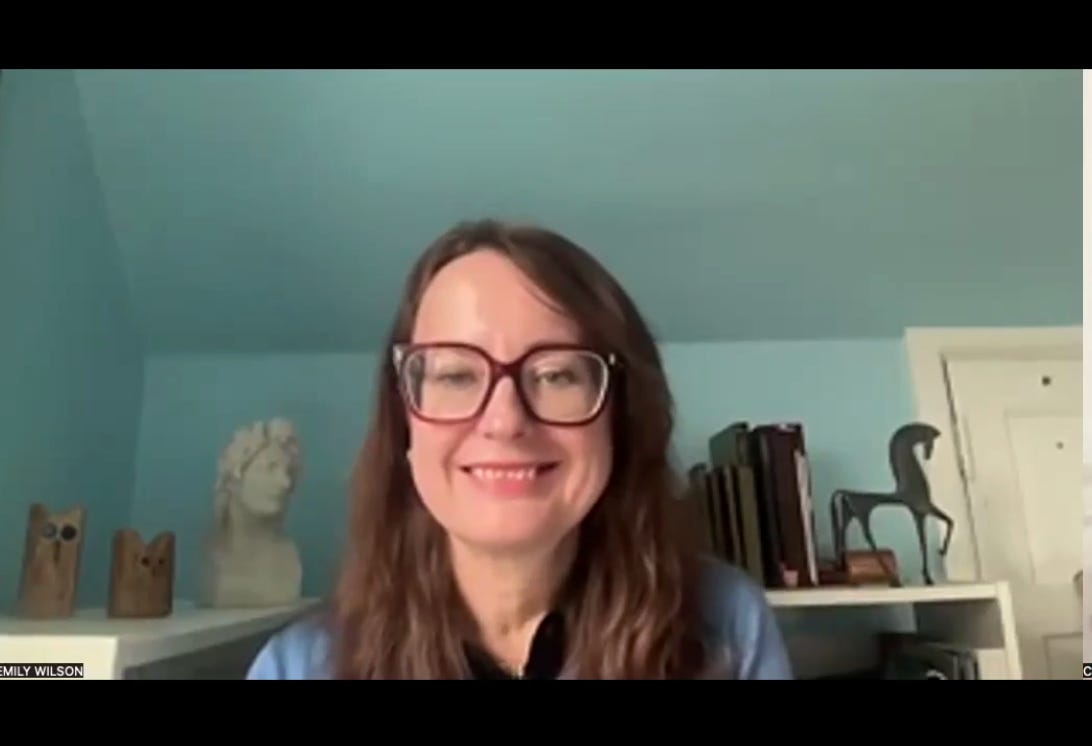
[VIDEO] Sea of Homer with Emily Wilson
Jul 1701:27:40Tap to summarizeDear Classical Wisdom Reader,Thank you to everyone who joined us live for our conversation with Emily Wilson. It was truly a pleasure! We ranged widely, as one does when “Homer” is in the room. Emily guided us through the mysteries of Homer’s identity, the power and complexity of the oral tradition, and the delicate (sometimes maddening) task of translating ancient poetry for modern readers. Along the way, she illuminated the extraordinary narrative sophistication and emotional depth of the epics, including rage, grief, love, loss, and the tangled web of human communities that feel as relevant now as they did three millennia ago.We explored how landscape shapes story, how gods meddle (enthusiastically) in human affairs, and why Homeric color terms can give even the best translators pause. Audience questions took us into the brutality of myth, the fraught dynamics of parents and children, and the way physical places can influence how a text is understood and translated.The highlight was most certainly Emily’s recitation from the Iliad, first in ancient Greek and then in English! I can honestly say we were all transported straight into Homer’s world.Conversations like this remind us why these poems endure. Not because they are ancient, but because they refuse to stop asking difficult, deeply human questions.Thank you again to everyone who joined us, and for giving your time and attention to such a thoughtful exchange. I’m grateful to share this community with you.And thank you, always, for being part of our beautiful fellowship devoted to the love of history, mythology, literature, and philosophy. It really is a pleasure! Warmly,Anya LeonardFounder and DirectorClassical Wisdom This is a public episode. If you'd like to discuss this with other subscribers or get access to bonus episodes, visit classicalwisdom.substack.com/subscribe
Transcribe →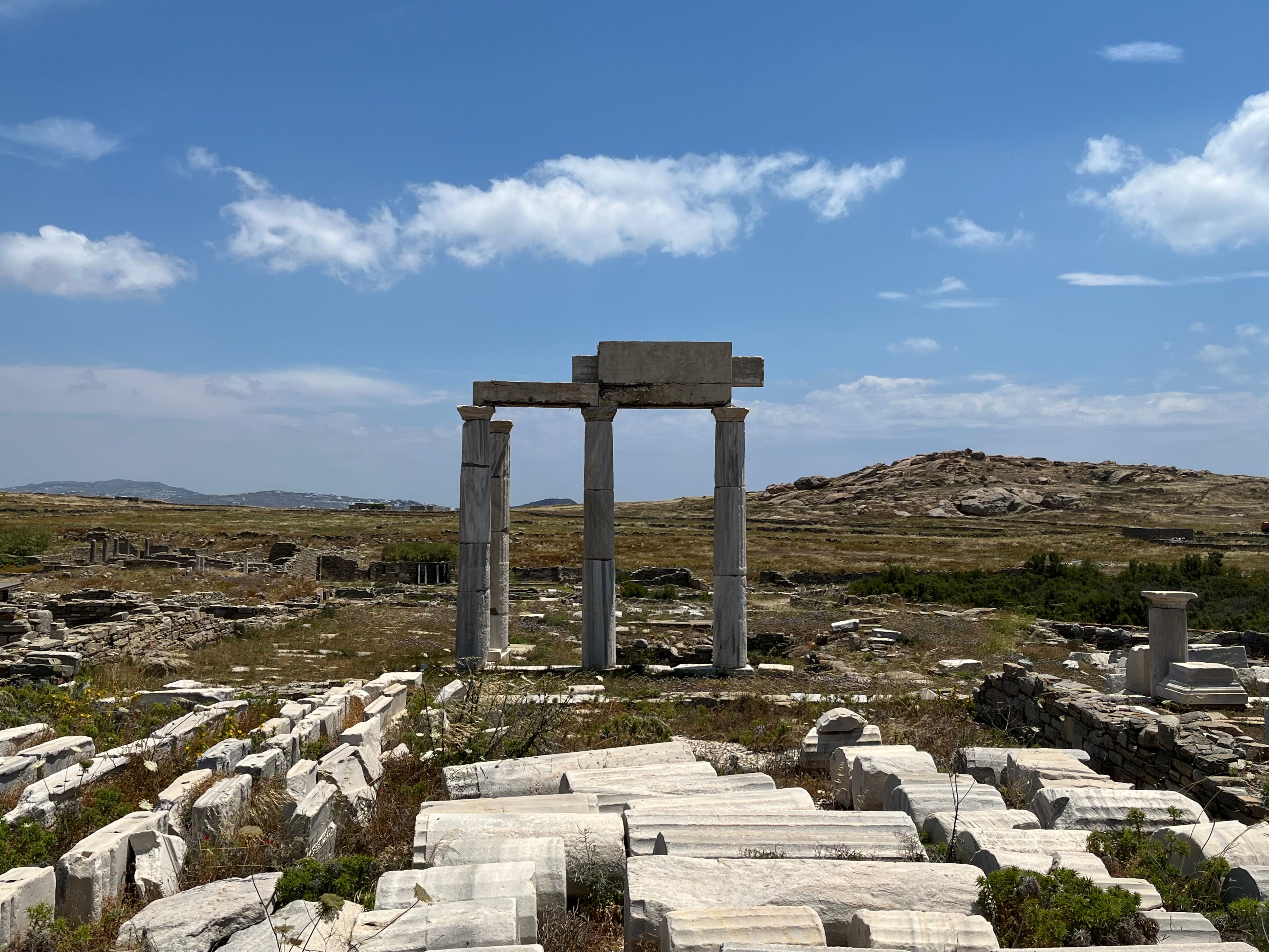
Small Island, Big Impact
Dec 1300:00:19Tap to summarizeDear Classical Wisdom Reader,It is hard to imagine that such a stark, rocky little island could have held such importance, that it would feature so prominently in the history and mythology of ancient Greece. After all, like fish in the sea, there are countless islands scattered across the Aegean...many with lusher hilltops, more dramatic coastlines, and sweeping, cinematic vistas.And yet this small, austere outcrop, barely capable of sustaining even the most modest population, stood at the very heart of antiquity. Delos was a linchpin of the ancient world, a keystone of the Hellenes, binding together a people otherwise dispersed across seas and shores.Perhaps that is its magic, something miraculously still perceptible today. Even now, when crossing the narrow channel from the much larger and livelier Mykonos, Delos rises from the water like an inspiration, an idea made of stone. It makes the ancient proverb “singing as if sailing into Delos”, a phrase that once conveyed lighthearted joy and hopeful anticipation, feel strangely alive...Despite its modest size (just 3.43 km² or 1.32 sq mi), Delos was revered long before Homer ever put stylus to papyrus. In his epic verse, he immortalized the island as the birthplace of the twin gods Apollo and Artemis. According to myth, their mother Leto, hounded relentlessly by the jealous Hera, found refuge only on this barren, floating island...one unanchored to the earth itself, and therefore beyond Hera’s reach.In welcoming the divine birth, Delos was said to have been fixed in place forever, transformed from a drifting rock into sacred ground.Such was its sanctity that centuries later, in the 6th century BC, the Athenian tyrant Pisistratus ordered all graves on the island to be exhumed and removed, an act intended to preserve Delos’s ritual purity.This was no isolated event.Time and again, the island was ritually “cleansed” of both the living and the dead, its population relocated elsewhere so that no birth or death would profane the sacred soil. And yet, despite these purges, Delos never faded into obscurity. Its central position in the Aegean, as well as in the collective imagination of the ancient world, ensured that its importance did not vanish, but rather evolved.By the early 5th century BC, Delos had taken on a new role, no longer only mythical but unmistakably political.In 478 BC, in the aftermath of the Persian Wars and the depredations of Cyrus and Darius, Delos became the meeting point of a powerful alliance: the Delian League. City-states from across the Greek world...from Rhodes and Karpathos in the south, to Byzantium and Samothrace in the north and east, and westward to the rising power of Athens...joined together in mutual defense against further Persian aggression.Their shared treasury was housed on Delos itself, placed deliberately beside the sacred Temple of Apollo, where divine oversight and neutral ground were thought to guarantee fairness and trust. For a time, this rocky island functioned as both spiritual sanctuary and financial heart of the Greek world.That balance did not last.In 454 BC, the Athenian statesman Pericles ordered the treasury removed to Athens...along with all the funds it contained. The justification was security; the reality was power. Those resources soon transformed into marble and gold, financing Athens’s ambitious building program, most famously the Parthenon that still crowns the Acropolis today.While modern visitors marvel at that magnificent monument, it is difficult to imagine that Athens’s allies were equally impressed. To them, Pericles’ act must have felt less like prudent stewardship and more like outright confiscation...and the result was predictable: trust fractured, tensions mounted, and before long the Greek world slid into the long and devastating conflict of the Peloponnesian War.Thus Delos, once a drifting rock, then a divine birthplace, then the symbolic heart of an alliance, stands as a reminder of how myth, power, and geography can converge on even the smallest patch of land, shaping the course of history far beyond its shores.Today, walking on Delos is to step into a rare silence. It’s an island emptied of life... yet incredibly dense with meaning. Indeed, there are few places where myth, politics, poetry, and stone align so precisely...And to experience it in the company of Emily Wilson, whose translations have returned Homer’s voice to its original sharpness and humanity, is to see Delos not as a ruin, but as a living text. On our 2026 The Sea of Homer voyage, Delos is not an isolated stop but part of a carefully woven journey through the landscapes that shaped Greek thought itself. From Athens and Mycenae to Patmos, Ephesus, and Istanbul, each site illuminates another facet of the world that produced the Iliad and the Odyssey .If Delos’ strange power entices you, then this voyage is for you. Join us July 1–13, 2026, for The Sea of Homer, and encounter Delos not as a footnote of history, but as it was always meant to be experienced: by sea, in company, and in dialogue with one of the great classical voices of our time.Spaces are limited, so you must act fast:I hope you can join us!All the best,Anya LeonardFounder and This is a public episode. If you'd like to discuss this with other subscribers or get access to bonus episodes, visit classicalwisdom.substack.com/subscribe
Transcribe →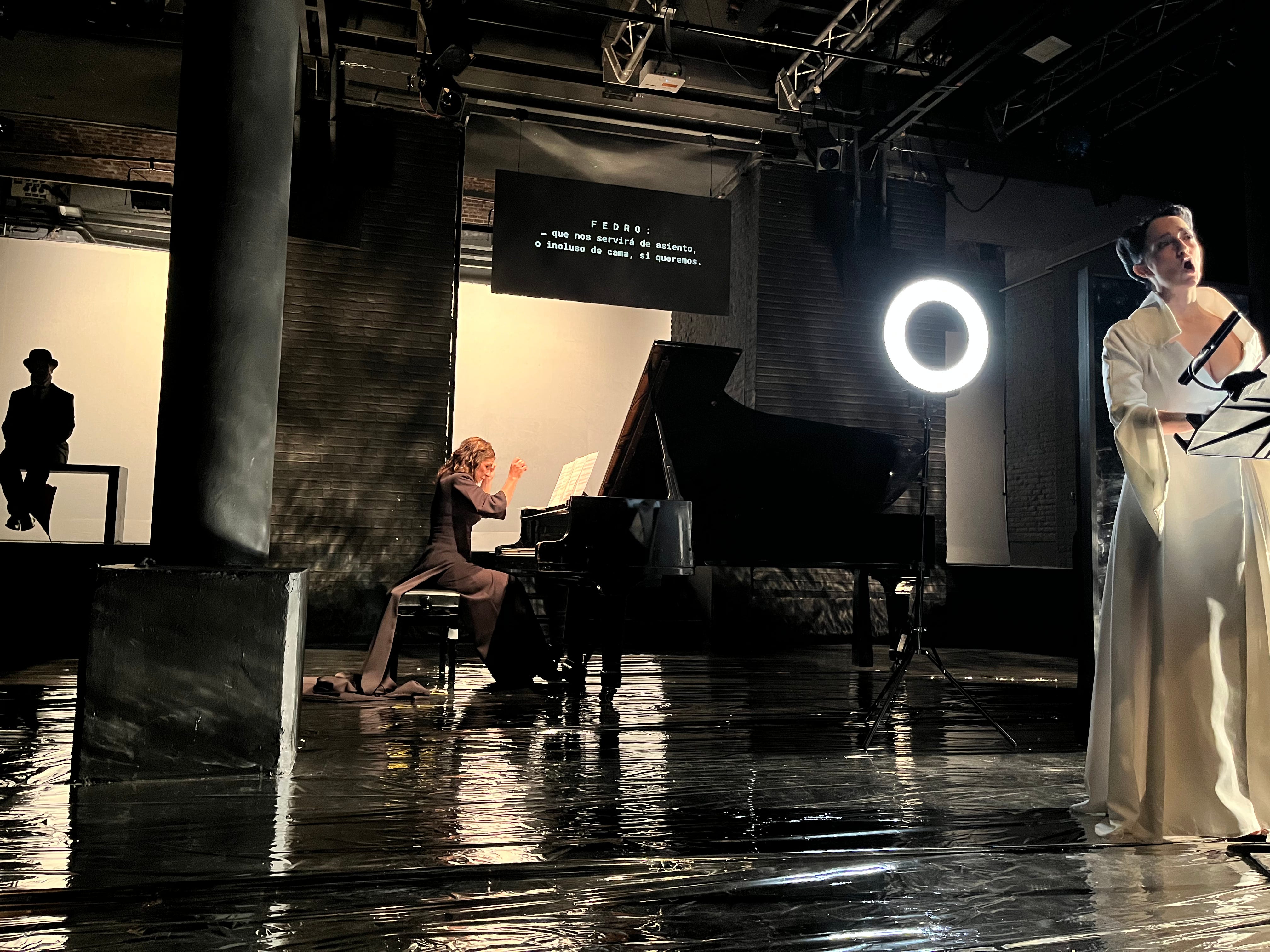
Who Decides Culture? And Does it Require the Classics?
Dec 100:01:29Tap to summarizeDear Classical Wisdom Reader,The performance was even greater than I had anticipated, and I had gone in with a great deal of expectation. It was, after all, the eccentrically brilliant Erik Satie’s Socrate... Not only is the subject clearly dear to my heart, the backstory to its composition is simply too fabulous!Like many great stories, it began with an American heiress. Born in Yonkers, Winnaretta Singer inherited the vast Singer fortune, which flowed from that ubiquitous sewing machine once found in all living rooms, but now residing in grandmother’s attics and closets throughout the country.As was fashionable for wealthy Americans at the time, Winneratta married into European aristocracy, thereby becoming Princess Edmond de Polignac. Their lavender marriage was never consummated, but rather a convenience on both their behalves to very thinly disguise their true desires. Nevertheless, the Prince and now Princess enjoyed a relationship based on profound platonic love, mutual respect, understanding, and artistic friendship. More than anything, they shared a love of music.And so with both prosperity and prestige, Winneratta became a great patroness, funding a wide range of causes and creating a salon which nurtured her many protégés, such as Debussy, Ravel and Satie. Proust fans will delight in knowing many of his evocations of salon culture were born from his attendance at concerts in the Polignac drawing room...Join our Virtual Salon to be inspired and guided by the wisdom of the ancients:It was also at this time Winneratta began studying ancient Greek and the classics. As we all know, dear reader, this is an infectious ambition, one that quickly grows, feeding on enthusiasm and the sublime... So naturally, Winneratta wanted to commission music in which she and her girlfriends could read ancient Greek philosophy... specifically Plato’s dialogues.Can I please just take a moment to point out how epic that is? Not only does the merging of music and the mind track beautifully with the ancient traditions of the symposium and theatre, but what a seriously fantastic way to celebrate a love of the Classics! I am so here for this idea.As such, in October 1916 Winneratta approached the composer Erik Satie, always found with pince-nez securely on his nose and bowler hat perched on his head. At first he was hesitant to the idea, after all, it sounded too melodramatic, too feminine... but together they found a compromise. Plato’s dialogues would be sung, demanded Satie… but by women, required Singer.Unfortunately, it was not simply smooth sailing from then on. In 1917, Satie was facing prison time for... an insulting postcard. You see, the offending text being on a postcard rather than a letter, meant anyone could read it, thus resulting in defamation. Those who are in the creative industry will be sympathetic, for the following words were not written to a friend, a lover or family member... but to a music critic:“Sir and dear friend, you are an arse, an arse without music! Signed, Erik Satie”. Fortunately the Princess interceded by throwing her American money at the problem and Satie was finally able to work without fear. The result, as my family and I were able to witness last night in a small room hidden under the glamorous Teatro Colón, was nothing less than stunning... as I hope the clip above captures.Socrate is a short composition, only 30 minutes in total, focusing on three sections from Plato’s works that aim to present a portrait of Socrates as seen in the Symposium, the Phaedrus and finally his death in Phaedo. It lacks any musical sections that might be considered arias, and the text is delivered as recitative. It is a curious mixture of the ancient world reinterpreted in Satie’s modern culture.Satie’s Socrate is, honestly, strange. While it is also evocative and powerful, perhaps it’s not surprising that it didn’t always ‘land’, especially in the early 1900s. In private performances, literati like James Joyce and Gertrude Stein praised its “audacious aesthetic approach,” however, the majority saw it as “musical impoverishment.”In fact, in 1920 when its orchestral version premiered, the audience believed it to be a joke... and so laughed accordingly. You can imagine the disappointment Satie felt. Tragically he died misunderstood; the appreciation for his Socrate came after his death.Make sure to appreciate the Classics while you can… Subscribe for beautiful ideas, texts and inspirations:It is a sad ending for a beautiful work of art, but it is hardly an unusual one. Indeed, recognition after the fact is so common it’s a trope, a cliché! One that has happened again and again, presumably to this very day. Can we imagine what great works are being dismissed right now? And how are we to know? More than ever we have an abundance of noise, such that finding the signal is incredibly tricky...Indeed, I believe we are in a moment of redefining what culture and art is in the first place. As someone who wholeheartedly believes in questioning just about everything, I think this process is necessary from time to time... as long as we are open and honest, as well as well informed about our past.To this end, I am very eager for this week’s event, The Golden Thread, with Harvard history professor James Hankins and Cornell classics professor Michael Fontaine. I’ve been reading Hankins’ 1300+ page tome on Western civilization and you might not be surprised to hear I have a lot of thoughts... and even more questions.Such as, what is defined as culture? Are we to listen to the artists, the critics, or the audience? Who decides what constitutes our traditions? What is kept? What is discarded?And, perhaps pertaining more to the topics to which these humble pages are dedicated, how critical are the Classics in the classification of culture? Like a Phoenix being redrawn in every era according to the latest trends, are the Classics necessary, coincidental or simply convention?I could go on... but I genuinely want to hear your musings on the topic. We are so fortunate to have a fantastically interesting and interested community… I never cease to be amazed at the fruitful conversations and keen insights you all provide. So please comment below and join us on Thursday!All the best,Anya LeonardFounder and DirectorClassical Wisdom This is a public episode. If you'd like to discuss this with other subscribers or get access to bonus episodes, visit classicalwisdom.substack.com/subscribe
Transcribe →
Why are MYTHS Important?
Jun 10, 202401:00:09Tap to summarizeDear Classical Wisdom Reader,It’s not so often we get to hobnob with the celebrity world... After all, our beat is the Classics and it’s not exactly a field that is renowned for its A-listers and superstars (at least not yet). So I was pretty stoked when the famed actor and comedian, Stephen Fry, agreed to come onto the Classical Wisdom Speaks Podcast to discuss Greek mythology. Having spent the last two Olympiads retelling the best of the ancient Greek myths, perhaps it wasn’t surprising to hear just how broad and deep Stephen’s knowledge on the topic is... nor how passionate he is about the subject. [Indeed, if you haven’t read -or listened- to his series, they are a great joy. Even for Myth pros, Stephen brings his usual joy and humor to these old tales and offers a wonderful wide sweep of the fabled catalog - an insight provoking offering in and of itself. You can check his books here: Mythos, Heroes, and Troy. The Odyssey is coming out soon!] So please enjoy this special conversation with Stephen Fry. We discuss the ancient languages, etymology, and the joy of discovering the Classics through ancient Greek. We question whether Odysseus... or any of the other great names were really heroes and how these stories give us insight on AI and social media, among other things. Spoiler alert: Myths have great meaning.. and great purpose... in our here and now.Have a listen and let me know why YOU think myths are important...You can also download the audio file, if you wish, here: All the best,Anya LeonardFounder and DirectorClassical WisdomP.S. If you want to enjoy Stephen’s regular witticisms, he’s now also on Substack! You can check out his newsletter here: This is a public episode. If you'd like to discuss this with other subscribers or get access to bonus episodes, visit classicalwisdom.substack.com/subscribe
Transcribe →
How have Plato and Socrates influenced Stoicism?
Aug 4, 202200:38:30Tap to summarizeWatch it on Youtube HEREMany people don’t see the connection between the key ancient philosophers, Plato, Socrates and Aristotle and the growing trend of Stoicism - but how was Stoicism influenced by these earlier thinkers? Nancy Sherman, who holds the rank of a distinguished University Professor at Georgetown university, and has been elected as a member of the American Academy of Arts & Sciences, discusses the practical tools of Stoicism, how its been influenced by previous philosophers as well as the NEED for Plato. Nancy Sherman is also a New York Times Notable Author and her most recent book is Stoic Wisdom: Ancient Lessons for Modern Resilience... she spoke LIVE on the topic of "Aristotle and the Stoics on Flourishing" this May 21st, 2022 at the inaugural conference for the Plato's Academy Centre. Co-hosted by Classical Wisdom, all donations will go to the reconstruction of Plato's Academy in Athens. You can get Nancy's book, Stoic Wisdom, Here: https://www.amazon.com/Stoic-Wisdom-Ancient-Lessons-Resilience/dp/0197501834 This is a public episode. If you'd like to discuss this with other subscribers or get access to bonus episodes, visit classicalwisdom.substack.com/subscribe
Transcribe →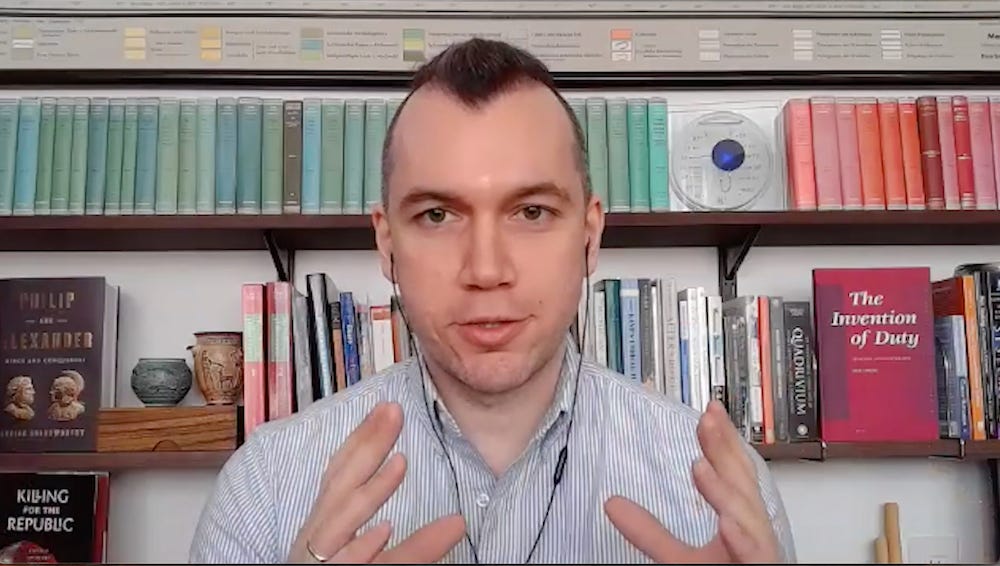
Stoic Duty: The Formula for Living Well with Jack Visnjic
Apr 14, 202100:44:21Tap to summarizeWhat was the Stoic Formula for living the good life? When was the idea of moral duty conceived? And why was its invention so controversial? This week's Classical Wisdom Speaks Podcast is with Jack Visnjic, also known as Lantern Jack, host of the - Ancient Greece Declassified Podcast and Director of Research at the Anacyclosis Institute. He is also author the new book, “The Invention of Duty: Stoicism as Deontology”You can find Jack's book here: https://brill.com/view/title/58430 You can listen to Jack's podcast, Ancient Greece Declassified, here: http://greecepodcast.com/ For more information about Classical Wisdom's Podcast Classical Wisdom Speaks, please check out our website at: http://classicalwisdom.comGet our Magazine - dedicated to Ancient Music - with our Classical Wisdom Litterae Magazine subscription Here: https://classicalwisdom.com/product/classical-wisdom-litterae-magazine-subscription/ This is a public episode. If you'd like to discuss this with other subscribers or get access to bonus episodes, visit classicalwisdom.substack.com/subscribe
Transcribe →
Can We Find Stoic Joy? With William B. Irvine
Apr 7, 202100:29:31Tap to summarizeCan we experience Stoic Joy? Why has there been a dramatic change in how we perceive Stoicism? And how can the ancient philosophy reduce stress and anxiety as well as help us achieve our goals? This week's Classical Wisdom Speaks Podcast is with William B. Irvine, Professor of Philosophy at Wright State University in Dayton, Ohio. Author of seven books, including The Stoic Challenge, and A Guide To The Good Life: The Ancient Art of Stoic Joy.If you would like to learn more about Dr. Irvine’s books, includingThe Stoic Challenge and A Guide to the Good Life, please look at his website: williambirvine.com/For more information about Classical Wisdom's Podcast Classical Wisdom Speaks, please check out our website at: http://classicalwisdom.comLearn more about our upcoming Stoic ESSAY Competition here: https://classicalwisdom.com/stoicism-essay-competition/Get our Classical Wisdom Magazine - dedicated to new exciting themes each month - check out our subscription special Here: https://classicalwisdom.com/product/classical-wisdom-litterae-magazine-subscription/*Please note, this podcast was originally recorded in 2019, before the pandemic. This is a public episode. If you'd like to discuss this with other subscribers or get access to bonus episodes, visit classicalwisdom.substack.com/subscribe
Transcribe →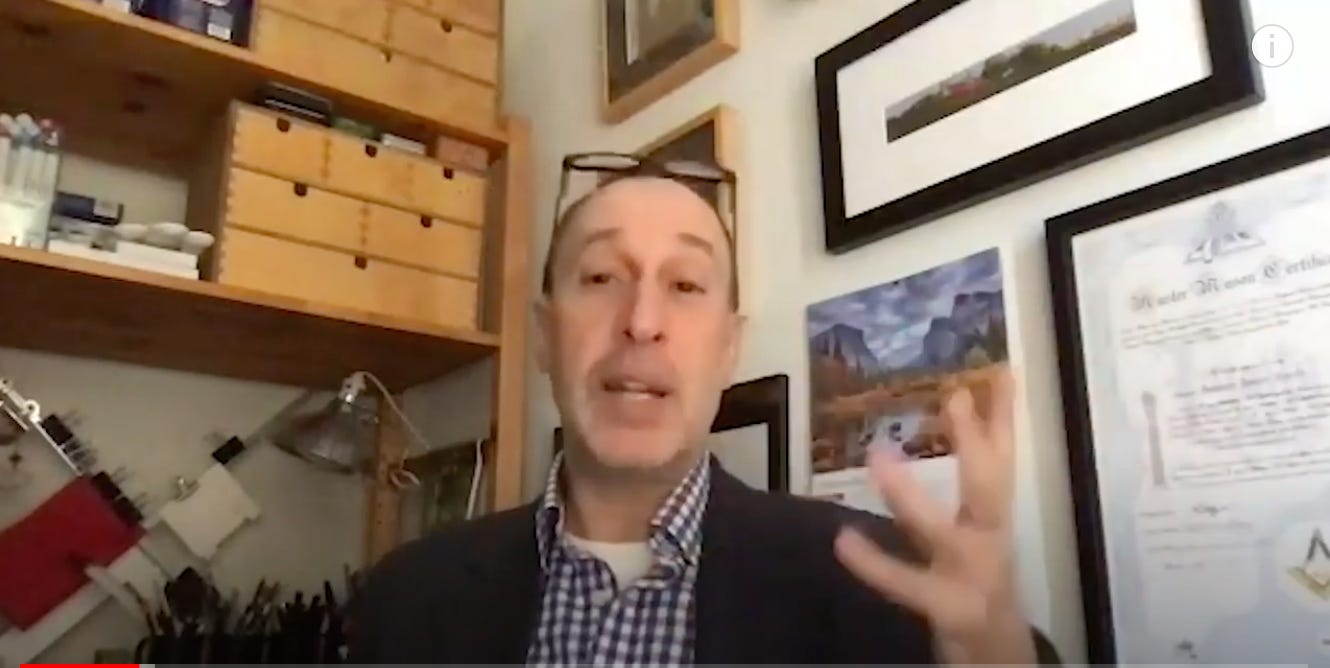
Lost Technologies and Deciphering Reality with Dr. Benjamin B. Olshin
Mar 31, 202100:31:47Tap to summarizeWhat happened to Lost technology? Was there an ancient advanced society? How did the ancients decipher reality... and has the concept of Time itself changed since the classical era?This week’s Classical Wisdom Speaks is with Dr. Benjamin B. Olshin, retired Professor of Philosophy, History and Philosophy of Science and Technology, and Design at the University of the Arts in Philadelphia. Dr. Olshin is a researcher, musician, artist, consultant and author of several books including “ Lost Knowledge”, “Deciphering Reality”, and “The Mysteries of the Marco Polo Maps.”We will discuss the way the ancients understood their world, reality and time... as well as how they transmitted technology. If you would like to learn more about Dr. Olshin’s books, including Lost Knowledge and Deciphering Reality, as well as his diverse projects, you can find everything at:https://www.benjaminbolshin.net/For more information about Classical Wisdom's Podcast Classical Wisdom Speaks, please check out our website at: http://classicalwisdom.comGet our recent Magazine - dedicated to Ancient Music - with our Classical Wisdom Litterae Magazine subscription Here: https://classicalwisdom.com/product/classical-wisdom-litterae-magazine-subscription/ This is a public episode. If you'd like to discuss this with other subscribers or get access to bonus episodes, visit classicalwisdom.substack.com/subscribe
Transcribe →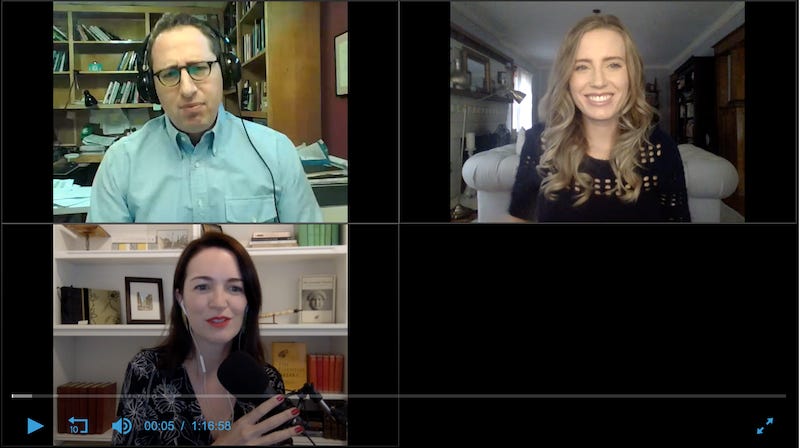
What is the future of the humanities? Discussing The Battle of the Classics.
Mar 29, 202101:18:49Tap to summarizeAre the Humanities under attack? Are the Classics being Canceled? And if so, how and why should we come to its defense? We live in an era that frequently questions the utility and benefit of classical education and a liberal arts core curriculum—a mode of education that has nourished the minds of men and women for thousands of years. As these criticisms gain traction in our public square, it feels like we're at an inflection point.What is the future of the humanities in general, and the classics in particular? How inclusive can they be? Is the Greco-Roman world still relevant today? Dr. Eric Adler, a classist at the University of Maryland and author of "Battle of the Classics," recently published by Oxford University Press, discuss these questions and more, along with Anya Leonard, founder and director of Classical Wisdom and Alexandra Hudson, curator of Civic Response..Together they explore the weaknesses of modern defenses of the humanities, including an over reliance on the “critical thinking” they build.They also discuss the best contemporary criticisms of the classics, including that they are overly “Western-centric.” We will also discuss thoughtful ways to approach these concerns, including the possible utility of a “living” and perhaps more omni-cultural, core that reads Western texts alongside Eastern literature.This event is in partnership with Classical Wisdom, and online platform that provides commentaries and opinions on Ancient Greek and Latin literature, and Civic Renaissance, a publication and intellectual community dedicated to the wisdom of the past, beauty, goodness and truth.https://classicalwisdom.comhttps://www.civic-renaissance.comYou can purchase Eric's Book here: https://www.amazon.com/Battle-Classics-Nineteenth-Century-Debate-Humanities/dp/0197518788 This is a public episode. If you'd like to discuss this with other subscribers or get access to bonus episodes, visit classicalwisdom.substack.com/subscribe
Transcribe →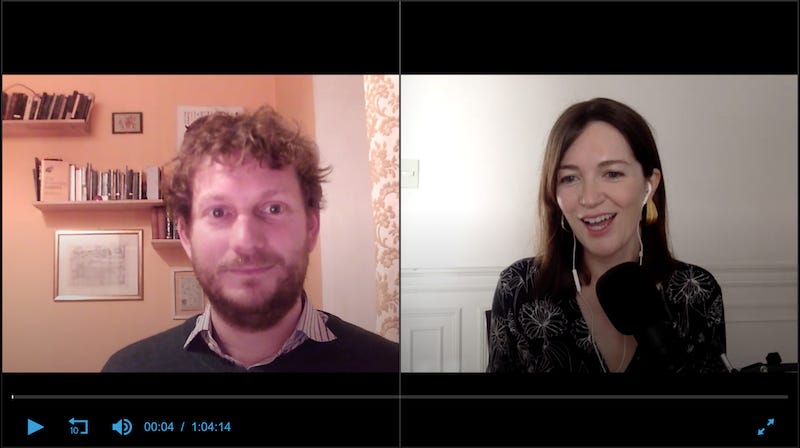
Anya & Ben: Homer and the Tragedians
Mar 19, 202101:04:26Tap to summarizeWere Homer and the tragic myths considered history? How were they able to revere goddesses, but not the average woman? And what exactly did the ancients find Taboo in Euripides’ controversial works? Hint: it’s not what we would be offended by today... Today's Classical Wisdom Speaks episode is with Anya Leonard and Classical Wisdom's resident classicist, Ben Potter on the foundational myths of ancient Greece, cultural taboos and how the theater competitions worked.Test Drive Classical Wisdom's Magazine Risk Free Here: http://classicalwisdom.com/free-trial/ For more information about Classical Wisdom's Podcast Classical Wisdom Speaks, please check out our website at: http://classicalwisdom.com This is a public episode. If you'd like to discuss this with other subscribers or get access to bonus episodes, visit classicalwisdom.substack.com/subscribe
Transcribe →