Loading summary
Transcript120 lines
- [00:02]
Dina Temple Raston
From prx.
- [00:07]
Narrator
When Dylan decided to fly to the Philippines for the Chinese New Year back in February, he thought it'd be a fun way to spend the holiday. Dylan asked us just to use his first name for reasons that will become clear in a minute.
- [00:21]
Dylan
I arrived in Bambang around February. I think it's February 11 or 12.
- [00:27]
Narrator
Bam bam. It's a small, often overlooked city in the heart of the Philippines, north of Manila. It's one of those lush island places with oversized palms, green rolling hills, and lots of farmland. Dylan had worked in the Philippines previously. In fact, it was an acquaintance of his from that job who invited him for the week.
- [00:51]
Dylan
My colleagues, my old colleagues in Philippines.
- [00:54]
Narrator
They'D worked together in the offshore gaming industry, and he didn't know this guy all that well. In fact, he was a little surprised by the invite. But Dylan thought that ringing in the Lunar New Year in a place like Bon Bon would be fun. They'd go to some restaurants, maybe do some dancing.
- [01:13]
Dylan
I just meet up with my friends, and then maybe after this, we'll go to the Dino.
- [01:19]
Narrator
So he bought a plane ticket and began to plan his holiday. When Dylan pulled up to the address his friend had given him, something seemed a little off. His friend wasn't standing in front of a house or apartment building. It looked more like a compound with all these buildings that look like dorms surrounded by security gates and razor wire.
- [01:43]
Dylan
When I arrived there, I just moved to my friend's domes and I waiting. And after that, we were surrounded. The Chinese New Year.
- [01:50]
Narrator
The two caught up a little bit and talked about where they would go that night.
- [01:55]
Dylan
Okay, these our plans.
- [01:57]
Narrator
And then his friend says he wants Dylan to wait in the room. He'll be right back.
- [02:02]
Dylan
He just left me in the compound.
- [02:05]
Narrator
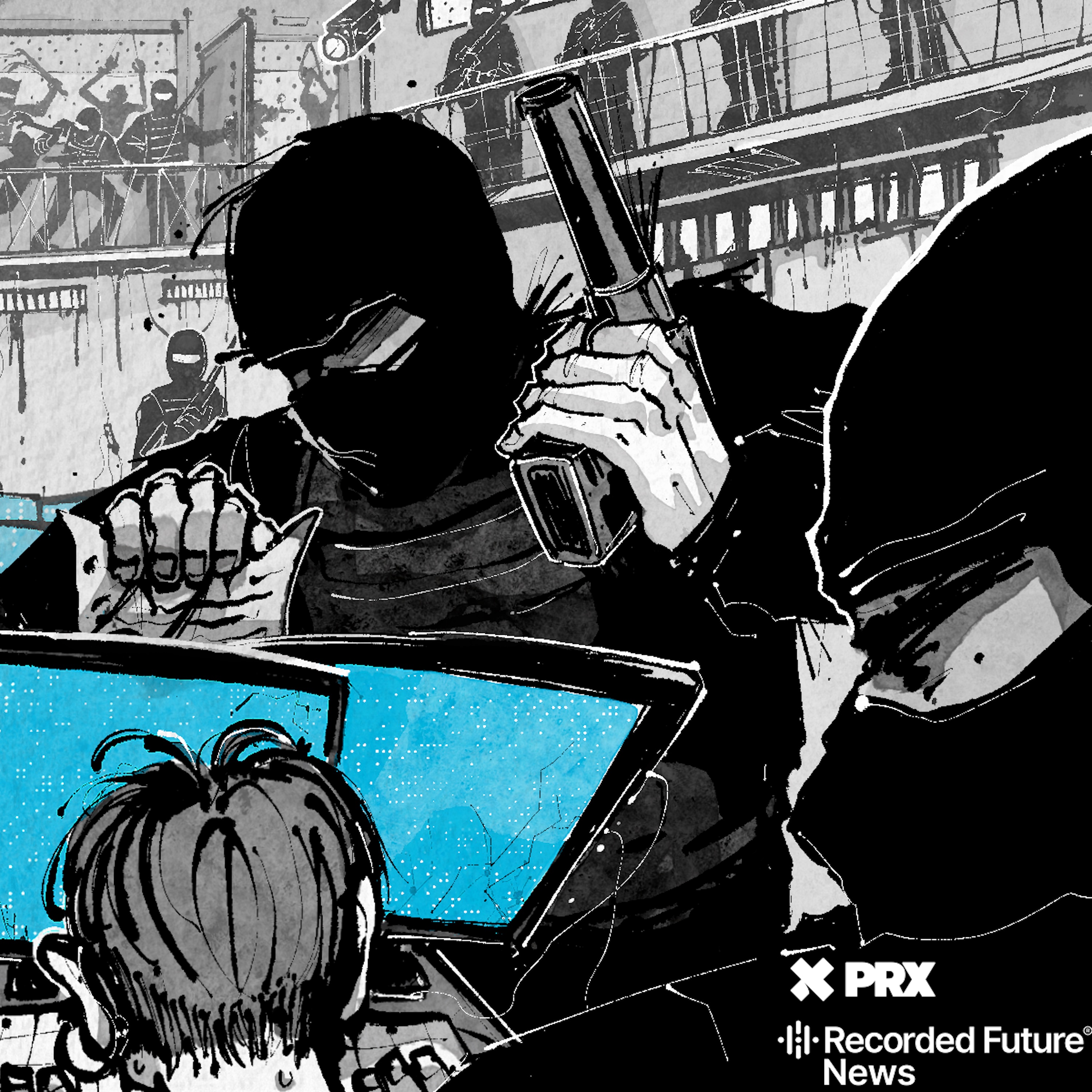
And as Dylan sat there waiting, he began noticing that there were bars on the windows and reinforced doors, which started to fill him with a slow, creeping sense of dreadful. And just as he was about to get up to look for his friend to ask him what was going on, two strangers pushed into the room, and Dylan's heart sank. You aren't going anywhere, they said. And that's when Dylan's nightmare began. I'm Dina Temple Raston, and this is Click Here, a podcast about all things cyber and intelligence. We tell true stories about the people making and breaking our digital world. You've probably seen those warnings about online romance scams and can't lose investment schemes. Well, these days, a lot of those hustles are coming out of Southeast Asia, and some of them are being committed by People who are forced to scam at gunpoint. Today you'll hear Dylan's experience with that and about the effort to shut it all down.
- [03:17]
Dina Temple Raston
This is a presidential directive. This is the President telling us to go all out against the scammers, wherever they may be.
- [03:27]
Narrator
Stay with us.
- [03:36]
Tim Harford
Do nice guys really finish last? I'm Tim Harford, host of the Cautionary Tale. Welcome to the Wales Podcast and I'm exploring that very question. Join me for my new miniseries on the art of fairness. From New York to Tahiti, we'll examine villains undone by their villainy, monstrous self devouring egos and accounts of the extraordinary power of decency. Listen on the iHeartRadio app, Apple Podcasts, or wherever you listen to podcasts.
- [04:06]
Dina Temple Raston
From.
- [04:06]
Narrator
Recorded future news. This is Click Here. I'm Dina Temple. Rest. Dylan's first four days in this compound were spent in training. He was given a script and a kind of template for the scam emails he'd be forced to write. It was a lot of copying and pasting.
- [04:28]
Dylan
Just copy and paste the notes and then just write down. In the new notebooks they had racks.
- [04:36]
Narrator
Of cell phones the scammers would use to either text or phone their victims. Dylan was told he'd be scamming Chinese victims since he spoke Chinese. Were these all scams online or were these scams where you would actually speak to people too?
- [04:52]
Dylan
I actually speak with people like online and then we need to have a wise call and then like maybe he get some data.
- [05:02]
Narrator
Data? He means victim research. The scam bosses bought huge amounts of personal data from the dark web. And then people like Dylan were ordered to create intricate dossiers on their targets. Had they been recently widowed or posted about a promotion on LinkedIn? What were their likes and dislikes? What could you learn from their social media posts? Did they have retirement accounts or more than a passing interest in crypto? So you were doing investments or love scams or both actually.
- [05:36]
Dylan
Include two. Again, the options to include that the first we were.
- [05:42]
Narrator
These kinds of complicated scams have a name. They call it pig butchering. Scammers are supposed to use all that personal data to forge a connection to gain the trust of their victims over the course of several weeks. Fattening up the pig, they say. And then they would go in for the kill and steal as much money from them as they could. Dylan was eventually taken into a room that looked like a huge call center. People were seated cheek by jowl at these giant cafeteria style tables lined with computers. And he was told that he had a Quota to meet a hundred thousand dollars a month. And he soon realized that in order to get to that number, he had to work the phones and tap out texts 16 hours a day. If you missed the target, there would be consequences. They'd be hit or maybe even killed.
- [06:40]
Dylan
I don't have any choice because I hear them like, maybe you get hit, maybe it will kill you.
- [06:48]
Narrator
I see, so they threatened you?
- [06:49]
Dylan
Yeah. And then I just follow any instruction them say, yeah.
- [06:55]
Narrator
So Dylan did what he was told. He kept dialing. He kept sweet talking the person on the other end of the line. But his mind was on something else entirely. He was trying to figure out how to get out of there. Dylan quietly scoped out the compound, looking for some gap in security. And he discovered that the compound was enormous. It ran the length of a few city blocks. It was like a mini self contained city. Not just with the dorms and cafeterias that were housing and feeding hundreds of captive workers. But there was a barber shop, a medical clinic, even a spa for VIP visitors, and a karaoke bar for the managers, which could make you think, well, it's large enough, Surely there must be a hole to squeeze through somewhere.
- [07:42]
Dylan
But it's very hard to escape because the company's security is very strong in the compound.
- [07:48]
Narrator
And that's why, remember, there were armed guards everywhere. So Dylan needed to come up with a plan to get out of there that his bosses wouldn't notice. And he came up with an idea that involved the scamming program itself. It turns out the crime bosses running the compound had set up a kind of incentive program so scammers would do their best work.
- [08:10]
Dylan
When you hit the quotas, they were divided by around 10%. And then that one is your salary.
- [08:15]
Narrator
So you kind of worked on what they call commission. Yeah, but it wasn't so much the salary or commissions that caught Dylan's eye. He was focused on one specific perk in particular. High performing scammers were given a phone that they didn't have to share with anyone else. And Dylan thought, if I could earn one of those phones, maybe I'd be able to call for help When I.
- [08:41]
Dylan
Get the them, provide me the phone, the working phone. I try to find a way how to contact anyone can help.
- [08:51]
Narrator
So Dylan became a model scammer. And his bosses couldn't help but notice how charming he could be with a lovelorn. Or how skillfully he convinced people to put a little more money in some investment scheme. And then finally, a few weeks in, he got that personal phone.
- [09:10]
Dylan
Actually, I just Stay in the compound around one month when I get the company phone.
- [09:16]
Narrator
Now all he had to do was pick his moment. Some brief interlude when a boss was distracted or when his phone use was unmonitored. Then he'd call for help. And he was patient because it was clear to him if he could get beaten for missing a quota, trying to make a break for it could get him something much, much worse. He'd probably end up in the compound's torture room. Beaten, handcuffed, may be killed.
- [09:45]
Dina Temple Raston
So this was the torture room. As you can see, there's still some dry blood all over the walls.
- [09:55]
Narrator
This is someone giving journalists a tour. It was the size of a utility closet, mostly empty, except for a plastic chair and two sets of handcuffs hanging ominously from a steel bar that was bolted into the wall. The cameraman panned down and you could see that one of the walls was actually dented. It looked as though someone had been thrown against it with such force, it just gave in.
- [10:19]
Dina Temple Raston
So if you're unable to meet your quota at any given time, or if you had a very serious infraction, they'd tie you here and torture you.
- [10:34]
Narrator
So every day, Dylan did his work, and until at last one day, he was running a scam, just making his bosses money, and he noticed his manager wasn't paying attention. So he picked up his phone, looked like he was dutifully reading from the script in front of him, and he called for help. That's after we come back.
- [11:01]
Michael Calory
Hi, everyone. It's Michael Calory, director of consumer, tech and culture at Wired, here with my colleagues, senior writer Lauren Goode.
- [11:08]
Lauren Goode
Hello.
- [11:09]
Michael Calory
And Wired contributor Zoe Schiffer.
- [11:11]
Lauren Goode
Hey, everyone.
- [11:12]
Michael Calory
We're here to tell you about our new podcast, Uncanny Valley, a show about the people, power and influence of Silicon Valley.
- [11:20]
Lauren Goode
Every week, we get together to talk about how technology and culture from the Valley is influencing our everyday lives. We dig into questions like, will we ever get our Privacy back? Is OpenAI for real? And how are Silicon Valley billionaires impacting US elections? The first episode of Uncanny Valley comes out on October 31st. Listen, wherever you get your podcasts.
- [11:47]
Narrator
From, Recorded Future News. I'm Dina Temple Reston, and this is Click here. Dylan sat with his phone, trying to look as normal as possible as he dials, trying to be nonchalant like it was any other work call, pretending he was reading from a script in front of him, hoping his bosses assumed that he was just doing his job, while in reality, he wasn't calling a victim, he was calling for help. And with each call Furtively begging them to come save him.
- [12:22]
Dylan
I contact Philippines police, and then I tried to contact our Malaysia Embassy, and then I tried to contact my family.
- [12:31]
Narrator
So you were basically saying, help me, I'm being held prisoner.
- [12:35]
Dina Temple Raston
Yeah, yeah, that's right.
- [12:37]
Narrator
And then all he could do was wait. The waiting, of course, was the hardest part.
- [12:43]
Dylan
And then after that, maybe first few days, don't have any respondents, no responses.
- [12:49]
Narrator
To his calls for help. What Dylan didn't know until much later is that his desperate calls had been received. His case landed on the desk of this guy.
- [13:02]
Dina Temple Raston
Well, I'm Winston John Romero Cacio. I work for the Presidential Anti Organized Crime Commission here in the Philippines.
- [13:12]
Narrator
Before you joined the crime commission, Winston Cashill was an academic. He was an expert in the criminal mind.
- [13:18]
Dina Temple Raston
I was doing a lot of research with regards to deviance and criminal sociology and criminal philosophy, and it was kind of easy for me to try to understand the motivation behind it.
- [13:33]
Narrator
He studied gang culture and criminal psychology and applied that to the transnational criminal organizations that were springing up all over the Philippines. Criminal gangs were doing everything from human trafficking to drug smuggling. So Filipino jails were full of members of large criminal syndicates. All of which gave Winston lots of opportunities to talk to them and understand not just what they did, but why they did it too. And he took what he learned and taught courses all over the Philippines, not just in universities, but in the nation's Catholic seminaries as well.
- [14:10]
Dina Temple Raston
I taught in two of the major Catholic seminaries here in the Philippines. One that was run by the Franciscan friars and another one that was run by the La Salette Fathers.
- [14:26]
Narrator
And then in 2013, he got a call from the Crime commission asking if he could put all these years of study into practice.
- [14:33]
Dina Temple Raston
They needed someone to do a type of research we call as a threat assessment.
- [14:40]
Narrator
Basically, Winston was supposed to do a deep dive into transnational criminals. Who were the bosses? How did these organizations run? What motivated them? It was all in a bid to help authorities, finally bring them to justice.
- [14:54]
Dina Temple Raston
So basically, it was a perfect fit. For me, it was like a fish being thrown into water.
- [15:02]
Narrator
But the timing wasn't optimal. Winston was just getting his bearings at the commission when Rodrigo Duterte was president. And a short time later, he launched a nationwide war on drugs that was, well, a little primal. Rodrigo Duterte calling on the police and ordinary citizens to kill drug dealers and users on site.
- [15:24]
Dina Temple Raston
Go hit yourself if you have begun.
- [15:26]
Narrator
Shoot first, ask questions later. The Philippine president said it was vigilante justice and tens of thousands of people died. So during those years, Winston and the commission kind of languished.
- [15:39]
Dina Temple Raston
During DU30, the office was non operational. Basically, we were just doing office work, so to speak.
- [15:48]
Narrator
He was pushing paper, filing reports that no one ever read, and Winston hated it.
- [15:54]
Dina Temple Raston
I was close to quitting because there were so many challenges in the world.
- [16:00]
Narrator
It wasn't until President Bongbong Marcus came into office.
- [16:10]
Tim Harford
You the people have spoken.
- [16:13]
Narrator
And it is resounding that Winston met his moment. President Marcos wanted to clean up transnational crime in the Philippines, and Winston couldn't wait to get started.
- [16:25]
Dina Temple Raston
The President gave us a marching order to go after online scams. That gave me a boost. When the President said he's going to Bantis, he gave me the much needed boost. This is a presidential directive. This is the President telling us to go all out against the scammers, wherever they may be.
- [16:45]
Narrator
And it turns out where scammers were was all over Southeast Asia, including a town about an hour outside of Manila called Bnbat. The Philippines has become a haven for online scamming for some of the same reasons that legitimate businesses set up their call centers and customer service operations there. Filipinos tend to be highly educated. They have good language skills and a good work ethic, all of which could, of course, be useful to scamming operations as well. So by 2022, scam compounds were becoming a bit of a booming industry with a whole infrastructure in place. The scam farm bosses would create job postings online or recruit people in person, and the jobs looked totally legit.
- [17:40]
Charlene Chen
People might be invited to attend job introduction meetings where criminals or fake recruitment agencies or brokers would be introducing fake jobs.
- [17:53]
Narrator
That's Charlene Chen. She's the head of programs at Humanity Research Consultancy. It's a firm that studies human trafficking. And she says it is easy to be fooled. The criminal groups promise good money, a chance to live in a bustling Asian city. The only problem was when the job seeker shows up for the interview or to tour the office, they're not allowed to leave a version of what happened to Dylan. Why pay benefits and salaries when you can just kidnap people and force them to work?
- [18:24]
Charlene Chen
Quite a lot of them realize that it's more cost effective to just kidnap a group of people, force them to stay in the office, conduct online scam for them.
- [18:34]
Narrator
The United nations now estimates that hundreds of thousands of people like Dylan may be held captive in scam compounds all around the world.
- [18:42]
Charlene Chen
I have to be honest, the fact that these scam operations are still increasing, expanding in a crazy speed.
- [18:53]
Narrator
It's.
- [18:53]
Charlene Chen
It's Quite terrifying.
- [18:55]
Narrator
And now Winston and the commission were told to put a stop to it. All he needed was a tip. And he got that in part from Dylan and his secret phone calls.
- [19:07]
Dina Temple Raston
The Malaysian Embassy informed us by Malaysian nationals. They were being held against their will and forced to work as Camerons.
- [19:16]
Narrator
That Malaysian was Dylan. And as fate would have it, his call was the second time in the space of a week that Winston had heard that there was a scam farm hidden in the hills of Bon Bon. Just a few days before Dylan's call, a man from Vietnam had managed to do the impossible. He'd escaped from the Bon Bon compound. He evaded his captors and even ran to local police. They, in turn, put him in touch with Winston.
- [19:44]
Dina Temple Raston
We brought him here to Metro Manila. We interviewed him. Then we got the search warrant.
- [19:51]
Narrator
The Vietnamese escapee told Winston everything about the long hours, the armed guards, the torture room. And it turns out he had a really great memory. He sketched out a drawing of the Bonbon compound and told Winston where the guards typically stood and where the bosses hung out. And as he spoke, what became clear to Winston was that if they were going to raid this operation, they needed a lot more than a couple of police vans and a few dozen cops.
- [20:19]
Dina Temple Raston
There were 36 buildings, so if you have less than 50 people scouring through or going through the entire compound, we didn't have enough people.
- [20:30]
Narrator
So Winston began calling around for reinforcements, and he got them in full force. The military agreed to help, too.
- [20:39]
Dina Temple Raston
That was the first major operation we had against an actual hub, a huge compound. Although we've had three different operations in the past, these were insignificant in terms of size compared to that in Bamba. We had almost 8,000 operatives.
- [21:04]
Narrator
The staging area the night of the raid was at a military camp not far from the Bonbon scam compound. It had become a kind of military operation. And they talked about how they would fan out and cover the exits and where they were likely to encounter resistance. Winston said when the meeting finally broke up at about 10:30 that night, the plan was to head out at dawn.
- [21:27]
Dina Temple Raston
So we went to our box, to our hotels, our upper hotels, to take a rest for the night.
- [21:33]
Narrator
And then just before Winston was about to turn out the light, he got an alarming text.
- [21:40]
Dina Temple Raston
We've gotten information that a good number of the foreign nationals were starting to leave the compound.
- [21:46]
Narrator
The criminals have been tipped off. So Winston alerted the squad leaders, who woke their men, and they all set out right away. Did you go in with guns drawn?
- [21:56]
Dina Temple Raston
Yeah, we had to come in with bodyguards. And guns thrown, Primarily because we believe that there may be people who may be armed in the area.
- [22:07]
Narrator
The actual video of the raid in Bon bon is still under seal. What you're hearing now is from a different raid, One that Winston says gives you a real feel for what it was like that night. Battalions of officers kicked down doors in handcuffed suspects, Shouting to people to get down with their hands up.
- [22:34]
Dina Temple Raston
This is a legitimate operation. Don't resist. Surrender your guns.
- [22:47]
Narrator
What was the first thing you saw?
- [22:50]
Dina Temple Raston
People trying to escape the compound.
- [22:52]
Narrator
A mass of humanity was trying to push past him. The workers, the criminals. It was hard to tell who was who. And in the midst of all of this, out of the corner of his eye, Winston saw some movement. Then he heard a car startup. The car was full of scam bosses making a break for it, and before Winston had time to react, he could see his boss at the commission sprinting across the compound. And then he physically threw himself in the path of the oncoming car.
- [23:26]
Dina Temple Raston
He went in with just one or two security officers with him, and he actually blocked a vehicle going out of the area, but used his body to block it.
- [23:42]
Narrator
The crime bosses were so surprised, they actually stopped.
- [23:46]
Dina Temple Raston
My boss is quite a hero, you know, I mean, he's a former police officer. I'm not. I'm an academic, So I am not as brave as my boss. I wouldn't do that. I wouldn't do that, no matter how passionate I may be with my work, But I won't use my money to block a moving vehicle.
- [24:04]
Narrator
It took another day for all the soldiers and police officers to clear all three dozen buildings. In the end, they rounded up dozens of suspected scam bosses and some 800 workers who came from all over Asia. This is Winston talking to a local reporter. Right after the raid, we were able.
- [24:23]
Dina Temple Raston
To rescue one Malaysian. The Malaysian bore signs of torture, physical abuse, so his embassy is evaluating him now.
- [24:36]
Narrator
That one Malaysian, the one who had been physically abused, that was Dylan. All this happened back in the spring, and now Dylan is actually working for Winston at the commission. He'll be a chief witness at the bonbon trial. And he's been helping Winston gather other witness statements.
- [25:05]
Dina Temple Raston
So we're trying to give him a very minimal amount of salary, Just enough because we're government, so we could not possibly give back.
- [25:15]
Narrator
In July, President Marcos lauded the commission's raid on Bon bon, and he set a goal. He wants all the scam farms in the Philippines to be shuttered by the end of the year, which is even harder than it sounds. The UN estimates there are 400 scam compounds operating in the Philippines today, and so far you've closed about half a dozen. Yeah, so you have a lot to do between now and the end of the year.
- [25:47]
Dina Temple Raston
We're nowhere near Damar, though.
- [25:50]
Narrator
Winston says there is a bright spot in all of this. These high visibility busts like the one in Bonbon are scaring scammers off. They're just leaving.
- [26:04]
Dina Temple Raston
A good number are leaving for Cambodia on northern Thailand and part of Myanmar.
- [26:11]
Narrator
The bad news is that those that stay are creating smaller compounds that are harder to find. So it's become a game of whack a mole. But even against those odds, Winston says the consequences of giving up are even higher.
- [26:26]
Dina Temple Raston
I'd hate to see the Philippines that would become if we fail in this fight.
- [26:33]
Narrator
So every day Winston heads back to the office hoping for more tips that will lead him to more Dylan's and eventually an end to this fight. This is Click here. Here are some of the top cyber and intelligence stories of the past week.
- [26:59]
Michael Calory
Just here in the last moments. Donald Trump announcing that Tulsi Gabbard will take the reins if confirmed by the U.S. senate, of the Office of the Director of National Intelligence President elect Donald.
- [27:11]
Narrator
Trump chose Tulsi Gabbard, a former Democratic congresswoman, to serve as the director of national intelligence on Wednesday. If confirmed, she would be overseeing 18 intelligence agencies. Gabbard is a lieutenant colonel who served in Iraq, and she has been deeply skeptical of US Military intervention abroad. It's unclear whether she would have a tough confirmation fight, though. Democratic senators are expected to ask her about her decision to meet with the president of of Syria and why she has embraced Russian talking points in the past. Gabbard left the Democratic Party after a failed run for the presidential nomination in 2020. The exodus from the social media platform formerly known as Twitter continues now. A list names like journalist Don Lemon, actor Jamie Lee Curtis and even the British Guardian newspaper group announced that they are leaving Aix. The German football club St. Pauli said it was leaving because X owner Elon Musk had turned the platform into, in their words, an amplifier of hate. The club expressed concern that the platform would influence German parliamentary elections and is now encouraging its fans to move to blue sky. Germany's three party coalition collapsed last week following disagreements over how to revive Germany's economy, meaning there's going to be a snap election in February. St. Paulie warns that X will likely promote far right content during the upcoming election campaign. The satirical news site the Onion has.
- [28:49]
Jade Abdul Malik
Just won an auction to acquire the.
- [28:50]
Narrator
Media outlet Infowars Right wing Nope, this isn't a joke. The Onion actually purchased the Infowars website and brand, the very same Infowars that was run by conspiracy theorist Alex Jones, who has been selling parts of his media empire at auction in order to begin satisfying a $1.5 billion judgment for defaming the families of the Sandy Hook shooting. Jones had stoked conspiracy theories that alleged that the shooting at Sandy Hook Elementary School was staged in order to take guns away from Americans. Other assets the Onion will acquire include infowars customer lists, inventory and production equipment. The Onion aims to replace Infowars barrage of disinformation with much needed humor and satire.
- [29:51]
Charlene Chen
Today's episode was produced by Megan Dietrich, Sean Powers, Erica Gaeda and me, Jade Abdul Malik. It was edited by Karen Duffin, Fact Checked by Darren Ancrum and contains original music by Ben Levingston with some other music from Blue Dot sessions. Our staff writer is Lucas Riley and our illustrator is Megan Gough. Martin Peralta is our sound designer and engineer. Click Here is a production of Recorded Future News. Tune in on Friday for Mic Drop, which features our favorite interview of the week. We'll have a new episode of Click Here on Tuesday. We'll see you then.
- [30:45]
Jade Abdul Malik
If you're looking for a daily guide to cybersecurity news and policy, sign up for the Cyber Daily from Recorded Future News. It serves up the day's most interesting and important cyber stories from our sister publication the Record, and then aggregates all of the big cyber stories you might have missed from news outlets around the world. Just go to TheRecord Media and click on Cyber Daily to get all you need to know about the world of cybersecurity right in your inbox.