Loading summary
Transcript166 lines
- [00:03]
A
From Recorded Future News and prx, this is Click here. Hey there, it's Dina. Power generation is now at the center of global conflict. Just a few days ago, President Donald Trump threatened strikes on Iran's power grid if it didn't open the waterways in the Straits of Hormuz. Iran responded by saying that it would target energy systems across the region if the US Followed through on the threat. By press time, Trump had balked and he said talks with Iran were headed in the right direction, so he'd put a five day pause on any power plant attacks. It's a stark reminder that electricity isn't just collateral damage anymore. It's the strategy we've been watching that play out in Ukraine. Russia has spent years trying to turn the lights off there, hitting substations, transmission lines, anything that keeps the grid humming. But Ukraine has also revealed something deeper. You don't always have to destroy infrastructure to disable it. Sometimes you just have to disrupt the thing that keeps it all time. Modern power grids depend on ultra precise timing from GPS satellites to stay synchronized. When that timing disappears from jamming interference or conflict, the system can't operate safely. So it shuts itself down, no strike required. That was the subject of a recent Cyber Monday, our regular series with WAMU and NPR's 1A news magazine. We talked about that hidden vulnerability and the ingenious improvised workaround that help keep Ukraine's power flowing. Because what we're learning is that in modern warfare, resilience matters just as much as defense. The first voice you'll hear is from 1A's host, Jen White. Take a listen.
- [02:09]
B
This is 1A. I'm Jen White. Dina, welcome back. So, Dina, let's start with the big picture. When we look at Ukraine's power grid, most of us think about physical damage, things you can point to on a map. But you've been reporting on this quieter, almost backstage fighting that's happening. How did timing become a vulnerability?
- [02:29]
C
It's a little bit counterintuitive. You know, you'd think during a war you focus on the physical things, but modern power grids rely now just as much on information as they do concrete and steel. And it turns out that every part
- [02:42]
A
of the grid has to stay perfectly
- [02:44]
C
synchronized so electricity can run smoothly from
- [02:47]
A
point A to point B.
- [02:49]
C
And the way that most countries do
- [02:50]
A
that, including the Ukraine, including the United
- [02:53]
C
States, is by using this incredibly precise
- [02:56]
A
clock inside GPS satellites.
- [02:59]
C
And if that time signal disappears, the
- [03:01]
A
grid can't coordinate things.
- [03:03]
C
It doesn't know which data to trust or where to Send the power. And when you're dealing with something like that, something like high voltage infrastructure, if
- [03:12]
A
the system gets confused, what it does is, I'm confused, I better shut down.
- [03:17]
C
Because it thinks if it doesn't, something catastrophic can happen. So GPS clocks are just really foundational. And like most foundations, people don't think
- [03:27]
A
about it until something cracks.
- [03:29]
B
Well, like I said earlier, I think most of us probably think of the GPS as something we mostly use in our car or on our phone. When did it become this nervous system for modern infrastructure?
- [03:40]
C
It happened pretty quietly. When GPS was first built, the timing feature was designed mostly for military navigation. But engineers quickly realized that these satellite clocks were unbelievably accurate and more accurate than anything that you could build on the ground. So industry started adopting GPS as their sort of universal reference clock, kind of like Greenwich Mean Time is for everybody else. And it worked really beautifully right up until the moment countries started jamming those signals, which again, wasn't something anybody anticipated when the system was built in the 70s and the 80s. So this infrastructure we all depend on grew around GPS before anybody said, hey, wait a minute, what happens if it's not there?
- [04:22]
B
How common is GPS interference in general?
- [04:25]
C
Before we did this story, I didn't realize it was common at all. But it turns out it happens much more than people realize. There have been outages in the Mediterranean caused by accidental interference from shipping equipment. Iran and China have jammed and spoofed GPS as part of their coastal defense Strategy. And the FAA just recently released a Airbus with its A320 planes. They had to redo their software because these solar flares from solar storms had actually messed up their GPS software, which happens quite often. That's my favorite of these interferences is solar weather. And it's essentially a really modern day infrastructure problem.
- [05:06]
B
Now, Ukraine's power grid has survived attacks from Russia for years now. But you say the timing issue is different. It's structurally different. Why?
- [05:15]
C
So physical damage, blowing up a plant allows, as devastating as it is, is visible and repairable. If a transformer is hit, you replace it. If a line goes down, you rebuild it. It's slow, but it's pretty straightforward.
- [05:28]
A
You know what you need to do.
- [05:29]
C
The timing problem is invisible and really unpredictable. And it affects everything all at once, not just one substation. So it's like trying to run a marathon where someone keeps changing all the clocks all the way along the route. So you're sort of timing yourself and thinking, okay, I've got two hours to go, one hour to go. But even if you're capable of finishing the marathon, it's really hard to coordinate yourself if the clocks are off that you're seeing or on your watch. So in Ukraine's case, thousands of these substations are trying to run that marathon together. So if the timing issue is off, it threatens to topple the grid, not by just destroying equipment, but by actually, in the same way, if you were running a marathon, by confusing it.
- [06:15]
B
You've done a lot of reporting on cyber attacks. I'm curious where this timing issue sits in the larger landscape of digital threats.
- [06:22]
C
Well, it definitely is one of the blind spots that we have. We tend to think about cyber attacks in terms of stolen data or ransomware, but timing actually sits underneath everything. It's the timing that makes modern systems behave. As you said earlier, it's like the
- [06:38]
A
nervous system of these modern systems.
- [06:40]
C
So if you manipulate the timing, you can disrupt critical infrastructure without touching a single piece of hardware or without even writing a single line of malicious code. And what's happening in Ukraine is this demonstration on the battlefield that we not just have to worry about physical bombing, but we have to worry about networks and satellites and the very fabric of coordination itself. And that's a much harder thing to defend.
- [07:09]
B
You're describing something that happens in Ukraine because of a war, but it sounds like something that could happen anywhere. So let's talk about resilience. Right. A lot of countries, including the us, are asking what it would take to protect their grids from something like this. What are experts telling you?
- [07:24]
C
Well, there isn't a backup system, and you'd think there would be. There is something called Elorin, which is a radio transmission system on the ground, but it's not quite as widespread or used in this way. Cause it never occurred to anyone that you needed a backup system for gps.
- [07:40]
B
The US does it have plans to try to address this, or is it trying to.
- [07:44]
C
It keeps getting sort of stopped in the whole political process. People know it's an issue. We've seen it in Ukraine. We knew it was an issue before that in 2016, there was a small blip in GPS timing. And it took down markets, it took down grids, it took down all kinds of things. So they aware of the problem. But once again, you know, we're sitting in Washington. Washington hasn't been motivated enough. Politicians haven't been motivated enough to actually address the problem. There are lots of ideas, but they haven't done it.
- [08:15]
B
But as you just lay out, if we think about the power grid as the first domino, if it goes down. Lots of other stuff follows. So how does this timing vulnerability force us, or perhaps encourage us to think about how we defend infrastructure in new ways?
- [08:33]
C
Ukraine is showing us how incredibly fragile this foundation is when you interfere with timing. And I think a lot of countries, the US included, are sort of waking up to that idea now that infrastructure doesn't need to be attacked specifically, but you can attack something more holistic and have a much more dramatic problem than you would if you just used some lines of code.
- [08:55]
B
But part of what you're hinting at is a required shift in thinking about what it means to protect against equipment failures, against system failures. How big of a change is that?
- [09:09]
C
Well, you know, I think when people think about the grid, they think about, you know, a transformer that blows.
- [09:14]
D
Right?
- [09:14]
C
We have that happen here sometimes or a line that goes down. But what this is actually saying is we need to think about the grid as almost a single organism, something that can be disrupted not just by breaking one point, but being able to, say, disrupt the coordination that organism has. And because of that, it's just a different way of thinking about what the threats are.
- [09:36]
B
Well, we'll hear more of Dina's reporting in just a moment. That's Dina Temple Raston, host of Click Here. That's a new public radio show, an award winning podcast about how technology is changing everything from recorded Future News and PRX DeNA. Thanks.
- [09:50]
C
You're welcome.
- [09:51]
B
Coming up, we hear a story about satellites, electronic warfare, and a team of American techies who MacGyvered away to keep the power flowing in Ukraine. And later, we'll have the latest from Kyiv. We'll be right back. This is one A.
- [10:20]
A
Support for Click Here comes from Quince. These days, I'm all about quality over quantity, especially in my closet. If it's not well made and versatile, it's just not worth it to me. That's why I love Quince. The fabrics feel elevated, the cuts are thoughtful, and the pricing actually makes sense. Quince makes high quality wardrobe staples using premium fabrics like 100% European linen, 100% silk, and organic cotton poplin. And they come directly from safe, ethical factories. They cut out the middleman so you don't pay extra for brand markups. It's just quality clothing at a good price. And it's consistently rated 4.5 to 5 stars by thousands of customers. My new favorite sweater, my Quince cashmere quarter zip. I actually find excuses to wear it. It looks great, super soft, and it's one of those classic pieces you keep going back to. Right now if you go to quince.com clickhere you can get free shipping and 365 day returns. That's a full year to wear it and love it and you will now available in Canada. Don't keep settling. For clothes that don't last, go to q U-I-N c e.com clickhere for free shipping and 365 day returns. Quince.com clickhere support for click here comes from Monarch Tax season is one of the only times people see their full financial picture. Earnings, spending, savings, maybe even an extra account you forgot about. Monarch is a huge help for anyone this time of year. You can see where money is going and where a tax refund might have the biggest impact. Instead of tracking expenses and feeling bad about spending, you can plan ahead and hit milestones. Simplify your finances with Monarch Monarch is the all in one personal finance tool designed to make your life easier. It brings your entire financial life, budgeting accounts and investments, net worth and future planning together in one dashboard on your phone or laptop. Feel aware and in control of your finances this tax season and get 50% off your Monarch subscription with the code clickhere. And unlike other personal finance apps, Monarch is built to make you proactive, not just reactive. Its AI tools will help you understand your spending with insights and weekly recaps. That way you'll make informed decisions with your money. Achieve your financial goals for good with Monarch, the all in one tool that makes money management simple. Use code clickhere@monarch.com for half off your first year. That's 50% off@monarch.com code clickhere this is click here
- [13:17]
B
Jen this is 1A. I'm Jen White. We're discussing how the Ukrainian power grid is struggling amidst Russia's full scale invasion. It's part of our Cyber Monday series, an ongoing partnership with the podcast Click here. From recorded Future news and PRX host Dina Temple Rastin spoke to Joe Marshall. He's a man who found himself at dinner with Ukrainian power authorities and then found himself on the path to an ingenious solution for keeping the lights on and in a country under siege. Here's Dina.
- [13:48]
A
Back in the winter of 2023, Joe Marshall found himself sitting in a Palo Alto steakhouse with a delegation of 10 guys from Ukraine. He'd been a last minute addition to the invite list.
- [14:00]
E
The account manager who was sort of shepherding them while they were in the United States was like, hey, we're going to have dinner. Why don't you come hang out with us?
- [14:07]
A
The Group was from a company called Urenugo. They're in charge of electricity transmission in Ukraine. And these days, electricity generation and transmission in Ukraine is a crazy hard job. Not just because there's a war going on, but also because Russia has been singling out the Ukrainian power grid for its fiercest attacks. And their missiles and drones have managed to damage almost half of the energy infrastructure. There's almost half.
- [14:40]
E
Then you see in the news kinetic strikes and just the horrors of war being inflicted on Ukraine.
- [14:47]
B
Several people were killed when the missile arrived in Vishkorod.
- [14:51]
E
The Russians presumably aimed for the nearby power plant and missed.
- [14:58]
A
Joe works at Cisco Talos, and his specialty is cybersecurity. In fact, he had a cyber talk all ready to present to the delegation the next day. But he also happens to be very familiar with the ins and outs of power generation.
- [15:13]
E
I am a power grid security practitioner, but that wasn't the nature of the meeting. So I didn't want to, you know, like, force an agenda.
- [15:22]
A
He didn't want to make these guys talk about power, but, well, if the conversation went in that direction, Joe wouldn't mind. So he orders a Pilsner, a 15 ounce ribeye, medium rare, and then starts to chat up the group.
- [15:41]
E
Had to break the ice a little bit, introduce myself. I, I just started asking slowly but politely questions.
- [15:48]
A
And he began with the obvious questions. And then because he says he just couldn't help himself, he began talking about power. Grand.
- [16:01]
E
So I, I basically said, you know, what's going on, especially like with you trying to keep the power and the lights on.
- [16:07]
A
And Joe says as soon as he asked that question, it was like opening the floodgates.
- [16:12]
E
You know, they told me about, you know, you know, cruise missiles and these, these Iranian drones destroying their substations and their critical infrastructure. They told me ways they were having to make do with what they had.
- [16:25]
A
What they had meaning just half the power grid that they used to be working with. They had all these crazy stories about how they were MacGyvering components. They were even welding transformers back together after the Russians had destroyed them, which
- [16:39]
E
is insane to me. Insane to me.
- [16:42]
A
Which apparently you just don't do because
- [16:47]
E
you don't want to be around a transformer that's potentially been damaged. And you just re energize it, it will explode.
- [16:53]
A
And then they mentioned this other thing that was driving them crazy. GPS jamming.
- [16:58]
E
I never even heard of this problem before.
- [17:00]
A
Both Russia and Ukraine have been jamming GPS satellite signals. It's a battlefield tactics thing. Jam the satellite signal, and you could make it harder to pinpoint the location of enemy forces or send GPS guided missiles off course. And it turns out jamming GPS satellites was affecting a lot more than just weapons and intelligence. Those GPS satellites circling over Ukraine are actually used for all kinds of things. And one of them is to tell time. In fact, a lot of industrial systems use the clocks inside GPS satellites to synchronize their operations. And it turns out when Russia or Ukraine jam the signal, Ukraine's power grid would just freak out.
- [17:45]
E
It kind of goes into a panic. It goes, look, if I can't timestamp this frequency measurement data to send to you so you know the health of your grid, well, I'm just not going to send you anything.
- [18:00]
A
And for our purposes, all you need to understand about GPS satellites is that the US maintains about 30 of them, and they're orbiting the Earth above us, transmitting very precise data to GPS receivers on the ground. They tell us things like latitude, longitude, altitude, speed, bearing, and even keep perfect time, which is what the guys from Ukrenago were focused on.
- [18:29]
E
You know, power is, you know, this invisible thing to all of us, right? We just turn the lights on and they come on and we watch our TVs. But the infrastructure that's created to make that happen is an incredibly complex ballet of producing the power, regulating the power to an acceptable voltage, and then getting it to your home. For you to enjoy civilization, and when
- [18:55]
A
you have something that complex and interwoven, in order to make it work seamlessly, you need a kind of benchmark. And Ukraine was using GPS time as that benchmark. They used it to synchronize very complex operations throughout the network just by timestamping everything.
- [19:13]
E
Timestamping everything. Exactly accurate to everything else that we're measuring at the exact same time over tremendous distances. The Ukrainian transmission grid alone, which is different from, like, what you would get to your house, that's what we call distribution. The Ukrainian transmission grid alone is 25,000 kilometers long. So we're talking about a reasonably big chunk of wire here. Wires.
- [19:39]
A
Joe says to think of all the messages that need to be relayed and received throughout the network as this incredibly choreographed thing, like one of those marching bands in the Rose bowl parade.
- [19:54]
E
You've got a band trying to move and step and play at the same time.
- [20:00]
A
And if the marching band is 25,000km long, like the Ukrainian power grid, one way to keep everyone in step is to have them all on the very same precise clock, like that drum major at the front of the marching band with the Baton keeping time. So if you're a power transmission company, you'd be saying, we're moving a power load from Kharkiv substation at 1201 to the IRPIN substation. And it would reply, all good, ready to receive at that exact time, all in perfect synchronicity. But if you can't count on the drum major, that GPS satellite, then you've got a problem.
- [20:44]
C
Do I pronounce your name?
- [20:45]
A
Teros. Is that right?
- [20:47]
F
Yeah, it's correct. Pronunciation excellent.
- [20:51]
A
How do I describe what your job is?
- [20:54]
F
Okay, my job is I'm head of the dispatch and control system department in Ukraine with generation stations, with dso.
- [21:02]
C
Sorry, what's a tso?
- [21:04]
F
Transmission System Operator. It's a company which is responsible for transmission and dispatching electricity through the high voltage lines.
- [21:15]
A
Ukrenico, that company we talked about before, is a transmission system operator. And it was a delegation of their employees who met Joe at that steakhouse in California. And Taras Vasilev was there eating with him, talking about the GPS jamming problem.
- [21:35]
F
Joe is very interesting about our cyber security situation. What is happening with these attacks? We're trying to find solution.
- [21:47]
A
Teras is a very precise looking guy. Short hair parted crisply on the side, and his polo shirt, well, the top button is buttoned. And he says that he'd been preparing for war with Russia before the invasion ever began. Everyone assumed if Russia was going to invade, the first thing it would attack would be the power grid. And at the time, Ukraine's transmission system was connected to Russia and Belarus. It was a vestige of the old Soviet era. So months before the invasion, Taras and his team began making plans to connect the Ukrainian grid to the European one. And in order to do that, Terrace had to show European power regulators that the Ukrainian grid could communicate with theirs seamlessly.
- [22:38]
F
So our grids must work together.
- [22:43]
A
So as Putin was amassing Russian troops along the border with Ukraine, Terrace and his team were providing tons of data to European regulators, trying to set up communication lines.
- [22:54]
C
When you connect to the European grid, is that so they can provide some power to you?
- [22:59]
F
Exactly.
- [23:00]
A
But funny thing about power grids, one of the things people who are on the same grid want to make sure about is if something goes wrong, well, it can be isolated, that it won't affect other people on the grid. So Ukraine had to show that it
- [23:15]
F
was able to switch off our grid from zero grid in case of significant emergency.
- [23:23]
A
And they did. And sure enough, less than a month after Russian troops poured across the border into Ukraine, Taras and his team had managed to set up that connection to Europe and had a guarantee that they could get power from Europe if they needed it.
- [23:41]
F
We physically connect March 16, which is
- [23:44]
A
a pretty remarkable thing.
- [23:46]
F
So what is mean for Ukraine that in case we emergency we have this possibility to receive the electricity from Europe. So it was our main task and I really, I'm very proud.
- [24:01]
A
And it worked. Ukraine was finally connected to the European grid. But there was a catch. To stay in sync with Europe, Ukraine needed the very thing the war was stripping away way GPS time. So even this hard won lifeline was vulnerable. If the satellite jamming continued, the whole system would wobble again. And no one felt that more than Terrace. Every time air raid sirens sounded outside his office, he could predict almost by counting off seconds in his head how long it would take before the lights would go out. But it wasn't because the Russian bombing campaign was getting more targeted. What was causing the lights to flicker out was that GPS jamming. Russia was stepping up its bombing campaign, so Ukraine was jamming satellites more often.
- [25:00]
F
When we have air alarm, the siren would sound.
- [25:03]
A
GPS jamming would start.
- [25:05]
F
Our military started to block this GPS signal. So GPS jamming occurs at the moment,
- [25:14]
A
which would then knock the substations offline.
- [25:17]
F
And during all the period of this air alarm, they cannot use the system because significant part of substations are lost from point of view of data connectivity.
- [25:32]
A
In other words, the substations couldn't talk to each other, they couldn't tell where they needed to route electricity, so they just went down. This, Terrace said, is what he was hoping Joe and the Cisco people would fix. Your cell phone uses GPS time by connecting to a satellite with an antenna that's inside. In commercial applications, the GPS antenna looks like a hockey puck.
- [26:00]
E
That's nothing exciting. And it has a cable coming out of it that feeds into a device that can take these signals from a satellite and then decode and then make them accessible to equipment that would want to use that timing for its timestamps or for its job. Right.
- [26:16]
A
When it loses that signal, it loses visibility. It doesn't know what's going on in the power grid at a specific location. And as Joe said earlier, the system kind of panics. And when an industrial system panics, it does what systems do. It just switches off lights out. So Joe started calling around a lot.
- [26:40]
E
I kind of just started picking up the phone and calling people, going, explaining
- [26:44]
A
this to anyone who would listen.
- [26:45]
E
Do you have any time experts? The crystal oscillator has a cable coming out of it. You've got about 30ish or so of satellites. Satellites is an atomic clock. Eventually, I landed with a team of
- [26:58]
A
outright experts, people who understood time, power grids, industrial controls, and they all came to the conclusion that Joe was looking at this all wrong. He didn't need to build some crazy thing to prevent GPS signals from getting jammed. All he really needed was a clock. And remember, Joe works for Cisco, so
- [27:18]
E
he thought maybe we could innovate a clock that we happen to have laying around, so to speak.
- [27:24]
A
Like the gadget that displays the time
- [27:26]
E
in your cable box and give that to them. That would be just as good for their requirements. So it wasn't perfect, but good enough.
- [27:34]
A
They did a hack job.
- [27:35]
E
I'm giving you my dirty secrets. Basically, the hack that we have done is to put it very, very broadly, when satellites are not available for whatever reason, solar flare warfare, whatever, our device steps in and says to the power equipment, don't panic, don't panic.
- [27:55]
A
It says, here's a backup clock. Did you basically invent something?
- [28:05]
E
So I think innovate would be the better word. We have hacked a switch.
- [28:10]
A
They actually hacked an industrial Ethernet switch that they use on oil rigs and in other harsh environments.
- [28:16]
E
We're talking, you know, it's really cold or it's really hot or it's damp. And because of that, the equipment inside of them is a better breed of durable. That also includes the clocks that we put inside these things, because you got to put a clock in everything.
- [28:33]
A
The switch has its own power source, a way to network. And as far as the Ukrainian power network was concerned, the clock was good enough to prevent the system from panicking when the GPS signal went down.
- [28:47]
E
They are all over Ukraine right now, helping to keep the lights on for the Ukrainians. They have other problems, obviously, but we kind of solved this one.
- [28:56]
A
Ukraine has been full of lessons about modern warfare. There have been cyber lessons and supply chain lessons, and now the GPS jamming lesson. It has only become clear with this latest conflict that satellites are in the crosshairs too, and they're going to get hacked. What has been hacked is a satellite link Moscow cracked into a Ukrainian satellite Internet service provider called ViaSat to disrupt military communications. When the invasion began in 2022, a Russian hacktivist group called Killnet performed a distributed Denial of service attack against SpaceX's Starlink system. And what about hacking the satellites themselves? Arguably, they're just as vulnerable. In the meantime, Terra said the Cisco solution for his GPS problem has been a godsend. Before the switches went online, Ukrainian power went out every time there was an airing siren.
- [29:51]
F
We have such days when we have three, four air alarms per day, so it was very significant.
- [30:02]
A
Now the Cisco switches are keeping the lights on.
- [30:09]
B
We're speaking to Dina Temple Rast and she's the host and managing editor of the Click Here podcast and radio show from Recorded Future News and prx. Up next, we check in on the state of Ukraine's power grid and talk about the changes the country is making to how it gets its energy going forward. This is one A We'll be right back.
- [30:45]
A
Support for Click Here comes from Factor this time of year always feels like the hardest time to stay consistent with cooking. There's so much going on and honestly, who wants to run out into the cold just to grab some groceries? Thankfully, Factor makes healthy eating easy with fully prepared meals designed by dietitians and crafted by chefs. With Factor you get quality meals with hearty ingredients including lean proteins, colorful veggies and healthy fats. They're meant to fit your goals and they're ready to eat in about two minutes. No prep, no stress, and it never gets boring. They have 100 rotating weekly options, so there's always something new and delicious to look forward to. Personally, I love their black pepper and sage pork chop and the Thai style peanut chicken grain bowl is perfect for lunch. It keeps you full all day in a good way. Head to FactorMeals.com clickhere50OFF and use the code clickhere50OFF to get 50% off your first Factor box plus free breakfast for one year. You'd like a pro this month with Factor New subscribers only varies by plan. One free breakfast item per box for one year while subscription is active. Support for Click Here comes from Servil. It teams waste so much time on repetitive tickets, all those password resets, access requests and onboarding. With Servl you can cut 80% of that busywork. So all it has to do is write what they need in plain English and Servl makes it happen instantly. Consider onboarding new hires waiting around for days, managers asking for approvals. It gets pulled away from meaningful work. With Servol, a manager can simply request onboarding with a quick slack message and just like that, access happens in seconds automatically with all the right approvals. It never even has to touch it. If I were starting a tech company, Servol would be a must have. It saves time and money and lets it focus on actual problems. That's why Servol powers the fastest growing companies in the world like Perplexity, Mercore, Verkada and Clay. Get your team out of the help desk and back to the work they enjoy. Book your free pilot@serval.com clickhere that's S E R V A L.com clickhere do
- [33:18]
D
you ever feel like you blinked your eyes and then woke up in some kind of sci fi movie? Suddenly it seems like the very existence of AI is changing everything, including our relationships.
- [33:28]
B
I would like to think that I could not fall in love with an AI companion, but I really think that anybody could. I'm OS Velozian.
- [33:37]
D
And I'm Cara Price. We break down the tech news you
- [33:39]
E
really need to know.
- [33:41]
D
Listen to tech stuff in the iHeartRadio app, Apple Podcasts, or wherever you get your podcasts
- [33:49]
A
you're listening to, click here. I'm Dina Temple Rosten.
- [33:55]
B
Let's get back to talking about the future of Ukraine's power grid in the face of Russia's full scale invasion. Joining us now from Kyiv is Anastasia Lipatina. She's a Ukraine fellow at the legal and national security news site Lawfare. Nastya, welcome back to the program.
- [34:12]
D
Thank you so much for having me.
- [34:13]
B
And we want to hear from you, Nastya. Let's start with the latest. Over the weekend, a series of 60 Russian missiles and drone strikes hammered Ukraine's energy infrastructure. They target at 29 locations, including substations, generators and power lines. At least eight people were injured, according to the Kyiv Independent. How are you doing? And how are Ukrainians reacting to these latest attacks?
- [34:36]
D
I'm okay, thank you for asking. And when one of your colleagues texted me just a few hours ago asking if I was okay, I was a bit surprised. And it took me a minute to figure out what exactly he was asking about because honestly, the attack kind of went a little unnoticed by me. I didn't hear that many explosions in Kyiv and the attacks happen so often these days that they're sort of kind of background noise unless there are some sort of horrific casualties that happen as a result of them. I did notice that my power cuts schedule is all messed up and has gotten a lot worse because the amount of hours that I have no electricity during the day has increased sort of radically right after the attack. So that's of course not ideal.
- [35:23]
B
It's stunning to hear you say that this has just become the backdrop of life for you. What is it like to live and work through war and the electrical failures and blackouts while you're trying to make sure the world knows about what's happening in your country?
- [35:41]
D
It's a Lot of moving pieces and a lot of figuring out how to make sure that you can keep doing your job. So, for example, right now I'm speaking to you with a Starlink. Just over a month ago, my lawfare helped me get a starlink because when there is no electricity, there is no WI fi. And that's, of course, a problem if you're a journalist. I wouldn't be able to do this without a 27 Wi Fi connection. I also have a large battery here at home that can power a lot of stuff in my apartment for hours when there are blackouts. And that's kind of how a lot of families have accommodated. We, we buy power banks, we buy extra heaters, we buy various lighting situations, like we use string lights that you can plug little batteries into. So that can work. But another thing to remember is that not all Ukrainians, of course, can afford all of this, right? So a lot of this sort of extra little things that you have to get for your family, they're very expensive, and so a lot of Ukrainians can't afford them. And it's really a reality of having sometimes most of the day without electricity. For example, Today I have 12 and a half hours without electricity, and they're spread out in chunks throughout the day. And for me, that's okay. I can barely feel that because I've gotten all of this little, you know, infrastructure in my apartment. But I can't imagine a family living not in the capital, where things are kind of manageable, but maybe somewhere closer, closer to the front line, where the outages are even longer, and they also can't afford all of these luxuries that we have here in Kyiv, that it's a really, really difficult situation for people closer to the front line.
- [37:16]
B
Well, it's also winter in Ukraine. How are government officials trying to keep people warm as Russia continues its effort to turn your country's power off?
- [37:27]
D
Right. So the Ukrainian heating system is kind of a beast of its own. So it mainly relies on natural gas. And Russia has been attacking Ukraine's gas infrastructure in the past several months, kind of uncharacteristically so. They've attacked gas before in previous winters, but not at the same scale as this time, which is one of the reasons why this looming winter and the winter that we just entered has had so many people worried that we might not have any power and we might also not have heating that's powered by gas. But the Ukrainian government has spent more than $2 billion on gas imports already, and we don't know if that number is going to go up. It very well may go up. And they're stocking up a bunch of infrastructure, also big generators to make sure there is sort of redundancy and generators to power critical infrastructure like hospitals, schools and things like that. Of course, they're also investing in repair capacity, which is really key with a lot of these attacks. They don't fully destroy the infrastructure, they just damage it. So it's sort of a game of cat and mouse, like can the Ukrainians repair the infrastructure before it gets hit again? So, yeah, it's a very challenging situation. And it's a continuous process. You have to continue investing. You have to continue repairing it.
- [38:46]
B
Well, we're hearing from our listeners. Susan emails. Thomas Friedman, in his Sunday column in the New York Times describes the US Envoys in the peace process with Ukraine as, quote, useful idiots and real estate deal guys that Putin is playing like a flute. If there are any real diplomats left in this administration who understand our foundational democratic values, please, please, please send them in. And we wanted to ask you, Nastya, about the view of prospects for peace. From Kyiv. An American D, including Trump administration special envoy Steve Witkoff and Trump's son in law, Jared Kushner, went to Moscow last week to discuss an end to the war with Russian officials that included President Vladimir Putin. Reports indicate that little was accomplished. What sort of hope, if any, did you have for this summit?
- [39:34]
D
I had very, very little hope for this meeting in particular and for the process in general. And you know, I'll be bold enough to say that quote from Thomas Friedman that you said pretty much reflects the feeling of, I think the majority of Ukrainians at the moment, because ever since Donald Trump came back to power more than half a year ago, both Ukraine and Russia have been engaged in this sort of continuous process, this dance of courting the Trump administration and making sure that Trump gets angry with the other side first. Right. So for the Ukrainians, for my country, that means that whatever we do, we have to make sure that Trump doesn't see us as a threat to his peace process. We have to look cooperative. We have to look like we're willing to negotiate and we're willing to end the war as soon as possible. And for the Russians as well, I think that means making sure that Trump doesn't get angry with them, also doesn't see them as a threat to his peace process, all while prolonging the negotiations, sort of like in a very useful manner for as long as possible, just so they can keep actually fighting the war and gaining their goals on the battlefield. And so both sides have been going back and forth, and the Trump administration has been going back and forth in whether they support Russia or Ukraine more. And I think the latest developments are just another sort of episode of the same dance. And I don't see why the latest efforts can bring any actual success to the situation.
- [41:02]
B
We got this email from David, who says the Trump administration's betrayal of a democratic country fighting for its life against a brutal invader is among the most despicable policies I have ever seen in my life. I am completely ashamed of my country for failing to support Ukraine. Nastya, what did President Trump's original peace proposal in November reveal to you or say to you about America's priorities when it comes to finding a resolution for the war?
- [41:27]
D
I've been sure that the American priority here is to make sure that some American official signs on the dotted line of whatever document there is. And nobody in the Trump administration seems especially interested in what that final peace document looks like. I think the goal of the Trump administration is to end the war as soon as possible, wrap this whole thing up, and sort of move on to other priorities. And it feels to me that they don't particularly care what that end to the war looks like. And if that means selling out Ukraine, if that means forcing Ukraine into really abhorrent concessions, then that's okay by them as long as somebody agrees to it. Of course, the problem is that the Ukrainian government can't agree to these things. And it seems like that's something the Trump administration just can't wrap their heads around for. The peace plan that was revealed in November just sort of proved that to me.
- [42:25]
B
Nastya, I want to return to the infrastructure attacks specifically. Russia tries to knock out Ukraine's power infrastructure every year, but things really seem to be escalating here at the end of 2025, and you've written that Putin's recent efforts to feel different. What do you think has changed and why?
- [42:45]
D
So, yes, the latest Russian attacks on the Ukrainian energy infrastructure feel different for several reasons. So, one, Russia has a lot more weapons than in previous years, and the weapons have gotten a lot better. So Russia can now use huge quantities of drones. It can be many hundreds. It can be 400, 500, 600, 800. Just an enormous amount of weapons. And that was not the case in previous winters. The numbers were a lot less. And the drones themselves have gotten better, too. They're a lot harder to jam and intercept. They're a lot harder to shoot down. They're deadlier Their payloads have gotten higher. And so the combination of that just means that the destruction and the havoc that they wreak is a lot bigger. The Russian overall strategy, meaning how exactly it is that they target the energy infrastructure, has gotten better too. They're being very methodical and they're trying to knock out the infrastructure very, very strategically. They're targeting the areas that are the most vulnerable, so areas near the front line. And they're kind of trying to split, it looks like Ukraine in half. So they're kind of trying to knock out the energy infrastructure in the east and basically overwhelm the electricity generating capacity of the west and then also hit the transmission lines that run between sort of western and eastern Ukraine to cause basically a blackout, a cascading failure. It's a new strategy that they haven't done that before. And then the final thing is what I've already mentioned briefly is the Russian attacks on Ukrainian gas infrastructure. Again, it's something that they've done before here and there, but they're being very methodical with it now and they're targeting it at an unprecedented scale. And that's also a very, very worrying development.
- [44:36]
B
Ukraine has responded to Russian attacks on energy infrastructure with strikes of its own on Russian energy infrastruct. Briefly, what are Ukrainian officials hoping to accomplish with those strikes?
- [44:47]
D
So I think there are several goals. One is to disturb Russia's frontline operations, to just make sure that Russian troops, frankly ran out of gas and their logistics become a lot harder. I think another goal is to, as the Ukrainian officials have said many times, bring the war home to the Russian people. Because it is true that not just the Russian elites, but the many Russian citizens, and I dare say the majority, probably, probably barely feel the war three years later, because the war is being waged not in their country, it's waged in Ukraine. And many people living in Moscow, living in St. Petersburg, living in other cities, they're sort of carrying on despite the sanctions, despite the war, and they're having good lives and they don't feel the horror. And many Ukrainian people find that, of course, deeply unjust. And the Ukrainian government is betting that, that perhaps if Ukraine can bring the war back to the Russian people and the Russian people start feeling that the war is hurting them too, that perhaps that can change Putin's calculus, perhaps that can cause some sort of instability in the Russian society. And then I think the third and potentially the most important long term consequence that the Ukrainians are hoping for with their campaign is to basically damage Russia's oil production and hit Russian oil refineries and make sure that the Russian oil industry suffers and starts losing money. Because Russia's energy industry still makes billions, billions of dollars. That powers the Russian war machine. And it's the crux of their economy. And it's very important that together with the sanctions from the west, together with the latest American sanctions and European sanctions, it's important that there is also a sort of a kinetic impact that Ukraine just literally destroys refineries and export ports and makes oil exports for Russia a lot harder.
- [46:50]
B
Really quickly, Nastya. There's an ongoing corruption scandal involving a criminal organization made up of current and former energy officials, a famous businessman, government ministers, a former deputy prime minister. This is unraveling. What impact does that have on Ukraine's ability to get power to its citizens? But also the broader conversations around President Zelenskyy's leadership.
- [47:17]
D
I think the scandal that you brought up, it concerns a state owned energy company, the Energada. It's a Ukrainian company that controls all of Ukraine's nuclear power plants. And it raises serious questions about whether in the past several years the Ukrainian government was really doing the best it could to protect Ukrainian energy infrastructure for the upcoming foreseeable Russian strikes against it. And there are serious conversations about whether Zelensky did everything he could to make sure the energy infrastructure is protected, whether Zelenskyy was aware of the scandal. And I think a lot of Ukrainian people were disappointed when they learned about the scandal that here we are sitting with no power for 15, 14 hours a day and meanwhile some officials stealing from the energy infrastructure. It's horrible timing for everybody involved.
- [48:07]
B
Well, Nastya, we'd love to check in with you again soon. That's Anastasiya Lapatina. She's a Ukraine fellow at the news site Lawfare. It's always great to talk to you, Nastya. Thank you. Today's producer was Chris Costano with help from Click Here's Sean Powers.
- [48:24]
A
That was part of a conversation with one a host, Jen White and Anastasia Laputina, a Russian fellow at Lawfare. You can hear the full segment@wamu.org.
- [48:42]
C
Click Here is a production of Recorded
- [48:44]
A
Future News and prx.
- [48:46]
C
Today's show was written and produced by
- [48:48]
A
Megan Dietre, Sean Powers, Erica Gaeda, Zach Hirsch and Casey Giorgi.
- [48:53]
C
It was edited by Karen Duffin and
- [48:55]
A
Sarah Kovada and Fact Checked by Darren Ancrum. Original music is by Ben Levingston with additional music from Blue Dot Sessions. Our staff writer is Lucas Riley.
- [49:05]
C
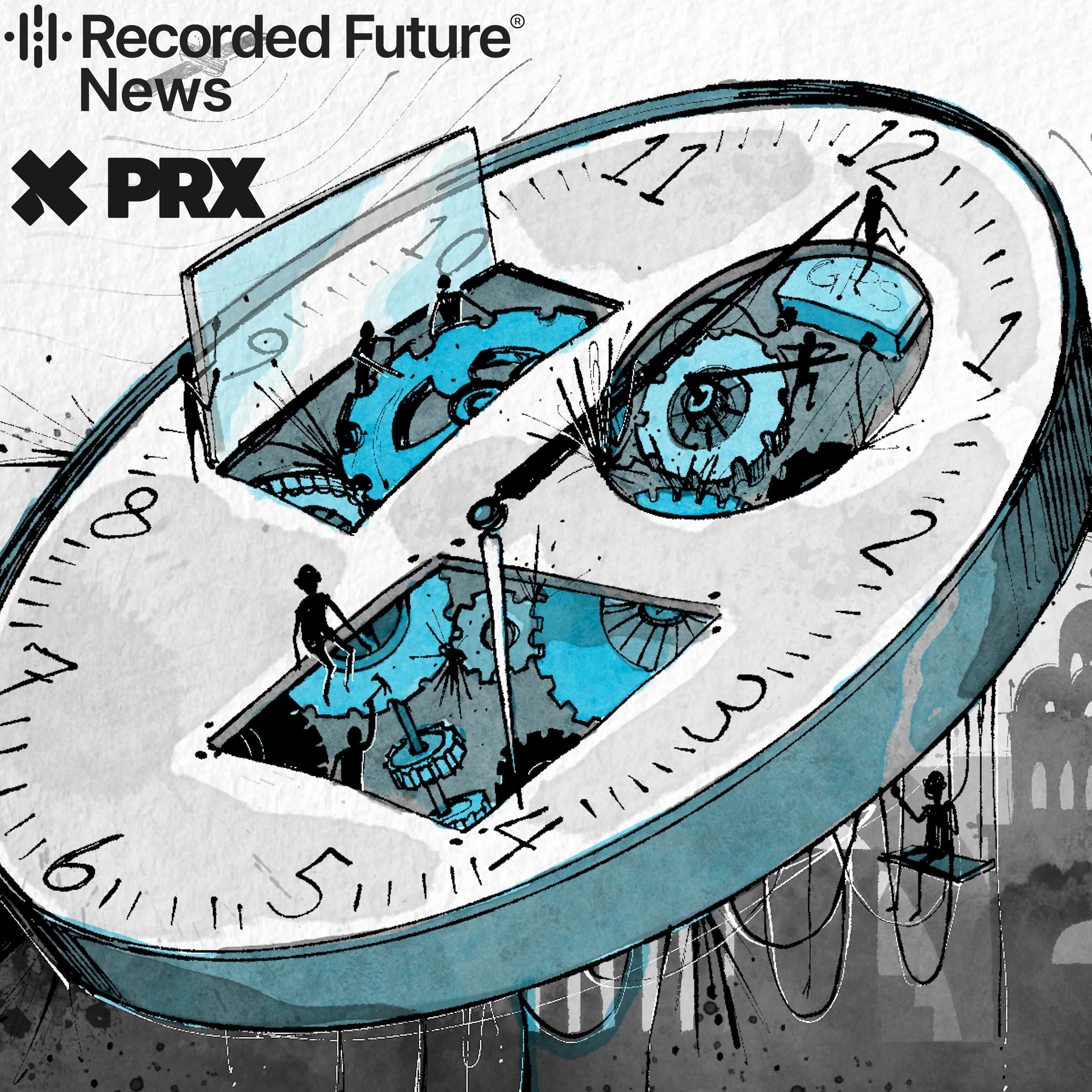
Our illustrator is Megan Goff.
- [49:07]
A
And our sound designers and engineers are Jake Cook and Jesse Niswonger. I'm Dina Temple Raston, and thanks for listening.
- [49:21]
F
Foreign.
- [49:32]
D
Support for this program comes from Recorded Future.
- [49:34]
A
In cybersecurity, the biggest risk isn't what can be seen, it's what gets missed.
- [49:39]
D
Recorded Future analyzes billions of signals to
- [49:41]
A
help organizations stay ahead of threats. Recorded Future Know what matters? Act first.
- [49:47]
B
Looking for more of the cybersecurity and
- [49:49]
E
intelligence coverage you get on? Click here. Then check out our sister publication, the
- [49:54]
B
Record from Recorded Future News.
- [49:56]
E
You'll get breaking cyber news from reporters in New York, Washington, London, and Kyiv, among others, and you'll see for yourself why it attracts hundreds of thousands of
- [50:06]
B
page views every month.
- [50:08]
E
Just go to the Record Media.