Loading summary
Transcript92 lines
- [00:03]
Dena Temple Raston
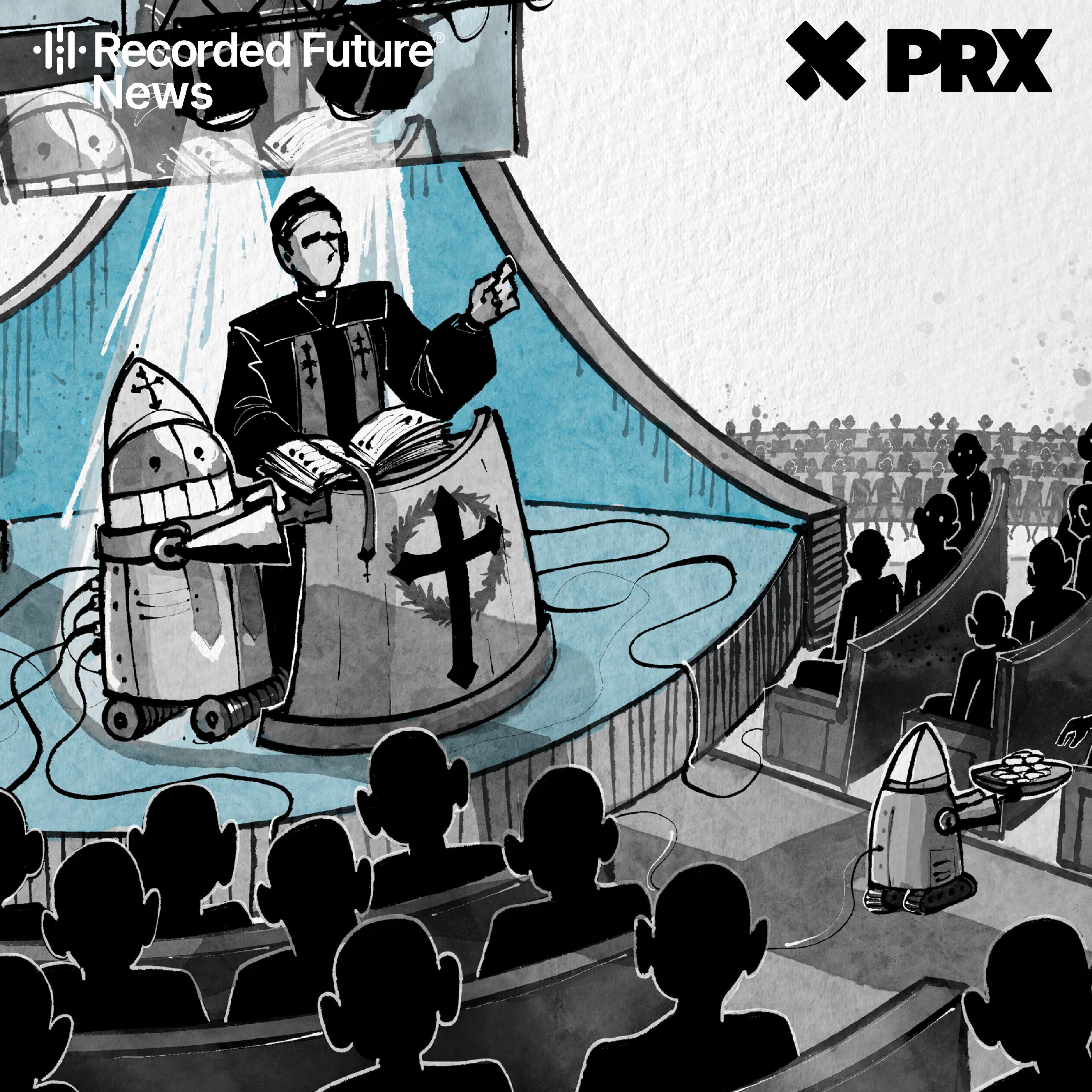
From recorded future news and prx, this is click here. Most of us have moments when we just need someone to talk to, when something isn't working or something hurts or we don't know what to do next. And for a long time, these conversations happen face to face with a pastor, a rabbi, an imam, or just someone we trust. But increasingly, people are turning somewhere else, not to a person, but to a machine, typing hard questions into a chatbot that seems to have easy answers.
- [00:49]
Joe Si
What do I do when my prayers aren't answered?
- [00:52]
Dena Temple Raston
For one long time churchgoer in Silicon Valley, that question became deeply personal when he found himself caught between two worlds that don't usually overlap, faith and technology.
- [01:05]
Heather Melquist Leto
There is a tendency to think about religion as being a completely different sphere than, you know, other kind of business spheres or community spheres. And so their use of technology can seem somewhat strange, but really they're grappling with a lot of the same questions that businesses are, that social groups are, and communities everywhere.
- [01:26]
Dena Temple Raston
I'm Dena Temple Raston, and this is Click Here. We tell true stories about the people making and breaking our digital world. Today, we're looking at what happens when we start handing our moral judgment over to machines. Stay with us.
- [01:46]
Recorded Future Announcer
Looking for more of the cybersecurity and intelligence coverage you get on Click Here. Then check out our sister publication, the Record. From Recorded Future News. You'll get breaking cyber news from reporters in New York, Washington, London, and Kyiv, among others. And you'll see for yourself why it attracts hundreds of thousands of page views every month. Just go to the Record Media.
- [02:20]
Dena Temple Raston
Joe Si had spent two decades in Silicon Valley and most of his life as a practicing Christian. And there was one place that always felt like home, Menlo Church, a Presbyterian congregation in the San Francisco Bay area.
- [02:35]
Joe Si
What drew me to that church was this one particular pastor whose books I
- [02:39]
Dena Temple Raston
read, a pastor named John Orton. So I want to say hi to
- [02:43]
John Ortberg / Kenny Jang
everybody that's in this room and everybody joining us at all of our campuses, people tuning in online. So glad you're here.
- [02:50]
Joe Si
And I, I felt like he. He combined a lot of the theology and kind of the biblical academia with more practical things. I want to talk to you about
- [03:01]
John Ortberg / Kenny Jang
the day when Jesus came to the
- [03:03]
Dena Temple Raston
Bay Area and met a man who
- [03:05]
John Ortberg / Kenny Jang
is kind of the poster boy for Silicon Valley.
- [03:10]
Dena Temple Raston
For years, Joe turned to Pastor Ortberg's teachings for guidance. And then the pandemic hit. The sanctuary emptied, the routines collapsed, and the pastor, who had always felt so present, who seemed to be speaking directly to Joe, stepped down from the church. Unexpectedly, amid some controversy, the voice Joe trusted, the one he returned to, was suddenly gone. And into that silence, something else began to take shape.
- [03:38]
Joe Si
And that, coincidentally, was also the time when ChatGPT came out.
- [03:41]
Dena Temple Raston
Joe wasn't new to artificial intelligence. He'd worked at Samsung, where he'd been exposed to some of the early models.
- [03:48]
Joe Si
They had an AI research lab in San Jose. And so I got to experiment with some of the early AI reinforcement learning type of technologies.
- [03:58]
Dena Temple Raston
And Joe did what most of the rest of us did. When chatgpt suddenly appeared, he put the chatbot through its paces, marveling at how it could riff on text, connect ideas, and answer almost any question he asked. And he started to think, not just is this impressive, but could this help me spiritually? So Joe started posing theological questions. And he watched as ChatGPT effortlessly repurposed existing ideas, responded in ways that felt uncannily human, and gave him many of the answers he'd been searching for without judgment. So he started to wonder, could this chatbot fill the space left behind by Pastor Ortberg?
- [04:41]
Joe Si
I missed his teachings, and so I took all of his previous sermons and teachings and shoved it into an LLM.
- [04:49]
Dena Temple Raston
He created a virtual version of his favorite teacher, a kind of John Ortbot.
- [04:55]
Joe Si
I wanted to see if I could still retain some of the wisdom and teachings that he brought.
- [05:00]
Dena Temple Raston
Things like, what do I do when
- [05:02]
Joe Si
my prayers aren't answered?
- [05:03]
Dena Temple Raston
And then God answers, like when prayers seem unanswered.
- [05:07]
John Ortberg / Kenny Jang
It's essential to remember that God cares
- [05:10]
Dena Temple Raston
about your pain and can be expected to do something about it. Joe knew he was talking to a machine, but the response didn't feel mechanical. It felt pastoral. And researchers say this kind of interaction is becoming increasingly common. Heather Melquist Leto has spent years thinking about that. As a cultural anthropologist, she studies the intersection of religion and technology.
- [05:36]
Heather Melquist Leto
Religion has always been leading kind of the mainstreaming of technological change throughout American history. So religion is everywhere in the story of tech.
- [05:46]
Dena Temple Raston
The invention of the printing press, largely driven by a desire to democratize the Bible. When radio came around, pastors grabbed mics and started broadcasting sermons into homes. The National Council of Catholic Men presents the Catholic Hour. And with television came the rise of televangelists.
- [06:08]
John Ortberg / Kenny Jang
Ladies and gentlemen, would you please welcome John Osteen.
- [06:15]
Dena Temple Raston
The Internet only drove this further. It ushered in YouTube sermons and Bible podcasts. In fact, one of the world's most popular podcasts is called the Bible in a Year. So churches experimenting with technology isn't unusual. And Heather says Joe's church, Menlo Church, is Exactly where you'd expect this kind of experimentation to happen. It's a megachurch just outside of San Francisco with thousands of people in the pews.
- [06:41]
Heather Melquist Leto
So there is really a long history of megachurches in America, but they really picked up in the late 19th and early 20th century along the time of certain media advancements like radio and later television.
- [06:53]
Dena Temple Raston
Megachurches, if you haven't been, are less stained glass and more stage lighting. Any Congregation with over 2,000 members qualifies. And Heather started her research looking at megachurches in South Korea.
- [07:07]
Heather Melquist Leto
One even had about a million congregants. So it's just a completely different scale of operation.
- [07:14]
Dena Temple Raston
And here's the thing about churches that big, they rely on tech. They have to. There's no pulpit loud enough. Often the entire institution is built around a magnetic leader. And to share that charisma with thousands across campuses, cities, even time zones, they broadcast.
- [07:34]
Joe Si
I want to extend a special welcome to our Bay Area campuses in San Mateo, Menlo Park, Mountain View, Saratoga.
- [07:40]
John Ortberg / Kenny Jang
Those of you joining online, even from
- [07:42]
Joe Si
around the world, I know that, like at Joe's church, I think there's about 5,000 people that attend weekly. Because it's multi campus. We actually don't see the pastor in person. We actually see a broadcast of the pastor, which was kind of a foreign thing to me at first, but it's something I got accustomed to.
- [08:01]
Dena Temple Raston
So John Ortberg, the pastor Joe likes so much, well, their relationship was completely
- [08:06]
Joe Si
virtual because Mellow Church is such a large church that I actually never met him.
- [08:10]
Dena Temple Raston
And here's why that's important. Large language models like ChatGPT require data, lots of it. And Joe's church, because of its mega churchness, had a treasure trove of data, literally years of sermons, all helpfully online and easy to download. And that's what he fed into his chatbot to create his very own virtual pastor. And he didn't hold back. He started feeding the chatbot early the kinds of questions he'd never quite had the courage to ask in real life.
- [08:40]
Joe Si
How should Christians think about divorce? Can someone lose their salvation? Is homosexuality really a sin?
- [08:48]
Dena Temple Raston
And this is what surprised him most. It wasn't just that the chatbot had answers. It was how it responded to him, completely without judgment.
- [09:00]
Joe Si
Because I've been a Christian for so long, I mean, some of these are fundamental questions that, you know, I'd be a little bit embarrassed to also ask.
- [09:07]
Dena Temple Raston
The chatbot didn't preach. It reflected, offered scripture, gave frameworks.
- [09:13]
Joe Si
It's not going to give you a yes or no response. It's going to give you some things to think about. It'll give you some biblical references. It'll give you kind of a framework to think about it. And that was all very helpful.
- [09:24]
Dena Temple Raston
Joe began to rely on this virtual pastor in ways he never could in real life. And that raised a new question. Did he need to tell Pastor John what he was doing? That's next after the break. Support for Click Here comes from Claude. Claude is the AI for minds that don't stop it good enough. It's the collaborator that actually understands your entire workflow and thinks with you. Whether you're debugging code at midnight or strategizing your next business move, Claude extends your thinking to tackle the problems that matter. I like it for research because when I'm digging into a story, sometimes a basic web search just won't cut it. Claude goes deeper. Think comprehensive, reliable analysis with links to every source, making connections that otherwise might take me hours to find. Claude also has this feature called Artifacts. It lets you build custom tools without needing to write a single line of code. Ready to tackle bigger problems? Get started with Claude today at Claude AI Clickhere. That's Claude AI Clickhere. And check out Claude Pro, which includes access to all of the features mentioned in today's episode. Claude AI Clickhere. Support for Click Here comes from Factor this time of year always feels like the hardest time to stay consistent with cooking. There's so much going on and honestly, who wants to run out into the cold just to grab some groceries? Thankfully, Factor makes healthy eating easy with fully prepared meals designed by dietitians and crafted by chefs. With Factor, you get quality meals with hearty ingredients including lean proteins, colorful veggies, and healthy fats. They're meant to fit your goals and they're ready to eat in about two minutes. No prep, no stress, and it never gets boring. They have a hundred rotating weekly options, so there's always something new and delicious to look forward to. Personally, I love their black pepper and sage pork chop and the Thai style peanut chicken grain bowl is perfect for lunch. It keeps you full all day in a good way. Head to FactorMeals.com clickhere50OFF and use the code clickhere50OFF to get 50% off your first Factor box, plus free breakfast for one year. You'd like a Pro this month with Factor new subscribers only. Varies by plan. One free breakfast item per box for one year while subscription is active. How does the brain process memories? Why is AI a solution and a problem for our climate what is leadership in 2025 and beyond? The TED Radio Hour explores the biggest questions and the most complicated ideas of our time with the world's greatest thinkers. Listen now to the TED Radio Hour from npr.
- [12:39]
Joe Si
It is called Internet.
- [12:40]
Dena Temple Raston
I use the World Wide Web. Information superhighway. Cybersecurity. Why do things go viral? Click here. One Summer Day in 2023, Joe met Pastor Ortberg at a local diner in San Jose. Pastor Ortberg, in the flesh, sat across from Joe, French fries in one hand, phone in the other. Joe opened up his little invention, and the pastor typed in a question while Joe waited nervously.
- [13:14]
Joe Si
I remember him looking at it and saying, yeah, that's. That's something. I would say he was pretty blown away by it. And he. Yeah, he thought it was the coolest thing.
- [13:25]
Dena Temple Raston
But when Joe dreamed this all up, it never occurred to him to sell it. But now that he had Pastor John's blessing, his Silicon Valley brain kicked in, and he started to wonder, could other churches use something like this? But it turns out other pastors didn't need AI to answer theological questions. That's what they went to divinity school for. What they needed was something to help them connect with their communities and to grow them.
- [13:53]
Joe Si
The churches they want is okay. The individual homily or sermon. Take that recording, run it through your AI algorithms, and spit out some new resources for us to send to our congregation between Sundays.
- [14:08]
Dena Temple Raston
So Joe pivoted. He built exactly what they asked for. A platform that digests sermons and builds new materials for congregants. Newsletters, Instagram reels, podcasts, even video sermons translated into other languages.
- [14:25]
Joe Si
I'd say the majority of people are blown away. And pastors tell us all the time, this Bible study is better than anything I could have come up with, or this devotional is great. It's something that would have taken me hours to create. So we get a lot of that, but we also get some weary folks.
- [14:42]
Dena Temple Raston
Those wary folks had theological concerns, but also some more universal ones, too.
- [14:50]
Joe Si
A very common concern and objection we get from pastors is, how do I trust this thing? Is this thing going to hallucinate?
- [14:56]
Dena Temple Raston
Hallucinate. That's the AI term for when a chatbot makes stuff up and it sounds harmless, but for religious leaders, it isn't. A wrong answer could lead their congregations astray. So Joe built in some guardrails.
- [15:11]
Joe Si
And so one of the very first things we did was we made sure that we have timestamp reference links to everything that the chatbot returns so it'll give a response to a question. And then after every paragraph, there's a timestamp link. And if you click on that link, it goes to that particular YouTube video and that particular point in the message where he referenced that concept or idea.
- [15:35]
Dena Temple Raston
He also added a search engine, not for the Bible, but for sermons. There are tens of thousands of them with more being uploaded every week.
- [15:44]
Joe Si
See that there is a Bible verse that you're curious about or that you're going to preach about if you're a pastor. Well, we're going to make, we're making a tool available such that you can search what, whatever passage you have in mind. You could see what thousands of other pastors have said about that particular piece of scripture.
- [16:03]
Dena Temple Raston
A powerful tool, but one that prompts other questions.
- [16:07]
Joe Si
So the concern there is, am I enabling pastors to plagiarize off of each other? And so that's something I kind of wrestle with, is I am making it very easy for pastors to see what other churches have said about any particular topic.
- [16:22]
Dena Temple Raston
And Joe's not the only one navigating this new terrain. The questions he was asking about ethics and authorship and even originality were echoing across church offices. And where some might see risk, others see opportunity.
- [16:38]
John Ortberg / Kenny Jang
Innovation's happening quicker than dog years at this point, right? So in a single given year, you're having seven leapfrogs, you're having more than that. It's almost on a weekly basis, new stuff is coming out.
- [16:48]
Dena Temple Raston
That's Kenny Jang. He runs a consultancy called AI for Church Leaders, essentially tech support for pastors trying to keep up. Like Joe, Kenny helps churches generate content, translate sermons, and stretch one message across many platforms.
- [17:06]
John Ortberg / Kenny Jang
AI for Church Leaders started as a group. It's now, I don't know, it's on its way to 7,000 people. We started a training platform, we built a summit. We built use case specific stuff. So like we built repurposeyourserman.com, so you should use AI to repurpose your sermon long form content into short form, 10 different ways.
- [17:24]
Dena Temple Raston
But AI isn't just shaping what churches say. It's also being used to manage how churches run, including something especially sensitive. Tithing donation tracking tools can flag patterns, who gives, how often and when that behavior changes. Kenny says sometimes those shifts can signal something deeper.
- [17:46]
John Ortberg / Kenny Jang
If someone's giving regularly and the behavior drops, money is related to many other things that we believe spiritually, all that kind of stuff. And so either you preach the sermon that pissed them off and then they stopped giving, or more likely, there is some ministry moment happening. Death in the family, stress at work, conflict, something. Something's going on. Well, then that's a short list to
- [18:12]
Dena Temple Raston
identify that list becomes a reason to reach out.
- [18:17]
John Ortberg / Kenny Jang
Then we can then go and have a checkpoint and reach out to you. If no one's reached out to you or haven't seen you in a while, give you a call, take you out to lunch or breakfast, coffee. There's a way to start to build that relationship and then provide that opportunity for the church to be the church of support and care and things like that.
- [18:37]
Dena Temple Raston
So far, this is all happening inside the church. Tools meant to help pastors notice when someone might be struggling. But not every platform stops there. Some apps go even further. Not just managing donations, but finding disciples. Glu, a Christian tech platform, launched a tool that tracks evangelism. Spreading the good word, who you prayed for, who you spoke to, what you said. And that's where the data trail starts to feel, well, less divine. Here's Heather again.
- [19:10]
Heather Melquist Leto
There was really an interesting case in Finland, actually, where someone sued the Jehovah's Witnesses because they were concerned that the door to door visits by the Jehovah's Witnesses was collecting information and a violation of their privacy in terms of what their household makeup looked like and things like that. And they won.
- [19:31]
Dena Temple Raston
Tracking your neighbor, even with what the user feels are good intentions, raises a lot of ethical red flags.
- [19:38]
Heather Melquist Leto
You have to think what that does to you as a neighbor. You know, how does that change your relationship to your neighbors? Is it really so important that we should be tracking these like we might track business expenses?
- [19:51]
Dena Temple Raston
And for churches, especially small ones, this technological shift raises another concern. What if AI makes them obsolete?
- [19:59]
Heather Melquist Leto
AI in churches has caused a lot of people to reflect on what is at the core of Christianity and what is more incidental or non essential about Christianity. The hope is that AI will make these churches more efficient. And so then the question becomes, what are the things that we need to be more efficient at? And what are the things in which maybe we shouldn't seek efficiency?
- [20:25]
Dena Temple Raston
Because spiritual growth isn't usually fast. It's not clean, it's not automated. It's messy, really personal, full of doubt.
- [20:34]
Heather Melquist Leto
AI and different LLMs, they're being used often so that people can move quickly to some sort of answer where, you know, grappling with these questions has always been kind of one of the most valuable things that people find in the practice of religion.
- [20:51]
Dena Temple Raston
And Heather, despite her concerns, believes technology can help churches, but only if it doesn't replace what's sacred.
- [20:58]
Heather Melquist Leto
The thing that often concerns me about religion and technology is that technology is being used to replace some of the things that are perhaps most essential and valuable to religious practice or to any kind of social community. And it's being done without enough kind of careful reflection and thought.
- [21:21]
Dena Temple Raston
Careful reflection and thought. Not exactly AI's strong suit, but still there's potential if churches can use the tool without losing the human work at the center of faith. This is Click here.
- [21:52]
Recorded Future Announcer
If you're looking for a daily guide to cybersecurity news and policy. Sign up for the Cyber Daily from Recorded Future News. It serves up the day's most interesting and important cyber stories from our sister publication the Record, and then aggregates all of the big cyber stories you might have missed from news outlets around the world. Just go to the Record Media and and click on Cyber Daily to get all you need to know about the world of cybersecurity right in your inbox.
- [22:23]
Dena Temple Raston
Here are some of the top tech stories making news this week. It's Tuesday, March 3rd. The CIA is openly recruiting sources inside Iran.
- [22:34]
John Ortberg / Kenny Jang
In a striking new move, the CIA has released a recruitment video entirely in Farsi. There are no subtitles or translations, and it's meant for Iranians.
- [22:45]
Dena Temple Raston
The agency posted the video across major social media platforms, urging people with sensitive information, be it military, scientific or political, to contact the US using encrypted tools like VPNs or the Tor network. Officials say the effort is designed to bypass wartime censorship and surveillance. Internet connectivity in Iran right now is less than 1%. The CIA has made similar appeals in Russia and China, but doing so during active hostilities is rare and risky for anyone who responds. After a public debate over safety limits on surveillance and autonomous weapons, the Trump administration ordered federal agencies to stop using Anthropic AI. Defense officials have said the company is now a potential supply chain risk, a designation usually reserved for foreign companies, not American ones.
- [23:40]
Joe Si
We have these two red lines. We've had them from day one.
- [23:44]
John Ortberg / Kenny Jang
We're not going to move on those red lines.
- [23:47]
Dena Temple Raston
Anthropic's red lines include not using AI for domestic surveillance or using AI to build autonomous weapons that take humans out of the loop. Hours after DoD announced it wouldn't be working with Anthropology Anthropic anymore, OpenAI announced that it would be stepping in. The company said it would provide tools to help the military analyze intelligence, plan logistics, and process huge streams of data from satellites and sensors. Analysts say they're concerned that AI has gotten out in front of existing law Discord, a popular chat platform where millions of people gather in private online communities to talk by text, voice or video is delaying a controversial plan to verify ages using facial scans or government issued IDs. Discord says it's delaying plans to get all users to verify their age. The policy was intended to protect younger users from harmful content, but critics warned it would require millions of people to hand over sensitive biometric data. Concerns intensified after reports that a third party vendor tied to the system had previously suffered a breach, exposing tens of thousands of government IDs. For now, users who refuse verification may eventually lose access to certain parts of the platform. In Mexico, authorities say criminal groups are increasingly using artificial intelligence intelligence to wage psychological warfare online after government forces killed a powerful cartel leader. Social media Filled with alarming reports of attacks across the country. The violence as described in real time on social media included a gunman attacking airports, planes being set on fire and Americans held hostage. But none of that is true. Many of the videos and posts were fabricated, some even generated with AI, but they spread quickly enough to shut down schools, businesses and transportation in several cities. Analysts say the tactic allows cartels to project power far beyond what they can physically control, creating panic that serves their interests. And finally, the nomination to lead US Cybercom in the NSA has run into resistance on Capitol Hill, leaving both posts without permanent leadership during a period of heightened global tension. I will absolutely commit to executing the foreign intelligence mission of the NSA in accordance with the authorities that it's been given and within all applicable laws. I mean, that is about as vague as anything I've heard. General Joshua Rudd, the administration's pick to run both agencies, is facing push pushback from lawmakers who say he lacks direct cyber experience. Supporters argue his broader military background makes him qualified to oversee the agency's missions. For now, the confirmation fight continues with no clear timeline for a final vote. Click Here is a production of recorded Future News and prx. Today's show was written and produced by Megan Dietrich, Sean Powers, Erica Gaeda, Zach Hirsch and Casey Giorgi. It was edited by Karen Duffin and Sarah Covedo and fact checked by Darren Ancrum. Original music is by Ben Levingston, with additional music from Blue Dot Sessions. Our staff writer is Lucas Riley, our illustrator is Megan Gough, and our sound designers and engineers are Jake Cook and Jesse Niswonger. Find us on X or Facebook at click here show or leave us a voice message at 6615CHTalk. Sometimes we'll turn those moments into reporting, sometimes into a conversation, and sometimes into a future story you'll hear on this show. I'm Dena Temple Raston, and thanks for listening.
- [28:08]
Heather Melquist Leto
Support for this program comes from Recorded Future. In cybersecurity, the biggest risk isn't what can be seen, it's what gets missed. Recorded Future analyzes billions of signals to help organizations stay ahead of threats.
- [28:19]
Dena Temple Raston
Recorded Future Know what matters?
- [28:21]
Heather Melquist Leto
Act first.
- [28:23]
Recorded Future Announcer
Looking for more of the cybersecurity and intelligence coverage you get on? Click here. Then check out our sister publication, the Record from Recorded Future News. You'll get breaking cyber news from reporters in New York, Washington, London, and Kyiv, among others. And you'll see for yourself why it attracts hundreds of thousands of page views every month. Just go to therecord Media.