Loading summary
Transcript74 lines
- [00:03]
Dena Temple Raston
From Recorded Future News and prx, this is Click here. Late last month, a few hundred people gathered at a 600 acre golf course in Northern Virginia. It looked like something we've all seen before. A stunning view of the Potomac, the President, a surf and turf dinner, a few speeches.
- [00:31]
Unknown
Thank you all for being here.
- [00:32]
Lee Reiners
Thank you.
- [00:36]
Dena Temple Raston
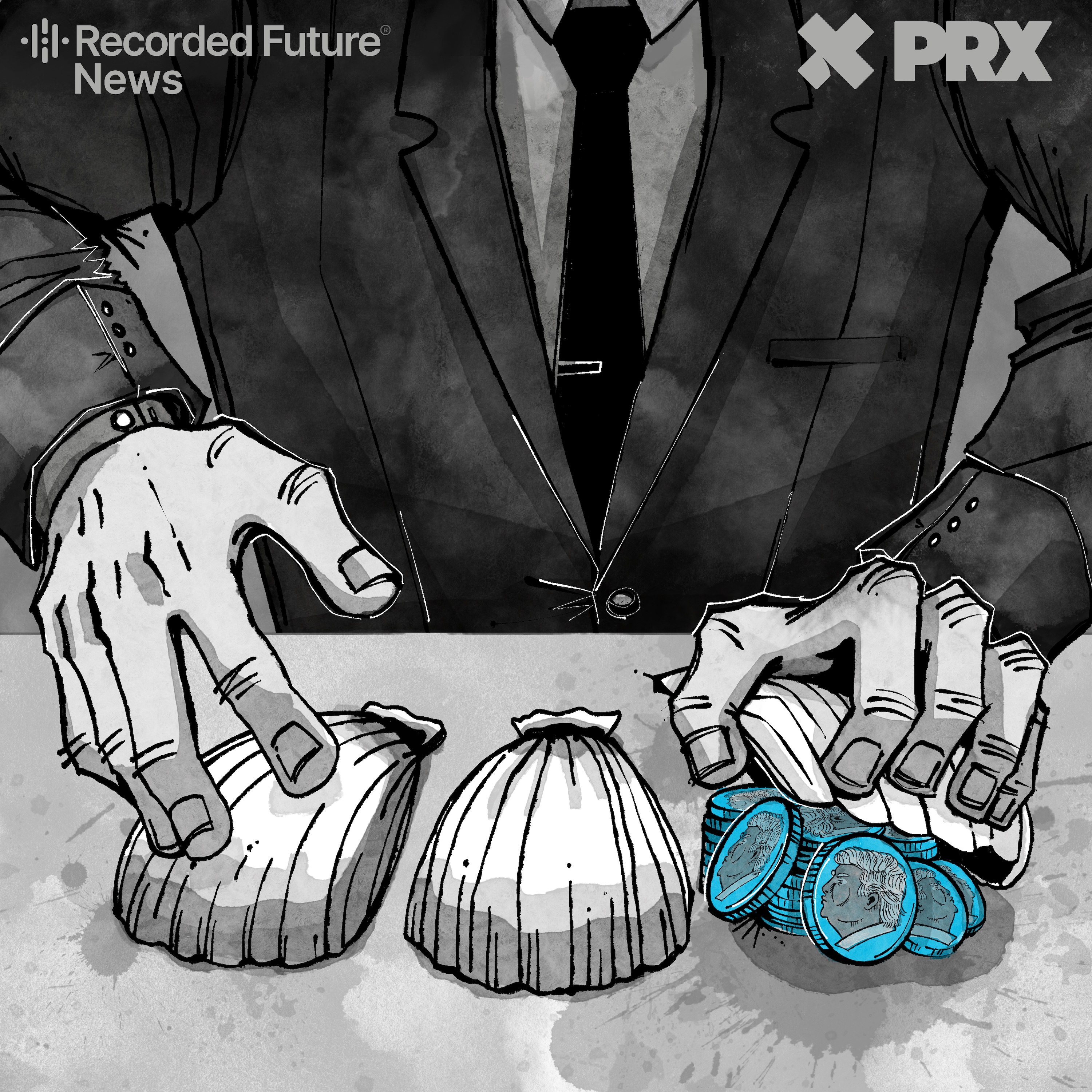
And if that's where the story ended, this wouldn't be an episode. But this wasn't a political fundraiser. There were no bundlers, no vetted allies. These weren't even Republicans. They were strangers from all over the world. And they were there because they had something in common. They bought a coin, a meme coin issued by the President himself.
- [00:58]
Molly White
You know, you see presidents appearing at fundraising events or giving speeches or, you know, doing public events like this. And so I think some people are like, how is this any different from what we've always seen presidents do?
- [01:14]
Dena Temple Raston
But Molly White, who writes about crypto and digital ethics, says this dinner was different. Not because it was about crypto, but because this coin appears to have created a backdoor to political power, one that skips right past campaign finance laws and FEC disclosures and potentially national security norms.
- [01:35]
Molly White
I mean, I think that some people have not grasped the extent to which this is unethical and illegal for a president to do.
- [01:46]
Dena Temple Raston
I'm Dena Temple Rastin, and this is Click Here, a podcast about all things cyber and intelligence. We tell true stories about the people making and breaking our digital world. In the crypto world, there's a if it looks like a scam, it trades like a scam. And you know how that ends. And today we turn to the Trump meme coin. On the surface, it inspired just another one of those Washington dinners, A night with the President, a prize for loyal supporters. But behind the velvet rope, there was a potential national security threat, a $148 million threat, because according to the crypto intelligence Firm Inca Digital, 220 people spent that much on a Trump traded digital token to get a seat at one of those tables. And that may sound like politics as usual, just with a little digital twist, but this isn't about coins or dinner. Because once you understand how meme coins work, you begin to see how they make it easy to hide influence right in plain sight.
- [02:54]
Molly White
I think a lot of people both within and outside of the United States are just sort of shocked to see that the US Is allowing this to happen.
- [03:09]
Dena Temple Raston
Stay with us.
- [03:11]
Lauren Good
Hi, I'm Lauren Good. I'm a senior writer at Wired.
- [03:14]
Michael Colori
I'm Michael Colori, Wired's director of consumer tech and culture.
- [03:17]
Lauren Good
And I'm Zoe Schiffer, Director of Business and industry, and we're the host of Wired's Uncanny Valley. It's a show about the people, power and influence of Silicon Valley.
- [03:28]
Michael Colori
Every week, we get together to talk about how technology and culture from the Valley are influencing our everyday lives.
- [03:34]
Lauren Good
The Internet really was no longer about the early days. It was about minting money. He was swapping out the hoodie for.
- [03:41]
Michael Colori
A suit, and it just became like the shorthand for, I'm the Silicon Valley hustle coder guy.
- [03:46]
Lauren Good
Or we'll dive deep into the history of some of Silicon Valley's most important institutions and figures.
- [03:52]
Michael Colori
So a lot of people point to parallels between Sam Altman and Steve Jobs.
- [03:57]
Lauren Good
Very good for engagement, for Meta, for its bottom line, possibly, or probably bad for humanity. I don't know if there's any single person that I would trust with this. Whether you're optimistic or absolutely terrified about what Silicon Valley will do next, this is the podcast for you.
- [04:14]
Michael Colori
We'll be there to bring the analysis and reporting you can only get from Wired.
- [04:18]
Lauren Good
Listen to and follow Wired's Uncanny Valley wherever you get your podcasts.
- [04:32]
Unknown
From.
- [04:33]
Dena Temple Raston
Recorded Future News. This is Click here. The dinner took place back in late May, but to understand it, we need to go back a few months to January, when Trump launched a meme coin just before taking office, after using his Trump brand to sell everything from steaks and vodka to sneakers and Bibles. The president promoting his company's newly launched Trump meme coin. I don't know much about it other than I launched it, I heard it was very successful. I haven't. Now, unlike Bitcoin or Ethereum, meme coins aren't designed to be useful. They're speculative, a kind of digital stunt.
- [05:13]
Molly White
You choose a meme coin that you think is going to earn a substantial amount of attention, and you try to buy it at a low price. And then later, when attention soars, you try to offload your tokens at a higher price.
- [05:27]
Dena Temple Raston
That's Molly White again, and she says, what you need to know about meme coins is that they aren't about a product. They're about attention.
- [05:36]
Omid Malakhan
The first meme coin, which was Dogecoin, actually began as a joke.
- [05:42]
Dena Temple Raston
This is Omid Malakhan, a professor at Columbia Business School. And he says Dogecoin was created to essentially mock crypto for becoming just another extension of the man.
- [05:53]
Omid Malakhan
The whole point of this blockchain crypto thing was to be democratized and egalitarian and of the people and break away from the exclusive Good old boy club that is Wall Street. So meme Coins then became like a form of. I don't know if you've discussed this concept of economic nihilism on the show before, but it was almost like the aggrieved masses said, you know what? Forget your really serious crypto project that's probably not going to work anyway, and you didn't let me invest in it. And the VCs made a killing on I'm going to buy a Dog coin.
- [06:33]
Dena Temple Raston
And then in true crypto fashion, the dogecoin became wildly valuable with a market cap back in 2021 of 88 billion. That's billion with a B. Since then, millions of these tokens have been launched and it's become child's play with platforms that let you create them in a couple of easy steps. Platforms like Pump fud, which is a sort of meme coin slot machine. No coding required. Just come up with an idea for Meme Coin and kind of pull the lever. Anyone could create one, even a kid. People like this 13 year old in California who streamed himself creating a coin live. Are we bonded yet or what's good? So a meme coin's only value is how viral you can get it. So the kid hyped it up and the value of his coin skyrocketed. Yo, yo, yo, yo, yo, yo. And then just as quickly, he dumped it all thanks for the 20 bandos. He made $30,000. And just about everyone else who had invested in the coin lost money.
- [07:47]
Molly White
So one of these very prominent issues in the meme coin world is that there is this substantial potential for market manipulation.
- [07:57]
Dena Temple Raston
Molly White says the meme coin market was built for mischief, not monetary policy. This is what makes meme Coins so volatile. You're betting on the people who created them.
- [08:08]
Molly White
Having such a high concentration of these tokens allocated to a small group of people can increase the risk that those people run a pump and dump.
- [08:20]
Dena Temple Raston
In other words, when a handful of insiders own the bulk of a coin, they can spike the price and then cash out, leaving everyone else holding the bag. Which is why when Trump launched his Meme Coin in January, it turned heads not just because of what it was, but because of what it wasn't. It wasn't fair.
- [08:39]
Omid Malakhan
You can't just launch something on Pump Fun and keep the majority of the supply for yourself from the jump, because the platform doesn't allow that.
- [08:49]
Dena Temple Raston
But that's exactly what Trump did. Two companies linked to his family kept 80% of the supply. And when the Trump Coin started to lose its value back in April. He needed a lifeline, something to get buyers attention back. So.
- [09:07]
Omid Malakhan
He announces the dinner, which made the price of the token pop and pop.
- [09:12]
Dena Temple Raston
It did. Trump coins surged 50% in a single day. Which didn't just fatten Trump's holdings. It fattened his wallet every time someone bought, sold, or traded it. Because the coin skims a fee off every transaction, it's made Trump's team an estimated 350 million so far. And here's the twist that really rankled the meme coin diehards. He made all this money while breaking the cardinal rule of meme coin culture. He made the joke real. But wouldn't the Trump meme coin being connected to a dinner mean that it'd have utility?
- [09:51]
Omid Malakhan
Yes, it would. Okay, the desirability or even legality of that utility is in question.
- [10:03]
Dena Temple Raston
And then, right on cue, the SEC announced it wouldn't be regulating meme coins anymore because meme coins, they said, were meant to be a kind of collectible. They, quote, lacked utility. So is it still a meme coin?
- [10:18]
Omid Malakhan
No, I don't think it should be called that.
- [10:21]
Dena Temple Raston
So if it's not a meme coin, what is it?
- [10:23]
Omid Malakhan
It's something entirely different.
- [10:28]
Dena Temple Raston
When we come back, how Trump's coin turns this Internet joke into an end run around the Constitution. Stay with us.
- [10:40]
Unknown
Looking for more of the cybersecurity and intelligence coverage you get on Click Here. Then check out our sister publication, the Record. From Recorded Future News, you'll get breaking cyber news from reporters in New York, Washington, London, and Kyiv, among others. And you'll see for yourself why it attracts hundreds of thousands of page views every month. Just go to the Record Media.
- [11:05]
Dena Temple Raston
You're listening to Click here. I'm Dina Temple Roston. Now that the steaks have been eaten and the photos taken and the dinner is in the rearview mirror, what unsettles people most about the Trump coin isn't just that it flew in the face of what a meme coin was meant to be. It's that it tested the limits of legality, because campaign finance law is very clear. Foreign nationals cannot donate to American political campaigns because they aren't supposed to influence policy.
- [11:38]
Molly White
Here there are restrictions on, you know, reporting of those funds, who is allowed to contribute, how much they're allowed to contribute. And then, of course, you know, the restrictions on people actually paying the president for influence over official acts, which is, you know, plainly illegal.
- [12:04]
Dena Temple Raston
And the Constitution even stricter. No gifts of, quote, any kind whatsoever from foreign states. Which is why Molly White, the longtime crypto analyst we spoke to earlier did what blockchain sleuths do best. She started following the money through wallet addresses, transaction records, and digital dust trails. To answer a question people in Washington seem to be asking, who exactly bought Trump Coin and where were they from?
- [12:35]
Molly White
But I began doing this analysis of these top wallets and tracing where the funds were coming from, and I saw that the majority of them are likely not based in the United States.
- [12:49]
Dena Temple Raston
Which means these weren't just speculators. They were potential foreign influencers buying their way into the President's orbit.
- [12:56]
Molly White
And we're seeing very direct quid pro quo happening.
- [13:03]
Dena Temple Raston
Lee Reiners teaches crypto law at Duke. He used to work on these kinds of campaign finance cases at the sec, and he agrees with Molly.
- [13:13]
Lee Reiners
So, look, this is not a theoretical concern. This is actually happening.
- [13:18]
Dena Temple Raston
For example, a Mexico based shipping company literally issued a press release to say they'd be buying up to $20 million of Trump's coin as a, quote, effective way to lobby the President. Consider the case of Justin Sun, a crypto billionaire under SEC investigation who then invested $75 million in Trump's crypto platform. Shortly after Trump took office, the SEC paused that investigation. Justin sun topped the leaderboard of people competing for a seat at the Trump Coin dinner. And what's more, just a week before the event, a tech company with ties to China pledged to buy $300 million of Trump coin. So let me ask just about national security implications. So are you concerned that foreign entities have found a way to actually, you know, donate to the Trump administration?
- [14:13]
Lee Reiners
Of course. Of course I'm concerned. When we vote for a president or any politician, you know, we expect them to act in the interest of all Americans. Right? Now, obviously, we might disagree with specific policies and have different interpretations of how it'll impact all Americans, but I think that's the baseline expectation.
- [14:37]
Dena Temple Raston
In this brave new crypto world, that expectation is beginning to feel, well, quaint. The watchdogs are gone. The Justice Department's crypto task force was quietly disbanded. The SEC declined oversight. No one is checking who buys or benefits from Trump's coin, and no one is enforcing campaign finance laws on tokens.
- [14:59]
Lee Reiners
So the crypto industry was the biggest spender in the 2024 election cycle. And I don't think that's something the average person has wrapped their head around yet. Right. Bigger than oil and gas, bigger than the banking industry, bigger than the pharmaceutical industry. Right. They spent more. Crypto spent more to influence this election, and they got what they paid for. Right. I mean, they've effectively bought Congress.
- [15:23]
Dena Temple Raston
And that's the thing about meme coins. They're not supposed to do anything. But Trump's coin does everything, access, influence, funding. It doesn't just subvert crypto's ideals, it undermines ours.
- [15:34]
Lee Reiners
Now, the concern is that with the President of the United States having a direct financial interest in a cryptocurrency, that he is going to be taking actions as president that are about promoting his financial interests.
- [15:49]
Dena Temple Raston
History suggests this is exactly how financial crises begin, with assets that people don't quite understand.
- [15:56]
Lee Reiners
So I'll use an analogy, which is the 2008 financial crisis, right? I mean, this was the worst economic recession the US had seen since the Great Depression. And, you know, it was caused by opaque derivatives. Right, Things like credit default swaps, mortgage backed securities. Right, things like that. And these were products that, you know, similar to crypto, most people had never thought about or interacted with or frankly heard of.
- [16:26]
Dena Temple Raston
And crypto, in its short life, it's already been defined by volatility. From the bitcoin crash of 2018 to the implosion of FTX in 2022. This is an industry that seems to have regular boom and bust cycles baked right in. But nevertheless, it's creeping its way into mainstream financial products. Even Fidelity Investments has begun to administer 401s with Bitcoin investment options.
- [16:53]
Lee Reiners
Like, if it, you know, if a crypto correction or collapse, you know, does spill into the traditional financial system and destabilizes the traditional financial system, we might all bear the brunt of a crypto collapse.
- [17:10]
Dena Temple Raston
The dinner may have started as a kind of meme, but what it revealed wasn't funny. Not a loophole, but a blueprint for a kind of influence operation not built on ballots or bundlers, but on tokens. Tokens that few people understand, tokens that foreign actors appear to be using to get closer to the President of the United States.
- [17:31]
Omid Malakhan
They're also the people who will say things like, yeah, the Trump meme coins, unfortunately, but I don't care. We have a pro crypto president. He's going to make the technology more broadly accepted.
- [17:44]
Dena Temple Raston
So I'll deal with it, but it's a devil's bargain. The White House, for its part, says it's absurd for anyone to insinuate that this president is profiting off the presidency. This is Click Here.
- [18:06]
Unknown
Looking for more of the cybersecurity and intelligence coverage you get on Click Here, then check out our sister publication the Record. From Recorded Future News, you'll get breaking cyber news from reporters in New York Washington, London and Kyiv, among others, and you'll see for yourself why it attracts hundreds of thousands of page views every month. Just go to the Record Media.
- [18:30]
Dena Temple Raston
Here are some of the top cyber and intelligence stories of the past week, including a new way hackers are using AI video generators How Oregon became the second state in the country to ban the sale of your location data and just when you need a new bikini, Victoria's Secret goes dark. It's Tuesday, June 3rd. AI video generators can do a lot of things now. They can show you how to dice a tomato, or they can do this. We're here because someone decided to write a prompt. We all hate him for it. These hyper realistic AI actors are showing up all over social media, and some of them aren't just for show. According to Google's Mandiant team, hackers are now using fake AI generator websites to lure victims. One group, known as UNC6032, which is based in Vietnam, has been creating fraudulent sites that mimic tools like Luma AI, and then they promote them with slick social media ads. When someone clicks and tries to generate a video, they get hit with a malware called starkfail, capable of stealing everything from browser cookies and passwords to credit card data. In Europe alone, these phony sites have been served up to more than 2 million users. Meta is now working on how to shut the ads down, but it's a reminder that in the age of generative AI, even the tools pretending to be AI might not be what they seem.
- [20:04]
Omid Malakhan
To.
- [20:06]
Dena Temple Raston
The phone in your pocket. We've written a lot about how it knows exactly where you are, but it isn't alone. Your fitness tracker, your car, and probably your watch are all doing it too. And increasingly people are buying that data. Last week, Oregon became just the second state to pass a sweeping ban on the sale of precise geolocation data. That means no selling location info within 1750ft of someone. The new law also bans the sale of children's data for anyone under 16. The move follows a similar ban in Maryland. A push in California failed, but now states across New England are trying to follow Oregon's lead. As one lawmaker put it, you shouldn't worry about going for a walk with your phone. If you were trying to buy lingerie last week, you might have hit an unexpected snag.
- [21:02]
Lauren Good
It's one of the world's most iconic brands, Victoria's Secret confirming with ABC6 a so called security incident.
- [21:09]
Dena Temple Raston
The company took its entire website offline after what it called a security incident. Customers logged in to find not lace or fragrance sets, but a blank page and a vague apology. No details were given. Experts say the outage is part of a growing trend. AI powered hackers are targeting retail giants who rely on third party cybersecurity firms. In the fallout, Victoria's Secret stock dropped more than 11% in just a few days. Online sales make up nearly a third of their business at the start of the bikini season. Not exactly ideal, only at Victoria's Secret.
- [21:49]
Omid Malakhan
Foreign.
- [22:00]
Unknown
Was written and produced by Megan Dietry, Sean Powers, Zach Hirsch, Dina Temple Raston and the lead producer was me, Erica Gaeda. It was edited by Karen Duffin, Fact Checked by Darren Ancrum, and contains original music by Ben Livingston with some other music from Blue Dot sessions. Our staff writer is Lucas Riley and our illustrator is Megan Gough. Martin Peralta and Jesse Niswonger are our sound designers and engineers. Click Here is a production of Recorded Future News and prx. Tune in on Friday for Mic Drop, which features our favorite interview of the week. We'll see you then.
- [22:47]
Looking for more of the cybersecurity and intelligence coverage you get on Click Here, then check out our sister publication the Record from Recorded Future News. You'll get breaking cyber news from reporters in New York, Washington, London and Kyiv, among others. And you'll see for yourself why it attracts hundreds of thousands of page views every month. Just go to the Record Media.