Loading summary
Transcript124 lines
- [00:03]
Dena Temple Raston
From Recorded Future News and prx, this is Click here. Jake Gallon used to work behind the velvet ropes in Las Vegas. Among other things, he worked the cabanas at Planet Hollywood. And for a while, he thought that life sparkled.
- [00:28]
Jake Gallen
You know, it's funny because when I was going to unlv, I was in a fraternity there and you'd say, yeah, you know, I would love to have a nightclub job because I can continue this type of lifestyle.
- [00:38]
Dena Temple Raston
But it got a little old.
- [00:39]
Jake Gallen
Once you get into that lifestyle, after about a year or two, you're like, man, this kind of sucks.
- [00:44]
Dena Temple Raston
It wasn't just that he was awake when the rest of his friends were asleep, or that he missed all kinds of milestones in other people's lives. It was just kind of lonely. And he worried that he'd never find something as exciting where he'd be making that kind of money. Until one day he was on a Reddit forum and found Ethereum, the cryptocurrency.
- [01:07]
Jake Gallen
So I found Ethereum in 2016 on a Reddit forum called WallStreetBets.
- [01:13]
Dena Temple Raston
To Jake, trading Ethereum, the second largest cryptocurrency after Bitcoin, felt like opening a secret door into a whole new world. One that was intoxicating, unpredictable, and full of promise.
- [01:26]
Jake Gallen
I was very fascinated by this idea of how it kind of strips power away from a lot of the central authorities. And for me, I was very certain that this was going to be the industry that changes the world. I still have that belief.
- [01:39]
Dena Temple Raston
And like so many true believers, he didn't want to just watch from the sidelines. So he started trading crypto. And then he stumbled into the world of NFTs. That's short for Non Fungible Tokens. They're blockchain based collectibles. Think Beanie Babies, but with code. And before long, he'd carved out a reputation in one of the strangest corners of the NFT universe, a niche known as historical NFTs. Think of them as relics, pixelated artifacts from crypto's adolescence.
- [02:12]
Jake Gallen
So as one of the largest Mooncat collectors at the time, Mooncats.
- [02:16]
Dena Temple Raston
Primitive, quirky little pixelated pictures of cats. And among the very first NFTs ever minted.
- [02:22]
Jake Gallen
And I said that I had some that I was interested in auctioning off.
- [02:26]
Dena Temple Raston
They were valuable, a kind of Mickey Mantle rookie card of the blockchain. This wasn't an obvious career choice for a health science major, but Jake understood collectibles in a kind of visceral way, because he'd lived it.
- [02:42]
Jake Gallen
I had actually owned an antique store In Vegas with my father, that was my first business. And so we were very knowledgeable in this world of, like, antiquities and collectibles.
- [02:51]
Dena Temple Raston
Which is probably why Sotheby's came calling. Yes, that Sotheby's, the one that sells.
- [02:57]
Alex Bannister
Van Gogh's Six, the painting by Vincent.
- [03:00]
Jake Gallen
Van Gogh, Saint de Rue Montmartre, painted in 1887.
- [03:03]
Dena Temple Raston
And they asked him if he wanted to participate in their second ever NFT auction. It was a huge deal. One of the world's oldest auction houses was now moving into digital art. €11,250,000. And just like that, Jake was suddenly orbiting crypto royalty, rubbing elbows with celebrities like Steve Aoki and Paris Hilton. He was hosting panels, being interviewed, live streaming. He started a podcast, and his profile exploded. And in the middle of all this, he made an unusual decision. In the crypto world, everyone hides. They use avatars or fake names. VPNs on top of VPNs. That's the culture. Anonymous, encrypted and untouchable. But not Jake Gallen. He, in essence, doxxed himself.
- [04:00]
Jake Gallen
Since I started in 2017, you know, being a docs person was. Was unheard of. That was like a very rare thing to do.
- [04:08]
Dena Temple Raston
He used his real name, told people what he owned, where he worked, what he bought into. He thought the transparency would help him earn trust, so he leaned into it.
- [04:19]
Jake Gallen
You know, obviously it makes you a target, but it also makes you a little bit more respectable, and it leads, in my opinion, to more opportunities.
- [04:27]
Dena Temple Raston
That openness got him noticed. He started getting NonStop media requests. Three, five, sometimes eight interviews a week. So when a show called Tactical Investing reached out in April, it was just another thing he had to fit into his schedule.
- [04:43]
Jake Gallen
The message was like, hey, you know, I'm doing a cohort of individuals with leaders in the industry for my channel, would love to interview you. So I respond and say, hey, man, sure, yeah, I'd love to.
- [04:59]
Dena Temple Raston
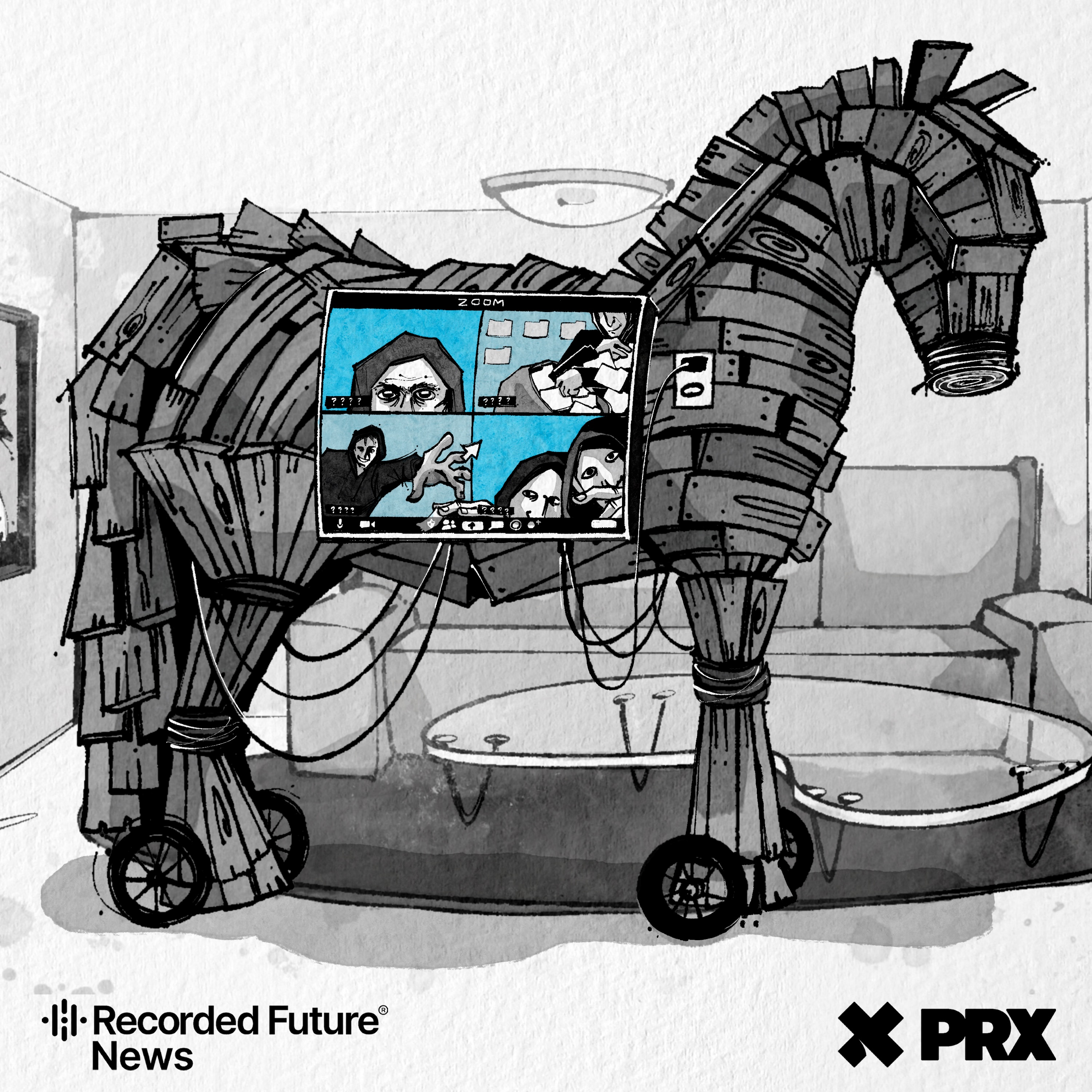
A week later, he logged onto Zoom, ready for his interview. But this was not just any interview. This was a trap. I'm Dena Temple Raston, and this is Click Here, a podcast about all things cyber and intelligence. We tell true stories about the people making and breaking our digital world. Today, we. We're used to watching for a shady link, a sketchy email, a too good to be true promise. But what if danger comes wrapped in something ordinary? A Zoom call, a friendly face, a simple request. You don't need to be careless, just courteous. Stay with us. Click Here is brought to you by Progressive Insurance. Do you ever find yourself Playing the budgeting game well, with the name your price tool from Progressive, you can find options that fit your budget and potentially lower your bills. Try it@progressive.com Progressive Casualty Insurance Company and affiliates Price and coverage match limited by state law. Not available in all states from recorded future news. This is Click here. Jake Gallen had always known that deciding to use his real name publicly and talking so openly about his life would be a risk. So he made sure his security was airtight.
- [06:39]
Jake Gallen
I generally consider myself to be very careful. I mean, I have maybe five to ten different hardware wallets with different assets on top of it. Multiple computers which hold different types of wallets.
- [06:52]
Dena Temple Raston
So anytime he got an interview request, he would vet them thoroughly. And that's exactly what he did in April when he got an interview request from a YouTube show he'd never heard of, something called Tactical Investing. Did they have mutual followers? Check history of posts with original content. Check, check a show that appears to be a real show.
- [07:16]
Jake Gallen
Hey guys, what is up? It is Alexander here, back with Tactical Investing and in today's video, I want to do a step by step staking. The YouTube channel had close to 100,000 subscribers. Had like six years of posting history. I had interviews with people that I'm familiar with in the industry and had a bunch of recent posts, was posting videos every few days or so.
- [07:40]
Dena Temple Raston
So we said yes, and he was excited. By this point, he was CEO of a crypto company and they had a new product he wanted to demo. So the day of the interview, he logged on and it started like so many interviews before it, but the host had his camera off.
- [07:57]
Jake Gallen
So when we get on the interview, he has his screen off and he says, do you mind that I'm going to keep my screen off?
- [08:06]
Dena Temple Raston
Why wouldn't he want his camera on? He was a YouTuber after all. That alone set off a flicker of doubt in Jake's mind, but just a flicker.
- [08:15]
Jake Gallen
This industry is, you know, it's full of pseudonymous and anonymous people. But what was weird is that he's a YouTuber.
- [08:25]
Dena Temple Raston
But then the guy kept talking. He sounded confident, casual, and Jake, he let the flicker fade.
- [08:32]
Jake Gallen
So I'd actually watched a handful of his interviews. You kind of understand who this person is or like what their interview style is like. It sounds just like him. Literally just like him.
- [08:43]
Dena Temple Raston
And pretty quickly, he wasn't just feeling relaxed, he was feeling kind of impressed. The questions were smart, technical. The interviewer clearly understood. Emblem Vault, the crypto company that Jake was running.
- [08:58]
Jake Gallen
What he was asking me actually was kind of Nuanced questions about Emblem Vault, which to understand what Emblem Vault is, you have to be pretty deep into the industry.
- [09:09]
Dena Temple Raston
So Jake did what any founder would do when somebody really gets it. He let his guard down.
- [09:15]
Jake Gallen
And so after about 30 or 40 minutes into the interview, the gentleman says, okay, I would love for you to demo Agent Hustle.
- [09:25]
Dena Temple Raston
Agent hustle. Not a 1970s crime show, but an AI tool for tracing blockchain activity. And Jake was really proud of it. So when the interviewer said he'd give Jake access to share his screen, he just clicked shared his screen and walked the interviewer through the tool. When the call ended, Jake thought it had gone pretty well.
- [09:46]
Jake Gallen
I tell him, hey, it was a great interview. He asked the right questions and he says, it'll be up in a few days. And then that's it. Everything is fine.
- [09:56]
Dena Temple Raston
But everything was not fine. It started the next day. Jake got a notification that a Mooncat NFT that he'd bought for $100,000 was suddenly sold at the bargain basement price of $1,000.
- [10:13]
Jake Gallen
And then I see another sale happen. I get another notification from OpenSea saying that another sale's happened. Very low ball.
- [10:20]
Dena Temple Raston
And his heart started to race.
- [10:22]
Jake Gallen
I know there's a hack that's happening. I don't know how or what or why.
- [10:28]
Dena Temple Raston
He scrambled, changed passwords, reached for every.
- [10:31]
Jake Gallen
Security switch he knew, just minimizing the blast radius of what was going on, trying to figure out what was happening.
- [10:40]
Dena Temple Raston
And then came the moment everyone dreads. He was logged out of his email, his social media, and every time he tried to regain control, the hacker just kicked him right back out. It was like whack a mole with his life. He tried to revoke permissions on Revoke Cash. No luck.
- [10:58]
Jake Gallen
I could see more Mooncats being listed, and then I see other collections being listed.
- [11:02]
Dena Temple Raston
And then a chilling realization.
- [11:05]
Jake Gallen
Oh, fuck. This is like a full on. Like, somebody has my seed phrase.
- [11:09]
Dena Temple Raston
Seed phrase. Like a master key to all of his wallets and NFTs.
- [11:14]
Jake Gallen
Which is crazy, because I've never written that seed phrase down anywhere, nowhere digitally. It's written down on a piece of paper inside of a safe.
- [11:22]
Dena Temple Raston
That's when it clicked. Breaking into his computer was as good as breaking into his safe. How much did you lose?
- [11:29]
Jake Gallen
It's about between 150,000 to 200,000, depending on how you value the assets themselves.
- [11:36]
Dena Temple Raston
Jake was gutted and pretty confused who would do this and how. His gut told him that this had to be connected to that interview. But what kind of hacker launches a YouTube channel and runs it for six years just so they can scam someone. None of it made sense, so he called 911. Actually, seal 911.
- [12:00]
Nick Bax
The official name is Open Security alliance, but everybody just says seal.
- [12:04]
Dena Temple Raston
They're a team of white hat hackers who respond to crypto attacks.
- [12:08]
Nick Bax
We do everything from people who got phished for $1,000 to kidnappings to big North Korean heists. There's all sorts of crazy things. Whatever people need, we'll figure out a way to do it.
- [12:24]
Dena Temple Raston
When we come back, the SEAL team gets to work, the FBI steps in, and the real host of tactical investing sends a very unexpected message. Stay with us.
- [12:41]
Alex Bannister
Hi, I'm Lauren Goode. I'm a senior writer at Wired.
- [12:44]
Jake Gallen
I'm Michael Colori, Wired's Director of Consumer Tech and Culture.
- [12:47]
Alex Bannister
And I'm Zoe Schiffer, Director of Business and Industry. And we're the host of Wired's Uncanny Valley. It's a show about the people, power and influence of Silicon Valley.
- [12:58]
Jake Gallen
Every week, we get together to talk about how technology and culture from the Valley are influencing our everyday lives.
- [13:04]
Alex Bannister
The Internet really was no longer about the early days. It was about minting money. He was swapping out the hoodie for.
- [13:11]
Jake Gallen
A suit, and it just became like the shorthand for, I'm the Silicon Valley hustle coder guy.
- [13:16]
Alex Bannister
Or we'll dive deep into the history of some of Silicon Valley's most important institutions and figures.
- [13:22]
Jake Gallen
So a lot of people point to parallels between Sam Altman and Steve Jobs.
- [13:27]
Alex Bannister
Very good for engagement, for meta, for its bottom line, possibly or probably bad for humanity. I don't know if there's any single person that I would trust with this. Whether you're optimistic or absolutely terrified about what seems Silicon Valley will do next, this is the podcast for you.
- [13:44]
Jake Gallen
We'll be there to bring the analysis and reporting you can only get from Wired.
- [13:48]
Alex Bannister
Listen to and follow Wired's uncanny Valley wherever you get your podcasts.
- [14:09]
Dena Temple Raston
Nick Bax is an incident responder at seal, and they've worked on thousands of crypto hacking cases like Jake's.
- [14:16]
Nick Bax
Yeah, it's just, you know, we're always on call. Some days are a lot worse than others. Yesterday I woke up and it felt like every single threat actor we were looking at had decided to do something at the exact same time. Fridays are worse. I think a lot of hackers know that if they start hacking on Friday, the feds won't get involved until Monday.
- [14:36]
Dena Temple Raston
Nick didn't waste any time trying to get to the bottom of what happened.
- [14:40]
Nick Bax
First thing we do in triage is give them a set of instructions to follow.
- [14:44]
Jake Gallen
Apparently, the first thing you're supposed to do, actually, is unplug your computer from the Internet.
- [14:47]
Nick Bax
Disconnect your computer from the Internet.
- [14:49]
Jake Gallen
I wish I would have known that. Probably would have saved myself a lot of money.
- [14:53]
Dena Temple Raston
Then came the forensic work, retracing every click. And as they dug, Nick's Spidey sense started tingling. He'd seen something like this before.
- [15:04]
Nick Bax
Yeah. You know, as soon as we heard he suspected a Zoom call, we immediately start to think it's dprk.
- [15:11]
Dena Temple Raston
Dprk? North Korea. The most prolific crypto thieves on the planet. And they've been using Zoom to trick traders and even crypto companies with fake job interviews and investor calls.
- [15:24]
Nick Bax
They play a video of a person that might be the person you're supposed to be meeting with. And they look bored and. And they're not talking, but it's actually a loop of a video. And then they tell you over text that there's trouble with the audio. And then they write, oh, we've seen this problem before. Just go to this link.
- [15:41]
Dena Temple Raston
A link to malware. But Jake didn't click on anything like that. There was no fake video. He just had a conversation, one he thought was a pretty good one.
- [15:51]
Nick Bax
The fake interview is new. We hadn't seen this vector before. We realized it probably wasn't North Korea.
- [15:58]
Dena Temple Raston
So the team went back to the drawing board. They went over everything again, and that's when they caught it.
- [16:04]
Nick Bax
They kept trying to get him to screen share.
- [16:08]
Dena Temple Raston
The screen share that Jake used to demo Agent Hustle. And while there are lots of things you can do to protect yourself from a hack. Antivirus software, avoid spammy leaks. There's one thing that's as hard to see coming as it is easy to fall for. Social engineering. Hackers exploiting somebody's humanity, their ego, their enthusiasm, their fears. When it came time to demo his project, Jake was enthusiastic. They just launched this new AI tool, and he wanted everyone to know about it. So he wasn't quite as focused as he went through the screen share process.
- [16:48]
Nick Bax
They had a Zoom account where the name on the account was Zoom. And then they requested remote control. And a notification pops up on Zoom that says something like, zoom is requesting permission to remotely control your device.
- [17:05]
Dena Temple Raston
In that moment, it didn't look like a red flag. It just looked like part of the process.
- [17:10]
Nick Bax
People just think it's requesting permission to share my screen, but it's actually requesting permission to remotely control your desktop.
- [17:20]
Dena Temple Raston
Jake barely remembers clicking, which is exactly how the best hacks work.
- [17:26]
Nick Bax
When you do get hacked, it's like a magic trick, like an illusion. It's like when someone pulls a coin from behind my ear. They didn't really make a coin appear. They used a sleight of hand and tricked me.
- [17:39]
Dena Temple Raston
And with that, the hackers had everything. Remote access files, passwords, wallets.
- [17:45]
Nick Bax
Once you get remote code execution on someone's computer, you can do a lot. You can look for all of the high value targets, private keys, SSH keys, access tokens, whatever. Then they'll get your password manager. They'll try and take over your Twitter account and your Telegram account.
- [18:03]
Dena Temple Raston
The SEAL team had a hunch. Maybe this wasn't North Korea. Maybe this was someone borrowing from their playbook.
- [18:10]
Nick Bax
It was actually a group of Western people, US or Europe or North America based hackers who had a clever method and were using it a lot.
- [18:22]
Dena Temple Raston
A method that appeared to be piggybacking on North Korea's MO we have seen.
- [18:28]
Nick Bax
People try to imitate North Korean tactics. And I think what happened is they heard about this video chat, Zoom Call Vector, and thought, oh, that sounds like a good idea. We can modify that to fit to our strengths.
- [18:42]
Dena Temple Raston
Maybe they even thought that looking like they were North Korean hackers would help them get away with it. Whatever it was, Seal wrote about the group and in their report, they called them Elusive Comet.
- [18:55]
Nick Bax
I don't know if they think we'll just give up because we know that they're beyond the reach of law enforcement or what, but it's actually the exact opposite of what you should do because there are a lot of federal resources that focus completely on North Korea. So you really, it's not in your interest if you're a hacker to have them think you're North Korea. Despite what some people might think, the.
- [19:18]
Dena Temple Raston
FBI is now investigating. Jake says they reached out not long after he reported the attack and gave him even more detail.
- [19:26]
Jake Gallen
This is a very large scammering that's going on that could total potentially, you know, eight or maybe nine figures and lost value. And they're all using Zoom apparently for all of this.
- [19:39]
Dena Temple Raston
But the FBI wasn't the only one who reached out.
- [19:45]
Jake Gallen
Hey, Jake, it's Alex. Otherwise known as Tactical Investing. My account was compromised Wednesday of last week.
- [19:52]
Dena Temple Raston
Tactical Investing is a real YouTube channel run by a real person. Alex Bannister. He's in the Air Force. And to prove who he was, he sent Jake a video of himself in uniform.
- [20:04]
Jake Gallen
You know, for proof. I'm in the military. There's my uniform, Air Force, and Then my last name is Bannister. Check it out. Here, it's on my uniform.
- [20:14]
Dena Temple Raston
So the hackers hadn't just fooled Jake. They'd hijacked someone else's identity to trick him. Jake lost a lot that day. Time, money, trust. But what bothers him most is Zoom. That remote access button that Jake was tricked into pressing? It's not some obscure setting. It's enabled by default for all personal Zoom accounts. If you use Zoom, it's probably enabled on your computer right now.
- [20:46]
Jake Gallen
Basically, the whole scam is that if you're a host of a Zoom interview, you can request remote access to the guest. This is like a default feature that's on. Like, if you turn that default feature off, this whole thing goes away. It's literally that simple.
- [21:03]
Dena Temple Raston
We reached out to Zoom, and they told us they take security seriously and that users must give explicit consent before allowing anyone to take control of their screen. Which is technically true, but cybersecurity experts say that's not the point. While no one would be hurt if Zoom just turned it off from a default setting, it could save unsuspecting victims a lot of time, money, and hassle. If they just did, they could easily.
- [21:31]
Jake Gallen
Fix this by just making remote access default off. Like, that's literally all they have to do to fix it. But they don't seem to be interested in wanting to make that change.
- [21:42]
Dena Temple Raston
Jake says he's spoken with people at Zoom. He's even heard their CEO was made aware of his case, but so far, nothing's changed. So Jake's doing the only thing he can, the only thing he's been doing since he first stumbled into the crypto spotlight. He's talking about his life and telling people what happened to him. Journalists, crypto traders, Twitter followers, anyone who will listen.
- [22:06]
Jake Gallen
Yeah, it is embarrassing, but I felt like there's. It's much more important to keep people protected, to ensure that this doesn't happen again and again and again. You know, do I want to be the face of this? No, not really. But do I want people to be aware of what's going on? Yeah, absolutely.
- [22:26]
Dena Temple Raston
This is. Click Here.
- [22:33]
Zach Hirsch
Looking for more of the cybersecurity and intelligence coverage you get on Click Here. Then check out our sister publication, the Record. From Recorded Future News, you'll get breaking cyber news from reporters in New York, Washington, London, and Kyiv, among others. And you'll see for yourself why it attracts hundreds of thousands of page views every month. Just go to TheRecord Media.
- [22:57]
Dena Temple Raston
Here are some of the top cyber and intelligence stories from the past week. It's Tuesday, June 10th, and we begin in the U.S. senate.
- [23:09]
Zach Hirsch
How are you going to make up for, for these gaps in the experience that you currently have?
- [23:14]
Dena Temple Raston
That's Senator Gary Peters questioning Shawn Karen Cross, President Trump's nominee to be the next national cyber director. And Karen Cross. Well, he was candid, sure. Well, Senator, it's true I don't have a technical background in cyber, but what he does have is management experience at a foreign aid agency where he dealt with cyber attacks. On the user side, he says now he's all about offense. And he named China as our biggest cyber threat. And perhaps unsurprisingly, he defended the administration's deep cuts to the nation's cyber budget. He said it was a way to protect the country more efficiently. The surveillance state is growing.
- [23:57]
Jake Gallen
Is it about safety or the power.
- [23:59]
Dena Temple Raston
To monitor anyone anywhere, anymore and anytime? The line between public safety and state surveillance has always been fuzzy. This week it blurred even further. The Trump administration is working with Palantir Technologies to build something the US Government was never supposed to have, a centralized database of American citizens aggregating everything from tax records to criminal history and immigration status status. In March, President Trump signed an executive order to consolidate that data. And the result? A kind of all seeing digital dossier. Even employees at Palantir are worried. It feels almost like science fiction, a haunting and terrifying vision of what the world might become. There is truth and there is untruth.
- [24:48]
Jake Gallen
George Orwell's 1984.
- [24:51]
Dena Temple Raston
But it isn't fiction anymore. And if centralized surveillance is one flavor of digital overreach, scraping the Internet without permission is another. Let us talk about another side of AI, and that is the licensing and training side. Reddit is suing the AI company Anthropic for scraping its platform over 100 million times to train its chatbot Claude. Unlike OpenAI and Google, which pay Reddit for, Anthropic never inked a deal. They just helped themselves. You can't just go in someone's house without knocking first.
- [25:26]
Nick Bax
You know what I'm saying?
- [25:27]
Dena Temple Raston
Anthropic, for its part, says the claim is frivolous. But the case raises bigger questions, like what's fair game in the world of AI training and who gets to decide? And for something rare in the headlines, a little cyber win. The US Government just pulled off a massive cyber sting. Now those sketchy domains redirect straight to law enforcement servers. The Department of Justice has shuttered over a hundred web domains tied to Biden Cash, a dark web marketplace for stolen credit cards. The site trafficked in over 15 million card numbers, earning nearly $17 million in shady crypto. And in a twist, while law enforcement used to auction off criminal crypto under a new Trump administration executive order, those funds will now help build America's strategic Bitcoin reserve. And finally, on your mark, get set, Drive. Nintendo just released released the Switch 2 and with it a brand new title, Mario Kart World. This time you're not just racing with Mario or Yoshi. You can drive as one of 50 new characters, including an ostrich or a potted plant with fangs. Now think about that for a minute. Up to 24 players can race at once.
- [26:56]
Jake Gallen
Mamma Mia.
- [27:08]
Megan Dietre
Today's episode was written and produced by Megan Dietre, Sean Powers, Erica Gaeda, Dina Temple Rastin, and me, Zach Hirsch. I was the lead producer. The episode was edited by Karen Duffin, Fact Checked by Darren Ankrum, and contains original music by Ben Levingston with some other music from Blue Dot sessions. Our staff writer is Lucas Riley and our illustrator is Megan Gough. Martin Peralta and Jesse Niswonger do our sound design and engineering. Click Here is a production of Recorded Future News and prx. Tune in Friday for Mic Drop, which features our favorite interview of the week. We'll see you then.
- [27:55]
Zach Hirsch
Looking for more of the cybersecurity and intelligence coverage you get on? Click Here. Then check out our sister publication, the Record. From Recorded Future News. You'll get breaking cyber news from reporters in New York, Washington, London and Kyiv, among others, and you'll see for yourself why it attracts hundreds of thousands of page views every month. Just go to the Record Media.