Loading summary
Transcript85 lines
- [00:03]
Dena Temple Raston
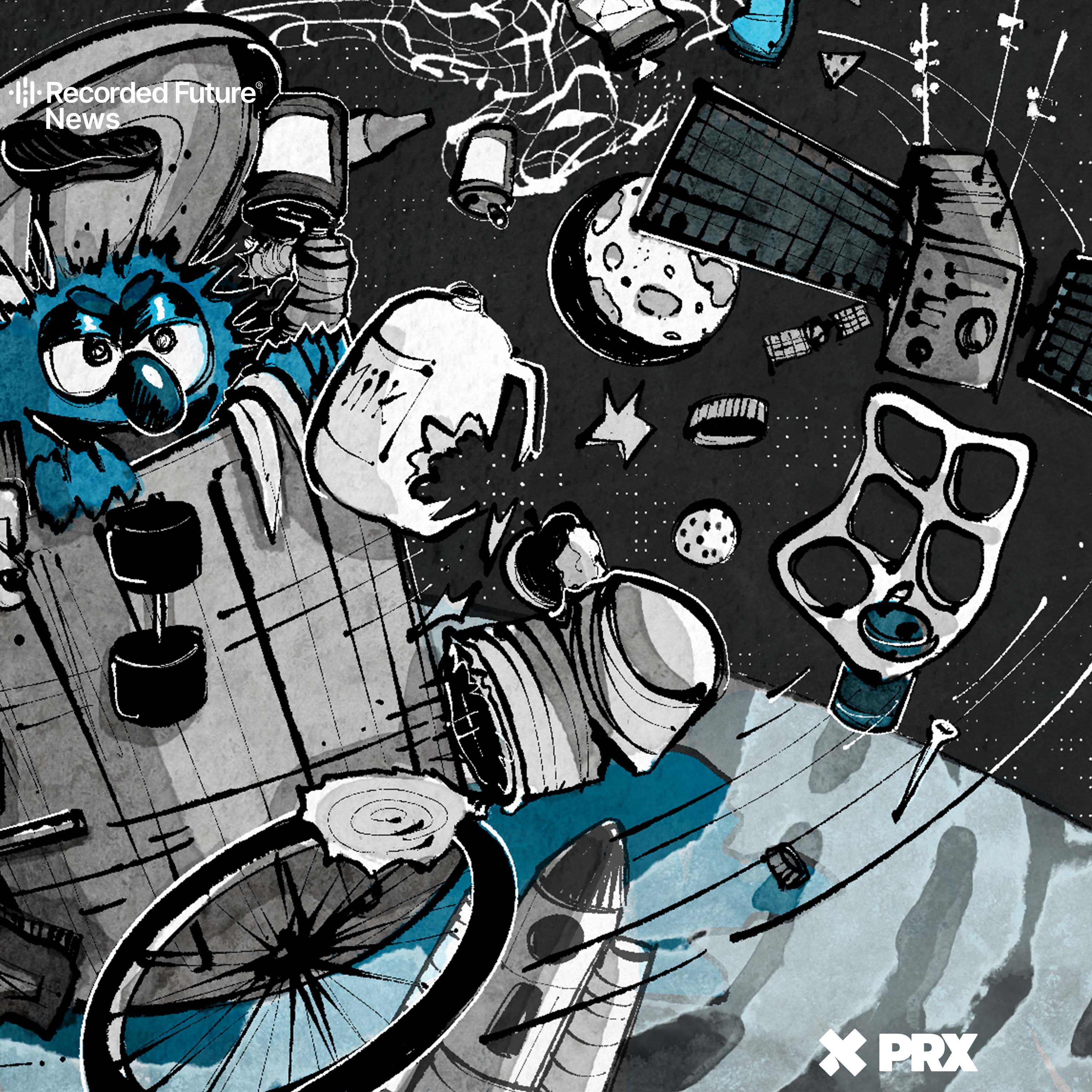
From recorded future news and prx, this is click here. Hey there, it's Dena. For the past month or so, something a little different has been happening around here. You may have noticed it in the stories we're choosing. Click Here has taken a step out of the podcast world, and we're returning to our roots. Radio. We're now a one hour, once a week national show on public radio. Which means what you're hearing isn't a preview, it is the show. Same curiosity, same reporting, but with some new voices from the team and some brand new investigations that we haven't done before. If this feels like the kind of show you want to listen to on your local station, you can help make that happen. Tell your local NPR station to add Click Here to their schedule because the more places this show lands, the more stories we can tell. We really appreciate your support. You're the reason we've been able to expand the show and broaden the audience. So thank you. It means a lot. And here's this week's episode. 3, 2, 1, ignition. And liftoff. When we imagine space, we tend to picture something pristine, quiet, vast, untouched. But listen closely. Up there, it's getting crowded and chaotic and starting to look and sound a lot like Earth. I'm Dena Temple Rasten, and this is Click Here. We tell true stories about the people making and breaking our digital world. And today we're looking at a problem that most of us rarely think about. The growing cloud of debris or orbiting above the Earth. The issue moved from abstract to urgent late last year when this happened. Three Chinese astronauts are finally back on Earth after their spacecraft was struck by.
- [02:04]
Ed Lu
A small piece of debris cracked a.
- [02:06]
Dena Temple Raston
Window on their return capsule, highlighting the.
- [02:09]
Narrator/Announcer
Danger of increasing amounts of space debris.
- [02:13]
Dena Temple Raston
So we thought we'd explain not just what space debris is, but what happens now that it's there, bouncing off rocket ships and colliding with the systems we rely on every day. And that isn't the only concern, because now officials are starting to worry that all the cyber attacks we're seeing down here might be headed up there. We'll be right back. Support for Qlik here comes from Servolai. Did you know that your IT team wastes half their day on repetitive tickets? The more your business grows, the more these requests pile up. Password resets, access requests, onboarding, all pulling it away from meaningful work. With Servolai, you're guaranteed to cut half of help desk Tickets by Week 4 of your free pilot. It's easy to see why this makes sense. It saves time and money and lets IT teams focus on actual problems. And while legacy players are scrambling to adapt in the age of artificial intelligence, SERVL was built for AI agents from the ground up. Your IT team describes what they need in plain English and SERVL generates production ready automations instantly. SERVL powers the fastest growing companies in the world like Perplexity, Mercer, Furkada and Clay. Get your team out of the help desk and back to the work they enjoy. Book your free pilot@serval.com clickhere that's S E R V A L.com clickhere support for click here comes from Quince Are you working on your capsule wardrobe? Quince has you covered. Quince is all about elevated, effortless essentials that are designed for layering and mixing. They've got all the essentials you need to build a timeless wardrobe that will last season after season. Quince uses the highest quality materials. The stitching, fit and fabric speak for themselves with versatile silhouettes and thoughtful details. You'll find low key luxury for every occasion. Luxe cotton cashmere blends perfect for changing seasons. Premium denim made with stretch for all day comfort. These are the pieces you'll reach for over and over. And for me, as a conscientious consumer, what stands out most is that Quince works directly with safe, ethical factories. Not only does that make me feel good about what I wear from Quince, it means they have cut out the middleman. So I'm not paying for a brand markup just for high quality clothing. My new cashmere quarter zip sweater is my favorite sweater. I'm reaching for it all the time. Super soft, great fit. I love it. Refresh your wardrobe with Quince. Don't wait. Go to quince.com clickhere for free shipping on your order and 365 day returns. Now available in Canada too. That's Q-U-I-N-C-E.com clickhere to get free shipping and 365 day returns. Quince.com clickhere. Here's the thing. When we think of space junk, we usually think of things falling back to Earth. But it turns out space debris is slamming into things in orbit too. And those collisions, though ones we never see, have a way of rippling back to us down here. Knocking out the satellite we use for forecasting the weather, messing with the ones that help route planes, or cutting off the L that keep our satellite Internet humming. Because space, once the great empty frontier, is starting to look a lot more like Earth. Crowded, chaotic and full of debris we forget about until it shows up unexpectedly. Astronaut Ed Liu knows this better than almost anyone. He lived on the International space station for six months in the early 2000s.
- [06:31]
Ed Lu
Good evening and greetings from the International Space station. I'm Expedition 7 flight engineer and NASA science officer Ed Liu.
- [06:38]
Dena Temple Raston
Part of Ed's job involved what NASA calls extravehicular activity. To the rest of us, a spacewalk, though, it's less of a walk and more of a six hour slow motion workout. Checking instruments, tightening bolts, scanning for damage. Good morning to our astronauts up there.
- [06:56]
Bob Gourley
On the International Space Antenna.
- [06:59]
Dena Temple Raston
Sure is a beautiful day. Just perfect to try and contact our distant neighbors out there in the heavens. And down here, it's pretty easy to romanticize that. The silence, the solitude, the infinite view. It might even seem to us earthlings pretty lonely.
- [07:19]
Ed Lu
Lonely is the wrong word. Busy is the right word. We had so much to do. So you're always doing something. You're always go, go, go, go.
- [07:29]
Dena Temple Raston
Then one day, while Ed was working his way along the station's exterior, he saw something he wasn't expecting.
- [07:37]
Ed Lu
I remember seeing a sort of hole in one of the handrails. Looked like a bullet hole. And at that time, the space station had only been up for a few years.
- [07:47]
Dena Temple Raston
And that wasn't the only one. There were tiny pock marks everywhere. And these weren't manufacturing flaws. They were from space junk. Tiny fragments of everything from paint flecks to spent rocket parts whipping around the earth at millions of miles an hour. Could you hear debris hitting the space station?
- [08:10]
Ed Lu
I have heard that, you know, a very loud ping sound. You'll hear it throughout the space station. You don't know where it's coming from.
- [08:17]
Dena Temple Raston
And the crazy part? According to researchers in space, a fleck of metal the size of a poppy seed can hit with the force of a bowling ball going 60 miles an hour. In fact, that's what investigators think happened to a Chinese spacecraft back in October. Three astronauts were packed and ready to head home. And then something impossibly small slammed into the return capsule's windshield and cracked it. China's mission control had to halt the return entirely and use a backup ride to bring them home safely. It's no wonder, then, that NASA says the number one threat to astronauts isn't mechanical failure or solar flares. It's space junk. And our Australian farmer from earlier in the show might argue it's a threat down here, too. But here's the bigger issue. We don't actually know where most of this debris is or where it's headed. The same is true for asteroids. And you can't dodge what you can't track. Which is why, after Ed retired from NASA, he had an audacious idea. What if he could map the sky? Not just the junk we've thrown up there, but the natural curveballs space sends our way. Like asteroids and meteorites, all of it. If that sounds like an academic exercise, consider every now and then you hear about an asteroid hurtling toward Earth.
- [09:48]
Ed Lu
Scientists start predicting a near miss in space. Tonight, an asteroid is expected to pass between planet Earth and the moon. It's the closest encounter, and most of.
- [09:58]
Dena Temple Raston
Us assume that if one were truly headed our way, well, that's it. Game over. But Ed says, not necessarily. Not if you know where it is in the sky.
- [10:09]
Ed Lu
If you know where an asteroid is years ahead of time, that one's going to hit the Earth. It's almost relatively easy to deflect an asteroid. All you need to do is give them an absolutely ridiculously tiny nudge to make them miss the Earth.
- [10:21]
Dena Temple Raston
Really? I'm laughing. But in 2022, NASA actually put that idea to the test. They picked a harmless asteroid in deep space and tried something bold. They sent a spacecraft to crash into it just to see if a tiny nudge could change its path. NASA is about to intentionally crash a spacecraft into an asteroid, and they're going.
- [10:44]
Bob Gourley
To do a mission known as dart, a test of, quote, planetary defense.
- [10:48]
Dena Temple Raston
Three, two, one. Oh, my gosh. In the name of planetary defense, it worked. For the first time in human history, we changed the path of an asteroid. But of course, you can't deflect asteroids unless you know they're there. Ed started mapping those the natural space debris back in the early 2000s. But while he was charting that, the man made kind began multiplying fast, faster than anyone expected. 3, 2, 1.
- [11:25]
Recorded Future Representative
SpaceX lifted off from the launch pad.
- [11:27]
Dena Temple Raston
In Southern California minutes later, sending 10 satellites into space. That's just one launch. In just the last 10 years alone, the number of active satellites in space jumped from 1,400 to more than 11,000. So low Earth orbit, roughly 1200 miles up, is getting crowded. More than 10,000 plus active satellites, another 25,000 pieces of trackable debris, and hundreds of thousands more. We can't see sea. It's basically rush hour up there on the cosmic autopilot. As Ed watched this unfold, he decided to shift from mapping asteroids to building a kind of air traffic control system for all that stuff flying around up there.
- [12:18]
Ed Lu
What we do is we help satellite operators prevent collisions with other objects because we tell them where everything is.
- [12:26]
Dena Temple Raston
They can now spot a collision seven days in advance and alert companies in time to move their satellites out of the way.
- [12:36]
Ed Lu
We've had some very close passes. We have tracked objects that have gone within a few meters of each other, a few tens of meters for sure, at, you know, a relative velocity of 15 or so kilometers per second, that's, you know, 35,000 miles per hour. And to miss by like meters is crazy. And we've observed that many times.
- [13:07]
Dena Temple Raston
But the fear isn't just a fender bender, it's a pileup. Scientists even have a name for it, the Kessler Syndrome. After the American astrophysicist who first imagined this scenario. He pictured a kind of orbital domino effect where one crash sets off another and another until low Earth orbit is just a superhighway of twisted metal and flying debris, creating a place so dangerous, so choked with wreckage, that the low Earth orbit becomes unusable for decades, maybe longer. And why does that matter so much? Because satellites aren't just beaming us cat videos anymore.
- [13:48]
Ed Lu
All of our modern day life is dependent upon things going on in space. A lot of people don't realize this.
- [13:55]
Dena Temple Raston
Satellites power global banking, GPS communications, missile detection, everything. So a Kessler style traffic jam in space wouldn't just take out a few gadgets, it would take out half of modern society. And because satellites are so vital, they aren't just infrastructure anymore, they're targets and a potential national security problem. That's when we come back. Stay with us. Support for Click Here comes from Factor don't beat yourself up for not eating. Better eliminate the reasons you don't. If you're too busy to meal plan, let Factor deliver a healthy diet right to your door. No grocery shopping, cooking or cleanup. Just heat for two minutes and eat. Factor is designed by dietitians and ready made by chefs. Always fresh, never frozen, their meals are what you would make if you had the time. Lean proteins, healthy fats, colorful vegetables and whole food ingredients. No refined sugars, artificial sweeteners or refined seed oils. Personally, I love the Ginger Teriyaki burger. The sauce is awesome and so easy even for super busy people. But you can choose from 100 rotating meals every week in categories like Calorie, Smart, Mediterranean, and a new muscle pro collection for strength and Recovery. Head to FactorMeals.com clickhere50OFF and use your code clickhere50OFF to get 50% off your first Factor box. Plus free breakfast for a year offer only valid for new Factor customers with code and qualifying auto renewing subscription purchase make healthier eating easy with factor support for Click here comes from Monarch, the All in One personal finance tool designed to make your life easier. Lots of us are thinking about our finances in 2026. But when it comes to paying off debt, building an emergency fund and saving for major milestones, you need a tool that doesn't just track your wallet. You need something that helps you plan, project and achieve your goals. Set yourself up for financial success this year with Monarch. It brings your entire financial life, budgeting, accounting and investments, net worth and future planning all together in one dashboard. It's cleaner than a big spreadsheet documenting all your expenses, which can make you feel bad about past spending. Monarch keeps you focused on planning ahead and gives you the complete picture so you can make decisions that actually move the needle. Set yourself up for financial success in 2026 with Monarch, the all in one tool that makes proactive money management simple all year long. Use the code clickhere@monarch.com for half off your first year. That's 50% off your first year@monarch.com with the code clickhere.
- [16:56]
Recorded Future Representative
In cybersecurity, your greatest fear isn't the threats you see. It's the critical signals lost in the noise. Every day, security teams sort through millions of potential threats. That's why Recorded Future exists, to give you precision intelligence tuned to your needs. Our advanced AI detects patterns humans might miss, while our threat intelligence experts, veterans of military and intelligence services, provide crucial context. With Recorded Future, you gain the confidence to identify critical threats and the precision to act before they become attacks. Learn why 1900 customers, including 45 sovereign governments, trust us to detect threats faster and achieve 350% plus ROI within a year.
- [17:49]
Dena Temple Raston
You're listening to Click Here. I'm Dina Temple. Raster satellites up in space do a lot more work than we tend to notice. They help keep militaries from misreading one another. They route our Internet traffic. They quietly support the global economy, which means a scenario that once just lived in scientific papers. The idea that someone might deliberately disrupt satellite systems, setting off a chain reaction of collisions isn't just abstract anymore. It's starting to sound less like science fiction and more like a warning. Just ask Ed Lu.
- [18:26]
Ed Lu
Because space is so economically important, strategically important, there is the potential for bad actors to create mayhem. You could cripple company or a country by cutting off certain key services, Right? And that's what countries and companies are worried about.
- [18:45]
Dena Temple Raston
Which means space has quietly become something else too. A tempting place to make Some trouble.
- [18:52]
Bob Gourley
We have satellites that were launched decades ago that are still up there that are not as secure.
- [18:58]
Dena Temple Raston
This is Bob Gourley, the former chief technology officer at the Defense Intelligence Agency, or dia.
- [19:05]
Bob Gourley
A hobbyist from their home could put an antenna up on their roof and send a wake up command to a satellite parked in geosynchronous orbit. And next thing you know, that satellite wakes up. And then this hobbyist, in theory goes, could send it signals like maneuver over here or take a picture or send some data back. If it's some old ancient system that we launched back in the 80s, that's a definite realistic threat.
- [19:33]
Dena Temple Raston
Back in the 1990s, a time when the Internet was a little clunky, but still pretty magical, Bob Gourley was part of a team watching this unexpected thing happening at the Pentagon. Files just started disappearing, classified ones about military plans and NASA.
- [19:51]
Bob Gourley
And this is one where I was absolutely instrumental in figuring out who is doing it and what do they want and how do we stop them.
- [20:00]
Dena Temple Raston
It turns out it was hackers from the Russian military intelligence service. And what were they taking?
- [20:06]
Bob Gourley
The information they were stealing was about our satellites and other technical systems.
- [20:13]
Dena Temple Raston
And then there's this other thing happening in space right now, something that could make an attack on a satellite that much harder to spot. You may have heard about this one, actually.
- [20:25]
Bob Gourley
Welcome back to our special coverage of.
- [20:27]
Ed Lu
The extreme solar storm now crossing North America.
- [20:31]
Dena Temple Raston
Whoa, whoa, whoa, whoa, whoa, whoa.
- [20:33]
Bob Gourley
It's the stunning and rare sky show captivating the nation from coast to coast.
- [20:38]
Dena Temple Raston
I can't believe what I'm seeing. So you may have noticed that lately the northern lights have been showing up in places they rarely do, like as far south as Texas and Florida. It's because of solar storms, essentially storms on the surface of the sun that hurl waves of radiation and charged particles across the solar system. And while they're pretty to watch, they have a dangerous side too. They can fry or disrupt almost anything with an electron. The power grid, radio communications, GPS navigation, even satellite timing signals that the financial markets rely on. Which explains why when FEMA made a list of catastrophes most likely to paralyze the nation back in 2019, a pandemic was number one, but not far behind. A severe solar storm. And this isn't just some far off worry. It happened in 1989. A solar storm knocked out power to 6 million people in Quebec in less than two minutes. But solar storms don't just hit the ground. When they ramp up, they ripple through space. They can nudge satellites off course, distort the data coming down from orbit or scramble the systems we use to monitor them in the first place. And that's the dangerous moment when operators are distracted, when signals go fuzzy, when the picture of what's happening overhead just starts to blur. Solar flares. These bursts of charged particles are what keep satellite watchers up at night. Not because everything shuts off, but because everything becomes a little harder to read. Radio signals bend or disappear. Instruments misbehave, satellites glitch.
- [22:37]
Maraid Levinson
It really can vary pretty significantly.
- [22:40]
Dena Temple Raston
This is Mo Reed Levinson, the Deputy Director at the Space Watch center in Colorado. It's the place that keeps a non stop eye on America's satellites, watching for anything that looks off.
- [22:52]
Maraid Levinson
I mean, there's some low level charging impacts that can happen on a satellite. So that could affect their functionality in some way. Not to get too in depth.
- [23:02]
Dena Temple Raston
Sort of like a blackout during a thunderstorm.
- [23:04]
Maraid Levinson
Similar, yes. But also you can see some of the mechanical components experience difficulties after a solar event.
- [23:14]
Dena Temple Raston
Because it's magnetic.
- [23:15]
Maraid Levinson
Yes, got it. And so you can see increased drag on satellites as well.
- [23:19]
Dena Temple Raston
What is increased drag on the satellite slowing up? Yeah.
- [23:22]
Maraid Levinson
The way that I think about it is the way that they're maneuvering through.
- [23:25]
Dena Temple Raston
Orbit a moment when nothing is quite where you expect it to be. And precise systems temporarily lose their edge. And that's a perfect opening for an adversary to meddle.
- [23:38]
Maraid Levinson
An adversary might look to get into your system during an event like this because they know that A, you're not paying attention or B, you don't have as much awareness of what's going on with your asset because of external events that are happening.
- [23:53]
Dena Temple Raston
Do adversaries just lie in wait waiting for a storm?
- [23:56]
Maraid Levinson
It's pretty accurate to say that our adversaries are ready to take advantage of any situation that is going to cause us to have less of an understanding of what's going on on orbit.
- [24:10]
Dena Temple Raston
They might use the chaos of a solar storm to spark one of those chain reaction pileups that Dr. Kessler warned about. Or they might do something quieter, like slide a satellite closer to yours and then listen in. Maraid has seen it happen.
- [24:26]
Maraid Levinson
You might see an adversary satellite buddy up nice and close and just be within a uncomfortable distance of your satellite. So maybe they're listening. Maybe they're just trying to hear and understand. Maybe it's an aggression tactic.
- [24:42]
Dena Temple Raston
Ma Raid showed us how it worked. And if this was. Once this is up and you have the satellites up on your screen, would you be able to see an adversary satellite getting closer to yours?
- [24:53]
Maraid Levinson
You can, yes.
- [24:54]
Dena Temple Raston
No.
- [24:54]
Maraid Levinson
Way you can physically see the two birds, the two little white dots on the globe kind of maneuvering closer together. Yeah.
- [25:06]
Dena Temple Raston
Mauray Levison and her team at the Space Watch center in Colorado have set up a kind of neighborhood watch for orbit, tracking more than 100 suspected attacks a week. And with solar storms ramping up, she expects that number to grow.
- [25:22]
Maraid Levinson
I think the more information that we get and we digest into the Watch center, not only will we become more and more aware of these, but I think as the attacks increase, we're going to have our finger on that pulse.
- [25:34]
Dena Temple Raston
So that's the now watching, responding, trying to keep up. But there's another part of the job that starts much earlier, before something breaks, before anyone notices. Astronaut Ed Liu spends his time mapping what's already up there. The satellites we depend on, the debris we leave behind, so we not unpleasantly surprised later, because what happens up there shapes the world down here. And this isn't the first time we've built something that turns out to be essential without really thinking through what could go wrong. You know, if we look at the Internet, when it was created, nobody ever thought about bad people using it. Right. There was just a failure of imagination in terms of regulating it in the beginning, and we're rushing to catch up. Do you think that we're making the same mistake when it comes to space, or do you think that we've kind of learned our lesson and we're trying to get ahead of this?
- [26:38]
Ed Lu
I don't think society learns its lessons like that. Any new technology has enormous pluses and minuses. Right. And nothing is entirely positive, Nothing is entirely negative. And it's a mistake to think that suddenly, you know, we were dumb then, and now we're smart and we'll never make this mistake again. Right. That's, that's not true.
- [27:02]
Recorded Future Representative
Right.
- [27:03]
Ed Lu
I think the majority of the population in, you know, mid-1990s did not realize the significance of the growth of the Internet. What would happen to society? You know, same thing's happening in space.
- [27:18]
Dena Temple Raston
Right now, and that's the risk. By the time everyone agrees something matters, it's already pretty hard to change. This is qlik here.
- [27:37]
Narrator/Announcer
Museums are more than places we visit on a field trip across the country. Museums protect our shared history, care for wildlife and collections, strengthen local economies, support job training and, and spark curiosity in people of all ages. Right now, you can help make sure museums stay strong for future generations. Museum Advocacy Day is a national moment when people contact Congress to ask for continued support from museums and the federal agencies that fund them. Learn how to take action@aam-us.org and tell your representatives that museums matter to education, to communities, to the economy and to our democracy.
- [28:20]
The Record Announcer
Looking for more of the cybersecurity and intelligence coverage you get on? Click here. Then check out our sister publication the Record from Recorded Future News. You'll get breaking cyber news from reporters in New York, Washington, London and Kyiv, among others. And you'll see for yourself why it attracts hundreds of thousands of page views every month. Just go to therecord Media.
- [28:48]
Dena Temple Raston
Here are some of the top tech stories making news this past week. It's Tuesday, February 10th. First, Iran last summer, the United States carried out airstrikes against Iranian nuclear facilities. The US Hit three nuclear sites in Iran overnight, but it remains unclear. Now we're learning more about what happened behind the scenes. Our sister publication, the Record, has confirmed that the US Military also ran a covert cyber operation alongside those strikes, digitally disrupting Iran's air missile defense systems. Instead of trying to break entirely into heavily fortified networks at sites like Fordo, Nataz and Isfahan, US Cyber operators targeted what they called an aim point, a separate node in the network, like a router or server connected to those facilities. Military officials described the operation as one of the most sophisticated cyber actions US Cyber Command has ever taken against Iran. The admission comes just weeks after another revelation that US Cyber operators also played a role in the events in Venezuela late last year. When pressed for details during a recent congressional hearing, Pentagon officials declined to elaborate. But they did emphasize the the growing role of cyber weapons in modern warfare.
- [30:10]
Bob Gourley
The reality is, is that we've now pulled cyber operators to the forefront.
- [30:15]
Dena Temple Raston
Taken together, the disclosure signals a shift. Cyber operations are no longer a quiet supplement to military power they're becoming a central tool of it. Next self driving cars. For years, automakers have urged Congress to move faster on regulating autonomous vehicles. Now they're running out of patience. Executives from Waymo and Tesla defended their self driving vehicle technology in testimony before the Senate Commerce Committee today. Last Wednesday, executives from Tesla and Waymo appeared before the Senate Commerce Committee arguing that without federal rules, innovation could stall and China could pull ahead. Waymo's chief safety officer insisted their vehicles are are much safer than those with human drivers. But senators weren't convinced. They raised concerns about repeated failures, including incidents between Waymo vehicles and school buses.
- [31:12]
Bob Gourley
At least 24 times in the last.
- [31:14]
Dena Temple Raston
Year, Waymos failed to yield to school buses. In Austin, lawmakers also questioned Waymo's safety protocols and the company's decision to use Chinese made vehicles in future robotax taxis. Tesla faced a different line of scrutiny over its decision to remove radar from its vehicles and over the company's use of terms like autopilot and full self driving features that still require constant human supervision. Both companies said safety is their top priority. But the hearing underscored a growing concern on Capitol Hill that autonomous vehicles are already operating in major US Cities, while the rules meant to govern them remain unsettled. For now, self driving cars stay on the road and in regulatory limbo. Next, the war in Ukraine and Elon Musk's Starlink. For years, Russian forces have quietly relied on smuggled Starlink terminals for battlefield communications. But now that's changing.
- [32:17]
Bob Gourley
SpaceX has begun blocking Russia from using Starlink to control attack drones over Ukraine.
- [32:24]
Dena Temple Raston
Earlier this year, Ukrainian officials asked SpaceX to intervene after Russia began using Starlink connected drones, making them harder to jam. In January, SpaceX responded by blocking all Starlink access in Ukraine except for devices placed on a white list approved by Ukrainian authority authorities. Russian military bloggers are now reporting communication problems on the front lines. One warned the disruption could set Russian forces back a couple of years without Starlink. Russian units are falling back on older tools like traditional radio systems and WI fi extenders. Meanwhile, Russia is racing to build its own satellite network, but that effort remains unfinished. Elon Musk posted on X that the steps SpaceX took appear to be working and invited further requests. And finally, speaking of Elon Musk, French.
- [33:21]
Ed Lu
Prosecutors have carried out a search in the offices of Elon Musk's EX in Paris. Officials say it's part of an investigation into the social media platform.
- [33:30]
Dena Temple Raston
French authorities have raided the Paris office of X, escalating an investigation into the police platform's algorithms and content moderation practices. The probe began last year but expanded after X's AI chatbot Grok was accused of spreading Holocaust denial information and sexually explicit deep vapes. Prosecutors also allege X stopped using a tool designed to limit the spread of child sexual abuse imagery. Now, several people tied to the company, including Musk and and former CEO Linda Yaccarino, have been summoned by French authorities. X has called the investigation politicized, saying it threatens free speech. The dispute reflects a widening divide across the Atlantic. Europe says it's trying to protect users from harm. The Trump administration says it's pushing back against censorship. And as governments on both sides escalate, social media platforms are increasingly caught in the middle. Foreign. Future News and PRX Today's show was written and produced by Megan Dietrich, Sean Powers, Erica Gaeda, Zach Hirsch and Casey Georgie. It was edited by Karen Duffin and Sarah Covedo and Fact Checked by Darren Ancrum. Original music is by Ben Levinston, with additional music from Blue Dot Sessions. Our staff writer is Lucas Riley, our illustrator is Megan Gough, and our sound designers and engineers are Jake Cook and Jesse Niswonger. Find us on X or Facebook @ClickHerearShow or leave us a voice message at 6615ch. Talk sometimes we'll turn those moments into reporting, sometimes into a conversation, and sometimes into a future story you'll hear on this show. I'm Dena Temple Raston, and thanks for listening.
- [35:32]
Narrator/Announcer
Support for this program comes from Recorded Future in cybersecurity, the biggest risk isn't what can be seen, it's what gets missed. Recorded Future analyzes billions of signals to help organizations stay ahead of threats. Recorded Future Know what matters? Act first.
- [35:47]
The Record Announcer
Looking for more of the cybersecurity and intelligence coverage you get on? Click Here, then check out our sister publication the Record from Recorded Future News. You'll get breaking cyber news from reporters in New York, Washington, London and Kyiv, among others. And you'll see for yourself why it attracts hundreds of thousands of page views every month. Just go to the Record.