Loading summary
Transcript97 lines
- [00:03]
Dina Temple-Reston
From Recorded Future News and prx, this is Click here. Live views from the Orion spacecraft as
- [00:19]
Narrator/Reporter
it looks back on Earth following completion
- [00:21]
Dina Temple-Reston
of the translunar injection burn.
- [00:23]
Narrator/Reporter
Houston is go for TLI Integrity copies and your Integrity crew is go for TLI with this burn to the moon, we do not leave Earth. We choose. Was just absolutely spectacular. Something that has meant so much.
- [00:44]
Dina Temple-Reston
Last week, something happened we haven't felt in a while. Not just a mission, not just a milestone, but joy. Moon joy. Four astronauts riding a column of fire away from the Earth, looping around the far side of the moon and then seeing something no human being had ever seen with their own eyes, and then turning back and coming home safely.
- [01:15]
Narrator/Reporter
Something that has meant so much to so many cultures, scientifically, spiritually, culturally for so long. Seeing it in a different way and just pairing that with how much we miss and love our families and knowing that they're looking up and seeing the same moon. It's a pretty amazing feeling because for
- [01:34]
Dina Temple-Reston
all the precision, the math, the engineering, one of the other things that spaceflight does is change how we see this place, how small the Earth is, how fragile and how rare it is to leave it. So today we're starting there. Not with hardware, not with the risk, but with that feeling of going away and coming home. From Recorded Future News and prx, this is Click Here. A show about the people making and breaking our digital world. I'm Dina Temple Reston. And today the story of what helped make that moon Joy possible. Because Artemis 2 didn't happen in a vacuum. It was built in part on a mission that happened a couple of years ago involving a scrappy lunar lander that nearly didn't make it at all. Stay with us.
- [02:40]
Recorded Future News Announcer
Looking for more of the cybersecurity and intelligence coverage you get on Click here, then check out our sister publication, the Record. From Recorded Future News, you'll get breaking cyber news from reporters in New York, Washington, London and Kyiv, among others. And you'll see for yourself why it attracts hundreds of thousands of page views every month. Just go to the record media.
- [03:12]
Dina Temple-Reston
For a moment. Last week, in the middle of everything else going on, people stopped and looked up to follow the progress of a spacecraft as it slipped past the moon and disappeared behind it. Artemis 2:4 astronauts who not only went deeper into space than any human before them, but but got the world to hold its collective breath until splashdown. Moments like that don't really begin there. They're just the part we get to see. What helped make Artemis 2 possible happened earlier. An unmanned mission two years ago, one that came a lot closer to not making it at all.
- [03:53]
Narrator/Reporter
Ignition. Mwthov Go SpaceX. Go. IM one. And the Odysseus lunar lander.
- [04:01]
Dina Temple-Reston
Tim Crane helped lead that flight. And for him, it wasn't just a job. It was a childhood dream, five decades in the making. If you grew up in the 1970s like Tim Crane did, you couldn't ignore space. It was everywhere. On tv, in classrooms and in the grainy glow of the evening news, where with astronauts landing on the moon now
- [04:30]
Narrator/Reporter
two and a half minutes before the launch of Apollo 13, test conductor told the astronauts, good luck, head for the hills. Apollo 17 is finally on its way
- [04:42]
Dina Temple-Reston
to the moon and the Voyager missions hurtling towards Jupiter and Saturn and then sending back those first spectacular pictures.
- [04:50]
Narrator/Reporter
Voyager spacecraft to extend man's senses farther into the solar system than ever before.
- [04:56]
Dina Temple-Reston
Tim's fascination with all this crystallized one night when his dad took him on a little field trip.
- [05:02]
Tim Crane
My dad had an office at the end of the Runway in Barksdale Air Force Base in Bossier City, Louisiana. And we saw the space shuttle come in and land on its carrier. And it flew right over our heads. And it was like an electric shock ran through my body. And I knew that I was going to work. You know, I was probably 10 years old. I was going to work either on planes or spacecraft or starships or warp drives or something. That was what I was going to do.
- [05:35]
Dina Temple-Reston
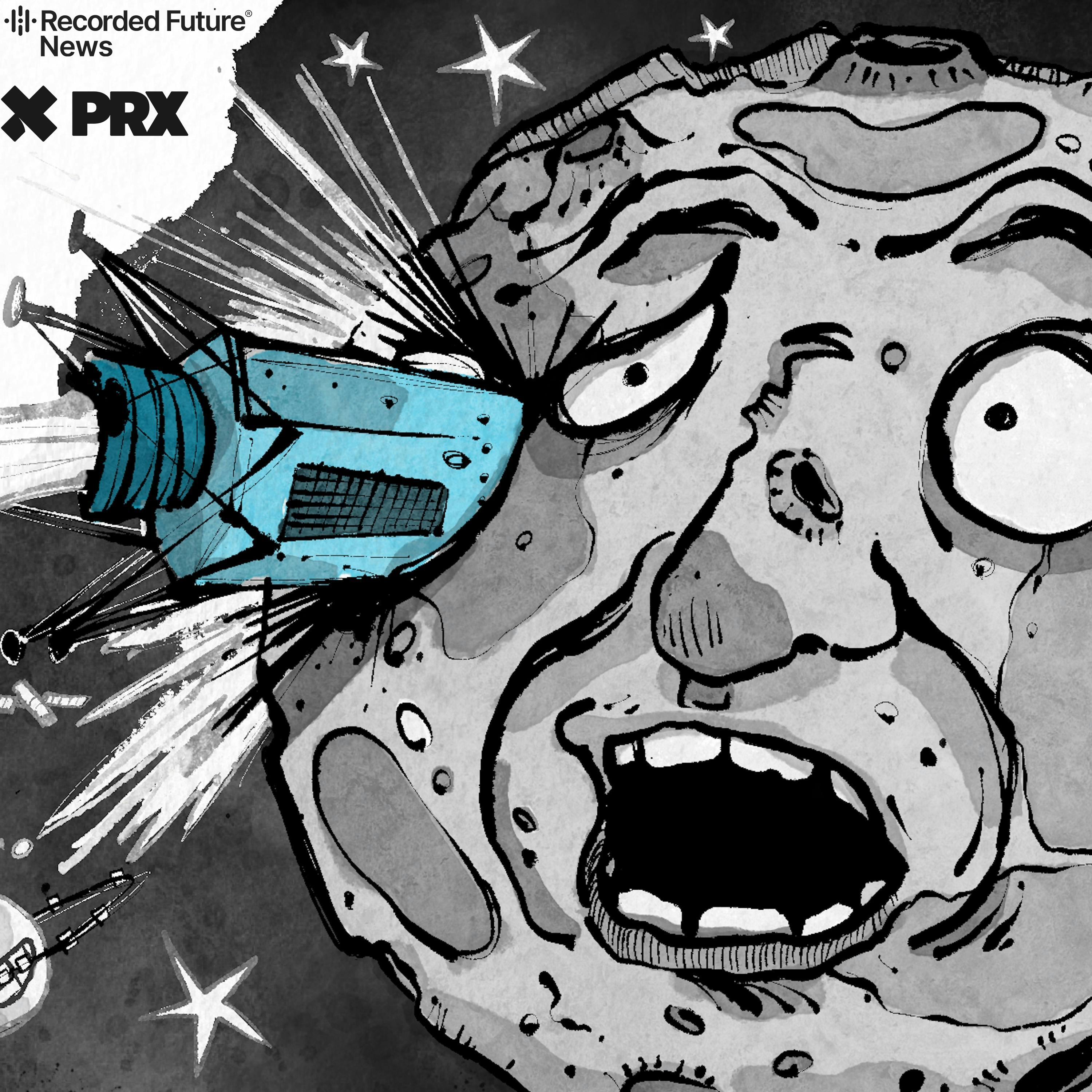
That electric shock never went away. He went to school, became an engineer, and eventually co founded Intuitive Machines, a private space company. He's also the chief technology officer there. And in 2019, Tim and his team won a NASA contract to make a lunar lander that would take the United States back to the moon. They named the spaceship Odysseus, though by the end, the team just called him Odie. So are you the one who called Odie a scrappy little dude or was that someone else?
- [06:08]
Tim Crane
You know, I can't say for sure. We early on kind of said, this spacecraft's a fighter. And then that kind of morphed into, as the hours got longer and the sleep got shorter, a scrappy little dude.
- [06:22]
Dina Temple-Reston
Odie was given an ambitious assignment. Lay the groundwork for a future in which astronauts don't just visit the moon, but actually live there. It would become a kind of cosmic rest stop for humanity on the way to deeper places, maybe even Mars. But to make that possible, Odie had to go somewhere. No spacecraft had successfully landed before the moon's south pole. Now, this isn't the postcard Moon Airmen
- [06:51]
Narrator/Reporter
from The planet Earth first set foot upon the Moon, it came in peace for all mankind.
- [06:57]
Dina Temple-Reston
The terrain there is serrated and shadow soaked. Sunlight skims the surface at odd angles, which confuses navigation systems. Communications there blink in and out like a bad cell signal at the edge of the universe. But it's also where the Moon's ice hides. Ancient deposits tucked into craters that sunlight never touches.
- [07:20]
Tim Crane
They call it a cold trap that basically that water freezes and drops to the surface of that crater, not escaping to space. And that over time, over millions and millions of years, that has now filled these tolerantly shadowed regions with water of some sort.
- [07:40]
Dina Temple-Reston
For human space exploration, that would be huge, because if we ever hope to build an outpost on the moon, a real one, a sustainable one, we'll need water.
- [07:51]
Tim Crane
But we don't know what form that water is in. So is it a slush mixed in with the regolith? Is it different layers, you know, kind of like sedimentary layers, as different impacts have happened over time? Is it an ice sheet, you know, within a meter or two of the surface? We don't know.
- [08:10]
Dina Temple-Reston
And that's where Odie comes in.
- [08:12]
Tim Crane
Going to the South Pole and doing direct measurements of what that water is like is really important. And one of the things I really like about space exploration is every time we go someplace new in the universe, we see the same elements that will were used to on the periodic table doing different things.
- [08:33]
Dina Temple-Reston
If usable ice is there, astronauts could melt it into water, split it into oxygen, even turn it into rocket fuel to push further out into the solar system. So a lot was riding on this. If Ody could stick this South Pole landing, it could effectively redraw the map for where humans go next. Tim and his team spent years coaxing Odie to life, soldering hardware, running simulations, rewriting software. And in the end, what they built looked a little like a British phone booth. Or for the Doctor who faithful, a TARDIS on six legs.
- [09:11]
Narrator/Reporter
And that's your spaceship.
- [09:12]
Tim Crane
It's called the tardis Time and Relative Dimension in Space.
- [09:17]
Dina Temple-Reston
And after all that prep and all that testing, in February 2024, Tim sat at the control center in Texas, crossed his fingers and waited.
- [09:27]
Tim Crane
Our control center is round. It looks a lot more like a, maybe like a submarine command center, right with a table in the middle. We're all facing outwards on our screens. There is a big screen on one wall that we can look at for kind of a situational awareness.
- [09:43]
Dina Temple-Reston
And then the countdown began.
- [09:45]
Narrator/Reporter
3, 2, 1. Ignition. And liftoff. Go SpaceX. Go IM1. And the Odysseus lunar lander.
- [09:57]
Tim Crane
You kind of watch it counting down and you go, this is, this is really going to happen. You know, we're about to be on our way to the moon.
- [10:07]
Dina Temple-Reston
Odie rode a SpaceX Falcon nine out of the Earth's atmosphere. A tiny phone booth sized passenger on a tower of fire in orbit, it separated a bright dot sliding toward the moon.
- [10:21]
Tim Crane
Those beautiful pictures then of Odie separating and coasting off from the Falcon 9 upper stage. What a sight. And that just, you know, it's indelibly marked in my memory forever.
- [10:35]
Dina Temple-Reston
What's the feeling that you have? Is it love? Is it. What is it?
- [10:40]
Tim Crane
You know, it's hard to describe. Even right now, I want to jump up and pump my fist in the air and just go, yeah, it brings a tingle.
- [10:52]
Dina Temple-Reston
It was everything that kid on the roof imagined. Odie approached the moon just as they'd programmed it to do. Everything was on track. And then, just hours before Odie was set to land and make history, Tim's partner rushed into the control room.
- [11:09]
Tim Crane
Hey, Tim, the laser altimeters aren't going to fire. And the blood just drained from my face.
- [11:19]
Dina Temple-Reston
It felt like an echo of that other moon mission. Apollo 13, Houston, we have a problem. When Apollo 13's oxygen tank exploded, NASA's moonshot suddenly became a rescue. Engineers had to invent their way out of a disaster in real time with duct tape, slide rules, and pure nerve. And now, more than 50 years later, another team was staring down its own moment of truth as Odee and its lunar dreams hurtled toward the moon with a broken laser altimeter. Without the altimeter, they'd have no way to calculate Odie's altitude and speed, no way to know when to ease the thrusters that can help it land softly.
- [12:02]
Tim Crane
The altimeter is really important because if you're a little bit high, you're going to run out of fuel. If you're a little bit low, you could potentially smash into the moon and, you know, then that's it, you crash.
- [12:13]
Dina Temple-Reston
Game over. So at its most basic level, the laser altimeter on Odie measured distance by shooting a laser beam at the surface of the moon. Then, based on the time it took to reflect back, it does a calculation that tells the team on Earth how far Odie is from the surface.
- [12:31]
Tim Crane
There's a, a clock that says, fire the laser. Now, the photons shoot up from it, they hit the moon, they come back and they trigger a detector. And then it stops the clock like a stopwatch. And it goes, I got the return. And based on that time, it goes, well, I know the speed of light, so this is how far away the thing you're looking at, in this case, the surface of the moon is.
- [12:55]
Dina Temple-Reston
So there. In the control room, Tim's mind was racing as his partner broke the news.
- [13:01]
Tim Crane
And he asked me, what do you think the probability of landing safely is? I said, not much, because we really need. We need to know how high we are to safely execute the landing sequence.
- [13:14]
Dina Temple-Reston
If the timing of the altimeter is off even slightly, it would be like thinking you're three feet from the car next to you on the freeway, but you're only three inches. That won't end well. So the scientists in the control room jumped into action.
- [13:29]
Tim Crane
And everybody pouring one more cup of coffee, scratching their chin, looking at whiteboards, scribbling on paper, just racking our brains for what we might do.
- [13:41]
Dina Temple-Reston
They started taking inventory. Every sensor, every radio, every instrument Odie had on board, searching for any possible way to jerry rig a new set of eyes for the spacecraft. During Apollo 13, engineers at mission Control had to rummage through whatever the astronauts had on board and then fixed the problem physically. This time, there was no one inside the capsule. The crew was here on Earth, so the repair had to happen digitally. Code instead of duct tape.
- [14:12]
Tim Crane
Is there something I could do with the radio signal? Could I modify what we're doing with the cameras?
- [14:20]
Dina Temple-Reston
Odie only had so much fuel and they were burning through the clock. And then at the height of the panic, Tim had an idea. When we come back, saving Odie, stay with us.
- [14:41]
Mike Pesca
Hi, I'm Mike Pesca, host of the Gist, the longest running podcast on news and analysis in the business. Every day, I do, I think, a fascinating interview. But I also do a spiel where I will challenge you because I hate listening to podcasts that just agree with each other and only agree with me. So I'm going to say 20, 75% of the time you'll say, mike, I think you're wrong. And 75% of the time you'll say, great point, well said. Now, those numbers might be reversed. For some people, they probably shouldn't. Listen, check out the gist. Every single day for a decade now,
- [15:15]
Dina Temple-Reston
it is called Internet. I use the World Wide Web information superhighway. Cyber security. Why do things go viral?
- [15:23]
Narrator/Reporter
Click here.
- [15:26]
Dina Temple-Reston
Just before the break, Odie was circling the moon, looping around and around, buying time. Tim and the team were scrambling, trying to answer a basic question. How do you land a spacecraft without an altimeter? And then it hit him. Odie hadn't carried astronauts, but it did have experiments on board, half a dozen of them. And maybe, just maybe, one of them could do a second job. They started going down the list.
- [15:56]
Tim Crane
A landing sensor that NASA had been working on for some time, an in space navigation sensor, an electron sheath experiment. And then we had a laser reflector array.
- [16:08]
Dina Temple-Reston
And buried in that inventory was something promising. A NASA device called a Doppler lidar.
- [16:15]
Tim Crane
It has three lasers on it that measure the Doppler shift in the lasers so that it can directly measure velocity with respect to the surface. So it's different from our optical system.
- [16:28]
Dina Temple-Reston
It wasn't built to measure altitude, but it was close. Close enough to try. Maybe not perfect, but certainly better than nothing. So the team went to work, frantically trying to turn one of Odie's passengers into something that could actually help fly it. They figured out that they could hack the Doppler gear. Not hack to break it, but to make it do something a little different than it was intended to do. The hack would essentially give Odie some new commands. It would tell it, hey, get your location reading from this LIDAR that happens to be on board instead of your regular altimeter.
- [17:04]
Tim Crane
Since we already had those Doppler measurements piped into our navigation system, we figured how we could rewrite the software to also take the range measurements in.
- [17:15]
Dina Temple-Reston
Engineers might normally spend weeks on this kind of coding project, but in this case, they only had a fraction of that time.
- [17:22]
Tim Crane
We had two orbits to go. Each orbit's about two hours, so we're about four hours from landing.
- [17:28]
Dina Temple-Reston
They were also about to lose contact with Odie as the lander inched toward the far side of the moon. One team scrambled to do the math, translating Doppler readings into altitude. Another rewrote navigation code so Odie could understand it.
- [17:44]
Tim Crane
Some trigonometry and the right hand rule.
- [17:46]
Dina Temple-Reston
Two hours passed, the coders chugging coffee in Red Bull, typing like Odie's. Life depended on it, because, in a way, it did. Finally, they finished their coding, the best they could do in the time that they had. And they weren't sure it would work. The only way to find out would be to power off Odie, reboot and see if the new code had installed. Tim and the team looked at each other and began the shutdown.
- [18:13]
Tim Crane
We worked through the procedure to shut the navigation system off, to bring it back up and reboot it.
- [18:20]
Dina Temple-Reston
Just as they finished, Odie slipped behind the moon and the signal went dead.
- [18:28]
Tim Crane
That was surreal because there's nothing we could do. There was no more modifications to make. We can't talk to the vehicle anymore. It was kind of this really strange pressure relief knowing that you just had to wait. And I was holding my breath, watching the screen as this all played out.
- [18:54]
Dina Temple-Reston
Silence. And then a blip. A heartbeat on the screen.
- [18:59]
Tim Crane
It's alive.
- [19:00]
Narrator/Reporter
It's alive.
- [19:02]
Dina Temple-Reston
It's alive. It's alive.
- [19:04]
Tim Crane
It's alive.
- [19:06]
Dina Temple-Reston
Odie was back. Even better than before.
- [19:10]
Tim Crane
I gotta tell you, the visual odometry performance that we were seeing on our consoles was better than we'd ever seen in testing. It was making measurements. It was updating the onboard state all by itself. It was just working perfectly.
- [19:27]
Dina Temple-Reston
The control room erupted. Cheers. Fist bumps, disbelief. But the celebration didn't last long.
- [19:34]
Tim Crane
Altitude of 10 km downrange 1100 km -5 minute deadpins Dpause terrain Relative navigation measurements.
- [19:43]
Dina Temple-Reston
Because as the data poured in, something felt off. Odie was dropping quickly, too quickly.
- [19:50]
Tim Crane
We were coming in fast. We were probably a couple hundred meters lower than we anticipated.
- [19:56]
Dina Temple-Reston
Tim watched on the monitor as Odie was firing its engines to try to slow the descent. 100 meters to go. 80 meters, 70 meters, 50 meters, 30
- [20:07]
Tim Crane
meters over the landing site. And then we contacted the ground. We hit hard.
- [20:12]
Dina Temple-Reston
And then after what felt like a really long time, the announcement came.
- [20:17]
Tim Crane
Houston, Odysseus has found his new home.
- [20:22]
Dina Temple-Reston
They'd done it. Landed on the moon for the first time in 52 years. And as the dust settled, Odie got to work, switching on its instruments, probing the terrain, sending home information from the lunar south pole. A place we've barely touched, the kind of data you need before you send people. So when Artemis 2 looped around the Moon, it wasn't flying blind.
- [21:01]
Tim Crane
The Earth is almost in full eclipse. The Moon is almost in full daylight. It is truly awe inspiring up here.
- [21:07]
Dina Temple-Reston
It was following a path shaped in part by a small lander that went first. And for the teen guiding Odie down, it was a reminder that the line between miracle and mistake in space is only a few keystrokes wide. This is Click here.
- [21:39]
Recorded Future News Announcer
If you're looking for a daily guide to cybersecurity news and policy. Sign up for the Cyber Daily from Recorded Future News. It serves up the day's most interesting and important cyber stories from our sister publication the Record, and then aggregates all of the big cyber stories you might have missed from news outlets around the world. Just go to the Record Media and and click on Cyber Daily to get all you need to know about the world of cybersecurity right in your inbox.
- [22:10]
Dina Temple-Reston
Here's what you need to know about the tech world this week. It's Tuesday, April 14th. While President Donald Trump called for a two week ceasefire in the U S Israeli war on Iran, officials say a different kind of conflict is already well underway, not on a battlefield, but online.
- [22:31]
Tim Crane
This is what modern warfare has become. You shut off somebody's water or disrupt their electricity in some way.
- [22:36]
Dina Temple-Reston
That warning is coming as multiple federal agencies, including the FBI and the National Security Agency say Iran backed hackers are looking to target US Infrastructure and the industrial systems that keep them running. According to the new advisory, attackers are looking to exploit programmable logic controllers made by Rockwell Automation equipment that helps automate everything from water treatment to manufacturing. The result? Disruptions and financial loss. Officials are urging companies that use these systems to take these vulnerable devices offline and contact Rockwell immediately. The advisory stops short of naming a specific group responsible. It just says Iranian affiliated attacks are escalating. Since the war began, Iran has publicly claimed responsibility for two cyber attacks, one against a Michigan based medical tech company and another exposing emails belonging to FBI director Kash Patel. U.S. officials are warning that may be just the beginning. Next, what happens when an AI system becomes so powerful it can't be released?
- [23:48]
Tim Crane
Anthropic has decided not to release its latest AI model, called Claude Mythos, to the full public.
- [23:54]
Dina Temple-Reston
Anthropic, maker of the AI Assistant Claude, says it has built a new model that can find security flaws in software, a lot of them even zero days that the companies who wrote the software haven't discovered yet. It is so good at finding vulnerabilities, the company said, that it has decided to just have a limited release to a small group of key companies including Apple, Amazon, Microsoft and Google. Together they're forming a coalition called Project Glasswing. The idea to use the model defensively to find vulnerabilities before cybercriminals do. Anthropic says the system can carry out autonomous security research and has already flagged thousands of issues across major operating systems and browsers. For years, cybersecurity experts have warned about what is advanced AI could mean for critical infrastructure. Anthropic says that moment may be here. Full disclosure Anthropic is a financial supporter of this program through paid advertising that support doesn't influence our editorial decisions. Next, a lawsuit raising new questions about what happens when care goes remote in the most critical moments.
- [25:08]
Tim Crane
A Connecticut family is suing after their 26 year old son died in what the lawsuit describes as a fake ICU.
- [25:15]
Dina Temple-Reston
In August 2024, Connor Hilton was admitted to Bridgeport Hospital Milford campus with severe abdominal pain. He was diagnosed with pancreatitis and alcohol withdrawal. Doctors considered him high risk, so he was moved to the icu. But according to a lawsuit filed by his family, there was no specialist for physically at his bedside. Instead, his care was overseen through a tele ICU system, a remote doctor appearing on a screen. Then Hilton stopped breathing. The lawsuit alleges that when an on site doctor was called to intubate him, the doctor didn't know where the ICU was, losing critical minutes asking for directions. Less than two hours later, a physician on a video screen pronounced Hilton Yale. New Haven Health, which is also named in the suit, says it's committed to patient safety, but declined to comment on the specifics of the case. And finally, is the mystery solved?
- [26:17]
Tim Crane
I guess we'll just start off with the yes or no question.
- [26:19]
Dina Temple-Reston
Are you Satoshi Nakamoto? A recent investigation by the New York Times identified British cryptographer Dr. Adam back as the likely mystery master behind Bitcoin. In 1997, Adam Back founded something called Hashcash, a system that later became foundational to Bitcoin. Reporters analyzed early emails and cryptography forum posts comparing writing style, punctuation and even spelling, and they found striking similarities between Bak and Nakamoto. More than that, years before bitcoin launched, Back had already described many its core ideas. Still, the evidence is circumstantial, and BAT continues to deny that he indeed is Satoshi Nakamoto. For now, the identity behind Bitcoin remains unconfirmed, but perhaps a little less unknown. Click Here is a production of Recorded Future News and prx. Today's show was written and produced by Megan Dietre, Sean Powers, Erica Gaeda, Zach Hirsch and Casey Giorgi. It was edited by Karen Duffin and Sarah Covedo and fact checked by Darren Ancrum. Original music is by Ben Levingston with additional music from Blue Dot Sessions. Our staff writer is Lucas Riley, our illustrator is Megan Gough, and our sound designers and engineers are Jake Cook and Jesse Niswonger. I'm Dina Temple Reston and thanks for listening. Support for this program comes from Recorded Future. In cybersecurity, the biggest risk isn't what can be seen, it's what gets missed. Recorded Future analyzes billions of signals to help organizations stay ahead of threats. Recorded Future Know what matters act first
- [28:32]
Recorded Future News Announcer
Looking for more of the cybersecurity and intelligence coverage you get on? Click here. Then check out our sister publication, the Record from Recorded Future News. You'll get breaking cyber news from reporters in New York, Washington, London and Kyiv. Among others and you'll see for yourself why it attracts hundreds of thousands of page views every month. Just go to the Record Media.