Loading summary
Transcript40 lines
- [00:03]
A
From Recorded Future News and prx, this is Click here. In a small apartment in Tokyo, Ridat Kenji sits in front of his computer, scrolling through a digital world that no longer exists. Fragments of news, bits of poetry, dead links, click by click, line by line. Ridat is resurrecting something the Chinese government has been working very hard to erase.
- [00:46]
B
I've managed to restore hundreds of pages in my spare time using the Internet.
- [00:50]
A
Archive, which is kind of a time machine for the web that takes snapshots of websites so they don't disappear. Ridat is trying to recreate, create something that once was a thriving Uyghur Internet.
- [01:03]
B
Currently, there are three to five thousand websites on archive.org I'm compiling a list of these websites and documenting how much content from each site has been archived. Uyghur websites are a treasure trove of knowledge, and I'm trying to save it. I want to save all of this.
- [01:22]
A
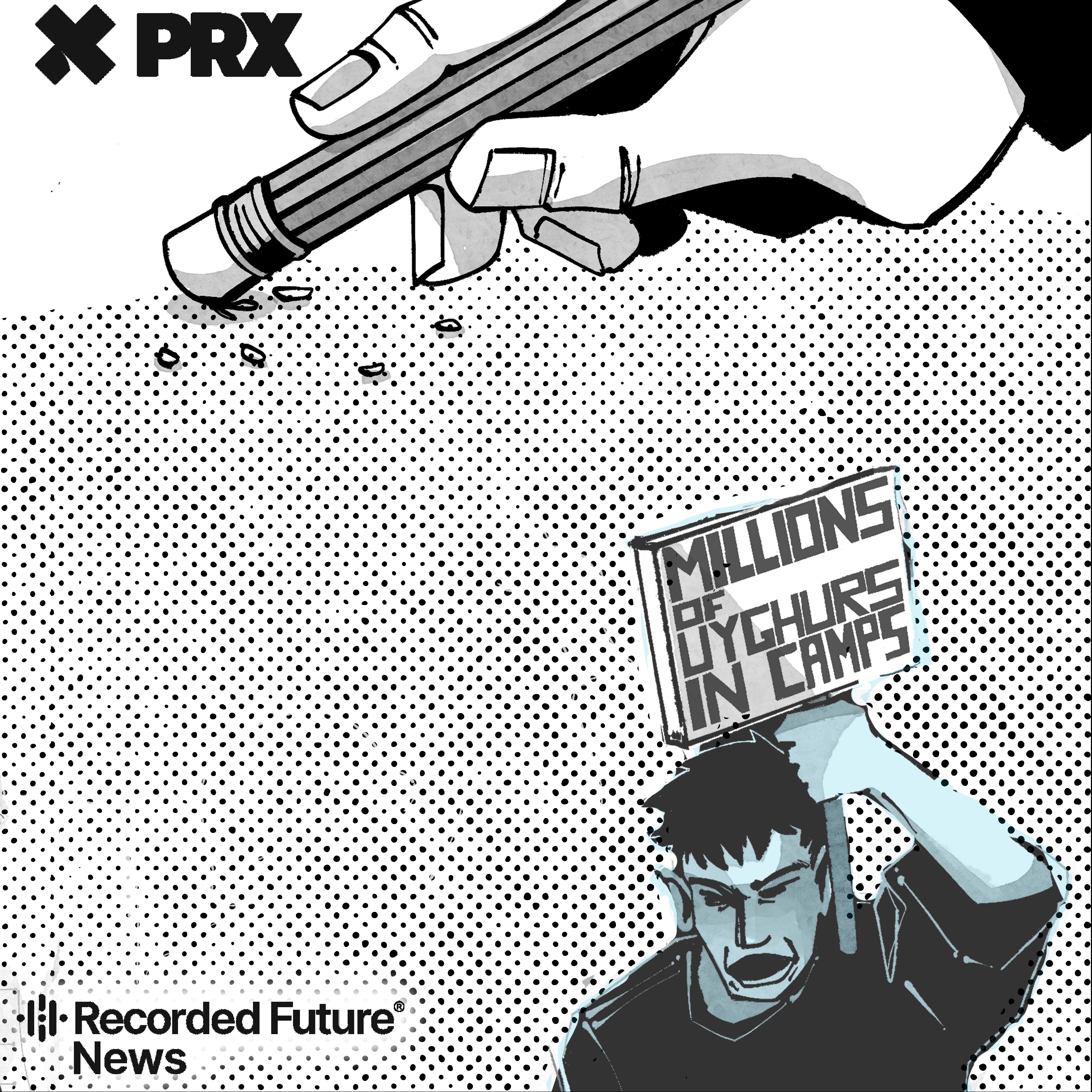
We like to think of the Internet as forever, but memory is fragile, even in the cloud. Pages fade, links rot, and cultures can be erased pixel by pixel, unless someone rushes in to save it. From Recorded Future News and prx, I'm Dina Templrest, and this is Click Here's Mic Drop, an extended cut of our favorite interview of the week. Today, as part of our series on China's attempts to digitally erase Uyghur culture, senior supervising producer Sean Powers has a story about one man's mission to bring it all back, one website at a time. Stay with us.
- [02:23]
C
If you're looking for a daily guide to cybersecurity news and policy, sign up for the Cyber Daily from Recorded Future News. It serves up the day's most interesting and important cyber stories from our sister publication, the Record, and then aggregates all of the big cyber stories you might have missed from news outlets around the world. Just go to TheRecord Media and click on Cyber Daily to get all you need to know about the world of cybersecurity right in your inbox.
- [02:58]
D
It all started with this protest, followed by an eerie silence. In July 2009, protests broke out in Urumqi, the capital of Xinjiang province in the far northwestern part of China. Violence followed. More than 100 Han Chinese residents were killed, and the Chinese government responded by flipping a switch, an Internet switch that.
- [03:28]
E
Was a major shutdown. Even when people had footages of proofs and, like, they had live footages of, you know, what was going on, they weren't allowed to, you know, release it. They weren't allowed to talk to journalists and stuff. It was a Very dark time.
- [03:47]
D
This is Johar Ilham. She's a Uyghur activist now living in the United States. And if you heard Tuesday's episode, you remember that blackout. 10 months without Internet in Xinjiang. 10 months when Uyghur news sites went dark and social media platforms blinked out one by one. And when the government finally flipped the switch back on the Uyghur Internet, that fragile, thriving world of language, music and debate had been hollowed out. Websites that once served as cultural lifelines were gone. Forums were shuttered and entire archives erased. The and among them was Uyghur Online, the site her father, Ilham Tohti, built. He was a scholar and a quiet revolutionary at that, and his platform gave Uyghurs the space to speak freely about their culture, their language, their future. This was when even quiet dissent was dangerous. And it was around the time when Chinese authorities began rounding up Uyghurs and putting them into re education camps.
- [04:50]
E
Everybody reaching out to him said, my son disappeared. My cousin disappeared. Or this disappeared. The Chinese government took them. We don't know if he's alive. He's been in prison. If he has been shot with the machine gun, we don't know what happened. And then. So my father started compiling all of these people's identities and pictures.
- [05:08]
D
By 2016, nearly all the websites in the Uyghur language that were hosted in China and once a backbone of communication in Xinjiang had vanished. Right at Kenji was living in Japan and working as a software engineer when he saw Chinese authorities systematically dismantle the Uyghur web. He had this sick feeling in the pit of his stomach.
- [05:29]
B
I was crushed. Under the pretext of regulating all websites, some website owners were arrested.
- [05:37]
D
By the way, Rideat doesn't speak English. His answers came to us in Uyghur, and we had them translated and voiced so you could hear his story. Before moving to Japan, Ride out was a teacher in Xinjiang.
- [05:49]
B
I was living a normal life with my family in Xinjiang. When I'd come home to visit, there was always trouble. Like, I went back to my hometown in 1999 after living in Japan for a while, and people from the State Security Administration came to my house and started questioning me.
- [06:07]
D
China's State Security Administration is the country's main intelligence agency. It had ride at in its sights.
- [06:14]
B
They took me to a government hotel and in one of the rooms and they asked me about what Japanese television broadcasts about China and. And whether I had contact with my friend Dolkun Issa.
- [06:26]
D
Dokun Issa for Beijing. That Name is radioactive. He's the former president of the World Uyghur Congress, an advocacy group that China has branded as a separatist and dangerous organization. For rideout, though, Do Kun wasn't a political figure, he was a friend, someone he'd known for years. But that friendship made him a target. When he went home again in 2003, the pattern repeated the same questions, the same threats.
- [06:54]
B
After that, I never went back to my hometown.
- [07:02]
D
He hasn't been back to Xinjiang in more than 20 years, but it's never far from his mind. Every headline, every whispered story of fresh crackdowns are a reminder of the place he's left behind. So he started looking for ways to help from afar. And because he knows how to code, he realized that there might be a way. If the government could erase Uyghur websites, maybe, just maybe, he could bring them back. One by one, click by click, line by line, he began preserving what Chinese authorities had tried to erase.
- [07:40]
B
If I had sufficient financial resources, I would dedicate my entire time to restoring these websites.
- [07:47]
D
But he has to work. So in his spare time, he built something he calls uyghurchive.com think of it as a digital time capsule.
- [07:56]
B
I went into the Internet Archive and started looking for original Uyghur websites that have been taken down. These are ones that you can't find even if you just do a Google search.
- [08:08]
D
One of the first sites he focused on was Bagdash, and it was kind of a Facebook for Uyghurs, a digital gathering place where people could share music, tell stories, and feel a sense of belonging. And if you heard Tuesday's episode, you know the story of the man who built it, Akbar Assad.
- [08:25]
B
The most difficult thing about restoring websites like Bagdash is the incredibly difficult nature of restoring all the content that is on the Internet Archive.
- [08:35]
D
There have been a lot of little technical problems, like parts of pages missing or the inability to recover uploaded music.
- [08:43]
B
And I've managed to do a lot of it, like recovering the original web pages so they look like they did when they were on the web. Things like restoring music and audio and images to their original state. It's been hard.
- [09:04]
D
He's been restoring what he music, audio, images, bringing them back to their original state. It's painstaking work, and we saw it ourselves while reporting on Bagdash. Some essays and songs survived, but all the videos that were uploaded, gone.
- [09:28]
B
I've retrieved anything I can from the Internet Archive, but whatever wasn't saved, it's not possible for me to bring it back.
- [09:37]
D
And even for the sites that do survive, the ones hosted outside of China, there's no guarantee they're safe. They're constant targets for hacks and takedowns. And inside China, well, things have gone from bad to worse. Speaking out online has become even harder. So people have to get creative. When we come back, we'll explain. Stay with us. At Radiolab, we love nothing more than nerding out about science, neuroscience, chemistry. But. But we do also like to get into other kinds of stories, stories about policing or politics, country, music, hockey, sex of bugs. Regardless of whether we're looking at science or not science, we bring a rigorous curiosity to get you the answers and hopefully make you see the world. An adventures on the edge of what we think we know.
- [10:42]
E
Wherever you get your podcasts.
- [10:53]
D
China's Internet is vast. Millions of websites, more than a billion users. But within that system, Uyghur voices occupy only a sliver of space. And even that space is tightly policed. Here again is Johar Ilham.
- [11:08]
E
So even though the social media is very much censored, Uyghur people have been trying to find very unique and creative ways to get messages out. For example, they would sing a song that has like, hidden meaning that only Uyghur people will understand.
- [11:25]
D
Like this song that a Uyghur worker in Qingdao posted, one day I will come back. THEY SING Please don't lose hope. People post images too, like family photos, which seem almost mundane until you look.
- [11:50]
E
A little closer, you actually see hundreds of exact same formatted videos of different people, basically with family photos in the back, and then raise their fingers. That's like, how many people have been arrested in her family? So they were like, oh, that's like six people in her family.
- [12:06]
D
Other messages are even more subtle. For example, when someone says their cousin went to school, that might mean they were taken to a re education camp. Or when someone is in the hospital for 20 years, it's not about healthcare.
- [12:23]
E
You're not allowed to see camps. You say school, you say somebody went to school. And it's not really going to school, they went to camps. Or it's like, oh, somebody went to studies for 10 years. That means like somebody were sentenced to 10 years. Or someone is working, got a new job and they're going to love this factory job. And that's like forced labor.
- [12:50]
D
It's a code, an encryption of daily life. We reported last year on a group of young Uyghur activists in Germany who began posting tiktoks. Their videos are meant to draw attention to human rights abuses in Xinjiang. But the clips kept getting flagged and taken down by TikTok's parent company, ByteDance. It's based in Beijing. So the group adapted again, marrying viral trends to sneak in their messages. We are Uyghurs, of course we're always late. We are Uyghurs, of course we don't have basic human rights. We are Uyghurs, of course China is selling our organs. Authoritarian regimes have long feared the Internet. So they delete, they censor, they monitor, they punish. But what Rideakkenji is doing, quietly, persistently, is the opposite of that. He's building a kind of archive of resistance, a living map of what was and maybe, just maybe, what still could be.
- [13:48]
B
I haven't felt any danger doing this. I'm going to keep going. Is it possible that Chinese authorities are monitoring what I've been doing? Sure. But I'm more worried about what I might not be able to do. That there will be thousands of Uyghur websites on the Internet archive that I won't be able to bring back and restore.
- [14:15]
D
So far, he's brought back more than 300 websites to the Uyghur archive. Homepages, once thought, lost essays, music, cultural memory. Each one a small defiance, each one a digital heartbeat where there was once silence. I'm Sean Powers, and this has been Click Here's Mic Drop. This story was edited by Karen Duffin, and special thanks today to Esma Memtimin and Arslan P Diat. We'll be back on Tuesday with a new episode of Click Here. Have a great weekend.
- [15:11]
C
If you're looking for a daily guide to cybersecurity news and policy, sign up for the Cyber Daily from Recorded Future News. It serves up today's most interesting and important cyber stories from our sister publication the Record, and then aggregates all of the big cyber stories you might have missed from news outlets around the world. Just go to the Record Media and click on Cyber Daily to get all you need to know about the world of cybersecurity right in your inbox.