Loading summary
Transcript112 lines
- [00:03]
Dina Temple-Raston
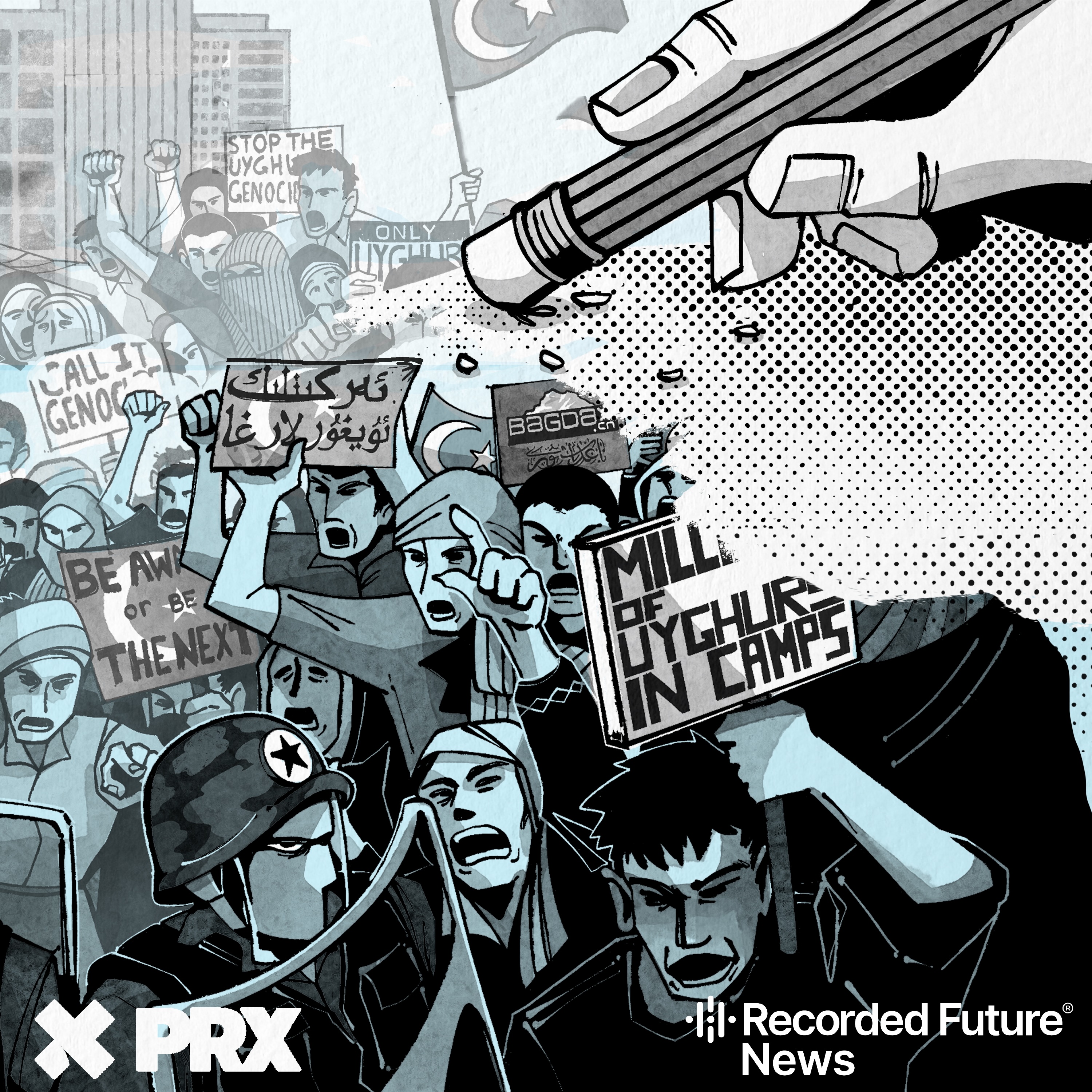
From recorded future news and prx, this is click here. Hey, it's Dena. The Click Here team is taking a short breather, just long enough to get ahead on reporting for 2026. And when we come back in the new year, we've got a surprise waiting for you. It involves transmitters and antennas, and let's just say we're going back to our roots. More on that soon. For now, we want to revisit a story we spent more than a year reporting. It starts in a small classroom in northwestern China where children once learned to sing and count in the language of their ancestors, Uyghur, which, it turns out the Chinese government frowned upon. Their teacher became suspect. The founder of the school became an enemy of the state. This is the first part of a series called Erased A Click Here investigation into how China is trying to wipe out Uyghur culture. One law, one app, one person at a time. Here's the story. Abdul Wali Ayoob had a simple dream. He wanted to open a kindergarten. A small, joyful place where kids could laugh and learn and speak their own language.
- [01:30]
Abdoulaye Ayoob
I started in 2010. First I wrote about it. First I wrote my dream and what it looks like and how we do this and all of my idea.
- [01:45]
Dina Temple-Raston
In most parts of the world, that would have been a sweet origin story. But in northwestern China, it was more complicated than that. Something Abdoulaye didn't fully appreciate at the time. Perhaps because he was so busy doing what dreamers do. He scribbled down his vision, found a few backers, gathered a handful of wide eyed toddlers and opened the schoolhouse do. And at first, the hiccups were the kind you'd expect at a preschool.
- [02:17]
Abdoulaye Ayoob
And the first day, the one kid, she wet her pants. I clean it because like memories. Yeah, because the parents didn't clean me diaper.
- [02:28]
Dina Temple-Raston
After that, he kept a supply of diapers on hand. And before long, word spread about Abdueli's little school. Parents lined up, literally hoping for a spot.
- [02:40]
Abdoulaye Ayoob
Yeah, like we have three years of waiting list. Just imagine.
- [02:45]
Dina Temple-Raston
So he opened a second school, and this one had a name. The Wisdom of Happiness.
- [02:50]
Abdoulaye Ayoob
We call it Wisdom of Happiness because we want kids to be happy.
- [02:56]
Dina Temple-Raston
But in China, happiness in the Uyghur language can be interpreted as defiance. And defiance can. Can be dangerous. The wisdom of happiness got you in trouble.
- [03:07]
Abdoulaye Ayoob
No, the happiness put me in real trouble.
- [03:13]
Dina Temple-Raston
Because the language those children were speaking was Uyghur. And in Xinjiang, preserving your culture, your language, isn't seen as an act of pride. It's seen as an act of protest. I'm Dena Temple Raston and this is Click Here, a podcast about all things cyber and intelligence. We tell true stories about the people making and breaking our digital world. And today, the first in a four part series on how authoritarianism begins not with tanks in the streets, but with quieter moves like a book taken from the shelf or a rewritten school lesson. Our story starts in northwestern China, but it doesn't end there. Because when governments from Moscow to Mississippi start demanding sameness, when difference becomes defiance, what's happening in China stops being foreign policy and starts feeling like a warning. Because cultures don't disappear overnight. They're dismantled deliberately, piece by piece. Stay with us.
- [04:38]
Odoo Sponsor
This show is supported by Odoo. When you buy business software from lots of vendors, the costs add up and it gets complicated and confusing. Odoo solves this. It's a single company that sells a suite of enterprise apps that handles everything from accounting to inventory to sales. Odoo is all connected on a single platform in a simple and affordable way. You can save money without missing out on the features you need. Check out odoo@o d o o.com. that's o d o o.com.
- [05:11]
Dina Temple-Raston
You'Re listening to. Click here. I'm Dina Templerest. If you were to tell a young Abdoulaye Ayoop that his people were oppressed by the Chinese, he would have been surprised to hear it.
- [05:26]
Abdoulaye Ayoob
I didn't feel any discrimination when I was really young because there is no Chinese to discriminate us.
- [05:33]
Dina Temple-Raston
Han Chinese make up about 90% of China's population. But in the far northwestern reaches of the country where Abduwali was born, most people are weaker. A mix of Turkish and Asian ancestry, a Muslim minority with their own culture and language. In fact, for Abdiweli, Chinese was literally a foreign language.
- [05:54]
Abdoulaye Ayoob
I don't know Chinese speak Chinese. I assumed all of the people are speaking Uyghur.
- [05:59]
Dina Temple-Raston
Was Chinese sort of like a foreign language? The same way we might take French or Spanish?
- [06:04]
Abdoulaye Ayoob
Yes, it's a foreign language. Yeah, one of the foreign languages. Got it.
- [06:07]
Dina Temple-Raston
But as he got older, he did start to notice some small things, like no one in his school books looked like him.
- [06:15]
Abdoulaye Ayoob
And I asked my father why. And he said that don't ask these difficult questions. You will understand when you grow up. So when I was young, I really wanted to grow up because I really wanted to know.
- [06:38]
Dina Temple-Raston
When Abduwali Ayyub was a teenager, the landscape around him in northwestern China was beginning to shift. A mining Company had discovered valuable minerals in a nearby mountain. And almost overnight, Chinese soldiers arrived to guard what had suddenly become an important site. One afternoon, Abdueli was riding his bike, just a kid, out with his friends. Chinese soldiers were a fixture in Xinjiang by then, and everyone knew the routine. You pass them, you stop, you nod, you show respect. But that day, his friend looked at him and said, I dare you, ride right past them. No stopping, just pedal.
- [07:26]
Abdoulaye Ayoob
For us. If anyone can, like, pass that line without saying hello, we feel ourselves. We are hero.
- [07:37]
Dina Temple-Raston
It was a game.
- [07:38]
Abdoulaye Ayoob
Yeah, it was a game. We are kid. How do we know.
- [07:43]
Dina Temple-Raston
The soldiers weren't playing? They surrounded Abdueli and beat him with sticks in the butts of their guns. His father had to pull them off. That night, Abdueli couldn't even sit down. But it wasn't just the violence. There were smaller humiliations. Like they'd invite soldiers to eat fruit from their orchards, but instead of picking it, the soldiers would shoot it off the trees, leaving their orchards littered with bullets. Or they'd shoot people's pets. It seemed just for fun, just to remind everyone who was in charge. Even the local library wasn't immune. One day, Abdoulaye walked up to the desk and asked for books. And Uyghur. And the librarian looked at him and said they were gone.
- [08:29]
Abdoulaye Ayoob
She said that I couldn't give you those books because those books are banned at that time. She cried, because, look, very few books and the books are banned.
- [08:41]
Dina Temple-Raston
That's how it starts. Not with explosions, not even with words, but with missing books. A quiet dismantling. Alhamduli's father had always been loyal to the Communist Party. But after that beating, Abdoulaye started noticing these subtle shifts in his dad.
- [09:00]
Abdoulaye Ayoob
Before, my father just collect books randomly. Then he started collect. Collecting books deliberately. And before he doesn't read a lot about history. Then he started to read about history and then talk about it.
- [09:22]
Dina Temple-Raston
His dad kept those books in a secret box. His own quiet rebellion against forgetting. And that small act of defiance planted a seed in his son. When it came time for college, Abdiweli chose linguistics. He'd started to understand the power of language, and he wanted to protect it and preserve it. Eventually, that took him to graduate school in Kansas, of all places. It was a long way from Xinjiang. But the questions that haunted him about identity and belong, they came with him. And then something happened. Something small and personal, but it hit like a lightning bolt. It happened after he enrolled his daughter in a local Kansas preschool.
- [10:06]
Abdoulaye Ayoob
When she came, she speaks Uyghur fluently. She was perfect in her Uyghur. But she lost her language in the US in six months.
- [10:17]
Dina Temple-Raston
Six months. And while this was something he'd been studying, it felt different when he saw it happen to his own family.
- [10:27]
Abdoulaye Ayoob
As a linguist, I knew. I knew how language will disappear. Like three generation, yeah, blah, blah, blah. Like this theory. I know how language will die. That's my major. But when it came to me when my daughter lost her language in six months and I said no.
- [10:48]
Dina Temple-Raston
And that was the moment he realized that language isn't just how we speak. It's how we remember who we are. It's how identity takes root. And once he saw that clearly, he started to see something else. That language doesn't just bind families. It binds culture and movements. It builds solidarity. It makes organizing possible. As Abdoulaye put it, language is what turns lots of grains of sand into stone.
- [11:15]
Abdoulaye Ayoob
Like, the language is just like small pieces of the sand. And language just collect us as a stone, bind us together. And if we don't have that language, everyone can stop us, can destroy us, can do anything.
- [11:38]
Dina Temple-Raston
And do you think that the Chinese government understands this and that's why they're trying to sort of stamp it out?
- [11:44]
Abdoulaye Ayoob
Yes. They understand us like they want us to live as individuals, as 12 million Abduli and 12 million guys. Not as a nation, as a people.
- [11:56]
Dina Temple-Raston
And it was there in Kansas, in the land of yellow school buses and PTA meetings, that Abdoulaye had this idea. He knew that language didn't begin in textbooks. It started way before that, on playgrounds, in lullabies, in the first words spoken at home.
- [12:12]
Abdoulaye Ayoob
Yeah. And then I remember that, like, do we have a Uyghur kindergarten? No, there is no Uyghur kindergarten. All of the kindergartens are Chinese kindergarten, like, quote, unquote, bilingual kindergarten, but in reality, it's Chinese kindergarten. Because of kindergarten, we are losing this language.
- [12:32]
Dina Temple-Raston
And that's when it hit him. If the loss begins that early, maybe the solution does too. Maybe a preschool could keep the Uyghur language alive. He couldn't wait for someone else to act. He would go home and build something no one else had. A school where Uyghur would be the first language children heard, not the one they forget. A quiet rebellion.
- [13:01]
Abdoulaye Ayoob
And then I thought that, oh, this is the way. Let me start with.
- [13:13]
Dina Temple-Raston
It was a simple idea, really. But in China, where culture is managed by the state and identity is treated like a threat, his idea was not so much a school as a quiet rebellion. After the break, Abdoulaye and a handful of toddlers walk into what Beijing authorities would later treat like the most dangerous classroom in China. Stay with us. Support for Click here comes from GiveWell. Let's say you're a detail oriented person. You don't just go to a movie. You read the reviews first. You recon the menu before going to a restaurant. I'm guilty of that. So how do you do your homework when giving to charity? That's where GiveWell comes in. GiveWell is an independent resource doing rigorous and transparent research into charities. They figure out which ones do the most good for every dollar donated, and they only recommend programs with the biggest impact on helping people and saving lives. That's why over 150,000 donors have already trusted them to direct over $2.5 billion to great causes around the world. So check out GiveWell next time you're giving to charity. To make a tax deductible donation Today, go to givewell.org and pick podcast and enter click here at checkout. Make sure they know you heard about GiveWell from click here again, that's givewell.org to donate or find out more.
- [14:59]
Sean Powers
Do you ever feel like you blinked your eyes and then woke up in some kind of sci fi movie?
- [15:04]
Dina Temple-Raston
Suddenly it seems like the very existence of AI is changing everything, including our relationships. I would like to think that I could not fall in love with an AI companion, but I really think that anybody could.
- [15:18]
Sean Powers
I'm OS Velocian.
- [15:19]
Dina Temple-Raston
And I'm Cara Price.
- [15:20]
Sean Powers
We break down the tech news you really need to know. Listen to tech stuff in the iHeartRadio app, Apple Podcasts, or wherever you get your podcasts.
- [15:36]
Dina Temple-Raston
When Abdoulaye returned to China, he went to work trying to build his kindergarten. He started gathering support, looking for investors, and his pitch was simple.
- [15:46]
Abdoulaye Ayoob
Look, this is the way to keep our language alive.
- [15:50]
Dina Temple-Raston
But even that was too bold for some.
- [15:53]
Abdoulaye Ayoob
And they already afraid of my idea. Like about this promoting Uyghur language.
- [16:01]
Dina Temple-Raston
Oh, really?
- [16:03]
Abdoulaye Ayoob
Yeah. It was a dangerous idea.
- [16:11]
Dina Temple-Raston
Abdoulaye wasn't breaking the rules. He was working in the margins, teaching children in Uyghur before the law had a chance to say he couldn't. The Mandarin language was mandatory in primary school, but for kindergartens, the rules weren't so clear.
- [16:27]
Abdoulaye Ayoob
There is no clear policy that kindergarten should use Uyghur should use Chinese, like what language should use in kindergarten.
- [16:39]
Dina Temple-Raston
So he slipped in through that gap. Finally, his brother took a chance on him and invested $80,000. And then in another stroke of luck, A friend offered him a building for the school. Abdiwale started recruiting just six students to start. And with that, the first Uyghur language kindergarten was born. And they gave it a name that mattered.
- [17:03]
Abdoulaye Ayoob
We call it Nurhan means light. Han means king. Light of King.
- [17:13]
Dina Temple-Raston
It looked like any kindergarten, with nap time and snack time and then music time. The children began each morning with a song and Uyghur. Not a protest song, just a melody in their own tongue. And for Abdoulaye, that was enough. He'd sit in the front row smiling, because this wasn't just music. This was language, alive and out loud. And he had other ideas, unconventional tools to keep Uyghur alive at that time.
- [17:57]
Abdoulaye Ayoob
I use Dora.
- [17:58]
Dina Temple-Raston
Dora the Explorer.
- [17:59]
Abdoulaye Ayoob
Yeah, yeah.
- [18:02]
Cyber Daily Announcer
Come on.
- [18:03]
Dina Temple-Raston
Dora.
- [18:06]
Abdoulaye Ayoob
Why I use Dora because there is an English part and there's a Spanish part. Right, right. The Spanish part. I use Uyghur.
- [18:14]
Dina Temple-Raston
Wow, you just dubbed it over.
- [18:16]
Abdoulaye Ayoob
Yeah.
- [18:17]
Dina Temple-Raston
It wasn't flashy, but it worked. After a few short months of this, they got some official visitors. State security officers showed up asking for names and phone numbers and the list of parents who dared to send their kids there.
- [18:34]
Abdoulaye Ayoob
I expect that happen, but not that quick.
- [18:38]
Dina Temple-Raston
And when they left, what went through your head?
- [18:44]
Abdoulaye Ayoob
I felt happy that they couldn't really understand my writing.
- [18:51]
Dina Temple-Raston
What do you mean?
- [18:52]
Abdoulaye Ayoob
Because I was not only writing about, like the linguistics or kindergarten or something like that. I was writing about also about human rights. What should we think? Why should we think that way?
- [19:17]
Dina Temple-Raston
He was happy the officers couldn't actually read his curriculum, because he wasn't just teaching Uyghur. Abdoulaye had another goal. To teach kids how to think. Not how to oversight, not how to follow orders, but to ask questions, to wonder and to doubt. Because when he had first started working with the kids, something felt a little off. They didn't act like kids. They followed every instruction immediately, without exception, without complaining. There was no whining, no negotiation, no, oh, please, five more minutes. He'd call out, nap time. And they'd come right in and lie right down. If you've ever met a three year old, you know this isn't how three year olds work. So he pulled one of the parents aside and asked, why? Why are they like this?
- [20:06]
Abdoulaye Ayoob
I said, why? Your kids just listen to my word really carefully. Just not act like a kid. She said it's because of the former kindergarten. If the kids don't listen to them, they just beat them. That's why she's afraid. These kids learned that behavior. It's because of Chinese education.
- [20:28]
Dina Temple-Raston
In Chinese schools, asking questions and standing out isn't encouraged. It's discouraged, actually. Systematically fitting in isn't just a cultural expectation, it's policy. So obedience is woven into every lesson, right alongside math and reading. And that's what made Abdueli's next decision feel almost radical, maybe even revolutionary. He gave the kids choices. No more forced naps, no more because I said so. They could choose what to eat, whether to sleep, whether to speak. It was a kindergarten, but it was also something else. A place where children were learning what it meant to be free.
- [21:12]
Abdoulaye Ayoob
So we didn't only teach kids language, we teach kids how to be an independent human being. We gave them choice.
- [21:22]
Dina Temple-Raston
So this was a kindergarten, not just of Uyghur ness, but of love as well. Yeah, yeah, it worked. The school took off. Six kids became 24, then 100, then several hundred.
- [21:37]
Abdoulaye Ayoob
I didn't do any advertisement, but people, I don't know, how do they learn? And then people started coming from different cities, come, and they recorded the schools, and they make a video. And like, they spread it on their smartphone.
- [21:59]
Dina Temple-Raston
It spread hand to hand, phone to phone, mother to mother. And the kindergarten stopped being just a kindergarten. It became a movement. They started calling it the Mother Language Movement. A quiet revolution, one classroom at a time. But movements, even quiet ones, don't go unnoticed forever. When they moved to open a second school, the new director did something different. He filed for a permit. The government said no, so he posted the rejection letter online.
- [22:36]
Abdoulaye Ayoob
He rejected the local government, and then he posted it online. And then it became a social phenomenon. People all started to talk about it.
- [22:50]
Dina Temple-Raston
And then it went viral. The thing is, Abdiweli never filed for a permit for the first school. He knew they were safer under the radar. But the director of the second school took the opposite approach. Each day he applied again, each day he was denied. And each rejection posted. What started as digital dissent slipped into the real world. People started to gather at the government offices, demanding answers, wanting accountability. And eventually, the government blanked. The school was approved. And while it felt like a win, it wasn't a safe one. Because in going public, the director had crossed a line. One Abdoulaye had spent years carefully navigating. And the response was swift. Police began harassing the staff. One by one, they quit. Then the director himself stepped down. And finally the landlord pulled the lease.
- [23:54]
Abdoulaye Ayoob
And then, like, the place we rented, she said that, I'm not going to rent this place anymore. And we said, like, we have five years contract. Our school paralyzed because we can't get that money back.
- [24:09]
Dina Temple-Raston
They had to shut down, though. Pieces of it were still there. Blankets, toys, stacks of children's clothing in heaps in empty classrooms. Things that kids had touched and played with, but were left behind because their parents were too afraid to retrieve them.
- [24:26]
Abdoulaye Ayoob
We had two big rooms full of the students clothes and the students like quilts and the sheets. Two rooms full of those items which students use in daily life. Think about it.
- [24:43]
Dina Temple-Raston
And he did. The movement had grown too quickly, too publicly, and now it felt like it could break or worse, even explode if people heard about the shutdown.
- [24:53]
Abdoulaye Ayoob
Because look, there are online, 1.5 million people are following us. They will take some action against the government. Bloody clash will happen, and then people will be arrested. And the people who followed the movement will be in trouble in the future. I don't want that happen.
- [25:14]
Dina Temple-Raston
So he created a story, a way to quiet the tension. He rented a new building nearby and told everyone that the school was simply relocating, nothing to worry about, and invited volunteers to help renovate it. Renovate it for students he knew would never be there.
- [25:31]
Abdoulaye Ayoob
And then, like, there are more than 100 people who are helping to renovate the school because it was an old school, deserted, and we are just like, working on electrics and somebody working on the painting, somebody working on, like, installing the toys for the kids. I am doing this, but I know I'm fooling the people.
- [25:51]
Dina Temple-Raston
He kept up the act to keep the peace and to buy time to figure out his next move. But that time was cut short. One day, during the renovation, a black car pulled up. Security officers stepped out, and Abdoulaye knew exactly who they were, but he stayed in character. He started walking to the car and told the volunteers he'd be just a minute.
- [26:15]
Abdoulaye Ayoob
I have visitors there. And don't stop. Keep working. I will talk with them for a while.
- [26:26]
Dina Temple-Raston
And then he shook the men's hands warmly and said loudly so everyone could hear, hi, guys.
- [26:32]
Abdoulaye Ayoob
Hi. You are the parents will to send your kids to our kindergarten, right?
- [26:38]
Dina Temple-Raston
But once inside the car, they cuffed him, took his phone, and pulled a black hood over his head. He'd been detained before, but this time it felt different.
- [26:49]
Abdoulaye Ayoob
I thought that this is. This is like the ending. Like, I thought, maybe they will kill me.
- [26:59]
Dina Temple-Raston
This time it felt less like a warning and more like a conclusion. Because when regimes like this feel threatened, they don't tighten the rules, they tighten the news. They don't just detain a man, they. They redefine him as a threat. Abdoulaye wasn't just being questioned. He was about to be turned into an enemy of the state. The police drove him to his house, and soldiers were already there, lining the street with their weapons drawn. His wife stood frozen in the doorway, his children tucked just behind her. As he watched, the soldiers ransacked the house, pulled open drawers, dumped out closets. They took files and devices, anything that looked like it might matter. And when they were done, they took Abdoulaye into custody. What followed was a year in a succession of different jails and hours and hours of interrogation. Sometimes they locked him in a cage in the center of a cell, and two armed guards would be on either side of him. Three interrogators were in front of him, and they would start to scream. You're trying to create a separate country for Uyghurs.
- [28:11]
Abdoulaye Ayoob
Yes or no? I said no. And you are training resistance force to incite terrorism. Yes or no? No. And you met Uyghur politicians in Washington, and you promised to work with them. Yes or no? No.
- [28:33]
Dina Temple-Raston
And then they reached for their metal batons, slid them under his arms, and.
- [28:39]
Abdoulaye Ayoob
Then they put electric shock and turned on the current.
- [28:50]
Dina Temple-Raston
They did other things, too, but Abdoulaye didn't want to talk about them. Some of it, he said, he'd rather forget. Eventually, he was sentenced. He got 18 months in prison and ended up serving 15. When he walked out, the world he stepped back into wasn't the one he remembered.
- [29:14]
Abdoulaye Ayoob
I found, like, the Uyghur homeland changed, like, completely. Just, like day and night, like every Uyghur neighborhood, like, every 500 meters, there's a checkpoint, and every 10 Uyghur family controlled by one guy.
- [29:36]
Dina Temple-Raston
Each block had one guy assigned to watch the families. There were cameras everywhere, making it clear that every word might be recorded. Uyghurs now had to carry a special ID card. And if the authorities had accused you of wrongdoing, every time the card was scanned, a special sound would ring out.
- [29:57]
Abdoulaye Ayoob
When you swipe your ID card to get on the bus and then do the sound.
- [30:10]
Dina Temple-Raston
It was like a scarlet letter, he says, a digital tone that told everyone nearby, this guy has a record. And with that sound came some limits. He couldn't get a job. He couldn't rent a house. He began to fear for his family's life. So when a friend told him about a translator job in Turkey, he didn't hesitate. In 2015, Abdoulaye quietly left the home he'd worked so hard to preserve. And he's been in exile since then, first in Turkey, now in Norway, where he lives with his family. But even from afar, he hasn't stopped trying to help his people. He collects the stories of other Uyghurs who fled. He writes children's books. Stories about memory, about identity, about home. And he keeps telling his own story, even though his family wishes he wouldn't.
- [30:58]
Abdoulaye Ayoob
My older brother said that you have to stop and you shouldn't talk because of it will be dangerous for us.
- [31:07]
Dina Temple-Raston
And then he got proof that his brother wasn't just being an alarmist. While visiting a fellow Uyghur exile in Turkey, he got the news his sister had been arrested back in China.
- [31:18]
Abdoulaye Ayoob
And I felt really sad. And look, I just walked about 20 kilometers from his home. I walked back to my home. I couldn't even think to take a bus or take a taxi because, yeah, like, Um, it is really hard.
- [31:50]
Dina Temple-Raston
It was heartbreaking. He knew she'd been arrested not for anything she did, but just for being related to him. This was the regime sending a message. You can run, but your family can't hide. Another attempt to silence him.
- [32:07]
Abdoulaye Ayoob
But the problem is not only my sister. There are like, all of my friends being arrested. All of my friends, all of the parents who sent their kids to me and they being arrested. And how can I say that, yes, because of my sister, I should stop? What am I doing? They have also family, they have also kids, they have also sister and brothers like me. They know it will be dangerous, but they did to keep the language alive. They told me that this is our last defense. And when their life is in danger, how can I keep silence?
- [33:05]
Dina Temple-Raston
The schools he built, gone. The first was turned into a re education camp. The loophole he'd once stepped through, closed Mandarin is now the required language for all kindergartens in China. And Abdoulaye Ayoob, the man who tried to save a language through children's songs. And Dora the explorer. He can never go back. So here's the thing about Abdiweli's story. It didn't start with handcuffs. It started with silence. With books quietly disappearing from library shelves, with preschool lessons scrubbed of native words. Before the arrests, before the black hoods and interrogations, the cultural erasure was already underway. And we'd like to think that couldn't happen here. That democracies are different, that our systems are stronger. But that's what Abdoulay's father thought too. Keep your head down, follow the rules, you'll be left alone. And he was wrong. More than a million Uyghurs are believed to have been detained in camps across far western China, cut off from their families, their culture, their language. We asked the Chinese Embassy in Washington about Abdoulay's story, and they wouldn't address his case directly. But in a written statement, a spokesperson said that people of all ethnic groups in Xinjiang fully enjoy economic, social, cultural, civil and political rights, and that Xinjiang was a prosperous and stable place. But stability is not freedom, and silence is not peace. This is click here.
- [35:02]
Sean Powers
Today's episode was written and produced by Megan Dietre, Erica Gaeda, Zach Hirsch, Dina Temple Rastin, and the lead producer was me, Sean Powers. It was edited by Karen Duffin, Fact Checked by Darren Ankrum, and a lot of the music you heard in this episode was Uyghur. It was written and performed by Polot Izy Muff and Ben Levington. We had other music from Blue Dot sessions. Our staff writer is Lucas Riley and our illustrator is Megan Gough. Our sound designer and mixer for this episode was Dante Hodge. Click Here is a production of Recorded Future News and PRX in the second installment of our series.
- [35:44]
Dina Temple-Raston
More and more, we're seeing that China is still trying to reach outside their borders in order to have that control, so that way they can try for that complete erasure.
- [35:56]
Sean Powers
That's Friday on Click here's Mic Drop. We'll see you then.
- [36:07]
Cyber Daily Announcer
If you're looking for a daily guide to cybersecurity news and policy, sign up for the Cyber Daily from Recorded Future News. It serves up today's most interesting and important cyber stories from our sister publication the Record, and then aggregates all of the big cyber stories you might have missed from news outlets around the world. Just go to the Record Media and click on Cyber Daily to get all you need to know about the world of cybersecurity right in your inbox.